
How Import Duties and Taxes Work When Buying Products From India
By Saurabh Mittal, Founder, Altus Exports
Import duties and taxes on products from India depend on the HS classification, customs value at destination, and your import country's tariff schedule—not on the supplier's export price alone. Most buyers pay customs duty plus local VAT, GST, or sales tax at import.…

The unit price your Indian supplier quotes is rarely the price that determines your margin at retail or wholesale. Before goods reach your warehouse, destination customs authorities assess import duties and taxes based on what the product is, where it was produced or substantially transformed, how the transaction is valued, and which trade agreements—if any—apply.
Import duties taxes India products in the same way customs treats goods from most trading partners: through a structured assessment at import, not at the moment you pay the supplier. India-origin status matters for tariff rates, rules of origin under preferential programs, and occasional trade-remedy measures on specific products. It does not automatically mean "low duty" or "high duty." Two shipments from the same Indian factory can face different duty outcomes if HS classification, declared value, or origin documentation differ.
This guide explains the mechanics international buyers need: HS classification, customs value, types of duties, destination VAT/GST/sales tax treatment at a generalized market level, preferential origin under FTAs involving India, illustrative calculation examples, misclassification risks, and how duties feed into landed cost and total cost of ownership. It does not restate the full customs clearance workflow—that belongs in customs clearance when importing from India.
Altus Exports helps international buyers source and import from India with commercial terms and documentation that support accurate duty planning. Duty rates themselves are determined by your customs authority; your job as buyer is to classify correctly, value honestly, and structure documentation before shipment.
Why duty and tax planning starts before the purchase order
- the product classifies into a higher-duty HS line than expected;
- customs rejects a preferential claim because origin rules were not met;
- transaction value is adjusted upward for royalties, assists, or related-party pricing;
- import VAT or GST must be paid immediately even when duty is zero;
- anti-dumping or countervailing duties apply to the specific product category.
Buyers who treat duties as "something the broker handles later" often discover margin problems after the first container arrives:
Duty planning belongs in supplier selection and quoting, alongside Incoterms and payment terms. When you compare two Indian quotations, compare dutiable landed cost, not FOB price alone. For Incoterm impact on what enters customs value, see FOB vs CIF vs EXW when buying from India.
Comparison table
Swipe →
Data table — swipe horizontally on small screens
| Planning stage | Duty/tax question to answer |
|---|---|
| Product design and specs | What is the correct HS description direction? Any regulated or trade-remedy category? |
| RFQ / quotation comparison | What duty rate applies at destination for each SKU family? |
| PO and commercial invoice | Are Incoterms and value components declared consistently? |
| Pre-shipment | Is preferential origin documentation obtained if relied upon? |
| Import entry | Does broker classification match your model? |
| Post-entry | Reconcile actual duty against landed cost and pricing |

HS classification: the foundation of duty assessment
Compliance Notes
Harmonized System (HS) classification is a standardized product coding system used worldwide. At import, each line item receives a national tariff code derived from HS—such as HTS in the United States, CN/TARIC in the EU, or HS in Australia and Canada.
Customs duty rates are attached to classification codes, not to supplier marketing names. "Brass decorative item" and "brass candle holder" may map to different codes. "Cotton woven shirt" and "cotton knitted shirt" carry different rates. A kit containing multiple materials may classify as a set or require apportionment.
How classification works in practice
Comparison table
Swipe →
Data table — swipe horizontally on small screens
| Classification input | Why it matters |
|---|---|
| Material composition | Textile, metal, plastic, and wood chapters differ sharply |
| Function vs form | A part vs a finished good vs a kit |
| Degree of processing | Raw material vs semi-finished vs retail-ready |
| Set or composite goods | GRI 3 may determine essential character |
| Accessories included | May classify with main article or separately |
- Identify the product objectively—material, function, construction, degree of processing.
- Apply general rules of interpretation (GRI) in order—the international framework customs uses to choose among headings.
- Assign the most specific description supported by the product—not the description that produces the lowest duty.
- Document the rationale if the product is novel, multi-material, or borderline between headings.
For India-origin goods, suppliers often use internal SKU names or generic export descriptions. Your broker may reclassify at entry. If their code differs from yours, duty changes.
Buyer actions for classification
- obtain broker or consultant binding ruling or classification opinion for high-volume SKUs;
- share technical specs, photos, and material breakdown with your broker before production;
- avoid asking suppliers to "use a lower HS code"—that is misclassification risk;
- align classification across PO, invoice, and your landed-cost model;
- revisit classification when product design changes between orders.
Misclassification is covered later in this guide. For document descriptions that support classification, see documents required to import products from India.
Customs value: what duties are calculated on
- freight and insurance to the port of import (depending on Incoterm and local rules);
- packing costs not included in invoice price;
- assists—tools, molds, designs supplied free or at reduced cost;
- royalties or license fees tied to the imported goods;
- proceeds from subsequent resale accruing to the seller if part of the price.
Most WTO member countries, including major import markets buying from India, use transaction value as the primary basis for customs valuation when goods are sold for export. Transaction value is the price paid or payable for the goods when sold for export to the country of import, adjusted for specific additions and deductions defined in law.
Typical additions to reach customs value include, where applicable:
Typical exclusions may include inland freight in the export country post-purchase, duties themselves, and certain post-import charges—exact rules vary by jurisdiction.
Incoterms and customs value
Comparison table
Swipe →
Data table — swipe horizontally on small screens
| Incoterm (examples) | Invoice typically shows | Value adjustment consideration |
|---|---|---|
| EXW | Product price only | Buyer must add export handling, main freight, insurance to border as required |
| FOB | Product + export to port | Add ocean/air freight and insurance if not on invoice |
| CIF | Product + freight + insurance to destination port | Local rules define how much insurance/freight is dutiable |
| DDP | Seller may include many costs | Importer still verifies value components; not all DDP charges are dutiable |
Your Incoterm affects which costs appear on the invoice and which must be added to reach dutiable value:
Never assume the invoice total equals customs value without reviewing Incoterms. For payment timing relative to value, see how to pay Indian suppliers.
Related-party transactions
If buyer and Indian supplier are related entities, customs may scrutinize whether the invoice price reflects arm's length value. Related-party imports are legal but may require transfer-pricing documentation or test values based on identical or similar goods.
Valuation holds vs duty calculation
When customs questions value, assessment may pause—a clearance topic more than a rate topic. From a duty perspective, remember: duty rate × customs value = customs duty (before taxes and fees). Small value adjustments at high duty rates move margin materially.

Types of import duties and charges
"Duty" is not one uniform charge. Depending on product and destination, you may encounter:
Always verify current measures on your exact HS code and origin. Trade remedy lists change. A product manufactured in India may still fall under an order if the investigation covers India as country of export.
This guide does not publish live duty rate tables—they change with budgets, trade policy, and agreement updates. Use official tariff lookup tools in your market and confirm with your broker.
Comparison table
Swipe →
Data table — swipe horizontally on small screens
| Charge type | General description | India-origin relevance |
|---|---|---|
| Ordinary customs duty (MFN) | Standard tariff rate for goods from WTO members including India | Default rate if no preferential program applies |
| Preferential / FTA duty | Reduced or zero rate if origin rules met and documented | Depends on specific agreement and product |
| Anti-dumping duty (ADD) | Additional duty on dumped imports in specific product investigations | Check whether your product category is in scope—not all India goods |
| Countervailing duty (CVD) | Offset alleged subsidization | Product-specific trade remedies |
| Safeguard duties | Temporary measures on surge imports | Category-specific |
| Excise or special taxes | Applied to alcohol, tobacco, luxury, or environmental categories | Product-specific |
| Merchandise processing fee (MPF) | U.S. ad valorem fee on formal entries | Applies regardless of India origin |
| Harbor maintenance fee (HMF) | U.S. fee on ocean imports | Port-based |
Destination taxes: VAT, GST, and sales tax at import
Most buyers pay consumption tax at import in addition to customs duty. Mechanics differ by country:
Many markets stack taxes in this order: customs value → customs duty → import VAT/GST on the combined base → clearance and delivery fees. Confirm the exact base in your country—GST at import in Australia and Canada is not interchangeable with U.S. state sales tax timing.
Comparison table
Swipe →
Data table — swipe horizontally on small screens
| Market | Import tax pattern (generalized) |
|---|---|
| United States | Customs duty plus MPF/HMF; no federal import VAT—state sales or use tax applies on domestic sale |
| United Kingdom | Customs duty (if applicable) plus import VAT on value + duty + certain costs; postponed VAT accounting may apply |
| European Union | Common External Tariff duty plus import VAT at member state rate; EORI and CN classification required |
| UAE | Mainland duty (often 5% on many goods) plus VAT; free-zone vs mainland paths differ |
| Australia | Customs duty plus GST at import (10%) on duty-inclusive value; FTA may reduce duty if origin met |
| Canada | Customs duties plus GST/HST at import on duty-inclusive value; SIMA remedies may apply |

Preferential origin and free trade agreements involving India
- Coverage: Is the product category within the agreement scope?
- Rules of origin: Was the good wholly obtained or sufficiently transformed in India?
- Documentation: Is the correct certificate or origin statement issued and valid at entry?
- Direct transport: Was the goods routing consistent with agreement requirements?
India participates in several trade arrangements that may reduce duty for qualifying goods exported to partner markets. Eligibility is never automatic because the shipment left India. It depends on:
Examples of agreements buyers may encounter in public trade references include India’s arrangements with partners such as the UAE (CEPA), Australia (ECTA), ASEAN, South Korea, Japan, and various bilateral pacts—each with distinct product annexes and origin criteria. The UK and EU do not apply a comprehensive India FTA equivalent to all goods as of general industry understanding; MFN rates often apply unless a specific preference exists for the product.
Rules of origin in plain language
Comparison table
Swipe →
Data table — swipe horizontally on small screens
| Preferential claim step | Buyer action |
|---|---|
| Pre-PO | Confirm agreement coverage for HS code and destination |
| Sourcing | Verify bill of materials meets origin rules |
| Production | Obtain origin documentation from authorized issuer |
| Shipping | Present valid proof at import entry |
| Audit trail | Retain supplier declarations and production records |
- Wholly obtained: Raw materials grown or extracted in India, or goods made entirely from such inputs;
- Tariff shift: Non-originating materials change HS heading or meet value-added thresholds;
- Specific processing: Defined operations must occur in India.
Rules of origin prevent transshipment of third-country goods through India to claim Indian preference. Typical patterns:
A certificate stating "Made in India" on a factory letterhead is not the same as a valid preferential origin document under an FTA. Buyers who rely on reduced duty must confirm origin before production sourcing—for example, if Indian manufacturer uses imported fabric, a garment may fail apparel origin rules.
If origin cannot be proven, plan for MFN duty in your pricing model. Do not assume zero duty because the supplier is Indian.
Illustrative duty examples (not live rates)
The following examples are illustrative only for methodology. They use simplified round numbers and hypothetical duty rates. Always verify current rates, codes, and tax bases with official sources and your broker.
Example A: U.S. buyer—FOB brass home décor from India
Comparison table
Swipe →
Data table — swipe horizontally on small screens
| Line | Amount (USD) |
|---|---|
| Customs value | 11,200 |
| Customs duty at 3.2% | 358 |
| MPF/HMF (simplified placeholder) | broker calculates per entry type |
| Import VAT at U.S. import | not applicable federally as EU-style VAT |
| Duty subtotal (illustrative) | 358 + fees |
- Product: decorative brass bowl, retail-ready
- Hypothetical HTS duty rate: 3.2% (ordinary rate for illustration)
- FOB value: USD 10,000
- Ocean freight + insurance to U.S. port added to customs value: USD 1,200
- Customs value (simplified): USD 11,200
Assumptions (illustrative):
Calculation (illustrative):
If the buyer incorrectly assumed 0% duty, margin erodes by the full duty plus fees.
Example B: UK buyer—textile goods with and without preference
Comparison table
Swipe →
Data table — swipe horizontally on small screens
| Scenario | Duty (illustrative) | Import VAT at 20% (illustrative base) |
|---|---|---|
| MFN, no valid origin proof | GBP 2,400 | on value + duty |
| Valid FTA/origin documentation | GBP 0 | on value + 0 duty |
- Product: cotton woven shirt from Indian factory
- MFN duty rate (illustrative): 12%
- Preferential rate if valid origin (illustrative): 0%
- Customs value: GBP 20,000
Assumptions (illustrative):
Failure to obtain valid origin documentation before shipment can cost GBP 2,400 on this illustrative order alone, plus cash-flow impact of higher VAT base.
Example C: Australia buyer—engineering component
Comparison table
Swipe →
Data table — swipe horizontally on small screens
| Line | Amount (AUD) |
|---|---|
| Customs duty at 5% | 2,500 |
| GST at import 10% on (50,000 + 2,500) | 5,250 |
| Duty + GST (illustrative) | 7,750 |
- Product: machined steel bracket
- MFN duty (illustrative): 5%
- Customs value AUD 50,000 including freight to port
Assumptions (illustrative):
GST at import is often recoverable for GST-registered businesses, but cash must still be funded at clearance.
These examples show method, not advice. Your broker’s entry determines final amounts. Free-zone and mainland paths in the UAE and other Gulf markets follow different duty and VAT rules—confirm entry type before quoting retail prices.

How duties and taxes feed landed cost and total cost
- classification changes after broker review;
- preferential claim fails;
- customs adjusts value upward;
- trade remedy orders take effect mid-contract.
Landed cost is the classic import math: product cost plus international logistics, insurance, customs duties, import taxes, and clearance-related fees to the point goods arrive at your defined location (often warehouse door or port, depending on model).
Duty and tax sit in the middle of that stack:
``text Supplier price (per Incoterm) + Origin-side charges not in Incoterm + International freight and insurance = Customs value (usually) × Duty rate = Customs duty + Import VAT/GST (where applicable) + Broker, port, handling, last-mile = Landed cost ``
For worksheet detail and line-item ownership, use how to calculate the landed cost of products imported from India.
Total cost of ownership (TCO) goes further—QC, sourcing partner fees, payment finance cost, inventory carrying cost, returns, and compliance labor. Duty is necessary but not sufficient for pricing decisions. A low-duty SKU with high inspection failure rates may lose to a moderate-duty SKU with stable quality. See how to calculate the total cost of buying products from India.
Update your pricing model when:
Comparison table
Swipe →
Data table — swipe horizontally on small screens
| Cost layer | Includes duty/tax? |
|---|---|
| Supplier invoice | No—pre-duty commercial price |
| Landed cost | Yes—duty and import VAT/GST typically included |
| TCO | Yes—plus non-logistics buying costs over time |

Misclassification risks: legal, financial, and operational
- Back duty and interest on past entries;
- Penalties for negligence or fraud;
- Increased audit scrutiny on future shipments;
- Release delays while customs re-examines product;
- Reputational risk with brokers and partners.
- labeling mixed-material goods under the cheapest material chapter;
- declaring finished retail products as parts or samples;
- using a "generic" code because the supplier did not provide specs;
- copying a competitor's HS code without verifying product sameness;
- ignoring functional features that move goods to a regulated heading.
Misclassification means declaring a product under an HS code that does not accurately describe the goods—whether intentionally to reduce duty or accidentally through vague descriptions.
Consequences can include:
Common misclassification patterns on India-origin imports:
How to reduce misclassification risk
- Get written classification support from your broker for each major SKU.
- Use binding rulings where available for high-volume lines.
- Align invoice descriptions with classification language without being misleading.
- Train procurement staff: lowest duty code is not a sourcing strategy.
- Reclassify proactively when product design changes—do not carry forward old codes by habit.
If a supplier suggests "customs-friendly description," treat that as a red flag. Accurate classification protects the buyer, who is importer of record.
Product-specific duty sensitivity for India-origin goods
Duty outcomes vary sharply by category even when the supplier country is the same:
Always confirm classification at code level—category generalizations do not replace broker review.
Comparison table
Swipe →
Data table — swipe horizontally on small screens
| Category | Why duty planning matters |
|---|---|
| Textiles and apparel | Rates differ by fiber, knit vs woven, and finished vs fabric; origin rules are material-specific |
| Handicrafts and brassware | Valuation scrutiny on low unit prices with high piece counts |
| Food and ingredients | Agency fees and SPS rules may apply beyond tariff lines |
| Electronics and components | Subsets may fall under trade-remedy investigations |
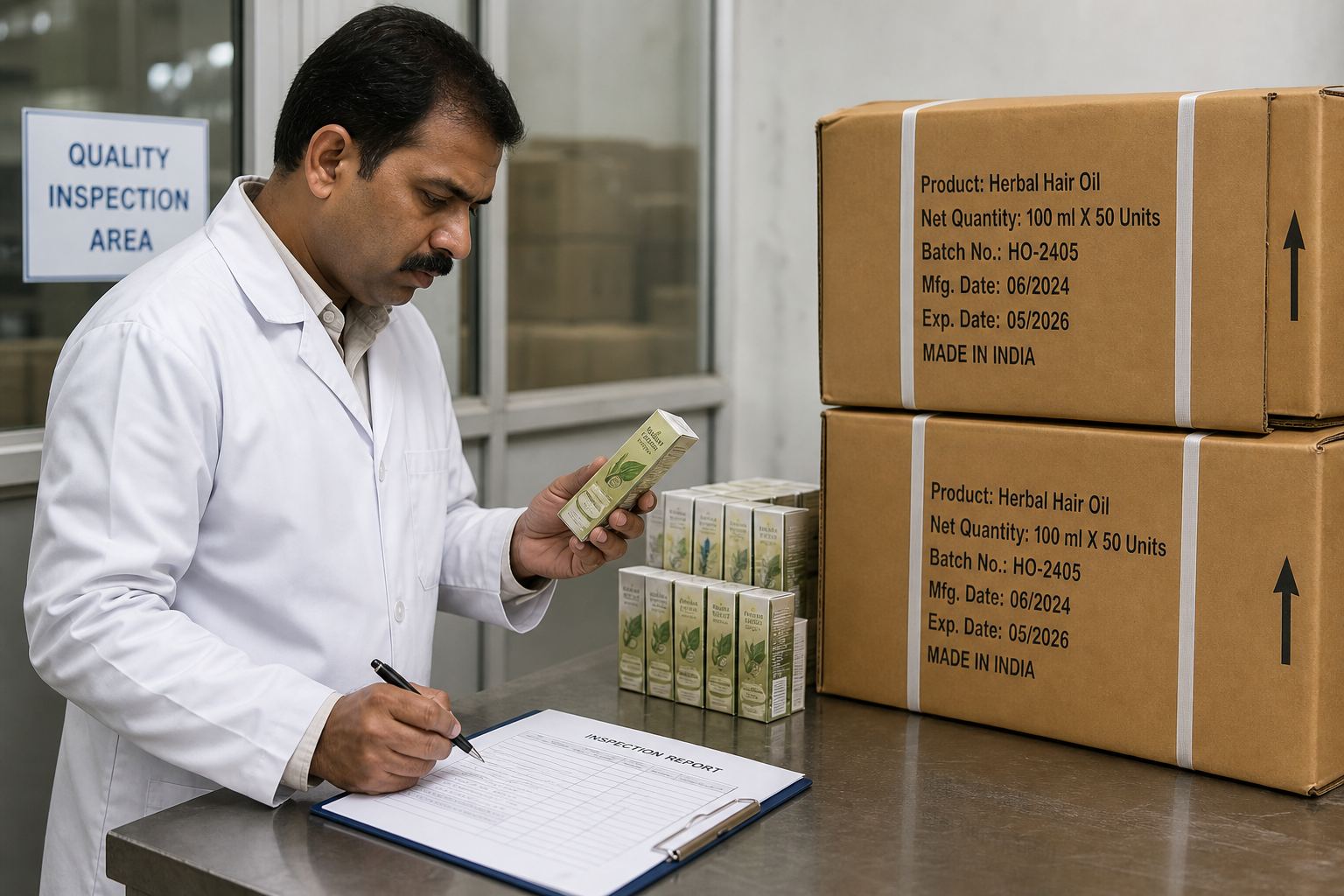
Practical duty planning workflow for international buyers
- Classify on paper—record proposed HS code, source, and confidence for each SKU family.
- Pull rates from official tools—U.S. HTS, UK Global Tariff, EU TARIC, Australian tariff, Canadian CBSA, UAE schedules; note effective dates.
- Model MFN and preferential scenarios—price using the conservative rate unless origin is confirmed pre-shipment.
- Check trade remedies—search ADD/CVD/SIMA/safeguard lists for your product and country of export.
- Align commercial terms with landed cost modeling.
- Brief your broker early—share classification rationale and invoice drafts per customs clearance coordination.
- Reconcile after entry—compare broker assessment to your model and update TCO.
Before scaling orders:
Common mistakes buyers make
Common Mistakes Box
Mistake 1: Using supplier’s export HS code as your import code
Export classification in India and import classification in your country may differ. Always classify at destination.
Mistake 2: Assuming "developing country" means zero duty
Generalized System of Preference programs are limited, product-specific, and often suspended or conditioned. India-origin MFN rates apply unless a specific preference is documented.
Mistake 3: Ignoring import VAT/GST cash impact
Duty-free does not mean cost-free. Australia, Canada, UK, EU, and UAE paths often include significant import VAT/GST funding at clearance.
Mistake 4: Building retail prices before classification confirmation
Margin locks before broker review are fragile. Classify before marketing claims "no import duty."
Mistake 5: Treating certificate of origin as automatic savings
Origin documents without rules-of-origin compliance fail at entry. Duty snaps to MFN retroactively in effect.
Mistake 6: Sample shipments at token values
Customs may challenge $1 sample declarations. Use legitimate transaction values or applicable sample valuation rules.
Mistake 7: Separating duty planning from sourcing decisions
Bill of materials sourced outside India may disqualify preferential treatment. Sourcing and duty teams must share one view.
Duty accuracy is shared: the buyer owns classification and pricing model; the broker applies rates at entry; the supplier provides specs and invoice value; a sourcing partner coordinates origin documentation. Altus Exports supports export execution and document packs aligned to entry needs but does not determine foreign duty rates. For the full import roadmap, see how to import products from India and the India import process map.

Conclusion
Import duties and taxes on products from India are determined at your border by HS classification, customs value, applicable tariff rates, trade remedies, and preferential origin rules—not by export slogans or supplier assurances. International buyers who classify early, model MFN and preferential scenarios honestly, align Incoterms with valuation, and reconcile duty after entry protect margin and compliance.
Duty planning connects directly to landed cost and total cost of ownership. Treat it as part of sourcing strategy alongside payment terms, shipping mode, and documentation quality. When in doubt, use conservative duty assumptions in pricing until your broker confirms classification and origin documentation.
If you are sourcing from India and want export documentation and commercial terms structured to support accurate duty planning at destination, contact Altus Exports with your SKU list, target market, and intended Incoterm.