
Third-Party Quality Inspection in India: When Do You Need It?
By Saurabh Mittal, Founder, Altus Exports
Third-party quality inspection in India is worth using when order value, product risk, supplier history, or buyer visibility makes independent lot-level evidence cheaper than defect cost. Use the decision matrix to choose during-production, pre-shipment, or loading…
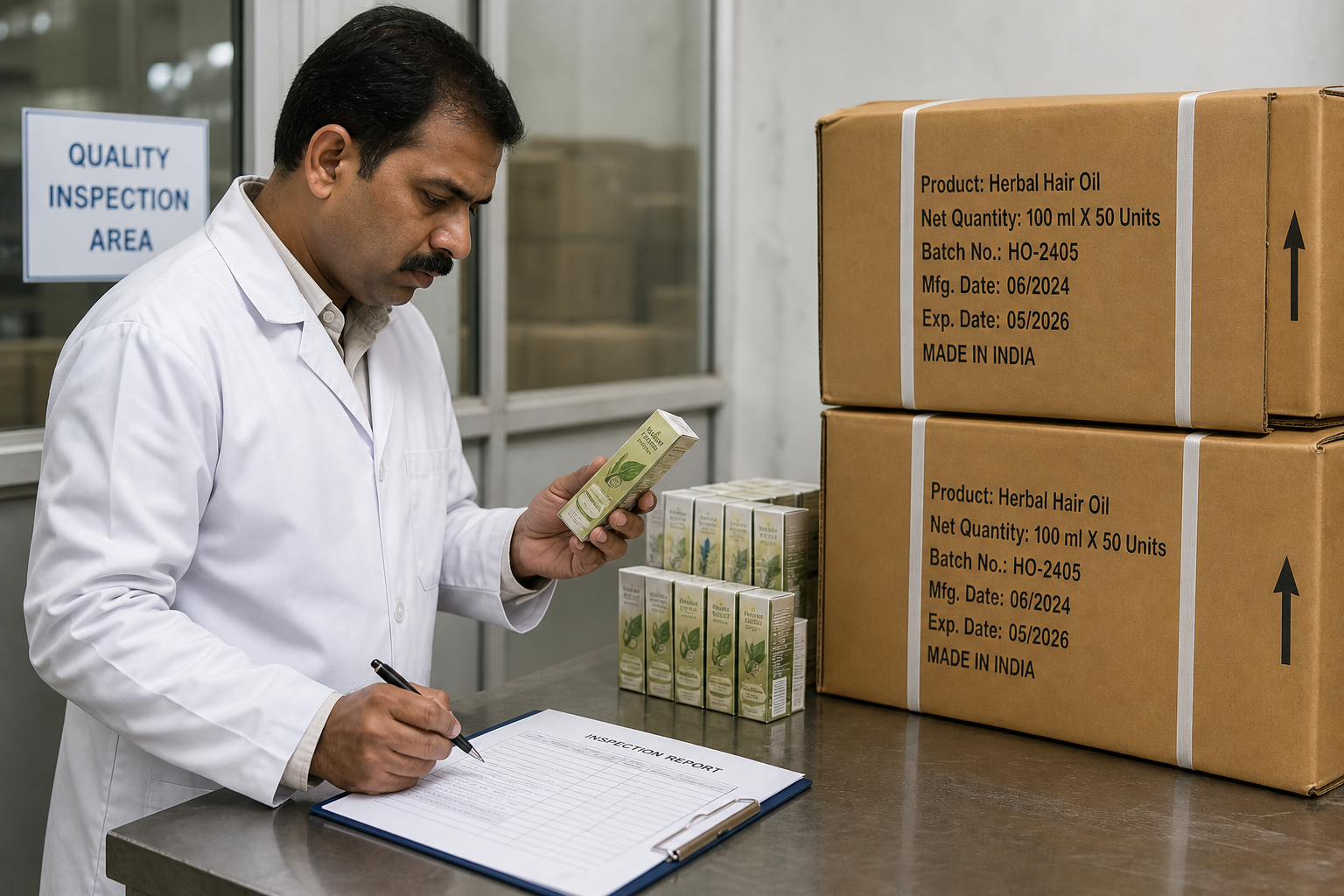
Factory quality control, buyer visits, and sourcing-partner oversight all have a place in India sourcing. Third-party inspection (TPI) adds something different: an independent witness at a defined gate who records what was checked, what failed, and whether goods may move.
Buyers often treat TPI as a default cost line or, conversely, skip it to save money and hope the supplier’s QC team is enough. Both extremes create predictable losses. Inspection spend should follow risk, not habit.
The Third-Party Inspection Decision Matrix in this guide helps you decide when to hire an independent inspector, when factory QC or your own team is sufficient, and when a sourcing partner should coordinate inspection as part of broader order control. It covers cost versus risk, inspection types, briefing packs, report interpretation, conflict of interest, and cases where TPI adds little value.
What third-party inspection is—and is not
- a substitute for supplier verification or a factory audit;
- a guarantee that every unit in every future order will be perfect;
- automatic proof of social compliance or legal compliance unless explicitly scoped;
- useful without a clear specification, AQL, and defect classification.
- objective evidence for release or hold decisions;
- a deterrent against short cuts when the factory knows an independent visit is scheduled;
- a practical control when the buyer cannot be on site during production;
- a shared language between buyer, factory, and logistics when defects are found late.
This article sits inside the broader quality path from supplier selection through shipment. Read the factory inspection in India complete guide for structural factory audits, pre-shipment inspection in India for PSI detail, and how to verify product quality before shipping from India for buyer-side verification steps. For end-to-end process design, see how to conduct quality control when sourcing from India.
Altus Exports helps international buyers define inspection gates, briefing documents, and escalation rules when independent inspection is part of a global sourcing partner engagement in India. The matrix below works whether you book inspection yourself or coordinate through a partner.
Third-party inspection is independent lot-level verification at an agreed gate: during production, before shipment, at loading, or at a defined sample stage. The inspector works to your specification, sampling plan, and defect list—not to the factory’s internal pass standard.
TPI is not:
TPI is:
Structural readiness belongs in a factory audit such as the Indian factory audit checklist for international buyers. Lot acceptance belongs in inspection.

The Third-Party Inspection Decision Matrix
- Product risk — safety, regulation, performance, appearance, shelf life, or brand exposure if defective.
- Supplier history — new site, new product, prior defects, or undisclosed subcontracting.
- Order economics — unit value, total PO value, rework cost, chargebacks, and market launch impact.
- Buyer visibility — can your team or a trusted partner observe production and packed goods in time?
Use four inputs to decide whether TPI is required, optional, or unnecessary for a given order:
The matrix is a decision tool, not a law. Document why you chose or waived TPI. Waivers should name the approver and residual risk.
Comparison table
Swipe →
Data table — swipe horizontally on small screens
| Product risk | Supplier history | Order economics | Buyer visibility | Recommended control |
|---|---|---|---|---|
| Low | Proven repeat | Small PO | Partner or buyer can view packed sample | Factory QC + buyer sample approval; TPI optional |
| Medium | New product on proven supplier | Medium PO | Limited visibility | During-production on first lot + PSI |
| High | New supplier | Large PO | No local presence | Factory audit + DUPRO + PSI + loading if high value |
| High | Any prior major defect | Any relaunch | Any | Independent re-inspection at tightened AQL |
| Regulated / safety-critical | Any | Any | Any | Independent inspection at defined gates; do not rely on factory QC alone |
Cost versus risk: a practical framing
Comparison table
Swipe →
Data table — swipe horizontally on small screens
| Cost element | What to estimate | Why it matters |
|---|---|---|
| Inspection fee | Day rate, travel, rework visit, report turnaround | Direct and easy to budget |
| Defect rework offshore | Sort, repack, repair, delay penalties | Often exceeds one inspection |
| Defect rework at destination | Destruction, return freight, retailer chargebacks | Can exceed entire PO margin |
| Launch or season miss | Lost revenue, markdown, contract penalties | Hidden until too late |
| Brand and compliance exposure | Recalls, regulatory action, warranty claims | Highest tail risk |
Inspection fees are visible. Defect costs are often delayed until the goods arrive, retail complaints start, or a launch misses its window. Compare TPI cost to the cost of being wrong, not to the factory’s quoted unit price alone.
A common mistake is skipping TPI on a medium PO because the fee feels high, then paying multiples of that fee to sort goods at destination. Another mistake is booking PSI on every repeat SKU forever without relaxing controls after stable performance. The matrix supports both when to add and when to simplify inspection.
Altus Exports typically aligns inspection spend with PO value bands and defect history rather than applying one rule to every SKU.
Order types that usually need third-party inspection
Some order profiles consistently justify independent eyes even when the supplier seems cooperative.
New supplier or new producing site
You lack performance history. Factory QC may be competent, but you have not yet seen how this site behaves under your specification. Pair a factory audit or structured walkthrough—see how to inspect an Indian factory before order—with PSI on the first shipment at minimum.
Custom or private-label products
Custom molds, formulations, prints, assortments, and packaging increase mismatch risk. During-production inspection catches drift before thousands of wrong units exist.
High SKU complexity or assortment
Mixed cartons, size runs, colorways, and bundle packs create packing errors that factory final QC may not sample correctly. PSI with explicit assortment checks is standard.
Regulated, safety-critical, or performance-critical goods
Electrical, food-contact, children’s products, medical-adjacent items, and structural components need defined tests and sampling. Factory QC may run tests, but the buyer often needs independent verification that the correct tests occurred on the correct lot.
Large quantity or high total PO value
When defect volume scales with order size, early detection pays. DUPRO on the first production days often saves a full-batch rework.
Short ship windows and seasonal programs
If there is no time to remake before the season, inspection before seal is cheaper than dispute after sail.
Prior defect or audit conditional
If a previous lot failed, or a factory audit produced conditional findings, independent re-inspection with tightened criteria is appropriate until performance stabilizes.

Order types where TPI may be optional
Independent inspection is not mandatory for every India PO. Over-inspection burns budget and trains suppliers to treat quality as an external event rather than an internal discipline.
Optional does not mean zero control. It means factory QC plus buyer or partner oversight is proportionate—and you record the waiver.
Comparison table
Swipe →
Data table — swipe horizontally on small screens
| Scenario | Why TPI may be optional | Minimum control still required |
|---|---|---|
| Low-value commodity repeat SKU | Stable history, simple spec | Approved sample, packing spec, PSI waiver documented |
| Supplier with long proven track record | Repeatable performance data | Periodic audit and spot checks |
| Buyer team or partner on site full time | Direct visibility | Written release authority and defect log |
| Engineering samples only | Not production lot | Sample evaluation, not PSI |
| Supplier-paid certification already scoped to lot | Third lab report covers critical tests | Verify lab scope matches your lot |
Inspection types: during-production, pre-shipment, and loading
Different gates answer different questions. Many high-risk programmes use more than one.
Comparison table
Swipe →
Data table — swipe horizontally on small screens
| Inspection type | Also called | Primary question | Typical timing | Best for |
|---|---|---|---|---|
| During-production | DUPRO, inline | Is the line set up correctly before volume builds? | First days of production, or after changeover | New SKU, new supplier, complex setup |
| Pre-shipment | PSI, FRI | Does finished packed goods meet spec and AQL? | 100% produced, before dispatch | Most export orders |
| Loading / container | CLS, loading supervision | Do shipped cartons match inspected lot and count? | During container stuffing | High value, mixed suppliers, theft or swap risk |
| Initial production check | IPC | Are materials, methods, and first units correct? | Very early production | Critical safety or high tooling investment |
During-production inspection (DUPRO)
DUPRO verifies that materials, methods, labels, and first outputs match the approved sample before the factory scales quantity. It is strongest when setup errors are expensive: print registration, shade matching, mold first shots, stitching pattern, or circuit assembly.
Book DUPRO early enough that production can pause without destroying the ship date. Arriving after 80% of the lot is finished turns DUPRO into an expensive PSI with extra friction.
Pre-shipment inspection (PSI)
PSI is the default export gate for many buyers. Inspectors verify quantity, workmanship, packing, labeling, barcodes, tests where scoped, and sampling against AQL. Goods should be fully produced and at least partially packed; the inspection lot should be held and accessible.
Read the dedicated workflow in pre-shipment inspection in India.
Loading inspection
Loading inspection confirms that cartons placed in the container match the PSI-passed lot, counts align, and seals are applied under observation. It reduces swap and short-load risk when multiple orders share a dispatch area or when security concerns are elevated.
Loading inspection does not replace PSI unless PSI already passed and goods remained under hold until stuffing.

Factory QC versus third-party inspection versus buyer team
Each layer has strengths. The question is independence and incentive at the release gate.
Factory QC should run every day. TPI should witness the lot you intend to pay for and ship. A buyer visit or partner presence bridges gaps but does not automatically replace PSI when independence is required.
When a sourcing partner also selects the supplier, negotiate inspection booking so the inspector reports to you or to a firm you appoint. Altus Exports separates supplier nomination advice from inspection release criteria so buyers retain hold authority.
Comparison table
Swipe →
Data table — swipe horizontally on small screens
| Control layer | Strength | Weakness | Best use |
|---|---|---|---|
| Factory QC | Knows process, language, and line instantly | Incentive to ship; may use internal defect definitions | Daily in-process control |
| Third-party inspector | Independent witness; standardized report | Needs clear brief; not a process consultant on a one-day visit | Release gate evidence |
| Buyer QC visit | Direct spec ownership | Travel cost; may lack local language and logistics | Development, audit, critical launch |
| Sourcing partner oversight | Coordinates factory, brief, reinspection | Must disclose role and conflicts | End-to-end order management |
Selecting a third-party inspection firm in India
Not all inspection companies deliver the same outcome. Selection criteria should go beyond day rate.
Scope and product competence
Confirm experience with your product category: textiles, hardware, engineered parts, consumer electronics, food-contact packaging, and so on. Ask for a sample report in a similar category with client details redacted.
Geographic coverage and response time
India’s production clusters span Gujarat, Tamil Nadu, Karnataka, NCR, Punjab, Maharashtra, and more. Verify local inspector availability and realistic travel time. Last-minute bookings often produce rushed reports.
Standards familiarity
Inspectors should understand your AQL sampling plan, defect classifications, destination-market labeling rules, and test references in your spec. If they only offer a generic checklist, your briefing must be tighter.
Language and factory communication
Inspectors who communicate clearly with factory QC reduce misunderstandings on hold tags and rework. You still want the report in your working language.
Accreditation and insurance
ISO 9001 for the inspection firm, professional liability coverage, and defined code of ethics are baseline questions. Accreditation alone does not replace a good briefing pack.
Turnaround and reinspection policy
Confirm report delivery time, who approves rework reinspection, and fees for failed-lot revisits. A cheap day rate with slow reports can miss the vessel cutoff.

Conflict of interest: what to avoid
Independence fails when incentives align with shipment rather than evidence.
Ask directly who pays whom and who receives the report first. If the factory insists on a single inspector you did not approve, treat that as a sourcing risk signal.
Comparison table
Swipe →
Data table — swipe horizontally on small screens
| Conflict pattern | Why it matters | Mitigation |
|---|---|---|
| Inspector paid only if lot passes | Pressure to overlook defects | Buyer pays inspector; pass/fail does not affect fee |
| Factory chooses and pays inspector without buyer approval | Report may favor ship date | Buyer approves firm and receives report directly |
| Sourcing agent owns inspection company | Dual role may hide supplier issues | Separate reporting line; buyer holds release |
| Same firm audits and inspects same lot same day | Audit fatigue; checklist theatre | Split audit and inspection roles when possible |
| Factory restricts sampling or areas | Invalid inspection | Brief requires full access or fail report |

Building an inspection briefing pack
- Purchase order and line items — SKU, quantity, assortment, PO number.
- Approved golden sample — or signed sample reference with version date.
- Specification summary — critical dimensions, materials, tests, tolerances, prohibited defects.
- Defect classification — critical, major, minor with photos where possible.
- AQL and sampling plan — inspection level, AQL values, double sampling rules if used.
- Packing and labeling spec — carton marks, barcodes, retail labels, language, weights.
- Test requirements — on-site checks versus lab tests already completed with report numbers.
- Hold and release rules — who may authorize shipment after fail or conditional pass.
- Factory contacts and address — plus gate entry requirements.
- Photos of known past defects — if repeat SKU with history.
Inspectors produce better evidence when the briefing is operational, not a link to a 40-page PDF without highlights.
Include at minimum:
Send the briefing before booking confirmation. Update version control when the factory changes artwork or packing mid-order.
Altus Exports prepares briefing packs aligned to buyer specs and inspection firm templates so factories cannot claim ambiguity at the container door.
Interpreting inspection reports
A report is a decision document, not a filing exercise.
Read these sections first
- Inspection result — pass, fail, pending, or conditional pending rework reinspection.
- Sample size and AQL outcome — confirm it matches your agreed plan.
- Critical defects — any critical defect should default to hold unless you have a written concession process.
- Major and minor counts — compare to AQL accept numbers.
- Packing and labeling findings — often drive retailer rejections even when unit workmanship passes.
- Photos — verify they match your SKU and defect descriptions.
- Lot identification — batch codes, carton ranges, production dates.
Conditional passes and factory promises
Factories may offer sorting, rework, or “manager approval” after a fail. Decide in advance whether sorting happens under reinspection or whether fail means fail. Verbal promises without reinspection are a common source of destination surprises.
When to reinspect
Reinspect after rework on the same lot, after partial shipment attempts, or when the factory moves goods between buildings after PSI. Partial moves break lot integrity.
Linking report to payment and documents
Align inspection release with payment tranche, bill of lading instruction, and supplier scorecard. A fail should trigger hold on balance payment and forwarder booking—not an email debate after sail.

When third-party inspection is NOT needed
- you are buying a proven repeat SKU from a supplier with stable data and low defect rate;
- unit value and total PO value are low relative to inspection and delay cost;
- your team or sourcing partner maintains continuous on-site presence with release authority;
- the order is sample-only or trial quantity with no retail exposure;
- independent lab testing on the production lot already covers the critical safety characteristics you care about, and you verify scope and chain of custody.
- you have no approved sample or spec;
- production is not finished and the factory pressures early inspection to hit ship date;
- goods are not accessible or are hidden in a secondary warehouse;
- the briefing pack was never sent;
- you treat pass as permanent approval of the supplier for all future SKUs.
Skipping TPI should be a documented decision, not an accident.
TPI may not be needed when:
TPI is still weak when:
Even when TPI is waived, retain factory audit discipline for new sites and defect prevention practices from how to prevent quality problems when sourcing from India.
Combining TPI with factory audit and sourcing partner oversight
The strongest programmes stack controls without duplicating theatre.
A sourcing partner can coordinate briefing, booking, hold tags, and rework reinspection—but the buyer should retain release authority and inspector selection for independence.
Comparison table
Swipe →
Data table — swipe horizontally on small screens
| Phase | Primary control | TPI role |
|---|---|---|
| Supplier shortlist | Verification and factory audit | None |
| First PO release | Audit corrective actions closed | DUPRO if setup-critical |
| Production | Factory in-process QC | PSI at hold tag |
| Dispatch | Partner logistics coordination | Loading inspection if high value |
| Repeat orders | Scorecard and spot audit | Relax to PSI-only or sample waiver by policy |

Conclusion
Third-party quality inspection in India is not a ritual line item or a luxury—it is a risk-priced control that pays off when independent lot evidence is cheaper than being wrong at destination. The Third-Party Inspection Decision Matrix helps you match DUPRO, PSI, and loading inspection to product risk, supplier history, order economics, and buyer visibility.
Use factory audits and verification for structural readiness; use TPI for release decisions on the goods you intend to pay for and ship. Avoid conflicts of interest, invest in briefing packs, and read reports as hold-or-ship decisions—not archive PDFs.
If you want inspection gates integrated with factory audits, supplier communication, and shipment coordination in India, contact Altus Exports through the global sourcing partner service or the contact page with your product brief, PO value, destination market, and planned production dates. A proportionate inspection plan can be defined before the first lot is packed.