
How to Inspect an Indian Factory Before Placing an Order
By Saurabh Mittal, Founder, Altus Exports
To inspect an Indian factory before placing an order, confirm the production site matches the contracting party, verify process fit against your specification, review the quality-control system and capacity evidence, map subcontracting, test sample capability, and document…
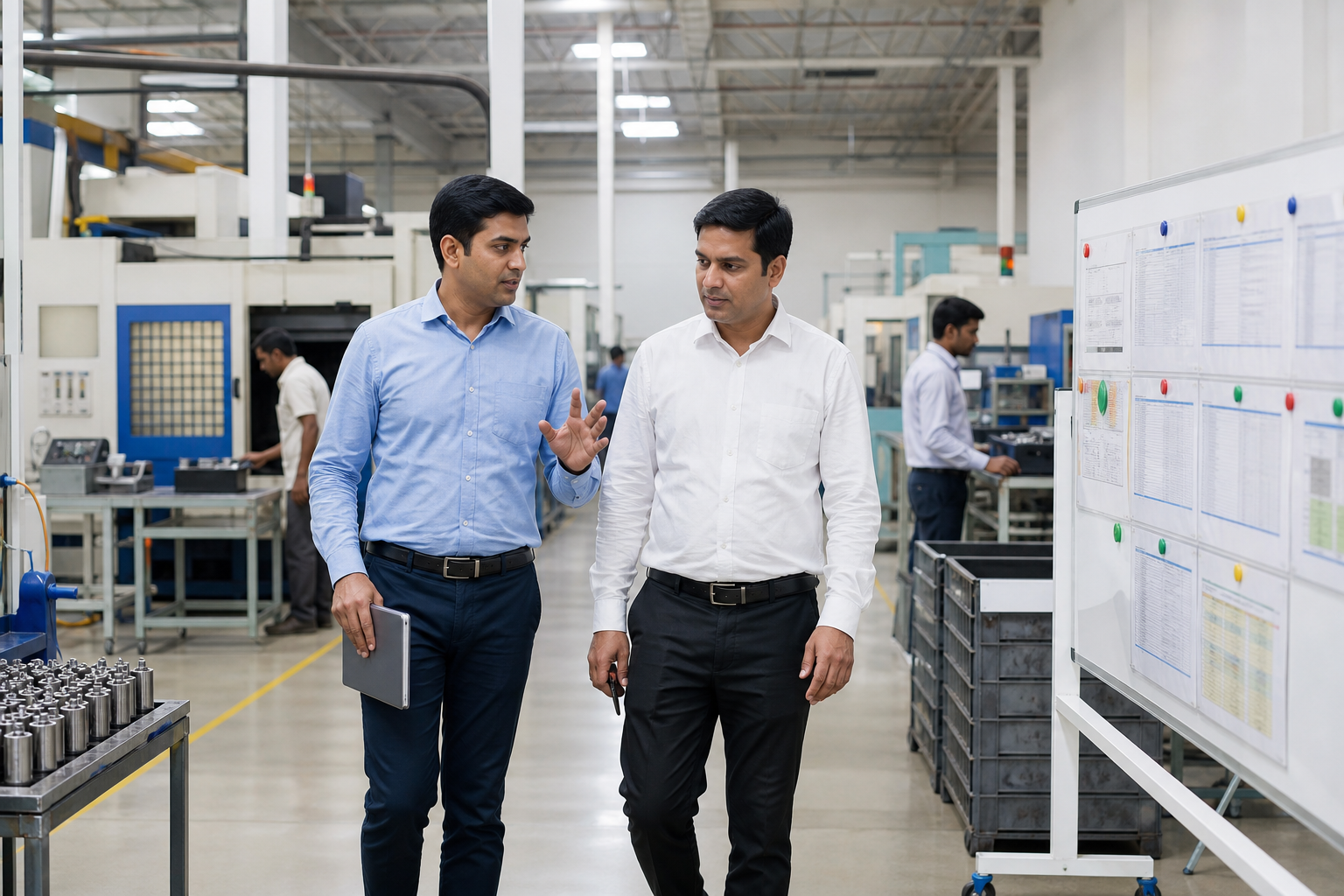
An Indian supplier may present polished product photographs, a professional quotation, and a confident sales team while the actual production site, process, and quality controls remain unclear. For an international buyer, that gap is not a minor detail. It is the difference between a controlled first order and a dispute you cannot resolve from overseas.
Factory inspection before a purchase order is not the same as supplier verification. Verification asks whether the business is real, the export role is clear, and the commercial terms are acceptable. Factory inspection asks whether the physical site and production system can make your product, hold your quality standard, and deliver within your timeline. Both matter, but they use different evidence and should happen in sequence.
This guide uses the Pre-Order Factory Inspection Gate Framework. Each gate removes a different operational uncertainty before you commit funds. The framework is designed for a first order, a new product category, a supplier found through a directory or marketplace, or any situation where you do not yet have repeat-order production evidence from the same site.
Why factory inspection must happen before the PO, not after
- you have never received a shipment from this site;
- the supplier was introduced through a platform, agent, or unsolicited outreach;
- the product uses custom tooling, regulated materials, branded packaging, or tight tolerances;
- the quoted price is unusually low compared with comparable offers;
- several people communicate on the supplier side but no one clearly owns production and quality;
- the order has a meaningful deposit, a fixed launch date, or limited replacement stock if the first lot fails.
Entity checks—legal name, GST, IEC, bank account consistency—belong to the supplier verification cluster. Complete those first using how to verify an Indian supplier before placing an order and how to verify Indian company registration, GST, and export credentials. This article owns what happens at the factory: what you observe, what you ask, and what you document before the PO.
Altus Exports supports international buyers with on-ground factory observations, supplier comparison, sample coordination, and quality follow-up. The gates below are useful whether you visit personally, use a third-party inspector, work through Altus Exports, or combine a remote walk-through with independent confirmation.
Once a deposit is paid and material is ordered, your leverage changes. A supplier may have committed to a customer slot, purchased inputs, or started tooling. Correcting a misunderstood process, an undisclosed subcontractor, or a weak quality system then becomes slower, more expensive, and harder to prove.
Pre-order factory inspection is especially important when:
Factory inspection does not guarantee perfect production. It makes the production environment visible so you can decide whether the risk is acceptable, whether conditions are needed, or whether another supplier is a better fit. For the full inspection lifecycle—including during-production checks and shipment release—see factory inspection in India: a complete guide for international buyers.

The Pre-Order Factory Inspection Gate Framework
Move through the gates in order. A material concern at an early gate should be resolved before you invest heavily in samples, tooling, travel, or deposit. Required depth should match product risk: a simple commodity item and a private-label electrical accessory do not need the same inspection intensity.
Document the outcome of every gate in a factory inspection file: date, participants, observations, photos or video references, open questions, and conditions for proceeding. Use the Indian factory audit checklist for international buyers for a detailed evidence list and India quality control process: from supplier selection to final shipment to see how pre-order inspection fits the wider QC map.
Comparison table
Swipe →
Data table — swipe horizontally on small screens
| Gate | Decision to make | Core evidence | Do not proceed when |
|---|---|---|---|
| 1. Site identity | Is this the actual production location for our order? | Address match, signage, live walk-through, site photos with context | Site cannot be confirmed or conflicts with stated manufacturer |
| 2. Process fit | Can this site make our exact product and specification? | Process map, equipment, material flow, technical Q&A | Claims are generic and no product-specific evidence exists |
| 3. QC system | How is conformity checked, recorded, and corrected? | Inspection points, instruments, defect logs, retained samples | Quality is asserted without measurable controls |
| 4. Capacity evidence | Can the site deliver our volume and timing at this quality level? | Production plan, bottlenecks, current loading, export handoff | Capacity is promised without a credible plan |
| 5. Subcontracting map | Where does work actually happen, and who controls it? | In-house vs outsourced operations, locations, approval records | Subcontracting is hidden or uncontrolled |
| 6. Sample capability | Can the site produce a representative sample before PO? | Sample plan, materials, tooling, approval process | Sample path does not reflect production intent |
| 7. Inspection rights in PO | Can we verify production and shipment on agreed terms? | Draft PO clauses, access rights, hold points, rework rules | Supplier refuses reasonable inspection or documentation rights |
Gate 1: Confirm site identity and production ownership
Start by identifying the exact address where your product will be made. Ask for the full site address, legal entity operating the site, and the relationship between that entity and the party issuing your quotation. A sales office in a commercial district and a factory in an industrial estate can both be legitimate; the problem is when they are presented as the same thing without explanation.
Match the site to the commercial record
- which legal entity controls the production site;
- whether the site shown is the only location for your product or one of several;
- who owns tooling, molds, screens, fixtures, and approved artwork if applicable;
- whether the site has export experience for your product type;
- who will grant access for future inspections or audits.
Compare the factory address with the quotation, pro forma invoice, registration records, export documents, and any video or photograph the supplier provides. Small differences can be legitimate—a group company structure, a dedicated export entity, or a recently relocated line—but they should be explained in writing.
Request clarity on:
If the supplier will not identify the production site before a deposit, treat that as a stop signal unless you have an independent way to confirm location and role. For broader authenticity signals beyond the site visit, see how to check whether an Indian manufacturer is genuine in the verification cluster—but do not substitute that article for physical process inspection.
Use live evidence, not only photographs
- whether activity matches the stated product category;
- whether equipment appears maintained and in use;
- whether material, WIP, and finished goods are segregated and labeled;
- whether safety and housekeeping suggest basic process discipline;
- whether the person guiding the visit can answer technical questions about your product.
Photographs can be useful context, but they are easy to misdate or reuse. A live video walk-through is stronger when it includes production areas, raw-material storage, work-in-process, finished goods, quality stations, packing areas, and site signage visible in sequence. Ask the supplier to show the route from incoming material to packed export cartons rather than only a showroom or sample room.
During remote or on-site review, note:
A walk-through is still not a substitute for an independent inspection when risk warrants it. It is a screening tool that helps you decide whether deeper audit, sample work, or a controlled trial order is justified.
Gate 2: Verify process fit against your specification
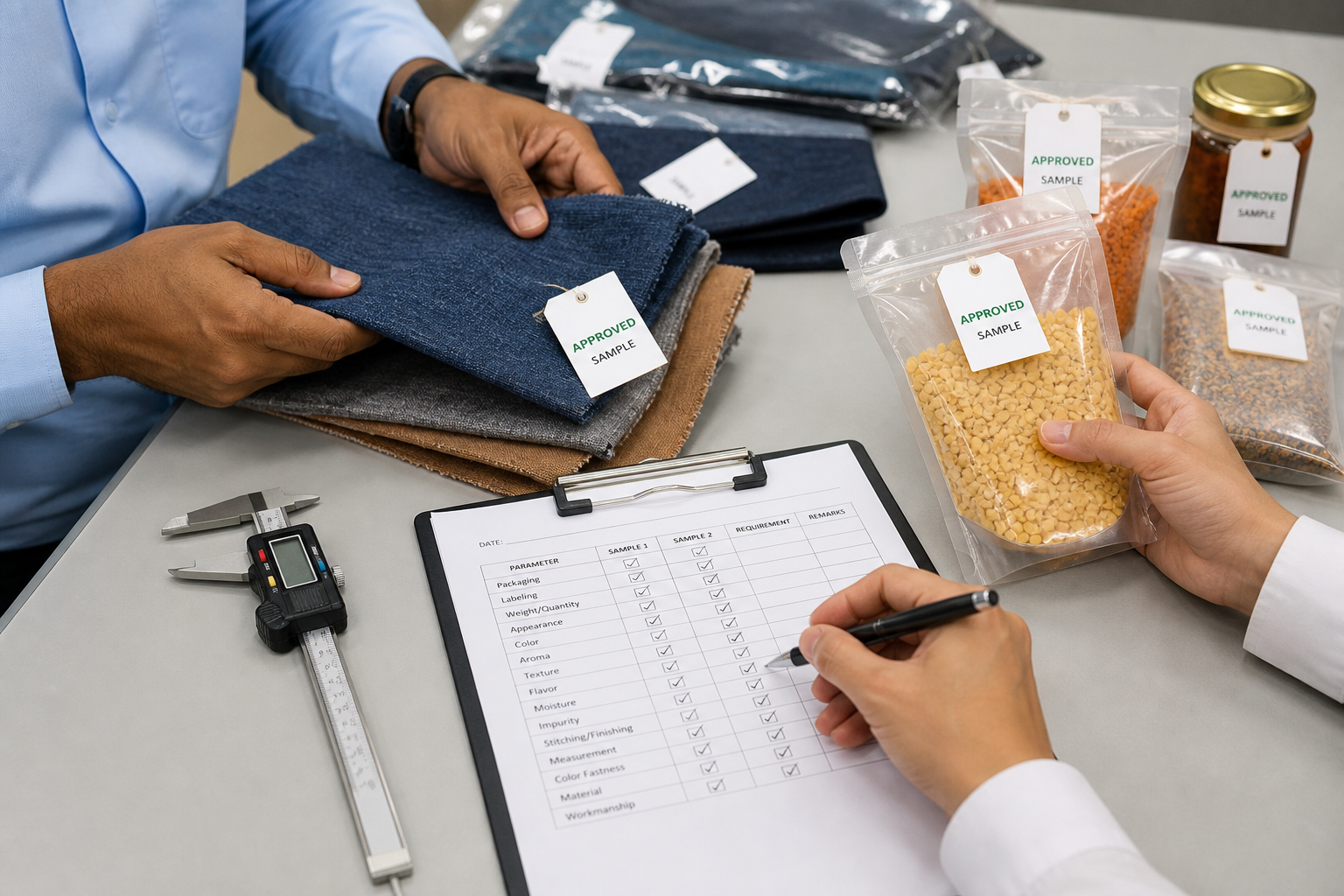
Process fit asks a precise question: can this site execute your production route at the quality level you require? Showing that a factory makes similar-looking products is not enough. You need evidence that the site understands your specification, has the right equipment and skills, and can manage the critical steps that determine success.
Send a usable technical brief before the visit
- a process map from incoming material to packing;
- equipment list relevant to your product, including age or condition where it matters;
- tooling, molds, dies, jigs, or fixtures available or planned;
- material storage and incoming inspection for key inputs;
- in-process controls at steps that affect fit, function, appearance, or safety;
- examples of comparable work with confidential customer details removed;
- the name and role of the person who will own technical approvals.
Give the supplier a clear RFQ pack: drawings, dimensions and tolerances, material grade, color standard, bill of materials where available, labeling and packaging requirements, test needs, target quantity, destination market, and requested Incoterm. Ask the supplier to restate the critical requirements and identify open points before or during the factory review.
Evidence to request and observe:
A capable supplier asks useful questions about tolerances, finish, substitutions, testing, and packaging. A supplier that agrees to every requirement immediately without clarifying the product may be quoting assumptions rather than an executable plan.
Test process understanding, not only equipment presence
Equipment on the floor does not prove it will be allocated to your order. Ask which line, machine, or team would run your product, whether that resource is shared with other customers, and what happens if a bottleneck appears. For technical products, ask how setup approval works, how changeovers are controlled, and how the site prevents mixing of materials, colors, or revisions.
A local sourcing partner can help buyers compare factory claims with on-ground observations, including whether stated equipment and process routes are actually in place. That support is especially useful when you are evaluating unfamiliar production clusters or do not have local technical staff available for a visit.
For ongoing QC methodology after supplier selection, see how to conduct quality control when sourcing from India.
Gate 3: Review the quality-control system on the floor
Quality claims on a website or in an email are not a quality system. Before the PO, you want to see how the site prevents, detects, and corrects nonconformity—and whether those controls can scale to your order volume.
Map inspection points and records
Comparison table
Swipe →
Data table — swipe horizontally on small screens
| QC stage | What to confirm | Useful evidence | Warning sign |
|---|---|---|---|
| Incoming material | Specification check, sampling, rejection process | Receiving records, test reports, quarantine area | Materials accepted without visible checks |
| Setup / first piece | Approval before volume run | First-article record, setup checklist | Production starts without approved setup |
| In-process | Patrol frequency, critical-to-quality points | Line records, defect logs, measuring tools | Checks described only verbally |
| Final inspection | Scope, staffing, space before packing | AQL plan reference, inspection tables, lighting | Inspection happens after cartons are sealed |
| Testing | Internal or external, timing vs shipment | Test equipment, calibration, lab relationship | Testing promised but no method named |
| Corrective action | Root cause, rework, segregation | Rework area, NCR log, reinspection record | Defective goods mixed with good stock |
Ask the supplier to walk through quality controls by stage:
Ask who performs each check, what happens when a result fails, and how you will be informed before goods are packed or dispatched. Independent inspection can add discipline later, but it does not replace a specification or a factory that can execute one. Define inspection scope and timing before the PO, especially when rework time is limited.
Confirm instruments, standards, and retained samples
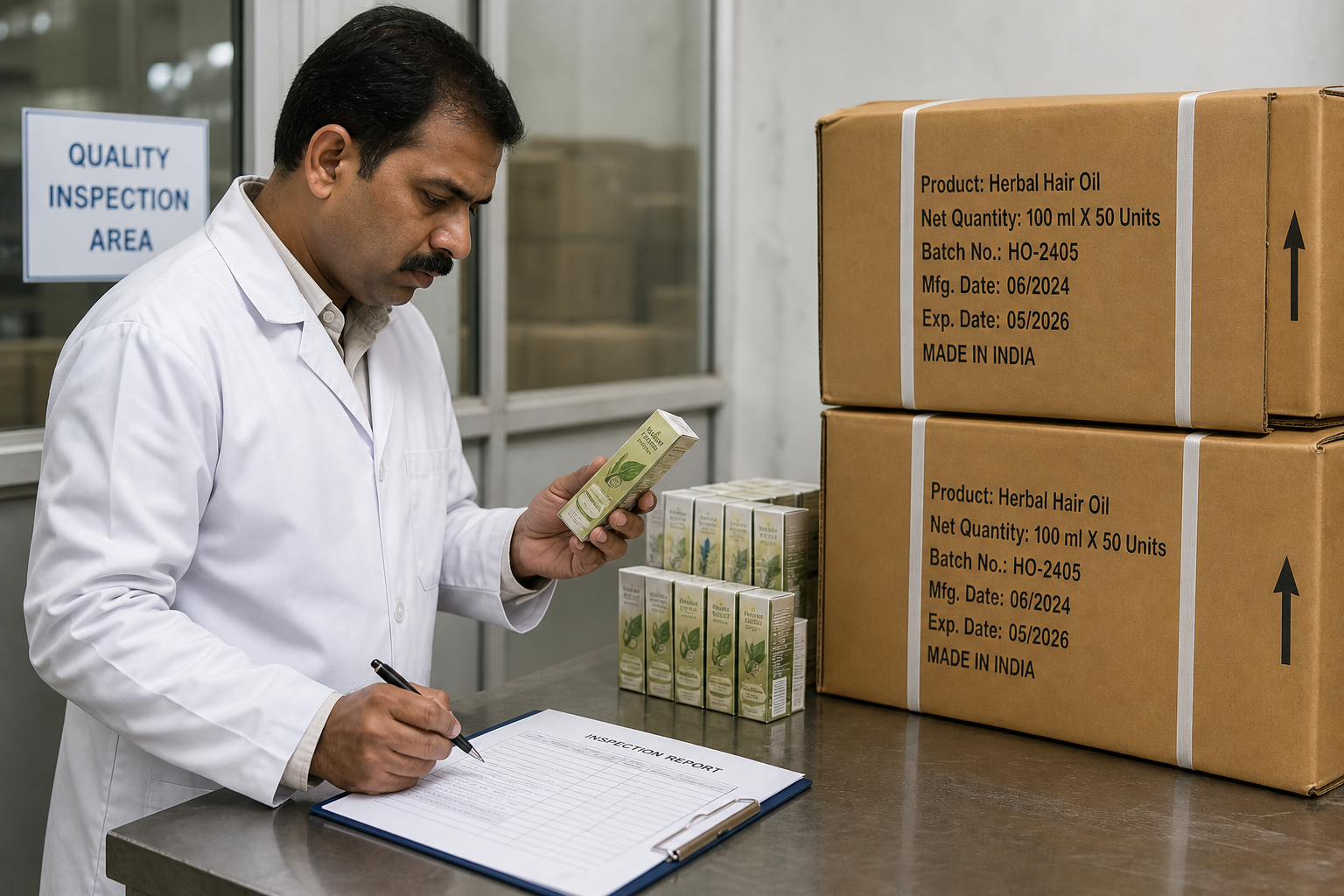
Where dimensions, color, weight, torque, electrical properties, or other measurable attributes matter, ask how the site calibrates and uses instruments. Request to see relevant gauges, scales, test fixtures, or software used for your product type. Ask whether the factory holds a retained sample or reference standard tied to your approved specification.
If the supplier cites ISO or another certification, treat it as context—not proof that your product will conform. Certification may indicate a documented system exists; your question is whether that system is applied to the line that will make your order. For deeper audit structure, use the Indian factory audit checklist for international buyers.
Gate 4: Gather capacity evidence, not capacity promises
- material procurement and approval;
- sample or pre-production approval;
- production start and in-process checks;
- finishing, packing, inspection, and rework allowance;
- export-ready date and shipment handoff.
Capacity is a system: machines, people, materials, quality throughput, packing, documentation, and the supplier's ability to absorb disruption. A statement such as "we can make 50,000 units per month" is a hypothesis until you see how that number applies to your product, your window, and the site's current commitments.
Ask for an indicative production plan that separates:
Then ask what could change each stage: imported material lead time, festival closures, power or maintenance, peak-season loading, or an outsourced process. Credible suppliers discuss constraints as well as capacity.
Compare rated capacity with demonstrated output for comparable products. Ask what the normal month, busiest month, and lowest-output month look like. Remember that production complete is not the same as export-ready: final inspection, packing, labeling, and document preparation can be the real constraint. For a dedicated capacity framework, see how to evaluate an Indian supplier's manufacturing capacity in the verification cluster.
Comparison table
Swipe →
Data table — swipe horizontally on small screens
| Capacity question | Useful evidence | Warning sign |
|---|---|---|
| What is normal output for this process? | Shift plan, equipment count, recent production range | One large number with no basis |
| What share of output would our order use? | Order slot and production sequence | "No problem" without current commitments |
| What is the material lead time? | Material specification and supplier confirmation | Material is unspecified or "always available" |
| What buffer is included? | Timeline with inspection and rework time | Lead time ends on the shipment date |
| What is the backup plan? | Alternate machine, supplier, or phased shipment | No plan for a common dependency |
Gate 5: Build a subcontracting map before you assume "in-house"
- which operations happen at the reviewed site and which happen elsewhere;
- whether any parts, finishing, printing, plating, stitching, assembly, testing, or packing are outsourced for your order;
- the legal entity and address for each outside operation;
- who supplies materials and retains process specifications;
- who conducts incoming, in-process, and final inspection at each location;
- whether the buyer or its representative can audit a critical subcontractor if risk warrants it;
- how lots, rejected goods, and rework are traced between locations.
Subcontracting is common in Indian manufacturing and can be well managed. It becomes risky when it is undisclosed, when you assume work remains on the audited site, or when quality and traceability controls do not follow the product.
Ask directly:
Document the subcontracting map in your factory file. If a supplier insists everything is in-house but cannot show the process on site, pause and investigate. The goal is not to forbid outsourcing; it is to know where the goods are, who is responsible, and where controls may weaken.
When subcontracting is disclosed and controlled, you can decide whether to accept it, impose conditions, or require pre-production approval at the subcontractor. When it is hidden, you lack the basis for that decision.

Gate 6: Test sample capability as a production rehearsal
- what the sample will and will not prove;
- materials and components to be used;
- whether production tooling or provisional tooling applies;
- dimensions, color, finish, function, and packaging scope;
- timeline, cost responsibility, and approval authority;
- how the approved sample will be retained and identified at the factory and by the buyer.
Samples are often treated as a marketing step. In a pre-order factory inspection, samples are evidence of whether the site can translate your specification into a physical product using production-intent materials, tooling, and process.
Before approving sample work, agree a sample plan that states:
A development sample made by a skilled technician with hand tools is not proof of bulk consistency. A golden sample made on the intended line with production-intent inputs is much stronger evidence. Record limitations explicitly: "product approved; packaging pending" is a valid status if packaging was excluded from the sample scope.
Use how to verify product quality with an Indian manufacturer for the broader quality evidence ladder. That article owns pre-buy product verification; this gate owns confirming that the factory you inspected can produce the sample path you will rely on before PO.
Altus Exports can coordinate sample production follow-up so buyers receive photographs, measurements, and status updates between approval and order release. The buyer should still retain final approval authority over specification and acceptance.
Gate 7: Document inspection rights in the purchase order
Factory inspection before the PO is wasted if the PO does not preserve your right to verify production and shipment afterward. Agree inspection rights, hold points, and reporting format before deposit—not when cartons are already sealed.
Minimum PO controls to negotiate
- approved specification, sample reference, and revision control;
- permitted substitutions and change-approval process;
- in-process and pre-shipment inspection rights for the buyer or its appointed inspector;
- defect classifications: critical, major, and minor;
- acceptance criteria, including AQL or equivalent sampling approach where used;
- authority to hold shipment pending inspection results;
- rework, replacement, or rejection rules and cost allocation;
- packing, labeling, barcode, and marking requirements;
- test and certificate requirements;
- document pack needed before balance payment or shipment release.
Your purchase order or quality agreement should identify:
Link payment milestones to evidence where practical: sample approval, pre-production approval, inspection pass, or agreed corrective action completion. There is no universal safe deposit percentage; the principle is to avoid paying ahead of the evidence you need.
For third-party inspection options and when to use them, see third-party quality inspection in India: when do you need it?. Pre-shipment inspection is covered in depth in pre-shipment inspection in India: what international buyers need to know.

On-site visit, remote walk-through, or independent audit?
Not every buyer can visit before the first PO. Choose a proportionate method based on product risk, order value, and supplier history.
A remote walk-through plus independent spot checks can be enough for a controlled first order when product risk is moderate and the trial size is absorbable. A high-risk product with a large deposit usually warrants on-site or independent audit before commitment. The guide to supplier audit in India without visiting the factory in the verification cluster explains remote-plus-independent protocols; pair it with this article's gates for inspection depth rather than entity checks alone.
Comparison table
Swipe →
Data table — swipe horizontally on small screens
| Method | Best for | Strengths | Limitations |
|---|---|---|---|
| Buyer on-site visit | High-value, technical, or regulated products | Direct observation, relationship building, deep Q&A | Travel cost and time; may need local logistics support |
| Live remote walk-through | Early screening, repeat supplier review | Lower cost, fast scheduling | Cannot verify everything; depends on supplier cooperation |
| Third-party factory audit | New supplier, distant buyer, high risk | Independent observation and written report | Quality depends on brief and auditor scope |
| Document-only review | Very low-risk repeat categories | Fast | Weak for first orders and custom products |
Red flags during pre-order factory inspection
- The supplier will not identify the production site or allow reasonable access before deposit.
- Site signage, address, or activity does not match the stated manufacturer or product type.
- Quality is described only as "export quality" with no inspection records or instruments visible.
- Capacity is asserted without a plan, bottlenecks, or current loading view.
- Subcontracting is denied but key processes clearly happen off site.
- The sample path uses methods that bulk production will not replicate.
- The supplier refuses written inspection rights, hold points, or defect definitions.
- Only polished marketing photos are provided; no current production can be shown.
- Technical questions are deferred indefinitely or answered inconsistently by different contacts.
- Urgency to pay a deposit increases while factory evidence remains incomplete.
Red flags are prompts to pause, gather more evidence, or reject the supplier. One signal may be explainable; several unresolved signals together should change your decision.
Unresolved red flags are a reason to compare alternate suppliers, reduce first-order size, or involve independent inspection before funds are released.

A practical pre-order factory inspection sequence
The timeline varies by product, but the sequence below prevents parallel activity from hiding unresolved gates.
Some steps take longer—custom tooling, lab testing, or travel scheduling. Do not compress the sequence by treating missing evidence as a future task. The purpose of the framework is to decide what must be known before money is committed.
Comparison table
Swipe →
Data table — swipe horizontally on small screens
| Phase | Buyer action | Factory/supplier output | Gate decision |
|---|---|---|---|
| 1 | Complete entity verification (separate cluster) | Legal and export-support documents | Is the supplier identifiable? |
| 2 | Send RFQ pack and request site address | Technical questions, visit plan | Is the site disclosed? |
| 3 | Conduct remote or on-site factory review | Walk-through, process map, QC discussion | Does process fit look credible? |
| 4 | Review capacity and subcontracting map | Production plan, outsourced operations list | Can the site deliver on time? |
| 5 | Agree sample plan and inspection rights | Sample quote, draft PO quality clauses | Are controls documented? |
| 6 | Approve sample against specification | Golden sample and retained reference | Is production intent proven? |
| 7 | Release controlled PO and deposit | Confirmed acceptance and bank details | Are you ready to start production? |
When to involve Altus Exports or a third-party inspector
An on-ground partner can be valuable when you cannot visit, are comparing several factories, need a structured factory observation before deposit, or require sample and production coordination across a cluster you do not know well. Define the role clearly: factory screening audit, technical comparison, sample follow-up, or full sourcing coordination.
Altus Exports provides global sourcing partner services in India for buyers who need practical local coordination across supplier discovery, factory review, quality follow-up, and export execution. The service should complement—not replace—your approval authority over product specification, acceptable risk, and commercial terms.
For a single high-risk supplier, a scoped third-party factory audit before PO may cost less than recovering from a wrong-site or wrong-process commitment. Use third-party quality inspection in India to decide when independent inspection is proportionate at pre-order stage versus later PSI.

Conclusion
To inspect an Indian factory before placing an order, do not rely on a quotation, a certificate image, or a handful of product photos. Use the Pre-Order Factory Inspection Gate Framework to confirm site identity, process fit, quality controls, capacity evidence, subcontracting, sample capability, and inspection rights in sequence. Complete entity verification separately, keep a written factory file, and resolve material gaps before issuing a PO or deposit.
If you need local support to apply these gates to a live sourcing project, contact Altus Exports with your product brief, target quantity, preferred visit or remote-audit approach, and first-order timeline. A focused factory review can establish appropriate inspection depth before you make a commitment.