
SGEPC Registration Benefits for Basketball Exporters
By Saurabh Mittal, Founder, Altus Exports
A complete guide to Sports Goods Export Promotion Council (SGEPC) registration for Indian basketball exporters — RCMC eligibility, the step-by-step application process, membership benefits, and how council credentials support (but never replace) genuine construction and compliance discipline for rubber, composite leather, and full-grain leather basketballs under HS 95066230.

Every serious Indian export category eventually settles on one apex body that international buyers use as an early credibility filter. For basketballs and the wider sports goods trade, that body is the Sports Goods Export Promotion Council (SGEPC), operating under India's Ministry of Commerce and Industry export promotion council framework. Basketballs move through customs worldwide under HS code 9506.62 — inflatable balls — with Indian exporters citing ITC-HS 95066230 for basketball subheading classification (US importers will see the corresponding HTS line 9506.62.80.40 on entry paperwork), and behind every compliant shipping bill sits a manufacturer whose export identity buyers can verify in seconds, or cannot verify at all. SGEPC registration, and the Registration Cum Membership Certificate (RCMC) issued alongside it, is what separates the two.
This guide is deliberately narrow. It covers what SGEPC does for basketball exporters, who is eligible, exactly how the registration and RCMC process works end to end, what membership does and does not deliver, and the practical mistakes exporters make with council credentials. It does not repeat the full export documentation sequence — that lives in our basketball export documentation checklist — and it does not go deep on FIBA Approval Programme match-ball certification, which gets dedicated treatment in FIBA-certified and match-grade basketball export opportunities. Think of SGEPC and RCMC as the institutional layer that sits underneath both of those workflows, not a substitute for either.
Whether you manufacture rubber outdoor and composite leather basketballs in Jalandhar, run a moulded or laminated production line in Meerut, or you are an international buyer trying to decide how much weight to place on a supplier's council listing, this article gives you the complete picture — application steps, RCMC mechanics, real membership benefits, a manufacturer case study, common mistakes, and fifteen detailed answers to the questions basketball exporters and buyers ask most often about SGEPC.
Key Takeaways
Summary Box
- SGEPC is India's designated export promotion council for sports goods, including basketballs under HS 9506.62 (ITC-HS 95066230), operating alongside — not instead of — the Import Export Code (IEC) that every exporter needs.
- RCMC (Registration Cum Membership Certificate), issued in connection with SGEPC membership, supports certain export benefit claims and formally documents organised-exporter status for basketball manufacturers and merchant exporters.
- Council membership speeds up buyer vendor-screening, unlocks sports goods trade fairs and delegations, and puts a basketball exporter's name into directories that procurement teams and trade missions search first.
- SGEPC registration is not legally mandatory to ship a basketball consignment, but most established Jalandhar and Meerut exporters treat it as a standard part of their export identity within their first year of serious international trade.
- Membership signals organised export status — it does not certify rubber, composite leather, or full-grain leather construction quality, circumference and weight tolerance, or FIBA Approval Programme compliance, and buyers should never treat an RCMC listing as a stand-in for sample evaluation and pre-shipment inspection.
- The registration process is straightforward once IEC, GST, and entity documents are aligned; most delays trace back to mismatched paperwork rather than the application itself.
Executive Summary
Summary Box
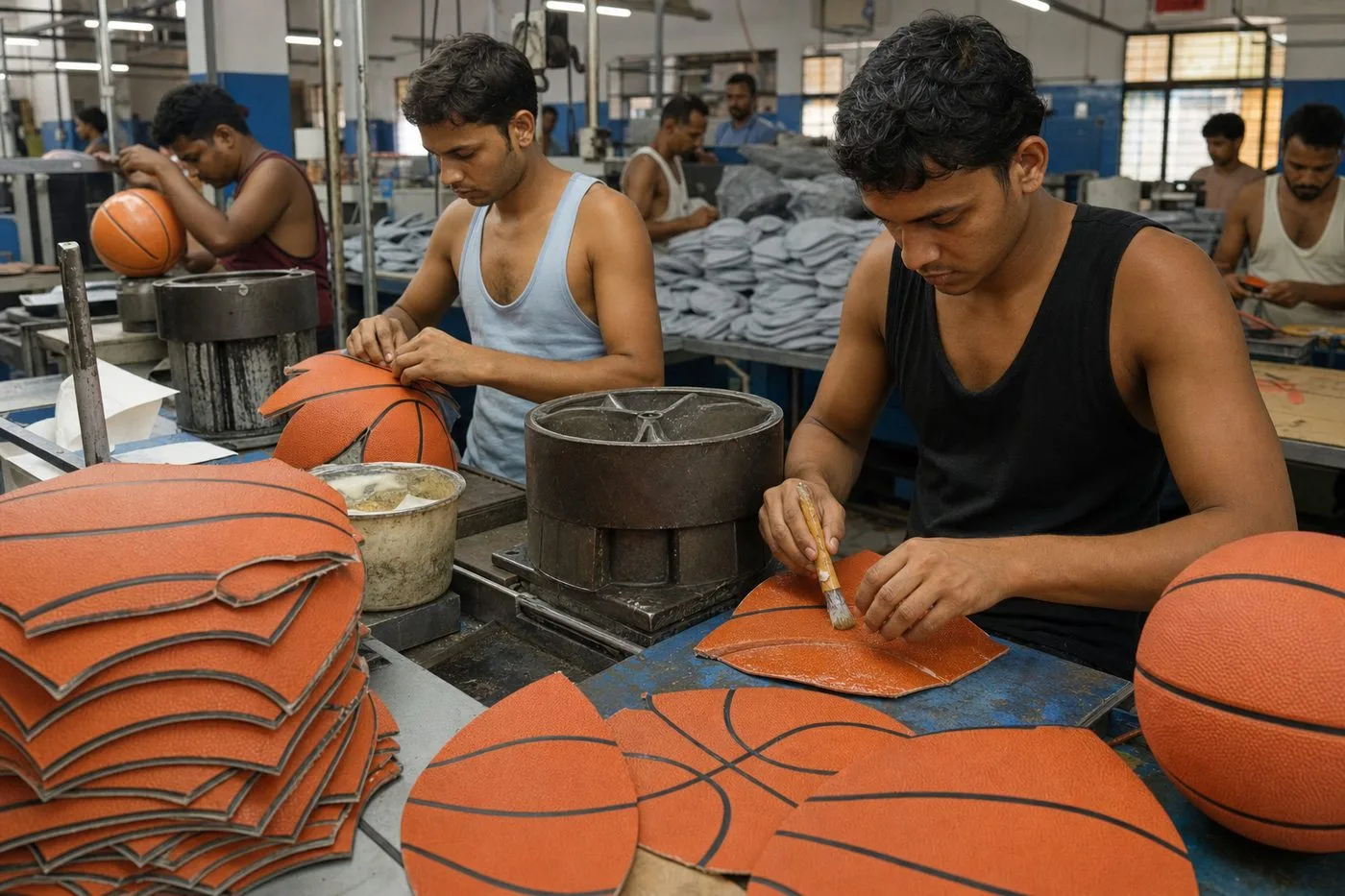
India's basketball manufacturing base is concentrated overwhelmingly around Jalandhar in Punjab, with Meerut in Uttar Pradesh serving as a secondary cluster for moulded and laminated PVC/rubber balls alongside its broader sports goods output. Both clusters export under HS 9506.62, and both sit within SGEPC's institutional mandate. For manufacturers in either cluster, SGEPC registration is one of the lowest-cost, highest-leverage credibility investments available — cheaper than a single failed buyer audit, and faster to obtain than most product certifications.
This guide treats SGEPC registration as what it actually is: a door-opener. It gets a basketball exporter onto buyer shortlists, into sports goods trade fairs, and into government trade-mission directories that would otherwise be difficult to access through cold outreach alone. It does not, on its own, win a repeat order — that still depends on construction quality, dimensional and weight consistency, and clean export documentation. Exporters who understand this distinction get the most value out of council membership; exporters who treat it as a marketing badge eventually face a credibility gap when a buyer's factory audit does not match the polish of the council listing.
Market Size & Industry Overview
Key Statistics
India's sports goods export sector, of which basketballs are one meaningful product line under HS 9506.62, sits inside a broader HS Chapter 95 toys, games, and sports-requisites basket that DGCIS pegs at roughly ~US$570.95 million in FY 2024-25 exports. Basketball-specific trade under ITC-HS 95066230 is a smaller, specialised slice of that total — TradeStat EIDB records exports of ~₹13.58 crore against imports of ~₹13.94 crore for FY 2024-25 — but it is a slice with steady grassroots, school-sport, and organised-retail demand behind it. Jalandhar remains the historic centre of gravity, a cluster with decades of sports-goods manufacturing depth that spans rubber outdoor, composite leather, and full-grain leather basketball construction lines serving training, retail, and FIBA Approval Programme pathway buyers alike.
Meerut, better known internationally for other sports equipment manufactured in the same industrial belt, has grown a genuine secondary basketball production base focused on moulded and laminated PVC/rubber balls — entry-level and mid-tier constructions that suit school, promotional, and value-retail programmes rather than FIBA Approval Programme match-ball tiers. Together, the two clusters give India a layered production base: Jalandhar anchoring craftsmanship and mid-to-premium constructions, Meerut adding volume capacity at accessible price points.
India's basketball manufacturing clusters at a glance
Swipe →
Data table — swipe horizontally on small screens
| Cluster | State | Primary Strength | Typical Constructions |
|---|---|---|---|
| Jalandhar | Punjab | Heritage sports-goods depth, mixed craftsmanship base, export experience | Rubber outdoor, composite leather, full-grain leather |
| Meerut | Uttar Pradesh | Volume production, accessible pricing, broader sports goods ecosystem | Moulded/laminated PVC, rubber outdoor |
Export Statistics
Key Statistics
Indian basketball exports under HS 9506.62 flow primarily toward North America, Southeast Asia, Western Europe, Australia, and the Middle East, with steady secondary demand from school and grassroots basketball programmes across Latin America and Africa. Punjab's broader sports-goods export base, of which the Jalandhar basketball cluster is a meaningful contributor, was estimated at roughly ~US$81.01 million in FY 2024-25 per DGCIS sector briefs. Basketballs themselves are a specialised, mid-tier export line within that total, which is precisely why buyer credibility signals like SGEPC/RCMC status carry outsized weight relative to the smaller pool of genuinely organised exporters competing for serious orders.
This guide does not attempt to rank destination markets in depth — that comparative analysis, including duty structures and market-entry sequencing, is covered fully in best countries for Indian basketball exports and most demanded Indian basketballs by country. What matters for this guide is that SGEPC membership and RCMC status are relevant across every one of those destination markets equally — council credentials are not market-specific, which is precisely why they function well as a baseline credibility signal regardless of which country a buyer represents.
Import Statistics
Key Statistics
On the demand side, global basketball imports are driven by a mix of organised retail replenishment (sporting goods chains and department stores), institutional procurement (schools, academies, and grassroots federations), and promotional or private-label programmes tied to major domestic leagues and international tournament cycles. TradeStat EIDB records Indian basketball imports of ~₹13.94 crore for FY 2024-25 against ~₹13.58 crore in exports — a near-balanced trade position that reflects India's role as both a manufacturing base for value and mid-tier constructions and an importer of premium branded balls for domestic retail.
Buyers in major destination markets increasingly run structured vendor onboarding before issuing purchase orders, and a growing share of onboarding questionnaires include a direct field for export council membership or RCMC status alongside IEC and GST verification. That shift in buyer-side procurement discipline is a large part of why SGEPC registration has moved, over the past several export cycles, from a nice-to-have to a near-standard expectation for exporters targeting organised retail and institutional buyers rather than one-off spot orders.
Product Categories
Summary Box
Basketball construction and size class determine which certification tier, price band, and buyer channel a given SKU realistically targets — and SGEPC membership applies uniformly across all of them, since council registration is entity-level rather than product-line-specific.
Basketball construction and size categories covered under SGEPC's sports goods mandate
Swipe →
Data table — swipe horizontally on small screens
| Construction | Typical Cover Material | Common Sizes | Primary Use |
|---|---|---|---|
| Rubber outdoor | Moulded rubber | Size 7 (men), Size 6 (women), Size 5 (youth) | Recreational, outdoor court, school and playground play |
| Composite leather | PU/synthetic composite leather | Size 7, Size 6 | Indoor/outdoor training, club retail, mid-tier match play |
| Full-grain leather | Genuine leather | Size 7, Size 6 | Premium indoor training, FIBA Approval Programme pathway, licensed retail |
| Moulded/laminated PVC | PVC synthetic | Size 7, Size 5, mini/promotional | Entry retail, promotional, school sport |
Manufacturing Overview
Export Tip
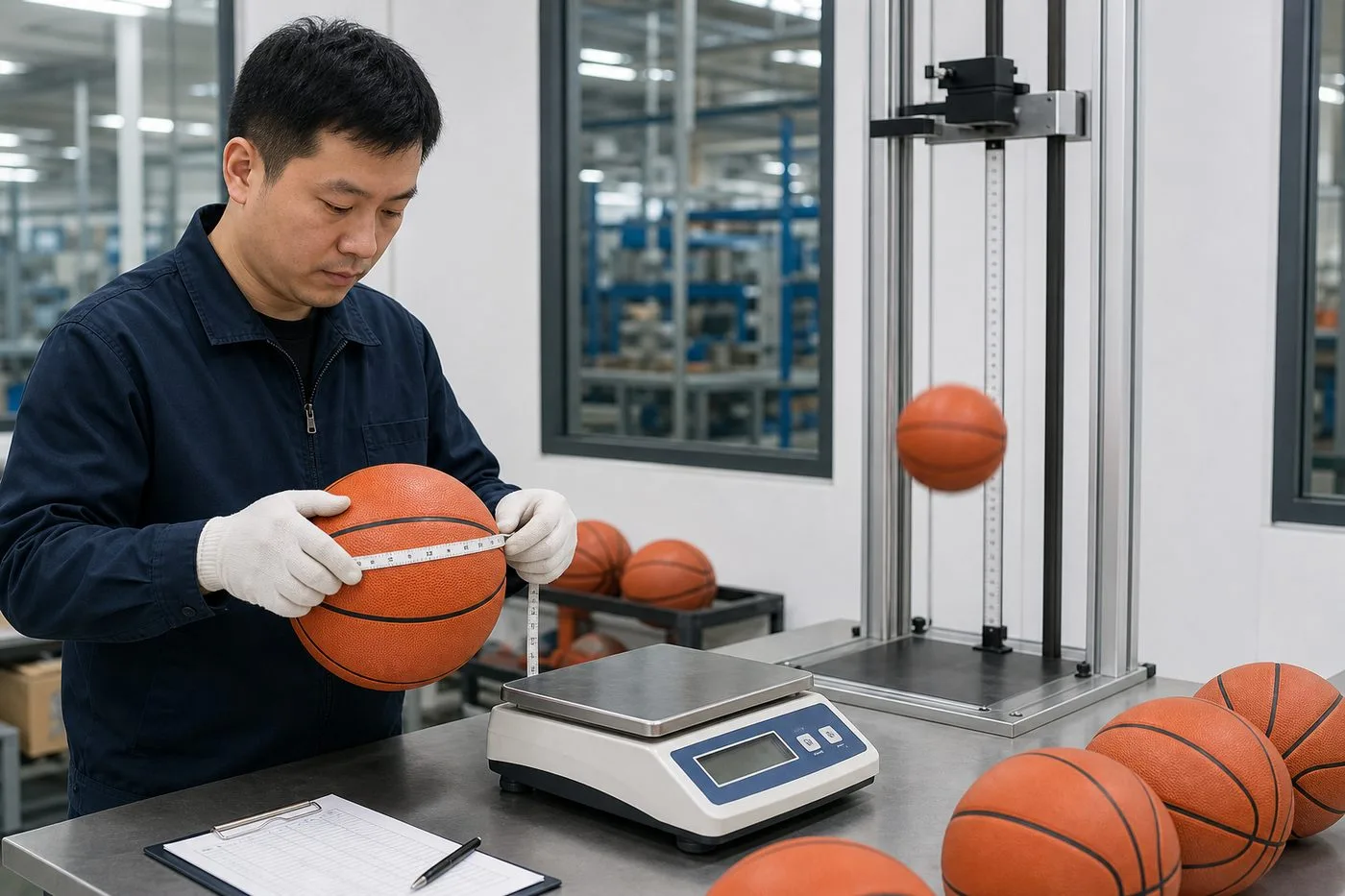
Basketball manufacturing in India follows a broadly consistent sequence regardless of construction type: panel cutting and printing, lamination or moulding of the cover (rubber, composite leather, or full-grain leather), bladder insertion (butyl or latex), channel and pebble-grain finishing for grip, valve fitting, inflation and quality testing for circumference, weight, roundness, and rebound, followed by deflation for packing and export. Full-grain leather production remains labour- and material-intensive, which is reflected in its price positioning; moulded and laminated PVC/rubber lines scale faster and dominate value and mid-tier export volume.
SGEPC does not inspect factory floors as a condition of registration, and membership does not certify that a given unit follows this process to a particular quality standard. That verification work — sample evaluation, dimensional checks, and pre-shipment inspection — sits entirely outside the council relationship and is covered in the buyer requirements and sourcing checklist sections below.
Export Process: Where SGEPC Registration Fits for Basketball Exporters
Compliance Notes
Export Tip
A typical Indian basketball export sequence runs from IEC registration and GST setup, through SGEPC/RCMC registration, sample development and buyer approval, bulk production and QC, export documentation, and finally shipment. SGEPC registration sits early in that sequence — ideally completed alongside IEC and GST, well before serious buyer outreach begins, since many buyer vendor questionnaires ask for council membership status during initial screening rather than at contract stage.
This guide focuses specifically on that one step. For the full manufacturer-side export sequence from sample approval through shipment, see how to export basketballs from India. For the complete document set — invoice, packing list, certificate of origin, and shipment paperwork — see the basketball export documentation checklist.
SGEPC Registration: Eligibility, Documents, and Step-by-Step Process
Compliance Notes
Export Tip
- Valid Import Export Code (IEC) issued by DGFT, with entity details matching business registration exactly
- GST registration certificate consistent in entity name and address with the IEC
- Company incorporation or business registration proof (proprietorship, partnership, LLP, or company as applicable)
- PAN card and bank account details for the exporting entity
- Product category declaration specifying basketballs (HS 9506.62 / ITC-HS 95066230) and any adjacent sports goods lines produced or exported
- Address proof for the registered factory or office premises used for basketball production or export operations
Before applying, basketball manufacturers and merchant exporters should assemble a clean, mutually consistent set of foundational documents. Most processing delays trace to mismatches between these records rather than to the application process itself.
Step 1: Confirm IEC and GST are export-ready
Verify that IEC and GST registrations are active and reflect the same legal entity name and address used on bank records and PAN documentation. Any mismatch here resurfaces during council application review and is the single most common cause of processing delay.
Step 2: Prepare your product category declaration
State your product scope clearly — basketballs specifically, under HS 9506.62 (ITC-HS 95066230), and any adjacent sports goods lines (training accessories, ball pumps, or hoops/nets) you intend to export. This declaration affects which sports goods fairs and buyer-matching programmes a member becomes eligible for.
Step 3: Submit the membership application with supporting documents
Complete SGEPC's membership application formalities with IEC, GST, incorporation, and address documentation attached. Retain digital copies of everything submitted, since buyer questionnaires later will ask for the same consistent record set.
Step 4: Complete membership fee and formalities
SGEPC membership typically carries a registration fee and an annual subscription cost. Budget this as a standing export overhead rather than a one-time expense, and keep membership current — a lapsed listing undermines exactly the credibility signal it was meant to provide.
Step 5: Align catalogue and compliance claims before using membership in outreach
Before referencing SGEPC membership in buyer-facing materials, confirm that catalogue photography, construction claims, and any FIBA Approval Programme or REACH compliance statements are accurate and consistent. Council membership invites closer buyer scrutiny, not less.
RCMC and Its Role for Basketball Exporters
Compliance Notes
The Registration Cum Membership Certificate (RCMC) is the formal document issued in connection with SGEPC membership that recognises a basketball exporter's registered status with the council for its product category. RCMC supports certain export benefit claims and reinforces organised-exporter standing when a buyer, a financing bank, or a scheme administrator requests documented proof of export registration.
RCMC is not a separate hurdle layered on top of SGEPC membership — it is a formal output of maintaining current, category-aligned registration. Basketball exporters should keep RCMC documentation renewed and stored alongside IEC and GST certificates, since buyer due-diligence teams and export-finance institutions may request it as standard documentation review, particularly for larger container-load orders where financing terms depend on verified exporter status.
What RCMC does — and does not — cover for basketball exporters
Swipe →
Data table — swipe horizontally on small screens
| RCMC Supports | RCMC Does Not Cover |
|---|---|
| Documented proof of organised export registration for banks and scheme administrators | Product-level quality certification (cover construction, bladder, circumference, weight) |
| Eligibility support for certain export benefit and scheme claims | FIBA Approval Programme approval for specific ball models |
| Buyer questionnaire fields requesting council/registration status | REACH chemical compliance testing for PVC/rubber/composite covers |
| Category-aligned standing within India's export promotion council framework | Pre-shipment inspection or sample sign-off |
SGEPC Membership Benefits Beyond RCMC
Compliance Notes
Beyond the RCMC mechanism, SGEPC membership delivers a set of practical, compounding benefits for basketball exporters navigating early export cycles.
Where SGEPC membership helps in buyer screening
Swipe →
Data table — swipe horizontally on small screens
| Buyer Screening Stage | Where SGEPC Membership Helps |
|---|---|
| Initial vendor longlist | Filters the exporter into the organised-exporter pool rather than the unverifiable workshop pool |
| Fair and delegation access | Unlocks SGEPC-organised exhibitions and trade delegations buyers actually attend |
| Vendor onboarding questionnaires | Many buyer compliance forms explicitly ask for council/RCMC status as a checkbox field |
| Government trade mission visibility | Council directories are a common source list for outbound trade missions and B2B matchmaking |
Buyer credibility during vendor questionnaires and audits
International sporting goods retailers, distributors, and institutional buyers routinely run vendor compliance questionnaires before issuing a purchase order. Council membership status is a common field on these forms, and answering it affirmatively removes friction an unregistered exporter would otherwise need to explain away.
Access to sports goods exhibitions and B2B matchmaking
SGEPC organises and participates in sports goods-focused trade fairs and buyer-seller meets that concentrate genuine international buyers in one place — materially more efficient than building a cold-outreach pipeline from scratch, particularly for MSMEs without dedicated export sales staff.
Market intelligence and destination insights
Council communications cover destination market trends, tariff changes, and compliance shifts relevant to sports goods trade, helping exporters anticipate regulatory movement — labelling rules, junior-equipment safety standards, and similar — before it becomes urgent.
Directory listing and discovery
Being listed in SGEPC's exporter directory puts a basketball manufacturer in front of buyers and trade missions actively searching for verified Indian sports goods suppliers — a discovery channel that complements, rather than replaces, direct outreach and B2B portal presence.
Pricing Analysis
Buyer Tip
SGEPC registration itself carries a modest, predictable cost — a registration fee plus annual subscription. The more relevant pricing context for basketball exporters is how construction type and certification tier drive FOB pricing, since that is what buyers evaluate alongside council status during vendor comparison. US buyers should also budget for the ~4.8% MFN duty on HTS 9506.62.80.40, and EU buyers for the ~2.7% MFN anchor on CN 9506 62, when comparing landed cost across suppliers — council status has no bearing on either duty line.
Illustrative FOB price bands by basketball construction and certification tier (SGEPC-registered exporters quote from the same bands as unregistered workshops — council status is not a pricing lever)
Swipe →
Data table — swipe horizontally on small screens
| Construction / Tier | Typical FOB Range (USD/pc, size 7) | Primary Channel |
|---|---|---|
| Promotional / moulded PVC, mini/size 5 | $1.50 – $4.00 | Promotional, school sport, giveaways |
| Rubber outdoor training/recreational | $3.00 – $7.00 | Playground, outdoor court, value retail |
| Composite leather indoor/outdoor | $6.00 – $14.00 | Club and school training, mid-tier retail |
| Full-grain leather / FIBA Approval Programme pathway | $12.00 – $28.00+ | Premium training, licensed retail, FIBA Approved Level 1/2 |
MOQ Analysis
Buyer Tip
Minimum order quantities for basketballs are shaped primarily by tooling and setup cost rather than council registration status — SGEPC membership has no direct bearing on MOQ, but buyers increasingly cross-reference council status alongside MOQ and pricing when comparing shortlisted suppliers.
Typical MOQ ranges by construction and customisation level
Swipe →
Data table — swipe horizontally on small screens
| Construction / Order Type | Typical MOQ (pieces per SKU) |
|---|---|
| Moulded PVC/rubber, standard design | 3,000 – 5,000 |
| Composite leather, standard design | 1,000 – 2,000 |
| Full-grain leather, FIBA Approval Programme pathway | 500 – 1,000 |
| Custom print / private label (any construction) | 2,000+ (plate and mould setup amortised) |
Packaging Standards
Export Tip
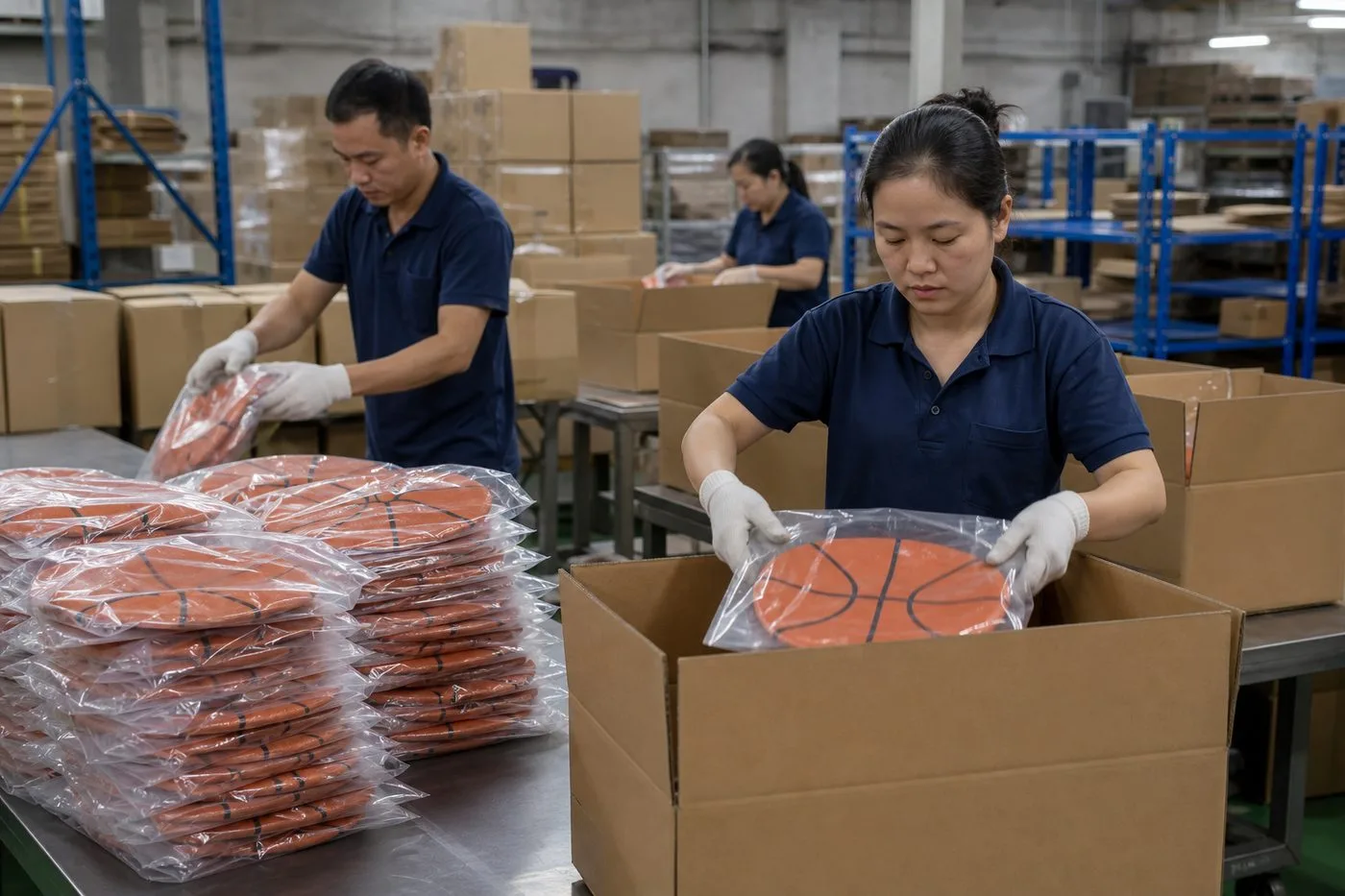
Basketballs are almost always shipped deflated to maximise carton and container utilisation without stressing panels or bladders. Individual balls are typically poly-bagged, then packed into master export cartons of 20–50 pcs sized to the SKU and the buyer's retail-ready requirements.
Typical export carton configurations for basketballs
Swipe →
Data table — swipe horizontally on small screens
| Ball Type | Typical Carton Pack Count | Packaging Format |
|---|---|---|
| Size 7 (men) | 20 – 40 pcs/carton | Poly-bagged, deflated, bulk or retail-ready carton |
| Size 6 (women) | 20 – 40 pcs/carton | Poly-bagged, deflated, bulk or retail-ready carton |
| Size 5 / youth / mini | 30 – 50 pcs/carton | Poly-bagged, deflated, higher pack density |
| Premium retail (any type) | 6 – 10 pcs/carton | Individual printed gift box, then master carton |
Container Loading
Export Tip
Container loading capacity for basketballs depends on carton dimensions, inflation level at packing, and dunnage used to prevent crushing. These figures are illustrative planning ranges rather than fixed guarantees, since carton design and stacking pattern vary by exporter and buyer specification.
Directional container loading guidance for basketballs (deflated, master-carton packed)
Swipe →
Data table — swipe horizontally on small screens
| Container Type | Loading Consideration | Typical Use |
|---|---|---|
| 20-foot FCL | Volume-optimised; carton CBM and stacking pattern determine unit count — confirm with forwarder | Trial and mid-size wholesale shipments |
| 40-foot FCL / 40-foot HC | Volume-optimised; better per-unit freight economics when carton density is confirmed | Established wholesale and distributor programmes |
| LCL (less than container load) | Suitable for sample and small trial shipments | New buyer relationships, market testing |
Shipping Methods
Export Tip
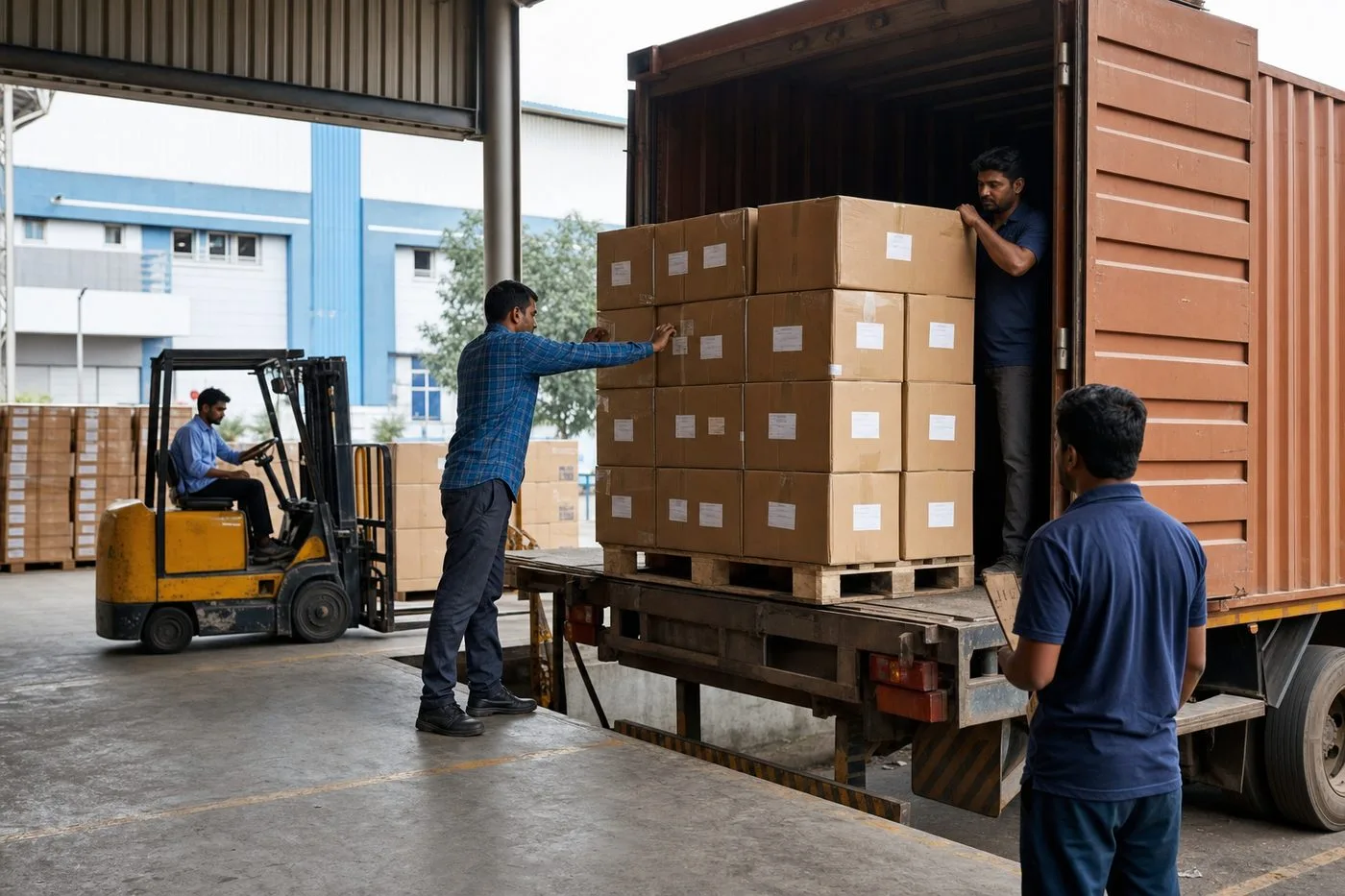
Sea freight — FCL for volume orders, LCL for trial or mixed-SKU shipments — remains the standard mode for basketball exports, typically routed through Nhava Sheva or Mundra after inland movement from Jalandhar or Meerut via ICD Ludhiana. Air freight is reserved for urgent trial orders, sample dispatch, or smaller high-value FIBA Approval Programme match-ball consignments where transit-time savings outweigh the higher per-kilogram cost.
Council registration status has no bearing on shipping method selection — it is purely a documentation and credibility layer that sits alongside, not inside, the physical logistics decision.
Certifications
Compliance Notes
SGEPC's RCMC and product-level certifications answer entirely different buyer questions, and confusing the two is one of the most damaging mistakes a basketball exporter can make in buyer communication. RCMC documents organised export status. FIBA Approval Programme approval — Level 1 for elite national and international competitions, Level 2 for other basketball competitions — certifies that a specific ball model meets defined performance tolerances for circumference, weight, rebound, and related match-ball standards through testing at FIBA Accredited Test Institutes. REACH addresses chemical compliance for PVC, rubber, and composite leather covers destined for the EU. This guide covers RCMC in depth; for the certification pathways themselves, see FIBA-certified and match-grade basketball export opportunities.
How council registration and product certification differ
Swipe →
Data table — swipe horizontally on small screens
| Credential | Issued By | What It Confirms |
|---|---|---|
| RCMC (via SGEPC) | Sports Goods Export Promotion Council | Organised export registration status of the exporting entity |
| FIBA Approved Level 1/Level 2 (model-specific) | FIBA Equipment & Venue Centre via FIBA Accredited Test Institutes | Match-ball performance tolerances for a specific model |
| REACH compliance documentation | Accredited testing laboratories | Chemical safety of PVC, rubber, and composite leather cover materials for EU markets |
Buyer Requirements
Buyer Requirements
International basketball buyers evaluating Indian suppliers typically request a combination of institutional and product-level evidence: IEC and GST verification, SGEPC/RCMC status, construction and material specification sheets, sample balls for evaluation, and — for match-grade orders — FIBA Approval Programme approval documentation or a credible pathway toward it. Larger retail and institutional buyers increasingly formalise this into a written vendor questionnaire rather than relying on verbal assurances during trade fair conversations.
Buyers should treat SGEPC/RCMC status as one input among several, useful for narrowing a long supplier list to organised exporters, but never as a substitute for factory video audits, paid sample evaluation, and pre-shipment inspection before committing to bulk orders.
Country-wise Opportunities
Market Snapshot
SGEPC and RCMC credentials carry equal relevance across every destination market — council registration is not country-specific, unlike duty structures, labelling rules, or FIBA Approval Programme expectations that shift meaningfully between the USA, China, Philippines, Germany, Australia, and UAE. Rather than duplicate that market-by-market breakdown here, this guide points readers to the two dedicated resources: most demanded Indian basketballs by country for construction, size, certification, and packaging demand patterns per market, and best countries for Indian basketball exports for macro market-selection and duty guidance.
Sourcing Checklist for Buyers Verifying SGEPC-Registered Suppliers
Checklist
- Confirm the exporter's IEC, GST, and SGEPC/RCMC details are mutually consistent in entity name and address
- Request the current RCMC certificate and verify its validity period rather than accepting a verbal claim of membership
- Ask which product categories the exporter's SGEPC declaration actually covers — basketballs specifically, not just "sports goods" generically
- Cross-check council membership against construction and FIBA Approval Programme claims made in the catalogue
- Request paid samples and run dimensional, weight, and rebound checks regardless of council status
- Schedule a factory video audit or in-person visit before committing to a first bulk order
- Confirm pre-shipment inspection rights are written into the purchase agreement
Common Buyer Mistakes
Common Mistakes Box
- Treating SGEPC/RCMC status as a quality guarantee rather than an export-registration signal — verify construction and FIBA Approval Programme approval separately.
- Skipping sample evaluation because a supplier is council-registered — samples remain essential regardless of council status.
- Assuming every SGEPC member exports basketballs specifically, rather than confirming the product category declaration on file.
- Failing to check RCMC validity dates and relying on an outdated or lapsed listing.
- Confusing RCMC with FIBA Approved certification when sourcing match-grade balls.
- Not asking for factory audit access before placing a first bulk order with a newly registered exporter.
Future Market Trends
Key Statistics
SGEPC's registration and RCMC processes are steadily moving toward digital-first application and renewal workflows, mirroring broader DGFT and export-council digitisation trends across India's trade infrastructure. Basketball exporters can expect faster processing timelines and tighter document cross-verification against IEC and GST records as these systems mature over the coming export cycles.
On the demand side, buyers are increasingly requesting FIBA Approval Programme approval documentation earlier in the sourcing conversation — sometimes before RCMC status is even confirmed — as match-grade and structured training-ball programmes grow relative to purely promotional volume. Exporters who sequence SGEPC registration alongside early FIBA approval planning will be better positioned than those treating council membership as a standalone credential.
Challenges & Solutions
Common SGEPC/RCMC challenges and practical solutions
Swipe →
Data table — swipe horizontally on small screens
| Challenge | Solution |
|---|---|
| Mismatched IEC, GST, and entity name records | Reconcile all foundational documents before submitting the application |
| Lapsed membership undermining credibility | Budget annual renewal as a standing export overhead, not a discretionary cost |
| Vague product category declaration | State "basketballs, HS 9506.62 / ITC-HS 95066230" explicitly rather than a generic sports goods label |
| Buyers confusing RCMC with product certification | Proactively clarify the distinction in vendor questionnaires and catalogues |
| Membership obtained but fairs and directories unused | Actively participate in council exhibitions; unused membership wastes most of its value |
Buyer, Exporter, and Compliance Checklists
Checklist
Compliance Notes
Buyer checklist
- Verify IEC, GST, and SGEPC/RCMC consistency before shortlisting a supplier
- Request current RCMC certificate and confirm validity dates
- Pair council status with paid samples and dimensional/weight/rebound checks
- Confirm construction type and FIBA Approval Programme tier match the intended buyer channel
- Write pre-shipment inspection rights into the purchase agreement
Exporter checklist
- Complete IEC and GST alignment before applying for SGEPC membership
- Declare basketballs (HS 9506.62 / ITC-HS 95066230) explicitly in the product category application
- Keep RCMC renewed and stored alongside IEC and GST certificates
- Align catalogue and FIBA Approval Programme compliance claims with actual production capability before using membership in outreach
- Use council fairs and directories actively rather than treating membership as a one-time credential
Compliance checklist
- Maintain valid IEC, GST, and current SGEPC/RCMC documentation on file
- Keep product category declarations updated if construction lines or FIBA Approval Programme tiers change
- Separate RCMC documentation from FIBA Approved certification records — buyers and auditors will ask for both independently
- Retain digital copies of every document submitted for council registration for future buyer due-diligence requests
- Review RCMC renewal timelines annually alongside IEC and GST compliance calendars
Sources and References
Compliance Notes
- TradeStat EIDB — Ministry of Commerce & Industry
- DGFT — Directorate General of Foreign Trade
- SGEPC — Sports Goods Export Promotion Council
- DGCIS — Directorate General of Commercial Intelligence and Statistics
- Indian ITC-HS 95066230 — Inflatable basketballs
- USITC Harmonized Tariff Schedule (HTSUS)
- HTS 9506.62.80.40 — Basketballs (US)
- European Commission TARIC
- FIBA Official Basketball Rules
- FIBA Equipment & Venue Centre — Balls
- FIBA Approval Programme for Basketball Equipment (2024–2027)
- FIBA Official Basketball Rules & Equipment (2024)
- FIBA Equipment & Venue Centre — How to Get Approved
- ICEGATE — Indian Customs EDI Gateway
- Ministry of Commerce & Industry — Trade Statistics
- ITC Trade Map
Trade values for ITC-HS 95066230 are directional planning figures from TradeStat EIDB (FY 2024-25 unless noted). HS Chapter 95 sub-chapter totals cite TradeStat/DGCIS sector briefs. FIBA size tolerances follow Official Basketball Rules Table 1; US NBA/NCAA retail specs may differ — confirm buyer channel. Destination duty rates, preferential programmes, and certification requirements change — confirm with a licensed customs broker and the buyer's compliance team before quoting landed cost or making certification claims on invoices.
Registration benefits cited here align with SGEPC programme pages, DGFT RCMC circulars, and sector export statistics published through DGCIS sports-goods briefs.
Conclusion
- Next step for manufacturers: Share your current registration status and construction range with Altus Exports for an export readiness review covering SGEPC alongside IEC and GST.
- Next step for buyers: Send your target construction, sizes, and destination market — we help verify SGEPC-registered and unregistered basketball suppliers alike through factory audits and sampling.
- Explore merchant exporter services and global sourcing partner services to choose the right sourcing model for basketball programmes.
- Review how to export basketballs from India for the full manufacturer export sequence, including where SGEPC fits.
- Buyers should read source basketballs directly from India for a full supplier verification framework beyond council membership.
- Use the basketball export documentation checklist to pair council credentials with clean paperwork.
- Plan fair participation with trade shows and B2B marketplaces for basketball exporters and build buyer pipeline with how to find international buyers for basketballs.
- Compare category and country demand in top basketball products exported from India and most demanded Indian basketballs by country.
- Go deeper on match-grade certification with FIBA-certified and match-grade basketball export opportunities.
- Ready to move forward? Contact Altus Exports for a basketball sourcing and export readiness review.
SGEPC registration is not a legal requirement to export basketballs from India, but it is one of the most cost-effective credibility investments available to Jalandhar and Meerut manufacturers building a serious international trade presence. It opens fair access, buyer directories, and vendor-questionnaire credibility that unregistered workshops cannot match — but it only compounds into real export growth when paired with construction discipline, honest FIBA Approval Programme claims, and clean documentation under HS 9506.62.
If you are a manufacturer weighing SGEPC registration, complete IEC and GST alignment now, apply for RCMC alongside — not instead of — investing in construction QC and sample sign-off systems, and use council fairs as a buyer-discovery channel rather than a one-time credential to display. International buyers evaluating Indian basketball suppliers should treat RCMC status as one useful screening input within a fuller verification process.