
FIBA-Certified and Match-Grade Basketball Export Opportunities
By Saurabh Mittal, Founder, Altus Exports
A focused guide to the certification and construction pathway behind premium basketball exports from India — the FIBA Approval Programme for indoor and beach match basketballs, full-grain leather manufacturing, testing institutes, and the club, federation, and licensed-retail buyers who pay materially higher margins for verified match-grade basketballs under HS 95066230.
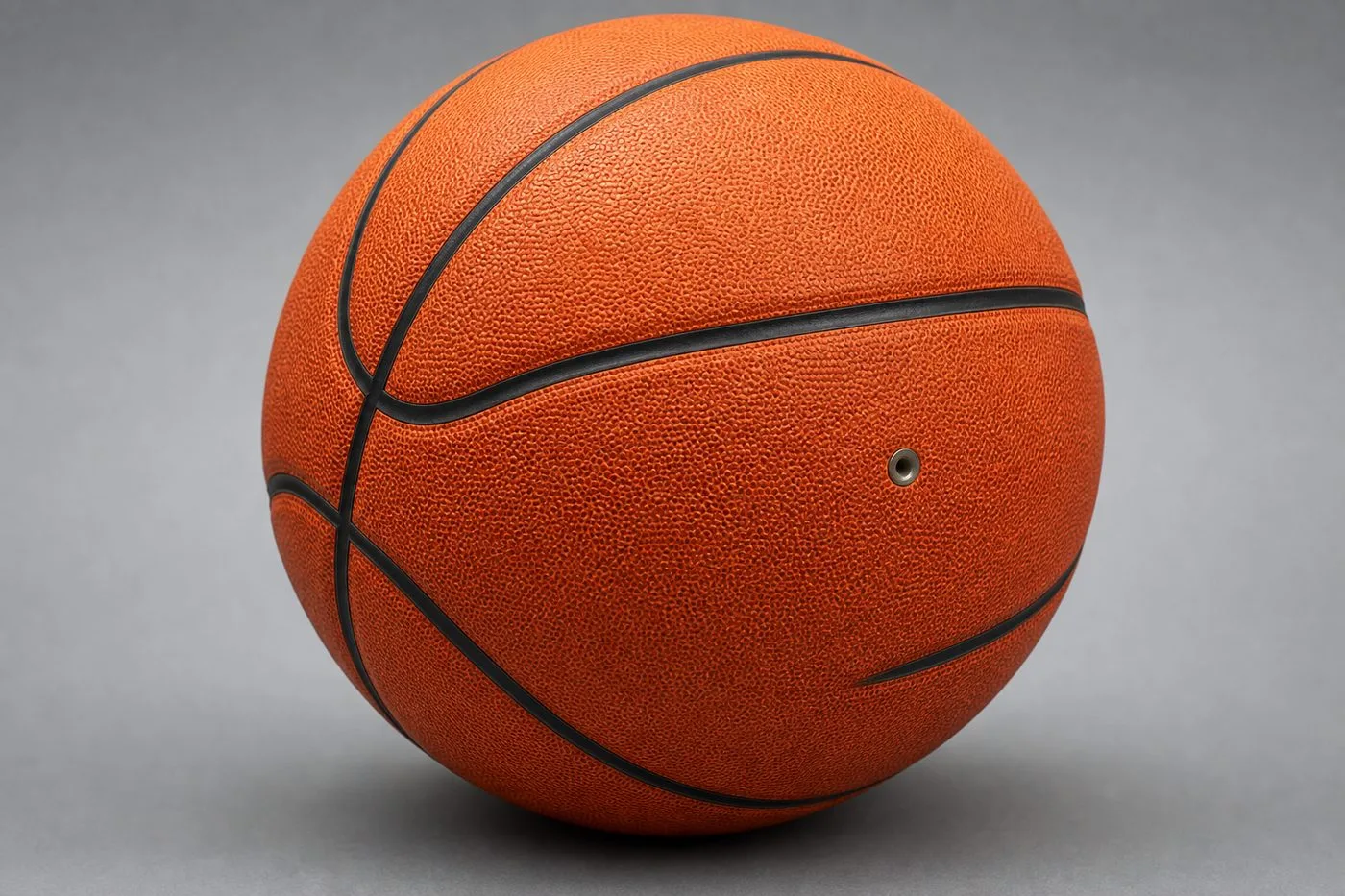
Most Indian basketball exports move through rubber molded outdoor and composite leather training construction — reliable, high-volume, and priced accordingly. A smaller, materially more profitable segment of the trade sits above that commodity tier: full-grain leather FIBA Approval Programme homologated match basketballs that schools, clubs, academies, federations, and licensed retail programmes buy at three to eight times the FOB price of a standard training ball under the same HS 95066230 heading. This guide is deliberately narrow and does not repeat the general export process or SGEPC membership mechanics covered elsewhere in our basketball content cluster — it focuses specifically on what FIBA Approval Programme certification actually means, what full-grain leather manufacturing requires that molded or composite construction does not, and which buyers pay a premium for verified match-grade basketballs.
For the baseline export sequence — IEC, GST, general shipping process — see How to Export Basketballs from India. For the export council registration that underpins organised exporter status generally, see SGEPC Registration Benefits for Basketball Exporters, which this guide deliberately treats as a prerequisite rather than a topic in its own right here. What belongs in this guide is the certification ladder itself — the FIBA Approval Programme for indoor and beach match basketballs — separate homologation protocols with model-specific FIBA-approved marks — and the manufacturing discipline and buyer economics that sit behind it.
Whether you run or are considering investing in a full-grain leather line in Jalandhar or Meerut, or you are an international buyer sourcing certified match basketballs for a professional league, academy programme, or licensed retail launch, this guide walks through the certification pathway end to end: what each standard tests, how testing institutes work, realistic cost and timeline to certify a specific ball model, the premium buyer segments that actually require it, and the pricing economics that make this tier worth the additional investment for the right manufacturer.
Key Takeaways
Summary Box
Executive Summary
Summary Box
Beach basketball represents a distinct premium lane within the FIBA Approval Programme: buyers running beach and outdoor tour events and regional federations specify weather-resistant covers, adapted weight classes, and brighter colourways that command directional FOB premiums roughly 15–30% above comparable indoor homologated models at the same construction tier — a margin opportunity Indian exporters from Jalandhar and Meerut can capture when they separate beach SKUs from indoor match lines in quoting and documentation.
Match-grade basketball certification is a narrow but genuinely lucrative segment within India's broader basketball export trade. It rewards manufacturers who invest in full-grain leather panel-bonding capacity and homologation testing, consistent panel and bladder sourcing, and a disciplined testing relationship with an accredited institute — and it punishes manufacturers who market 'FIBA-quality' language loosely without an underlying certificate, since serious buyers in this segment verify claims before committing volume.
This guide treats certification as an investment decision with a real cost and payback timeline, not a marketing checkbox. For a Jalandhar or Meerut manufacturer already producing consistent full-grain leather construction, pursuing FIBA Approval Programme (indoor or 3x3/outdoor, model-specific) certification for one or two hero models can open buyer segments — club and academy supply, licensed retail programmes — that pay materially better margins than commodity training-ball volume, provided the manufacturer has already validated real buyer demand for that specific certified SKU before funding the testing cycle.
Market Size & Industry Overview
Key Statistics
The global market for certified match basketballs is a fraction of the overall basketball trade by unit volume, concentrated among professional and semi-professional leagues, federations, academies, and licensed retail programmes tied to major competitions. India's certified-tier manufacturing capacity is smaller and more concentrated than its broader rubber molded and composite leather output, with a limited number of Jalandhar and Meerut facilities investing in the full-grain leather tooling, panel-bonding precision, and homologation testing capacity and consistent quality systems that make certification realistic.
That concentration is itself the opportunity: because relatively few Indian manufacturers currently hold current FIBA Approval Programme (indoor or 3x3/outdoor, model-specific) certification on active SKUs, an exporter who invests properly in this tier faces less domestic price competition than in the commodity training-ball and promotional segments, where dozens of Jalandhar and Meerut units compete primarily on price.
Certified match-ball segment versus commodity basketball segment
Swipe →
Data table — swipe horizontally on small screens
| Dimension | FIBA Match-Grade Segment | Commodity Training / Promotional Segment |
|---|---|---|
| Typical construction | Full-grain leather or premium composite leather cover | Rubber molded or moulded PVC/synthetic rubber |
| Directional FOB range (Size 7) | ~USD 18–40+ per piece | ~USD 1.50–10 per piece |
| Primary buyers | Leagues, federations, academies, licensed retail | Wholesale distributors, schools, promotional agencies |
| Domestic supplier competition | Limited — few Indian units hold current certification | High — many units compete primarily on price |
| Investment required | Full-grain leather panel bonding and homologation testing plus institute cost | Standard molding/bonding lines, minimal testing cost |
Export Statistics
Key Statistics
Export data does not typically isolate certified match basketballs as a separate line item from the broader HS 950662 (inflatable balls) heading — India's ITC-HS 95066230 line ran at roughly ₹13.58 crore in exports for FY2024-25 (TradeStat EIDB), sitting inside a much larger HS Chapter 95 export base of approximately US$570.95 million for the same fiscal year (DGCIS), with neither figure separating certified from commodity construction. What can be said directionally is that India's overall basketball export base is dominated by rubber molded and composite leather construction, with certified full-grain leather output representing a small but growing share concentrated among a handful of established Jalandhar exporters and a smaller number of Meerut units expanding into this tier.
Directional export profile for the certified match-grade segment
Swipe →
Data table — swipe horizontally on small screens
| Metric | Directional Estimate | Notes |
|---|---|---|
| Applicable HS heading | 9506.62 (international); 95066230 (India) | Certified and commodity basketballs share the same HS classification |
| Primary manufacturing base | Established Jalandhar exporters, growing Meerut capacity | Requires full-grain leather panel-bonding and homologation testing capacity most molding-only units lack |
| Dominant destination profile | USA, Europe, licensed retail markets | Regions with concentrated professional, collegiate, and academy basketball infrastructure |
| Growth trajectory | Growing directionally as grassroots academy programmes formalise | Driven by structured youth and semi-professional league expansion |
Import Statistics
Key Statistics
On the buyer side, certified match-ball demand concentrates among procurement teams that have a specific, often contractual, requirement for verified performance — a professional league's official match-ball tender, a federation's youth-academy equipment standard, or a licensed retail programme tied to a specific competition or club brand. These buyers rarely negotiate on price the way commodity wholesale buyers do; they negotiate on certification validity, supply consistency, and — for licensed programmes — branding and intellectual-property compliance alongside the ball itself.
The USA hosts the largest concentration of structured academy, collegiate, and semi-professional league programmes that specify certified match basketballs, classifying inbound shipments under HTS 9506.62.80.40 with an MFN duty of roughly 4.8%. The UK, Germany, the Netherlands, and Australia follow with growing demand from academy and federation programmes, alongside expanding interest across the Middle East and parts of Africa as youth basketball infrastructure formalises in those regions and EU/UK buyers of inflatable balls commonly face duty closer to 2.7% MFN.
Directional demand profile for certified match basketballs by destination market
Swipe →
Data table — swipe horizontally on small screens
| Market | Primary Certified-Ball Buyer Type | Demand Driver |
|---|---|---|
| USA | Academies, collegiate and semi-professional leagues, licensed retail | Structured youth basketball, collegiate, and school/club programme growth |
| UK | Club academies, licensed retail programmes | Growing basketball infrastructure and licensing ecosystem |
| Germany | Federation and club procurement, technical retail | Strong technical scrutiny and structured league requirements |
| Netherlands | Academies, distributor-supplied club programmes | European distribution hub for certified match-ball demand |
| Australia | Academies, growing semi-professional leagues | Expanding structured basketball programmes |
| UAE / Gulf | Federation and academy procurement | Growing investment in structured youth basketball infrastructure |
| Philippines | Federation, school, and semi-professional league procurement | Deep, established basketball culture with formal league structures |
| Africa (select markets) | Federation and development-programme procurement | Formalising youth and academy basketball infrastructure |
Product Categories & FIBA Approval Programme Protocols
Summary Box
FIBA homologation is not a multi-tier ladder like some other sports-ball programmes. The FIBA Approval Programme grants a model-specific FIBA Approved mark (Level 1 or Level 2) after laboratory testing — with separate protocols for indoor basketball and 3x3/outdoor basketball. A ball approved under the indoor protocol is not automatically valid for 3x3/outdoor competition, and vice versa. Full-grain leather balls manufactured to match-grade construction quality but not yet submitted for formal homologation are sometimes marketed honestly as 'match-quality, uncertified' for buyers who value the construction but do not have a contractual homologation requirement.
Homologation categories and typical buyer fit
Swipe →
Data table — swipe horizontally on small screens
| Category | What It Means | Typical Buyer |
|---|---|---|
| FIBA Approval Programme (indoor) | Model passes indoor testing (e.g. Size 7: 75.0–77.0 cm circumference, 580–620 g weight) | Indoor leagues, federations, academies, licensed indoor retail |
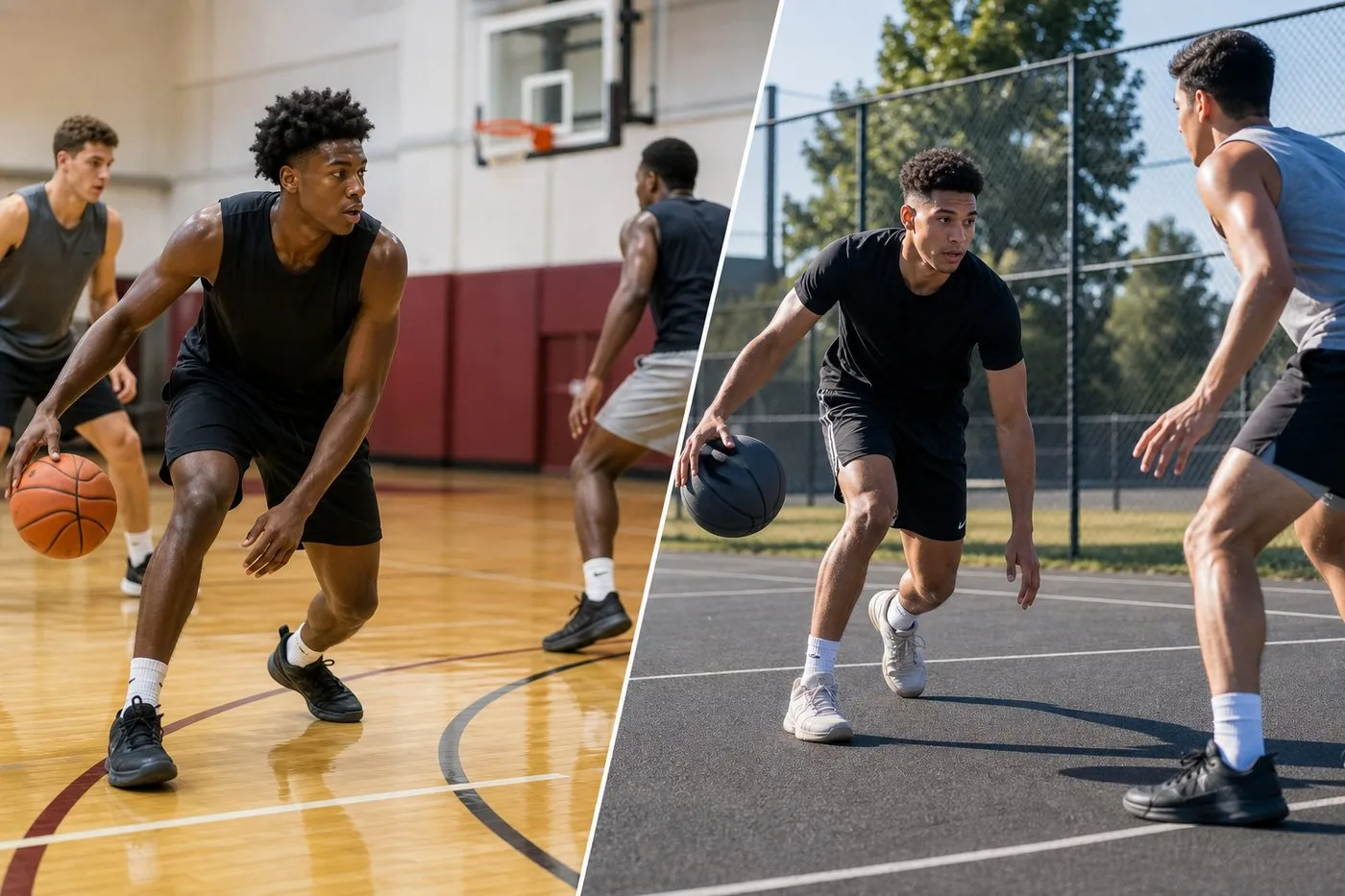
| FIBA Approval Programme (3x3/outdoor) | Model passes 3x3/outdoor testing (adapted weight class and weather-resistant cover) | 3x3 leagues, outdoor federations, beach and street programmes |
| Match-quality, uncertified | No formal FIBA Approval Programme certificate | Buyers valuing full-grain leather construction without a contractual homologation requirement |
Manufacturing Overview
Export Tip
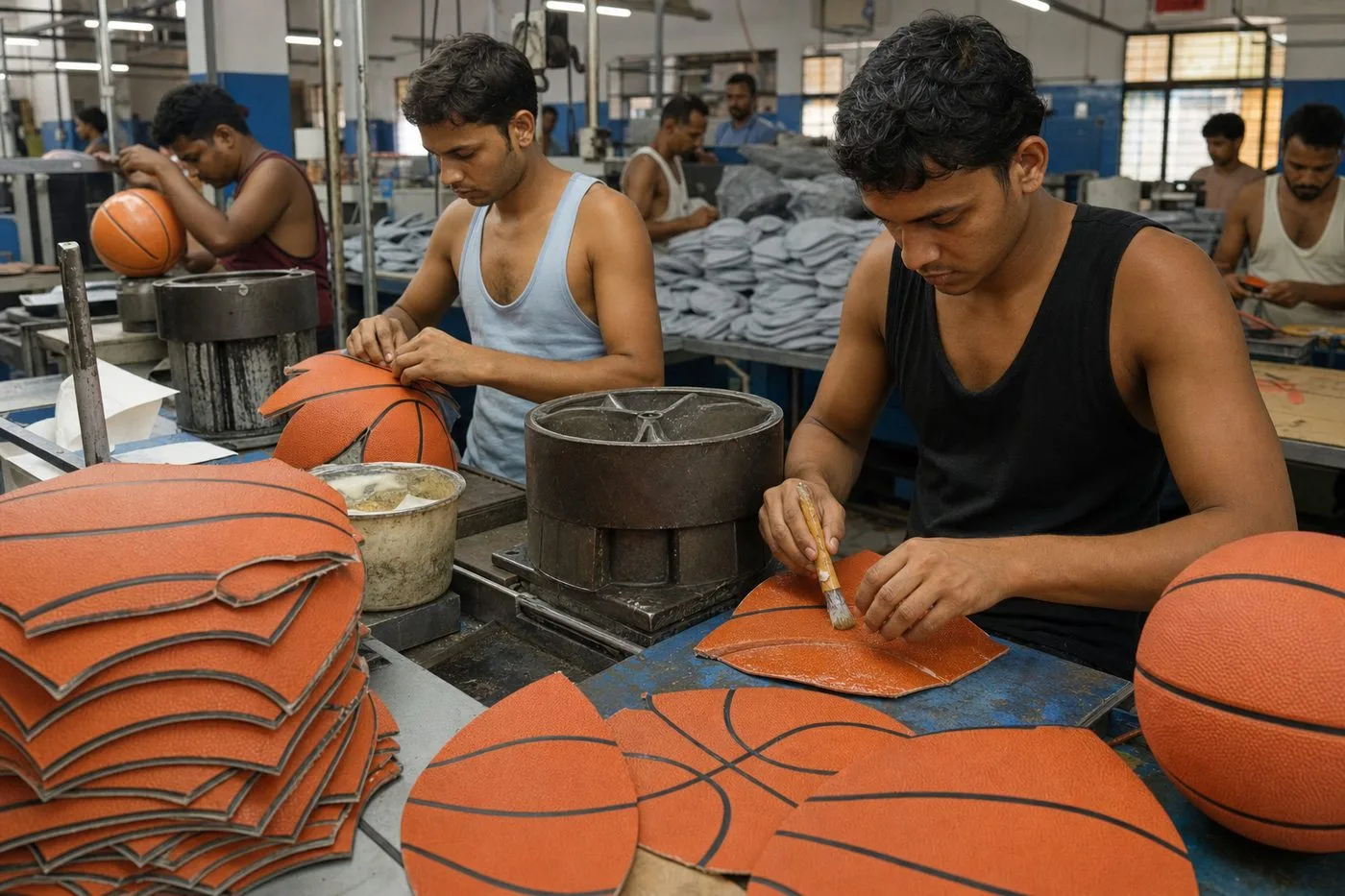
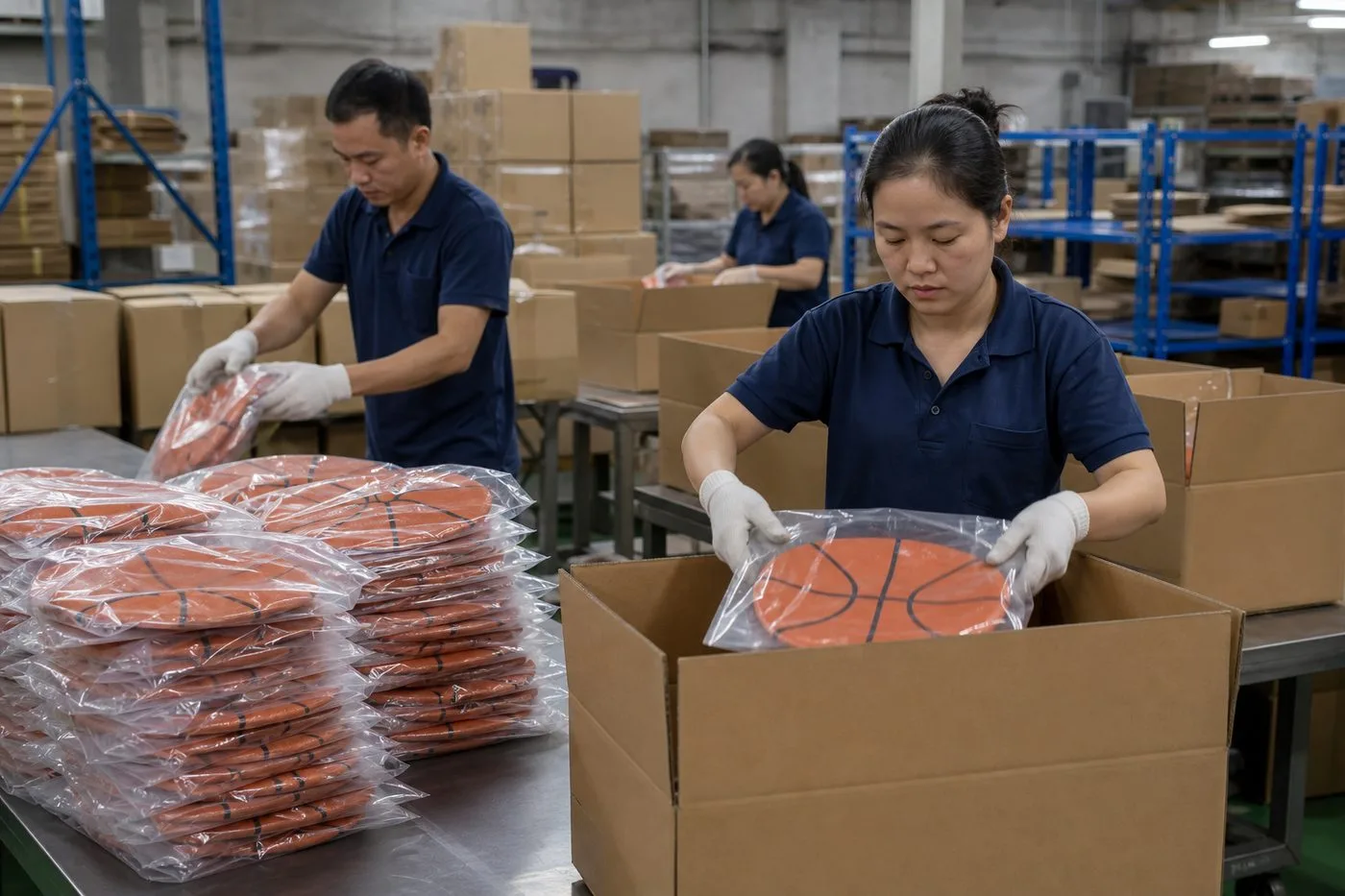
Full-grain leather construction is the manufacturing discipline behind nearly all certified match basketballs, and it is materially different from rubber molded or composite leather construction, not simply a premium variant of it. Panels are cut with high dimensional precision from consistently graded leather stock, then fused to a foam-and-fabric backing and to each other using controlled bonding rather than the coarser channel-molding used for outdoor and promotional balls, producing the tacky, tour-grade surface feel that both looks and performs differently from a commodity ball. This process demands tighter tolerances at every stage: leather grading, panel cutting, lamination, bonding temperature and pressure control, and bladder consistency, because certification testing has essentially no tolerance for the kind of minor irregularity a commodity ball can absorb without failing a buyer's inspection.
Bladder selection compounds this precision requirement. Butyl bladders retain air longer and are more forgiving in manufacturing, which is why the great majority of certified balls use butyl; latex-lined bladders offer a marginally softer touch favoured by some technical buyers but require tighter quality control for consistent air retention over time. Either way, bladder consistency batch-to-batch is one of the more common reasons a previously certified model fails a routine post-certification quality check, which is why manufacturers pursuing this tier need a genuinely disciplined incoming-material inspection process, not just careful final assembly.
Export Process
Export Tip
Pursuing certification sits as an add-on layer to the standard export process, not a replacement for it — IEC, SGEPC RCMC, sourcing, and documentation all still apply exactly as covered in How to Export Basketballs from India. What follows is specific to the certification decision and pathway itself.
Step 1: Validate real buyer demand before committing to certification cost
Confirm with prospective buyers — academies, federations, licensed retail partners — that they specifically require FIBA Approval Programme (indoor or 3x3/outdoor, model-specific) certification and would commit to a volume programme around a certified model, before funding a testing cycle speculatively.
Step 2: Lock the exact construction, cover, and bladder specification to be tested
Certification applies to a specific model — construction method, cover material, panel design, and bladder type together. Finalise this specification and freeze it before submitting for testing, since any material change after certification typically requires re-testing.
Step 3: Engage a FIBA-recognised or preferred test institute
Identify and engage an accredited test institute recognised for FIBA Approval Programme (indoor or 3x3/outdoor, model-specific) testing. Submit production-representative samples — not hand-picked best-case units — since testing is designed to validate what a real production run will deliver.
Step 4: Complete testing across the full protocol
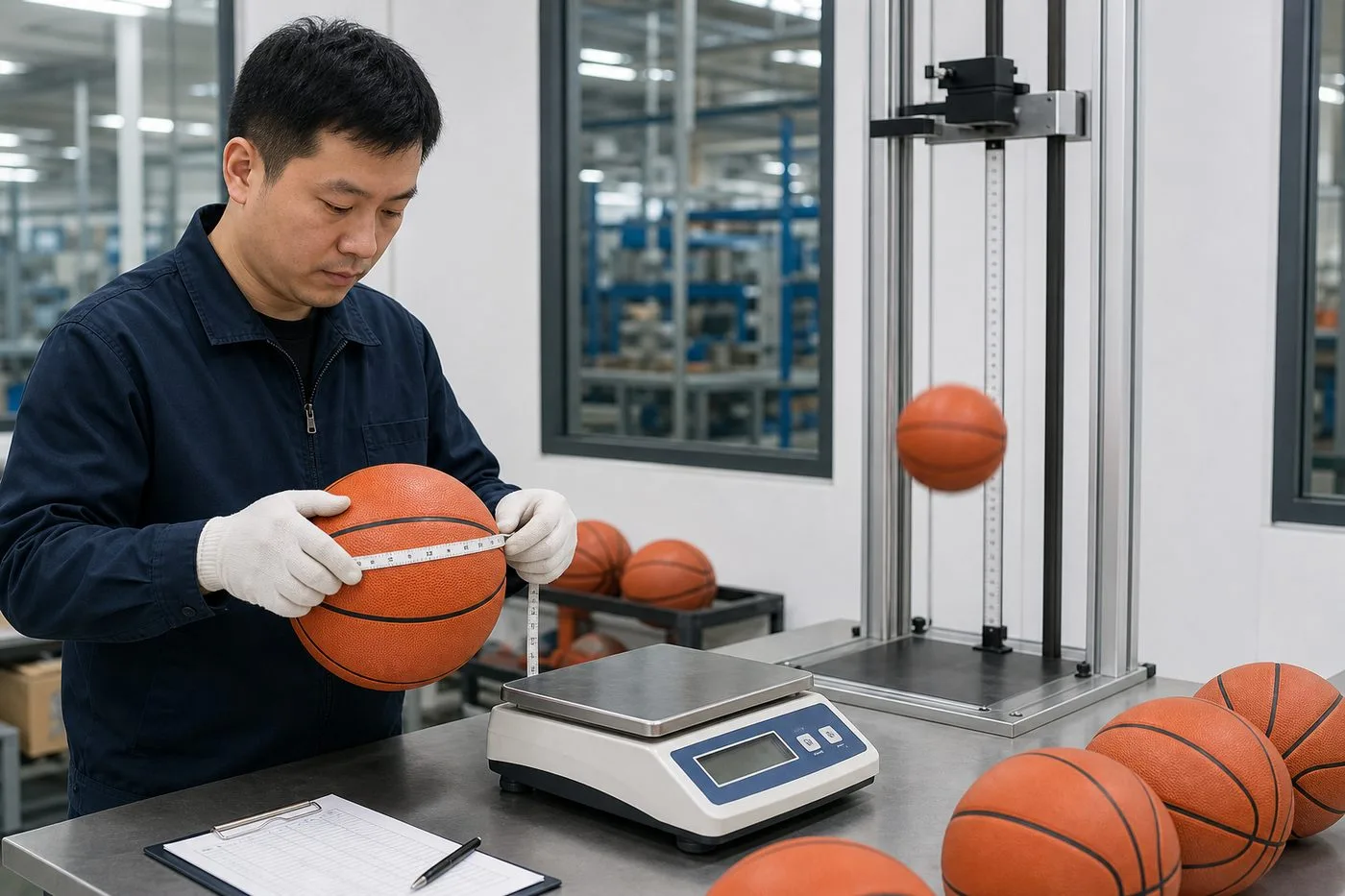
Testing covers circumference, roundness, weight, bounce rebound consistency, surface grip and friction, and shape/size retention after repeated impact cycles. Budget realistic time for this — it is a multi-week to multi-month process depending on institute scheduling and whether the first submission passes cleanly.
Step 5: Maintain post-certification quality discipline
Certification is tied to ongoing manufacturing consistency, not a one-time achievement. Maintain the same incoming-material inspection and process controls used for the tested batch across every subsequent production run of that model.
Step 6: Bring certified stock into the standard export and documentation flow
Once certified, the model moves through the same registration, pricing, packaging, and documentation sequence as any other basketball export, with certification documentation added to the buyer-facing and compliance document set. See Basketball Export Documentation Checklist for the full paperwork sequence.
Pricing Analysis
Buyer Tip
Certified match basketballs command a substantial premium over commodity construction, and that premium reflects real cost inputs — graded full-grain leather cover, precision panel bonding, higher-grade bladder material, and testing institute fees amortised across production volume — rather than certification alone inflating price. Buyers in this segment generally accept and expect this pricing structure, since they are typically paying to solve a specific contractual or performance requirement rather than shopping purely on unit cost.
Directional FOB USD/pc pricing by homologation status, Size 7
Swipe →
Data table — swipe horizontally on small screens
| Construction / Status | Directional FOB USD/pc | Typical Buyer |
|---|---|---|
| Rubber molded, commodity training/outdoor | ~1.50–5 | Wholesale, school, general retail (reference point) |
| Composite leather, standard indoor training | ~5–10 | Retail chains, e-commerce, mid-tier club supply |
| Full-grain leather, match-quality uncertified | ~10–18 | Premium training, buyers valuing construction without contractual homologation need |
| FIBA Approval Programme (indoor or 3x3/outdoor) | ~18–40+ | Leagues, federations, academies, licensed retail requiring verified approval |
MOQ Analysis
Buyer Tip
MOQs in the certified tier are shaped by testing and tooling amortisation rather than simple cost-per-unit economics — the fixed cost of testing and full-grain leather panel-bonding setup needs to spread across a meaningful production run to make certified pricing sustainable for the manufacturer.
Typical MOQ ranges by homologation status
Swipe →
Data table — swipe horizontally on small screens
| Status | Typical MOQ (pieces per model) | Note |
|---|---|---|
| Full-grain leather, uncertified | 500–1,500 | Lower barrier since no testing-institute cost to amortise |
| FIBA Approval Programme (indoor or 3x3/outdoor) | 1,000–5,000+ | Testing and tooling cost spread across the run; confirm protocol with buyer |
Packaging Standards
Export Tip
Certified match basketballs typically move through more premium and branding-conscious packaging than commodity stock, since licensed retail and flagship academy programmes expect shelf-ready or gift-quality presentation, not just functional protection during transit.
Packaging formats for certified match-grade basketballs
Swipe →
Data table — swipe horizontally on small screens
| Format | Typical Use | Key Requirement |
|---|---|---|
| Individual printed box | Licensed retail, flagship club-branded programmes | Shelf-ready design, certification mark clearly and accurately displayed |
| Protective poly bag plus branded sleeve | Academy and federation bulk supply | Balance of protection and presentable unboxing for institutional buyers |
| Bulk master carton | Large academy or federation programme orders | Corrugated, stackable, clearly marked with certified model reference |
| Deflated shipping state | All bulk and wholesale certified-tier shipments | Standard deflated packing for ocean freight; re-inflate at destination |
Container Loading Details
Export Tip
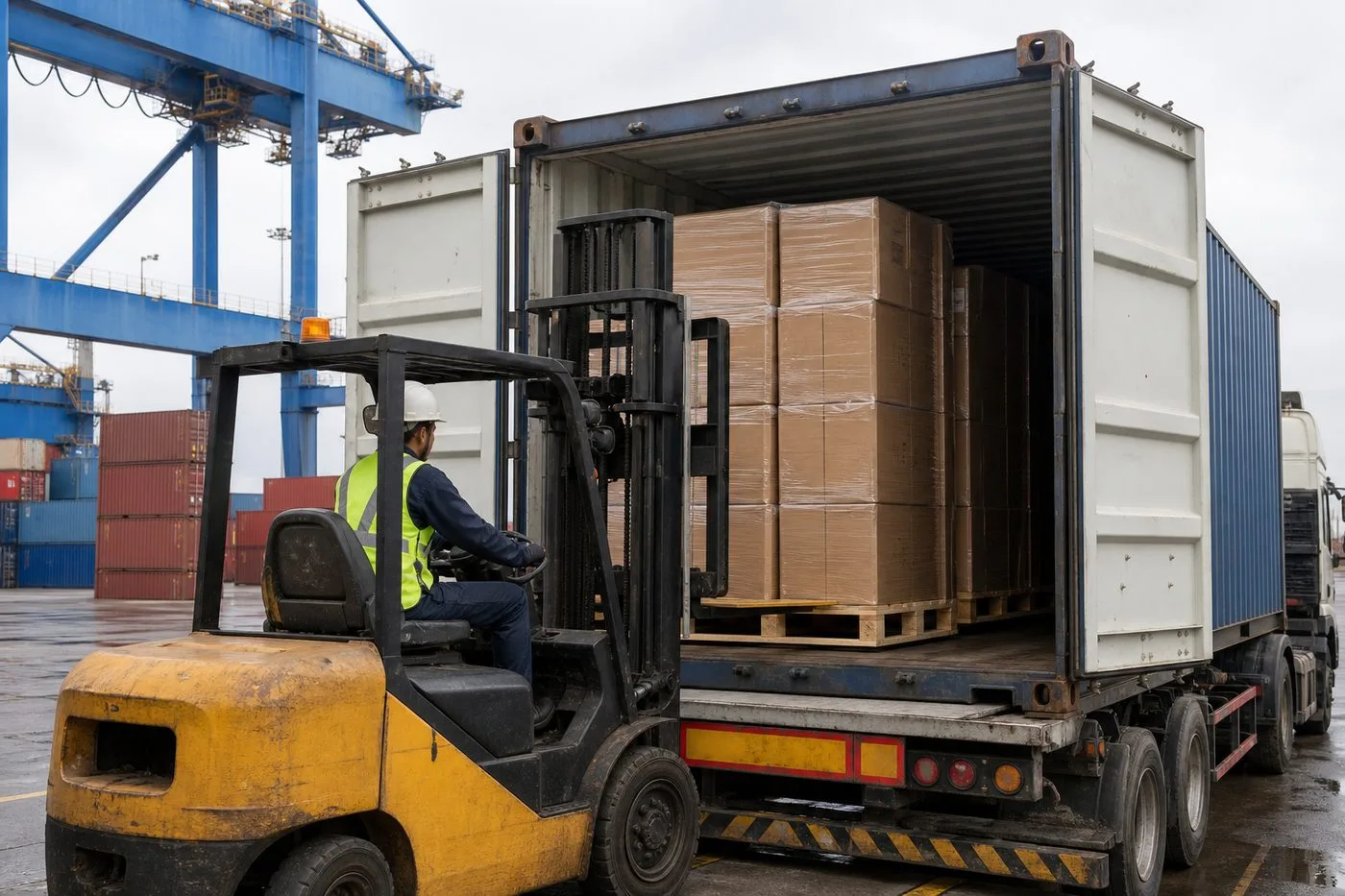
- 20-foot FCL — suitable for academy and mid-size licensed retail programme orders
- 40-foot FCL / HC — suits established federation or large licensed retail programmes
- LCL — common for smaller certified-model trial orders or first shipments to a new club/academy buyer
- Palletisation is standard for premium and printed-box SKUs to reduce crush risk given the higher unit value
Certified match basketballs are almost always shipped fully deflated for ocean freight. Deflated packing maximises container utilisation and reduces panel or seam stress in transit — buyers in this tier typically re-inflate at destination or retail.
Shipping Methods
Export Tip
Ocean freight remains the default for bulk certified-tier orders given the category's shelf-stable, non-perishable nature, typically routed via Nhava Sheva or Mundra with ICD Ludhiana serving the Jalandhar and Meerut clusters. Air freight sees more frequent use in this segment than in commodity basketball exports — federation and licensed-programme launch timelines are often fixed to a competition or season calendar, and buyers in this tier are more willing to absorb air-freight cost to hit a hard launch date than a wholesale training-ball buyer would be.
Certifications
Compliance Notes
This is the core subject of the guide, so the detail here is deliberately more extensive than a typical certifications section: understanding exactly what each standard tests, and how the testing relationship actually works, is what separates a credible certified-tier exporter from one making marketing claims a serious buyer will eventually ask to verify.
What FIBA Approval Programme testing actually covers
Swipe →
Data table — swipe horizontally on small screens
| Test Parameter | What It Verifies | Why Buyers Care |
|---|---|---|
| Circumference | Ball size stays within tight tolerance | Consistent play characteristics across match basketballs |
| Roundness | Sphere shape holds under pressure and after impact | Predictable bounce and flight behaviour |
| Weight | Ball mass sits within defined tolerance | Consistent feel and flight physics for players |
| Bounce rebound | Rebound height consistency across repeated bounces | Predictable ball behaviour during play |
| Surface grip and friction | Cover texture delivers consistent handling and control | Ball-handling reliability for players across a full match |
| Shape and size retention | Ball holds form after repeated impact cycles | Match-long performance consistency |
Buyer Requirements
Buyer Requirements
Buyers in the certified tier run more rigorous due diligence than commodity basketball buyers, and for good reason — a federation or licensed retail programme has its own reputational exposure if a supplier's certification claim turns out to be inaccurate. Expect requests for the current, valid certification document referencing the exact model and test date, production samples matched to the certified specification for independent verification, evidence of consistent post-certification manufacturing controls, and — for licensed programmes — clear intellectual-property and branding compliance alongside the ball itself.
Buyers also frequently ask how a manufacturer will handle a material or process change after certification, since any material change to the tested specification typically requires re-certification. A credible answer here — a defined change-control process — often matters as much to a serious buyer as the original certificate itself.
Country-wise Opportunities
Market Snapshot
Certified match-ball opportunity concentrates in markets with structured academy, collegiate or semi-professional league, and licensed retail infrastructure rather than tracking general basketball import volume — a market that imports large volumes of commodity training balls is not automatically a strong certified-tier market if it lacks that structured competition layer.
Country-wise certified match-ball opportunity profile
Swipe →
Data table — swipe horizontally on small screens
| Country | Opportunity Driver | Buyer Focus |
|---|---|---|
| USA | Deep collegiate, structured youth, and semi-professional league infrastructure | Academies, semi-pro leagues, licensed retail launches |
| UK | Growing club and academy licensing ecosystem | Club academies, flagship licensed retail programmes |
| Germany | Strong technical scrutiny and structured league requirements | Federation and club procurement, technical retail |
| Netherlands | European distribution hub for certified programmes | Academy and club-programme distributors |
| Australia | Expanding structured basketball programmes | Academies, growing semi-professional leagues |
| UAE / Gulf federations | Rising investment in structured youth basketball | Federation and academy procurement |
| Philippines | Deep, established basketball culture with formal league structures | Federation, school, and semi-professional league procurement |
| Africa (select markets) | Formalising youth and development-programme infrastructure | Federation and development-programme procurement |
Sourcing Checklist
Checklist
Buyer Checklist
Exporter Checklist
Common Buyer Mistakes
Common Mistakes Box
Future Market Trends
Key Statistics
Structured youth academy and semi-professional league infrastructure is expanding steadily across North America, parts of the Middle East, and select African markets, which should widen the buyer base for certified match basketballs beyond the traditionally dominant US and European markets over the coming years. As these programmes formalise procurement standards, more of them are likely to specify FIBA Approval Programme (indoor or 3x3/outdoor, model-specific) certification explicitly in tender or supply-agreement language, rather than relying on informal quality assurances from suppliers.
Testing institutes and certification bodies are also gradually streamlining documentation and renewal processes, which should modestly reduce the time and administrative burden of maintaining certification for manufacturers who already have a first model certified — though the underlying manufacturing discipline requirement is unlikely to loosen, since it is precisely that discipline the certification exists to verify.
Challenges & Solutions
- Challenge: certification cost and timeline are hard to justify without confirmed buyer demand — Solution: secure a letter of intent or committed trial order from a serious buyer before funding a testing cycle.
- Challenge: post-certification quality drift risking loss of certification status — Solution: maintain the same incoming-material inspection discipline used for the original test batch on every subsequent production run.
- Challenge: buyers confusing uncertified match-quality construction with formally certified models — Solution: label and price the two tiers distinctly and never imply certification that has not been formally issued for that specific model.
- Challenge: specification changes (leather grading, bladder source) risking invalidated certification — Solution: build a documented change-control process that flags any material change for re-testing review before production.
- Challenge: limited domestic testing infrastructure requiring international institute engagement — Solution: build testing lead time and institute scheduling into your production and buyer-commitment calendar well in advance.
- Challenge: differentiating a genuinely certified exporter from marketing-only claims in a crowded supplier pool — Solution: lead with the certificate itself, model-specific documentation, and a transparent post-certification quality process in every buyer conversation.
Compliance Checklist
Checklist
Compliance Notes
Sources and References
Compliance Notes
- TradeStat EIDB — Ministry of Commerce & Industry
- DGFT — Directorate General of Foreign Trade
- SGEPC — Sports Goods Export Promotion Council
- DGCIS — Directorate General of Commercial Intelligence and Statistics
- Indian ITC-HS 95066230 — Inflatable basketballs
- USITC Harmonized Tariff Schedule (HTSUS)
- HTS 9506.62.80.40 — Basketballs (US)
- European Commission TARIC
- FIBA Official Basketball Rules
- FIBA Equipment & Venue Centre — Balls
- FIBA Approval Programme for Basketball Equipment (2024–2027)
- FIBA Official Basketball Rules & Equipment (2024)
- FIBA Equipment & Venue Centre — How to Get Approved
- ICEGATE — Indian Customs EDI Gateway
- Ministry of Commerce & Industry — Trade Statistics
- ITC Trade Map
Trade values for ITC-HS 95066230 are directional planning figures from TradeStat EIDB (FY 2024-25 unless noted). HS Chapter 95 sub-chapter totals cite TradeStat/DGCIS sector briefs. FIBA size tolerances follow Official Basketball Rules Table 1; US NBA/NCAA retail specs may differ — confirm buyer channel. Destination duty rates, preferential programmes, and certification requirements change — confirm with a licensed customs broker and the buyer's compliance team before quoting landed cost or making certification claims on invoices.
Certification guidance follows the current FIBA Equipment & Venue Centre ball standards and FIBA Approval Programme — not football, volleyball, or generic sports-ball tiers.
Conclusion
- Next step for manufacturers: validate committed demand for a specific certified model with at least one serious buyer before funding a testing cycle with an accredited institute.
- Next step for buyers: share your certification tier requirement (FIBA Approval Programme, indoor or 3x3/outdoor, model-specific), target volume, and timeline — Altus Exports will match verified certified-tier Jalandhar and Meerut suppliers.
- Explore export products from India and global sourcing partner services for broader multi-category sourcing support alongside certified basketball programmes.
- Consider product sourcing company India services if you are evaluating certified match basketballs alongside other premium sports goods for a diversified programme.
Certified, match-grade basketball export is a genuine premium-margin opportunity within India's basketball trade, but it rewards a specific kind of manufacturer: one willing to invest in full-grain leather precision, maintain disciplined post-certification quality control, and build relationships with the school, club, federation, academy, and licensed-retail buyers who actually value and will pay for FIBA Approval Programme (indoor or 3x3/outdoor, model-specific) certification. It is not a path for every Jalandhar or Meerut exporter, and it should not be pursued speculatively without validated buyer demand — but for the right manufacturer with the right buyer relationships already in progress, it delivers materially better economics than commodity training-ball volume ever will.
If you manufacture full-grain leather basketballs and are considering certification, start by validating real buyer demand for a specific model before funding a testing cycle, and build your post-certification quality process before the certificate is even issued. If you are a club, academy, federation, or licensed retail buyer sourcing certified match basketballs from India, verify every certificate against the exact model and test date before committing volume. Altus Exports coordinates both sides of this relationship as a merchant exporter in India — reach out via our contact page to discuss certified-tier sourcing or export readiness.
This guide is the certification-depth companion to our broader basketball content cluster. For the full export process, see How to Export Basketballs from India. For product and construction depth generally, see Top Basketball Products Exported from India. For registration fundamentals, see SGEPC Registration Benefits for Basketball Exporters. For buyer discovery, see How to Find International Buyers for Basketballs and Trade Shows and B2B Marketplaces for Basketball Exporters. For market selection, see Best Countries for Indian Basketball Exports and Most Demanded Indian Basketballs by Country.