
Top Basketball Products Exported from India: Complete SKU Guide
By Saurabh Mittal, Founder, Altus Exports
A complete SKU-level guide to the basketball products exported from India — rubber outdoor, composite leather, and full-grain leather constructions across sizes 5, 6, and 7, cover materials, bladder types, MOQ by product type, pricing bands, packaging, and buyer fit, with expert insight from Altus Exports.
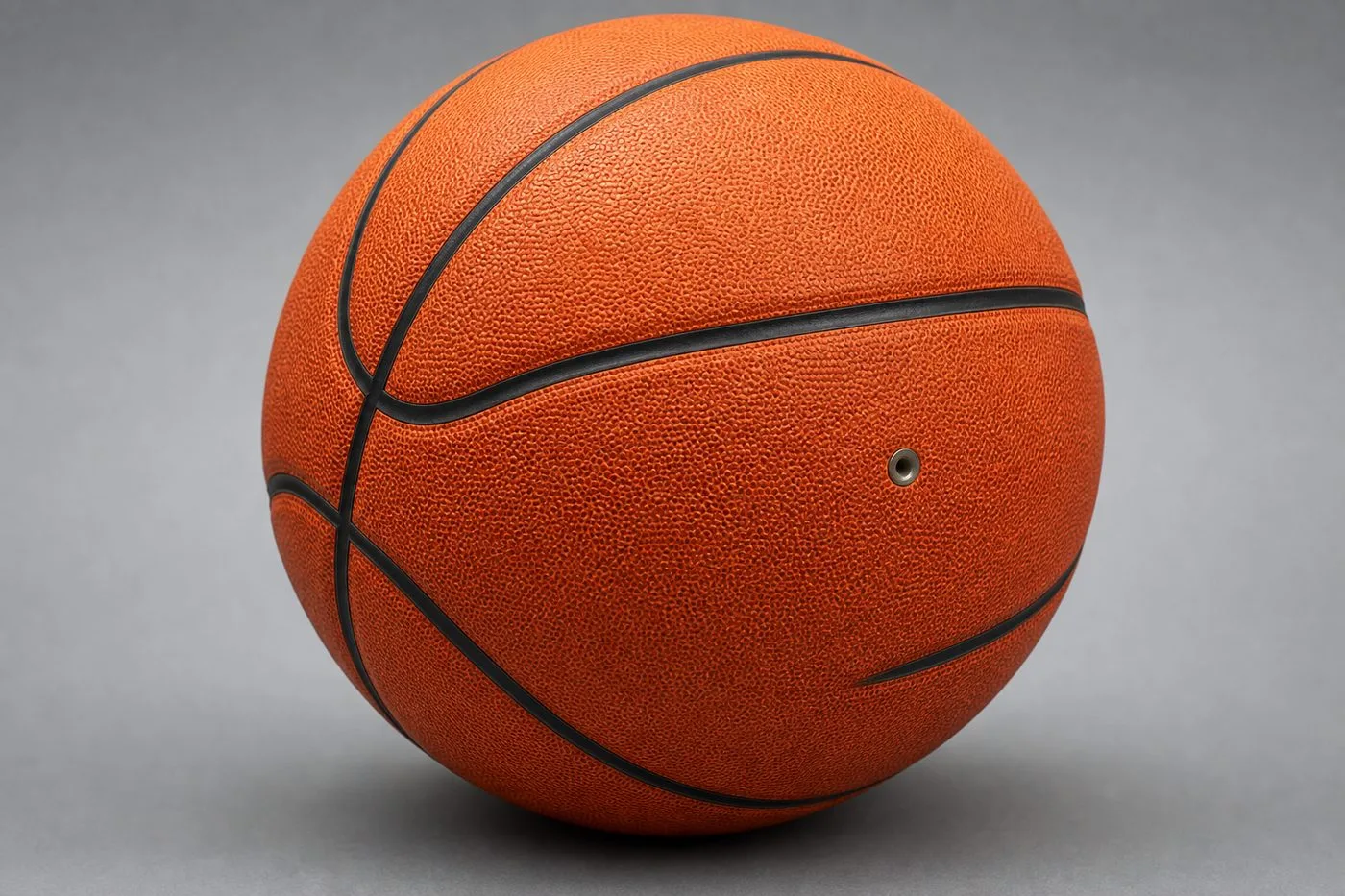
Buyers researching basketball products exported from India quickly discover that 'basketball' is not one SKU but a family of products spanning three sizes and three distinct construction methods, each with its own cost structure, buyer segment, and quality bar. This guide is the dedicated product-level catalogue for India's basketball export trade — the companion reference to our process pillar, How to Export Basketballs from India, which covers registrations, logistics, and documentation. Here, the focus is squarely on what you can actually order: rubber outdoor basketballs, composite leather training and match balls, full-grain leather premium basketballs, and youth/mini SKUs, broken down by size, cover material, bladder type, and minimum order quantity.
All of these products move under Harmonized System heading 9506.62 internationally, with India's own tariff schedule using the eight-digit subheading 95066230 for basketballs specifically, and US-bound shipments commonly landing under HTS 9506.62.80.40. Sizing and weight follow FIBA's Official Basketball Rules — size 7 at 75.0–77.0 cm circumference and 580–620 g, size 6 at 71.5–73.0 cm and 510–550 g, and size 5 at 68.5–70.0 cm and 465–495 g — and quality claims for competition-grade lines should reference the FIBA Approval Programme specifically, not FIVB (volleyball) or FIFA (football) standards. Manufacturing for nearly every SKU in this guide traces back to Jalandhar, Punjab, with Meerut, Uttar Pradesh, supplying supporting capacity for rubber outdoor and mid-tier composite leather volumes. For direct sourcing relationships with the underlying manufacturers, see Source Basketballs Directly from India or work with a merchant exporter in India to manage supplier coordination on your behalf.
This guide organises the basketball product range the way buyers actually shop it: by construction tier first, then by size and end use within each tier, with MOQ, indicative FOB pricing, packaging, and certification notes attached to each product type. Trade figures and pricing bands referenced throughout are directional planning inputs from TradeStat, DGCIS, and FIBA public materials — always confirm current pricing and HS classification with your supplier or CHA before committing to an order. For the operational process behind sourcing these SKUs — registrations, pricing logic, and shipping — see How to Export Basketballs from India, and for market selection, see Best Countries for Indian Basketball Exports.
Key Takeaways
Summary Box
Executive Summary
Summary Box
The basketball products exported from India fall into a small number of well-defined SKU families, each built around a specific construction method and targeted at a specific buyer segment. Rubber outdoor basketballs are molded rubber-cover balls built for playground, school, and recreational durability at the lowest price point. Composite leather basketballs — the largest volume category — use a laminated synthetic cover that balances indoor feel with outdoor durability, split further into training-grade and match/game-grade tiers. Full-grain leather basketballs use genuine leather covers for premium indoor retail and competition-adjacent buyers, commanding the highest price point in the category. Youth and mini training basketballs apply these same construction choices at size 5 for younger players and promotional programmes.
Understanding this SKU structure matters because pricing, MOQ, and certification requirements differ meaningfully across it — a buyer requesting full-grain leather pricing on a rubber outdoor order, or expecting FIBA Approval Programme documentation on a promotional-grade composite ball, is working from a mismatched mental model that slows down deal-making on both sides. This guide breaks down each product family by size, cover material, bladder type, MOQ, and indicative pricing so buyers and exporters can align on the right SKU from the first conversation.
This guide assumes you already understand the basic export process — if you need that grounding first, see How to Export Basketballs from India, our process pillar covering registrations, documentation, and logistics. Altus Exports operates as a merchant exporter and global sourcing partner coordinating supplier verification, quality checks, and shipment execution across every SKU family described here.
Market Size & Industry Overview
Key Statistics
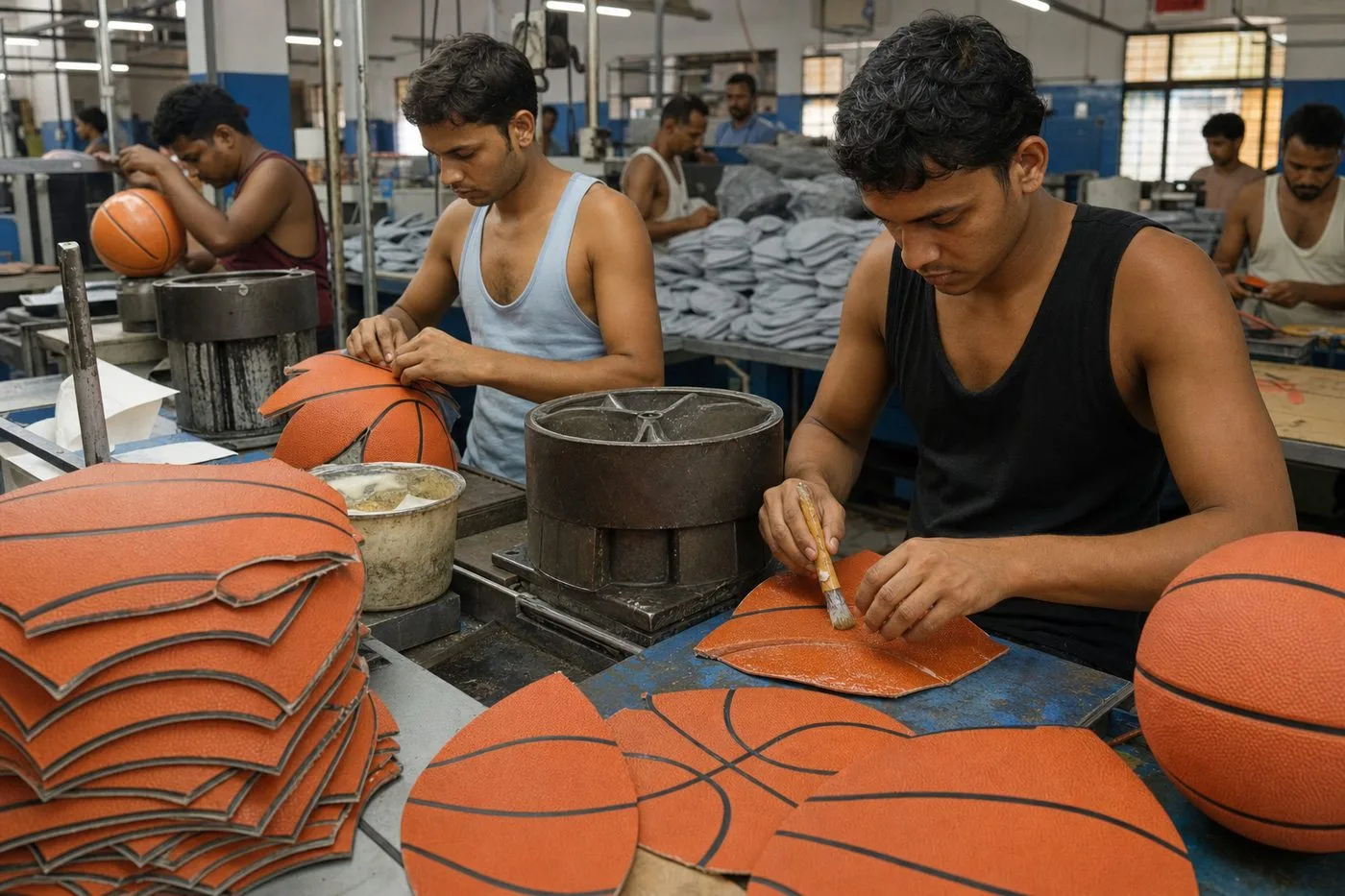
India's basketball product range is manufactured almost entirely within the Jalandhar, Punjab sports-goods cluster, supported by Meerut, Uttar Pradesh for specific construction tiers. Jalandhar's ecosystem includes rubber compounding and molding lines dedicated to outdoor basketballs, panel-cutting and lamination operations for composite leather covers, leather tanning and finishing partners for full-grain leather premium lines, bladder suppliers producing butyl bladders at scale, printing and branding services, and packing houses — a structure that lets export houses assemble very different construction types without long inbound logistics chains.
This manufacturing base sits within India's broader sports goods sector, which DGCIS Chapter 95 briefs pegged at roughly US$570.95 million in exports for FY 2024-25 across the full toys/games/sports requisites category, with Punjab's sports-goods sector specifically estimated at a directional US$81.01 million for the same period. These figures span far more than basketballs, but they illustrate the scale of the manufacturing ecosystem that basketball-specific product lines draw on for shared inputs like rubber compounding, bladder manufacturing, and printing capacity.
Product mix within the cluster leans heavily toward composite leather construction by volume, with rubber outdoor basketballs forming a large secondary volume tier and full-grain leather premium products occupying a smaller, higher-margin niche. Youth and mini SKUs are typically produced as size-5 variants of the same rubber outdoor or composite leather construction lines rather than as a wholly separate manufacturing process, which keeps tooling costs manageable for exporters serving school and promotional buyers.
Export Statistics
Key Statistics
TradeStat's Export Import Data Bank (EIDB) tracks basketball exports under HS 95066230 specifically. For FY 2024-25, this line shows Indian basketball exports at approximately ₹13.58 crore. Because this figure is not broken down by construction type or size in most publicly available datasets, exporters and buyers should treat the product-mix commentary in this guide as informed directional insight from cluster-level production patterns rather than an audited SKU-by-SKU breakdown.
Directional export profile by product family (HS 95066230)
Swipe →
Data table — swipe horizontally on small screens
| Product Family | Directional Volume Share | Primary Export Markets |
|---|---|---|
| Composite leather (training + match) | Largest volume share | USA, Germany, Australia, Japan |
| Rubber outdoor | Significant secondary volume share | Philippines, Brazil, UAE |
| Full-grain leather (premium/FIBA-pathway) | Smaller, higher-margin niche | USA, Germany, Australia |
| Youth/mini (size 5, various constructions) | Steady niche volume | USA, China, UAE, school-supply channels globally |
Import Statistics
Key Statistics
TradeStat EIDB figures for FY 2024-25 show Indian basketball imports at approximately ₹13.94 crore against exports of approximately ₹13.58 crore under HS 95066230 — a modest directional trade deficit of roughly ₹0.36 crore. For a product-catalogue guide, the relevant implication is that finished, branded basketballs also flow into India for domestic retail, school, and club consumption, which means product-level competitive benchmarking should account for imported alternatives on India's own shelves, not only for destination-market competitors.
This also means buyers should not assume a given SKU is automatically export-grade simply because it originates from an Indian sports-goods cluster — sample-based verification against a written specification remains essential product by product, a theme this guide returns to for each construction tier below.
Directional import profile for Indian basketball trade (HS 95066230)
Swipe →
Data table — swipe horizontally on small screens
| Metric | Directional Estimate | Notes |
|---|---|---|
| FY 2024-25 import value | ~₹13.94 crore | TradeStat EIDB, HS 95066230 |
| Directional trade balance | ~₹0.36 crore deficit | Imports directionally exceed exports for this HS line |
| Typical import composition | Finished, branded basketballs for domestic retail/school use | Competes with export-grade product on India's own shelves |
| US import duty reference | ~4.8% MFN on HTS 9506.62.80 | Applies to Indian exports entering the US; confirm with a licensed broker |
| EU import duty reference | ~2.7% MFN on CN 9506 62 | Confirm current rate via TARIC before quoting landed cost |
Product Categories & Constructions Overview
Summary Box
The core SKU catalogue for basketball products exported from India breaks into four practical product families, each spanning one or more sizes and cover-material grades. The table below is the master reference for this guide — matching product family, typical size, construction, cover material, bladder type, and primary buyer.
Master SKU catalogue — basketball products exported from India
Swipe →
Data table — swipe horizontally on small screens
| Product Type | Typical Size | Construction | Cover Material | Bladder | Primary Buyer |
|---|---|---|---|---|---|
| Rubber outdoor basketball | Size 7 (also 6, 5) | Molded rubber cover | Rubber compound | Butyl | Schools, playgrounds, budget retail |
| Composite leather training basketball | Size 7, 6, 5 | Laminated composite cover | Composite (PU-based) leather | Butyl | Indoor/outdoor training programmes, mid-tier retail |
| Composite leather match/game basketball | Size 7, 6 | Laminated composite cover, tighter tolerance | Composite (PU-based) leather | Butyl | Club, league, and school competition programmes |
| Full-grain leather premium basketball | Size 7 (also 6) | Genuine leather panel cover | Full-grain leather | Butyl | Premium indoor retail, enthusiast, competition-adjacent buyers |
| Youth/mini training basketball | Size 5 | Rubber or composite construction | Rubber or composite leather | Butyl | Youth training, mini-basketball programmes, promotional use |
| Promotional/branded basketball | Size 7 typically | Rubber or entry composite construction | Rubber or composite | Butyl | Marketing agencies, giveaway and branding programmes |
Manufacturing Overview
Export Tip
Rubber outdoor basketballs are manufactured through a single-step molding process: a rubber compound is formed around a butyl bladder under heat and pressure, producing the pebbled outdoor cover and channel pattern in one operation. This construction method is capital-efficient at scale and produces the most durable cover for asphalt and concrete play, which is why it remains the default choice for school and playground buyers even as composite leather has gained share elsewhere in the category.
Composite leather basketballs — both training and match/game grades — are built from panel-cut synthetic composite sheets, laminated with a foam backing layer for cushioning and touch, then assembled around a butyl bladder with channels formed and finished at the seams. Match/game-grade composite balls typically carry tighter dimensional and rebound tolerances than training-grade composite balls, even though the underlying materials are similar, which is the main reason the two SKUs carry different pricing despite look-alike specifications on a data sheet.
Full-grain leather premium basketballs follow a similar panel-cut-and-assemble process but substitute tanned, finished leather hides for the composite cover, adding a tanning and leather-grading step that meaningfully raises both cost and lead time relative to composite construction. Youth and mini training basketballs (size 5) generally reuse the rubber or composite construction process of their full-size counterparts at a smaller mold or panel pattern, rather than requiring an entirely separate production line — a detail that helps buyers understand why size-5 pricing tracks size-7 pricing within the same construction tier rather than scaling down proportionally with material volume alone.
Sourcing & Quality Process by Product Type
Sourcing the right basketball SKU is less about finding a supplier and more about matching product type, construction, and quality gate to your specific buyer segment before you request a quote. The steps below walk through that matching process for each of the product families described above.
Step 1: Define the buyer segment and end use first
Before requesting quotes, define whether your buyer is a school/playground programme (rubber outdoor), a training or mid-tier retail channel (composite leather training), a club/league/competition programme (composite leather match-grade or full-grain leather), or a promotional/branding buyer (entry rubber or composite). This single decision filters out most of the pricing confusion that slows down first-time sourcing conversations.
Step 2: Select size against FIBA's Official Basketball Rules
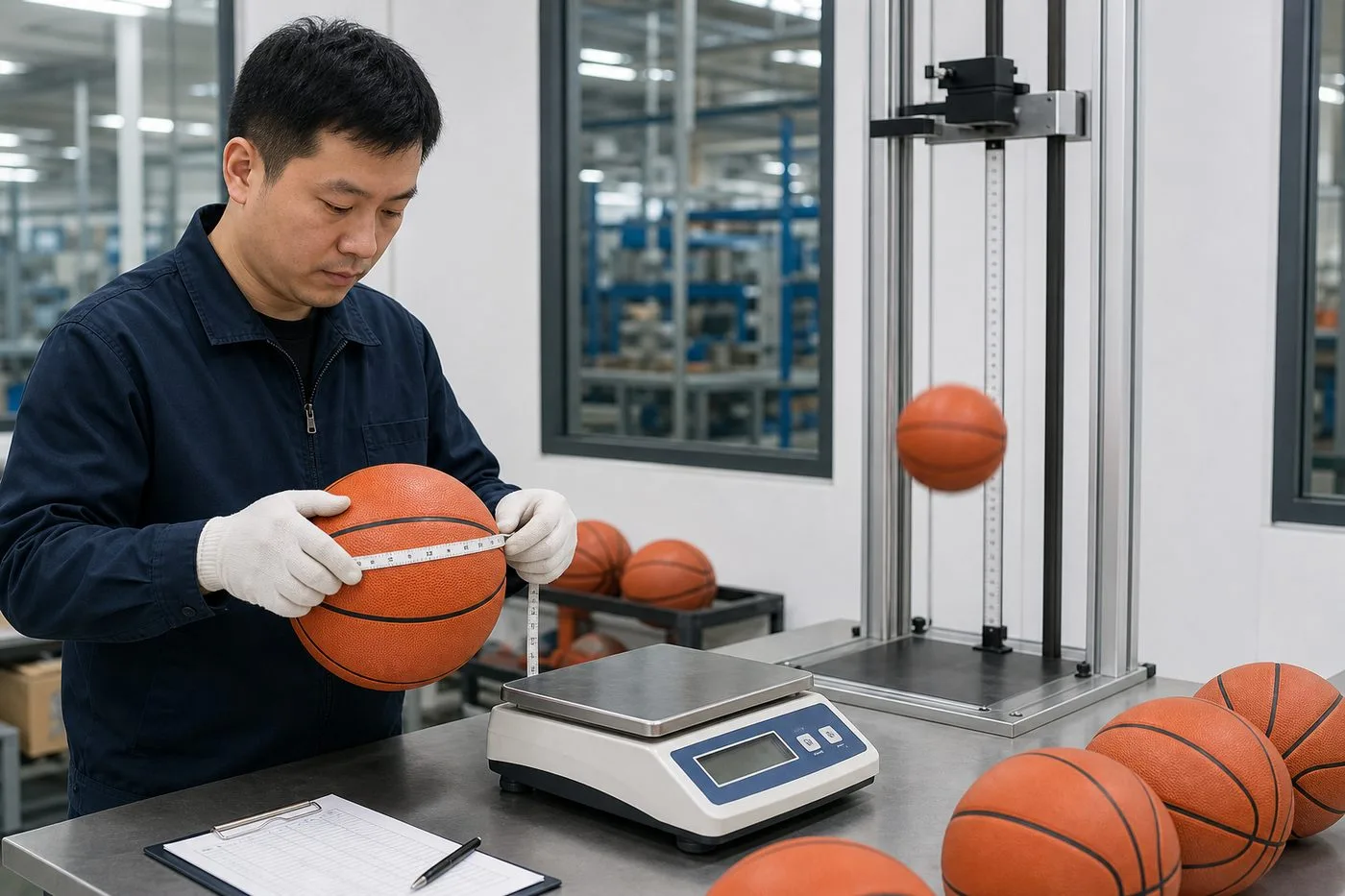
Match size to end user: size 7 (75.0–77.0 cm, 580–620 g) for men's/general adult and training use, size 6 (71.5–73.0 cm, 510–550 g) for women's competition and some junior programmes, and size 5 (68.5–70.0 cm, 465–495 g) for youth training and mini-basketball programmes. Confirm the buyer's exact size requirement in writing before requesting samples — a mismatched size is one of the most common and easily avoidable sourcing errors in this category.
Step 3: Source the right construction from Jalandhar or Meerut
Map your product to the right specialist unit: rubber-molding lines for outdoor balls, panel-cutting and laminating operations for composite leather, and leather tanners and finishers for full-grain leather premium SKUs, with Meerut providing supporting capacity for rubber outdoor and mid-tier composite volumes. For buyers who want to work directly with verified manufacturers, see Source Basketballs Directly from India.
Step 4: Approve samples against a written product specification
Request samples for the exact SKU — size, construction, cover material, and bladder type — rather than a generic 'basketball' sample. Check circumference, weight, roundness, rebound height, cover texture/pebble uniformity, and channel/seam integrity against a written specification before approving. Sign off the approved sample and hold bulk production to that exact reference.
Step 5: Gate certification investment to the SKU that actually needs it
Reserve FIBA Approval Programme testing and documentation for competition-facing composite leather match-grade and full-grain leather SKUs where buyers specifically require it. Rubber outdoor, training-grade composite, promotional, and youth/mini SKUs are typically sold successfully on internal QC and written specification compliance alone. See FIBA-Certified & Match-Grade Basketball Export Opportunities for the certification pathway.
Step 6: Confirm MOQ, pricing, and packaging by product type
Each product family carries a different practical MOQ and pricing band, covered in detail in the MOQ Analysis and Pricing Analysis sections below. Confirm these against your target order size before quoting a buyer, since a full-grain leather premium order and a rubber outdoor order will rarely share the same MOQ economics even at similar unit counts.
Pricing Analysis
Buyer Tip
Basketball pricing tracks construction tier closely, with size and branding complexity adding modest variation within each tier rather than driving the primary price difference. Treat the figures below as directional FOB bands for planning purposes; always confirm current pricing against a fresh quotation, since rubber compound, composite film, and leather hide costs move with raw-material markets and season.
Directional FOB USD/pc pricing by product type, size 7 unless noted
Swipe →
Data table — swipe horizontally on small screens
| Product Type | Directional FOB USD/pc | Notes |
|---|---|---|
| Rubber outdoor basketball | ~2–5 | Lowest-cost construction; durable for asphalt/concrete play |
| Composite leather training basketball | ~5–10 | Largest volume tier; indoor/outdoor training use |
| Composite leather match/game basketball | ~10–18 | Tighter tolerances; club/league/school competition use |
| Full-grain leather premium basketball | ~18–35+ | Genuine leather cover; premium retail and FIBA-pathway lines |
| Youth/mini training basketball (size 5) | ~2–8 | Pricing tracks the underlying construction tier (rubber or composite) |
| Promotional/branded basketball | ~2–6 | Entry rubber or composite construction; branding cost adds modestly to base price |
MOQ Analysis
Buyer Tip
Minimum order quantities differ meaningfully by product type, largely driven by tooling, leather sourcing, and branding setup costs rather than by size alone. Buyers evaluating multiple SKUs in a single order should expect the exporter to quote MOQ per product type, not as a single blended figure across the whole order.
Directional MOQ by product type and transaction stage
Swipe →
Data table — swipe horizontally on small screens
| Product Type | Sample MOQ | Trial Order MOQ | Wholesale MOQ |
|---|---|---|---|
| Rubber outdoor basketball | 10–50 pcs | 500–2,000 pcs | 3,000–10,000+ pcs |
| Composite leather training basketball | 10–50 pcs | 500–2,000 pcs | 3,000–10,000+ pcs |
| Composite leather match/game basketball | 10–30 pcs | 300–1,500 pcs | 2,000–8,000+ pcs |
| Full-grain leather premium basketball | 5–20 pcs | 200–1,000 pcs | 1,500–5,000+ pcs |
| Youth/mini training basketball | 10–50 pcs | 500–2,000 pcs | 3,000–10,000+ pcs |
Packaging Standards
Export Tip
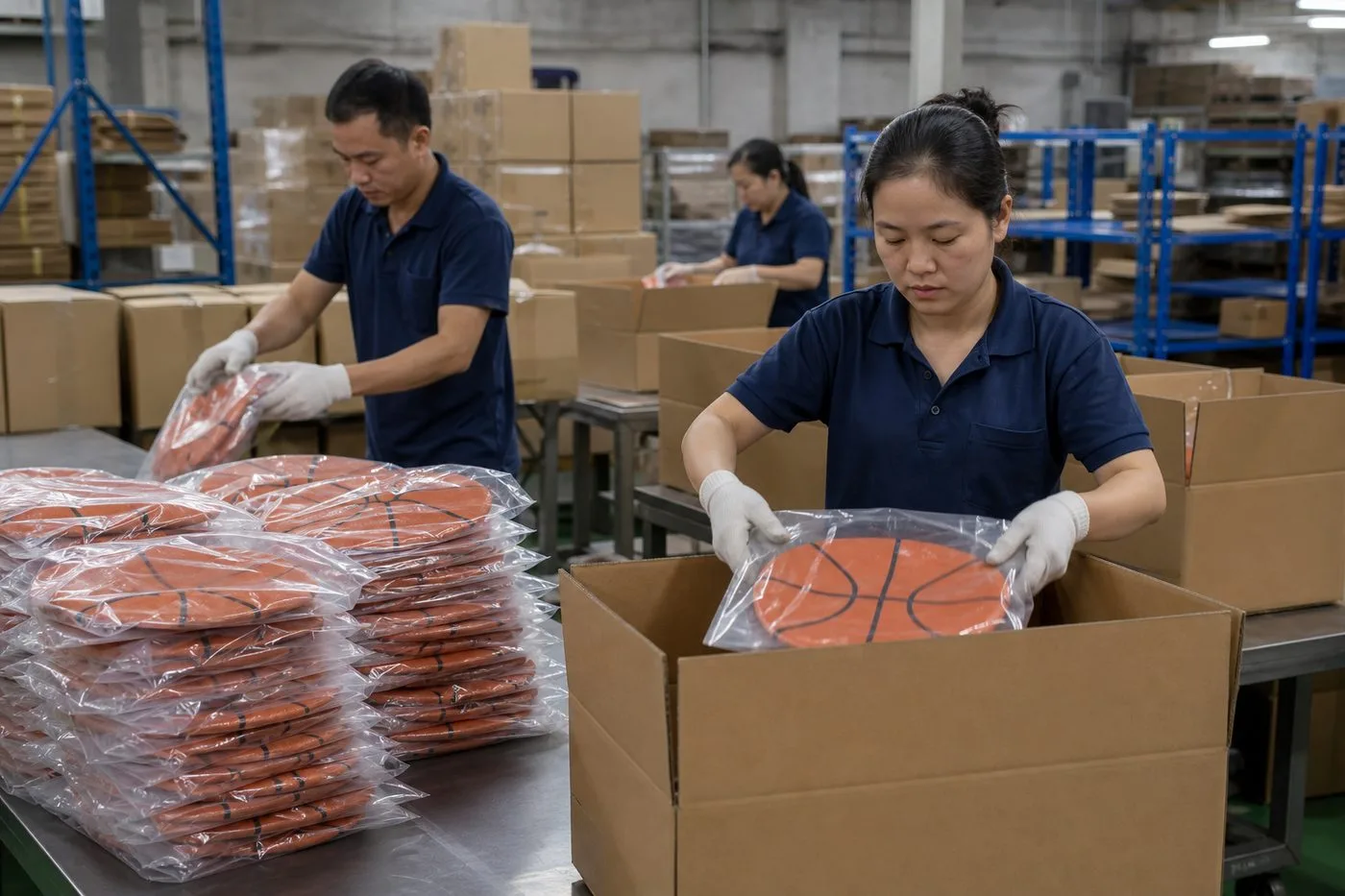
Packaging format tracks product type closely: promotional and wholesale SKUs typically move in poly bags and master cartons, while premium full-grain leather and branded retail SKUs justify individual retail boxes designed for shelf display. Every product type ships deflated for bulk and wholesale volumes, which is the single most important packaging rule across the entire catalogue.
Packaging formats by product type
Swipe →
Data table — swipe horizontally on small screens
| Product Type | Typical Packaging | Configuration |
|---|---|---|
| Rubber outdoor basketball | Poly bag + master carton | 20–50 pcs per carton |
| Composite leather training basketball | Poly bag + master carton | 20–50 pcs per carton |
| Composite leather match/game basketball | Poly bag + master carton, sometimes branded sleeve | 20–40 pcs per carton |
| Full-grain leather premium basketball | Individual retail box | 1 pc per box, shelf-ready |
| Youth/mini training basketball | Poly bag + master carton | 30–60 pcs per carton |
| Promotional/branded basketball | Poly bag + master carton, custom branding sleeve optional | 20–50 pcs per carton |
Container Loading Details
Export Tip
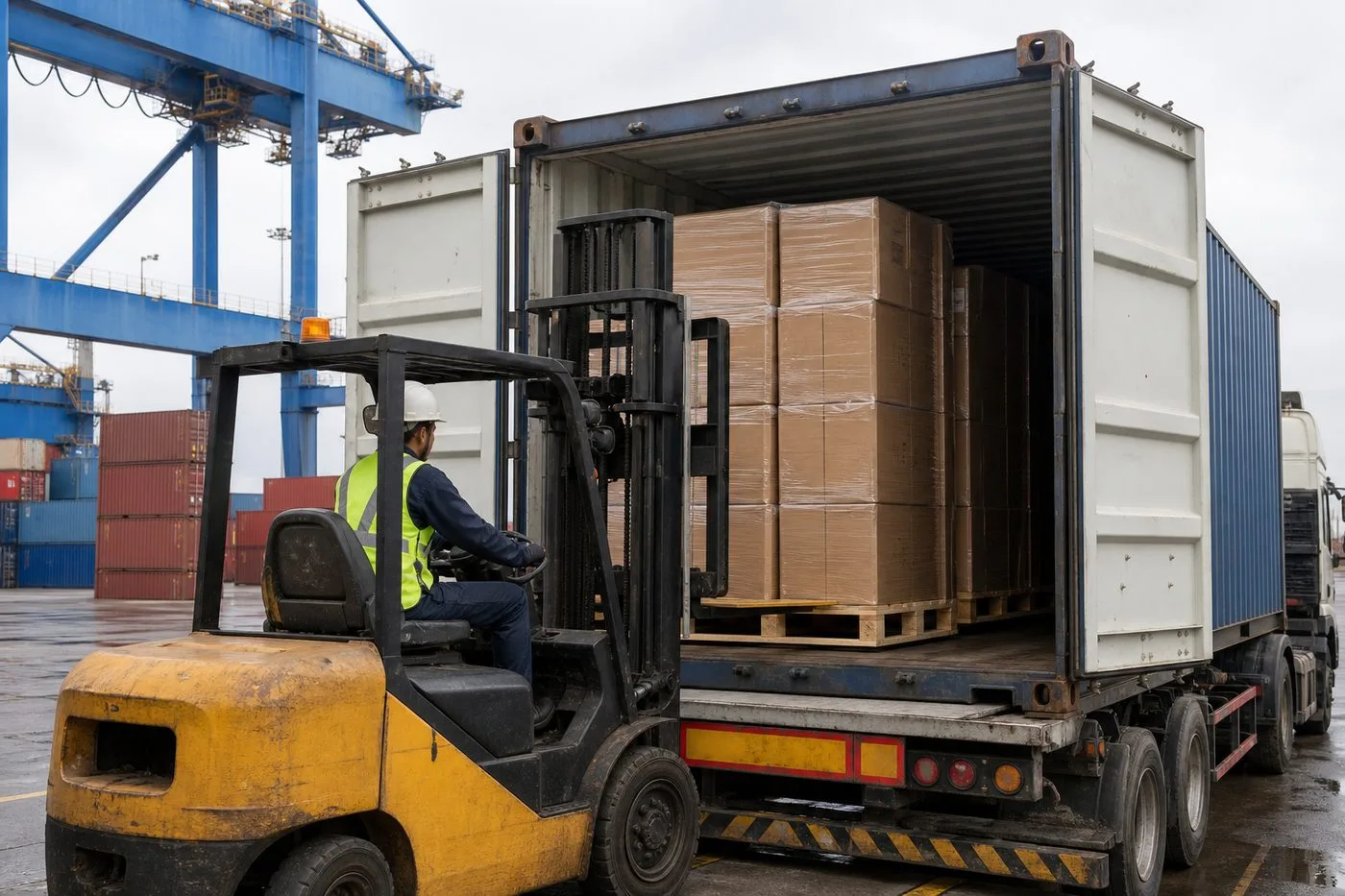
Because every product type in this catalogue ships deflated, container loading across the full SKU range is volume-optimised rather than weight-constrained. Mixed-SKU containers are common for buyers ordering across multiple product types in a single shipment, and carton stacking pattern (not the theoretical weight limit) determines the realistic unit count per container.
Directional container loading guidance by product mix
Swipe →
Data table — swipe horizontally on small screens
| Container Type | Loading Consideration | Typical Product Mix |
|---|---|---|
| 20-foot FCL | Volume-optimised; suits single-SKU trial orders or small mixed-SKU orders | Rubber outdoor, composite training, or a small mixed catalogue |
| 40-foot FCL / 40-foot HC | Volume-optimised; better per-unit freight economics for larger orders | Full wholesale catalogue across multiple product types |
| LCL (less than container load) | Suitable for sample and small trial shipments across several SKUs | New buyer relationships evaluating multiple product types |
| Palletisation | Recommended for full-grain leather premium retail boxes to reduce crush risk | Premium and private-label retail-boxed SKUs |
Shipping Methods
Export Tip
- Samples across any product type: air freight or express courier, 7–14 days typical lead time
- Standard bulk/wholesale orders (rubber outdoor, composite leather): ocean FCL/LCL from Nhava Sheva or Mundra via ICD Ludhiana, 2–4 weeks typical lead time
- Full-grain leather premium or custom private-label programmes: ocean freight with 4–8 weeks typical lead time to allow for tanning, tooling, and branding approval
- Incoterms commonly used across all product types: EXW, FOB, CFR/CIF, with DDP offered selectively for buyers who want fully landed pricing
Ocean freight under FCL or LCL is the standard shipping method across every basketball product type described in this guide — the category's low per-unit value relative to freight cost makes ocean freight the default even for premium full-grain leather SKUs. Nhava Sheva and Mundra are the primary sea gateways from India, with ICD Ludhiana serving as an inland container depot consolidating cargo from Jalandhar and Meerut before onward movement to the coastal port.
Air freight is occasionally used for urgent samples across any product type, trade-show kits showcasing multiple SKUs, or very high-value full-grain leather launch orders, but it rarely makes economic sense for standard bulk volumes in any construction tier. Lead times typically run 7–14 days for samples, 2–4 weeks for standard stock orders across rubber outdoor and composite leather SKUs, and 4–8 weeks for full-grain leather premium or custom private-label programmes that require tanning, tooling, and branding approval.
Certifications
Compliance Notes
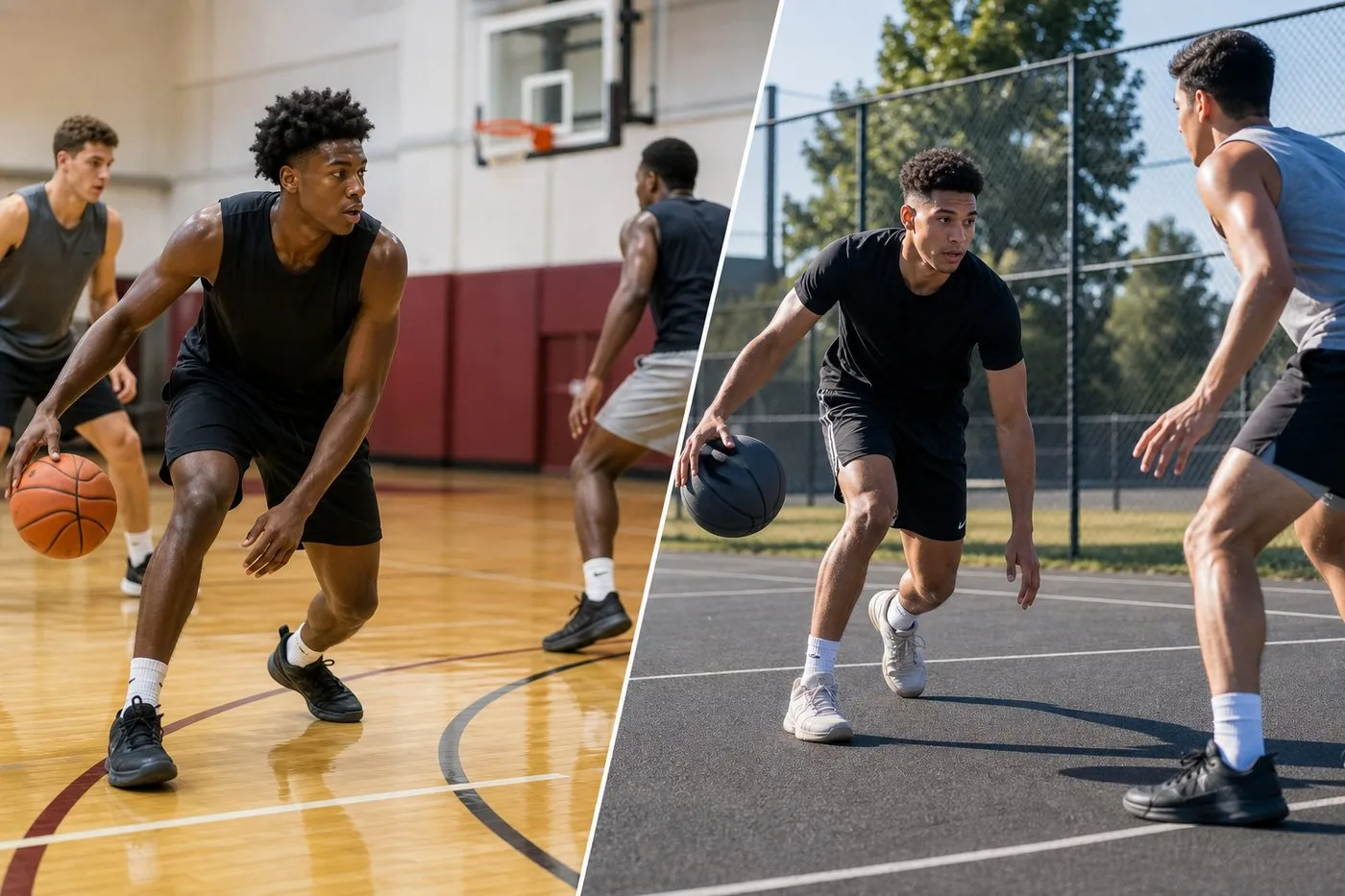
Certification needs differ by product type more than any other variable in this catalogue. Rubber outdoor, training-grade composite, promotional, and youth/mini SKUs are generally sold successfully on internal QC and written specification compliance. Composite leather match/game-grade and full-grain leather premium SKUs targeting club, league, or federation buyers should be positioned against the FIBA Approval Programme specifically — never against FIVB (volleyball) or FIFA (football) standards, which do not apply to basketballs.
Certification relevance by product type
Swipe →
Data table — swipe horizontally on small screens
| Product Type | Typical Certification Need | Notes |
|---|---|---|
| Rubber outdoor basketball | Internal QC / buyer spec compliance | FIBA Approval Programme rarely required for this tier |
| Composite leather training basketball | Internal QC / buyer spec compliance | FIBA Approval Programme optional, buyer-dependent |
| Composite leather match/game basketball | FIBA Approval Programme where buyer requires it | Common ask for club, league, and school competition buyers |
| Full-grain leather premium basketball | FIBA Approval Programme for competition-adjacent claims | Verify documentation independently before marketing an approval claim |
| Exports to the European Union (any product type) | REACH compliance | Chemical safety compliance for cover and coating materials |
Buyer Requirements
Buyer Requirements
Buyers evaluating specific basketball SKUs typically request a consistent set of proof points, tailored slightly by product type. Across every SKU, expect requests for physical samples matching the exact size and construction under consideration, a written specification sheet covering size-specific circumference and weight tolerances against FIBA's Official Basketball Rules, clear FOB or landed pricing by product type and volume tier, and packaging specification appropriate to the SKU (bulk carton vs. retail box).
For composite leather match-grade and full-grain leather premium SKUs specifically, buyers frequently add FIBA Approval Programme documentation review and independent verification of any certification claim. For rubber outdoor, promotional, and youth/mini SKUs, buyers more often prioritise competitive bulk pricing and consistent cover durability over certification. Across all product types, buyers new to the category should confirm deflated shipping and re-inflation logistics before their first bulk order.
Country-wise Opportunities
Market Snapshot
Product-type demand varies by destination market, and matching your SKU mix to the right country sequence improves conversion speed for exporters carrying multiple construction tiers. For a country-by-country deep dive across the full basketball category, see Most Demanded Indian Basketballs by Country and Best Countries for Indian Basketball Exports.
Directional product-type opportunity by destination market
Swipe →
Data table — swipe horizontally on small screens
| Country | Strongest Product-Type Fit | Requirement Focus |
|---|---|---|
| USA | Composite leather (training + match), full-grain leather premium | Retail compliance, private-label branding, HTS 9506.62.80.40 duty planning |
| China | Rubber outdoor, composite leather training | Competitive bulk pricing, consistent quality documentation |
| Philippines | Rubber outdoor, composite leather training | Durable outdoor construction, consistent quality |
| Germany | Composite leather match-grade, full-grain leather premium | REACH compliance, FIBA Approval Programme documentation |
| Australia | Composite leather training + match-grade | Quality documentation, consistent construction |
| UAE | Rubber outdoor, composite leather training, promotional | Competitive bulk pricing, wholesale/re-export volumes |
| Brazil | Rubber outdoor, composite leather training | Competitive bulk pricing, durable construction |
| Japan | Composite leather training + match-grade, full-grain leather premium | Quality documentation rigor |
Sourcing Checklist
Checklist
- Confirm the exact product type (rubber outdoor, composite leather training, composite leather match-grade, full-grain leather premium, or youth/mini) before requesting a quote
- Confirm size against FIBA's Official Basketball Rules (size 7, 6, or 5) in writing
- Request bladder type and cover-material grade in writing, not just a general 'basketball' description
- Match MOQ expectations to the specific product type — full-grain leather premium MOQs are typically lower than rubber outdoor or composite training MOQs
- Ask whether the SKU has any prior FIBA Approval Programme-aligned production history if targeting competition-facing buyers
- Confirm packaging format (bulk carton vs. retail box) matches your intended sales channel for that SKU
- Verify IEC and SGEPC RCMC status of the exporter regardless of which product type you are ordering
Because this guide is organised by product type, the sourcing checklist below is built around confirming SKU-level specification before you request a quote, rather than generic supplier vetting alone.
Common Buyer Mistakes
Common Mistakes Box
Future Market Trends
Key Statistics
Within the basketball product catalogue, composite leather is likely to keep gaining share relative to rubber outdoor as indoor and mixed-use court programmes expand globally and buyers seek a single SKU that performs reasonably well both indoors and outdoors. Full-grain leather premium products are likely to remain a smaller, margin-driven niche rather than a volume category, but demand should stay resilient among enthusiast retail and competition-adjacent buyers willing to pay for genuine-leather feel.
Private-label and custom-branded programmes are likely to keep gaining share across every product type in this catalogue, as retail chains, schools, and clubs seek differentiated SKUs rather than interchangeable stock. Buyers are also increasingly asking for construction transparency at the product level — cover material, bladder type, and size tolerance in writing — rather than accepting a generic 'basketball' description, which favours exporters who maintain clear, product-type-specific specification sheets across their full catalogue.
Challenges & Solutions
- Challenge: buyers conflating product types when comparing quotes — Solution: provide a standardised product-type comparison sheet with size, construction, cover material, and bladder specified for each SKU quoted.
- Challenge: MOQ mismatches across product types in a single order — Solution: quote MOQ per product type explicitly rather than a single blended MOQ across a mixed order.
- Challenge: full-grain leather sourcing variability affecting cover consistency — Solution: work with a small, vetted set of tanning and finishing partners rather than sourcing leather opportunistically per order.
- Challenge: certification claims applied inconsistently across product types — Solution: reserve FIBA Approval Programme claims strictly for the SKUs that actually carry current documentation.
- Challenge: container planning complexity when shipping a mixed-SKU order — Solution: plan carton stacking by product type density rather than treating all deflated basketballs as interchangeable for volume planning.
- Challenge: buyers unfamiliar with which product type fits their channel — Solution: lead sourcing conversations with the buyer-segment mapping in this guide before discussing price.
Managing a multi-SKU basketball catalogue for export introduces a specific set of product-level challenges beyond the general export process, largely because buyers and exporters do not always share the same mental model of what separates one product type from another.
Buyer Checklist
Checklist
Exporter Checklist
Checklist
Compliance Checklist
Checklist
Compliance Notes
Sources and References
Compliance Notes
- TradeStat EIDB — Ministry of Commerce & Industry
- DGFT — Directorate General of Foreign Trade
- SGEPC — Sports Goods Export Promotion Council
- DGCIS — Directorate General of Commercial Intelligence and Statistics
- Indian ITC-HS 95066230 — Inflatable basketballs
- USITC Harmonized Tariff Schedule (HTSUS)
- HTS 9506.62.80.40 — Basketballs (US)
- European Commission TARIC
- FIBA Official Basketball Rules
- FIBA Equipment & Venue Centre — Balls
- FIBA Approval Programme for Basketball Equipment (2024–2027)
- FIBA Official Basketball Rules & Equipment (2024)
- FIBA Equipment & Venue Centre — How to Get Approved
- ICEGATE — Indian Customs EDI Gateway
- Ministry of Commerce & Industry — Trade Statistics
- ITC Trade Map
Trade values for ITC-HS 95066230 are directional planning figures from TradeStat EIDB (FY 2024-25 unless noted). HS Chapter 95 sub-chapter totals cite TradeStat/DGCIS sector briefs. FIBA size tolerances follow Official Basketball Rules Table 1; US NBA/NCAA retail specs may differ — confirm buyer channel. Destination duty rates, preferential programmes, and certification requirements change — confirm with a licensed customs broker and the buyer's compliance team before quoting landed cost or making certification claims on invoices.
Product-type claims in this guide trace to FIBA dimensional rules, construction norms from Jalandhar exporters, and TradeStat SKU-level export direction for HS 95066230.
Conclusion
- Next step for manufacturers and exporters: audit which product types you can consistently produce at export quality, then build a specification sheet per SKU before your next buyer pitch.
- Next step for buyers: identify which product type fits your channel (rubber outdoor, composite leather, or full-grain leather) before requesting quotes — Altus Exports will match verified suppliers and coordinate testing and shipment for that specific SKU.
- Need cross-category export support beyond basketballs? Our export products from India service handles IEC, SGEPC, and shipping-bill coordination for multi-SKU sports goods programmes.
- Building a mixed sporting-goods assortment? A product sourcing company India partner can add basketball SKUs to cricket, football, or protective-gear lines under one specification-driven catalogue.
The basketball products exported from India are best understood not as a single commodity but as a structured catalogue of rubber outdoor, composite leather training, composite leather match-grade, full-grain leather premium, and youth/mini SKUs, each with its own construction discipline, cost base, MOQ, and buyer segment. Buyers who approach sourcing with this SKU-level structure in mind — rather than requesting a single 'basketball' quote — get faster, more accurate pricing and fewer quality surprises. Exporters who maintain clear, product-type-specific specification sheets across their catalogue convert buyer inquiries faster and defend their pricing more credibly than those competing purely on an undifferentiated per-piece rate.
If you are an Indian manufacturer or export house looking to formalise your product catalogue, start by mapping your actual production capability against the product families in this guide and building a specification sheet for each. If you are an international buyer or distributor evaluating India as a sourcing origin, use the buyer checklist above to structure your SKU-by-SKU due diligence from the first sample request. Altus Exports coordinates sourcing across this full product range as a merchant exporter in India — reach out via our contact page to discuss which product type, size, and certification level fits your programme.
This guide is the product-level companion to our process pillar, How to Export Basketballs from India, which covers registrations, pricing logic, and shipping in full operational detail. For market selection, see Best Countries for Indian Basketball Exports and Most Demanded Indian Basketballs by Country. For direct sourcing guidance, see Source Basketballs Directly from India. For registration depth, see SGEPC Registration Benefits for Basketball Exporters. For buyer development, see How to Find International Buyers for Basketballs and Trade Shows & B2B Marketplaces for Basketball Exporters. For certification depth, see FIBA-Certified & Match-Grade Basketball Export Opportunities. For your documentation gate, see Basketball Export Documentation Checklist.