
Best Countries for Indian Engineering Component Exports: Market Selection Guide
By Saurabh Mittal, Founder, Altus Exports
Market selection guide for Indian engineering component exporters and importers — ranking USA, UAE, Germany, UK, Saudi Arabia, Australia, Singapore, Netherlands, and South Africa on demand, duty, freight, standards, and channel fit.
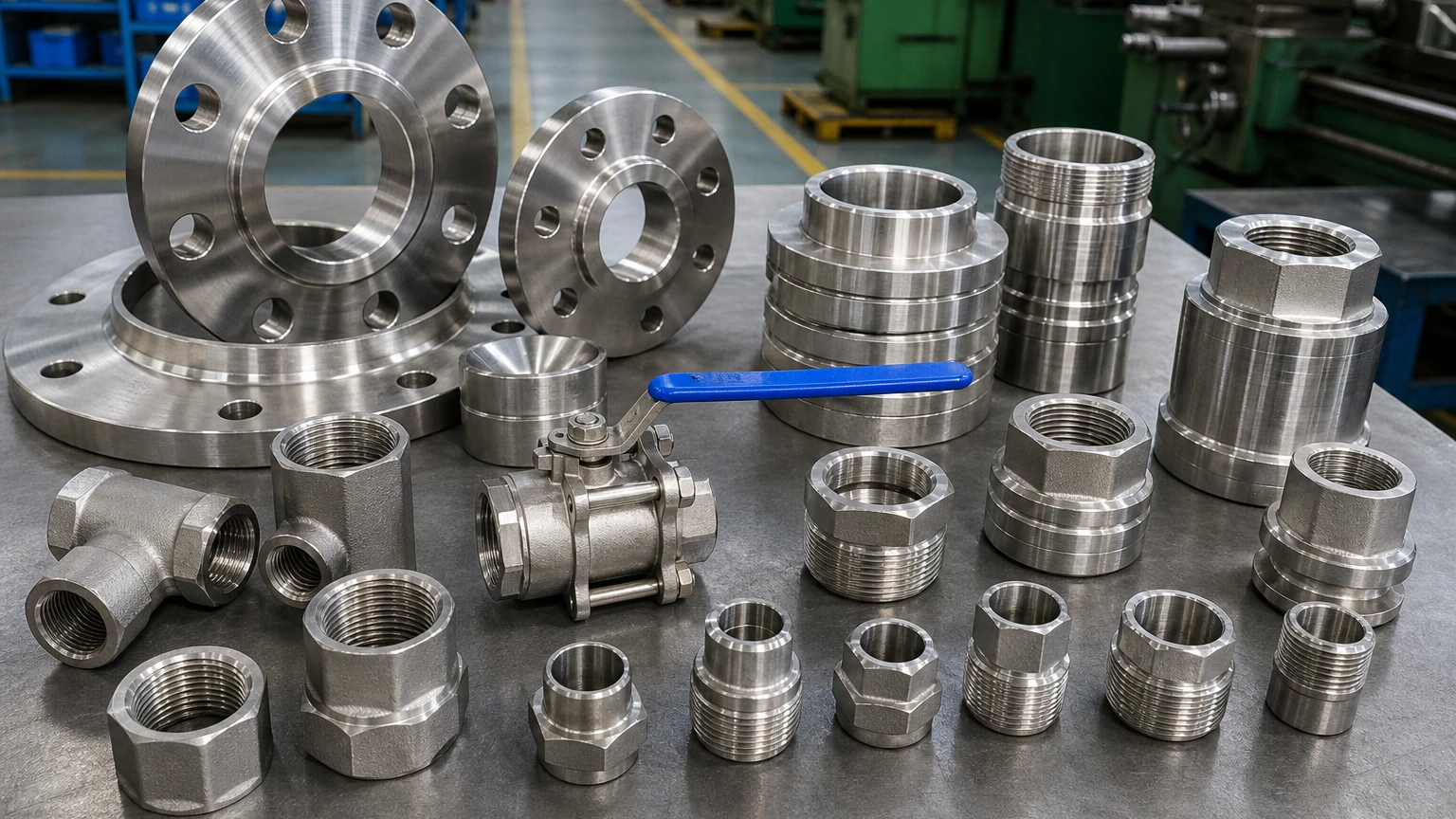
Choosing where to send the next engineering component FCL from India is a duty, standards, freight, and channel-fit exercise. USA, UAE, Germany, UK, Saudi Arabia, Australia, Singapore, Netherlands, and South Africa each imply different inspection depth, pack rules, and buyer personalities.
A UAE-clearing mixed fittings and MRO kit differs from a Germany-bound DIN/ISO valve programme and from a USA OEM drawing-controlled CNC release. This guide ranks corridors so you sequence entry intelligently — not by collecting flags.
Directional EEPC FY25 context: engineering goods exports ~USD 116.67B (+6.74% vs 109.30B), merchandise share ~26.67%, USA ~USD 19.15B (+8.7%), regions North America ~20.5% · EU ~17.1% · WANA ~16.7%. Label these as the broader engineering umbrella and isolate your component HS family before modelling corridor share.
Per-country SKU preferences: Most Demanded Indian Engineering Components by Country. Process: How to Export Engineering Components from India. Find buyers: How to Find International Buyers for Engineering Components. Premium CNC: Precision CNC and ISO 9001 OEM Engineering Component Export Opportunities. Altus supports market entry as a global sourcing partner in India.
Key Takeaways
Summary Box
Executive Summary
Summary Box
- Focus: destination ranking ownership inside the engineering components cluster.
- Stats: EEPC FY25 engineering goods ~USD 116.67B exports · USA ~USD 19.15B — directional umbrella.
- HS: 8481 · 8413 · 8483 · 7307 · 7325/7326 · 8466 · 8207/8205 · 8538 (confirm with CHA).
- Clusters: Pune–Chakan · Coimbatore · Rajkot · Faridabad–Gurugram · Bengaluru · Ludhiana · Howrah/Belgaum/Kolhapur.
Corridor ranking for Indian engineering components is a five-axis decision — demand fit, duty clarity, freight economics, standards load, and channel payment behaviour — not a fifteen-flag opportunity slide.
Anchor planning with EEPC FY25 directional engineering-goods context (~USD 116.67 billion exports, +6.74% vs ~USD 109.30 billion; merchandise share ~26.67%; USA ~USD 19.15 billion; North America ~20.5% / EU ~17.1% / WANA ~16.7%), then isolate valves, pumps, shafts, fittings, castings, and related HS families before promising component share.
This guide ranks destinations for market entry and budget sequencing. It does not own importer RFQ checklists or country × SKU preference matrices — those live in sister posts.
Use the process pillar for IEC-to-FCL execution; use this article only when the question is which corridor to fund first under HS 8481, 8413, 8483, 7307, 7325/7326, 8466, 8207/8205, and 8538 planning lines.
Expert Insight: Rank Corridors by Spec Personality, Not Flags
Expert Insight Box
Expert perspective for market-selection programmes: specification and compliance personality beat flag collecting in engineering component trade.
Saurabh Mittal emphasises duty modelling, standards depth, and channel fit before freight debates.
Corridor planners should treat the insight below as the filter that stops fifteen-country pitch decks without ranking discipline.
Market Size & Industry Overview
Key Statistics
- Channels: OEM · MRO distributor · project / wholesale.
- Regions (engineering goods umbrella): North America ~20.5% · EU ~17.1% · WANA ~16.7% (directional).
- Lead families: CNC machined · valves/pumps · fittings/flanges · shafts/gears/housings · castings/forgings · fabricated sheet metal · tool components · switchgear parts.
Market selection starts with where Indian capacity can honestly serve a corridor: western machining and foundry belts for dense metal programmes, southern pump/valve strength for DIN and project specs, and NCR/tools clusters for fabricated and tooling-adjacent assortments.
Corridor briefs that ignore channel and standards waste freight: USA distributor CNC and fittings demand is not the same buying motion as German DIN valve programmes or Saudi project flanges.
EEPC FY25 directional context of roughly USD 116.67 billion engineering goods exports shows India is a major engineering exporter; still isolate valves, pumps, shafts, fittings, castings, machine-tool parts, tools, and switchgear parts before promising component-level share.
Score each corridor on which value-leading family it actually pulls — CNC machined parts versus valves/pumps versus fittings/flanges versus castings — before you fund a multi-country tour. For industry context see engineering goods and industrial raw materials.
India engineering goods trade profile — EEPC FY25 directional planning references (components are a subset)
Swipe →
Data table — swipe horizontally on small screens
| Metric | Directional Estimate | Notes |
|---|---|---|
| Engineering goods exports (EEPC FY25) | ~USD 116.67 billion (+6.74% YoY) | Broader engineering umbrella — isolate component HS before contracts |
| Prior-year engineering exports | ~USD 109.30 billion | FY24 baseline for YoY comparison |
| Share of merchandise exports | ~26.67% | Directional EEPC FY25 context |
| USA engineering exports | ~USD 19.15 billion (+8.7%) | Largest single-country corridor in umbrella data |
| Regional export share | North America ~20.5% · EU ~17.1% · WANA ~16.7% | EEPC FY25 directional regional split |
| Primary HS planning families (components) | 8481 · 8413 · 8483 · 7307 · 7325/7326 · 8466 · 8207/8205 · 8538 | Confirm eight-digit line with CHA at shipping-bill time |
| Governing credentials | EEPC India RCMC · IEC via DGFT | Pair credentials for commercial shipments and buyer KYC |
| Primary clusters | Pune–Chakan · Coimbatore · Rajkot–Ahmedabad · Faridabad–Gurugram · Bengaluru · Ludhiana · Howrah/Belgaum/Kolhapur | OEM, MRO, foundry, and tools capacity |
| Data as-of context | 2026-08-10 | Directional figures only — re-verify via EEPC/WITS/DGCI&S/TradeStat |
Export Statistics
Key Statistics
- USA ~USD 19.15B engineering goods FY25 — re-verify; isolate component HS.
- Quote dated FOB Nhava Sheva / Mundra / Chennai.
- Separate MRO trials from OEM FAIR / first-article schedules.
Export planning for corridor ranking should cite EEPC engineering goods headlines only as directional context, then isolate the relevant HS 8481, 8413, 8483, 7307, 7325/7326, 8466, 8207/8205, or 8538 family for the SKU on the proforma.
USA concentration near USD 19.15 billion inside the broader engineering story means many first programmes feel American distributor or OEM pressure even when the factory sits in Coimbatore or Rajkot.
Corridor scorecards should weight which segments — valves, pumps, fittings, machined housings, castings — each destination actually pulls before you expand flags.
Re-verify partner tables before promising share claims in regional planning; stale slides are a common credibility failure with professional buyers.
HS family planning map for Indian engineering component exports (confirm with CHA)
Swipe →
Data table — swipe horizontally on small screens
| HS Family | Typical Articles | Common Pitfall |
|---|---|---|
| 8481 | Taps, cocks, valves and similar appliances | Filing valves as generic iron/steel articles |
| 8413 | Pumps for liquids; liquid elevators | Mixing complete pumps with spare parts without CHA review |
| 8483 | Transmission shafts, gears, bearing housings, couplings | Missing gear/shaft specificity vs cast blanks |
| 7307 | Tube/pipe fittings, flanges, elbows, couplings | Confusing fittings programmes with pipe mill lines (7304/7305/7306) |
| 7325 / 7326 | Cast and other articles of iron or steel | Over-broad filing when a more specific heading applies |
| 8466 | Parts and accessories for machine tools | Calling every machined part 8483 or 7326 |
| 8207 / 8205 | Interchangeable tools / selected hand tools | Mixing tool components with finished consumer tools incorrectly |
| 8538 | Parts for boards, panels, switchgear (8535–8537) | Forcing enclosures into unrelated metal headings |
Import Statistics
Key Statistics
- USA MRO vs Germany OEM inspection depth differs.
- UAE/Singapore often act as hub corridors.
- Saudi/Australia add project and standards overlays.
Import profiles are the raw material of corridor scores: match buyer type and inspection depth to the country before advertising opportunity.
Each corridor's primary buyer type changes inspection depth — distributors care about pack, part number, and MTC; OEM desks care about drawing revision, FAIR, and process capability.
Use import profiles to design sample kits for duty-and-freight scorecards, not to invent precise tonnage contracts.
When modelling standards risk by destination, convert destination demand into SKU shortlists before freight negotiations begin. For SKU-level matrices see the demand guide rather than expanding this ranking article.
Directional import demand profile for Indian engineering components by destination
Swipe →
Data table — swipe horizontally on small screens
| Market | Directional Demand Profile | Primary Buyer Type |
|---|---|---|
| United States | CNC machined parts, valves/pumps, fittings, MRO assortments; selective OEM drawing programmes | MRO distributors, industrial wholesalers, OEM buyers |
| United Arab Emirates | Fittings, flanges, valves, mixed MRO for GCC re-export and projects | Regional distributors, project traders |
| Germany | DIN/ISO valves, pumps, precision machined parts, documented inspection packs | OEM procurement, industrial distributors |
| United Kingdom | MRO assortments, REACH-aware coatings, retail/distributor packs | Distributors, industrial platforms |
| Saudi Arabia | Project fittings/flanges, valves, pumps for industrial and infrastructure programmes | EPC buyers, project importers |
| Australia | Mining/industrial MRO, pumps/valves, machined parts with clear standards marks | Distributors, industrial buyers |
| Singapore | Re-export hub for ASEAN industrial assortments | Regional traders, OEM support desks |
| Netherlands | EU gateway for valves, machined parts, industrial components | EU distributors, consolidators |
| South Africa | Mining/industrial MRO mix, value fittings and castings | Wholesalers, regional importers |
Product Categories / Variants
Summary Box
- Eight families on separate SKU cards.
- Channel label on every card: OEM / MRO / project.
- Pack notes: VCI · partitioned cartons · crates · thread protection · revision labels.
Corridor offers should lead with the two families that corridor buys most, then keep the other families available without cluttering the first proposal.
Map each family to HS 8481, 8413, 8483, 7307, 7325/7326, 8466, 8207/8205, and 8538 with CHA confirmation; nickname filing creates customs friction later.
OEM, MRO, and project pack notes belong on every SKU card used in duty-and-freight scorecards.
When scoring corridors, treat vehicle-parts RFQs and fastener-only RFQs as different sourcing lanes — link the auto components or fasteners clusters only when a buyer mixes those lines into an industrial assortment.
Primary engineering component product families exported from India
Swipe →
Data table — swipe horizontally on small screens
| Product Family | Typical Spec Focus | HS Planning | Primary Channel |
|---|---|---|---|
| CNC machined parts | Steel/aluminium/brass/SS drawing-based tolerances | Article-dependent (confirm CHA); 8483 only if transmission shafts/gears/housings | OEM, MRO |
| Valves | Ball/gate/globe/butterfly; ASME/DIN/API where specified | 8481 | OEM, project, MRO |
| Pumps & pump parts | Centrifugal / PD parts and small complete pumps | 8413 | OEM, MRO, project |
| Fittings & flanges | Forged/cast fittings, flanges ASME/DIN/BS | 7307 | Project, MRO, wholesale |
| Shafts, gears, housings | Transmission shafts, gears, bearing housings | 8483 | OEM, industrial distributors |
| Castings & forgings | Grey iron / SG iron / steel castings; closed-die forgings | 7325 cast articles · forgings often 7326 or more specific (CHA) | OEM, foundry buyers |
| Fabricated sheet metal | Enclosures, brackets, panels | 7326 general fabrications · 8538 only for 8535–8537 panel/switchgear parts | OEM, MRO |
| Tool & switchgear parts | Interchangeable tools; board/panel parts | 8207/8205 · 8538 | OEM, tooling, electrical OEM |
Manufacturing Overview
Export Tip
- Routes: machine · cast · forge · fabricate · assemble.
- Audit the certificate site, not the city name alone.
- Traceability lot IDs and drawing revision on metal programmes.
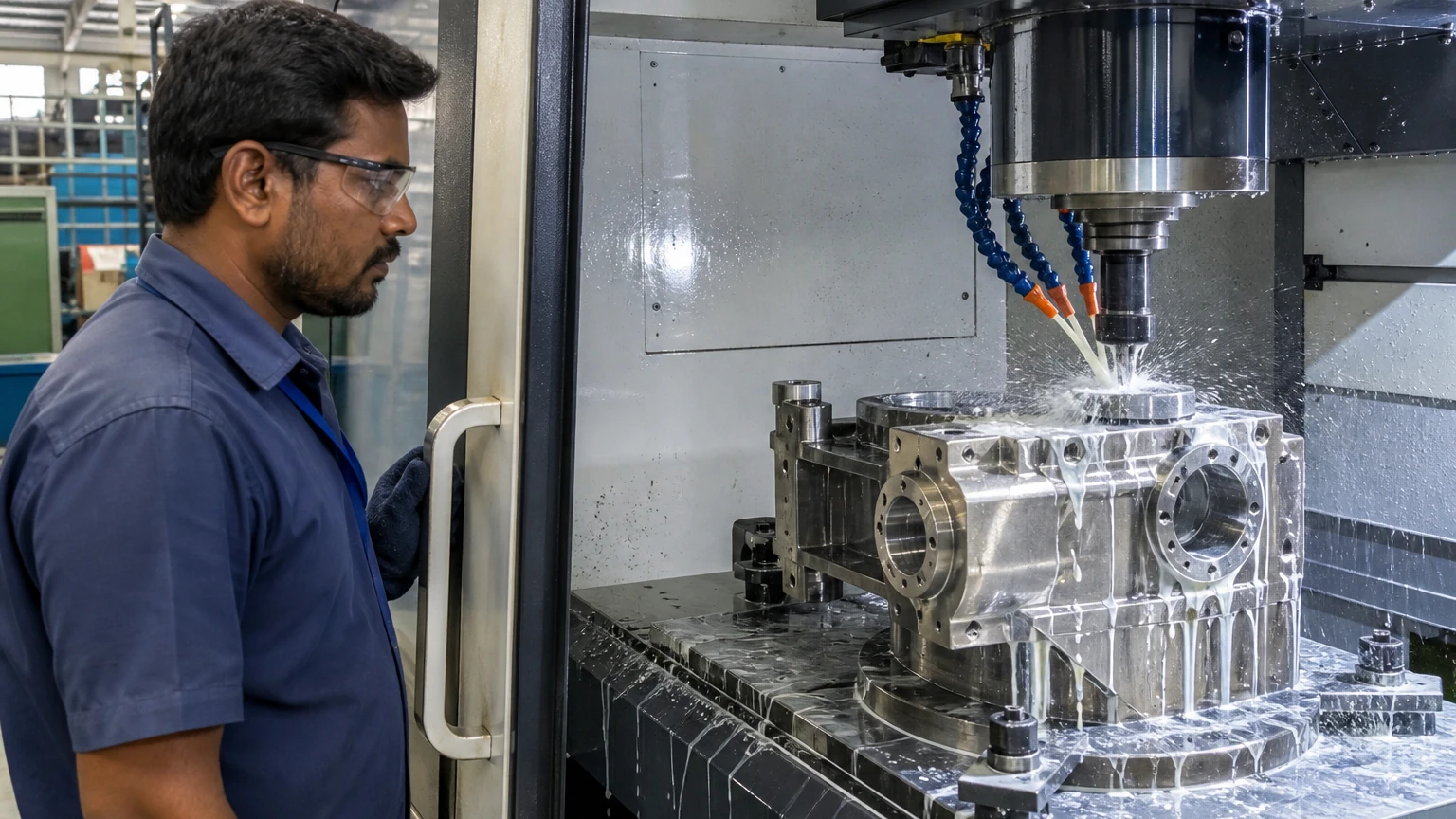
Some corridors scrutinise heat-treat, material grade, and coating evidence more than others; manufacturing route transparency belongs in the corridor brief.
Market entry tours should schedule the specific CNC cell, foundry, or valve line the corridor needs; sharing a cluster city is not sharing a process.
Pune–Chakan, Coimbatore, Rajkot, Faridabad–Gurugram, Bengaluru, Ludhiana, and Howrah / Belgaum / Kolhapur each specialise differently; match tours to the families in your duty-and-freight scorecards.
Tooling ownership, gauge calibration, drawing revision control, and lot traceability are manufacturing facts buyers will test during regional planning.
Corridor lead-time risk lens (directional — full stage table lives in the process pillar)
Swipe →
Data table — swipe horizontally on small screens
| Corridor risk focus | Typical clock | Ranking implication |
|---|---|---|
| Germany / EU OEM DIN programmes | 8–20+ weeks to first release when FAIR owns the gate | Fund fewer corridors; standards load dominates schedule |
| USA MRO distributor restock | Often 4–8 weeks once assortment is stable | Cash-generative lane can fund harder destinations |
| UAE / GCC hub mixed FCL | 4–10 weeks commercial after pack/cubing proof | Hub speed helps only if stow discipline is ready |
| Saudi / Australia project or long-ocean legs | Project calendars + longer transit overlays | Do not copy USA MRO clocks into project bids |
How to Rank Destination Markets for Engineering Components
- Owns: How to Rank Destination Markets for Engineering Components
- Does not replace per-country SKU matrices, lead-gen tactics, or importer RFQ playbooks.
- Always label trade stats directional.
This section owns corridor ranking in depth — the boundary that keeps this guide from overlapping sister engineering-component articles on SKU demand matrices, buyer prospecting, or importer verification playbooks.
Operationally, teams should institutionalise duty-and-freight scorecards with checklists, owners, and system fields rather than heroics. Score each destination on five axes: demand fit for your families, duty and preference risk, ocean/inland freight, standards and inspection load, and channel payment behaviour.
Connect standards risk by destination to real part numbers and destinations; abstract strategy decks do not stuff containers. A DIN valve for Germany and a mixed fittings pallet for Jebel Ali need different evidence stacks even when both sail from Mundra.
Measure success with regional planning metrics: trial conversion, document first-pass yield, and reorder cadence. Broad supply does not mean every corridor deserves a trial; market focus keeps sampling budgets on corridors that can reorder.
Corridor disputes fade when each market brief locks revision, HS family, channel tier, and the FOB port used in landed models. EEPC FY25 places North America near 20.5%, EU near 17.1%, and WANA near 16.7% of engineering goods export value — USA alone is about USD 19.15 billion — always label directional and re-pull before budgets.
Germany, UAE, UK, Saudi Arabia, Australia, Singapore, Netherlands, and South Africa remain high-signal corridors for component programmes; Netherlands and Singapore often matter as EU/ASEAN gateways rather than only end-consumption markets.
Do not treat EU or USA duty as a single engineering-parts percentage — TARIC and USITC HTS lines are article-specific and change. Preferential claims require origin evidence that matches the invoice story.
For process execution after you pick a corridor, use the pillar guide; for which SKUs each country prefers, use the demand-matrix post; for who to call, use the buyer-finding guide.
Directional country opportunity profile for Indian engineering component exporters
Swipe →
Data table — swipe horizontally on small screens
| Country | Demand Profile | Key Requirement Focus | Opportunity Note |
|---|---|---|---|
| United States | CNC, valves/pumps, fittings, MRO; selective OEM (~USD 19.15B engineering goods FY25 umbrella) | Live USITC/CBP HTS by line + MTC/FAIR where OEM | Largest umbrella corridor — isolate component HS |
| UAE | Fittings, flanges, valves, mixed MRO for GCC | Hot-climate pack + MoIAT ECAS/EQM where regulated + cubing | Regional hub and project adjacency |
| Germany | DIN/ISO precision valves, pumps, machined parts | ISO 9001, dimensional evidence, material certs | Audit-heavy Europe corridor |
| United Kingdom | MRO + substance-aware materials | Labeling, REACH/UKCA where applicable | Distributor and platform access |
| Saudi Arabia | Project fittings/flanges, valves, pumps | SASO SABER (PCoC/SCoC where regulated) + project docs | Infrastructure and industrial programmes |
| Australia | Mining/industrial MRO, pumps/valves | Standards marks and ocean pack discipline | Longer freight — model landed carefully |
| Singapore | ASEAN re-export assortments | Hub logistics and mixed FCL discipline | Gateway more than end market alone |
| Netherlands | EU gateway industrial components | TARIC + REACH for coatings | EU distributor consolidation |
| South Africa | Mining/industrial value MRO | Landed-cost honesty | Secondary Africa corridor |
Five-axis scoring model
Directional five-axis corridor scorecard (illustrative planning — re-score per SKU family)
Swipe →
Data table — swipe horizontally on small screens
| Market | Demand Fit | Duty Clarity | Freight Fit | Standards Load | Channel Fit Note |
|---|---|---|---|---|---|
| United States | High | Medium (line-specific HTS) | High from west coast | Medium–High for OEM | MRO distributors + selective OEM |
| UAE | High (hub) | Medium | High via Mundra/Nhava Sheva | Medium | GCC re-export and projects |
| Germany | High (precision) | Medium (TARIC by line) | Medium–High via Chennai/Nhava Sheva | High DIN/ISO/inspection | OEM and industrial distributors |
| United Kingdom | Medium–High | Medium | Medium–High | Medium–High REACH/UKCA context | Distributor and platform buyers |
| Saudi Arabia | High (project) | Medium | High Gulf lanes | Medium–High SABER/SASO + project docs | EPC and industrial importers |
| Australia | Medium–High | Medium | Medium (longer ocean) | Medium standards marks | Mining/industrial MRO |
| Singapore | Medium (hub) | Medium | High ASEAN connectivity | Medium | Re-export consolidators |
| Netherlands | Medium–High (EU gateway) | Medium (TARIC) | High EU feeder | High EU compliance | EU distributor gateway |
| South Africa | Medium | Medium | Medium | Medium | Mining/industrial value mix |
Assign each corridor a 1–5 score on demand fit, duty clarity, freight economics, standards load, and channel reliability. Weight standards higher for Germany and Netherlands OEM desks; weight freight and mixed-SKU cubing higher for UAE and Singapore hubs.
Publish the scorecard in CRM so sales and compliance share one ranking — not parallel spreadsheets that diverge after the first fair.
Duty, freight, and standards sequencing
Sequence entry so cash-generative MRO hubs (often UAE or selective USA distributor lanes) help fund the inspection stack for audit-heavy Germany and Netherlands programmes.
Rebuild landed models when a buyer asks for Saudi Arabia or Australia as a second destination — do not copy-paste a USA MRO quote without fresh HTS/TARIC and pack checks.
Pricing Analysis
Buyer Tip
Rank corridors with landed worksheets, not brochure FOBs: a low Indian piece price that fails TARIC, HTS, or Gulf compliance modelling is a false win on the scorecard.
Rebuild commercials when the destination changes — USA MRO fittings, German DIN valves, and Saudi project flanges rarely share the same duty, inspection, and packing adders.
Put inspection premiums, FAIR support, and crate lines into the corridor model so standards-heavy markets are not scored as 'cheap' by accident.
Quote as dated USD/pc, USD/kg, or programme lot against a named Indian gateway; never paste last year's teaser into a new flag's opportunity deck.
Directional FOB India pricing structure by engineering component family
Swipe →
Data table — swipe horizontally on small screens
| SKU / Programme | Pricing Structure | Notes |
|---|---|---|
| Commodity MRO fittings / flanges | Programme FOB + metal index where used | Never undated teaser USD — quote dated and SKU-specific |
| CNC machined steel/aluminium parts | Metal index + machining conversion + tooling amortisation, FOB | Tooling amortisation must be stated separately |
| Valves (ball/gate/globe) | Casting/forging + machining + trim/seat materials, FOB | ASME/DIN/API evidence often priced as inspection add-on |
| Pumps / pump parts | Casting + machining + assembly conversion, FOB | Performance test notes where buyer requires |
| Shafts / gears / housings | Blank + machining + heat-treat premium, FOB | Weight-limited FCL; quote per piece and per kg where useful |
| Castings (rough/machined) | Pour weight + machining conversion, FOB | Density drives 20′ payload planning |
| OEM first-article programmes | Piece price + FAIR/inspection premium + release cadence | Call-off schedules — not carton MOQ pricing alone |
MOQ Analysis
Buyer Tip
Corridor MOQs differ: distributor markets tolerate mixed trials, OEM markets live on releases; do not copy-paste quantities across flags.
Promising carton MOQ language to an OEM plant signals channel confusion during duty-and-freight scorecards.
Air-freight first-article samples are not commercial MOQ — keep them on a separate sample PO.
Write trial and scale quantities into the contract before standards risk by destination begins.
Directional MOQ tiers by engineering component transaction stage
Swipe →
Data table — swipe horizontally on small screens
| Stage | Typical MOQ | Purpose |
|---|---|---|
| MRO mixed trial | 50–500 pcs per machined SKU or 1–2 MT mixed castings/fittings | Distributor evaluation, pack/label check, inbound QC |
| Standard wholesale | 1×20′ FCL (~16–22 MT density-dependent) or 1×40′ HQ carton assortments | Commercial scale after trial |
| CNC / precision parts | 50–500 pcs trial; scale by call-off | Dimensional and material gate before volume |
| OEM programme | Monthly call-off / release schedule — not carton MOQ alone | FAIR and ongoing process capability |
| Practice note | Bands are commercial practice — not statutory MOQs | Align MOQ language to channel (MRO vs OEM) before quoting |
Packaging Standards
Export Tip
Hot-climate UAE and long Australia ocean legs need different moisture and rust strategies; corridor pack standards are not one global photo.
Marks must reconcile to packing lists — a recurring failure point when regional planning accelerates.
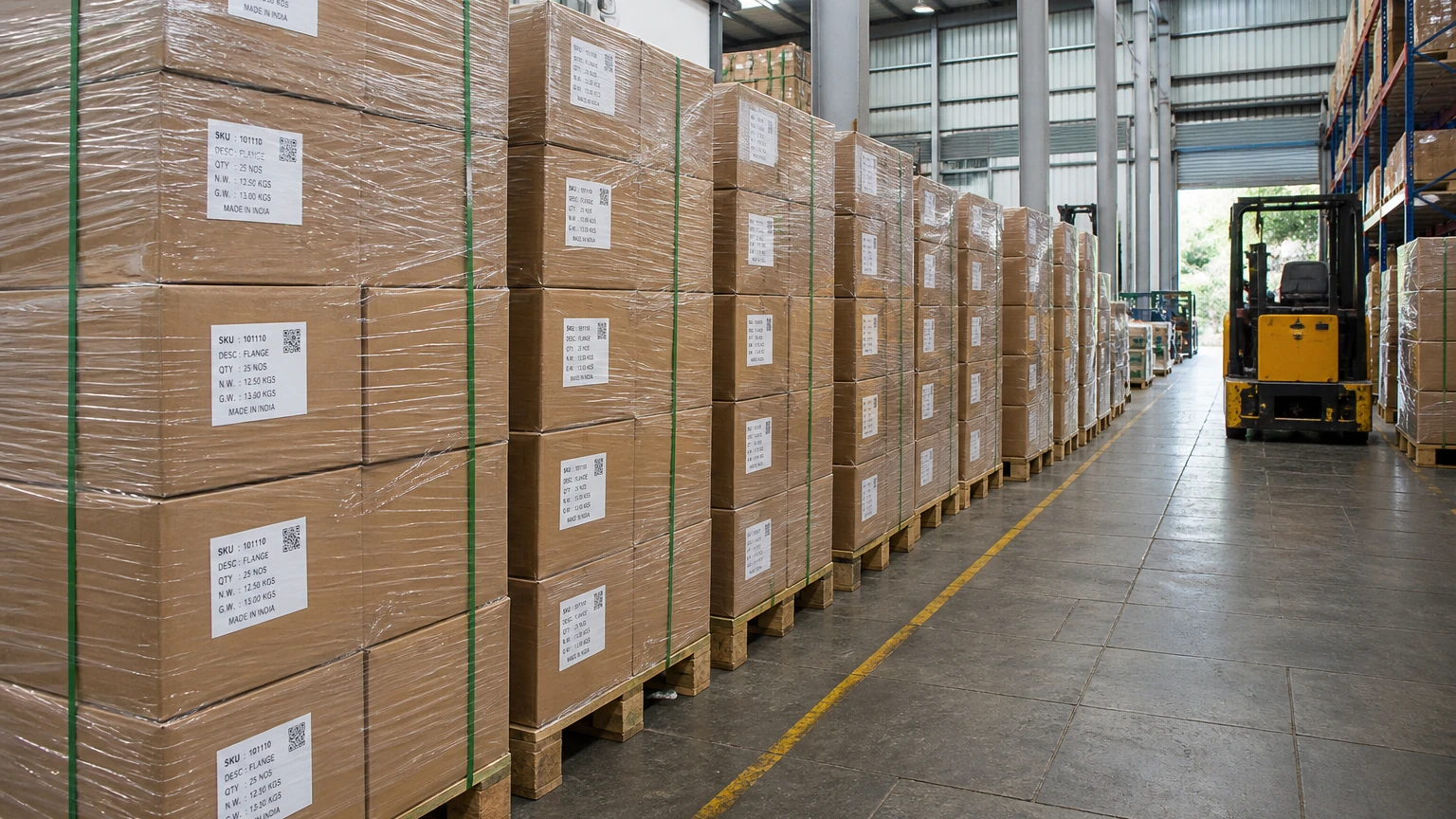
Thread protection for fittings and VCI for machined faces are non-negotiable on sea transit.
Photograph packed pallets before gate-in as claim defense for duty-and-freight scorecards.
Engineering component packaging formats — export practice
Swipe →
Data table — swipe horizontally on small screens
| Format | Typical Configuration | Use Case | Key Requirement |
|---|---|---|---|
| VCI / rust-preventive wrap | Oil/VCI paper on machined metal faces | CNC parts, shafts, housings | Document protection method on packing list |
| Partitioned cartons | Cell dividers for precision parts | CNC and small machined assortments | Part number + revision labels |
| Wooden crates | ISPM-15 crates for valves/pumps | Valves, pumps, heavier assemblies | Crush and moisture protection |
| Palletized fittings/flanges | Bundles with end-cap & thread protection | HS 7307 assortments | Thread protectors + SKU marks |
| Stretch-wrap pallets | ISPM-15 wood or plastic pallets | MRO FCL consolidation | SKU labels reconcile to packing list |
| Mixed MRO cubing | SKU-cubed cartons on mixed pallets | Distributor hub FCLs | Cubing plan before stuffing — avoid crush |
Container Loading Details
Export Tip
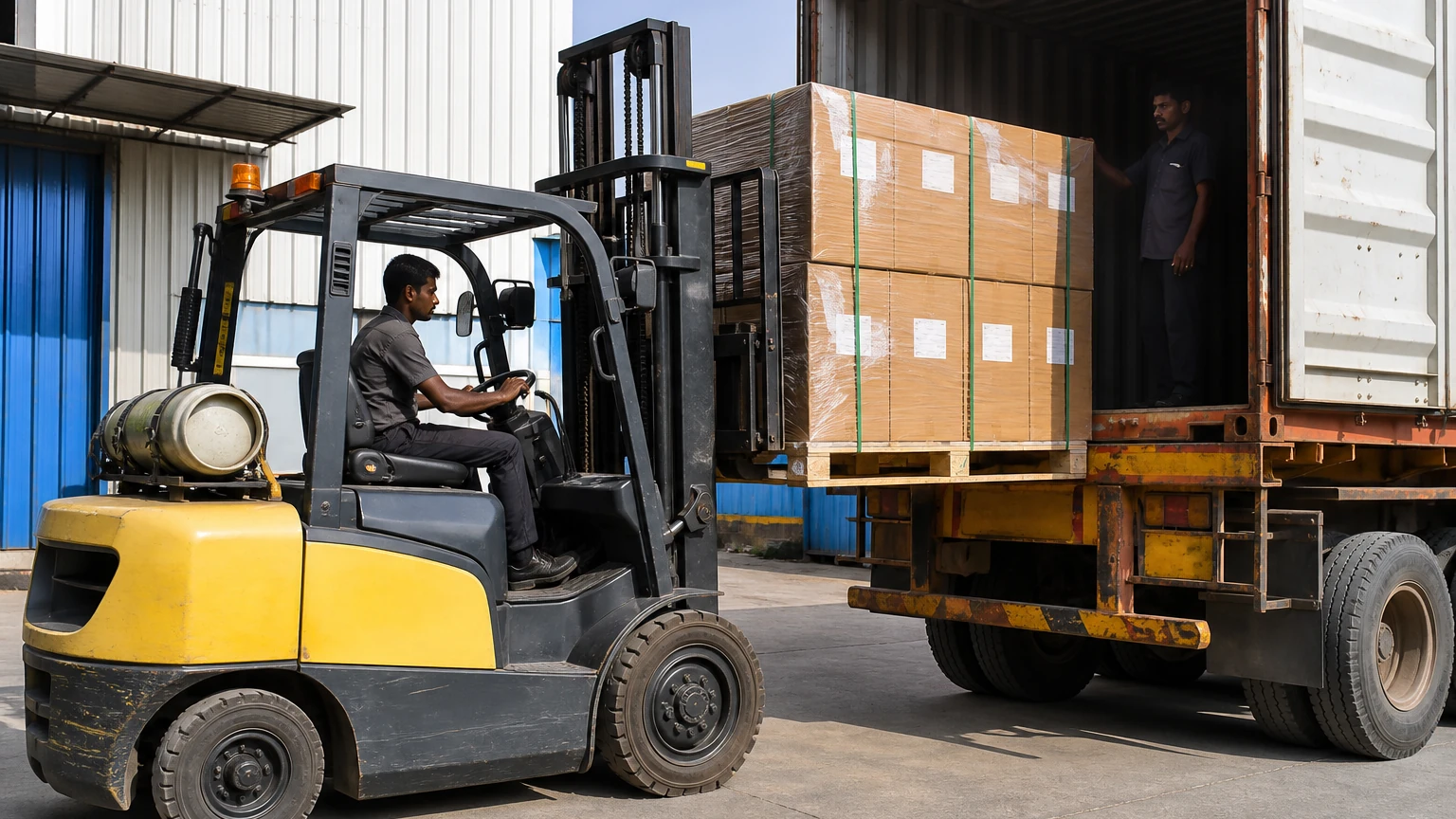
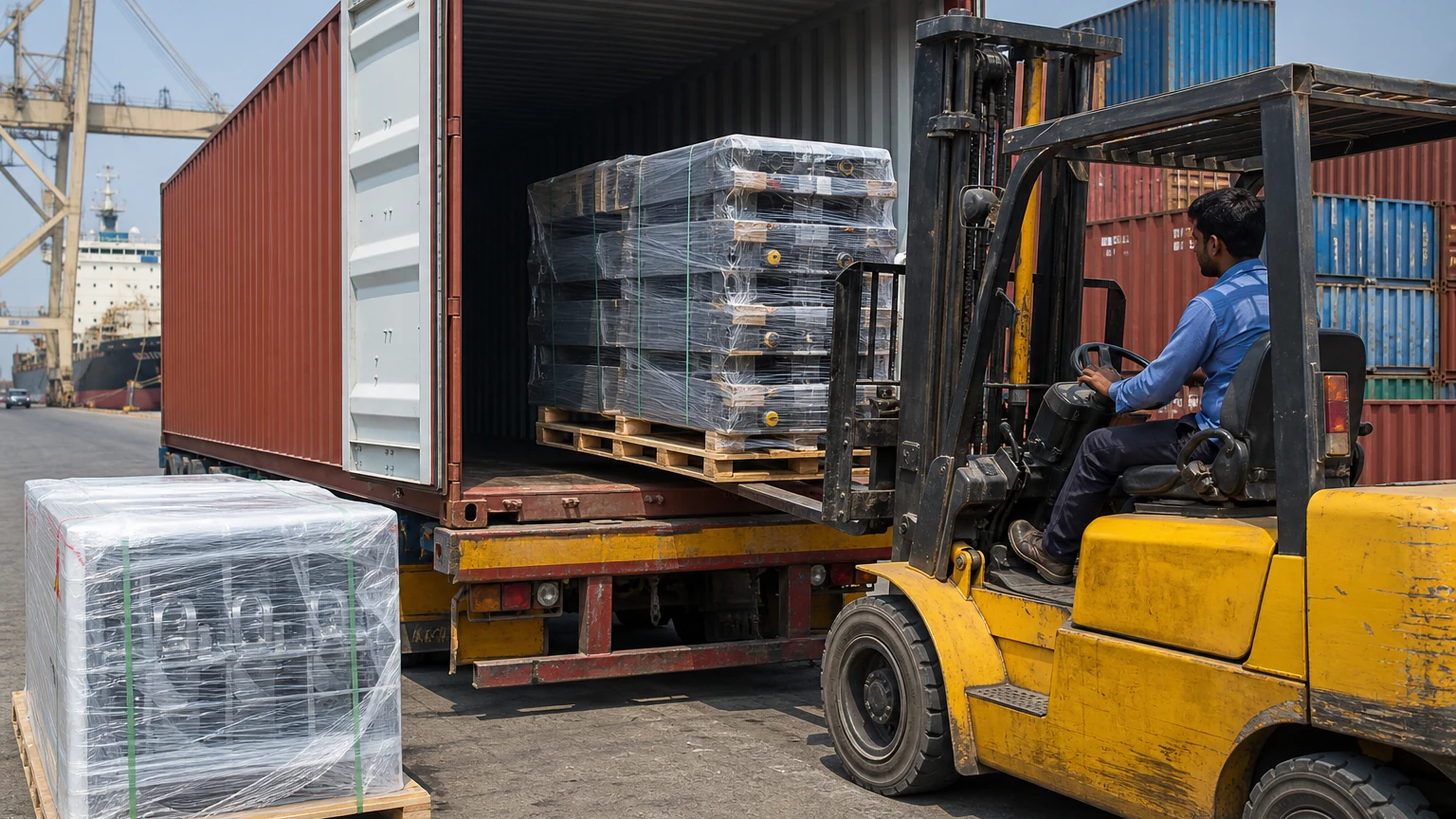
When scoring freight fit, treat payload and cube as corridor variables: dense fittings/castings often book ~16–22 MT on a 20′ for road/booking practice, while carton-heavy CNC assortments need 40′ HC cubing plans.
Hub corridors (UAE, Singapore) punish mixed-SKU crush errors harder than single-family OEM lots — rank them only if stow discipline exists.
ICD Pune, ICD Ahmedabad, and ICD Tughlakabad stuffing can improve western and NCR corridor economics before Nhava Sheva, Mundra, or Chennai gate-in.
Never let a corridor brief assume 'any FCL' — mode mismatch is a freight-axis failure, not a factory failure.
Directional container loading guidance for engineering component exports
Swipe →
Data table — swipe horizontally on small screens
| Container / Mode | Loading Consideration | Typical Use |
|---|---|---|
| 20′ FCL | Dense lots often book ~16–22 MT on 20′ for road/booking payload (not a fixed CSC legal capacity) — confirm with forwarder | Dense metal parts trials and standard commercial lots |
| 40′ HC | Volume-limited for bulky fabricated parts and mixed carton CNC | Assortment-heavy MRO programmes |
| LCL | Samples and small reorders | First qualification before FCL commitment |
| Air freight | First-article samples and urgent spares | OEM gate samples — cost vs schedule trade-off |
| ICD Pune / Ahmedabad / Tughlakabad | Cluster-adjacent stuffing then rail/road to gateway | Western and NCR programmes |
| Mixed MRO stow | SKU cubing plan; heavy bottom / fragile top | Prevent carton collapse on mixed kits |

Shipping Methods
Export Tip
- FCL default · LCL samples · air for FAIR/spares.
- FOB first · CIF selective · DAP/DDP rare.
- Cubing plan for mixed MRO.
Freight-axis scoring should compare FCL ocean lanes from Nhava Sheva, Mundra, and Chennai against each destination's transit and hub behaviour — not reprint a generic mode list.
Keep first models on FOB named Indian port so corridor comparisons stay clean; add CFR/CIF only after lane rates exist for that flag.
Include inland ICD legs and longer Australia/Gulf project calendars in transit maths before ranking a market 'fast.'
Air remains a sample/FAIR tool in the scorecard — never the assumed commercial mode for dense castings or fittings.
Certifications
Compliance Notes
Standards load is a ranking axis: Germany and Netherlands OEM desks weight ISO 9001, FAIR, and DIN/material evidence higher than UAE hub traders who may start with RCMC, pack photos, and MTC.
Map certificate depth to the corridor — REACH/RoHS for coated EU/UK articles, SABER/SASO awareness for regulated Saudi lines, UKCA only for UK-applicable equipment contexts — instead of one global cert shopping list.
Third-party inspection frequency should change the score: LC-backed project corridors need SGS/BV/Intertek readiness priced in.
EEPC RCMC and IEC open KYC doors everywhere; they do not equalise a DIN valve programme with a commodity fittings hub.
Certifications and documents for engineering component export
Swipe →
Data table — swipe horizontally on small screens
| Certification / Document | Purpose | Relevant For |
|---|---|---|
| ISO 9001 / ISO 14001 | Quality and environmental systems | Distributor and OEM vendor files |
| MTC EN 10204 3.1 | Chemistry and mechanical evidence per lot | Metal programmes |
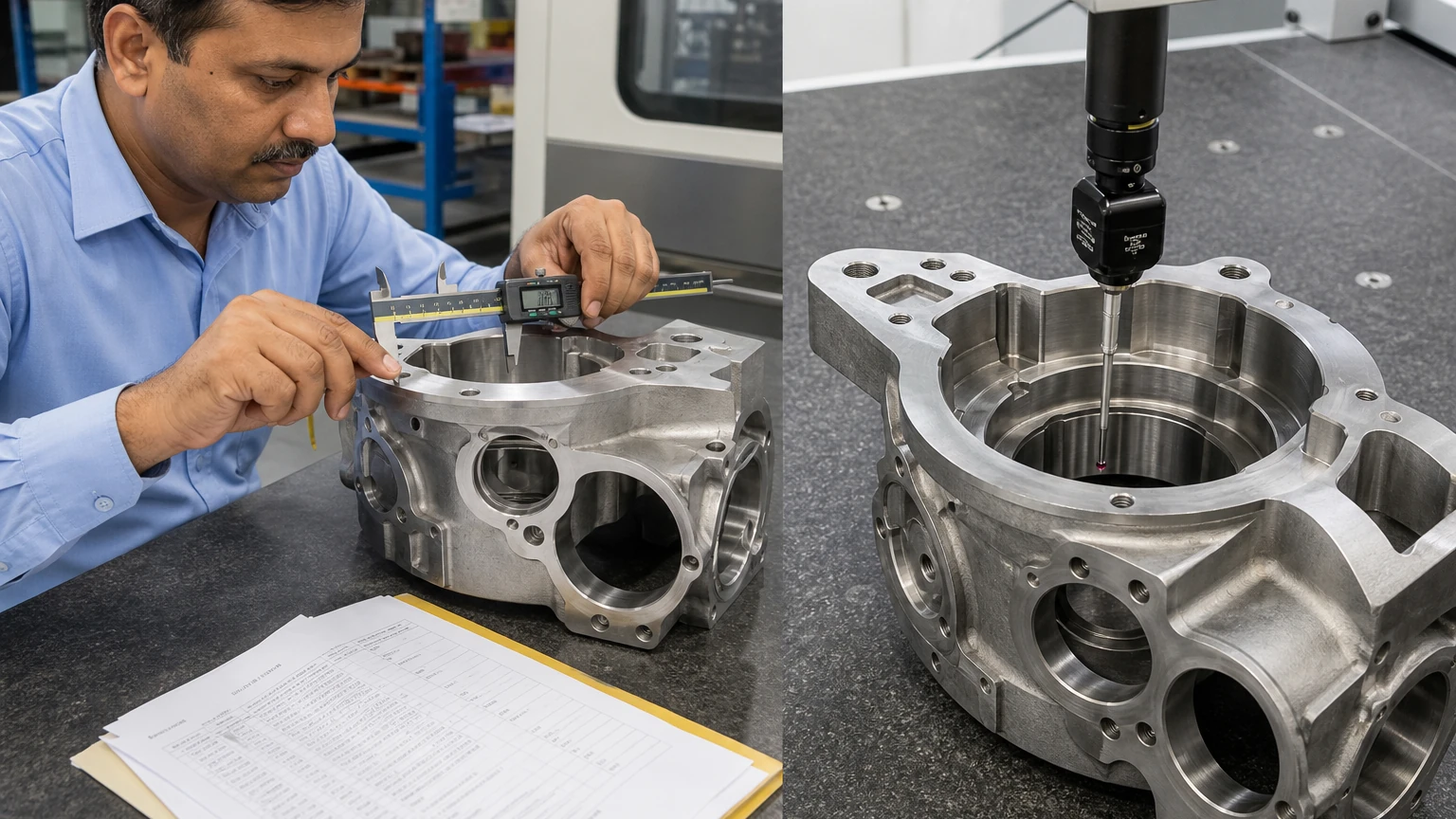
| Dimensional report / FAIR | First-article and critical characteristic evidence | OEM drawing programmes |
| API / ANSI / DIN / ASME | Product standard compliance for valves/pumps/fittings | Pressure and industrial programmes |
| EEPC RCMC + IEC | Export credentials | Buyer KYC and fair access |
| REACH / RoHS declarations | Substance compliance | EU/UK coated or applicable articles |
| Third-party inspection | Dimensional/material/pack verification | LC and audit-heavy corridors |
| Certificate of Origin | Origin evidence for preference or buyer file | Preferential and commercial clearance |
Buyer Requirements
Buyer Requirements
Channel fit decides whether a corridor belongs in wave one: MRO distributors reorder on pack photos and assortment; project buyers reorder on standards marks and calendar honesty; OEM plants reorder on revision control and FAIR releases.
Score payment behaviour separately — advance/LC-heavy markets are not 'worse,' but they change working-capital sequencing versus open-account distributor lanes.
Capture destination-specific asks (HTS modelling habit, TARIC line, SABER awareness, hot-climate pack) inside the corridor brief within seventy-two hours of first contact.
A vague RFQ without destination compliance language is a ranking red flag, not a sales opportunity.
International engineering component buyer channels — qualification lens
Swipe →
Data table — swipe horizontally on small screens
| Channel | Typical Entry Gate | Proof They Expect | Outreach Angle |
|---|---|---|---|
| MRO distributor | 50–500 pcs or 1–2 MT / 20′ trial | Part numbers, pack photos, MTC | SKU-specific MRO sheet |
| Project / EPC importer | Standards-marked fittings/valves | ASME/DIN/API evidence, delivery plan | Project pack and documentation |
| Industrial OEM | Drawing rev + FAIR | ISO scope, dimensional capability, capacity | Process capability story |
| EU gateway distributor (NL) | Assortment + REACH-aware pack | TARIC-aware docs, substance declarations | EU compliance + consolidation |
| Regional re-exporter (UAE/Singapore) | Mixed FCL discipline | Cubing plan, competitive FOB | Assortment + re-export pack |

Country-wise Opportunities
Market Snapshot
Build the shortlist from USA, UAE, Germany, UK, Saudi Arabia, Australia, Singapore, Netherlands, and South Africa with explicit scores; add Canada, Italy, Mexico, Bangladesh, or Kenya only as secondary plays when capacity exists.
Score duty, freight, standards load, and channel fit rather than chasing every flag.
Standards risk by destination should sequence two corridors before global sprawl.
Keep country notes operational — preferred families, pack, inspection — not tourist copy. For SKU preference depth, use the demand-by-country guide in this cluster.
Secondary corridor notes for Indian engineering component exporters
Swipe →
Data table — swipe horizontally on small screens
| Country | Role in Portfolio | Caution |
|---|---|---|
| Canada | North America adjacency for industrial MRO/OEM | Do not copy USA HTS without fresh modelling |
| Italy | Specialty Europe precision and industrial distributors | Inspection depth similar to Germany for OEM |
| Mexico | Nearshore industrial supply chains | Origin and plant-release rules when OEM-linked |
| Bangladesh / Kenya | Value MRO and regional wholesale | Landed-cost honesty; not USA/Germany substitutes |
| Belgium / other EU feeders | Alternate EU gateways to Netherlands | Same TARIC/REACH discipline |
Sourcing Checklist
Checklist
Use this sourcing checklist when markets work moves from reading to execution.
Corridor launches should run the buyer, exporter, and compliance callouts below before freight is booked.
Combine with factory audits in Pune, Coimbatore, Rajkot, or Faridabad and with document gates before stuffing.
Common Buyer Mistakes
Common Mistakes Box
- FOB-only shopping without duty/freight.
- OEM language on MRO-only factories.
- No sealed sample retention.
- Undated teaser prices accepted.
- HS family guessed without CHA.
- Umbrella engineering export % cited as component share.
Corridor ranking fails when duty and freight are ignored, every flag is chased equally, OEM and MRO are scored the same, and teasers replace dated offers.
Market pilots collapse when corridor samples ship by air to contacts who never clear KYC and turn out to be brokers.
Documentation mismatches — marks versus packing list versus MTC lot — create avoidable holds during regional planning.
Confusing industrial components with vehicle parts or fastener-only programmes wastes samples; keep cluster boundaries honest.
Fix mistakes with written gates: RFQ completeness, sample sign-off, and pre-seal document checks.
Future Market Trends
Key Statistics
- OEM dual-sourcing and portal vendor management.
- MRO premiumisation and part-number data quality.
- Substance and traceability data as sales tools.
- Hub corridors (UAE/Singapore/Netherlands) staying central to assortment logistics.
Watch which corridors dual-source industrial components, which premiumise MRO packs, and which ask for substance and digital inspection data — trend signals should reorder your flag priority annually.
Some corridors emphasise nearshoring, yet India remains competitive where drawing control, material evidence, and lead-time proof are ready.
Digital FAIR packs and portal-based vendor management will keep expanding in duty-and-freight scorecards.
Exporters who invest in traceability, revision control, and substance data will outrun brochure-only competitors across USA, EU, Gulf, and ASEAN gateways.
Challenges and Solutions
- Challenge: FAIR cash/time → Solution: staged first-article gates.
- Challenge: mixed FCL crush → Solution: cubing plans.
- Challenge: duty surprises → Solution: live HTS/TARIC checks.
- Challenge: credential gaps → Solution: EEPC/IEC hygiene.
Challenges in corridor ranking include tooling cash cycles, FAIR delays, container cubing complexity, and destination duty volatility.
Market challenges shrink with corridor-staged trials, Incoterm discipline, factories matched to the destination's SKU mix, and dated offers.
Working-capital strain eases when MRO cash programmes help fund OEM compliance stacks — a sequencing choice inside duty-and-freight scorecards.
When one destination needs valves from Coimbatore and fittings from Rajkot in a single FCL, merchant-exporter consolidation preserves lot identity across plants better than forcing a single factory to fake multi-family capacity. See Merchant Exporter India and Export Products from India.
Expert Insight: Sequence Cash Corridors Before Audit Corridors
Expert Insight Box
Second expert insight for markets: sequencing protects cash while compliance evidence matures.
Lot evidence, MTC identity, and pack marks are commercial assets, not clerical afterthoughts.
Use this guidance alongside Altus merchant-export execution when scaling beyond trials.
Sources
- EEPC India — Engineering Export Promotion Council
- EEPC India Engineering Trade Analysis March 2025 / FY25 PDF
- Economic Times — India engineering goods exports FY25 (USD 116.67B)
- IBEF — Engineering Goods Industry and Exports from India
- DGFT — Directorate General of Foreign Trade (IEC)
- DGCI&S / TradeStat — Indian trade statistics
- ICEGATE — Indian Customs EDI Gateway
- CBIC — Central Board of Indirect Taxes and Customs
- WITS — World Integrated Trade Solution (World Bank)
- UN Comtrade Database
- ITC Trade Map
- WCO — Harmonized System
- ISO — International Organization for Standardization
- ASME — valves, fittings, and pressure equipment standards
- API — American Petroleum Institute (pump/valve programmes)
- USITC Harmonized Tariff Schedule
- CBP — U.S. Customs and Border Protection
- EU TARIC — customs tariff database
- ECHA — REACH regulation
- European Commission — CE marking
- UK Government — UKCA marking
- SASO SABER — Saudi product conformity platform
- UAE MoIAT — standards and conformity (ECAS context)
- ICC — Incoterms rules
Directional EEPC, DGCI&S, trade, tariff, and compliance notes in this engineering components guide (best-countries-for-indian-engineering-component-exports) should be re-verified against primary sources before quoting buyers or filing export documents. Figures labelled EEPC FY25 refer to India’s fiscal year 2024-25 engineering goods export performance — a broader umbrella than precision/industrial components alone. Isolate your HS family (for example 8481, 8413, 8483, 7307, 7325/7326) before contracting volume.
Use the links below for government, standards, and trade-data verification. Confirm eight-digit HS lines with a licensed CHA at shipping-bill time. Model destination duties live (USITC HTS / CBP for the USA; TARIC for the EU). Container payload bands in this cluster are commercial road/booking practice, not fixed CSC legal capacities.
Conclusion
- Merchant Exporter India
- Export Products from India
- Global Sourcing Partner India
- Product Sourcing Company India
- Contact Altus Exports
- Engineering Goods
- How to Export Engineering Components from India
Corridor choice should feel like a scored decision: duty overlays, standards load, freight, and the SKU the destination actually reorders — not a flag collection exercise.
Sequence two serious markets through trial and first FCL before opening a third; depth beats a thin presence across every region share slide.
Altus Exports helps importers and factories translate corridor scores into supplier shortlists and landed-cost worksheets via Product Sourcing Company India and Contact.
After you lock the first corridor, use the demand-matrix and buyer-discovery guides in this cluster to staff the commercial follow-through.