
Top Engineering Component Products Exported from India: Product Catalogue
By Saurabh Mittal, Founder, Altus Exports
A product-level catalogue of engineering components exported from India — CNC machined parts, industrial castings and forgings, pumps and valves, fittings and flanges, transmission shafts and gears, fabricated sheet metal, and tool components with MOQ tiers and OEM/MRO channel fit.
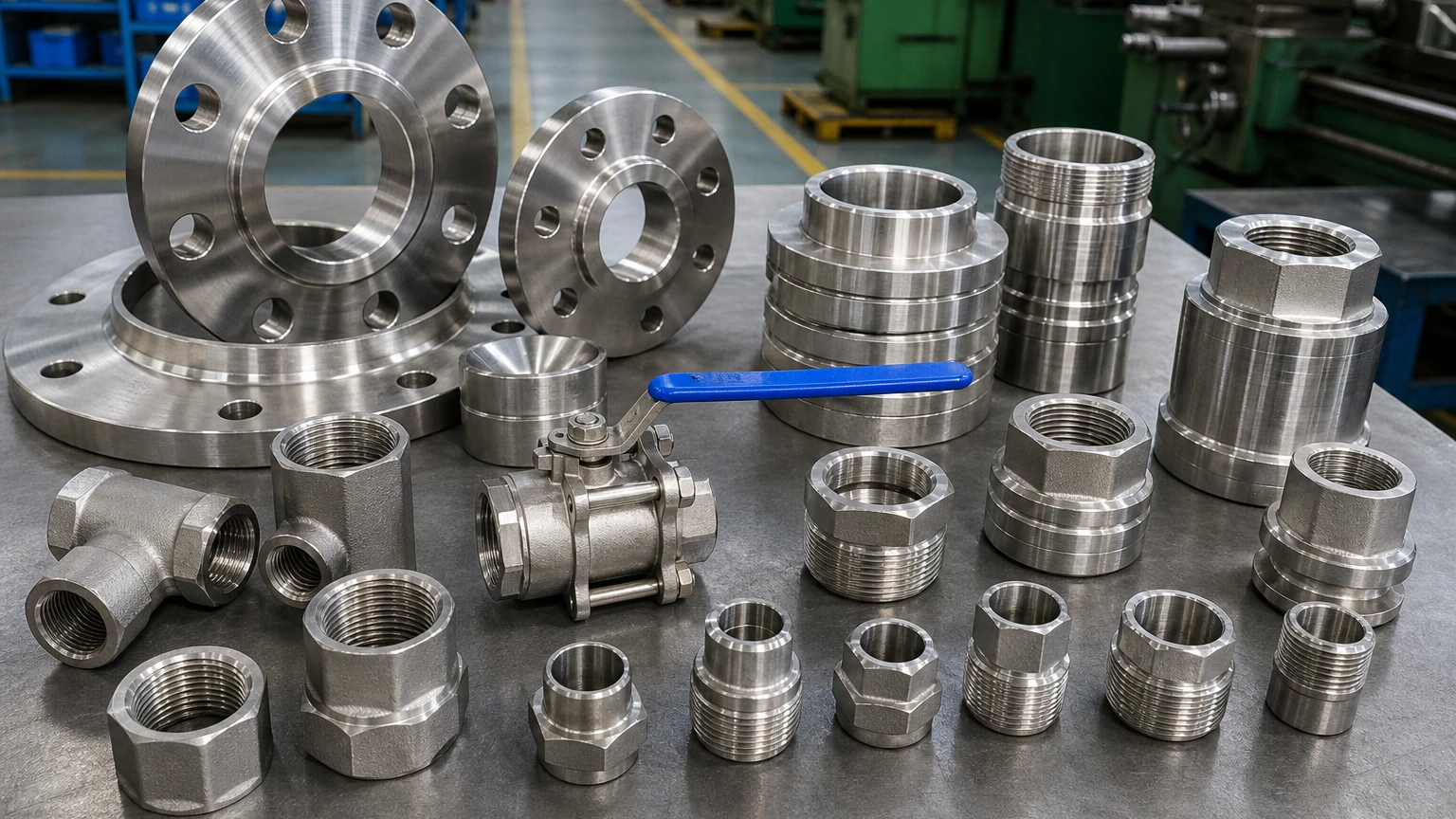
Buyers rarely fail because India lacks engineering component capacity — they fail when they treat CNC housings, SG iron castings, ball valves, forged flanges, and gear shafts as one SKU at one price. Those families may share a port of loading but not the same first-article gate, pack format, or HS family.
This catalogue maps Indian industrial and precision engineering components so you can structure RFQs, compare conversion premiums honestly, and match quality tier to channel. Process guide: How to Export Engineering Components from India.
Catalogue span: CNC machined parts, castings and forgings, pumps and valves, fittings and flanges, shafts/gears/bearing housings, fabricated sheet metal, and tool/switchgear components — with HS 8481/8413/8483/7307/7325/7326 cues and OEM/MRO pack notes.
Supply spine: Pune–Chakan, Coimbatore, Rajkot–Ahmedabad, Faridabad–Gurugram, Bengaluru, Ludhiana–Jalandhar, and Howrah/Belgaum/Kolhapur foundry belts — with merchant exporters bridging mixed MRO FCLs.
Whether you stock commodity fittings or lock OEM CNC programmes — use this vocabulary. See Most Demanded Indian Engineering Components by Country and Precision CNC ISO 9001 OEM Opportunities.
Key Takeaways
Summary Box
Executive Summary
Summary Box
- Focus: products ownership inside the engineering components cluster.
- Stats: EEPC FY25 ~USD 116.67B engineering exports (+6.74%) — broader umbrella; isolate HS.
- HS: 8481 · 8413 · 8483 · 7307 · 7325 · 7326 (confirm with CHA).
- Clusters: Pune–Chakan · Coimbatore · Rajkot–Ahmedabad · Faridabad–Gurugram.
Indian engineering component programmes succeed when the product catalogue sits on clear SKU cards: materials, tolerances, HS family, pack format, and honest channel labels for OEM machine builders, MRO distributors, and industrial wholesalers.
Use EEPC FY25 directional context of roughly USD 116.67 billion engineering-goods exports (+6.74% versus USD 109.30 billion), about 26.67 percent of merchandise exports, with USA near USD 19.15 billion (+8.7%) — always labelled broader engineering umbrella and re-verified via EEPC, WITS, DGCI&S, or TradeStat before contracts.
This article focuses on family-level SKU cards so teams do not confuse pack notes and material grades with registration how-tos owned by the process pillar.
This post owns the SKU catalogue and family cards; use the process pillar for IEC-to-FCL sequencing. Tables below stay catalogue-specific under HS 8481, 8413, 8483, 7307, 7325, and 7326.
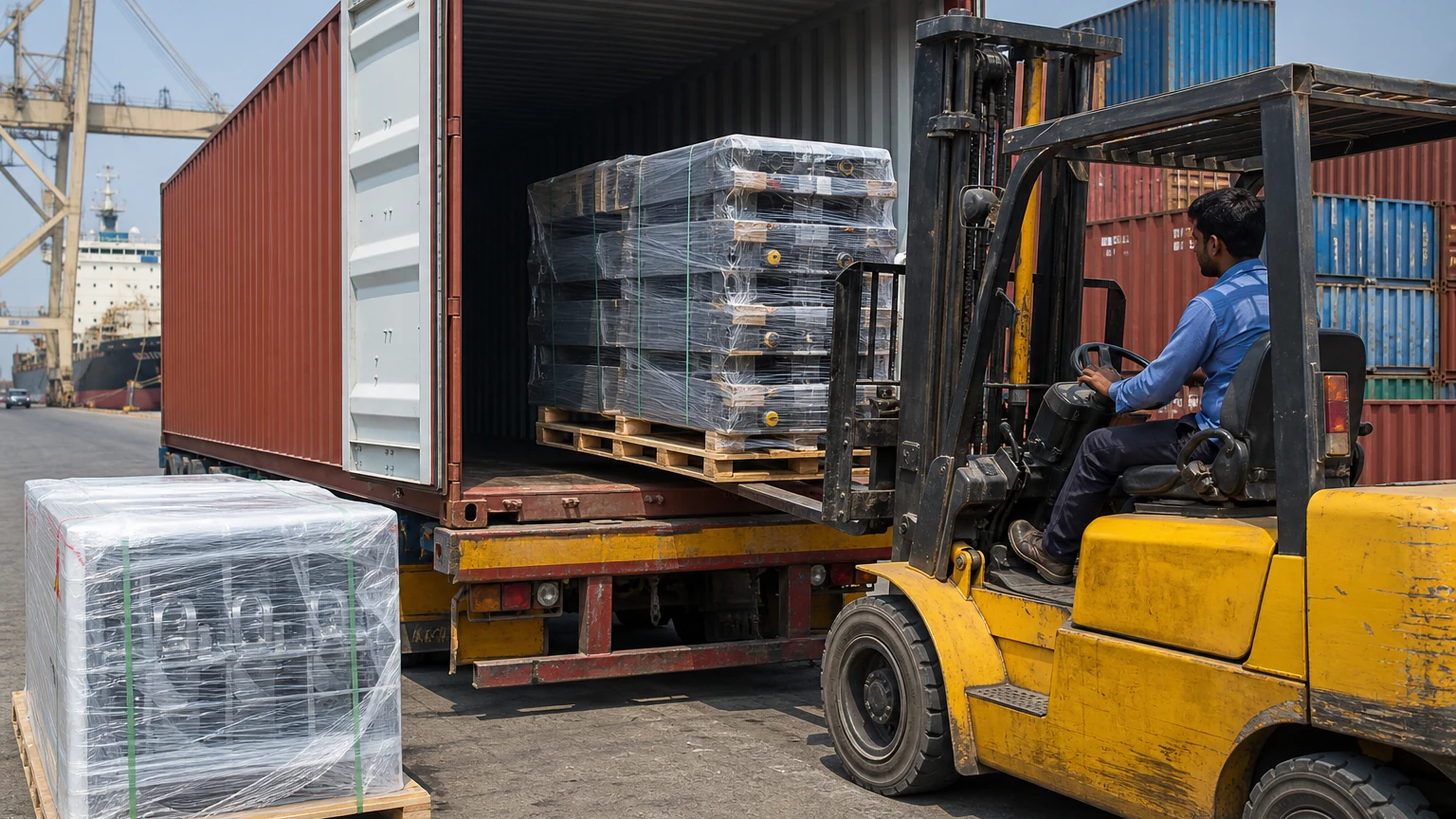
Expert Insight: One Family, One Card
Expert Insight Box
Expert perspective for catalogue programmes: SKU clarity beats opening discounts in industrial parts trade.
Saurabh Mittal emphasises separate cards for CNC, castings, valves, and fittings before freight debates.
Treat the insight below as the operating rule for buyers who otherwise compare unrelated conversion premiums.
Market Size & Industry Overview
Key Statistics
- Channels: OEM · MRO · wholesale.
- Regions: North America ~20.5% · EU ~17.1% · WANA ~16.7% (umbrella, directional).
- Lead catalogue families: valves · pumps · fittings · CNC · castings.
India's engineering component catalogue is fed by distinct industrial belts: Pune–Chakan for precision machining and forgings, Coimbatore for pumps and foundry-linked engineering, Rajkot–Ahmedabad for foundry and pump programmes, Faridabad–Gurugram for sheet metal and tooling, plus Bengaluru precision, Ludhiana–Jalandhar tools, and Howrah/Belgaum/Kolhapur castings.
SKU selection is a commercial decision before it is a freight decision — catalogue MRO fittings and tight-tolerance OEM shafts live on different cards even when both leave western India.
EEPC FY25 directional context of roughly USD 116.67 billion engineering-goods exports shows depth in the broader umbrella; component buyers must still shortlist HS families rather than pitch 'engineering' as a single SKU.
When building assortment matrices, start with valves, pumps, fittings, machined transmission parts, and cast articles — those families dominate RFQ volume for OEM and MRO desks.
India engineering goods context for SKU planning — EEPC FY25 directional (broader umbrella)
Swipe →
Data table — swipe horizontally on small screens
| Metric | Directional Estimate | SKU Planning Note |
|---|---|---|
| Engineering goods exports (EEPC FY25) | ~USD 116.67 billion (+6.74%) | Umbrella total — do not treat as component contract volume |
| Prior-year exports (FY24) | ~USD 109.30 billion | Baseline for trend context only |
| Merchandise share | ~26.67% | Signals industrial export depth, not SKU mix |
| USA corridor | ~USD 19.15 billion (+8.7%) | Strong MRO + selective OEM demand — isolate HS on RFQs |
| Regional split (directional) | NA ~20.5% · EU ~17.1% · WANA ~16.7% | Rank destination packs after SKU shortlist |
| Primary component HS families | 8481 · 8413 · 8483 · 7307 · 7325 · 7326 | Confirm eight-digit with CHA per article |
| Primary clusters for catalogue tours | Pune · Coimbatore · Rajkot · Faridabad–Gurugram | Match plant cell to SKU family |
| Data as-of | 2026-08-10 | Re-verify EEPC/WITS/DGCI&S before contracts |
Export Statistics
Key Statistics
- Isolate HS before citing EEPC umbrella totals.
- Quote dated FOB by SKU family.
- Separate OEM cards from MRO assortment cards.
Export statistics for catalogue work should cite EEPC engineering-goods headlines only as directional context, then isolate the HS family that matches each SKU card.
USA weight in the broader engineering corridor often pulls first assortments toward American MRO pack formats even when production sits in Coimbatore or Rajkot.
Track export mix by family — valves, pumps, fittings, shafts/gears, castings, CNC, fabricated metal — rather than a single 'parts' KPI.
Re-verify partner tables before promising share claims on catalogue sheets; professional buyers check HS isolation.
HS family map for engineering component SKU cards (confirm with CHA)
Swipe →
Data table — swipe horizontally on small screens
| HS Family | Catalogue Articles | Card Pitfall |
|---|---|---|
| 8481 | Ball, gate, globe, butterfly valves | Mixing pump assemblies into valve cards |
| 8413 | Centrifugal and PD pumps; pump parts | Vague 'pump set' without performance notes |
| 8483 | Shafts, gears, bearing housings, couplings | Generic 'machined part' nickname |
| 7307 | Flanges, elbows, tees, couplings | Confusing fittings with pipe mill programmes |
| 7325 / 7326 | Cast articles / other iron-steel articles | Skipping cast vs fabricated distinction |
| 8466 / 8207 / 8538 | Machine-tool parts; tools; switchgear parts | Forcing unrelated parts into 8481/8413 |
Import Statistics
Key Statistics
- USA: MRO breadth + selective OEM CNC.
- Germany: DIN/ISO depth + inspection-heavy cards.
- UAE/Saudi: project fittings and valves.
Destination import profiles should shape which SKU cards you lead with — not which slogans you print on a brochure.
USA MRO kits favour fittings, valves, and machined spares; Germany pulls DIN/ISO valves, pumps, and shafts; UAE and Saudi pull project fittings and valves; Australia pulls plant MRO pumps and spares.
Use import profiles to design sample kits and pack formats per family, not to invent tonnage promises.
Country × SKU preference detail deepens in Most Demanded Indian Engineering Components by Country.
Directional destination pull by engineering component family
Swipe →
Data table — swipe horizontally on small screens
| Market | Lead SKU Families | Primary Buyer Type |
|---|---|---|
| United States | CNC spares, valves, pumps, fittings | MRO distributors, OEM procurement |
| Germany | Valves, pumps, shafts/gears, precision CNC | OEM machine builders, industrial distributors |
| United Arab Emirates | Fittings, flanges, valves, pumps | Project traders, regional distributors |
| United Kingdom | MRO assortments, coated parts with REACH notes | Distributors, industrial platforms |
| Saudi Arabia | Project fittings, valves, fabricated metal | EPC and plant buyers |
| Australia | Plant MRO pumps/valves, machined spares | MRO wholesalers |
| Netherlands / Singapore | Mixed industrial hub assortments | Re-export desks |
| South Africa / Kenya / Bangladesh | Value MRO pumps, fittings, tools | Wholesalers, regional importers |

Product Categories / Variants
Summary Box
- Seven families on separate SKU cards.
- Channel label on every card: OEM / MRO / wholesale.
- Pack notes: VCI · crates · thread protection · revision labels.
The catalogue spine is seven families with separate heroes: do not bury a bearing housing inside a generic 'metal parts' tab beside a butterfly valve.
Map each family to HS 8481, 8413, 8483, 7307, 7325, and 7326 with CHA confirmation; nickname filing creates customs friction later.
OEM, MRO, and wholesale pack notes belong on every SKU card.
Catalogue pages should quarantine sibling clusters: vehicle parts, industrial fasteners, and full pipe mills belong elsewhere — link only when a buyer mixes assortments. For end-to-end shipping sequence, use the process pillar, not this catalogue.
Primary engineering component product families exported from India
Swipe →
Data table — swipe horizontally on small screens
| Product Family | Typical Spec Focus | HS Planning | Primary Channel |
|---|---|---|---|
| CNC machined parts | Drawing-based steel/aluminium/brass/SS | Article-dependent (confirm CHA); 8483 only if transmission shafts/gears/housings | OEM, specialty MRO |
| Castings & forgings | Grey iron, SG iron, steel cast, closed-die forge | 7325 cast articles · forgings often 7326 or more specific (CHA) | OEM blanks, industrial buyers |
| Pumps & valves | Centrifugal/PD pumps; ball/gate/globe/butterfly | 8413 / 8481 | MRO, OEM, project |
| Fittings & flanges | ASME/DIN/BS forged and cast fittings | 7307 | Distributors, project MRO |
| Shafts, gears, housings | Transmission shafts, gears, bearing housings | 8483 | OEM machine builders |
| Fabricated sheet metal | Enclosures, brackets, weldments | 7326 general fabrications · 8538 only for 8535–8537 panel/switchgear parts | OEM, industrial fabricators |
| Tools & switchgear parts | Interchangeable tools, hand-tool parts, panel parts | 8207/8205 · 8466 · 8538 (switchgear/panel parts only) | MRO, OEM tooling |
Manufacturing Overview
Export Tip
- Routes: CNC · cast · forge · fabricate · assemble.
- Certificate site must match the cell named on the card.
- Revision stamps and lot IDs on metal programmes.
Name the manufacturing route on each SKU card — CNC, casting, forging, fabrication, assembly, or coating — because conversion premiums and inspection clocks differ by route.
A Pune CNC cell and a Rajkot foundry bay can sit in the same western corridor yet require incompatible sample kits.
Match cluster tours to family: Coimbatore for pumps, Pune for precision machining and forgings, Faridabad for sheet metal, Ludhiana for tools.
Tooling ownership, gauge lists, and lot traceability belong on the card before price cells are filled.
Cluster × product family capability map (directional)
Swipe →
Data table — swipe horizontally on small screens
| Cluster | Lead Families | Typical Materials | Channel Fit |
|---|---|---|---|
| Pune–Chakan–Ranjangaon | CNC, forgings, shafts/gears | Alloy steel, aluminium, SS | OEM + specialty MRO |
| Coimbatore–Tiruppur | Pumps, foundry-linked parts | Cast iron, steel | MRO + OEM pumps |
| Rajkot–Ahmedabad | Castings, pumps, industrial metal | Grey/SG iron, steel | MRO + project |
| Faridabad–Gurugram–Noida | Sheet metal, tooling, precision | CR/HR steel, aluminium | OEM fabrications |
| Bengaluru–Hoskote | Precision CNC, specialty housings | Aluminium alloys, SS | OEM precision |
| Ludhiana–Jalandhar | Tools, light engineering | Tool steels, carbon steel | MRO tools |
| Howrah / Belgaum / Kolhapur | Castings | Grey/SG iron, steel cast | OEM blanks, industrial |
Engineering Component SKU Catalogue and Channel Fit
- Owns: Engineering Component SKU Catalogue and Channel Fit
- Does not re-teach full IEC → EEPC → FCL registration sequence.
- Always label EEPC FY25 totals as broader engineering umbrella.
This section owns the product catalogue in depth — the boundary that keeps this guide from re-teaching IEC registration, EEPC application steps, or full stuffing workflows owned by the process pillar.
Operationally, teams should build one card per family with material, tolerance band, HS cue, pack format, MOQ tier, and channel fit before any freight negotiation.
Connect each card to a real plant cell in Pune, Coimbatore, Rajkot, or Faridabad; abstract 'India engineering' decks do not approve samples.
Measure catalogue quality by RFQ completeness: revision, metal grade, standard (ISO/DIN/ASME/API), and channel label present on first contact.
India can supply almost every industrial component family; catalogue discipline is what stops buyers from comparing a commodity flange to a tight-tolerance CNC housing on one spreadsheet row.
Disputes collapse when the card carries drawing revision or standard, HS family, channel tier, and a named FOB port before production slots are reserved.
Keep OEM first-article cards separate from MRO assortment cards so distributors and machine builders do not share one optimistic MOQ cell.
For precision CNC contract depth beyond this catalogue, see Precision CNC and ISO 9001 OEM Opportunities.
SKU catalogue × channel fit matrix for Indian engineering components
Swipe →
Data table — swipe horizontally on small screens
| Family | OEM Fit | MRO Fit | Wholesale Fit | Lead Pack Format |
|---|---|---|---|---|
| CNC machined parts | High — FAIR/revision | Selective spares | Low unless assortment | VCI partitioned cartons |
| Castings & forgings | High for blanks/machined | Medium | Medium dense lots | Palletized + dunnage |
| Pumps & valves | Medium–high | High | High assortments | Crates + moisture barrier |
| Fittings & flanges | Project OEM | High | High | Thread-protected pallets |
| Shafts / gears / housings | High | Selective | Low–medium | VCI + rigid cartons |
| Fabricated sheet metal | High custom | Low–medium | Medium | Edge-protected crates/pallets |
| Tools & switchgear parts | Tooling OEM | High | High | Partitioned retail/MRO cartons |
CNC machined parts — drawing-based cards
CNC machined parts — SKU card fields
Swipe →
Data table — swipe horizontally on small screens
| Field | What to Capture | Channel Note |
|---|---|---|
| Drawing / revision | Part number + revision letter | OEM mandatory |
| Material | Grade + MTC depth (e.g. EN 10204 3.1) | MRO often accepts 2.2/3.1 by PO |
| Tolerance focus | Critical dims + surface finish | OEM FAIR path |
| HS cue | Article-dependent — confirm with CHA (8483 only for transmission shafts/gears/bearing housings) or Chapter 84/85 — CHA confirms | Never nickname |
| Trial MOQ | 50–500 pcs typical | Before monthly call-off |
| Pack | VCI + partitioned cartons | Revision labels on every carton |
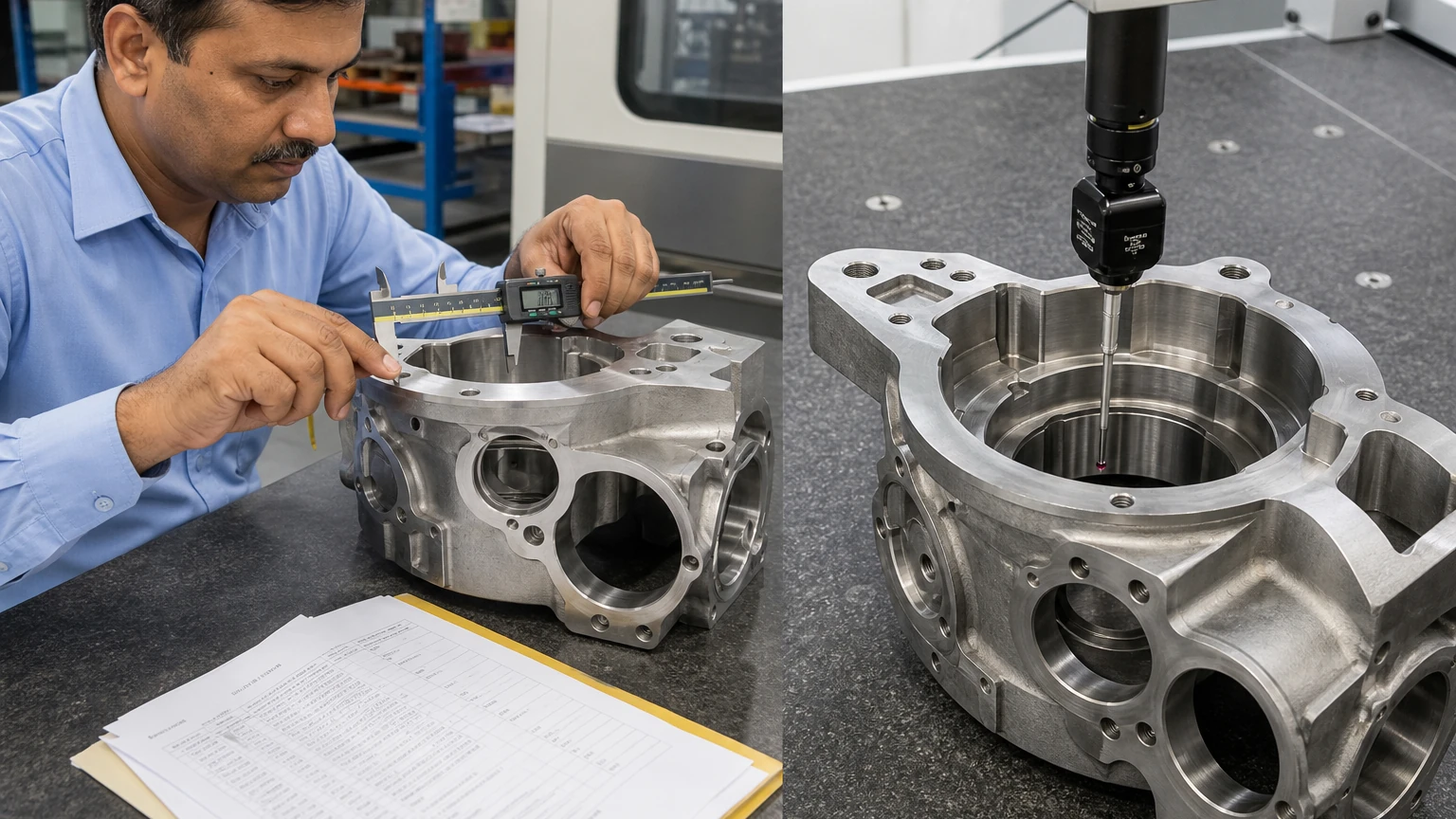
CNC cards must freeze drawing revision, material grade (carbon steel, alloy steel, stainless 304/316, aluminium, brass), and critical tolerances before quoting conversion. Typical channels are OEM machine builders and specialty MRO spares desks.
Pack with VCI and partitioned cartons; price metal index plus machining conversion plus tooling amortisation on dated FOB terms.
Castings and forgings — blank and machined cards
Separate rough cast/forge blanks from machined castings on the card. Grey iron, SG iron, and steel cast programmes need chemistry notes; closed-die forgings need grain-flow and heat-treat notes where specified.
Weight-limited FCLs are common — quote per piece and per kilogram where useful, and photograph dunnage plans for mixed dense loads.
Pumps and valves — standards-led cards
Valve cards under HS 8481 should name type (ball/gate/globe/butterfly), pressure class, end connection, and standard (API/ANSI/DIN/ASME) before price. Pump cards under HS 8413 need performance envelope and test notes.
Crates, moisture protection, and hydrostatic or performance test evidence belong on the commercial offer as explicit lines when buyers require them.
Fittings, flanges, shafts, fabricated metal, and tools
Fittings and flanges (HS 7307) need standard, size range, and thread/end-cap protection notes. Shafts/gears/housings (HS 8483) need heat-treat and dimensional evidence. Fabricated sheet metal needs weld procedure and coating notes. Tool and switchgear parts need interchangeability or panel fit notes.
Do not collapse these families into one 'hardware' row — channel fit and pack rules diverge too far for honest quoting.
Pricing Analysis
Buyer Tip
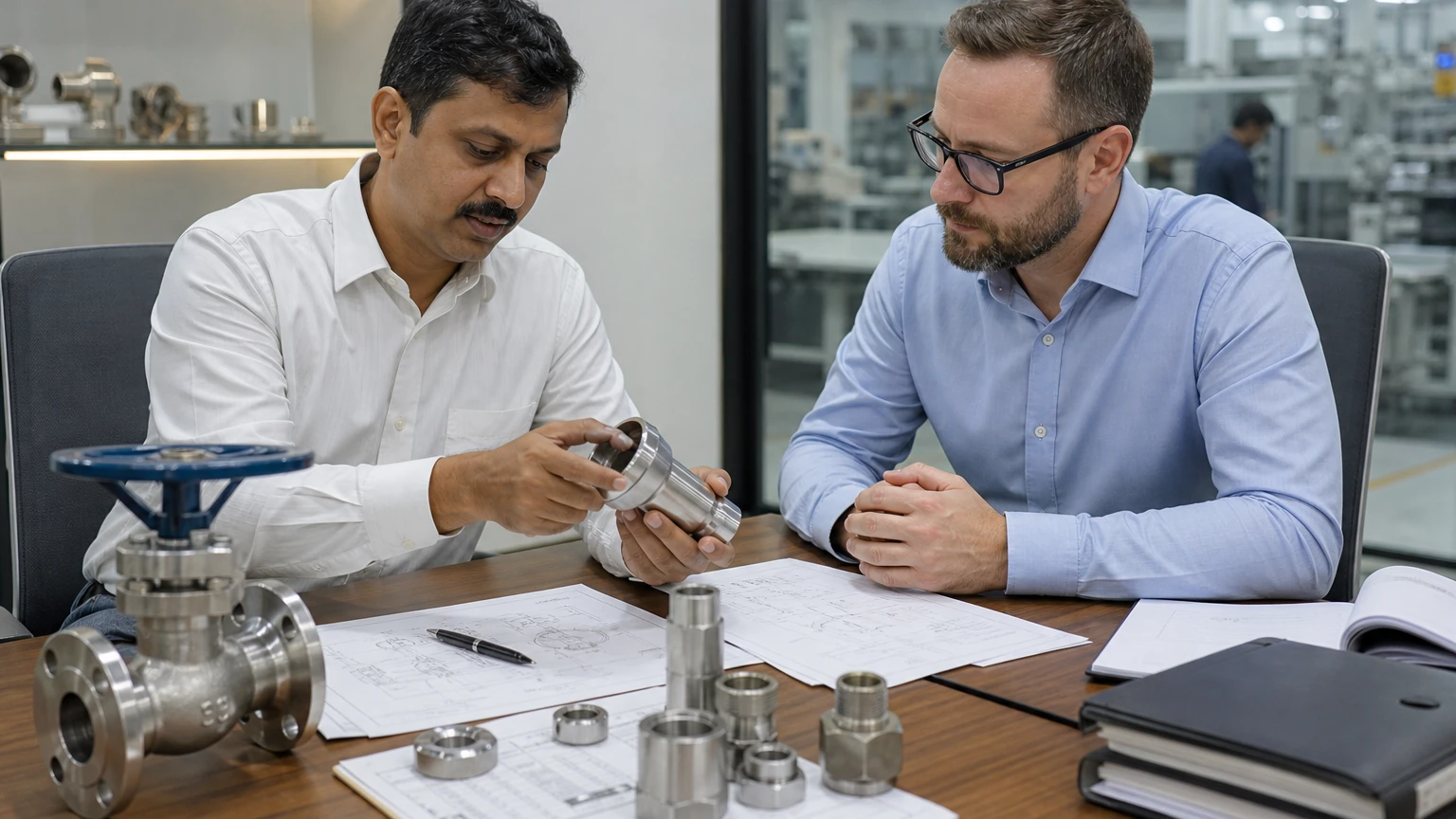
Every SKU card should carry its own dated FOB logic — fittings priced per piece or kilogram, CNC housings with machining conversion and tooling amortisation, valves with trim and test adders — never one teaser number for the whole catalogue.
Keep commodity MRO fittings on a different commercial template from OEM first-article housings even if both sail in the same week.
Put hydro, performance, or third-party test costs on the valve and pump cards so buyers see why those families do not match fittings bands.
Reissue cards when metal indices move. Corridor-level landed models live in the process pillar and best countries guide.
Directional FOB India pricing structure by engineering SKU family
Swipe →
Data table — swipe horizontally on small screens
| SKU Family | Pricing Structure | Notes |
|---|---|---|
| Fittings / flanges (7307) | USD/pc or USD/kg + metal index, FOB | Dated quotes only |
| CNC machined parts | Metal + machining conversion + tooling amortisation, FOB | Separate tooling line |
| Castings / forgings | Blank + machining/heat-treat premium, FOB | Quote pc and kg where useful |
| Valves (8481) | BOM + assembly + test premium, FOB | API/ANSI/DIN tests as add-ons |
| Pumps (8413) | BOM + assembly + performance test, FOB | Include crate cost in landed model |
| Shafts / gears (8483) | Metal + machining/heat-treat, FOB | CMM evidence often separate |
| Fabricated metal / tools | Material + fabrication/tooling conversion, FOB | Coating notes affect EU/UK cards |
MOQ Analysis
Buyer Tip
Write trial versus scale quantities into each SKU card early: machined trials at 50–500 pieces, mixed castings/fittings at 1–2 MT, wholesale at 20′ or 40′ HQ, OEM on call-off schedules.
Promising carton MOQ language on an OEM CNC card signals channel confusion.
Air-freight first articles are not commercial MOQ — keep them on a separate sample PO.
Align MOQ language to the family before promising monthly FCL on a new foundry or CNC line.
Directional MOQ tiers by engineering SKU family
Swipe →
Data table — swipe horizontally on small screens
| Family / Stage | Typical MOQ | Purpose |
|---|---|---|
| CNC machined trial | 50–500 pcs per SKU | Dimensional and material gate |
| Castings / fittings mixed trial | 1–2 MT mixed | Pack/label and inbound QC |
| Valves / pumps catalogue trial | Carton or crate lots by SKU | Standard and test gate |
| Standard wholesale | 1×20′ (~16–22 MT) or 1×40′ HQ carton-heavy | Commercial assortment after samples |
| OEM programme | Monthly call-off / release | FAIR and process capability |
| Practice note | Bands are commercial practice — not statutory | Match MOQ language to channel on the card |
Packaging Standards
Export Tip
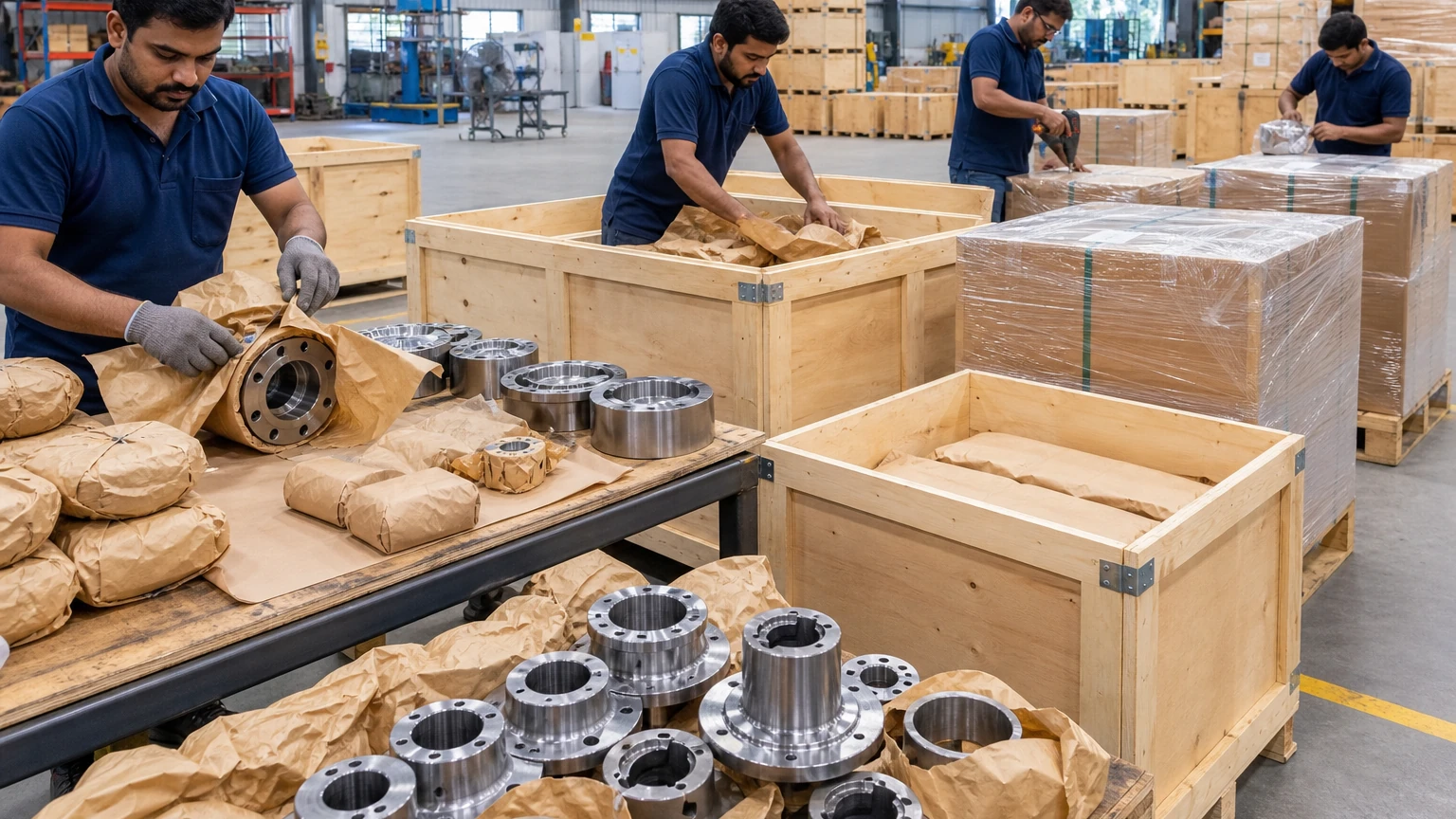
Pack formats belong on the SKU card, not as an afterthought at stuffing: VCI for machined metal, crates for valves/pumps, thread protection for fittings, edge protection for fabricated parts, and partitioned cartons for tools and precision CNC.
Marks must reconcile to packing lists — a recurring failure when assortments mix families.
Hot-climate corridors need extra moisture discipline on machined and coated cards.
Photograph packed pallets as claim defense before gate-in.
Packaging standards by engineering component family
Swipe →
Data table — swipe horizontally on small screens
| Family | Primary Pack | Key Marks | Risk if Skipped |
|---|---|---|---|
| CNC machined | VCI + partitioned cartons | Part + revision | Corrosion / mix-ups |
| Castings / forgings | Pallet + dunnage | Lot + grade | Chip damage / crush |
| Pumps / valves | ISPM-15 crates | Model + test status | Shock / moisture claims |
| Fittings / flanges | Thread caps + pallet wrap | Size + standard | Thread damage |
| Shafts / gears | VCI + rigid cartons | Part + heat-treat lot | Rust / nicks |
| Fabricated metal | Edge guards + crates/pallets | Drawing revision | Denting / coating damage |
| Tools / switchgear parts | Partitioned cartons | SKU / barcode | Mix-ups at destination |
Container Loading Details
Export Tip
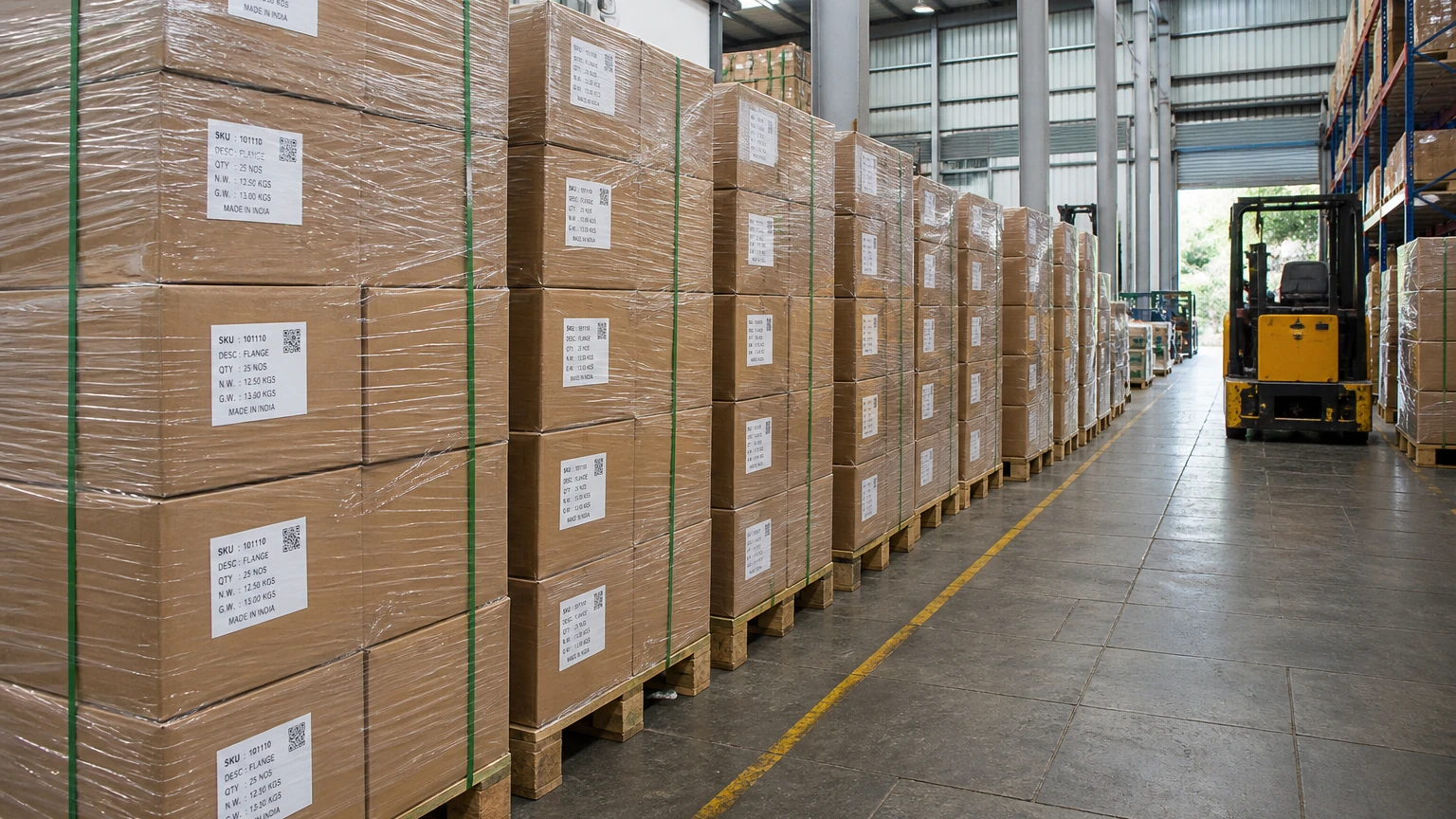
Loading plans should follow catalogue density: castings and fittings often weight-limit 20′ payloads near 16–22 MT; carton-heavy CNC and tool assortments may prefer 40′ HC; bulky fabrications eat cube.
Never stow fragile precision cartons under unprotected dense castings without a written cubing plan.
ICD Pune, Tughlakabad, and Ahmedabad stuffing can simplify cluster-adjacent programmes.
LCL and air remain sample modes — not commercial catalogue defaults.
Directional loading guidance by engineering SKU density
Swipe →
Data table — swipe horizontally on small screens
| Load Profile | Typical Container | Catalogue Families | Note |
|---|---|---|---|
| Dense metal | 20′ FCL weight-limited | Castings, fittings, forgings | Confirm payload with forwarder |
| Carton-heavy precision | 40′ HC | CNC assortments, tools | Volume often limits before weight |
| Bulky fabrications | 40′ HC / special stow | Enclosures, weldments | Edge protection critical |
| Mixed MRO | 20′ or 40′ with cubing plan | Valves + fittings + spares | Heavy bottom / fragile top |
| Samples | LCL or air | Any family | Separate sample PO |
| ICD stuffing | Pune / Tughlakabad / Ahmedabad | Cluster-adjacent lots | Then rail/road to gateway |
Shipping Methods
Export Tip
- FCL default for approved catalogue lots.
- FOB first · CIF selective · DAP/DDP rare.
- Cubing plan required for mixed-family FCLs.
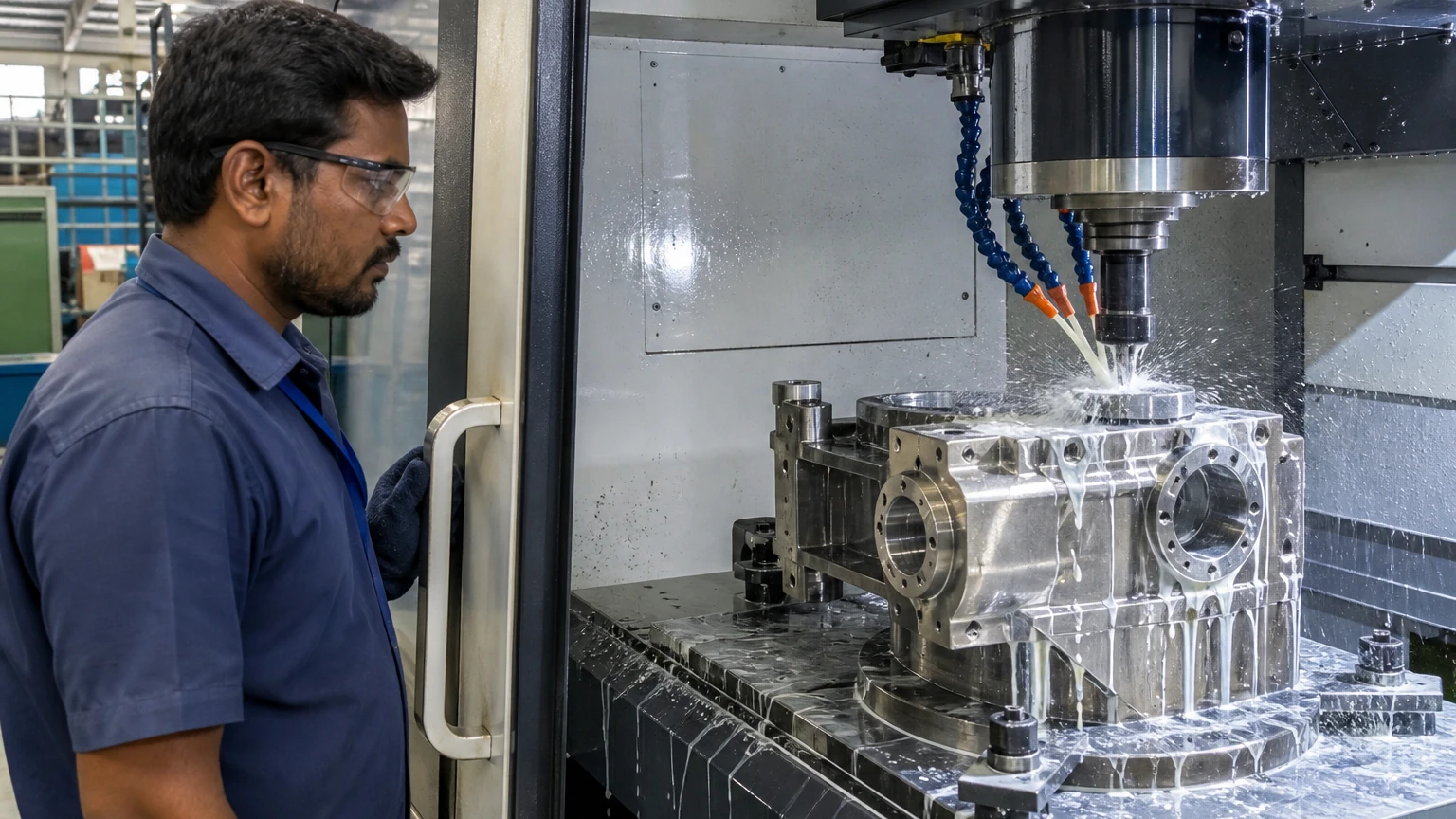
Catalogue shipping defaults to FCL ocean from Nhava Sheva, Mundra, and Chennai once SKU cards are approved; LCL suits small reorders; air suits first articles and urgent spares.
Quote FOB named Indian port by family first; switch to CIF only after the buyer's freight benchmark is on record.
Transit modelling should include inland ICD legs for northern and western belts.
Name liner windows cautiously until pack-out rhythm for that family is proven.
Certifications
Compliance Notes
Certification depth belongs on each SKU card: ISO 9001 scope for OEM and many distributors, MTC EN 10204 3.1 where metal chemistry matters, FAIR for drawing-controlled CNC, API/ANSI/DIN/ASME evidence for pumps/valves/fittings, and REACH notes where coatings apply.
EEPC RCMC and IEC remain exporter KYC credentials — they do not replace family-level test evidence.
Third-party inspection appears on LC and audit-heavy corridors.
Certificate scope pages matter; logo-only claims fail OEM questionnaires.
Certification cues by engineering component family
Swipe →
Data table — swipe horizontally on small screens
| Family | Core Evidence | Often Added | Channel |
|---|---|---|---|
| CNC machined | ISO 9001 · dimensional/FAIR · MTC | CMM pack, third-party | OEM |
| Castings / forgings | MTC · chemistry · visual/NDT as specified | Heat-treat charts | OEM/industrial |
| Valves | ISO · standard compliance · hydro test | API/ANSI/DIN packs | MRO/OEM/project |
| Pumps | Performance/hydro test · ISO | Material COA | MRO/OEM |
| Fittings / flanges | MTC · dimensional · standard mark | Third-party on LC | Distributor/project |
| Fabricated metal | WPS/PQR notes · coating | REACH where coated | OEM |
| Tools / switchgear parts | Dimensional interchangeability | RoHS where applicable | MRO/OEM |
Buyer Requirements
Buyer Requirements
Buyer requirements differ by channel and family: MRO wants pack photos and material certificates; wholesalers want assortment and barcode discipline; OEM wants revision control, FAIR, and release reliability.
Payment instruments escalate with trust — advances/LC early, open account later.
Capture requirements on the SKU card within seventy-two hours of first contact.
Reject vague RFQs that omit drawing revision, standard, or destination compliance needs.
Buyer requirement lens by channel for engineering SKUs
Swipe →
Data table — swipe horizontally on small screens
| Channel | Entry Gate | Proof Expected | Catalogue Angle |
|---|---|---|---|
| MRO distributor | 1–2 MT or 20′ trial | MTC, pack photos | Family-specific assortment sheet |
| Industrial wholesaler | Assortment readiness | Labels, QC summary | Mixed-family cubing plan |
| Project / EPC | Spec-aligned fittings/valves | Standards + test packs | ASME/DIN/API card fields |
| OEM / machine builder | ISO + FAIR | Dimensional pack, capacity | Revision-controlled CNC/cast cards |
| Regional re-exporter | Mixed FCL discipline | Cubing + competitive FOB | Assortment + re-export pack |
Country-wise Opportunities
Market Snapshot
Lead catalogue expansion with USA, Germany, and UAE once family cards are stable; stage UK, Saudi Arabia, Australia, Netherlands, Singapore, and selected Africa/ASEAN corridors next.
Score duty, freight, standards load, and channel fit per family rather than chasing every flag with one assortment.
Keep country notes operational — preferred SKUs, pack, inspection — tied to cards above.
Macro ranking methodology lives in Best Countries for Indian Engineering Component Exports.
Directional country × lead SKU opportunities
Swipe →
Data table — swipe horizontally on small screens
| Country | Lead Families | Requirement Focus | Catalogue Note |
|---|---|---|---|
| United States | CNC, valves, pumps, fittings | Live HTS by line | Strong MRO breadth |
| Germany | Valves, pumps, shafts, precision CNC | DIN/ISO + FAIR | Audit-heavy cards |
| United Arab Emirates | Fittings, valves, pumps | Hot-climate pack | Project + re-export |
| United Kingdom | MRO assortments | REACH-aware coatings | Distributor platforms |
| Saudi Arabia | Project fittings/valves/fabrications | Standards documentation | EPC offtake |
| Australia | Plant MRO pumps/valves/spares | Landed-cost honesty | Mining/industrial |
| Netherlands / Singapore | Mixed hub assortments | Documentation speed | Re-export desks |
| South Africa / Kenya / Bangladesh | Value MRO mixes | Competitive FOB | Secondary growth |
Sourcing Checklist
Checklist
Use this checklist when catalogue work moves from reading to RFQs.
The buyer, exporter, and compliance callouts below are the first-order gates for SKU-card programmes.
Combine with cluster tours matched to family and with document gates before stuffing. Importer-side verification depth lives in the source playbook.
Common Buyer Mistakes
Common Mistakes Box
- One price cell across CNC and fittings.
- OEM language on MRO-only foundries.
- No sealed sample retention per card.
- Undated teaser prices accepted.
- HS family guessed without CHA.
- EEPC umbrella totals treated as component SKU volume.
Catalogue programmes collapse when teams compare FOB alone across unrelated families, blur OEM with MRO on one card, skip sealed sample retention, or lock undated teaser prices into assortment plans.
Buyers also fail when they air-freight oversized mixed 'samples' before freezing drawing revision or standard.
Documentation mismatches — marks versus packing list versus MTC lot — create avoidable holds when families share a container.
Fix mistakes with written cards: RFQ completeness, sample sign-off, and pre-seal document checks per family.
Future Market Trends
Key Statistics
- OEM dual-sourcing with portal cards.
- MRO premiumisation and pack data quality.
- Substance and traceability data as sales tools.
- Precision CNC growth alongside commodity fittings volume.
Catalogue demand is splitting: OEM desks want revision-controlled CNC and valve cards with portal-ready evidence, while MRO buyers still want fast assortment depth on fittings and tool components.
India wins those RFQs when each family card shows material, tolerance, pack, and HS cue — not when the website repeats national export slogans.
Expect more digital FAIR attachments and substance questions on coated fabrications and plated tool parts.
Keep family cards current and link multi-SKU industrial programmes to engineering goods and industrial raw materials when buyers build broader assortments.
Challenges and Solutions
- Challenge: FAIR cash/time → Solution: staged sample cards.
- Challenge: mixed FCL crush → Solution: family cubing plans.
- Challenge: duty surprises → Solution: live HTS/TARIC by HS.
- Challenge: card gaps → Solution: mandatory field checklist.
Catalogue challenges include tooling cash cycles on CNC cards, test delays on valve/pump cards, mixed-FCL cubing complexity, and destination duty volatility by HS line.
Fixes look like staged trials per family, Incoterm clarity on every card, cluster-matched factories, and offers with explicit price dates.
Working-capital strain eases when MRO cash assortments help fund OEM compliance stacks — a sequencing choice across cards.
Use merchant-exporter coordination when multi-factory consolidation beats single-plant logistics for mixed-family FCLs.
Compliance Notes for Catalogue Programmes
Before production, catalogue owners must lock HS declaration per article, EU/UK substance needs where coatings apply, and standards evidence for pumps/valves/fittings.
USA HTS and EU TARIC pulls belong in landed models by family — never a flat 'engineering parts' rate.
Keep counsel/CHA advice above blog generalisations when cards turn contractual.
Re-verify EEPC/WITS/DGCI&S figures and live tariffs before every major assortment launch.
CE/UKCA context for applicable pressure equipment must be confirmed with the buyer — never assumed from a valve nickname.
Sibling contrast only when needed: vehicle parts, fasteners, or pipe mills are separate clusters — do not paste those essays onto these cards.
Destination compliance notes affecting engineering SKU cards (verify live)
Swipe →
Data table — swipe horizontally on small screens
| Market | Catalogue impact | Verify with |
|---|---|---|
| United States | HTS by 8481/8413/8483/7307/7325/7326 line on each card | USITC HTS, CBP, buyer broker |
| European Union | TARIC by line; REACH for coatings; CE where pressure equipment applies | EU TARIC, ECHA, buyer pack |
| United Kingdom | UK tariff + UK REACH; UKCA where applicable | UK tariff tool, buyer broker |
| UAE / Saudi Arabia | SASO SABER (Saudi) / MoIAT ECAS (UAE) where regulated + project documentation depth | Local broker + conformity schemes |
| Australia / Singapore | Standards marks and MFN by family | Local broker + market access tools |
| India export side | IEC + EEPC RCMC credentials beside SKU evidence | DGFT, EEPC India |
Expert Insight: Cards That Travel
Expert Insight Box
Second expert insight for catalogue work: clean SKU cards travel farther than discounts.
Material identity, revision control, and pack marks are commercial assets, not clerical afterthoughts.
Use this guidance alongside Altus merchant-export execution when scaling beyond trials.
Sources
- EEPC India — Engineering Export Promotion Council
- EEPC India Engineering Trade Analysis March 2025 / FY25 PDF
- Economic Times — India engineering goods exports FY25 (USD 116.67B)
- IBEF — Engineering Goods Industry and Exports from India
- DGFT — Directorate General of Foreign Trade (IEC)
- DGCI&S / TradeStat — Indian trade statistics
- ICEGATE — Indian Customs EDI Gateway
- CBIC — Central Board of Indirect Taxes and Customs
- WITS — World Integrated Trade Solution (World Bank)
- UN Comtrade Database
- ITC Trade Map
- WCO — Harmonized System
- ISO — International Organization for Standardization
- ASME — valves, fittings, and pressure equipment standards
- API — American Petroleum Institute (pump/valve programmes)
- USITC Harmonized Tariff Schedule
- CBP — U.S. Customs and Border Protection
- EU TARIC — customs tariff database
- ECHA — REACH regulation
- European Commission — CE marking
- UK Government — UKCA marking
- SASO SABER — Saudi product conformity platform
- UAE MoIAT — standards and conformity (ECAS context)
- ICC — Incoterms rules
Directional EEPC, DGCI&S, trade, tariff, and compliance notes in this engineering components guide (top-engineering-component-products-exported-from-india) should be re-verified against primary sources before quoting buyers or filing export documents. Figures labelled EEPC FY25 refer to India’s fiscal year 2024-25 engineering goods export performance — a broader umbrella than precision/industrial components alone. Isolate your HS family (for example 8481, 8413, 8483, 7307, 7325/7326) before contracting volume.
Use the links below for government, standards, and trade-data verification. Confirm eight-digit HS lines with a licensed CHA at shipping-bill time. Model destination duties live (USITC HTS / CBP for the USA; TARIC for the EU). Container payload bands in this cluster are commercial road/booking practice, not fixed CSC legal capacities.
Conclusion
- Merchant Exporter India
- Export Products from India
- Global Sourcing Partner India
- Product Sourcing Company India
- Contact Altus Exports
- Engineering Goods
- Industrial Raw Materials
A sellable engineering-component catalogue is a set of honest family cards — material, revision or standard, HS cue, channel, pack, and MOQ — not a photo gallery of 'metal parts.'
Freeze those cards before promising mixed FCLs so fittings, CNC, valves, and castings do not share one vague offer sheet.
Altus Exports can help consolidate multi-family programmes as merchant exporter and sourcing partner when buyers need one accountable assortment file.
Share the families and channels you want to sell; then use the process pillar and demand-by-country guide for shipping sequence and destination pull.