
Precision CNC and ISO 9001 OEM Engineering Component Export Opportunities from India
By Saurabh Mittal, Founder, Altus Exports
Premium export opportunities for precision CNC and ISO 9001 OEM engineering components from India — drawing-based tight-tolerance programmes, first-article inspection (FAIR), material MTC depth, and inspection-heavy pathways beyond commodity MRO parcels for industrial machine builders and equipment OEMs.
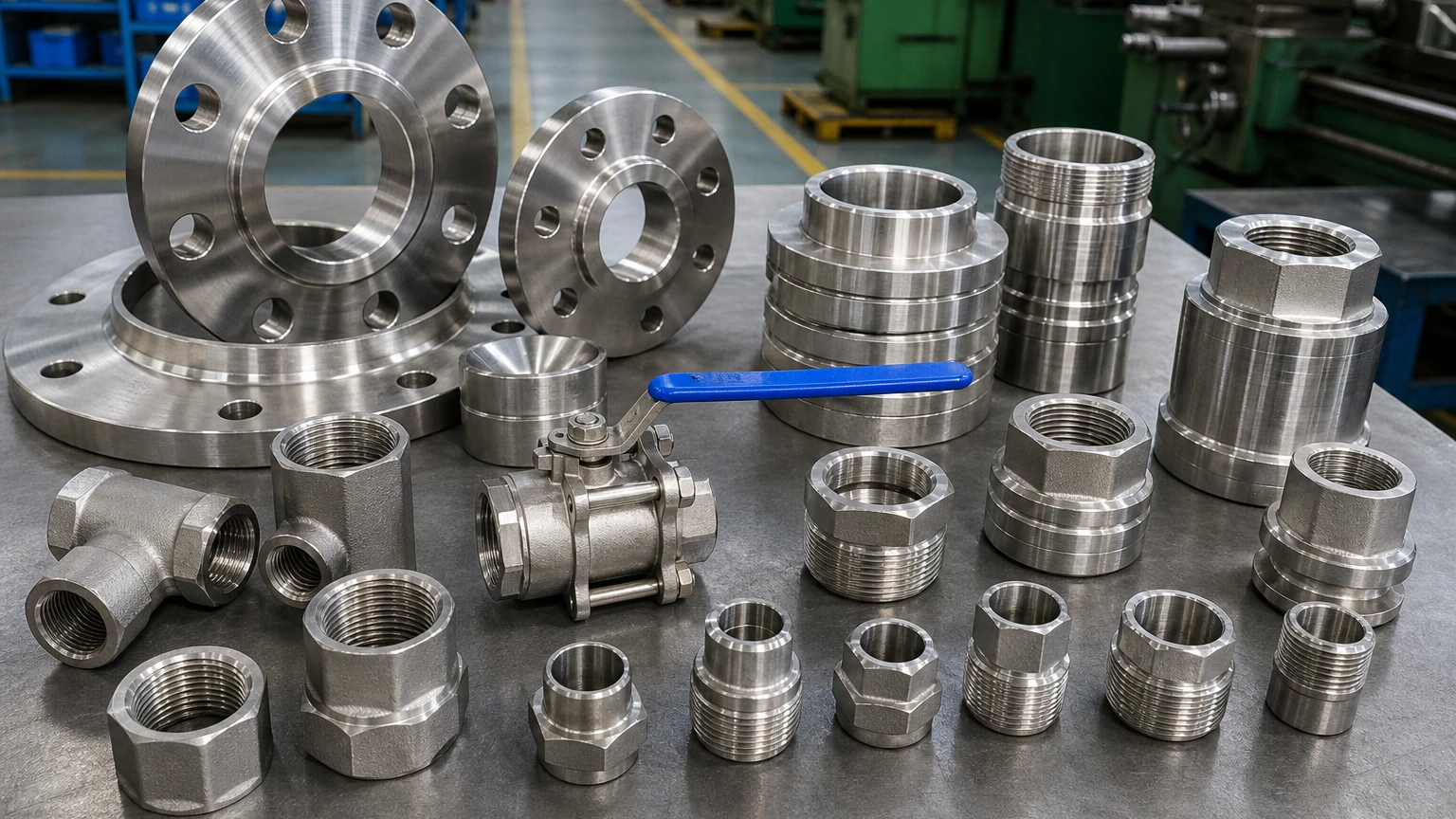
Precision CNC and ISO 9001 OEM engineering component programmes sit above commodity MRO parcels. Industrial machine builders, equipment OEMs, and plant-engineering buyers specify drawing revisions, GD&T tolerances, material grades with EN 10204 MTCs, and first-article inspection packs — then expect sample-to-bulk consistency across call-off releases. This guide covers those premium pathways for India-origin machined parts, precision cast/forged and finish-machined components, and related OEM housings, shafts, and valve/pump parts sold as drawing-controlled SKUs.
India’s Pune–Chakan, Bengaluru, Faridabad–Gurugram, Coimbatore, and select Rajkot and NCR belts run CNC turning, milling, multi-axis machining, grinding, and CMM inspection for export OEM work. ISO 9001 plant systems are the baseline credibility layer; FAIR/FAI documentation and third-party inspection separate premium contracts from mixed-carton MRO bids. This post does not replace vehicle IATF/PPAP essays — keep automotive SKUs in the auto components cluster when a buyer mixes industrial and vehicle parts.
For SKU family selection across CNC, castings, pumps, valves, and fittings, see Top Engineering Component Products Exported from India. For document field controls, see Engineering Component Export Documentation Checklist. For corridor fit, see Best Countries for Indian Engineering Component Exports. Process backbone: How to Export Engineering Components from India.
Directional EEPC India FY25 engineering goods exports reached about USD 116.67 billion (+6.74% vs USD 109.30 billion), with merchandise share near 26.67%, USA near USD 19.15 billion (+8.7%), and regional mix around North America ~20.5%, EU ~17.1%, and WANA ~16.7%. Premium CNC OEM work is a margin slice of that umbrella — isolate HS families (often Chapter 84/85 machined articles, 8483 transmission parts, 8466 machine-tool parts, and drawing-based lines filed with your CHA) before contracting. Altus Exports supports factories as a merchant exporter in India on inspection-heavy OEM programmes.
Key Takeaways
Summary Box
Executive Summary
Summary Box
- Buyer: industrial OEM / equipment OEM / premium industrial distributor programmes.
- Proof: ISO 9001 scope · FAIR · MTC · CMM capability · drawing revision.
- Trade context: EEPC FY25 ~USD 116.67B engineering goods — isolate component HS.
- Ports: Nhava Sheva · Mundra · Chennai · ICD Pune · ICD Tughlakabad.
- Positioning: inspection-heavy pathways beyond commodity MRO parcels.
Precision CNC and ISO 9001 OEM export opportunities reward Indian plants that can prove process capability, material traceability, and first-article discipline for industrial machine builders and equipment OEMs. Margins sit above commodity MRO valves-and-fittings parcels when GD&T, surface finish, and lot genealogy are contractually controlled.
EEPC FY25 engineering goods scale (~USD 116.67B) shows corridor depth in USA, EU, and Middle East markets, but OEM buyers purchase capability evidence — CMM reports, FAIR packs, ISO 9001 certificates with scope matching the process — not umbrella export headlines. Position programmes around shafts, housings, brackets, precision-machined pump/valve parts, machine-tool parts, and custom CNC SKUs with locked revisions.
Premium programmes also need commercial hygiene: named FOB ports or ICD points, realistic tooling-plus-FAIR calendars, and inspection line items that purchasing can approve before metal is cut. Plants that hide CMM limits or trading-only ISO scopes lose audits even when sample cosmetics look excellent.
This specialty guide owns tight-tolerance and premium inspection playbooks. General EEPC membership how-to lives in the EEPC cluster post; commodity process steps live in the pillar; document field-by-field checklists live in the documentation post. Link those rather than diluting OEM depth here.
Expert Insight: Capability Before Catalogue
Expert Insight Box
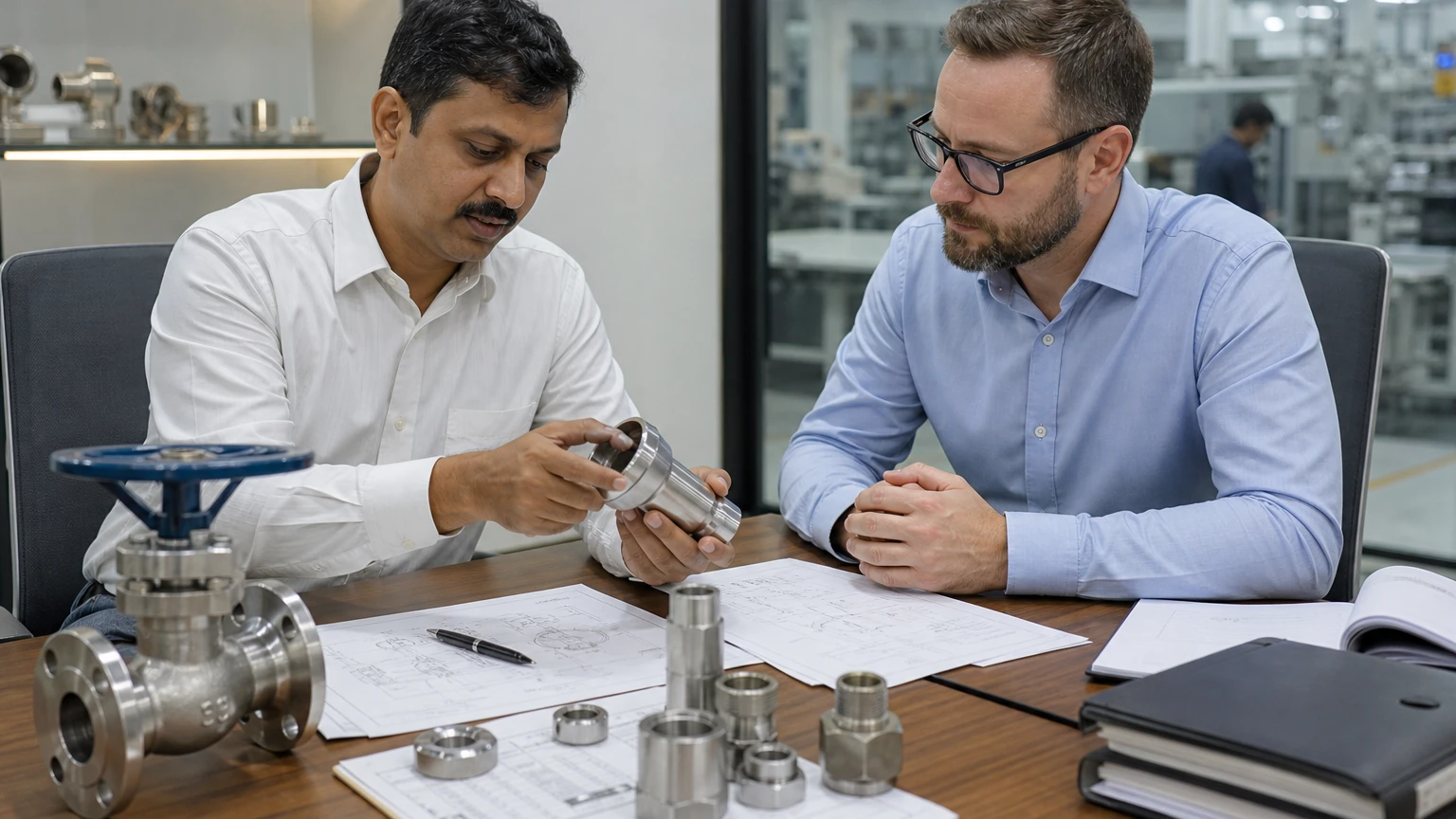
Premium OEM work is lost when exporters lead with a multi-industry PDF and hide inspection limits. Industrial purchasing engineers ask for machine list, CMM brand/software, FAIR template, and ISO 9001 scope pages before they discuss piece price.
Saurabh Mittal tells factories to treat first-article approval as a product — with owners, week bands, and document checklists — not as an informal sample favour.
Market Size & Industry Overview
Key Statistics
The addressable market for precision CNC OEM components from India is a capability-selected slice of engineering goods trade. USA, Germany, UK, Netherlands, Australia, UAE, and Singapore host machine builders, packaging/equipment OEMs, and industrial automation buyers who dual-source machined parts under China+1 policies.
Indian capacity for export-grade OEM work concentrates where CNC density, heat-treat partners, and CMM culture coexist — especially Pune–Chakan–Ranjangaon and Bengaluru–Hoskote, with strong supporting belts in Faridabad–Gurugram, Coimbatore, and selected Gujarat/NCR MSMEs. Merchant exporters consolidate multi-plant programmes when OEMs need several families under one PI.
Demand inside that slice is uneven. Prismatic parts with stacked GD&T, sealing faces, and multi-op routings carry higher switching costs for OEMs once FAIR is approved. Simple turned bushings face sharper Asian price competition and shorter vendor loyalty. Build your export pipeline around parts where inspection depth and revision control are valued, then use merchant consolidation for the surrounding MRO fill-ins if the buyer requests a broader basket.
Commodity MRO still dominates unit volume; premium OEM dominates margin and relationship length when FAIR and call-off discipline hold. Keep that distinction visible in every capability deck so industrial OEM buyers do not evaluate you only on catalogue piece price.
Market context for precision CNC / ISO 9001 OEM programmes (directional)
Swipe →
Data table — swipe horizontally on small screens
| Dimension | Planning reference | OEM note |
|---|---|---|
| Engineering goods exports FY25 (EEPC) | ~USD 116.67B (+6.74% vs 109.30B) | Umbrella demand signal — OEM CNC is a premium subset |
| Merchandise share | ~26.67% | Macro credibility for board-level sourcing decks |
| USA corridor | ~USD 19.15B engineering goods (+8.7%) | Strong industrial OEM prospecting; confirm HTS live |
| Regional mix | NA ~20.5% · EU ~17.1% · WANA ~16.7% | DIN/ISO language for EU; ASME common in USA/Gulf projects |
| Primary OEM HS planning families | 8483 · 8466 · drawing-based Ch. 84/85 · related 8481/8413 parts | Confirm eight-digit with CHA per print |
| Credentials | EEPC RCMC + IEC + ISO 9001 plant scope | Attach scope pages — not logo-only claims |
Export Statistics
Key Statistics
Export statistics for precision CNC are rarely published as a clean “OEM machined parts” total. Plan using EEPC engineering goods directionality plus your specific HS extracts from DGCI&S, ITC Trade Map, and WITS. Misusing aggregate 116.67B figures as if they were CNC-only exports damages OEM credibility.
USA and EU remain priority value corridors for tight-tolerance programmes; Middle East and Australia add equipment-OEM and plant-engineering offtake. Always re-verify before contract annexes.
Directional export planning profile for precision CNC OEM components
Swipe →
Data table — swipe horizontally on small screens
| Metric | Directional estimate | Notes |
|---|---|---|
| Engineering goods FY25 (EEPC) | ~USD 116.67B (+6.74% YoY) | Broader umbrella context |
| Prior year | ~USD 109.30B | YoY narrative only |
| USA engineering goods | ~USD 19.15B (+8.7%) | Priority OEM corridor |
| HS families (OEM planning) | 8483 shafts/gears/housings · 8466 machine-tool parts · Ch. 84/85 drawing-based · related pump/valve parts 8413/8481 | CHA confirmation mandatory |
| Council | EEPC India RCMC; IEC via DGFT | Baseline with ISO 9001 plant evidence |
| Clusters for precision OEM | Pune–Chakan, Bengaluru, Faridabad–Gurugram, Coimbatore, select Rajkot/NCR | Name plant belt in OEM RFQ responses |
| Data as-of | 2026-08-10; EEPC/DGCI&S FY25 directional | Re-verify before citing in contracts |
Import Statistics
Key Statistics
Destination import patterns for machined parts, transmission components, and machine-tool parts reveal which OEMs and distributors already dual-source. Prospect and price against those corridors’ standards languages — ASME/ANSI in many USA programmes, DIN/ISO in Germany and much of the EU, with REACH statements when coatings apply.
India also imports high-precision sub-components. Use inbound competition as a quality benchmark conversation, not as an excuse to under-document your own FAIR pack.
Directional import demand for precision OEM components by destination
Swipe →
Data table — swipe horizontally on small screens
| Market | Directional demand profile | Primary buyer type |
|---|---|---|
| United States | Drawing-based CNC housings, shafts, brackets; FAIR-heavy releases | Machine builders, equipment OEMs, industrial automation |
| Germany | DIN/ISO GD&T, deep dimensional packs, REACH-aware coatings | Equipment OEMs, industrial distributors with OEM desks |
| United Kingdom | ISO-aware precision parts; CE/PED context where pressure assemblies apply (UKCA is UK-only) | OEM plants, specialty industrial buyers |
| Netherlands | EU hub consolidation of precision parts | OEM purchasing hubs, wholesale distributors |
| Australia | Mining/plant equipment OEM parts with MTC depth | Equipment OEMs, industrial MRO premium tier |
| UAE / Saudi Arabia | Equipment and project OEM machined parts | Equipment assemblers, project engineering buyers |
| Singapore | Regional precision OEM and marine/industrial parts | OEM and regional distribution |
| Canada / Mexico | Nearshore-adjacent dual-source CNC programmes | Machine builders and industrial OEMs |
Product Categories / Variants
Summary Box
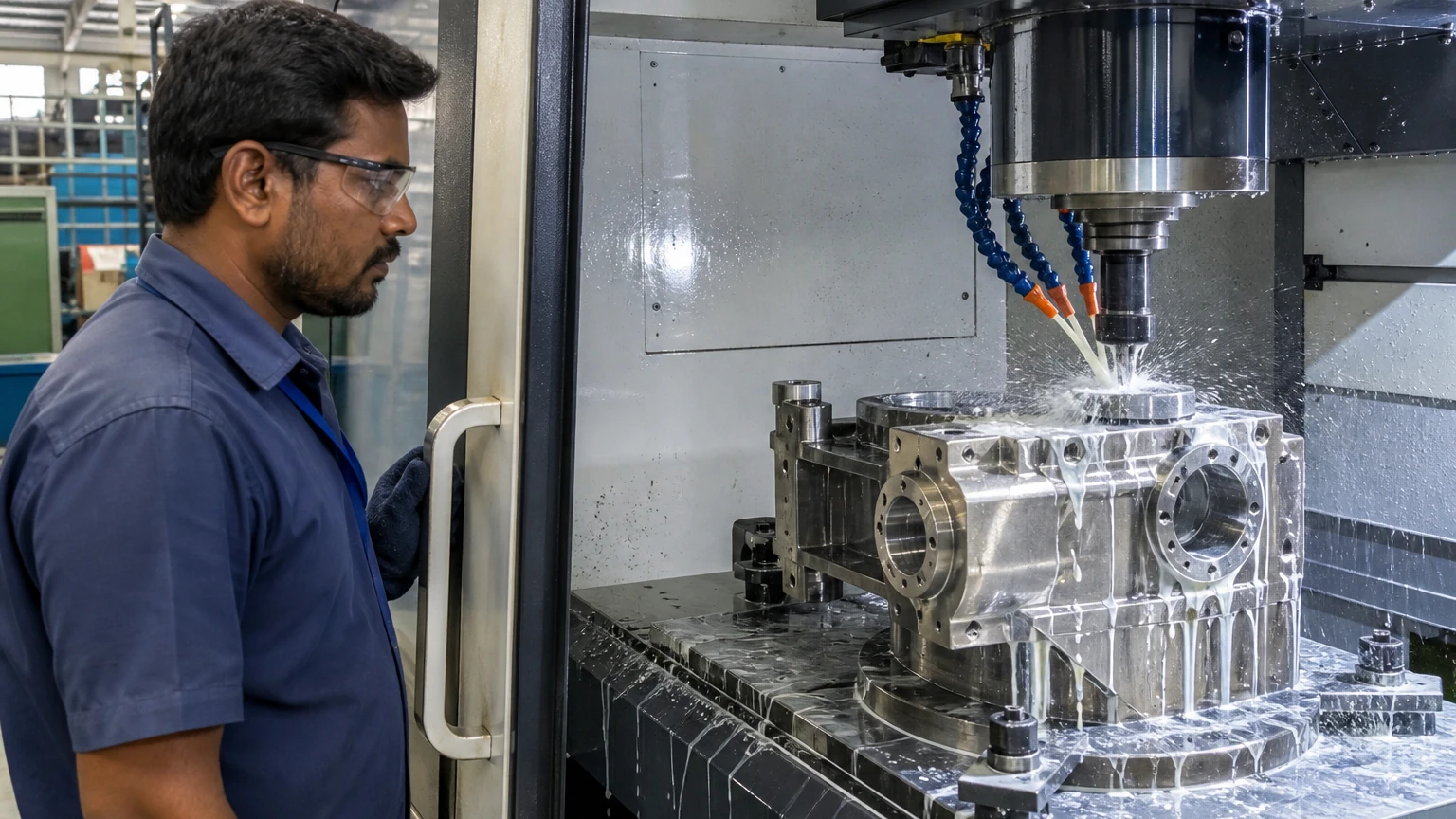
Premium OEM catalogues in this specialty lane emphasise drawing-controlled CNC machined steel, aluminium, brass, and stainless parts; finish-machined castings and forgings; precision shafts, gears, and bearing housings; machine-tool parts; and selected pump/valve components sold on prints rather than pure catalogue standards. Broad MRO assortments belong in the products post — link rather than reprint.
Materials typically include carbon and alloy steels, stainless 304/316, aluminium alloys, and brass/bronze with heat-treat and surface-finish callouts on the print.
Premium OEM product variants commonly exported from India
Swipe →
Data table — swipe horizontally on small screens
| Variant | Typical OEM use | HS planning | Premium driver |
|---|---|---|---|
| Multi-axis CNC housings / brackets | Machine builders, automation frames | Ch. 84/85 as filed | GD&T + FAIR |
| Precision shafts / gears / housings | Transmission and equipment OEM | 8483 | Concentricity, hardness, grind |
| Machine-tool parts | Machine tool builders and retrofit OEM | 8466 | Dimensional pack + material |
| Finish-machined castings/forgings | OEM structural and pressure-adjacent parts | 7325/7326 + machining | Cast integrity + machine stock control |
| Pump/valve precision parts | Equipment OEM fluid systems | 8413 / 8481 parts | Material + sealing surface finish |
| Fabricated + machined enclosures | Equipment OEM cabinets/brackets | As filed with CHA | Flatness, hardware, coating control |
Manufacturing Overview
Export Tip
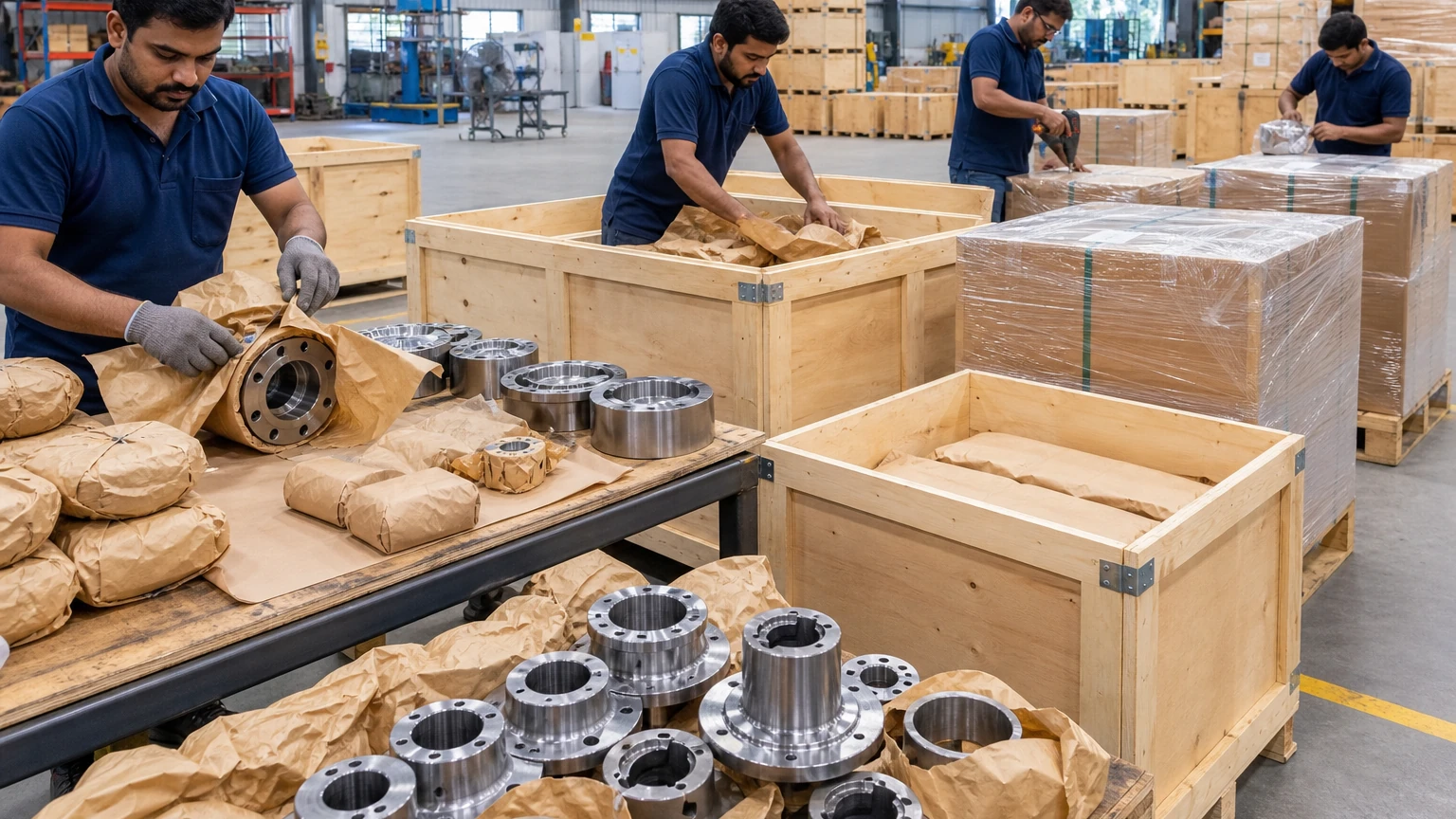
OEM-capable plants document process flow from material receipt through CNC, secondary ops (heat treat, grind, plating), CMM/FAIR, and export pack with VCI and revision labels. Capability studies and control plans matter when tolerances tighten below commercial catalogue norms.
Be honest about machine envelope, spindle capability, and inspection limits. Promising five-axis aerospace finishes from a three-axis job shop burns trust permanently. Partner heat-treat and plating vendors should appear in the process map when they affect critical characteristics.
For export OEM work, the shop-floor story must match the certificate story. If grinding or plating is subcontracted, say so and show how lot identity travels across vendors. Industrial OEM auditors increasingly ask for calibration stickers, program revision control, and evidence that the traveler on the running job matches the FAIR that was approved months earlier.
Altus Exports helps OEM buyers and Indian plants align that manufacturing narrative before tooling deposits are paid, reducing the risk that a beautiful sample comes from a process that cannot repeat at call-off volumes.
Manufacturing building blocks for ISO 9001 OEM CNC exports
Swipe →
Data table — swipe horizontally on small screens
| Stage | Typical controls | Buyer-visible output |
|---|---|---|
| Material intake | Heat/lot ID, MTC EN 10204 3.1 check | Material certificate pack |
| CNC machining | Program revision control, tool life, in-process gauges | Process traveler / router |
| Secondary ops | Heat-treat charts, plating thickness where specified | Op certificates linked to lot |
| Final inspection | CMM / functional gauges per FAIR plan | FAIR + dimensional report |
| Export pack | VCI, partitions, revision labels, photo pack | Packing list matching revision |
| QMS | ISO 9001 internal audits, CAPA | Certificate + scope page |
Precision CNC and ISO 9001 OEM Programme Pathways
This deep-dive owns the premium pathway: how industrial OEM programmes are scoped, quoted, first-articled, released, and sustained under ISO 9001 discipline with FAIR and inspection premiums. It is not a general EEPC membership tutorial and not a commodity MRO process guide.
Pathway A — Drawing-based CNC build-to-print
- Inputs: PDF/STEP + revision + ballooned print for FAIR.
- Gates: quote → tooling → FAIR approve → production → call-off.
- Risk: verbal revision changes without ECO paperwork.
The classic industrial OEM path starts with a controlled print (revision, GD&T, material, finish). Quote includes piece price, tooling amortisation, FAIR scope, and lead-time band. After PO, cut first articles, complete FAIR, obtain written approval, then release production against the locked revision. Any print change triggers re-quote and often partial re-FAIR.
HS filing follows the finished article as advised by CHA — do not invent a “CNC heading” that ignores the actual product.
Pathway B — Finish-machined casting or forging OEM
When the OEM supplies a casting/forging print plus machine stock allowances, control foundry or forge heat identity through machining. Premium failures often occur when cast porosity or forge folds appear after CNC — so process FMEAs and machining stock honesty belong in the first technical review.
MTC for base metal plus dimensional FAIR after machining are both mandatory on serious programmes.
Pathway C — ISO 9001 vendor approval for equipment OEMs
ISO 9001 OEM readiness checklist (directional)
Swipe →
Data table — swipe horizontally on small screens
| Element | Minimum evidence | Common gap |
|---|---|---|
| Certificate + scope | Valid ISO 9001 with machining/inspection in scope | Trading-only scope presented as manufacturing |
| Calibration | Gauge/CMM calibration register | Expired stickers on shop-floor tools |
| Traceability | Lot/heat to carton label link | Mixed heats in one carton |
| FAIR process | Template + example from prior OEM job | No ballooned print discipline |
| CAPA / NCR | Closed-loop records | Verbal fixes with no records |
| Packaging work instruction | VCI/partition standard photos | Ad-hoc packing per operator |
Many equipment OEMs run supplier questionnaires covering ISO 9001 scope, calibration lists, CMM assets, traceability, and packaging. Treat the questionnaire as a gated project with document owners. A certificate PDF without matching scope (for example, trading-only scope when machining is claimed) is a common rejection cause.
On-site or remote audits may follow. Prepare process travelers and live job evidence — theatre tours without running jobs fail sophisticated buyers.
FAIR / FAI and premium inspection stack
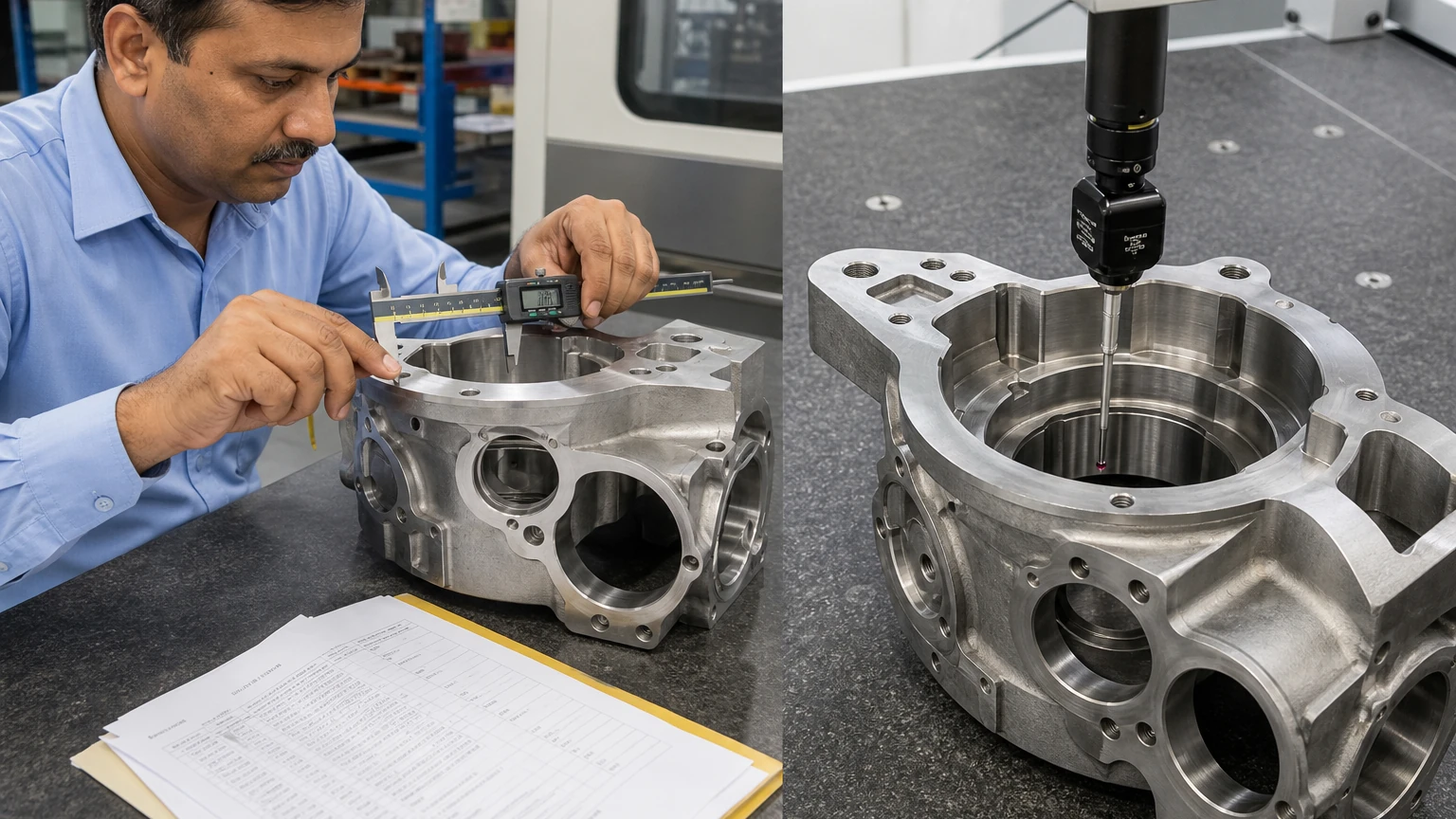
First Article Inspection Reports (FAIR/FAI) balloon characteristics from the print and record actuals with gauge method. Premium buyers may add CPK evidence on critical dimensions, third-party (SGS/BV/Intertek) witness points, and EN 10204 3.2 countersignature on material for regulated equipment contexts.
Price every extra inspection layer before metal is cut. Free “full PPAP-like” industrial packs without fee structures destroy margins and encourage endless document loops. Industrial OEM documentation can resemble automotive PPAP in spirit — keep language on industrial FAIR/control plans unless the buyer is truly automotive (then route to the auto cluster).
Call-off releases and revision control in serial production
After FAIR approval, OEM programmes usually shift to monthly or weekly call-offs against a blanket PO. The premium risk moves to revision creep and silent process changes. Enforce ECO discipline: no tool wear compensation that alters a critical characteristic without buyer notice when the quality agreement requires it.
Pack every release with lot genealogy, revision labels, and photos when the OEM contract demands them. That packaging of information is part of the product.
Pricing Analysis
Buyer Tip
OEM pricing is a stack: material, CNC conversion, secondary ops, tooling amortisation, FAIR/inspection, packing, and inland to named FOB port. Commodity USD/kg MRO bands misprice tight-tolerance work. Publish directional bands only with “verify on quote date” language and print-specific assumptions.
Directional FOB pricing structure for precision CNC OEM programmes
Swipe →
Data table — swipe horizontally on small screens
| Cost element | How it appears on quote | Notes |
|---|---|---|
| Material | USD/kg or piece material content | Grade and certificate depth drive spread |
| CNC conversion | Piece machining price | Cycle time, tolerance, fixturing |
| Secondary ops | Heat-treat / grind / plate line items | Do not bury critical ops |
| Tooling / fixtures | Amortised or separate tooling PO | Ownership and storage terms |
| FAIR / CMM | First-article and recurring inspection premium | Scope written explicitly |
| Third-party inspection | Per lot or per witness day | SGS/BV/Intertek as named |
| Packing + inland | VCI/crate + haulage to FOB port/ICD | Named port on every offer |
MOQ Analysis
Buyer Tip
OEM MOQs differ from MRO cartons. First articles may be 1–5 pieces plus spares; production releases follow call-off quantities that can be far below a full FCL until the programme matures. Tooling economics should be explained when annual volume is modest.
Directional MOQ tiers for precision CNC OEM programmes
Swipe →
Data table — swipe horizontally on small screens
| Stage | Typical quantity | Purpose |
|---|---|---|
| Prototype / soft sample | 1–10 pcs | Fit/function before FAIR formalisation |
| Formal first article | 1–5 pcs + FAIR pack | Dimensional approval against ballooned print |
| Pilot production | 50–500 pcs (SKU-dependent) | Process capability confidence |
| Serial call-off | Per release schedule (weekly/monthly) | OEM line feed |
| Consolidated FCL | Multi-SKU releases stuffed together | Freight efficiency for mature programmes |
Packaging Standards
Export Tip
Precision OEM packaging protects geometry and identity. VCI, partitioned cells, torque-marked caps where needed, and revision/lot labels are non-negotiable on premium programmes. Crate design for heavier housings should be agreed in FAIR phase, not improvised at stuffing.
Packaging standards for precision CNC OEM export lots
Swipe →
Data table — swipe horizontally on small screens
| Element | Practice | Why it matters |
|---|---|---|
| VCI / rust prevention | VCI paper/oil on machined surfaces | Ocean transit corrosion control |
| Cell partitions | One critical face protection per cell | Prevent nicks on sealing/GD&T faces |
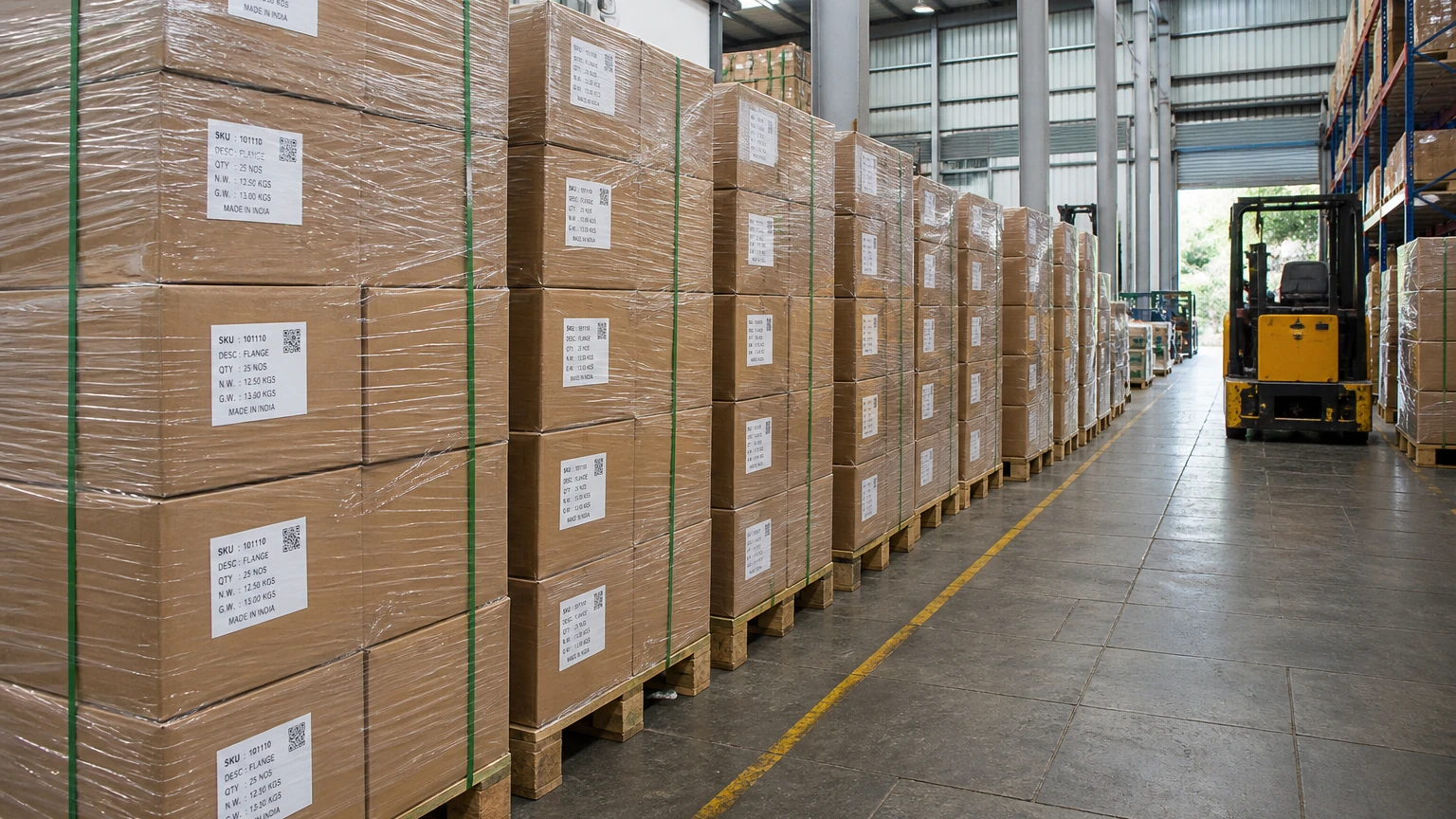
| Revision labels | Part + rev + lot + qty per carton | OEM receiving system match |
| Desiccant / liners | As humidity risk requires | Long sea legs to humid ports |
| Photo pack | Pack-out photos retained | Claim defence and OEM audits |
| ISPM-15 wood | Treated pallets/crates where used | Biosecurity at destination |
Container Loading Details
Export Tip
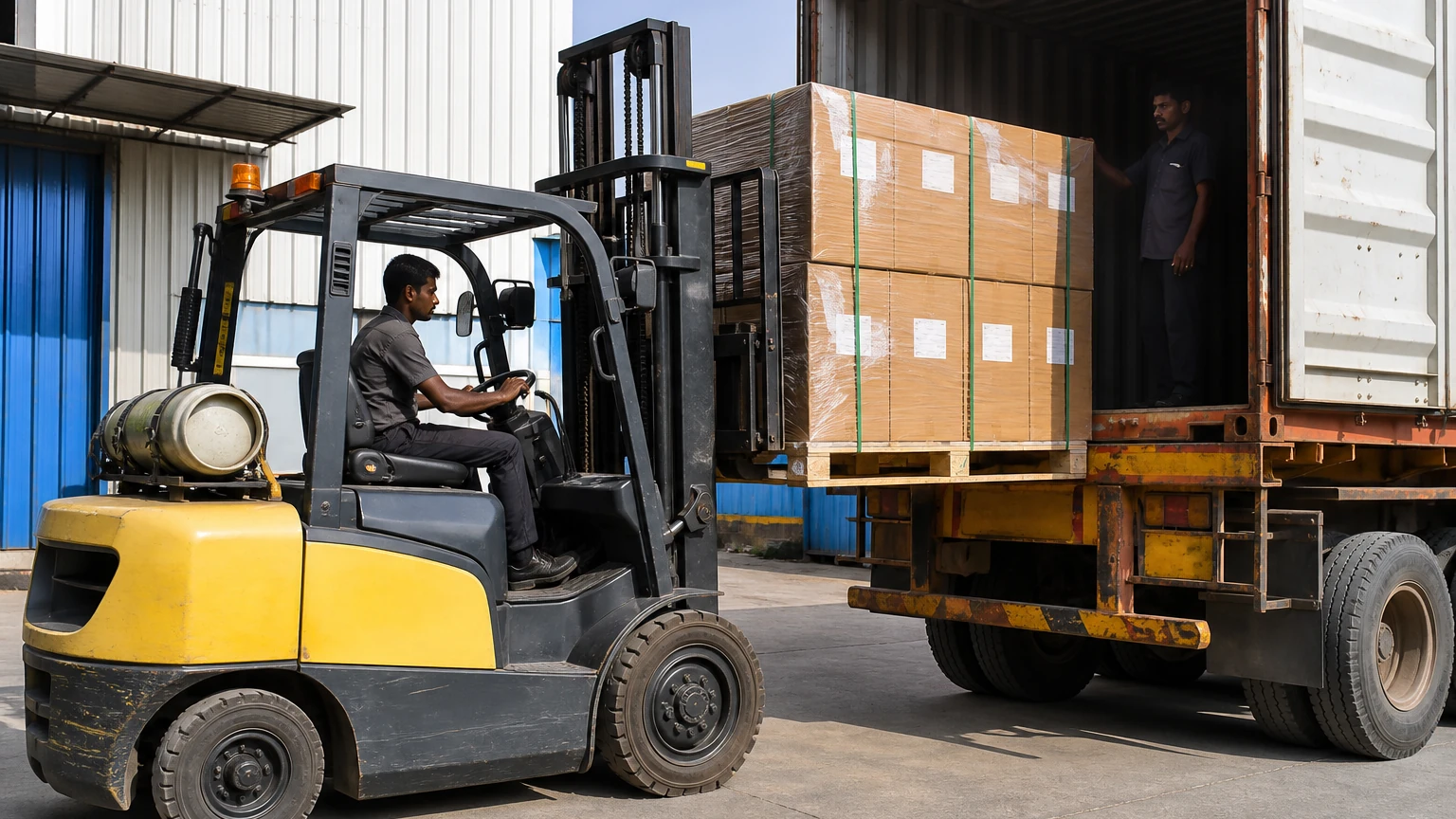
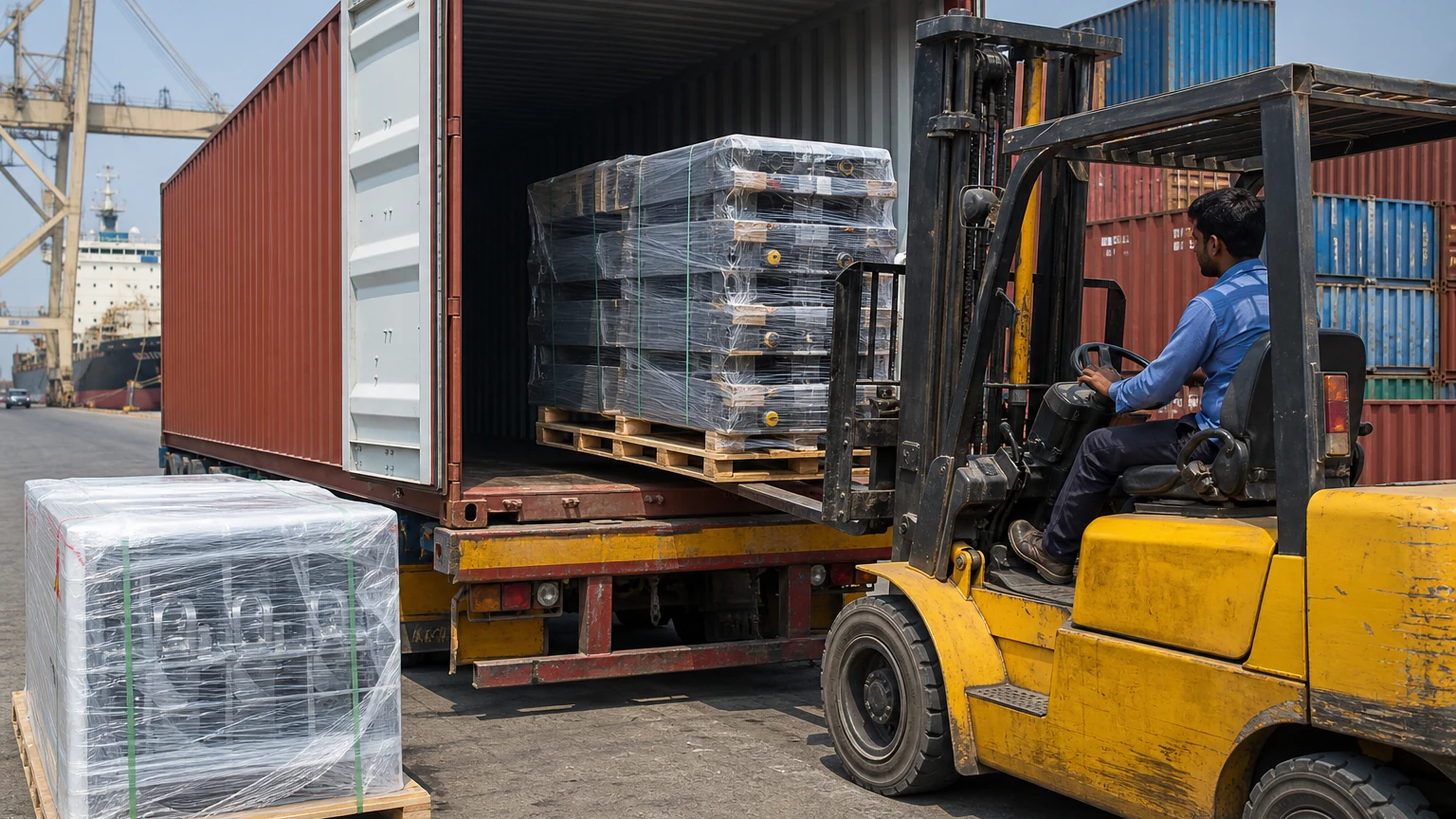
OEM programmes often ship LCL or partial pallets early, then consolidate to 20′/40′ HQ as call-offs grow. Dense housings can weight-limit containers; carton-heavy small CNC parts are volume-led. Confirm stow with forwarder and photograph seal numbers.
Directional loading guidance for OEM CNC programmes
Swipe →
Data table — swipe horizontally on small screens
| Mode | When to use | Planning note |
|---|---|---|
| Air cargo | FAIR pieces and urgent ECO replacements | Highest unit freight; fastest approval loop |
| LCL | Pilot lots below FCL economics | Longer dwell; protect against moisture |
| 20′ FCL | Dense OEM lots often book ~16–22 MT on 20′ (road/booking practice — confirm) | Confirm payload with forwarder |
| 40′ HQ | Carton-heavy multi-SKU call-offs | Volume planning and axle limits |
| ICD-linked FCL | Pune/NCR plant belts | ICD Pune or Tughlakabad consolidation |
Shipping Methods
Export Tip
- FAIR kits: air-express with document pack in the same consignment.
- Pilot lots: LCL or air-sea mix per urgency.
- Serial: FCL on call-off calendar with frozen revision.
- Incoterms: EXW, FOB, CFR/CIF; DAP/DDP selective.
- Lead times: samples 2–6 weeks; commercial 4–10 weeks; tooling+FAIR 8–20+ weeks.
Expect air for first articles, ocean for serial releases, and selective DAP/DDP only when duty and last-mile risk are priced for large OEM accounts. Named FOB ports — Nhava Sheva, Mundra, Chennai — plus ICD options keep landed-cost models honest.
OEM logistics planning should connect inspection hold points to booking dates. Do not book a vessel before FAIR approval if the contract freezes shipment on signed dimensional acceptance. Conversely, do not leave approved lots sitting unpackaged while commercial teams renegotiate piece price — corrosion and handling risk rise with dwell time in humid coastal warehouses.
When multiple call-offs share a container, reconcile packing lists to each release number and revision so the OEM receiving dock can put away without engineering tickets. That operational detail is often what converts a trial supplier into a preferred dual source.
Certifications
Compliance Notes
ISO 9001 is necessary but not sufficient. Pair it with MTC depth, FAIR, calibration evidence, EEPC/IEC credentials, and destination chemical compliance statements when coatings apply. API/ANSI/DIN/ASME matter when the OEM part sits inside pump/valve/pressure-equipment contexts — declare carefully.
Certification stack for precision CNC ISO 9001 OEM exports
Swipe →
Data table — swipe horizontally on small screens
| Certification / document | Role in OEM pathway | Notes |
|---|---|---|
| ISO 9001 | Plant QMS baseline | Scope must include machining/inspection |
| ISO 14001 | Environmental system where OEM requires | Optional unless specified |
| MTC EN 10204 3.1 / 3.2 | Material traceability | 3.2 when contract demands independent stamp |
| FAIR / dimensional report | First-article proof | Ballooned print discipline |
| EEPC RCMC + IEC | Export legitimacy | Attach to vendor packs |
| Third-party inspection | Release confidence | SGS/BV/Intertek hold points |
| REACH / RoHS | Coating/substance compliance | EU/UK and specified OEMs |
| Certificate of Origin | Customs origin | Preferential claims only when valid |
Buyer Requirements
Buyer Requirements
Industrial OEM buyers typically require NDA, print control protocol, supplier quality agreement, FAIR approval, capacity confirmation, and sometimes on-site audit. Premium industrial distributors acting for OEMs may relay the same requirements with less engineering staff — document clarity matters even more.
Typical industrial OEM buyer requirements vs commodity MRO
Swipe →
Data table — swipe horizontally on small screens
| Requirement | OEM precision programme | Commodity MRO |
|---|---|---|
| Drawing revision | Mandatory ECO control | Catalogue standard often enough |
| FAIR | Usually mandatory | Rare |
| ISO 9001 scope check | Detailed | Logo sometimes accepted |
| CMM evidence | Common on critical dims | Uncommon |
| Call-off scheduling | Weekly/monthly releases | Spot FCL orders |
| Payment | LC/TT with quality gates | TT against PI common |
Country-wise Opportunities
Market Snapshot
Premium CNC OEM opportunities concentrate where machine builders and equipment OEMs run formal vendor approval. Use Best Countries for Indian Engineering Component Exports for corridor ranking; this table focuses on OEM-fit signals.
Directional country opportunities for precision CNC ISO 9001 OEM exports
Swipe →
Data table — swipe horizontally on small screens
| Country | OEM opportunity signal | Standards focus | Notes |
|---|---|---|---|
| USA | Machine builders, packaging/automation OEMs | ASME/ANSI + FAIR culture | Strong EEPC-weighted corridor context |
| Germany | Equipment OEMs, industrial machinery | DIN/ISO GD&T, REACH | High documentation bar — high loyalty if met |
| UK | Specialty equipment OEM | ISO; CE/PED where pressure assemblies apply (UKCA is UK-only) | Clear revision control wins |
| Netherlands | EU purchasing hubs | REACH + ISO | Consolidation programmes |
| Australia | Mining/plant equipment OEM parts | MTC + dimensional | Long transit — pack critical |
| UAE | Equipment assembly and project OEM | Material + delivery reliability | Regional hub potential |
| Singapore | Precision regional OEM | Tight lead-time honesty | ASEAN gateway |
| Canada | Industrial OEM dual-source | FAIR + material certs | Align HTS/duty modelling |
Sourcing Checklist
Checklist
Run these gates before tooling PO or FAIR start. Importer verification detail expands in Source Engineering Components Directly from India; document fields expand in the documentation checklist.
Buyer Checklist
Exporter Checklist
Compliance Checklist
Common Buyer Mistakes
Common Mistakes Box
Future Market Trends
Key Statistics
Industrial OEM dual-sourcing will keep pulling precision CNC demand toward India when plants prove digital dimensional packs, stable call-off communication, and coating compliance. Expect more remote audit acceptance — but also more insistence on live process video and calibrated CMM evidence.
Automation and packaging machinery OEMs in USA and Europe remain attractive for Indian multi-axis suppliers. Margin pressure will rise on simple 2-axis turned parts; differentiation stays in GD&T-heavy prismatic work, finish-machined castings, and clean FAIR discipline.
AI-generated supplier spam will make human-verified ISO scope pages and EEPC credentials more valuable as trust filters, not less.
Challenges and Solutions
- Challenge: revision creep — Solution: ECO register and PI revision freeze.
- Challenge: FAIR delays — Solution: balloon plan agreed at quote stage.
- Challenge: sample-to-bulk drift — Solution: locked CNC program revision + gauge plan.
- Challenge: scope mismatch on ISO 9001 — Solution: send scope page, not logo.
- Challenge: underquoted inspection — Solution: line-item FAIR and third-party fees.
- Challenge: rust claims — Solution: VCI work instruction and photo pack.
Premium CNC OEM exports fail most often on revision chaos, hidden inspection costs, material substitutions, and pack damage — each solvable with written gates.
Expert Insight: Serial Discipline After First Article
Expert Insight Box
Winning FAIR approval is not the finish line. The second expert insight sits here because serial call-offs are where premium programmes earn or lose their margin.
Industrial OEMs remember the supplier who communicates a process risk early more than the supplier who hides a dimensional drift until the container arrives.
Sources
- EEPC India — Engineering Export Promotion Council
- EEPC India Engineering Trade Analysis March 2025 / FY25 PDF
- Economic Times — India engineering goods exports FY25 (USD 116.67B)
- IBEF — Engineering Goods Industry and Exports from India
- DGFT — Directorate General of Foreign Trade (IEC)
- DGCI&S / TradeStat — Indian trade statistics
- ICEGATE — Indian Customs EDI Gateway
- CBIC — Central Board of Indirect Taxes and Customs
- WITS — World Integrated Trade Solution (World Bank)
- UN Comtrade Database
- ITC Trade Map
- WCO — Harmonized System
- ISO — International Organization for Standardization
- ASME — valves, fittings, and pressure equipment standards
- API — American Petroleum Institute (pump/valve programmes)
- USITC Harmonized Tariff Schedule
- CBP — U.S. Customs and Border Protection
- EU TARIC — customs tariff database
- ECHA — REACH regulation
- European Commission — CE marking
- UK Government — UKCA marking
- SASO SABER — Saudi product conformity platform
- UAE MoIAT — standards and conformity (ECAS context)
- ICC — Incoterms rules
Directional EEPC, DGCI&S, trade, tariff, and compliance notes in this engineering components guide (precision-cnc-iso-9001-oem-engineering-component-export-opportunities) should be re-verified against primary sources before quoting buyers or filing export documents. Figures labelled EEPC FY25 refer to India’s fiscal year 2024-25 engineering goods export performance — a broader umbrella than precision/industrial components alone. Isolate your HS family (for example 8481, 8413, 8483, 7307, 7325/7326) before contracting volume.
Use the links below for government, standards, and trade-data verification. Confirm eight-digit HS lines with a licensed CHA at shipping-bill time. Model destination duties live (USITC HTS / CBP for the USA; TARIC for the EU). Container payload bands in this cluster are commercial road/booking practice, not fixed CSC legal capacities.
Conclusion
Precision CNC and ISO 9001 OEM engineering component exports from India are a capability business: drawing revision control, FAIR, material traceability, and honest inspection pricing convert industrial machine-builder RFQs into monthly call-offs. Commodity MRO tactics under-serve this lane.
Use Top Engineering Component Products Exported from India for family selection, Engineering Component Export Documentation Checklist for document fields, Best Countries for Indian Engineering Component Exports for corridors, and How to Export Engineering Components from India for end-to-end process.
Altus Exports supports inspection-heavy OEM programmes as a merchant exporter in India and global sourcing partner. Explore export products from India, product sourcing company India, engineering goods, industrial raw materials, and contact Altus Exports to scope a precision CNC pathway.