
Best Countries for Indian Leather Footwear Exports in 2026
By Saurabh Mittal, Founder, Altus Exports
A market-selection guide for Indian leather footwear exporters and international buyers — comparing the USA, UK, Germany, UAE, France, Netherlands, Australia, and Japan on demand strength, compliance requirements, and indicative pricing expectations.
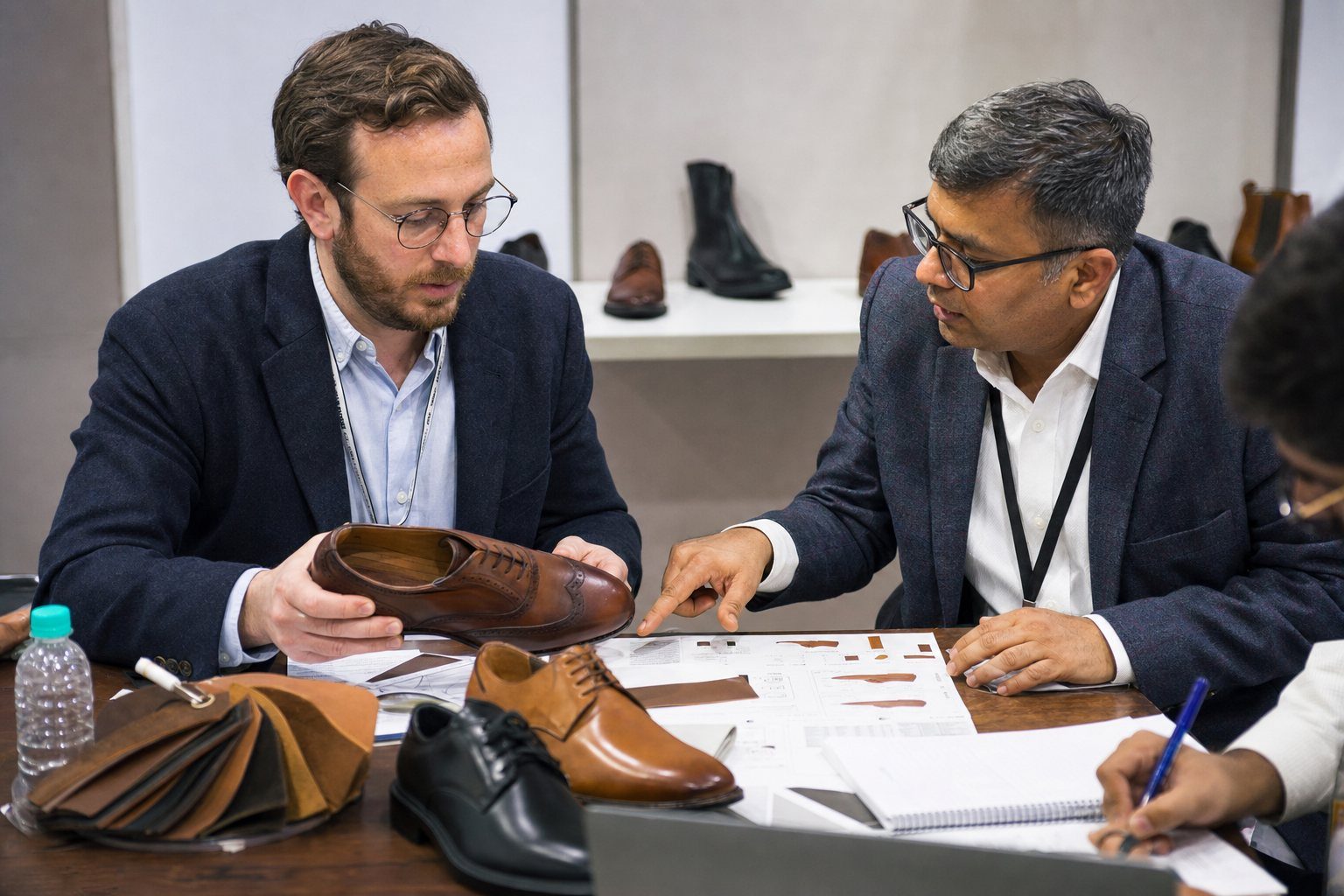
Choosing which country to prioritise is one of the highest-leverage decisions an Indian leather footwear exporter makes — and one of the most consequential sourcing decisions an international buyer makes when evaluating India as an origin.
The United States, United Kingdom, Germany, UAE, France, Netherlands, Australia, and Japan each import Indian leather footwear at meaningful volume, but they differ sharply in category preference, compliance burden, price sensitivity, and the depth of relationship required to win repeat business.
This guide is a market-selection and destination-ranking framework — not a product catalogue and not a CLE registration or operational how-to guide. If you need the step-by-step registration-to-shipment process, see How to Export Leather Footwear from India.
If you need the full category breakdown across men's formal, women's fashion, casual, boots, safety shoes, sandals, and children's footwear, see Top Leather Footwear Products Exported from India. For a category-specific view of what each country demands, see Most Demanded Indian Leather Footwear by Country, and for buyer-side sourcing guidance see Source Leather Footwear Directly from India.
Altus Exports works as a merchant exporter in India and global sourcing partner coordinating leather footwear shipments to each of the markets covered below — this guide distills that market-level experience into a practical comparison for exporters choosing where to focus and for buyers deciding whether India fits their sourcing strategy.
Key Takeaways
Summary Box
Executive Summary
Summary Box
Not every export market rewards the same production process, price point, or compliance investment, and Indian leather footwear exporters who apply a single generic strategy across every destination consistently underperform those who build a market-specific entry plan.
This guide ranks and compares the eight destinations that matter most for Indian leather footwear today — the United States, United Kingdom, Germany, UAE, France, Netherlands, Australia, and Japan — on demand strength, compliance burden, price sensitivity, and the relationship depth each market expects before scaling beyond a trial order.
The comparison covers market size and trade statistics, indicative pricing and MOQ by destination, the certification set each market enforces, and a country-by-country entry strategy section that forms the practical core of this guide. Two Expert Insight sections capture recurring patterns we see across exporters choosing where to focus first, and how to expand into a second market without diluting quality in the first.
Whether you are an established exporter deciding where to invest your next certification budget, or a buyer trying to understand whether Indian leather footwear fits your specific market's compliance and price expectations, this guide is designed to be read market by market — jump to the destination relevant to your decision, then use the comparison tables to validate that choice against the alternatives.
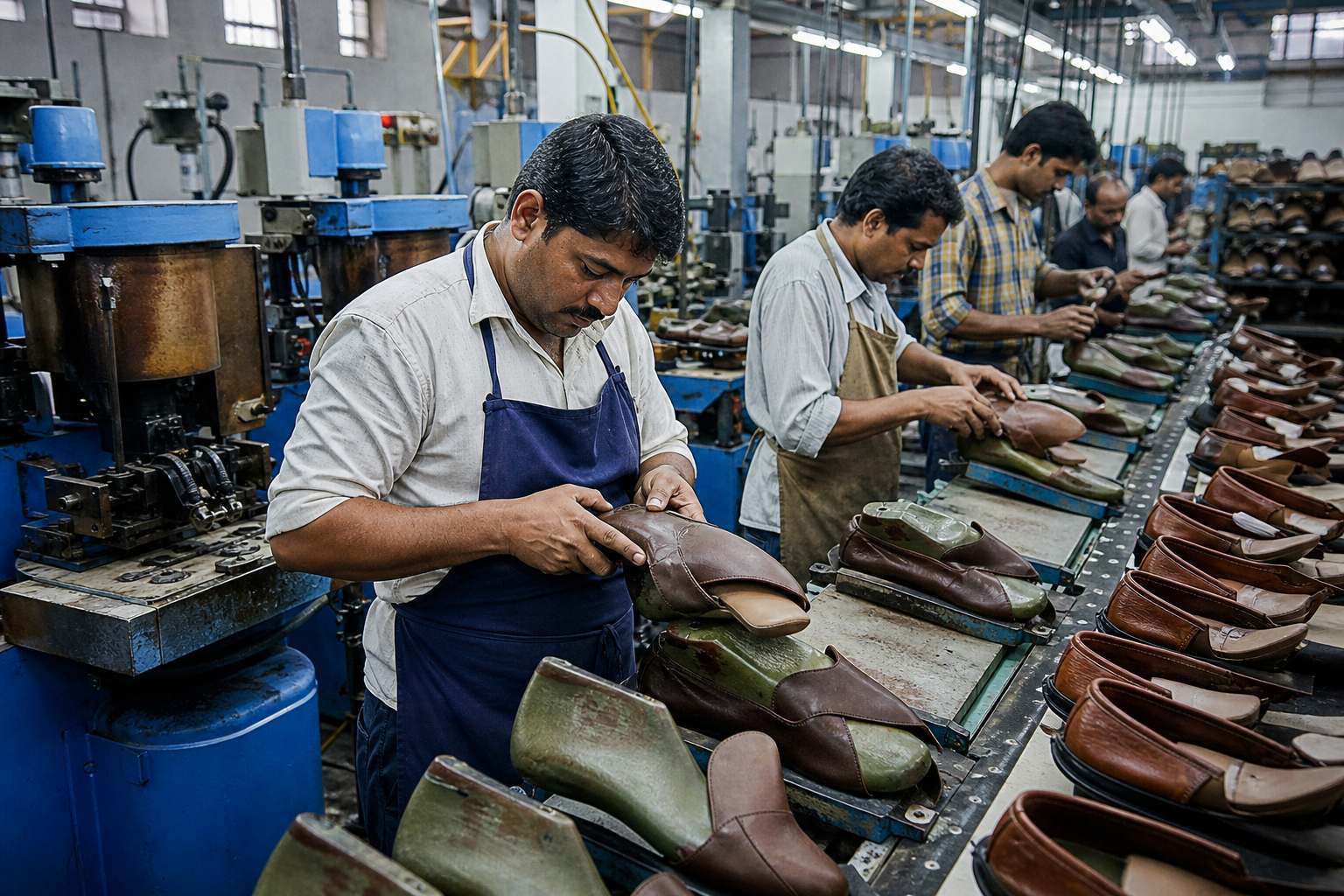
Market Size & Industry Overview
Key Statistics
India's leather footwear exports reach dozens of countries, but demand concentrates heavily in a set of mature import markets with established retail and wholesale distribution infrastructure for footwear: North America, the European Union, the United Kingdom, the Middle East, and a smaller but growing set of Asia-Pacific markets including Australia and Japan. Each market's import behaviour is shaped by its retail structure (department store versus e-commerce-led), its regulatory regime (REACH in the EU/UK, CPSIA in the US for children's lines), and its price sensitivity relative to competing origin countries.
Market selection should follow product category and compliance capability, not headline market size alone. A market with enormous overall footwear import volume may be a poor fit if your factory cannot yet meet its specific compliance documentation standard, while a smaller but well-matched market can deliver faster, more profitable repeat business. The Council for Leather Exports (CLE), tracked through leatherindia.org, publishes periodic country-level export statistics that new exporters should review alongside the qualitative guidance in this article.
Market Comparison Snapshot (Indicative)
Swipe →
Data table — swipe horizontally on small screens
| Market | Demand Strength | Compliance Burden | Price Sensitivity | Relationship Depth Needed |
|---|---|---|---|---|
| USA | Very high | Moderate (CPSIA for children's) | Moderate to high | Moderate |
| Germany | High | High (REACH, LWG expectations) | Moderate (premium-rewarding) | High |
| UK | High | Moderate-high (REACH-equivalent) | Moderate to high | Moderate-high |
| UAE | Moderate-high | Low-moderate | High | Moderate |
| France | Moderate | High (fashion quality audits) | Low (quality-rewarding) | High |
| Netherlands | Moderate | High (EU-wide REACH) | High (trading hub) | Moderate |
| Australia | Moderate | Moderate (biosecurity) | Moderate | Moderate |
| Japan | Moderate | High (quality documentation) | Low (premium-rewarding) | Very high |
Export Statistics
Key Statistics
According to CLE / DGCI&S, India's footwear, leather and leather products exports were about US$ 4.75 billion in FY 2025-26, of which leather footwear alone was about US$ 1.95 billion. Country shares published by CLE are for the total leather & footwear basket (not leather footwear alone). The United States, Germany, the UK, Italy, the Netherlands, Spain, and France are the largest destinations by value — exporters should treat those CLE country rankings as directional market-selection evidence and confirm HS 6403-specific shipments in Trade Map or customs data before setting volume targets.
CLE / DGCI&S FY 2025-26 destination shares — total leather & footwear exports (not leather footwear-only)
Swipe →
Data table — swipe horizontally on small screens
| Market / Region | CLE FY 2025-26 share of total leather & footwear exports* | Category Strength | Trend |
|---|---|---|---|
| United States | 20.54% | Casual, boots, children's, private label | Largest single destination by sector value |
| Germany | 10.97% | Formal, casual, safety footwear | Compliance-driven; REACH / LWG expectations |
| United Kingdom | 8.84% | Broad category demand | Stable major Anglo market |
| Italy | 6.22% | Fashion and premium leather footwear | Design-forward EU buyer base |
| Netherlands | 6.11% | Mixed EU redistribution | Hub role for wider Europe |
| Spain / France | 5.47% / 4.65% | Fashion and lifestyle footwear | Style-led EU retail |
| UAE | 2.99% | Formal, casual, sandals | Direct Gulf retail + re-export role |
Import Statistics
Key Statistics
Reading each market's import data — volume, average unit value, and origin-country mix — reveals how India competes against other supplying countries in that specific market. A market where Indian footwear captures a small but rapidly growing share of import volume is a different opportunity than a market where India already holds a mature, large share; the sourcing and pricing strategy should differ accordingly.
Market Entry Scoring Matrix for Indian Leather Footwear Exporters (Indicative)
Swipe →
Data table — swipe horizontally on small screens
| Market | Entry Difficulty | First-Year Focus | Scale Signal | De-prioritise If… |
|---|---|---|---|---|
| United States | Medium | Private-label casual / boots with clear size runs | Repeat PO + chargeback-free receiving | You lack carton labelling discipline for retail DCs |
| Germany | High | REACH-ready formal or safety with Cr(VI) evidence | Buyer asks for LWG tannery ID early | You cannot fund lab tests before the first trial |
| United Kingdom | Medium–high | Broad casual/formal with UK chemical evidence | Wholesale reorder within one season | Your lasts do not grade cleanly across UK size language |
| UAE | Medium | Men's formal + sandals tuned for Gulf climate | Orders that include re-export timing windows | You only quote EU-style premium packs with no value tier |
| France | High | Women's fashion finish and colourway discipline | Brand QC feedback loops, not one-off trucks | Your factory cannot hold Pantone/swatch references |
| Netherlands | Medium | Volume-consistent FCL for EU redistribution | Rotterdam hub buyers booking repeat FCL slots | You chase boutique MOQs that break container economics |
| Australia | Medium–high | Casual/boots with biosecurity-aware packing | Importer-distributor listing after first clean entry | Wood packing / fumigation rules are unfamiliar |
| Japan | High | Low-defect formal/casual with long sample cycles | Multi-season supplier retention | You need fast PO velocity more than premium retention |
Product Categories and Variants
Summary Box
Product-market fit varies meaningfully across the markets in this guide — see Top Leather Footwear Products Exported from India for the full category breakdown. In brief: the USA and UK favour casual and boots categories at scale; Germany and France reward men's formal and women's fashion footwear with strong compliance documentation; UAE and Southern European markets favour sandals and open footwear given climate; Germany's safety footwear demand stands apart as the most compliance-intensive category across any market covered here.
Manufacturing Overview
Export Tip
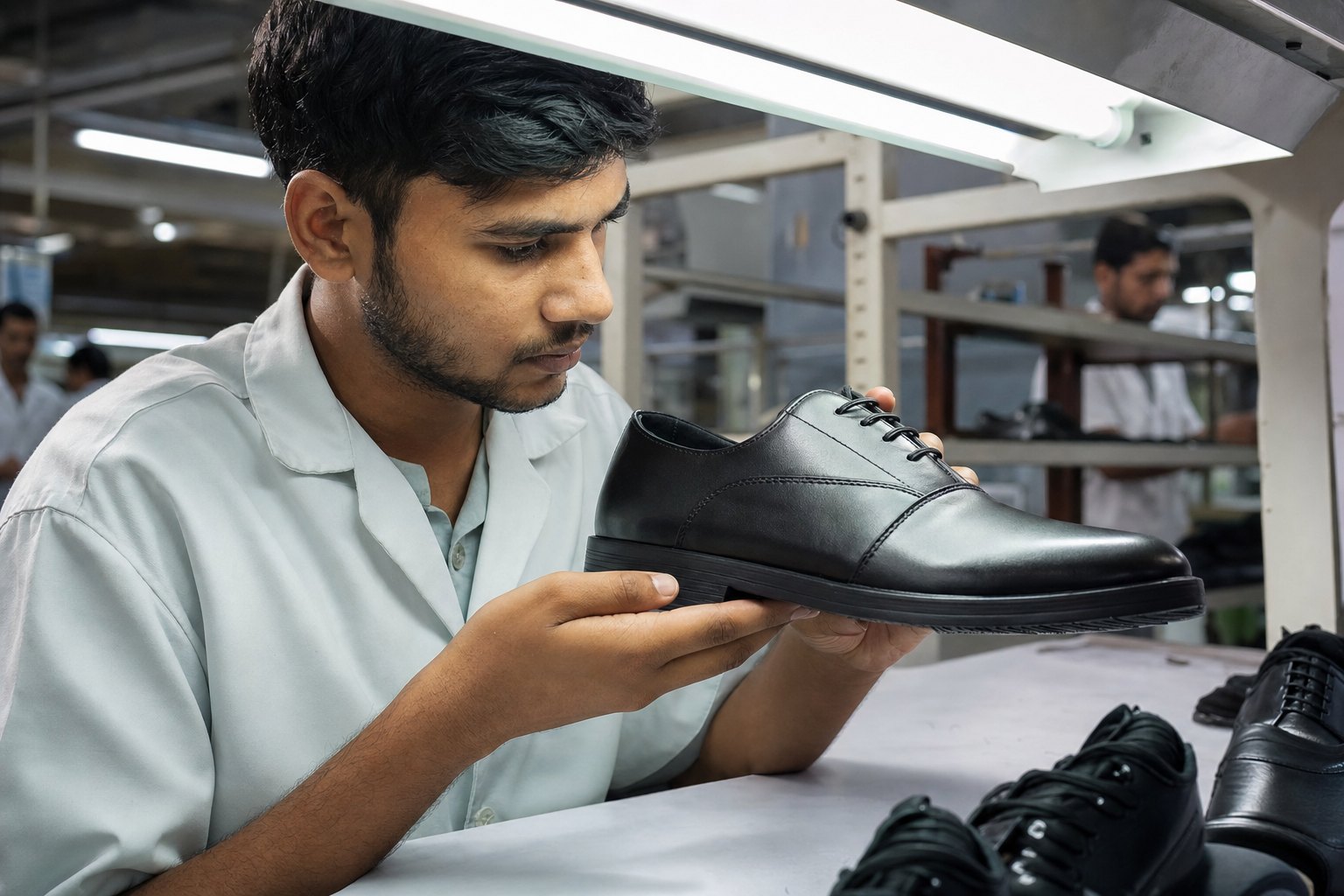
Manufacturing considerations shift by target market more than by production process itself — the core stages of cutting, stitching, lasting, sole attachment, and finishing are identical whether the destination is Germany or the UAE. What changes is which cluster and which construction standard a manufacturer must meet: Tamil Nadu's export belt carries the deepest experience meeting EU compliance-heavy programmes, while Agra's high-volume production suits the price-sensitive scale demand from the USA and UAE most efficiently.
Exporters targeting Germany, France, or Japan should confirm a manufacturer's LWG tannery relationships and chromium VI testing discipline before committing production capacity, since these markets audit construction and compliance quality more closely than price-led markets like the UAE. Exporters targeting the USA should confirm CPSIA-ready processes specifically for any children's line, since general adult footwear construction standards do not automatically satisfy that requirement.
Pricing Analysis
Buyer Tip
Price expectations differ by market as much as by product category — a price that clears easily in the USA or UAE may be uncompetitive in Germany once compliance and quality-audit costs are factored in, and a price positioned for the German market may leave margin on the table in a more price-sensitive Gulf market. The ranges below are indicative FOB planning figures by market tier, not fixed quotes.
Indicative FOB Price Positioning by Market (USD/pair, Men's/Women's Footwear Blend)
Swipe →
Data table — swipe horizontally on small screens
| Market | Indicative FOB Range | Price Sensitivity | Compliance Cost Add-On |
|---|---|---|---|
| USA | $6–$20 | Moderate to high | Low-moderate (CPSIA for children's only) |
| Germany | $8–$24 | Moderate (premium-rewarding) | Moderate-high (REACH, LWG) |
| UK | $7–$20 | Moderate to high | Moderate (REACH-equivalent) |
| UAE | $5–$16 | High | Low |
| France | $8–$22 | Low (quality-rewarding) | Moderate-high (quality audits) |
| Netherlands | $6–$18 | High (trading hub) | Moderate (EU-wide REACH) |
| Australia | $7–$20 | Moderate | Low-moderate (biosecurity) |
| Japan | $9–$26 | Low (premium-rewarding) | High (documentation and consistency) |
MOQ Analysis
Buyer Tip
Trial order size and expected lead time also vary by market maturity and buyer type. Markets with dense wholesale distribution infrastructure, like the USA and UK, often accept smaller trial orders from a new supplier than markets where buyers move straight to larger retail-chain commitments once a relationship is confirmed.
Indicative Trial MOQ and Lead Time by Market
Swipe →
Data table — swipe horizontally on small screens
| Market | Typical Trial MOQ (per style) | Sample Lead Time | Bulk Lead Time |
|---|---|---|---|
| USA | 300–600 pairs | 2–3 weeks | 45–75 days |
| Germany | 300–500 pairs | 3–4 weeks (incl. compliance testing) | 60–90 days |
| UK | 300–600 pairs | 2–3 weeks | 45–75 days |
| UAE | 500–1,000 pairs | 2–3 weeks | 45–60 days |
| France | 300–500 pairs | 3–4 weeks | 60–90 days |
| Netherlands | 500–1,000 pairs | 2–3 weeks | 45–75 days |
| Australia | 300–600 pairs | 2–4 weeks | 60–90 days |
| Japan | 300–500 pairs | 3–5 weeks (incl. QC audit) | 75–90 days |
Packaging Standards
Export Tip
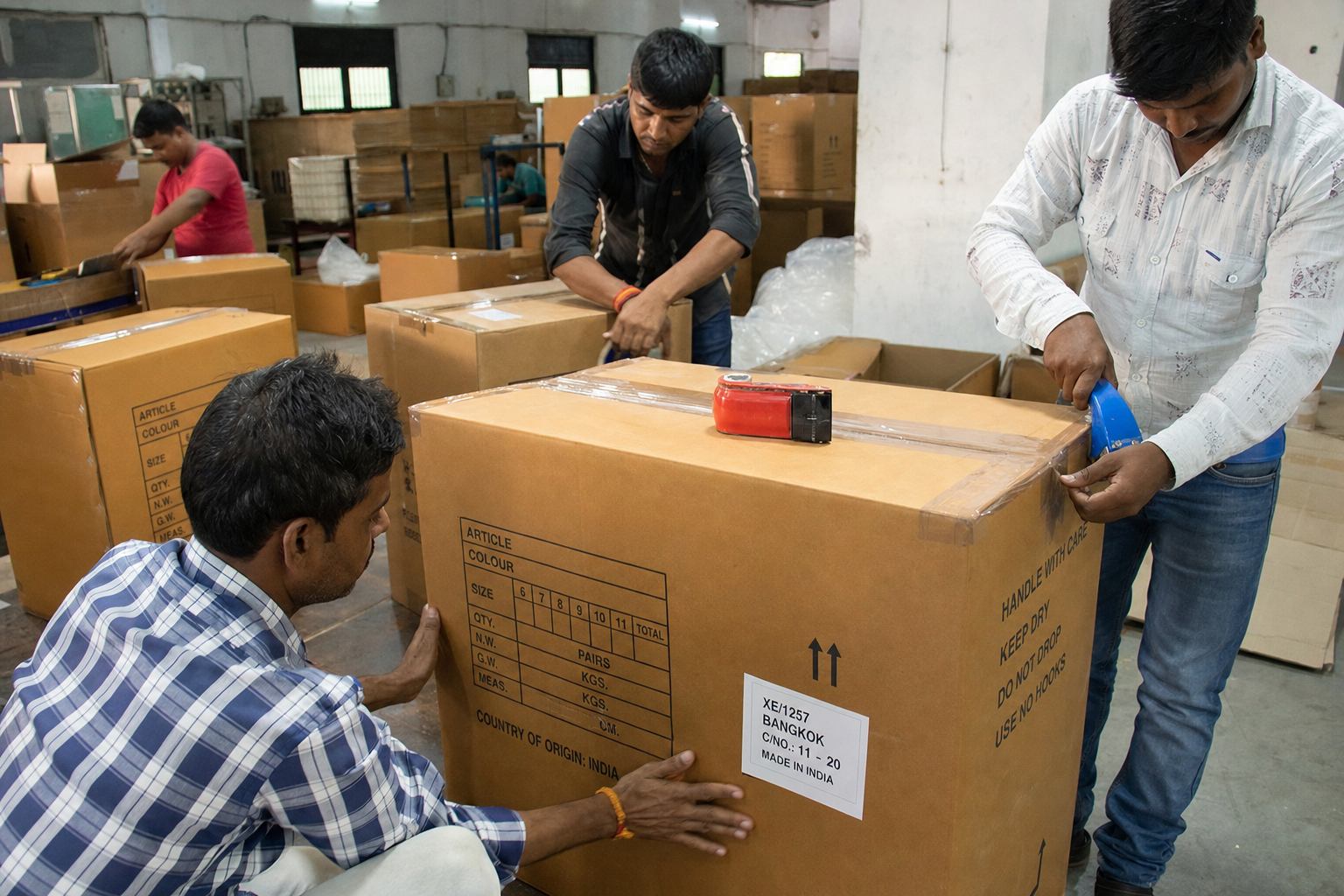
Packaging and labelling requirements shift by destination market as much as by product category. EU and UK retail buyers typically expect barcoded, retail-ready boxes with destination-language care labels; US wholesale and e-commerce private-label buyers often specify brand-specific hang tags and polybag options for value lines; and Gulf and Australian buyers tend to accept simpler export carton formats without retail-ready branding for wholesale distribution.
Indicative Packaging and Labelling Emphasis by Market
Swipe →
Data table — swipe horizontally on small screens
| Market | Packaging Expectation | Labelling Note |
|---|---|---|
| USA | Retail-ready box or polybag depending on channel | Country-of-origin labelling and general CPSC-aligned labelling for children's lines |
| Germany / EU | Retail-ready box, brand-specific hang tags common | Multilingual care labels; chromium VI compliance reference where required |
| UK | Retail-ready box, similar to EU expectation | UK-specific labelling rules confirmed separately from EU post-Brexit |
| UAE | Standard export carton, wholesale-oriented | Simpler labelling; growing retail-ready expectations from regional chains |
| Australia | Standard export carton | Biosecurity-compliant packaging materials mandatory |
| Japan | Retail-ready box, meticulous presentation standard | Precise size and material labelling; high consistency expectation across cartons |
Container Loading Details
Export Tip
Container loading benchmarks are largely category-driven rather than market-driven, but destination market does influence which categories dominate a given container — a USA-bound container mixing casual and boots loads differently than a UAE-bound container weighted toward sandals and men's formal footwear. All figures below are indicative planning benchmarks only.
Indicative Container Loading by Typical Market Category Mix (40ft HC, Pairs)
Swipe →
Data table — swipe horizontally on small screens
| Market | Typical Category Mix | Approx. Pairs per 40ft HC | Notes |
|---|---|---|---|
| USA / UK | Casual, boots, women's fashion blend | ~8,500–11,000 pairs | Mixed carton sizes given broad category demand |
| Germany / France | Men's formal, women's fashion, safety footwear | ~7,500–10,000 pairs | Bulkier safety footwear cartons reduce average count |
| UAE / Gulf | Sandals, men's formal | ~10,000–13,000 pairs | Compact sandal cartons raise average pair count |
| Australia / Japan | Boots, casual, quality fashion | ~8,000–10,500 pairs | Moderate carton bulk; biosecurity packaging in Australia adds minor volume |
Shipping Methods
Export Tip
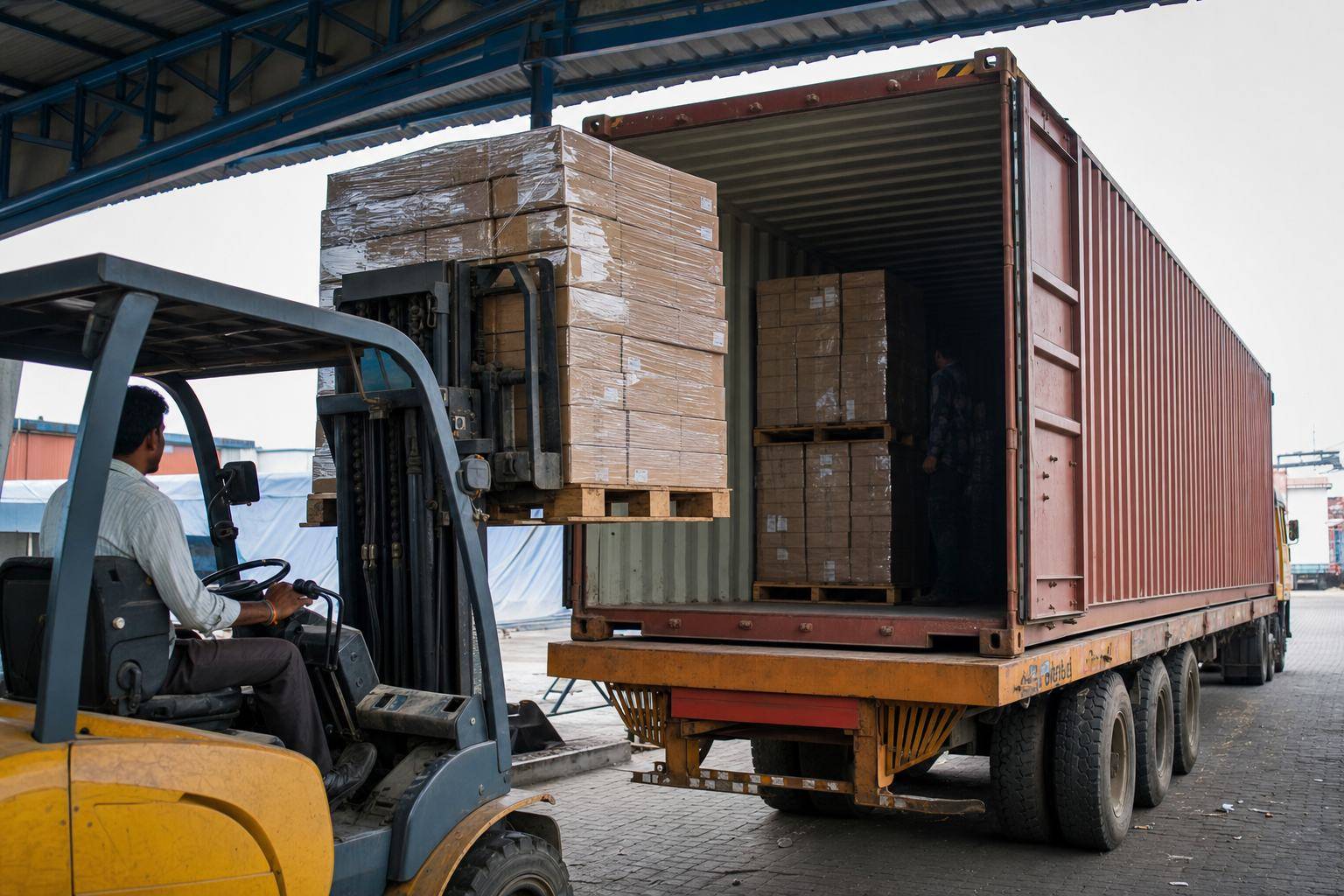
Sea freight FCL is the standard shipping method to every market in this guide, with routing choice driven by manufacturing cluster location: Mundra and Nhava Sheva serve USA, UK, and European lanes most directly from the Agra, Kanpur, and Delhi-NCR clusters; Chennai and Tuticorin serve the Tamil Nadu export belt on the same lanes and are also well positioned for UAE and Gulf routing; and Kolkata serves eastern-cluster shipments where relevant.
FOB remains the dominant Incoterm across all eight markets, though CIF appears more frequently in UAE and Netherlands trade given the re-export and hub role both markets play, and Japanese buyers occasionally request DDP-style arrangements when working with exporters who have established import-clearance familiarity in Japan. Air freight is used for sample shipments and urgent replenishment across all markets, with Germany, France, and Japan requiring the longest sample lead time given added compliance testing time.
Certifications
Compliance Notes
Certification requirements are the single biggest source of market-to-market variation in this guide, and exporters should confirm the exact certificate set for their target market before committing production capacity — not after a buyer requests documentation mid-production.
Certification and Compliance Emphasis by Market
Swipe →
Data table — swipe horizontally on small screens
| Market | Mandatory Compliance | Commonly Requested (Optional) |
|---|---|---|
| USA | General customs entry docs; CPSIA for children's lines | Third-party pre-shipment inspection for large retail programmes |
| Germany | REACH chromium VI test reports | LWG tannery certification; sustainability audit documentation |
| UK | REACH-equivalent UK chemical compliance | LWG tannery certification for premium retail chains |
| UAE | Standard commercial documentation | Quality documentation increasingly requested by modern regional chains |
| France | Chemical compliance documentation | Brand-level quality audits before scaling beyond trial orders |
| Netherlands | EU-wide REACH compliance | Volume-consistency track record valued by trading-hub importers |
| Australia | Biosecurity-compliant packaging; standard customs docs | Quality documentation for safety footwear entering industrial channels |
| Japan | Strict quality/consistency documentation | Defect-rate transparency reports across shipments |
Buyer Requirements
Buyer Requirements
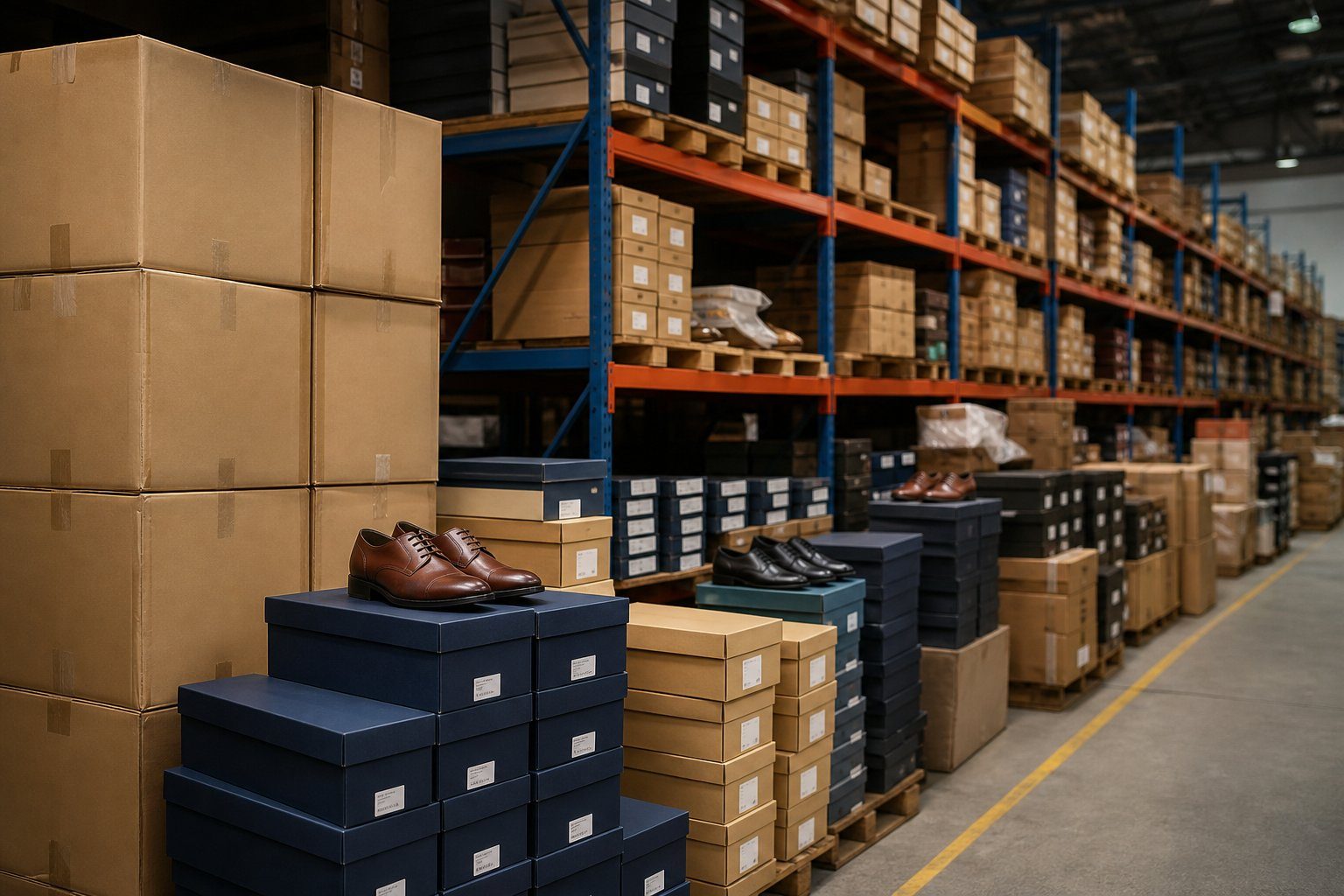
- Ask for shipment records specifically to your destination market, not just general export volume across all markets.
- Confirm the exporter's certification set matches your market — chromium VI for the EU/UK, CPSIA for the USA (children's lines), biosecurity-compliant packaging for Australia.
- For Germany, France, and Japan specifically, request evidence of prior quality-audit outcomes with comparable buyers.
- Clarify how the exporter handles market-specific labelling, retail-ready packaging, and any language requirements for your market.
- Size your trial order to validate readiness for your specific market's compliance bar, not just general product quality.
International buyers evaluating an Indian exporter's readiness for their specific market typically want proof of market-specific experience, not just general leather footwear capability. First-time buyers in each market should confirm the following before committing to a trial order.
Country-wise Opportunities
Market Snapshot
This section is the core of the guide — a market-by-market ranking and entry strategy for each of the eight destinations that matter most for Indian leather footwear exporters and buyers today. Treat this as a starting framework; actual entry strategy should be refined against your specific product category, target retail channel, and compliance readiness.
United States
The largest single destination for Indian leather footwear by value, the USA offers scale across casual, boots, and a fast-growing e-commerce private-label channel. Wholesale distributors and department store buyers remain the traditional entry point, but direct-to-consumer private-label programmes increasingly source directly from Indian exporters, particularly for casual and boot categories where design cycles are shorter than in fashion-forward European markets.
CPSIA compliance is the defining regulatory requirement for any children's footwear line entering the US, and general product liability exposure means buyers scrutinise construction quality and testing documentation closely, even outside the children's category.
Germany
Germany is Europe's most compliance-heavy but premium-rewarding market for Indian leather footwear, particularly men's formal footwear, women's fashion lines, and safety footwear for the workwear sector. REACH chromium VI documentation and increasingly LWG-certified tannery sourcing are checked closely before a new supplier relationship advances past trial order stage.
German buyers value long-term supplier consistency over price competitiveness alone — exporters who demonstrate documentation discipline and repeatable quality across several seasons often see order volumes grow steadily rather than through large single commitments.
United Kingdom
The UK sustains steady demand across men's, women's, and children's categories through established retail chains and wholesale distributors. Post-Brexit chemical compliance rules mirror REACH closely but should be confirmed separately rather than assumed identical, since UK-specific requirements can diverge from EU rules over time.
Consistent quality across repeat orders matters more to UK buyers than headline unit price — a supplier who delivers the same standard on order five as on order one earns priority allocation during peak retail seasons.
UAE
UAE functions as both a direct market — particularly strong for sandals and men's formal footwear given the regional climate and dress norms — and a re-export hub for the wider Gulf Cooperation Council region. Relationships with established regional distributors and traders accelerate market entry more effectively than direct-to-retail approaches for most first-time exporters.
Compliance documentation expectations are lighter than the EU or US in absolute terms, but are rising steadily as regional retail chains modernise their supplier qualification processes.
France
French fashion retail and department store demand for women's leather footwear rewards finish quality and colour-matching precision more than commodity pricing. Brand-level quality audits are common before a supplier relationship scales beyond trial orders, and exporters should expect closer scrutiny of stitching detail and leather grain consistency than in more volume-driven markets.
Netherlands
Rotterdam's role as a major European trading and logistics hub means Dutch importers often buy for onward EU redistribution rather than domestic retail alone. Volume consistency and reliable documentation are valued more than category storytelling — Dutch buyers frequently manage multiple supplier relationships across Europe and expect Indian exporters to match the operational discipline of competing origins.
Australia
Australian retail chains and importer-distributors sustain demand across casual, boots, and safety footwear categories. Strict biosecurity rules apply to packaging materials, and standard customs documentation requirements are generally less onerous than the EU's chemical compliance regime, making Australia an accessible secondary market for exporters already compliant with core export documentation standards.
Japan
Japan is a premium, quality-conscious market with comparatively low price sensitivity but very high consistency expectations. Men's formal footwear, women's fashion lines, and quality casual footwear perform best, and buyers expect meticulous documentation, defect-rate transparency, and construction consistency across every shipment — deviations that other markets might tolerate can end a Japanese buyer relationship.
Saudi Arabia and the Wider Gulf
Beyond UAE, Saudi Arabia and other Gulf Cooperation Council markets sustain independent demand for men's formal footwear and sandals, often served through UAE-based regional distributors rather than direct shipment. SASO/GSO conformity requirements apply to some regulated product categories and should be confirmed for the specific footwear type before committing to direct Saudi-bound shipments.
Italy
Italy imports Indian leather footwear both for direct retail and as inputs into Italy's own finishing and branding operations, particularly for women's fashion footwear where Italian buyers sometimes import semi-finished uppers or components for local completion. Competition from Italy's own strong domestic footwear manufacturing base means Indian exporters typically compete on cost-efficient volume rather than design leadership in this market.
Expert Insight: Match the Market to Your Compliance Bar
Expert Insight Box
We consistently see exporters over-index on market size and under-index on compliance fit when choosing where to focus. A mid-size market where your factory's chromium VI and construction-quality standards already clear the bar will produce faster, more profitable repeat business than a larger market where every shipment requires scrambling to meet a compliance standard your production process was not built for.
Sourcing Checklist
Checklist
Buyer Checklist
Checklist
Exporter Checklist
Checklist
Compliance Checklist
Checklist
Compliance Notes
Common Buyer Mistakes
Common Mistakes Box
Exporters and buyers new to a specific market often underestimate that market's distinctive compliance and relationship requirements. A structured, market-aware approach avoids the most common and most expensive mistakes in cross-border footwear trade.
Expert Insight: Expanding Without Diluting Quality
Expert Insight Box
The exporters who build durable multi-market businesses from India typically start with one well-matched market, prove consistency over several shipments, then expand deliberately — adding a second market only once documentation workflows and quality processes for the first are running smoothly without constant intervention. Spreading thin across several markets from day one is the fastest way to disappoint buyers in all of them, and it is a pattern we see repeat itself across almost every category, not just leather footwear.
Future Market Trends
Key Statistics
Three market-level trends are shaping Indian leather footwear exports over the coming years: the EU and UK continuing to raise the compliance bar with expanding traceability and sustainability documentation expectations, which will widen the gap between compliance-ready and compliance-lagging exporters; the USA's e-commerce private-label channel continuing to grow faster than traditional wholesale distribution, rewarding exporters who can turn samples around quickly; and UAE's re-export role for the wider Gulf strengthening further as regional retail chains modernise their supplier qualification processes.
Exporters who track these shifts market by market — rather than assuming a static, one-time market ranking — will be better positioned to reallocate certification investment and production capacity toward the destinations growing fastest in their specific product category.
Conclusion
- Operational process: see How to Export Leather Footwear from India.
- Product depth: see Top Leather Footwear Products Exported from India.
- Country-specific product demand: Most Demanded Indian Leather Footwear by Country.
- Buyer-side sourcing: Source Leather Footwear Directly from India and Find International Buyers for Leather Footwear.
- Sustainability and premium markets: Sustainable and Premium Leather Footwear Export Opportunities.
- Explore merchant exporter, export products from India, and global sourcing partner partnership models for leather footwear.
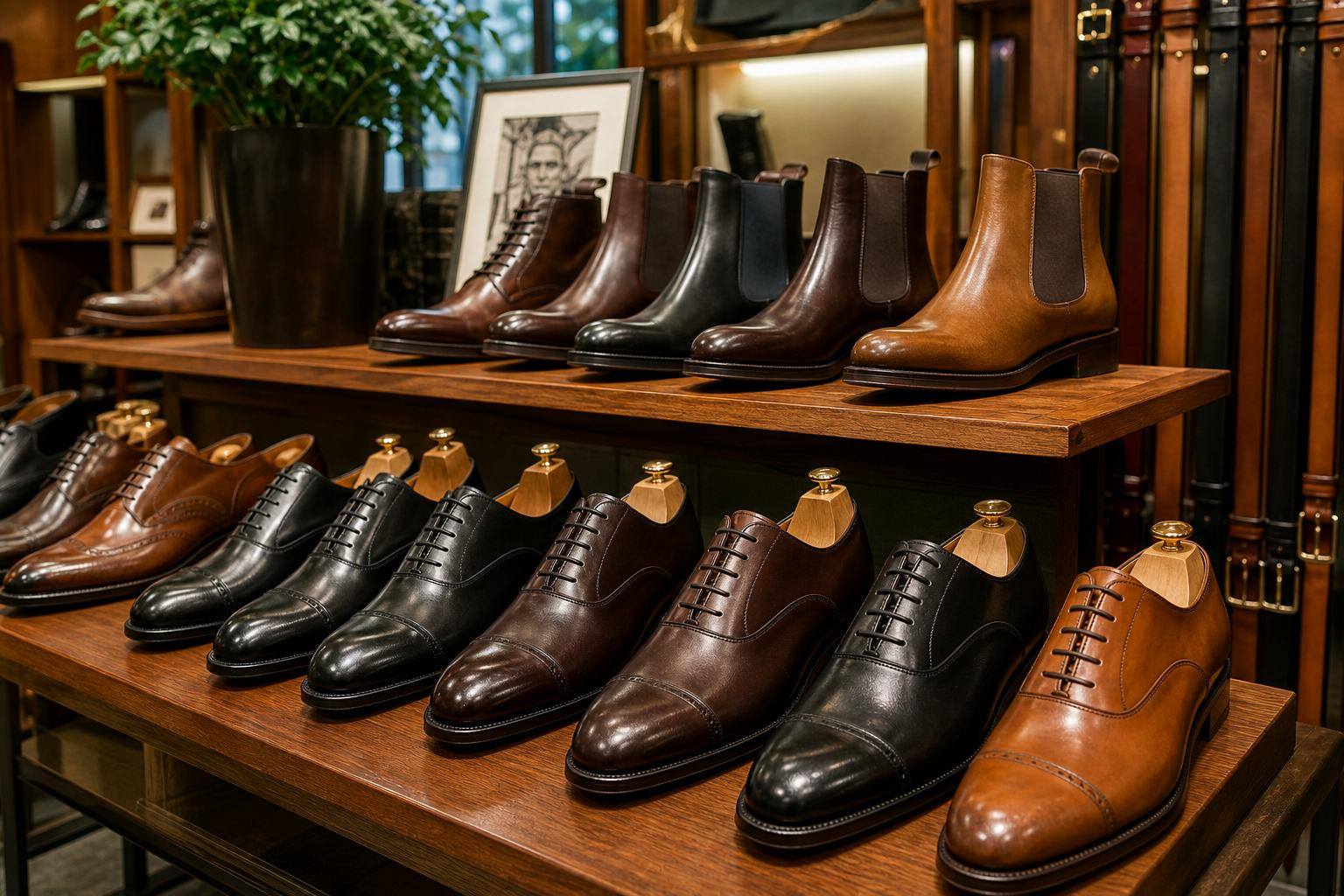
Market selection is a strategic decision that should be made deliberately, not by default. The United States offers scale, Germany and France reward compliance discipline and finish quality with premium positioning, the UK and Netherlands value consistency across established distribution channels, the UAE offers accessible regional entry with re-export upside, and Australia and Japan reward exporters who can meet their respective biosecurity and quality-documentation standards. Exporters who match their production and compliance capability to the right market — rather than chasing every market at once — build faster, more durable export businesses.
Altus Exports supports Indian leather footwear exporters and international buyers as a merchant exporter in India and global sourcing partner, coordinating market-specific compliance, documentation, and shipment under one accountable relationship. Explore our export products from India and product sourcing company services, or connect with us through find manufacturers in India to plan your next export market.