
Most Demanded Indian Leather Footwear Styles by Country (2026)
By Saurabh Mittal, Founder, Altus Exports
A country-wise demand guide to Indian leather footwear — which styles, lasts, constructions, and certifications buyers in the USA, UK, Germany, UAE, France, Netherlands, Australia, and Japan actually order, written for importers, distributors, wholesalers, and retail chains.
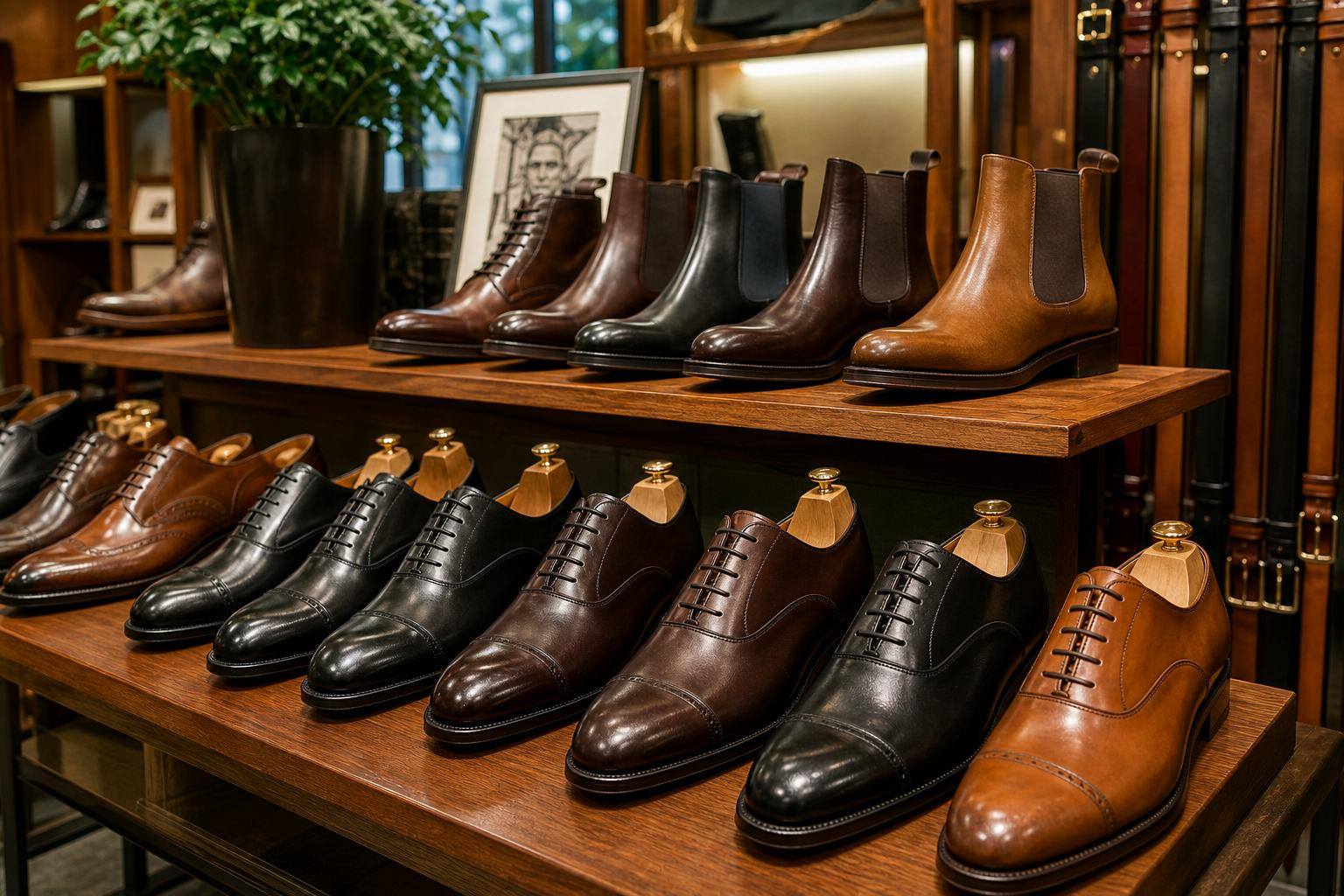
Not every Indian leather footwear style sells in every market, and treating them as interchangeable is one of the most expensive mistakes an international buyer can make. A men's formal Oxford that moves briskly through a UK department store programme may sit unsold in a Gulf retail chain that actually wants leather sandals and slip-on loafers.
A safety boot certified to a US standard may fail a German distributor's compliance review because the wrong test standard was applied.
This guide maps what buyers in the USA, UK, Germany, UAE, France, Netherlands, Australia, and Japan actually order from India — by style, last shape, construction type, and the certifications each market expects — so you can brief your factory correctly the first time instead of discovering the mismatch after a container has sailed.
This is a demand-mapping guide, not a market-entry strategy ranking and not a step-by-step export process guide — for those, see Best Countries for Indian Leather Footwear Exports and How to Export Leather Footwear from India.
Demand profiles shift with season, retail format, and price tier within each country, so treat this as a starting framework to refine with your own market data — not a substitute for checking your specific destination-market import statistics and your own retail channel's buying pattern.
For the buyer-side verification process behind any of these programmes, see How to Source Leather Footwear Directly from India.
Key Takeaways
Summary Box
Executive Summary
Summary Box
India's leather footwear export base is broad enough to serve almost every category — men's and women's formal shoes, casual footwear, boots, sandals, and safety footwear — but broad capability is not the same as broad demand.
Buyers who source the wrong style for their market's actual preference end up with markdown inventory, size-fit complaints, or compliance rejections regardless of how well the product was manufactured.
This guide organises demand by destination market first, then by style and construction within each, because that is the order in which the decision actually needs to be made.
Knowing that India exports strong men's formal footwear is useful; knowing that your specific UK retail programme expects Goodyear-welted construction while your UAE distributor expects competitively priced cemented-construction sandals is what actually shapes a correct purchase order.
Use the country sections below to brief your factory with the right style, last, construction, and certification combination from the first RFQ — rather than discovering the mismatch after a fit sample or, worse, a full container arrives.
Market Size & Industry Overview
Key Statistics
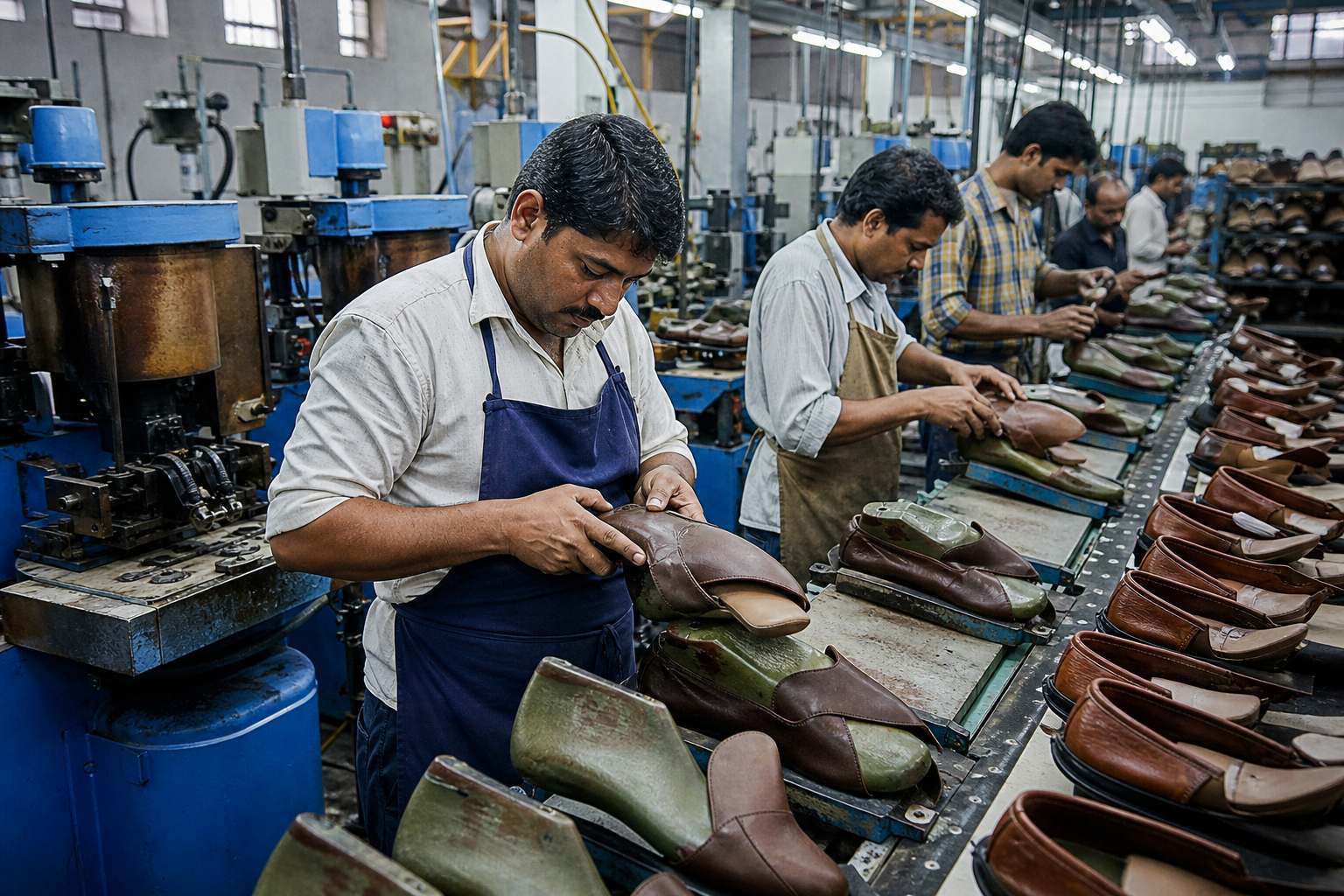
India's leather footwear manufacturing clusters each carry a natural specialisation that shapes which destination markets they serve most efficiently. Agra and the Ambur-Ranipet belt in Tamil Nadu are historically strongest in men's formal and casual leather footwear bound for the USA, UK, and EU. Kanpur adds institutional and defence-adjacent footwear experience alongside commercial export lines. Chennai's port proximity and CLE headquarters presence support efficient shipping to a wide range of destinations. Kolkata serves East Asian and domestic-adjacent demand alongside export lines, and Jalandhar contributes leather uppers and components into the broader footwear chain alongside its stronger sports-shoe specialisation.
Buyers benefit from matching their sourcing cluster to their destination market's demand profile rather than choosing a factory on price alone. A buyer targeting the German compliance-conscious segment gains more from a factory with LWG-certified tannery relationships and REACH documentation experience than from a factory offering a marginally lower FOB with no prior EU shipping history.
This clustering effect compounds over time. A factory that has shipped several seasons of Goodyear-welted formal shoes to UK department stores develops institutional muscle memory around that specific construction and buyer expectation set — pattern grading, welt stitching consistency, and finish standards that a factory new to the category has to build from scratch. Buyers entering a new destination market for the first time often get to a reliable first shipment faster by sourcing from a cluster with existing experience in that exact combination of style and destination, rather than asking a factory to build unfamiliar capability from a standing start.
Manufacturing Cluster Fit by Destination Market Tendency
Swipe →
Data table — swipe horizontally on small screens
| Cluster | Typical Strength | Best-Fit Destination Tendency |
|---|---|---|
| Agra | Men's/women's casual and formal leather shoes | USA, UK, EU value-to-mid retail programmes |
| Kanpur | Formal footwear, institutional/defence-adjacent lines | UK, EU, domestic-adjacent export programmes |
| Ambur / Ranipet | Men's formal and safety leather footwear | USA, Germany, EU compliance-conscious programmes |
| Chennai | Finished leather, formal and casual footwear, port access | Broad destination reach via efficient logistics |
| Kolkata | Leather footwear and leather goods | East Asia and domestic-adjacent export lines |
| Jalandhar | Leather uppers, components, sports-adjacent footwear | Component supply into broader footwear export chain |
Export Statistics
Key Statistics
India's leather footwear exports concentrate heavily in a small number of mature destination markets. The USA, UK, and Germany have historically accounted for the largest shares of Indian leather footwear exports by value, with the broader EU, UAE, France, Netherlands, Australia, and Japan forming an important secondary tier that together represents a meaningful share of remaining export value.
Reading this concentration correctly matters for buyers: it means India's factories have the deepest, most repeatable production experience in the styles these top markets demand — men's and women's formal and casual leather footwear in particular — and comparatively less repeat experience in niche categories that see thinner demand from any single country. A buyer entering a smaller or less-established destination market for Indian leather footwear should expect a slightly longer qualification runway than a buyer sourcing formal shoes for the UK or USA, simply because fewer factories have deep repeat experience shipping to that specific market.
Indicative Export Value Concentration by Destination (Illustrative)
Swipe →
Data table — swipe horizontally on small screens
| Destination Market | Approx. Share of Leather Footwear Export Value | Dominant Category |
|---|---|---|
| USA | ~20–25% | Men's/women's formal and casual, plus safety footwear |
| UK | ~10–15% | Men's formal leather shoes |
| Germany | ~10–12% | Formal and casual, compliance-conscious segment |
| UAE | ~6–9% | Leather sandals and men's formal footwear |
| France | ~5–7% | Mid-to-premium formal and casual |
| Netherlands | ~4–6% | Mixed multi-category via Rotterdam re-export |
| Australia | ~3–5% | Casual and boots |
| Japan | ~3–5% | Formal and casual with high construction consistency |
Import Statistics
Key Statistics
Before committing to a style and construction combination, cross-check your assumptions against your own market's HS 6403 import data from ITC Trade Map or your national customs statistics. If Indian leather sandals show a rising import share in your market while formal shoes show a flat or declining share, that is a signal worth acting on before you brief a factory for the wrong category.
Unit value per pair reported in destination import data is also a useful sanity check against factory quotations. A quoted FOB significantly below the average reported unit value for your category and destination combination should trigger additional construction and leather-grade verification rather than being treated as a straightforward negotiating win. Import data is also useful for timing market entry decisions — a steadily rising Indian share of a specific footwear category over several consecutive years suggests an established, low-friction trade lane with reasonably mature documentation and logistics norms already in place.
Using Destination Import Data to Validate Style Demand
Swipe →
Data table — swipe horizontally on small screens
| Data Signal | What It Tells a Buyer | Action |
|---|---|---|
| Rising Indian share in a specific HS 6403 sub-heading | Growing category acceptance among buyers similar to you | Reasonable to expand sourcing in that specific category |
| Falling share versus Vietnam/China in your category | Possible price, construction, or lead-time disadvantage | Benchmark factory construction quality and lead time against competitors |
| Unit value per pair below category average | Possible grade mismatch or thinner leather | Request additional material and construction verification |
| Strong seasonal import spikes (autumn boots, summer sandals) | Category is seasonally driven in your market | Align production and shipping schedule to seasonal cutoff dates |
Product Categories and Variants
Summary Box
Before mapping demand by country, align on the style taxonomy buyers and factories both use. Getting this vocabulary right in your RFQ is what makes country-specific demand actionable rather than theoretical.
Men's Formal Leather Footwear
Oxfords, derbies, brogues, and loafers — the largest single demand category across the USA, UK, Germany, and UAE, differentiated mainly by construction type and price tier rather than style itself.
Women's Fashion and Casual Leather Footwear
Pumps, flats, and ankle boots with a wider range of finishes — patent, suede, printed leather — and faster seasonal turnaround than the men's formal category, strongest in the USA, UK, and France.
Leather Boots
Chelsea boots, fashion ankle boots, and work boots, with the strongest seasonal demand in the UK, Germany, Netherlands, and Australia ahead of autumn/winter retail cycles.
Leather Sandals
The dominant style for the UAE and a strong secondary category for Australia and parts of Southeast Asia, valued for competitive per-pair FOB and high container-loading efficiency.
Safety and Industrial Leather Footwear
Steel-toe and composite-toe boots and shoes, strongest in the USA (ASTM F2413) and Germany/EU (EN ISO 20345), tied to industrial distribution rather than fashion retail cycles.
Last Shape and Fit — A Frequently Overlooked Variable
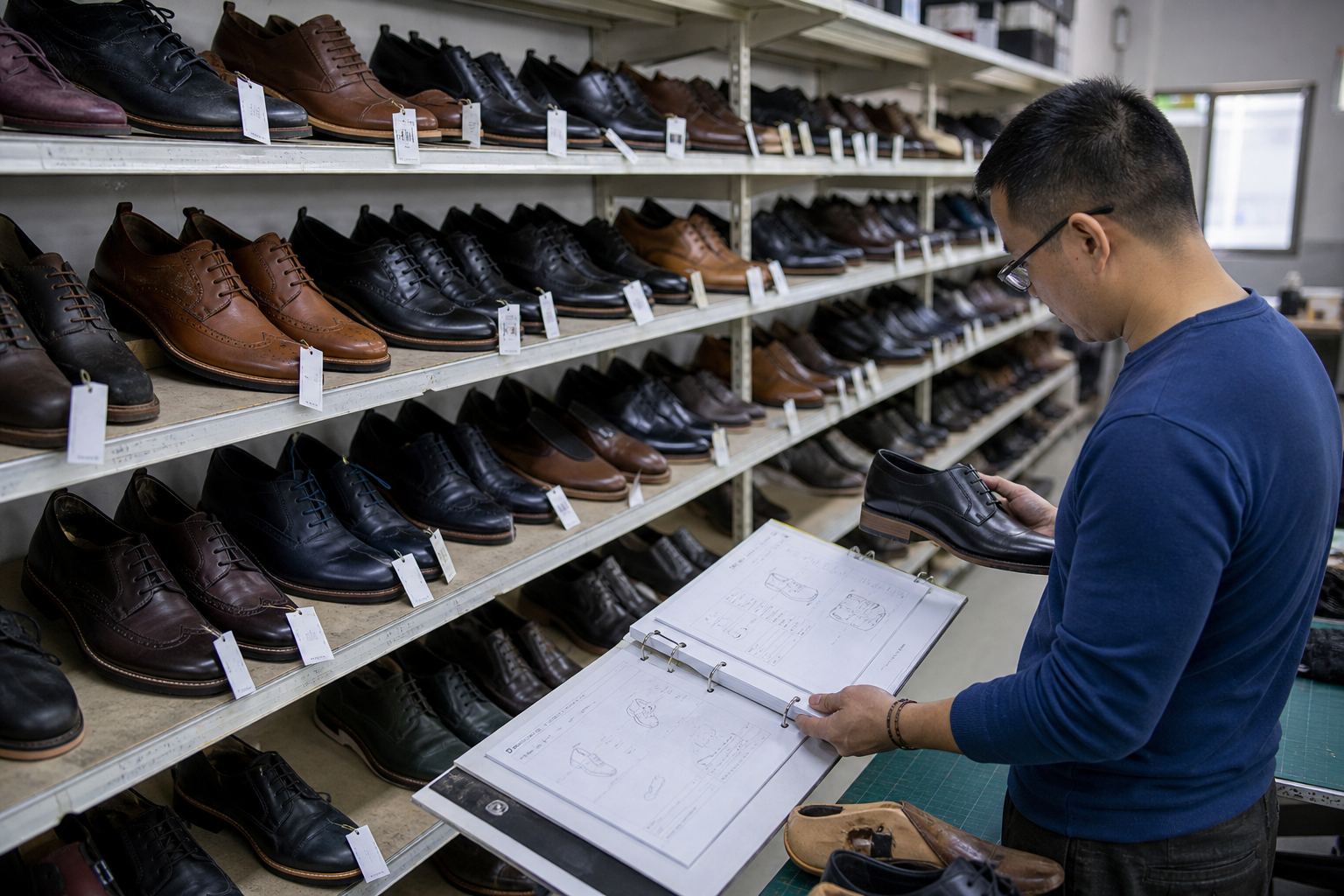
Beyond style and construction, last shape — the three-dimensional form a shoe is built around — shapes fit comfort and return rates in ways buyers often underweight relative to style choice. UK and European buyers tend to expect a narrower, more tailored last for formal categories, while US mid-market buyers often favour a slightly wider, more accommodating last for broader comfort across a mass-market customer base. Confirm last width and toe shape preferences alongside style in your specification sheet, particularly if you are entering a new destination market for the first time.
Manufacturing Overview
Export Tip
Matching manufacturing capability to destination demand is as much about process fit as raw production capacity. A factory equipped for high-volume cemented construction can retool for Goodyear welting, but rarely at the same cost or lead time — and a buyer who assumes any factory can deliver any construction type on request usually discovers the gap only after a disappointing sample.
The clusters best matched to premium, construction-heavy demand (UK formal welted shoes, German compliance-conscious lines) tend to be smaller-batch, higher-skill operations concentrated in Agra and the Ambur-Ranipet belt, where generations of hand-finishing and welting skill are harder to replicate quickly elsewhere in the country. The clusters best matched to high-volume, price-sensitive demand (UAE sandals, US value-tier casual) often run larger, more automated cementing and moulding lines optimised for throughput over construction complexity.
Buyers should ask a prospective factory directly which construction types and destination markets make up the majority of their current order book, rather than assuming a factory that lists every construction type on its website is equally strong across all of them.
Pricing Analysis
Buyer Tip
Pricing expectations vary by country as much as style preference does, because construction type and certification requirements directly affect production cost. A UK buyer requesting Goodyear-welted construction should expect a materially higher FOB per pair than a UAE buyer requesting cemented-construction sandals — comparing these two quotations on a per-pair basis without accounting for construction difference is not a meaningful comparison.
Use the ranges below for RFQ framing by country-typical category, and always reconfirm against a current quotation before committing, since leather grade, hardware, and raw hide prices move the underlying cost base. Freight cost per pair is the other half of the landed-cost picture, and it varies as much by destination distance and container yield as FOB varies by construction type — a UAE-bound sandal programme benefits from both a lower FOB and a shorter, cheaper ocean lane than a Japan-bound formal shoe programme.
Indicative FOB Pricing Reference by Country-Typical Category (2026, per pair)
Swipe →
Data table — swipe horizontally on small screens
| Country | Typical Category Sourced | Indicative FOB Range (per pair) |
|---|---|---|
| USA | Men's/women's casual & formal (value tier) | $8–$16/pair |
| USA | ASTM-certified safety footwear | $12–$25/pair |
| UK | Men's formal, welted/Blake-stitched | $18–$40+/pair |
| Germany | Formal/casual, REACH-compliant | $10–$22/pair |
| UAE | Leather sandals | $4–$10/pair |
| France | Mid-to-premium formal/casual | $12–$28/pair |
| Netherlands | Mixed multi-category | $8–$20/pair |
| Australia | Casual and boots | $10–$25/pair |
| Japan | Formal and casual, high consistency | $14–$30/pair |
MOQ Analysis
Buyer Tip
MOQ expectations shift by country in step with style and construction preference, because construction complexity and certification lead time both affect how small a batch a factory can economically run. A UAE sandal programme can trial at a higher pair count than a German safety-footwear programme simply because sandal cutting and cementing require less setup complexity per style change.
Buyers entering a new country for the first time should size their trial MOQ toward the lower end of the typical range for that country's dominant category, prioritising a clean read on consistency over an economical per-unit price on the first order.
Indicative Trial-Order MOQ by Country-Typical Category
Swipe →
Data table — swipe horizontally on small screens
| Country | Typical Category | Indicative Trial MOQ (pairs) |
|---|---|---|
| USA | Value-tier casual/formal | 500–1,200 pairs per style |
| USA | ASTM-certified safety footwear | 300–700 pairs per style |
| UK | Welted/Blake-stitched formal | 300–800 pairs per style |
| Germany | REACH-compliant formal/casual | 400–900 pairs per style |
| UAE | Leather sandals | 500–1,200 pairs per style |
| Netherlands | Mixed multi-category via Rotterdam | 400–1,000 pairs per style |
| Australia | Casual and boots | 300–800 pairs per style |
| Japan | High-consistency formal/casual | 300–600 pairs per style, longer qualification cycle |
Packaging Standards
Export Tip
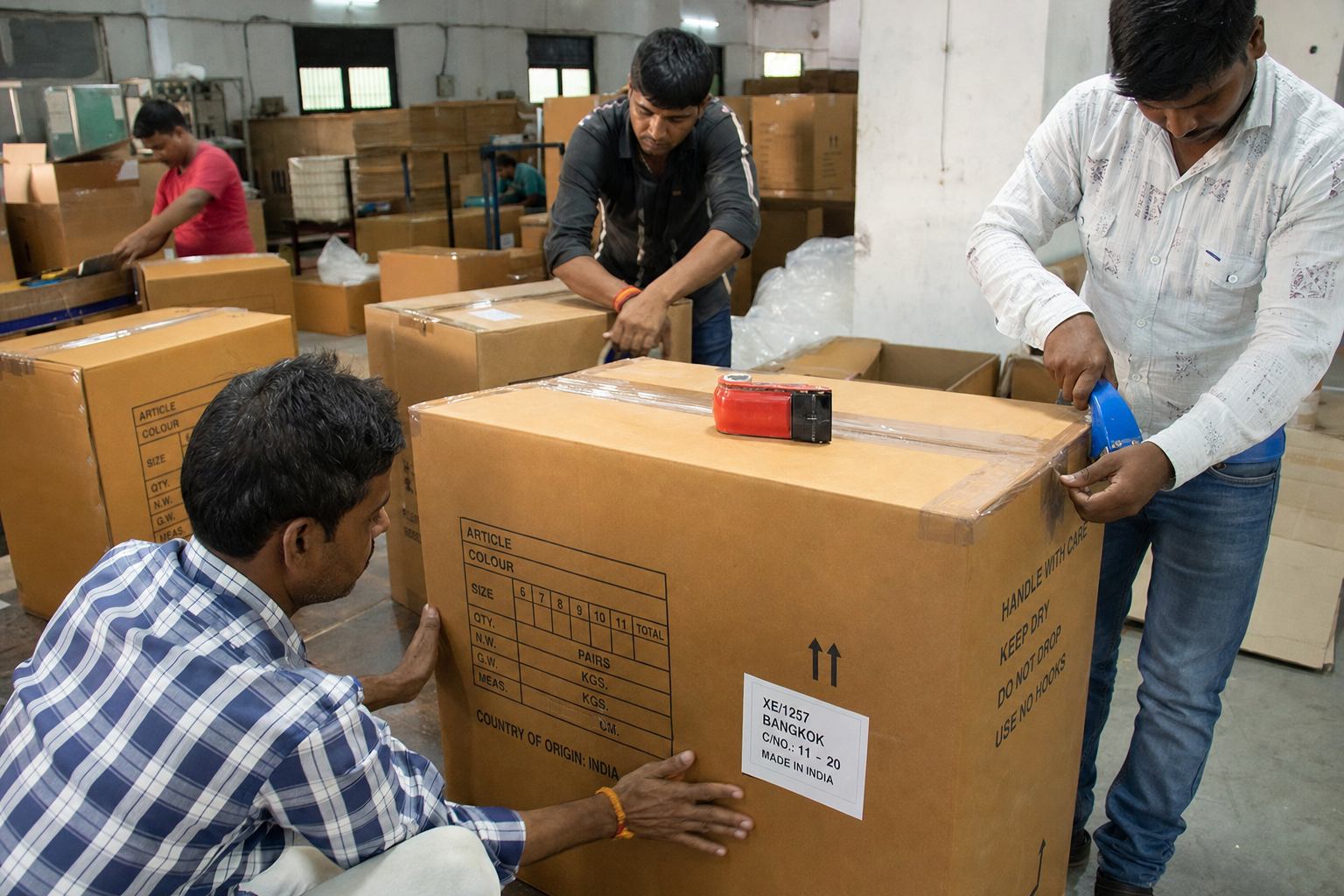
Packaging expectations track destination retail format as much as style. US and UK department store programmes increasingly expect retail-ready barcoded shoe boxes with brand-specific artwork, while UAE and re-export-hub buyers in the Netherlands and Australia are often more focused on carton-level size-ratio accuracy for wholesale distribution than on individual box branding.
Confirm labelling convention — UK, US, or EU sizing — matches the destination market explicitly on both the shoe box and the master carton. A carton labelled correctly for the factory's default EU sizing convention but destined for a US retail floor creates receiving confusion that a size-conversion chart on the packing list does not always prevent at the warehouse-floor level.
Packaging Expectations by Destination Market Tendency
Swipe →
Data table — swipe horizontally on small screens
| Destination | Typical Packaging Expectation | Labelling Note |
|---|---|---|
| USA | Retail-ready barcoded boxes for chain programmes | US sizing convention; CPSC-relevant labelling for children's lines |
| UK | Branded shoe boxes for department store programmes | UK sizing convention; post-Brexit labelling confirmed separately |
| Germany | Standard export cartons with compliance documentation | EU sizing; REACH/LWG references on accompanying documents |
| UAE | Wholesale-format cartons, size-ratio accuracy prioritised | Flexible; often re-labelled for onward Gulf re-export |
| Netherlands | Consolidated multi-category cartons for Rotterdam re-export | EU sizing; carton-level accuracy critical for split shipments |
| Australia | Standard cartons; biosecurity-compliant wood dunnage | AU/US sizing conversion clearly stated on cartons |
Container Loading Details
Export Tip
Container payload economics track the style mix each country demands. Markets that favour sandals and lighter casual styles, such as the UAE and parts of Southeast Asia, allow more pairs per container and often support lower per-pair freight cost even before considering FOB. Markets that favour boots and heavier construction, such as the UK, Germany, and Netherlands ahead of winter cycles, carry lower container yield and should be planned with that freight economics difference in mind.
Indicative Container Loading by Country-Typical Category
Swipe →
Data table — swipe horizontally on small screens
| Country-Typical Category | Indicative 20ft FCL Payload | Freight Economics Note |
|---|---|---|
| UAE leather sandals | ~10,000–14,000 pairs | Highest per-container yield; strong landed-cost economics |
| USA value-tier casual/formal | ~6,500–9,000 pairs | Balance of yield and construction quality |
| UK welted formal shoes | ~5,500–7,500 pairs | Lower yield due to boxed formal construction bulk |
| Germany/Netherlands boots | ~4,500–6,500 pairs | Lowest yield; plan freight cost per pair accordingly |
| Australia casual/boots mix | ~5,500–8,000 pairs | Confirm biosecurity-compliant dunnage before loading |
Shipping Methods
Export Tip
Sea freight FCL remains the standard shipping method across every destination in this guide for standard commercial programmes, with LCL consolidation used for trial orders and multi-style sample shipments where a full container is not yet justified. Air freight is used selectively for urgent replenishment or fast-fashion-adjacent casual and women's fashion programmes in markets like France and the USA, where speed to shelf can outweigh the higher per-pair freight cost for a limited style run.
Transit time itself should factor into your country-specific demand planning, not just style choice. A UAE-bound sandal programme benefits from a short Gulf sailing lane that supports faster seasonal replenishment, while a Japan- or Australia-bound formal or casual programme requires ordering further ahead of the intended retail season simply because of longer transit times, independent of production lead time.
Certifications
Compliance Notes
Certification requirements are the single most destination-specific variable in this entire guide, and treating them as interchangeable across markets is a common, costly mistake.
Certification Requirements by Destination Market
Swipe →
Data table — swipe horizontally on small screens
| Destination | Primary Certification Concern | What to Confirm Before Ordering |
|---|---|---|
| USA | ASTM F2413 for safety footwear; CPSIA for children's lines | Test reports reference the specific style and batch, not a generic annual certificate |
| UK | Standard commercial documentation; construction claims | Post-Brexit labelling requirements confirmed separately from EU rules |
| Germany | REACH chromium VI; LWG tannery certification; EN ISO 20345 for safety lines | Chromium VI report matches the specific leather batch supplying the order |
| UAE | Standard commercial documentation | Confirm packaging flexibility for onward Gulf re-export relabelling |
| France | REACH for chemical/finish claims | Documentation prepared alongside any sustainability or traceability claim |
| Australia | Biosecurity compliance for wood packaging/dunnage | Fumigation compliance evidence under ISPM 15 or equivalent |
Buyer Requirements
Buyer Requirements
- A factory with demonstrated prior export experience to your specific destination country, not just 'export experience' generically
- Construction capability matched to your country's dominant preference — cemented, Goodyear-welted, or Blake-stitched — confirmed in writing
- Correct sizing standard (UK, US, or EU) applied consistently across samples, cartons, and documentation
- Destination-specific certification evidence — ASTM, EN ISO, REACH, or biosecurity compliance — referenced to the actual style and batch
- Realistic lead time that accounts for your destination's ocean transit time, not just production time
Whatever country you are sourcing for, a factory should be able to demonstrate the same baseline before you advance past a first RFQ: legal export eligibility, a track record in your specific style and construction combination, and the certification stack your destination market actually requires — not a generic compliance claim.
Country-wise Opportunities
Market Snapshot
This is the core of the guide. Each market below reflects a distinct combination of preferred style, construction, last shape, and certification expectation — brief your factory against the specific country you are shipping to, not a generic global footwear specification.
Read each profile as a starting point rather than a rigid rule. Retail formats within the same country can diverge meaningfully — a UK department store programme and a UK independent boutique wholesaler may both want 'men's formal leather shoes' but at different price points, construction standards, and order sizes. Use the country-level demand pattern to shape your first specification, then refine it against your own channel's specific feedback once trial orders begin arriving.
Style and Certification Demand Snapshot by Country
Swipe →
Data table — swipe horizontally on small screens
| Country | Dominant Style | Construction Preference | Certification Priority |
|---|---|---|---|
| USA | Formal/casual + safety footwear | Cemented (value); certified for safety lines | ASTM F2413 for safety footwear |
| UK | Men's formal (Oxfords, brogues, derbies) | Goodyear-welted or Blake-stitched | Standard commercial documentation |
| Germany | Formal/casual + safety footwear | Cemented and welted mix | REACH chromium VI, LWG, EN ISO 20345 |
| UAE | Leather sandals, men's formal | Cemented, cost-optimised | Standard commercial documentation |
| France | Mid-to-premium formal/casual | Cemented to welted, finish-focused | REACH for chemical/finish claims |
| Netherlands | Mixed multi-category | Varies by re-export destination | Consistent with EU-wide expectations |
| Australia | Casual and boots | Cemented, weather-resistant soles | Biosecurity packaging compliance |
| Japan | Formal and casual | High-consistency construction | Size-run accuracy documentation |
United States of America
US demand splits into two distinct tiers. Value-to-mid retail chains buy men's and women's formal and casual leather footwear, typically cemented construction, prioritising consistent size-run accuracy and competitive FOB. A separate, steadier industrial distribution segment buys ASTM F2413-certified safety footwear for workwear retail and industrial supply channels. Confirm which tier you are sourcing for before locking construction type — the two segments rarely overlap in the same purchase order. Large US retail chains also increasingly request supply chain transparency documentation alongside standard commercial paperwork, so exporters positioning for this channel benefit from having traceability records ready even when not formally required.
United Kingdom
UK buyers, particularly department stores and heritage-adjacent retail programmes, favour classic men's formal styles — Oxfords, brogues, and derbies — often in Goodyear-welted or Blake-stitched construction that supports a resoleable, longer product life positioning. Confirm post-Brexit import documentation requirements separately from EU rules even where they appear similar. Independent UK footwear retailers and smaller wholesalers also represent a meaningful secondary channel, often more flexible on MOQ than department store programmes but equally demanding on construction consistency.
Germany
German demand splits between commodity casual and formal leather footwear and a serious compliance-conscious segment that expects REACH chromium VI test reports and, increasingly, LWG-certified tannery sourcing. Safety footwear certified to EN ISO 20345 also moves steadily through German industrial distribution channels. Require chromium VI documentation and a tannery certification reference before committing beyond a sample for this market. German buyers also tend to formalise supplier relationships through structured annual contracts once a trial programme succeeds, rewarding exporters who can demonstrate consistent quality across multiple seasons rather than a single strong shipment.
United Arab Emirates
The UAE functions as both a direct consumption market and a re-export hub for the wider Gulf, and its dominant demand category is leather sandals, followed by men's formal footwear at competitive price points. A blend of price competitiveness and consistent size-run accuracy matters more here than deep certification documentation for most programmes. Dubai-based trading houses in particular often manage onward distribution into Saudi Arabia, Oman, and East African markets, so packaging and labelling should be flexible enough to support relabelling or re-cartoning for those secondary destinations.
France
French buyers, particularly in mid-to-premium retail, look for construction quality and finish consistency in men's and women's leather footwear, with growing buyer attention to traceability claims around leather origin. Prepare REACH compliance documentation alongside any chemical or finish claim for this market. French fashion-forward retail programmes also tend to run more frequent style refreshes than the UK or German markets, favouring factories comfortable with shorter production runs and more frequent colourway changes.
Netherlands
The Netherlands serves as both a direct consumption market and a major European distribution and re-export hub via Rotterdam. Buyers here often consolidate multi-category footwear programmes spanning formal, casual, and boots, and expect consistent size-ratio accuracy across large mixed-style shipments moving onward into other EU markets. Because a single Rotterdam-bound shipment may be split across several EU destination countries after arrival, carton-level labelling accuracy matters even more than in single-destination shipments.
Australia
Australian importers source casual footwear and boots with particular attention to biosecurity import rules for wood-based packaging and dunnage. Confirm fumigation compliance where wood pallets are used, and verify size-standard conversion (UK/EU to AU/US) is clearly stated on cartons to avoid receiving confusion at destination. Longer ocean transit times to Australia relative to Gulf or European lanes also mean buyers here typically plan purchase orders further ahead of the intended retail season than buyers closer to India.
Japan and Beyond
Japanese buyers reward construction consistency and precise size-run accuracy over headline price, favouring formal and casual leather footwear with demonstrated production discipline across the size curve. Buyers here rarely switch suppliers once trust is established, but apply a longer, more document-intensive qualification cycle before committing to a first order than most other markets in this guide. South Korean buyers show a broadly similar preference pattern, though with somewhat faster decision cycles once a Japanese-market-equivalent quality bar has been demonstrated.
Expert Insight: Briefing the Right Country from Day One
Expert Insight Box
We regularly see buyers discover a demand mismatch only after a trial shipment sits in inventory longer than expected — a welted formal shoe programme built for a price-sensitive Gulf retail channel, or a cemented-construction casual line sent into a UK market that expected resoleable construction at that price point. Both mistakes are avoidable with a five-minute conversation about destination demand before the RFQ is even sent.
Our advice to every buyer entering a new country is the same: confirm the style, construction, and certification combination that market actually rewards before you spend a single sample cycle on the wrong specification. The cost of getting the brief right up front is trivial compared to the cost of correcting it after bulk production.
Sourcing Checklist
Checklist
- Confirm your destination country's dominant style, construction preference, and certification requirement using this guide and your own import data before writing an RFQ.
- Match your sourcing cluster to your destination's demand profile — Ambur-Ranipet for compliance-conscious EU/US programmes, Agra for value-tier volume.
- State the sizing standard (UK, US, or EU) explicitly in your RFQ and on carton labelling instructions.
- Align production and shipping schedule to your market's seasonal demand pattern — boots ahead of autumn/winter, sandals ahead of summer.
- Request country-relevant certification documentation (ASTM, EN ISO, REACH, LWG) alongside the fit sample, not after bulk production begins.
Buyer Checklist
Checklist
Exporter Checklist
Checklist
Compliance Checklist
Checklist
Compliance Notes
Common Buyer Mistakes
Common Mistakes Box
Most demand-mismatch problems in leather footwear sourcing are avoidable with a small amount of upfront market discipline.
Expert Insight: Sizing the Trial to the Market, Not the Product
Expert Insight Box
This is a subtly different piece of advice from the standard 'always trial before you scale' guidance. The trial size itself should reflect how confident you are in your destination-market demand read, not just how confident you are in the factory. A buyer with five years of UK formal-shoe sourcing experience entering their first Gulf sandal programme should trial the Gulf order more conservatively than their next UK reorder, even if the same factory produces both.
This is also why we build country-specific demand briefs before a factory ever sees an RFQ for a new market. Getting the destination brief right the first time consistently saves more money than any FOB negotiation could — because the alternative is discovering the mismatch after production, when the only options left are markdown, rework, or write-off.
Future Market Trends
Key Statistics
Several trends are reshaping country-specific demand for Indian leather footwear over the coming years: growing US and European retail chain interest in supply chain traceability documentation as a standard onboarding requirement rather than an occasional ask; increasing German and broader EU emphasis on LWG-certified tannery sourcing and REACH documentation as sustainability-linked import expectations tighten; and steady UAE and Gulf growth as both a direct consumption market and re-export hub, rewarding exporters who can offer packaging flexibility for onward regional distribution.
Buyers who track these shifts by destination market — rather than assuming demand patterns are static — will be better positioned to brief factories correctly as certification expectations and retail formats evolve differently across the USA, UK, Germany, UAE, and other markets covered in this guide.
Conclusion
- Next step: send your target country and style category to Altus Exports for a demand-aligned factory shortlist.
- Review How to Source Leather Footwear Directly from India for the buyer verification process behind any of these programmes.
- Read Top Leather Footwear Products Exported from India for category and construction depth.
- Understand the export side with How to Export Leather Footwear from India and CLE Registration Benefits for Leather Footwear Exporters.
- Complete your compliance picture with the Leather Footwear Export Documentation Checklist.
- Explore Best Countries for Indian Leather Footwear Exports, Sustainable & Premium Leather Footwear Export Opportunities, Find International Buyers for Leather Footwear, and Trade Shows for Leather Footwear Exporters.
- Explore global sourcing partner and find manufacturers in India service models.
Indian leather footwear demand is not uniform across international markets — it varies meaningfully by style, construction, last shape, and certification requirement from country to country. Buyers who match their sourcing brief to their specific destination market's actual demand profile consistently outperform buyers who source a generic 'bestseller' style and hope it fits every market equally well.
Use this guide as a starting framework, refine it against your own destination market's import data and retail channel feedback, and brief your factory or sourcing partner with the specific style, construction, and certification combination your market rewards. Share your target country, style category, and volume with Altus Exports for a demand-aligned sourcing recommendation.