
Trade Shows and B2B Marketplaces for Leather Footwear Exporters
By Saurabh Mittal, Founder, Altus Exports
A fair-by-fair and marketplace guide for Indian leather footwear exporters — the India International Leather Fair (IILF), MICAM Milano, Shoes Düsseldorf, CLE-organised buyer-seller meets, and relevant B2B marketplaces, plus a practical booth-to-order playbook covering pre-fair preparation, on-floor qualification, and post-fair follow-up.
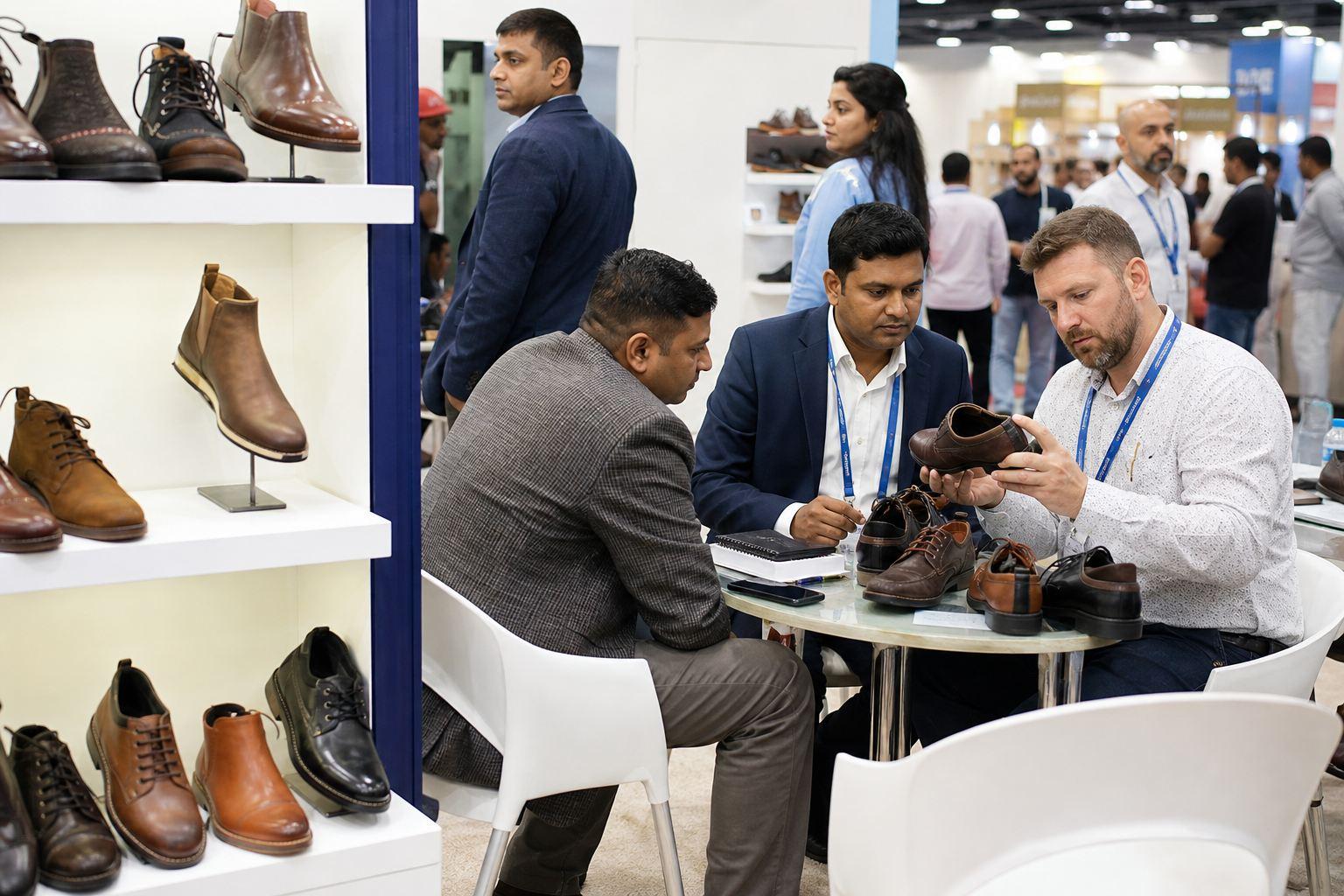
Trade fairs remain one of the fastest ways for an Indian leather footwear exporter to have a real, specification-level conversation with a qualified international buyer — but only when the exporter shows up prepared, and only when the fair is treated as one channel in a year-round pipeline rather than the entire sales strategy.
This guide works through the fairs and B2B marketplaces that matter most for Indian leather footwear — the India International Leather Fair (IILF) in Chennai, MICAM Milano, Shoes Düsseldorf, CLE-organised buyer-seller meets, and the relevant online B2B marketplaces — and closes with a practical booth-to-order playbook, not a product SKU catalogue (see Top Leather Footwear Products Exported from India for that).
Fairs and marketplaces are lead-generation channels, not a substitute for the underlying export readiness a buyer will still verify — CLE registration, a valid IEC, and documented grading consistency. For the year-round trade-data and LinkedIn side of buyer prospecting that should run between fair cycles, see Find International Buyers for Leather Footwear.
For the registration a buyer checks at a booth before taking a conversation seriously, see CLE Registration Benefits for Leather Footwear Exporters.
Altus Exports works as a merchant exporter in India and global sourcing partner, helping leather footwear exporters convert fair and marketplace leads into documented, shipped orders rather than a stack of unconverted business cards from a booth.
Key Takeaways
Summary Box
Executive Summary
Summary Box
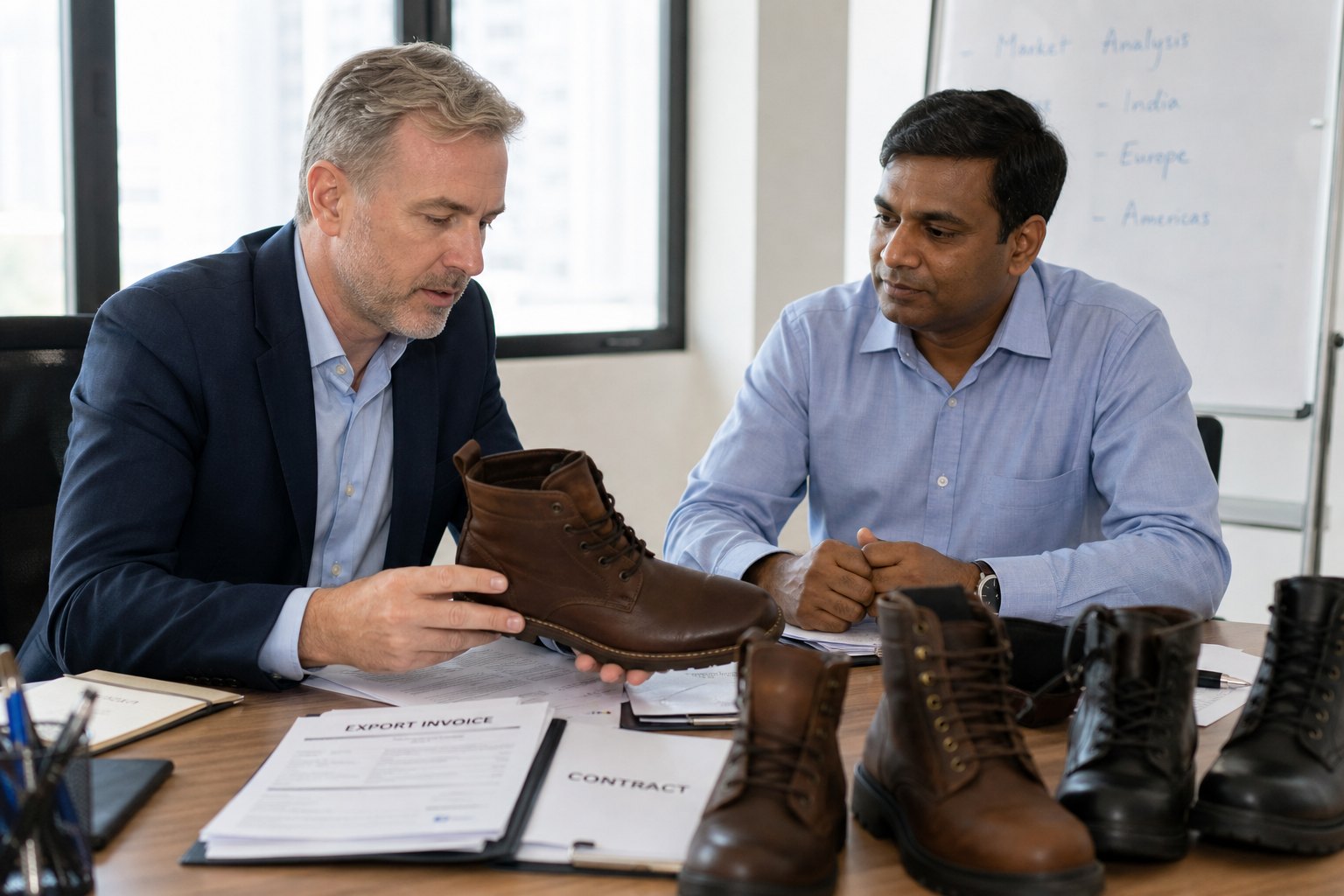
This guide maps the fair and marketplace landscape relevant to Indian leather footwear exporters and gives a repeatable sequence for converting fair attendance into shipped orders: pre-fair preparation (sample readiness, product sheet, CLE credential visibility), on-floor qualification (asking the right questions to separate serious buyers from casual browsers), and post-fair follow-up (a structured, time-bound outreach cadence that most exhibitors skip).
The commercial case for fair attendance is specific: a well-prepared exporter can expect several dozen genuine floor conversations at a major fair like IILF or MICAM, of which a meaningful minority — typically five to fifteen percent with disciplined follow-up — progress to a sample request within thirty days.
Exporters who skip preparation or follow-up convert at a fraction of that rate regardless of how much they spend on the booth itself.
Market Size & Industry Overview
Key Statistics
India's leather footwear export industry, anchored by Council for Leather Exports (CLE) registration and manufacturing clusters in Agra, Kanpur, and the Ambur–Ranipet–Vellore–Chennai belt in Tamil Nadu, relies on a mix of domestic and international fairs, CLE-organised buyer-seller meets, and B2B marketplaces to connect with global demand. Chennai's proximity to the Tamil Nadu export cluster makes IILF a natural anchor fair for the industry, while MICAM Milano and Shoes Düsseldorf remain the destination-market fairs where Indian exporters meet European buyers on the buyer's own commercial territory.
Leather Footwear Fair and Marketplace Landscape (Indicative)
Swipe →
Data table — swipe horizontally on small screens
| Channel | Location / Type | Primary Value to Exporters |
|---|---|---|
| India International Leather Fair (IILF) | Chennai, India — CLE-supported | Domestic anchor fair; international buyer delegations attend |
| MICAM Milano | Milan, Italy | Fashion-forward European buyer access; premium positioning |
| Shoes Düsseldorf (formerly GDS / Gallery Shoes) | Düsseldorf, Germany | German/DACH wholesale and retail trade access |
| CLE buyer-seller meets | Various, organised by CLE | Pre-qualified, one-on-one buyer meetings |
| B2B marketplaces (Alibaba, IndiaMART, TradeIndia) | Online | High inquiry volume; requires heavy lead qualification |
Export Statistics
Key Statistics
CLE and DGCIS export statistics show the USA, Germany, the UK, Italy, and France among India's leading leather footwear destinations by value — and these are precisely the buyer nationalities most concentrated at MICAM Milano, Shoes Düsseldorf, and IILF's international delegations. Choosing which fair to prioritise should follow export destination priority: an exporter targeting the German market gains more from Shoes Düsseldorf attendance than from a fair with a different dominant buyer nationality.
Fair Relevance by Target Export Destination
Swipe →
Data table — swipe horizontally on small screens
| Target Destination | Most Relevant Fair(s) | Buyer Profile at That Fair |
|---|---|---|
| Germany / DACH | Shoes Düsseldorf | Wholesale distributors, retail chain buyers |
| Italy / France / fashion EU | MICAM Milano | Fashion-forward importers, design-led private label |
| USA | IILF Chennai (international delegations), select US-focused marketplace listings | Department store and wholesale distribution buyers attending India-focused sourcing trips |
| Domestic + all destinations | IILF Chennai, CLE buyer-seller meets | Mixed international delegation; efficient single-location coverage |
Import Statistics
Key Statistics
Import-side data on which companies actually attend a given fair as buying delegations is harder to source than export statistics, but fair organisers typically publish attendee and exhibitor profiles that reveal buyer company type (retail chain, wholesale distributor, OEM sourcing office) and country mix in advance. Reviewing this attendee data before committing booth budget is a far better use of pre-fair research time than assuming a fair's general reputation guarantees relevant buyer traffic for a specific product category.
Pre-Fair Attendee Research Checklist
Swipe →
Data table — swipe horizontally on small screens
| Research Step | What It Reveals | When to Do This |
|---|---|---|
| Review published exhibitor/attendee list | Buyer company type and country mix expected at the fair | 6–8 weeks before the fair |
| Cross-check attendee list against HS 6403 import data | Whether listed buyers have documented import history | 4–6 weeks before the fair |
| Pre-book meetings with matched buyers where the fair allows it | Converts open-floor traffic into scheduled, higher-intent meetings | 2–4 weeks before the fair |
Product Categories and Variants
Summary Box
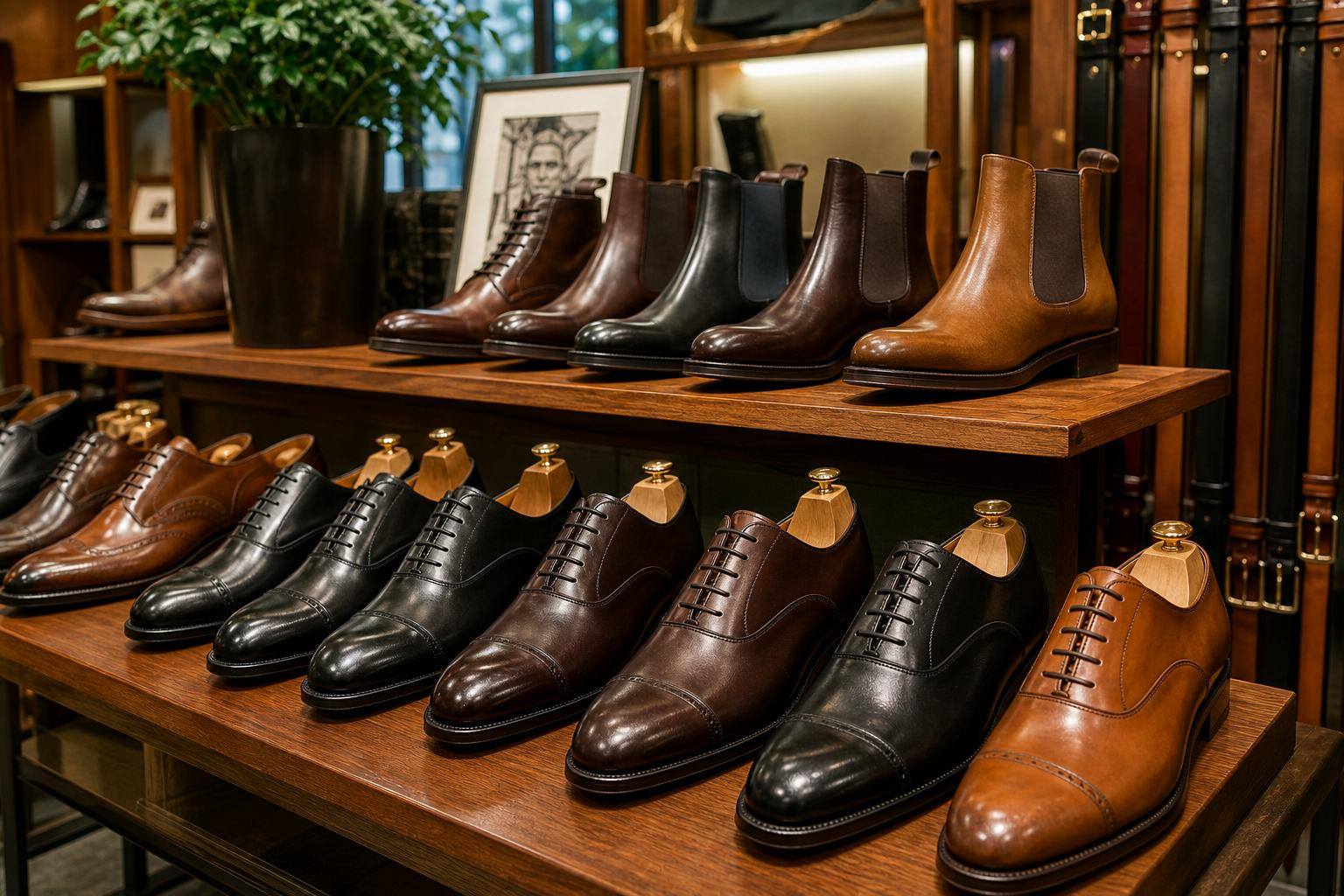
Booth sample selection should mirror the fair's dominant buyer profile, not an exporter's full catalogue. MICAM Milano rewards fashion-forward women's and men's styles with finish-quality storytelling; Shoes Düsseldorf rewards a broader wholesale-friendly range including safety and comfort footwear; IILF's international delegations span a wider mix and reward exporters who can clearly segment their range by category on the booth itself rather than displaying everything undifferentiated. For the full category depth, see Top Leather Footwear Products Exported from India.
Matching Booth Samples to Fair Buyer Profile
Swipe →
Data table — swipe horizontally on small screens
| Fair | Recommended Hero Categories | Buyer Priority at This Fair |
|---|---|---|
| MICAM Milano | Women's fashion, men's formal premium | Design alignment, finish quality, brand storytelling |
| Shoes Düsseldorf | Men's formal/casual, safety footwear, comfort lines | Price-to-quality ratio, wholesale volume reliability |
| IILF Chennai | Broad mix, clearly segmented by category on booth | Efficient category discovery across a mixed international delegation |
| CLE buyer-seller meets | Whatever category matches the pre-scheduled buyer's stated interest | Specification-precise conversation, not general browsing |
Manufacturing Overview
Export Tip
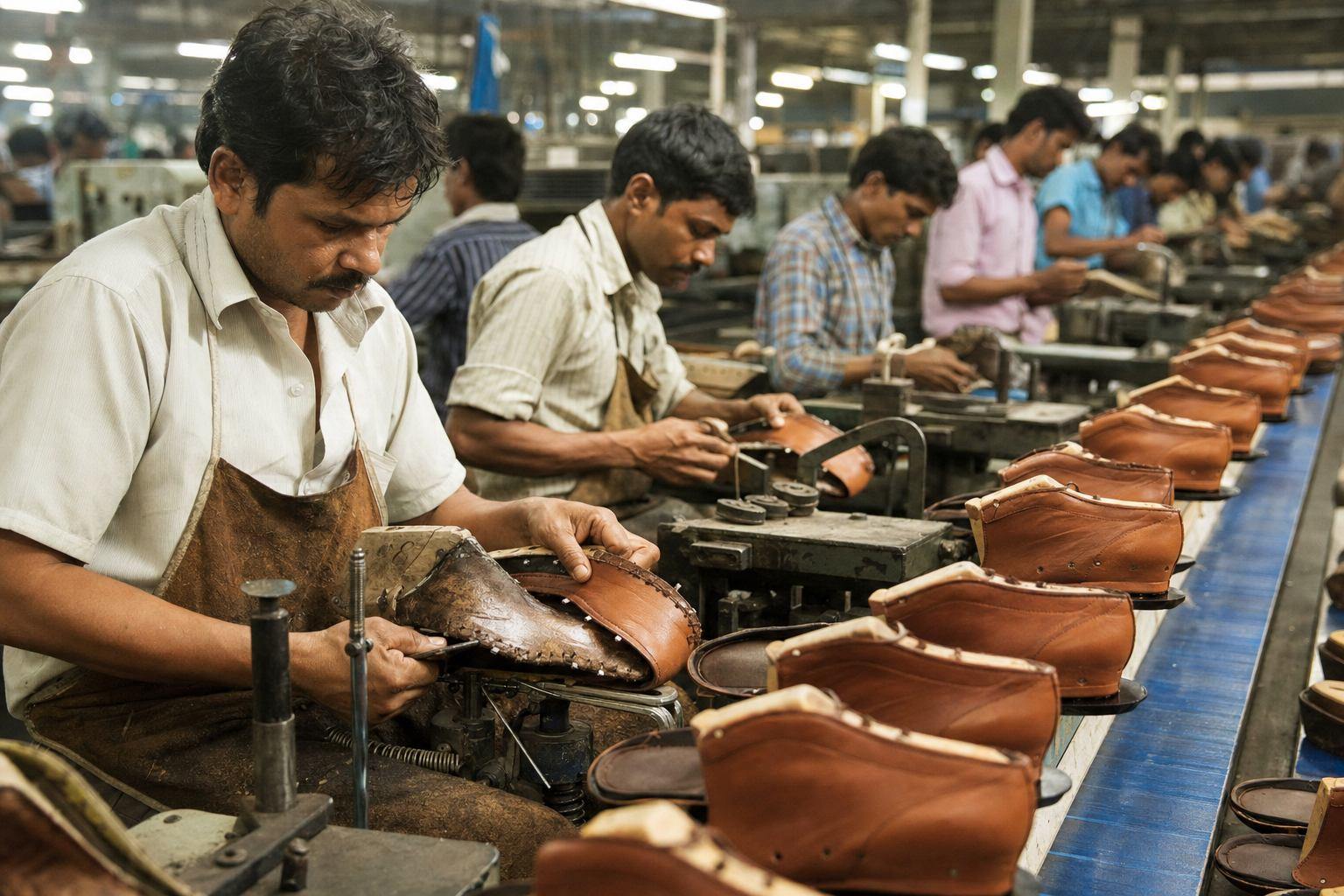
Fair samples must reflect real bulk-production capability — a hand-finished booth sample that cannot be replicated at the factory's actual construction method and tolerance is a credibility risk, not an asset, once a buyer requests a bulk-matching pre-production sample after the fair. Confirm with your factory, before committing a style to the booth, that the last, sole construction, and finish shown on the fair floor is exactly what bulk production can deliver at the MOQ you intend to quote.
Pricing Analysis
Buyer Tip
Fair budgets should be planned as a full campaign cost — booth space, travel, sample development, and follow-up staff time — set against a realistic conversion estimate, not just the headline booth rental fee. A booth that costs several thousand dollars but converts zero leads because samples were unprepared or follow-up never happened is a worse investment than a smaller booth run with full preparation and disciplined follow-up.
Indicative Fair Campaign Cost Components
Swipe →
Data table — swipe horizontally on small screens
| Cost Component | Typical Share of Total Campaign Budget | Notes |
|---|---|---|
| Booth space and construction | 30–45% | Varies significantly by fair and booth size/location |
| Travel and accommodation for staff | 20–30% | Multiply by number of staff attending, not just one representative |
| Sample development and freight to fair | 10–20% | Underbudgeted by many first-time exhibitors |
| Post-fair follow-up (staff time, sample dispatch) | 10–15% | Often skipped entirely, which erases the value of the other 85–90% |
MOQ Analysis
Buyer Tip
MOQ conversations at a fair should be handled the same way they are handled in any other channel — honestly and specifically — but the fair setting adds time pressure that can push exhibitors toward overpromising volume to close a floor conversation. State realistic MOQ per style clearly on the product sheet handed out at the booth, so a buyer's post-fair internal discussion is anchored to an accurate number rather than an optimistic one given verbally in a rushed conversation.
Typical MOQ Expectations to Communicate at a Fair (Pairs, per Style)
Swipe →
Data table — swipe horizontally on small screens
| Manufacturer / Buyer Type | Trial Order MOQ | Standard Programme MOQ | Fair Conversation Note |
|---|---|---|---|
| MSME manufacturer | 300–600 pairs | 600–1,200 pairs | State clearly on the product sheet, not just verbally |
| Export-oriented mid-size factory | 600–1,000 pairs | 1,200–3,000 pairs | Confirm leather batch availability before quoting a fast lead time |
| Retail chain / private-label | 1,000–2,500 pairs (initial) | 5,000+ pairs, recurring | These buyers expect a forecast conversation, not a single-order pitch |
Packaging Standards
Export Tip
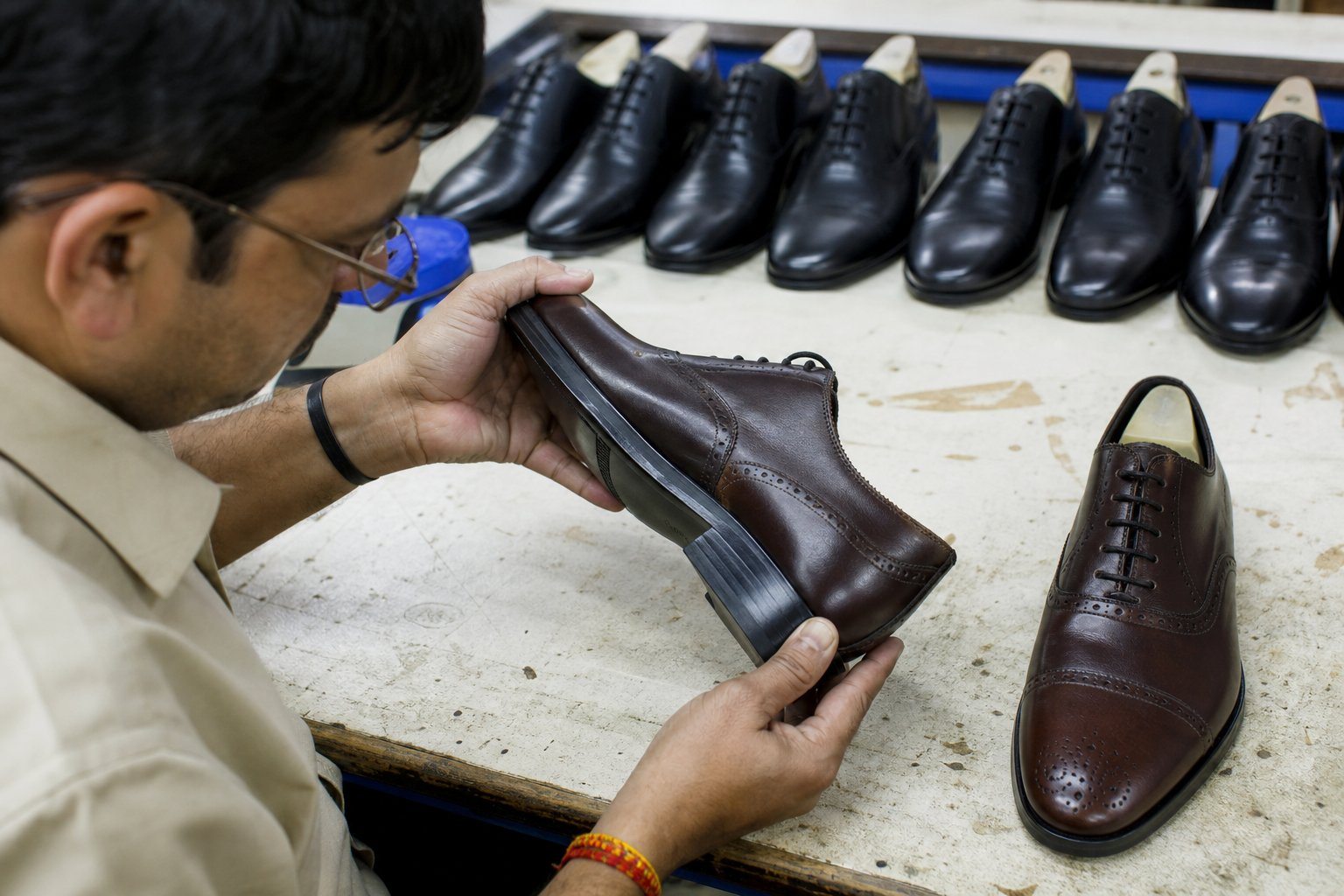
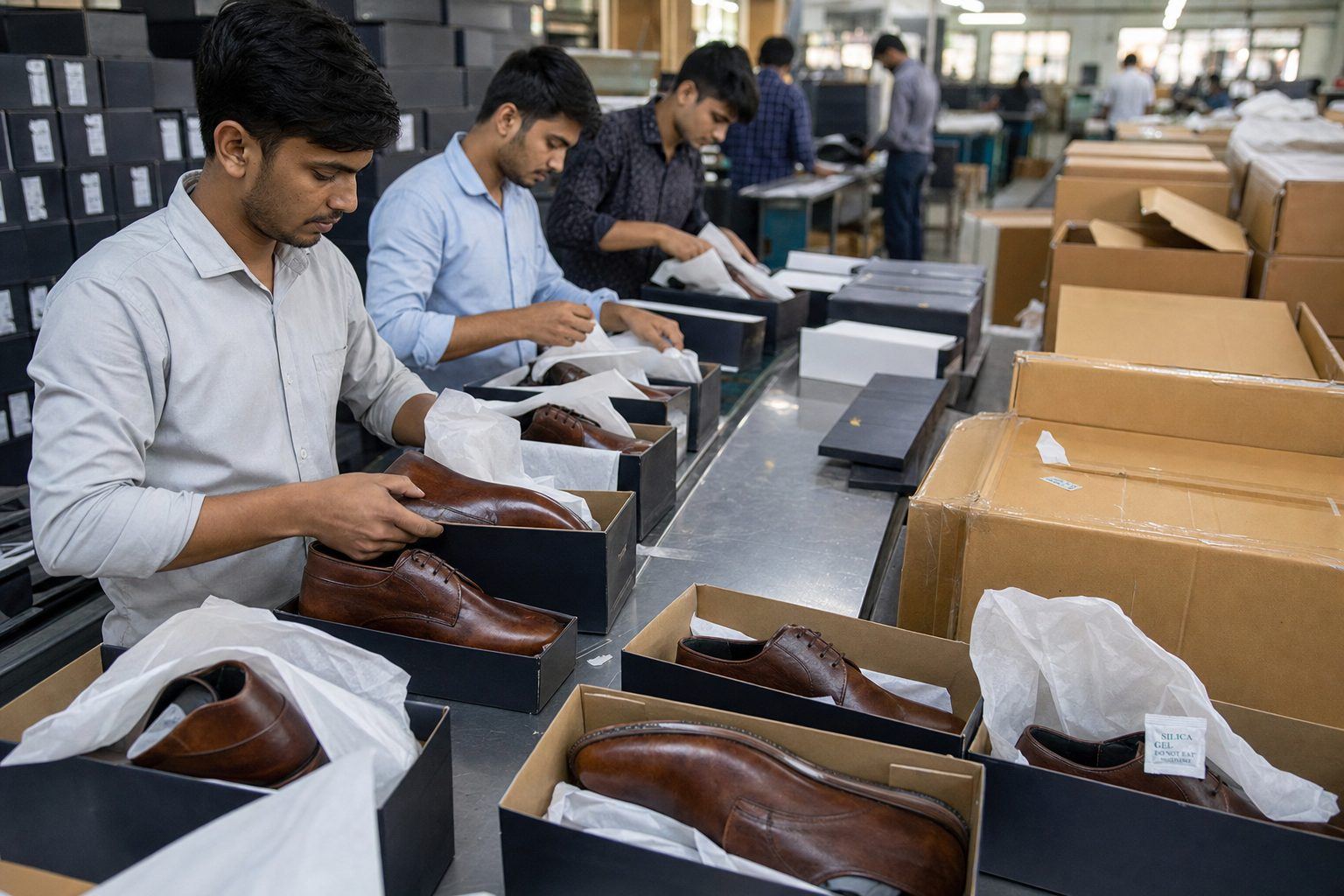
Packaging samples shown at a booth should match what a real bulk shipment would carry — an individually boxed pair with tissue, size label, and any brand-style hang tag, consolidated into a master carton mock-up if space allows. Buyers evaluating a new supplier often judge packaging discipline as a proxy for overall export readiness, since a factory that cannot present clean, consistent packaging at a fair booth raises questions about consistency at bulk scale.
Fair Booth Packaging Display Checklist
Swipe →
Data table — swipe horizontally on small screens
| Element | Recommended Booth Display | Why It Matters |
|---|---|---|
| Individual shoe box | Display at least one fully packed box per hero style | Signals retail-ready packaging capability |
| Master carton mock-up | Display if booth space allows, with clear style/size markings | Demonstrates bulk-shipment packaging discipline |
| Product sheet with packaging specification | Hand out alongside samples, not only on request | Buyers reference this after the fair when making internal decisions |
Container Loading Details
Export Tip
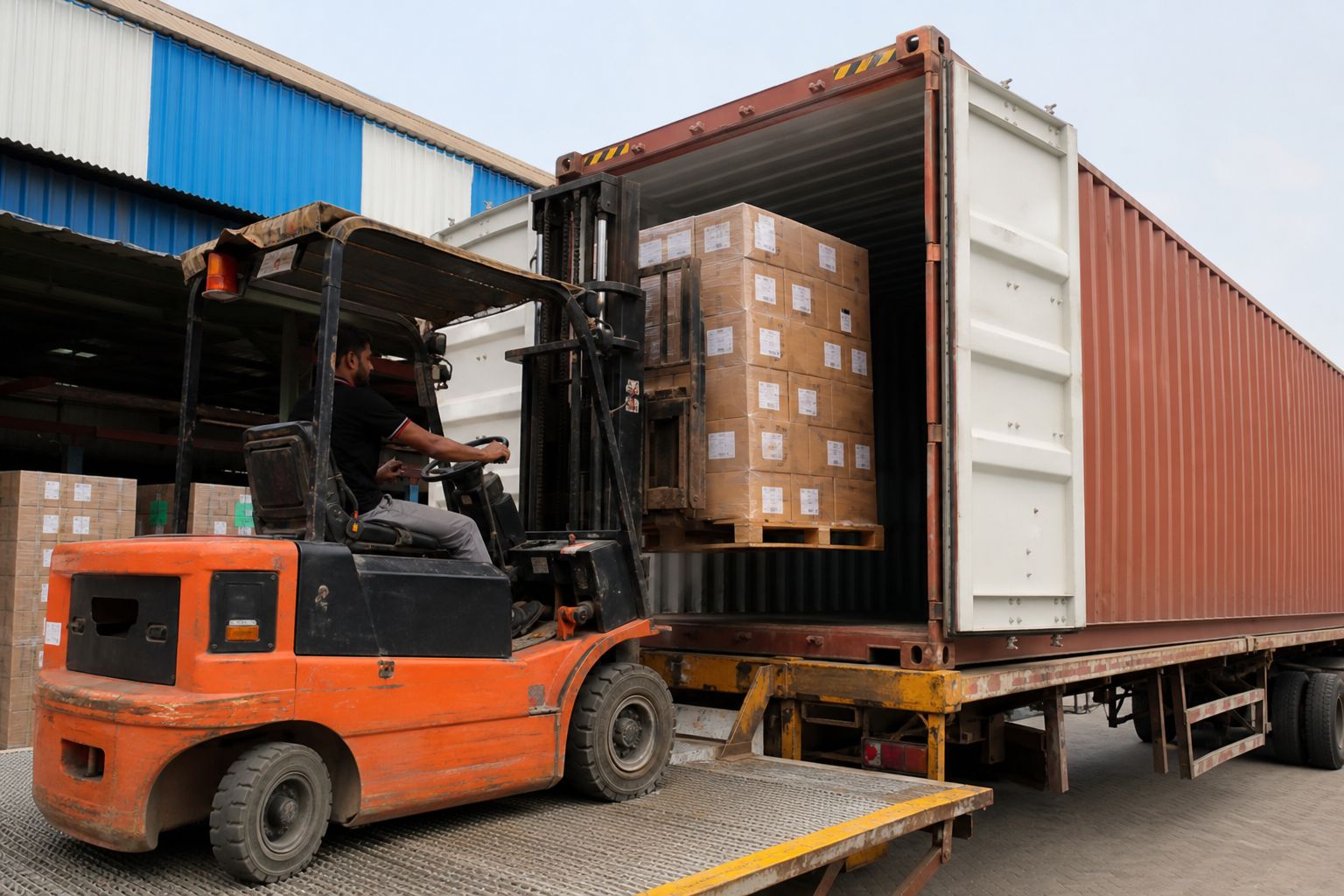
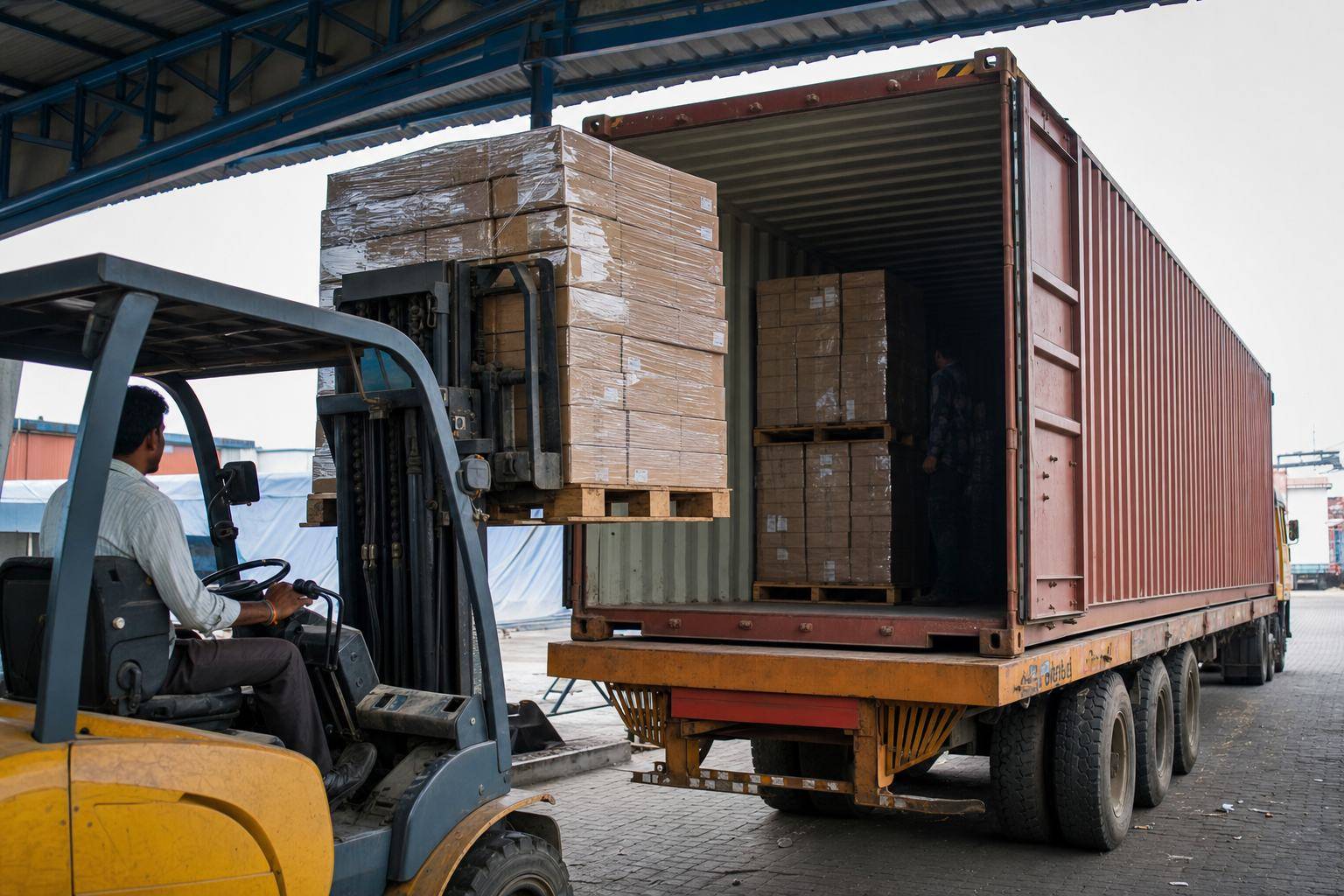
Serious buyers at wholesale-focused fairs like Shoes Düsseldorf often ask about container loading economics early, since it directly affects their landed cost modelling. Be ready with real indicative figures — roughly 4,500–6,500 pairs of compact styles or 2,500–4,000 pairs of bulky styles like boots in a 20-foot FCL, scaling up in a 40-foot High Cube — rather than a vague "it depends" answer that signals underpreparation.
Shipping Methods
Export Tip
Buyers at international fairs frequently ask about lead time from purchase order to shipment, and about which Incoterm the exporter typically quotes. FOB remains standard for most Indian leather footwear exports, with Mundra, Nhava Sheva, Chennai, and Tuticorin serving as the primary load ports depending on manufacturing cluster. Sample shipments arranged after a fair typically move by air for speed, since a buyer evaluating a new supplier wants to see a physical sample quickly while the fair conversation is still fresh, rather than waiting weeks for sea freight.
Certifications
Compliance Notes
CLE registration should be visible on the booth itself — on the product sheet, on booth signage, and in the pitch — since it is the first credential a serious buyer checks before taking a fair conversation further. REACH chromium VI and, for children's footwear, CPSIA compliance status should be stated clearly on request; buyers at MICAM Milano and Shoes Düsseldorf in particular expect this information readily available without a multi-day delay.
Certifications to Have Visible or Ready at a Fair Booth
Swipe →
Data table — swipe horizontally on small screens
| Certification / Credential | Where to Display It | Buyer Expectation |
|---|---|---|
| CLE RCMC reference | Product sheet, booth signage | First-level legitimacy check before a serious conversation |
| Valid IEC | Available on request, referenced in outreach materials | Confirms legal export eligibility |
| REACH chromium VI status | Stated clearly on request, ideally with a recent test report summary | Non-negotiable for EU/UK-bound buyer conversations |
| CPSIA compliance (children's lines) | Stated clearly on request for US buyers | Screened early by US buyers sourcing children's footwear |
| LWG tannery certification (where applicable) | Product sheet, with named tannery | Relevant to premium and sustainability-focused buyer conversations |
Buyer Requirements
Buyer Requirements
- A one-page product sheet with last numbers, upper leather type, sole construction, size range, and MOQ per style, handed out proactively.
- CLE registration number (RCMC) and IEC visible in signage and outreach materials, not only provided when explicitly asked.
- Confident, specific answers on lead time, MOQ, and Incoterm — vague answers signal underpreparation to an experienced buyer.
- A clear sample dispatch policy communicated at the booth — paid vs. free, courier cost owner, and turnaround time.
- A defined post-fair follow-up commitment stated to the buyer directly, such as "we will send a formal quotation within three business days."
Buyers approaching a booth for the first time are usually screening quickly for legitimacy signals before investing conversation time: a clear product sheet, visible CLE registration, confident answers on MOQ and lead time, and samples that look production-ready rather than a rough prototype. Exporters should train booth staff to answer these screening questions fluently, since a hesitant answer to a basic legitimacy question ends many promising fair conversations before they start.
Country-wise Opportunities
Market Snapshot
Fair selection should follow country priority. For the full market-by-market opportunity assessment, see Best Countries for Indian Leather Footwear Exports and Most Demanded Indian Leather Footwear by Country.
USA — IILF international delegations and marketplace channels
US buyers are less concentrated at a single dedicated fair than European buyers; IILF's international delegations and targeted B2B marketplace outreach are typically more efficient than travelling to a US-specific footwear trade show for most Indian exporters.
Italy — MICAM Milano
MICAM Milano is the premier fashion-forward footwear fair reaching Italian, French, and broader Southern European fashion buyers; exporters should bring design-led samples with finish-quality storytelling rather than commodity styles.
Germany and DACH — Shoes Düsseldorf
Shoes Düsseldorf reaches German, Austrian, and Swiss wholesale distributors and retail chain buyers with a strong appetite for reliable, price-competitive formal, casual, and safety footwear.
India — IILF Chennai and CLE buyer-seller meets
IILF Chennai and CLE-organised buyer-seller meets are the most cost-efficient channel for Indian exporters, combining domestic industry networking with meaningful international delegation access in a single location.
UAE/Gulf and Australia/Japan
These markets are typically better served through targeted B2B marketplace outreach and direct relationship-building than through a dedicated regional footwear fair, given the smaller, more concentrated buyer universe in each.
Expert Insight: The Booth Is Only Half the Investment
Expert Insight Box
Match the booth pitch to production reality before the fair opens: confirm which styles, MOQs, and lead times your factory can genuinely deliver, and do not let booth-floor enthusiasm push a verbal commitment beyond what production can support. A buyer who receives a confident, accurate answer at the booth and then a matching written quotation within days converts at a far higher rate than one who receives an optimistic verbal promise followed by silence.
Sourcing Checklist
Checklist
Buyer Checklist
Checklist
Exporter Checklist
Checklist
Compliance Checklist
Checklist
Compliance Notes
Common Buyer Mistakes
Common Mistakes Box
Buyers and exporters make predictable mistakes at fairs that a structured booth-to-order process prevents.
Expert Insight: Marketplaces Are a Funnel, Not a Shortcut
Expert Insight Box
Alibaba, IndiaMART, TradeIndia, and sector-specific sourcing platforms are useful discovery channels precisely because they generate volume, but that volume includes a high proportion of price shoppers and unverified accounts. Run every marketplace inquiry through the same verification checklist used for fair leads and trade-data prospects before dispatching a sample — the channel a lead comes from should not change the qualification bar it needs to clear.
Future Market Trends
Key Statistics
Hybrid fair formats — combining in-person booths with digital buyer-matching platforms run by organisers like CLE — are becoming standard, reducing the cost of pre-fair buyer research and making it easier to schedule qualified one-on-one meetings before the event even opens. B2B marketplaces are also investing in verification tools of their own, gradually reducing (though not eliminating) the volume of low-quality inquiries that historically diluted lead quality on these platforms.
Conclusion
- Between fairs: run year-round prospecting with Find International Buyers for Leather Footwear.
- Registration credential: CLE Registration Benefits for Leather Footwear Exporters.
- Documentation ready for a fast post-fair sample: Leather Footwear Export Documentation Checklist.
- Premium fair positioning: Sustainable and Premium Leather Footwear Export Opportunities from India.
- Market prioritisation: Best Countries for Indian Leather Footwear Exports and Most Demanded Indian Leather Footwear by Country.
- Explore merchant exporter, export products from India, and global sourcing partner partnership models for leather footwear.
Trade fairs and B2B marketplaces are genuinely effective lead-generation channels for Indian leather footwear exporters when paired with real preparation and disciplined follow-up — the India International Leather Fair, MICAM Milano, and Shoes Düsseldorf each reach a distinct buyer profile worth targeting deliberately, while CLE buyer-seller meets and B2B marketplaces extend reach further with their own qualification requirements. The booth-to-order sequence — pre-fair preparation, on-floor qualification, and structured post-fair follow-up — determines conversion far more than booth size or marketplace subscription tier.
Altus Exports helps leather footwear exporters convert fair and marketplace leads into documented, shipped orders as a merchant exporter in India and global sourcing partner. Explore export products from India and find manufacturers in India for verified footwear supply.