
CLE Registration Benefits for Leather Footwear Exporters in India
By Saurabh Mittal, Founder, Altus Exports
A complete guide to Council for Leather Exports (CLE) registration for leather footwear exporters — the RCMC, exporter categories, application process, fees, and how registration builds buyer confidence in the USA, UK, Germany, and beyond.
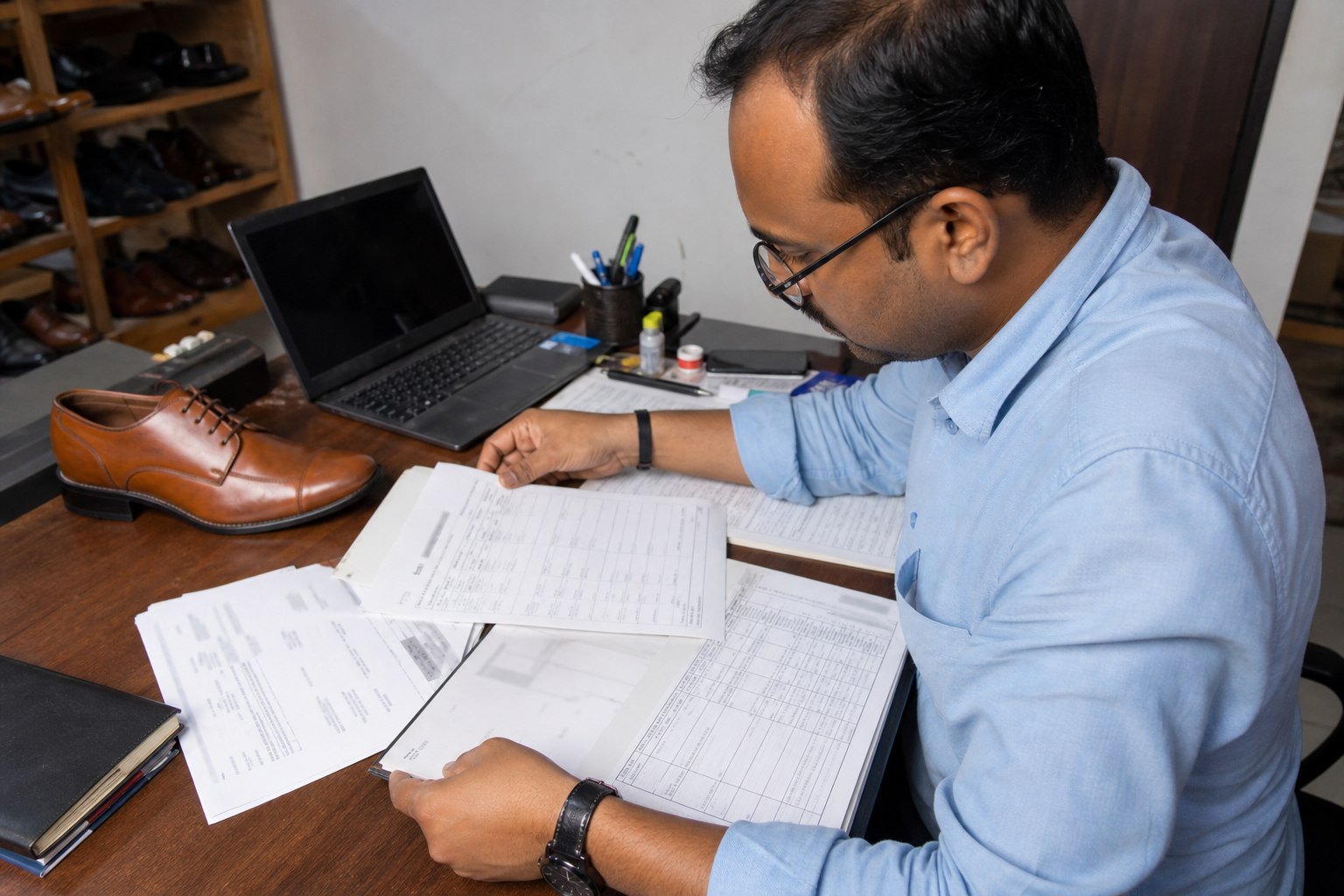
Making excellent leather footwear and being export-ready are two different achievements, and the gap between them is exactly where Council for Leather Exports (CLE) registration sits.
India's footwear manufacturing belts across Agra, Kanpur, Ambur, Ranipet, Chennai, Kolkata, and Jalandhar produce genuinely competitive men's formal shoes, casual footwear, boots, sandals, and safety footwear — but none of that reaches an international retailer's shelf without an exporter who can prove, on paper, that they are legally and credibly positioned to ship it.
The Council for Leather Exports is the statutory export promotion body under the Ministry of Commerce and Industry mandated to promote and represent India's leather and leather footwear sector specifically.
Registration with CLE is the foundational credential in that process: it unlocks the Registration-cum-Membership Certificate (RCMC), gives access to government export incentive schemes and trade fair participation, and gives international buyers the institutional signal they check first during vendor onboarding — often before they ask about construction quality or price.
This guide covers what CLE is and does, why registration matters for leather footwear specifically, who should register and under which exporter category, the step-by-step application process, documents and fees, and how registered exporters convert that institutional credibility into faster buyer onboarding.
Pair this guide with How to Export Leather Footwear from India and the Leather Footwear Export Documentation Checklist for the full compliance stack. Always confirm current fees and application steps on leatherindia.org and the DGFT and NSWS portals, as administrative workflows are updated periodically.
Key Takeaways
Summary Box
Executive Summary
Summary Box
CLE registration is the entry credential that converts a leather footwear factory with good manufacturing capability into a legitimate, buyer-facing exporter.
It is a practical prerequisite for accessing sector-specific export promotion benefits under India's foreign trade policy framework, and it is one of the first documents serious international importers and retail chains ask to see during vendor onboarding — often before they ask about construction quality or leather grade.
The practical value stacks in three layers. Institutionally, registration and RCMC unlock DGFT scheme eligibility, CLE-organised trade fair participation, and market development support. Commercially, RCMC access supports faster documentation for export incentive claims and smoother interaction with export promotion machinery.
Reputationally, a current RCMC signals to buyers that a factory operates inside a recognised regulatory and promotional framework rather than outside it — a signal that shortens the trust-building cycle that would otherwise take months of unverified email exchanges.
This guide treats registration as infrastructure to build once and maintain diligently, not a one-time hurdle to clear and forget. Exporters who diary renewals, keep their RCMC current, and use CLE's trade fair and market intelligence access actively extract far more commercial value from their membership than exporters who file once and never revisit it.
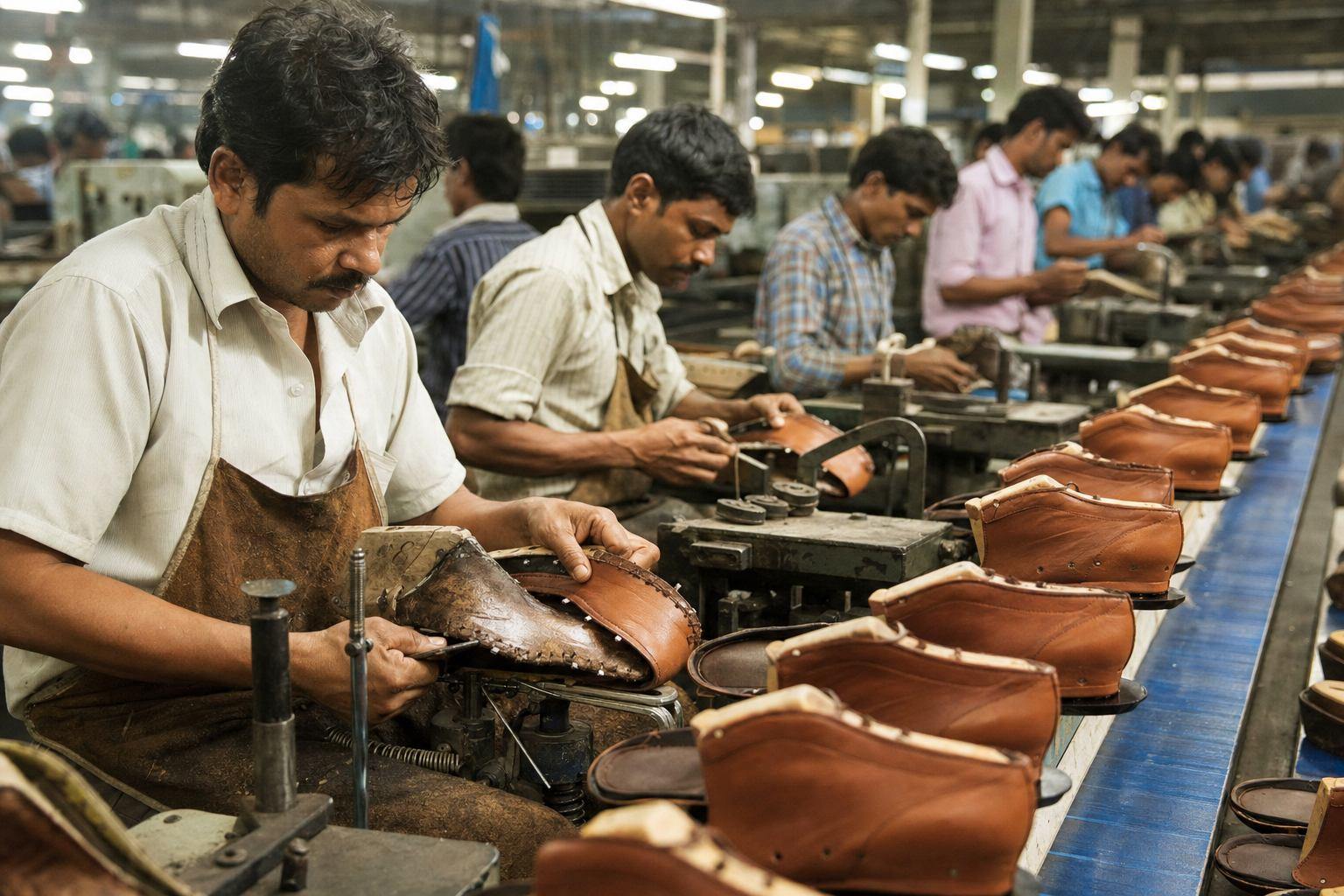
Market Size & Industry Overview
Key Statistics
India's leather and leather footwear sector is a globally significant export category, with leather footwear representing one of the largest single product groups within it by both volume and value. Export destinations concentrate in the USA, UK, Germany, and other EU markets, with the UAE, France, Netherlands, Australia, and Japan forming an important secondary tier. This scale is precisely why CLE registration carries real institutional weight — buyers sourcing from a sector this large expect the exporting entity to sit inside a recognised regulatory framework, not outside it.
The Council for Leather Exports, established under the aegis of the Ministry of Commerce and Industry and headquartered in Chennai, operates as both a registration and regulatory-adjacent body and a commercial facilitation platform for the sector. It issues the RCMC for registered leather and leather footwear exporters, represents the industry in trade policy consultations, organises and subsidises participation in major international leather and footwear fairs, runs buyer-seller meets, and publishes periodic export statistics and market intelligence used by exporters and analysts alike.
CLE operates through regional and branch offices covering the country's major leather and footwear manufacturing belts, including Chennai, Kolkata, Kanpur, Agra, and Delhi, which means most exporters can complete registration formalities and follow-up queries without needing to travel to headquarters for routine matters. Beyond registration itself, CLE functions as the sector's institutional voice in trade policy matters — representing exporter interests in discussions on duty structures, raw material access, and market access negotiations with destination governments.
India Leather Footwear Export Landscape Snapshot Relevant to Registration
Swipe →
Data table — swipe horizontally on small screens
| Dimension | Approximate Figure | Relevance to Registration |
|---|---|---|
| Sector export scale | Leather footwear is a major share of India's overall leather product exports | High buyer scrutiny of exporter credentials given sector scale |
| Primary manufacturing clusters | Agra, Kanpur, Ambur, Ranipet, Chennai, Kolkata, Jalandhar | Registration applies to factories and merchant exporters across every cluster |
| HS classification | HS 6403 (leather upper footwear); related codes 4107, 6404 | RCMC and product category selection must align with HS classification on shipping bills |
| Regulatory/promotional body | Council for Leather Exports (Chennai, under Ministry of Commerce and Industry) | Sole sector-specific export promotion council for leather and leather footwear registration |
| Regional office network | Chennai, Kolkata, Kanpur, Agra, Delhi and other branch offices | Most exporters can complete registration without travelling to headquarters |
Export Statistics
Key Statistics
India's leather footwear exports reach dozens of countries, with the USA, UK, Germany, and other EU states historically absorbing the majority of shipments, and the UAE, France, Netherlands, Australia, and Japan forming a meaningful secondary tier. Every commercial shipment, regardless of destination or category, is filed through a shipping bill that references the exporting entity's IEC and, for scheme eligibility purposes, its CLE RCMC status.
For a new exporter, this scale matters practically: buyers in high-volume destinations such as the USA and Germany deal with dozens of Indian factories and merchant exporters, and use RCMC status as a fast, low-cost filter before deeper diligence begins. An exporter who cannot produce current registration evidence immediately signals higher risk relative to competitors who can. Export volume concentration also affects how quickly a lapsed or missing registration gets noticed — in high-volume, high-competition destinations, buyers rarely wait for a slow-moving supplier to sort out paperwork.
CLE Registration Scope Notes by Footwear Line (not a CLE product mix bulletin)
Swipe →
Data table — swipe horizontally on small screens
| Footwear Line You Will Export | What to Declare at CLE / RCMC | HS Reminder for Shipping Bills | Common Registration Mistake |
|---|---|---|---|
| Finished leather footwear (general men's/women's) | Finished leather footwear under CLE product groups | Confirm 6403 sub-heading per sole/upper before first shipping bill | Registering under finished leather only, then trying to ship shoes |
| Own-factory manufacturer exporter | Manufacturer-exporter category matching plant capacity | Invoice description must match RCMC product language | Trading on a friend's RCMC without membership of record |
| Merchant exporter consolidating factories | Merchant-exporter category with footwear in scope | Keep factory of manufacture traceable on packing docs | Vague 'leather goods' membership used for footwear tenders |
| Safety footwear with protective toecap | Footwear in RCMC + separate safety standard evidence | Metal toecap often 6403.40; composite toe usually 6403.91/99 | Assuming CLE alone replaces EN ISO / ASTM certificates |
| Boots / sandals added after formal shoes | Update CLE product category declaration before diversification | Boot shaft and open footwear constructions may change classification notes | Diversifying styles without refreshing RCMC particulars |
Import Statistics
Key Statistics
Destination-market scrutiny of CLE registration and RCMC status varies by buyer type. US and European retail chains and importers, dealing in high volumes, tend to verify RCMC status as a baseline onboarding step before moving to price negotiation and sample requests. German and Japanese buyers layer RCMC verification alongside deeper construction, leather-grade, and — where relevant — chromium VI or LWG documentation checks. UAE buyers increasingly expect RCMC evidence alongside standard commercial documentation as part of a broader vendor risk assessment.
Reading destination-side import data alongside your own registration status helps you anticipate how quickly a given market will move from first inquiry to first purchase order. A buyer who cannot immediately confirm your RCMC status when your product and price already look attractive will often simply move to the next supplier on their shortlist rather than wait for you to produce it. A procurement team evaluating dozens of inbound quotations from Indian factories for a single tender typically uses registration status as an early elimination filter precisely because verifying it is cheap and fast, while verifying construction quality requires a physical sample and days of turnaround.
How Destination Markets Use RCMC Status During Import Onboarding
Swipe →
Data table — swipe horizontally on small screens
| Destination Market | How RCMC Status Is Used | Practical Note |
|---|---|---|
| USA | Baseline vendor onboarding filter before price negotiation | Have RCMC ready to share on first serious inquiry |
| UK | Standard documentation check alongside construction quality review | Confirm post-Brexit import documentation separately |
| Germany | Layered alongside construction, leather-grade, and chromium VI checks | Pair RCMC with REACH and LWG documentation |
| UAE | Standard vendor onboarding requirement | Move quickly once documentation is confirmed clean |
| Japan | Part of a broader consistency and traceability evaluation | Registration alone will not close a deal, but its absence will stall one |
Product Categories and Variants
Summary Box
CLE registration scope should match the actual role your business plays in the export chain — merchant exporter, manufacturer exporter, or component/tannery supplier — since selecting the wrong category later complicates scheme eligibility or buyer documentation requests. Understanding these categories is itself part of being export-ready, whether you are the exporter registering or a buyer trying to understand what an exporter's registration actually covers.
Merchant Exporter RCMC
Applies to trading houses and merchant exporters who buy finished leather footwear from one or more manufacturing units for export without owning the production facility themselves.
Typical Scope
Men's and women's formal and casual leather footwear, boots, sandals, and safety footwear sourced from multiple factories for consolidated export under one accountable registration.
Manufacturer Exporter RCMC
Applies to footwear factories exporting their own manufactured output directly under their own name and registration, rather than through an intermediary.
Typical Scope
Leather footwear produced, finished, and exported by the same registered manufacturing entity, typically with its own cutting, lasting, and finishing lines.
Tannery and Component Supplier Registration
A related but distinct registration track for tanneries converting raw or wet-blue hides into finished leather, and for component suppliers producing soles, linings, and hardware — inputs into the footwear export chain rather than finished-pair exporters themselves.
Why Category Selection at Registration Matters
A business that registers only as a tannery or component supplier but later wants to quote finished footwear directly to an international buyer will need to update its registration category, and buyers should not assume a supplier's registration automatically covers the specific product they are being quoted. Confirm at the RFQ stage that the counterparty's CLE registration category matches the transaction you are actually entering into — a finished-pair export order should be quoted by an entity registered as a merchant exporter or manufacturer exporter, not by a component supplier acting outside its registered scope.
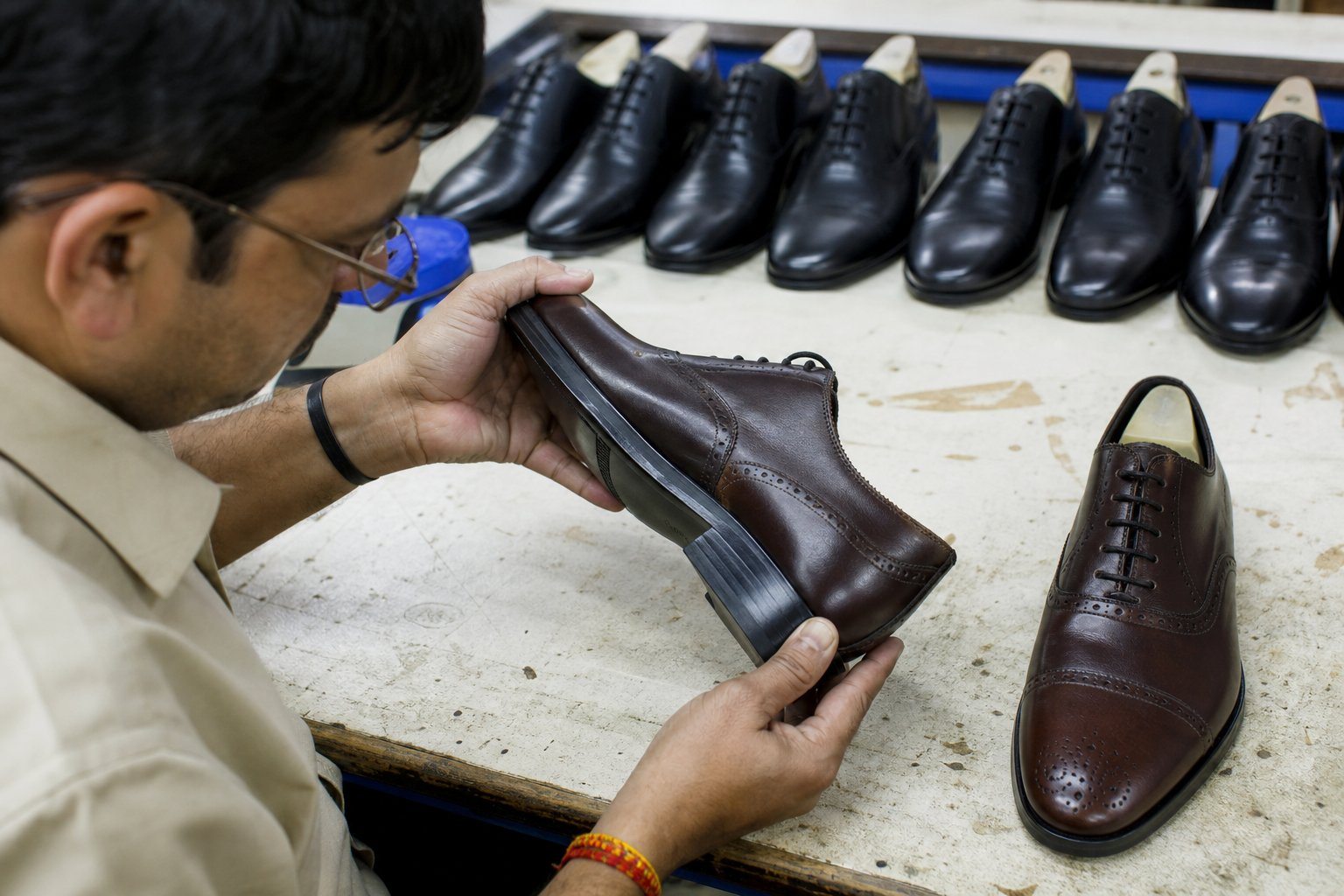
Manufacturing Overview
Export Tip
Registration category should track the actual manufacturing role a business performs, so it is worth understanding the production chain even for exporters who never touch a cutting table themselves. A manufacturer exporter runs cutting, lasting, stitching or cementing, and finishing under its own registered facility. A merchant exporter typically owns none of that infrastructure but is registered to consolidate output from several such facilities under one accountable export identity.
This distinction affects what buyers should expect to verify. A manufacturer exporter's RCMC should be checked alongside a factory audit of the actual production floor. A merchant exporter's RCMC confirms its own export eligibility, but a thorough buyer should also ask which factories actually produce the goods and whether those factories carry appropriate credentials of their own — a merchant exporter's registration does not automatically vouch for every sub-supplier's manufacturing standard.
Tanneries sit one layer further back in the chain, converting raw or wet-blue hides into the finished leather that footwear factories cut and last. Vertically integrated businesses that both tan leather and manufacture finished footwear should carry registration appropriate to both activities, since a single manufacturer exporter registration does not automatically extend tannery-specific compliance standing such as LWG certification.
Pricing Analysis
Buyer Tip
Framed purely as a cost, CLE registration is inexpensive relative to almost any other line item in a leather footwear export programme. Framed as a pricing and access lever, it is far more significant: RCMC status is frequently a precondition for buyers to even request a formal quotation, meaning an unregistered factory is not competing on price at all — it is excluded from the conversation entirely. The relevant pricing comparison is not registration fee versus no registration fee, but registration fee versus the FOB value of every container you cannot credibly quote without it.
Beyond the compliance and credibility gate, registration indirectly supports better pricing outcomes: CLE trade fair participation and market intelligence access help exporters benchmark international pricing, and DGFT scheme eligibility tied to RCMC status can improve net realisation through incentive programmes that only registered exporters can access. Exporters sometimes under-price their first quotations to unregistered or newly registered buyers out of anxiety about losing the deal, without realising that the buyer's own onboarding process already filters out competitors who cannot produce basic credentials.
CLE Registration Cost Planning Reference
Swipe →
Data table — swipe horizontally on small screens
| Cost Item | Typical Nature | Planning Note |
|---|---|---|
| Registration/RCMC fee | One-time or periodic fee per current CLE schedule | Modest fixed cost; verify live amount on the official CLE portal |
| Renewal fee | Periodic renewal per validity cycle | Diary renewal ahead of expiry; lapsing disrupts RCMC continuity |
| Trade fair participation (subsidised) | Partial CLE subsidy for eligible registered exporters at major fairs | Budget travel and stall costs beyond the subsidised portion |
| LWG or category-specific certification | Separate cost outside CLE registration itself | Budget separately; protects buyer trust more than registration alone |
| Quality and testing infrastructure | Lab testing, chromium VI reports, construction QC systems | Budget as an ongoing cost, not a one-time registration expense |
MOQ Analysis
Buyer Tip
CLE registration itself carries no minimum order quantity — it is a one-time institutional credential, not a per-shipment requirement. Where MOQ becomes relevant is in how registration category interacts with scheme eligibility: several DGFT incentive schemes and CLE market development support programmes are structured around export value thresholds over a reporting period, not single-shipment volume, so a newly registered exporter with modest early-stage MOQs is not disadvantaged relative to a large exporter when it comes to registration itself.
New exporters sometimes assume they need to hit a minimum export volume before CLE registration is worthwhile. In practice, registering early — before your first buyer conversation, regardless of your anticipated trial-order size — is what shortens the path to that first order, since RCMC status is frequently checked at the RFQ stage, long before MOQ negotiation begins.
Registration Timing Relative to Order Stage
Swipe →
Data table — swipe horizontally on small screens
| Business Stage | Registration Priority | Rationale |
|---|---|---|
| Pre-outreach (no buyer contact yet) | Complete CLE registration now | RCMC status is checked at first serious inquiry, before MOQ is discussed |
| Active RFQ conversations, no order yet | Registration should already be complete | A registration gap here stalls buyer progression at the credential-check stage |
| Trial order confirmed | Registration must be current, not pending | Shipping bill filing and scheme eligibility both depend on active RCMC |
| Scaling to full-container programmes | Registration renewal discipline becomes critical | Larger buyers audit supplier credentials on a recurring basis, not just at onboarding |
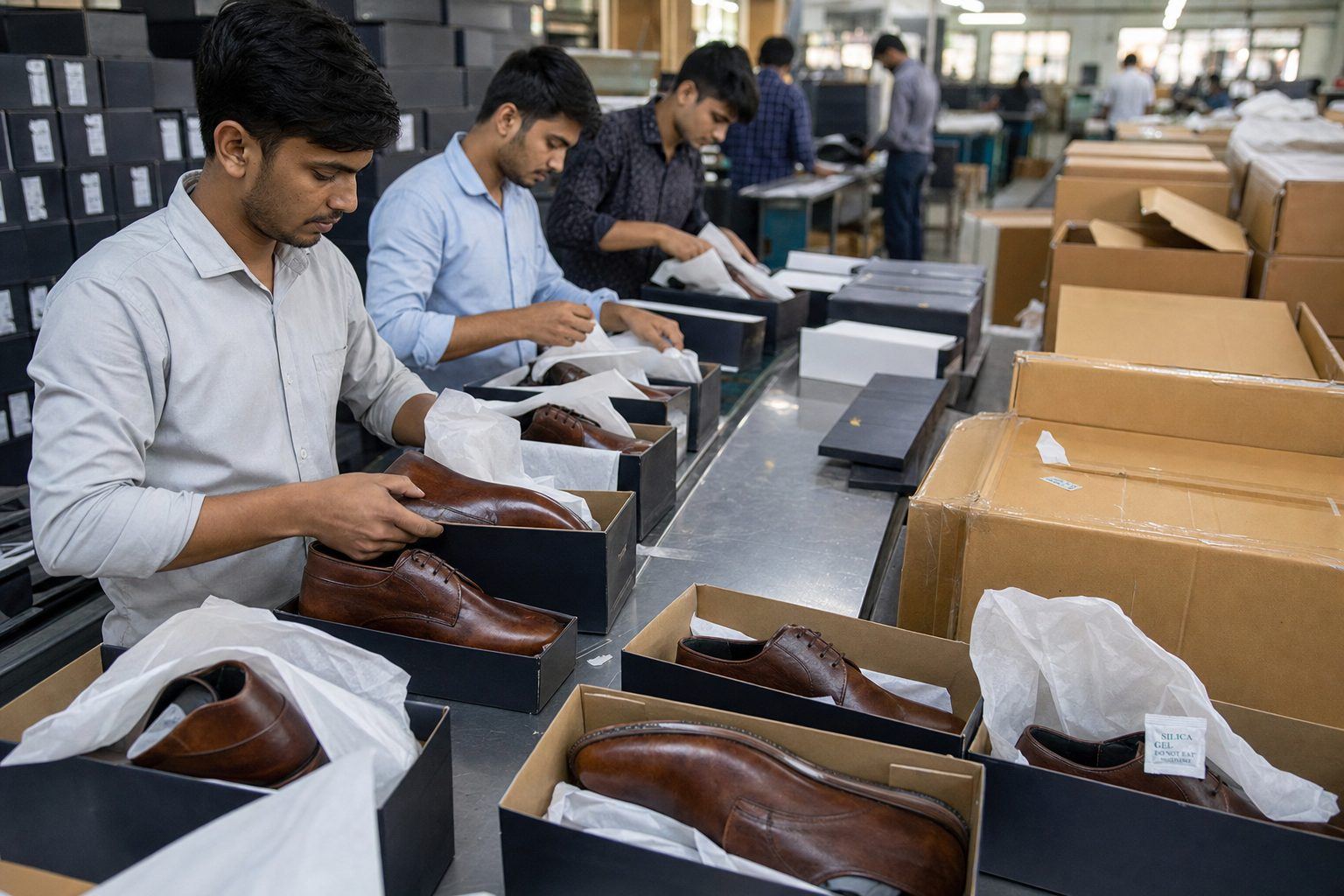
Packaging Standards
Export Tip
CLE registration does not prescribe packaging formats directly, but RCMC and IEC references appear on the documentation that accompanies every packed shipment — invoices, packing lists, and shipping bills all carry the registered exporter's credentials, and mismatches between the registered entity name and the name printed on carton labels or documents are a common, avoidable source of customs and buyer confusion.
Documentation-to-Packaging Consistency Checkpoints
Swipe →
Data table — swipe horizontally on small screens
| Checkpoint | What to Verify | Why It Matters |
|---|---|---|
| Legal entity name | Matches exactly across RCMC, IEC, invoice, and carton markings | Mismatches are a leading cause of processing delays and buyer confusion |
| Registered product category | Matches the actual footwear category being packed and shipped | A registration scoped to one category should not be used to export another without updating |
| Shipping mark consistency | Carton marks match packing list and commercial invoice exactly | Prevents receiving disputes at destination and eases customs cross-referencing |
| Certificate references on cartons or documents | RCMC and IEC numbers referenced accurately where required | Some buyer onboarding packs require these numbers printed on cover documentation |
Container Loading Details
Export Tip
Registration status has no direct bearing on how many pairs fit into a container, but it does affect how smoothly a container clears customs at both ends. A shipping bill filed against a lapsed or mismatched RCMC can delay filing itself, which pushes back the entire loading and sailing schedule regardless of how well the physical cargo was packed.
Exporters should build registration status verification into their pre-loading checklist alongside the physical loading plan — confirming RCMC validity the week before container stuffing costs nothing and prevents a last-minute scramble if a renewal was missed.
Registration Checks Relative to the Container Loading Timeline
Swipe →
Data table — swipe horizontally on small screens
| Timeline Stage | Registration Check | Consequence If Skipped |
|---|---|---|
| 4–6 weeks before sailing | Confirm RCMC and IEC validity through expected shipping bill filing date | Late discovery of a lapse can delay the entire shipment |
| 1–2 weeks before container stuffing | Cross-check registered category against the actual style being shipped | Category mismatch complicates scheme benefit claims after shipment |
| Day of shipping bill filing | File with CHA using current RCMC reference | Shipping bill cannot be filed against an expired or incorrect registration |
| Post-shipment | Archive RCMC-referenced documents for scheme and audit records | Missing archives complicate future incentive claims |
Shipping Methods
Export Tip
CLE registration and RCMC status apply uniformly regardless of shipping method — sea freight FCL and LCL programmes, and air freight for samples or urgent trial lots, all reference the same exporter credentials on their respective transport documents. What differs by shipping method is how much scrutiny a buyer applies to registration status before booking: a sample sent by air ahead of a formal RFQ may not trigger deep registration verification, but a full container booking almost always does.
Exporters should treat registration currency as a constant, not something to verify only before large shipments. A lapsed RCMC discovered while trying to file a shipping bill for even a small LCL trial order can delay that shipment just as it would a full container, since the shipping bill filing process itself depends on active registration status regardless of cargo volume.
Certifications
Compliance Notes
CLE RCMC sits alongside, and does not replace, several other certifications leather footwear exporters need depending on category and destination. Treat these as a linked stack, not a single certificate, and keep every credential current together.
Certification Stack for Leather Footwear Exporters
Swipe →
Data table — swipe horizontally on small screens
| Certification / Registration | Mandatory or Optional | Relationship to CLE Registration |
|---|---|---|
| Import Export Code (IEC) | Mandatory for any commercial export | Prerequisite referenced in the CLE application itself |
| GST registration | Mandatory for domestic tax compliance | Prerequisite referenced in the CLE application itself |
| CLE RCMC | Effectively mandatory for credible export | The sector-specific credential this guide covers |
| Leather Working Group (LWG) tannery certification | Optional, increasingly expected by EU/US brands | Separate credential for the tannery, not covered by exporter RCMC |
| REACH chromium VI test reports | Mandatory for EU/UK-bound chrome-tanned leather | Separate, batch-specific documentation independent of RCMC |
| EN ISO 20345 / ASTM F2413 (safety footwear) | Mandatory for the respective destination market | Category-specific certification layered on top of RCMC |

Buyer Requirements
Buyer Requirements
If you are a buyer evaluating an Indian leather footwear factory's CLE credentials rather than the exporter filing them, use this shorter verification sequence before advancing a serious inquiry.
Country-wise Opportunities
Market Snapshot
Registration credibility does not carry identical weight everywhere. Understanding how each market actually uses RCMC status helps a newly registered exporter prioritise outreach and prepare the right supporting evidence for each conversation.
Registration Credibility by Destination Market
Swipe →
Data table — swipe horizontally on small screens
| Country | How RCMC Status Is Used | Practical Note |
|---|---|---|
| USA | Baseline vendor onboarding filter | Combine with ASTM certification for safety footwear |
| UK | Standard check with construction-quality review | Confirm post-Brexit documentation separately |
| Germany | Layered with REACH and LWG checks | Pair with chromium VI documentation |
| UAE | Standard onboarding requirement | Fast-moving once documentation is confirmed clean |
| France/Netherlands | Combined with construction and finish-quality review | Important for Rotterdam-based distribution hubs |
| Australia | Combined with biosecurity packaging checks | Confirm wood pallet/dunnage compliance |
| Japan / South Korea | Part of a broader consistency evaluation | Registration absence stalls deals even with strong product quality |
United States of America
US importers and retail chains use RCMC as a baseline vendor onboarding filter, often combined with ASTM-aligned certification checks for safety footwear lines. Have registration evidence ready to share on the first serious inquiry rather than after a follow-up request. Larger US retail chains running formal vendor compliance programmes may also cross-reference your registration details against their own supplier database before a purchase order is issued.
United Kingdom
UK buyers layer RCMC verification with construction-quality review for classic men's formal footwear categories. Confirm post-Brexit import documentation requirements separately, even where they resemble EU rules. Department store buying teams tend to formalise vendor onboarding around a documented checklist, and RCMC evidence is typically one of the first items requested alongside company registration and bank reference details.
Germany
German specialty and compliance-conscious buyers layer RCMC verification alongside REACH chromium VI documentation and, increasingly, LWG tannery certification checks. Pair your CLE registration with these category-specific credentials for a stronger onboarding position. German industrial buyers sourcing safety footwear additionally expect EN ISO 20345 certification referenced to the exact style being quoted, not a general company-level claim.
United Arab Emirates
UAE trading houses and re-export hubs expect RCMC as a standard onboarding requirement and move quickly once documentation is confirmed clean, given the region's high-volume commodity and re-export trading dynamics. Because much of the region's demand flows onward into other Gulf and African markets, UAE-based buyers often move faster than European counterparts once basic registration and pricing checks are satisfied.
France and Netherlands
French and Dutch buyers, including Rotterdam-based distribution hubs, expect RCMC alongside construction and finish-quality documentation for mid-to-premium footwear programmes. Dutch distribution buyers consolidating multi-supplier shipments for onward EU distribution place particular weight on documentation consistency across all their India-based suppliers, since a single flagged registration issue can delay an entire consolidated container.
Australia, Japan, and Beyond
Australian importers combine RCMC verification with biosecurity-related packaging compliance checks, particularly for shipments using wood pallets or dunnage. Japanese and South Korean buyers treat registration as part of a broader consistency and traceability evaluation — registration alone will not close a Japanese deal, but its absence will reliably stall one at the first onboarding stage.
Expert Insight: Registration as Buyer-Facing Infrastructure
Expert Insight Box
We see too many first-time exporters treat CLE registration as a task to squeeze in once a buyer is already asking for a quote — that is exactly backward. Complete IEC, GST, and CLE registration before you send a single outreach email, then use the trade fair and market intelligence access that comes with membership to sharpen your positioning before you ever quote a serious buyer.
Buyers, for their part, should treat RCMC verification as a five-minute task that saves months of downstream risk. A factory that produces its RCMC, IEC, and prior export documentation without hesitation on a first serious inquiry is telling you something valuable about how it will behave later, when a size-run dispute or a shipping delay actually tests the relationship.
Sourcing Checklist
Checklist
- Obtain IEC on the DGFT portal and complete GST registration before starting any CLE filing.
- Assemble entity documents: PAN, GST certificate, incorporation or partnership deed, bank certificate, and address proof for the manufacturing or office facility.
- Choose the correct registration category — merchant exporter, manufacturer exporter, or tannery/component supplier — deliberately, matching your actual business role.
- File the application with CLE, keeping every legal name identical across all documents.
- Pay the current registration and RCMC fee and retain payment acknowledgements with your compliance records.
- Diary RCMC renewal dates well ahead of expiry to avoid disrupting scheme eligibility or buyer onboarding.
- Use CLE's trade fair participation and market intelligence access actively once registered, not passively.
Buyer Checklist
Checklist
Exporter Checklist
Checklist
Compliance Checklist
Checklist
Compliance Notes

Common Buyer Mistakes
Common Mistakes Box
Most preventable friction in the registration verification process traces to a short list of recurring, avoidable mistakes on the buyer's side.
Expert Insight: Registration Discipline Over Time
Expert Insight Box
A recurring pattern we see is exporters who complete CLE registration once, secure their first few buyers, and then let renewal reminders slide for years because nothing visibly broke. The break, when it comes, tends to happen at the worst possible moment — mid-negotiation with a new buyer who asks for current RCMC evidence and receives a lapsed certificate instead.
We advise every exporter to treat registration renewal exactly like machine maintenance: scheduled, assigned to a specific person, and checked off before it becomes urgent. The cost of staying current is trivial. The cost of discovering a lapse while a container is due to sail is not.
Future Market Trends
Key Statistics
Through 2030, CLE's role in leather footwear export will likely evolve across several dimensions: continued digitisation of registration and documentation processes aligned with broader DGFT and NSWS integration efforts, expanded market access support for premium destinations, and growing emphasis on traceability and sustainability documentation as EU deforestation-linked sourcing rules and similar frameworks elsewhere raise expectations for leather-origin transparency alongside sector registration.
Exporters who treat CLE registration as a living platform — keeping RCMC current, engaging with trade fair and market intelligence channels systematically, and pairing registration with LWG and REACH-aligned documentation — will capture a disproportionate share of premium market growth relative to competitors who file once and never revisit their credentials.

Conclusion
- Do next: verify live CLE registration fees and process on leatherindia.org, then file with a complete document pack before buyer outreach begins.
- Read How to Export Leather Footwear from India and the Leather Footwear Export Documentation Checklist for the full compliance stack.
- Review How to Source Leather Footwear Directly from India to understand how buyers verify these same credentials.
- Explore Top Leather Footwear Products Exported from India and Most Demanded Indian Leather Footwear Styles by Country.
- Continue with Best Countries for Indian Leather Footwear Exports, Sustainable & Premium Leather Footwear Export Opportunities, Find International Buyers for Leather Footwear, and Trade Shows for Leather Footwear Exporters.
- Explore merchant exporter, export products from India, and global sourcing partner partnership models for leather footwear.
CLE registration is the foundational institutional credential for exporting Indian leather footwear commercially: RCMC continuity, market access, and the buyer credibility that shortens the path from first inquiry to first container. The sequence is straightforward — obtain IEC and GST first, complete CLE registration with a clean document pack in the correct exporter category, diary renewals, and use trade fair and market intelligence channels actively rather than passively.
Verify IEC and GST consistency this week, assemble the document checklist from this guide, and complete CLE registration before your next buyer outreach cycle. Altus Exports supports leather footwear factories and merchant exporters who need registration frameworks, product readiness, and buyer connectivity aligned to real export execution.