
Best Countries for Indian Perfume Exports
By Saurabh Mittal, Founder, Altus Exports
Market selection guide for Indian perfume exporters and international importers — comparing WITS-verified HS 330300 partners (Singapore, USA, UAE, Netherlands, Saudi Arabia, UK) on demand drivers, duty treatment, air vs sea freight corridors, alcohol rules, and compliance burden for finished fragrance programmes.

Choosing where to send your first — or next — perfume shipment from India is not a geography exercise; it is a duty, logistics, alcohol-compliance, and channel-fit exercise under HS 3303. Singapore, the United States, the UAE, the Netherlands, Saudi Arabia, and the United Kingdom each represent materially different buyer profiles, tariff treatments, freight modes, and documentation expectations for finished perfumes and toilet waters. A Mumbai-filled EDP programme that wins in Singapore duty-free re-export may need FDA-aligned labeling context for USA retail; a Kannauj attar line into Jeddah may require Halal documentation and alcohol-free claims verified before procurement releases a trial PO. This guide ranks and compares India's primary perfume destination markets with enough specificity to sequence market entry intelligently.
WITS/UN Comtrade directional data for 2024 shows India HS 330300 exports at approximately US$231.6M and 33,844 MT, with WITS-verified top export partners by value being Singapore (~US$40.8M), the United States (~US$35.5M), the UAE (~US$33.2M), the Netherlands (~US$28.9M), Saudi Arabia (~US$22.2M), and the United Kingdom (~US$17.0M), followed by Iraq, Brazil, Kuwait, Sudan, Belgium, and Qatar. That scale makes landed-cost positioning, smell-panel QC discipline, and honest alcohol or attar documentation decisive: exporters and importers who understand destination duty rates, air vs sea corridor economics, and compliance burden convert faster than those who treat every market as interchangeable on FOB alone.
For country-by-country format preferences and note-family demand patterns, see Most Demanded Indian Perfumes by Country. For the operational export process behind any market entry, see How to Export Perfumes from India. Altus Exports supports market-entry planning as a global sourcing partner in India for both Indian manufacturers and international procurement teams evaluating HS 3303 supply.
Key Takeaways
Summary Box
Executive Summary
Summary Box
Market selection for Indian perfume exports combines WITS-verified partner ranking (Singapore, USA, UAE, Netherlands, Saudi Arabia, UK on HS 330300) with corridor economics: air vs sea freight, alcohol and dangerous-goods rules, and destination compliance stacks that vary more than MFN duty percentages suggest.
India's finished perfume export profile is concentrated in six primary partners that together represent the majority of recorded 2024 value — but each partner serves different channel economics. Singapore and UAE behave partly as re-export and duty-free hubs; USA and UK anchor retail and ethnic wholesale; Netherlands often functions as EU entry consolidation; Saudi Arabia drives GCC attar and alcohol-free demand.
This guide ranks destinations by duty treatment, freight mode fit, and compliance burden so exporters and importers sequence entry intelligently — without duplicating per-country SKU preference matrices covered in the demand intelligence post.
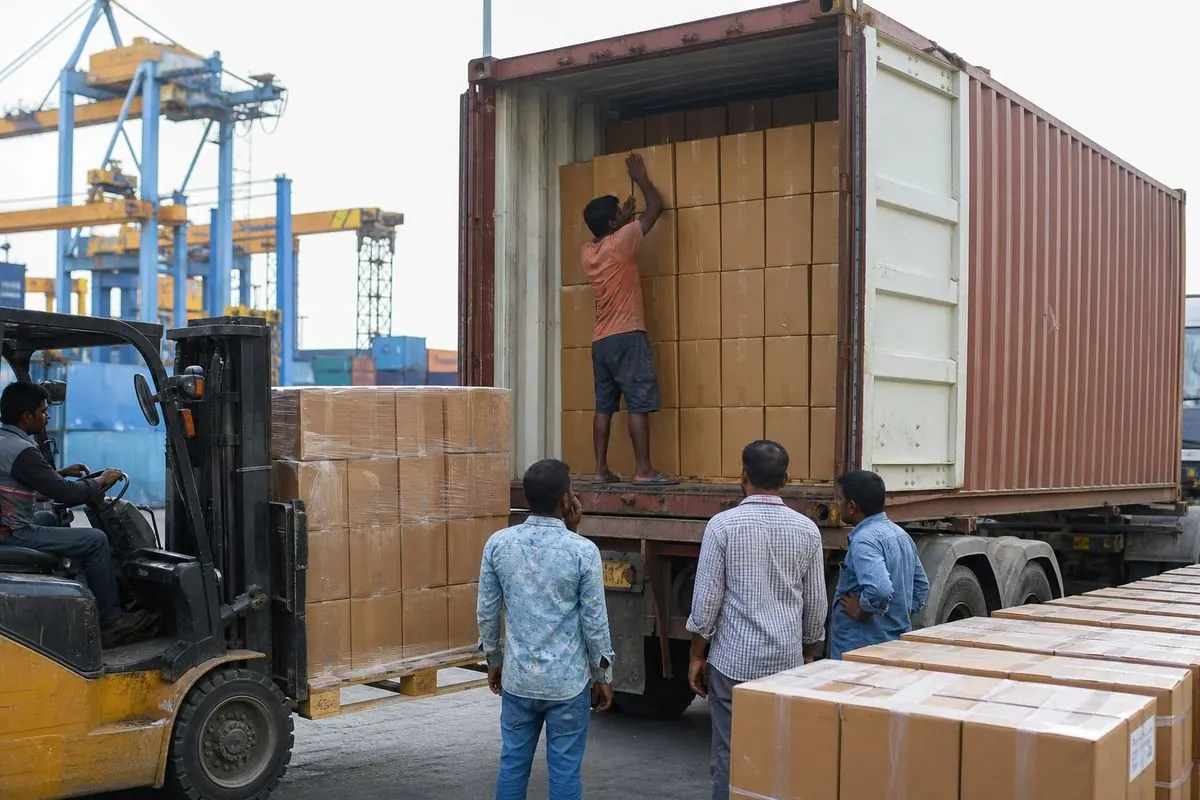
Market Size & Industry Overview
Key Statistics
India's perfume and toilet water export industry spans traditional attar heritage in Kannauj, modern EDP/EDT compounding in Maharashtra, ethnic gift-set consolidation in Delhi-NCR, contract filling in Gujarat, and private-label retail programmes from Bengaluru. Merchant exporters and manufacturer-exporters consolidate lots under Chemexcil-aligned documentation for international buyers who need a single interface from smell-panel approval to air or sea booking.
Global demand for Indian-origin fragrance reflects cost-competitive private-label filling, heritage attar and rose/keora water lines, and duty-free travel-retail packs — not commodity bulk essential oils. Buyers evaluate Indian supply on smell-panel consistency, fill accuracy, carton print quality, SDS readiness, and corridor lead times as much as headline FOB.
Market size planning should anchor on WITS India HS 330300 export totals (~US$231.6M / ~33,844 MT in 2024 directional) and partner-level value shares — then layer live duty schedules, alcohol import rules, and buyer channel type before committing first-container capacity.
Export Statistics
Key Statistics
Use WITS India HS 330300 export partner ranking before committing air uplift or FCL — Singapore, USA, UAE, Netherlands, Saudi Arabia, and UK led 2024 value; Iraq, Brazil, Kuwait, and secondary partners show smaller recorded flows but active commercial demand in ethnic and regional retail.
India ITC-HS planning lines include 33030010 (eau de cologne), 33030020 (rose water), 33030030 (keora water), 33030040 (non-spirit perfumes), 33030050 (spirit perfumes), 33030060 (spirituous toilet preparations NES), and 33030090 (other) — confirm the exact eight-digit line with your CHA before shipping-bill filing.
Re-verify Comtrade and DGCI&S figures annually before board or buyer presentations; partner rankings shift with currency, festive calendars, and duty-free inventory cycles.
Directional profile of Indian perfume trade (HS 330300 / India 330300xx)
Swipe →
Data table — swipe horizontally on small screens
| Metric | Directional Estimate | Notes |
|---|---|---|
| Primary manufacturing clusters | Kannauj; Mumbai–Thane–Nashik; Delhi-NCR; Gujarat; Bengaluru | Attar heritage through modern EDP filling and private-label retail |
| Applicable HS headings | 3303 / WITS 330300; India 33030010–33030090 | Confirm eight-digit line with CHA — contrast 33074100 agarbatti and 3301 essential oils |
| Governing trade council | Chemexcil (Basic Chemicals, Cosmetics & Dyes EPC) | RCMC alongside IEC for export credibility in Chapter 33 fragrance lines |
| WITS 2024 export value (HS 330300) | ~US$231.6M / ~33,844 MT | Directional UN Comtrade — finished perfumes and toilet waters |
| Leading destination partners | Singapore, USA, UAE, Netherlands, Saudi Arabia, UK | Then Iraq, Brazil, Kuwait, Sudan, Belgium, Qatar — directional |
| Dominant export formats | EDP, EDT, EDC, attars, rose/keora water, gift sets | Private-label and duty-free travel packs growing share |
Import Statistics
Key Statistics
Two import lenses matter for market selection. First, India's own imports of HS 330300 in 2024 were US$165,840.42K (~US$165.8M) / 3,607,200 kg, led by France, Spain, and Italy — proof that premium EU brands compete inside India while India remains a net exporter (~US$231.6M outbound).
Second, destination import demand for Indian-origin perfume is distributed across travel-retail hubs, modern retail chains, ethnic wholesalers, and GCC attar specialists. India's export partners on HS 330300 reflect that channel concentration: Singapore and UAE absorb hub and re-export flows; USA and UK anchor retail and diaspora ethnic trade; Netherlands often serves EU consolidation; Saudi Arabia drives GCC programmes where attar and alcohol-free formats matter.
Indian exporters win on corridor access, smell-panel reliability, private-label MOQ flexibility, and Chemexcil-aligned documentation — not on claiming to be the world's largest perfume origin.
India HS 330300 import origins (WITS 2024) and destination demand for Indian exports
Swipe →
Data table — swipe horizontally on small screens
| Market / Origin | Directional Profile | Primary Buyer / Note |
|---|---|---|
| France → India (import origin) | ~US$73.6M inbound to India | Premium EU brand competition inside India |
| Spain → India (import origin) | ~US$37.4M inbound | Fragrance / toilet-water inbound |
| Italy → India (import origin) | ~US$20.2M inbound | Premium EU fragrance inbound |
| Singapore (India export partner) | Re-export hub, travel-retail consolidation | Duty-free operators, regional distributors |
| United States (India export partner) | Ethnic retail, private-label, boutique programmes | Importers, retail chains, e-commerce sellers |
| UAE (India export partner) | Local retail + re-export | Wholesale, duty-free, souk traders |
| Netherlands (India export partner) | EU entry consolidation | EU importers; REACH / Cosmetics Regulation stack |
| Saudi Arabia / UK (India export partners) | GCC attar / UK retail & ethnic wholesale | Halal / UK Cosmetics Regulation labeling respectively |
Product Categories / Variants
Summary Box
Destination market fit begins at format level — spirit perfumes (33030050), non-spirit attars (33030040), and aqueous toilet waters (33030020/33030030) face different duty, alcohol, and labeling rules in the same country. This section frames format economics for market selection; detailed country × SKU matrices live in the demand intelligence post.
Hub markets like Singapore tolerate mixed assortments; USA and EU programmes often require IFRA-aligned allergen statements and retail labeling discipline; Gulf markets frequently prioritize attar, alcohol-free, and Halal-documented lines alongside conventional EDT.
Perfume format lens for destination market planning (HS 330300xx)
Swipe →
Data table — swipe horizontally on small screens
| Format | India ITC-HS (directional) | Typical Channel | Market-Entry Note |
|---|---|---|---|
| Eau de parfum (EDP) | 33030050 | Modern retail, private-label, duty-free | Higher FOB per ml; air common on launch volumes |
| Eau de toilette (EDT) | 33030050 | Mass retail, ethnic wholesale, gift sets | Volume sea programmes once carton engineering proven |
| Eau de cologne (EDC) | 33030010 | Economy retail, barber and grooming channels | Lower per-unit value — watch freight as % of FOB |
| Attars / alcohol-free oils | 33030040 | GCC, ethnic retail, premium boutique | Halal and alcohol-free claims need audit-ready docs |
| Rose / keora water | 33030020 / 33030030 | Ethnic beauty, ritual, and gifting | Aqueous formats — lighter DG burden than spirit perfumes |
| Private-label gift sets | 33030050 / mixed | Festive, Ramadan/Eid, duty-free | Lead times 6–12 weeks with bottle tooling |
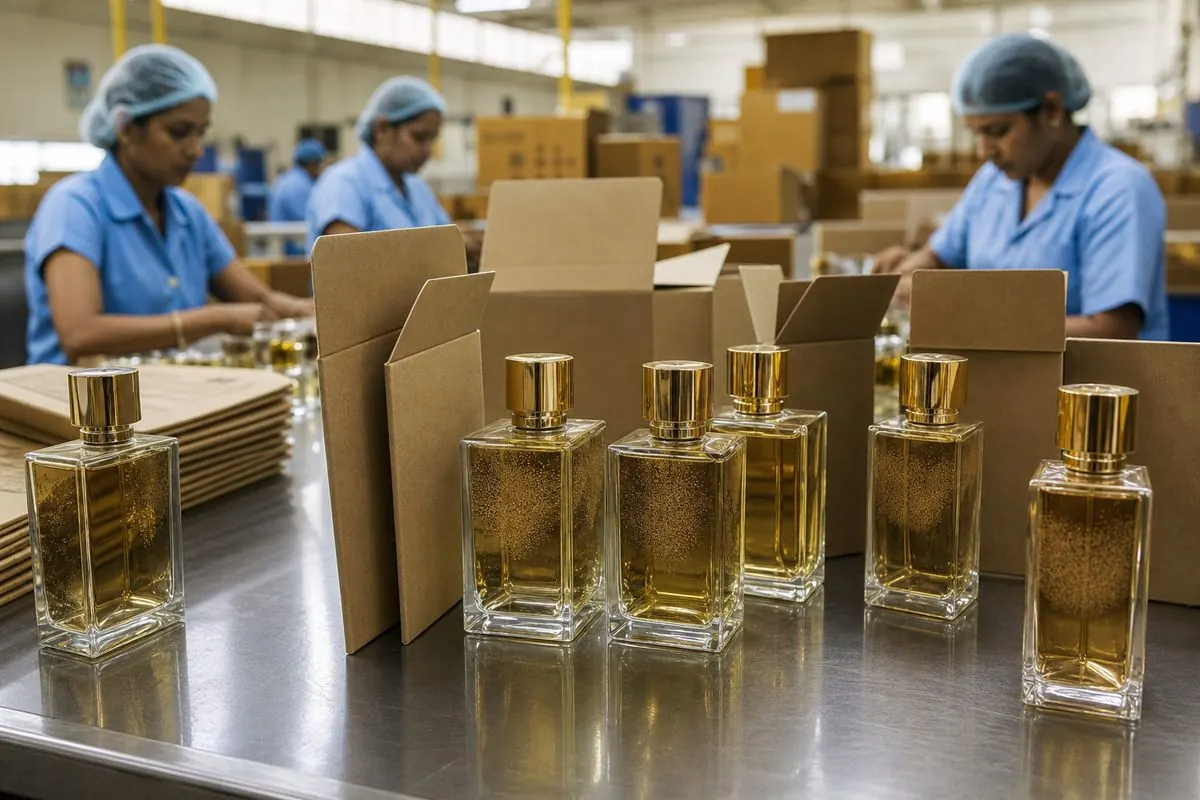
Manufacturing Overview
Export Tip
Market entry succeeds when FOB quotes reflect real compounding and filling capability — Singapore duty-free EDP programmes and Kannauj attar lines for Jeddah originate on different production paths even under the same HS chapter.
Manufacturing honesty prevents choosing a market whose buyers need a format or certification stack your mapped suppliers do not run reliably — corridor logistics plus format fit beat generic lowest-FOB market chasing.
For cluster-level sourcing depth, see Source Perfumes Directly from India; this market guide focuses on where those lots should land first.
Destination Ranking Methodology
Market Snapshot
Rank destination markets by four variables: WITS partner value (demand signal), duty and alcohol treatment, freight corridor fit (air vs sea), and compliance burden (labeling, IFRA, REACH, Halal, FDA). The matrix below gives a working model — validate against current Comtrade flows and your buyer's import broker before committing capacity.
Tier 1 hub markets (Singapore, UAE) often convert faster for mixed-assortment first orders because re-export and duty-free channels tolerate broader SKU mixes. Tier 2 retail markets (USA, UK, Netherlands) pay sustainable FOB but audit documentation harder. Tier 3 GCC depth (Saudi Arabia, Kuwait, Qatar) rewards attar and alcohol-free programmes when Halal scope is pre-cleared.
Market entry priority matrix for Indian perfume exporters
Swipe →
Data table — swipe horizontally on small screens
| Priority Tier | Markets | Rationale |
|---|---|---|
| Tier 1 — hub and fast conversion | Singapore, UAE | Re-export and duty-free channels; mixed assortments; established India corridors |
| Tier 2 — retail scale and audit stack | USA, Netherlands, UK | Strong FOB potential; labeling, IFRA, REACH / UK Cosmetics Regulation discipline required |
| Tier 3 — GCC attar and alcohol-free depth | Saudi Arabia, Kuwait, Qatar | Heritage attar demand; Halal and alcohol rules vary by programme |
| Tier 4 — secondary and diaspora | Iraq, Brazil, Sudan, Belgium | Smaller Comtrade flows; ethnic and regional retail opportunity |
Duty & Tariff Comparison by Market
Duty rates on HS 3303 move with destination schedule updates, preferential agreements, and alcohol content classifications — never quote landed cost from memory. The table below is a planning reference only; confirm live TARIC, USITC HTS, UK Global Tariff, and GCC schedules with the buyer's broker before trial PO.
Singapore GST and alcohol rules affect local retail vs re-export treatment; EU entry via Netherlands triggers REACH importer obligations beyond MFN duty; USA HTS 3303 lines require FDA cosmetics labeling context for retail programmes.
Directional duty and compliance planning notes by destination (HS 3303)
Swipe →
Data table — swipe horizontally on small screens
| Market | Directional Duty Context | Key Compliance Focus | Planning Note |
|---|---|---|---|
| Singapore | GST and alcohol rules; hub re-export treatment | Duty-free channel specs, alcohol handling | Confirm hub vs local retail consignee before DDP promises |
| United States | US HTS 3303 MFN / preferential as applicable | FDA cosmetics labeling, Prop 65 where claims apply | Air common on first orders; broker HTS confirmation essential |
| UAE | GCC tariff context; emirate-specific retail rules | Halal documentation, alcohol import handling | Re-export hub flows differ from mall retail programmes |
| Netherlands | EU CN 3303 via TARIC | REACH/SVHC, EU Cosmetics Regulation labeling | Often EU consolidation — importer of record obligations matter |
| Saudi Arabia | GCC customs; SFDA cosmetics context | Halal, alcohol-free preferences, attar formats | Oud and floral heritage lines convert when docs are ready |
| United Kingdom | UK Global Tariff post-Brexit | UK Cosmetics Regulation labeling, fragrance allergen declarations | Not identical to EU — separate label review required |
Air vs Sea Freight Corridors
Freight mode selection is a market-entry decision, not a logistics afterthought. High-value glass EDP programmes with short retail launch windows often justify BOM or DEL air uplift despite higher per-carton freight; volume EDT and gift-set programmes with proven master-carton engineering typically shift to Nhava Sheva or Mundra sea FCL once smell-panel and leakage QC gates pass.
Alcohol content can trigger dangerous-goods documentation on air — budget SDS review and carrier acceptance before promising sample delivery dates to USA or EU buyers. Sea programmes need crush protection, scent segregation, and humidity control for long transits into Gulf and European ports.
Directional freight corridor comparison for Indian perfume exports
Swipe →
Data table — swipe horizontally on small screens
| Corridor | Primary Gateway | Best For | Typical Lead-Time Band |
|---|---|---|---|
| Air — Gulf and Middle East | BOM / DEL airport | Samples, attar trials, high-value EDP launches | 3–7 days door-to-airport at destination |
| Air — USA and EU | BOM / DEL airport | Smell-panel kits, private-label launches, urgent replenishment | 5–10 days; DG docs when alcohol triggers |
| Sea — Gulf | Nhava Sheva / Mundra | Volume EDT, gift sets, duty-free replenishment | 18–28 days to Jebel Ali / Dammam region |
| Sea — USA / EU | Nhava Sheva / Mundra | FCL private-label once carton engineering proven | 28–45 days depending on port pair |
| Sea — Southeast Asia hub | Nhava Sheva / Chennai | Singapore consolidation and re-export programmes | 12–20 days to Singapore hub |
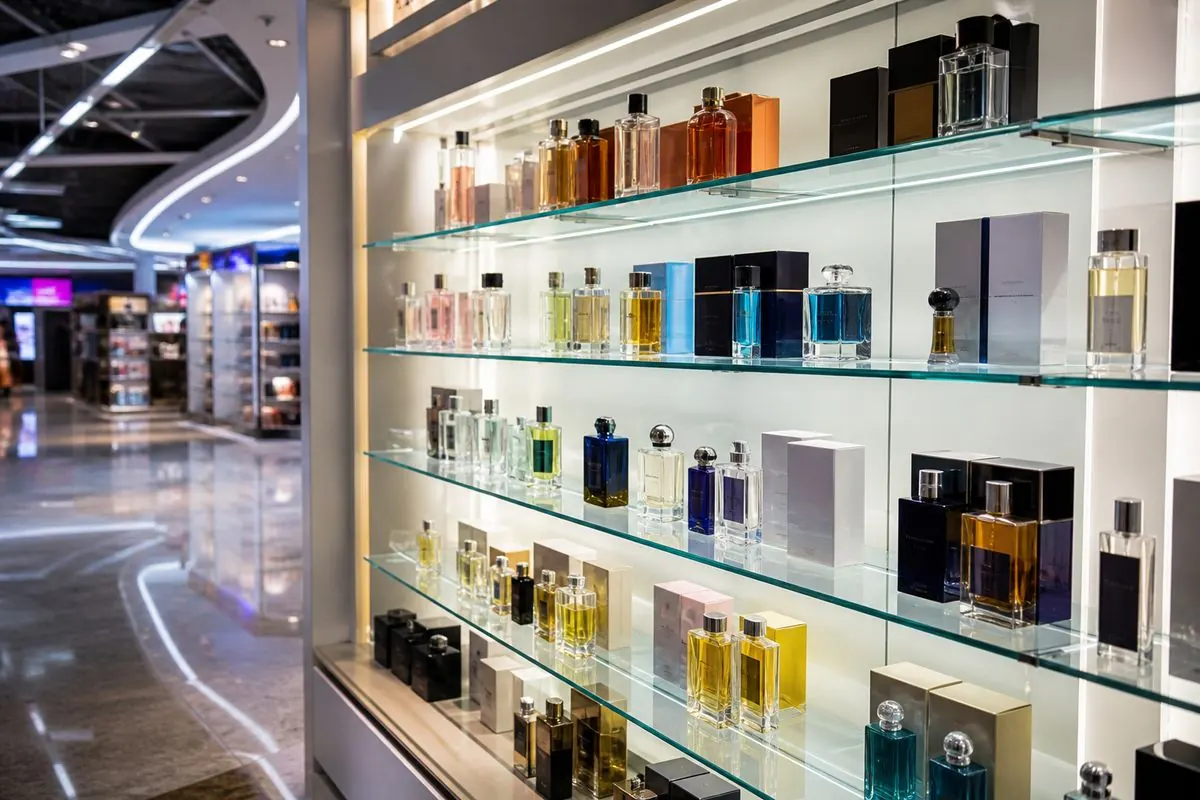
Compliance Burden Comparison
Compliance burden often exceeds duty cost on first orders. Score each destination on labeling audit depth, alcohol and DG paperwork, certification requirements (IFRA, REACH, Halal), and broker clearance complexity before ranking markets by Comtrade value alone.
USA and EU/UK programmes typically sit at the high end of documentation burden; Singapore and UAE hub flows can be moderate when consignee structure and re-export intent are clear; Saudi Arabia adds Halal and alcohol-format sensitivity that rewards attar-first market entry.
Low-to-moderate burden signals
- Hub consignee with established India corridor and archived supplier credentials
- Mixed-assortment duty-free orders with pre-cleared SDS and COO packs
- Aqueous rose/keora water lines without spirit classification on the shipping bill
High burden signals
- USA retail with FDA-aligned label review and Prop 65 claim checks
- EU importer-of-record with REACH/SVHC and EU Cosmetics Regulation labeling
- UK post-Brexit separate label stack from EU-approved artwork
- Air shipments where alcohol content triggers dangerous-goods carrier acceptance
Export Process
Export Tip
Market selection connects to export execution — but the full IEC-to-shipment step sequence lives in the pillar guide. At market-entry stage, confirm your exporter holds valid IEC, Chemexcil RCMC where used, and HS 330300xx filing experience on the corridor you target.
First orders should align Incoterms with compliance clarity: FOB Nhava Sheva or BOM/DEL airport for buyers with mature import brokers; CFR/CIF when the exporter manages freight but the buyer owns duty; avoid DDP into USA or EU until alcohol, labeling, and importer-of-record roles are contractually clear.
See How to Export Perfumes from India for registration, shipping-bill filing, and alcohol/DG overview; see Perfume Export Documentation Checklist for the document pack by destination.
Pricing Analysis
Buyer Tip
Use pricing bands for landed-cost modeling by destination — alcohol content, bottle tooling, and gift-carton print drive premiums beyond headline FOB. Index-linked or short-validity quotes reduce dispute risk when fragrance oil or alcohol input costs move between quote and shipment.
Directional FOB pricing bands by perfume format (USD, planning only)
Swipe →
Data table — swipe horizontally on small screens
| Format | Directional FOB Band | Notes |
|---|---|---|
| Economy EDT / EDC | ~US$1.5–4/unit | Fill volume, spray quality, and carton spec drive spread |
| Mid retail EDP | ~US$4–12/unit | Private-label print and bottle tooling add premium |
| Premium private-label EDP | Above mid band | Custom bottle molds, IFRA docs, festive gift packs |
| Attar / alcohol-free oils | ~US$15–80+/kg | Flower and oud grade dominate; quote per kg or tola-equivalent |
| Rose / keora water | Lower per litre | Aqueous formats; freight as % of FOB matters on sea programmes |
MOQ Analysis
Buyer Tip
MOQ tiers scale from smell-panel samples through trial lots to wholesale programmes — destination market choice affects viable MOQ because air freight economics on 500-unit trials differ sharply from 10,000-unit FCL sea replenishment.
Directional MOQ tiers by transaction stage
Swipe →
Data table — swipe horizontally on small screens
| Stage | Typical MOQ | Purpose |
|---|---|---|
| Samples | 10–50 retail units or 50–200 ml attar oil | Smell-panel evaluation and buyer approval |
| Trial order | 500–2,000 units/SKU or 5–20 kg attar | First commercial corridor test; air or LCL common |
| Wholesale programme | 5,000–20,000+ units or 50–200+ kg oil | FCL sea or scheduled air replenishment |
| Private-label launch | Varies; often 2,000–10,000+ units/SKU | Bottle tooling and label cycles extend lead time |
Packaging Standards
Export Tip
Destination markets punish packaging failures at clearance and retail — leakage, crushed glass, and scent cross-contamination destroy hub and retail relationships alike. Match primary bottle spec, secondary carton, and master-carton divider engineering to corridor mode before quoting FOB.
Packaging formats and specifications for perfume export
Swipe →
Data table — swipe horizontally on small screens
| Layer | Typical Configuration | Key Requirement |
|---|---|---|
| Primary | Glass or PET bottles with spray, roll-on, or screw caps | Fill accuracy, crimp integrity, leak test on sample lot |
| Secondary | Individual cartons or gift boxes with fragrance tags | Barcode, batch/lot ID, net fill (ml), alcohol % where required |
| Master | Divider cartons; scent segregation | Crush protection for sea; UN/DG notes when air alcohol rules apply |
| Pallet | Stretch-wrapped staging | Cool, dry warehouse; no aromatic cross-stack with incompatible SKUs |
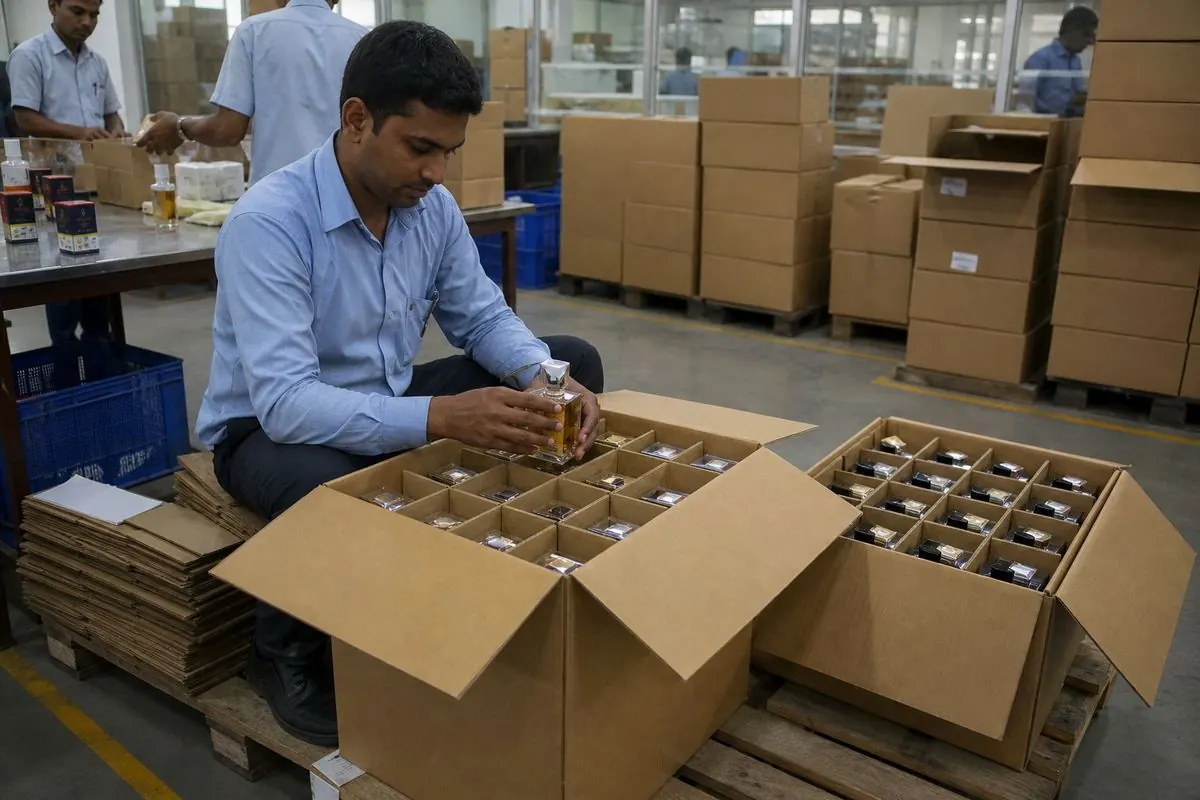
Container Loading Details
Export Tip
Glass fragrance FCL requires stow planning — bottle density, carton dimensions, and weight distribution determine payload and breakage risk. Confirm stuffing patterns with forwarder and CHA before buyer commits to sea MOQ.
Directional container loading reference for perfume FCL programmes
Swipe →
Data table — swipe horizontally on small screens
| Container | Typical Payload Context | Planning Note |
|---|---|---|
| 20ft FCL | Mid-volume EDT or mixed gift sets | Divider master cartons; avoid over-stack crush |
| 40ft FCL | Volume private-label replenishment | Heavier sea economics; prove leakage QC on trial first |
| LCL | Trial corridors before FCL commit | Higher per-unit freight; acceptable for 500–2,000 unit tests |
| Air pallet | Samples and high-value EDP launch | DG paperwork when alcohol triggers; carrier acceptance required |
Shipping Methods
Export Tip
- Air — samples, attar trials, high-value EDP, urgent duty-free replenishment
- Sea FCL — proven carton engineering, volume EDT, gift-set festive programmes
- Sea LCL — corridor trials before FCL scale; watch freight as % of FOB on economy SKUs
- Courier — smell-panel kits and document originals; not for commercial volume
Shipping method follows market and SKU economics — not the reverse. Singapore hub replenishment may mix air for urgent SKUs with sea for volume cores; USA retail launches often air first container then sea for repeat POs; Kannauj attar into GCC may air trial kilograms then sea drum or carton programmes.
Primary Indian gateways: Nhava Sheva and Mundra for sea; BOM and DEL for air; Chennai for select Southeast Asia corridors. Inland haul from Mumbai, Kannauj, Delhi-NCR, or Bengaluru clusters must align with stuffing slots and SDS release timing.
Certifications
Compliance Notes
- SDS / MSDS for fragrance compound and alcohol content
- IFRA conformity and fragrance allergen statements when buyer-mandated
- REACH / SVHC statements for EU programmes via Netherlands or direct entry
- Halal certificates for selected Middle East programmes
- Certificate of Origin, commercial invoice, packing list, B/L or AWB
- Dangerous-goods and alcohol declarations for qualifying air shipments
- FDA / EU Cosmetics Regulation labeling alignment for retail destinations
Certification burden varies by destination more than by Indian origin — prepare document packs alongside market ranking, not after choosing FOB. Chemexcil RCMC supports exporter credibility; buyer-mandated IFRA, REACH, Halal, and SDS packs determine clearance speed.
Buyer Requirements
Buyer Requirements
International buyers ranking India supply should specify destination market, format mix, labeling standard, and freight mode preference in the RFQ — ambiguous "perfume from India" inquiries produce mismatched quotes and failed trials.
Importers into USA, EU, and UK should name their broker, intended retail channel, and certification stack upfront. Gulf buyers should clarify Halal scope and alcohol vs attar mix. Duty-free operators should specify hub consignee and re-export intent.
For importer-side verification workflows, see Source Perfumes Directly from India; for demand-by-format depth, see Most Demanded Indian Perfumes by Country.
Country-wise Opportunities
Market Snapshot
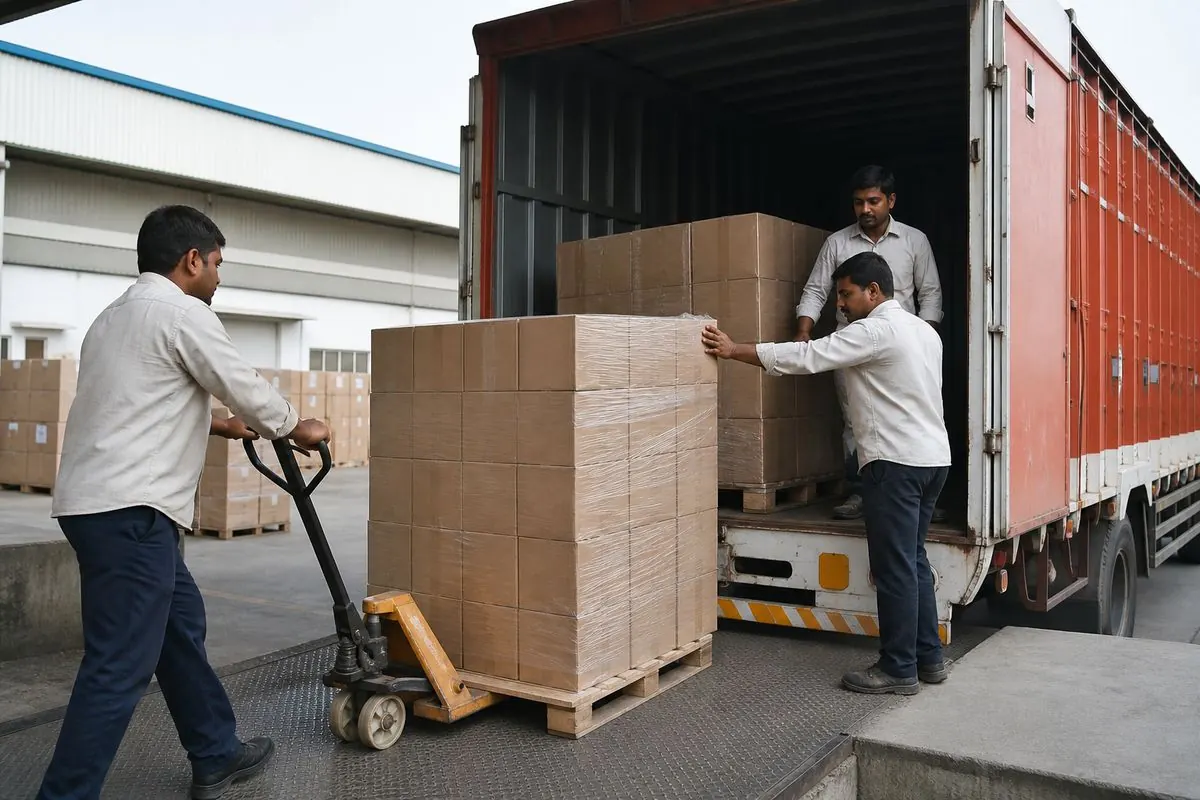
The country table below ranks corridor fit and compliance focus — pair with the demand intelligence post for format-level ordering patterns without duplicating SKU matrices here.
Directional country opportunity profile for Indian perfume exporters (WITS 2024 value context)
Swipe →
Data table — swipe horizontally on small screens
| Country | WITS 2024 Directional Value | Demand Profile | Key Requirement Focus |
|---|---|---|---|
| Singapore | ~US$40.8M | Re-export hub, duty-free, Southeast Asian spillover | Hub consignee clarity, mixed assortments, fast air corridors |
| United States | ~US$35.5M | Retail, ethnic, private-label, duty-free | FDA labeling context, HTS confirmation, Prop 65 where applicable |
| UAE | ~US$33.2M | Local retail, re-export, mall and souk channels | Halal docs, alcohol handling, competitive FOB on EDT volume |
| Netherlands | ~US$28.9M | EU consolidation and Benelux retail | REACH/SVHC, EU labeling, importer-of-record clarity |
| Saudi Arabia | ~US$22.2M | GCC attar, oud-adjacent, alcohol-free growth | Halal, SFDA context, heritage floral and oud lines |
| United Kingdom | ~US$17.0M | Post-Brexit retail and ethnic wholesale | UK-specific labeling, separate from EU artwork |
| Iraq / Brazil / Kuwait | Secondary flows | Regional retail and diaspora | Broker-led clearance; smaller trial-friendly MOQs |
Sourcing Checklist
Checklist
Exporter Checklist
Checklist
Common Buyer Mistakes
Common Mistakes Box
Future Market Trends
Key Statistics
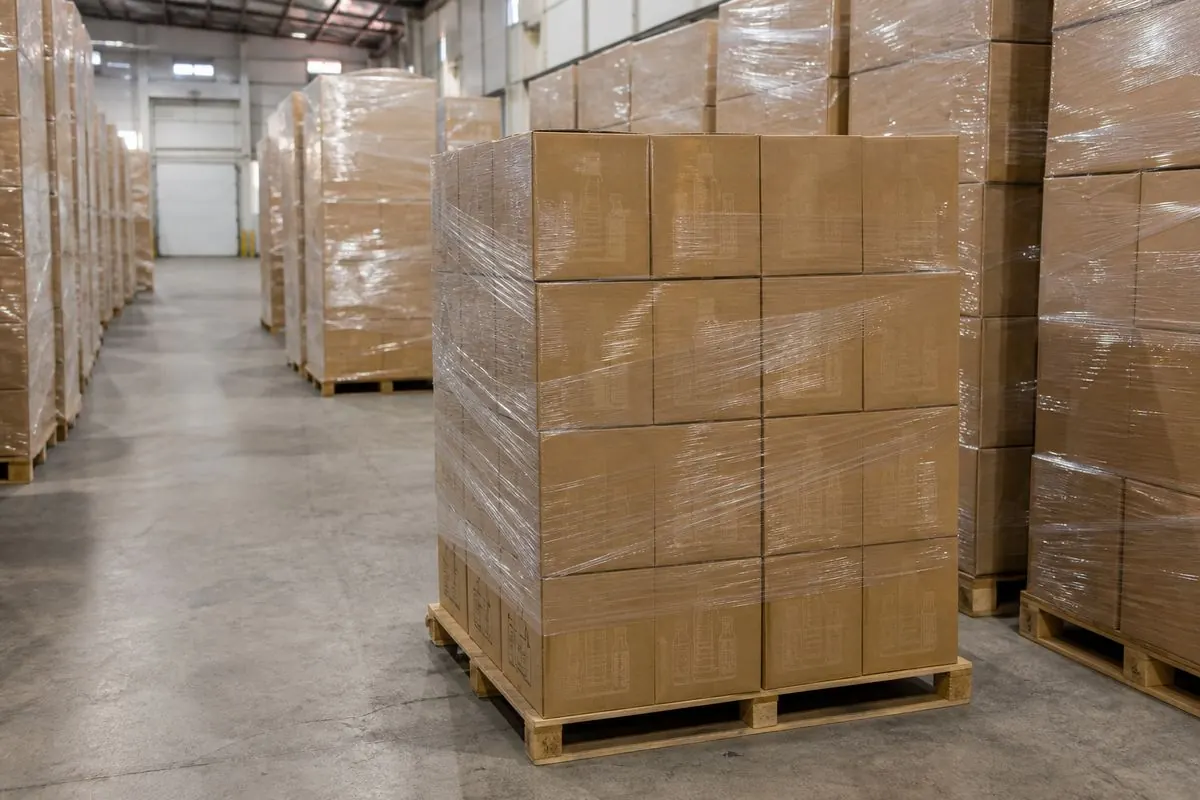
Private-label and duty-free fragrance programmes continue expanding from Indian filling clusters — market entrants should track travel-retail recovery indices and GCC festive calendars, not only Comtrade snapshots.
Alcohol-free, attar-adjacent, and heritage floral lines gain share in Middle East and diaspora retail; EU and USA buyers increase IFRA and allergen documentation expectations on every repeat PO.
Challenges & Solutions
- Challenge: wrong market for format — Solution: rank attar-first for GCC, EDP retail for USA/EU, hub mixed assortments for Singapore/UAE
- Challenge: duty assumption errors — Solution: live tariff and broker memo per destination HS line before quote
- Challenge: air vs sea mismatch — Solution: model landed cost with freight as % of FOB on economy EDT
- Challenge: compliance stack underestimated — Solution: sequence hub markets before USA/EU retail audit programmes
- Challenge: partner value misread — Solution: treat Singapore/UAE hub value as channel signal, not pure local retail demand
Scaling perfume export across multiple destinations involves alcohol rules, documentation, and corridor discipline — not just FOB competitiveness.
Compliance Checklist
Checklist
Compliance Notes
Sources
- WITS / UN Comtrade — India exports HS 330300 by partner, 2024
- WITS / UN Comtrade — India imports HS 330300 by partner, 2024
- UN Comtrade Database
- ITC Trade Map
- DGFT (India) — IEC / trade portal
- ICEGATE — Indian Customs EDI
- India CBIC — Customs Tariff / notifications
- Chemexcil India — Basic Chemicals, Cosmetics & Dyes EPC
- IFRA — International Fragrance Association
- EU Cosmetics Regulation (EC) No 1223/2009
- European Commission TARIC
- ECHA REACH
- GOV.UK — Making cosmetic products available in Great Britain
- USITC Harmonized Tariff Schedule (search 3303)
- US FDA — Cosmetics
- US FDA — MoCRA overview
- IATA Dangerous Goods Regulations
- ICC Incoterms
- Altus Exports — Contact
All sources accessed 2026-08-08. Prefer primary government, council, and multilateral trade databases when citing figures in contracts or buyer presentations. Trade figures, HS notes, and compliance references should be re-verified before quoting buyers or filing shipping bills.
WITS partner rankings and duty notes change annually — re-run Comtrade and destination tariff lookups before market-entry budgets.
Click any source link below for the primary government, council, or multilateral database page.

Conclusion
Market entry for Indian perfume exports succeeds when duty research, freight corridor choice, format fit, and compliance burden align — WITS partner data starts the conversation; smell-panel discipline and documentation quality close repeat orders.
Altus Exports helps sequence Singapore, Gulf, EU, UK, and USA programmes as your merchant exporter in India and global sourcing partner — from corridor ranking through air or sea booking.
Pair this guide with Most Demanded Indian Perfumes by Country, Find International Buyers for Perfumes, and Attar, Natural & Alcohol-Free Perfume Export Opportunities. Contact Altus Exports to plan your first destination corridor under HS 3303.