
Perfume Export Documentation Checklist
By Saurabh Mittal, Founder, Altus Exports
Pre-shipment documentation checklist for finished perfume and toilet water exports from India — commercial invoice, packing list, shipping bill, B/L or AWB, certificate of origin, SDS/MSDS, Chemexcil RCMC, IFRA allergen statements, Halal, alcohol dangerous-goods air notes, and HS 330300xx broker handoff.

Documentation is the compliance gate that determines whether a finished perfume shipment clears customs smoothly or stalls at destination — and in HS 3303 trade, most documentation failures are preventable. Commercial invoice, packing list, shipping bill, bill of lading or air waybill, certificate of origin, SDS/MSDS, Chemexcil RCMC copy, IFRA or allergen statements where buyer-mandated, Halal certificates for selected Middle East programmes, and alcohol dangerous-goods paperwork for qualifying air consignments must cross-reference consistently to the same order, SKU, lot identity, and India ITC-HS 330300xx classification before your CHA files the shipping bill.
This checklist walks through every document an Indian perfume exporter should prepare before filing a shipping bill, and every document an international buyer should request before releasing payment on a first or repeat order. Misaligned invoice and packing-list quantities, SDS versions that do not match the shipped fragrance compound, incorrect eight-digit subheading on 33030050 versus 33030040, and missing alcohol declarations on air shipments remain among the most common documentation failures in perfume export — all avoidable with the pre-shipment gate in this guide.
For the complete export process that documentation supports, see How to Export Perfumes from India. For Chemexcil registration context without repeating membership benefits detail, see Chemexcil Registration Benefits for Perfume Exporters. For attar and alcohol-free documentation nuances, see Attar, Natural and Alcohol-Free Perfume Export Opportunities. Altus Exports maintains documentation discipline across every HS 3303 shipment as part of its export products from India service.
Key Takeaways
Summary Box
Executive Summary
Summary Box
Perfume export documentation must cross-reference the same HS 330300xx line, SKU description, fill volume, lot ID, alcohol percentage where applicable, and quantity across commercial invoice, packing list, shipping bill, and bill of lading or air waybill.
Misaligned SDS versions, unsubstantiated Halal or IFRA claims, and missing alcohol dangerous-goods notes on air consignments remain the top preventable customs and payment delays for finished fragrance shipments.
This checklist is the pre-shipment gate exporters, buyers, and customs brokers use before CHA filing and destination clearance — document ownership and timing are mapped table-by-table below.
Market Size & Industry Overview
Key Statistics
India's finished perfume and toilet water export sector operates through merchant exporters, private-label fillers, and heritage attar houses shipping retail bottles, gift sets, and aqueous toilet waters under HS 3303. Documentation discipline scales with shipment complexity: a single-SKU EDT trial by air requires fewer layers than a multi-SKU private-label FCL with EU allergen statements and Middle East Halal certificates.
WITS/UN Comtrade directional data for 2024 shows India HS 330300 exports at roughly US$231.6M and 33,844 MT worldwide, with Singapore (~US$40.8M), United States (~US$35.5M), UAE (~US$33.2M), Netherlands (~US$28.9M), Saudi Arabia (~US$22.2M), and United Kingdom (~US$17.0M) among leading partners by value. Re-verify figures via DGCI&S or ITC Trade Map before citing in contracts.
Manufacturing clusters in Kannauj, Maharashtra, Delhi-NCR, Gujarat, and Bengaluru each produce documentation packs with slightly different lot-marking conventions — reconcile batch identity at the merchant exporter level before invoice finalization, not at the forwarder desk on cutoff day.
Export Statistics
Key Statistics
Export statistics explain why destination brokers scrutinise HS 3303 document packs on arrival — invoice HS line, alcohol declaration, and lot reconciliation must match shipping bill filings that customs systems already pre-screen.
Directional WITS 2024 partner rankings below support buyer conversations; they do not replace per-destination compliance research covered in market-selection guides.
Directional India HS 330300 export profile (2024, WITS/UN Comtrade)
Swipe →
Data table — swipe horizontally on small screens
| Metric | Directional Estimate | Notes |
|---|---|---|
| Total export value | ~US$231.6M | Finished perfumes and toilet waters — HS 330300 |
| Total export volume | ~33,844 MT | Mixed retail bottles, waters, and oil formats |
| Leading partner: Singapore | ~US$40.8M | Re-export and high-value consolidation hub |
| Leading partner: United States | ~US$35.5M | Private-label and ethnic retail programmes |
| Leading partner: UAE | ~US$33.2M | Halal and duty-free channel demand |
| Leading partner: Netherlands | ~US$28.9M | EU entry and distribution gateway |
| Primary export gateways | Nhava Sheva, Mundra, BOM/DEL air, Chennai | Air common for samples and high-value fragrance |
Import Statistics
Key Statistics
WITS/UN Comtrade 2024 also shows India imported US$165,840.42K (~US$165.8M) / 3,607,200 kg of HS 330300 — chiefly from France, Spain, and Italy — while remaining a net exporter versus ~US$231.6M outbound. Import statistics at destination explain why brokers request SDS, IFRA, and label-compliance copies before first PO — major fragrance import markets maintain active HS 3303 inflows that set documentation expectations Indian exporters must match.
Treat import-side figures as directional context for buyer qualification, not as a substitute for live tariff and cosmetics-regulation lookups at quote time.
Directional import demand context for finished perfume programmes
Swipe →
Data table — swipe horizontally on small screens
| Market | Directional Demand Profile | Primary Buyer Type |
|---|---|---|
| United States | Private-label EDT/EDP and ethnic fragrance retail | Importers, distributors, duty-free operators, retail chains |
| UAE / GCC | Oud-adjacent, floral, and alcohol-free attar programmes | Wholesalers, duty-free, ethnic retail, re-export traders |
| Singapore | Re-export hub and high-value fragrance consolidation | Trading houses, duty-free, Southeast Asia distributors |
| Netherlands / EU | EU Cosmetics Regulation and REACH importer obligations | Distributors, private-label retailers, EU importers of record |
| United Kingdom | Post-Brexit cosmetics labeling and allergen rules | Retail chains, independent fragrance importers |
| Saudi Arabia | Premium oud and Halal-aligned fragrance formats | Retail groups, wholesale distributors, mall operators |
Product Categories / Variants
Summary Box
HS classification must match the actual SKU shipped — spirit perfumes (33030050), non-spirit attar oils (33030040), eau de cologne (33030010), rose water (33030020), and keora water (33030030) each carry different documentation cues on alcohol content, fill declaration, and SDS scope.
Use the table below as a document-planning lens: which compliance layers attach most often by format, not as a substitute for CHA confirmation at shipping-bill time.
Perfume SKU formats and typical documentation layers (HS 3303)
Swipe →
Data table — swipe horizontally on small screens
| Format | Typical India HS | Documentation emphasis |
|---|---|---|
| Eau de parfum (EDP) | 33030050 | Alcohol %, SDS, IFRA/allergen, retail label alignment |
| Eau de toilette (EDT) | 33030050 | Alcohol %, SDS, volume declaration, DG air screening |
| Eau de cologne (EDC) | 33030010 | Lighter alcohol profile; still verify spirit classification |
| Attar / alcohol-free oils | 33030040 | Non-spirit HS line; Halal and IFRA where buyer-mandated |
| Rose water / keora water | 33030020 / 33030030 | Aqueous toilet waters; simpler SDS; volume in litres |
| Private-label gift sets | 33030050 or mixed | Multi-SKU packing list lines; carton content breakdown |
Manufacturing Overview
Export Tip
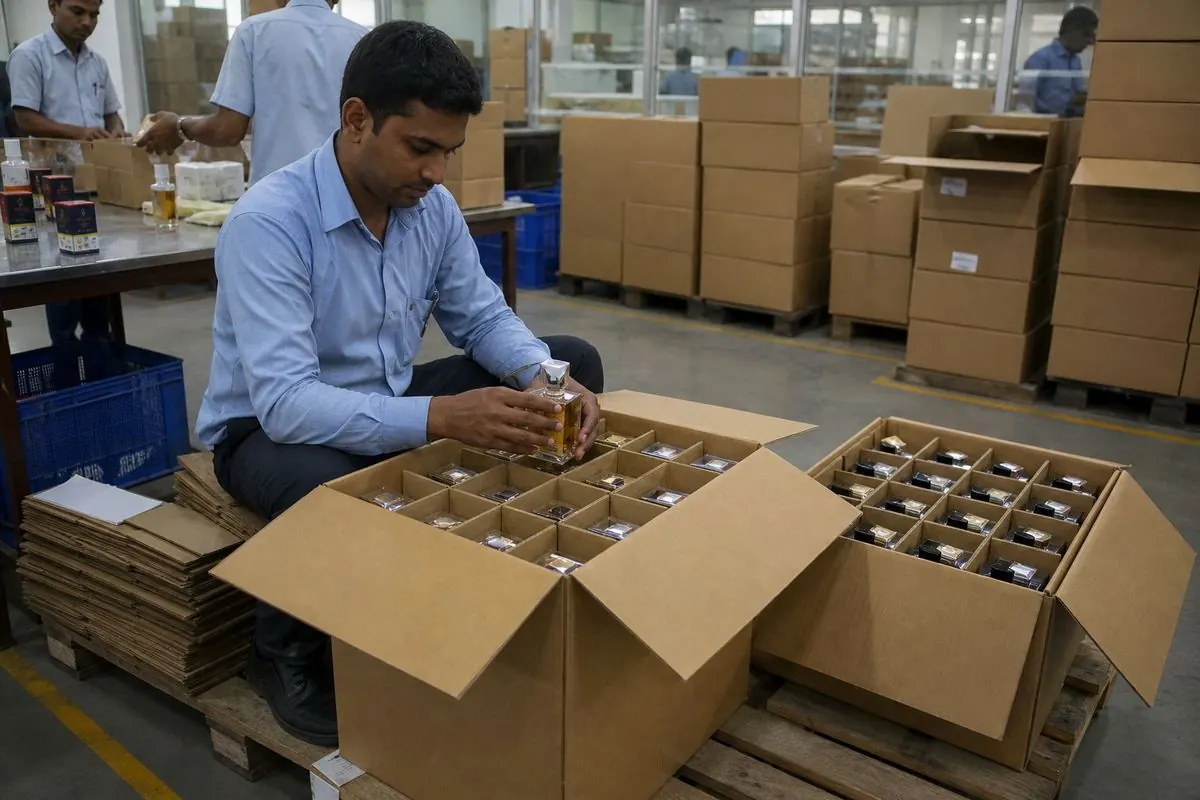
Documentation packs must reflect how filling lines batch, label, and carton perfume SKUs — lot ID on invoice originates at compounding and bottling, not at the forwarder warehouse.
Exporters who reconcile production batch marks and smell-panel release references before invoice finalization avoid the most common destination customs holds on first HS 3303 shipments.
Manufacturing traceability supports every document in the checklist — invoice, packing list, SDS, and shipping bill must tell one lot story per SKU line.

Document-by-Document Checklist
Checklist
Every finished perfume export shipment requires a consistent document pack. The master table below lists each document, when it is required, who owns preparation, and the most common failure mode — use it as a pre-shipment gate before your CHA files the shipping bill under HS 330300xx.
For field-level detail on high-risk documents, see the subsection tables on commercial invoice, packing list, transport documents, and compliance certificates.
Master perfume export documentation checklist — document × when required × owner
Swipe →
Data table — swipe horizontally on small screens
| Document | When required | Owner | Common failure |
|---|---|---|---|
| Commercial invoice | Every commercial shipment | Exporter / merchant exporter | HS line or alcohol % missing; value mismatch vs proforma |
| Packing list | Every commercial shipment | Exporter / warehouse | Unit count mismatch vs invoice; missing lot IDs |
| Shipping bill | Every export from India | CHA (exporter provides data) | Wrong 330300xx subheading; qty/value mismatch |
| Bill of lading (sea) | Ocean FCL/LCL shipments | Forwarder / shipping line | Consignee mismatch; weight vs packing list |
| Air waybill (AWB) | Air samples and commercial air lots | Forwarder / airline | Missing DG notation when alcohol triggers rules |
| Certificate of origin | When destination or FTA requires | Exporter / chamber | HS line differs from shipping bill |
| SDS / MSDS | Essentially all commercial shipments | Manufacturer / exporter | Generic SDS not matching shipped compound |
| Chemexcil RCMC copy | Buyer KYC and many CHA filings | Exporter | Lapsed membership mid-season |
| IFRA / allergen statement | When buyer or EU programme mandates | Fragrance supplier / exporter | Outdated formula reference vs shipped lot |
| Halal certificate | When claimed for GCC programmes | Certifying body / manufacturer | Scope does not cover alcohol handling |
| Alcohol / DG shipper declaration | Qualifying air consignments | Exporter + forwarder | Forwarder accepts booking without DG pack |
| Import permit copy (destination) | When buyer holds alcohol import licence | Buyer → exporter file | Permit SKU scope narrower than invoice |
Commercial Invoice Requirements
Commercial invoice fields for HS 3303 shipments
Swipe →
Data table — swipe horizontally on small screens
| Field | Requirement | Reconcile with |
|---|---|---|
| Exporter and buyer legal names | Must match IEC, PO, and LC beneficiary | Shipping bill, B/L consignee |
| HS 330300xx | Eight-digit India line confirmed with CHA | Shipping bill, COO, buyer import entry |
| SKU description | Format, brand, concentration grade | Packing list, label artwork |
| Fill volume (ml) or weight (kg) | Per unit for retail; per kg for attar | Packing list, SDS |
| Alcohol % v/v | Required for spirit perfumes | SDS, DG declaration, buyer permit |
| Lot / batch ID | Per SKU line on multi-SKU orders | Packing list, smell-panel release |
| Quantity and unit price | Units or kg with FOB breakdown | Proforma, shipping bill value |
| Incoterm and port | FOB Nhava Sheva, BOM, DEL, etc. | B/L or AWB routing |
The commercial invoice is the anchor document — shipping bill, certificate of origin, and buyer LC drafts all derive from it. Vague goods descriptions like "perfume assorted" cause CHA queries and destination reclassification risk.
Packing List and Carton Breakdown
Packing list reconciliation for perfume export
Swipe →
Data table — swipe horizontally on small screens
| Line item | Must show | Failure mode |
|---|---|---|
| SKU / lot line | Description, batch ID, unit count | Batch ID typo vs invoice |
| Master carton | Carton count, dimensions, gross weight | Carton math does not equal unit total |
| Inner pack | Bottles per inner / gift box | Gift-set contents not exploded on list |
| Pallet reference | Pallet ID when palletised | B/L weight mismatch at discharge |
| Marks and numbers | Carton labels matching production | Photo audit fails at buyer QC |
Packing list lines must reconcile master carton count, units per carton, net and gross weight, and lot ID — mixed lots in one container need separate lines so destination warehouses can quarantine independently if retest fails.
Shipping Bill, B/L, and AWB Reconciliation
Transport document cross-check before cutoff
Swipe →
Data table — swipe horizontally on small screens
| Document | Critical match points | Owner sign-off |
|---|---|---|
| Shipping bill draft | HS 330300xx, qty, FOB value, IEC | Exporter + CHA |
| B/L draft (sea) | Consignee, notify, weight, container/seal | Forwarder + exporter |
| AWB draft (air) | Consignee, pieces, weight, DG notation | Forwarder + exporter |
| Forwarder booking | Mode matches alcohol DG acceptance | Forwarder |
| Stuffing photos | Carton marks visible for dispute archive | Warehouse |
Review draft shipping bill against invoice and packing list at least 48 hours before submission — last-minute HS corrections miss vessel or flight cutoff when CHA cannot refile in time.
HS 330300xx Classification Controls
India ITC-HS classification for finished perfumes requires CHA sign-off before shipping-bill filing — spirit versus non-spirit lines, aqueous waters, and spirituous toilet preparations NES each map to distinct eight-digit subheadings under 330300.
Contrast lines 33074100 (agarbatti) and 3301 (essential oils) must not appear on finished retail perfume invoices — misclassification triggers buyer audit failure and customs rework.
India ITC-HS 330300xx classification reference for finished perfumes
Swipe →
Data table — swipe horizontally on small screens
| India HS | Description | Typical SKU | Filing note |
|---|---|---|---|
| 33030010 | Eau-de-cologne | EDC retail bottles | Confirm spirit content with CHA |
| 33030020 | Rose water | Aqueous toilet water | Volume in litres on invoice |
| 33030030 | Keora water | Aqueous toilet water | Same documentation as rose water |
| 33030040 | Perfumes not containing spirit | Attar oils, alcohol-free formats | Non-spirit HS — verify no undetected ethanol |
| 33030050 | Perfumes containing spirit | EDP, EDT, most retail spray | Alcohol % and DG screening for air |
| 33030060 | Spirituous toilet preparations NES | Specialty spirituous SKUs | Confirm with CHA — not default for EDP |
| 33030090 | Other | Residual lines after CHA review | Use only when CHA confirms |
SDS, IFRA, and Allergen Documentation
SDS/MSDS must describe the shipped fragrance compound and alcohol content — generic templates from a different SKU fail buyer warehouse release even when invoice and packing list reconcile.
IFRA conformity and fragrance allergen statements attach when buyer programmes or EU importers require them — formula reference on the statement must match the lot's compounding record.
Safety and fragrance compliance documents
Swipe →
Data table — swipe horizontally on small screens
| Document | When required | Owner | Must match |
|---|---|---|---|
| SDS / MSDS | All commercial shipments | Manufacturer / exporter | Shipped SKU alcohol and compound |
| IFRA statement | Buyer-mandated programmes | Fragrance house | Formula ID on lot record |
| Allergen declaration | EU / UK retail programmes | Fragrance house / exporter | Label artwork and SDS |
| REACH / SVHC statement | EU importer of record programmes | Importer request → exporter file | SKU scope on PO |
| Cosmetics label proof | Retail destination programmes | Exporter / buyer artwork approval | Invoice SKU description |
Alcohol and Dangerous Goods Air Notes
- Screen every air booking against SDS alcohol % and package size before warehouse dispatch
- Segregate scent profiles in master cartons — cross-contamination voids buyer QC even when docs are clean
- Archive forwarder DG acceptance email with shipping bill file for dispute resolution
- Do not promise DAP air delivery on spirit SKUs until destination alcohol import rules are confirmed
Air shipments of spirit perfumes may trigger dangerous-goods rules depending on alcohol percentage, volume per unit, and total net quantity per package — forwarder DG acceptance must precede AWB issuance, not follow it.
Sea FCL programmes often avoid full DG classification but still require accurate alcohol declaration on SDS and invoice for destination import permits and warehouse handling.
When DG applies, UN-rated packaging, shipper's declaration, and trained forwarder handling are non-negotiable — booking rejection at airline acceptance wastes smell-panel-approved lots.
Chemexcil RCMC and Certificate of Origin
Compliance Notes
Chemexcil RCMC copy supports export credibility and many buyer vendor-onboarding workflows — confirm whether your buyer expects RCMC per consignment or archived at vendor approval. For membership benefits and application detail, see the dedicated Chemexcil post rather than repeating council history here.
Certificate of origin applies when destination customs or FTA claims require origin proof — HS line on COO must match shipping bill 330300xx, not a contrast heading, or preferential duty is denied.
Halal and Destination Labeling
Halal certificates must cover production, handling, and — where applicable — alcohol content within the certifying body's scope for the shipped SKU. GCC buyers often archive Halal before releasing payment against B/L or AWB.
Destination labeling alignment (FDA cosmetics context for USA, EU Cosmetics Regulation, UK post-Brexit rules) should be confirmed on artwork before invoice references retail-ready SKUs — documentation includes approved label PDFs in many buyer audits.
Broker Handoff and Pre-Filing Gate
Customs broker handoff succeeds when the exporter delivers a reconciled index with PDFs named by document type and lot ID — brokers cannot infer missing alcohol declarations from vague invoice lines.
Hold a reconciliation meeting with filling unit, merchant exporter, forwarder, and CHA at least 48 hours before cutoff — live review catches lot ID typos faster than async email under sailing pressure.
Broker handoff package index
Swipe →
Data table — swipe horizontally on small screens
| Sequence | Document / action | Owner | Timing |
|---|---|---|---|
| 1 | Invoice + packing list reconciled to PO | Exporter | T-5 days minimum |
| 2 | HS 330300xx confirmed in writing by CHA | CHA | T-4 days |
| 3 | SDS + IFRA/Halal layers attached per SKU | Exporter | T-4 days |
| 4 | Shipping bill draft vs invoice review | Exporter + CHA | T-3 days |
| 5 | Forwarder DG acceptance (air) | Forwarder | T-3 days |
| 6 | B/L or AWB draft vs invoice review | Exporter + forwarder | T-2 days |
| 7 | COO application if required | Exporter | T-2 days |
| 8 | Final sign-off before CHA submission | Exporter accountable owner | T-1 day |
Export Process
Export Tip
- IEC and GST alignment precede every shipping bill
- Chemexcil RCMC current before buyer KYC and fair season
- Smell-panel release recorded on lot before invoice finalization
- CHA filing only after accountable owner sign-off on reconciled pack
- Post-shipment archive: full PDF set, stuffing photos, buyer spec confirmations
Documentation sits at the centre of the perfume export process — registration and production steps are covered in the pillar guide; this post owns the document pack only.
Sequence: PO confirmation → smell-panel release → invoice/packing list draft → compliance layer attachment → CHA shipping bill → forwarder transport doc → COO where required → buyer document transmit.
Pricing Analysis
Buyer Tip
Pricing on commercial invoice must match proforma and buyer LC — document disputes often trace to FOB quoted on one SKU mix and invoiced on another after production substitution.
Directional FOB bands below are planning context for invoice structure, not live quotes — confirm lot-specific FOB on quote date.
Directional FOB pricing bands for invoice planning (USD)
Swipe →
Data table — swipe horizontally on small screens
| Format | Directional FOB band | Invoice note |
|---|---|---|
| EDT / EDC economy retail | ~US$1.5–4/unit | Quote per ml fill and pack type |
| Mid retail EDP | ~US$4–12/unit | Private-label print adds premium |
| Premium EDP / gift sets | Above mid band | Multi-SKU packing list required |
| Attar oils | ~US$15–80+/kg | Invoice by kg or tola-equivalent |
| Rose / keora water | Lower per litre | Volume in litres on invoice |

MOQ Analysis
Buyer Tip
MOQ tiers influence how packing lists and invoices are structured — trial air shipments use unit-level lines while wholesale FCL programmes aggregate master cartons by SKU and lot.
Directional MOQ tiers and documentation implications
Swipe →
Data table — swipe horizontally on small screens
| Stage | Typical MOQ | Documentation focus |
|---|---|---|
| Samples | 10–50 units or 50–200 ml oil | AWB, simplified invoice, SDS per SKU |
| Trial | 500–2,000 units/SKU | Full pack; air or LCL; lot traceability |
| Wholesale | 5,000–20,000+ units | FCL packing list; multi-lot container maps |
| Attar wholesale | 50–200+ kg oil | Kg-based invoice; non-spirit HS verification |
Packaging Standards
Export Tip
Packing list lines must reconcile bottle type, cap seal, inner carton, and master carton marks with invoice SKU descriptions — packaging documentation errors are among the top shipping-bill hold triggers for glass fragrance programmes.
Packaging formats and documentation marks
Swipe →
Data table — swipe horizontally on small screens
| Layer | Typical configuration | Document mark |
|---|---|---|
| Primary | Glass or PET bottle with spray/roll-on | Fill ml, batch code on label |
| Secondary | Individual carton or gift box | SKU barcode on packing list |
| Master carton | Dividers; scent segregation | Carton count and gross weight |
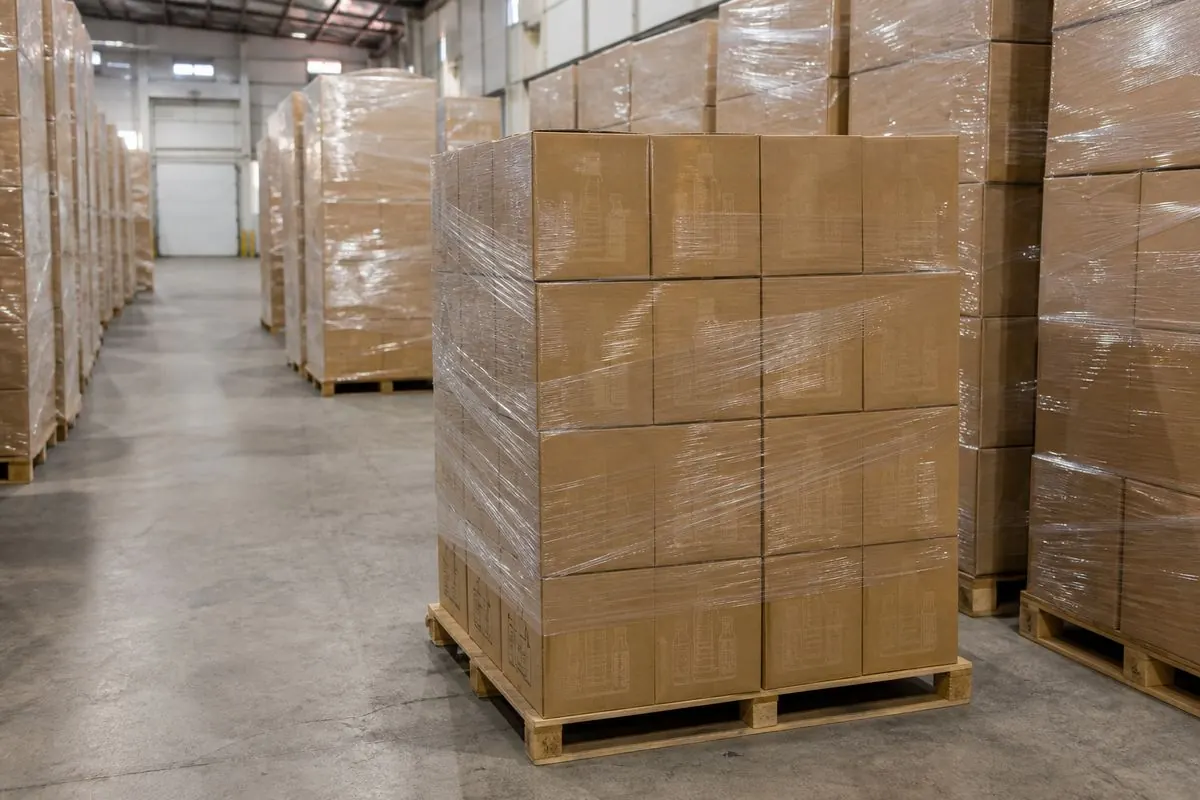
| Pallet | Stretch-wrap; crush protection | Pallet ID on packing list |
| DG air pack | UN-rated inner when required | DG declaration references package |
Container Loading Details
Export Tip
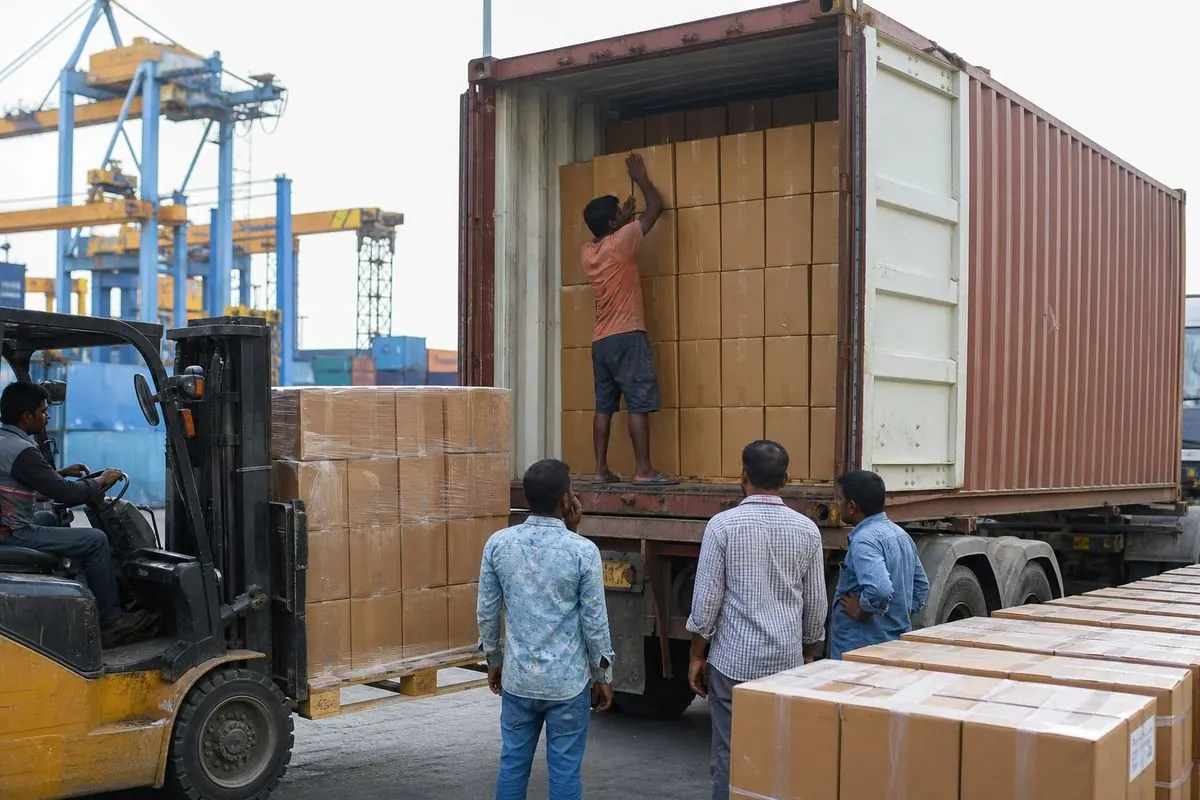
Container number and seal ID on bill of lading must match stuffing photos and packing list — document reconciliation includes logistics identifiers, not only fragrance lot records.
Directional container and air loading for perfume export
Swipe →
Data table — swipe horizontally on small screens
| Mode | Loading consideration | Document tie-in |
|---|---|---|
| 20-foot FCL | Glass divider cartons; payload by bottle density | B/L container/seal on packing list |
| 40-foot FCL / HC | Higher carton count; scent segregation | Multi-SKU packing list lines |
| LCL | Trial lots below FCL threshold | Invoice qty matches LCL manifest |
| Air pallet | DG acceptance before build-up | AWB pieces/weight vs packing list |
| Express samples | Single-carton AWB | Invoice value for customs pre-clearance |
Shipping Methods
Export Tip
- Samples: air/express 7–14 days with AWB and SDS
- Trial: air or LCL 2–4 weeks post-production
- FCL: 3–6 weeks door-to-port by corridor
- Incoterms: EXW, FOB, CFR/CIF; DAP/DDP selective after duty clarity
Ocean FCL from Nhava Sheva or Mundra suits volume glass programmes; air from BOM or DEL suits samples, high-value EDP, and time-sensitive retail launches — each mode changes the transport document set and alcohol screening path.
Certifications
Compliance Notes
Certification copies must match invoice lot lines — expired Halal or lapsed RCMC fail buyer audit even when smell-panel quality passed at origin.
Certifications relevant to perfume export documentation
Swipe →
Data table — swipe horizontally on small screens
| Certification | Purpose | Attach when |
|---|---|---|
| Chemexcil RCMC + IEC | Export registration and council credibility | KYC; many first shipments |
| SDS / MSDS | Chemical handling and downstream compliance | All commercial shipments |
| IFRA / allergen | Fragrance safety and retail compliance | Buyer-mandated programmes |
| Halal | Religious compliance for selected SKUs | GCC programmes where claimed |
| REACH / SVHC | EU importer obligations | EU distributor programmes |
| Certificate of origin | Origin proof for customs or FTA | When destination requires |
Buyer Requirements
Buyer Requirements
Buyers request samples, written fill and alcohol specs, SDS, IFRA or allergen statements where applicable, FOB pricing, and Chemexcil/IEC proof before first PO — importers of record add REACH, label artwork approval, and import permit copies for spirit SKUs.
Document requests should be indexed in the PO annex so export teams know which layers attach per consignment versus vendor master file — ambiguity causes missed Halal or allergen attachments on repeat orders.
Country-wise Opportunities
Market Snapshot
Documentation intensity varies by destination — use the table as a compliance lens for which certificates buyers most often archive, not as a market ranking. For country selection methodology, see the best-countries post.
Directional documentation emphasis by destination
Swipe →
Data table — swipe horizontally on small screens
| Country | Documentation emphasis | Common attachment |
|---|---|---|
| United States | FDA labeling context; SDS; invoice accuracy | Label artwork approval PDF |
| UAE | Halal where claimed; alcohol handling | Halal certificate scope summary |
| Singapore | Re-export clarity on invoice; COO sometimes | Clean invoice–packing list match |
| Netherlands / EU | Allergen; REACH/SVHC | IFRA and importer REACH file |
| Saudi Arabia | Halal; alcohol-free attar clarity | Halal + non-spirit HS for oils |
| United Kingdom | Post-Brexit allergen labeling | Allergen declaration vs label art |
Sourcing Checklist
Checklist
Exporter Checklist
Checklist

Common Buyer Mistakes
Common Mistakes Box
Future Market Trends
Key Statistics
Customs digitisation increases pre-arrival document scrutiny — exporters who QC invoice, packing list, and shipping bill alignment before cutoff avoid demurrage trends at busy ports.
Buyer audit portals now archive SDS, IFRA, and Halal copies per lot — document expiry management becomes ongoing programme hygiene, not shipment-only paperwork.
Challenges & Solutions
Challenge: multi-SKU gift sets inflate packing list complexity — solution: explode inner contents on every master carton line before invoice finalization.
Challenge: last-minute production substitution changes formula — solution: freeze invoice until updated SDS and IFRA references are reissued for the substituted lot.
Challenge: broker receives incomplete handoff — solution: use the sequenced index table in this guide and name PDFs by lot ID, not generic scan filenames.
Challenge: air DG rejection at airline acceptance — solution: screen SDS alcohol percentage and package size at booking stage, not at warehouse dispatch.
Compliance Checklist
Checklist
Compliance Notes
Sources
- WITS / UN Comtrade — India exports HS 330300 by partner, 2024
- WITS / UN Comtrade — India imports HS 330300 by partner, 2024
- UN Comtrade Database
- ITC Trade Map
- DGFT (India) — IEC / trade portal
- ICEGATE — Indian Customs EDI
- India CBIC — Customs Tariff / notifications
- Chemexcil India — Basic Chemicals, Cosmetics & Dyes EPC
- IFRA — International Fragrance Association
- EU Cosmetics Regulation (EC) No 1223/2009
- European Commission TARIC
- ECHA REACH
- GOV.UK — Making cosmetic products available in Great Britain
- USITC Harmonized Tariff Schedule (search 3303)
- US FDA — Cosmetics
- US FDA — MoCRA overview
- IATA Dangerous Goods Regulations
- ICC Incoterms
- Altus Exports — Contact
All sources accessed 2026-08-08. Prefer primary government, council, and multilateral trade databases when citing figures in contracts or buyer presentations. Trade figures, HS notes, and compliance references should be re-verified before quoting buyers or filing shipping bills.
Document field requirements vary by destination and alcohol mode — reconcile this checklist with buyer LC terms and CHA filing rules per consignment.
Click any source link below for the primary government, council, or multilateral database page.

Conclusion
Documentation QC before vessel or flight cutoff prevents destination holds — invoice, packing list, shipping bill, and B/L or AWB must tell one lot story under HS 330300xx.
Altus Exports assembles export document sets for finished perfume air and FCL programmes — export products from India with Chemexcil-aligned packs and broker-ready handoffs.
Start exporters on How to Export Perfumes from India; buyers on Source Perfumes Directly from India; compliance depth on Chemexcil Registration Benefits for Perfume Exporters.