
Source Perfumes Directly from India: Importer Playbook
By Saurabh Mittal, Founder, Altus Exports
International buyer playbook for sourcing finished perfumes and toilet waters directly from India — structured RFQ templates, cluster sourcing map (Kannauj, Mumbai, Delhi-NCR, Gujarat, Bengaluru), supplier verification, smell-panel protocols, QC gates, and landed-cost decision flow under HS 330300xx.

Sourcing perfumes directly from India rewards buyers who treat supplier verification as a structured process rather than a price-comparison exercise. India's fragrance export capacity sits across Kannauj attar heritage units, Mumbai–Thane–Nashik EDP/EDT filling lines, Delhi-NCR ethnic gift-set packers, Gujarat contract fillers, and Bengaluru private-label programmes — dozens of independent compounders and merchants rather than one vertically integrated factory. Buyers who understand that structure, and who know how to evaluate smell-panel consistency, fill accuracy, SDS readiness, and export documentation under HS 3303, extract significantly better value than those who rely on marketplace listings alone.
This importer playbook walks through the complete direct-sourcing sequence: defining your RFQ (format, concentration, pack size, destination labeling, certification tier), mapping suppliers to the right cluster, running credential and capability audits, executing smell-panel sampling protocols, commissioning lot QC appropriate to your price point, and modeling landed-cost decisions across air and sea Incoterms from Nhava Sheva, Mundra, BOM, or DEL. For exporters building parallel programmes, see How to Export Perfumes from India; for format-level depth, see Top Perfume Products Exported from India.
WITS 2024 directional figures place India HS 330300 exports at roughly US$231.6M and 33,844 MT, with Singapore, USA, UAE, Netherlands, Saudi Arabia, and the UK as leading partners. Whether you engage a product sourcing company in India or work directly with verified manufacturers and merchant exporters, the verification checkpoints in this guide apply equally — because the product risks are format-specific and smell-panel-specific, not origin-specific.
Key Takeaways
Summary Box
Executive Summary
Summary Box
Sourcing perfumes directly from India succeeds when buyers run structured verification — RFQ clarity, cluster-matched supplier shortlist, credential audit, smell-panel gate, trial lot QC, then wholesale scale with archived reference samples.
India's fragmented fragrance ecosystem rewards buyers who share destination market, format, and certification requirements upfront rather than negotiating undefined "perfume from India" on price alone.
This playbook compresses direct-sourcing risk for international importers, distributors, and procurement teams evaluating HS 3303 supply without unnecessary intermediary layers — without duplicating Chemexcil registration how-to or trade-show calendars covered elsewhere in the cluster.

Market Size & Industry Overview
Key Statistics
India's perfume export industry combines heritage attar craft with modern alcohol-based compounding and private-label filling at scale. WITS 2024 directional data records approximately US$231.6M and 33,844 MT on HS 330300 — modest in global fragrance trade terms but concentrated in cost-competitive private-label, ethnic retail, duty-free, and attar programmes where smell-panel consistency and documentation discipline differentiate suppliers.
International buyers source from India for FOB economics on EDT/EDP fills, Kannauj attar authenticity, rose and keora water lines, and flexible MOQ ladders on gift-set and travel-retail packs. Success depends on matching cluster capability to SKU — Mumbai filling lines do not replace Kannauj attar heritage and vice versa.
For macro destination ranking before you source, see Best Countries for Indian Perfume Exports; this playbook owns the importer-side execution path once you know your target market.
Export Statistics
Key Statistics
When verifying suppliers, confirm they file exports under the correct India 330300xx line for your SKU — spirit perfumes (33030050), non-spirit attars (33030040), and aqueous toilet waters (33030020/33030030) are not interchangeable on the shipping bill.
India exported roughly US$231.6M / 33,844 MT on HS 330300 in 2024 (WITS directional) — scale is sufficient for serious programmes but supplier smell-panel discipline matters more than volume claims alone.
Directional profile of Indian perfume trade (HS 330300 / India 330300xx)
Swipe →
Data table — swipe horizontally on small screens
| Metric | Directional Estimate | Notes |
|---|---|---|
| Primary clusters | Kannauj; Mumbai–Thane–Nashik; Delhi-NCR; Gujarat; Bengaluru | Match cluster to format in RFQ |
| Applicable HS headings | 3303 / WITS 330300; India 33030010–33030090 | Confirm eight-digit line with supplier CHA |
| Governing trade council | Chemexcil | RCMC credibility check in supplier audit |
| WITS 2024 export value | ~US$231.6M / ~33,844 MT | Directional UN Comtrade — re-verify annually |
| Leading partners | Singapore, USA, UAE, Netherlands, Saudi Arabia, UK | Ask suppliers for corridor reference where available |
| Dominant formats sourced | EDP, EDT, EDC, attars, rose/keora water, gift sets | Private-label MOQ varies by bottle tooling |
Import Statistics
Key Statistics
WITS/UN Comtrade 2024 also shows India imported US$165,840.42K (~US$165.8M) / 3,607,200 kg of HS 330300 — chiefly from France, Spain, and Italy — while remaining a net exporter versus ~US$231.6M outbound. Importer-side planning should align RFQ destination with recorded corridor experience — suppliers who regularly ship to your target market archive broker feedback, label templates, and clearance lessons that first-time corridors lack.
Global HS 3303 demand spans duty-free, modern retail, ethnic wholesale, and GCC attar channels — your import programme's compliance stack (FDA, REACH, Halal) determines viable supplier shortlist as much as FOB.
Importer planning lens by destination channel (HS 3303)
Swipe →
Data table — swipe horizontally on small screens
| Buyer Channel | Typical Format Mix | Supplier Verification Focus |
|---|---|---|
| Duty-free / travel retail | EDP, EDT, gift sets, minis | Fill accuracy, carton print, leak test, fast air samples |
| Modern retail / private-label | EDP, EDT, coordinated lines | IFRA docs, label alignment, batch traceability |
| Ethnic wholesale | EDT, attar, rose water, value packs | Smell-panel consistency, MOQ flexibility, carton marking |
| GCC mall / souk | Attar, alcohol-free, oud-adjacent EDP | Halal scope, alcohol declarations, heritage line credibility |
| EU distribution | EDP, EDT via consolidation hub | REACH/SVHC, EU labeling, SDS completeness |
| USA retail / e-commerce | EDP, EDT, discovery kits | FDA labeling context, HTS line, Prop 65 where applicable |
Product Categories / Variants
Summary Box
Direct buyers should shortlist formats before supplier calls — ambiguous "perfume" RFQs waste audit time across incompatible filling lines.
See Top Perfume Products Exported from India for extended SKU depth; the table below frames importer RFQ categories.
Primary perfume product types to specify in India sourcing RFQs
Swipe →
Data table — swipe horizontally on small screens
| Product Type | India ITC-HS (directional) | Typical Cluster | Primary Channel |
|---|---|---|---|
| Eau de parfum (EDP) | 33030050 | Mumbai–Thane–Nashik; Bengaluru | Retail, private-label, duty-free |
| Eau de toilette (EDT) | 33030050 | Mumbai–Thane–Nashik; Gujarat | Mass retail, ethnic wholesale |
| Eau de cologne (EDC) | 33030010 | Mumbai; Gujarat filling | Economy retail, grooming channels |
| Attars / alcohol-free oils | 33030040 | Kannauj | GCC, ethnic boutique, premium retail |
| Rose / keora water | 33030020 / 33030030 | Kannauj; Delhi-NCR | Ethnic beauty, ritual, gifting |
| Private-label gift sets | 33030050 / mixed | Delhi-NCR; Bengaluru | Festive, Ramadan/Eid, duty-free |
Manufacturing Overview
Export Tip
Direct sourcing audits should confirm compounding, alcohol handling or oil blending, and bottle filling lines — capabilities vary by plant within each cluster, not one generic "perfume factory tour."
Retain sealed smell-panel reference from approved trial lots; bulk production must match approved fragrance profile, fill volume, and alcohol or oil concentration parameters.
Merchant exporters consolidate multiple cluster lines when buyers need single-interface programmes with one invoice and document pack.

Importer RFQ Template & Requirements
Export Tip
A complete RFQ reduces quote variance and failed trials. Include legal importer entity, destination country and channel, format and concentration target, fill volume (ml), pack type (spray, roll-on, screw cap), primary and secondary packaging spec, labeling standard (FDA, EU, UK, GCC), certification tier (IFRA, REACH, Halal), MOQ stage (sample / trial / wholesale), Incoterm preference, and payment terms.
Attach reference bottle or mood board where private-label — Indian fillers quote faster with visual and ml targets than with abstract note descriptions alone.
Importer RFQ field checklist for India perfume sourcing
Swipe →
Data table — swipe horizontally on small screens
| RFQ Field | Why It Matters | Example Input |
|---|---|---|
| Destination market + channel | Drives labeling, duty, and alcohol rules | USA retail e-commerce; UAE re-export hub |
| Format + concentration | Matches cluster and HS line | EDT ~8–12% fragrance oil; 100 ml spray |
| India ITC-HS target | Shipping-bill alignment | 33030050 spirit perfume — confirm with CHA |
| Labeling standard | Artwork and allergen scope | FDA cosmetics labeling; IFRA allergen list |
| Certification tier | Document pack depth | REACH/SVHC + SDS; Halal for GCC programme |
| MOQ stage | Supplier line allocation | 50-unit smell panel; 1,000-unit trial |
| Incoterm | Landed-cost modeling | FOB Nhava Sheva; or CFR Los Angeles |
| Payment terms | Supplier qualification signal | 30% deposit trial; LC at wholesale scale |
Cluster Sourcing Map
Match supplier geography to SKU — sending an attar RFQ to a Mumbai-only EDT filler or an EDP private-label brief to a Kannauj attar unit wastes both sides' time.
Use multiple clusters when building mixed assortments; use a merchant exporter when you need one document interface across Kannauj attar and Mumbai EDT in the same air shipment.
India perfume sourcing cluster map for international buyers
Swipe →
Data table — swipe horizontally on small screens
| Cluster | Primary Formats | Buyer Fit | Verification Focus |
|---|---|---|---|
| Kannauj (Uttar Pradesh) | Attars, alcohol-free oils, rose/keora water | GCC, ethnic premium, heritage retail | Oil grade, traditional distillation credibility, batch consistency |
| Mumbai–Thane–Nashik | EDP, EDT, EDC, private-label filling | Duty-free, modern retail, export volume | Compounding line, fill accuracy, leak test, spray function |
| Delhi-NCR / Ghaziabad | Ethnic gift sets, value EDT, consolidation | North India diaspora wholesale | Gift-pack engineering, carton print, assortment mixing |
| Gujarat (Ahmedabad / Vapi) | Contract filling, packaging | Cost-sensitive EDT, third-party fill | Fill line capacity, bottle sourcing, MOQ on tooling |
| Bengaluru / South India | Branded and private-label retail programmes | Modern trade, lifestyle export packs | Retail-ready presentation, barcode and batch discipline |
Supplier Audit Protocol
Run credential and capability checks before paying sample fees or deposits. Phase 1 confirms export readiness; Phase 2 confirms production match to your RFQ; Phase 3 validates document pack completeness for your destination.
Phase 1: Credential and export readiness
Phase 2: Production capability match
Phase 3: Documentation readiness
- Request sample SDS and COO format before trial PO
- Confirm IFRA, REACH, or Halal certificate scope matches your RFQ claims
- Verify invoice, packing list, and batch ID reconciliation process
- Confirm air DG familiarity if alcohol content triggers dangerous-goods rules
Smell-Panel Sampling Protocol
Smell-panel QC is the non-negotiable gate for fragrance — unlike many CPG categories, lab COA alone does not capture olfactory identity. Approve sealed reference samples before trial MOQ; archive reference in a cool, dark store for bulk lot comparison.
Sample kits should mirror production intent: same bottle type, cap, and fill volume where possible — evaluating oil-only swatches when production is 100 ml EDT spray misleads both buyer and supplier.
Run internal panel with minimum three trained evaluators; document pass/fail against reference with batch codes. Reject lots that drift on top note, dry-down, or alcohol bite versus approved reference.
Smell-panel sampling stages for India perfume direct sourcing
Swipe →
Data table — swipe horizontally on small screens
| Stage | Typical Quantity | Purpose | Gate |
|---|---|---|---|
| Initial oil or compound swatch | 10–20 ml or blotter evaluation | Narrow note family shortlist | Pass before bottle samples |
| Bottle sample kit | 10–50 units per SKU | Packaging, spray, fill, olfactory match | Pass before trial PO |
| Trial production lot | 500–2,000 units | Bulk consistency, leakage, carton print | Pass before wholesale scale |
| Reference archive | Sealed retain from approved lot | Bulk shipment comparison | Mandatory for repeat orders |
QC Gates & Lot Release
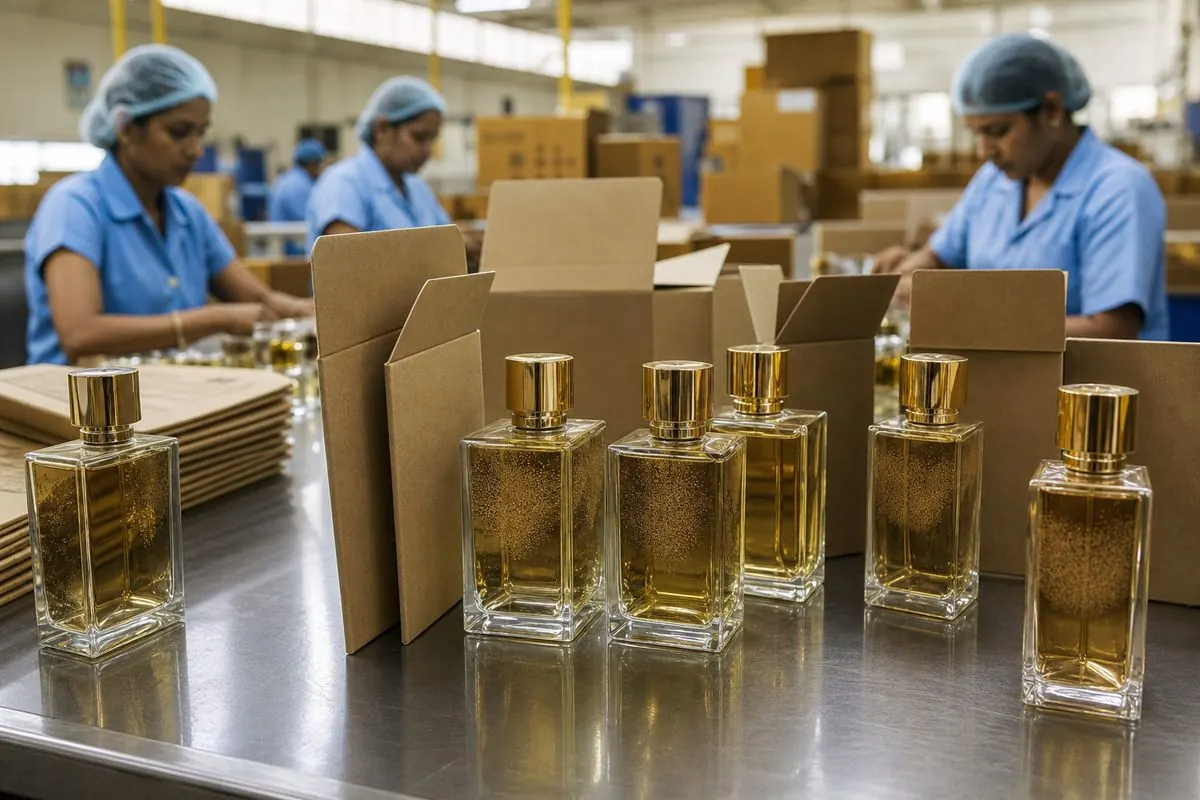
QC depth should match price point and channel — duty-free EDP programmes need fill measurement, spray function, leakage test, and carton barcode scan; economy EDT ethnic wholesale may prioritize seal integrity and master-carton count accuracy alongside smell-panel.
Pre-shipment inspection should reconcile batch IDs on bottle, carton, and invoice; reject commingled lots without written deviation approval.
QC checkpoint matrix by importer channel
Swipe →
Data table — swipe horizontally on small screens
| Checkpoint | Duty-Free / Retail | Ethnic Wholesale | Attar / Oil Programmes |
|---|---|---|---|
| Smell-panel vs reference | Mandatory | Mandatory | Mandatory — grade critical |
| Fill volume (ml) tolerance | ±2–3% typical | ±3–5% per agreement | Weight/volume per kg spec |
| Leakage / crimp test | Mandatory on spray SKUs | Sample-based | Seal integrity on roll-on/screw cap |
| Label and barcode scan | Mandatory | Batch/lot ID readable | Origin and grade marking |
| Master-carton count | Mandatory | Mandatory | Mandatory — kg reconciliation |
| SDS batch match | Mandatory | Mandatory | Mandatory — oil composition claims |
Landed-Cost Decision Flow
Landed-cost modeling determines whether direct India sourcing beats incumbent suppliers — not FOB alone. Build decision flow: FOB quote → freight mode (air vs sea) → insurance → destination duty → terminal handling → inland delivery → labeling compliance fees → payment-term cost.
Air trials are rational for smell-panel-approved launch SKUs even when sea FCL wins at wholesale scale — model both paths before locking supplier award.
Landed-cost decision inputs for India perfume imports (HS 3303)
Swipe →
Data table — swipe horizontally on small screens
| Cost Layer | Planning Source | Common Mistake |
|---|---|---|
| FOB unit or kg price | Supplier proforma on quote date | Using stale quote after alcohol/oil input spike |
| Freight (air vs sea) | Forwarder quote on carton dimensions | Ignoring DG surcharge on alcohol air |
| Insurance (CIF context) | Insurer or forwarder | Omitting on glass-heavy programmes |
| Destination duty | Buyer broker memo on HTS/CN 3303 | Assuming preferential rate without origin docs |
| Terminal + inland | Destination logistics partner | Underestimating last-mile for LCL |
| Compliance / labeling | Legal or broker review fee | Reusing EU art for UK retail |
| Payment terms | LC, TT, credit days | Extended credit hidden in unit price |
Export Process
Export Tip
Importers do not file Indian shipping bills — but you must verify your supplier's export process maturity before trial PO. Confirm IEC, GST, bank AD code, Chemexcil RCMC where used, and CHA relationship on HS 330300xx.
Align Incoterms with control points: FOB when you book freight and own destination clearance; CFR/CIF when supplier books freight but you still own duty; avoid DAP/DDP until alcohol, labeling, and importer-of-record roles are contractually clear for your market.
Full exporter-side step sequence lives in How to Export Perfumes from India; document pack detail in Perfume Export Documentation Checklist.
Pricing Analysis
Buyer Tip
Benchmark three qualified suppliers on identical RFQ spec — spread on economy EDT often reflects fill volume, carton quality, and fragrance oil grade rather than mysterious "market discounts."
Directional FOB pricing bands for importer benchmarking (USD, planning only)
Swipe →
Data table — swipe horizontally on small screens
| Format | Directional FOB Band | Benchmark Note |
|---|---|---|
| Economy EDT / EDC | ~US$1.5–4/unit | Compare at same ml and spray spec |
| Mid retail EDP | ~US$4–12/unit | Include bottle and carton print in comparison |
| Premium private-label EDP | Above mid band | Tooling amortization may apply on first PO |
| Attar / alcohol-free oils | ~US$15–80+/kg | Grade and flower/oud content drive spread |
| Rose / keora water | Lower per litre | Freight as % of FOB critical on sea LCL |
MOQ Analysis
Buyer Tip
MOQ negotiation should align with cluster economics — custom bottle molds in private-label programmes raise effective MOQ even when compounder quotes flexible trial units on stock bottles.
Directional MOQ tiers for direct India perfume sourcing
Swipe →
Data table — swipe horizontally on small screens
| Stage | Typical MOQ | Importer Action |
|---|---|---|
| Smell-panel samples | 10–50 units or 50–200 ml oil | Approve reference before any deposit |
| Trial order | 500–2,000 units/SKU or 5–20 kg attar | Run QC gate and landed-cost model |
| Wholesale programme | 5,000–20,000+ units or 50–200+ kg | Archive reference; schedule sea or air rhythm |
| Private-label tooling | Supplier-specific; often 2,000–10,000+ | Confirm mold ownership and lead time in contract |
Packaging Standards
Export Tip
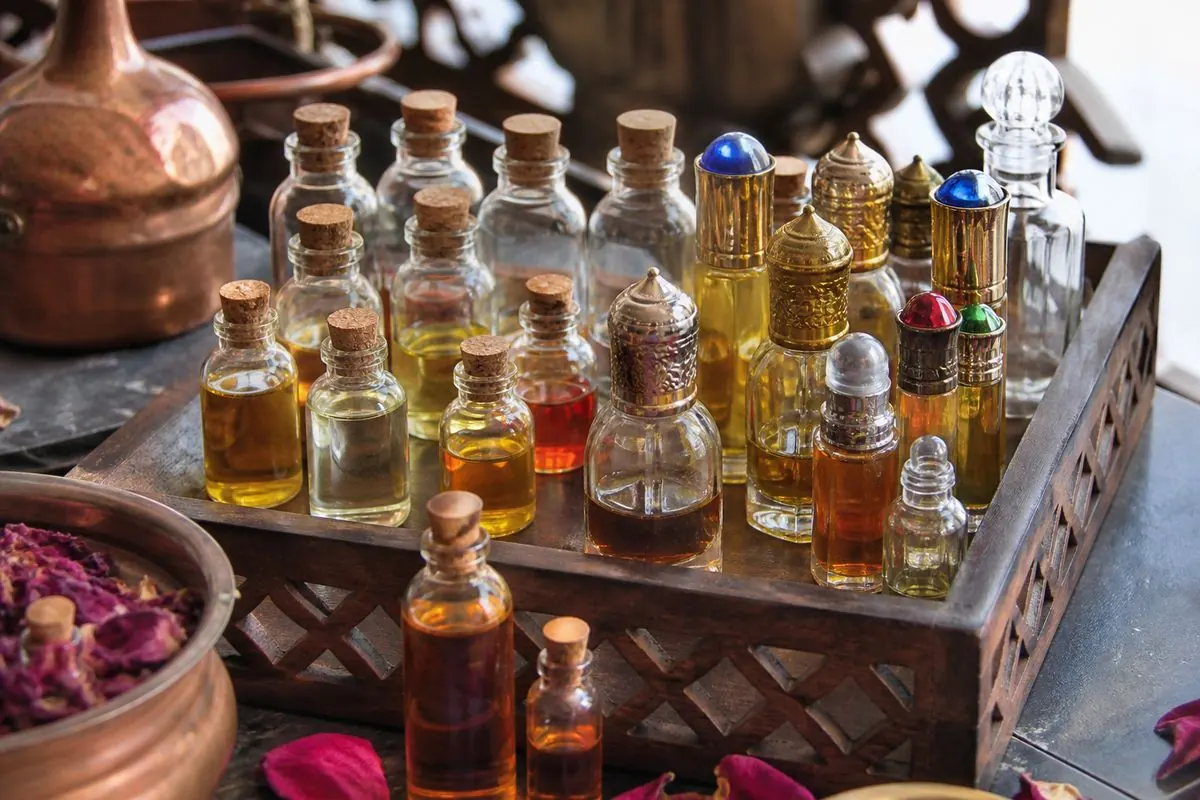
Specify primary bottle, cap, pump, secondary carton, and master-carton divider requirements in RFQ — Indian suppliers quote accurately when pack spec is visual, not verbal.
Retail programmes need barcode placement, batch/lot ID, net fill (ml), alcohol % where required, and country-of-origin marking aligned to destination rules before production start.
Packaging specification layers for importer RFQs
Swipe →
Data table — swipe horizontally on small screens
| Layer | Importer Should Specify | QC Verification |
|---|---|---|
| Primary bottle | Glass/PET, ml fill, neck finish, spray vs roll-on | Fill tolerance, crimp, leakage |
| Closure | Pump, spray, screw cap quality tier | Actuation count, leak test |
| Secondary carton | Print, barcode, regulatory text | Scan, color match to approved proof |
| Master carton | Divider, units per carton, gross weight | Crush test on trial sea shipment |
| Pallet | Stretch wrap, scent segregation | Count reconciliation at pre-shipment |
Container Loading Details
Export Tip
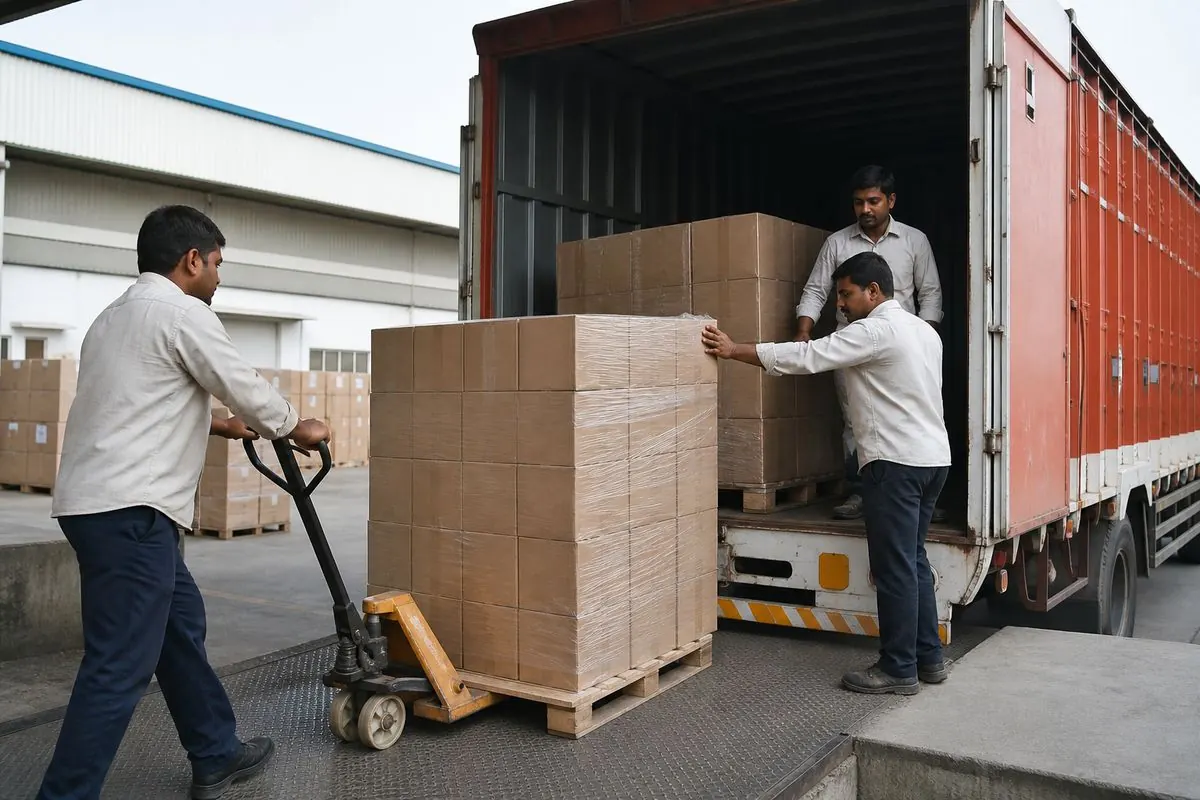
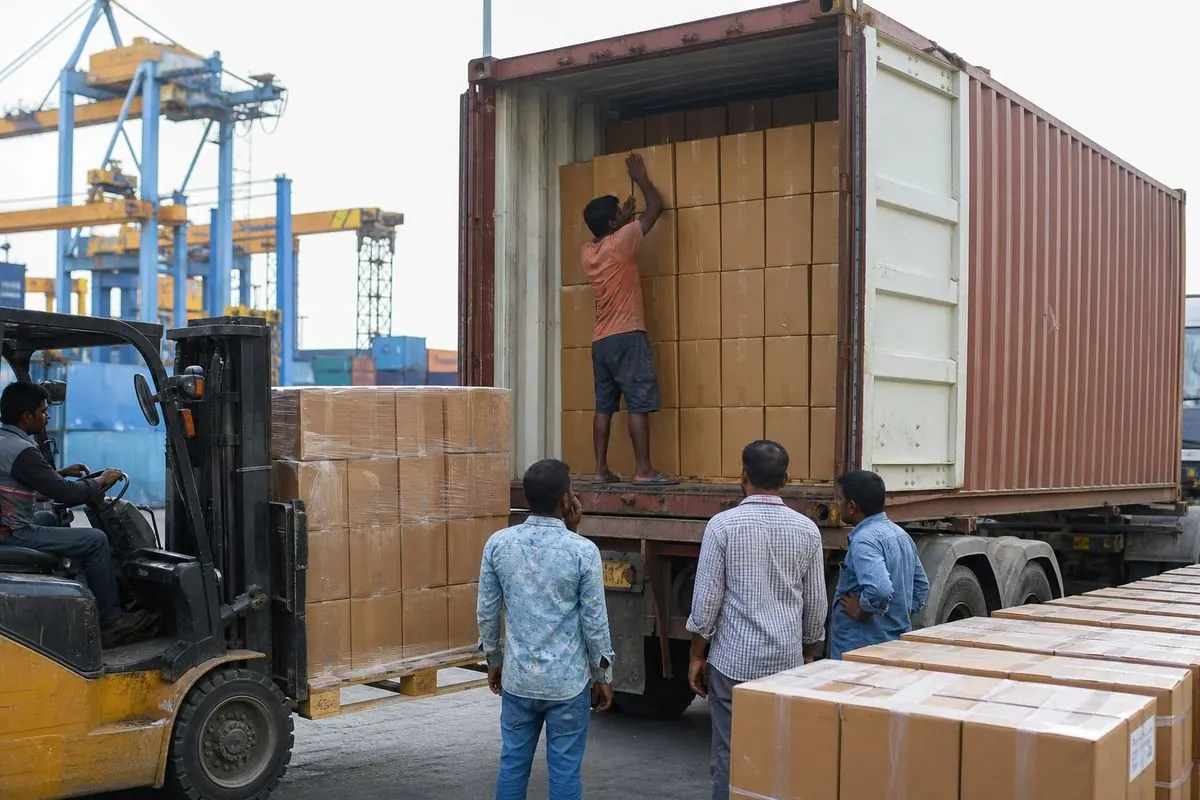
Importers planning sea programmes should request carton dimension sheet and weight stack plan from supplier before booking FCL — glass fragrance payloads vary widely by bottle ml and divider design.
Trial LCL is acceptable for first corridor test; shift to FCL when leakage and crush QC pass on two consecutive lots.
Importer planning reference for perfume shipment modes
Swipe →
Data table — swipe horizontally on small screens
| Mode | Typical Use | Importer Planning Note |
|---|---|---|
| Air (BOM/DEL) | Samples, trials, high-value EDP | Confirm DG when alcohol triggers; faster smell-panel iteration |
| Sea FCL | Wholesale EDT, gift sets | Require divider spec and stuffing photos on trial |
| Sea LCL | First corridor test | Higher per-unit freight — model in landed cost |
| Courier | Document originals, urgent swatches | Not for commercial volume |
Shipping Methods
Export Tip
- FOB Nhava Sheva / Mundra / BOM / DEL — importer books main carriage and owns destination clearance
- CFR/CIF — supplier books freight; importer still owns duty and labeling compliance
- DAP/DDP — selective only with mature alcohol and cosmetics registration clarity
- See Best Countries for Indian Perfume Exports for corridor-specific air vs sea economics
Shipping method follows landed-cost decision and shelf-life urgency — not supplier preference alone. Lock Incoterm and named place in trial PO; re-quote freight at wholesale scale when carton count jumps tenfold.
Primary export gateways from Indian clusters: Nhava Sheva and Mundra (sea), BOM and DEL (air), Chennai (select Southeast Asia). Inland haul from Kannauj or Delhi-NCR to port affects lead time — confirm in supplier audit.
Certifications
Compliance Notes
- SDS / MSDS — fragrance compound and alcohol content
- IFRA conformity and allergen statements when buyer-mandated
- REACH / SVHC for EU programmes
- Halal for selected Middle East programmes
- Certificate of Origin, commercial invoice, packing list, B/L or AWB
- Dangerous-goods paperwork for qualifying air shipments
- Chemexcil RCMC — exporter credibility, not destination clearance substitute
Archive certification PDFs at supplier qualification — not at clearance crisis. Scope must match SKU claims: Halal for GCC attar programmes, REACH for EU, IFRA when retail buyers mandate allergen schedules.
Buyer Requirements
Buyer Requirements
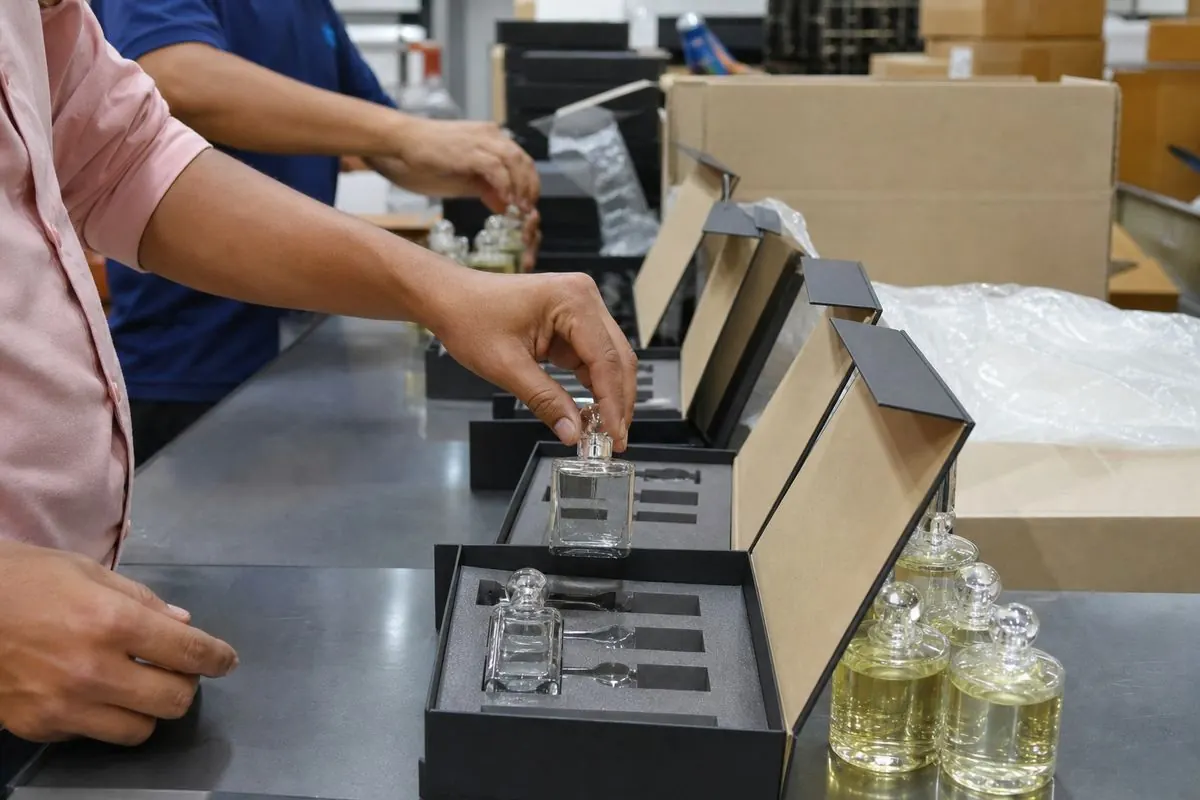
International procurement teams should assign a single owner for RFQ spec, smell-panel approval, and landed-cost sign-off — fragmented buying produces contradictory supplier instructions and failed lots.
Legal import entity, EORI / FDA cosmetics labeling and MoCRA facility registration context (USA), and broker contact should be shared with supplier before trial production so label artwork and invoice consignee match clearance reality.
For attar and alcohol-free depth, see Attar, Natural & Alcohol-Free Perfume Export Opportunities; for Chemexcil credibility context on suppliers, see Chemexcil Registration Benefits for Perfume Exporters.
Country-wise Opportunities
Market Snapshot
Destination choice affects supplier shortlist — USA retail importers should prioritize suppliers with FDA-labeling experience; GCC buyers should shortlist Kannauj attar lines with Halal-ready document packs; EU importers should verify REACH statements on file.
Macro ranking lives in Best Countries for Indian Perfume Exports; format × country demand in Most Demanded Indian Perfumes by Country.
Supplier shortlist lens by importer destination (planning only)
Swipe →
Data table — swipe horizontally on small screens
| Destination | Cluster Priority | Documentation Emphasis |
|---|---|---|
| USA | Mumbai EDP/EDT; Bengaluru private-label | FDA labeling, HTS, SDS, Prop 65 context |
| UAE / GCC | Kannauj attar; Mumbai EDT volume | Halal, alcohol declarations, hub consignee clarity |
| EU / Netherlands | Mumbai; Gujarat filling | REACH/SVHC, EU labeling, IFRA allergens |
| UK | Mumbai; Delhi-NCR gift sets | UK-specific labeling post-Brexit |
| Singapore hub | Mixed assortments across clusters | Re-export docs, fast air sample turnaround |
Sourcing Checklist
Checklist
Exporter Checklist
Checklist
Common Buyer Mistakes
Common Mistakes Box
Future Market Trends
Key Statistics
Private-label and duty-free buyers increasingly request digital batch traceability and IFRA documentation on every repeat PO — suppliers without document discipline fall off approved vendor lists faster than in commodity CPG.
Alcohol-free, attar-adjacent, and heritage floral assortments expand Gulf and diaspora share; direct importers who qualify Kannauj lines early gain differentiation vs generic EDT tenders.
Challenges & Solutions
- Challenge: fragrance drift on bulk lots — Solution: sealed reference archive and smell-panel on pre-shipment retain
- Challenge: wrong cluster match — Solution: map RFQ format to Kannauj, Mumbai, Delhi-NCR, Gujarat, or Bengaluru before audit
- Challenge: documentation gaps at clearance — Solution: request full doc pack at qualification, not after production
- Challenge: air vs sea cost surprise — Solution: landed-cost model at trial MOQ and wholesale MOQ simultaneously
- Challenge: intermediary opacity — Solution: visit or video-audit filling line; confirm exporter of record on invoice
Direct perfume sourcing from India involves olfactory, regulatory, and logistics risks that price-only screening cannot filter.
Compliance Checklist
Checklist
Compliance Notes
Sources
- WITS / UN Comtrade — India exports HS 330300 by partner, 2024
- WITS / UN Comtrade — India imports HS 330300 by partner, 2024
- UN Comtrade Database
- ITC Trade Map
- DGFT (India) — IEC / trade portal
- ICEGATE — Indian Customs EDI
- India CBIC — Customs Tariff / notifications
- Chemexcil India — Basic Chemicals, Cosmetics & Dyes EPC
- IFRA — International Fragrance Association
- EU Cosmetics Regulation (EC) No 1223/2009
- European Commission TARIC
- ECHA REACH
- GOV.UK — Making cosmetic products available in Great Britain
- USITC Harmonized Tariff Schedule (search 3303)
- US FDA — Cosmetics
- US FDA — MoCRA overview
- IATA Dangerous Goods Regulations
- ICC Incoterms
- Altus Exports — Contact
All sources accessed 2026-08-08. Prefer primary government, council, and multilateral trade databases when citing figures in contracts or buyer presentations. Trade figures, HS notes, and compliance references should be re-verified before quoting buyers or filing shipping bills.
Supplier verification and smell-panel protocols should reference the same HS 330300xx line the exporter files on the shipping bill.
Click any source link below for the primary government, council, or multilateral database page.
Conclusion
Sourcing perfumes directly from India succeeds when international buyers run structured RFQs, cluster-matched audits, smell-panel gates, and landed-cost modeling — not when they chase lowest FOB on undefined "perfume" listings.
Altus Exports supports importers as a product sourcing company in India and global sourcing partner — Kannauj attar through Mumbai EDP programmes with Chemexcil-aligned documentation and air or sea execution.
Continue with How to Export Perfumes from India, Top Perfume Products Exported from India, and Perfume Export Documentation Checklist. Contact Altus Exports to start your RFQ and smell-panel sample kit.