
How to Export Perfumes from India: Complete Process Guide
By Saurabh Mittal, Founder, Altus Exports
A complete operational guide on how to export perfumes from India — registrations, sourcing from Kannauj and Mumbai–Thane clusters, smell-panel QC, Incoterms, alcohol and dangerous-goods air rules, container and air loading, documentation, and buyer development, with expert insight from Altus Exports.
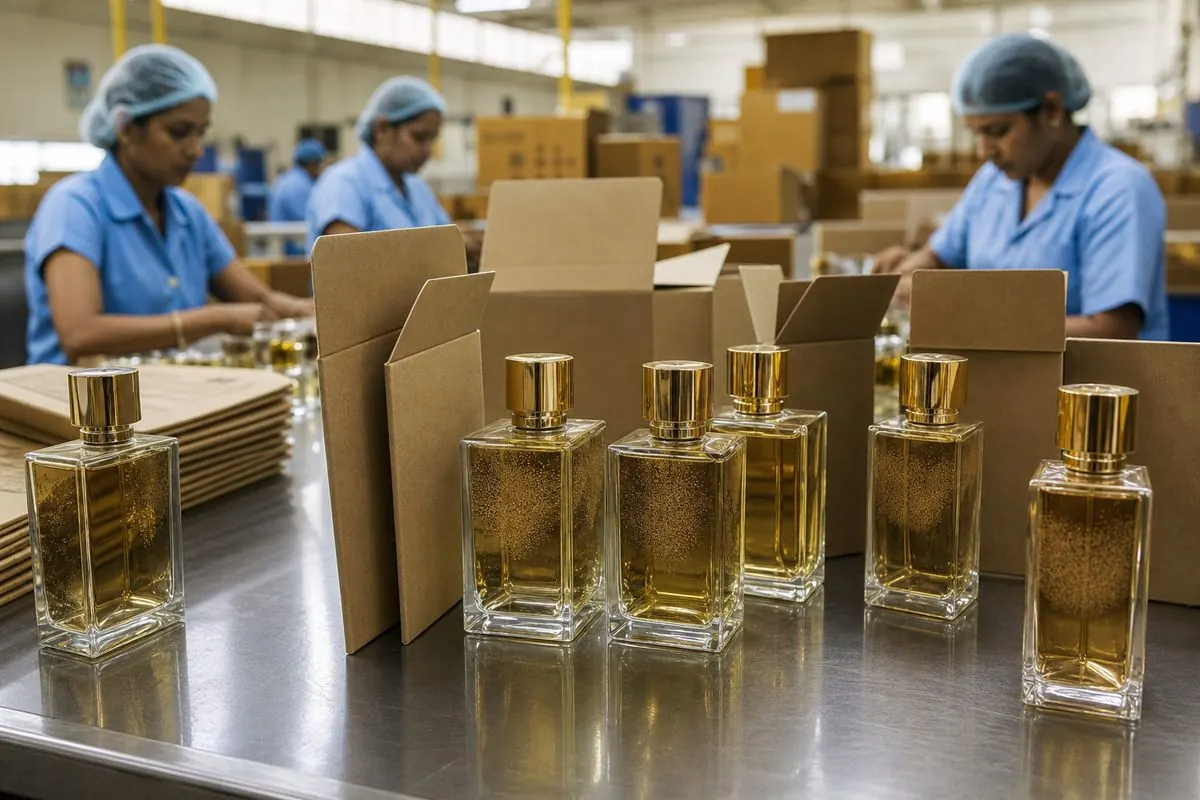
India has built a credible export base for finished perfumes and toilet waters — from traditional attar distilleries in Kannauj to modern eau de parfum and eau de toilette filling lines in Mumbai, Thane, Nashik, and Gujarat. Buyers searching for how to export perfumes from India, or how to import them reliably, are really asking a supply-chain question: how do you connect verified fragrance manufacturers to a Chemexcil-documented, smell-panel-approved, competitively priced air or sea shipment that clears customs and arrives within spec? This guide answers that question end to end. For the SKU-level catalogue of formats and concentrations, see Top Perfume Products Exported from India; for market selection, see Best Countries for Indian Perfume Exports.
Perfume exporting sits under India's broader cosmetics and fragrance trade, tracked under Harmonized System heading 3303 (India ITC-HS 330300xx) for perfumes and toilet waters — not incense sticks under 33074100, not bulk essential oils under 3301, and not soap noodles or other toiletry manufacturing inputs. Chemexcil — the Basic Chemicals, Cosmetics & Dyes Export Promotion Council — is the relevant government-recognised trade body, and its RCMC sits alongside the Import Export Code (IEC) as the credential buyers expect before committing volume. Beyond registrations, the real operational work is format-specific: spirit-based EDP and EDT programmes, alcohol-free attar oils, rose and keora waters, and private-label gift sets are different production disciplines with different alcohol rules, packaging, and buyer segments. If you would rather work through a verified supplier network than build these relationships from scratch, see Source Perfumes Directly from India and consider a merchant exporter in India to compress the learning curve.
This guide walks through the complete operational sequence — registrations, sourcing from Kannauj and Maharashtra clusters, smell-panel quality management, FOB USD pricing logic, glass bottle and master-carton packaging, 20ft FCL and air DG loading from Nhava Sheva, Mundra, BOM, or DEL, documentation, and buyer development — that Indian perfume exporters and international buyers should follow. WITS/UN Comtrade directional data for 2024 shows India HS 330300 exports at approximately US$231.6M and 33,844 MT — a verified Comtrade anchor. For registration depth, see Chemexcil Registration Benefits for Perfume Exporters, and for the pre-shipment paperwork gate, see Perfume Export Documentation Checklist.
Key Takeaways
Summary Box
Executive Summary
Summary Box
Exporting perfumes from India is a five-part operating system: IEC and Chemexcil RCMC registration, cluster sourcing (Kannauj attars or Mumbai–Thane EDP/EDT fills), format-matched production and smell-panel QC, FOB or CFR pricing with alcohol/DG awareness, and air or sea logistics from west-coast ports or BOM/DEL airports.
WITS 2024 shows India HS 330300 exports at ~US$231.6M / ~33,844 MT with Singapore, USA, and UAE among leading partners — directional figures that confirm finished fragrance is a meaningful export line, not a niche curiosity.
This pillar guide walks registrations through buyer development — the operational sequence Indian export houses and international importers should follow before first air sample kit or FCL glass programme.

Market Size & Industry Overview
Key Statistics
India's perfume export spine combines heritage attar capacity in Kannauj with modern compounding and bottle-filling lines across Maharashtra, Gujarat, and South India — finished retail fragrance for duty-free, ethnic wholesale, and private-label channels, not bulk aroma chemicals.
Buyers purchase concentration grade, bottle integrity, smell-panel consistency, IFRA or allergen statements where mandated, and delivery reliability under Chemexcil's export lens.
Most new exporters enter on stock EDT or attar FOB west-coast or air from BOM, then add private-label EDP or gift-set programmes once smell-panel rhythm and documentation discipline are proven.
Trade promotion through Chemexcil fairs and council directories connects Kannauj distillers and Mumbai fill houses to Singapore re-exporters, US ethnic retailers, and Gulf wholesale programmes — the same corridors reflected in WITS partner rankings.
Export Statistics
Key Statistics
Start export planning with HS-line discipline: India 330300xx covers perfumes and toilet waters — 33030050 for spirit perfumes, 33030040 for non-spirit compounds, 33030010 for eau de cologne, 33030020/33030030 for rose and keora waters — confirm with your CHA before the first shipping bill.
WITS/UN Comtrade 2024 reports India HS 330300 exports at approximately US$231.6M and 33,844 MT; leading partners by value include Singapore, United States, UAE, Netherlands, Saudi Arabia, and the United Kingdom.
Re-verify Comtrade and DGCI&S annually — the table below summarises directional cluster metrics for board and buyer presentations.
Directional profile of Indian perfume and toilet water trade (HS 330300 / India 330300xx)
Swipe →
Data table — swipe horizontally on small screens
| Metric | Directional Estimate | Notes |
|---|---|---|
| Primary attar cluster | Kannauj, Uttar Pradesh | Traditional alcohol-free perfume oils and floral distillates |
| Modern fill clusters | Mumbai–Thane–Nashik; Gujarat; Bengaluru | EDP/EDT compounding, private-label filling, contract packing |
| Consolidation hubs | Delhi-NCR / Ghaziabad | Ethnic wholesale, gift-set packing, North India export consolidation |
| Applicable HS headings | 3303 / India 33030010–33030090 | Confirm eight-digit line per SKU with CHA before shipping-bill filing |
| Governing trade council | Chemexcil (Basic Chemicals, Cosmetics & Dyes EPC) | RCMC alongside IEC for export credibility in Chapter 33 fragrance |
| WITS 2024 export value (HS 330300) | ~US$231.6M / ~33,844 MT | Directional UN Comtrade figure for perfumes and toilet waters — re-verify annually |
| Leading destination regions | Singapore hub, North America, Gulf, EU entry via Netherlands, UK | WITS 330300 partners: Singapore, USA, UAE, Netherlands, Saudi Arabia, UK |
| Dominant export formats | EDT/EDC retail bottles, attar oils, rose/keora waters | Private-label EDP and gift sets for duty-free and modern retail |
Import Statistics
Key Statistics
India is a net exporter on HS 330300: WITS/UN Comtrade 2024 records India exports of US$231,608.55K (~US$231.6M) / 33,843,500 kg against India imports of US$165,840.42K (~US$165.8M) / 3,607,200 kg. Import origins are led by France (~US$73.6M), Spain (~US$37.4M), Italy (~US$20.2M), Belgium (~US$9.3M), and the UAE (~US$8.6M) — premium EU fragrance brands flowing into India even as India ships value and ethnic programmes outbound.
Separately, destination-market import demand for Indian perfume exports drives format preference: US ethnic retail and private label favour EDT and attar assortments; Gulf programmes often blend alcohol-free attar with spirit perfumes subject to local alcohol rules; EU entry requires REACH/SVHC and Cosmetics Regulation alignment.
Understanding both India-side import competition and destination import channels helps exporters position corridor fit — Singapore as re-export hub differs from direct USA retail programmes in documentation burden and pack size.
India HS 330300 imports by origin (WITS 2024) vs destination demand for Indian exports
Swipe →
Data table — swipe horizontally on small screens
| Lens | Directional Figure / Profile | Notes |
|---|---|---|
| India imports (world) | ~US$165.8M / ~3,607 MT | WITS 2024 — India net exporter vs ~US$231.6M exports |
| Top India import origin: France | ~US$73.6M | Premium brand inbound competition |
| Top India import origin: Spain | ~US$37.4M | Fragrance and toilet-water inbound |
| Top India import origin: Italy | ~US$20.2M | Premium EU fragrance inbound |
| Singapore (India export partner) | Re-export / travel-retail hub demand | Top India export partner by value (~US$40.8M) |
| United States (India export partner) | Ethnic + private-label importer demand | ~US$35.5M India export value |
| UAE (India export partner) | Gulf retail + re-export | ~US$33.2M India export value |
| Netherlands (India export partner) | EU consolidation entry | REACH / Cosmetics Regulation importer stack |
Product Categories & Variants Overview
Summary Box
- EDP/EDT — largest modern retail and private-label export volume
- Attar — Kannauj heritage and Gulf alcohol-free preference
- Rose/keora water — lower unit value, high carton count programmes
- Gift sets — carton complexity and divider master-carton discipline
Exporters must quote format and concentration explicitly on proforma and smell-panel reference sheets — EDP, EDT, EDC, attar, rose water, keora water, and gift sets share HS 3303 but differ on alcohol content, fill volume, and buyer channel.
This pillar treats product categories at overview level only; for concentration grades, bottle formats, MOQ by SKU, and packaging standards in depth, see Top Perfume Products Exported from India.
Primary perfume and toilet water formats exported from India (overview)
Swipe →
Data table — swipe horizontally on small screens
| Format | Typical Concentration / Base | India HS Hint | Primary Channel |
|---|---|---|---|
| Eau de parfum (EDP) | Higher fragrance oil % in alcohol base | 33030050 (spirit) typical | Modern retail, private label, duty-free premium |
| Eau de toilette (EDT) | Mid concentration everyday wear | 33030050 (spirit) typical | Mass retail, ethnic wholesale, value duty-free |
| Eau de cologne (EDC) | Lighter refreshing spray formats | 33030010 | Men's grooming, summer retail, travel sizes |
| Attar / alcohol-free oils | Concentrated perfume oil, no ethanol | 33030040 (non-spirit) common | Gulf wholesale, ethnic retail, premium gift |
| Rose water / keora water | Aqueous toilet waters | 33030020 / 33030030 | Ethnic grocery, beauty, religious and festive gift |
| Gift sets / discovery kits | Multi-SKU retail packs | 33030050 or mixed 330300xx | Festive retail, duty-free, e-commerce bundles |
Manufacturing Overview
Export Tip
Perfume manufacturing in India spans two traditions: steam and hydro-distillation of attar and floral waters in Kannauj, and modern compounding of fragrance concentrate with ethanol or oil base followed by filtration, maceration, and automated filling in Maharashtra and Gujarat plants.
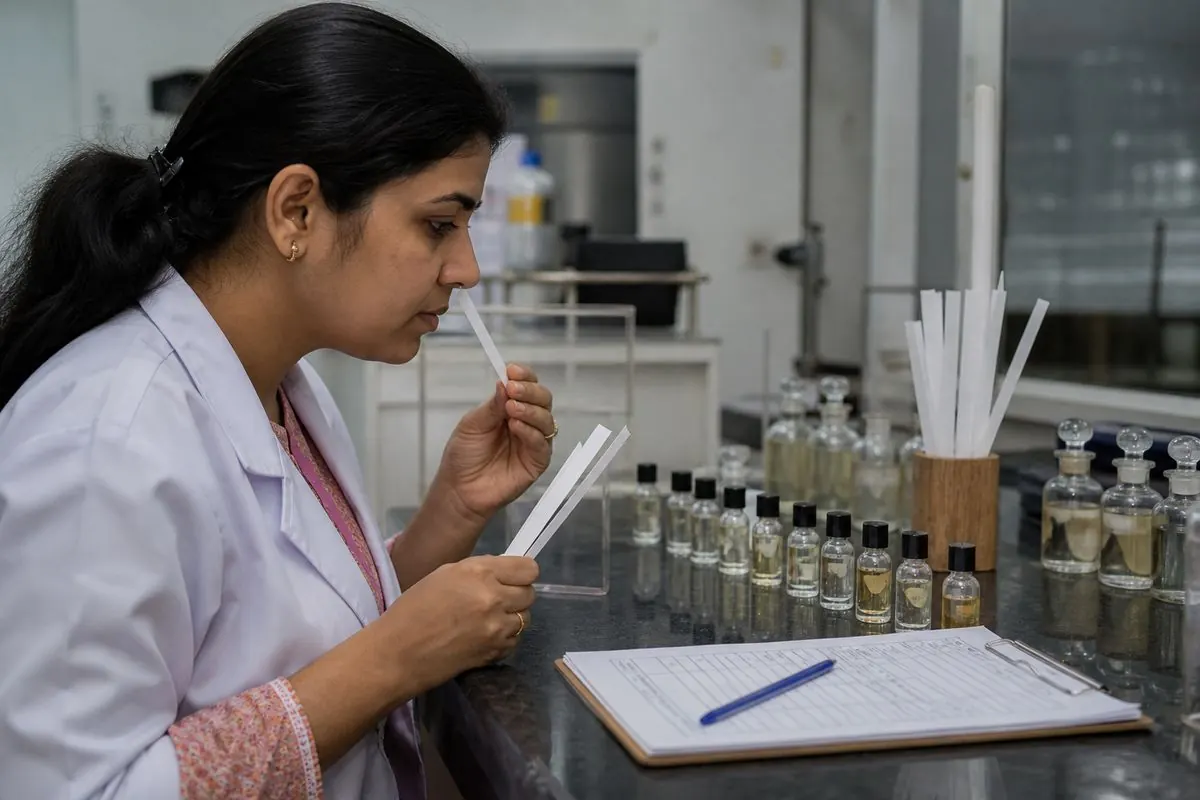
EDP and EDT lines require alcohol content control, spray pump function testing, and batch identity on every fill; attar lines emphasise raw material grade, oil clarity, and absence of ethanol unless buyer specifies hybrid formats.
Exporters coordinate mill allocation, smell-panel reference retention, and stuffing discipline per order — the same lot identity must appear on invoice, packing list, and SDS.
Export Process: Step-by-Step
Export Tip
The following sequence is the complete operational path from a standing start to a shipped, documented perfume consignment under HS 3303. Follow the steps in order — registrations, smell-panel approval, and alcohol/DG gates exist precisely because skipping them creates customs holds, rejected lots at destination QC, or carrier refusals on air freight.
Step 1: Obtain an Import Export Code (IEC) from DGFT
An IEC is the baseline legal requirement for any commercial export from India, including finished perfumes and toilet waters. Apply online through the DGFT portal with PAN, current bank account details, and address proof consistent with your GST registration. Clean applications are typically processed within a few working days. Without IEC, you cannot file a shipping bill or receive foreign remittance on fragrance shipments.
Step 2: Register with Chemexcil and secure your RCMC
Finished perfumes and cosmetics-adjacent fragrance lines fall under Chemexcil's notified product scope for Chapter 33. Registration with an active RCMC is a practical necessity for trade-fair access, council directory listing, and buyer credibility during vendor onboarding. See Chemexcil Registration Benefits for Perfume Exporters for application detail — confirm product-list fit with Chemexcil and your CHA before locking the RCMC route.
Step 3: Source from verified Kannauj, Mumbai–Thane, or Gujarat manufacturers
Map supply to specific attar distilleries in Kannauj or compounding and fill plants in Mumbai–Thane–Nashik, with Gujarat and Delhi-NCR partners for contract packing and gift-set assembly. Verify IEC, RCMC, prior HS 330300xx filing experience, and sample kit capability before allocating volume. See Source Perfumes Directly from India for buyer-side verification checkpoints and cluster maps.
Step 4: Match fragrance format and concentration to buyer channel
Align EDP, EDT, EDC, attar, or aqueous toilet water to the buyer's retail channel, alcohol rules, and price point before production. Duty-free EDP programmes need different fill volumes and carton specs than ethnic wholesale EDT value packs. Document concentration grade, net fill (ml), and alcohol % on the proforma.
Step 5: Approve samples and run smell-panel QC
Approve sealed reference samples through smell-panel evaluation against buyer brief — note family, longevity, and alcohol or oil base character — before bulk fill. Retain reference vials at both supplier and export house. Sign off only when spray function, cap seal, and label draft match the written specification; never let bulk drift from approved sample lots.
Step 6: Select packaging and plan master-carton loading
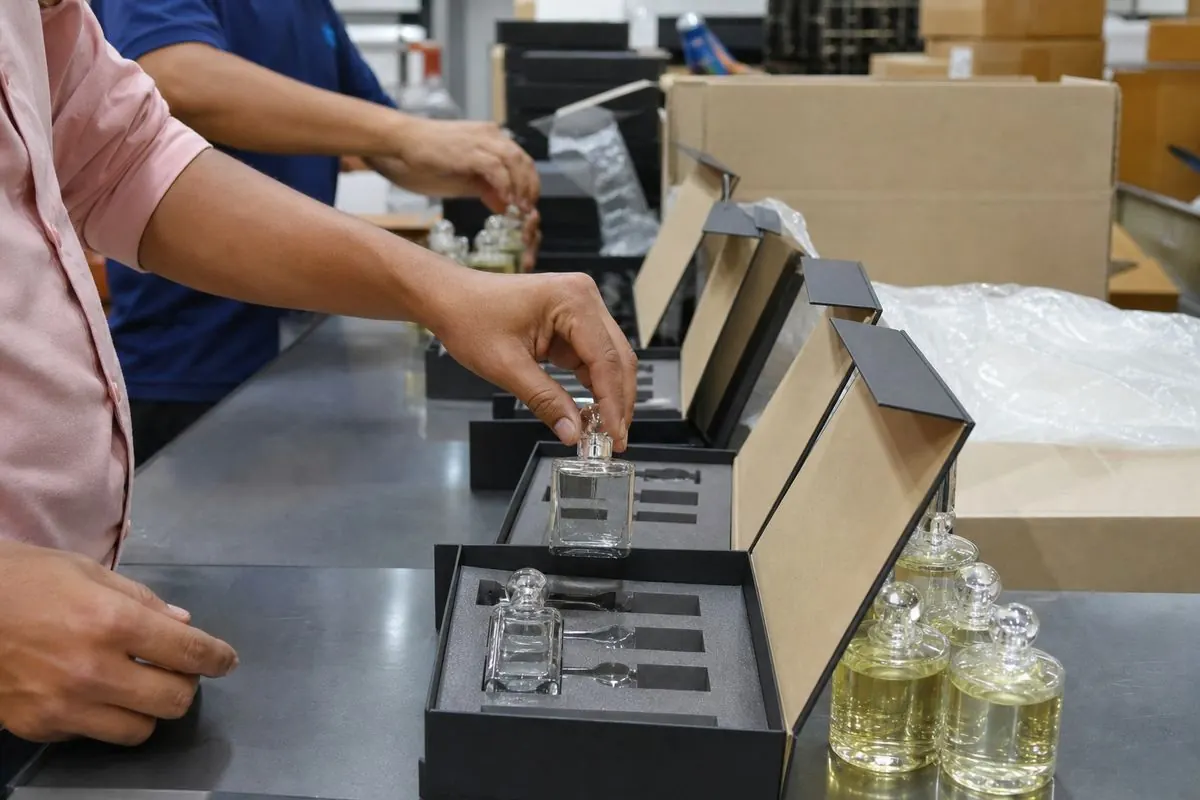
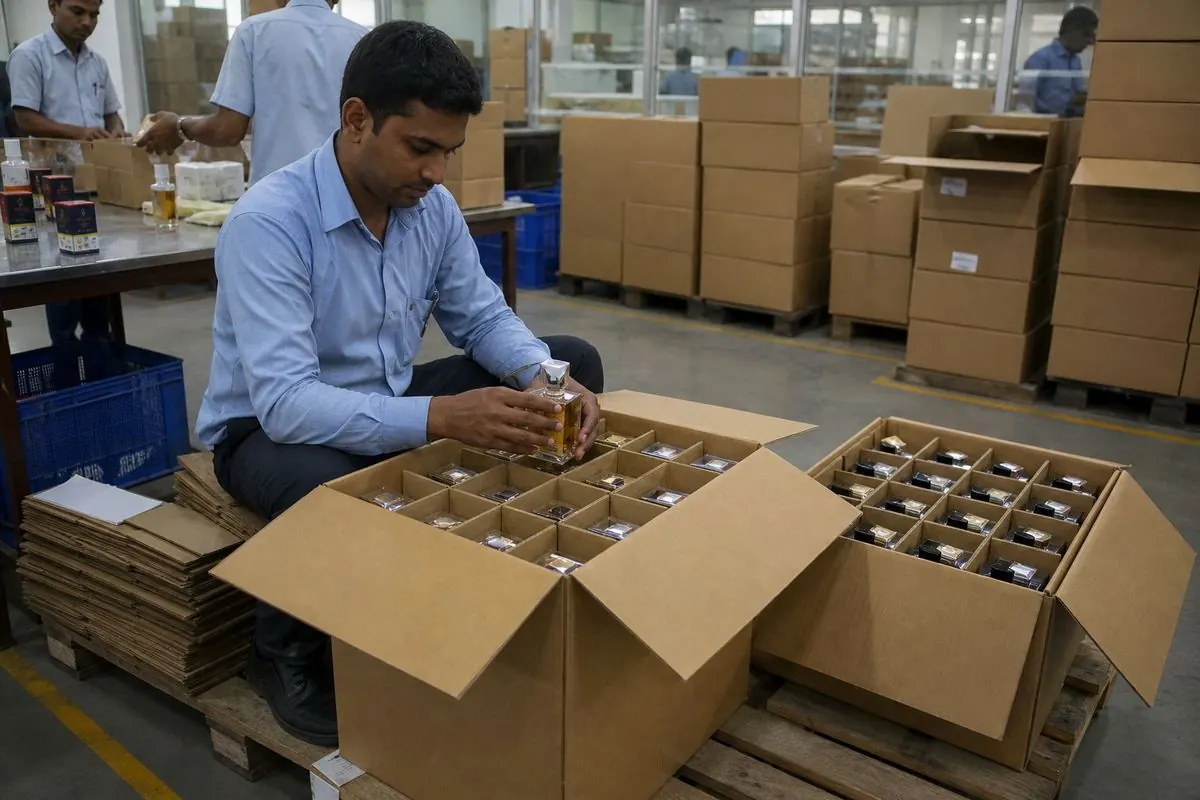
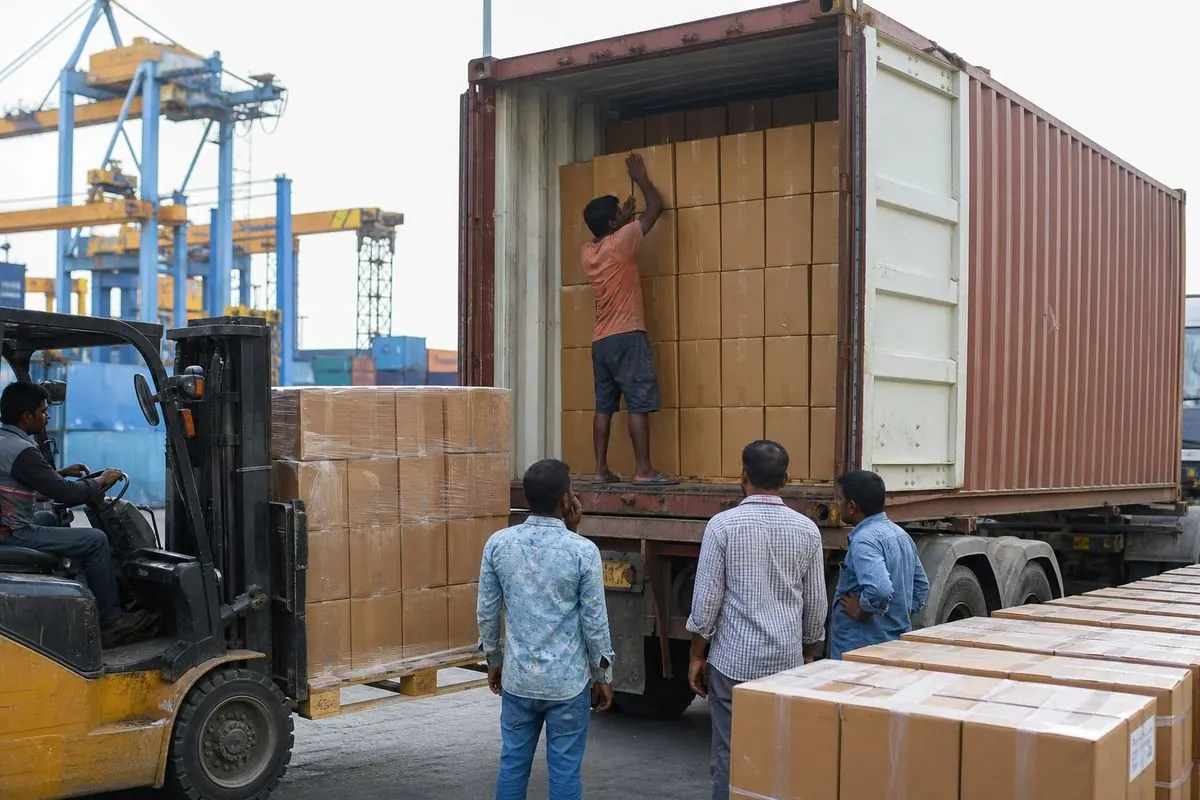
Ship in primary glass or PET bottles with functional sprays or roll-ons, individual cartons or gift boxes, and divider master cartons with scent segregation where mixed SKUs share a pallet. Plan 20ft FCL stuffing for glass volume programmes or air units for sample and high-value EDP — confirm crush protection and leakage control with your packer before booking.
Step 7: Build export pricing and confirm Incoterms
Construct FOB USD per unit or per kg from fragrance compound, alcohol or oil base, bottle and cap tooling, secondary carton, inland haulage to Nhava Sheva/Mundra/BOM/DEL, testing, and margin. Quote EXW, FOB, CFR/CIF, or selective DAP/DDP based on buyer preference and destination alcohol-permit clarity. Index volatile alcohol and glass cost components on quote date.
Step 8: Assess alcohol content and dangerous-goods air rules
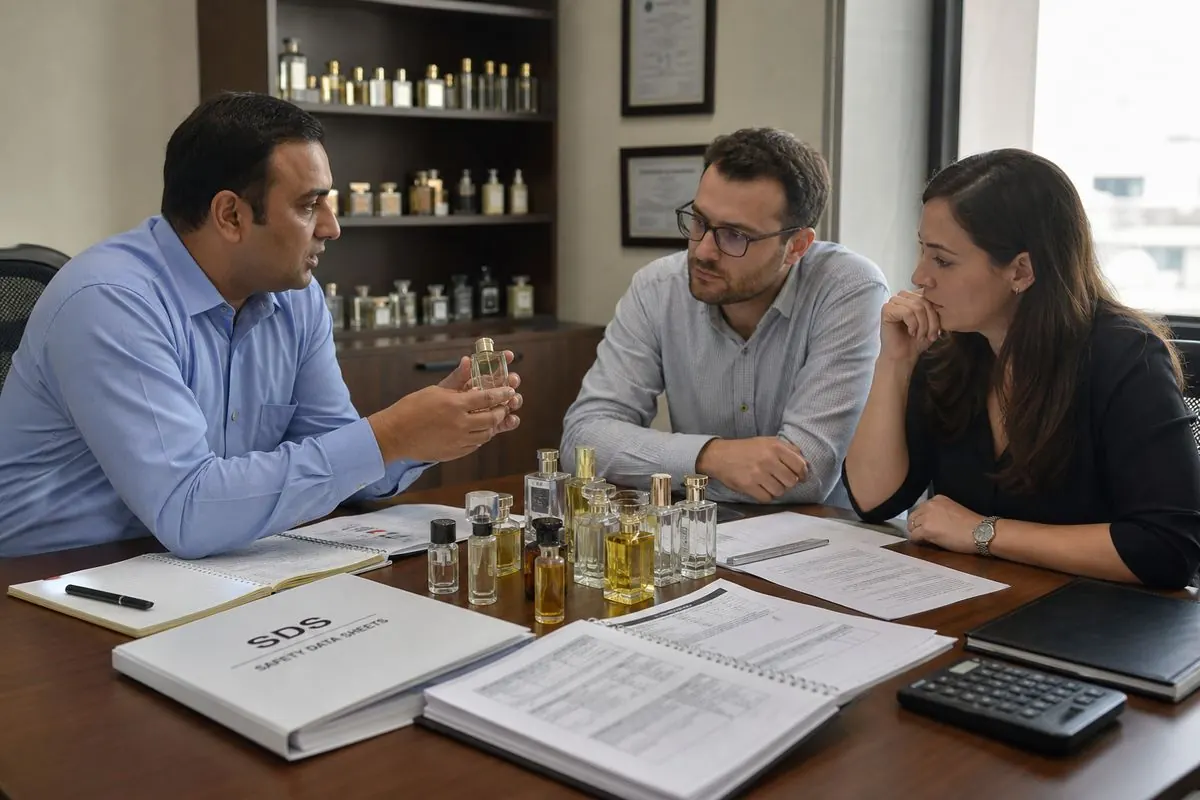
Spirit-based perfumes may qualify as dangerous goods on air freight depending on alcohol %, volume per unit, and carrier IATA interpretation — obtain current SDS/MSDS and confirm with the airline or DG-specialist forwarder before promising express air on EDT/EDP samples. Sea FCL avoids many air DG constraints but adds lead time for glass programmes.
Step 9: Prepare documentation and coordinate with your CHA
Core docs: commercial invoice, packing list, shipping bill, B/L or AWB, certificate of origin, Chemexcil RCMC copy, SDS/MSDS, IFRA or allergen statements when buyer-mandated, and alcohol or DG declarations for qualifying air shipments. Confirm HS 330300xx subheading with your CHA. See Perfume Export Documentation Checklist for field-level detail — this pillar covers the process gate, not every invoice line.
Step 10: Book shipping via Nhava Sheva, Mundra, BOM, DEL, or Chennai
Air freight from BOM or DEL is common for smell-panel sample kits and high-value EDP; sea FCL from Nhava Sheva or Mundra suits volume glass and gift-set programmes. Lead times run 7–14 days for samples, 3–5 weeks for stock SKUs after PO, and 6–12 weeks for private-label tooling — plan festive and Ramadan calendars accordingly.
Step 11: Develop and maintain international buyers
Combine HS 3303 trade-data prospecting, Chemexcil and Beautyworld-type fairs, B2B marketplaces, and fragrance distributor outreach. See How to Find International Buyers for Perfumes and Trade Shows and B2B Marketplaces for Perfume Exporters. Pair prospecting with Most Demanded Indian Perfumes by Country for format fit — this pillar owns the process, not the per-country SKU matrix.
Pricing Analysis
Buyer Tip
Process exporters should model FOB as compound cost plus bottle/pack premium plus alcohol and certification delta — static price lists fail when glass, ethanol, or IFRA documentation cycles move between quote acceptance and vessel cutoff.
Always label figures directional and confirm lot-specific FOB on quote date; never publish stale absolute USD as current price in buyer contracts.
Directional FOB USD pricing bands by perfume format (planning ranges)
Swipe →
Data table — swipe horizontally on small screens
| Format / Pack | Directional FOB Band | Notes |
|---|---|---|
| Economy EDT / EDC (50–100 ml) | US$1.5–4/unit | Value spray formats; bottle and cap tooling drive spread |
| Mid retail EDP (30–100 ml) | US$4–12/unit | Higher oil concentration and glass weight add premium |
| Premium private-label EDP | US$8–18+/unit | Custom bottle, print, and IFRA documentation cycles |
| Attar oils (per kg) | US$15–80+/kg | Flower and oud grade dominate; quote by kg or tola-equivalent |
| Rose / keora water (per litre bulk) | Lower per-litre vs retail bottle | Often high carton count; confirm retail vs bulk fill |
| Gift sets (multi-SKU) | Sum of components + pack premium | Divider cartons, insert cards, and festive print add cost |
MOQ Analysis
Buyer Tip
MOQ tiers for perfume programmes scale from smell-panel sample kits to wholesale container loads — confirm bottle MOQ with fill plant and attar MOQ by kg with Kannauj supplier before buyer commitment.
Directional MOQ tiers by transaction stage for perfume export
Swipe →
Data table — swipe horizontally on small screens
| Stage | Typical MOQ | Purpose |
|---|---|---|
| Sample kit | 10–50 retail units or 50–200 ml attar oil | Smell-panel evaluation, spray function, and label draft approval |
| Trial order | 500–2,000 units/SKU or 5–20 kg attar | First commercial shipment; verify master-carton stuffing and destination clearance |
| Wholesale programme | 5,000–20,000+ units or 50–200+ kg oil | Established distributor, retail chain, or duty-free repeat supply |
| Private-label tooled SKU | Often 3,000–10,000+ units after tooling | Custom bottle and print amortised over first production run |
Packaging Standards
Export Tip
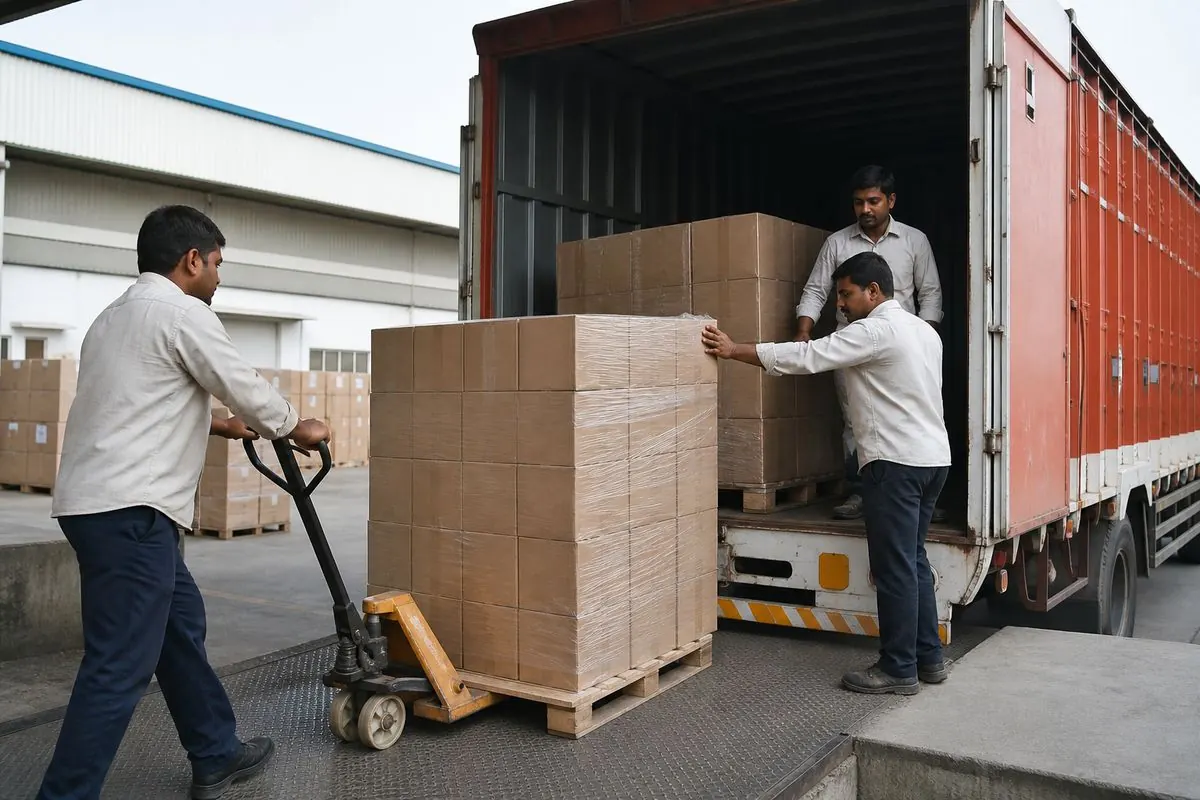
For process programmes, standard export packs remain primary glass or PET bottles, individual cartons or gift boxes, and divider master cartons on stretch-wrapped pallets — lot marks must match invoice and packing list before CHA filing.
Leakage control, crush protection for glass, and scent segregation when mixed SKUs share a container are non-negotiable for repeat orders.
Packaging formats and specifications for perfume export
Swipe →
Data table — swipe horizontally on small screens
| Layer | Typical Configuration | Use Case | Key Requirement |
|---|---|---|---|
| Primary bottle | Glass or PET with spray, roll-on, or screw cap | All retail fragrance SKUs | Fill accuracy (ml), cap seal, spray function QC |
| Secondary pack | Individual carton or gift box with SKU label | Retail and duty-free presentation | Barcode, ingredient/allergen panel per destination rules |
| Master carton | Divider inserts; 6–24 bottles typical | Ocean FCL and air bulk | Scent segregation; crush protection; net/gross weight marks |
| Palletisation | Stretch-wrap; corner boards for glass | Port stuffing and warehouse handling | Lot/batch ID visible; handling icons for glass and flammable |
| Air DG pack | UN-rated inner pack when carrier requires | High-alcohol air samples or EDP express | Confirm with forwarder — not all EDT qualifies as general cargo |
Container Loading Details
Export Tip
Glass fragrance cargo is volume-limited before weight-limited — forwarder stow verification required before buyer carton commitment on first FCL.
Mixed gift-set programmes need divider discipline and weight distribution to avoid cap loosening in transit.
Directional container and air loading guidance for perfumes
Swipe →
Data table — swipe horizontally on small screens
| Mode / Equipment | Loading Consideration | Typical Use |
|---|---|---|
| 20-foot FCL | High carton count; glass volume limits payload vs weight | Trial and standard commercial glass programmes from Nhava Sheva/Mundra |
| 40-foot FCL / HC | Higher carton stack with strict divider and dunnage | Established distributor and duty-free volume |
| Air (general cargo) | Low unit count; strict carrier acceptance on alcohol content | Smell-panel samples, urgent EDP replenishment when approved |
| Air (DG when required) | SDS, UN packaging, quantity limits per IATA | Express spirit perfume only after forwarder sign-off |
| LCL | Suitable for trial cartons below FCL threshold | New buyer relationships, mixed SKU testing |
Shipping Methods
Export Tip
- Samples: air/express 7–14 days when DG or general cargo approved
- Stock SKUs: 3–5 weeks post-PO confirmation typical
- Private-label custom: 6–12 weeks including bottle tooling and doc cycles
- Incoterms: EXW, FOB, CFR/CIF; DAP/DDP selective after duty and alcohol-permit clarity
- Lead-time stretch: Ramadan, Diwali, and Christmas retail calendars
Air from BOM or DEL for samples and high-value EDP when carrier accepts alcohol content; sea FCL/LCL from Nhava Sheva or Mundra for volume glass and gift-set programmes.
Incoterms most common on first orders: FOB named Indian port or airport — seller delivers cargo on board while buyer arranges main carriage and destination compliance.
Certifications
Compliance Notes
IEC and Chemexcil RCMC are baseline; SDS/MSDS universal on spirit formats; IFRA, REACH/SVHC, Halal, and destination cosmetics labelling by segment.
Certifications and documents relevant to perfume export
Swipe →
Data table — swipe horizontally on small screens
| Document / Certification | Purpose | Relevant For |
|---|---|---|
| Chemexcil RCMC + IEC | Baseline export registration and council membership | All commercial HS 3303 shipments from India |
| SDS / MSDS | Alcohol content, handling, and air DG assessment | Spirit perfumes; EU/US importers require current sheet |
| IFRA conformity / allergen statement | Fragrance safety and label compliance | EU, UK, and audited modern retail programmes |
| REACH / SVHC | EU importer substance obligations | Netherlands and wider EU entry |
| Halal certificate | Religious compliance for selected programmes | Saudi Arabia, UAE, and Gulf wholesale where mandated |
| Certificate of Origin | FTA or buyer audit trail | When buyer or corridor requires preferential proof |
| Dangerous goods declaration | Air carrier acceptance for qualifying alcohol shipments | Express air on spirit perfumes — confirm per forwarder |
Buyer Requirements
Buyer Requirements
Buyers in perfume programmes request smell-panel samples, written fill and alcohol spec, SDS, FOB pricing, carton marks, and Chemexcil/IEC proof — duty-free and EU retail add IFRA and REACH layers.
First-time importers often underestimate alcohol-permit and labelling rules at destination — confirm with buyer compliance team before DDP promises.
Private-label buyers require bottle drawings, label approval cycles, and retained reference samples for dispute resolution on bulk lots.
Country-wise Opportunities
Market Snapshot
Destination fit varies by format, alcohol rules, and certification — see Best Countries for Indian Perfume Exports and Most Demanded Indian Perfumes by Country for paired analysis. This pillar summarises corridor entry points only.
Directional country opportunity profile for Indian perfume exporters
Swipe →
Data table — swipe horizontally on small screens
| Country | Demand Profile | Key Requirement Focus | Opportunity Note |
|---|---|---|---|
| Singapore | Re-export hub and high-value consolidation | GST, alcohol rules, duty-free channel specs | Strong for mixed SKU air consolidation and regional redistribution |
| United States | Ethnic retail, private label, online fragrance | FDA cosmetics labeling context, Prop 65 where claims apply | EDT value packs and attar assortments scale well |
| UAE | Local retail and Gulf re-export | Halal documentation, emirate-level alcohol handling | Attar plus selective spirit perfume programmes |
| Netherlands | EU CN 3303 entry | REACH/SVHC, EU Cosmetics Regulation labeling | Gateway for wider EU distributor programmes |
| Saudi Arabia | Oud, floral, alcohol-free preference | SFDA/cosmetics expectations, Halal where claimed | Attar and premium gift sets for festive channels |
| United Kingdom | Ethnic and modern retail mix | UK post-Brexit labeling, alcohol import permits where required | EDP private label and heritage attar niches |
| Iraq / Kuwait | Regional wholesale attar and EDT | Documentation simplicity, competitive FOB | Volume value packs via established Gulf traders |
Sourcing Checklist
Checklist
Buyer Checklist
Exporter Checklist
Common Buyer Mistakes
Common Mistakes Box
Future Market Trends
Key Statistics
Private-label fragrance for e-commerce and duty-free continues to pull filling capacity from Mumbai and Gujarat; alcohol-free and attar-premium programmes gain share in Gulf and ethical retail niches.
Regulatory layering — IFRA allergens, EU SVHC, US labeling — moves from optional to standard in audited retail chains, extending lead times for new SKU launches.
India's HS 330300 export base is directional ~US$231.6M — exporters who document smell-panel discipline and alcohol-shipping competence will capture repeat share as buyers diversify from single-origin European supply.
Challenges & Solutions
- Challenge: air carrier refusal on spirit samples — Solution: confirm SDS and DG classification with specialist forwarder before quoting express air
- Challenge: smell drift bulk vs sample — Solution: retained reference vials and compounding batch lock
- Challenge: HS filing errors across mixed gift sets — Solution: CHA-confirmed 330300xx per SKU line on invoice
- Challenge: glass breakage in FCL — Solution: divider master cartons, dunnage, and stuffing photos
- Challenge: destination labeling rejection — Solution: buyer-market label approval cycle before bulk print
- Challenge: long private-label lead times — Solution: realistic 6–12 week timeline in proforma and milestone PO
Scaling perfume export involves alcohol logistics, glass damage risk, and regulatory documentation — all manageable with written SOPs.
Compliance Checklist
Checklist
Compliance Notes
Sources
- WITS / UN Comtrade — India exports HS 330300 by partner, 2024
- WITS / UN Comtrade — India imports HS 330300 by partner, 2024
- UN Comtrade Database
- ITC Trade Map
- DGFT (India) — IEC / trade portal
- ICEGATE — Indian Customs EDI
- India CBIC — Customs Tariff / notifications
- Chemexcil India — Basic Chemicals, Cosmetics & Dyes EPC
- IFRA — International Fragrance Association
- EU Cosmetics Regulation (EC) No 1223/2009
- European Commission TARIC
- ECHA REACH
- GOV.UK — Making cosmetic products available in Great Britain
- USITC Harmonized Tariff Schedule (search 3303)
- US FDA — Cosmetics
- US FDA — MoCRA overview
- IATA Dangerous Goods Regulations
- ICC Incoterms
- Altus Exports — Contact
All sources accessed 2026-08-08. Prefer primary government, council, and multilateral trade databases when citing figures in contracts or buyer presentations. Trade figures, HS notes, and compliance references should be re-verified before quoting buyers or filing shipping bills.
Process and registration steps in this guide should be cross-checked against current DGFT, Chemexcil, and CBIC tariff entries before first perfume shipment.
Click any source link below for the primary government, council, or multilateral database page.
Conclusion
Exporting perfumes from India succeeds when IEC, Chemexcil RCMC, cluster sourcing, smell-panel discipline, alcohol-aware shipping, FOB quoting, and document reconciliation operate as one system under HS 3303.
Altus Exports supports Indian fill houses and international importers as a merchant exporter in India and global sourcing partner — contact us for your first smell-panel kit or FCL glass programme.
Next reads: Top Perfume Products Exported from India, Perfume Export Documentation Checklist, Best Countries for Indian Perfume Exports, Source Perfumes Directly from India.