
Best Countries for Indian Terracotta and Ceramic Handicraft Exports
By Saurabh Mittal, Founder, Altus Exports
A destination-ranking guide to the best countries for Indian terracotta and ceramic handicraft exports in 2026. Compares USA, Germany, UK, Netherlands, France, UAE, Australia, Canada, and Japan on import appetite for ornamental ceramics under HS 6913, ceramic tableware under 6912, porcelain artware under 6911, and other ceramic articles under 6914, duty exposure, freight corridors from Nhava Sheva, Mundra, and ICD Delhi/Dadri, and the glaze-and-food-contact compliance burden (lead/cadmium migration limits, REACH, LFGB, Prop 65, frost-resistance evidence, CPSC where toy claims apply) and ocean transit breakage risk that determines whether a Khurja pottery, Jaipur blue pottery, Molela terracotta, or Bankura figurine consignment actually reaches retail shelves — with a country scorecard from Altus Exports.
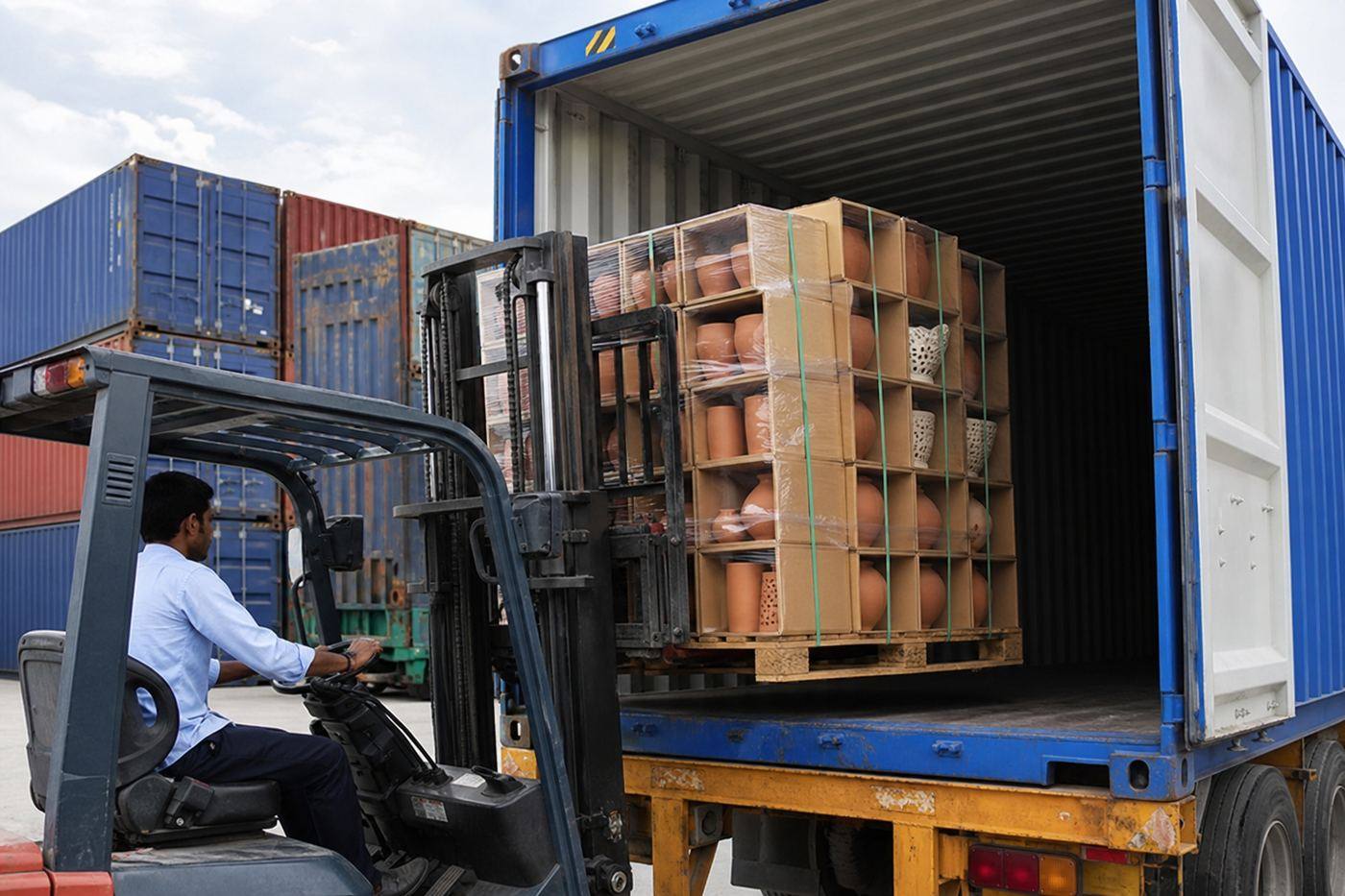
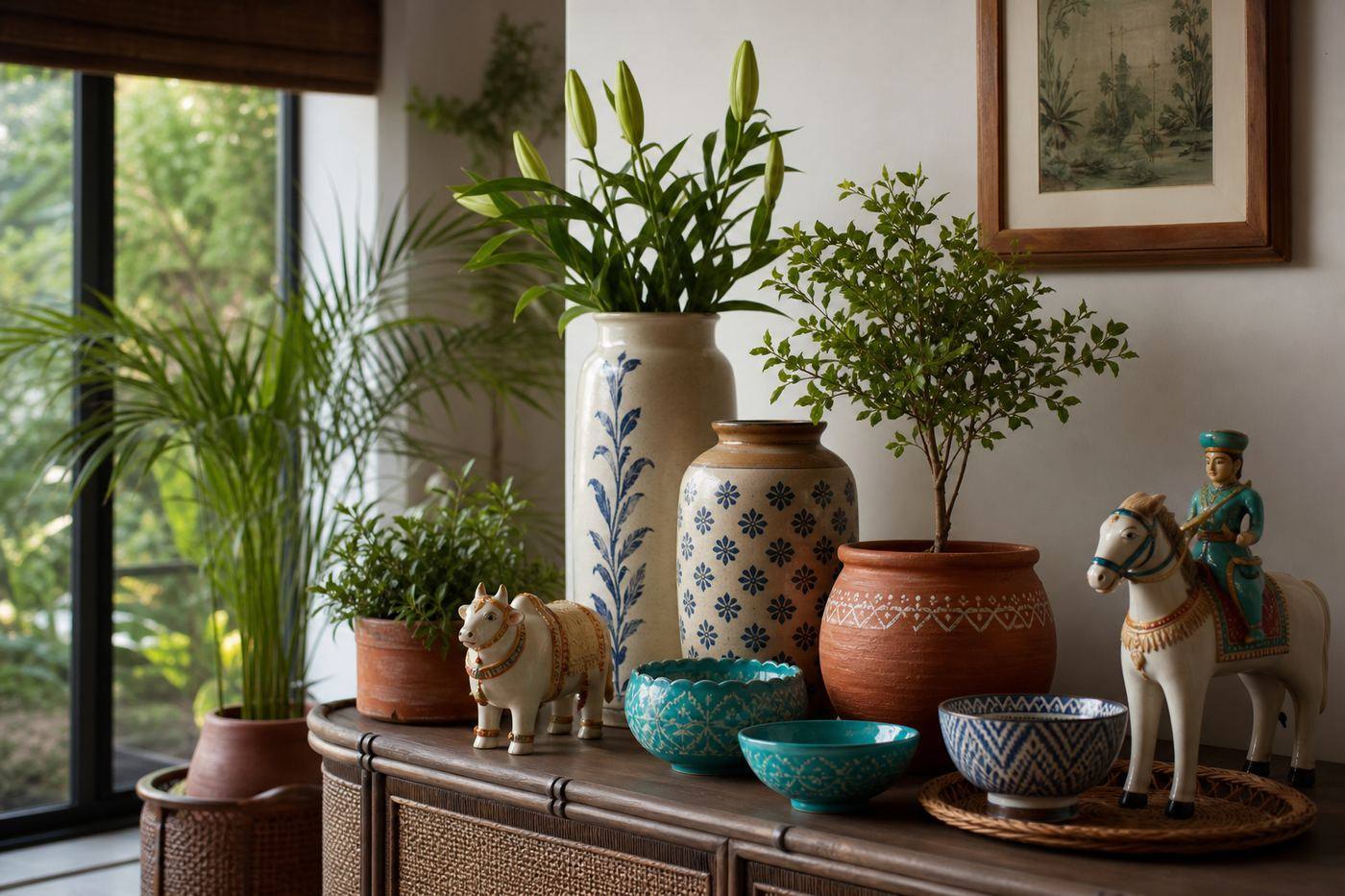
India's terracotta and ceramic handicraft export basket — unglazed terracotta gardenware, glazed earthenware and stoneware artware, porcelain décor, Jaipur blue pottery, Molela terracotta plaques, Bankura terracotta figurines, Asharikandi utility artware, selective Longpi black pottery, and Khurja-fired ornamental and tabletop ceramics — occupies a distinctive place in the country's handicraft portfolio. The industrial pottery backbone sits at Khurja in Uttar Pradesh, where hundreds of kilns produce glazed vases, planters, bowls, and gift ceramics under private-label programmes. Heritage clusters run in parallel: Jaipur blue pottery built on a non-clay quartz-frit body, Molela and Bankura terracotta rooted in ritual and folk art, and studio and gardenware capacity spread across Tamil Nadu, Pondicherry, and Gujarat. Delhi-NCR functions as the merchant consolidation and export-packing hub for mixed ceramic programmes routed to Nhava Sheva, Mundra, or ICD Delhi/Dadri.
Directionally, trade analysis for this basket runs across ITC-HS Chapter 69 rather than a single line: 6913 for ornamental ceramic articles (with EPCH examples 69131000 for porcelain or china pieces and 69139000 for other), 6912 for ceramic tableware and kitchenware other than porcelain or china, 6911 when porcelain or china pieces are classified as tableware, and 6914 for other ceramic articles including many terracotta planters and utility flowerpots — always verify with a licensed CHA per SKU because ornamental versus tableware versus other-ceramic classification is a frequent misclassification risk. Broader EPCH handicrafts (excluding carpets) reached Rs 33,122.79 crore / US$3,917.89 million in FY 2024–25 — cite that figure only as sector context, never as a stand-alone terracotta or ceramic export total.
Not every destination market is equally accessible for terracotta and ceramic handicrafts, and the wrong first-market choice is one of the most common reasons a promising Khurja or Jaipur exporter stalls after its first IHGF Delhi Fair inquiry. A country with strong retail appetite for glazed ceramics is not automatically the easiest place to land a first FCL if duty exposure under 6913 versus 6912 is unclear, if the destination's glaze-compliance regime (EU REACH and food-contact ceramic migration limits, Germany's LFGB for tableware, California Prop 65 for listed substances in glazes, CPSC and ASTM F963 where children's product claims apply) exceeds the supplier's testing readiness, or if ocean-freight breakage economics for kiln-fired clayware quietly erode margin before goods leave Mundra. This guide ranks the best countries to export Indian terracotta and ceramic handicrafts to in 2026 using the filters that actually decide commercial viability: import demand by HS heading, duty and preferential access, freight corridor economics, glaze and food-contact compliance burden, frost-resistance evidence expectations for outdoor terracotta, and channel fit for garden centre versus tabletop versus giftware programmes.
This guide is written for Indian ceramic manufacturers, Khurja pottery clusters, Jaipur blue pottery studios, terracotta gardenware exporters, Delhi-NCR merchant exporters, and export houses deciding where to invest compliance testing, sampling, and buyer-outreach budget first. It owns the market-selection framework — destination ranking by demand, duty, freight, and glaze compliance — and deliberately does not repeat the SKU-by-country demand matrix, which lives in Most Demanded Indian Terracotta and Ceramic Handicrafts by Country. For the end-to-end export process see How to Export Terracotta and Ceramic Handicrafts from India; for the SKU catalogue read Top Terracotta and Ceramic Handicraft Products Exported from India; and if you are an international buyer, jump to Source Terracotta and Ceramic Handicrafts Directly from India for the RFQ-to-landed-cost playbook.
Key Takeaways
Summary Box
Executive Summary
Summary Box
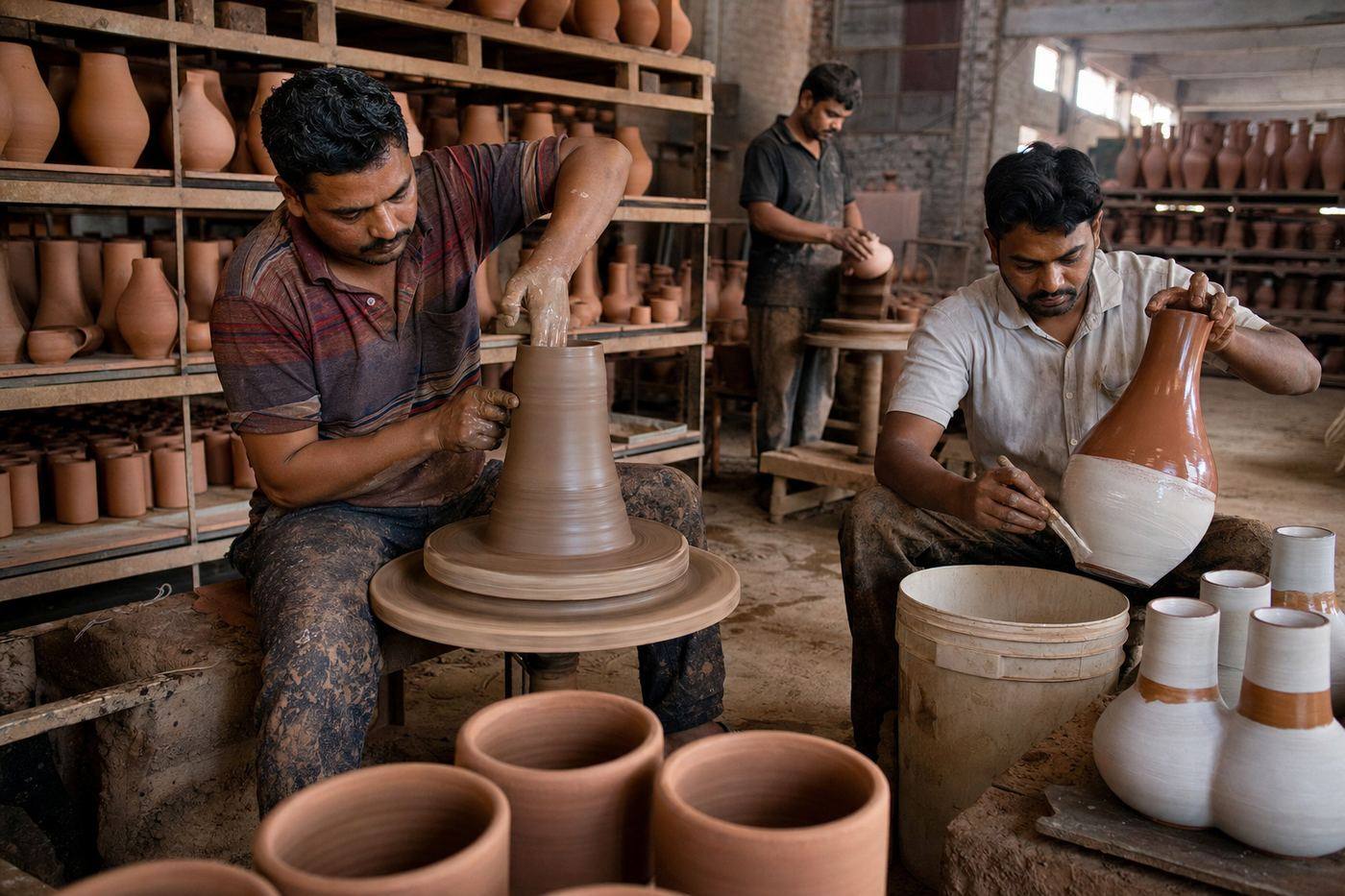
Exporting terracotta and ceramic handicrafts from India is fundamentally a kiln, glaze, and breakage discipline layered on top of a manufacturing base that is genuinely capable but stylistically fragmented across industrial pottery, heritage craft, and gardenware clusters. Khurja workshops shape, bisque-fire, glaze, glaze-fire, and finish glazed vases, planters, bowls, mugs, and gift ceramics for retail programmes; Jaipur blue pottery studios produce distinctive turquoise-and-white ornamental artware on a quartz-frit body; Molela and Bankura workshops mold and open-fire terracotta plaques and folk figurines; Tamil Nadu, Pondicherry, and Gujarat artisans hand-throw large terracotta gardenware; Delhi-NCR merchant exporters consolidate mixed ceramic programmes and coordinate ocean freight through Nhava Sheva, Mundra, or ICD Delhi/Dadri. Converting that depth into a repeat export programme starts with matching the destination market to your current glaze QC, food-contact testing readiness, and fragile-clayware packing standards.
This guide scores nine priority destinations — USA, Germany, UK, Netherlands, France, UAE, Australia, Canada, and Japan — against directional import appetite for HS 6913 ornamental ceramics, 6912 non-porcelain tableware, 6911 porcelain tableware, and 6914 other ceramic articles; duty and preferential access; freight corridor economics from Nhava Sheva, Mundra, and ICD Delhi/Dadri; glaze-and-food-contact compliance burden (EU Directive 84/500/EEC and updates, German LFGB, US FDA heavy-metal action levels, California Prop 65, REACH SVHC, frost-resistance evidence); and channel fit for garden centres, tabletop specialty, hospitality gifting, museum shops, and design-forward décor retail. Validate live country rankings via DGCI&S / ITC Trade Map before locking presentations as fact. Germany, UK, and Netherlands anchor EU distribution; France rewards Jaipur blue pottery and Molela heritage positioning; UAE gives the shortest freight cycle; Australia and Japan are strict-but-premium niches for glaze-tested and lead-safe programmes; Canada mirrors USA-style retail compliance at smaller scale.
The practical recommendation for most Indian terracotta and ceramic exporters entering direct international trade for the first time is to sequence markets rather than pursue all nine simultaneously — build glaze QC, lead and cadmium test packets, frost-resistance evidence for outdoor gardenware, and breakage-controlled export packing against a UAE or USA trial container, then extend into the EU premium tier once REACH-aligned supplier declarations and LFGB or FDA test reports are reliable. For per-SKU country demand matrices, see the sibling piece Most Demanded Indian Terracotta and Ceramic Handicrafts by Country; this guide restricts itself to the market-selection framework, duty structure, and channel-fit ranking that decide which of those markets to invest in first.
Market Size & Industry Overview
Key Statistics
India's terracotta and ceramic manufacturing base combines an industrial pottery backbone at Khurja in Uttar Pradesh — historically the country's largest concentration of glaze-fire kilns for exportable artware — with heritage clusters at Jaipur (blue pottery), Molela (Rajasthan terracotta plaques), Bankura and Bishnupur (West Bengal terracotta horses and figurines), Asharikandi (Assam terracotta toys and utility artware), and selective Longpi black pottery from Manipur. Supporting terracotta gardenware capacity runs across Tamil Nadu, Pondicherry, and Gujarat artisan belts. Delhi-NCR sits as the merchant consolidation and export-packing hub for many international programmes — running pre-shipment QC on glaze adhesion, crazing, pinholes, warpage, and colour match, and staging cartons for inland haul to Nhava Sheva, Mundra, or ICD Delhi/Dadri.
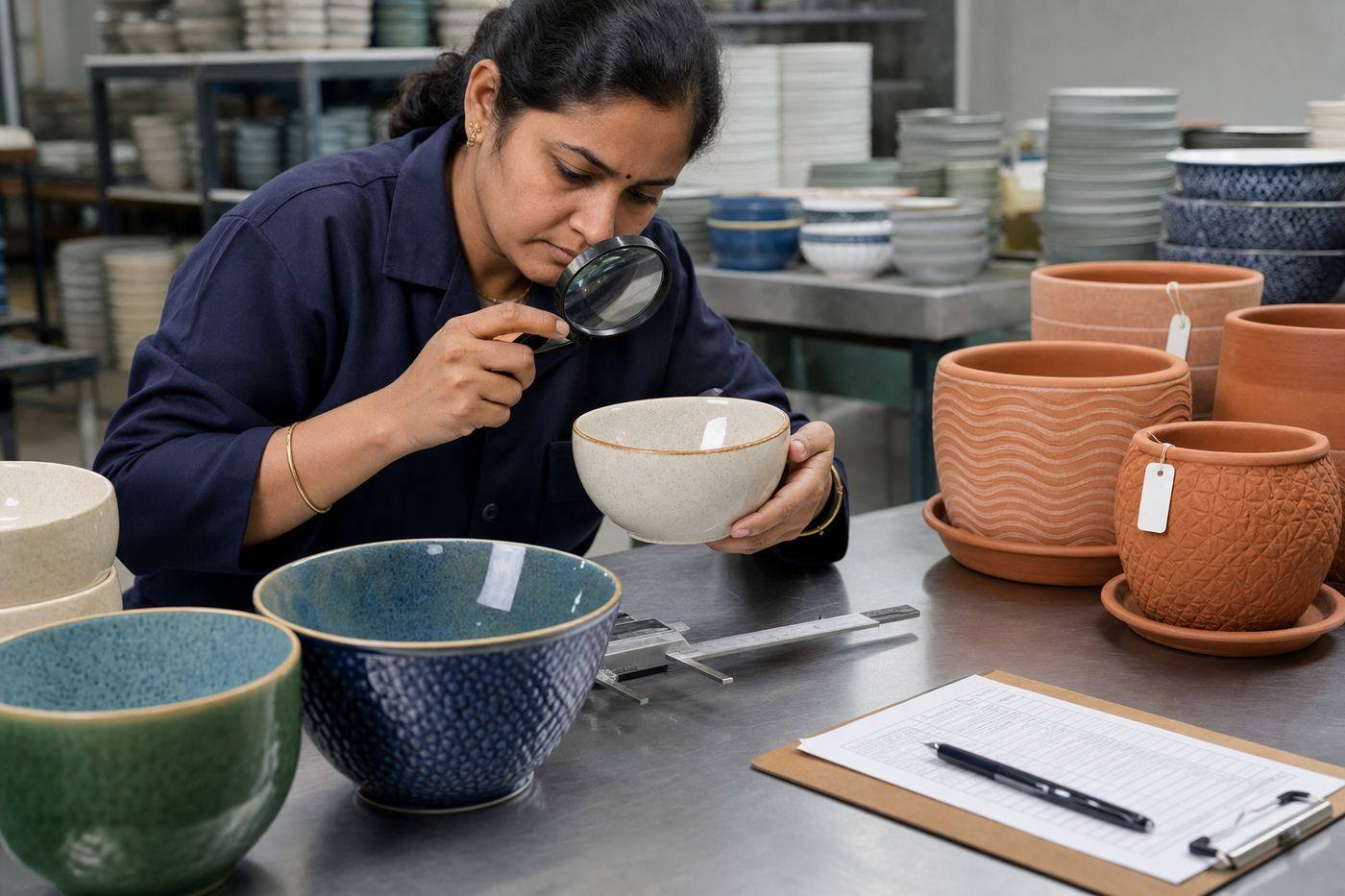
Export-oriented production spans village and family artisan workshops, mid-sized Khurja kilns firing hundreds of pieces per cycle, and Delhi-NCR merchant exporters registered under EPCH RCMC with active IEC from DGFT. Because much of the artisan base remains kiln- and capacity-constrained, glaze consistency across firing batches, dimensional tolerance on planters and gardenware, and controlled cooling to prevent crazing on glazed lines are the operational variables that separate reliable exporters from those who struggle after the first buyer complaint about hairline cracks, glaze pinholes, or ornament breakage at unpacking.
The Export Promotion Council for Handicrafts (EPCH) is the principal industry body for organised ceramic and terracotta exporters, offering RCMC registration, IHGF Delhi Fair access, and market intelligence. The Development Commissioner (Handicrafts) supports several artisan clusters. Directionally, cite DGCI&S / TradeStat lines under 6913, 6912, and 6914 as ceramic proxies for trade planning — never present total EPCH handicraft figures as terracotta- or ceramic-specific volume. Blue pottery, Bankura terracotta, and Molela terracotta each carry heritage recognition that is commercially useful when represented honestly to premium buyers.
Directional profile of India's terracotta and ceramic manufacturing and export base
Swipe →
Data table — swipe horizontally on small screens
| Dimension | 2026 Snapshot | Exporter Implication |
|---|---|---|
| Primary HS proxies | 6913 (ornamental ceramics), 6912 (non-porcelain tableware), 6911 (porcelain tableware), 6914 (other ceramic articles) | Confirm ornamental vs tableware vs other-ceramic classification with CHA per SKU |
| Industrial pottery cluster | Khurja, Uttar Pradesh — largest concentration of glaze-fire kilns for export artware | Best fit for glazed vases, planters, bowls, mugs, gift ceramics at programme scale |
| Heritage clusters | Jaipur blue pottery; Molela terracotta plaques; Bankura/Bishnupur figurines; Asharikandi; Longpi (selective) | Command premium in design retail and museum specialty channels |
| Gardenware capacity | Tamil Nadu, Pondicherry, Gujarat, and Khurja hand-thrown terracotta | Match to USA garden centre and EU outdoor living demand |
| Consolidation hub | Delhi-NCR — export packing, mixed pottery programmes | Honest origin labelling per cluster; QC before carton sealing |
| Regulatory body | EPCH (RCMC); IEC via DGFT; Development Commissioner (Handicrafts) schemes | EPCH RCMC is practical prerequisite for buyer credibility and IHGF access |
| Sector context (not ceramic volume) | EPCH handicrafts excl. carpets FY 2024–25: Rs 33,122.79 crore / US$3,917.89 million | Use only as broad handicraft sector reference — never as ceramic-only total |
| Structural challenge | Ocean transit breakage; glaze compliance for food contact; frost-resistance evidence for outdoor terracotta | Kiln discipline, glaze chemistry, and packing engineering decide market access |
| Top directional destinations | USA, Germany, UK, Netherlands, France, UAE, Australia, Canada, Japan | Sequence compliance testing investment by destination tier |
Export Statistics
Key Statistics
India's terracotta and ceramic handicraft exports have grown as global garden centre chains, home décor retail, hospitality gifting, and design specialty channels broaden sourcing toward artisan-fired clayware with authentic cluster provenance narratives. Terracotta gardenware — hand-thrown planters, urns, wall pots, and strawberry pots — remains a high-volume repeat category for USA and UK garden centres; glazed Khurja artware such as reactive-glaze vases and ornamental bowls anchors year-round décor programmes; Jaipur blue pottery statement pieces command premium in France, Japan, and USA specialty retail; Molela terracotta plaques and Bankura figurines serve museum shop and design-forward channels. Because ceramic exports under 6913 / 6912 / 6914 sit below the volume threshold of India's largest export chapters, precise year-on-year percentage moves should be interpreted with caution — validate current-year DGCI&S / TradeStat releases before capacity decisions.
Directional export profile for Indian terracotta and ceramic handicrafts
Swipe →
Data table — swipe horizontally on small screens
| Metric | Directional Estimate | Notes |
|---|---|---|
| Ornamental ceramics HS | 6913 — EPCH examples 69131000 (porcelain/china) and 69139000 (other) | Confirm artware vs tableware wording on invoices |
| Non-porcelain tableware HS | 6912 | Applies when SKU commercial identity is tableware, not ornament |
| Porcelain tableware HS | 6911 | For fine porcelain and china tableware programmes |
| Other ceramic articles HS | 6914 | Common for terracotta planters and utility flowerpots — verify per SKU |
| Dominant export forms | Terracotta planters, glazed ceramic vases, blue pottery, ornamental bowls, figurines | Planters and gardenware carry largest programme share by volume |
| Fastest-growing sub-segment | Lead-safe glaze programmes; frost-rated outdoor terracotta; blue pottery premium sets | Directional from retail conversations — validate per season |
| Governing trade body | EPCH (RCMC registration) | Practical prerequisite for IHGF access and buyer credibility |
| Top directional destinations | USA, Germany, UK, Netherlands, France | USA highest-priority for gardenware and décor volume |
| Secondary destinations | UAE, Australia, Canada, Japan | UAE fastest freight; Japan and France reward premium heritage programmes |
| Operational export killer | Ocean transit breakage; glaze compliance gaps for food-contact SKUs | Not plant quarantine — packing engineering and glaze testing |
Import Statistics
Key Statistics
From the buyer side, terracotta and ceramic handicrafts typically enter destination markets across Chapter 69 headings rather than as a single tracked line — ornamental ceramics under 6913, ceramic tableware under 6912, porcelain tableware under 6911, and other ceramic articles including many planters under 6914. That structural detail matters because a destination importer's trade-data query for 'Indian ceramic imports' may pull only one of these baskets — always ask which HS sub-line the importer tracks before comparing India's directional share. Figures below are directional planning views for India-origin ceramic and terracotta handicraft imports reconciled against EPCH cluster observations; reconfirm against current TradeStat or ITC Trade Map before locking country rankings.
Directional India-origin terracotta and ceramic handicraft imports by destination (planning view)
Swipe →
Data table — swipe horizontally on small screens
| Market | Directional Import Appetite | Primary Buyer Type | Compliance Bar |
|---|---|---|---|
| USA | Largest single destination for terracotta gardenware and glazed décor | Garden centres, home specialty retail, décor chains, e-commerce private label | FDA heavy-metal action levels on tableware; Prop 65 on listed glaze substances; CPSC if toy claim; retail QC on crazing |
| Germany | EU anchor for glazed tableware and design décor | Giftware wholesalers, design retail, museum shops, tabletop specialty | LFGB migration testing on tableware; REACH SVHC on glazes; frost-resistance evidence |
| United Kingdom | Established garden centre and gift retail channel | Garden centres, gift chains, department stores, hospitality gifting | UK REACH; food-contact ceramic migration; honest frost-resistance labels |
| Netherlands | EU distribution hub | Wholesale distributors, EU-wide décor and garden programmes | EU Directive 84/500/EEC on food-contact ceramics; Rotterdam clearance for EU redistribution |
| France | Design-forward EU retail; heritage-friendly | Boutique gift, department-store décor, Jaipur blue pottery specialty | REACH; food-contact migration; premium heritage-story evidence |
| UAE | Fast-freight secondary market | Hypermarkets, hospitality gifting, Gulf re-export, garden landscape | Lighter formal food-contact documentation; presentation and packing QC dominates |
| Australia | Premium niche with strong garden décor demand | Garden specialty, gift, hospitality, home décor | Food-contact migration for tableware; ACCC if toy claim; frost-resistance for outdoor claims |
| Canada | North American secondary — mirrors USA at smaller scale | Garden distributors, gift importers, seasonal buyers | Health Canada guidance on ceramic tableware lead/cadmium; bilingual labels where retail-packed |
| Japan | Small high-value niche | Department-store gifts, design retail, tea/ceremony ceramic specialty | Strict finish quality; food-contact migration on any tableware; heritage evidence for blue pottery and Longpi |
Product Categories & Variants (Brief Overview)
Summary Box
This section is a brief overview only — the SKU-by-country demand matrix belongs to Most Demanded Indian Terracotta and Ceramic Handicrafts by Country. Full product depth sits in Top Terracotta and Ceramic Handicraft Products Exported from India. What follows is category-to-market fit relevant for choosing which destination to target first, with emphasis on gardenware versus tabletop versus design-specialty channel alignment.
Product category snapshot by best-fit destination market
Swipe →
Data table — swipe horizontally on small screens
| Category | Typical HS Heading | Best-Fit Destination Markets |
|---|---|---|
| Terracotta gardenware planters and urns | 6914 (verify per SKU) | USA, UK, Netherlands, France, Australia |
| Glazed ceramic vases and ornamental bowls (Khurja) | 6913 | USA, Germany, UK, UAE, Japan |
| Jaipur blue pottery statement décor | 6913 | France, Japan, USA specialty, Germany museum shops |
| Molela terracotta plaques and relief panels | 6913 | France, USA design retail, Germany museum, UK gift specialty |
| Bankura terracotta horses and figurines | 6913 | France, Japan, USA specialty, UK museum shops |
| Ceramic tableware (glazed earthenware and stoneware) | 6912 | Germany, USA, UK, Netherlands (LFGB/FDA required) |
| Porcelain artware and tableware | 6911 / 6913 | Japan, USA, Germany premium retail |
| Terracotta figurines and folk artware | 6913 | USA, France, UK gift specialty |
| Hospitality amenity ceramic gift sets | 6913 / 6912 | UAE, USA hospitality, UK boutique hotels |
Manufacturing Overview (Brief)
Export Tip
For market selection, manufacturing depth only matters where it changes destination risk. Ask whether the shortlisted supplier can produce your SKU at trial scale with controlled bisque and glaze firing, consistent glaze thickness and colour across the batch, and crush-resistant export packing — that is the gate for USA FDA and Prop 65-ready programmes, EU LFGB-aligned tableware, and premium Japan gift channels. Process walkthroughs for exporters live in How to Export Terracotta and Ceramic Handicrafts from India; buyer audit tactics live in Source Terracotta and Ceramic Handicrafts Directly from India; glaze and food-contact deep-dive lives in Lead-Safe Glaze, Blue Pottery & Food-Contact Ceramic Export Opportunities.
For destination-market planning the buyer-facing shape of the process is what matters: proof that bisque and glaze firing were completed at appropriate temperatures for the clay body, glaze adhesion and crazing checks against a signed reference sample, dimensional fit for nested or stacked sets, honest cluster labelling (Khurja glazed ware versus Jaipur blue pottery versus Molela terracotta versus Delhi-finished consolidation), and frost-resistance test evidence when outdoor terracotta claims are made. Heritage claims for blue pottery, Bankura, or Molela require evidence-bound representation — never treat 'handmade Indian' as a generic marketing adjective for premium retail.
Destination Ranking: Duties, Freight Corridors & Glaze-Compliance Burden
Market Snapshot
This is the core ranking exercise of this guide: scoring each of the nine priority destinations on duty and preferential access under HS 6913, 6912, 6911, and 6914; freight corridor economics from Nhava Sheva, Mundra, and ICD Delhi/Dadri; glaze-and-food-contact compliance burden (EU Directive 84/500/EEC and updates, German LFGB, US FDA CPG Sec. 545.450 / 7117.07 (lead) and Sec. 545.400 / 7117.06 (cadmium) heavy-metal action levels, California Prop 65, REACH SVHC, ACCC and Health Canada guidance); frost-resistance evidence expectations for outdoor terracotta; and channel fit for garden centres versus tabletop specialty versus giftware retail. Duty rates and compliance rules below are directional — always confirm the current position with a licensed customs broker in the destination market before quoting landed cost. This section deliberately does not rank per-SKU demand — that job belongs to Most Demanded Indian Terracotta and Ceramic Handicrafts by Country.
1. United States
- Duty and access: HTSUS Chapter 69 lines under 6913, 6912, 6911, and 6914 carry line-specific Column 1 MFN rates — not a single 'generally Free' rate. Directional 2026 HTS examples for ornamental ceramics under 6913 include Free on several porcelain/china and sculpture artware lines (e.g. 6913.10.50 / 6913.90.10 where criteria are met), about 3.3% on bone chinaware (6913.10.20), and about 6% on the broad 'other' non-porcelain catch-all 6913.90.50 — always confirm the exact 10-digit HTS line plus any Chapter 99 / additional measures with a US broker before quoting landed cost.
- Food-contact compliance: FDA CPG Sec. 545.450 / CPG 7117.07 (lead) and Sec. 545.400 / CPG 7117.06 (cadmium) heavy-metal action levels apply to ceramic hollowware and flatware used for food service — maintain third-party migration test evidence for any tableware or bowl SKU where food contact is plausible. Prop 65 applies where lead or other listed substances are present in glazes above thresholds — maintain glaze supplier declarations and test evidence for California-facing chains.
- Toy and children's product compliance: CPSC and ASTM F963 apply when a SKU is marketed as a toy or children's product — Bankura miniature horses positioned as children's collectibles need testing, ornamental figurines sold as adult décor do not.
- Operational compliance: Breakage in transit and crazing after climate change dominate operational risk — retail QC expects intact arrival and hairline-crack-free glaze at unpacking.
- Freight corridor: Nhava Sheva or Mundra to US East and West Coast; 22–35 days. ICD Delhi/Dadri consolidation for Khurja and Jaipur inland haul.
- Strategy: Lead with terracotta gardenware programmes for garden centre buyers or glazed Khurja vases for gift specialty — both require crush-resistant packing and glaze QC from the first shipment. Reserve food-contact tableware programmes for suppliers with FDA test evidence already on file.
The USA is directionally the highest-priority destination for Indian terracotta and ceramic handicraft exports — driven by garden centre chains stocking terracotta planters, home décor retail carrying glazed vases and ornamental bowls, hospitality décor and gifting, and e-commerce private label for artisan pottery. Both ornamental ceramic programmes under 6913 and gardenware programmes under 6914 find established buyer channels. Food-contact tableware programmes under 6912 or 6911 are viable but require FDA and Prop 65 discipline from the first order.
2. Germany
- Duty and access: EU Common External Tariff applies to CN chapter 69 lines — 6913 ornamental ceramics, 6912 tableware, 6911 porcelain, 6914 other ceramic articles carry line-specific MFN rates. Confirm applicable rate and any preferential treatment with your German importer or customs broker.
- Food-contact compliance: German LFGB (Lebensmittel- und Futtermittelgesetzbuch) enforces migration limits aligned with EU Directive 84/500/EEC on ceramic articles intended for food contact — maintain migration test evidence for any tableware or hollowware. REACH SVHC applies to substances in glazes and decorative coatings.
- Heritage honesty: German premium retail verifies cluster and heritage claims — treat Jaipur blue pottery, Bankura terracotta, and Khurja provenance descriptions as evidence-bound representations.
- Freight corridor: Nhava Sheva or Mundra to Hamburg or Bremerhaven; 22–30 days.
- Strategy: Do not approach German tableware buyers without LFGB test evidence in hand. Ornamental 6913 programmes are approachable earlier — once credible, Germany offers stable repeat-order gift wholesale and tabletop specialty accounts.
Germany anchors EU demand for Indian glazed ceramic tableware, ornamental décor, and design-forward artware — and is the strictest destination for food-contact ceramic migration under LFGB, aligned with EU Directive 84/500/EEC and its updates. Blue pottery, Khurja glazed lines, and porcelain artware all find buyer channels once test evidence and REACH-aligned supplier declarations are ready.
3. United Kingdom
- Duty and access: Confirm current UK Global Tariff treatment for 6913, 6912, 6911, and 6914 with a UK broker.
- Food-contact compliance: UK REACH applies to substances in glazes; food-contact ceramic migration guidance broadly aligns with EU Directive 84/500/EEC frameworks but requires UK-facing evidence and labelling.
- Frost-resistance: UK garden centres regularly ask for freeze-thaw evidence on outdoor terracotta planters — do not label 'frost-resistant' without third-party test backing.
- Freight corridor: Nhava Sheva or Mundra to Felixstowe or London Gateway; 22–30 days.
- Strategy: Lead with hand-thrown terracotta gardenware programmes for garden centres or Khurja glazed vases for gift wholesale — both need packing engineering proof, not only sample beauty.
The UK combines established garden centre culture, gift chain retail, and design-forward tabletop channels with post-Brexit product-safety frameworks separate from the EU's — food-contact and REACH documentation prepared for Rotterdam does not automatically satisfy a UK retail compliance review. Terracotta gardenware in particular finds strong repeat demand at garden centres and hospitality landscape buyers.
4. Netherlands
- Duty and access: EU Common External Tariff; Rotterdam clearance is a natural EU gateway for consolidated ceramic programmes.
- Food-contact compliance: Same EU Directive 84/500/EEC and REACH framework as Germany and France; Dutch retail audits on imported ceramic tableware migration are directionally increasing.
- Freight corridor: Nhava Sheva or Mundra to Rotterdam; 22–28 days.
- Strategy: Position Dutch buyers as potential EU distribution partners — high-volume terracotta gardenware and glazed décor SKUs suit wholesale redistribution across Germany, France, and Nordic markets.
The Netherlands operates as both a direct retail market and an EU distribution hub — Dutch importers acting as EU wholesalers are usually more paperwork-disciplined on food-contact migration test evidence and REACH declarations than single-market boutique buyers. Rotterdam clearance often precedes onward EU distribution of ceramic gardenware and décor.
5. France
- Duty and access: EU Common External Tariff on relevant CN lines under Chapter 69.
- Food-contact compliance: EU Directive 84/500/EEC and REACH; premium buyers expect honest cluster provenance and evidence for any GI or heritage claim.
- Freight corridor: Nhava Sheva or Mundra to Le Havre, Marseille, or via Rotterdam and Hamburg; 22–30 days.
- Strategy: Lead with distinctive Jaipur blue pottery statement décor, Molela terracotta relief panels, and design-forward Khurja glazed artware supported by heritage documentation and glaze compliance packets.
France rewards design-forward heritage positioning — boutique retail, department-store gift, hospitality-design buyers, and museum shops respond to Jaipur blue pottery narratives, Molela terracotta plaques, Bankura folk figurines, and honest artisan-cluster stories. Premium blue pottery statement pieces command among the highest ceramic export margins into France when heritage and quality are represented well.
6. United Arab Emirates
- Duty and access: GCC tariff treatment is generally favourable for handicraft ceramics — confirm current rate with your freight forwarder.
- Compliance: Lighter than USA or EU premium retail for most wholesale channels — presentation integrity, arrival breakage rate, and hospitality-grade finish matter more than formal LFGB or FDA packets. Food-contact tableware programmes still require reasonable glaze migration awareness.
- Freight corridor: Mundra or Nhava Sheva to Jebel Ali; 7–12 days — fastest lane on this list.
- Strategy: Use UAE as a fast-cycle proof-of-concept market for new glaze finishes, terracotta gardenware programmes for villa landscapes, or curated ceramic gift assortments for hospitality — before investing in heavier USA and EU compliance test programmes.
UAE offers the fastest freight cycle and lightest formal compliance documentation ask on this list — hypermarket gifting, hospitality amenity programmes, Gulf re-export, and villa landscape gardening drive demand for terracotta planters, glazed décor bowls, and curated ceramic gift assortments. Ideal proof-of-concept market for new glaze programmes before investing in USA and EU test packets.
7. Australia
- Duty and access: Confirm current tariff treatment with an Australian customs broker for the relevant Chapter 69 lines.
- Food-contact and safety compliance: ACCC product-safety expectations apply if children's or toy claims are made; food-contact ceramic tableware programmes need lead and cadmium migration evidence for specialty retail.
- Freight corridor: Nhava Sheva or Mundra to Melbourne, Sydney, or Brisbane; 18–26 days.
- Strategy: Confirm glaze and packing readiness with an experienced broker before quoting — not ideal as first market for suppliers without glaze QC discipline. Terracotta gardenware for garden centres and Khurja glazed vases for gift chains are workable entry categories.
Australia is a strict-but-manageable premium niche for Indian ceramic and terracotta handicrafts — garden centre chains, gift specialty, hospitality décor, and design retail buyers value Khurja glazed lines and terracotta gardenware but expect glaze compliance alignment, frost- and heat-resistance evidence for outdoor claims, and intact arrival.
8. Canada
- Duty and access: Confirm CBSA tariff treatment for 6913, 6912, 6911, and 6914 with a Canadian broker.
- Food-contact compliance: Health Canada guidance on ceramic tableware lead and cadmium is broadly aligned in intent with US FDA action levels; food-contact SKUs need migration evidence for specialty retail.
- Freight corridor: Nhava Sheva or Mundra to Halifax, Montreal, or Vancouver; 28–35 days.
- Strategy: Pair Canada with USA outreach using shared glaze test evidence and packing standards as baseline. Bilingual retail labels where applicable.
Canada mirrors USA buyer behaviour at a smaller directional scale — garden distributors, gift importers, and seasonal buyers with glaze compliance expectations similar to US retail practice but often smaller trial volumes. Health Canada guidance on ceramic tableware lead and cadmium migration is aligned in spirit with FDA action levels, and bilingual labelling applies for retail-packaged SKUs.
9. Japan
- Duty and access: Confirm Japan customs tariff and any India-Japan CEPA preferential treatment on Chapter 69 lines with a Japan-side broker.
- Food-contact compliance: Japan enforces its own food-contact ceramic standards (aligned with Food Sanitation Act ministerial ordinances for tableware) — migration test evidence expected for premium retail.
- Freight corridor: Nhava Sheva or Mundra to Yokohama, Tokyo, or Kobe; 20–28 days.
- Strategy: Enter Japan only once glaze consistency, finish quality, and packing standards are genuinely reliable — lead with heritage-authentic Jaipur blue pottery, refined Khurja glazed artware, and curated Longpi black pottery programmes.
Japan is a small but high-value niche — department-store gift, design retail, and specialty tea and tabletop buyers value hand-thrown ceramic craftsmanship, Jaipur blue pottery heritage, and selective Longpi black pottery from Manipur, but expect flawless finish quality, stable glaze consistency, and food-contact discipline on any tableware.
Pricing Analysis
Buyer Tip
Because this guide ranks destinations rather than products, the useful pricing question is how much FOB cost gets absorbed by duty, freight, glaze and food-contact test overhead, frost-resistance testing where claimed, and breakage allowance once a specific destination is chosen. Base clay, glaze material, kiln fuel, and labour cost is set in Khurja, Jaipur, Molela, Bankura, and other clusters regardless of destination — what changes market-to-market is compliance overhead and channel margin expectations.
Directional FOB bands with compliance overlay by destination tier
Swipe →
Data table — swipe horizontally on small screens
| Product Category | Directional FOB (USD) | Compliance/Duty Overlay to Weigh Per Market |
|---|---|---|
| Small terracotta accents and ornaments | $1–8/pc | Duty triage across 6913 vs 6914; Prop 65 and REACH glaze declarations for coloured slips |
| Mid glazed ceramic vases, bowls, planters (Khurja) | $4–28/pc | Breakage allowance; LFGB/FDA if food-contact plausible; Prop 65 on glaze substances |
| Statement Jaipur blue pottery and large terracotta gardenware | $15–75+/pc | Heritage evidence for premium positioning; frost-resistance test evidence for outdoor claims |
| Lead-safe certified tableware programmes | Evidence-dependent premium | FDA CPG Sec. 545.450/7117.07 (lead) and Sec. 545.400/7117.06 (cadmium) action levels; LFGB migration; EU Directive 84/500/EEC compliance packets |
| Hospitality amenity ceramic gift sets (UAE, boutique) | Assortment-priced | Presentation packing; lighter formal food-contact packet for décor-only SKUs |
| Molela and Bankura terracotta specialty pieces | Evidence- and motif-dependent | Design retail premium; museum-shop margin; honest cluster labelling |
| Porcelain artware and premium tableware | Programme-priced | 6911 duty treatment; premium finish QC; food-contact migration for tableware |
MOQ Analysis
Buyer Tip
Minimum order quantities for terracotta and ceramic handicrafts scale from sample lots through gardenware FCL programmes. Match MOQ conversation to buyer stage — spring garden programme buyers plan 4–8 months ahead; year-round gift and tabletop buyers often start with mixed LCL trials; blue pottery statement pieces move in smaller premium lots.
Directional MOQ tiers by transaction stage
Swipe →
Data table — swipe horizontally on small screens
| Stage | Typical MOQ | Purpose |
|---|---|---|
| Sample | 5–20 pcs/SKU | Evaluate glaze finish, kiln consistency, dimensional fit, and heritage authenticity |
| Trial order | 100–400 pcs or mixed LCL | Validate glaze consistency, packing integrity, and food-contact or frost-resistance test readiness |
| Wholesale / bulk | By carton, CBM, or colour-glaze way | Established gift and garden retail repeat programmes |
| Programme FCL (20GP / 40HC) | Seasonal gardenware or festive gift volume | Spring garden programmes booked 4–8 months ahead of retail cut-offs |
Packaging Standards
Export Tip
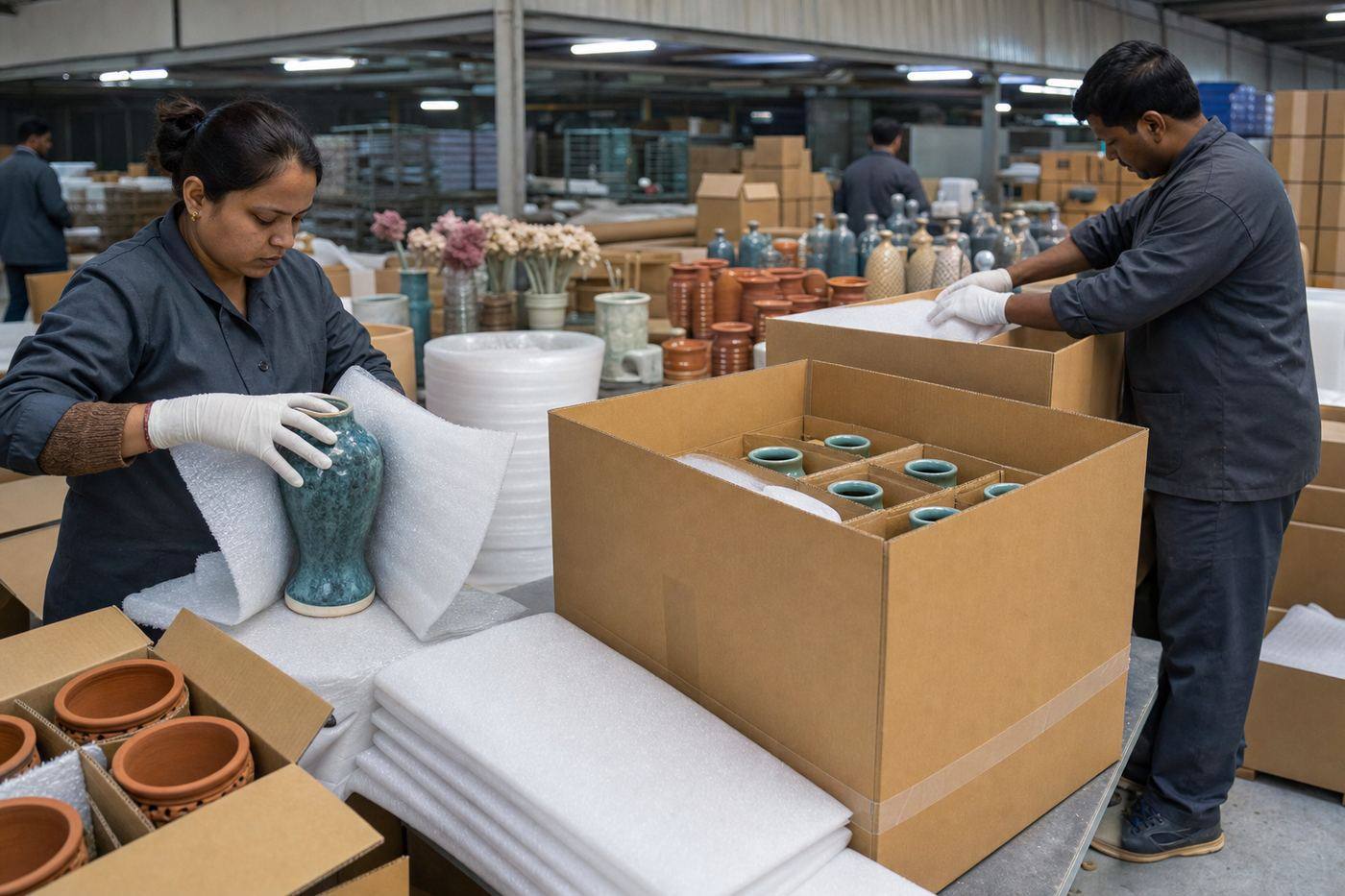
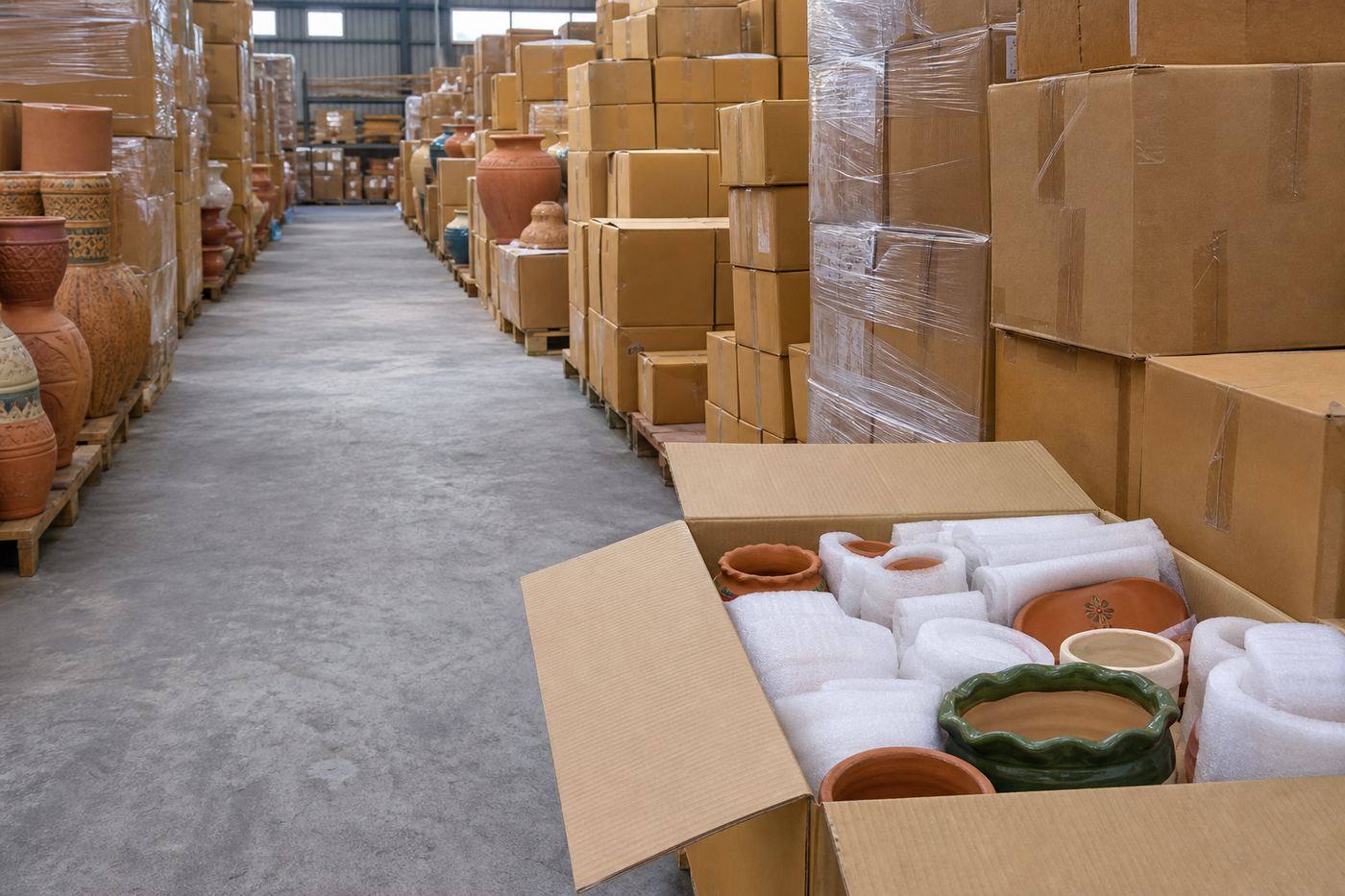
Terracotta and glazed ceramic handicrafts are physically vulnerable during transit in ways that denser or unfired handicrafts are not: glazed surfaces chip against uncushioned contact, thin-walled planters crack under stack pressure, statement blue pottery pieces shatter if void fill is inadequate, and moisture uptake during transit can affect labels and glaze stickers. Packaging engineering is directly a market-access question — a poorly built export carton on a 22-day ocean leg into Long Beach or Rotterdam destroys first-order margin regardless of destination duty rate.
Packaging formats for terracotta and ceramic handicraft export
Swipe →
Data table — swipe horizontally on small screens
| Format | Use Case | Key Requirement |
|---|---|---|
| Individual foam or bubble wrap | Vases, bowls, planters, ornaments | Prevents glaze scuff and piece-on-piece contact |
| Cell dividers in rigid cartons | Nested sets designed for nesting; ornament assortments | Only nest when the SKU is designed for it — never assume |
| Double-wall export cartons | All ceramic and terracotta ocean shipments | Burst-strength appropriate to piece weight and stack |
| Corner and edge protectors | Statement décor, tall planters, wall plaques | Reduces impact damage at container corners |
| Void fill and anti-shift bracing | Tall terracotta gardenware and irregular forms | Prevents in-carton movement during transit |
| FRAGILE and THIS SIDE UP markings | All export cartons | Regulatory-style markings drive handler behaviour |
| Retail gift boxes (premium blue pottery) | Department-store and heritage programmes | Presentation-ready inner pack inside export carton |
| Palletisation with stack-height limit | Wholesale gardenware and glazed décor | Never over-stack thin-walled planters or glazed vases |
Container Loading Details
Export Tip
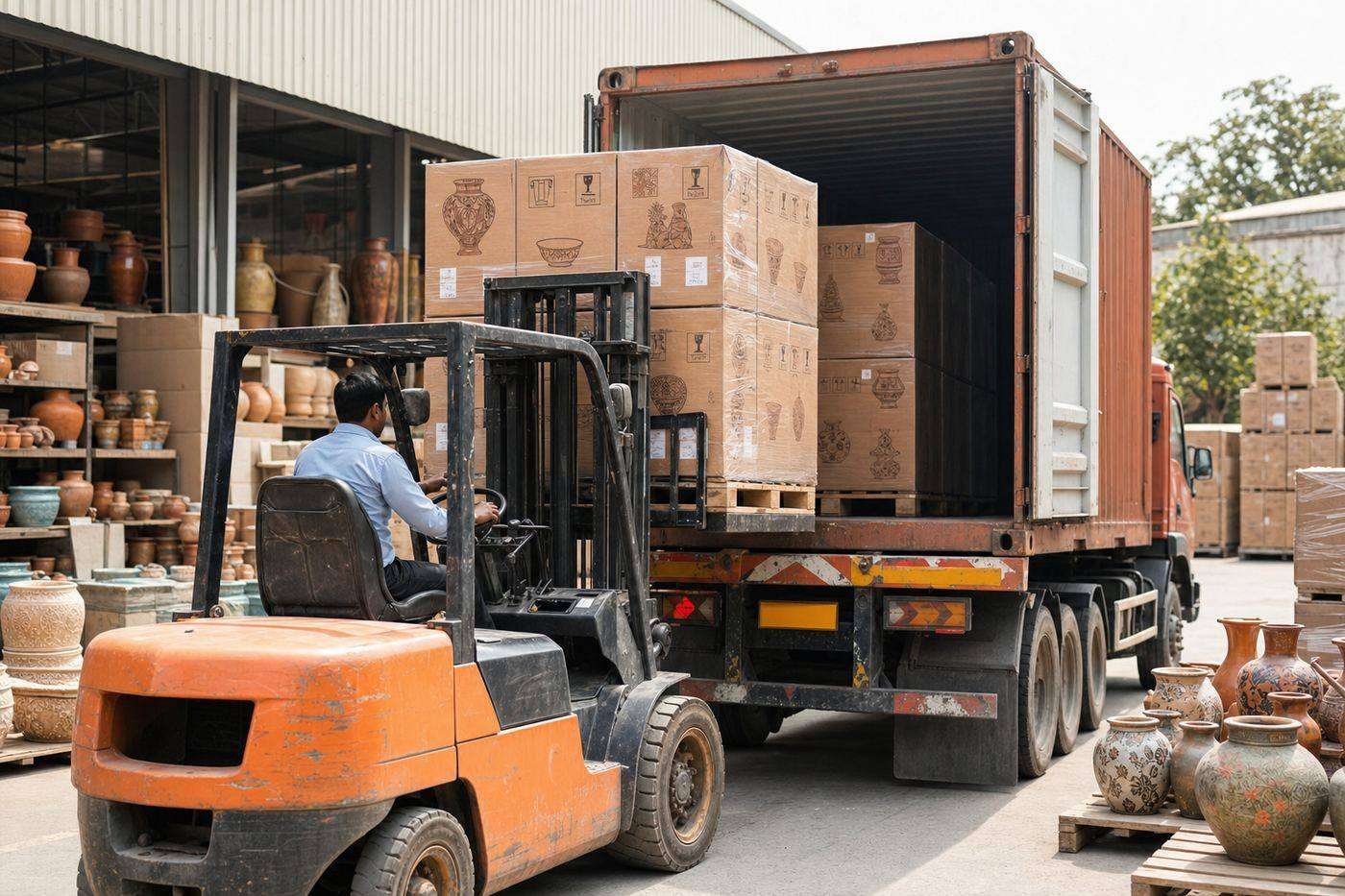
Terracotta and ceramic handicrafts are almost always cube- and stack-limited rather than weight-limited — a container fills before the weight cap for gardenware and décor programmes, particularly for large planters and mixed ornamental assortments. Breakage risk dominates loading decisions: never top-load heavy cartons on ornament cartons, plan dunnage for tall terracotta pieces, and align sailing cut-offs with kiln cooling and QC hold times so lots are not rushed into unsafe stuffing.
Directional container loading guidance for terracotta and ceramic exports
Swipe →
Data table — swipe horizontally on small screens
| Container Type | Loading Consideration | Typical Use |
|---|---|---|
| 20-foot FCL | Cube-fills before weight cap for gardenware and décor; plan ornament bracket loading | Mid-size wholesale, blue pottery premium programmes, hospitality assortments |
| 40-foot HC | Extra cube for tall vases, large planters, and stacked carton programmes | Established garden centre and décor chain seasonal importers |
| LCL | Suitable for sample follow-on, mixed-cluster trials, blue pottery premium lots | New buyer relationships, market testing, low-volume specialty |
| Crush-risk stacking | Never top-load heavy planter cartons on thin-walled décor or ornament cartons | Primary cause of first-shipment breakage claims |
| ICD Delhi/Dadri routing | Khurja and Jaipur inland haul into North India consolidation | Plan sailing cut-offs around glaze cool and QC hold |
| Nhava Sheva and Mundra stuffing | Western port sailings to USA, EU, UAE, AU, CA, JP | Align stuffing date with cured glaze and packing spec sign-off |
Shipping Methods
Export Tip
- UAE-bound freight is the fastest lane at 7–12 days ex Mundra or Nhava Sheva to Jebel Ali — natural proof-of-concept while USA and EU compliance test packets mature
- USA and EU stock orders run 4–7 weeks via ocean FCL or LCL ex Nhava Sheva or Mundra after kiln cool and QC clearance
- Spring garden programmes for terracotta gardenware require forward booking 4–8 months ahead — confirm HS 6914 vs 6913 early and lock kiln slots
- Incoterms: EXW, FOB (named port), CFR/CIF common; DDP selective for experienced fragile-ceramic programmes
Ocean freight under FCL or LCL is standard for commercial terracotta and ceramic volumes — no cold chain, but stack-height discipline, dunnage, and moisture control in packing matter throughout. Nhava Sheva and Mundra dominate sailings to USA, EU, UAE, Australia, Canada, and Japan; ICD Delhi/Dadri consolidates Khurja and Jaipur cargo for western port routing. Air freight suits urgent trade-show samples or high-value blue pottery statement pieces but is rarely economical for gardenware bulk given clay-body density and volume.
Lead times typically run 10–21 days for samples, 4–7 weeks for stock glazed décor, 6–12 weeks for custom glaze or private-label programmes, longer for large terracotta and kiln-capacity-constrained programmes, and spring garden programmes often require 4–8 months of forward planning. The biggest transit-time variable after kiln capacity and glaze cool is inland haul from cluster to load port, not the ocean leg itself.
Certifications
Compliance Notes
Certification requirements for terracotta and ceramic handicraft exports scale with destination market and the claims made on glaze composition, food contact, frost resistance, and heritage origin. Baseline export registration (IEC, EPCH RCMC) is non-negotiable; the glaze and food-contact documentation below is commercially decisive for USA tableware, EU premium retail, and Japan specialty channels specifically.
Certifications and compliance frameworks for terracotta and ceramic export
Swipe →
Data table — swipe horizontally on small screens
| Certification / Framework | Purpose | Relevant For |
|---|---|---|
| Import Export Code (IEC) | Baseline legal requirement for commercial export | All exporters |
| EPCH RCMC | Handicraft export registration, IHGF access, buyer credibility | All organised ceramic exporters |
| Lead and cadmium migration test reports (per FDA CPG Sec. 545.450/7117.07 and Sec. 545.400/7117.06, EU 84/500/EEC, LFGB) | Food-contact ceramic tableware safety | USA, EU, UK, Japan, Canada, Australia tableware programmes |
| REACH / SVHC declarations | EU substance limits in glazes and decorative coatings | Germany, Netherlands, France, UK, EU distribution |
| Prop 65 compliance evidence (glaze substances) | California listed-substance warnings where applicable | USA retail — especially California-facing chains |
| Frost-resistance / freeze-thaw test evidence | Outdoor terracotta gardenware claims | USA, UK, Germany, Netherlands, Australia garden centres |
| CPSC / ASTM F963 / EN71 | Toy and children's product safety when toy claim made | Only when SKU is marketed as toy — not default for décor |
| Certificate of Origin | Preferential duty and buyer documentation | All commercial shipments |
| Heritage / cluster provenance evidence | Blue pottery, Molela, Bankura, Longpi premium positioning | France, Japan, USA specialty premium programmes |
Buyer Requirements
Buyer Requirements
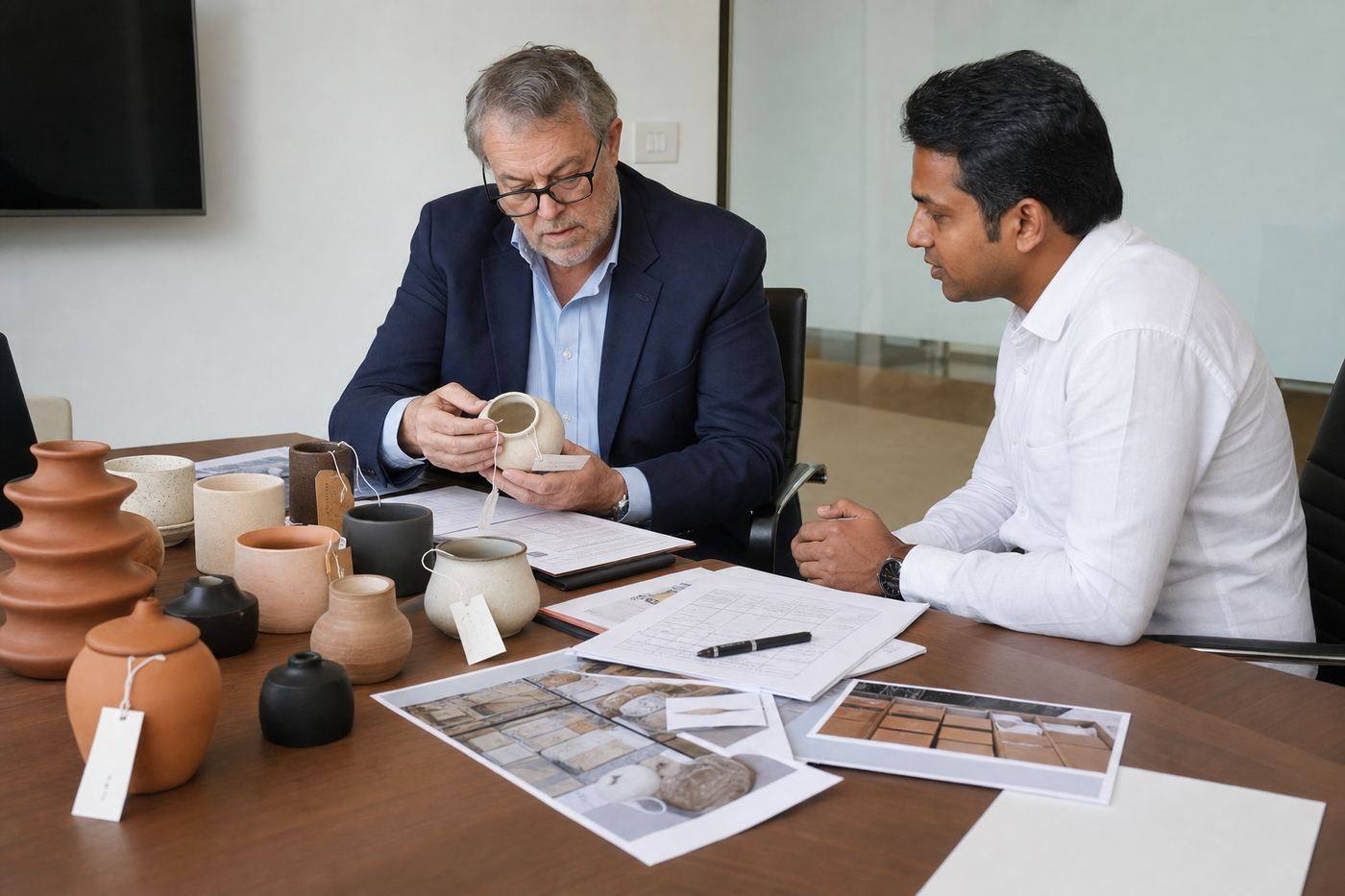
International buyers evaluating an Indian terracotta or ceramic supplier typically request glaze finish samples against a signed reference, food-contact migration test reports where tableware claims are made, frost-resistance evidence where outdoor claims are made, glaze supplier declarations or SDS where retail requires, clear FOB or landed pricing by category, packing specification confirming crush and stack protection, honest cluster labelling (Khurja glazed, Jaipur blue pottery, Molela terracotta, Bankura figurine, Delhi-finished consolidation), heritage documentation for premium positioning, and IEC/EPCH RCMC confirmation.
USA garden centre buyers prioritise planter arrival integrity and honest frost-resistance labels. EU tableware wholesale buyers add LFGB migration test evidence and REACH declarations. UAE hospitality buyers emphasise presentation packing and lot-to-lot glaze consistency. Premium Japan and France buyers expect flawless finish quality and heritage-story evidence — a supplier who cannot explain kiln temperature, glaze recipe basics, or cluster provenance on a first call will struggle to win a trial order.
Country-wise Opportunities
Market Snapshot
Use the scorecard below to prioritise outreach and compliance investment across the nine destinations. Scores are relative guidance for a typical Indian terracotta or ceramic exporter in 2026 — validate against your kiln discipline, glaze test readiness, and channel mix (gardenware vs tabletop vs blue pottery specialty). For per-country SKU preference depth see Most Demanded Indian Terracotta and Ceramic Handicrafts by Country; for the lead-safe glaze and food-contact specialty deep-dive see Lead-Safe Glaze, Blue Pottery & Food-Contact Ceramic Export Opportunities.
Country comparison scorecard for Indian terracotta and ceramic exporters
Swipe →
Data table — swipe horizontally on small screens
| Country | Market Size | Duty Complexity | Glaze / Food-Contact Burden | Freight Transit | Ease of Entry | Opportunity Score |
|---|---|---|---|---|---|---|
| USA | Very High | Medium | Medium–High (FDA action levels; Prop 65; CPSC if toy) | 22–35 days | Medium | 9/10 |
| Germany | High | Medium | Very High (LFGB tableware; REACH glazes) | 22–30 days | Medium | 8/10 |
| United Kingdom | Medium–High | Medium | Medium–High (UK REACH; frost evidence) | 22–30 days | Medium | 8/10 |
| Netherlands | Medium–High (EU hub) | Medium | High (EU 84/500/EEC; REACH) | 22–28 days | Medium | 8/10 |
| France | Medium | Medium | High (REACH; heritage scrutiny) | 22–30 days | Low–Medium | 7.5/10 |
| UAE | Medium–High | Low | Low–Medium | 7–12 days | High | 9/10 |
| Australia | Medium | Medium | Medium (ACCC; food-contact evidence) | 18–26 days | Medium | 7/10 |
| Canada | Medium | Low–Medium | Medium (Health Canada; bilingual labels) | 28–35 days | Medium–High | 7.5/10 |
| Japan | Small–Medium | Medium | Medium–High (Food Sanitation Act; finish QC) | 20–28 days | Low–Medium | 7/10 |
Sourcing Checklist
Checklist
Buyer Checklist
Exporter Checklist
Compliance Checklist
Checklist
Compliance Notes
Common Buyer Mistakes
Common Mistakes Box
Exporters and buyers new to terracotta and ceramic destination selection repeat predictable errors — the patterns below account for most stalled market-entry attempts in this category.
Common destination-selection mistakes and how to avoid them
Swipe →
Data table — swipe horizontally on small screens
| Mistake | Consequence | How to Avoid It |
|---|---|---|
| Choosing market by size alone | Glaze compliance mismatch stalls first retail listing | Score duty, freight, and glaze-and-food-contact burden together |
| Treating all Chapter 69 as one HS line | Duty and buyer mismatch at customs on ornamental vs tableware vs planter | Confirm 6913 vs 6912 vs 6911 vs 6914 with CHA per SKU |
| Marketing planters as 'frost-resistant' without evidence | UK and EU garden centre delist; consumer safety exposure | Third-party freeze-thaw test evidence before making the claim |
| Selling glazed bowls or mugs as tableware without migration testing | LFGB or FDA rejection at destination; retail claims | Lead and cadmium migration testing before food-contact positioning |
| Generic 'Rajasthani blue pottery' or 'Bengali terracotta' claims without cluster evidence | Heritage buyer distrust; premium programme collapse | Represent Jaipur, Molela, Bankura, Longpi provenance honestly with cluster documentation |
| Shipping on freshly cooled glaze without QC hold | Crazing appears in transit; widespread claims at destination | Build kiln cool and QC hold into production schedule — non-negotiable |
| Under-specifying packing for statement blue pottery or large terracotta | Breakage destroys first-order margin | Treat packing as product engineering — foam, dividers, corner protection, stack limits |
| Pursuing USA, EU, and Gulf simultaneously from standing start | Compliance test budget spread too thin | Sequence — UAE or single EU anchor first, then scale |
Future Market Trends
Key Statistics
Expect the gap between low-friction markets (UAE, selective Canada) and high-documentation markets (Germany, Netherlands, California-facing USA retail, Japan) to widen as EU Directive 84/500/EEC enforcement on food-contact ceramic migration and Prop 65 retail scrutiny on glaze substances directionally tighten — while simultaneously, private-label Khurja glazed programmes and Jaipur blue pottery specialty lines from India gain share as importers seek authentic hand-fired story over mass-cast ceramic imports from higher-cost origins.
Frost-rated terracotta gardenware demand is directionally growing in USA, UK, and Northern EU garden centre channels as outdoor-living retail scales — exporters who invest in freeze-thaw test evidence for large planters and urns will command garden centre programme margin. Lead-safe glaze programmes will matter more in USA and EU tableware channels as retail audits tighten; exporters who build LFGB and FDA test packets now will win repeat programmes.
Diversification beyond USA-Germany-UK concentration into UAE, Canada, and selective Australia/Japan programmes is the most likely structural shift for exporters reducing destination concentration risk while building glaze compliance depth incrementally. Blue pottery and Molela heritage lines will increasingly define premium positioning in France and Japan specialty retail — evidence-bound representation will separate durable programmes from short-lived novelty listings.
Challenges & Solutions
Selecting export markets for terracotta and ceramic handicrafts involves operational challenges distinct from timber or plant-fibre handicrafts — kiln capacity, glaze compliance, breakage, and frost claims dominate, not phytosanitary certificates or timber legality.
Destination-market challenges and mitigation strategies
Swipe →
Data table — swipe horizontally on small screens
| Challenge | Where It Bites Most | Mitigation Strategy |
|---|---|---|
| Ocean transit breakage on statement pieces and gardenware | USA garden centre programmes, EU premium retail, Japan specialty | Foam wrap, cell dividers where nested, corner protection, no top-load crush, drop-test before FCL |
| Glaze crazing after climate change | US East Coast summer arrivals, EU winter warehouse storage | Controlled kiln cool; QC hold; glaze recipe suited to clay body |
| LFGB / FDA migration test gaps on tableware | Germany, Netherlands, California-facing USA retail, Japan | Third-party migration testing before quoting food-contact SKUs |
| Frost-resistance claim disputes | UK and EU garden centre chains | Freeze-thaw test evidence before labelling planters 'frost-resistant' |
| Heritage claim disputes (blue pottery, Molela, Bankura, Longpi) | France, Japan, USA premium specialty | Cluster geography evidence; honest merchant-exporter labels |
| HS misclassification across 6913 / 6912 / 6911 / 6914 | All destinations — duty and buyer mismatch | CHA sign-off per SKU before quoting or production |
| Freight cost dominance for low-density carton programmes | All long-haul destinations | Optimise CBM; plan FCL for seasonal gardenware programmes |
| Fragmented artisan cluster base | All markets — batch inconsistency | Use merchant exporter consolidating QC and packing under one accountable IEC |
How Altus Exports Helps
Altus Exports works with international buyers and Indian terracotta and ceramic manufacturers as a merchant exporter from India, global sourcing partner, and export consultant — helping exporters and importers sequence market entry around real kiln discipline, glaze QC, food-contact test readiness, frost-resistance evidence, and fragile-clayware packing readiness rather than chasing every inbound inquiry simultaneously.
Support includes Khurja, Jaipur, Molela, Bankura, and Delhi-NCR supplier coordination, sample and glaze QC, lead and cadmium migration test coordination, HS triage with CHA partners across 6913, 6912, 6911, and 6914, EPCH-aligned export documentation, and logistics through Nhava Sheva, Mundra, and ICD Delhi/Dadri. Whether you are an Indian exporter prioritising USA garden centre programmes or a German tabletop wholesaler evaluating Khurja glazed lines, Altus structures the market-selection decision against landed cost and compliance reality. Contact Altus Exports to discuss target destinations, or explore export products from India, product sourcing company India, and find manufacturers in India services. Related industry: Handicrafts & Lifestyle Products.
Expert Insights
Expert Insight Box
Market selection for terracotta and ceramic is less about finding the biggest buyer and more about finding the buyer whose compliance bar matches your kiln, glaze, and packing story today — with a credible path to the next tier after one clean container. Blue pottery, Molela, and Bankura heritage lines add premium optionality but reward only exporters who represent cluster provenance honestly and back frost or food-contact claims with test evidence.
Conclusion
- Action: Confirm kiln discipline, glaze QC, and packing standards before targeting a new destination.
- Review How to Export Terracotta and Ceramic Handicrafts from India for the complete export process.
- Read Top Terracotta and Ceramic Handicraft Products Exported from India to align product form with channel fit.
- See Most Demanded Indian Terracotta and Ceramic Handicrafts by Country for granular SKU matching — not covered here.
- Build buyer relationships with How to Find International Buyers for Terracotta and Ceramic Handicrafts and Trade Shows and B2B Marketplaces for Terracotta and Ceramic Exporters.
- Prepare documentation with Terracotta and Ceramic Handicraft Export Documentation Checklist and EPCH Registration Benefits for Terracotta and Ceramic Exporters.
- Explore glaze compliance and heritage specialty depth in Lead-Safe Glaze, Blue Pottery & Food-Contact Ceramic Export Opportunities.
- For the buyer-side playbook read Source Terracotta and Ceramic Handicrafts Directly from India.
- Explore merchant exporter services, global sourcing partner models, and find manufacturers in India, or contact Altus Exports to discuss target markets.
Choosing the best countries for Indian terracotta and ceramic handicraft exports in 2026 comes down to matching your kiln discipline, glaze compliance, food-contact test readiness, frost-resistance evidence, and packing standards to the destination that rewards them: USA and Canada for gardenware and décor scale with FDA action levels and Prop 65 awareness; Germany, Netherlands, France, and UK for the EU tableware and design tier once LFGB and REACH-aligned documentation is reliable; UAE for the fastest entry cycle and lightest formal compliance burden; Australia and Japan as finish-quality and heritage niches once kiln and packing standards are proven.
Every market on this list rewards the same underlying investment: controlled bisque and glaze firing, evidence-based frost and food-contact claims, honest cluster labelling for Khurja, Jaipur blue pottery, Molela, Bankura, and Longpi lines, crush-resistant packing, and HS discipline across 6913, 6912, 6911, and 6914. Exporters who sequence market entry around real glaze and logistics readiness outperform those who chase every market inquiry simultaneously.