
Coir Board Registration Benefits for Coir Mat Exporters
By Saurabh Mittal, Founder, Altus Exports
A complete guide to Coir Board registration for coir mat exporters under HS 5702.20 — why Board membership builds buyer credibility, how to apply, MSME scheme adjacency, fair and buyer-meet participation, how importers verify registration, and how Alappuzha and Pollachi exporters convert institutional credentials into FOB programmes for the USA, UK, EU, South Korea, Australia, and UAE. Separate from the full shipment document pack and PVC/logo technical depth owned by peer cluster posts.
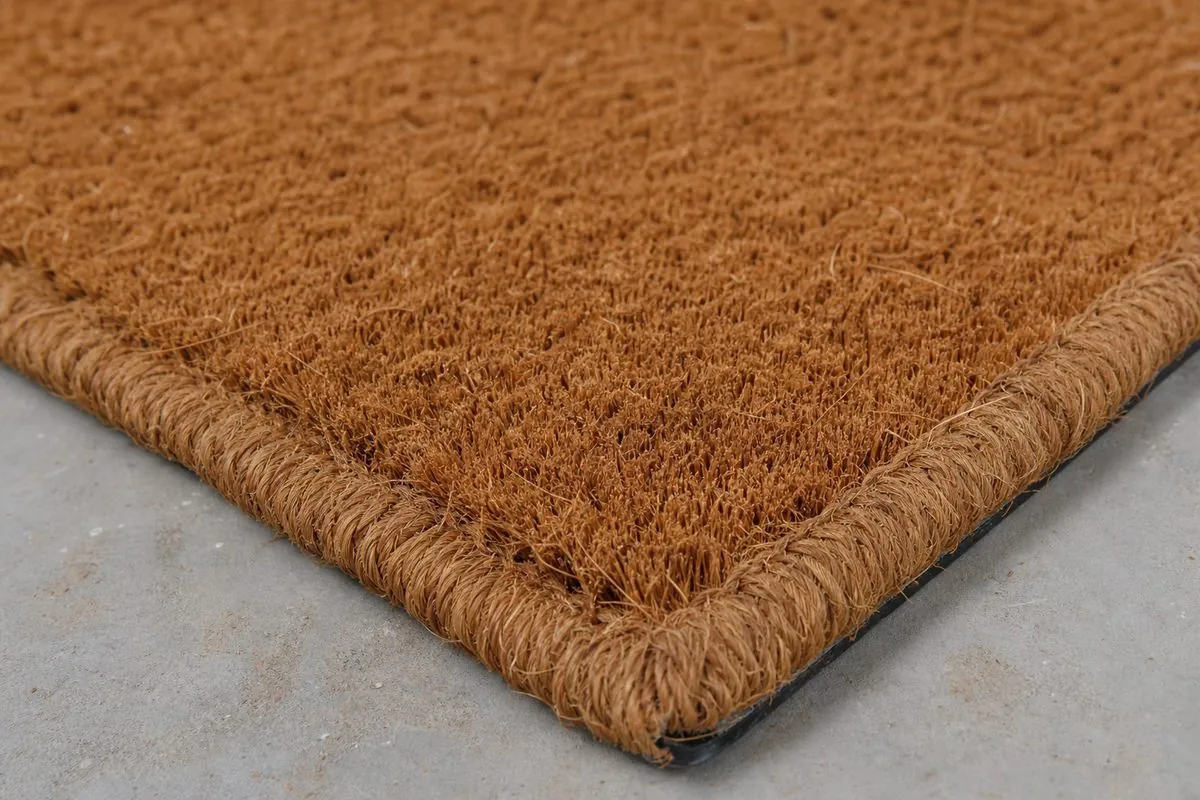
India's coir mats export sector — finished coconut-fibre doormats, mattings, tufted and woven coir floor coverings under HS 5702.20 (India examples 57022010, 57022020 / 57022090) — is built around the Alappuzha (Alleppey) / coastal Kerala coir belt; Pollachi and western Tamil Nadu; Karnataka coir manufacturing units; Selective Odisha / Andhra capacity; Merchant consolidation via Kochi, Chennai, Tuticorin, Delhi-NCR export houses. Broader India coir & coir products exports: IBEF (citing DGCIS) reports about US$455 million in FY25 (vs about US$360 million in FY24). The same IBEF page also states FY25 shipments of 1,342,843 MT worth about US$434 million to 121 countries — treat both figures as IBEF-reported sector context (all coir categories: pith, fibre, mats, etc.), not mats-only, and re-verify against Coir Board / DGCIS extracts before contracts. FY25 value-share mix (IBEF): coir pith ~59.63%, coir fibre ~12.06%, tufted mats ~16.73%. Separately, HS 570220 (woven coir floor coverings) world-trade aggregates (OEC-style, 2024) show India as a leading exporter (~US$44.6M directional) with top importers including USA, South Korea, and UK — do not conflate that woven-line total with tufted/PVC programmes that often classify under HS 5703.90. For exporters shipping natural, PVC-backed, rubber-backed, brush, and custom-logo coir mats from Cochin (Kochi), Tuticorin (V.O. Chidambaranar), Chennai, institutional credibility starts with the Coir Board of India (Ministry of MSME).
Coir Board registration is the primary promotion and credibility track for coir and coir-product exporters. Coir Board registers coir exporters and issues Registration-cum-Membership Certificate (RCMC) for coir fibre, yarn, and coir products under Foreign Trade Policy practice. Confirm current application route (Coir Board / DGFT dashboard), eligibility thresholds, and product-list fit with Coir Board and your CHA before locking copy. EPCH adjacency may apply only for clearly artware-style programmes. Membership signals organised export readiness, scheme eligibility adjacency under the Ministry of MSME umbrella, fair and buyer-meet access, and the RCMC-style credential that garden centres, home retailers, and private-label importers in United States, United Kingdom, Germany, Netherlands, South Korea, Australia request during vendor onboarding.
This guide owns Coir Board registration, schemes, fair access, and credibility for coir mat exporters — not the full shipment document pack (see coir mat export documentation checklist) and not PVC/logo technical depth (see PVC-backed custom logo and eco coir doormat export opportunities). Pair it with how to export coir mats from India for process steps, most demanded Indian coir mats by country for the demand matrix, and always verify current fees and portal workflows on coirboard.gov.in before you file.
Key Takeaways
Summary Box
Executive Summary
Summary Box
Finished coir mats under HS 5702.20 are one of India's most distinctive natural-fibre floor-covering exports: handloom and power-loom mats, tufted constructions, PVC-backed and rubber-backed doormats, brush and scraper mats, and printed or custom-logo programmes from the Kerala–Tamil Nadu coir belt. Sector-wide coir context (pith, fibre, mats, and related goods) and HS 570220 mat-specific trade should be labelled separately — never present broad coir export totals as mats-only volume.
Coir Board registration sits at the centre of the institutional layer for mat exporters. It is the gateway to RCMC-style membership evidence, fair and buyer-meet access, MSME scheme adjacency, and — commercially most important — the credibility signal that shortens buyer due diligence when a US garden-centre buyer is comparing several Alappuzha PVC-logo suppliers or a German importer is evaluating natural coir mats against Sri Lankan or Vietnamese alternatives. This guide combines the Coir Board registration playbook with market context: size and industry overview, export and import statistics framing, product variants, manufacturing overview, pricing, MOQ, packaging, container loading, shipping methods, certifications, buyer requirements, country-wise opportunities, and full buyer / exporter / compliance checklist sets — without duplicating the document field-by-field checklist or the country × construction × size × backing demand matrix owned by peer cluster posts.
Market Size & Industry Overview
Key Statistics
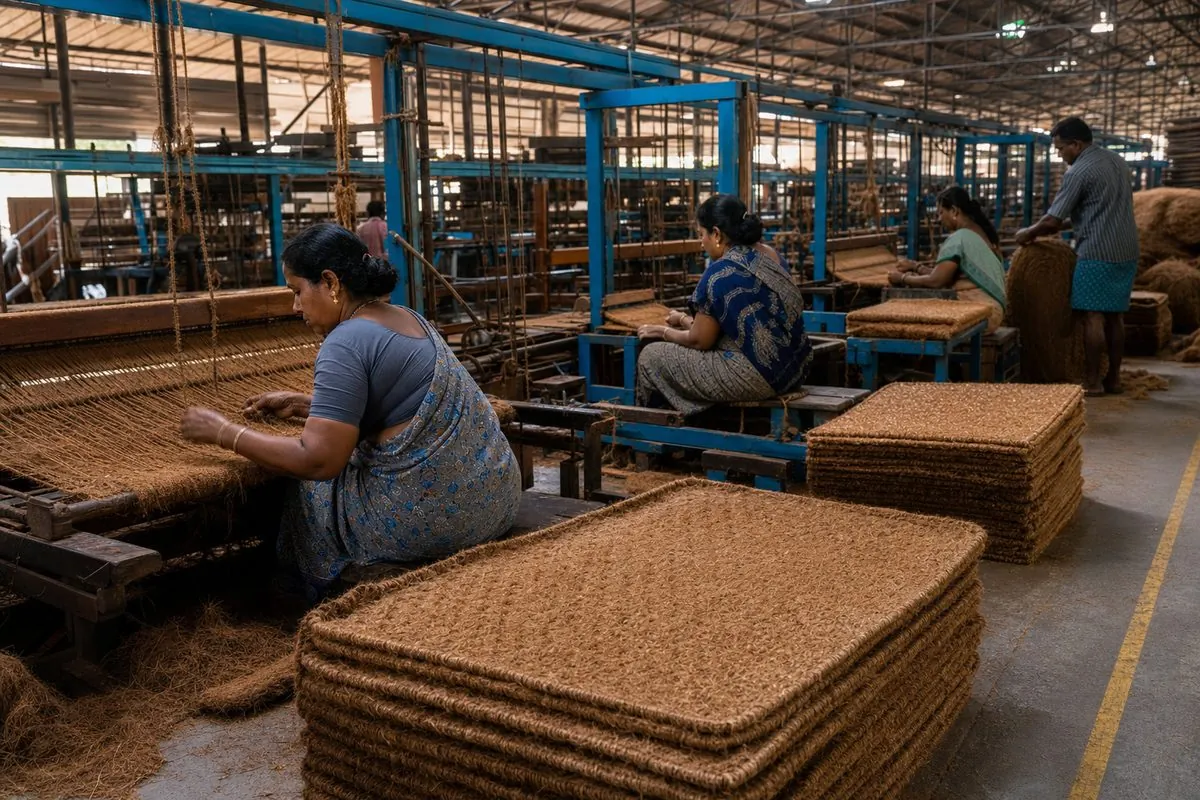
Global demand for Indian coir mats spans residential entrance mats, garden-centre assortments, hospitality lobbies, DIY retail private-label programmes, and brush/scraper constructions for high-traffic doors. Production is concentrated in specialist clusters: Alappuzha (Alleppey) / coastal Kerala coir belt; Pollachi and western Tamil Nadu; Karnataka coir manufacturing units; Selective Odisha / Andhra capacity; Merchant consolidation via Kochi, Chennai, Tuticorin, Delhi-NCR export houses. Each cluster brings a distinct construction vocabulary — handloom natural fibre, power-loom volume, tufted density, PVC-backed logo print, rubber-backed premium — which matters directly for how buyers should structure sourcing relationships and how exporters should sequence Coir Board registration alongside capacity planning.
Broader India coir & coir products exports: IBEF (citing DGCIS) reports about US$455 million in FY25 (vs about US$360 million in FY24). The same IBEF page also states FY25 shipments of 1,342,843 MT worth about US$434 million to 121 countries — treat both figures as IBEF-reported sector context (all coir categories: pith, fibre, mats, etc.), not mats-only, and re-verify against Coir Board / DGCIS extracts before contracts. FY25 value-share mix (IBEF): coir pith ~59.63%, coir fibre ~12.06%, tufted mats ~16.73%. Separately, HS 570220 (woven coir floor coverings) world-trade aggregates (OEC-style, 2024) show India as a leading exporter (~US$44.6M directional) with top importers including USA, South Korea, and UK — do not conflate that woven-line total with tufted/PVC programmes that often classify under HS 5703.90. Top destination markets for planning purposes include United States, United Kingdom, Germany, Netherlands, South Korea, Australia, Canada, France, Italy, United Arab Emirates. Load ports commonly used for mat programmes are Cochin (Kochi), Tuticorin (V.O. Chidambaranar), Chennai, Nhava Sheva (JNPT), Mundra (westbound consolidations). Directional FOB structure is FOB named Indian port (Kochi / Tuticorin / Chennai / Nhava Sheva); Indicative merchant-trade planning bands only; confirm size, pile density, backing, print, and packing on quote date. Do not cite as government price series..
Why Coir Board Matters for Coir Mat Exporters
The Coir Board of India (Ministry of MSME) is the government-recognised body mandated to promote and develop India's coir industry, including finished mats and mattings under HS 5702.20. It supports exporters through registration services, scheme facilitation under the Ministry of MSME umbrella, trade fair and buyer-meet organisation, market intelligence, and quality-promotion initiatives relevant to coconut-fibre floor coverings.
For coir mat exporters specifically, Coir Board plays a dual role. It is the registration authority that issues membership / RCMC-style credentials that organised exporters need for scheme eligibility and buyer packs, and it is a commercial facilitator that connects registered members to domestic and overseas buyer platforms. Because finished doormats, mattings, and tufted coir floor coverings sit within the Board's product scope when correctly classified, registration functions as a genuine institutional requirement for organised export — not a discretionary add-on. Buyers in developed markets increasingly request Board registration evidence during vendor onboarding precisely because the category is populated by many small Kerala and Tamil Nadu units, merchant consolidators, and informal traders — and buyers use registration status as a first-order filter against suppliers who cannot support size consistency, backing adhesion, or moisture-aware packing across FCL programmes.
Why Coir Board registration converts into commercial outcomes for mat exporters
Swipe →
Data table — swipe horizontally on small screens
| Buyer diligence question | What Board registration signals | What it does not prove |
|---|---|---|
| Is this an organised coir exporter? | Live Board membership / RCMC-style evidence | Pile density or size tolerance on a specific lot |
| Can they access Board fairs and schemes? | Eligible registered member status | Automatic MDA approval without paperwork |
| Is the entity name bank-consistent? | Membership tied to IEC / GST entity | Letter-of-credit terms or payment security |
| Are they mats (not pith/fibre) specialists? | Product-list declaration for mats/mattings | HS filing accuracy — still confirm with CHA |
| Will they still exist next season? | Renewed membership discipline | Factory capacity or financial strength alone |
Coir Board Registration: Application Steps
- Step 1 — Secure IEC via DGFT and ensure GST, PAN, and bank account names match the exporting entity exactly.
- Step 2 — Confirm product scope: finished coir mats / mattings under HS 5702.20 (not coir pith, fibre, yarn, or geotextiles) with your CHA before declaring categories on the Board application.
- Step 3 — Assemble entity constitution proof, cancelled cheque / bank certificate, address evidence for the Alappuzha, Pollachi, or merchant warehouse location, and manufacturer or merchant classification documents.
- Step 4 — File the Coir Board membership / registration application with product-list declaration covering mats, mattings, and related finished floor coverings you will actually export.
- Step 5 — Pay applicable registration and annual subscription fees (verify live slabs) and retain receipts for buyer packs and scheme files.
- Step 6 — On issuance, diary the renewal date; put the membership number on quotation footers, proforma invoices, and fair booth cards.
- Step 7 — Pair the credential with sample cards (size, pile, backing) before buyer outreach — registration alone does not close orders.
Application for Coir Board registration for coir mat exporters follows a predictable sequence once IEC and GST are clean. Treat the steps below as a planning checklist; confirm current portal fields, fees, and document lists on coirboard.gov.in before submission.
Document pack typically required for Coir Board mat-exporter registration
Swipe →
Data table — swipe horizontally on small screens
| Document | Why it matters | Common failure mode |
|---|---|---|
| IEC | Legal baseline for commercial export | IEC entity name differs from GST / bank |
| GST certificate | Tax identity and address consistency | Workshop address not matching application |
| PAN / constitution proof | Entity type verification | Partnership deed or CIN missing |
| Bank certificate / cancelled cheque | Beneficiary alignment for remittances | Account in personal name for firm exports |
| Address / unit evidence | Cluster authenticity for manufacturers | Virtual address with no production proof |
| Product-list declaration | Mats vs pith/fibre scope clarity | Declaring fibre when shipping doormats |
MSME Schemes Adjacency and RCMC-Style Credibility
Compliance Notes
Coir Board sits under the Ministry of MSME umbrella, which means registered mat exporters often sit adjacent to MSME development, technology upgradation, and market-access scheme pathways that reference Board registration or coir-sector eligibility. Scheme names, subsidy percentages, and application windows change — never quote a specific incentive amount in a buyer presentation without verifying the live circular. The commercial point for exporters is simpler: Board registration is frequently the eligibility gate that lets a Kerala or Tamil Nadu mat unit even apply for MSME-adjacent support, skill programmes, or fair participation assistance.
RCMC-style credibility works the same way it does for other Indian export promotion bodies: the certificate proves organised membership, not product quality. International buyers treat it as layer two in a three-layer stack — (1) legal IEC/GST, (2) institutional Coir Board registration, (3) claim-bound compliance documents (fibre composition, REACH for PVC/rubber backings, phytosanitary where required). Exporters who lead with Board evidence and then attach construction samples convert inquiries faster than those who send only a price list.
Three-layer credential stack for coir mat exporters
Swipe →
Data table — swipe horizontally on small screens
| Layer | Credential | Buyer use |
|---|---|---|
| 1 — Legal | IEC + GST + PAN | Can this entity file a shipping bill? |
| 2 — Institutional | Coir Board registration / RCMC-style membership | Is this an organised coir-sector exporter? |
| 3 — Claim-bound | Fibre composition, REACH/SVHC, COO, phyto, inspection | Can this specific mat lot clear destination compliance? |
| Adjacent | MSME scheme eligibility where Board registration is a gate | Can the unit access development or fair support? |
| Commercial | Sample approval + written QC specs | Will this SKU match the approved golden sample? |
How Buyers Verify Coir Board Registration
Sophisticated garden-centre, home-retail, and private-label buyers verify Coir Board registration the same way they verify any Indian council credential: they ask for a current membership PDF (number + expiry), match the entity name to the proforma and bank beneficiary, and cross-check that the declared product list includes mats/mattings rather than only raw fibre. Some buyers also ask whether the exporter has participated in recent Board-supported fairs or buyer meets — past participation is not mandatory, but it strengthens the organised-exporter narrative.
Exporters should never treat a scanned membership card from three seasons ago as adequate. Lapsed renewals are visible the moment a buyer asks for a dated PDF. Put the membership number in the email signature and quotation footer so verification is frictionless. If a merchant exporter consolidates from multiple Alappuzha or Pollachi units, the RCMC-style credential must sit on the exporting entity that invoices and receives payment — not on a workshop that is not party to the contract.
Buyer verification checklist for Coir Board credentials
Swipe →
Data table — swipe horizontally on small screens
| Verification step | Pass signal | Fail / escalate signal |
|---|---|---|
| Request current membership PDF | Number + expiry visible and in date | Expired card or 'we'll renew later' |
| Match entity to proforma / bank | Identical legal name | Trading name only, no legal match |
| Confirm product-list fit | Mats / mattings declared | Only pith, fibre, or yarn listed |
| Ask fair / buyer-meet history | Recent Board-platform participation | No institutional footprint at all |
| Pair with IEC copy | IEC and Board entity align | Different companies on each document |
Fair Participation via Coir Board
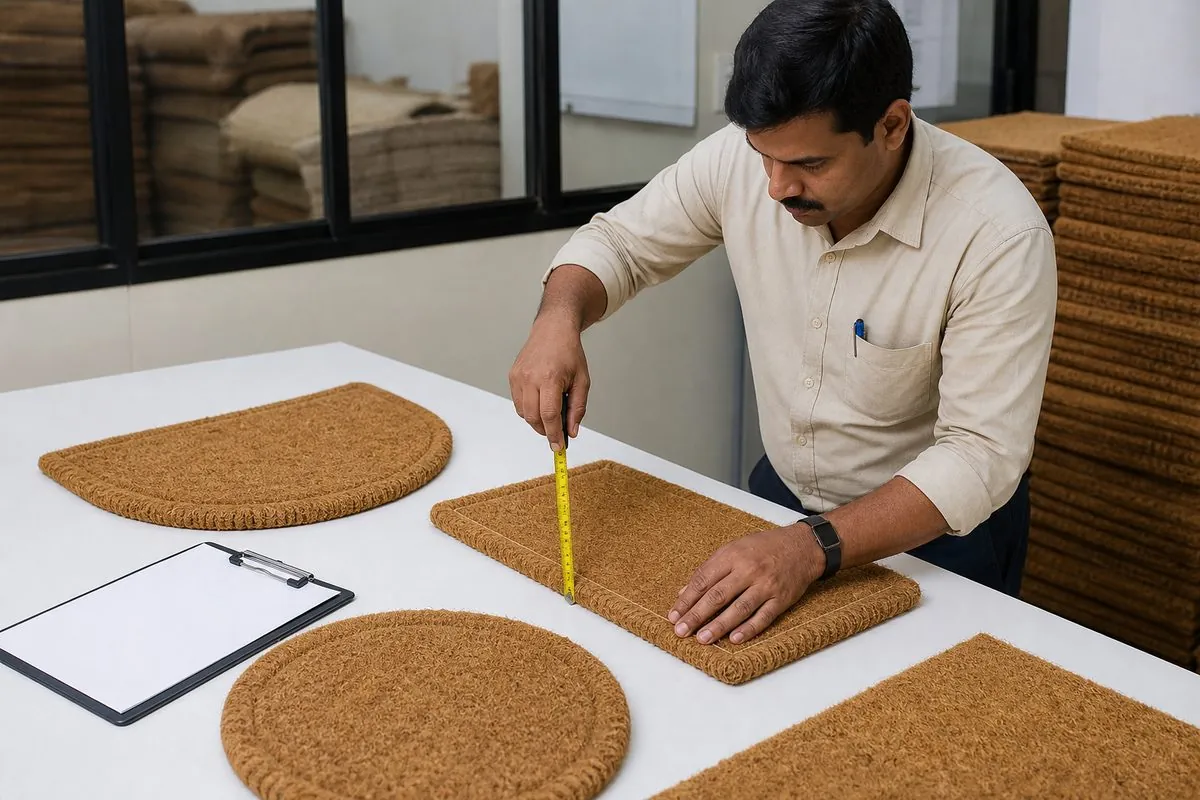
Fair and buyer-meet access is one of the highest-ROI benefits of Coir Board registration for mat exporters. Board-supported platforms and coir-sector exhibitions give Alappuzha and Pollachi units direct access to garden retailers, home importers, and private-label buyers who rarely cold-email unregistered workshops. Membership eligibility typically gates booth allocation, catalogue listing, and some market-development assistance pathways — confirm current rules before booking.
Treat fairs as sample theatres, not brochure dumps. Arrive with size cards (40×60 through 75×120 cm and roll matting), backing swatches (natural, PVC, rubber), logo-print strike-offs where relevant, and a live Board membership PDF. Cross-link fair strategy with trade shows and B2B marketplaces for coir mat exporters and buyer prospecting with how to find international buyers for coir mats.
Export Statistics
Key Statistics
Indian coir mats exports under HS 5702.20 should be tracked separately from broader coir & coir-products totals. Broader India coir & coir products exports: IBEF (citing DGCIS) reports about US$455 million in FY25 (vs about US$360 million in FY24). The same IBEF page also states FY25 shipments of 1,342,843 MT worth about US$434 million to 121 countries — treat both figures as IBEF-reported sector context (all coir categories: pith, fibre, mats, etc.), not mats-only, and re-verify against Coir Board / DGCIS extracts before contracts. FY25 value-share mix (IBEF): coir pith ~59.63%, coir fibre ~12.06%, tufted mats ~16.73%. Separately, HS 570220 (woven coir floor coverings) world-trade aggregates (OEC-style, 2024) show India as a leading exporter (~US$44.6M directional) with top importers including USA, South Korea, and UK — do not conflate that woven-line total with tufted/PVC programmes that often classify under HS 5703.90. Exporters should verify current figures via Coir Board releases, DGCI&S, and ITC Trade Map before making capacity commitments.
Directional export profile for Indian coir mats (HS 5702.20 planning frame)
Swipe →
Data table — swipe horizontally on small screens
| Metric | Directional Trend | Coir Board Relevance |
|---|---|---|
| Primary HS heading | 5702.20 / India 57022010 | Product-list declaration must reflect finished mats |
| Sector context (broader coir) | IBEF/DGCIS FY25 sector summaries (~US$455M value; IBEF also cites ~US$434M with 1,342,843 MT) — not mats-only | Cite separately from HS 570220 mat lines |
| HS 570220 India export scale | ~US$44.6M 2024 directional OEC-style | Board-registered exporters dominate organised share |
| Primary clusters | Alappuzha / Pollachi / western TN | Board directory helps buyers find registered units |
| Top destinations | United States, United Kingdom, Germany, Netherlands, South Korea, Australia | Fair delegations and buyer meets skew to these markets |
| Dominant constructions | PVC-backed logo + natural handloom/tufted | Membership does not replace construction specialisation |
Import Statistics
Key Statistics
Destination demand depth — which constructions and sizes each market buys — belongs in most demanded Indian coir mats by country and best countries for Indian coir mat exports. This section answers a narrower Board question: where membership credentials most often unlock first replies and vendor-pack approval.
USA garden and private-label desks, UK/EU home specialty buyers, and South Korean commercial importers commonly request Coir Board evidence early. Australia and UAE programmes ask less uniformly but still prefer organised-exporter identity when consolidating mixed FCLs. Duty and freight caveats stay market-specific: verify live HTS/TARIC with your broker rather than treating Board membership as a tariff preference.
Where Coir Board credentials most often appear in buyer diligence
Swipe →
Data table — swipe horizontally on small screens
| Market | Board ask frequency | What membership unlocks |
|---|---|---|
| USA | High at first inquiry | Vendor-pack clearance for garden / private-label RFQs |
| UK | High with organised retail | Credibility before sample and REACH pack review |
| Germany / Netherlands | High for eco/specialty desks | Institutional filter before REACH/SVHC deep dive |
| South Korea | High for commercial programmes | Formal exporter identity beside size/pile cards |
| Australia | Moderate / programme-dependent | Faster trust for mixed garden FCL consolidators |
| UAE | Moderate; referral-weighted | Organised-exporter signal for Gulf retail / re-export |
| Canada / France / Italy | Moderate specialty desks | Same PDF pack as IEC for home-natural programmes |
Product Categories / Variants
Summary Box
Coir mat exports span the constructions listed in Coir Board product conversations — full SKU depth lives in top coir mat products exported from India. Board registration should declare the variants you can actually supply: Handloom coir mats; Power-loom coir mats; Tufted coir mats; Coir matting (roll / cut piece); PVC-backed coir doormats; Rubber-backed / rubberized coir entrance mats; Brush and scraper mats; Printed / custom-logo coir mats; Bleached vs natural fibre colourways.
Primary coir mat variants and Board / buyer relevance
Swipe →
Data table — swipe horizontally on small screens
| Variant | Typical Channel | Board / Credibility Note |
|---|---|---|
| Handloom coir mats | Boutique and eco retail | Craft narrative + Board membership |
| Power-loom coir mats | Volume wholesale | Consistency + registered exporter identity |
| Tufted coir mats | Garden and home retail | Density specs + membership PDF |
| Coir matting (roll / cut) | Commercial / DIY cut-length | Metre specs separate from piece mats |
| PVC-backed doormats | Logo and private-label retail | Board + REACH adjacency for backing |
| Rubber-backed / rubberized | Premium entrance programmes | Board + SVHC posture |
| Brush / scraper mats | High-traffic entrances | Construction clarity in buyer packs |
| Printed / custom-logo | Private label and promo | Artwork approvals outside Board scope |
Manufacturing Overview
Export Tip
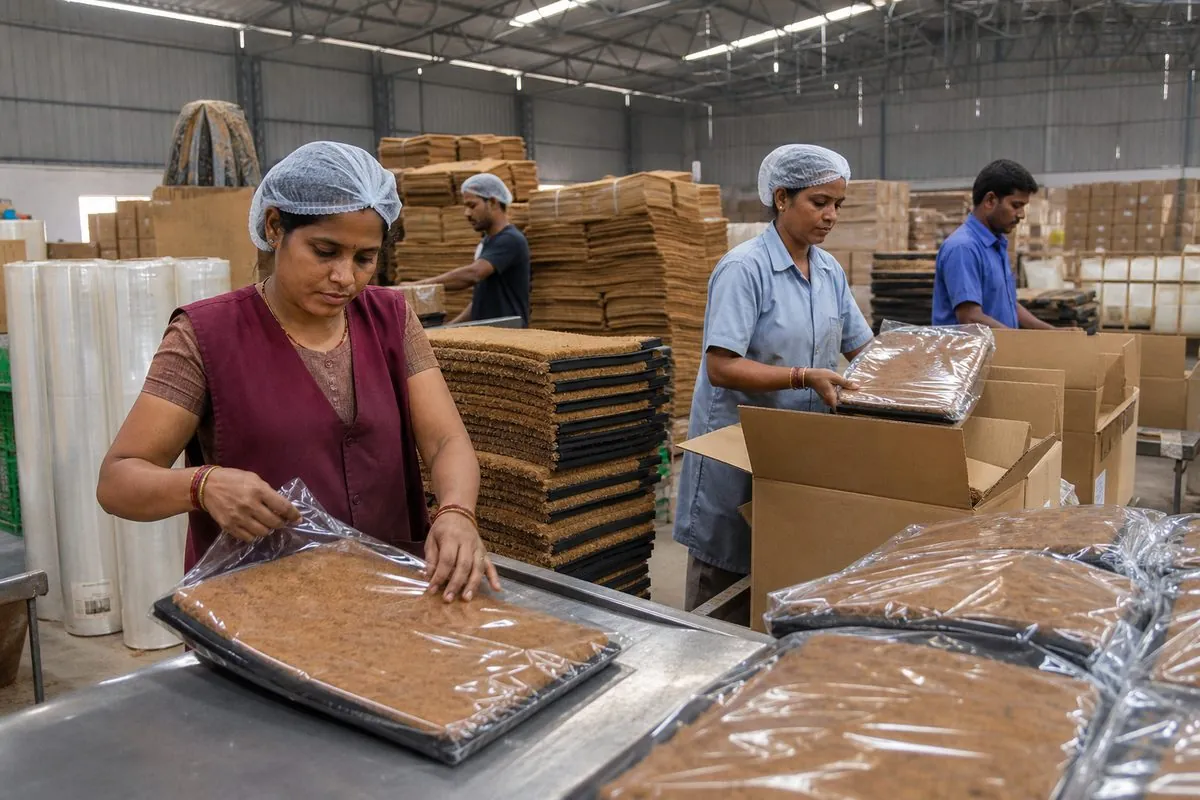
Coir mat manufacturing in Alappuzha and Pollachi typically moves from fibre selection and spinning or yarn preparation through weaving or tufting, edge binding, optional bleaching or colourways, backing application (none / PVC / rubber), optional logo print, QC on size and pile, and moisture-aware export packing. Because the ecosystem is organised around specialist units rather than one vertically integrated factory for every construction, merchant exporters often coordinate a network of production partners per order — which is where Board-registered consolidators earn trust.
Lead times are directional: 7–21 days typical for samples depending on construction for samples; 2–4 weeks for stock sizes after confirmation for stock sizes; 4–8+ weeks including artwork approval for logo/private-label programmes for custom logo programmes. Board registration does not shorten loom time — it shortens the buyer trust cycle before production starts.
Pricing Analysis
Buyer Tip
FOB named Indian port (Kochi / Tuticorin / Chennai / Nhava Sheva). Indicative commercial FOB planning bands only (not official published prices): natural/handloom ~US$2–12/pc; PVC-backed plain ~US$3–15/pc; custom logo ~US$4–20+/pc; rubber-backed premium ~US$5–25+/pc by size — verify on quote date Indicative merchant-trade planning bands only; confirm size, pile density, backing, print, and packing on quote date. Do not cite as government price series. Coir Board membership is not a price adder by itself; it is a diligence accelerator that lets buyers compare like-for-like registered suppliers.
Directional FOB planning bands for coir mats (verify on quote date)
Swipe →
Data table — swipe horizontally on small screens
| Construction band | Directional FOB USD/pc | Notes |
|---|---|---|
| Natural / handloom | ~US$2–12 | Size and pile density drive spread |
| PVC-backed plain | ~US$3–15 | Backing weight and size mix matter |
| Custom logo PVC | ~US$4–20+ | Artwork setup and colour count |
| Rubber-backed premium | ~US$5–25+ | Premium entrance programmes |
| Roll matting | Quote per metre | Width and construction specific |
MOQ Analysis
Buyer Tip
MOQ figures are indicative commercial practice by construction and channel — not statutory minima. Lock MOQ in writing before production. Directional tiers: samples 5–20 pcs; trial 200–1,000 pcs; wholesale PVC/logo 1,000–5,000+ pcs typical; handloom specialty Lower MOQ often possible after sample approval.
Directional MOQ tiers by transaction stage for coir mats
Swipe →
Data table — swipe horizontally on small screens
| Stage | Typical MOQ | Board / commercial note |
|---|---|---|
| Sample | 5–20 pcs | Attach membership PDF with sample parcel docs |
| Trial order | 200–1,000 pcs | Lock size mix and backing in writing |
| Wholesale PVC / logo | 1,000–5,000+ pcs typical | Print setup amortisation |
| Handloom specialty | Lower MOQ often possible after sample approval | Lower MOQ after sample approval |
Packaging Standards
Export Tip
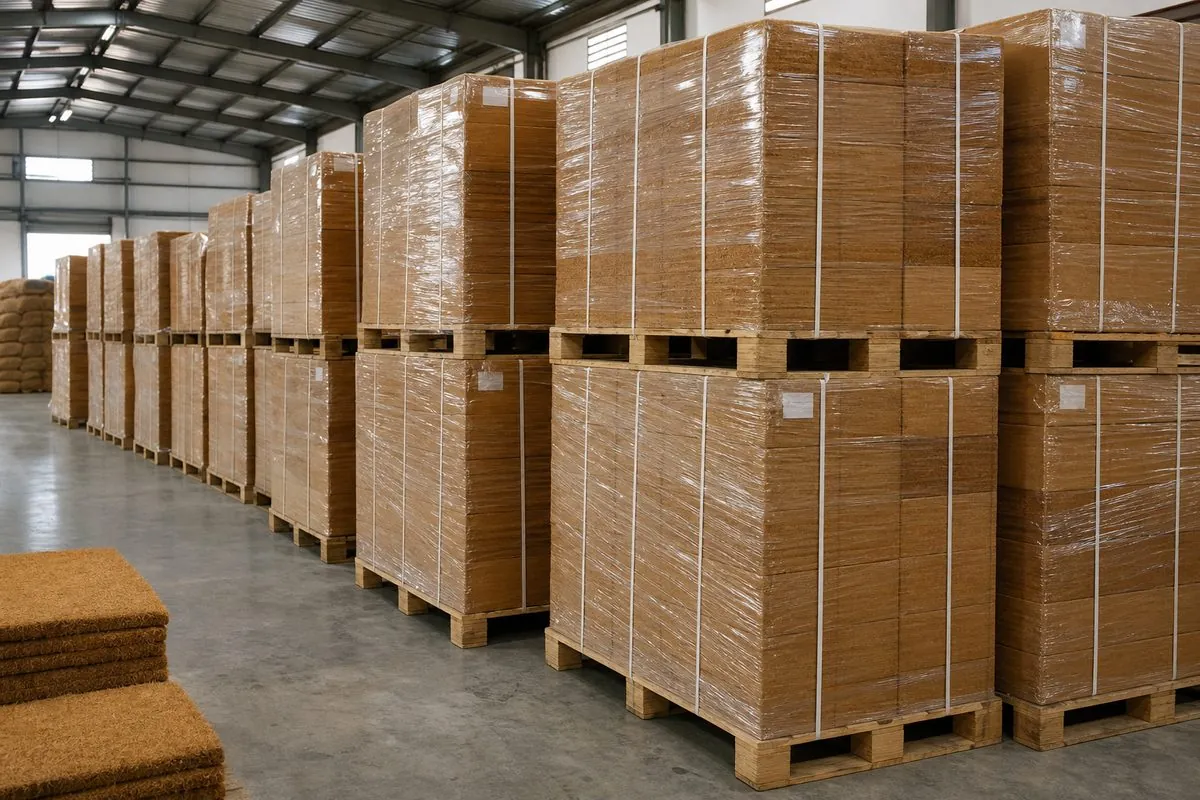
Export packing for coconut-fibre mats must manage moisture: Individual poly bag or kraft wrap; edge protection for PVC-backed mats; Master cartons or bales by size; palletize for FCL where specified; Roll matting with crease avoidance and moisture barrier; Desiccant / moisture-barrier discipline for coconut-fibre goods. Board registration does not replace packing discipline — buyers still audit packaging before FCL release.
Packaging formats for coir mat export
Swipe →
Data table — swipe horizontally on small screens
| Format | Typical Configuration | Key Requirement |
|---|---|---|
| Unit wrap | Individual poly bag or kraft wrap; edge protection for PVC-backed mats | Edge protection for PVC-backed mats |
| Master pack | Master cartons or bales by size; palletize for FCL where specified | Size-marked, stackable, dry warehouse |
| Roll matting | Roll matting with crease avoidance and moisture barrier | Crease avoidance + moisture barrier |
| Moisture control | Desiccant / moisture-barrier discipline for coconut-fibre goods | Desiccant discipline for fibre goods |
Container Loading Details
Export Tip
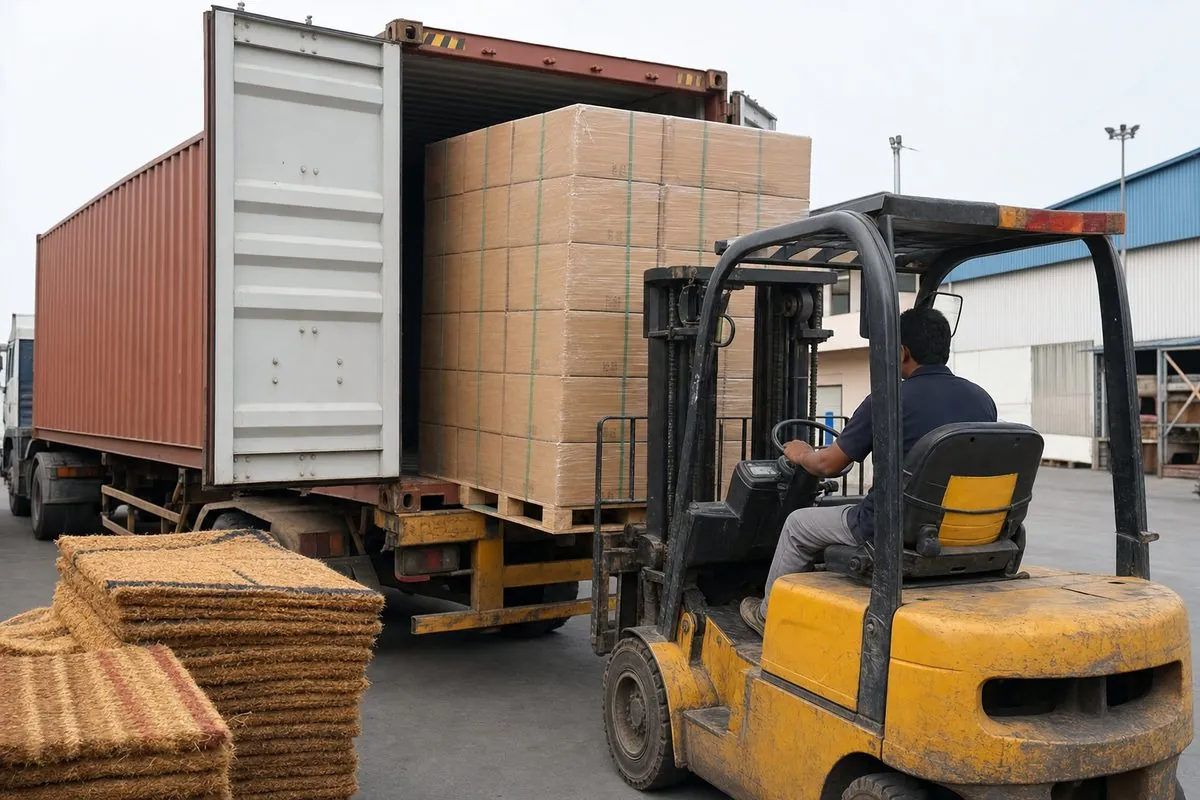
Coir mats are typically cube-sensitive rather than weight-constrained. Piece counts depend on size mix (40×60 vs 60×90 vs 75×120 cm), backing thickness, and whether goods ship in cartons or bales. Confirm stuffing plans with your forwarder before booking FCL from Kochi, Tuticorin, Chennai, or Nhava Sheva. Operational container depth belongs with the how-to-export and documentation posts; here the point is that Board-registered exporters should present professional loading plans alongside credentials.
Directional container loading considerations for coir mats
Swipe →
Data table — swipe horizontally on small screens
| Container | Loading Consideration | Typical Use |
|---|---|---|
| 20' FCL | Higher piece density for small sizes | Trial and mid-volume programmes |
| 40' FCL / 40' HC | Mixed size cartons; maximise cube | Wholesale PVC/logo and retail assortments |
| LCL | Higher per-unit freight; moisture risk rises | Samples and small trials only |
| Palletized vs floor-loaded | Buyer DC requirements vary | Lock in PO before stuffing |
Shipping Methods
Export Tip
Ocean FCL from Cochin (Kochi), Tuticorin (V.O. Chidambaranar), Chennai, Nhava Sheva (JNPT), Mundra (westbound consolidations) is the default for commercial coir mat programmes. Common Incoterms: EXW unit / warehouse; FOB Kochi / Tuticorin / Chennai / Nhava Sheva; CFR / CIF named destination port; DDP (selected large retail programmes only). Air freight is reserved for urgent samples. Board membership does not change the Bill of Lading — it changes whether the buyer opens the conversation that leads to a booking.
Shipping method fit for coir mat programmes
Swipe →
Data table — swipe horizontally on small screens
| Method | Best Fit | Caution |
|---|---|---|
| Ocean FCL | Wholesale and retail programmes | Moisture and stuffing discipline |
| Ocean LCL | Small trials | Higher cost and handling risk |
| Air freight | Approved samples / rush replacements | Cost prohibitive for bulk mats |
| CFR / CIF named port | Buyers wanting freight-inclusive quotes | Confirm insurance and duty separately |
Certifications
Compliance Notes
Coir Board registration evidence sits alongside — not instead of — the lab and claim documents buyers request: Coir Board registration / RCMC evidence; Fibre composition declaration (coconut coir); ISO plant quality systems where available; Third-party inspection (SGS / Bureau Veritas / Intertek) on request; Certificate of Origin; REACH / SVHC declarations for PVC or rubber backings where required; Phytosanitary certificate where destination plant-health rules require it for plant-fibre goods; Honest eco / biodegradable claim controls (no overclaim on polymer-backed mats). For PVC and rubber backings, REACH/SVHC declarations are destination-driven; for plant-fibre goods, phytosanitary certificates may apply. Honest eco / biodegradable claim controls matter especially when PVC-backed mats are marketed beside natural constructions.
Certification and evidence layers for coir mat exports
Swipe →
Data table — swipe horizontally on small screens
| Evidence | Who asks | Relation to Coir Board |
|---|---|---|
| Coir Board registration | Most organised importers | Core institutional layer |
| Fibre composition declaration | Retail and eco channels | Separate from membership |
| REACH / SVHC (PVC/rubber) | EU / UK programmes | Backing chemistry — not Board |
| Phytosanitary (where required) | Destination agriculture rules | Per-shipment, not membership |
| Third-party inspection | Large retail programmes | Lot release on request |
| Certificate of Origin | Preferential / customs claims | Per shipment with CHA |
Buyer Requirements
Buyer Requirements
International coir mat buyers typically require: current Coir Board registration PDF, matching IEC, written size/pile/backing/print specs, golden-sample approval, moisture-aware packing standards, and destination compliance posture (REACH for backings, phyto where applicable). They do not treat Board membership as proof that a 45×75 cm PVC logo mat will match artwork or that a natural handloom mat will arrive mould-free — those are production and packing controls.
Typical buyer onboarding requirements for coir mat suppliers
Swipe →
Data table — swipe horizontally on small screens
| Requirement | When requested | Owner |
|---|---|---|
| Coir Board membership PDF | First diligence email | Export desk |
| IEC + GST copies | Vendor pack | Export desk |
| Construction / size sample set | Before PO | QC / production |
| Artwork approval (logo) | Before print setup | Buyer + print unit |
| REACH / claim pack | EU / eco programmes | Compliance |
| Pre-shipment inspection option | Large retail POs | Buyer-nominated agency |
Country-wise Opportunities
Market Snapshot
Country selection methodology and duty comparison depth belong in best countries for Indian coir mat exports. Here the Board-linked angle is simpler: which markets most consistently ask for Coir Board credentials during onboarding, and what opportunity that creates for registered exporters.
Country opportunities framed through Coir Board credibility
Swipe →
Data table — swipe horizontally on small screens
| Country | Opportunity Driver | Board-Linked Buyer Expectation |
|---|---|---|
| USA | Garden / home retail logo and natural mats | RCMC-style PDF + IEC at first inquiry |
| UK | Home and garden retail | Board + UK REACH posture on backings |
| Germany / Netherlands | Eco and home specialty | Board + REACH/SVHC readiness |
| South Korea | Commercial floor-covering demand | Board + consistent size/pile specs |
| Australia | Garden and DIY retail | Board + moisture QC documentation |
| UAE | Retail and re-export | Board + dual bulk/premium capability |
| Canada / France / Italy | Home specialty | Board + construction clarity |
Export Process
Export Tip
- IEC → Coir Board registration → sample programme → PO → production → packing → docs → sailing
- Keep Board membership current through renewal seasons that overlap peak garden-retail buying
- Declare finished mats correctly under HS 5702.20 — not fibre or pith chapters
- Hand layer-three compliance documents via the documentation checklist, not as a substitute for Board registration
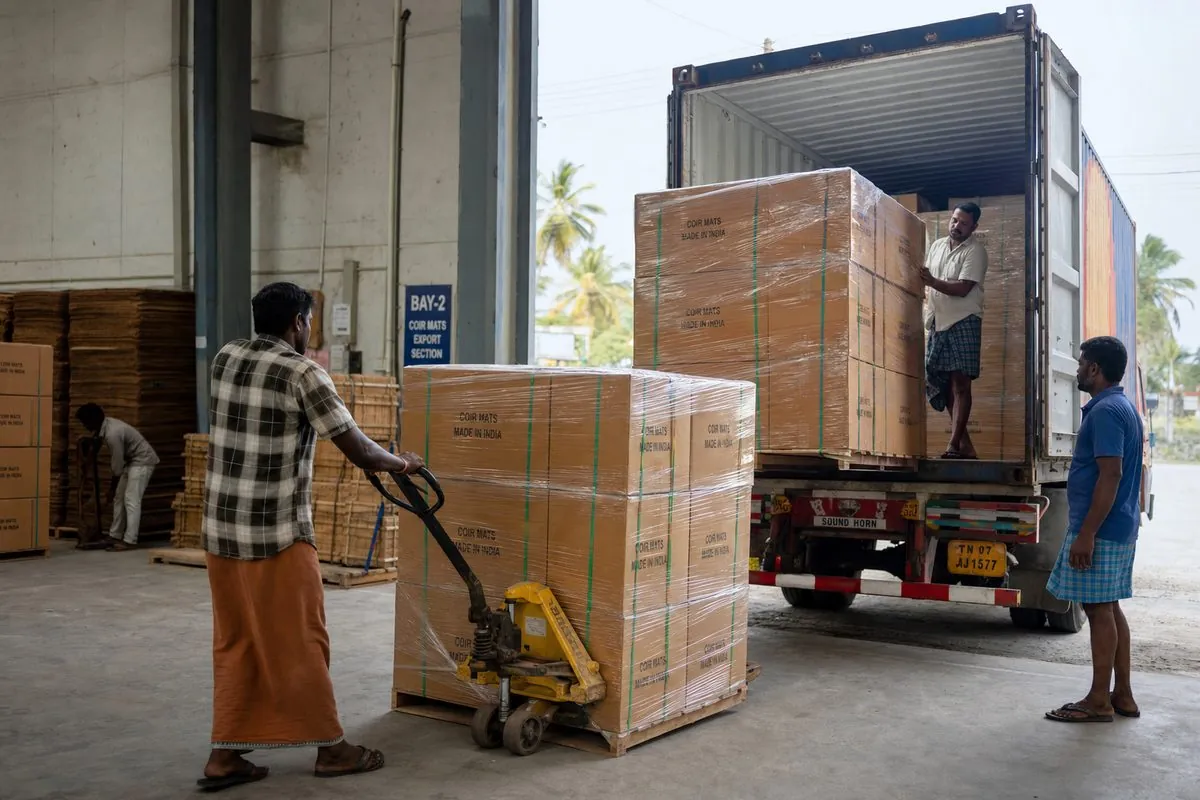
End-to-end process depth — IEC sequencing, Incoterms, lead times, ports, moisture, and container overview — is owned by how to export coir mats from India. In this registration guide, place Coir Board correctly in the sequence: obtain IEC first, complete Coir Board registration before serious fair booking or volume buyer outreach, then run sampling, PO, production, packing, documentation, and shipment. Do not wait until a shipping-bill crisis to discover product-list mismatches between Board scope and HS 5702.20 filings.
Sourcing Checklist
Checklist
- Confirm the supplier holds live Coir Board registration covering mats/mattings, not only raw fibre
- Match Board entity name to proforma invoice and bank beneficiary
- Request size, pile, backing, and print samples before deposit
- Verify HS 5702.20 classification intent with CHA language on quotations
- Ask which load port and packing method they used on the last FCL
- Separate Board credibility from PVC/logo technical capability — test both
Use this sourcing checklist when Coir Board membership is the decision variable — before fair booking, first advance payment, or vendor onboarding for a coir mat programme. For buyer-side factory verification depth, see source coir mats directly from India.
Common Buyer Mistakes
Common Mistakes Box
- Assuming all Indian coir export is pith or fibre — finished mats under HS 5702.20 are a distinct manufactured category with different Board product-list expectations.
- Treating Coir Board registration as proof of REACH compliance for PVC or rubber backings — chemistry evidence is a separate layer.
- Skipping sample evaluation, then finding size drift, weak edge binding, or moisture damage only after cartons land.
- Wiring advances to unregistered traders met online without IEC and Board PDF verification.
- Choosing the lowest FOB quote without checking pile density, backing adhesion, or packing moisture controls.
- Confusing Board registration with a complete shipment document pack — membership is institutional credibility, not a substitute for invoice, packing list, COO, or phyto.
- Ignoring product-list fit — registering or sourcing through channels suited to coir pith when the programme is finished doormats.
Future Market Trends
Key Statistics
Through 2030, four trends will shape Coir Board registration value for mat exporters: continued growth in garden-centre and DIY private-label programmes across USA, UK, Australia, and the EU requiring early Board-credible supplier onboarding; rising REACH scrutiny on PVC and rubber backings as retailers pre-empt regulatory tightening; Board-platform discovery of Alappuzha and Pollachi specialists by boutique eco retailers; and steady expansion of custom-logo entrance-mat programmes across e-commerce and home retail. Digital registration and renewal processes are also expected to streamline further, reducing friction for smaller Kerala and Tamil Nadu units entering export for the first time.
Exporters who treat Coir Board registration as living infrastructure — renewed annually, paired with construction samples and honest backing chemistry documentation, and used actively for fair participation — will capture disproportionate share as international demand for HS 5702.20 mats keeps expanding across anchor destinations.
Challenges & Solutions
Registration and credibility challenges for coir mat exporters
Swipe →
Data table — swipe horizontally on small screens
| Challenge | Impact | Solution |
|---|---|---|
| Fragmented Alappuzha / Pollachi supply | Inconsistent size and pile across small units | Work with Board-registered merchant exporters who standardise QC |
| IEC–GST–workshop address mismatches | Registration delays ahead of fair seasons | Align identity documents before filing |
| Lapsed Board renewals | Buyer pack rejection mid-programme | Diary renewals; put expiry on internal calendar |
| Mats vs pith/fibre scope confusion | Wrong product-list declaration | Confirm HS 5702.20 finished-mat scope with CHA |
| REACH burden on PVC/rubber backings | EU onboarding delays | Build backing chemistry files separate from membership |
| Moisture damage in ocean transit | Lot rejection despite valid Board PDF | Desiccants, dry warehousing, honest sailing-season planning |
| New, undocumented entrants online | Buyer scepticism | Lead with Board + IEC in every first response |
Buyer Checklist
Checklist
- Ask for a current Coir Board registration PDF (membership number + expiry) plus matching IEC
- Confirm the registered entity name matches the proforma and bank beneficiary
- Prefer suppliers who can show Board fair or buyer-meet participation when claiming organised export readiness
- Treat Board registration as onboarding evidence only — still demand size/pile/backing samples before deposit
- For EU programmes, require REACH/SVHC evidence for PVC or rubber backings separate from membership
- Flag HS honesty: Board registration does not prove a doormat is not being mis-declared as fibre or pith
- Use source coir mats directly from India for factory verification steps
Exporter Checklist
Checklist
- Complete IEC first, then Coir Board registration, before fair booking or paid overseas outreach
- Put membership number and renewal date on every booth card, PDF catalogue footer, and first-inquiry reply
- Align declared product categories with the mat SKUs you will actually sell — finished mats under HS 5702.20
- Renew membership before gaps that would embarrass you mid-buyer audit or mid-fair cycle
- Pair membership with one clear construction specialisation story — natural, PVC logo, or rubber-backed premium
- Hand layer-three compliance documents via the documentation checklist, not as a substitute for Board registration
- Coordinate production and booking with merchant exporter discipline when consolidating multiple workshops
Compliance Checklist
Checklist
Compliance Notes
Compliance checklist for Coir Board–ready coir mat exporters
Swipe →
Data table — swipe horizontally on small screens
| Compliance Item | Status Check | Owner |
|---|---|---|
| IEC | Valid and matches GST / PAN details | Export desk |
| GST registration | Active and address-consistent with unit | Accounts / compliance |
| Coir Board registration | Current and renewed before deadline | Export desk |
| Product-list fit | Mats/mattings declared; not pith/fibre-only | Export desk / CHA |
| HS classification per SKU | 5702.20 / India 8-digit confirmed with CHA | Export desk / CHA |
| Pre-shipment QC | Size, pile, edge, backing adhesion documented | QC team |
| Packaging compliance | Moisture barriers, desiccants, destination labelling | Packaging team |
| Fibre composition honesty | Coconut coir claims match actual goods | Quality / compliance |
| REACH SVHC posture | EU PVC/rubber backing documentation current | Quality / compliance |
| Eco / biodegradable claims | Natural vs PVC-backed claim wording honest | Marketing / compliance |
How Altus Exports Helps Coir Mat Exporters
Altus Exports operates as a merchant exporter from India and global sourcing partner for coir mats programmes. We help Alappuzha and Pollachi manufacturing units and merchant consolidators align IEC and Coir Board registration with size/pile QC, backing honesty, and moisture-aware packing for buyer outreach across United States, United Kingdom, Germany, Netherlands, South Korea, Australia.
Work with Altus Exports as your merchant exporter and global sourcing partner for coir mats — verified Kerala and Tamil Nadu supply, PVC/logo and natural mat programmes, export documentation, and FCL booking from inquiry to shipment. Whether you need registration readiness support, fair preparation, or a buyer-ready credential pack paired with merchant exporter services, export products from India, global sourcing partner, or product sourcing company engagement, Altus connects institutional registration to commercial mat outcomes rather than treating Coir Board as a standalone certificate.
Sources & References
- Coir Board of India
- Coir Board — Statistics
- Coir Board — Forms & Guidelines (Exporter Registration / RCMC)
- IBEF — Coir Industry in India (DGCIS-sourced export figures)
- Ministry of MSME — Coir product-wise export dashboard
- OEC — Floor coverings of coconut fibres (HS 570220)
- ITC Trade Map
- DGFT (India) — IEC / trade portal
- ICEGATE — Indian Customs EDI
- India CBIC / Customs Tariff
- USITC Harmonized Tariff Schedule — search 5702.20
- European Commission TARIC
- TaxGuru — GST classification note on coir mats with PVC/rubber/latex backing (HS 5703 90 90 practice)
- Altus Exports — Handicrafts & Lifestyle Products
- Altus Exports — Merchant Exporter India
All sources accessed 2026-07-26 (factual audit refresh). Prefer Coir Board, DGCIS/IBEF, CBIC tariff, USITC HTS, and TARIC when citing figures in contracts or buyer presentations. Label sector-wide coir totals separately from HS 5702.20 (woven) and HS 5703.90 (tufted / many backed programmes). Confirm every 8-digit Indian statistical line with a licensed CHA before shipping-bill filing.
Conclusion
- Do next: Verify live Coir Board registration fees and process on coirboard.gov.in, then file with a complete document pack before buyer outreach or fair booking begins.
- Read how to export coir mats from India, top coir mat products exported from India, best countries for Indian coir mat exports, source coir mats directly from India, most demanded Indian coir mats by country, find international buyers for coir mats, PVC-backed custom logo and eco coir doormat export opportunities, coir mat export documentation checklist, and trade shows and B2B marketplaces for coir mat exporters.
- Connect membership to commercial execution via handicrafts & lifestyle products, then engage merchant exporter, export products from India, global sourcing partner, or product sourcing company support when you need Board-ready coir mat programmes shipped.
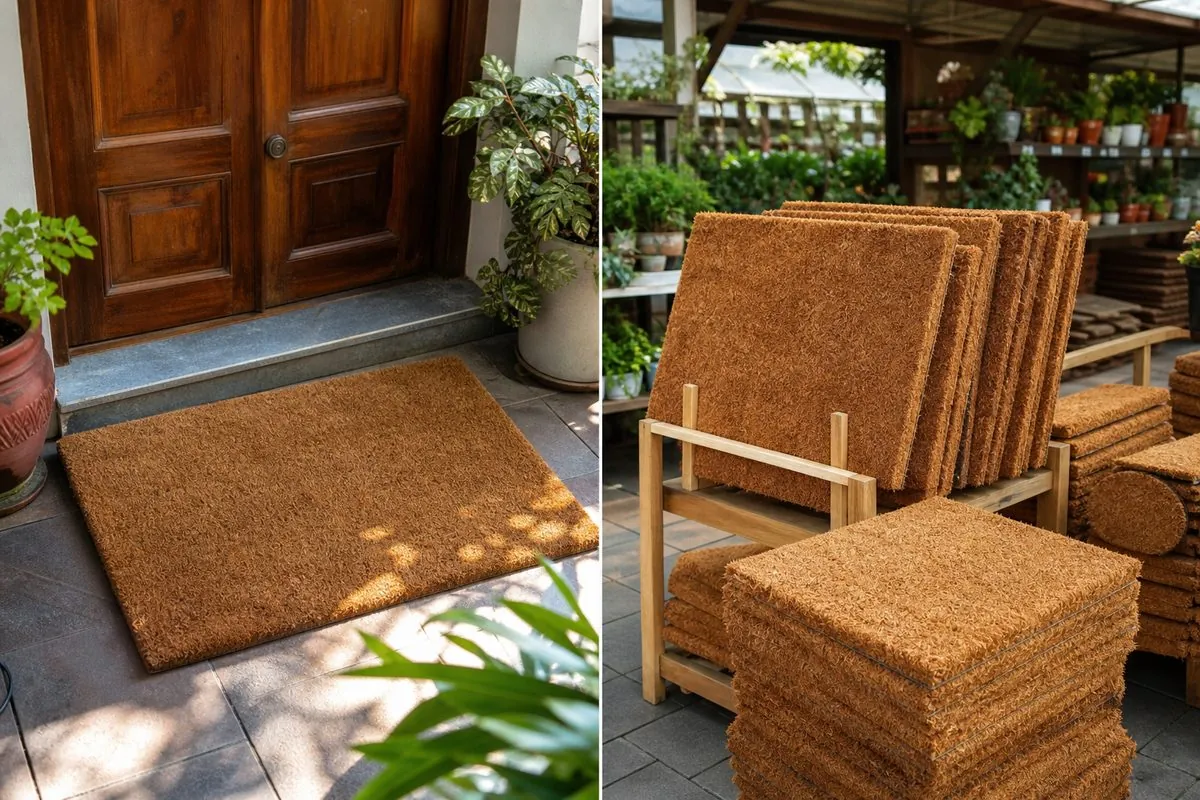
Coir Board registration for coir mat exporters is the foundational institutional credential behind India's Alappuzha and Pollachi doormat and matting supply under HS 5702.20: RCMC-style membership continuity, fair and buyer-meet access, MSME scheme adjacency, and the buyer credibility that shortens the path from first inquiry to first moisture-protected container. The steps are clear — obtain IEC first, confirm finished-mat product-list scope, complete Coir Board registration with a clean document pack, diary annual renewals, and pair the credential with disciplined size, pile, and backing samples.
Actionable next steps: verify IEC and GST consistency this week; assemble the documents from this guide; complete Coir Board registration on coirboard.gov.in; and plan a fair or direct buyer-outreach cycle with graded construction samples plus a complete credential pack. Contact Altus Exports for a readiness review connecting Coir Board registration to real commercial outcomes for your coir mat export programme. Work with Altus Exports as your merchant exporter and global sourcing partner for coir mats — verified Kerala and Tamil Nadu supply, PVC/logo and natural mat programmes, export documentation, and FCL booking from inquiry to shipment.