
A Guide to EPCH Registration and Benefits for Bamboo and Cane Handicraft Exporters
By Saurabh Mittal, Founder, Altus Exports
A complete guide to EPCH registration for bamboo and cane handicraft exporters from India — what the Export Promotion Council for Handicrafts is, why registration matters for weavers and workshops in Assam, Tripura, Meghalaya, Manipur, Mizoram, West Bengal, and Kerala, who should register, the step-by-step application process, documents, fees, RCMC continuity, and how membership unlocks IHGF Delhi Fair booth eligibility and builds buyer confidence in the USA, Germany, the UK, the Netherlands, France, the UAE, Australia, Canada, and Japan. Includes market size, HS 4601/4602 export and import statistics, pricing, MOQ, packaging, container loading, Lacey Act and phytosanitary context, and country-wise opportunity tables — separate from the demand matrix owned by the most-demanded-by-country guide.
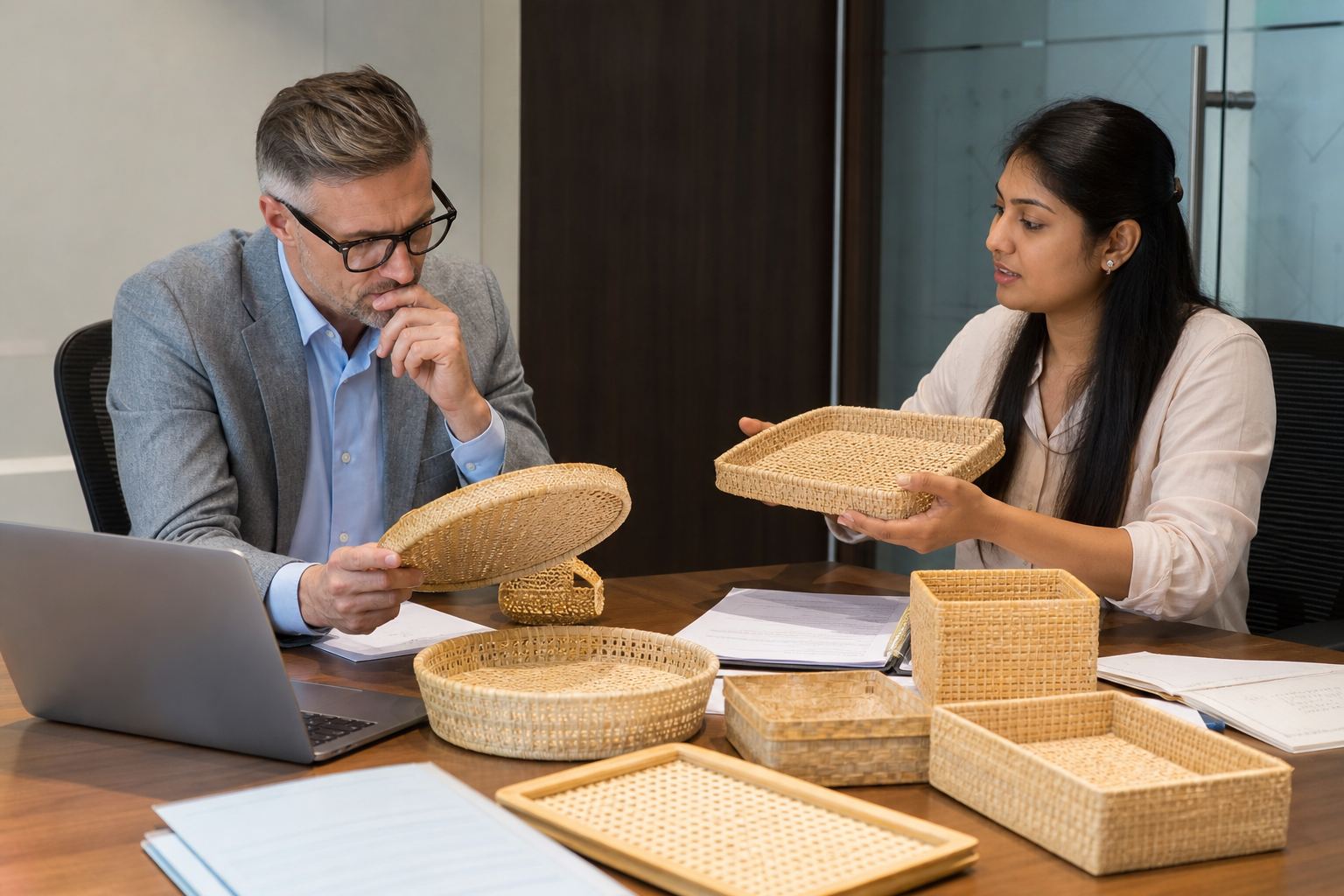
India's bamboo and cane handicraft sector is quiet on export charts but distinctive in craft: split-bamboo basketware and mats from Assam, Tripura, Meghalaya, Manipur, and Mizoram; cane trays, lanterns, and woven décor from West Bengal; and rattan-cane furniture accessories from Kerala. Trade under HS 4602 (basketwork, wickerwork, and other articles made directly to shape from plaiting materials) ran at approximately Rs 248.08 crore in FY 2024-25, alongside separately classified activity under HS 4601 (plaits and similar products of plaiting materials, whether or not assembled into strips) and HS 9403 (furniture, with 940382 for bamboo furniture, 940383 for rattan furniture, and 940389 for other-material lines that occasionally cross over from natural-fibre programmes). Demand is anchored by the USA, Germany, the UK, the Netherlands, France, the UAE, Australia, Canada, and Japan, where retailers stock woven baskets, cane storage, lantern shells, planters, mats, screens, and hospitality accents from Indian workshops.
For bamboo and cane handicraft exporters, EPCH registration is the foundational institutional credential. EPCH — the Export Promotion Council for Handicrafts — is the government-recognised apex body mandated to promote and facilitate export of Indian handicrafts, and bamboo basketwork, cane trays, woven décor, lantern shells, mats, screens, and small furniture accessories all fall squarely within that scope under HS headings 4601 and 4602, with rattan and bamboo furniture crossovers under 9403. Registration issues the Registration-cum-Membership Certificate (RCMC), unlocks IHGF Delhi Fair booth eligibility, opens market development assistance for overseas fairs, and — most importantly for a workshop-scale, cluster-based category — signals institutional identity that international buyers rely on when separating serious exporters from casual traders.
This guide explains what EPCH is, why registration matters specifically for bamboo and cane handicraft exporters, who should register, the step-by-step application process, documents and fees, and how membership translates into IHGF Delhi Fair access and buyer trust. It is not a full shipment documentation walkthrough or a destination-by-destination demand matrix — for the demand matrix by country, species (bamboo vs cane), weave, and finish, see most demanded Indian bamboo and cane handicrafts by country; for the paperwork checklist, see the bamboo and cane handicraft export documentation checklist. Pair this guide with how to export bamboo and cane handicrafts from India for the full operational picture, and always verify current fees and portal workflows on epch.in and dgft.gov.in before you file.
Key Takeaways
Summary Box
Executive Summary
Summary Box
Bamboo and cane handicrafts are one of India's most geographically concentrated craft categories, built around North East India's split-bamboo weaving traditions (Assam, Tripura, Meghalaya, Manipur, Mizoram), West Bengal's cane basket and lantern workshops, and Kerala's rattan-cane furniture-accessory units. Trade under HS 4602 reached approximately Rs 248.08 crore in FY 2024-25 — small in headline value compared with wood-based handicrafts, but strategically important as global home-décor buyers rotate toward renewable, plant-based materials and away from plastics and virgin timber. That craft depth translates into export revenue only when institutional credentials, weave and finish documentation, moisture control, and Lacey Act / phytosanitary readiness are in place before the first buyer conversation.
EPCH registration sits at the centre of that institutional layer for the bamboo and cane cluster. It is the gateway to RCMC issuance, IHGF Delhi Fair booth eligibility, market development assistance for overseas fairs, and — commercially most important — the credibility signal that shortens buyer due diligence when a US home-décor retailer or a UK sustainable-lifestyle brand is comparing several Indian natural-fibre suppliers. This guide combines the EPCH registration playbook with the market context a bamboo and cane exporter needs: size and industry overview, export and import statistics, product categories, manufacturing overview, export process, pricing, MOQ, packaging, container loading, shipping methods, certifications, buyer requirements, country-wise opportunities across the nine anchor markets, and a full buyer/exporter/compliance checklist set.
Market Size & Industry Overview
Key Statistics
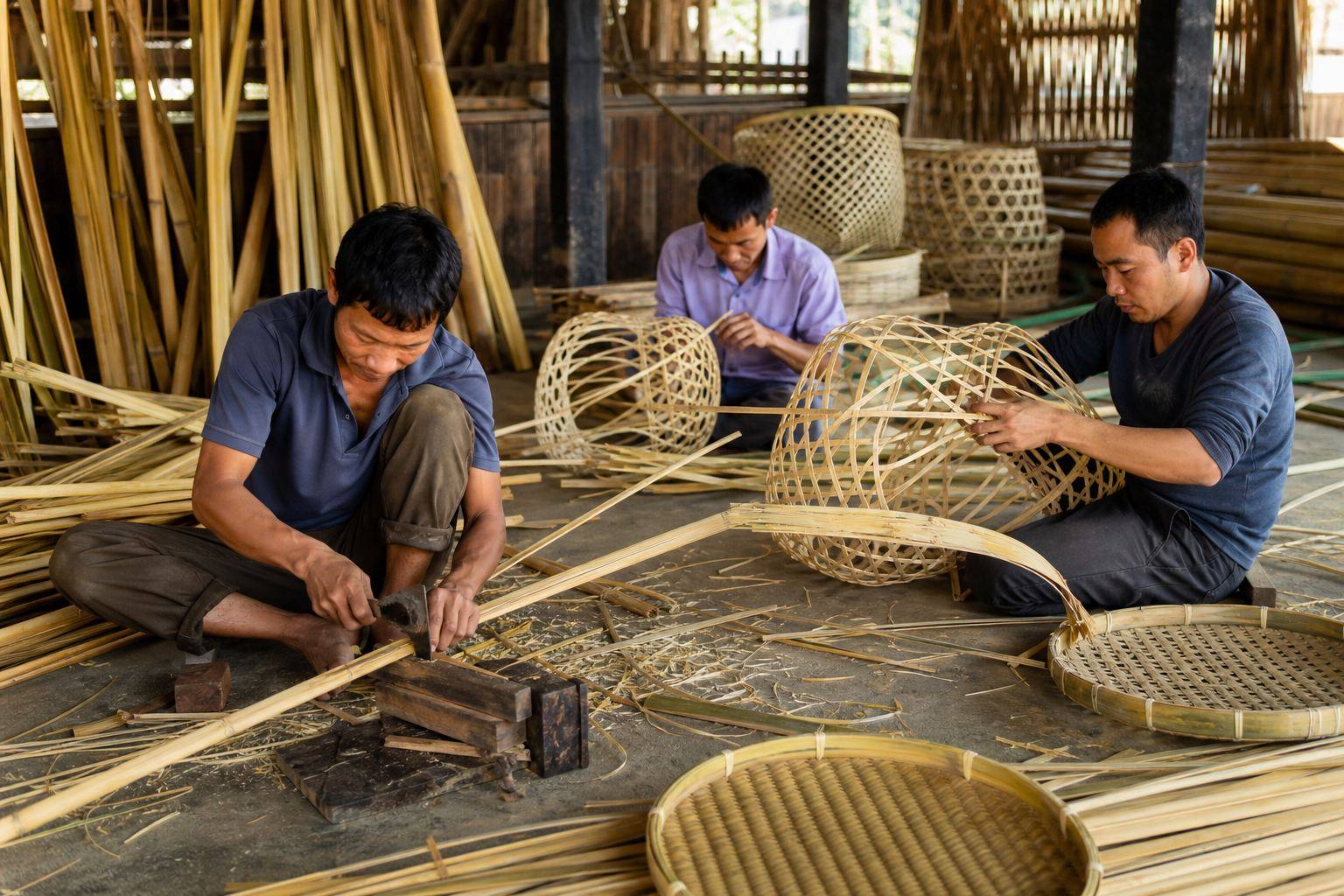
Global demand for Indian bamboo and cane handicrafts spans woven baskets, cane trays and storage, lantern shells, planters and pot covers, mats and screens, woven décor, and small cane furniture accessories. Production is concentrated in specialist clusters: Assam and Tripura for split-bamboo basketware and mats; Meghalaya, Manipur, and Mizoram for finer weaves and lantern shells; West Bengal (Nadia, North 24 Parganas, and adjoining districts) for cane trays, storage, and hospitality décor; and Kerala for rattan-cane furniture-accessory production. Each cluster brings a distinct weave vocabulary, species mix, and finish tradition — which matters directly for how buyers should structure sourcing relationships and how exporters should sequence EPCH registration alongside production capacity planning.
Category value under HS 4602 (basketwork, wickerwork, and other articles made from plaiting materials, split further by 46021100 for bamboo and 46021200 for rattan/cane) reached approximately Rs 248.08 crore in FY 2024-25, with additional shipment activity classified under HS 4601 (plaits and similar products of plaiting materials, whether or not assembled into strips) and HS 9403 for bamboo furniture (940382), rattan furniture (940383), and adjoining other-material furniture (940389). Compared with the wider EPCH handicrafts basket the sector value is modest, but growth is disproportionately driven by sustainability-led demand in North America and Europe, where retailers are actively substituting plastic and single-use décor with plant-based, renewable alternatives.
What Is EPCH and Why It Matters for Bamboo and Cane Handicraft Exporters
EPCH stands for the Export Promotion Council for Handicrafts, an apex body recognised by India's Ministry of Textiles and Ministry of Commerce and Industry to promote and facilitate export of Indian handicrafts across categories including basketwork, woven décor, cane and bamboo furniture accessories, art metalware, and hand-worked textiles. It supports exporters through registration services, market development assistance (MDA), trade fair organisation — most notably the IHGF Delhi Fair — and market intelligence relevant to handicraft-specific export cycles.
For bamboo and cane exporters specifically, EPCH plays a dual role. It is the registration authority that issues the Registration-cum-Membership Certificate (RCMC) that scheduled handicraft exporters need for export documentation and scheme eligibility, and it is a commercial facilitator that connects registered members to IHGF Delhi Fair booths, overseas buyer-seller meets, and international handicraft exhibitions. Because bamboo basketware, cane décor, and small woven-material furniture accessories fall within EPCH's scheduled scope, registration functions as a genuine institutional requirement for organised export — not a discretionary add-on. Buyers in developed markets increasingly request RCMC evidence during vendor onboarding precisely because the natural-fibre category is populated by many small weaver-scale workshops and a smaller number of organised merchant exporters, and buyers use registration status as a first-order filter.
Export Statistics
Key Statistics
Indian bamboo and cane handicraft exports are tracked primarily under HS 4602 (basketwork, wickerwork, and other articles made directly to shape from plaiting materials, or articles made up from goods of heading 4601), with 46021100 covering bamboo articles and 46021200 covering rattan articles. HS 4601 covers plaits and similar products of plaiting materials, whether or not assembled into strips, which some flat-weave mat, screen, and blind exporters use for the material sub-assembly stage. HS 9403 captures the furniture and furniture-accessory crossovers, with 940382 for bamboo furniture, 940383 for rattan furniture, and 940389 for other-material furniture lines. Exporters shipping mixed containers should confirm correct classification per SKU with their customs broker, since duty treatment and destination-market compliance requirements can differ across these headings even for visually similar products.
Trade under HS 4602 reached approximately Rs 248.08 crore in FY 2024-25 (directional trade data), a modest total in absolute terms but growing steadily on the back of natural-fibre substitution demand. By destination, the USA, Germany, the UK, the Netherlands, France, the UAE, Australia, Canada, and Japan anchor commercial demand for Indian bamboo and cane handicrafts, with Japan and Australia showing particular interest in finer weave craftsmanship. Exporters should verify current figures via EPCH trade statistics, DGFT export dashboards, and ITC Trade Map under HS 4601/4602 before making sourcing or capacity commitments.
Comparison table
Swipe →
Data table — swipe horizontally on small screens
| Metric | Directional Trend | EPCH/IHGF Relevance |
|---|---|---|
| India's bamboo/cane basketwork export value (HS 4602) | ~Rs 248.08 crore, FY24-25 (directional) | Category value is compiled and published in EPCH trade intelligence bulletins |
| Primary HS codes used | 4601 (plaits); 4602 (46021100 bamboo, 46021200 rattan); 9403 (940382/83/89 furniture crossover) | Your RCMC product-category declaration must match these headings exactly |
| Top destination markets | USA, Germany, UK, Netherlands, France, UAE, Australia, Canada, Japan | IHGF Delhi draws buyer delegations from most of these markets every edition |
| Bamboo/cane exhibitor share at IHGF Delhi | A discrete natural-fibre segment alongside wooden and metal categories, drawing weavers and merchant exporters from Assam, Tripura, Meghalaya, Manipur, Mizoram, West Bengal, and Kerala | Booth eligibility requires a current RCMC; non-members cannot book a stand |
| Registration base | Fragmented across many small weaver units and a smaller pool of merchant exporters | EPCH's exporter directory is how buyers separate registered suppliers from unregistered intermediaries |
Import Statistics
Key Statistics
On the import side, the USA leads demand for Indian bamboo and cane handicrafts driven by home-décor retail chains, specialty gift shops, and e-commerce private-label programmes ordering woven baskets, cane storage, and lantern shells. Germany and the Netherlands anchor European demand alongside a growing sustainability-conscious buyer segment that prioritises renewable-material sourcing narratives; the UK mirrors much of the US pattern with an added weighting toward heritage-style woven pieces; France concentrates in boutique and design-forward retail; the UAE imports both bulk décor for hospitality fit-outs and premium woven gifting; Australia's demand grows steadily through natural-material home-décor retail; Canada tracks the US pattern at a smaller scale; and Japan applies the tightest quality bar of any market, rewarding fine-weave precision at a premium price point.
Comparison table
Swipe →
Data table — swipe horizontally on small screens
| Country | Import Driver | Typical Format Imported |
|---|---|---|
| USA | Home-décor retail, gift shops, private label | Woven baskets, cane storage, lantern shells, planters |
| Germany | Sustainability-conscious home-décor, design retail | Renewable-material baskets, cane trays, screens |
| Netherlands | European distribution hub, design-forward retail | Woven décor, cane storage, small furniture accessories |
| France | Boutique and artisanal home-décor retail | Fine-weave baskets, cane trays, design-led décor |
| UK | Home-décor retail, heritage-style woven pieces | Baskets, trays, lantern shells, wall décor |
| UAE | Hospitality fit-outs, retail, gifting | Bulk cane décor, premium woven gift baskets |
| Australia | Natural-material home-décor retail | Baskets, trays, planters, small furniture accessories |
| Canada | Home-décor retail, diaspora and mainstream | Similar to USA at smaller scale |
| Japan | Fine-weave craft retail, gift and design channels | Precision-weave baskets, mats, lantern shells |
Product Categories
Summary Box
- Woven bamboo and cane baskets (HS 4602) — the dominant retail-ready format across nearly every export market
- Cane trays and storage (HS 4602) — Kolkata and West Bengal specialise in tabletop and organiser formats for retail and hospitality
- Lantern shells, pendants, and lampshade weaves (HS 4602) — North East India cluster strength; assembled downstream with wiring in destination markets
- Planters and pot covers (HS 4602) — bamboo or cane liners for both décor retail and outdoor lifestyle programmes
- Mats, screens, and blinds (HS 4601/4602) — flat-weave formats used for décor, wall covering, and hospitality accents
- Small cane furniture and furniture accessories (HS 940383 rattan / 940382 bamboo / 940389 other) — Kerala rattan units serve this crossover tier
Bamboo and cane handicraft exports span basketwork, cane storage, lantern shells, mats and screens, planters, woven décor, and small furniture accessories. Exporters should understand where EPCH registration and buyer expectations differ across categories, even though a full product breakdown belongs in top bamboo and cane handicraft products exported from India.
Manufacturing Overview
Export Tip
Bamboo and cane handicraft production in India follows cluster-specific weaving traditions rather than any single standardised process. Assam and Tripura workshops split, season, and weave locally harvested bamboo species (including Bambusa tulda and Melocanna baccifera) into basketwork, mats, and utility formats. Meghalaya, Manipur, and Mizoram artisans produce finer weaves and lantern shells that command higher unit prices in Japanese and European specialty retail. West Bengal cane workshops draw on regional cane availability and long-established tabletop and storage weaving traditions. Kerala rattan units — historically supplying domestic furniture demand — increasingly serve export markets for cane furniture accessories and small storage pieces where rattan (Calamus spp.) delivers structural strength that split bamboo cannot match.
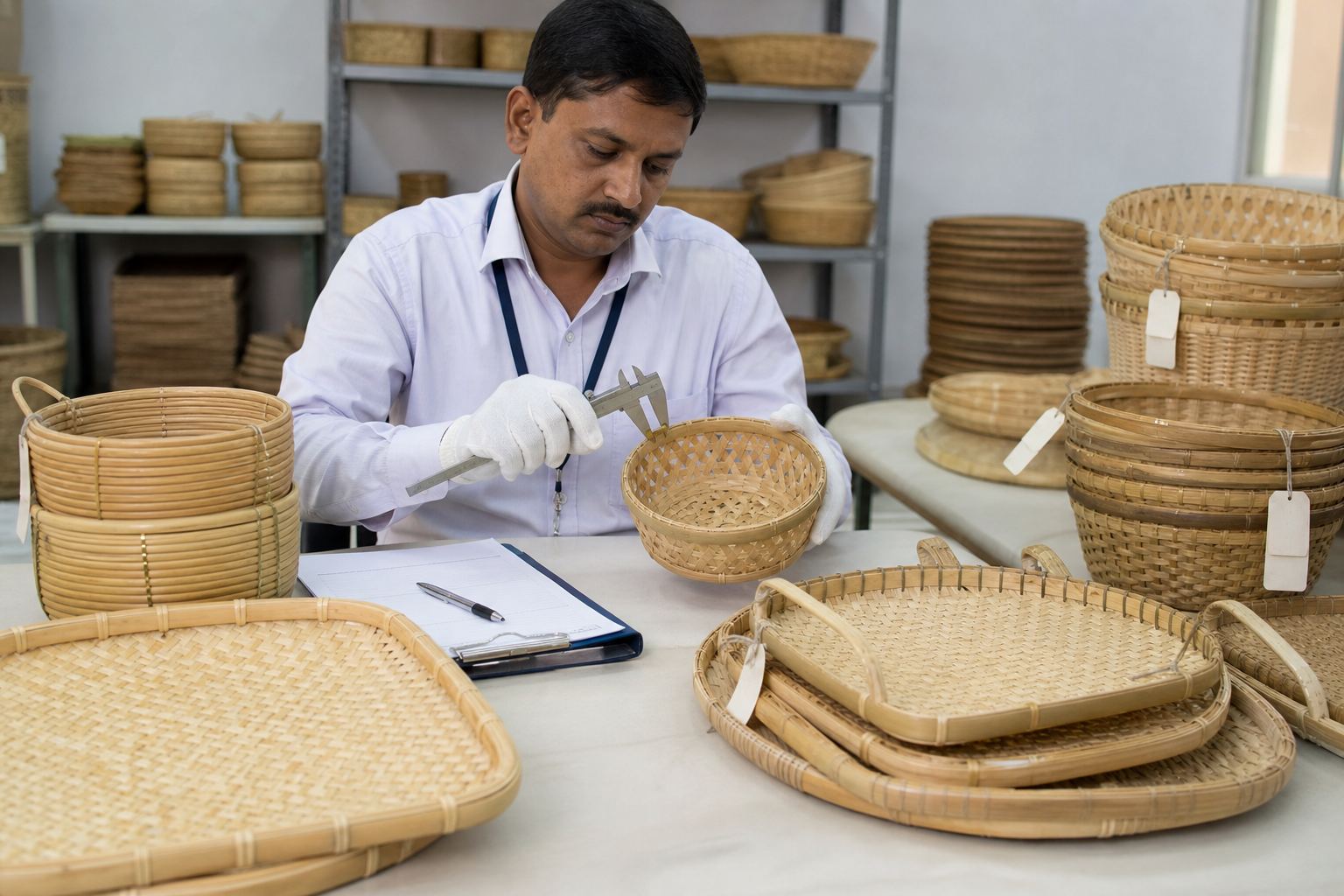
Export-oriented workshops across all clusters increasingly invest in moisture-content control (critical for basket and cane stability during long ocean transit), fumigation and pest-treatment discipline (to comply with destination phytosanitary requirements), and consistent finish application (natural, lacquered, or lightly stained). Processing capacity remains fragmented across many small and mid-sized units rather than a few large factories, which makes EPCH's institutional facilitation — and merchant exporters who can aggregate multi-cluster lots — particularly valuable for buyers seeking consistent supply at commercial volumes.
Why EPCH Registration Matters for Bamboo and Cane Exporters
Beyond the institutional-facilitation role, EPCH membership delivers practical commercial value for bamboo and cane exporters: RCMC issuance for export documentation, IHGF Delhi Fair booth eligibility, market development fund assistance for participating in overseas exhibitions, and visibility in EPCH's exporter directory used by international sourcing teams building supplier shortlists ahead of each fair season. For a workshop-scale cluster like North East India bamboo, a registered merchant exporter with a live RCMC is often the only credible bridge between a group of weaver units and a US retail buyer with a mid-six-figure PO — buyers do not want to onboard the weaver directly, and the weaver cannot handle export documentation alone.
Buyer trust is the immediate commercial payoff. When a buyer onboarding pack includes IEC, GSTIN, EPCH RCMC, and — where relevant — Lacey Act awareness and phytosanitary certificate readiness, the perceived risk for a US home-décor buyer or a German sustainability-focused importer drops sharply. Missing EPCH documentation causes serious buyers to pause, request workarounds, or move to an already-registered competitor — a meaningful risk in a category where buyers frequently discover new suppliers at IHGF Delhi and expect institutional registration as table stakes for any follow-up conversation.
Who Should Register with EPCH for Bamboo and Cane Exports
- Split-bamboo weaving workshops and cooperatives in Assam and Tripura
- Fine-weave and lantern-shell workshops in Meghalaya, Manipur, and Mizoram
- Cane basket and hospitality-décor workshops in West Bengal (Nadia, North 24 Parganas, and adjoining districts)
- Rattan-cane furniture-accessory manufacturers in Kerala
- Merchant exporters consolidating multi-cluster bamboo and cane lots across North East and East India
- MSMEs and startups with IEC and GST readiness entering the bamboo and cane handicraft export category
EPCH registration is relevant to any entity engaged in commercial export of bamboo and cane handicrafts, including weaving cooperatives and workshops in Assam, Tripura, Meghalaya, Manipur, Mizoram, and West Bengal, rattan-cane furniture-accessory units in Kerala, merchant exporters consolidating multi-cluster or multi-workshop lots, and MSMEs or startups entering the natural-fibre category with a valid IEC.
Eligibility generally requires a valid IEC, GST registration, and entity constitution documents matching the applicant's business structure — proprietorship, partnership, company, cooperative, or LLP. Manufacturer-exporter classification typically requires workshop or production-unit evidence; merchant-exporter classification requires procurement-and-export documentation. If your role is unclear or you operate across both models (which is common for merchant exporters supporting North East India weaver clusters), state it explicitly during application, since default classification affects RCMC scope and IHGF participation category.
Benefits of EPCH Membership for Bamboo and Cane Exporters
Treat EPCH membership as a commercial toolkit rather than a certificate to file away — the RCMC and IHGF access open institutional doors, but weave consistency, moisture control, and responsiveness close orders.
Comparison table
Swipe →
Data table — swipe horizontally on small screens
| Benefit | What You Gain | How to Use It for Bamboo & Cane |
|---|---|---|
| RCMC issuance | Export documentation credential for scheduled handicraft products | Include in every buyer onboarding pack alongside IEC and GST |
| IHGF Delhi Fair access | Eligibility to book booths at India's largest handicraft trade fair | Bring graded samples across weave/finish and a clear pricing sheet |
| Market development assistance (MDA) | Partial reimbursement for overseas fair participation and promotion | Apply before booking booths at Ambiente, Maison & Objet, or NY NOW |
| Buyer-seller meets | Structured introductions to vetted international importers | Prepare cluster origin, weave, and MOQ specifics for each meeting |
| Exporter directory listing | Visibility to buyers searching for registered Indian natural-fibre suppliers | Keep product categories, clusters (NE / WB / Kerala), and treatment status current |
| Market intelligence | Destination-specific demand and compliance updates | Prioritise one or two markets based on current EPCH intelligence |
| Craft cluster linkage | Institutional pathway to state handicraft boards and North East cane/bamboo development bodies | Use for weaver capacity development alongside export scale-up |
| Buyer credibility | Institutional signal reducing onboarding friction | Attach RCMC to every inquiry response and fair presentation |
EPCH Registration for Bamboo and Cane Exporters: Step-by-Step Process
Export Tip
The sequence below reflects the current organised application pathway through the EPCH portal, which is linked to DGFT login infrastructure for IEC-holding exporters. Confirm live screen flows and document checklists on epch.in before filing, as workflows are periodically updated.
Step 1: Obtain IEC
Apply for an Import Export Code on the DGFT portal if you do not already hold one. IEC is the foundation of all commercial export from India, and EPCH registration cannot proceed without it. Keep PAN, bank details, and address consistent with your GST registration to avoid mismatches later — a very common source of delay for first-time North East India applicants whose banking address does not match the workshop address on file.
Step 2: Confirm Product Category Fit
Because EPCH covers multiple handicraft categories, confirm that your bamboo basketwork, cane décor, mats, lantern shells, or furniture-accessory products fall within the scheduled handicraft categories the council recognises. Most bamboo and cane articles under HS 4601 and 4602 qualify comfortably, and cane/bamboo furniture crossover under HS 9403 typically qualifies where the piece is hand-woven rather than industrially assembled — verify classification against current EPCH product-category lists before applying.
Step 3: Prepare Documentation
Assemble IEC copy, GST certificate, PAN, cancelled cheque, bank financial soundness certificate where required, and entity constitution proofs (partnership deed, incorporation certificate, MoA/AoA, cooperative registration, or LLP agreement as applicable). Manufacturer-exporter classification may require MSME Udyam registration and workshop or production-unit evidence such as a rent agreement, utility bill, or ownership proof for the weaving unit. Cooperatives — common in North East India bamboo weaving — should carry current cooperative registration papers and authorised signatory resolutions. Incomplete document packs are the leading cause of processing delays.
Step 4: Register on the EPCH Portal
Create an applicant account on the EPCH online registration portal using your IEC and business email. This is the primary interface for new registration; DGFT portal linkages may form part of the workflow depending on the application type.
Step 5: Complete the Application and Select Product Categories
Fill in entity details, IEC, and product categories — select bamboo and cane handicraft categories, and any related lantern-shell or furniture-accessory categories as applicable. Declare export destination interests and exporter type (manufacturer, merchant, or both). Accurate category selection matters because RCMC scope, IHGF participation eligibility, and scheme access often tie back to declared products.
Step 6: Pay Registration Fees
Pay the prescribed fee online via the portal's payment gateway. First-year fees typically comprise a one-time registration fee plus annual subscription plus GST. Retain receipts and acknowledgement numbers in your compliance file, and always verify live amounts before remitting since fee schedules are revised periodically.
Step 7: Upload Documents and Submit
Upload clear, self-attested scans of all required documents. Names, addresses, and signatory details must match precisely across IEC, GST, and the application form — even minor spelling discrepancies generate deficiency notices, and North East India applicants sometimes see additional back-and-forth around workshop address verification. Submit only once every required field and upload is confirmed complete.
Step 8: Verification and RCMC Issuance
EPCH officials verify completeness and document authenticity. Respond to any deficiency communication within 24–48 hours to avoid application dormancy. On approval, EPCH issues the RCMC — download and store it alongside IEC and GSTIN, and diary the annual renewal date so continuity is never broken, since a lapsed RCMC can jeopardise IHGF booth eligibility ahead of the fair season and disrupt buyer onboarding packs that referenced active membership.
Documents and Fees for EPCH Registration
Use this snapshot as a preparation gate. Exact requirements vary slightly by entity type and by manufacturer- versus merchant-exporter category, and always verify the live fee schedule on the EPCH portal before remitting payment.
Comparison table
Swipe →
Data table — swipe horizontally on small screens
| Item | Requirement / Typical Cost | Practical Note |
|---|---|---|
| IEC certificate | Mandatory prerequisite | Self-attest; ensure name matches all other documents |
| GST registration certificate | Mandatory | Legal name and address must align with IEC |
| Entity constitution proof | Deed / incorporation / MoA-AoA / cooperative registration / LLP agreement as applicable | Ensure notarisation where required |
| Workshop/weaving-unit evidence (manufacturer category) | Rent agreement, utility bill, or ownership proof | Required for manufacturer-exporter classification |
| Bank financial soundness certificate | Often required | Use the bank account reflected in your IEC |
| First-year registration + membership + GST | Fee benchmark varies by exporter turnover slab | Verify live fee schedule on the EPCH portal |
| Annual renewal fee | Lower than first-year enrolment | Diary renewal before the financial-year deadline |
RCMC for Bamboo and Cane Exporters: What It Means and How to Use It
Compliance Notes
The Registration-cum-Membership Certificate (RCMC) confirms an exporter's registration and membership under EPCH's institutional framework. For bamboo and cane exporters, RCMC is referenced during buyer vendor onboarding, in applications for government export incentives, in IHGF Delhi Fair booth allocation, and in documentary credit transactions where institutional membership proof is a documentary condition. Validity is typically multi-year but subject to annual fee payment — lapsing disrupts continuity even within the nominal validity window. Keep RCMC alongside IEC in a master compliance file accessible to your export desk and shipping agent, and reference the RCMC number on quotations, proforma invoices, and buyer-onboarding cover letters as a matter of routine.
IHGF Delhi Fair Access for Bamboo and Cane Exporters
The India Handicrafts and Gifts Fair (IHGF) Delhi, organised by EPCH twice yearly (spring and autumn editions), is the single largest organised buyer-access channel for Indian handicraft exporters, drawing thousands of international buyers from home-décor, gift, and lifestyle retail chains across the USA, Europe, the UAE, Japan, and beyond. EPCH membership is the prerequisite for booth booking, and bamboo and cane exhibitors form a discrete natural-fibre segment alongside wooden and metal categories — smaller in exhibitor count than wood, but disproportionately visible to buyers actively looking for renewable-material lines.
For bamboo and cane exporters, IHGF delivers value well beyond the booth itself: buyers can physically inspect weave tightness, rim strength, moisture-controlled samples, and joinery on the spot, which shortens the sample-approval cycle considerably compared with remote sourcing. Exhibitors who arrive with a well-organised catalogue segmented by cluster origin (Assam, Tripura, Meghalaya, Manipur, Mizoram, West Bengal, Kerala), weave type (open, tight, fine, decorative), and finish (natural, lacquered, lightly stained), plus clear FOB pricing tiers and MOQ/lead-time sheets convert significantly more booth visits into follow-up purchase orders than those relying on ad hoc conversation. Booking typically opens months ahead of each edition, so exporters should plan booth applications, product-catalogue readiness, and travel logistics for international buyer meetings well in advance of the fair dates published on epch.in.
Export Process
Export Tip
EPCH registration is one step in a broader export sequence. A typical bamboo and cane handicraft export process runs: IEC and EPCH registration; buyer discovery via IHGF, direct outreach, or B2B platforms; sample dispatch with weave, finish, dimension, and moisture-treatment specifications; price negotiation and purchase order; procurement or production scheduling with cluster workshops; pre-shipment quality control (moisture content, weave tightness, rim integrity, pest-free material); export packing with poly liners and desiccants; customs documentation and clearance; booking and loading at the chosen port (typically Kolkata/Haldia for North East and West Bengal cargo, or ICD Delhi consolidation before western gateway ports); shipment tracking; and final documentation handover against payment terms.
For the complete operational walkthrough — including full documentation specifics such as phytosanitary certificate flows and Lacey Act declaration formats — see how to export bamboo and cane handicrafts from India and the bamboo and cane handicraft export documentation checklist.
Pricing Analysis
Buyer Tip
Bamboo and cane handicraft pricing is driven primarily by material (rattan-cane commands a premium over split bamboo for equivalent construction), weave type (fine, precision weaves cost materially more per piece than open utility weaves), finish complexity, and item category. FOB pricing for standard woven bamboo baskets commonly runs USD 1.50–6 depending on size and weave density, while cane storage and tray formats run USD 3–15 depending on size, cane grade, and finishing. Rattan-cane furniture-accessory pieces sit meaningfully higher again. None of that pricing power matters if a buyer stalls at vendor qualification — for the full country-by-country unit-price breakdown across the wider product range, see how to export bamboo and cane handicrafts from India.
Comparison table
Swipe →
Data table — swipe horizontally on small screens
| Product / Format | Typical FOB Price (USD) | Price Driver |
|---|---|---|
| Woven bamboo baskets (open weave, utility) | 1.50–4 | Baseline retail-décor grade |
| Woven bamboo baskets (tight weave, décor) | 4–8 | Weave density and finish |
| Cane trays and storage (mid-size) | 3–10 | Cane grade and construction complexity |
| Fine-weave decorative pieces (Meghalaya/Manipur) | 6–18 | Weave precision and skill premium |
| Lantern shells and pendant weaves | 3–12 | Size, weave, and finish |
| Small rattan-cane furniture accessories | 20–60 | Rattan material, structural build, finish |
MOQ Analysis
Buyer Tip
MOQ for bamboo and cane handicrafts scales from small sample batches to full container loads depending on buyer type. Retail and private-label buyers typically start with 5–20 unit samples per SKU for weave, finish, and dimensional evaluation, move to trial orders of 200–500 units to test sell-through, and scale to FCL commitments once specification, packaging, and moisture-control protocols are finalised. Hospitality and gifting-format buyers in the UAE may move faster to bulk trial volumes given standing procurement cycles, while Japanese buyers frequently start smaller and increase over multiple review cycles.
Comparison table
Swipe →
Data table — swipe horizontally on small screens
| Buyer Stage | Typical MOQ | Shipment Mode |
|---|---|---|
| Sample evaluation | 5–20 units per SKU | Courier/air parcel |
| Trial order | 200–500 units | LCL sea freight |
| Standing reorder (mid-size buyer) | 500–2,000 units | LCL or part-container |
| FCL programme | 1 x 20ft or 1 x 40ft container | FCL sea freight |
Packaging Standards
Export Tip
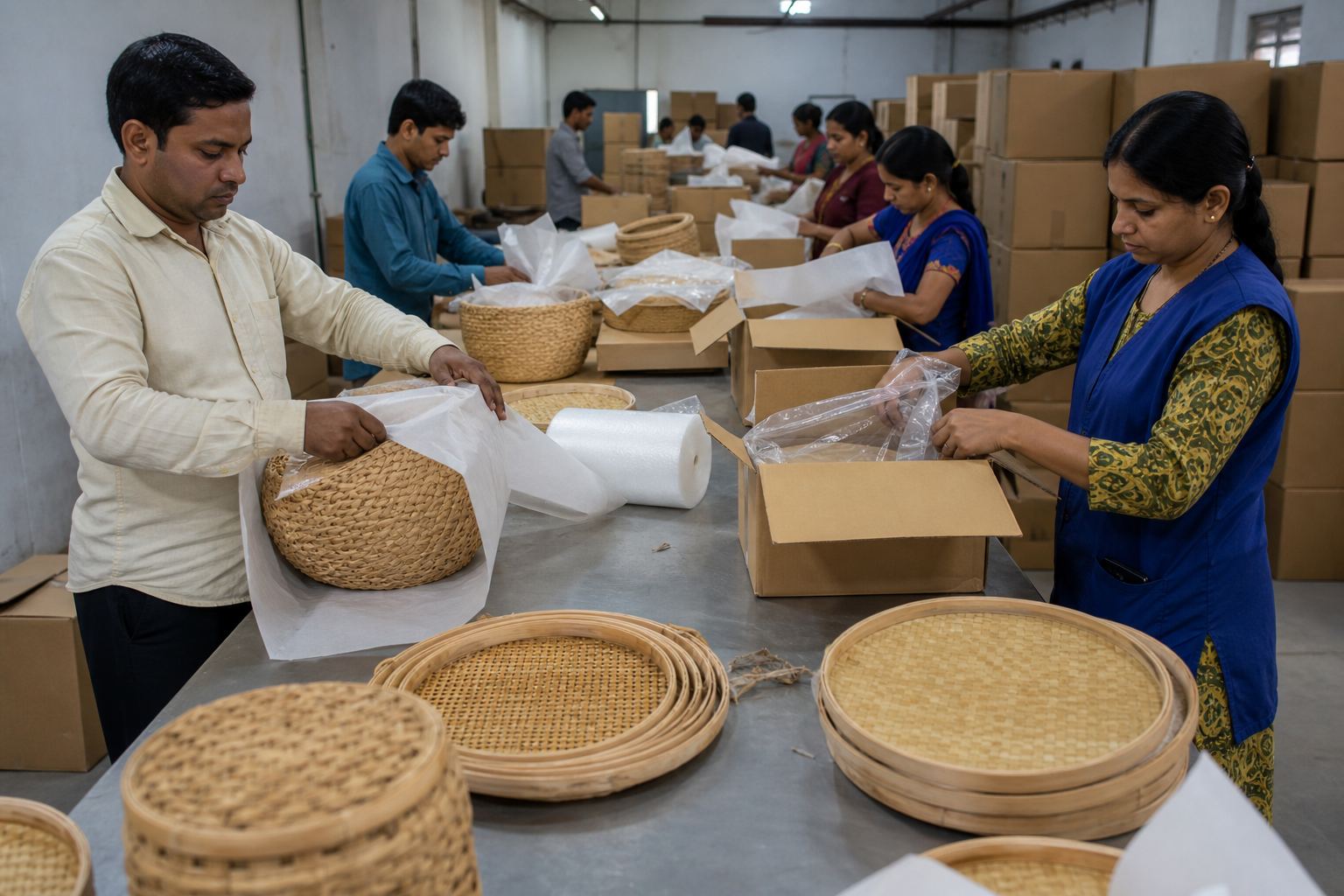
Bulk export packaging for bamboo and cane handicrafts typically uses individual kraft/foam sleeves per piece, packed into export cartons with corner guards, poly liners, and moisture-absorbing sachets to manage humidity swings during ocean transit. Nesting baskets and stacking trays reduce cube-per-unit significantly when cartons are designed around the specific product's geometry. Retail-ready formats increasingly include branded sleeves or kraft boxes for direct-to-shelf presentation. Labelling must reflect destination-market requirements (country of origin, material declaration — bamboo vs rattan — and any renewable-material claim). If wood packing (crates, pallets, dunnage) is used, it must carry ISPM-15 stamps for phytosanitary compliance in every destination in this guide — the finished bamboo/cane product itself is not treated as wood packing, but the pallet under it usually is.
Comparison table
Swipe →
Data table — swipe horizontally on small screens
| Format | Typical Packing Approach | Notes |
|---|---|---|
| Individual décor pieces | Kraft/foam sleeve, then export carton | Moisture-absorbing sachets recommended for long transit |
| Nested baskets/trays | Stacked with interleaving paper inside cartons | Reduces cube significantly versus individual boxing |
| Retail-ready sets | Branded sleeve or kraft box per unit | Improves direct-to-shelf presentation for retail buyers |
| Palletised export cartons | Cartons stacked on ISPM-15 stamped pallets | Wood packing itself must be heat-treated or fumigated per ISPM-15 |
Container Loading Details
Export Tip
Container loading itself is a freight-forwarder decision, not an EPCH one — but the certificate of origin, RCMC reference, and IEC details on your paperwork must match the specific container and lot being stuffed, not a template carried over from a previous shipment. Woven bamboo and cane are extremely cube-sensitive (very low density, irregular shapes) so carton design and nesting strategy drive achievable load per container far more than the credentials paperwork does. Where wood packing is involved, ISPM-15 stamps must be visible and dated correctly — a missing stamp will hold a container at destination regardless of how clean the RCMC and IEC references look.
Comparison table
Swipe →
Data table — swipe horizontally on small screens
| Container | Approximate Fill (Woven Décor) | Paperwork Checkpoint Before Stuffing |
|---|---|---|
| 20ft FCL | Directional only — often on the order of roughly 1,000–1,800 cartons for tightly nested basket/tray mixes, but actual stuffing is CBM- and carton-size-dependent; confirm with your forwarder | RCMC number and IEC must appear identically on the shipping bill and certificate of origin for this lot |
| 40ft FCL | Directional only — often on the order of roughly 2,100–3,600 cartons for tightly nested mixes in a 40ft, but confirm CBM stuffing plan with your forwarder | Cross-check HS 4601/4602/9403 consistency across invoice, packing list, and RCMC product-category declaration |
| Furniture-accessory mix (either container size) | Materially fewer pieces per container given bulkier dimensions | Confirm your EPCH product-category scope actually covers 9403 crossover items before quoting a buyer |
| Palletised loads | ISPM-15 stamped pallets required for USA/EU/UK/JP | Phytosanitary certificate for the product plus ISPM-15 evidence for the packing |
Shipping Methods
Export Tip
Shipping mode is a freight-forwarder decision independent of EPCH, but RCMC and IEC reference numbers still need to appear correctly on the shipping bill and certificate of origin regardless of whether cargo moves by sea FCL/LCL through Kolkata/Haldia (natural gateway for North East India and West Bengal cargo), through Nhava Sheva (JNPT) or Mundra for consolidated cargo from Kerala or via ICD Delhi, or by air for urgent samples. As a rough planning guide, samples typically clear in a couple of weeks, standard-catalogue stock orders take closer to a month, and fully custom production requiring new weave patterns or dedicated finish specifications can run two to two-and-a-half months before it even reaches the port. Exporters who let RCMC or IEC lapse mid-programme risk turning any of those timelines into a paperwork delay rather than a production one. For full port, lead-time, and Incoterm guidance, see how to export bamboo and cane handicrafts from India.
Certifications
Compliance Notes
Baseline registrations for bamboo and cane handicraft export are IEC, GST registration, and EPCH RCMC — together these form the credibility floor that international buyers expect during vendor onboarding. Beyond that floor, because bamboo and cane are plant materials, exporters typically need to address Lacey Act declarations for US-bound shipments (species/genus, country of harvest, and quantity declarations), phytosanitary certificates issued by NPPO India where destination phytosanitary regulation applies, and ISPM-15 heat-treatment or fumigation stamping on any wood packing (pallets, crates, dunnage) used with the shipment. These plant-material compliance layers are separate from EPCH and are documented per lot rather than issued once and reused.
Comparison table
Swipe →
Data table — swipe horizontally on small screens
| Certification/Registration | Purpose | Who Needs It |
|---|---|---|
| IEC | Mandatory for any commercial export from India | All exporters |
| GST registration | Tax identity and commercial entity confirmation | All exporters |
| EPCH RCMC | Scheduled handicraft registration and buyer credibility, IHGF access | All exporters |
| Lacey Act declaration | US import compliance for plant-material species/origin | Exporters shipping to the USA |
| Phytosanitary certificate (NPPO India) | Confirms plant-material pest freedom for destination biosecurity | Exporters shipping to USA, EU, UK, Japan, Australia, Canada, and other regulated destinations |
| ISPM-15 stamped wood packing | Heat treatment or fumigation of pallets/crates | Any exporter using wood packing to any destination in this guide |
| Cluster/craft attestations (optional) | Origin authenticity for Assam/Tripura/Meghalaya/Manipur/Mizoram/WB/Kerala workshops | Exporters marketing cluster-origin narratives to buyers |
Buyer Requirements
Buyer Requirements
International bamboo and cane handicraft buyers typically request: weave and finish samples with clear specifications; consistent lot-to-lot quality and colour matching; flexible MOQ for first orders; customisable packaging (private label, branded sleeves, market-specific labelling); moisture-treatment evidence (kiln drying, chemical treatment, or air-cure documentation); Lacey Act and phytosanitary readiness for regulated markets; and a clean institutional credential set (IEC, EPCH RCMC, GST) presented upfront rather than after multiple follow-up requests. Buyers who have previously received insect-infested cargo, cracked baskets from over-dried material, or under-documented shipments apply stricter scrutiny to new Indian suppliers regardless of quoted price.
Country-wise Opportunities
Market Snapshot
EPCH registration is a universal prerequisite, but the commercial opportunity differs meaningfully by destination. For the full species (bamboo vs cane), weave, finish, and certification demand matrix by country, see most demanded Indian bamboo and cane handicrafts by country; the snapshot below focuses on how EPCH credentials and IHGF access interact with each market's buyer expectations.
Comparison table
Swipe →
Data table — swipe horizontally on small screens
| Country | Opportunity Driver | EPCH-Linked Buyer Expectation |
|---|---|---|
| USA | Home-décor retail, gift shops, private label | RCMC + Lacey Act declaration expected at first inquiry |
| Germany | Sustainability-conscious décor, design retail | RCMC + phytosanitary readiness; renewable-material story |
| Netherlands | European distribution hub, design retail | RCMC + phytosanitary certificate for EU-bound shipments |
| France | Boutique and artisanal home-décor retail | RCMC + clear weave/finish specification sheets |
| UK | Home-décor retail, heritage-style woven pieces | RCMC; post-Brexit import documentation care |
| UAE | Hospitality fit-outs, retail, gifting | RCMC + bulk-and-premium dual capability |
| Australia | Natural-material home-décor retail | RCMC + strict biosecurity/import compliance documentation |
| Canada | Home-décor retail, mainstream and diaspora | RCMC; similar expectations to USA |
| Japan | Fine-weave craft retail, gift and design channels | RCMC + Japanese-grade quality bar; precise weave/finish spec |
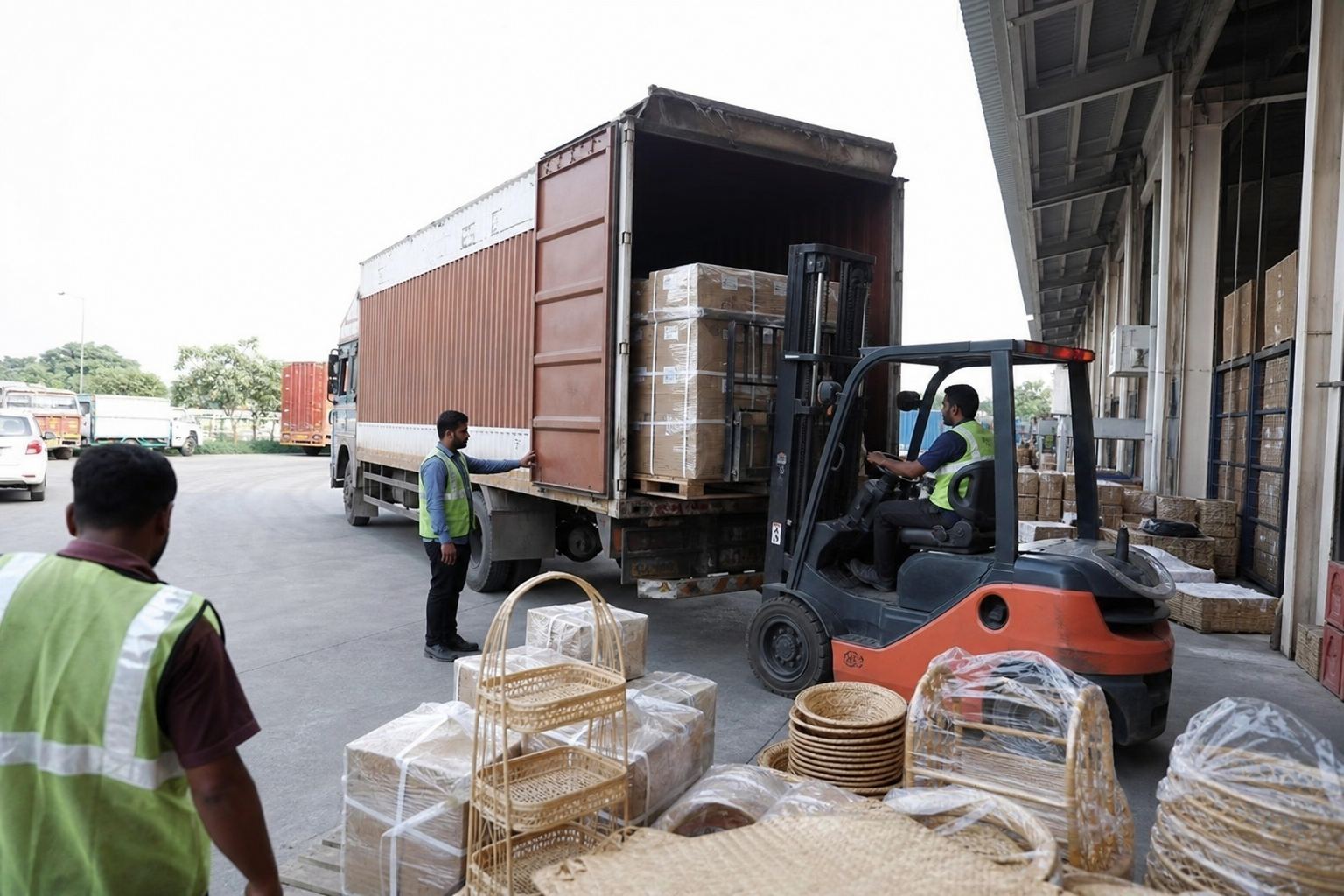
EPCH vs Other Export Bodies for Bamboo and Cane Exporters
Bamboo and cane exporters sometimes ask whether other bodies are more relevant. For bamboo and cane handicrafts as the primary export product, EPCH is the correct primary registration and facilitation body. FIEO offers broader cross-sector federation benefits; state-level handicraft development corporations (Assam, Tripura, Meghalaya, and other state boards) support cluster-specific training and infrastructure; the National Bamboo Mission and the Cane and Bamboo Technology Centre offer bamboo-specific development support; and DGFT governs IEC issuance and broader export policy. These bodies complement EPCH rather than compete with it.
Comparison table
Swipe →
Data table — swipe horizontally on small screens
| Body | Primary Role for Bamboo & Cane Exporters | When to Engage |
|---|---|---|
| EPCH | Scheduled handicraft registration, RCMC, IHGF fair, MDA, market development | Primary registration for all commercial bamboo/cane exporters |
| FIEO | Broad exporter federation, cross-sector networking | Supplementary for wider export community benefits |
| State handicraft boards / NE cane & bamboo bodies | Cluster-specific artisan training and infrastructure support | Useful for workshop-level skill and capacity development |
| National Bamboo Mission / CBTC | Bamboo cultivation and value-chain development schemes | Relevant for exporters investing in upstream bamboo supply |
| DGFT | IEC issuance, RCMC portal infrastructure, export policy | IEC first; portal credentials used throughout |
Sourcing Checklist for Buyers and Exporters
Checklist
Use this two-sided checklist to align expectations before the first purchase order.
Buyer Checklist
- Request IEC, EPCH RCMC, and GST evidence upfront in the first inquiry response
- Ask for samples across your target weave/finish combinations with dimensions and weight noted
- Confirm moisture-treatment and pest-treatment protocol, and packaging format, for your shipping route
- Clarify MOQ, lead time, and payment terms before quoting retail pricing to your own customers
- For US shipments, confirm Lacey Act declaration format; for EU/UK/JP/AU/CA shipments, confirm phytosanitary certificate readiness
Exporter Checklist
- Complete IEC and EPCH registration before active buyer outreach or IHGF booking
- Standardise weave and finish grades and maintain consistent dimension specification sheets by cluster
- Invest in moisture-controlled storage and export-grade packing with desiccants to protect weave integrity in transit
- Offer a graded price ladder across cluster origin and weave type so buyers can find their own budget without a separate custom quote
- Respond to specification questions and sample requests within 24–48 hours, including cluster-origin traceability confirmation
Compliance Checklist
Checklist
Compliance Notes
Comparison table
Swipe →
Data table — swipe horizontally on small screens
| Compliance Item | Status Check | Owner |
|---|---|---|
| IEC | Valid and matches GST/PAN details | Export desk |
| GST registration | Active and address-consistent | Accounts/compliance |
| EPCH RCMC | Current and renewed annually | Export desk |
| Pre-shipment QC | Moisture content, weave tightness, rim integrity, pest-free material documented | QC team |
| Packaging compliance | Destination-specific labelling and material declaration met | Packaging team |
| Lacey Act declaration (US-bound) | Species/origin declarations current and matched to the specific lot | Quality/compliance |
| Phytosanitary certificate (NPPO India) | Issued per lot for regulated destinations | Quality/compliance |
| ISPM-15 wood packing | Heat-treated/fumigated pallets stamped and traceable | Packaging team |
Common Buyer Mistakes
Common Mistakes Box
- Assuming all Indian bamboo baskets are the same grade — cluster origin, weave tightness, moisture content, and finish quality vary widely and drive both price and durability.
- Skipping sample evaluation before a bulk order, then finding out about pest activity, weave collapse, or moisture-related cracking only once the container has already landed.
- Not verifying EPCH/IEC credentials before wiring an advance payment to an unregistered trader met at a fair or online.
- Choosing the lowest FOB quote without checking whether it reflects a thinner weave, unseasoned bamboo, or missing pest treatment.
- Overlooking cluster-specific craft strengths — asking a West Bengal cane workshop for Meghalaya-style fine bamboo weaves, or expecting Assam bamboo utility baskets from a Kerala rattan furniture unit.
- Assuming a bamboo consignment does not need phytosanitary paperwork because 'it's just a basket' — every plant-material shipment to a regulated destination needs its own certificate.
Challenges & Solutions
Comparison table
Swipe →
Data table — swipe horizontally on small screens
| Challenge | Impact | Solution |
|---|---|---|
| Fragmented, weaver-scale supply base | Inconsistent quality across small producers | Work with EPCH-registered merchant exporters who standardise QC across workshops |
| Moisture and pest sensitivity in transit | Weave collapse, insect activity, colour degradation | Kiln-drying/air-cure discipline, fumigation, moisture-controlled packing, phytosanitary certificate per lot |
| Very low product density | Container cube becomes the binding constraint, not weight | Optimise carton dimensions and nesting strategy with freight forwarder input |
| Cluster-specific weave capability gaps | Buyer dissatisfaction when weave style is mismatched to cluster strength | Route inquiries to the right cluster (NE bamboo vs WB cane vs Kerala rattan) at intake |
| New, undocumented entrants met at fairs | Buyer scepticism during vendor diligence | Lead with EPCH RCMC and IEC in every first response and IHGF conversation |
Future Market Trends
Key Statistics
Through 2030, three trends will shape the bamboo and cane handicraft export category: continued growth in renewable-material and plant-fibre substitution demand across the USA, Germany, the UK, and the Netherlands as retailers phase out plastic décor formats; rising traceability and phytosanitary expectations across all regulated destinations, which will separate well-organised exporters from those relying on informal supply chains; and continued IHGF-driven discovery of North East India cluster crafts (Meghalaya fine-weave, Manipur lantern shells) by boutique and design-forward retailers in Japan, France, and specialty US retail. EPCH's digital registration processes are also expected to streamline further, reducing administrative friction for smaller cluster workshops entering export for the first time.
Exporters who treat EPCH registration as living infrastructure — renewed annually, paired with consistent weave and finish documentation, and used actively for IHGF and MDA-supported fair participation — will be best positioned to capture disproportionate share as international demand keeps expanding across the USA, Germany, the UK, the Netherlands, France, the UAE, Australia, Canada, and Japan.
Expert Insights
Expert Insight Box
Exporters preparing for their first EPCH registration or IHGF booth often underestimate how much documentation discipline shortens the path from fair conversation to signed purchase order. Buyers who visit an IHGF booth and receive a complete cluster/weave/finish catalogue, transparent pricing tiers, and a valid RCMC on the spot move to sample requests far faster than exporters who promise to 'send details later'. A second recurring insight from cluster visits: workshops that specialise deeply in one weave tradition — Assam split-bamboo utility, Meghalaya fine weave, West Bengal cane storage, or Kerala rattan furniture — generally out-compete workshops attempting to offer all four simultaneously without matching skill depth.
The third recurring insight is that plant-material paperwork is not optional. Lacey Act declarations for US shipments and phytosanitary certificates for EU/UK/JP/AU/CA shipments need to be treated as first-class deliverables alongside the RCMC, not as afterthoughts once cargo is at the port. Exporters who build these paperwork rhythms into every lot avoid the single most common cause of destination-port holds for natural-fibre cargo.
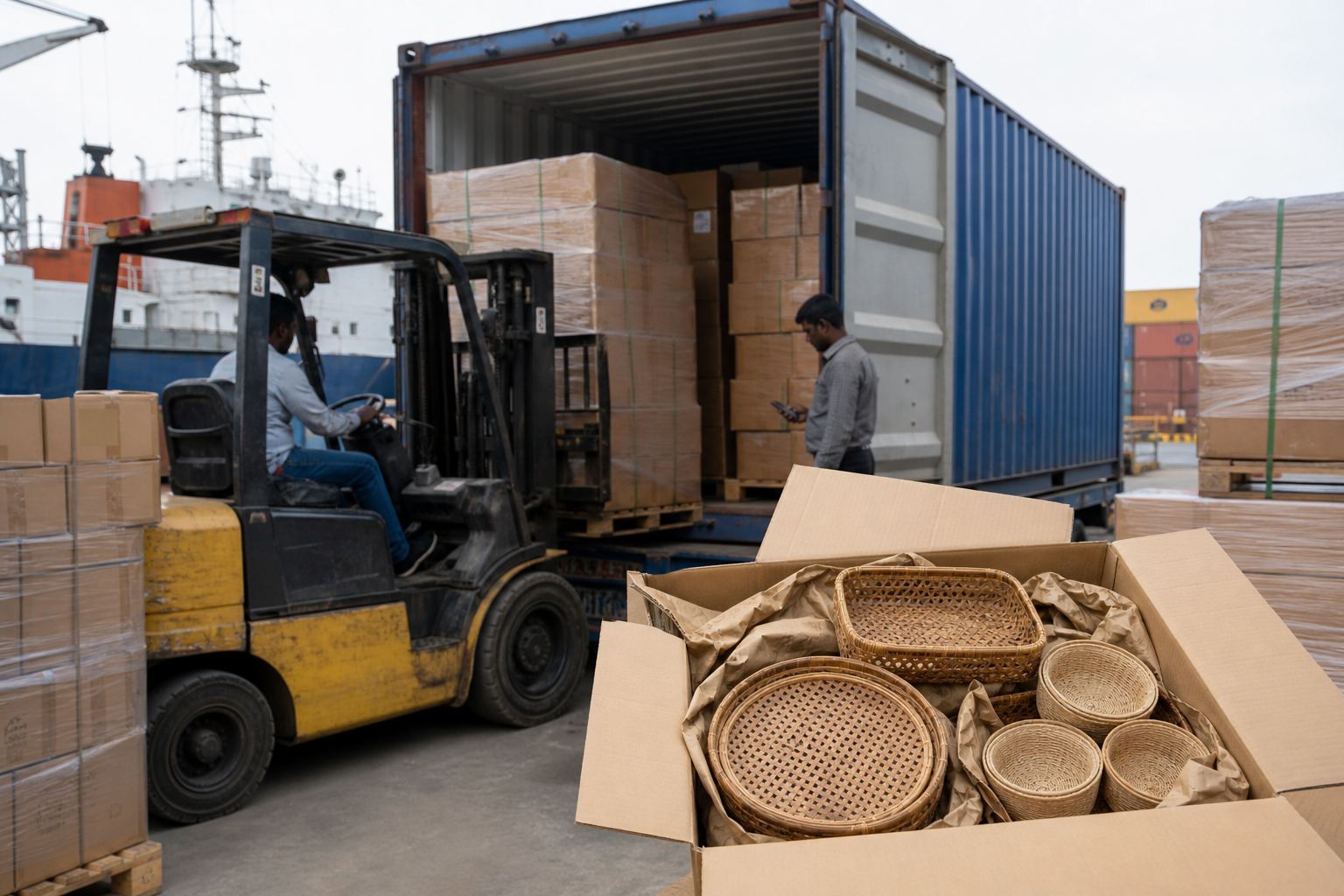
Conclusion
- Do next: Verify live EPCH registration fees and process on epch.in, then file with a complete document pack before buyer outreach or IHGF booking begins.
- Read how to export bamboo and cane handicrafts from India, most demanded Indian bamboo and cane handicrafts by country, top bamboo and cane handicraft products exported from India, best countries for Indian bamboo and cane handicraft exports, find international buyers for bamboo and cane handicrafts, source bamboo and cane handicrafts directly from India, the bamboo and cane handicraft export documentation checklist, sustainable eco-friendly bamboo and cane handicraft export opportunities, and trade shows and B2B marketplaces for bamboo and cane handicraft exporters.
- For related partnership models, see handicrafts & lifestyle products, textiles & home furnishings, merchant exporter services, export products from India, global sourcing partner, and product sourcing company.
EPCH registration for bamboo and cane handicraft exporters is the foundational institutional credential behind India's cluster-based natural-fibre supply: RCMC continuity, IHGF Delhi Fair access, market development support, and the buyer credibility that shortens the path from first inquiry to first container. The steps are clear — obtain IEC first, complete EPCH registration with a clean document pack, diary annual renewals, and pair the credential with disciplined weave, finish, moisture, and phytosanitary documentation.
Actionable next steps: verify IEC and GST consistency this week; assemble the documents from this guide; complete EPCH registration; and plan an IHGF or direct buyer-outreach cycle with graded cluster samples and a complete credential pack including Lacey Act and phytosanitary readiness. Altus Exports supports Assam, Tripura, Meghalaya, Manipur, Mizoram, West Bengal, and Kerala workshops, and merchant exporters, who need registration frameworks, product readiness, and buyer connectivity aligned to real export execution.