
Top Bamboo and Cane Handicraft Products Exported from India
By Saurabh Mittal, Founder, Altus Exports
A complete SKU catalogue of the top bamboo and cane handicraft products exported from India — woven baskets and storage, trays, planters, lanterns and lampshades, mats and screens (HS 4601), gift assortments, and cane/bamboo furniture accents (HS 940382/940383/940389) — with species pairing (Bambusa tulda, Melocanna baccifera, Calamus), cluster map, directional FOB bands, MOQ by SKU, quality grades, and buyer-channel fit from Altus Exports.
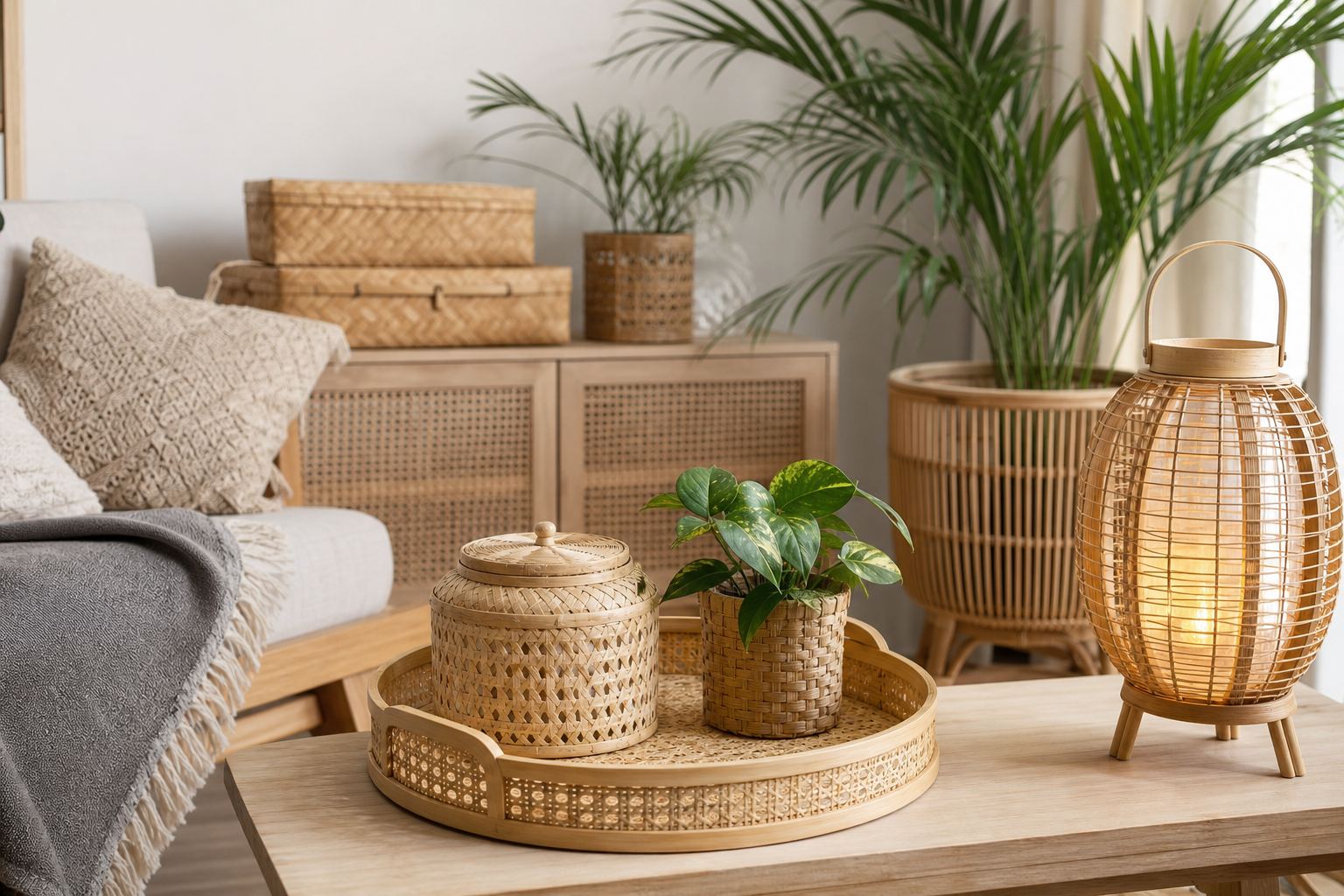
India exports a genuinely wide range of bamboo and cane handicraft products, and the single most common early mistake exporters and buyers make is treating that range as one undifferentiated natural-fibre category. An Assam open-weave utility basket in Bambusa tulda, a West Bengal cane storage tray, a Meghalaya fine-weave lantern shell, a Manipur sitalpati-style mat under HS 4601, and a Tripura or Kerala Calamus cane seating accent under HS 940383 are five entirely different commercial products — different species, different weave economics, different MOQ ladders, different pack risk, and different buyer desks. Grouping them under a single 'bamboo handicrafts' quotation almost always produces mismatched samples, wrong HS lines, and disappointed first containers.
This guide is a dedicated SKU catalogue for Indian bamboo and cane handicrafts: woven baskets and storage, trays, planters, lanterns and lampshades, mats and screens, gift assortments, and cane/bamboo furniture accents. For each family it covers the species pairing that actually works (Bambusa tulda, Melocanna baccifera, Calamus rattan/cane, and related North East/West Bengal/Kerala stocks), the primary cluster, directional MOQ and FOB bands, and which buyer channel — retail, wholesale, hospitality, outdoor lifestyle, or gifting — each product genuinely fits. Directionally, India's basketwork trade under HS 4602 stood at approximately Rs 248.08 crore in FY 2024-25 (India TradeStat, provisional); treat that figure as a floor for planning, not a ceiling, because mats, furniture accents, and Chapter 46 adjacency add commercial volume outside one line.
This guide is deliberately scoped to product and species depth. It does not own exporter registration steps, IEC or EPCH mechanics, or buyer-prospecting tactics — those live in dedicated companion guides: How to Export Bamboo and Cane Handicrafts from India for the process pillar, Most Demanded Indian Bamboo and Cane Handicrafts by Country for country × SKU demand, Best Countries for Indian Bamboo and Cane Handicraft Exports for destination ranking, and Bamboo and Cane Handicraft Export Documentation Checklist for paperwork. If you are a buyer sourcing directly, see How International Buyers Can Source Bamboo and Cane Handicrafts Directly from India.
Key Takeaways
Summary Box
Executive Summary
Summary Box
This guide catalogues the top bamboo and cane handicraft products exported from India across seven core commercial families — woven baskets and storage, trays, planters, lanterns and lampshades, mats and screens, gift assortments, and cane/bamboo furniture accents — with the species, cluster, MOQ, and buyer-channel detail needed to plan a realistic first order or full-catalogue programme. Assam and Tripura carry the bulk of mid-market basket and cane-furniture volume; Meghalaya, Manipur, and Mizoram anchor fine-weave décor, lanterns, and mats; West Bengal supplies cane storage and hospitality trays at consolidator scale; Kerala specialises in rattan structural accents where Calamus load-bearing strength is required.
The practical takeaway for buyers and exporters alike is that product-category depth, not category breadth, is what converts a first sample order into a repeatable programme. A buyer who masters one or two families — say, split-bamboo baskets under HS 46021100 plus cane trays under HS 46021200 — with verified species naming, correct MOQ expectations, and the right channel, builds a far more durable supply relationship than one who tries to source every woven SKU from a standing start.
Why SKU Taxonomy Matters
SKU taxonomy is not a cataloguing nicety — it is the difference between a clean FOB quote, a phytosanitary certificate that names the correct genus and species, and a container that arrives with weave, moisture, and classification consistent with the sample the buyer approved. A 'mixed bamboo handicraft' RFQ forces workshops to guess which weave density, rim construction, and finish chemistry you meant. A SKU-tagged RFQ — open-weave Assam laundry basket in Bambusa tulda, natural finish, 40 cm rim, moisture ceiling stated, HS 46021100 — lets Barpeta weavers, a merchant exporter, and your CHA price and document the same object.
Taxonomy also prevents HS drift. Mats and screens frequently belong under HS 4601 (plaits and similar products of plaiting materials), while baskets, trays, planters, and lantern shells made directly to shape belong under HS 4602, further split commercially into bamboo (often ITC-HS 46021100) and rattan (often ITC-HS 46021200). Cane chairs, stools, and related seating accents move under HS 94038200 (bamboo), 94038300 (rattan), or 94038900 (other) — not under miscellaneous handicrafts, and not under 94038100. Misfiling raises duty risk, slows customs, and signals to compliance-literate importers that the supplier has never actually shipped the category at scale.
Finally, taxonomy protects margin. Open utility weaves compete on landed cost per unit; fine-weave lantern shells and Calamus furniture accents compete on precision and structural integrity. Blending those economics into one price sheet either underprices labour-intensive SKUs until the workshop cannot reorder, or overprices utility baskets until US and UAE volume buyers walk away. Separate SKU families, separate weave grades, separate quotes.
Why product taxonomy changes commercial outcomes
Swipe →
Data table — swipe horizontally on small screens
| Taxonomy Decision | What Goes Wrong If Ignored | What Clarity Unlocks |
|---|---|---|
| Species named (Bambusa / Melocanna / Calamus) | Vague Lacey Act or phytosanitary text; buyer audit failure | Lot-level plant declaration and cleaner destination entry |
| SKU family separated (basket vs mat vs furniture) | Wrong HS on shipping bill; duty disputes | Correct 4601 / 4602 / 9403 path per line |
| Weave grade specified (open / tight / fine) | Sample–bulk mismatch; retail rejection | MOQ and FOB that match labour intensity |
| Cluster matched to SKU | Overpromised fine weave from a utility workshop | Lead times and capacity that hold through repeat POs |
| Pack format by SKU type | Crush, mould, or rim collapse in transit | CBM-aware packing BOMs that protect landed quality |
Core Product Categories
This is the core catalogue of this guide — each category below covers species pairing, primary cluster, directional MOQ and FOB positioning, and which buyer channel it genuinely fits. Use it to build a sample kit of two or three hero families before expanding. Full country-level demand pairing lives in Most Demanded Indian Bamboo and Cane Handicrafts by Country; this section owns product definition.
SKU × HS × cluster × buyer-fit overview
Swipe →
Data table — swipe horizontally on small screens
| SKU Family | Typical HS | Primary Cluster | Best-Fit Buyer Channel |
|---|---|---|---|
| Woven baskets & storage | 46021100 / 46021200 | Assam; West Bengal cane storage | Home-décor retail, private label, e-commerce |
| Trays | 4602 (bamboo or rattan) | West Bengal; Assam utility trays | Hospitality, tabletop retail, gifting |
| Planters & pot covers | 4602 | Meghalaya; Assam décor | Outdoor lifestyle, garden retail, hospitality |
| Lanterns & lampshades | 4602 | Meghalaya; Manipur/Mizoram fine weave | Design retail, boutique lighting, UAE gifting |
| Mats & screens | 4601 (and some 4602) | Manipur, Mizoram; West Bengal | Hospitality wall/floor, spa, décor wholesale |
| Gift assortments | 4602 mixed | Multi-cluster consolidate | Corporate gifting, festive retail, premium gift |
| Furniture accents | 94038200 / 94038300 / 94038900 | Tripura; Kerala rattan | Contract hospitality, furniture wholesale |
Woven Baskets and Storage
Woven baskets and storage bins are the volume backbone of Indian bamboo and cane handicraft exports and typically the first SKU a new buyer or exporter tests a relationship on. Assam workshops working Bambusa tulda and related Bambusa stocks specialise in open-to-tight utility weaves for laundry, pantry, and multipurpose storage; West Bengal cane units supply tighter Calamus-based storage that suits hospitality and mid-tier retail. Directional MOQ runs from 5–20 pieces at sample stage to 200–500 pieces at trial, with wholesale planned by CBM given the category's very low bulk density. Directional FOB pricing commonly sits in the US$1.20–6.50 per piece band depending on size, weave density, handle type, and finish. Baskets fit home-décor retail, private-label e-commerce, and wholesale distributors particularly well — and they are usually filed under HS 46021100 (bamboo) or 46021200 (rattan) rather than as furniture.
Trays
Serving trays, tea trays, and tabletop organisers are the natural companion SKU to baskets and are often ordered in the same trial container. West Bengal cane trays are a recognised export strength; Assam and Meghalaya units supply split-bamboo trays with a lighter, more rustic hand. Species choice matters for load-bearing: Calamus/rattan trays tolerate more repeated lifting in hospitality settings; split Bambusa trays excel in décor-forward and gifting presentations. Directional FOB commonly runs US$2.50–10.00 per piece for standard sizes, with nested sets and tight-weave hospitality specs at the upper end of the tray/planter band. Confirm whether MOQ is per piece or per nested set before planning landed cost.
Planters and Pot Covers
Planters, cachepots, and woven pot covers ride outdoor-lifestyle and hospitality demand in the USA, UK, Australia, and the UAE. Meghalaya workshops are particularly associated with décor-grade and planter formats; Assam adds higher-volume utility weaves. Buyers should specify whether the piece is decorative only or expected to hold moisture-bearing pots — liner requirements, bottom weave density, and finish chemistry change accordingly. Directional FOB often overlaps trays at roughly US$2.50–14.00 per piece depending on diameter and weave. Planters typically remain under HS 4602; do not classify a woven planter as furniture unless the construction genuinely crosses into a furniture article under Chapter 94.
Lanterns and Lampshades
Lantern shells, pendant weaves, and lampshade frames are a premium décor family where Meghalaya, Manipur, and Mizoram fine-weave skill is most commercially visible. Melocanna baccifera and carefully selected Bambusa splits support thin, even weaves that Japanese, French, and boutique European buyers reward with higher unit prices. These SKUs tolerate lower trial MOQs than utility baskets because labour intensity and defect risk are higher — expect longer lead times for consistent diameter and aperture geometry across a lot. Directional FOB spans widely with size and fineness; many commercial lantern programmes sit inside or above the mid tray/planter band once wiring kits or glass inserts are excluded from the woven shell price. Quality evaluation must include aperture consistency and rim roundness, not only overall appearance in photographs.
Mats and Screens (HS 4601)
Mats, wall screens, room dividers, and related flat or strip-woven products are the primary HS 4601 family in this catalogue — plaits and similar products of plaiting materials, whether or not assembled into strips. Manipur and Mizoram fine-weave traditions, including sitalpati-adjacent and related mat craftsmanship, are particularly relevant for hospitality and spa procurement; West Bengal and Assam also supply higher-volume mat and screen formats. Classification errors are common here: buyers sometimes file mats under 4602 because the workshop also weaves baskets. Confirm with your CHA whether the product is a plait/mat article (4601) or an article made directly to shape (4602). Directional FOB is usually quoted per piece or per square metre depending on format; MOQs often favour smaller set counts with length/width tolerances written into the PO.
Gift Assortments
Gift assortments — curated multi-piece basket + tray + small décor sets, festive hampers shells, and corporate gift stacks — are commercially important in the UAE, UK, and US seasonal retail calendars even though they are rarely a single workshop's native SKU. Assortments usually require multi-cluster consolidation under one accountable merchant exporter or export house so colour, weave grade, and packaging language stay consistent across pieces woven in Assam, Meghalaya, and West Bengal. Price the assortment as a set SKU with an explicit bill of materials; never bake the set into a vague 'mixed handicraft' line. Gift formats also drive packing upgrades (retail-ready kraft, brand cards, nested presentation) that change CBM and FOB relative to bulk utility cartons.
Cane and Bamboo Furniture Accents (HS 940382 / 940383 / 940389)
Small furniture accents — stools, side chairs, accent seating frames, and related cane/bamboo pieces — are Tripura's and Kerala's structural specialisation and should be classified under HS 94038200 (bamboo furniture), 94038300 (rattan furniture), or 94038900 (other), never under 94038100. Calamus rattan is the usual material of choice where load-bearing joints and seating strength matter; bamboo-frame accents belong where design and lightness are prioritised over continuous heavy hospitality use. Directional FOB commonly runs US$18–95 per piece depending on frame complexity, joinery, and seat weave. MOQs are lower in piece count than baskets but higher in CBM and inspection depth — evaluate joinery, foot wear points, and load stability as distinct QC gates beyond weave appearance. These SKUs fit contract hospitality, furniture wholesale, and outdoor-lifestyle retail better than small décor-only trial programmes.
Cluster × Product Map
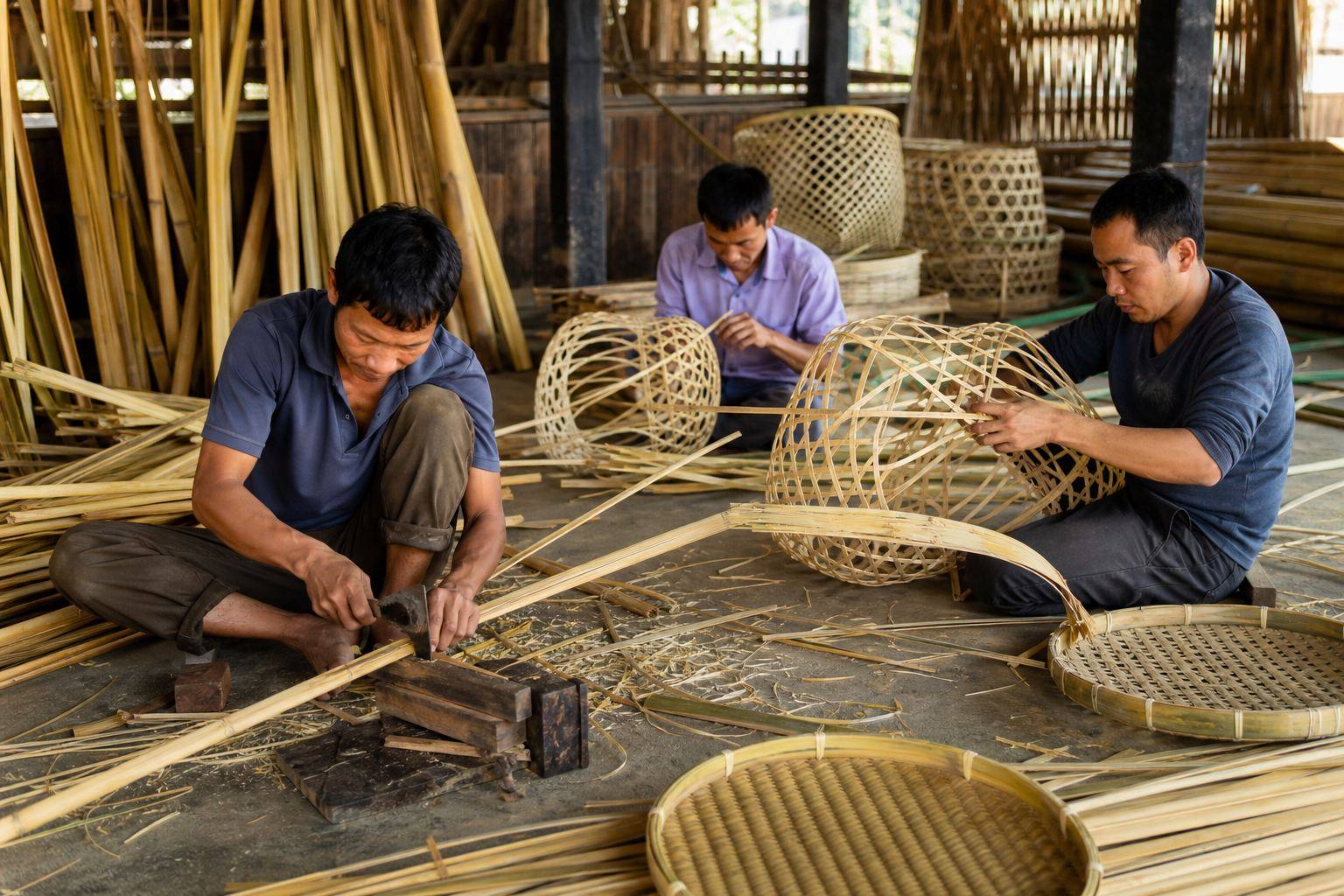
India's bamboo and cane handicraft map is cluster-specialised, not interchangeable. Buyers who ask every workshop for every SKU will get willing quotes and inconsistent bulk lots. Match the product family to the cluster that actually specialises in it, then consolidate under one export relationship if your assortment spans multiple states.
Cluster specialisation for Indian bamboo and cane export SKUs
Swipe →
Data table — swipe horizontally on small screens
| Cluster | Hero Product Types | Typical Species | Notes for Buyers/Exporters |
|---|---|---|---|
| Assam (Barpeta, Kamrup belts) | Utility baskets, storage, mid-tier trays | Bambusa tulda; other Bambusa spp. | Best volume entry for open-to-tight weaves |
| Tripura (Agartala cane belt) | Cane furniture accents, structural seating | Calamus (rattan/cane) | Strongest fit for HS 940383 programmes |
| Meghalaya (Ri-Bhoi / décor hubs) | Planters, lantern shells, décor weaves | Melocanna baccifera; Bambusa mixes | Design retail and boutique lighting |
| Manipur / Mizoram | Mats, fine weave, specialty screens | Local bamboo stocks; mat traditions | HS 4601 strength; longer fine-weave lead times |
| West Bengal | Cane baskets, trays, hospitality storage | Calamus / cane; mixed bamboo | Kolkata/Haldia consolidation advantage |
| Kerala (Nilambur / Wayanad corridor) | Rattan furniture accents, structural cane | Calamus rotang and related rattans | Load-bearing cane pieces for contract buyers |
HS Classification Guide
Compliance Notes
- Align HS across commercial invoice, packing list, shipping bill, and certificate of origin — mismatched headings between documents create friction at every major destination.
- Species on phytosanitary or Lacey Act plant declarations should match the HS path: bamboo articles should not vaguely read 'mixed cane' if the lot is Bambusa tulda.
- Furniture accents under Chapter 94 need joinery-aware QC and often different packing BOMs from HS 4602 basketwork — treat them as a separate programme line even when shipped in the same FCL.
- For process and document sequencing around these lines, see the bamboo and cane handicraft export documentation checklist.
Correct HS classification for bamboo and cane handicrafts is a commercial control, not a paperwork afterthought. Confirm the exact 8-digit ITC-HS line with your licensed CHA per SKU before the first shipping bill — especially for mixed cartons that combine mats and baskets, or basketwork and furniture accents.
Directional HS map for Indian bamboo and cane handicraft exports
Swipe →
Data table — swipe horizontally on small screens
| Heading / Line | What It Typically Covers | Common SKU Examples | Watch-Out |
|---|---|---|---|
| HS 4601 | Plaits and similar products of plaiting materials | Mats, screens, strip plaits | Do not default mats into 4602 without CHA review |
| HS 4602 | Basketwork, wickerwork, articles made to shape | Baskets, trays, planters, lantern shells | Dominant commercial heading for woven artware |
| 46021100 (bamboo) | Basketwork of bamboo | Assam/Meghalaya split-bamboo pieces | Name Bambusa / Melocanna on plant docs |
| 46021200 (rattan) | Basketwork of rattan | West Bengal/Tripura cane trays & storage | Name Calamus on plant docs |
| 94038200 | Bamboo furniture | Bamboo-frame stools / accents | Never substitute 94038100 |
| 94038300 | Rattan furniture | Cane chairs, rattan seating accents | Tripura/Kerala structural programmes |
| 94038900 | Other furniture (within bamboo/cane programmes) | Mixed-frame accents as CHA directs | Use only when bamboo/rattan lines do not fit |
Quality Grades and Weave Standards
- Request moisture readings and pest-treatment evidence alongside physical samples for every grade — inadequately cured culms crack, mould, or harbour insects regardless of weave beauty.
- Measure rim diameter, height, and weight bands on samples and write AQL-style tolerances into the trial PO before scaling.
- Fine-weave capacity in Manipur, Mizoram, and Meghalaya specialist units is finite; book premium capacity early rather than expecting Assam utility workshops to upgrade density overnight.
Quality in bamboo and cane is primarily weave consistency, moisture discipline, pest-free material, and rim/joint integrity — not shine. Define grade language in the PO so 'export quality' is not a subjective workshop adjective.
Directional quality grades for bamboo and cane export SKUs
Swipe →
Data table — swipe horizontally on small screens
| Grade Band | Typical Weave | Best-Fit SKUs | Buyer Expectation |
|---|---|---|---|
| Utility / open weave | Visible gaps, faster weave cycles | Laundry baskets, bulk storage | Price-led US/UAE volume retail |
| Standard tight weave | Even tension, neat rims | Trays, mid décor baskets, planters | Mainstream home-décor programmes |
| Fine weave | High strand density, precise apertures | Lantern shells, boutique décor, mats | Japan, France, German specialty, UAE gifts |
| Structural cane grade | Calamus frame + seating weave integrity | Furniture accents (940383) | Hospitality load and abrasion resistance |
| Gift presentation grade | Colour-matched lots, finish neatness | Assortments, retail-ready sets | Festive and corporate gifting calendars |
Packaging by SKU Type
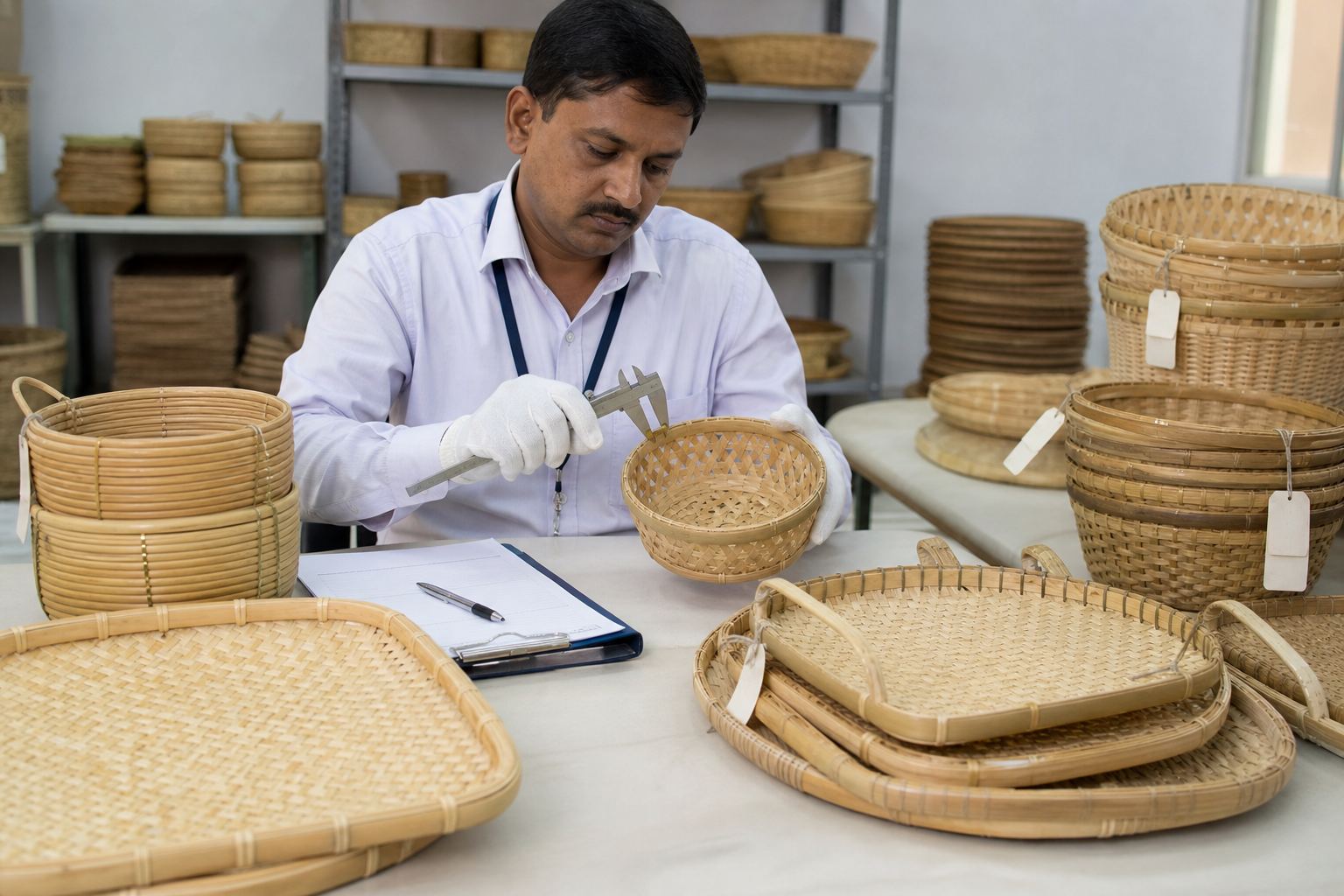
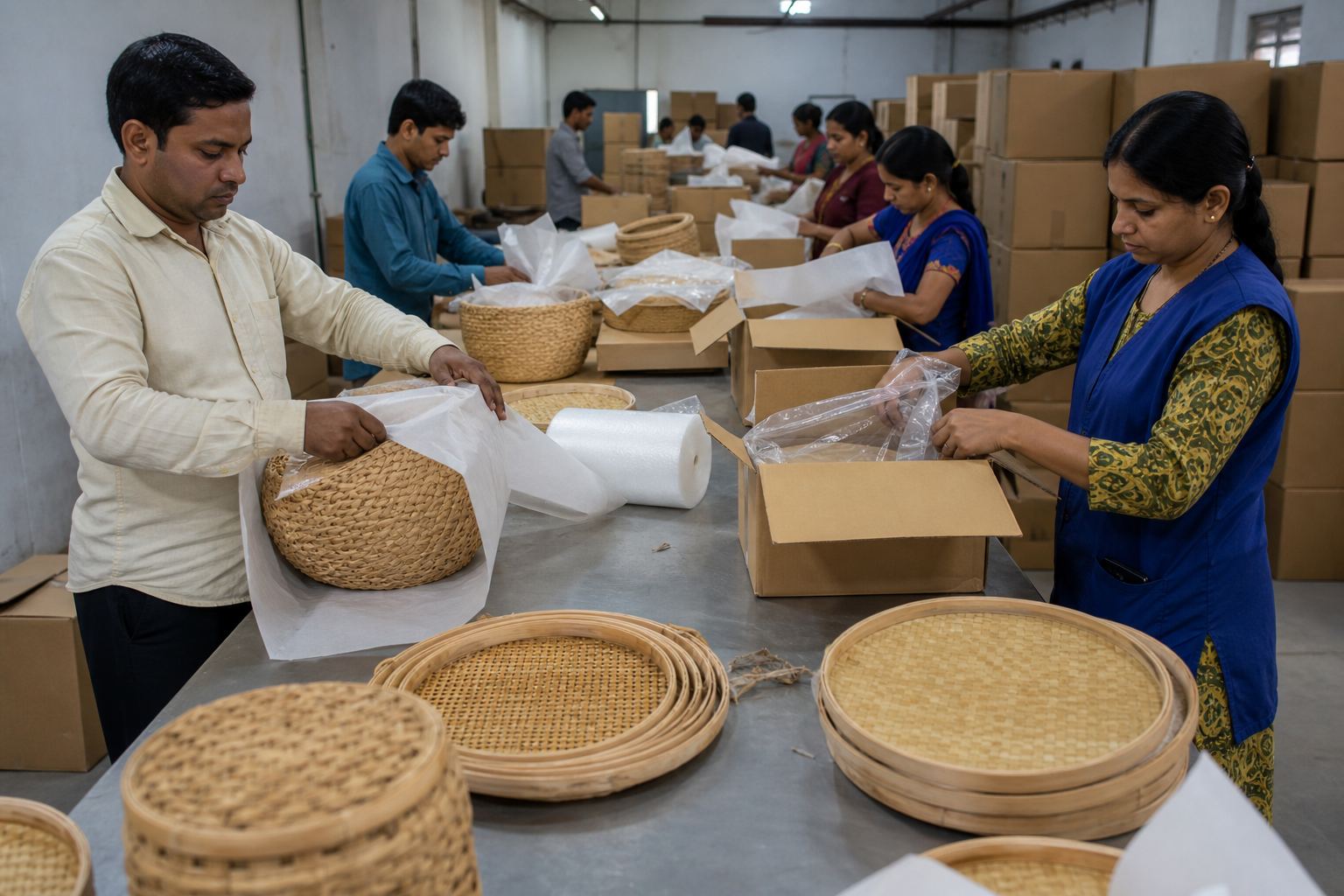
Bamboo and cane are crush- and moisture-sensitive. Packaging must be SKU-specific: nestable baskets need different internal protection than lantern shells or cane stools. ISPM-15 stamped wood packing applies wherever wooden pallets or crates are used.
Packaging guidance by bamboo and cane SKU family
Swipe →
Data table — swipe horizontally on small screens
| SKU Family | Recommended Inner Pack | Key Risk Controlled |
|---|---|---|
| Baskets & storage | Kraft/foam wrap; nest by size where design allows | Rim crush and surface abrasion |
| Trays | Corner protectors + layer dividers | Warping pressure and edge fray |
| Planters | Rigid side support; poly liner if moisture risk | Ovalisation and mould in humidity |
| Lanterns / lampshades | Individual rigid shells or formed inserts | Aperture collapse and dusting |
| Mats / screens | Flat-pack rolls or boards with edge wrap | Crease marks and corner tear |
| Gift assortments | Retail-ready sets with void fill + brand card | Presentation damage and mixed-SKU scuff |
| Furniture accents | Shrink/pallet with foot and joint guards | Frame racking and seat abrasion |
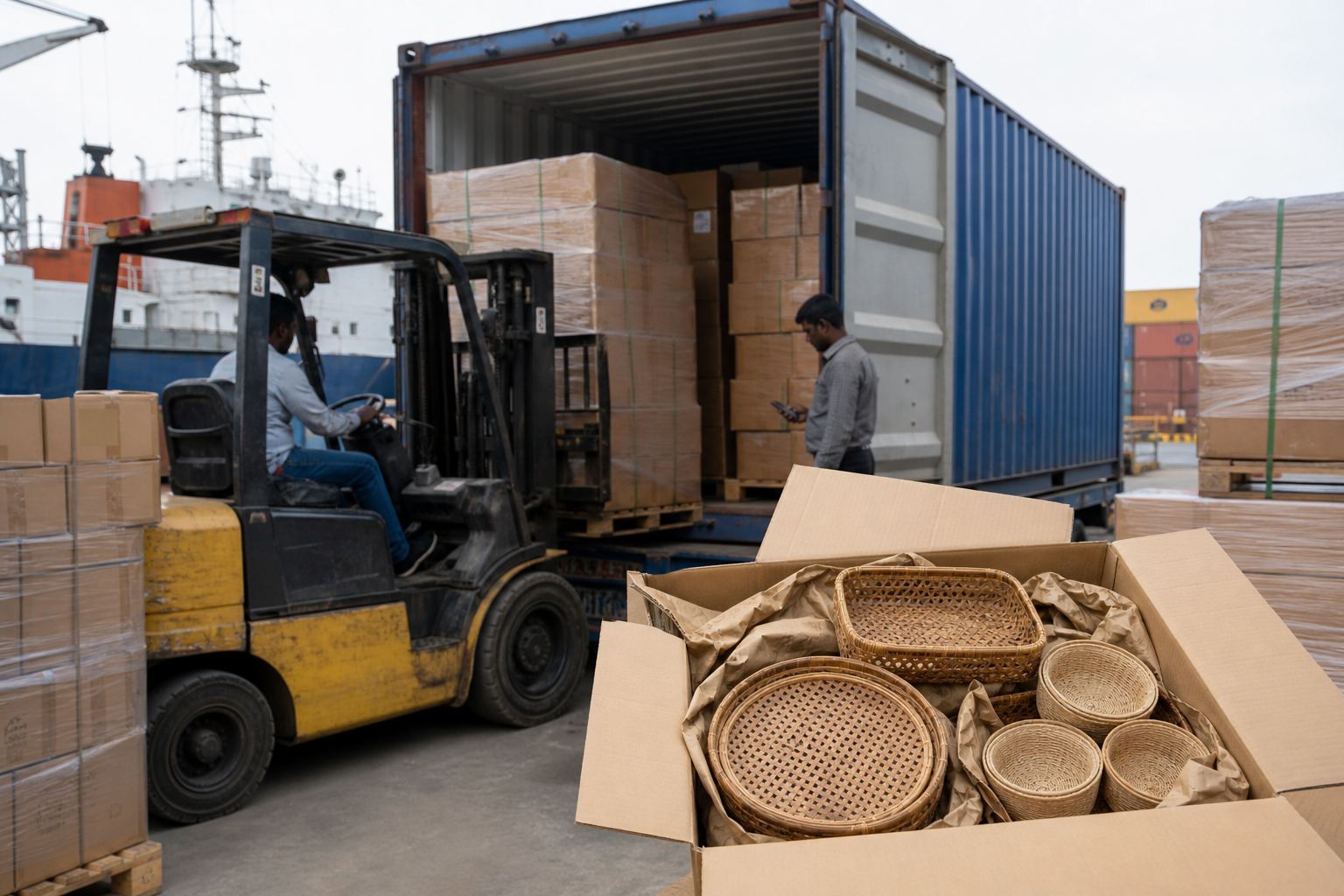
| All categories (outer) | Corrugated cartons + ISPM-15 pallets/crates | Ocean crush + phytosanitary packing marks |
Pricing and MOQ Notes
Pricing across this catalogue is driven by species (split bamboo vs Calamus), weave labour intensity, finish, and pack format — not by a single 'bamboo handicraft' index. Request FOB broken out by specific SKU, size, and grade. Figures below are directional planning bands in US dollars FOB India, not binding offers; validate against current cluster capacity, dye/finish specs, and load-port terms (commonly Kolkata/Haldia for North East and West Bengal programmes, with Nhava Sheva/Mundra or ICD consolidation when programmes mix western routes).
TradeStat context for commercial planning: HS 4602 basketwork was approximately Rs 248.08 crore in FY 2024-25 (directional/provisional). That scale supports serious assortment programmes, but price realisation still depends on SKU honesty — utility baskets and fine-weave lanterns do not share one margin structure.
Directional FOB bands
Directional FOB pricing bands by SKU family (US$)
Swipe →
Data table — swipe horizontally on small screens
| SKU Family | Directional FOB Band | Primary Price Drivers |
|---|---|---|
| Woven baskets & storage | US$1.20–6.50 / pc | Size, weave density, handles, finish |
| Trays | US$2.50–10.00 / pc | Rattan vs bamboo, nesting, hospitality grade |
| Planters & pot covers | US$2.50–14.00 / pc | Diameter, liner needs, décor weave |
| Lanterns & lampshades | US$4.00–18.00 / pc (shell-only common) | Fine-weave labour, aperture precision |
| Mats & screens | Quoted / pc or / m² (wide spread) | Width, weave density, HS 4601 format |
| Gift assortments | Set price (sum of BOM + pack uplift) | Piece mix, retail packing, colour match |
| Furniture accents | US$18–95 / pc | Joinery, Calamus grade, seat weave |
Use these bands for RFQ framing and landed-cost modelling only. Premium dye/lacquer programmes, retail-ready gift packs, and FSC-adjacent or private-label finishes sit above the open-weave utility midpoints.
Directional MOQ by stage
Directional MOQ by SKU family and transaction stage
Swipe →
Data table — swipe horizontally on small screens
| SKU Family | Sample MOQ | Trial MOQ | Notes |
|---|---|---|---|
| Baskets / storage | 5–20 pcs | 200–500 pcs | Wholesale by CBM; nest to raise carton density |
| Trays / planters | 5–20 pcs | 200–500 pcs | Confirm nested-set counting rules |
| Lanterns / fine weave | 3–15 pcs | 50–200 pcs | Lower piece MOQ; longer lead time |
| Mats / screens | 3–10 pcs or 1–2 sets | 50–200 units | Dimension tolerances critical |
| Gift assortments | 2–5 sets | 50–150 sets | Multi-cluster BOM discipline required |
| Furniture accents | 1–5 pcs | 20–50 pcs | Inspect joinery; plan by CBM not piece count |
Confirm whether nested or set SKUs count per piece or per set before locking trial budgets. Furniture accents and fine-weave lanterns should not inherit basketpiece MOQ assumptions.
Buyer Matching by Market
Market fit is SKU-specific. Use the matrix below as a directional planner alongside the fuller country demand analysis in Most Demanded Indian Bamboo and Cane Handicrafts by Country and destination ranking in Best Countries for Indian Bamboo and Cane Handicraft Exports. Soft claims only — validate with current EPCH intelligence, TradeStat updates, and buyer conversations.
Directional SKU strength by destination market
Swipe →
Data table — swipe horizontally on small screens
| Market | Strongest SKU Families | Compliance / Channel Note |
|---|---|---|
| USA | Baskets, storage, planters, trays | Lacey Act plant declaration; private-label volume |
| Germany / Netherlands | Tight/fine weave, traceable décor, cane storage | Phytosanitary discipline; sustainability narrative |
| UK | Tight-weave baskets, cane trays, lanterns | Post-Brexit docs separate from EU templates |
| France | Fine-weave lanterns, design décor | Boutique, story-driven ranges over broad catalogues |
| UAE | Cane trays bulk + gift assortments / lanterns | Dual hospitality + premium gifting pattern |
| Australia | Baskets, trays, planters (plain natural) | Strict biosecurity / BICON pathway |
| Canada | Baskets, storage, trays | Similar to USA at smaller scale |
| Japan | Fine-weave lanterns, mats, precision décor | Highest quality bar; small trials first |
Common Mistakes
Common Mistakes Box
Product-selection mistakes recur across nearly every first multi-SKU bamboo and cane programme. Anticipating them saves renegotiation cycles and rejected lots.
Common bamboo and cane product mistakes and how to avoid them
Swipe →
Data table — swipe horizontally on small screens
| Mistake | Consequence | How to Avoid It |
|---|---|---|
| Requesting a blended 'bamboo handicrafts' quote | Incomparable pricing; wrong weave grade shipped | Specify SKU family, species, weave, size, finish |
| Filing mats under 4602 or furniture under 4602 by habit | Duty and documentation friction | Triage 4601 / 4602 / 940382–940389 with CHA |
| Using HS 94038100 for bamboo/cane seating | Misclassification risk | Use 94038200 / 94038300 / 94038900 as applicable |
| Assuming Assam can match Meghalaya fine weave at utility price | Sample–bulk failure; missed JP/FR programmes | Match cluster to grade honestly |
| Skipping moisture and pest-treatment evidence | Mould/insect discovery at destination | Bake treatment + moisture into sample approval |
| Planning furniture accents like basketpiece counts | Underestimated CBM and QC cost | Quote and inspect furniture as structural SKUs |
| Ignoring gift-pack CBM uplift | Landed-cost surprises on UAE/US festive sets | Price assortment BOM including retail pack |
How Altus Helps
- SKU shortlist and sample-kit design by weave grade and species
- Cluster matching across Assam, Tripura, Meghalaya, Manipur, Mizoram, West Bengal, and Kerala
- Directional FOB / MOQ structuring per family (baskets vs lanterns vs furniture accents)
- HS triage support for 4601, 46021100/46021200, and 94038200/94038300/94038900 programmes
- Packaging BOM advice for crush, moisture, and ISPM-15 compliance
- Merchant-export consolidation for multi-cluster assortments and gift sets
Altus Exports operates as a merchant exporter in India and global sourcing partner for bamboo and cane handicraft programmes — helping international importers and Indian exporters turn SKU taxonomy into shippable purchase orders rather than catalogue photographs.
For buyers, Altus maps target assortments to verified Assam, Tripura, Meghalaya, Manipur, Mizoram, West Bengal, and Kerala workshops; structures sample kits by weave grade and species; coordinates moisture, pest-treatment, and phytosanitary readiness; and consolidates multi-cluster gift or mixed-SKU containers under one accountable export relationship. For Indian exporters and workshops, Altus helps shortlist hero SKUs that match actual cluster strength, quote FOB and MOQ by product family, align HS 4601/4602/9403 lines with CHA practice, and present assortments that USA, EU, UK, UAE, Australia, Canada, and Japan buyers can evaluate without category confusion.
Explore export products from India, product sourcing company in India, find manufacturers in India, and the handicrafts & lifestyle products industry page — or contact Altus Exports with your target SKU list and destination market for a cluster-fit recommendation.
Expert Insights
Expert Insight Box
Altus Exports works with international buyers and Indian bamboo and cane workshops across this full product range, helping match SKU selection, species naming, and MOQ planning to the buyer channel each family genuinely fits — rather than forcing every inquiry into one blended natural-fibre quotation.
Conclusion
- Next step: Send your target SKU family, species preference, and destination market to Altus Exports for a cluster-fit recommendation — contact us.
- Read How to Export Bamboo and Cane Handicrafts from India for the complete registration-to-shipment process.
- Rank destinations with Best Countries for Indian Bamboo and Cane Handicraft Exports.
- Match SKUs to markets with Most Demanded Indian Bamboo and Cane Handicrafts by Country.
- Build buyer pipeline with Find International Buyers for Bamboo and Cane Handicrafts.
- Prepare paperwork with the Bamboo and Cane Handicraft Export Documentation Checklist.
- Buyer-side operations: Source Bamboo and Cane Handicrafts Directly from India.
- Explore merchant exporter, global sourcing partner, product sourcing company, and handicrafts & lifestyle products.
The top bamboo and cane handicraft products exported from India — woven baskets and storage, trays, planters, lanterns and lampshades, mats and screens, gift assortments, and cane/bamboo furniture accents — each carry a distinct species profile, cluster home, MOQ economics, pack risk, and buyer-channel fit. Specify the exact SKU family, name genus and species where relevant (Bambusa tulda, Melocanna baccifera, Calamus), confirm HS under 4601, 4602 (46021100/46021200), or 94038200/94038300/94038900, and grade weave honestly before you negotiate FOB.
This guide is the product and species catalogue for the bamboo and cane handicraft cluster on this site. Directionally, HS 4602 trade around Rs 248.08 crore in FY 2024-25 shows there is real commercial depth — but depth converts only when taxonomy, cluster matching, and packaging discipline stay ahead of volume enthusiasm. For registration, process, and buyer-development depth, continue with the companion guides below, or share your target SKU and destination market with Altus Exports for a supplier-fit recommendation.