
Sustainable Eco-Friendly Bamboo and Cane Handicraft Export Opportunities from India
By Saurabh Mittal, Founder, Altus Exports
A dedicated guide to honestly-substantiated sustainable bamboo and cane handicraft export from India — renewable-material narratives, species traceability, natural-versus-treated finish disclosure, green private-label programme structure, plant-health documentation, and the greenwashing risks that end otherwise profitable buyer relationships.
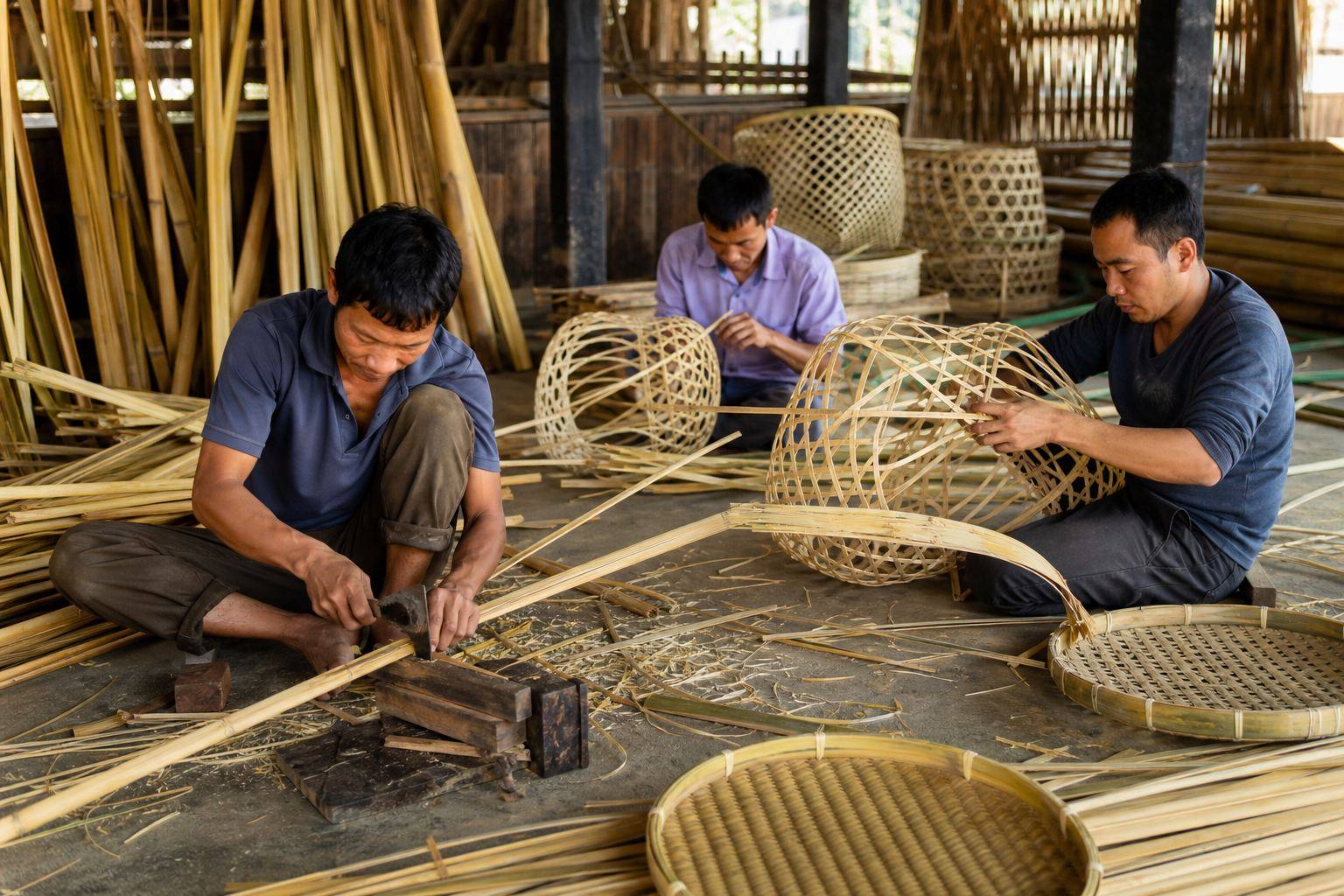
Sustainable bamboo and cane handicraft export from India is one of the few natural-fibre stories in global trade where the underlying material actually earns the premium eco-narrative it is used to sell — provided the exporter tells the truth about species, harvest practice, finish chemistry, and plant-health documentation. Bamboo is a grass (not a tree), regenerating from rhizome after harvest in 3–5 years for many commercial species. Cane (rattan) is a climbing palm harvested by cutting mature stems from wild or managed forest without killing the plant. Both are botanically distinct from timber and neither falls under most timber-focused regulation — but each carries its own set of substantiation requirements that buyers in USA, Germany, UK, Netherlands, France, UAE, Australia, Canada, Japan increasingly audit before signing a green private-label programme.
This guide is dedicated entirely to the sustainability and honesty layer of Indian bamboo and cane exports — renewable-material claims, species traceability across Bambusa balcooa, Bambusa tulda, Dendrocalamus hamiltonii, Dendrocalamus strictus and beyond, natural-versus-treated finish disclosure, harvest-practice honesty for North East India and Kerala clusters, green private-label programme structure, plant-health documentation, and the greenwashing risks that end otherwise profitable buyer relationships. It is not a general export process guide, it is not a documentation template library, and it deliberately does not copy the FSC-and-EUDR wood essay — because bamboo is grass and cane is palm, and treating them as timber in a sustainability essay is precisely the kind of category error that damages buyer trust.
For the standard operational export process, read How to Export Bamboo and Cane Handicrafts from India. For the SKU catalogue, see Top Bamboo and Cane Handicraft Products Exported from India. For buyer discovery and outreach tactics, read the companion guide, How to Find International Buyers for Bamboo and Cane Handicrafts. For EPCH registration mechanics, see EPCH Registration Benefits for Bamboo and Cane Handicraft Exporters. For pre-shipment paperwork, see Bamboo and Cane Handicraft Export Documentation Checklist.
Altus Exports operates as a merchant exporter in India and global sourcing partner, coordinating honest species declarations, harvest-practice traceability, natural-finish disclosure, and phytosanitary-aligned paperwork for buyers and Indian workshops that want to build durable green programmes without greenwashing exposure.
Key Takeaways
Summary Box
Executive Summary
Summary Box
Sustainability positioning for Indian bamboo and cane exports has moved from a marketing tagline to a purchasing criterion that premium USA, EU, UK, Australian, Canadian, and Japanese buyers now audit before finalising private-label programmes. Four distinct pillars define the honest opportunity: a genuine renewable-material narrative rooted in the botanical reality of bamboo as a rapidly regenerating grass and cane as a non-lethally harvested climbing palm; species traceability at the lot level across the specific bamboos and rattans that Indian clusters actually work with; finish-chemistry disclosure that distinguishes natural, treated, dyed, and lacquered surfaces without pretending untreated bamboo is possible for every SKU; and plant-health documentation aligned to destination phytosanitary regimes.
None of these pillars functions as marketing veneer. Sustainability-literate buyers — particularly retail chains and hospitality procurement teams operating under their own ESG reporting obligations and increasingly under formal anti-greenwashing rules in their home markets — audit supplier claims before finalising or repeating programmes. Exporters who invest in genuine species declarations, harvest-practice records, honest finish disclosure, and complete plant-health paperwork earn premium FOB and durable retail placement. Exporters who claim sustainability without evidence risk contract termination at first audit and reputational damage that outlasts any single order.
This guide walks through the market context for green bamboo and cane, the botanical reality that separates plaiting materials from timber, honest renewable-material narratives, species traceability workflows, harvest-practice honesty for North East India and Kerala clusters, finish-chemistry disclosure, plant-health documentation, green private-label programme structure, pricing and margin logic, and destination-specific opportunity — closing with sourcing and compliance checklists for both buyers and exporters building this tier without greenwashing exposure.
Market Size & Industry Overview
Key Statistics
India's bamboo and cane handicraft exports concentrate under HS 4601 (plaits) and HS 4602 (basketwork), with cane furniture under HS 94038200/94038300. HS 4602 alone contributed approximately Rs 248 crore in FY 2024-25 as a directional figure. Inside that base, the honestly-substantiated green tier is a smaller but faster-growing slice, driven by consumer shifts toward plastic-alternative and biodegradable-adjacent home décor, sustainable-retail chain expansion, and increasingly formal anti-greenwashing rules in destination markets that penalise vague or unverifiable eco claims on retail packaging.
India's competitive position in this tier is genuinely strong because the country's cluster geography maps to species-diverse, low-input harvest systems. North East India's Assam, Tripura, Meghalaya clusters draw on species like Bambusa balcooa, Bambusa tulda, Dendrocalamus hamiltonii, Dendrocalamus strictus, Melocanna baccifera (muli) that regenerate from rhizome without replanting after harvest, while West Bengal aggregates raw material for consolidation and Kerala contributes cane weaving and mat-making using Calamus tenuis and related rattans harvested by cutting mature stems from managed groves. Vietnam, Indonesia, China, the Philippines, and Thailand compete — but few origins can match the North East India botanical species range paired with cluster livelihoods narrative that international sustainable-retail buyers are willing to reference by name.
Sustainable Bamboo & Cane Market Snapshot
Swipe →
Data table — swipe horizontally on small screens
| Segment | Growth Direction | India Fit |
|---|---|---|
| Honest renewable-material narrative décor | High growth (consumer + retail-led) | Strong — bamboo grass biology supports the claim |
| Species-traceable bamboo baskets | Rising (green private-label led) | Strong — NE India species diversity |
| Non-lethally harvested cane / rattan | Rising (sustainable-forest narrative) | Selective — Kerala cane + imported rattan mix |
| Natural-finish (untreated) décor | Rising but SKU-limited | Moderate — pest risk restricts SKU range |
| Honestly-disclosed treated / lacquered | Steady | Strong — most workshops already do this well |
| Green private-label hospitality amenity | Rising | Strong — aligns with cluster + species story |
| Unsubstantiated 'eco' or 'biodegradable' claims | Falling (buyer + regulator scrutiny) | Avoid — greenwashing risk exceeds premium |
The Botanical Reality: Why Bamboo & Cane Are Not Timber
The single most important framing point for any honest bamboo and cane sustainability programme is what these materials actually are botanically — because most global sustainability frameworks, most retail-buyer eco checklists, and most anti-greenwashing regulators treat plant-material categories differently, and lumping bamboo or cane in with timber invites both category-error and factual challenges.
Bamboo Is a Grass (Poaceae), Not a Tree
Bamboo belongs to the grass family Poaceae. Commercial Indian species — Bambusa balcooa, B. tulda, Dendrocalamus hamiltonii, D. strictus, Melocanna baccifera (muli) — grow from rhizome (underground stem) systems and regenerate stems (culms) annually. Harvesting a mature culm does not kill the plant; the rhizome continues producing new culms year on year. Commercial rotation cycles are typically 3–5 years for many species, versus 25–40+ years for common tropical hardwoods used in wooden décor. This regeneration reality is what supports the honest 'renewable material' narrative — and it is why timber-focused certifications (FSC, EUDR, forest-management-unit frameworks) do not map neatly onto bamboo the way they map onto teak or oak.
Rattan Cane Is a Climbing Palm (Arecaceae), Not a Tree Either
Rattan, commonly called cane in Indian trade, is a group of climbing palms in the family Arecaceae. Genera include Calamus, Daemonorops, Korthalsia, and others; the Indian trade primarily uses Calamus tenuis and related species along with imported rattan from Indonesia and Vietnam for finer work. Rattan is harvested by cutting mature stems from wild or managed forest; the plant does not die from single-stem harvest. Sustainability in rattan therefore hinges on harvest-practice rigour (managed groves, cutting cycles, minimum stem diameter) rather than replanting-based forest management. Presenting rattan as 'timber' in eco copy is factually wrong.
What Does Not Apply the Same Way
Because bamboo and cane are not timber, several timber-focused instruments either do not apply, apply differently, or apply only through carve-out provisions:
Timber Regulation Fit — Confirm Per Shipment
- FSC chain-of-custody was originally built for timber; FSC does offer bamboo scope but it is not the default assumption and coverage varies — do not claim FSC on a bamboo shipment unless the specific FSC scope covers bamboo articles for your certificate
- EU Deforestation Regulation (EUDR) product scope for bamboo is narrower than for wood and coffee/cocoa/soy — confirm current scope directly with the EU importer per HS code rather than assuming timber-equivalent obligations
- US Lacey Act harvest-legality rules apply to plant products; APHIS cultivation nuances determine whether a PPQ 505 declaration filing is required
- ISPM-15 applies to solid-wood packaging (pallets, crates); bamboo itself is not wood, but any wooden pallets or inner supports used with bamboo/cane shipments still require ISPM-15-compliant treatment marks
- Phytosanitary certificate from NPPO India applies to almost all bamboo and cane consignments as plant material
What Does Apply Distinctly to Bamboo & Cane
- Species declaration for phytosanitary and Lacey Act purposes
- Pest-treatment attestation (borax-boric soak, kiln/sun-cure) for pest freedom
- Moisture-content records for both quality and post-harvest handling
- Harvest-practice narrative honestly stating whether raw material is farmed, managed-forest, or wild-collected
- Finish-chemistry disclosure where any treatment goes beyond mechanical seasoning
Honest Renewable-Material Narrative
The renewable-material story for bamboo and cane is genuinely strong when told accurately — and legally risky when told sloppily. Buyers and increasingly regulators (EU CSRD-adjacent disclosures, UK CMA green-claims code, Australian ACCC greenwashing enforcement, US FTC Green Guides) are converging on the same test: the claim must be substantiated, specific, and not misleading in context.
What You Can Honestly Say
- Bamboo is a fast-growing grass that regenerates from rhizome after harvest, typically on 3–5 year commercial cycles for the Indian species we source — with the specific species named
- Rattan cane is harvested from wild or managed forest by cutting mature stems; the plant is not killed by single-stem harvest
- Our material comes from named clusters in Assam / Tripura / Meghalaya / West Bengal / Kerala with documented artisan livelihoods
- This SKU uses [natural / borax-boric-treated / sun-cured / dyed / lacquered] finish — honestly stated
- Phytosanitary certificate from NPPO India accompanies every shipment
What You Must Not Claim Without Substantiation
- 'Carbon-negative' or 'carbon-neutral' unless the exporter holds an independently verified lifecycle assessment covering harvest, transport, treatment, and packaging
- '100% biodegradable' when the finished product carries a lacquer, adhesive, or synthetic dye that changes the disposal profile
- 'Plastic-free' when export packing uses poly liners, poly wrap, or plastic desiccant sachets
- 'Chemical-free' when borax-boric or any pest treatment has been applied
- 'FSC-certified' unless the specific FSC scope covers bamboo articles for the exporter's certificate
- 'Zero-deforestation' as a standalone claim — the concept applies to timber crops, not grass biology; use accurate botanical language instead
- 'Traditional' or 'ancestral' harvest without lot-level documentation of the actual harvest method used
Cluster Livelihoods Narrative — When Honest, When Not
North East India's bamboo and cane clusters support artisan livelihoods that international sustainable-retail buyers value and reference in their retail-facing storytelling. This narrative is honest when the exporter actually sources from named clusters, pays fair rates, and can document supplier relationships lot-by-lot. It becomes greenwashing when a Delhi trader with no line-of-sight to actual weavers markets their goods as 'North East artisan-made' without verifiable sourcing — a pattern buyers with cluster-visit experience recognise immediately.
Species Traceability & Harvest Practices
Species traceability is the operational backbone of an honest bamboo and cane sustainability programme. It also happens to be the operational backbone of correct phytosanitary certificate scope and Lacey Act declaration accuracy for US-bound shipments — so it earns its keep operationally, not only in marketing.
Species You Are Likely to Actually Work With
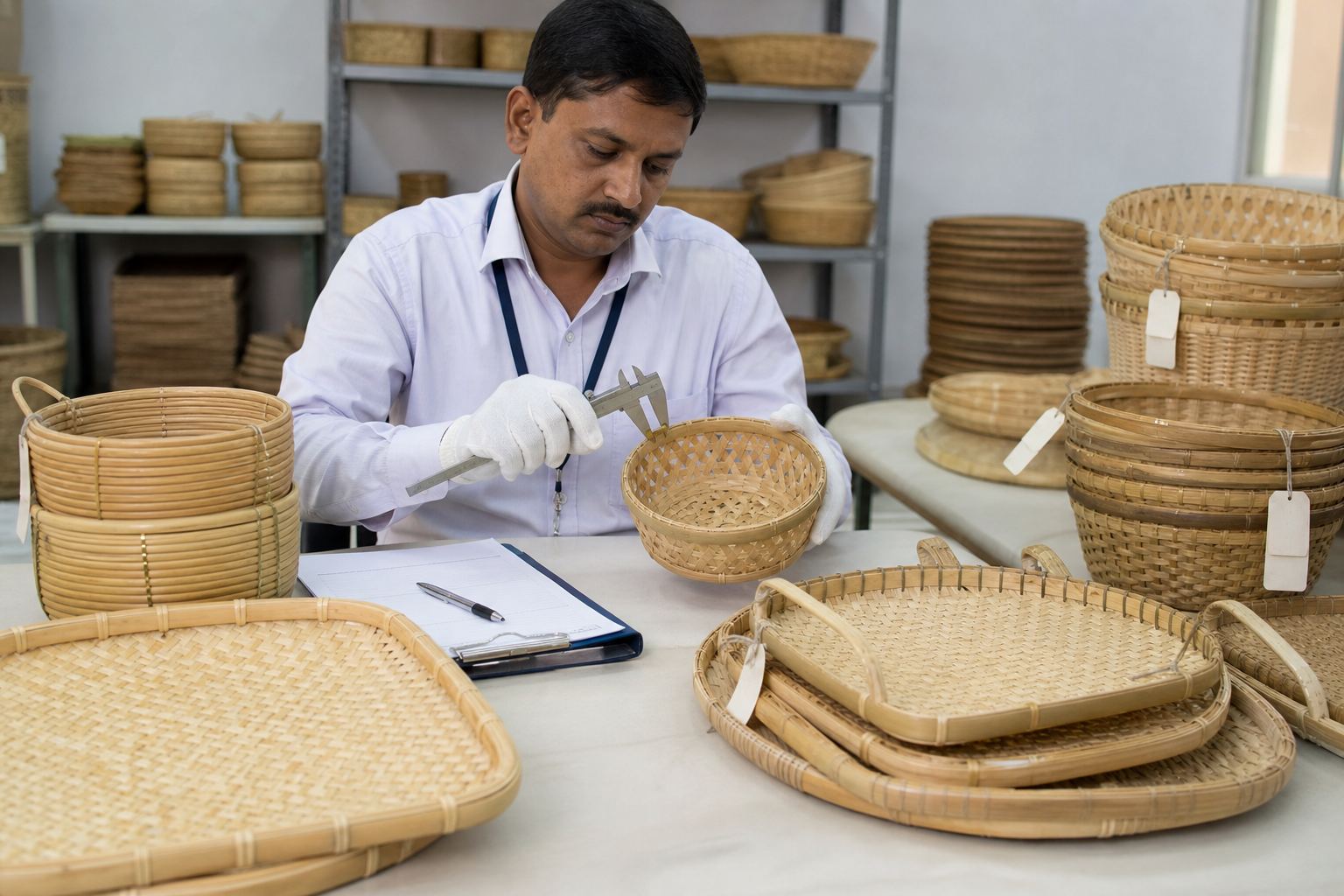
Common Indian commercial bamboo and cane species include Bambusa balcooa, Bambusa tulda, Dendrocalamus hamiltonii, Dendrocalamus strictus, Melocanna baccifera (muli), Calamus tenuis (cane/rattan), plus imported rattans from Indonesia and Vietnam used in higher-end cane furniture. Each has distinct cell wall structure, fibre length, tensile behaviour, and finish response — which means each has slightly different lifecycle, treatment, and disclosure implications.
Lot-Level Species Declaration Workflow
- Record species at raw-material intake by cluster and supplier
- Cross-check with the artisan/weaver's identification and (where possible) with a botanical reference photograph
- Retain intake weight, moisture reading, and treatment log per lot
- Link intake lot to production run and finished-goods dispatch batch
- Retain evidence for buyer audits and phytosanitary inspector queries
Harvest-Practice Honesty
Not every bamboo culm on the market is harvested to the same standard. Honest disclosure separates farmed bamboo plantations, community-managed groves under state forest cooperatives, wild-harvest under permitted cutting cycles, and (rarely, and to be avoided) undocumented collection. Buyers with retail-audit-grade sustainability policies increasingly require the exporter to state which model the raw material comes from — and reject vague answers.
Bamboo Harvest Practice Disclosure
- Farmed plantation (documented, replanted rotation)
- Community-managed grove (state cooperative or JFM structure)
- Wild-managed harvest under permit (specify permit authority)
- Rotation cycle stated by species (typically 3–5 years for commercial Indian species)
- Cutting-height and minimum-diameter discipline stated
Cane / Rattan Harvest Practice Disclosure
- Managed grove under forest department oversight or private managed plot
- Wild-collected under permit (specify)
- Mature-stem cutting only; plant not killed
- Minimum stem diameter maintained per species
- Imported rattan (Indonesia/Vietnam) declared as imported with country of harvest
Finish Chemistry & Honest Disclosure
Finish chemistry is where most bamboo and cane greenwashing actually happens — quietly, in the space between what the retail label says and what the workshop actually did. Untreated bamboo attracts bamboo shot-borer, mould, and fungal staining in humid transit lanes; almost every commercial export SKU therefore carries some form of treatment. Honest disclosure separates programmes that survive retail audit from programmes that fail it.
Common Finishes in Indian Bamboo & Cane Workshops
- Sun-cured / naturally aged — no chemical treatment; SKU-limited due to pest and mould risk
- Borax-boric soak (BAT — borax-boric-acid treatment) — industry-standard pest protection; must be disclosed if 'chemical-free' is claimed anywhere in the buyer copy
- Smoke curing — traditional treatment; disclose where used
- Kiln or air seasoning — mechanical moisture reduction; no chemistry
- Natural oil / wax finish — disclose oil source (linseed, mineral, etc.)
- Water-based lacquer or clear coat — disclose
- Solvent-based lacquer — disclose (typically less compatible with premium eco positioning)
- Aniline / synthetic dye — disclose (usually incompatible with 'natural' claims)
- Vegetable dye — disclose dye source
Why 'Silence on Finish' Is Greenwashing Risk
A common pattern in Indian bamboo and cane export copy is to celebrate 'natural material' while remaining silent on the finish. Regulators in the EU (via emerging Green Claims Directive), UK (CMA green-claims code), Australia (ACCC), and the US (FTC Green Guides) increasingly treat this as misleading. If the SKU has been borax-boric treated, the buyer's shelf label cannot honestly claim 'chemical-free.' If the SKU is aniline-dyed, it cannot honestly claim 'natural finish.' The safest posture: disclose finish accurately on the trade-line specification sheet and in retail packaging language.
Food-Contact Bamboo — A Distinct Compliance Track
Bamboo food-contact items (tea trays that touch cups, serving pieces, occasionally utensils) are covered by destination-specific food-contact regulation (US FDA, EU 10/2011 for plastics adjacency, LFGB for Germany, and various national regimes). Any finish, adhesive, or dye that could migrate into food is in scope. Do not claim food-contact suitability unless workshop chemistry, testing, and disclosure actually support it — and do not conflate 'bamboo is natural' with 'this bamboo cup safely holds hot tea for years.'
Plant-Health Documentation
Plant-health documentation for bamboo and cane is not a sustainability-tier add-on — it is a market-access baseline that also happens to be the strongest single credibility signal in green-programme buyer conversations. A buyer who receives an unprompted, correctly-scoped phytosanitary certificate reference in an early email marks the exporter as prepared; a buyer who has to ask marks the exporter as not yet ready.
Phytosanitary Certificate (NPPO India)
- Required for almost all bamboo and cane consignments as plant material
- Issued by NPPO India / regional plant quarantine authorities
- Scope should name species, treatment (heat, chemical soak, none), and consignment description
- Coordinate inspection window into production schedule — do not treat as a last-minute pre-shipment task
Lacey Act Plant Declaration (USA)
- Required for US-bound plant products, which explicitly include bamboo and rattan
- Declaration must name scientific species and country of harvest
- Coordinate declaration format with the US buyer's customs broker before shipment
- Retain workshop records that support the declared species and origin
Destination-Specific Biosecurity
- Australia — AQIS/DAFF plant-material scrutiny is among the strictest globally; treatment declaration and moisture control are non-negotiable
- New Zealand (adjacent) — MPI biosecurity treats bamboo and cane rigorously
- Canada — CFIA plant-material import protocols apply
- EU — phytosanitary regime applies; product-specific rules per member-state import channel
- UK — post-Brexit phytosanitary regime differs from EU; confirm with importer's clearing agent
- Japan — MAFF plant quarantine applies; premium buyers audit paperwork carefully
ISPM-15 on Wooden Inner Packing
Bamboo itself is not solid wood and is not subject to ISPM-15. However, wooden pallets, crates, or inner supports used with bamboo and cane consignments are. Confirm ISPM-15 heat-treatment marks on any wooden packing before ocean freight; missing marks can trigger destination-port intervention regardless of the bamboo/cane goods being in perfect order.
Green Private-Label Programme Structure
Green private-label programmes are where honest sustainability positioning converts into durable premium FOB. They are also where sloppy positioning most often collides with retail-audit reality. Structure the programme around evidence rather than adjectives.
Programme Anatomy
- Written species specification per SKU (Bambusa balcooa, B. tulda, Dendrocalamus, or Calamus)
- Written harvest-practice disclosure (farmed / managed / wild-permitted)
- Written finish specification (natural / borax-boric / sun-cured / dyed / lacquered)
- Lot-linked provenance record retained per production run
- Phytosanitary certificate per shipment, with matching species declaration
- Retail-facing copy pre-approved for accuracy against the specification (both sides sign off)
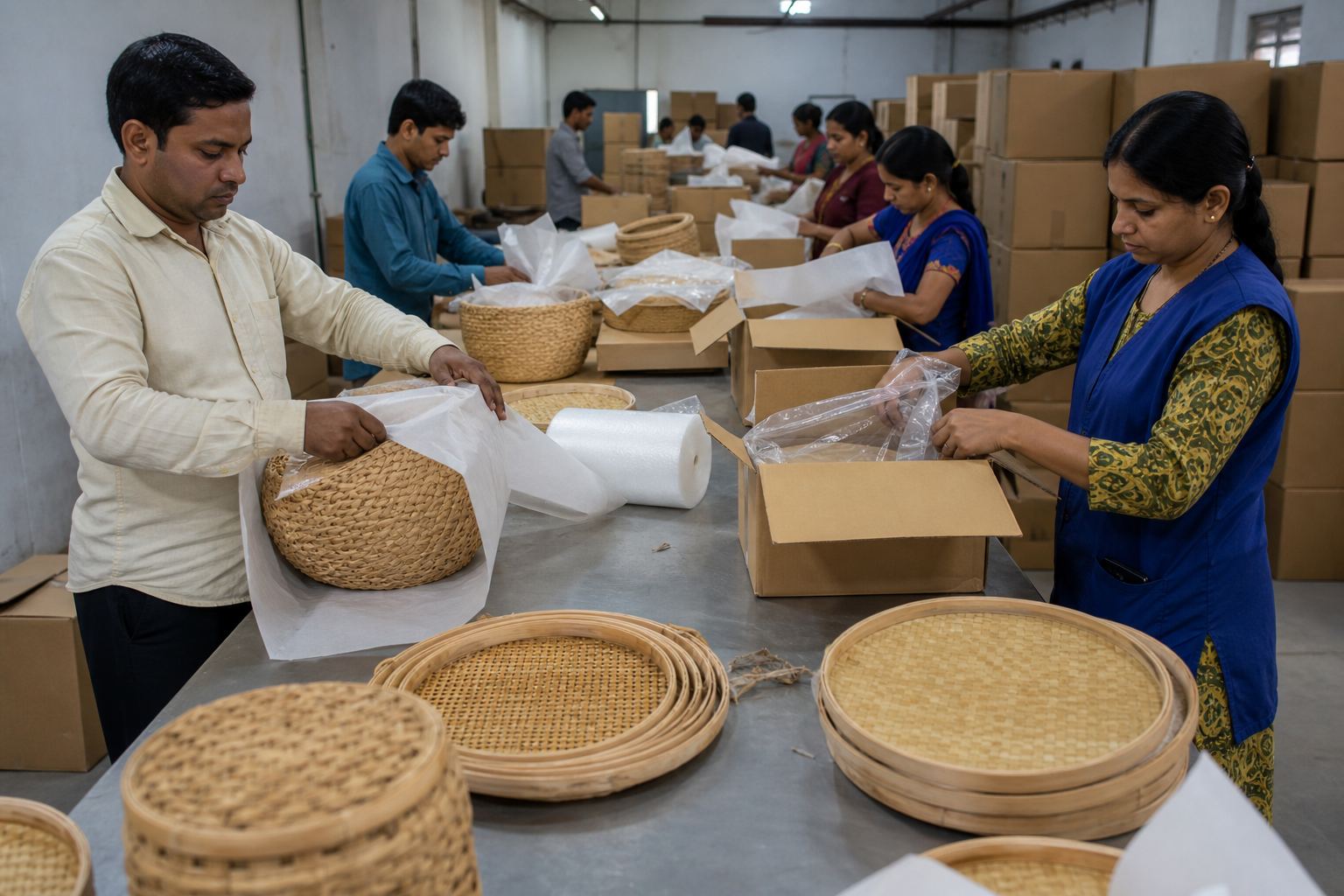
- Packaging specification aligned with sustainability position (recycled kraft carton, minimum poly, honest packing disclosure)
Retail-Facing Language — Both Sides' Responsibility
Retail shelf labels and e-commerce product-page copy are where anti-greenwashing regulators look first. Both exporter and buyer share responsibility: the exporter must not overclaim in the trade-line spec, and the buyer must not upgrade the language on the shelf label. Build a language-approval step into the programme so that adjectives like 'natural,' 'chemical-free,' 'biodegradable,' 'carbon-neutral,' 'zero-waste,' and 'plastic-free' either survive the substantiation test or come out of the copy before shelf launch.
Packaging Aligned with Positioning
- Recycled or FSC-certified kraft cartons where feasible
- Minimum single-use plastic — replace poly wrap with tissue or recycled paper where the SKU allows
- Honest packing disclosure card (species, harvest model, finish, cluster, artisan-livelihood note) per lot rather than generic template
- Barcoded, retail-ready inner packing that matches the buyer's DC receiving format
- Desiccant sachets used honestly disclosed — 'plastic-free' cannot coexist with poly desiccant packets
Pricing Analysis
Buyer Tip
Sustainable-tier bamboo and cane pricing sits above standard bands only when substantiation is genuine. Honest natural-finish baskets carry indicative FOB of $1.50–6 per piece; natural-finish trays and planters $4–20 per piece. Green private-label programmes carry an indicative premium of 8–18% above standard FOB when honest natural-finish + traceable species + lot-linked provenance are substantiated. The premium is genuine when species declaration, harvest-practice honesty, natural-finish disclosure, and phytosanitary paperwork are complete per lot; it evaporates instantly if any of those pillars is exposed as untrue at buyer audit.
Model landed cost against real programme costs: phytosanitary inspection windows, moisture-cure time, honest-finish yield loss (untreated bamboo has higher scrap rates due to pest and mould), lot-level record keeping, and packaging alignment. The greenwashing risk arithmetic is stark: Rejected shipments and terminated programmes carry cost 5–15x any short-term FOB premium gained by overclaiming. Overclaiming is not a rational commercial strategy in this category.
Sustainable Bamboo & Cane Pricing Framework
Swipe →
Data table — swipe horizontally on small screens
| Layer | FOB Effect |
|---|---|
| Honest natural-finish baskets | $1.50–6 per piece |
| Natural-finish trays / planters | $4–20 per piece |
| Green private-label programme premium | 8–18% above standard FOB when honest natural-finish + traceable species + lot-linked provenance are substantiated |
| Cluster livelihoods narrative premium | Blended into green private-label; not a separate line |
| Substantiated species-declaration premium | Embedded in green premium, not additive |
| Unsubstantiated 'eco' claim | Rejected shipments and terminated programmes carry cost 5–15x any short-term FOB premium gained by overclaiming |
MOQ Analysis
Buyer Tip
Sustainable-tier MOQs are typically slightly higher than standard tier because natural-finish grading, species-linked lot separation, and honest-finish yield behaviour reduce usable-lot size. Sample stage runs 8–25 pieces per SKU (larger for natural-finish colour range) (larger than standard tier to represent natural colour and grain variation honestly); trial orders typically run 400–1,000 pieces per SKU or mixed LCL planned by CBM.
MOQ Positioning for Green Programmes
Swipe →
Data table — swipe horizontally on small screens
| Programme | Typical Sample | Typical Trial |
|---|---|---|
| Honest natural-finish décor | 8–25 pieces per SKU (larger for natural-finish colour range) | 400–1,000 pieces per SKU or mixed LCL planned by CBM |
| Species-traceable bamboo baskets | 10–25 pieces per SKU (species-range) | 400–1,000 pieces per SKU or mixed LCL planned by CBM |
| Green cane / rattan programme | 10–20 pieces per SKU | 400–1,000 pieces per SKU or mixed LCL planned by CBM |
| Green hospitality amenity | 5–15 pieces per SKU (spec-tight) | 200–500 per SKU with lot traceability |
Packaging Standards
Export Tip
Sustainable-tier packaging must live in honest alignment with retail claims. Recycled kraft cartons, minimum single-use plastic, tissue or recycled-paper wrap in place of poly where the SKU tolerates it, and printed provenance cards for cluster and species storytelling replace the standard-tier kraft-and-poly approach. These additions must match the destination market's actual recycling infrastructure — a 'recyclable' claim in a market that lacks the relevant recycling stream is credibility risk, not benefit.
Sustainable Packing Options for Bamboo & Cane
Swipe →
Data table — swipe horizontally on small screens
| Format | Sustainability Angle | Honesty Note |
|---|---|---|
| Recycled kraft carton | Reduced virgin fibre | Verify destination recycling stream |
| Tissue or recycled paper wrap | Reduced single-use plastic | Sometimes needs supplementary cushioning |
| Honest desiccant disclosure | 'Poly sachet included' if used | Cannot coexist with 'plastic-free' |
| Provenance card (species / cluster / finish) | Consumer-facing storytelling | Print per lot, not generic template |
| Barcoded inner packing | Retail-programme readiness | Match buyer DC receiving format |
| FSC-certified kraft where cane furniture ships with wooden pallet | Traceable outer chain | Applies to wooden pallet only, not bamboo/cane |
Container Loading Details
Export Tip
Green-tier loading follows the same cube-limited pattern as standard bamboo and cane — cartons and pallet lanes stay the binding constraint before container weight limits bind. Green-tier programmes may carry slightly lower stack heights where natural finishes are less crush-tolerant than lacquered ones, and honest packing disclosure sometimes reduces protective bulk. Plan stuffing with your forwarder before booking and honestly disclose any dunnage material used.
Loading Considerations for Green Bamboo & Cane
Swipe →
Data table — swipe horizontally on small screens
| Format | Load Consideration |
|---|---|
| Honest natural-finish cartons | Slightly lower stack height where crush-tolerance is lower |
| Species-segregated pallet lanes | Keep species lots physically distinct for buyer receiving accuracy |
| Green cane furniture cartons | Individual foam cradle plus master carton; ISPM-15 on wooden pallet |
| Programme cartons for private-label | Segregate SKU families for DC receiving accuracy |
Shipping Methods
Export Tip
Sea FCL from Kolkata / Haldia, Nhava Sheva (JNPT), Mundra, ICD Delhi / Tughlakabad remains the default for green-tier programmes at scale, with LCL bridging smaller trial-stage launches. Lead times sit slightly longer than standard tier: sample dispatch 12–25 days (species-declared, moisture-verified), trial production and shipping 5–7 weeks (seasoning + honest-finish + phyto), and full FCL programmes 9–13 weeks including provenance-log preparation. Build extra lead time for species-declared record preparation, natural-finish yield handling, phytosanitary inspection windows, and honest packaging alignment — these do not compress on the same timeline as physical production.
Shipping Reference for Green Bamboo & Cane Programmes
Swipe →
Data table — swipe horizontally on small screens
| Stage | Typical Lead Time |
|---|---|
| Sample dispatch | 12–25 days (species-declared, moisture-verified) |
| Trial order (production + phyto + ship) | 5–7 weeks (seasoning + honest-finish + phyto) |
| Bulk FCL programme (production + phyto + ship) | 9–13 weeks including provenance-log preparation |
Certifications & Documentation
Compliance Notes
The sustainable-tier documentation layer starts with EPCH RCMC as the baseline sector credibility signal, then adds lot-level species declaration, harvest-practice record, finish-chemistry disclosure, phytosanitary certificate per shipment, and Lacey Act harvest-source readiness for US-bound shipments (PPQ 505 filing need depends on cultivated vs wild/unknown origin and the HTS line). FSC bamboo scope, where claimed, must be verified per certificate — do not blanket-assume FSC applies. ISO 9001 supports quality-system credibility where relevant. Pure bamboo is generally outside EUDR wood-scope — confirm with the EU importer.
Do not present phytosanitary certificate or Lacey Act declaration as 'certifications' — they are regulatory documentation and declaration requirements, not third-party certifications, and describing them incorrectly in retail-facing copy undermines credibility with sustainability-literate buyers.
Sustainable Bamboo & Cane Documentation Layer
Swipe →
Data table — swipe horizontally on small screens
| Item | Purpose |
|---|---|
| EPCH RCMC | Sector-credibility baseline |
| Species declaration (lot-level) | Traceable material claim + phyto scope |
| Harvest-practice record | Farmed / managed / wild-permitted disclosure |
| Finish-chemistry disclosure | Substantiates natural / treated / dyed claims |
| Phytosanitary certificate (per shipment) | Regulatory plant-health requirement (not a certification) |
| Lacey Act plant declaration | US regulatory requirement (not a certification) |
| FSC bamboo scope (if held and applicable) | Traceable chain claim (verify scope per certificate) |
| ISO 9001 | Quality management system credibility |
| Confirm EUDR non-applicability for pure bamboo with importer | EU market-access requirement (regulatory, not a certification) |
Buyer Requirements
Buyer Requirements
Sustainable-tier bamboo and cane buyers add audit-style scrutiny on top of standard buyer requirements: verifiable species declarations, harvest-practice honesty, disclosed finish chemistry, and complete phytosanitary and (for US) Lacey Act paperwork matched to the shipment. Retail-chain private-label buyers often require third-party verification or their own supplier audit before finalising a green programme, and increasingly build in retail-copy language review as a step in the qualification process.
Sustainable Buyer Requirement Matrix
Swipe →
Data table — swipe horizontally on small screens
| Buyer Type | Top Requirements |
|---|---|
| EU sustainable-retail chain | Species declaration + harvest honesty + finish disclosure + phytosanitary |
| USA premium sustainable-retail buyer | Species declaration + Lacey Act + finish disclosure |
| Sustainable-retail DTC brand | Provenance storytelling + substantiated retail-copy |
| UK green specialty retail | Species + finish disclosure + CMA-code-aligned copy |
| Australia lifestyle-eco retail | AQIS/DAFF paperwork + honest finish disclosure |
| Japan premium natural-goods buyer | Tight species + finish + tolerance discipline |
| Hospitality amenity green programme | Finish disclosure + food-contact clarity where relevant |
Country-wise Opportunities
Market Snapshot
Sustainable and green-positioned opportunity is unevenly distributed by destination, following retail-market maturity and regulatory scrutiny of green claims.
Sustainable Opportunity by Destination
Swipe →
Data table — swipe horizontally on small screens
| Country | Primary Sustainable Opportunity | Substantiation Emphasis |
|---|---|---|
| Germany | Species-traceable décor + EU-aligned retail | Species + harvest + finish + phyto |
| Netherlands | Circular / natural-fibre retail | Species + harvest + finish + phyto |
| France | Design-led sustainable rattan | Species + weave craft + honest finish |
| USA | Sustainable-retail + premium DTC | Lacey Act + finish disclosure + FTC-safe copy |
| UK | Green specialty retail | Species + finish + CMA-code-aligned copy |
| UAE | Boutique + hospitality green amenity | Provenance evidence on request |
| Australia | Wellness / eco boutique retail | AQIS/DAFF + honest finish + ACCC-safe copy |
| Canada | Bilingual green retail | CFIA + species + bilingual documentation |
| Japan | Tea-ceremony + premium natural retail | Species purity + tight tolerance + finish honesty |
Germany, Netherlands, and France
These markets lead sustainability-literate bamboo and cane demand, with buyers expecting complete species declaration, harvest-practice honesty, and finish disclosure as baseline market-access requirements rather than differentiators. EU regulatory framing (Green Claims Directive-adjacent scrutiny) applies to retail copy. Confirm with the EU importer that pure bamboo SKUs are treated as outside EUDR wood-scope; do not invent timber-equivalent due diligence.
United States
US demand centres on sustainable-retail chains and premium DTC brands, with Lacey Act plant-declaration accuracy as a non-negotiable baseline. FTC Green Guides scrutiny of retail claims (biodegradable, compostable, natural, eco-friendly) is active — align retail copy with substantiation. Premium retail buyers pay real premiums for substantiated species, cluster, and honest-finish storytelling.
United Kingdom
UK buyers track EU sustainability expectations closely despite sitting outside EUDR's direct jurisdiction, and CMA green-claims code scrutiny applies to retail language. FSC bamboo scope, where held, is a meaningful retail differentiator. Post-Brexit phytosanitary regime differs from EU — coordinate with the importer's clearing agent.
United Arab Emirates
UAE premium retail shows growing but selective sustainable-bamboo demand, often concentrated among boutique retail, hospitality amenity, and wellness-positioned brands. Provenance evidence on request tends to be the operating expectation rather than upfront regulatory framing.
Australia
AQIS/DAFF plant-material scrutiny is among the strictest globally, so honest species, treatment, and moisture disclosure is a market-access baseline before any sustainability positioning. ACCC greenwashing enforcement is active; align retail copy with substantiation.
Canada
Canadian buyers respond to species-declared, cluster-story bamboo and cane paired with bilingual (English/French) retail-ready documentation. CFIA plant-material import protocols apply.
Japan
Japan is a smaller-volume but high-value niche for green bamboo and cane, particularly for tea-ceremony adjacent items, hospitality amenity trays, and premium natural-goods retail. Species purity and finish tolerance discipline are extremely tight.
Sourcing Checklist — Buyer and Exporter
Checklist
A sustainable-tier sourcing checklist keeps both sides focused on evidence rather than marketing language.
Buyer Checklist
- Verify the exporter's species declaration workflow at lot level, not just at company level
- Request harvest-practice disclosure (farmed / managed / wild-permitted) per production run
- Request finish-chemistry disclosure per SKU (natural / borax-boric / sun-cured / dyed / lacquered)
- Confirm phytosanitary certificate scope per shipment matches your product's destination
- Confirm Lacey Act plant declaration accuracy for US-bound shipments before final PO
- Align retail-facing copy with substantiation before shelf launch — do not upgrade language beyond what the trade-line spec supports
- Ask for third-party audit history where your own retail sustainability policy requires it
Exporter Checklist
- Maintain lot-level species records at raw-material intake
- Maintain harvest-practice records honestly reflecting sourcing model
- Disclose finish chemistry accurately on every SKU spec sheet
- Coordinate phytosanitary inspection windows into production schedule
- Coordinate Lacey Act declaration workflow with US buyer customs brokers
- Never overstate FSC scope, community sourcing, or 'chemical-free' status
- Retain evidence per lot for a minimum of the buyer's stated audit-retention period
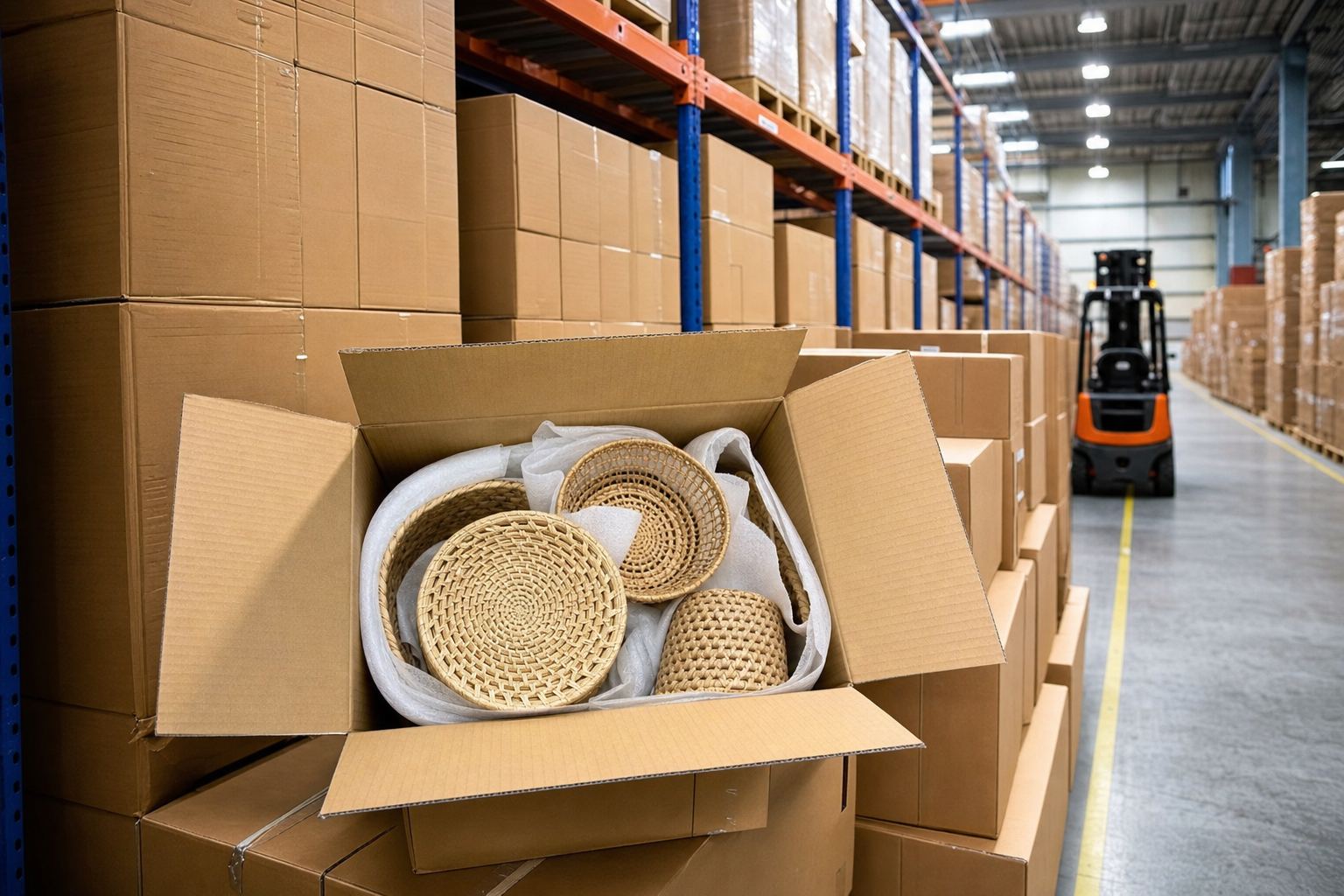
Compliance Checklist
Checklist
Compliance Notes
Common Buyer Mistakes
Common Mistakes Box
The most common mistakes in sustainable bamboo and cane sourcing are evidentiary and framing-related, not commercial: accepting a supplier's 'natural' claim without verifying finish chemistry, accepting a generic 'sustainable bamboo' label without species declaration, assuming FSC or EUDR requirements apply the same way they apply to wood, and launching retail sustainability campaigns before finish and phytosanitary documentation is verified complete. A fifth mistake — treating bamboo as timber in eco copy — is a category error most sustainability-literate consumers now recognise.
Challenges & Solutions
Sustainable bamboo and cane programmes carry a specific set of recurring operational challenges beyond standard export friction.
Sustainable Programme Challenges and Solutions
Swipe →
Data table — swipe horizontally on small screens
| Challenge | Practical Solution |
|---|---|
| Species mixing on the production floor | Enforce documented lot separation with intake-to-dispatch traceability |
| Natural-finish yield loss frustrates margin | Grade lots by finish tier before sampling; price honestly |
| Buyer copy overclaims 'chemical-free' | Freeze retail language until finish disclosure is verified complete |
| Phytosanitary scope mismatch with species | Coordinate species declaration and phyto scope pre-inspection |
| Lacey Act declaration inaccuracies | Verify species against intake records before declaration filing |
| FSC scope assumed to cover bamboo | Verify certificate scope per shipment; do not blanket-assume |
| Assuming timber EUDR rules apply to pure bamboo | Confirm scope directly with EU buyer's customs broker |
| Cluster livelihoods claimed without documented sourcing | Require lot-level supplier records; deprecate vague claims |
Future Market Trends
Key Statistics
Sustainable bamboo and cane demand will keep tightening around verifiable evidence rather than narrative alone. EU buyers will apply increasing formal scrutiny to green-claims language on retail packaging as Green Claims Directive-adjacent enforcement matures; US buyers will apply increasing scrutiny to Lacey Act declaration accuracy as enforcement resources expand; Australian and UK buyers will apply their respective anti-greenwashing frameworks with growing regularity. Honest cluster-livelihoods storytelling from North East India and Kerala will continue to grow as a premium differentiator, but only for exporters who can substantiate it.
Digital traceability tools — QR-linked lot records, species-declaration portals, and certifying-body verification pages — will likely become the default method buyers use to check claims before finalising sustainable purchase orders, replacing the current mix of PDF certificates and email confirmations. Exporters who prepare structured, exportable lot-level data formats now will be substantially ahead when the format shift accelerates.
Sustainable Trend Signals for Bamboo & Cane
Swipe →
Data table — swipe horizontally on small screens
| Trend | Exporter Response |
|---|---|
| Formal anti-greenwashing enforcement in EU/UK/AU/US | Align retail copy with substantiation from lot level up |
| Rising species-declaration expectations | Build lot-level species workflows now |
| Digital traceability portals | Prepare structured lot-level records in exportable format |
| Growing cluster-livelihoods retail interest | Invest in verifiable artisan-supplier record-keeping |
| Buyer-side digital certificate verification | Keep phytosanitary and (where held) FSC scope current and easily checkable |
| Finish-chemistry disclosure as retail-copy default | Build finish disclosure into every SKU spec sheet |
Expert Insights
Expert Insight Box
Altus Exports works with international buyers and Indian bamboo and cane workshops as a merchant exporter and global sourcing partner — coordinating honest species declarations, harvest-practice records, finish-chemistry disclosure, and phytosanitary-aligned documentation so green claims survive retail audit, not just marketing review.
Conclusion
Sustainable bamboo and cane handicraft export from India is built on four honestly-substantiated pillars — genuine renewable-material narrative rooted in the botany of bamboo as a grass and rattan as a climbing palm, lot-level species traceability, honest finish-chemistry disclosure, and complete plant-health documentation. None of these pillars functions as marketing language alone; each requires ongoing evidence, lot-level records, and disciplined disclosure. Exporters and buyers who invest in that discipline access the strongest premium FOB and the most durable retail and hospitality relationships in the natural-fibre category.
Use HS 4601 for plaited mats, 4602 for basketwork (460211 bamboo, 460212 rattan), and 94038200/94038300 for bamboo/cane furniture when structuring green purchase orders. Plan for green private-label premiums around 8–18% above standard FOB when honest natural-finish + traceable species + lot-linked provenance are substantiated — and build species declaration, harvest-practice honesty, finish-chemistry disclosure, phytosanitary certificate, and Lacey Act plant declaration workflows into the production timeline from day one rather than as a pre-shipment scramble.
Altus Exports helps buyers and Indian bamboo and cane workshops structure genuinely substantiated green programmes — species declaration workflows, harvest-practice records, honest finish disclosure, and phytosanitary and Lacey Act-aligned export paperwork. Contact us via /contact/ to plan your sustainable bamboo and cane programme, or continue with How to Find International Buyers for Bamboo and Cane Handicrafts for buyer discovery, EPCH Registration Benefits for Bamboo and Cane Handicraft Exporters for sector-registration detail, Bamboo and Cane Handicraft Export Documentation Checklist for the full pre-shipment paperwork list, and our handicrafts & lifestyle industry overview.