
Fashion Jewellery Export Documentation Checklist
By Saurabh Mittal, Founder, Altus Exports
Document-by-document pre-shipment checklist for Indian imitation and fashion jewellery exports — IEC, GJEPC RCMC, commercial invoice, packing list, plating and composition declarations, EN 1811 nickel-release reports, REACH/SVHC statements, Prop 65 posture, HS 7117 eight-digit shipping bill filing, and CHA / customs broker handoff for FCL and air programmes.
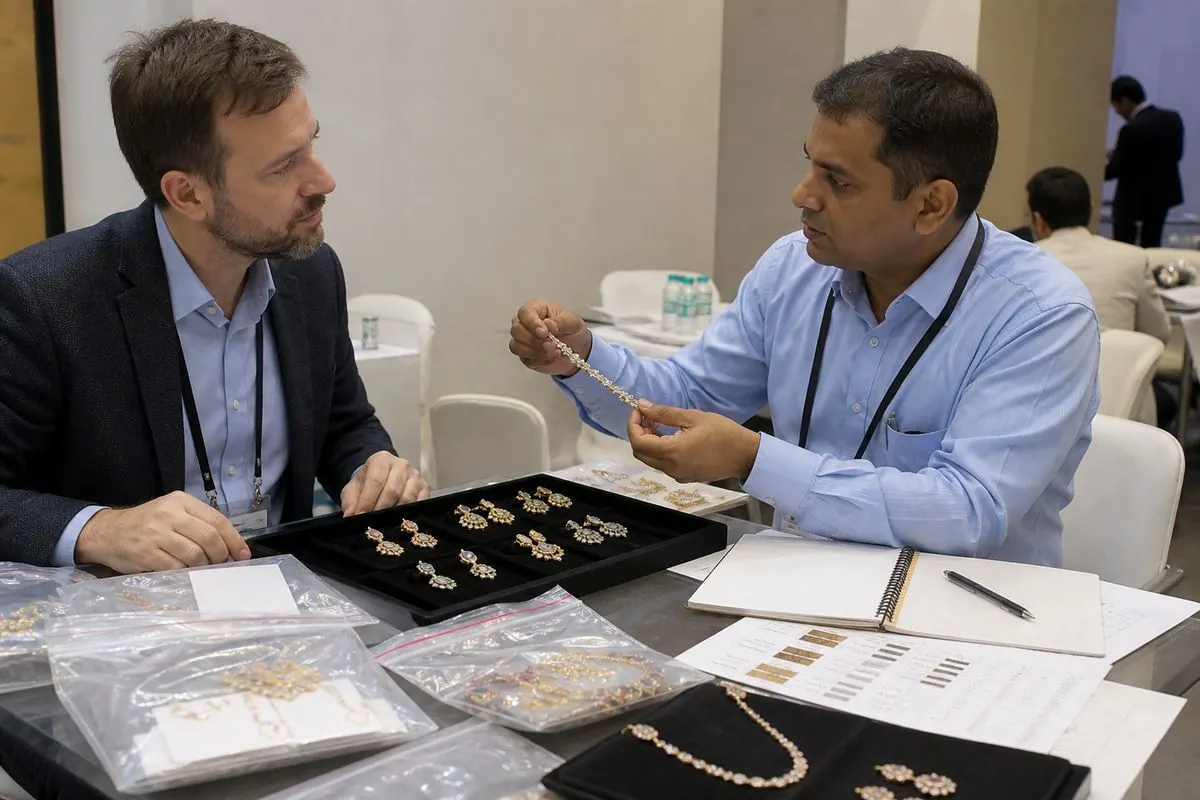
Documentation is the compliance gate for HS 7117 fashion jewellery — clear on schedule or stall at the pier. Most failures are preventable at the exporter's desk.
Core stack: IEC · GJEPC RCMC · commercial invoice · packing list · plating/composition declaration · EN 1811 / REACH / Prop 65 evidence · shipping bill · AWB or B/L · certificate of origin when required.
Every page must cross-reference the same PO, eight-digit HS line, SKU, plating micron, quantity, and consignee.
India lines: 71171100 / 71171910 / 71171920 / 71171990 / 71179010 / 71179090.
Top failure modes: invoice vs packing-list piece mismatch · plating claims that do not match EN 1811 reports · generic nickel-free / lead-free language without lot evidence.
Process context: How to Export Imitation Jewellery from India · GJEPC Registration Benefits · Nickel-Free & Lead-Safe opportunities.
Altus maintains documentation discipline on every HS 7117 shipment via export products from India and merchant exporter in India coverage.
Key Takeaways
Summary Box
Executive Summary
Summary Box
- Build invoice, packing list, plating declaration, and shipping bill in parallel.
- SKU description ↔ plating micron ↔ EN 1811 report ↔ Prop 65 posture must reconcile per lot.
- File HS 71171100 / 71171910 / 71171920 / 71171990 / 71179010 / 71179090 per SKU — never a generic 7117 header alone.
- Lock certificate of origin after HS and value fields are final.
- Run a 15-minute pre-seal document cross-check before the container closes or the air pallet builds.
Fashion jewellery export documentation must cross-reference the same India HS 7117 eight-digit subline, SKU description, plating micron, base metal, stone type, piece count, unit FOB, and consignee identity across commercial invoice, packing list, shipping bill, B/L or AWB, plating and composition declaration, EN 1811 nickel-release lab report (where required), REACH / SVHC statement, Prop 65 posture note, and certificate of origin.
Misaligned SKU descriptions between invoice and packing list, unsubstantiated "nickel-free" or "lead-safe" verbal claims, and generic HS 7117 headers without eight-digit accuracy remain the top preventable causes of destination customs holds and buyer chargebacks.
This checklist is the pre-shipment gate exporters and buyers use before CHA filing, air-freight cutoff, or vessel departure — 15 minutes of cross-check saves weeks of destination pain.
Market Size & Industry Overview
Key Statistics
- Document stacks inherit manufacturing identity — plating micron, base-metal alloy, and stone family originate on the polishing / plating floor, not in the forwarder's system.
- Cluster of origin should be reconcilable with invoice, plating declaration, and GJEPC RCMC exporter identity.
- Retail-ready cards, hangtags, and pouches embed brand identity into the packing story — packing list must reflect the presentation build.
- CHA filings fail when SKU story and HS 7117 eight-digit line disagree — the pillar export process guide walks the end-to-end flow this checklist secures.
Documentation is the operational spine of every Indian imitation and fashion jewellery export shipment, cross-referencing IEC, GJEPC RCMC, plating declaration, EN 1811 and REACH evidence, and India HS 7117 eight-digit shipping-bill filings.
The Jaipur, Delhi-NCR, Mumbai–Thane, Hyderabad, Kolkata, and Moradabad findings clusters flow through Nhava Sheva, Mundra, Delhi ICD / DEL air, Mumbai BOM air, and Jaipur ICD where used — each port and airport with its own broker cutoff discipline and consolidator rhythm.
India's fashion jewellery position sits in a world market of roughly US$9.25–10.25 billion (GJEPC) (directional), with India shipping ~US$140–160 million recent and ranking ninth to twelfth by GJEPC HS 7117 statistics. Every document field in this checklist ultimately protects that programme value at destination customs and buyer receiving inspection.
The Fashion Jewellery Export Document Stack
Every HS 7117 shipment requires a consistent document pack. The table below lists each document, what it must contain, and the most common failure mode — use it as a pre-shipment gate before your CHA files the shipping bill under India HS 7117 eight-digit sublines.
Fashion jewellery export documentation requirements (HS 7117 imitation / fashion jewellery)
Swipe →
Data table — swipe horizontally on small screens
| Document | Must contain | Common failure |
|---|---|---|
| Commercial invoice | Exporter, buyer, HS 7117 eight-digit per SKU, base metal, plating micron, stone type, piece count, unit FOB, currency, Incoterm | Generic '7117' header without eight-digit; plating micron missing |
| Packing list | Carton count, piece count per SKU, net / gross weight, dimensions, retail card / pouch pack references | Piece count mismatch vs invoice; missing retail-pack references |
| Shipping bill | India HS 71171100 / 71171910 / 71171920 / 71171990 / 71179010 / 71179090 per SKU, FOB value, port of loading (Nhava Sheva / Mundra / BOM air / DEL air) | Wrong eight-digit; single-line filing when SKUs span sublines |
| Bill of lading (sea) or Air waybill (air) | Consignee, notify party, container / seal or AWB pallet identity, load port / origin airport, ETA | Consignee mismatch vs invoice; port / airport wrong |
| Certificate of Origin (COO) | Country of manufacture, HS 7117 line, exporter identity; FTA form (India–UAE CEPA, India–Japan CEPA, India–ASEAN, India–Australia ECTA) where applicable | Non-preferential filed where FTA-preferential eligible; expired template |
| GJEPC RCMC copy | Current Gem & Jewellery Export Promotion Council membership proof | Lapsed mid-season; wrong programme category |
| IEC (Importer Exporter Code) copy | DGFT-issued IEC with current PAN linkage | IEC not updated after entity change |
| Plating & composition declaration | Base metal (brass / German silver / zinc alloy), plating type (gold / rhodium / silver / anti-tarnish), micron, nickel-release posture, lead / cadmium ceilings | Verbal claim only; no supporting lab evidence |
| EN 1811 nickel-release test report | EU EN 1811 method result (µg/cm²/week) per SKU family for prolonged skin-contact articles | Report on old lot; SKU family mismatch |
| REACH / SVHC declaration | Substances of Very High Concern posture per EU REACH candidate list, dated to shipment lot | Boilerplate declaration not tied to lot |
| Prop 65 posture statement (US) | Position on listed substances (lead, cadmium, nickel derivatives) per SKU for California Prop 65 inquiries | Blanket 'Prop 65 compliant' claim without substance-level evidence |
| ASTM F2923 / CPSIA evidence (children's SKUs) | Test pack when article is marketed as children's jewellery in the USA | Claim without test pack; children's marketing lapses back to adult |
Manufacturing Overview
Export Tip
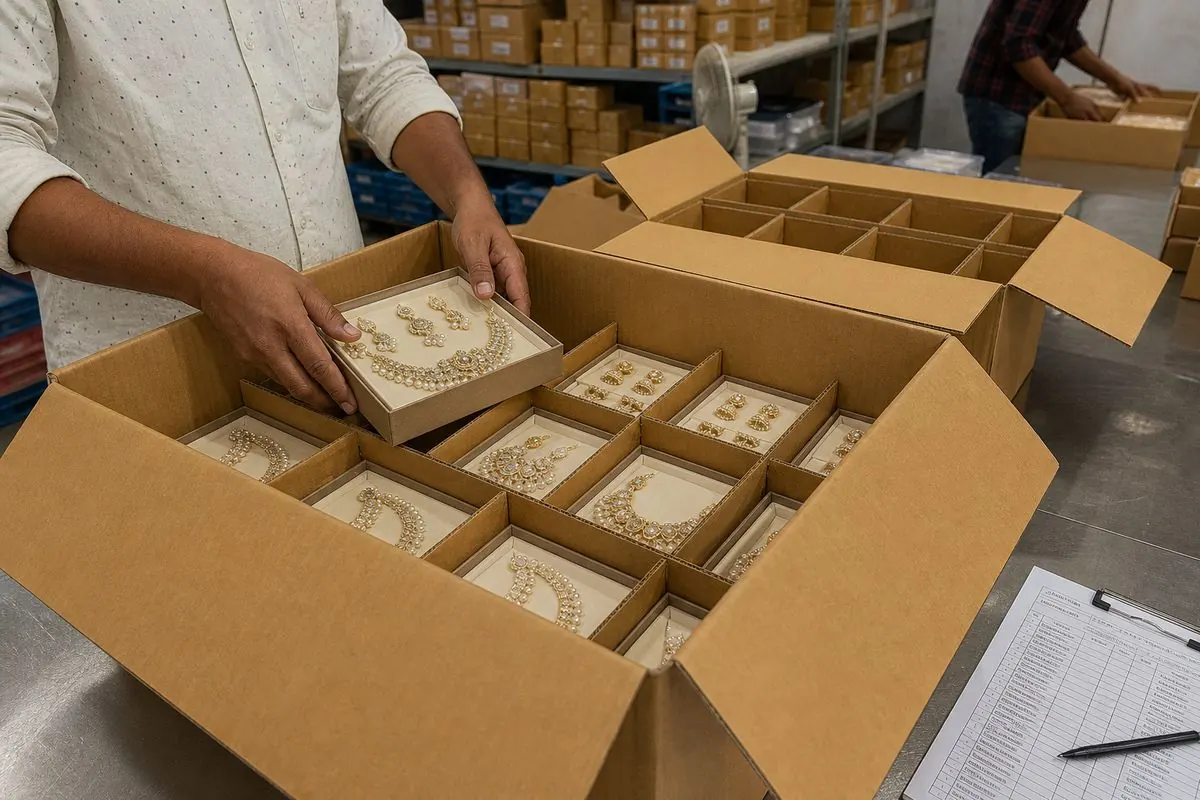
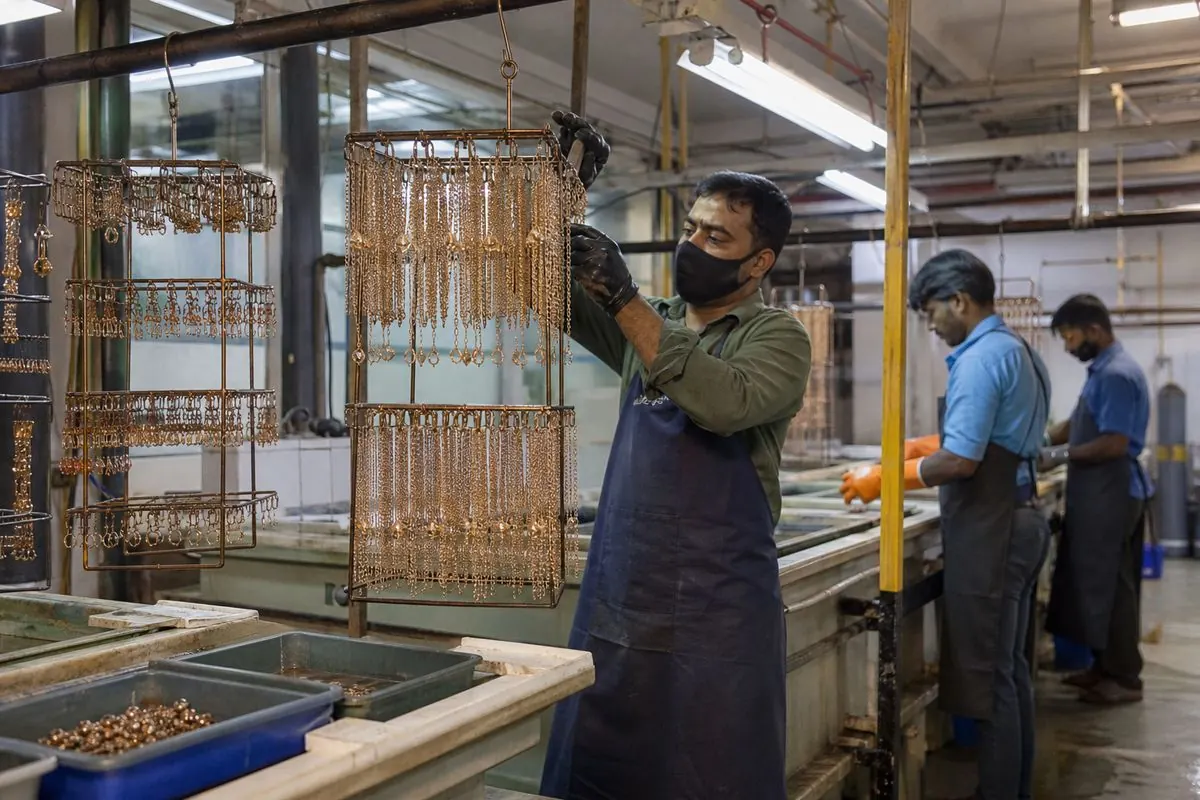
Documentation packs must reflect how Indian fashion jewellery clusters actually batch, plate, and pack — plating micron and nickel-release posture originate on the plating line and QC bench, not in the export cabin.
Exporters who reconcile plating-line records, EN 1811 lab reports, and packing-list SKU descriptions before invoice finalisation avoid the most common destination customs holds and buyer chargebacks. Manufacturing traceability supports every document — invoice, packing list, and plating declaration must tell one lot story.
Saurabh Mittal, our Founder, has a rule he repeats every time we sign a new fashion jewellery export programme. The plating micron and nickel-release status get decided on the plating line, not in the paperwork the day before the container seals. If the brass core does not carry the plating thickness the invoice promises, or the EN 1811 lab report on file references a lot that was polished six months earlier, the whole document stack fails the moment a European skin-contact buyer's incoming QC picks up a rejection. We insist on lot-tagged plating records tied to the SKU, and we photograph the QC-bench pull for the export file. That single discipline has kept our repeat programmes with US and EU retailers open through nickel and Prop 65 audits that other exporters lost.
Product Categories / Variants
Summary Box
- Document packs differ by article — cuff links vs bangles vs studded sets sit on different HS 7117 sublines.
- Studded programmes require stone-family evidence on invoice and REACH posture in the declaration pack.
- German silver programmes carry copper-nickel-zinc chemistry — nickel-release messaging must reconcile with EN 1811 evidence.
- Never let a broad 7117 header carry mixed SKU families on a shipping bill — source directly guidance covers verification depth on SKU claims.
SKU description on invoice and plating declaration must match the export declaration — cuff links / studs, bangles, German silver imitation, other base-metal imitation, and studded imitation each carry different India HS 7117 eight-digit sublines and different destination compliance packs.
Primary imitation / fashion jewellery article types exported from India (HS 7117)
Swipe →
Data table — swipe horizontally on small screens
| Product Type | Description | India HS 7117 | Filing Note |
|---|---|---|---|
| Cuff links & studs | Base-metal shirt studs, cuff links, and coordinated men's pieces | 71171100 | Distinct subline — do not blend into 71171990 by default |
| Bangles | Plated brass / zinc alloy bangles with or without stone accents | 71171910 | Confirm micron and stone family on invoice |
| German silver imitation | Copper-nickel-zinc alloy imitation jewellery pieces | 71171920 | Cluster-linked (Moradabad findings support common) |
| Other base-metal imitation (necklaces / earrings / rings) | Base-metal imitation jewellery not specifically named elsewhere | 71171990 | Default subline for unspecified base-metal items — confirm before defaulting |
| Studded imitation (CZ, glass, resin) | Base-metal imitation set with CZ, glass, or resin stones | 71179010 | Stone family + plating on invoice + REACH / Prop 65 posture required |
| Other imitation (residual) | Imitation jewellery that does not fit sublines above | 71179090 | Residual line — CHA should justify why 71179010 or 71171990 do not fit |
Export Process
Export Tip
The export process is a document-pack sequence. This section walks the pre-shipment file build in the order CHA teams and destination brokers expect. Complete the pillar overview in How to Export Imitation Jewellery from India is upstream of this document sequence.
H3: Commercial Invoice
- Field: exporter name, GSTIN, IEC, GJEPC RCMC number, complete address.
- Field: buyer name, address, VAT / EIN / equivalent, notify party.
- Field: HS 7117 eight-digit per SKU (not a single generic 7117 header when SKUs span sublines).
- Field: SKU code, plating description (e.g. 'brass base, 1-micron gold plating, rhodium flash'), stone family (CZ / glass / resin), piece count, unit FOB, extended value, currency.
- Field: Incoterm (FOB / CFR / CIF / DAP), port of loading, port of discharge, LC or T/T reference.
The commercial invoice is the anchor document. Every downstream file — packing list, shipping bill, plating declaration, COO — inherits SKU description, HS 7117 eight-digit subline, plating micron, base metal, stone family, piece count, unit FOB, currency, Incoterm, and consignee identity from this document.
H3: Packing List
- Field: carton count, carton dimensions, net weight, gross weight.
- Field: pieces per SKU per carton, retail-ready pack references (carded, pouched, boxed).
- Field: master carton marks (SKU / lot / production date / cluster origin where used).
- Field: fragile / stone-set warnings for CZ or glass-heavy shipments.
- Field: retention of packing-list photo archive with the shipping file.
The packing list translates the invoice into physical presentation. Retail-ready cards, pouches, hangtags, and inner presentation boxes must appear here — buyer receiving teams reconcile the packing list to the actual pull-out at destination.
H3: Shipping Bill (India HS 7117 eight-digit)
- Confirm each SKU family maps to the correct eight-digit: 71171100 / 71171910 / 71171920 / 71171990 / 71179010 / 71179090.
- FOB value on shipping bill must reconcile line-by-line to the invoice.
- Port of loading: Nhava Sheva, Mundra, Delhi ICD, Mumbai BOM air, Delhi DEL air, Jaipur ICD as used.
- Drawback / RoDTEP claim category tied to correct eight-digit.
- Retain CHA-stamped shipping bill copy with the retention pack.
The shipping bill is filed by the CHA under India HS 7117 eight-digit sublines. Never accept a shipping bill that carries a single 7117 header when the SKUs span cuff links / studs, bangles, German silver, other base-metal, and studded lines — each requires its own line entry.
H3: Bill of Lading (sea) or Air Waybill (air)
- Consignee, notify party, and shipper details must reconcile with invoice.
- Load port / origin airport must match shipping-bill filing.
- Seal number on B/L must match photos taken at stuffing.
- Freight prepaid / collect must match Incoterm on invoice.
- Correction after vessel departure or flight cutoff is expensive — verify before release.
The B/L (sea FCL / LCL) or AWB (air) reflects logistics identity. Container / seal number on B/L or pallet / master AWB identity on AWB must match packing-list marks and stuffing photos.
H3: Certificate of Origin (COO)
- Non-preferential COO: chamber of commerce issued; general destination duty framework.
- FTA-preferential COO: authorised body issued; specific Rule of Origin per corridor.
- COO must reference invoice number, HS 7117 line, and country of manufacture.
- Expired templates or wrong FTA form language triggers duty surprises.
- Lock COO after HS, plating description, and value fields are final — not before.
COO is issued by a chamber of commerce (non-preferential) or authorised body for FTA-preferential lines. India–UAE CEPA, India–Japan CEPA, India–ASEAN (AIFTA), and India–Australia ECTA may offer preferential duty on eligible HS 7117 lines only where the tariff schedule and Rules of Origin are met — confirm eligibility line by line with your CHA before claiming preference.
H3: Plating & Composition Declaration
- Field: base metal (brass / zinc alloy / German silver / iron-based).
- Field: plating (gold / rhodium / silver / anti-tarnish e-coat) and micron.
- Field: nickel-release status (per EN 1811 method result, µg/cm²/week).
- Field: lead / cadmium content (per destination ceiling — EU REACH, US Prop 65, ASTM F2923 where children's).
- Field: attachment of lot-tagged lab report and photo evidence.
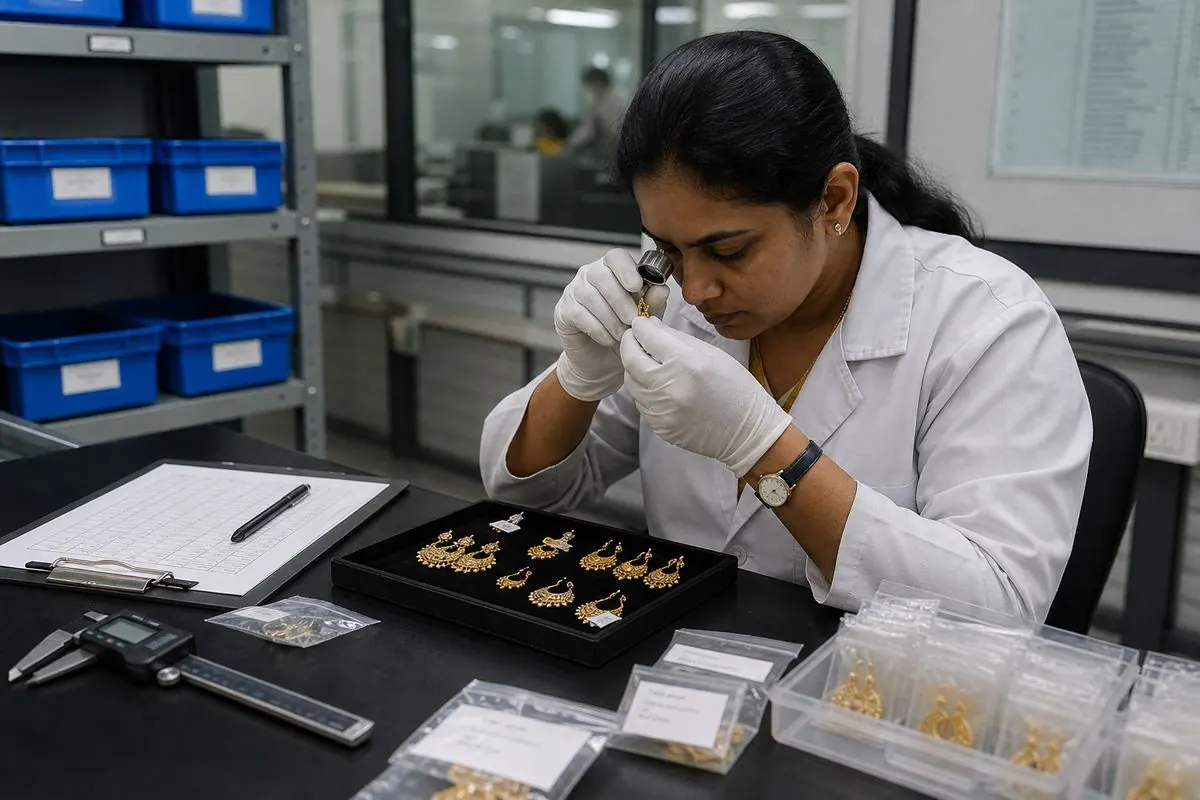
The plating and composition declaration is the pivot document for destination compliance. Base metal, plating type, micron, nickel-release posture, and lead / cadmium ceilings must reconcile with EN 1811 lab reports, REACH declarations, and Prop 65 posture per SKU family.
H3: EN 1811 Nickel-Release Test Report
- Field: accredited lab identity (NABL-accredited or destination-equivalent).
- Field: SKU / lot / plating-line reference on the report.
- Field: result in µg/cm²/week below EN 1811 threshold.
- Field: attach lab report PDF to the export file with lot photo.
- Field: refresh the report when the plating recipe or micron changes.
EN 1811 is the EU reference method for nickel release from prolonged skin-contact articles. EU customs and retailer QC teams expect the lab report to reference the SKU family (or a representative worst-case SKU) and the plating micron / base metal that ships.
H3: REACH / SVHC Declaration
- Reference the current REACH candidate list version.
- State non-detection or below-threshold posture per relevant SVHC.
- Tie the declaration to the lot / plating-line date.
- Attach supplier declarations for stones (CZ / glass / resin) where relevant.
- Retain with the export file for repeat programmes and audits.
The REACH declaration states the exporter's posture on Substances of Very High Concern per EU REACH candidate list. Boilerplate declarations without lot linkage fail EU retailer audit; declarations dated to the shipment lot with the plating-line reference pass the compliance desk cleanly.
H3: Prop 65 Posture Statement (US programmes)
- State position per listed substance (lead, cadmium, nickel derivatives) per SKU family.
- Reference third-party test evidence where the exposure model requires it.
- Prepare warning label posture: no warning (below safe-harbor) vs warning (exposure model).
- Coordinate with the US buyer's compliance desk before landing the first lot.
- Retain lot-linked test evidence in the export file for at least seven years.
California Prop 65 covers listed substances (lead, cadmium, nickel compounds among others) and is enforced by private plaintiffs — the exporter's posture must be documented per substance and per SKU, not with a blanket 'Prop 65 compliant' phrase that will not survive a plaintiff inquiry.
H3: GJEPC RCMC + IEC Copies
- Verify GJEPC RCMC validity mid-season — lapses block council access and buyer credibility.
- Verify IEC PAN linkage after any entity change.
- Attach current copies to the shipping file for each dispatch.
- Refresh copies annually and re-check before major campaign windows (IIJS, Christmas, Valentine's, Mother's Day).
- Log renewal dates in the compliance calendar.
The Gem & Jewellery Export Promotion Council (GJEPC) RCMC signals membership standing to buyers and destination brokers and unlocks council-specific benefits — see GJEPC Registration Benefits for Fashion Jewellery Exporters for depth. IEC (DGFT) is the baseline export licence.
H3: CHA / Customs Broker Handoff
- Provide CHA with invoice, packing list, plating declaration, GJEPC RCMC, IEC, and COO at least a few days before vessel or flight cutoff.
- Confirm the eight-digit HS 7117 filing in writing per SKU family.
- Coordinate drawback / RoDTEP scheme claim in the same filing.
- Retain CHA-stamped shipping bill and correspondence.
- Debrief with CHA on any query raised — feed learnings back into the next shipment's document build.
The Customs House Agent (CHA) or licensed customs broker files the shipping bill under India HS 7117 eight-digit sublines and coordinates with the port / airport. Handoff timing matters — a rushed handoff at vessel cutoff invites eight-digit filing errors that no plating discipline can undo.
Pricing Analysis
Buyer Tip
- Invoice unit price language should match the dated FOB offer.
- Do not let packing-list values drift from the commercial invoice basis.
- Document plating micron on the offer archive for claim defense.
- CHA files need Incoterm clarity before freight is added on CFR / CIF.
- Full pricing depth by SKU sits in Top Fashion Jewellery Products Exported from India; this post owns reconciliation only.
Pricing on commercial invoice must match proforma and plating declaration — document disputes often trace to FOB quoted on one plating micron and shipped on another. This section owns pricing as it applies to documentation reconciliation only; SKU pricing depth lives in the products post.
Directional FOB pricing ranges for imitation / fashion jewellery by tier (documentation reconciliation reference)
Swipe →
Data table — swipe horizontally on small screens
| Tier | Pricing Structure | Documentation Reconciliation Note |
|---|---|---|
| Economy plated fashion | US$0.30–2.00/unit FOB (indicative) | Invoice must show plating micron and base metal — do not let 'plated' pass without micron |
| Mid CZ / studded fashion | US$2–8/unit FOB (indicative) | Stone family (CZ / glass / resin) on invoice + REACH posture must match |
| Premium nickel-free / hypoallergenic | Quote by plating micron and test pack | EN 1811 lab report + Prop 65 posture must be lot-tagged and attached |
| German silver imitation | By SKU family (bangles / neckwear / rings) | Base-metal chemistry (Cu-Ni-Zn) declared; HS 71171920 filing |
| Cuff links / studs (men's) | By SKU set complexity and plating | HS 71171100 filing distinct from 71171990 |
| Private-label retail-ready | Includes card / pouch / hangtag build | Packing list must reflect retail presentation build |
MOQ Analysis
Buyer Tip
- PO and invoice quantities must match the agreed sample / trial / FCL MOQ tier.
- Packing-list piece counts should reconcile to invoice line values.
- Do not let docs imply a micro-shipment when the booking is a full FCL — or vice versa.
- Archive MOQ acceptance emails with the shipping file for claim defense.
MOQ on the invoice must match packing-list piece counts and PO tier — samples, trial, or wholesale — because trial-quantity mismatches are a common documentation failure on HS 7117 shipments.
Directional MOQ tiers for fashion jewellery exports (documentation reconciliation reference)
Swipe →
Data table — swipe horizontally on small screens
| Stage | Typical MOQ | Documentation Note |
|---|---|---|
| Samples | 10–50 pcs/SKU or 1–2 dozen assortments | Sample invoice + air waybill; no LC drawdown — clarity on 'no commercial value' vs paid samples |
| Trial order | 500–2,000 pcs/SKU or 50–200 dozen | First commercial invoice; verify HS 7117 eight-digit and Incoterm; T/T or partial LC |
| Wholesale / FCL | 5,000–20,000+ pcs or mixed FCL assortments | Full document pack; drawback / RoDTEP; may span multiple sublines on shipping bill |
| Retail-ready private label | Ranges by programme + retail card / pouch build | Packing list must reflect retail presentation; brand approval evidence attached |
Packaging Standards
Export Tip
- Packing list lines must mirror carton marks for SKU and lot identity.
- Retail card / pouch / box build must appear on packing list, not only in commercial notes.
- Photo archive of stuffed cartons sits with the shipping file for retention.
- Deep-dive on retail-ready presentation sits in Top Fashion Jewellery Products Exported from India.
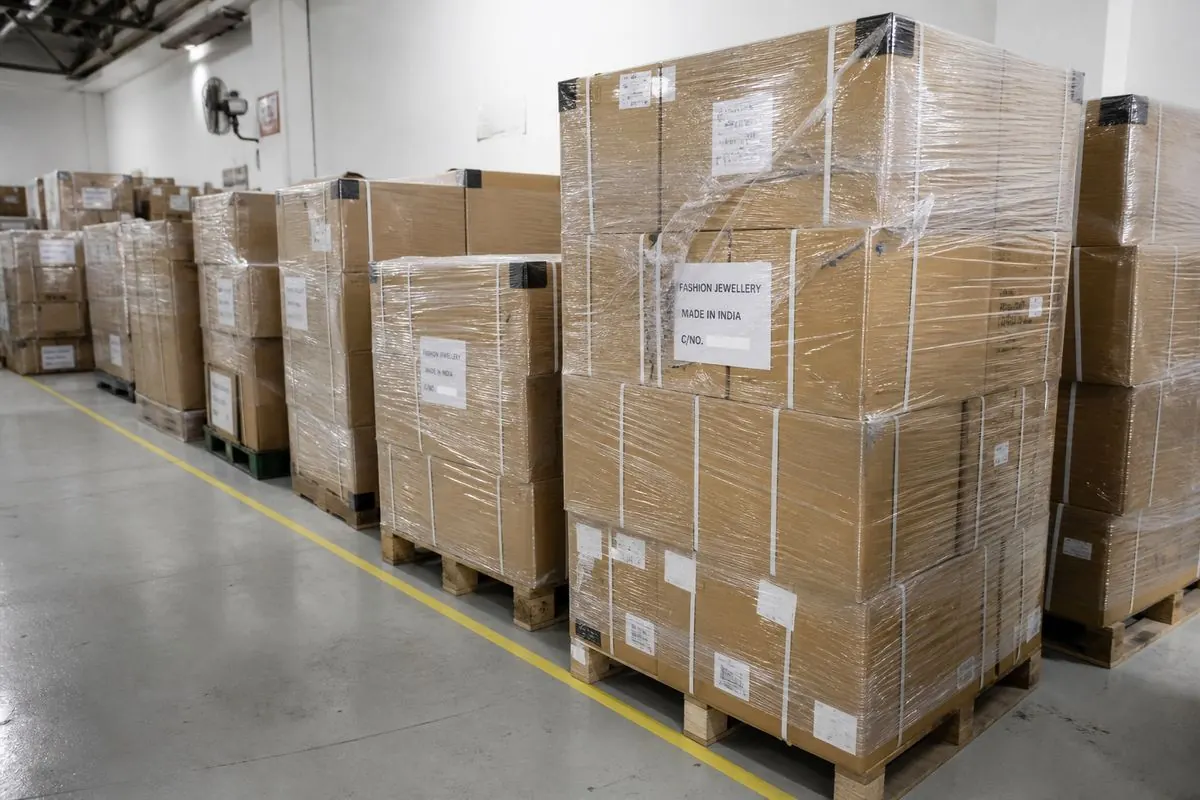
Packing-list lines must reconcile carton count, piece count per SKU, retail card / pouch build, and net / gross weight with plating declaration and QC records — packaging documentation errors are among the top shipping-bill hold triggers on HS 7117 shipments.
Fashion jewellery packaging formats — export practice by tier (documentation reference)
Swipe →
Data table — swipe horizontally on small screens
| Format | Configuration | Documentation Trigger |
|---|---|---|
| Poly-bag bulk | Individual pieces in poly bags; no retail card | Packing list marks 'bulk poly'; no brand hangtag reference required |
| Carded retail | Piece on backing card with brand + barcode | Packing list references card build; brand approval evidence attached |
| Pouched retail | Piece in velvet / satin pouch inside outer | Packing list references pouch material and count |
| Boxed retail (bridal / premium) | Piece in inner box + outer sleeve; hangtag | Packing list references box build; may add fragile / stone marks |
| Assortment master pack | Mixed SKUs in master carton for wholesale display | Packing list must break out each SKU count for HS reconciliation |
| Blister / clamshell | Piece heat-sealed in blister for hang-hook retail | Packing list references blister build; may add plastic composition note |
| Anti-tarnish wrap | Anti-tarnish paper / film for plated pieces | Packing list references wrap; supports plating warranty story |
| Fragile / stone-set warnings | Master carton marks for CZ or glass-heavy shipments | Packing list carton-side marks referenced |
Container Loading Details
Export Tip
- B/L / AWB / packing-list weights must match the verified stow / build plan.
- Seal numbers on stuffing photos must match B/L and shipping bill.
- Archive stow / build photos with the pre-shipment compliance file.
- CHA needs payload / pallet confirmation before the shipping bill finalises.
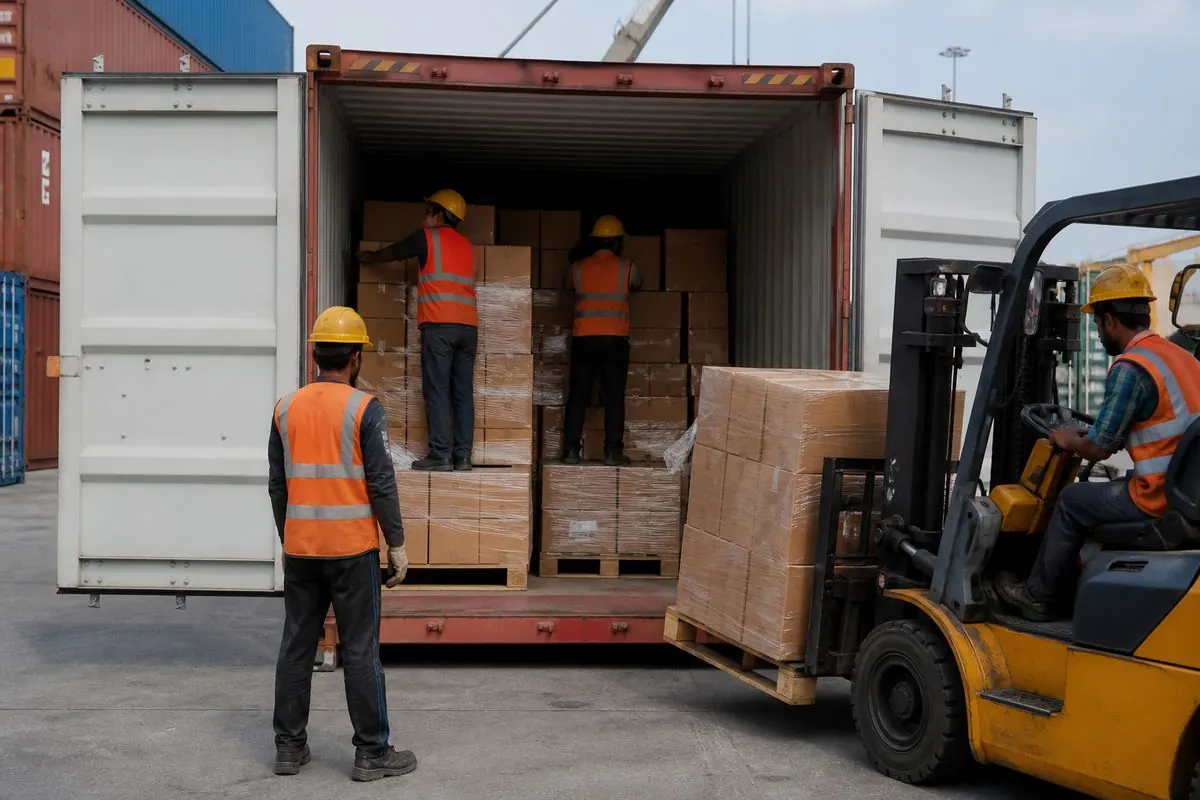
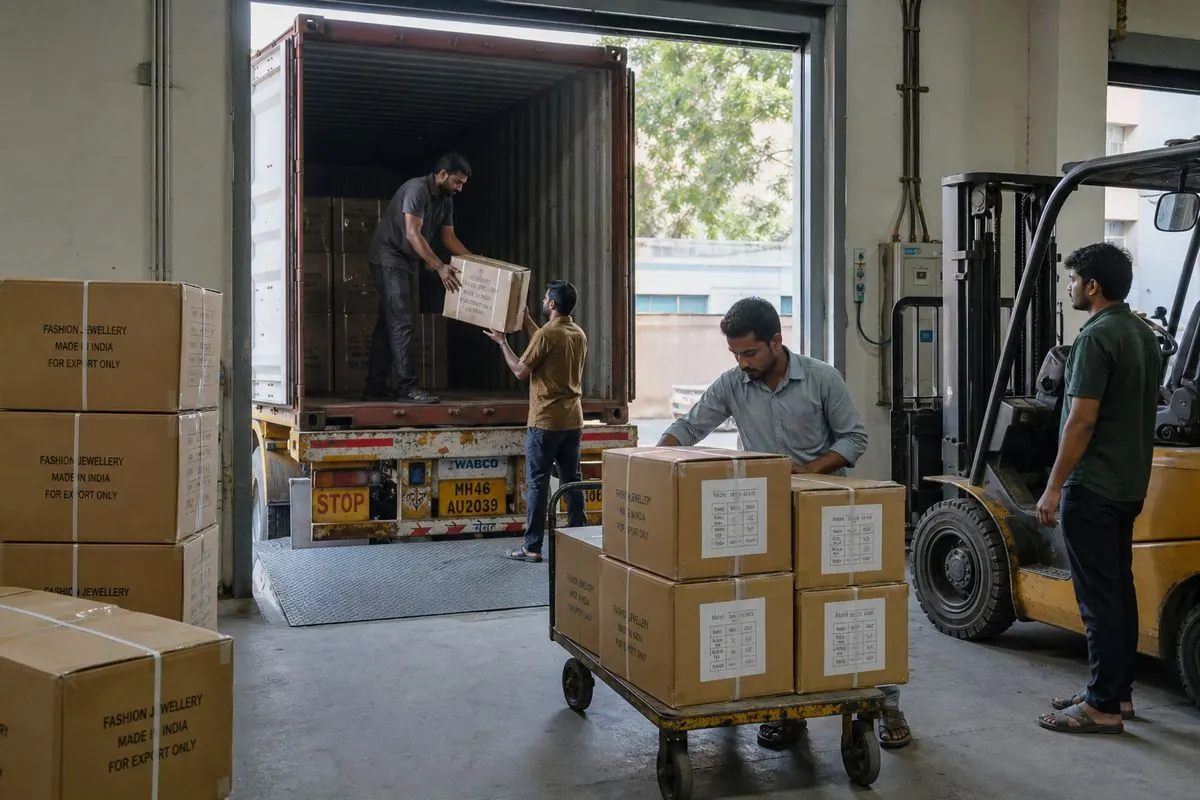
Container number and seal ID on the bill of lading must match stuffing photos and packing list — document reconciliation includes logistics identifiers, not only plating and stone identity.
Directional container / air pallet loading guidance for fashion jewellery exports
Swipe →
Data table — swipe horizontally on small screens
| Format | Loading Consideration | Documentation Trigger |
|---|---|---|
| 20ft FCL | Mixed HS 7117 sublines commonly consolidated with dividers | Shipping bill must list each subline; packing list must reconcile per SKU |
| 40ft HC FCL | Higher volume; retail-ready private-label assortments | Master carton block layout referenced on packing list |
| LCL consolidation | Shared container; consolidator groupage identity | Consolidator B/L referenced alongside master B/L |
| Air freight (DEL / BOM) | Samples, seasonal drops, urgent replenishment | Air waybill identity + pallet build referenced on packing list |
| Courier (DHL / FedEx) | Very small samples; hand-carry style shipments | Courier waybill; simplified paperwork but plating declaration still required |
Shipping Methods
Export Tip
- Shipping docs must match the Incoterm and transit story sold to the buyer.
- B/L or AWB dates and packing-list weights reconcile to the booked FCL / air plan.
- Archive booking confirmations with the compliance file.
- CHA cutoff calendars beat optimistic sales promises every time — build filing time into the shipment plan.
- Air freight suits samples and seasonal drops; sea FCL suits wholesale assortment programmes.
Shipping-document alignment starts with named-port FOB on the invoice — Nhava Sheva, Mundra, Delhi ICD / DEL air, Mumbai BOM air, or Jaipur ICD where used — matching the bill of lading load port or air waybill origin airport and the shipping-bill export port exactly.
Certifications
Compliance Notes
- Cert copies in the shipping file must match invoice SKU lines and lot dates.
- Expired EN 1811 reports fail the compliance gate on EU shipments.
- COO wording follows the final HS and value fields — lock those first.
- Keep cert PDFs named by lot / SKU / plating-line reference for retrieval during claims.
Certification copies must match invoice lot lines — expired EN 1811 reports or lapsed GJEPC RCMC fail buyer audit at the first review. Certificates travel with the export file; verbal claims never survive a plaintiff or retailer compliance-desk enquiry.
Certifications and documents relevant to fashion jewellery export (HS 7117)
Swipe →
Data table — swipe horizontally on small screens
| Certification / Document | Purpose | Relevant For |
|---|---|---|
| GJEPC RCMC + IEC | Baseline export registration and council membership for HS 7117 sublines | All commercial HS 7117 export shipments from India |
| EN 1811 nickel-release test | EU prolonged skin-contact article nickel-release ceiling evidence | All EU-bound skin-contact SKU families |
| REACH / SVHC supplier declaration | SVHC posture per EU REACH candidate list | EU programmes across all HS 7117 SKUs |
| Prop 65 posture statement (US) | Position on lead, cadmium, nickel derivatives per SKU | US retail and D2C programmes |
| ASTM F2923 / CPSIA (US children's) | Children's jewellery safety compliance | SKUs marketed as children's fashion jewellery in the USA |
| ISO 9001 (optional but useful) | Quality-system credibility at exporter site | Larger private-label retail programmes |
| Third-party inspection (SGS / BV / Intertek) | Independent lot / plating verification | LC-backed or high-value programmes |
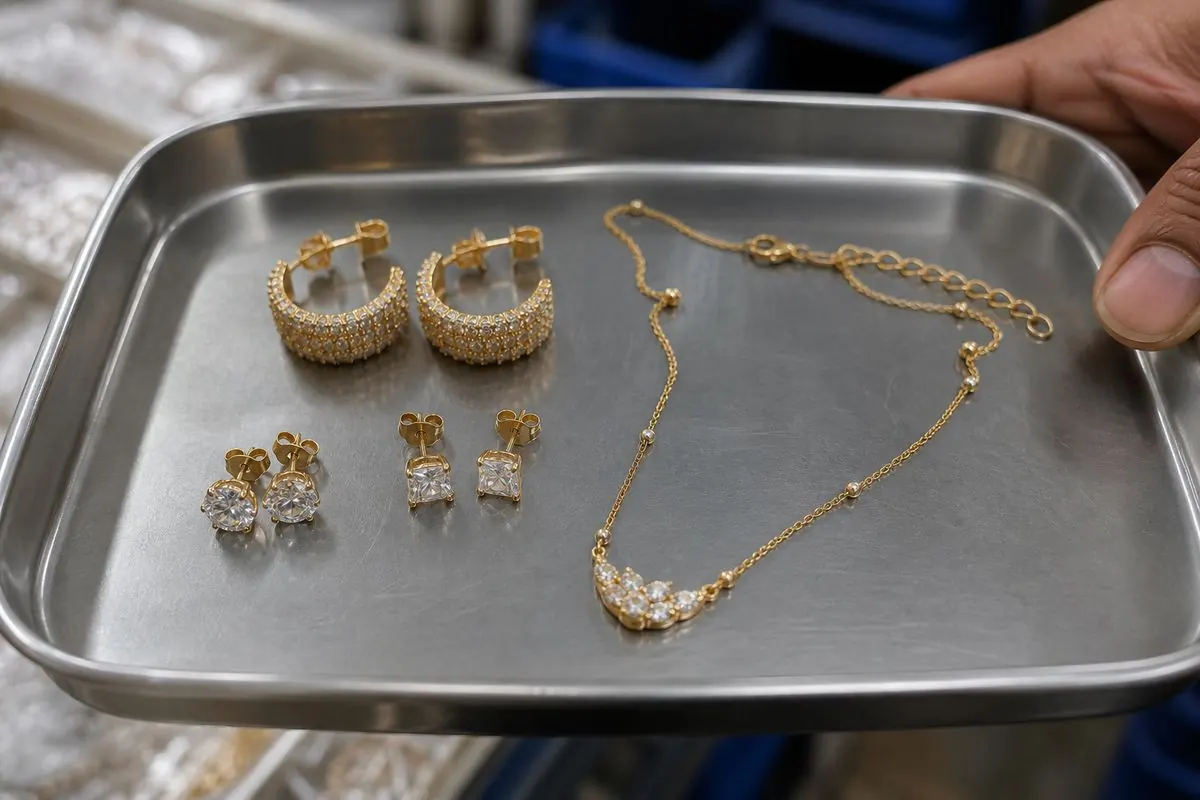
| Certificate of Origin | Country of manufacture; FTA-preferential claims where applicable | Destination customs and FTA duty corridors |
Buyer Requirements
Buyer Requirements
- Buyer document lists must match the HS 7117 eight-digit line on the shipping bill.
- Require SKU description ↔ plating micron ↔ EN 1811 reconciliation rules in the purchase contract.
- Certificate of Origin wording follows corridor FTA claims — confirm early with buyer.
- Inspection + composition certificates (if any) named on the PO before stuffing / pallet build.
- Rejection and claim windows stated beside Incoterm on the PO.
Buyers in HS 7117 programmes request sample sets with plating micron and stone family declared, written base-metal + nickel-release + Prop 65 posture, plating-line photo evidence, FOB pricing archive, and GJEPC / IEC proof — retail buyers add card / pouch / hangtag approval, and skin-contact private-label buyers add EN 1811 evidence upfront.
Country-wise Opportunities
Market Snapshot
Documentation requirements shift per destination — Prop 65 depth for USA, EN 1811 + REACH for EU, hypoallergenic marketing evidence for premium retailers, and FTA-aware paperwork for India–UAE CEPA (Middle East corridor), India–ASEAN, and India–Australia ECTA. Cross-check with Best Countries for Indian Fashion Jewellery Exports before locking your paperwork template per corridor.
Directional country documentation opportunity profile for Indian fashion jewellery exporters (HS 7117 — GJEPC H1 FY24-25 destination directional)
Swipe →
Data table — swipe horizontally on small screens
| Country | Directional Value (H1 FY24-25, US$M) | Key Documentation Focus |
|---|---|---|
| United States | ~11.00 | Prop 65 posture per substance + ASTM F2923 for children's + retail card / pouch |
| France | ~3.96 | EN 1811 nickel-release + REACH SVHC declaration |
| United Kingdom | ~3.16 | UK REACH + nickel-release evidence |
| Netherlands | ~2.48 | EN 1811 + REACH + EU retailer audit pack |
| Spain | ~1.93 | EN 1811 + REACH + design-led retail sheet |
| Thailand | ~1.81 | AIFTA preferential COO only if HS 7117 line eligible + composition declaration |
| Germany | ~0.96 | EN 1811 + REACH + wholesale audit pack |
| Italy | ~0.93 | EN 1811 + REACH + design-led retail evidence |
| Australia | ~0.60 | ECTA preferential COO only if HS 7117 line eligible + nickel posture |
| Canada | ~0.56 | Health Canada children's fashion jewellery posture + composition |
Americas corridor documentation
US-bound files need documented Prop 65 posture per substance and per SKU, ASTM F2923 evidence where children's marketing applies, and retail card / pouch / hangtag build referenced on the packing list. Canadian files add Health Canada children's jewellery ceilings where applicable — do not reuse a US file wholesale.
EU corridor documentation
EU-bound files require EN 1811 nickel-release lab reports on skin-contact SKUs, REACH / SVHC declarations dated to lot, and often UK-specific paperwork for post-Brexit UK REACH filings. Design-led retail buyers in France, Italy, and Spain add finish-quality storytelling to the document ask.
Middle East, ASEAN, and Oceania corridor documentation
India–UAE CEPA, India–ASEAN (AIFTA), and India–Australia ECTA corridors may support FTA-preferential COO claims for eligible HS 7117 lines under Rules of Origin — coordinate with your CHA on schedule eligibility before filing. Middle East programmes add Arabic labelling posture on retail-ready packs where required.
Sourcing Checklist
Checklist
Sourcing document build
- Sample invoice with plating micron + EN 1811 status stated per SKU.
- Supplier GJEPC RCMC + IEC copies on file.
- Plating-line photo evidence per sample lot.
- Base-metal composition and stone-family declaration.
- Retail-pack build reference (card / pouch / hangtag) where private-label.
Buyer-side documentation begins upstream of the shipment — sample-stage evidence, supplier verification pack, and plating-line audit records. See Source Fashion Jewellery Directly from India for verification depth; this section covers the document alignment.
Common Buyer Mistakes
Common Mistakes Box
Future Market Trends
Key Statistics
- Pre-seal digital document packs (invoice + plating declaration + EN 1811 + photos) become the default buyer expectation.
- HS 7117 eight-digit mistakes get caught earlier as customs data quality improves.
- US Prop 65 substance list expansions belong in the archive as living documents, not one-time PDFs.
- Trend: claim defense depends on timestamped plating-line records and lot photo trails.
- EU digital product passport pilots hint at lot-linked disclosures becoming mandatory for skin-contact articles.
Customs digitisation increases pre-arrival document scrutiny — exporters who QC invoice / plating declaration / packing list alignment before cutoff avoid demurrage trends now visible at busy sea and air gateways. EU digital product passport pilots, expanding Prop 65 substance lists, and children's jewellery ceiling tightening in Canada and the USA all point one direction: paper claims without lab evidence lose faster every quarter.
Retail buyer audit portals now archive plating and EN 1811 copies per lot — document expiry management becomes ongoing, not shipment-only. Private-label retail programmes will increasingly demand digital lot traceability tied to plating-line date and EN 1811 test date, not annual boilerplate PDFs.
Buyers who invested in source fashion jewellery directly from India discipline retain programmes; buyers who trusted verbal claims do not. Pair documentation with the nickel-free specialty path in Nickel-Free, Lead-Safe & Hypoallergenic Fashion Jewellery Export Opportunities when retail cards claim hypoallergenic performance.
Challenges & Solutions
Recurring documentation challenges for fashion jewellery exporters are predictable, and so are the fixes.
Fashion jewellery export documentation challenges and solutions
Swipe →
Data table — swipe horizontally on small screens
| Challenge | Solution |
|---|---|
| Plating micron drift between invoice and plating line | Lot-tag every plating-line pull; photo archive per SKU tied to invoice |
| Nickel-free claims without EN 1811 evidence | Refuse to declare 'nickel-free' unless a lot-tagged EN 1811 report is on file |
| Prop 65 blanket 'compliant' language on US files | Substance-level posture statement per SKU + third-party test evidence where exposure model requires |
| Generic 7117 header on shipping bill when SKUs span sublines | CHA must file each eight-digit line separately; confirm in writing before cutoff |
| Missing FTA-preferential COO on eligible corridor | Compliance calendar review of CEPA / ECTA / AIFTA schedule eligibility and Rules of Origin per corridor per shipment |
| Lapsed GJEPC RCMC mid-season | Renewal date logged in compliance calendar; renew 30 days before expiry |
| Retail card / pouch build not on packing list | Packing list template updated to include presentation build per SKU |
Buyer Checklist
Checklist
Exporter Checklist
Checklist
Compliance Checklist
Checklist
Compliance Notes
Sources & Methodology Notes
- GJEPC statistics portal — HS 7117 world position and India share/rank
- GJEPC Half-Yearly Report Apr–Sep 2024 (PDF) — H1 FY2024–25 imitation jewellery values and top destinations
- GJEPC USA–India Market Insights (PDF) — USA import share context for HS 7117
- TrendEconomy India HS 7117 — calendar-year export/import partners (directional)
- EximGuru ITC-HS 7117 — India eight-digit imitation jewellery lines
- USITC HTS search — US duty lines under HTS 7117 (confirm per subheading)
- EN 1811:2023 / REACH nickel (SGS) — EU nickel-release test method
- EUR-Lex REACH Regulation (EC) No 1907/2006 — Annex XVII substance restrictions
- OEHHA Proposition 65 — California listed-substance warnings for USA retail
- CPSC / CPSIA and ASTM F2923 — US children's jewellery safety framework when marketed as children's product
- Canada Children's Jewellery Regulations SOR/2018-82 — lead/cadmium limits under CCPSA
- Health Canada children's jewellery guide
- DGFT — IEC and export compliance framework
- GJEPC — RCMC / IIJS and membership guidance
Trade values and destination rankings in this cluster are directional summaries drawn primarily from GJEPC statistics and the GJEPC Half-Yearly Report (April–September 2024) imitation-jewellery tables (H1 FY2024–25 provisional). Calendar-year HS 7117 flows published on TrendEconomy (India HS 7117) are used as a secondary check. Re-verify live GJEPC, DGCI&S / Department of Commerce trade data, ITC Trade Map, and licensed customs-broker advice before quoting buyers or filing shipping bills.
HS eight-digit lines follow India ITC-HS Chapter 71 heading 7117 (see EximGuru ITC-HS 7117 listing and confirm live with your CHA). Destination duty rates vary by eight-digit line — for the USA consult the USITC Harmonized Tariff Schedule. Nickel-release method EN 1811:2023 is the EU-harmonised reference under REACH Annex XVII Entry 27 (SGS note on EN 1811:2023 harmonisation). California Prop 65, US CPSIA / ASTM F2923 for children's jewellery claims, and Canada's Children's Jewellery Regulations (SOR/2018-82) under the Canada Consumer Product Safety Act change by destination and SKU claim — confirm with destination counsel.
Conclusion
Documentation QC before vessel cutoff or air pallet build prevents destination holds and buyer chargebacks — invoice, packing list, plating declaration, EN 1811 report, REACH / SVHC statement, Prop 65 posture, shipping bill, and B/L or AWB must tell one shipment story under India HS 71171100 / 71171910 / 71171920 / 71171990 / 71179010 / 71179090.
Altus Exports assembles export document sets for HS 7117 FCL and air programmes — export products from India with GJEPC-aligned packs, merchant exporter in India mandates, and product sourcing company in India coverage.
Start exporters on How to Export Imitation Jewellery from India; buyers on Source Fashion Jewellery Directly from India; premium programmes on Nickel-Free, Lead-Safe & Hypoallergenic Fashion Jewellery Export Opportunities; or contact us to open a documented programme.