
Most Demanded Indian Fashion Jewellery by Country
By Saurabh Mittal, Founder, Altus Exports
A demand-intel guide to what each major destination buys in Indian imitation and fashion jewellery — country by country matrix of preferred materials, plating, stone sets, pack formats, and compliance certifications across USA, France, UK, Netherlands, Spain, Thailand, Germany, Italy, Australia, and Canada.
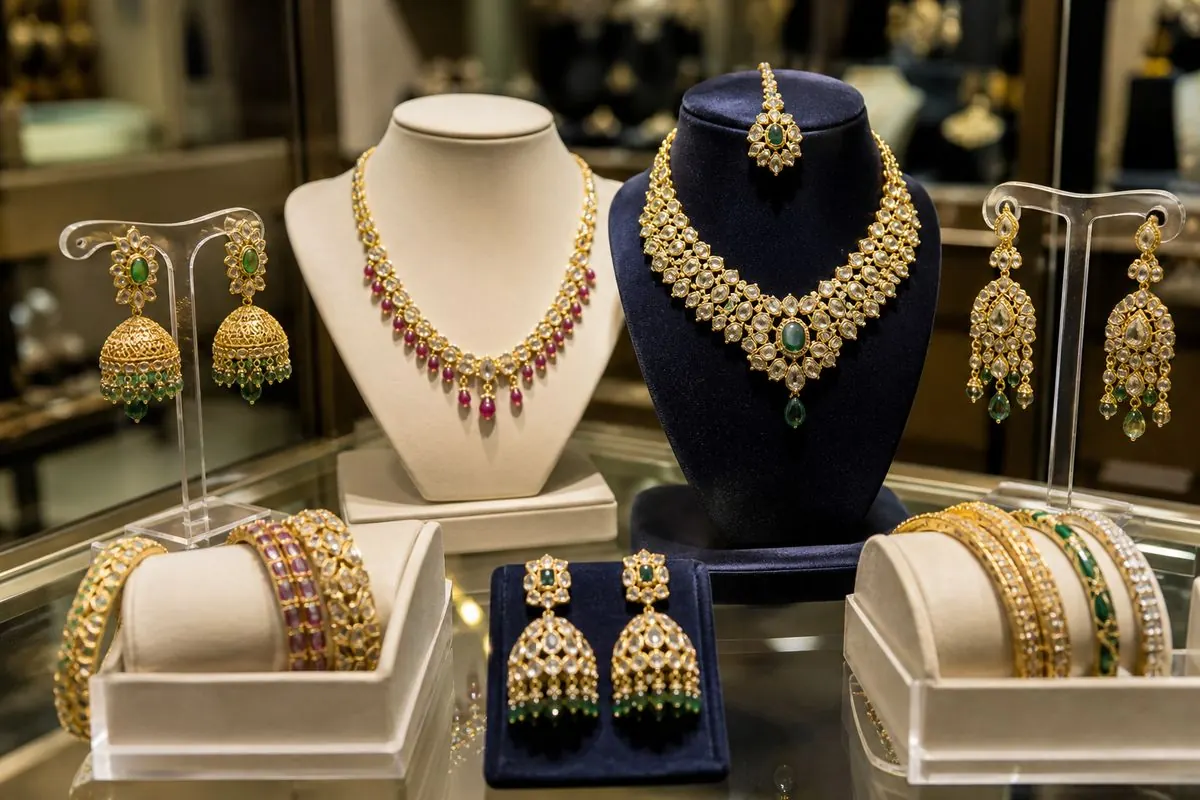
What each destination pulls off the shelf is a demand-intel question — material, plating micron, nickel posture, pack, and cert stack — not a vanity ranking.
This post owns the country × material × plating × stone × pack × cert matrix for the ten GJEPC H1 FY24-25 corridors.
Macro ranking: Best Countries for Indian Fashion Jewellery Exports. Process: pillar guide.
Scope: HS 7117 imitation jewellery — not precious (7113/7114) or brass décor. Lines: 71171100 · 71171910 · 71171920 · 71171990 · 71179010 · 71179090.
Council: GJEPC — see GJEPC Registration Benefits for RCMC detail.
Directional context: India ~US$140–160M; world ~US$9.25–10.25B; H1 US$30.58M (~-22.68% YoY).
Corridors: USA · France · UK · Netherlands · Spain · Thailand · Germany · Italy · Australia · Canada. Re-verify before quoting.
Per-SKU pack and MOQ depth: Top Fashion Jewellery Products Exported from India.
Key Takeaways
Summary Box
Executive Summary
Summary Box
Country demand for Indian HS 7117 imitation jewellery is a matrix, not a list. Each destination reads Indian output through its own preferred combination of base metal, plating micron, stone-set type, pack format and compliance certification — the same brass gold-plated bangle sells at very different price points, cert overlays and pack specs in Los Angeles versus Paris versus Bangkok. This post lays out the per-country demand matrix for the ten destinations that anchor GJEPC's directional H1 FY24-25 signal: USA, France, UK, Netherlands, Spain, Thailand, Germany, Italy, Australia, Canada.
Read this alongside the pillar guide for the IEC and shipping-bill process, GJEPC Registration Benefits for Fashion Jewellery Exporters for RCMC posture, Fashion Jewellery Export Documentation Checklist for the paperwork gate, and Nickel-Free & Lead-Safe Hypoallergenic Fashion Jewellery Export Opportunities for hypoallergenic programme depth. For corridor economics and ranking methodology see Best Countries for Indian Fashion Jewellery Exports — this post owns the demand matrix, not the ranking method.
The H3 per country below is a working brief. Use each subsection as a starting spec sheet before RFQ — refine with your CHA, plating unit and destination compliance counsel before commercial commitment.
Market Size & Industry Overview
Key Statistics
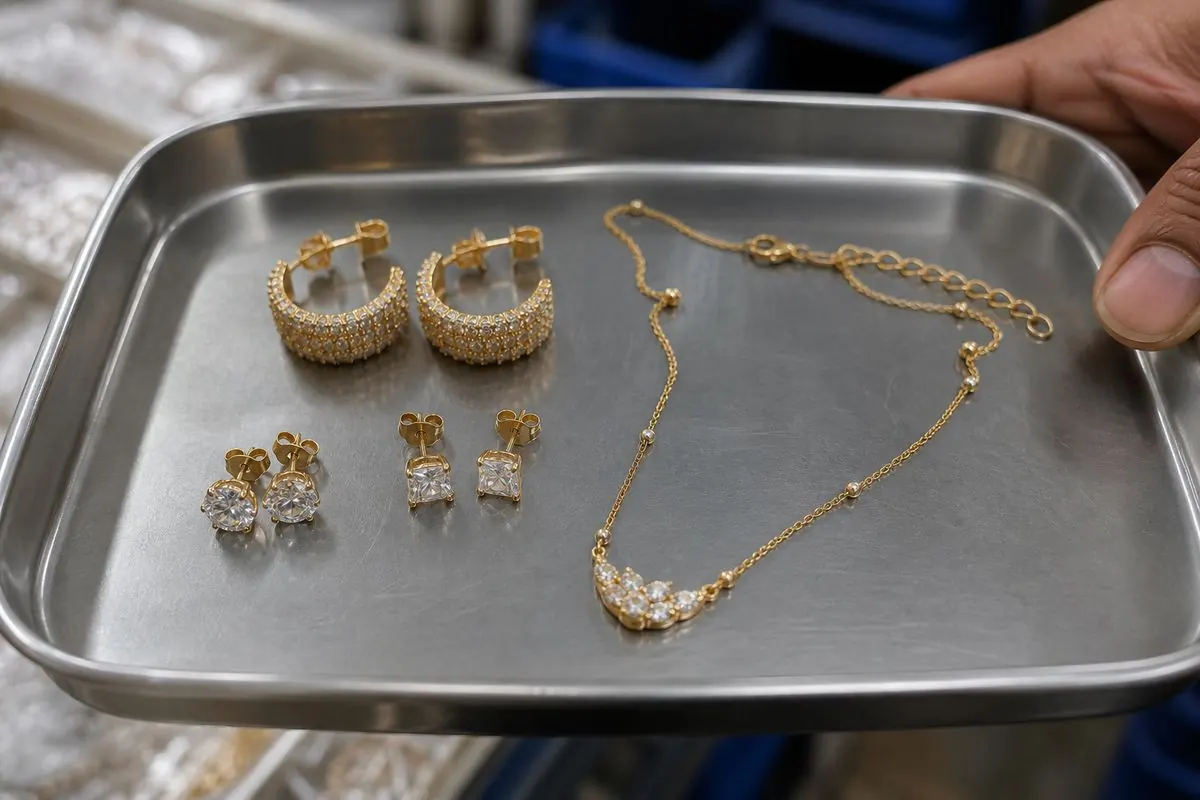
India's fashion jewellery export basket combines Jaipur design capacity (CZ-studded bridal, meenakari-inspired, kundan-style), Delhi-NCR mass-market plated fashion (Sadar Bazar / Karol Bagh / Noida), Mumbai-Thane private-label modern retail, Hyderabad ethnic and bridal, and Kolkata select ethnic and export consolidation lots. Moradabad supports findings only. Each destination pulls a different weighted mix of these clusters — a US ethnic wholesaler leans on Jaipur and Hyderabad; a French modern retailer buys from Delhi-NCR and Mumbai-Thane; a Netherlands distributor takes mixed FCLs from all three clusters.
Buyers under HS 7117 purchase plating micron discipline, tarnish resistance, nickel-release conformity where applicable, stone-set security, clasp function and pack integrity — not just visual design. A single earring photo on a marketplace listing masks three or four different demand vectors (material, plating, stone-set, pack) that vary by destination.
The demand matrix below is sized against India HS 7117 near US$140–160M (world ~US$9.25–10.25B; share ~1.4–1.7%) and anchored on H1 FY24-25 provisional US$30.58M (-22.68% YoY). Use the H1 corridor weights to allocate sample kits — not equal airfreight to every market.
Export Statistics
Key Statistics
Anchor demand planning to HS-line discipline. India 7117 covers imitation jewellery. Common eight-digit lines are 71171100 (cuff-links and studs), 71171910 (bangles), 71171920 (German silver jewellery), 71171990 (other base metal), 71179010 (studded imitation pearl and stone pieces) and 71179090 (other).
Demand-matrix planning uses GJEPC as the value lens — India HS 7117 near US$140–160M on a world base of about US$9.25–10.25B (share ~1.4–1.7%, rank ~9th–12th) — then maps SKUs inside H1 FY24-25 provisional US$30.58M (-22.68% YoY vs US$39.56M). Soft halves punish one-kit-for-all sampling.
The table below anchors the country-by-country demand matrix that follows — verify current numbers with GJEPC and ITC Trade Map before quoting buyers.
Top destinations for Indian HS 7117 imitation jewellery — GJEPC H1 FY24-25 directional
Swipe →
Data table — swipe horizontally on small screens
| Rank | Destination | Directional H1 Value (USD M) | Share note |
|---|---|---|---|
| 1 | United States | ~11.00 | Largest single destination in the H1 window |
| 2 | France | ~3.96 | EU modern retail and private label |
| 3 | United Kingdom | ~3.16 | Ethnic + modern retail mix |
| 4 | Netherlands | ~2.48 | EU consolidation entry |
| 5 | Spain | ~1.93 | EU retail and festive |
| 6 | Thailand | ~1.81 | Southeast Asia hub |
| 7 | Germany | ~0.96 | EU modern retail audits |
| 8 | Italy | ~0.93 | Design-forward retail |
| 9 | Australia | ~0.60 | Modern retail assortments |
| 10 | Canada | ~0.56 | Modern retail assortments |
Import Statistics
Key Statistics
The demand matrix in this post reads Indian HS 7117 output through destination import behaviour rather than India-side export volume alone. What matters is how each destination screens Indian consignments at the port and on retail shelves — Prop 65 in the USA, EN 1811 and REACH/SVHC across the EU/UK, TISI-style local retail references in Thailand, and consumer-product-safety frameworks in Australia and Canada. India-side imports of HS 7117 are much smaller and mostly involve findings and specialty components — not relevant to the destination demand lens this post uses.
The table below cross-tabulates each destination's headline compliance stack against the SKU families they most actively pull from Indian clusters. Use it as a quick corridor triage before the per-country H3 detail.
Destination compliance overlay for Indian HS 7117 imports (demand-side lens)
Swipe →
Data table — swipe horizontally on small screens
| Destination | Compliance Overlay | SKU families pulled from India |
|---|---|---|
| United States | Prop 65 inquiry readiness; ASTM F2923/CPSIA if children's-claim | Ethnic assortments, CZ-studded bridal, private-label plated fashion |
| France | EN 1811; REACH/SVHC | Modern-retail plated fashion, private-label CZ |
| United Kingdom | UK REACH-equivalent; nickel-release | Ethnic bridal + modern retail plated fashion |
| Netherlands | EN 1811; SVHC; distributor onboarding | Mixed FCL assortments through EU consolidation hub |
| Spain | EN 1811; SVHC | Festive-linked, ethnic-inspired plated fashion, cocktail rings |
| Thailand | Local retail expectations; TISI-style references | Alloy fashion, CZ statement, festival-linked pieces |
| Germany | EN 1811; SVHC; strict retail audits | Two-tone / rhodium plated fashion, modern-retail assortments |
| Italy | EN 1811; SVHC | Design-forward, heavier plating, finer stone-set pieces |
| Australia | Consumer product safety framework | Modern-retail assortments; ethnic long-tail via diaspora |
| Canada | Consumer product safety; children's-product frameworks where claimed | Modern-retail assortments; multicultural retail long-tail |
Product Categories & Variants Overview
Summary Box
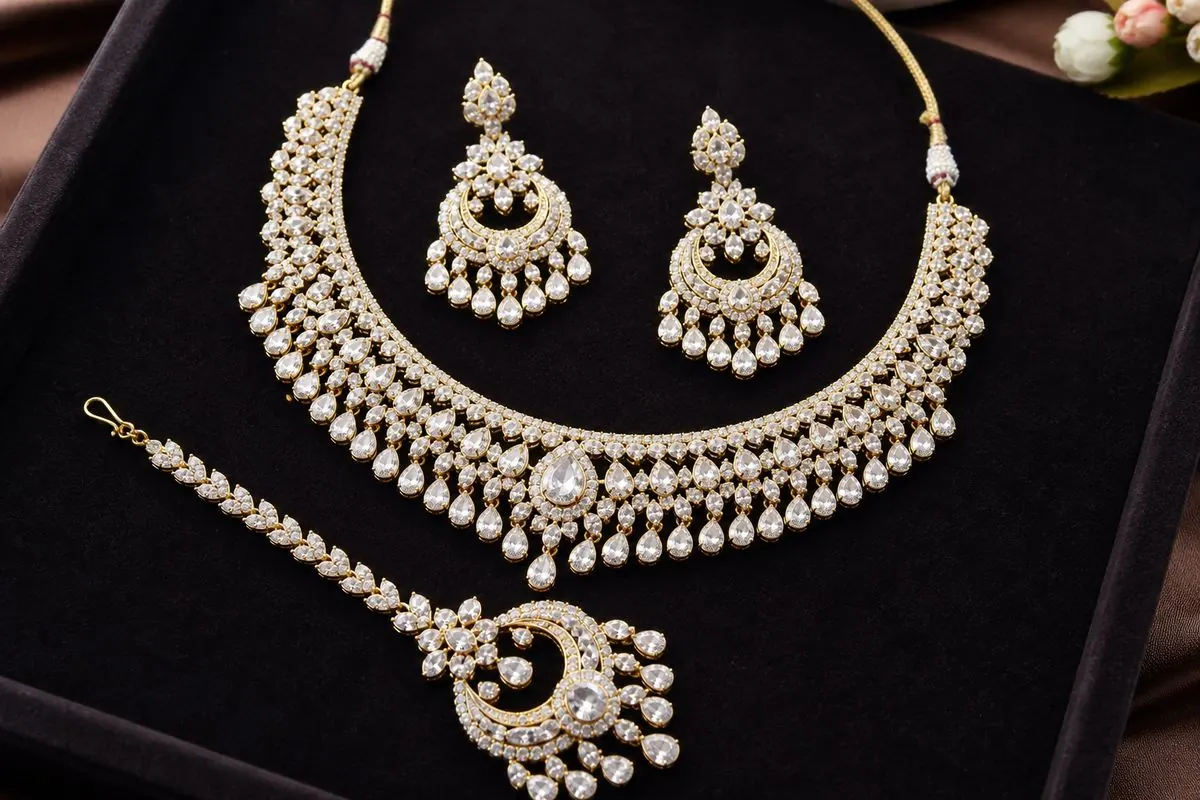
India ships imitation jewellery across earrings, necklaces and sets, bangles and bracelets, rings, anklets and toe-rings, hair accessories, brooches, cuff-links and studs, and studded imitation pearl / CZ sets — all under HS 7117. This post handles categories at overview level and then breaks demand down per country. For per-SKU pack format, material and plating options, MOQ ladders and directional FOB by piece, see Top Fashion Jewellery Products Exported from India.
The overview table below anchors the per-country H3 that follows — pick the SKU family, confirm HS hint with your CHA, and then read the country H3 to see which combination sells where.
Primary imitation jewellery SKU families exported from India (demand-matrix anchor)
Swipe →
Data table — swipe horizontally on small screens
| SKU Family | India HS Hint | Typical Base / Finish | Where demand concentrates |
|---|---|---|---|
| Earrings (stud, jhumka, hoop, drop) | 71171990 / 71179010 | Brass or alloy, gold/rhodium plated; CZ/imitation stone | USA, UK, France, Netherlands, Australia, Canada |
| Necklaces & sets (choker, long-chain, bridal) | 71179010 / 71171990 | Base metal with plating; CZ / imitation pearl set | USA, UK, Thailand, Australia, Canada |
| Bangles & bracelets | 71171910 | Brass/alloy, plated; enamel or stone accents | USA, UK, Netherlands, France, Thailand |
| Rings (fashion, cocktail, band) | 71171990 / 71179010 | Alloy, plated; CZ or imitation stone | France, Italy, Germany, Spain, USA |
| Cuff-links & studs | 71171100 | Base metal, plated; enamel/stone | USA, UK, Germany, Italy — men's formal / corporate gift |
| German silver jewellery | 71171920 | Nickel-silver alloy (contains Ni — declare) | USA, UK ethnic retail; not for EU nickel-safe programmes |
| Anklets, toe-rings, hair accessories | 71171990 / 71179010 | Alloy, plated; enamel/stone | USA, UK, Australia, Canada ethnic retail |
| Studded imitation pearl / CZ bridal sets | 71179010 | Alloy with heavy stone/pearl set | USA, UK, Australia, Canada bridal; UK/Thailand modern-retail |
Manufacturing Overview
Export Tip
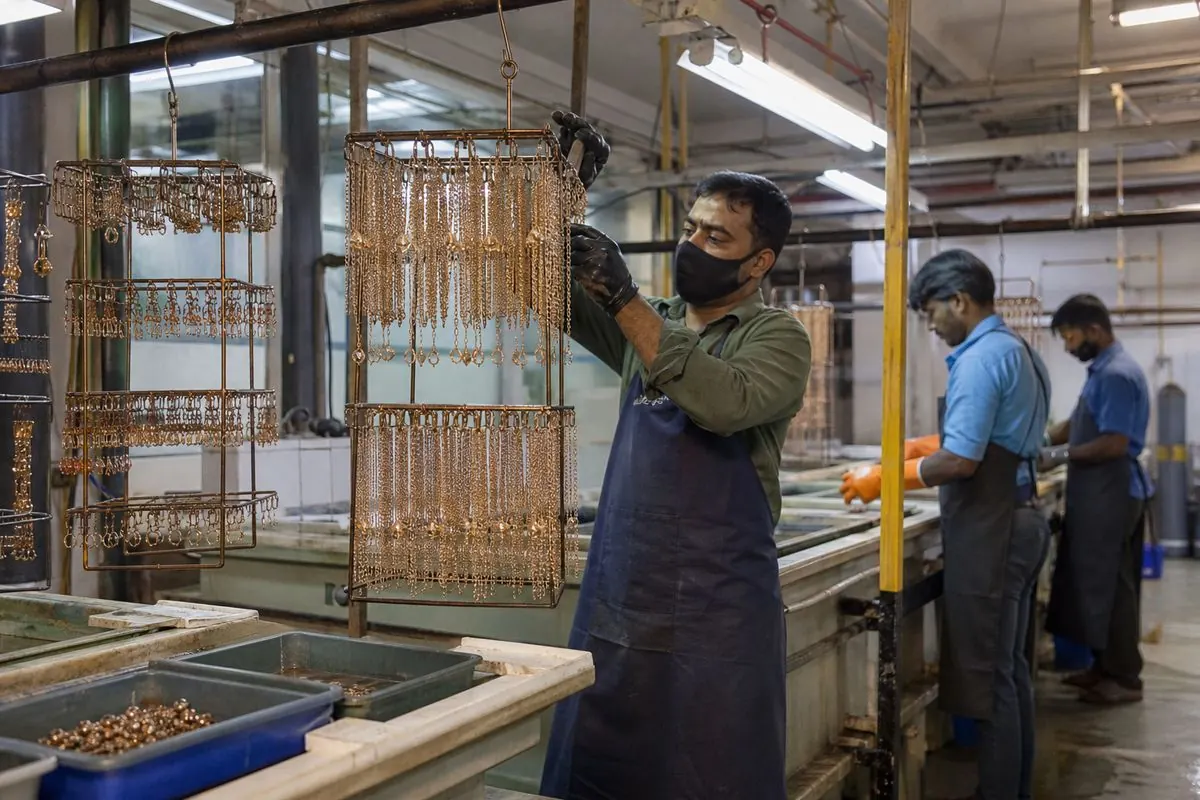
The per-country demand matrix that follows sits on top of a specific manufacturing spine. Jaipur handles CZ-studded bridal and design-led programmes; Delhi-NCR runs high-volume plated fashion (Sadar Bazar / Karol Bagh / Noida); Mumbai-Thane specialises in private-label modern retail; Hyderabad delivers ethnic and bridal; Kolkata supports select ethnic and export consolidation lots. Moradabad supplies findings only. Plating micron and bath chemistry (nickel-containing vs nickel-free bases, top coats) directly determine tarnish life and EN 1811 nickel-release performance at each destination.
For the demand matrix, the operational question is which cluster and plating chemistry to route to which country. A French modern-retail buyer expects Mumbai-Thane private-label discipline with EN 1811 proof; a US ethnic wholesaler taps Jaipur/Hyderabad for CZ bridal; a Netherlands distributor mixes cluster output through EU consolidation. Route the country demand back to the right cluster before quoting FOB.
Lot identity — supplier batch, plating batch, nickel-release test reference — must appear on the invoice, packing list and any nickel-safe declaration a buyer requests. Blur any of these and a straightforward FCL turns into a destination hold — regardless of which country the demand originated from.
Demand-Intel Workflow
The sequence below is the working method behind this post — how to build a country demand matrix that turns GJEPC signals and cluster capacity into a per-buyer quote. It is a demand-intel workflow, not a shipping-bill workflow — for the export process from IEC through container loading see the pillar guide.
Step 1: Pull the GJEPC H1 corridor signal
Start with GJEPC's H1 FY24-25 destination table (or the most recent equivalent) and lock the top 10 destinations for HS 7117. Verify against DGCI&S and ITC Trade Map for cross-checking. This is your anchor list — do not build demand intel on countries outside the top 15 unless you have a specific corridor mandate from an existing buyer.
Step 2: Overlay destination compliance stack
For each destination, map the compliance stack — Prop 65 for the USA, EN 1811 + REACH/SVHC for the EU/UK, TISI-style references for Thailand, consumer-product safety for Australia and Canada. This overlay tells you which plating chemistry and nickel posture is a baseline versus a nice-to-have. Never quote FOB into a corridor whose compliance stack you cannot map on demand.
Step 3: Match SKU family × material × plating to each destination
Cross-tabulate destination consumer preference (ethnic vs modern-retail, plated vs nickel-free, CZ vs imitation pearl) with cluster capability (Jaipur / Delhi-NCR / Mumbai-Thane / Hyderabad / Kolkata). This is the heart of the matrix. USA pulls ethnic CZ bridal from Jaipur/Hyderabad plus mass plated fashion from Delhi-NCR; France pulls modern-retail rhodium/gold plated from Mumbai-Thane; and so on.
Step 4: Fix stone-set and pack cues per country
Stone-set preference varies — CZ dominates USA ethnic bridal and UK modern retail, imitation pearl sits high in modern-retail assortments across the EU, glass and enamel accents drive Spanish festive lines. Pack cues also vary — retail card + hangtag for modern-retail EU/Australia/Canada, larger inner box for ethnic bridal in USA/UK, folded-in-pouch presentation for Thailand and Southeast Asian retail formats.
Step 5: Confirm cert overlay per lot
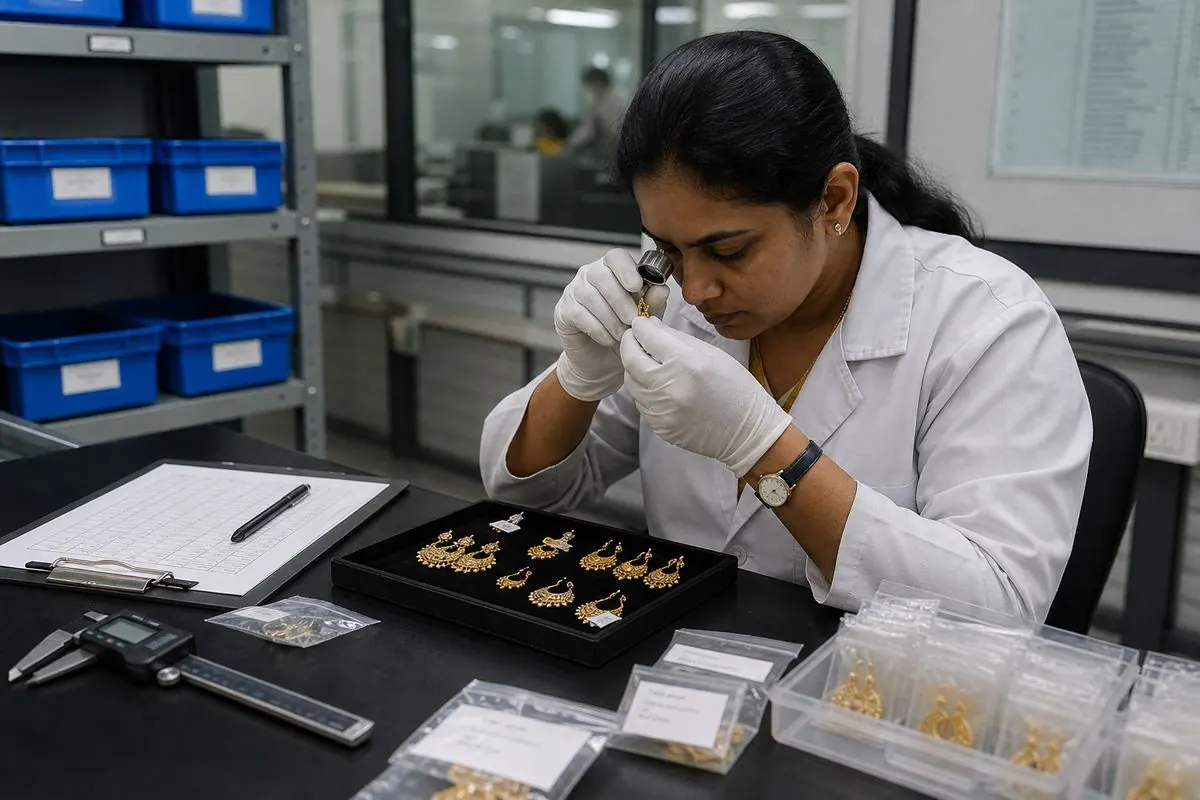
Only claim on the pack what the lot can prove. For each country, confirm which cert layer is baseline (EN 1811 in EU/UK; Prop 65 posture in USA; consumer-product safety in Australia/Canada) and which is claim-driven (ASTM F2923/CPSIA where children's-claim used). Retain plating batch identity and test summary references alongside the invoice and packing list before shipping bill filing.
Step 6: Price the country-specific FOB
Country-specific FOB reflects the destination compliance overhead, plating-micron baseline, pack format and buyer channel. USA ethnic wholesale accepts economy plated bands US$0.30–2.00/unit; France modern retail sits mid-range US$2–8/unit with heavier plating and EN 1811 overhead; Italian design-forward buyers pay premium on plating micron and stone-set finish. Never publish a single generic FOB across corridors.
Step 7: Sequence sample-kit gate per country
Design the sample kit against the country's demand matrix — do not send a generic assortment. A US buyer's kit weights ethnic bridal and mass plated fashion; a French buyer's kit weights modern-retail rhodium and private-label CZ; a Netherlands distributor's kit is a broader mixed spread reflecting the consolidation role. Reference-piece retention post-approval mirrors the same weighting.
Step 8: Update the matrix quarterly against GJEPC data refresh
GJEPC releases updated statistics each quarter. Refresh the country matrix against the latest data — corridor shares shift, and last year's #3 can become this year's #5. Pair the update with buyer-side signals (retail cycle, EU regulatory changes, US retail programme launches) so the matrix stays a live tool, not a static slide.
Pricing Analysis
Buyer Tip
Country demand pricing is a spread, not a point. Directional FOB bands remain: economy plated US$0.30–2.00/unit; mid-range CZ fashion US$2–8/unit; premium nickel-free lines quoted higher on plating micron and test pack. Where each corridor lands within that spread depends on channel, compliance overhead and pack format.
The table below anchors per-country FOB expectations — verify lot-specific FOB on the quote date and never publish stale bands as fixed contract prices for commercial negotiations.
Directional FOB spread by destination for Indian fashion jewellery (HS 7117)
Swipe →
Data table — swipe horizontally on small screens
| Destination | Dominant channel | Typical FOB band (directional) | Cost drivers |
|---|---|---|---|
| USA | Ethnic wholesale + modern retail + private label | US$0.30–8/unit spread | Base metal + plating + CZ + Prop 65 posture where applicable |
| France | Modern retail + private label | US$2–8/unit typical | Plating micron + EN 1811 + SVHC overhead |
| UK | Ethnic + modern retail | US$1–8/unit spread | UK REACH-equivalent + nickel-release |
| Netherlands | EU consolidation distributor | US$1–6/unit typical | Mixed cluster; distributor margin; SVHC declaration |
| Spain | Festive + modern retail | US$1–6/unit typical | Ethnic-inspired plated; EN 1811 baseline |
| Thailand | SEA regional retail | US$0.50–4/unit typical | Local retail conventions; alloy + CZ finish |
| Germany | Modern retail audit-heavy | US$2–8/unit typical | Rhodium / two-tone plating; strict EN 1811 + SVHC |
| Italy | Design-forward retail | US$3–10/unit typical | Heavier plating; finer stone-set; EN 1811 baseline |
| Australia | Modern retail + ethnic long-tail | US$1–6/unit typical | Consumer-product safety references |
| Canada | Modern retail + multicultural retail | US$1–6/unit typical | Consumer-product safety; children's-jewellery framework if claimed |
MOQ Analysis
Buyer Tip
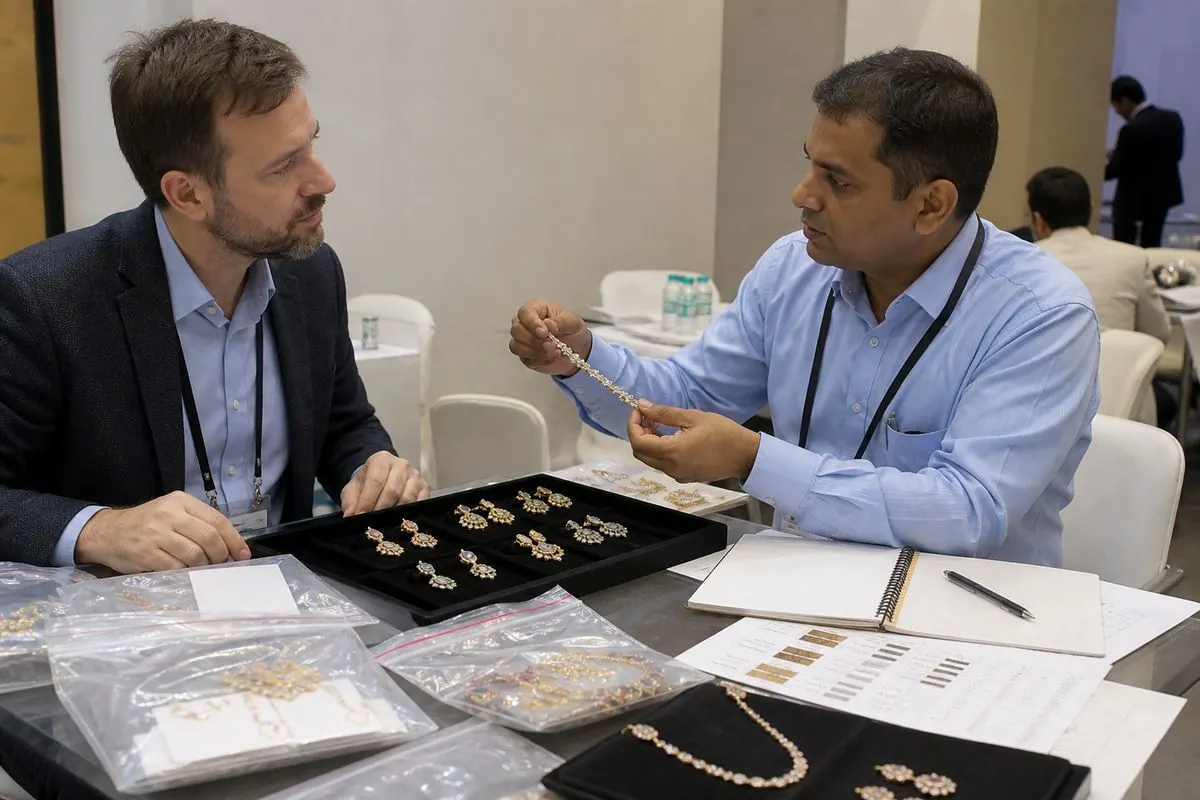
MOQ posture also varies by country channel. USA ethnic wholesale and Netherlands EU consolidation frequently support mixed FCL assortments spanning 5,000–20,000+ pieces. France, Germany and Italy modern-retail programmes typically run private-label trials of 500–2,000 pieces per SKU before scaling. Thailand and smaller EU markets often trial with 500–1,000 pieces per SKU. Australia and Canada modern-retail assortments usually enter with 1,000–3,000 pieces per SKU.
The table below anchors per-destination MOQ expectations. Confirm bottle-equivalent MOQ with the plating and finishing unit before buyer commitment — MOQ is commercial, not statutory.
Directional MOQ posture by destination for Indian HS 7117 fashion jewellery
Swipe →
Data table — swipe horizontally on small screens
| Destination | Sample kit | Trial order | Wholesale programme |
|---|---|---|---|
| USA (ethnic wholesale + retail) | 10–50 pcs/SKU | 500–2,000 pcs/SKU | 5,000–20,000+ pcs or mixed FCL |
| France (modern retail) | 10–30 pcs/SKU | 500–1,500 pcs/SKU | 3,000–10,000+ pcs private-label |
| UK (ethnic + retail) | 10–50 pcs/SKU | 500–2,000 pcs/SKU | 5,000–15,000+ pcs mixed |
| Netherlands (distributor) | 20–50 pcs/SKU or 2 doz | 1,000–3,000 pcs/SKU | 10,000–30,000+ pcs mixed FCL |
| Spain (festive + retail) | 10–30 pcs/SKU | 500–1,500 pcs/SKU | 3,000–8,000+ pcs private-label |
| Thailand (SEA retail) | 12–24 pcs/SKU | 500–1,000 pcs/SKU | 3,000–8,000+ pcs mixed |
| Germany (audit-heavy retail) | 10–30 pcs/SKU | 500–1,500 pcs/SKU | 3,000–8,000+ pcs private-label |
| Italy (design-forward) | 10–30 pcs/SKU | 500–1,200 pcs/SKU | 2,000–6,000+ pcs private-label |
| Australia / Canada | 10–30 pcs/SKU | 500–2,000 pcs/SKU | 3,000–8,000+ pcs modern retail |
Packaging Standards
Export Tip
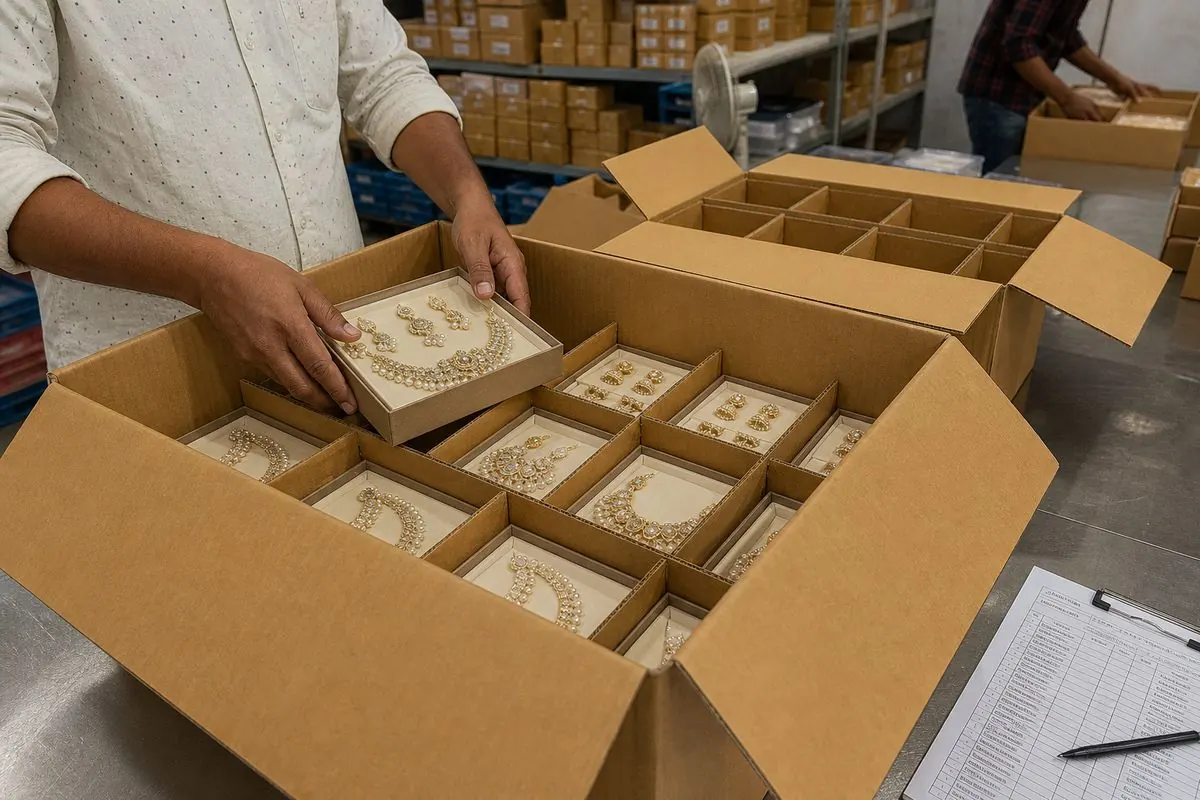
Pack format is a demand vector, not an afterthought. USA ethnic wholesale accepts poly bag plus inner card, moving to inner-box for premium CZ bridal. French, German and Italian modern retail expect retail-ready card + pouch with buyer artwork and hangtag. Netherlands distributor programmes take mixed inner packs consolidated in divider master cartons. Thailand and SEA retail often prefers folded-pouch presentations for statement pieces. Australia and Canada modern retail follow US/UK norms with tighter labelling discipline. Across all corridors, anti-tarnish paper inside the master carton is non-negotiable for sea FCL.
Packaging preference by destination for Indian fashion jewellery (HS 7117)
Swipe →
Data table — swipe horizontally on small screens
| Destination | Preferred primary pack | Retail-ready expectations | Master carton note |
|---|---|---|---|
| USA | Poly bag + card; inner-box for premium CZ | Barcode + SKU tag; Prop 65 warning when substances apply | Divider carton with anti-tarnish liner; batch ID |
| France | Poly bag + printed card + pouch | Buyer artwork + hangtag; EN 1811 reference on pack | Divider carton; humidity liner |
| UK | Poly bag + card; inner-box premium | Barcode + SKU tag; UK REACH-equivalent posture | Divider carton; anti-tarnish liner |
| Netherlands | Mixed formats consolidated | Distributor-defined; SVHC declaration on pack | Divider master carton; batch ID for onward split |
| Spain | Card + pouch; festive gift-box options | EN 1811 + SVHC reference | Divider carton; humidity liner |
| Thailand | Folded pouch for statement pieces | Local retail cues; language labelling per buyer | Divider carton; anti-tarnish liner |
| Germany | Retail-ready card + pouch | Strict EN 1811 + SVHC on pack; audit-ready | Divider carton; humidity liner; drop-test |
| Italy | Premium pouch or inner box | Design-forward artwork; EN 1811 + SVHC | Divider carton; humidity liner |
| Australia / Canada | Retail card + hangtag | Consumer-product safety marks per buyer; children's-jewellery marks if claimed | Divider carton; anti-tarnish liner |
Container Loading Details
Export Tip
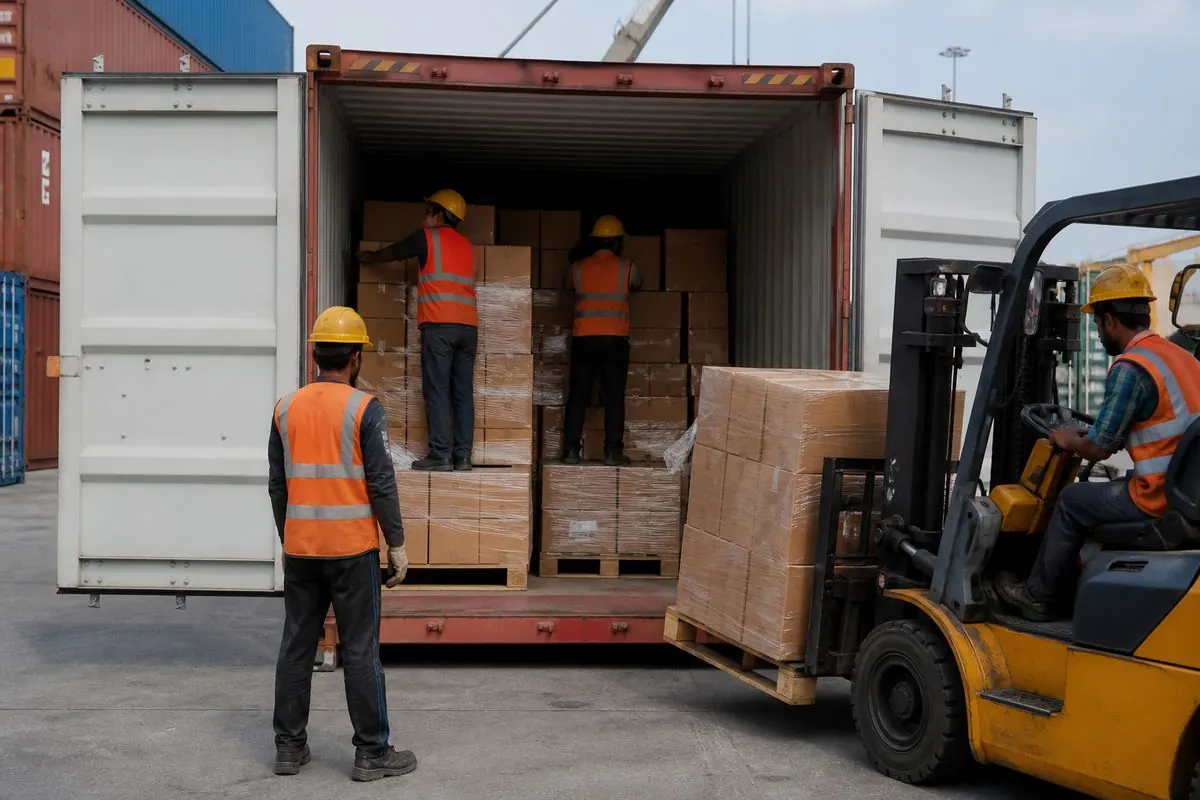
Container loading follows destination MOQ and channel. USA and Netherlands programmes lean toward 40ft FCL/HC on wholesale programmes; France, Germany and Italy modern-retail trials sit on 20ft FCL or air. Australia, Canada and Thailand modern-retail buyers accept LCL and 20ft FCL depending on distributor scale. Air from BOM/DEL serves samples and premium CZ bridal across all corridors.
Directional container/air mode by destination for Indian fashion jewellery
Swipe →
Data table — swipe horizontally on small screens
| Destination | Typical mode | Loading note |
|---|---|---|
| USA | 20ft FCL / 40ft FCL / air | Mixed SKU FCL common; divider carton + anti-tarnish liner |
| France | 20ft FCL / air | Private-label trials often air; volume moves via FCL |
| UK | 20ft FCL / air | Ethnic bridal often air; volume plated fashion FCL |
| Netherlands | 40ft FCL/HC as EU consolidation hub | Mixed SKU high volume; consolidation onward EU split |
| Spain | 20ft FCL / LCL / air | Festive-linked pulls schedule around retail calendars |
| Thailand | 20ft FCL / LCL | SEA regional; shorter transit; volume balances well |
| Germany | 20ft FCL / air | Modern-retail trials often air; scale FCL with humidity liner |
| Italy | 20ft FCL / air | Premium finishes often air-shipped; FCL for scale |
| Australia | 20ft FCL / LCL / air | Modern-retail assortments; LCL common on first orders |
| Canada | 20ft FCL / LCL / air | Modern-retail assortments; USA transit routing sometimes considered |
Shipping Methods
Export Tip
- Samples: air / express 7–14 days across all destinations
- Stock SKUs: 3–5 weeks post-PO confirmation typical
- Private-label / tooled: 6–12 weeks including plating spec and doc cycles
- Incoterms: EXW, FOB, CFR/CIF; DAP/DDP selective after duty and compliance clarity
- Lead-time stretch: Diwali, Christmas, Ramadan, Chinese New Year, destination retail cycles
Corridor shipping pattern: bridal and nickel-test sample kits travel air from BOM/DEL into every H1 destination; economy plated assortments travel sea FCL/LCL from Nhava Sheva or Mundra. Match Incoterm to who owns the compliance stack — FOB named Indian gateway keeps destination duty and EN 1811 / Prop 65 posture with the importer.
Lead-time stretch factors include Diwali, Christmas, Chinese New Year, Ramadan and destination retail calendars (US Q4 pre-holiday, EU spring-summer trend cycle, Thailand Songkran and festival windows). Milestone the proforma with sample cut-off, plating batch date, and vessel booking cut-off to avoid buyer surprise mid-programme.
Certifications
Compliance Notes
Baseline IEC and GJEPC RCMC apply to all destinations. Overlay stack varies: Prop 65 posture for the USA; EN 1811 + REACH/SVHC for the EU/UK; TISI-style references for Thailand; consumer-product-safety frameworks for Australia/Canada; ASTM F2923/CPSIA where the SKU is marketed as a children's product. Only claim what the plating lot and test scope actually cover.
Certification stack by destination for Indian HS 7117 fashion jewellery
Swipe →
Data table — swipe horizontally on small screens
| Destination | Baseline | Compliance overlay | Optional / claim-driven |
|---|---|---|---|
| USA | IEC + GJEPC RCMC + COO | Prop 65 readiness where listed substances apply | ASTM F2923 / CPSIA if children's-claim |
| France | IEC + GJEPC RCMC + COO | EN 1811 + REACH/SVHC | Hypoallergenic / nickel-free claim proof |
| United Kingdom | IEC + GJEPC RCMC + COO | UK REACH-equivalent + nickel-release | Children's-jewellery framework if claimed |
| Netherlands | IEC + GJEPC RCMC + COO | EN 1811 + SVHC | Distributor onboarding audit references |
| Spain | IEC + GJEPC RCMC + COO | EN 1811 + SVHC | Cosmetic-adjacent labelling where used |
| Thailand | IEC + GJEPC RCMC + COO | Local retail expectations; TISI-style references | Buyer-specified retail marks |
| Germany | IEC + GJEPC RCMC + COO | EN 1811 + SVHC (strict) | Modern-retail audit references |
| Italy | IEC + GJEPC RCMC + COO | EN 1811 + SVHC | Design-forward material declarations |
| Australia | IEC + GJEPC RCMC + COO | Consumer product safety | Children's-jewellery framework if claimed |
| Canada | IEC + GJEPC RCMC + COO | Consumer product safety; provincial nuances | Children's-jewellery framework if claimed |
Buyer Requirements
Buyer Requirements
Buyer requirements track the destination compliance overlay. USA modern retail asks for Prop 65 posture memo plus plating spec; EU/UK modern retail asks for EN 1811 nickel-release summary tied to plating batch plus SVHC declaration; Thai retail asks for lot-level sample retention and local retail marks per buyer spec; Australian and Canadian modern retail asks for consumer-product safety alignment.
First-time importers often confuse baseline (IEC, RCMC, COO) with overlay (EN 1811, REACH, Prop 65, ASTM F2923). Baseline sits at the exporter; overlay sits at the lot. Retain lot-level proof and match it to the destination in your buyer conversation.
Cross-read Fashion Jewellery Export Documentation Checklist for the paperwork gate and Nickel-Free & Lead-Safe Hypoallergenic Fashion Jewellery Export Opportunities for hypoallergenic programme depth.
Country-wise Opportunities
Market Snapshot
The subsections below are the working demand matrix — one H3 per major destination — with material, plating, stone-set, pack and cert notes. Use each as a starter brief before RFQ and refine with your CHA, plating unit and destination compliance counsel before commercial commitment.
United States — largest single destination (~US$11.00M H1)
USA demand for Indian HS 7117 is broadest across categories. Ethnic wholesale (Little India retail networks, diaspora bridal, festival gifting) pulls Jaipur CZ bridal (71179010) and Hyderabad-cluster ethnic sets. Modern-retail chains and online marketplaces pull Delhi-NCR and Mumbai-Thane plated fashion (71171990) at economy through mid bands. Cuff-links and studs (71171100) move via men's formal and corporate gifting. Private-label plated fashion programmes for chain retail run out of Mumbai-Thane and Noida.
Plating baseline: gold-plated (light-to-heavy micron by channel), rhodium and two-tone for modern retail, silver-tone for boho lines. Stone-set baseline: CZ (dominant), imitation pearl (mid-band), glass and enamel (festive). Pack baseline: poly bag + printed card for economy; inner box for premium CZ bridal; retail-ready with SKU tag and barcode for modern retail. Cert baseline: Prop 65 readiness where listed substances apply; ASTM F2923/CPSIA if marketed as US children's jewellery; SOR/2018-82 under CCPSA for Canada children's jewellery.
France — modern retail and private label (~US$3.96M H1)
France pulls Indian HS 7117 primarily through modern-retail chains, private-label programmes for department stores and boutiques, and design-forward online fashion. Mumbai-Thane and Delhi-NCR clusters are the primary source with heavier plating micron discipline and finer finishing than typical mass-market USA lines.
Plating baseline: rhodium and gold-plated with mid-to-heavy micron; two-tone for modern retail. Stone-set baseline: CZ and imitation pearl (modern retail favours pearl); glass and enamel selective. Pack baseline: retail-ready card + pouch with buyer artwork; hangtag; sometimes inner box for premium. Cert baseline: EN 1811 nickel-release summary tied to plating batch; REACH/SVHC declaration mandatory.
United Kingdom — ethnic + modern retail mix (~US$3.16M H1)
UK demand splits between diaspora ethnic bridal (Southall, Leicester, Bradford, Manchester networks), modern-retail plated fashion, and online marketplaces. Jaipur CZ bridal (71179010) and Hyderabad ethnic sets meet the ethnic channel; Delhi-NCR and Mumbai-Thane feed modern retail and online.
Plating baseline: gold-plated (heavier for bridal), rhodium for modern retail. Stone-set baseline: CZ dominant, imitation pearl in modern retail. Pack baseline: inner box for bridal; retail-ready card for modern retail; barcode discipline for marketplace listings. Cert baseline: UK REACH-equivalent posture; nickel-release proof per lot; children's-jewellery framework if claimed.
Netherlands — EU consolidation entry (~US$2.48M H1)
Netherlands functions as an EU consolidation hub — Rotterdam and Amsterdam distributors take mixed SKU FCLs and split onward across EU. Demand-side, Dutch distributors run tight vendor onboarding with GJEPC RCMC visibility and lot-level compliance proof. All Indian clusters (Jaipur, Delhi-NCR, Mumbai-Thane, Hyderabad, Kolkata) feed into consolidation lots.
Plating baseline: rhodium, gold-plated, two-tone; mid micron typical. Stone-set baseline: CZ + imitation pearl + glass mixed. Pack baseline: distributor-defined; mixed formats consolidated in divider master cartons with batch ID for onward split. Cert baseline: EN 1811 + SVHC declaration; RCMC referenced in distributor programmes.
Spain — festive and modern retail (~US$1.93M H1)
Spain pulls ethnic-inspired plated fashion and cocktail rings alongside modern-retail assortments. Festive cycles (Christmas, spring festivals, wedding seasons) drive seasonal peaks. Delhi-NCR and Mumbai-Thane clusters supply modern retail; Jaipur feeds design-forward and ethnic-inspired lines.
Plating baseline: gold-plated + rhodium; mid micron typical. Stone-set baseline: CZ dominant; imitation pearl and glass in festive lines. Pack baseline: card + pouch for modern retail; festive gift-box for peak-season SKUs. Cert baseline: EN 1811 + SVHC; cosmetic-adjacent labelling per buyer where used.
Thailand — Southeast Asia hub (~US$1.81M H1)
Thailand demand includes alloy fashion, CZ statement pieces, and festival-linked ethnic-fusion lines. Bangkok and secondary-city retail channels pull volume with tighter local retail conventions and language labelling per buyer. Delhi-NCR and Mumbai-Thane clusters are the main supply; Hyderabad supports ethnic-fusion.
Plating baseline: gold-plated + rose-gold + rhodium; mid micron typical. Stone-set baseline: CZ dominant; glass and enamel in festival-linked lines. Pack baseline: folded pouch for statement pieces; card + hangtag for modern retail; language labelling per buyer. Cert baseline: local retail expectations; TISI-style references where notified; buyer-specified retail marks.
Germany — modern retail audits (~US$0.96M H1)
Germany runs strict retail audits with high EN 1811 and SVHC discipline. Modern-retail chains and online marketplaces prefer rhodium and two-tone plated fashion at heavier micron. Private-label programmes run out of Mumbai-Thane and Delhi-NCR.
Plating baseline: rhodium + two-tone + gold-plated at heavier micron. Stone-set baseline: CZ + imitation pearl. Pack baseline: retail-ready card + pouch; audit-ready with EN 1811 and SVHC on pack. Cert baseline: EN 1811 (strict) + SVHC + audit references.
Italy — design-forward retail (~US$0.93M H1)
Italy pulls design-forward Indian output at heavier plating micron and finer stone-set finish. Milan and Rome design-forward retail plus private-label boutique programmes drive demand. Jaipur design capacity and Mumbai-Thane private-label discipline meet this corridor best.
Plating baseline: rhodium + gold-plated at heavier micron; two-tone for design-forward. Stone-set baseline: CZ (finer set), imitation pearl (design-forward). Pack baseline: premium pouch or inner box; design-forward artwork; EN 1811 + SVHC on pack.
Australia — modern retail assortments (~US$0.60M H1)
Australia pulls modern-retail assortments (chain retail plus multi-brand fashion boutiques) with a diaspora-linked ethnic long-tail. Sydney, Melbourne, Perth and Brisbane retail networks are the primary channels. Delhi-NCR and Mumbai-Thane clusters supply modern retail; Jaipur/Hyderabad supports the ethnic long-tail.
Plating baseline: gold-plated + rhodium; mid micron. Stone-set baseline: CZ + imitation pearl. Pack baseline: retail-ready card + hangtag; consumer-product-safety marks per buyer. Cert baseline: consumer product safety framework; children's-jewellery framework where SKU is marketed as children's jewellery (jurisdiction-specific limits).
Canada — modern retail + multicultural retail (~US$0.56M H1)
Canada pulls modern-retail assortments (national chains, boutique retail) plus a multicultural retail long-tail across Toronto, Vancouver, Montreal and Calgary. USA transit routing sometimes considered on air/road freight. Delhi-NCR and Mumbai-Thane clusters lead supply; Jaipur/Hyderabad supports multicultural/ethnic long-tail.
Plating baseline: gold-plated + rhodium; mid micron. Stone-set baseline: CZ + imitation pearl. Pack baseline: retail-ready card + hangtag; consumer-product-safety marks per buyer. Cert baseline: consumer product safety; provincial nuances; children's-jewellery framework where claimed.
Sourcing Checklist
Checklist
Common Buyer Mistakes
Common Mistakes Box
Future Market Trends
Key Statistics
Country demand for Indian HS 7117 fashion jewellery will continue to fragment along four lines. First, hypoallergenic and nickel-free lines will keep gaining share in EU/UK modern retail and health-conscious US retail niches. Second, private-label programmes will consolidate — buyers will run fewer, deeper supplier relationships with RCMC-holding Indian exporters who document plating and nickel discipline. Third, corridor-specific pack formats will tighten — the same SKU won't sell in a French retail card and a US ethnic poly bag without deliberate adjustment. Fourth, destination compliance stack will keep evolving — EN 1811 tightens, SVHC lists grow, Prop 65 substance lists refresh, and ASTM F2923/CPSIA scope on children's-jewellery claims will get audited more actively.
Exporters who build the country matrix as a live tool — refreshed quarterly against GJEPC data — will win share as buyers diversify from single-origin Asian supply. Those who publish a static Indian catalogue and quote it globally will lose repeat business to more specialised corridor-fluent competitors.
Demand-intel wins the next cycle: with H1 at US$30.58M on a ~US$140–160M base, exporters who quote material × plating × pack × cert per corridor — instead of one generic sample kit — recover faster than catalogue blasters.
Challenges & Solutions
- Challenge: generic catalogue not landing in specific corridor — Solution: build a country matrix and quote against it, not one FOB list for all
- Challenge: EN 1811 fail at EU/UK destinations — Solution: pre-shipment lot test and retained plating batch record
- Challenge: Prop 65 inquiry at US retail — Solution: substance-composition summary retained per plating bath
- Challenge: pack format mismatch for destination retail — Solution: country-specific pack SOP with buyer artwork approvals
- Challenge: MOQ ladder wrong for destination channel — Solution: MOQ tiers by country and channel, not a global template
- Challenge: stale corridor picks — Solution: quarterly GJEPC data refresh and matrix update
- Challenge: ambiguous stone-set spec on RFQ — Solution: fix stone-set type + set method on the RFQ per country
Country-demand friction points for Indian HS 7117 exporters are matrix-hygiene issues, not manufacturing gaps — all manageable with a documented per-country brief and quarterly data refresh.
Buyer Checklist
Checklist
Exporter Checklist
Checklist
Compliance Checklist
Checklist
Compliance Notes
Sources & Methodology Notes
- GJEPC statistics portal — HS 7117 world position and India share/rank
- GJEPC Half-Yearly Report Apr–Sep 2024 (PDF) — H1 FY2024–25 imitation jewellery values and top destinations
- GJEPC USA–India Market Insights (PDF) — USA import share context for HS 7117
- TrendEconomy India HS 7117 — calendar-year export/import partners (directional)
- EximGuru ITC-HS 7117 — India eight-digit imitation jewellery lines
- USITC HTS search — US duty lines under HTS 7117 (confirm per subheading)
- EN 1811:2023 / REACH nickel (SGS) — EU nickel-release test method
- EUR-Lex REACH Regulation (EC) No 1907/2006 — Annex XVII substance restrictions
- OEHHA Proposition 65 — California listed-substance warnings for USA retail
- CPSC / CPSIA and ASTM F2923 — US children's jewellery safety framework when marketed as children's product
- Canada Children's Jewellery Regulations SOR/2018-82 — lead/cadmium limits under CCPSA
- Health Canada children's jewellery guide
- DGFT — IEC and export compliance framework
- GJEPC — RCMC / IIJS and membership guidance
Trade values and destination rankings in this cluster are directional summaries drawn primarily from GJEPC statistics and the GJEPC Half-Yearly Report (April–September 2024) imitation-jewellery tables (H1 FY2024–25 provisional). Calendar-year HS 7117 flows published on TrendEconomy (India HS 7117) are used as a secondary check. Re-verify live GJEPC, DGCI&S / Department of Commerce trade data, ITC Trade Map, and licensed customs-broker advice before quoting buyers or filing shipping bills.
HS eight-digit lines follow India ITC-HS Chapter 71 heading 7117 (see EximGuru ITC-HS 7117 listing and confirm live with your CHA). Destination duty rates vary by eight-digit line — for the USA consult the USITC Harmonized Tariff Schedule. Nickel-release method EN 1811:2023 is the EU-harmonised reference under REACH Annex XVII Entry 27 (SGS note on EN 1811:2023 harmonisation). California Prop 65, US CPSIA / ASTM F2923 for children's jewellery claims, and Canada's Children's Jewellery Regulations (SOR/2018-82) under the Canada Consumer Product Safety Act change by destination and SKU claim — confirm with destination counsel.
Conclusion
Country demand for Indian fashion jewellery is a matrix — material × plating × stone-set × pack × cert — and quoting Indian HS 7117 output against that matrix wins repeat corridor share. USA leads on ethnic and CZ bridal; France, Germany and Italy pull modern-retail private label with EN 1811 discipline; UK splits between diaspora bridal and modern retail; Netherlands consolidates for EU onward; Spain, Thailand, Australia and Canada each pull a specific mix through their own retail conventions.
Altus Exports supports Indian plating and finishing units and international importers as a merchant exporter in India, global sourcing partner, and product sourcing company — contact us for your first country-specific fashion jewellery programme, from sample kit through FCL private-label execution.
Next reads: How to Export Imitation Jewellery from India, Top Fashion Jewellery Products Exported from India, Best Countries for Indian Fashion Jewellery Exports, Source Fashion Jewellery Directly from India, GJEPC Registration Benefits for Fashion Jewellery Exporters, Nickel-Free & Lead-Safe Hypoallergenic Fashion Jewellery Export Opportunities, and Fashion Jewellery Export Documentation Checklist.