
How to Find Genuine International Buyers for Fruit Powders
By Saurabh Mittal, Founder, Altus Exports
A data-driven guide to finding genuine international buyers for Indian fruit powders — spray-dried and freeze-dried mango, banana, pineapple, papaya, guava, amla, apple, jackfruit, and pomegranate under HS 1106.30. Covers trade-data prospecting, LinkedIn outreach, Gulfood / Anuga / SIAL / Fi Europe conversion, importer and distributor qualification, verification red flags, MOQ tiers, container loading, and country-wise demand. Built for processors and merchant exporters who need a repeatable buyer pipeline rather than one-off broker inquiries. With guidance from Altus Exports.
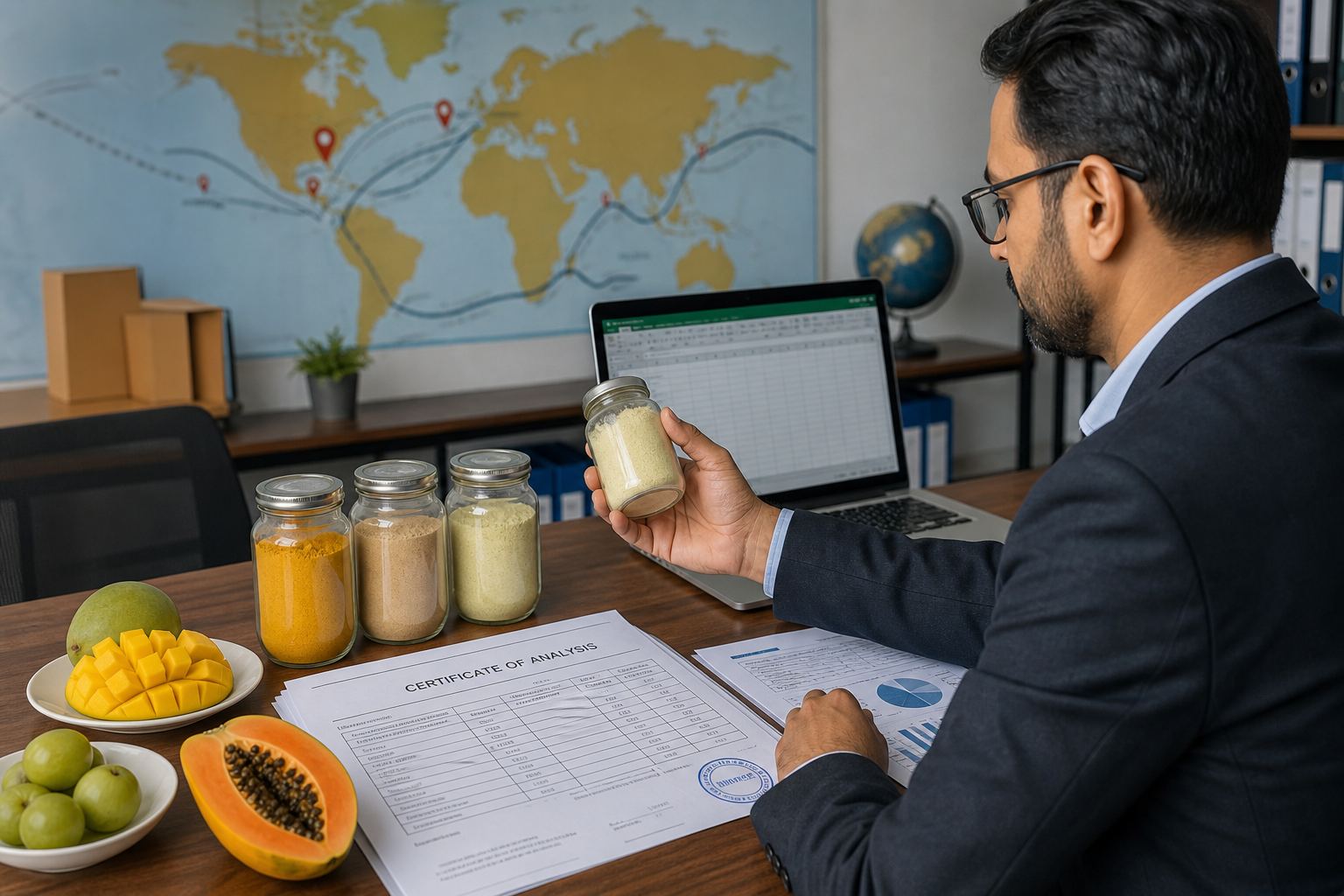
Finding genuine international buyers is the hardest operational challenge for fruit powder exporters in India's processing clusters — harder than spray-drying capacity, and often harder than documentation. India is a major global origin for spray-dried and freeze-dried fruit powders, particularly mango, banana, pineapple, papaya, guava, amla, apple, jackfruit, and pomegranate. Demand from beverage brands, smoothie-mix manufacturers, infant-nutrition formulators, bakery and confectionery ingredient houses, nutraceutical brands, and private-label retailers is structurally growing. Yet consistent, verified orders from serious international buyers remain elusive for exporters who depend on broker intermediaries, generic B2B directories, or unstructured cold outreach that never reaches an actual procurement decision-maker.
Global demand for fruit powders is driven by clean-label reformulation, natural color and flavor replacement, ready-to-mix beverage growth, and the shift from liquid concentrates toward shelf-stable powder formats that cut freight cost and cold-chain risk. Spray-dried mango powder and banana powder dominate volume programs; freeze-dried pineapple, strawberry-adjacent tropical blends, amla, and pomegranate command premium nutraceutical and specialty retail attention. Demand is real. But demand does not automatically arrive as a verified purchase order in your inbox. Fake inquiries, broker chains with no disclosed principal, and open-ended free-sample requests waste months of testing and technical back-and-forth with non-buyers.
This guide shows exactly how to find international buyers for Indian fruit powders: how to read HS 1106.30 trade data, how to prospect on LinkedIn, how to use Gulfood, Anuga, SIAL, and Fi Europe, how to verify a lead before dispatching samples, and how to convert a qualified inquiry into a first container. Pair it with organic fruit powder export opportunities, how to export fruit powders from India, and best countries for Indian fruit powder exports.
Key Takeaways
Summary Box
- To find international buyers for Indian fruit powders, define a narrow buyer profile — fruit type, spray-dried versus freeze-dried, Brix/source pulp grade, moisture, mesh size, certification level, and volume — before opening any trade database or fair registration portal.
- HS code 1106.30 import-export data is the single most reliable prospecting input; it reveals which companies already import fruit powders and flours of dried fruits into your target market, at what recency and volume.
- Genuine buyers ask about moisture, solubility, color (Hunter L/a/b or equivalent), microbial counts, and certifications before discussing price — curiosity about specifications is the clearest signal of buying intent.
- Gulfood (Dubai), Anuga (Cologne), SIAL (Paris), and Fi Europe (food ingredients) are the highest-density venues for meeting qualified fruit powder buyers face to face, but they only convert when paired with pre-fair research and 72-hour post-fair follow-up.
- APEDA registration and RCMC status are the first-level credibility filter serious importers apply before engaging a new Indian fruit powder supplier.
- Approach consuming industries — beverage brands, smoothie and RTS mix makers, infant-nutrition formulators, bakery ingredient distributors, nutraceutical brands, and private-label retailers — rather than generic importer directories.
- A CRM-managed pipeline of 40–60 verified importer and distributor accounts consistently outperforms 5,000 unqualified cold emails sent to general trading companies.
- Buyer verification before sample dispatch — business legitimacy, import history under HS 1106.30, specification maturity, and payment normalcy — prevents the majority of scams and wasted lab-testing spend.
- Altus Exports helps fruit powder processors and merchant exporters connect with verified international demand through agriculture & food products sourcing programs.
- Early movers who build a disciplined buyer-discovery system now will accumulate pipeline that compounds season over season rather than resetting to zero after every fair cycle.
Executive Summary
Summary Box
Fruit powder buyer discovery is a solvable, systematic problem once exporters stop treating it as a marketing activity and start treating it as a sales operations discipline. The exporters who consistently land international orders combine three inputs: trade-data-driven prospecting under HS 1106.30, a credible digital presence (LinkedIn plus a coherent product and certification story), and disciplined in-person conversion at food and ingredient trade fairs. None of the three works well alone; together they compound.
This guide walks through the full buyer-discovery stack for fruit powders — market size, export and import statistics, product variants from spray-dried mango to freeze-dried pomegranate, manufacturing context from India's drying clusters, pricing and MOQ benchmarks by fruit and process, packaging and container-loading detail, shipping lead times, certification requirements, buyer verification, and country-by-country opportunity mapping. It closes with practical checklists for sourcing, buyer verification, exporter outreach, and compliance, plus expert perspective from Altus Exports on what actually converts an inquiry into a repeat container program.
The throughline is qualification. A short list of verified beverage, ingredient-distributor, and nutraceutical buyers with clear fruit-powder specifications and import history will outperform an unqualified mass-email campaign every time — and it protects scarce lab-testing and sample-dispatch budget for accounts that can realistically place a purchase order within 90 days.
Market Size & Industry Overview
Key Statistics
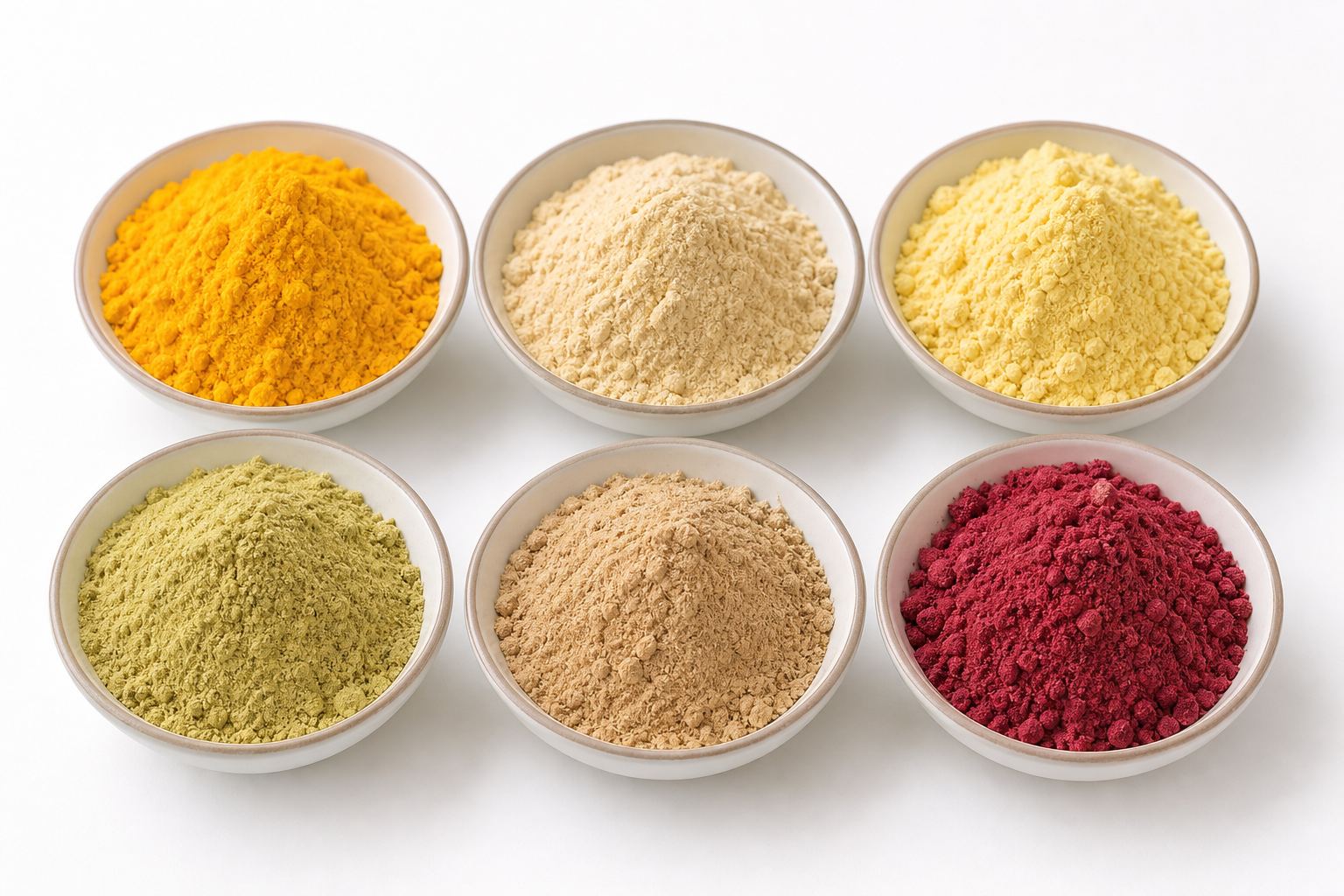
Fruit powders occupy a distinctive niche in global food-ingredient trade: they convert perishable tropical and temperate fruit into shelf-stable, freight-efficient, formulation-ready powders used across beverages, bakery, confectionery, dairy alternatives, infant nutrition, nutraceuticals, and private-label retail. Spray drying remains the volume workhorse for mango, banana, pineapple, papaya, guava, and apple programs where cost-in-use and solubility matter most. Freeze drying commands premium positioning for flavor-sensitive and nutraceutical applications — notably amla, pomegranate, pineapple, and specialty tropical fruits — where color retention, aroma, and bioactive preservation justify higher FOB.
Global demand concentrates across several distinct buyer segments: beverage and smoothie-mix brands (largest by recurring volume for mango and banana), bakery and confectionery ingredient distributors, infant-nutrition and baby-food formulators with strict microbial and heavy-metal specs, nutraceutical and dietary-supplement brands (especially amla and pomegranate), private-label retailers and contract manufacturers, and food-service / HORECA powder programs in the Middle East and Southeast Asia. Each segment specifies different fruit types, drying methods, moisture limits, mesh sizes, and certifications — which is why buyer-discovery efforts must begin with a clearly defined target buyer profile rather than a generic 'fruit powder exporter' campaign.
India's structural advantages — mango and banana pulp availability, growing spray-drying and freeze-drying capacity in Maharashtra, Gujarat, Andhra Pradesh, Karnataka, and Tamil Nadu, and competitive processing costs — make it a preferred origin for many tropical fruit powder programs. Buyers who understand the category are actively seeking reliable Indian suppliers. Converting that structural buyer interest into a verified order depends on being findable, credible, and technically conversant with the buyer's specific fruit, process, and specification requirements.
Export Statistics
Key Statistics
Indian fruit powders and related dried-fruit flours move primarily under HS 1106.30 (flour, meal and powder of the dried fruits of Chapter 8). Adjacent lines may apply for certain preparations, concentrates, or juice-powder presentations — confirm the exact eight-digit Indian tariff line and destination import code with a customs broker for each SKU. Industry and trade-map compilations show sustained multi-year growth in dried fruit powder shipments from India into the USA, EU, Middle East, UK, and Southeast Asia, with mango and banana powders typically accounting for the largest share of tropical volume and freeze-dried specialty fruits contributing disproportionately to value.
Verified directional trade context (WITS/UN Comtrade, HS 110630, calendar year 2024): India exported about USD 10.8 million and about 7,375 metric tonnes under this six-digit line. Leading reported destinations included the United States (~30% of export value), the United Kingdom (~11%), Canada (~9%), Australia (~8%), and the United Arab Emirates (~7%). Reconfirm current-year figures via APEDA, DGCI&S, ITC Trade Map, or WITS — line composition mixes mango flour/powder with other Chapter 8 powders and can shift with seasonality and freeze-dried/organic mix. Destination shares shift with pulp crop years, currency, and competing-origin pricing.
Comparison table
Swipe →
Data table — swipe horizontally on small screens
| Destination Market (recent trade signals) | Approx. Share of India HS 110630 Export Value (WITS 2024) | Primary Demand Driver |
|---|---|---|
| USA | ~30% (WITS 2024 value) | Beverage mixes, smoothie brands, bakery ingredients, nutraceuticals |
| United Kingdom | ~11% (WITS 2024 value) | Ethnic retail, smoothie mixes, private-label baking |
| Canada | ~9% (WITS 2024 value) | Natural channel, beverage and bakery ingredients |
| Australia | ~8% (WITS 2024 value) | Health-food retail, smoothie and bakery programs |
| UAE | ~7% (WITS 2024 value) | Food-service powders, re-export hubs, retail private label |
| Other (EU, ASEAN, Japan, etc.) | Remainder (~35%) | Clean-label, Halal, specialty, and redistribution lanes — confirm via current trade data |
Import Statistics
Key Statistics
On the import side, HS 1106.30 shipment data across major destination customs authorities shows a consistent pattern: a handful of large ingredient distributors, beverage co-packers, and private-label contract manufacturers account for the bulk of tonnage in each market, while a long tail of smaller smoothie brands, bakery houses, and nutraceutical formulators place smaller, more frequent orders. Prospecting efficiency comes from identifying the large-volume ingredient-buyer accounts first, since they justify the certification, testing, and documentation overhead of a new-supplier qualification process.
Destination import volumes from India vary with mango and banana pulp seasons, competing-origin spray-dried pricing, and currency. Use the directional India-origin benchmarks below to size opportunity — not to forecast exact revenue — and refresh them annually from trade databases.
Comparison table
Swipe →
Data table — swipe horizontally on small screens
| Country / Region | Primary India-Origin Fruit Powders | Primary Buyer Type | Growth Outlook |
|---|---|---|---|
| USA | Mango, banana, pineapple, amla, pomegranate | Beverage brands, smoothie mixes, nutraceutical formulators | Steady; clean-label natural flavor and color reformulation |
| UAE / GCC | Mango, banana, guava, pineapple | Food-service distributors, private label, re-exporters | Strong; HORECA and retail expansion |
| Germany / EU | Mango, apple, pineapple, organic tropicals | Ingredient distributors, bakery, organic brands | Strong; clean-label and organic programs |
| UK | Mango, banana, guava | Ethnic retail, smoothie private label, bakery | Moderate; post-Brexit import flows stabilising |
| Singapore / Malaysia | Mango, banana, jackfruit, pineapple | Beverage manufacturers, regional distributors | Growing; ASEAN beverage capacity expansion |
| Australia | Mango, banana, pineapple, amla | Health-food retail, smoothie brands | Growing; natural ingredient preference |
| Japan | Mango, pineapple, specialty freeze-dried | Specialty ingredient importers, premium beverage | Niche; high-compliance, high-value |
Product Categories / Variants
Summary Box
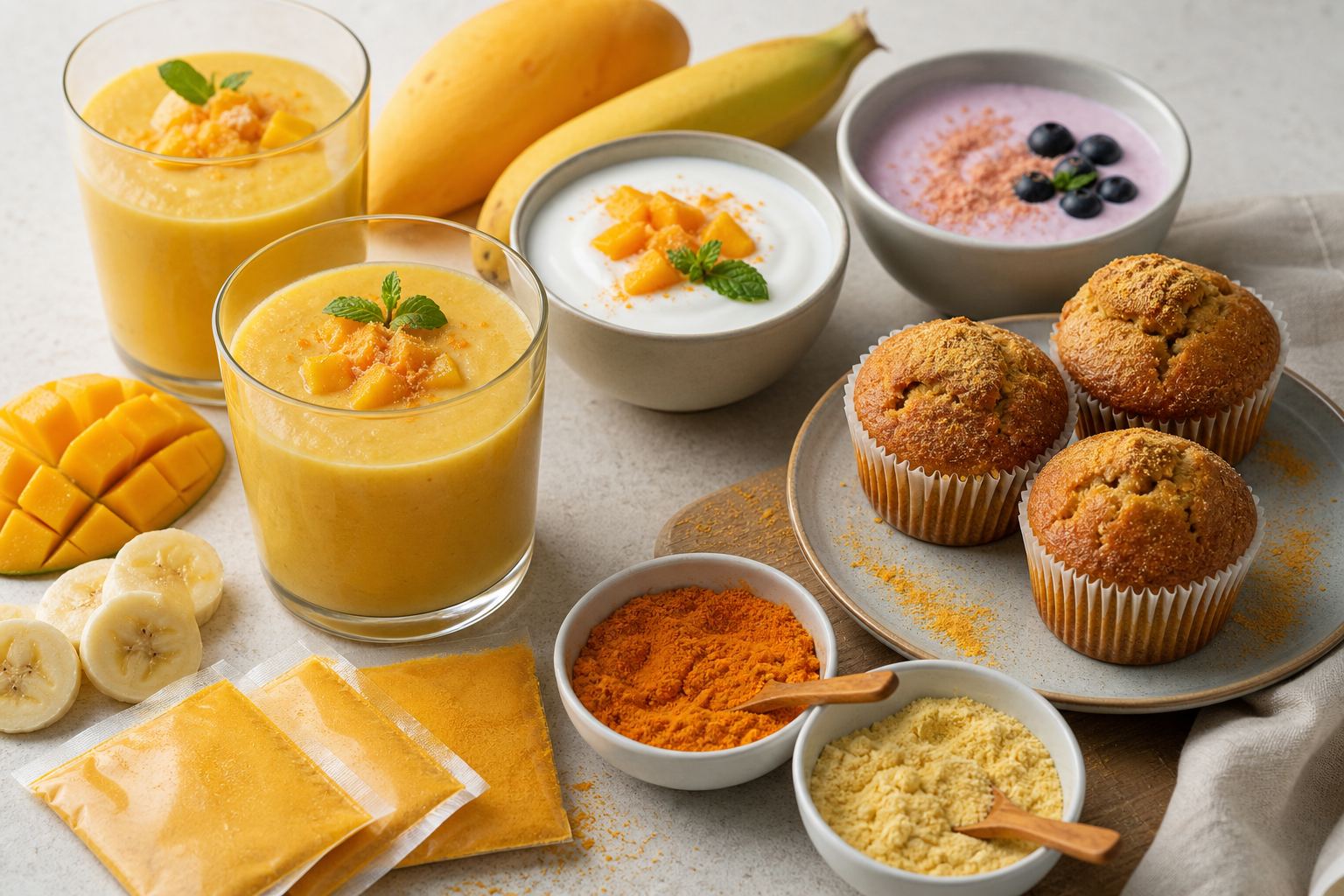
Buyer intent maps closely to fruit type and drying method. A beverage brand asking about spray-dried mango powder solubility and a nutraceutical formulator asking about freeze-dried amla vitamin C retention are fundamentally different buyer personas with different specification priorities, testing expectations, MOQ tolerance, and price sensitivity. Lock 3–5 clearly defined variants with consistent, repeatable specifications before you begin outreach — buyers ignore vague listings that do not state fruit type, drying process, moisture, and mesh size.
Comparison table
Swipe →
Data table — swipe horizontally on small screens
| Variant / Fruit | Typical Process | Primary Buyer Type | Key Spec Parameters |
|---|---|---|---|
| Mango powder | Spray-dried (volume); freeze-dried (premium) | Beverage, smoothie, ice cream, bakery | Moisture ≤5–6%, color, solubility, SO₂ if used, mesh |
| Banana powder | Spray-dried | Infant nutrition, bakery, smoothie, baby food | Moisture, browning control, microbial, heavy metals |
| Pineapple powder | Spray-dried or freeze-dried | Beverage, confectionery, bakery | Acidity, color, solubility, residual sugar profile |
| Papaya powder | Spray-dried | Beverage, nutraceutical, bakery | Color, enzyme activity claims if any, moisture |
| Guava powder | Spray-dried | Beverage, ethnic retail, smoothie | Color, aroma retention, vitamin C where claimed |
| Amla (Indian gooseberry) powder | Spray / freeze-dried | Nutraceutical, Ayurvedic, clean-label supplements | Vitamin C, tannins, microbial, organic premium lane |
| Apple powder | Spray-dried | Bakery, beverage, snack coatings | Color, pectin behaviour, moisture, SO₂ declaration |
| Jackfruit powder | Spray-dried or freeze-dried | Plant-based, ethnic, specialty beverage | Flavor, fibre, color, solubility |
| Pomegranate powder | Freeze-dried preferred; spray-dried volume | Nutraceutical, beverage, premium retail | Polyphenols, color, moisture, organic premium lane |
Manufacturing Overview
Export Tip
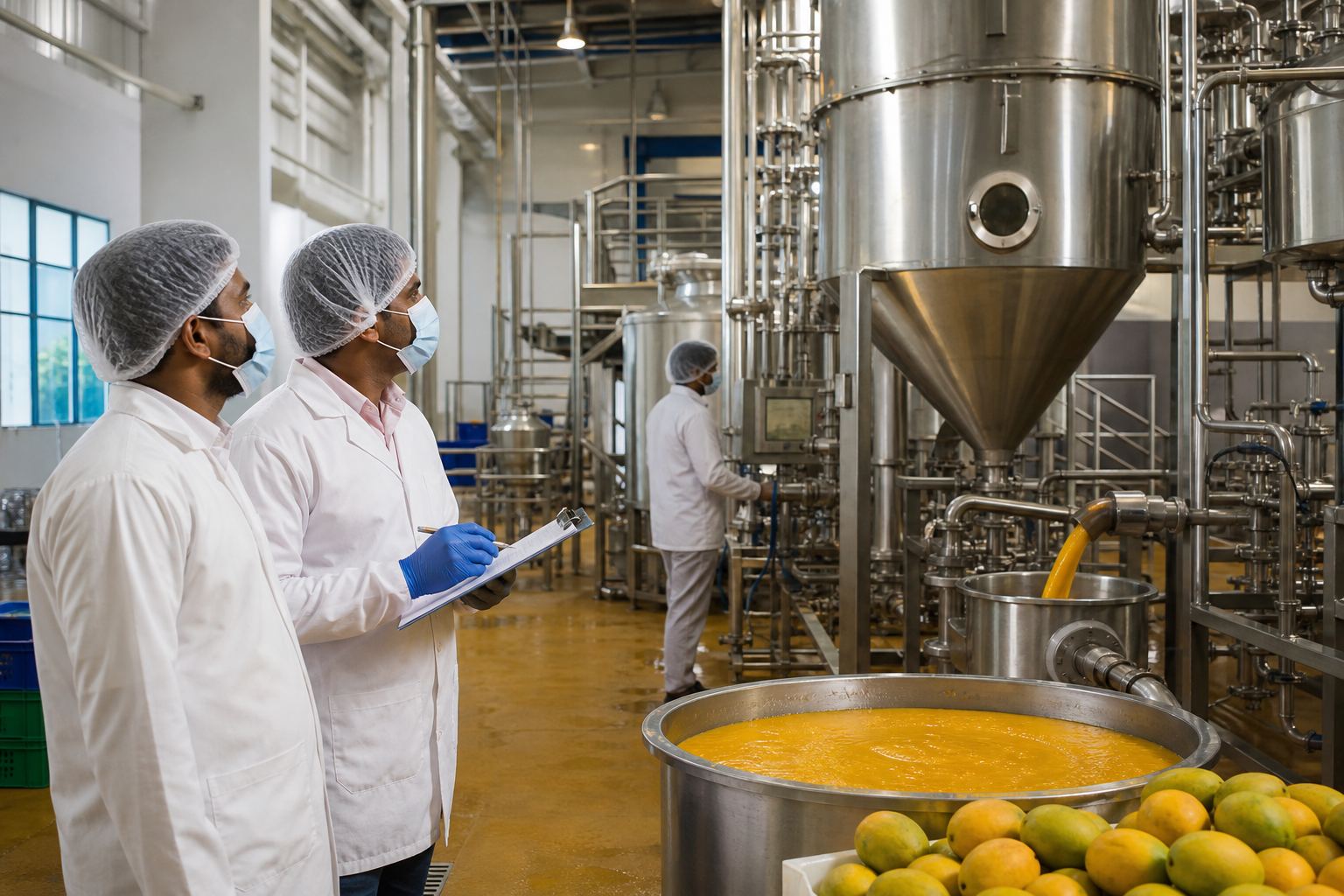
Understanding how fruit powder is made helps you speak the buyer's language and qualify whether a prospect actually understands the category. Commercial fruit powder programs typically start with sorted, washed fruit or pasteurised pulp (often double-refined for mango), optional carrier addition (maltodextrin or other approved carriers for spray drying), homogenisation, then either spray drying (hot-air atomisation into a powder chamber) or freeze drying (lyophilisation under vacuum for premium aroma and color retention). Downstream steps include sieving to target mesh, metal detection, moisture equilibration, and packing in moisture-barrier bags or cartons with lot coding.
India's spray-drying clusters serving tropical fruit powders concentrate in and around Maharashtra (pulp and dairy-adjacent drying capacity), Gujarat, Andhra Pradesh / Telangana, Karnataka, and Tamil Nadu, with freeze-drying capacity expanding among specialty processors targeting nutraceutical and premium retail programs. Processors who can document pulp origin, Brix at intake, carrier percentage (or carrier-free claims), drying parameters, and per-lot COAs convert faster with professional buyers than traders who only quote a per-kilogram number.
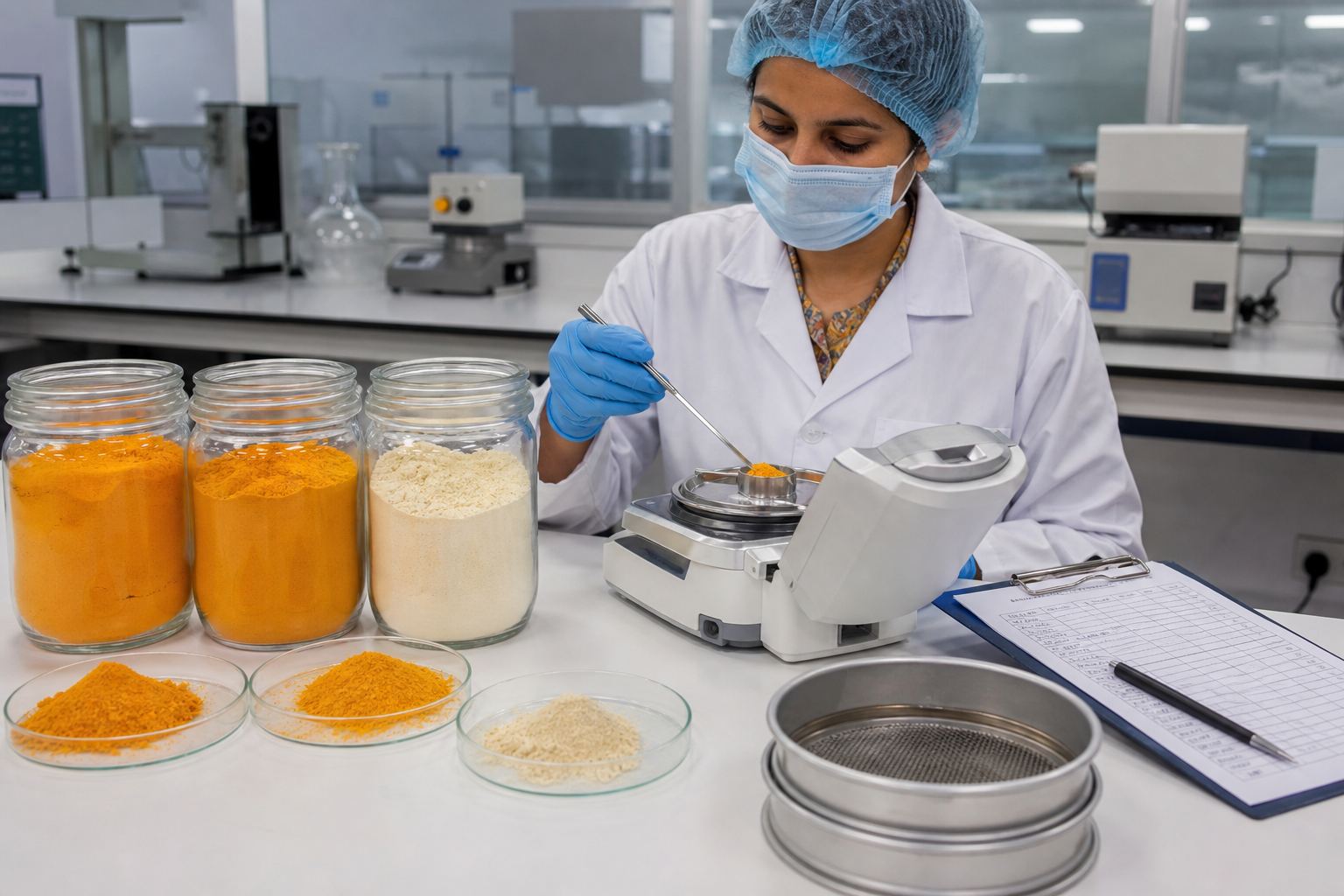
Quality control that buyers expect to see referenced in outreach includes: moisture (typically ≤5–6% for spray-dried tropical powders, often tighter for freeze-dried), water activity, bulk density, mesh/particle size, Hunter color or equivalent, solubility / dispersibility, titratable acidity where relevant, SO₂ residual if sulphites are used, heavy metals (lead, arsenic, cadmium, mercury), pesticide multi-residue panels, and a full microbial panel (TPC, yeast and mould, Salmonella, E. coli, Enterobacteriaceae as specified). Infant-nutrition buyers add stricter heavy-metal and microbiological limits and often require supplier questionnaires and facility audits before first order.
Pricing Analysis
Buyer Tip
Fruit powder pricing is fruit-specific, process-specific, and highly sensitive to pulp crop years and carrier content. Always quote FOB with fruit type, drying method, carrier percentage (or carrier-free), moisture, mesh, packaging, MOQ, Incoterm, and lead time stated in the same message. Bare per-kilogram quotes without these parameters signal inexperience and invite unproductive price-only negotiation.
Directional FOB bands below are industry benchmarks for planning outreach — not fixed offers. Refresh against current pulp markets and your actual COA-backed production cost before issuing formal quotations. Organic-certified grades typically command a 20–45% premium over conventional equivalents of the same fruit and process; see the companion organic fruit powder export opportunities guide for program economics.
Comparison table
Swipe →
Data table — swipe horizontally on small screens
| Fruit Powder Variant | Typical Conventional FOB Band (USD/kg) | Process Note | Price Sensitivity Drivers |
|---|---|---|---|
| Spray-dried mango powder | $3.50–$7.50 | Carrier % and Alphonso vs Totapuri pulp drive spread | Pulp crop year, carrier ratio, color grade |
| Spray-dried banana powder | $3.00–$6.50 | Volume programs; infant-nutrition specs premium | Pulp quality, browning, microbial stringency |
| Spray-dried pineapple powder | $4.00–$8.00 | Acidity and color grade matter | Juice vs pulp base, carrier, SO₂ policy |
| Spray-dried papaya / guava | $3.50–$7.00 | Mid-volume tropical programs | Color retention, aroma, moisture |
| Spray-dried apple powder | $3.00–$6.00 | Competitive with multiple origins | Color, pectin, sulphite declaration |
| Freeze-dried amla / pomegranate | $12–$35+ | Premium nutraceutical lane | Bioactive claims evidence, organic status |
| Freeze-dried pineapple / jackfruit / specialty | $15–$40+ | Low volume, high value | Aroma retention, color, lot size |
| Organic any fruit (same process) | +20–45% vs conventional | NPOP / USDA / EU Organic required | Certification, segregation, residue risk |
MOQ Analysis
Buyer Tip
Publishing a tiered MOQ structure in your outreach materials pre-qualifies leads and sets professional expectations before you invest time in calls and sample preparation. Trial buyers and full-container program buyers are different personas — treat them accordingly.
Comparison table
Swipe →
Data table — swipe horizontally on small screens
| Buyer Stage | Typical MOQ | Sample Expectation | Notes |
|---|---|---|---|
| Lab / R&D evaluation | 100 g – 1 kg paid sample | Full COA + TDS with moisture, mesh, color | Charge for samples; credit against first order if needed |
| Pilot / first commercial trial | 25–500 kg | Retain same lot as approved sample | LCL common; confirm packaging and labeling |
| Ingredient distributor program | 1–5 MT recurring | Multi-fruit assortment possible | Consolidate SKUs for freight efficiency |
| Beverage brand recurring | 5–20 MT per SKU | Locked specification + annual forecast | Often 20ft container economics |
| Private-label retail | 3–10 MT per SKU launch | Artwork and label approval adds 4–8 weeks | Destination labeling critical |
| Infant-nutrition formulator | 1–10 MT after audit | Strictest microbial / heavy-metal COA | Longest qualification cycle (90–180 days) |
Packaging Standards
Export Tip
Fruit powders are hygroscopic. Packaging failure equals caking, color loss, and rejected lots. Serious buyers expect moisture-barrier construction, lot coding that matches the COA, and clear fruit / process / net-weight marking. Confirm destination-market labeling rules — ingredient declaration, allergen statements, organic logos, and language — before freezing artwork on private-label programs.
Comparison table
Swipe →
Data table — swipe horizontally on small screens
| Packaging Format | Typical Size | Barrier / Construction | Buyer Use Case |
|---|---|---|---|
| Multi-ply kraft + PE / foil liner | 20–25 kg | Moisture and light barrier; heat-sealed inner | Standard bulk ingredient export |
| Aluminum foil laminate pouch in carton | 5–10 kg | Higher barrier for freeze-dried and premium | Nutraceutical and EU specialty buyers |
| FIBC jumbo with liner | 500–1,000 kg | Only for high-volume, low-humidity controlled programs | Large beverage co-packers (rare for hygroscopic powders) |
| Retail stand-up pouches | 100 g – 1 kg | Destination artwork, zip, oxygen scavenger optional | Private-label consumer SKUs |
| HDPE / fibre drum with liner | 20–25 kg | Preferred where bag puncture risk is high | Infant nutrition and pharma-adjacent |
Container Loading Details
Export Tip
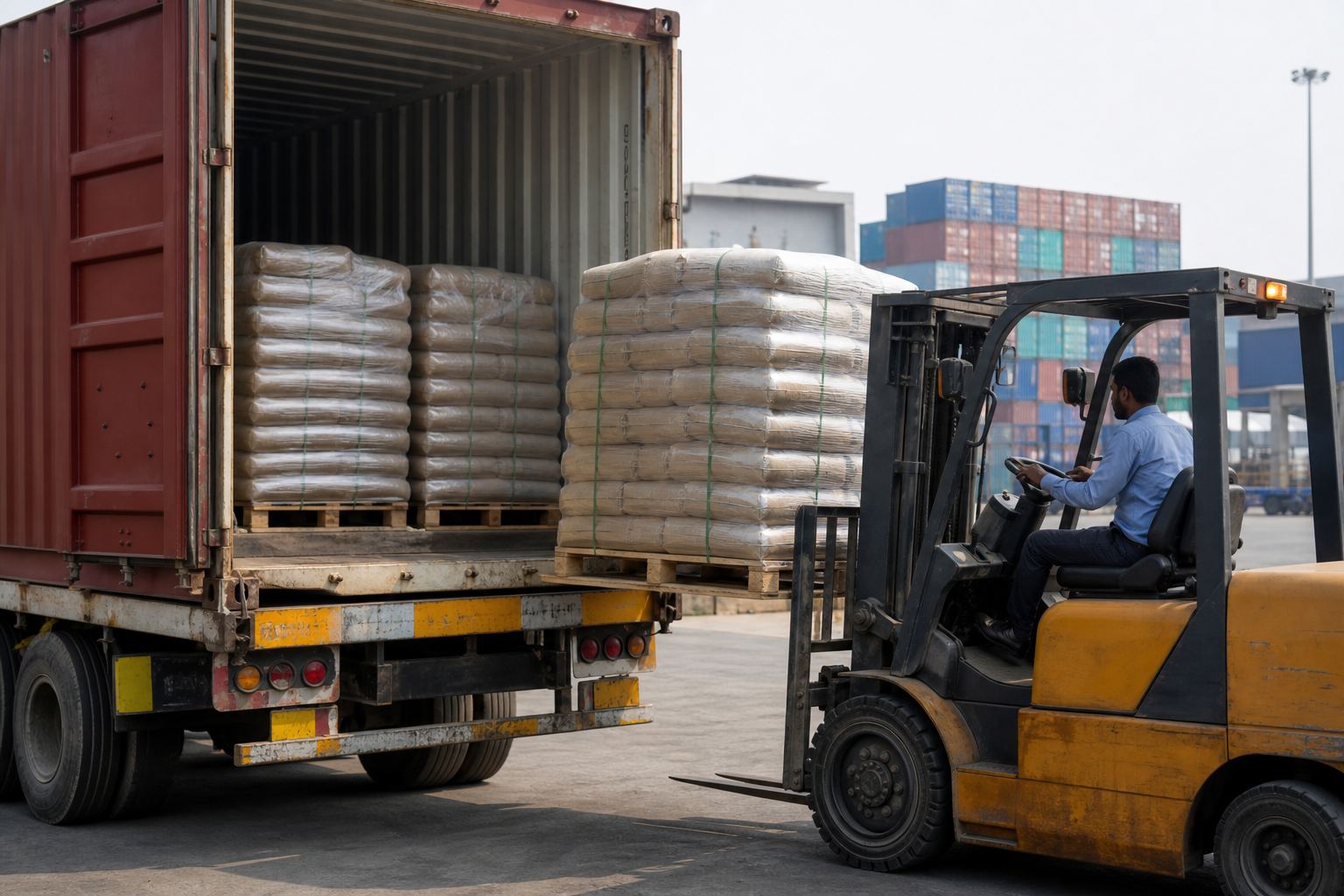
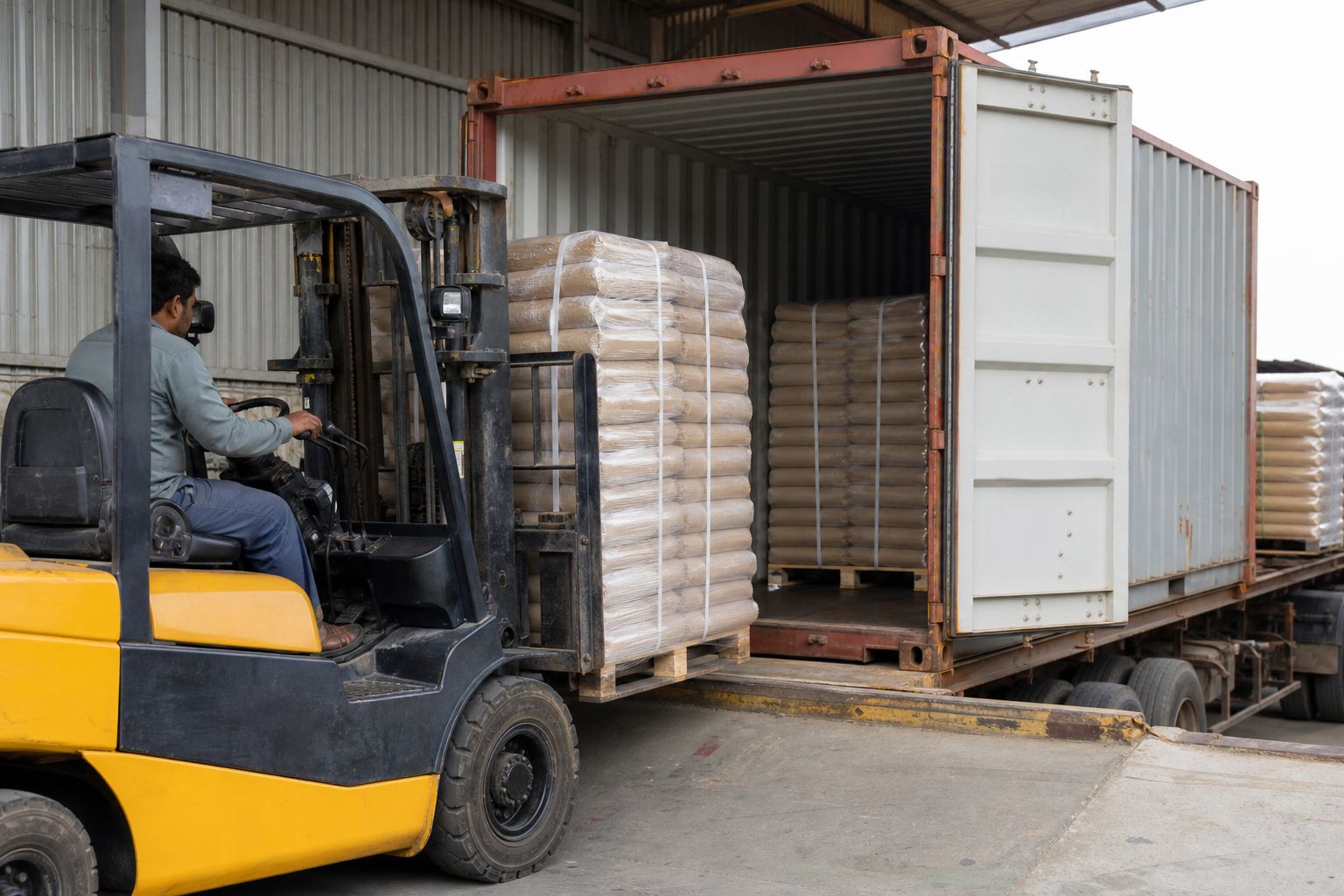
Fruit powder bulk density is typically lower than many agricultural commodities, so payload planning matters for buyer CIF calculations. Palletise when destination warehouses require it; avoid crushing bags in poorly dunnaged loads. Keep powders away from high-moisture co-loaded cargo and strong-odour commodities.
Comparison table
Swipe →
Data table — swipe horizontally on small screens
| Container | Packaging | Approx. Net Load Capacity | Loading Note |
|---|---|---|---|
| 20ft dry container | 25 kg bags, floor-loaded | About 10–14 MT | Density-dependent; confirm actual bulk density |
| 20ft dry container | 25 kg bags, palletised | About 8–12 MT | Easier warehouse handling; lower payload |
| 40ft dry container | 25 kg bags, palletised | About 16–22 MT | Common for multi-SKU distributor programs |
| LCL / palletised | Cartons or bags on pallets | Under 8 MT typical | Standard for first trial shipments |
Shipping Methods
Export Tip
Dry sea freight in standard containers is the default for shelf-stable fruit powders stored at specified moisture in sealed packaging. Air freight is reserved for urgent samples, small freeze-dried specialty lots, and time-critical reformulation programs where freight cost is secondary to speed. Major Indian load ports include Nhava Sheva (JNPT), Mundra, Chennai, and Tuticorin depending on processing geography.
Always confirm current transit times with your freight forwarder — carrier alliances and transshipment hubs shift routing periodically. Provide buyers with a clear lead-time statement that separates production lead time from ocean transit.
Comparison table
Swipe →
Data table — swipe horizontally on small screens
| Route | Typical Load Port | Approx. Transit Time | Mode Notes |
|---|---|---|---|
| India–UAE (Jebel Ali) | Mundra / Nhava Sheva | 7–12 days | High frequency; strong for Gulfood-originated programs |
| India–Germany / Netherlands (EU) | Nhava Sheva / Mundra | 20–28 days | Transshipment common; EU residue docs ready before sailing |
| India–USA | Nhava Sheva / Mundra | 22–38 days (coast-dependent) | FDA prior notice; facility registration for food |
| India–UK | Nhava Sheva / Mundra | 22–30 days | Post-Brexit import rules; labeling accuracy critical |
| India–Singapore / Malaysia | Chennai / Nhava Sheva | 8–16 days | Regional beverage manufacturing demand |
| India–Australia | Nhava Sheva / Chennai | 18–28 days | DAFF biosecurity; inspect packing declarations |
| Air freight samples worldwide | BOM / DEL / MAA / HYD | 3–7 days door-to-door | Use for paid COA-backed samples and urgent R&D |
Certifications
Compliance Notes
Certification choice must be driven by target buyer segment and destination market. A beverage distributor in the UAE may prioritize Halal and HACCP; an EU organic smoothie brand will require NPOP-EU organic equivalence and residue evidence; a US infant-nutrition formulator will scrutinise FDA facility registration, heavy metals, and GMP. Do not claim certifications you cannot evidence with current scope and facility coverage.
Comparison table
Swipe →
Data table — swipe horizontally on small screens
| Certification / Registration | Primary Buyer Segment | Why It Matters in Outreach |
|---|---|---|
| IEC + FSSAI + APEDA RCMC | All serious importers | First-level legitimacy filter |
| HACCP / ISO 22000 / FSSC 22000 | Beverage, bakery, distributors | Baseline food-safety due diligence |
| GMP / BRCGS | Private label, infant nutrition, EU retail | Retailer and co-packer audit readiness |
| Halal | GCC, Malaysia, Indonesia, Muslim-majority markets | Often mandatory for food-service programs |
| Kosher | US and EU specialty / private label | Opens additional retail and ingredient channels |
| NPOP / USDA Organic / EU Organic | Organic and clean-label brands | Unlocks 20–45% premium lane |
| Non-GMO / clean-label residue tested | US and EU formulators | Growing even without full organic |
| FDA food facility registration | USA buyers | Practically required for US food import programs |
Buyer Requirements
Buyer Requirements
Fruit powder buyers evaluate you on technical fluency first and price second. Structure every outreach touch and quotation around the specification language they already use.
Importers, Distributors, Wholesalers, and Retail Chains
Importers and ingredient distributors typically buy multiple fruits and grades, care about assortment breadth, consistent lot-to-lot color, and reliable container scheduling. Wholesalers serving HORECA and ethnic retail often want smaller recurring LCL or mixed-SKU loads with Halal documentation for GCC markets. Retail chains and private-label programs care about artwork, barcode, claim substantiation, and auditability — they move slower but can become multi-year volume anchors once approved.
Qualify which persona you are speaking to in the first call. A distributor who consolidates for twenty small smoothie brands has different MOQ and packaging needs than a single beverage brand locking one mango powder SKU for a national launch.
Specification Maturity Signals
Comparison table
Swipe →
Data table — swipe horizontally on small screens
| Buyer Signal | What Good Looks Like | Red Flag |
|---|---|---|
| Spec detail | Names spray vs freeze-dried, moisture, mesh, carrier | Only asks for cheapest price |
| Testing | Requests COA parameters matching their application | No interest in lab data |
| Volume realism | Trial then program ramp | 200 MT first order with zero tech questions |
| Payment | LC, advance + balance, or known open-account after history | Requests fee payment to release order |
| Identity | Corporate domain, video call, LinkedIn match | Free email + refusal to video verify |
Serious buyers specify fruit variety or pulp grade, drying method, carrier percentage or carrier-free requirement, target moisture, mesh size, color range, microbial limits, heavy-metal limits, packaging, Incoterm, and annual volume band. If an inquiry asks only for 'best price mango powder 20 MT' with no moisture or process questions, treat it as low-intent until specifications appear.
Outreach Sequence That Converts
A practical weekly rhythm: (1) research 10 new HS 1106.30 importers from trade data; (2) enrich 10 LinkedIn decision-maker contacts at beverage, ingredient, and nutraceutical companies; (3) send short, fruit-specific messages referencing moisture, process, and certifications — never a generic catalogue dump; (4) follow up 4–6 times over 3–4 weeks with new value (new COA, fair meeting slot, crop update); (5) convert interested leads to paid samples with TDS; (6) move approved samples to pilot MOQ under clear Incoterms; (7) log every stage in a CRM. This sequence beats one-off blast campaigns every quarter.
Trade Shows That Convert for Fruit Powder Exporters
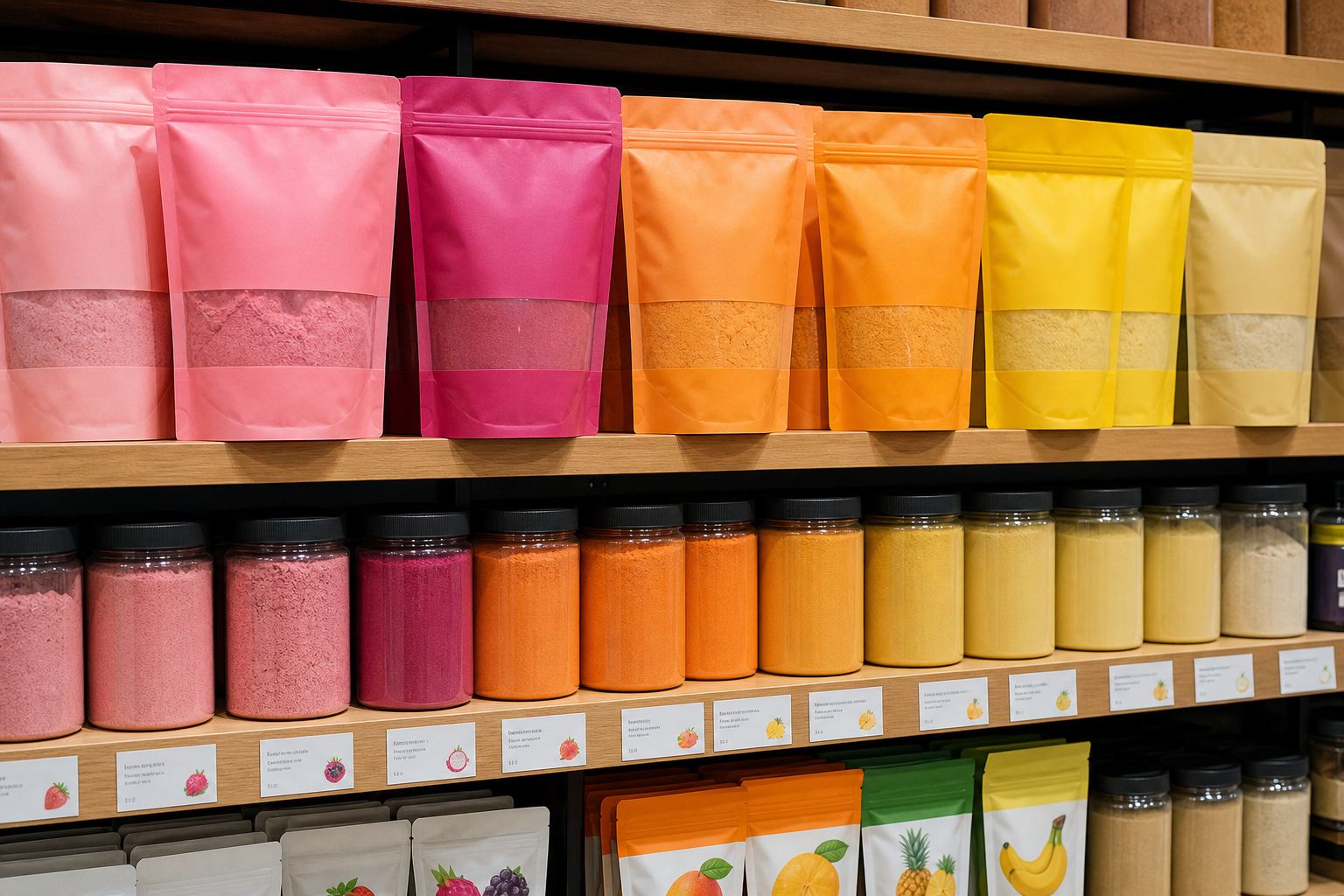
Trade fairs remain the highest-density conversion channel when paired with HS 1106.30 prospecting. Treat Gulfood, Anuga, SIAL, and Fi Europe as conversion engines — not tourism. Success depends on pre-booked meetings, fruit-specific sample kits with COAs, and structured follow-up within 72 hours.
Comparison table
Swipe →
Data table — swipe horizontally on small screens
| Fair | Location / Frequency | Primary Buyer Geography | Best Fruit Powder Angle | ROI Tip |
|---|---|---|---|---|
| Gulfood | Dubai, annual | GCC, Africa, South Asia re-export | Mango, banana, guava; Halal; food-service packs | Book meetings with distributors before the show |
| Anuga | Cologne, biennial / food cycles | EU retail, food service, private label | Clean-label and organic tropical powders | Lead with residue and certification story |
| SIAL | Paris (and global editions) | EU and global retail buyers | Private-label ready SKUs + bulk ingredient | Bring retail mock packs and bulk TDS |
| Fi Europe | Variable EU location, annual | Ingredient buyers, formulators, R&D | Spray-dried mango/banana; freeze-dried specialty | Talk to R&D and procurement, not only sales |
| SupplySide / Vitafoods (adjacent) | US / Europe nutraceutical | Amla, pomegranate, nutraceutical powders | Freeze-dried + organic bioactive positioning | Bring assay and residue evidence |
| APEDA buyer-seller meets | India-based, periodic | Invited international importers | All tropical powders; credibility building | Use to qualify leads before overseas fair spend |
Country-wise Opportunities
Market Snapshot
Buyer profiles and discovery channels differ meaningfully by destination market. Match your research effort and certification investment to where your fruits and capacity are actually competitive.
United States
The USA is a high-value destination for mango, banana, pineapple, amla, and pomegranate powders across beverage mixes, smoothie brands, bakery, and nutraceuticals. FDA food facility registration, prior notice, and increasingly rigorous heavy-metal and pesticide expectations apply. LinkedIn prospecting into beverage R&D and ingredient procurement works well alongside Fi and natural-products fair cycles.
United Arab Emirates and GCC
Shorter transit from Mundra and Nhava Sheva, deep food-service demand, and re-export into broader Middle East and Africa make the UAE a priority discovery market. Gulfood is the flagship venue. Halal certification and Arabic/English labeling for retail packs improve conversion. Distributors often prefer multi-fruit assortments rather than single-SKU programs at the start.
Germany and the Broader EU
EU buyers emphasize clean-label, residue compliance, and often organic. Anuga, SIAL, and Fi Europe are core discovery venues. Expect detailed COA review, BRCGS or FSSC interest for retail-adjacent programs, and longer qualification cycles. Organic mango and freeze-dried specialty fruits command stronger premiums here than in many volume Middle East channels.
United Kingdom
Ethnic retail, smoothie private label, and bakery programs drive UK demand for mango, banana, and guava powders. Post-Brexit import documentation and labeling accuracy are scrutinised. BRCGS certification helps private-label conversations.
Southeast Asia
Singapore and Malaysia serve as beverage manufacturing and redistribution hubs. Jackfruit, mango, banana, and pineapple powders see steady interest. Competitive pricing versus regional origins matters, but Indian Alphonso/Totapuri mango story and amla uniqueness remain differentiators.
Australia and Japan
Australia favours health-food and smoothie applications with strong biosecurity documentation. Japan is smaller, compliance-intensive, and premium-oriented — freeze-dried and tightly specified spray-dried lots with Japan-relevant residue panels convert better than generic catalogue offers.
Sourcing Checklist
Checklist
- Confirm which HS 1106.30 national tariff lines apply to each fruit powder SKU you sell
- Build a research shortlist of 50–100 named accounts per target market from trade data, LinkedIn, and fair attendee lists
- Capture website, contact name, HS 1106.30 evidence, fruit focus, certification status, and research notes for every lead
- Prioritize accounts with recent (12–24 month) fruit powder or dried-fruit flour import activity over generic directory listings
- Maintain a weekly research cadence — 10 new trade-data accounts, 10 LinkedIn enrichments — rather than one-off prospecting sprints
- Clean and re-score the research list quarterly to remove stale or unresponsive accounts
- Identify which destination markets your current certification set actually serves before outreach
Treat buyer discovery as a weekly operating system. The checklists below separate research hygiene (sourcing), lead verification (buyer), commercial response quality (exporter), and document readiness (compliance). Use the callouts as a standing operating checklist before every sample dispatch and fair cycle.
Common Buyer Mistakes
Common Mistakes Box
- Requesting free certified samples repeatedly with no purchase order discussion and no specification questions
- Refusing video calls or providing inconsistent company identity details across email threads
- Pressuring exporters to bypass normal banking or documentation channels
- Claiming implausibly large first-order volumes with zero moisture, process, or certification questions
- Mismatched email domains impersonating real beverage or retail brands
- Promising orders only after receiving samples from five different exporters simultaneously
Fruit powder export attracts recognisable scam and mismanagement patterns. Fake importers who request free certified samples and never place an order, advance-fee schemes disguised as 'import license clearance' fees, identity theft using real beverage brand names with slightly altered email domains, and overpayment cheque scams on smaller trial shipments are all documented patterns. A fruit-powder-specific red flag: 'buyers' who discuss enormous first orders — 100 MT or more — without asking a single question about moisture, drying method, carrier content, or microbial limits. Legitimate large beverage and ingredient buyers ask technically detailed questions before discussing price.
On the exporter side, the most common mistakes are mass-emailing generic 'we export fruit powders' introductions with no fruit or process specificity, quoting without stating moisture or Incoterm, offering unlimited free samples with no earnest payment, abandoning follow-up after one or two emails, and failing to verify a buyer before dispatching lab-certified samples. Each of these is a process fix, not a product fix — correcting them converts more pipeline than any packaging or pricing change alone.
Future Market Trends
Key Statistics
Through 2030, several structural trends will shape fruit powder buyer discovery. Clean-label reformulation will continue to replace synthetic colors and flavors with fruit powder systems in beverages and bakery. Ready-to-mix smoothie and functional beverage growth supports mango and banana volume programs. Freeze-dried specialty fruits and organic-certified powders will outgrow conventional bulk on a percentage basis, even if absolute tonnage remains smaller.
AI-powered trade-intelligence platforms are compressing the time it takes to identify and qualify a genuine buyer — exporters with clean digital catalogues, current certifications, and consistent lab-testing histories will be easier for procurement teams to shortlist automatically. Documentation expectations will keep rising, particularly around pesticide residues, heavy metals for infant-adjacent applications, and lot-level traceability from pulp intake to packed bag.
Exporters who invest now in HS 1106.30 data hygiene, LinkedIn credibility, fair-conversion discipline, and organic/clean-label infrastructure will accumulate a compounding pipeline advantage over competitors still relying on generic B2B directory blasts.
Expert Insights from Saurabh Mittal
Expert Insight Box
Altus Exports works with fruit powder processors and merchant exporters who have strong drying capability but no structured buyer-discovery process — and with international buyers who need a verified, accountable route into India's fruit powder supply without managing fragmented processor relationships directly.
Why Technical Credibility Converts Faster Than Price
Buyers who ask about spray-dried versus freeze-dried process, carrier percentage, Hunter color, and microbial limits before discussing price are the accounts worth prioritising — they already understand the category and are evaluating you as a real supplier, not shopping for the lowest number in an inbox full of generic quote requests.
Conclusion
- Do this week: define your buyer profile, lock 3 hero fruit powder SKUs with process and moisture specifications, and prepare a one-page technical data sheet with certification status.
- Read organic fruit powder export opportunities, how to export fruit powders from India, best countries for Indian fruit powder exports, and source fruit powders directly from India.
- Also see top fruit powder products exported from India, most demanded Indian fruit powders by country, fruit powder export documentation checklist, APEDA registration benefits for fruit powder exporters, and trade shows for fruit powder exporters.
- Explore merchant exporter, global sourcing partner India, export products from India, and the agriculture & food products industry page.
Finding international buyers for Indian fruit powders is a systematic, repeatable process — not a matter of luck, platform subscriptions, or broker relationships. Combine HS 1106.30 trade data for named accounts, LinkedIn for direct access to beverage and ingredient procurement decision-makers, Gulfood, Anuga, SIAL, and Fi Europe for high-intent face-to-face conversion, and a disciplined verification checklist before every sample dispatch. Exporters who treat this as a weekly operating rhythm build pipelines that compound season over season, rather than resetting to zero after every trade fair cycle.
Altus Exports supports fruit powder processors and merchant exporters who need buyer access paired with export documentation and shipment execution — not leads without follow-through. Share your fruit SKUs, drying processes, certifications, capacity, and target markets to begin a practical buyer-discovery plan. Explore Altus Exports agriculture & food products for related programs.