
Most Demanded Indian Fruit Powders by Country: SKU, Process & Certifications
By Saurabh Mittal, Founder, Altus Exports
A fruit-powder-only buyer guide to what each destination actually orders from India: SKU, spray-dried vs freeze-dried process, certifications, channels, packaging, MOQs, and container planning — the deepest country × product matrix for HS 1106.30 / India ITC-HS 11063030 (mango) or 11063090 (other Chapter 8 fruit powders) programs.
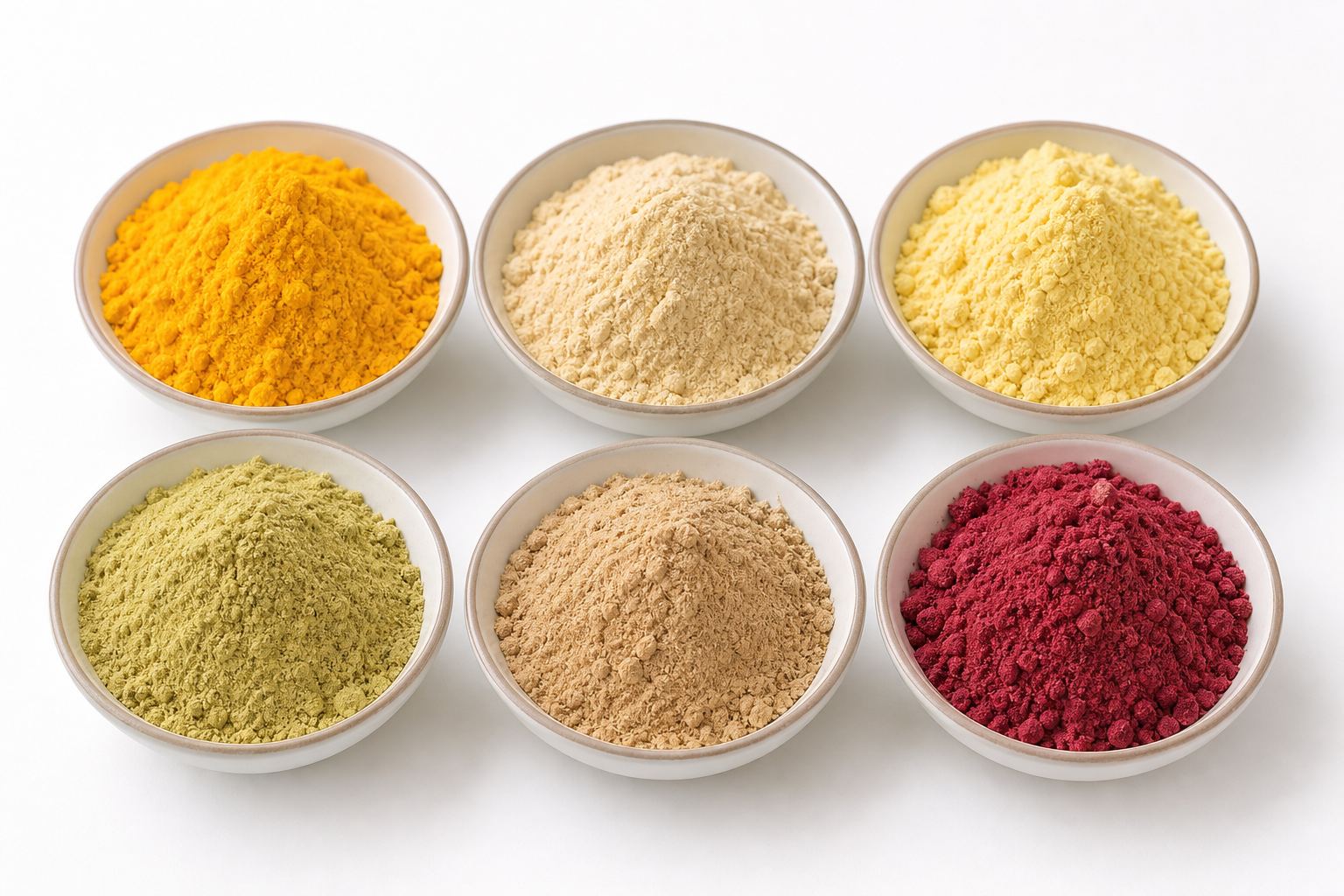
International fruit powder demand is not one market. A California beverage formulator may request spray-dried Totapuri mango powder at a defined maltodextrin carrier percentage with FDA Prior Notice-ready documents; a German organic brand may want freeze-dried mango with EU Organic transaction certificates and EU MRL residue panels; a Dubai private-label house may need Halal-certified banana and mango powder in retail pouches with Arabic stickers; a Japanese snack manufacturer may specify freeze-dried pineapple with Japan Positive List residue discipline; an Indonesian dairy plant may buy competitive spray-dried banana powder with MUI Halal; an Australian health-food importer may prioritize organic guava and amla; a Canadian natural channel buyer may need bilingual finished-goods labeling plans for retail blends. The Indian origin may be shared — the buying brief is not.
This guide is not a country ranking essay. It maps what each destination actually orders: which fruit powders, which process (spray-dried vs freeze-dried), which certifications, which channels, which packaging, and which mistakes buyers make when they treat all fruit powders as interchangeable. For market selection strategy see best countries for Indian fruit powder exports; for institutional credentials see APEDA registration benefits for fruit powder exporters; for sourcing workflows see source fruit powders directly from India and find international buyers for fruit powders.
Altus Exports works as a merchant exporter, global sourcing partner, and export consulting expert for fruit powders from India. We help buyers translate beverage, dairy, bakery, nutraceutical, and private-label requirements into practical Indian sourcing briefs across Maharashtra, Gujarat, Andhra Pradesh, Karnataka, Tamil Nadu, Uttar Pradesh, Himachal Pradesh, and Kerala clusters — then coordinate supplier matching, sample approval, testing, kraft+PE packaging, documentation under HS 1106.30 / India ITC-HS 11063030 (mango) or 11063090 (other Chapter 8 fruit powders), and shipment execution.
Key Takeaways
Summary Box
Executive Summary
Summary Box
India supplies a wide fruit powder portfolio — mango, banana, pineapple, guava, papaya, amla, pomegranate, jackfruit, berry blends, and organic variants — processed primarily by spray drying for volume and freeze drying for premium channels. Buyers evaluate these not as a single commodity but as SKU profiles matched to regulatory frameworks and end uses: beverage reconstitution, dairy and ice cream, bakery and confectionery, nutraceutical and functional foods, food service, and private-label retail.
This guide organizes demand by country and region — USA, EU/UK, Middle East/GCC, Japan, ASEAN, Australia/New Zealand, and Canada — identifying dominant SKUs, preferred process, certification stacks, buyer channels, packaging, and MOQ patterns. Unlike a “best countries” ranking, the focus is demand-fit matrices: what to produce, document, and price before the first inquiry.
Validate signals against APEDA trade intelligence, ITC Trade Map for HS 1106.30, and live buyer conversations. Pair with how to export fruit powders from India and top fruit powder products exported from India.
Market Size & Industry Overview
Key Statistics
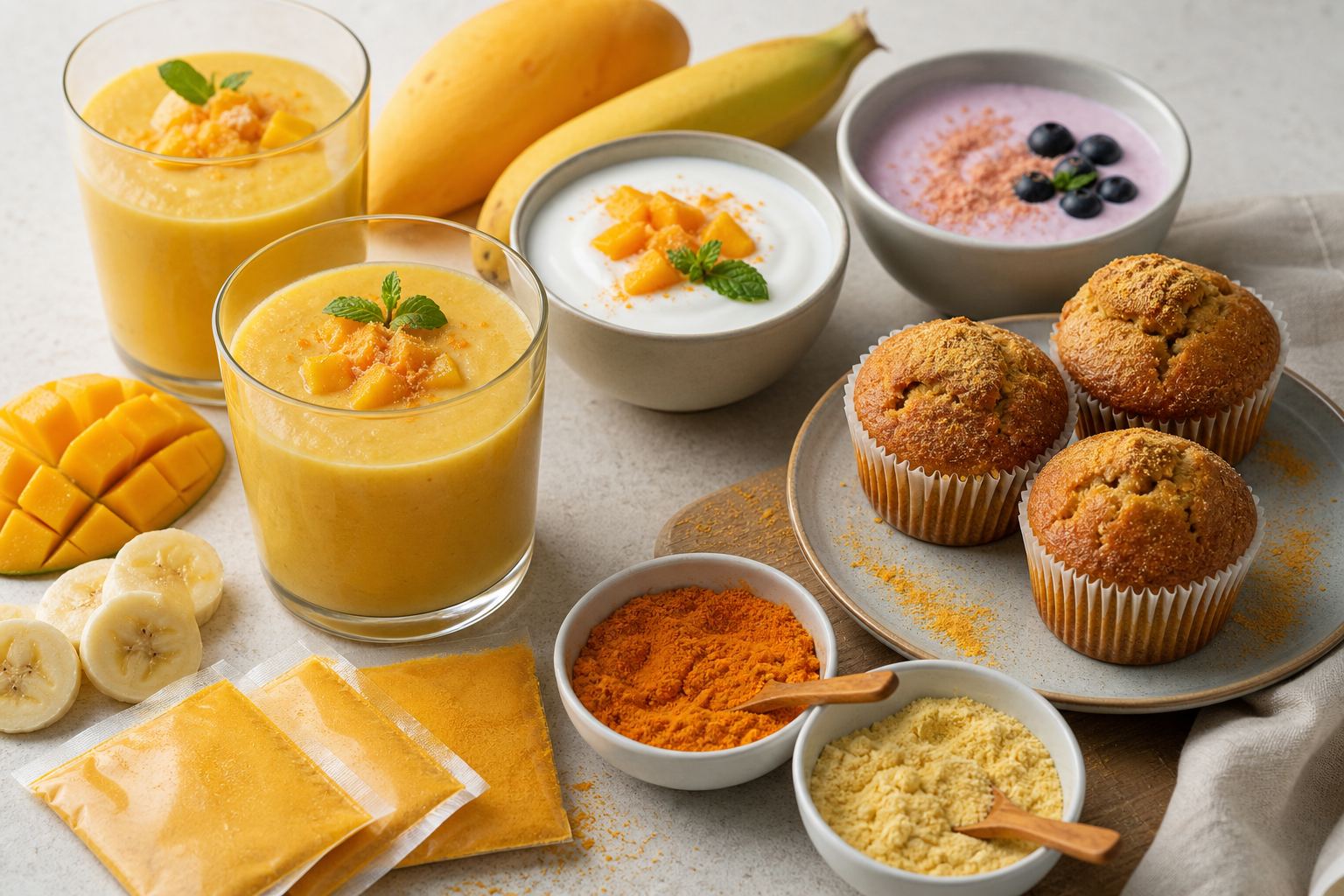
Fruit powders sit at the intersection of convenience, shelf life, and clean-label formulation. Brands use them to deliver fruit identity without the logistics of puree drums or IQF fruit, especially for beverage bases, smoothie mixes, yogurt inclusions, bakery fillings, and nutrition products. India’s advantage is fruit diversity plus expanding spray-drying capacity in western and southern states, with freeze-drying capacity growing for export premiums.
The industry serves beverage companies, dairy plants, bakery houses, nutraceutical brands, distributors, and private-label retailers. Each asks for a different combination of price, sensory performance, carrier policy, documentation, and certification. The strongest exporters translate Indian cluster reality into destination-specific briefs rather than selling a generic “fruit powder” offer.
India fruit powder planning anchors by cluster
Swipe →
Data table — swipe horizontally on small screens
| Cluster | State | SKU Strengths | Export Role |
|---|---|---|---|
| Nashik–Pune corridor | Maharashtra | Mango (Totapuri/Alphonso programs), mixed tropicals | Core spray-drying export hub |
| South Gujarat belt | Gujarat | Mango, banana, blends; merchant consolidation | Processing + Mundra/Kandla gateway |
| Coastal Andhra fruit belts | Andhra Pradesh | Mango, guava, papaya | Raw fruit + processing support |
| Bengaluru–Mysuru zones | Karnataka | Mango, banana, guava, specialty | Southern processing / private label |
| Southern fruit belts | Tamil Nadu | Banana, guava, mango, papaya | Volume tropical powder supply |
| Amla belts | Uttar Pradesh | Amla powder; mango programs | Functional / nutraceutical niche |
| Temperate zones | Himachal Pradesh | Apple and temperate fruit powders | Specialty premium niches |
| Tropical belts | Kerala | Jackfruit, banana, specialty tropical | Niche and organic-leaning programs |
Export Statistics
Key Statistics
Export statistics for fruit powders should be read through HS 1106.30 / India ITC-HS 11063030 (mango) or 11063090 (other Chapter 8 fruit powders), recognizing that some trade views mix powders with other fruit preparations. Verified directional trade context (WITS/UN Comtrade, HS 110630, calendar year 2024): India exported about USD 10.8 million and about 7,375 metric tonnes under this six-digit line. Leading reported destinations included the United States (~30% of export value), the United Kingdom (~11%), Canada (~9%), Australia (~8%), and the United Arab Emirates (~7%). Reconfirm current-year figures via APEDA, DGCI&S, ITC Trade Map, or WITS — line composition mixes mango flour/powder with other Chapter 8 powders and can shift with seasonality and freeze-dried/organic mix. Directionally, North America, Europe, GCC, Japan, ASEAN, Australia, and Canada absorb the bulk of organized Indian fruit powder programs, with mango and banana leading volume and freeze-dried/organic lines contributing disproportionate value.
Directional export intensity by destination for Indian fruit powders
Swipe →
Data table — swipe horizontally on small screens
| Destination | Export Intensity | Dominant SKUs / Process |
|---|---|---|
| USA | Very High | Spray-dried mango/banana; freeze-dried premiums; organic growing |
| EU / UK | Very High | Spray-dried tropicals; freeze-dried and organic clean-label |
| UAE / Saudi / GCC | High | Mango/banana spray-dried; Halal retail blends |
| Japan | Medium–High | Freeze-dried and premium spray-dried; residue-critical |
| ASEAN | High | Spray-dried banana/mango/pineapple; Halal in ID/MY |
| Australia / NZ | Medium–High | Organic and clean-label mango/guava/amla |
| Canada | Medium–High | Natural channel spray-dried; organic growth |
Import Statistics
Key Statistics
Import-side signals reflect each market’s beverage and dairy manufacturing base, health-food retail maturity, and Halal or organic regulatory overlays. Triangulate customs data with distributor interviews and inquiry patterns — buyers often describe products as “mango powder,” “fruit drink base,” or “freeze-dried fruit crisps powder,” which may map to different specs and certificate expectations.
Import demand signals by country for fruit powders
Swipe →
Data table — swipe horizontally on small screens
| Country / Region | Import Driver | Buyer Types |
|---|---|---|
| USA | Beverage, smoothie, dairy, clean-label reformulation | Brand owners, co-manufacturers, distributors |
| Germany / Netherlands / EU | Clean-label and organic beverage/dairy | Organic brands, ingredient distributors, private label |
| UK | Beverage and health retail; post-Brexit organic pathways | Retail brands, food manufacturers |
| UAE / GCC | Beverage plants + private-label retail | Distributors, private-label houses, food service |
| Japan | Premium snack and beverage inclusions | Specialty manufacturers, trading houses |
| Indonesia / Malaysia | Dairy and beverage manufacturing; Halal | Food manufacturers, Halal ingredient distributors |
| Australia / Canada | Health food and natural retail growth | Importers, brand owners, natural distributors |
Product Categories / Variants
Summary Box
Country demand starts with species but does not end there. The same mango can be spray-dried with 10–40% maltodextrin, spray-dried carrier-reduced, or freeze-dried for premium inclusions. Export conversations improve when buyers specify end use, process, carrier policy, mesh, moisture, and certification needs.
Fruit powder variant map used in country demand briefs
Swipe →
Data table — swipe horizontally on small screens
| Variant | Process | Typical Destinations |
|---|---|---|
| Mango powder | Spray-dried volume; freeze-dried premium | USA, EU, GCC, ASEAN, AU, CA, Japan (premium) |
| Banana powder | Spray-dried; selected freeze-dried | USA, ASEAN, EU, GCC, CA |
| Pineapple powder | Spray-dried; freeze-dried niches | USA, EU, Japan, ASEAN |
| Guava powder | Spray-dried | EU, AU, ASEAN, USA beverage |
| Papaya powder | Spray-dried | ASEAN, USA functional, EU niches |
| Amla powder | Spray / specialised drying | USA, EU, AU, CA nutraceutical |
| Pomegranate powder | Spray / specialised | USA, EU, Middle East premium |
| Organic fruit powders | NPOP-linked spray or freeze-dried | USA, EU, UK, AU, CA |
Spray-Dried vs Freeze-Dried
Spray-dried powders dominate volume programs because dryer throughput and FOB economics fit beverage and dairy bulk use. Freeze-dried powders win when color, aroma, and nutritional retention justify premiums for snack inclusions, cereal toppings, and specialty retail. Never let a buyer compare a freeze-dried quote against a spray-dried baseline without process labels — it creates false price objections.
Carrier Policy Matters
Maltodextrin carrier percentage changes sweetness perception, solubility, cost, and clean-label acceptance. US and EU clean-label buyers increasingly ask for carrier-reduced or carrier-declared transparency. GCC and ASEAN volume buyers often accept standard carrier spray-dried specs if sensory and price fit.
Manufacturing Overview
Export Tip
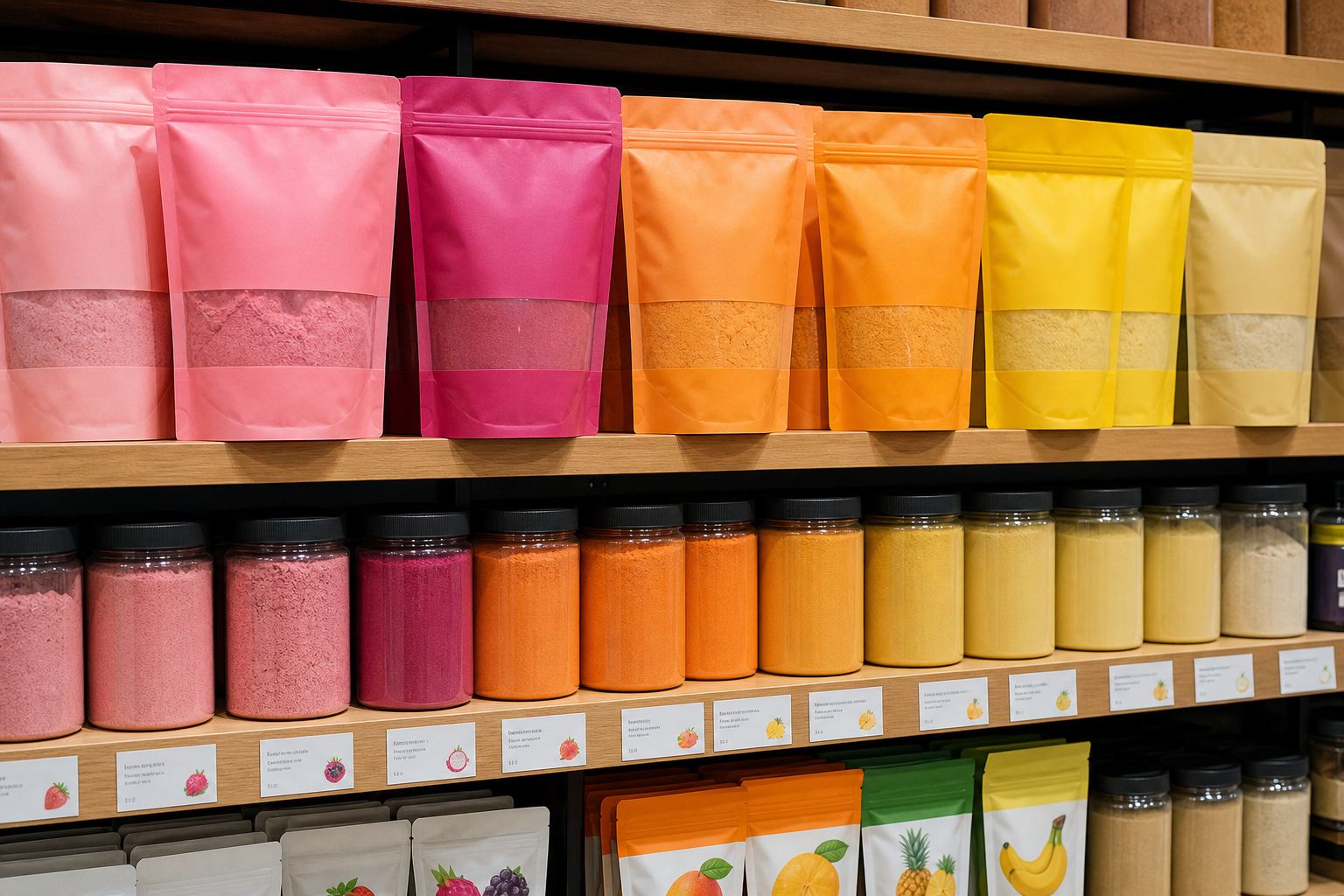
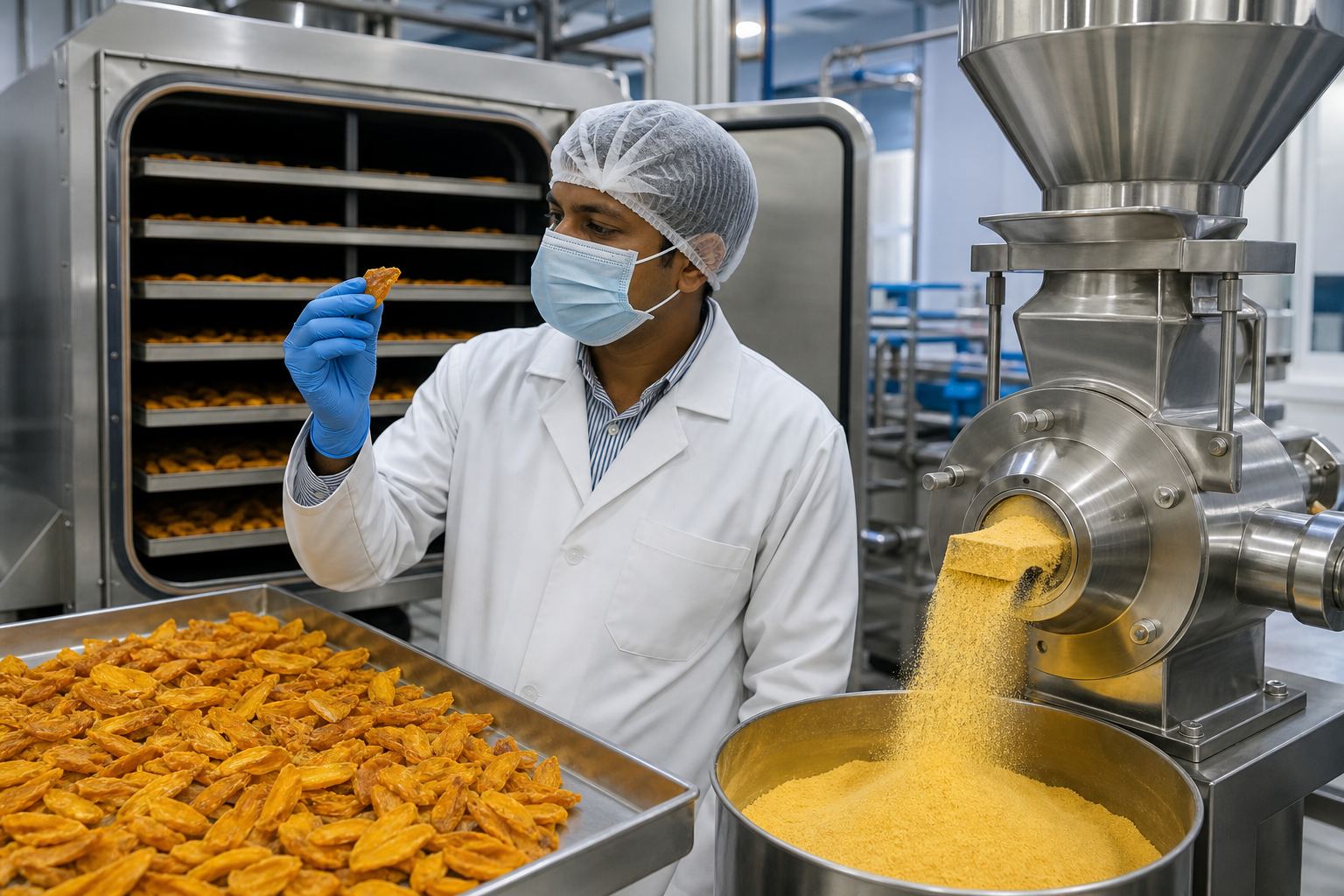
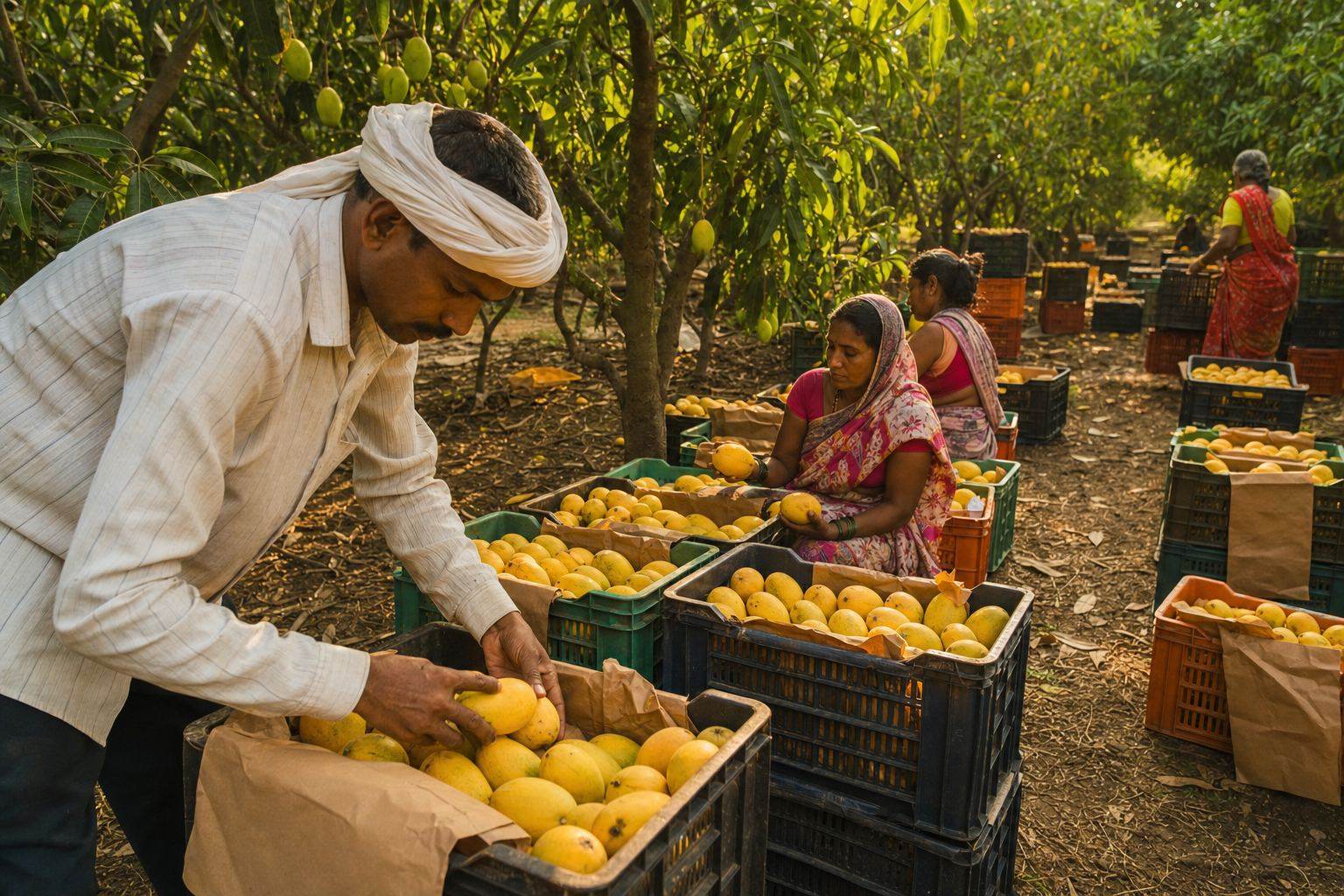
Manufacturing for export follows fruit receiving QC, washing, pulping, refining, standardization, spray or freeze drying, milling/sieving, metal detection, and kraft+PE packing. Export plants maintain lot traceability, microbiology, moisture/Aw, heavy metals, and destination residue panels. Cluster choice matters: mango campaigns concentrate in Maharashtra/Gujarat/AP; banana in TN/Karnataka/Kerala; amla in UP; temperate niches in Himachal.
Buyers should ask which dryer technology, carrier addition point, allergen controls, and multi-lot COA history the plant can document — not only whether a single sample tastes acceptable.
Most Demanded Indian Fruit Powders in the USA
Market Snapshot
- Dominant SKUs: spray-dried mango and banana; freeze-dried mango/pineapple premiums
- Process note: declare spray vs freeze on every COA and spec sheet
- Certifications: FSSAI, APEDA RCMC, HACCP/ISO 22000; USDA NOP for organic
- Packaging: 20–25 kg kraft+PE; retail pouches for private label
- Channel tip: US QA teams request multi-lot COA history, not one sample result
The USA is a top-value destination for Indian fruit powders. Demand anchors in beverage and smoothie bases, dairy and frozen dessert inclusions, bakery applications, and growing organic/natural retail. Spray-dried mango and banana lead volume; freeze-dried mango, pineapple, and berry-adjacent programs command premiums. FDA Prior Notice readiness, facility documentation, and lot COAs are baseline expectations.
Organic NPOP/USDA NOP fruit powders are a fast-growing sub-segment for clean-label brands. US buyers often request explicit carrier percentages, mesh, moisture ceilings, and allergen statements before approving a co-manufacturer brief.
USA fruit powder demand profile
Swipe →
Data table — swipe horizontally on small screens
| SKU | Preferred Process | Typical Channel | Cert Emphasis |
|---|---|---|---|
| Mango powder | Spray-dried; freeze-dried premium | Beverage, dairy, private label | COA + organic NOP growing |
| Banana powder | Spray-dried | Bakery, dairy, nutrition mixes | Allergen + micro panels |
| Pineapple powder | Spray / freeze-dried | Beverage, snack inclusions | Sensory + residue |
| Amla powder | Specialised / spray | Nutraceutical | Assay + heavy metals |
| Organic blends | Spray or freeze-dried | Natural retail brands | Lot organic TC mandatory |
Most Demanded Indian Fruit Powders in the EU and UK
Market Snapshot
- Dominant SKUs: mango, banana, guava, pineapple; organic premiums
- Process: spray-dried volume; freeze-dried for specialty retail/inclusions
- Certifications: APEDA RCMC, FSSAI, EU MRL panels; EU Organic / UK Organic as applicable
- Watch-out: company organic certificates without lot TCs fail retailer audits
EU demand — led by Germany, Netherlands, France, and neighboring markets — prioritizes clean-label and organic fruit powders for beverage, dairy, and confectionery. EU MRL residue compliance is non-negotiable; a RASFF residue alert can suspend market access. Freeze-dried and organic spray-dried mango, guava, and berry programs attract premiums. UK buyers share much of the sensory and documentation rigor, with separate post-Brexit organic conformity pathways for UK organic labeling.
EU / UK fruit powder demand profile
Swipe →
Data table — swipe horizontally on small screens
| Market | Priority SKUs | Process Bias | Compliance Hot Button |
|---|---|---|---|
| Germany | Mango, guava, organic tropicals | Spray + freeze-dried | EU MRL + organic TC |
| Netherlands | Mango, banana, blends (re-export hub) | Spray-dried volume | Distributor documentation depth |
| France / Italy / Spain | Mango, pineapple, specialty | Spray-dried; freeze niches | Sensory + clean-label claims |
| UK | Mango, banana, organic | Spray + freeze-dried | UK organic pathway if labelled |
Most Demanded Indian Fruit Powders in the Middle East (GCC)
Market Snapshot
- Dominant SKUs: mango and banana spray-dried; tropical blends
- Certifications: Halal + APEDA RCMC + FSSAI
- Packaging: kraft+PE bulk; retail pouches with Arabic stickers for private label
- Channel tip: Dubai distributors often re-export regionally — pack for multi-country handling
UAE, Saudi Arabia, and wider GCC demand centres on beverage manufacturing, food service, and private-label retail. Spray-dried mango and banana dominate; pineapple and mixed tropical blends follow. Halal certification is a practical commercial requirement even for plant-based powders because downstream finished goods are Halal-certified. Arabic label support matters for retail pouches. Conversion from inquiry to first FCL is often faster than USA/EU once Halal, RCMC, and FSSAI packs are complete.
Most Demanded Indian Fruit Powders in Japan
Market Snapshot
- Dominant SKUs: freeze-dried pineapple/mango; premium spray-dried tropicals
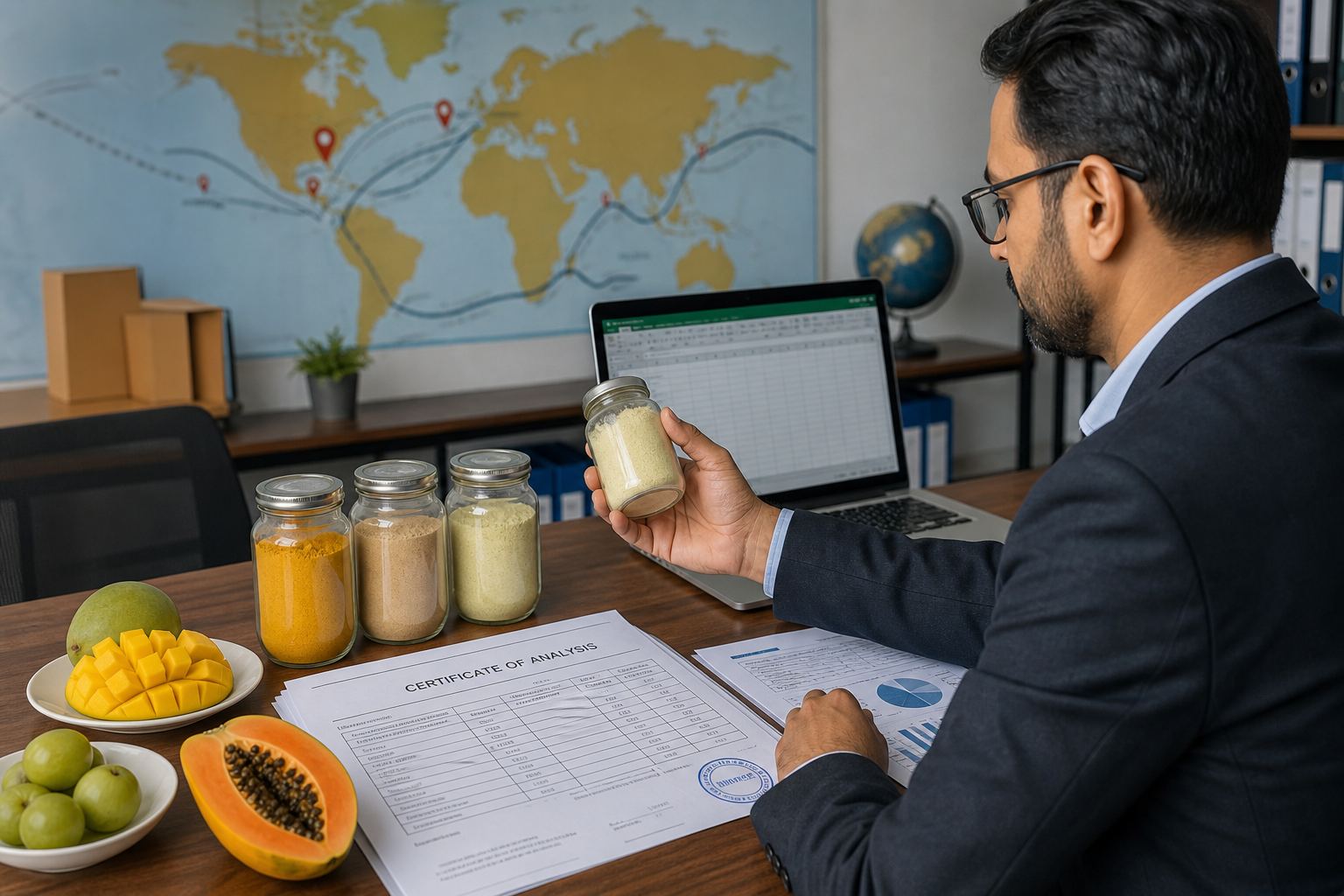
- Certifications: APEDA RCMC, FSSAI, Japan Positive List residue panels
- Packaging: moisture-critical foil or double-barrier packs often preferred
- Watch-out: do not ship on a generic residue COA
Japan is a premium, compliance-intensive market. Buyers favour freeze-dried and high-spec spray-dried pineapple, mango, and specialty powders for snack inclusions and clean-label beverages. The Japan Positive List System (default 0.01 ppm for unlisted chemicals) requires Japan-specific residue panels — EU or US panels are not substitutes. Multi-season clean test history is the primary trust signal.
Most Demanded Indian Fruit Powders in ASEAN
Market Snapshot
- Dominant SKUs: banana, mango, pineapple spray-dried
- Certifications: Halal (ID/MY), APEDA RCMC, FSSAI
- MOQ: faster conversion on competitive FCL pricing
- Channel tip: manufacturer buyers care about solubility and color consistency lot-to-lot
Indonesia, Malaysia, Singapore, Vietnam, and neighboring ASEAN markets buy Indian spray-dried banana, mango, and pineapple powders for dairy and beverage manufacturing. Price competitiveness and reliable replenishment matter. Halal certification from market-recognized bodies (MUI for Indonesia; JAKIM for Malaysia) is essential for those two markets even though fruit powders are plant-based.
ASEAN fruit powder demand snapshot
Swipe →
Data table — swipe horizontally on small screens
| Country | Priority SKUs | Halal Need | Buying Style |
|---|---|---|---|
| Indonesia | Banana, mango spray-dried | MUI Halal required commercially | Price-sensitive manufacturer volume |
| Malaysia | Mango, banana, pineapple | JAKIM Halal required commercially | Dairy/beverage plants + distributors |
| Singapore | Premium mango/pineapple; blends | Often preferred for regional brands | Quality-forward distribution hub |
| Vietnam | Mango, pineapple spray-dried | Growing; buyer-specific | Competitive spray-dried programs |
Most Demanded Indian Fruit Powders in Australia and Canada
Market Snapshot
- Australia: organic and clean-label mango/guava/amla; strong documentation culture
- Canada: natural channel spray-dried tropicals; organic growth; bilingual retail packs
- Certifications: APEDA RCMC, FSSAI, organic pathways as labelled
Australia and New Zealand lean toward clean-label and organic fruit powders for health food, beverage, and bakery channels — mango, guava, and amla appear frequently in premium briefs. Canada’s natural and ethnic retail channels buy spray-dried mango and banana with growing organic interest; bilingual English-French labeling matters when exporting finished retail packs.
Pricing Analysis
Buyer Tip
Country demand shapes willingness to pay. USA/EU freeze-dried and organic programs sit at the top of the curve; ASEAN and some GCC volume spray-dried programs sit closer to competitive FOB bands. Ranges are indicative — requote every season.
Indicative FOB ranges by SKU/process (directional)
Swipe →
Data table — swipe horizontally on small screens
| SKU / Process | Indicative FOB (USD/kg) | Markets Paying Premiums |
|---|---|---|
| Mango spray-dried (with carrier) | 3.50–7.50 | USA, EU, GCC, ASEAN volume |
| Mango freeze-dried | 15–40+ | USA, EU, Japan, AU |
| Banana spray-dried | 3.00–6.50 | USA, ASEAN, GCC, CA |
| Pineapple spray-dried | 3.50–8.00 | USA, EU, ASEAN, Japan |
| Guava spray-dried | 4.00–9.00 | EU, AU, USA |
| Amla powder | 4.00–12.00 | USA, EU, AU nutraceutical |
| Organic spray-dried tropicals | +20–50% vs conventional | USA, EU, UK, AU, CA |
MOQ Analysis
Buyer Tip
MOQs track channel maturity. USA/EU brand trials may start at a few hundred kilograms; ASEAN manufacturer programs may jump to FCL quickly once price and Halal docs clear. Freeze-dried trials are smaller in weight but larger in value.
MOQ patterns by destination archetype
Swipe →
Data table — swipe horizontally on small screens
| Buyer Archetype | Typical Trial MOQ | Program MOQ |
|---|---|---|
| US/EU brand / co-man | 200 kg – 2 MT LCL | 1–2 FCL/month spray-dried or scheduled freeze-dried lots |
| GCC distributor / private label | 500 kg – 5 MT | 20ft/40ft FCL replenishment |
| ASEAN manufacturer | 1–5 MT | FCL-driven competitive programs |
| Japan specialty buyer | 50–500 kg (often air/LCL) | Scheduled premium lots after multi-season COAs |
| AU/CA natural importer | 200 kg – 2 MT | LCL to FCL as retail sell-through proves |
Packaging Standards
Export Tip
Across destinations, kraft+PE 20–25 kg bags remain the bulk standard. Japan and freeze-dried programs often upgrade barrier. GCC and USA private label may require retail pouches with destination language support.
Packaging by market need
Swipe →
Data table — swipe horizontally on small screens
| Format | Net Weight | Where It Wins |
|---|---|---|
| Kraft + PE liner | 20–25 kg | Universal bulk (USA, EU, ASEAN, GCC, CA, AU) |
| Double PE / foil laminate | 10–25 kg | Japan, freeze-dried, long-transit premium |
| Retail pouch | 100 g – 1 kg | GCC private label, USA/EU branded blends |
| Jumbo bag | 500–1,000 kg | Industrial manufacturers with repack lines |
Container Loading Details
Export Tip
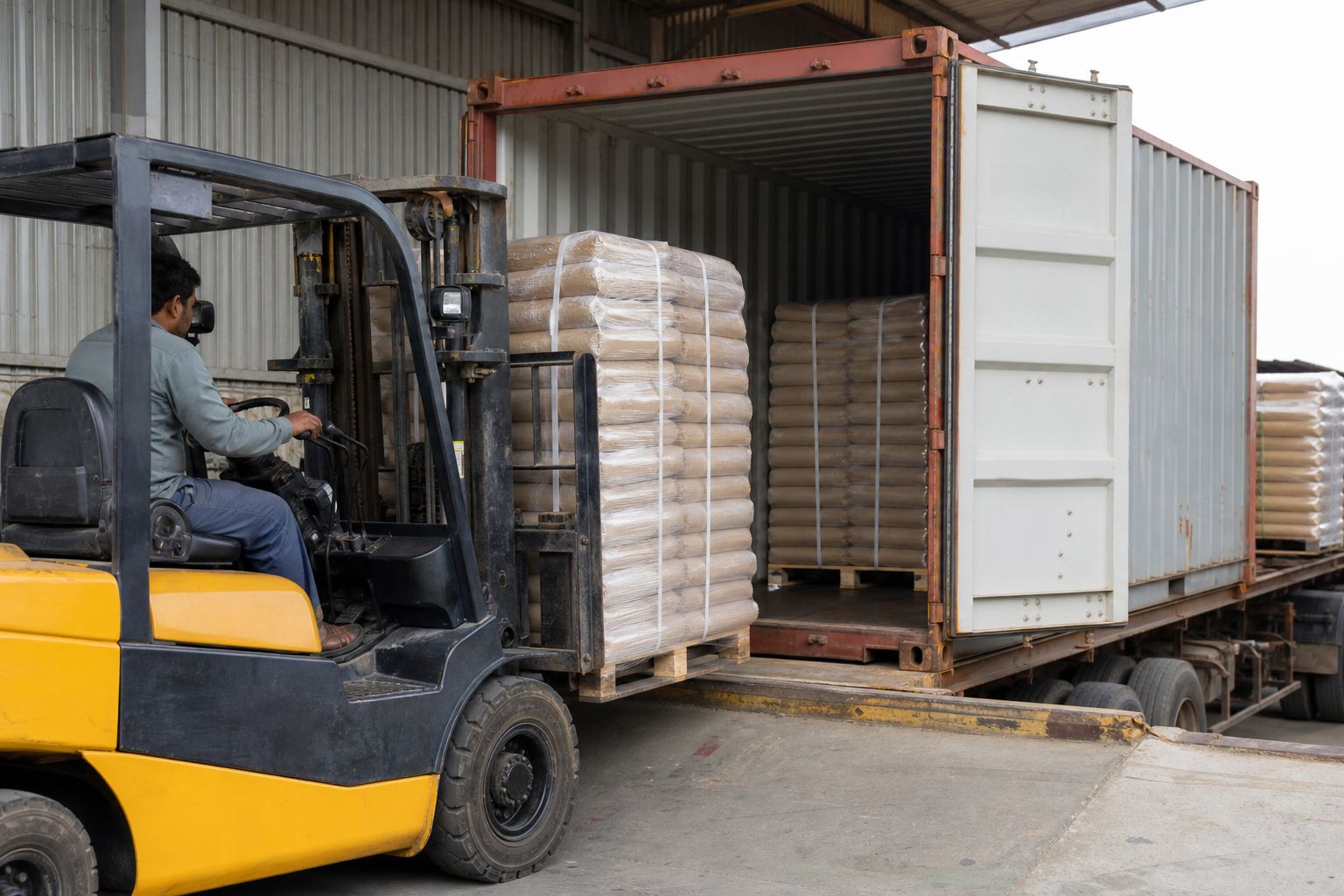
Directional FCL payloads for fruit powders are approximately 10–14 MT in 20-foot containers and 16–24 MT in 40-foot containers for 25 kg kraft+PE bags. Freeze-dried lots may cube out before weighing out — plan volume carefully.
Directional container loading for fruit powders
Swipe →
Data table — swipe horizontally on small screens
| Container | Indicative Payload | Note |
|---|---|---|
| 20ft | ~10–14 MT | Confirm density and pallet plan |
| 40ft | ~18–24 MT | Preferred program economics for spray-dried |
| 40ft HC | Slightly higher if density allows | Useful when mix includes lighter freeze-dried cartons |
Shipping Methods
Export Tip
Sea FCL is the program default from Nhava Sheva, Mundra, Chennai, Tuticorin, and Cochin depending on cluster. LCL for trials; air for samples and urgent freeze-dried. Match load port to origin cluster to reduce domestic transit risk on moisture-sensitive powders.
Indicative transit guidance by destination
Swipe →
Data table — swipe horizontally on small screens
| Destination | Common Ports | Approx. Sea Transit |
|---|---|---|
| USA | Nhava Sheva / Mundra | 28–40 days by coast |
| EU | Nhava Sheva / Mundra | 18–25 days |
| GCC | Mundra / Nhava Sheva | 6–10 days |
| Japan | Nhava Sheva / Mundra / Chennai | 20–28 days |
| ASEAN | Chennai / Mundra / Nhava Sheva | 8–16 days |
| Australia | Nhava Sheva / Chennai / Mundra | 20–30 days |
| Canada | Nhava Sheva / Mundra | 28–40 days |
Certifications
Compliance Notes
Certification stacks are destination-specific. The shared baseline is FSSAI + APEDA RCMC. Layer Halal, organic, Kosher, and GFSI-recognized food safety schemes based on the country matrix above.
Certification emphasis by destination
Swipe →
Data table — swipe horizontally on small screens
| Destination | Baseline | Frequent Add-ons |
|---|---|---|
| USA | FSSAI + APEDA RCMC | HACCP/ISO 22000, USDA NOP organic, Non-GMO |
| EU / UK | FSSAI + APEDA RCMC | EU MRL panels, EU/UK Organic, IFS/BRC via buyer |
| GCC | FSSAI + APEDA RCMC | Halal, Arabic labeling for retail |
| Japan | FSSAI + APEDA RCMC | Japan Positive List residue panels |
| ASEAN ID/MY | FSSAI + APEDA RCMC | MUI / JAKIM Halal |
| AU / CA | FSSAI + APEDA RCMC | Organic pathways; bilingual packs for CA retail |
Buyer Requirements
Buyer Requirements
- APEDA RCMC and FSSAI copies
- SKU sheet: species, process, carrier %, mesh, moisture, sensory targets
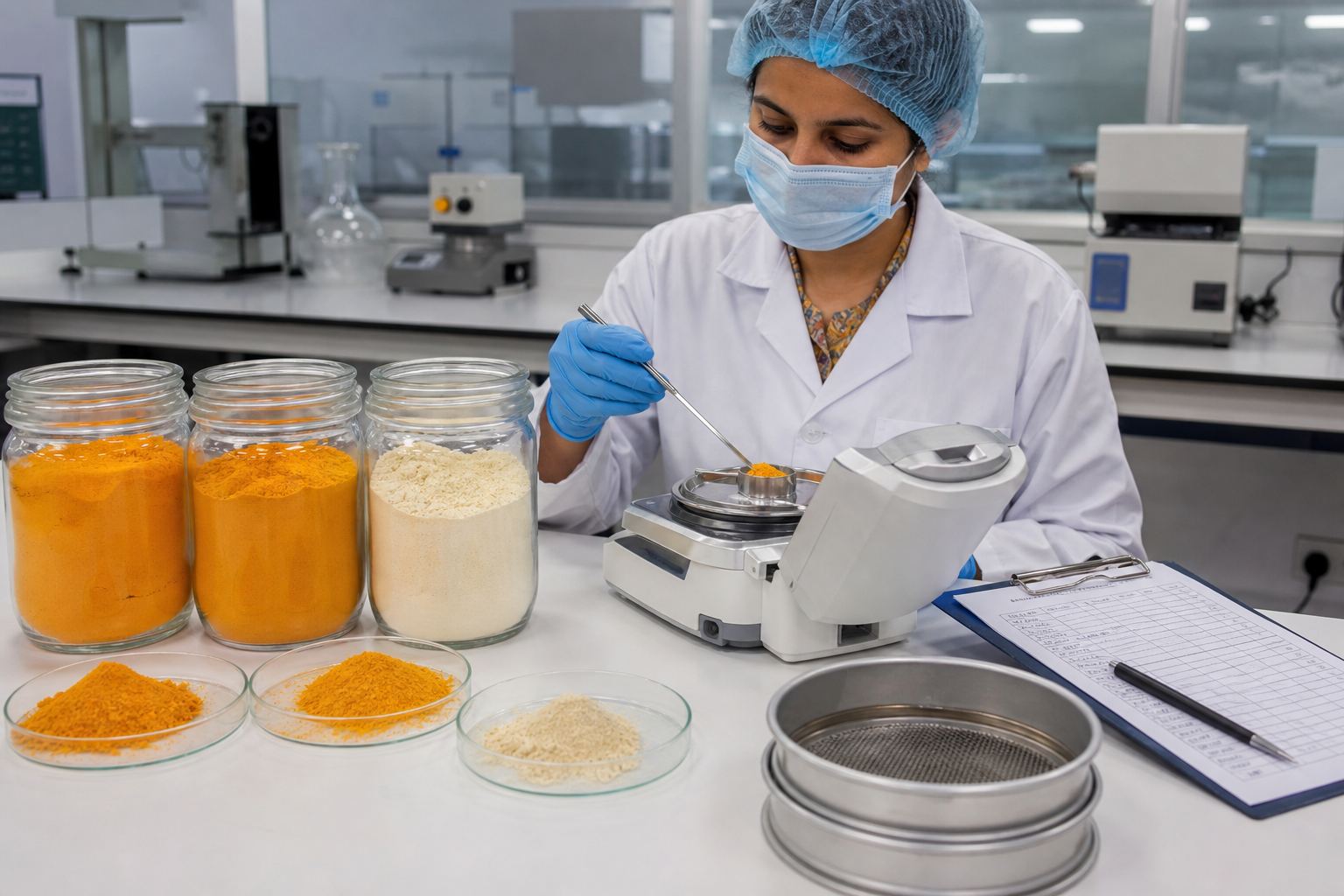
- Lot COA: micro, moisture/Aw, metals, destination residue panel
- Halal/organic/Kosher certificates matching the labelled claim
- Packing and FCL stuffing plan
- Traceability from fruit lot to powder lot
Across countries, serious buyers request process declaration, specs, lot COAs, institutional credentials, and packing plans before confirming trials.
Country-wise Opportunities
Market Snapshot
Use this consolidated opportunity matrix to prioritize which SKU-process-cert combinations to build first. Faster-converting GCC and ASEAN volume can fund longer USA/EU/Japan qualification cycles.
Country-wise fruit powder opportunities — SKU, channel, and entry priority
Swipe →
Data table — swipe horizontally on small screens
| Market | Priority SKUs | Dominant Channel | Conversion Speed | Doc Intensity | Entry Priority |
|---|---|---|---|---|---|
| USA | Mango/banana spray; FD premiums; organic | Beverage, dairy, natural brands | 90–180 days | Very High | Tier 1 for quality exporters |
| EU / UK | Mango/guava/organic; FD niches | Organic brands, distributors | 90–180 days | Very High | Tier 1 for clean-label plants |
| UAE / GCC | Mango/banana spray; retail blends | Distributors, private label | 30–60 days | Medium (Halal) | Tier 1 — fast conversion |
| Japan | FD pineapple/mango; premium spray | Specialty manufacturers | 120–180 days | Very High (Positive List) | Tier 2 — build residue history |
| Indonesia / Malaysia | Banana/mango spray | Dairy/beverage manufacturers | 30–60 days | Medium (Halal) | Tier 1 with Halal ready |
| Australia | Organic mango/guava/amla | Health food importers | 60–120 days | High | Tier 2 premium |
| Canada | Mango/banana spray; organic | Natural distributors | 60–120 days | High | Tier 2 natural channel |
| Singapore | Premium tropicals | Regional distribution hub | 45–90 days | High | Tier 2 hub strategy |
Sourcing Checklist
Checklist
Apply these checklists when matching Indian fruit powder supply to destination demand under HS 1106.30 / India ITC-HS 11063030 (mango) or 11063090 (other Chapter 8 fruit powders).
Buyer Checklist
- Define destination, SKU, process, carrier %, and certs before RFQ
- Request APEDA RCMC, FSSAI, and recent multi-lot COAs
- Confirm residue panel matches destination (EU MRL vs Japan Positive List)
- Trial LCL before FCL for new suppliers
- Verify Halal body recognition for GCC/ASEAN programs
Exporter Checklist
- Segment lots by destination spec — do not mix Japan residue lots with generic ASEAN lots in documentation
- Maintain spray-dried and freeze-dried quote files separately
- Keep Halal, organic, and food-safety certificates current per market
- Map cluster supply (MH/GJ/AP/KA/TN/UP/HP/KL) to SKU promises before confirming lead times
- Pre-build kraft+PE and barrier-upgrade packing options
Compliance Checklist
- FSSAI + APEDA RCMC current on every onboarding pack
- HS 1106.30 / India ITC-HS 11063030 (mango) or 11063090 (other Chapter 8 fruit powders) confirmed with CHA
- Lot COAs include micro, moisture, metals, and destination residues
- Organic lot TCs for organic-labelled shipments
- Halal certificates match destination recognition lists
Common Buyer Mistakes
Common Mistakes Box
- Comparing freeze-dried prices to spray-dried offers — Solution: separate process lines in every comparison sheet.
- Ordering “mango powder” without carrier % — Solution: specify maltodextrin % or carrier-free claim in the PO.
- Using an EU residue panel for Japan — Solution: require Japan Positive List testing for Japan-bound lots.
- Skipping Halal for Indonesia/Malaysia because the powder is plant-based — Solution: obtain MUI/JAKIM-recognized Halal.
- Accepting company-level organic certificates — Solution: demand lot transaction certificates.
- Jumping to FCL before sensory and micro validation — Solution: run LCL trials first.
- Ignoring cluster seasonality for mango campaigns — Solution: book dryer slots ahead of peak season.
- Filing under the wrong HS line — Solution: lock 11063030/11063090 with your CHA before shipping-bill cut-off.
Future Market Trends
Key Statistics
Through 2030, country-level demand for Indian fruit powders will likely deepen around organic and carrier-reduced clean-label SKUs in USA/EU/AU/CA, premium freeze-dried inclusions in Japan and specialty EU retail, Halal-certified volume growth across GCC and ASEAN, and stricter residue/micro expectations everywhere premium brands consolidate suppliers.
Exporters who build country-specific SKU, process, and certification playbooks now — rather than selling one generic fruit powder — will capture more reorder programs as buyers narrow vendor lists to documented, APEDA-registered partners.
Expert Insights from Saurabh Mittal
Expert Insight Box
Two perspectives from Altus Exports on country × SKU fit for fruit powder programs.
Demand-Fit Beats Generic Country Lists
A “best countries” list tells you where demand exists in aggregate. A country × SKU matrix tells you what to dry, how to pack, which lab panel to run, and which certificate to renew before outreach. Altus Exports uses the second approach when matching Maharashtra, Gujarat, and southern cluster supply to USA, EU, GCC, Japan, ASEAN, Australia, and Canada buyers — because the first container becomes a program only when the brief matches what that market can legally and commercially use.
Conclusion
- Action: Share your target country, SKU, process, and certifications with Altus Exports for a demand-fit review.
- Read how to export fruit powders from India, top fruit powder products exported from India, best countries for Indian fruit powder exports, source fruit powders directly from India, APEDA registration benefits for fruit powder exporters, find international buyers for fruit powders, organic fruit powder export opportunities from India, fruit powder export documentation checklist, and trade shows for fruit powder exporters.
- Explore merchant exporter India, export products from India, global sourcing partner India, and product sourcing company India.
The most demanded Indian fruit powders by country depend on SKU, process, certification, and channel: USA and EU lead in spray-dried mango/banana with rising freeze-dried and organic premiums; GCC converts quickly on Halal spray-dried tropicals and retail blends; Japan pays for residue-clean premium and freeze-dried lots; ASEAN absorbs competitive spray-dried banana/mango/pineapple with Halal in Indonesia and Malaysia; Australia and Canada reward clean-label and organic programs. HS 1106.30 / India ITC-HS 11063030 (mango) or 11063090 (other Chapter 8 fruit powders), APEDA RCMC, FSSAI, kraft+PE packing, and directional FCL planning are the shared operating system underneath those differences.
Exporters should map dryer capability to one or two destination profiles first, build the matching cert and residue stack, and segment lots by market. Buyers should write destination briefs before comparing quotes. Altus Exports helps both sides align Indian fruit powder supply with country-specific demand for agriculture & food products programs.