
Fruit Powder Export Documentation Checklist from India
By Saurabh Mittal, Founder, Altus Exports
A document-by-document pre-shipment checklist for Indian fruit powder exports — IEC, GST, FSSAI, APEDA RCMC, commercial invoice, packing list, shipping bill, B/L or AWB, COO, COA, health/phyto certificates, Halal, Kosher, and Organic — with sequencing, common filing errors, and destination extras.
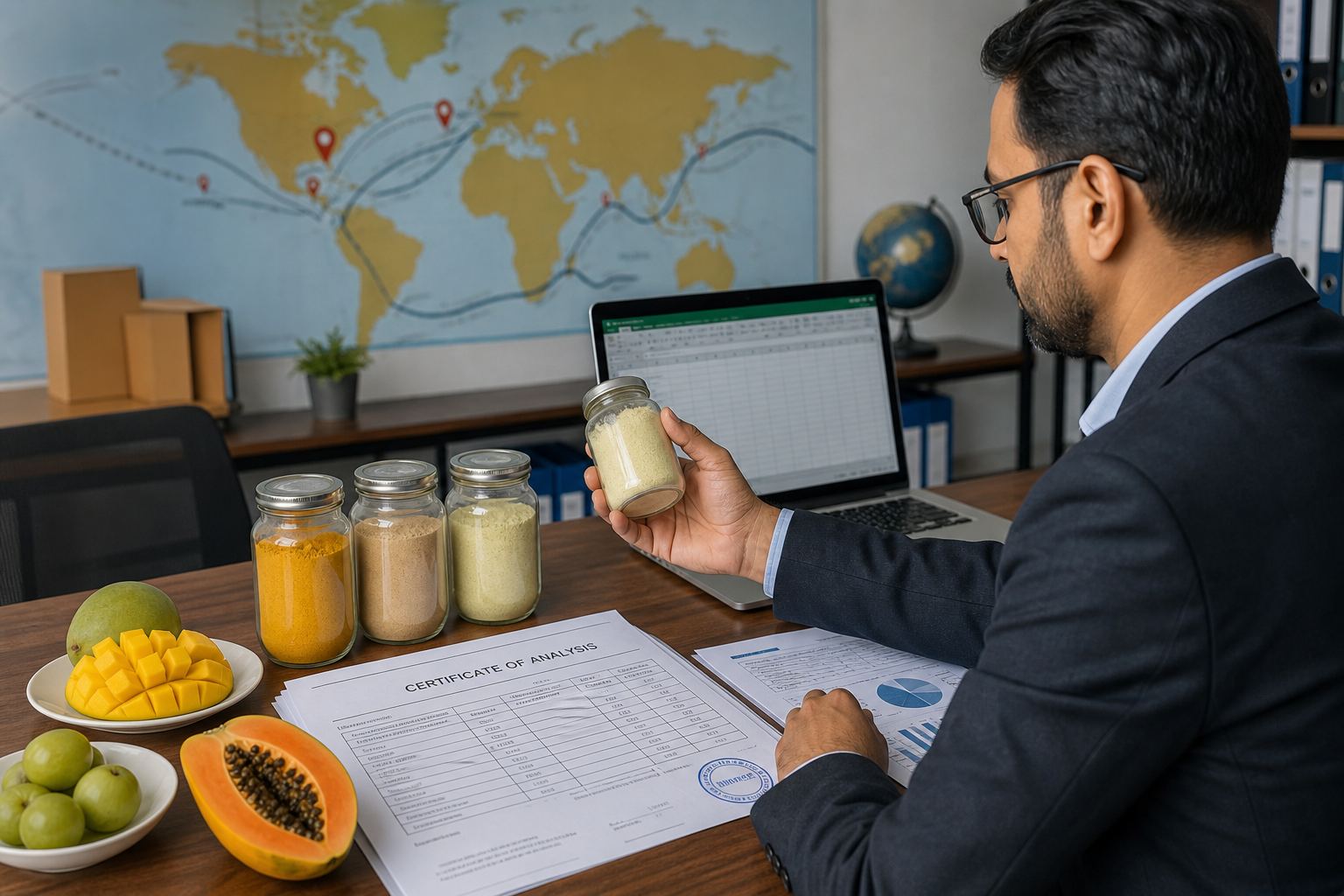
Fruit powder export documentation is not an afterthought stapled onto a finished carton. It is the legal and commercial bridge between Indian spray-dried and freeze-dried fruit powder plants and international beverage, bakery, dairy, nutraceutical, and private-label buyers. A clean lot of mango, banana, pineapple, papaya, guava, amla, apple, jackfruit, or pomegranate powder can still face holds if the commercial invoice, packing list, shipping bill, bill of lading, certificate of origin, certificate of analysis, and destination health or organic documents do not agree on product description, HS code, lot number, net weight, and carrier percentage.
Most fruit powders from India are classified under HS 1106.30 (flour, meal and powder of the products of Chapter 8), with the Indian ITC-HS line commonly filed as 11063030/11063090. Confirm the eight-digit line and any destination nuance with a licensed customs house agent before you lock templates. Dried fruit pieces under HS 0813 or fruit preparations under HS 2008 are different products — do not reuse a fruit powder invoice template for them.
This guide is the fruit-powder-only documentation operating checklist Altus Exports uses when coordinating consignments as a merchant exporter and global sourcing partner. It covers foundation registrations, document-by-document fields, sequencing from production to sailing, COA parameters that buyers actually audit, destination extras, common filing errors, and how buyers, exporters, and compliance teams should check the same pack before cargo gates in. For market selection and channel planning, continue with best countries for Indian fruit powder exports and trade shows for fruit powder exporters.
Key Takeaways
Summary Box
Executive Summary
Summary Box
India’s fruit powder export ecosystem converts tropical and temperate fruit pulp, puree, and concentrate into shelf-stable ingredients for global food manufacturers. Spray-dried mango and banana powders dominate volume programs; freeze-dried and specialty powders (amla, guava, pineapple, papaya, pomegranate, apple, jackfruit, berry blends) command higher FOB prices and tighter document scrutiny because buyers treat them as premium or functional ingredients.
Documentation discipline is a competitive advantage in this category. Buyers in the United States, European Union, United Kingdom, UAE, Japan, Canada, and Australia expect lot-wise Certificates of Analysis covering moisture, microbiology, heavy metals, and pesticide residues; many also require Halal, Kosher, or organic transaction certificates depending on channel. Exporters who assemble drafts during production — rather than the night before sailing — clear faster and win repeat orders.
Altus Exports treats the fruit powder document pack as part of export management: we align HS 1106.30 descriptions, bag marks, COA lot numbers, packing list weights, shipping bill data, and destination extras before cargo cutoff. The sections below follow the sequence a document coordinator should work through — foundations first, then shipment documents, then destination layers, then audit.
Market Size & Industry Overview
Key Statistics
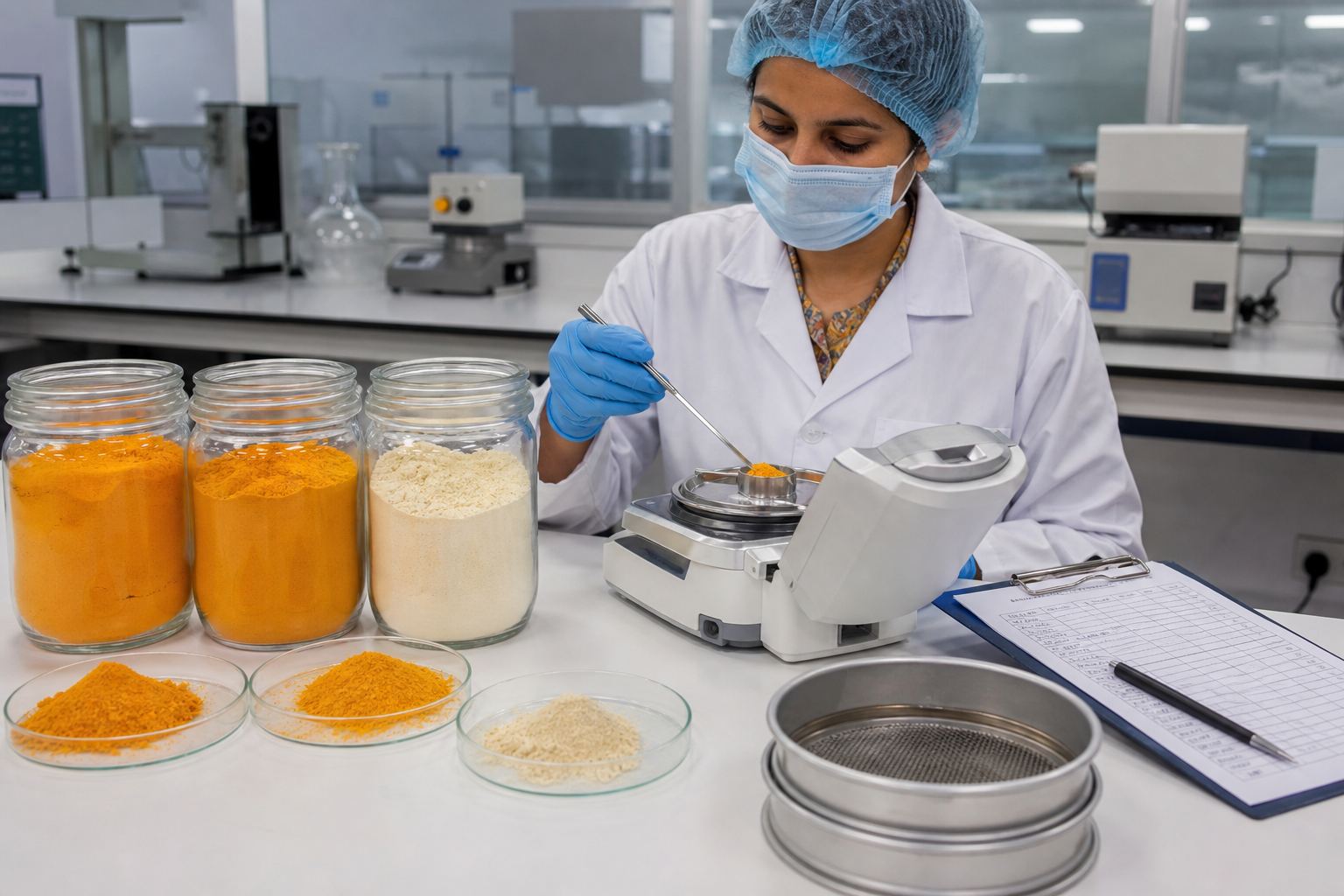
Global demand for fruit powders is driven by clean-label beverages, smoothie mixes, bakery inclusions, dairy desserts, infant and toddler nutrition where permitted, nutraceutical blends, and private-label seasoning or drink mixes. India’s advantage is raw-fruit depth — Alphonso and Totapuri mango belts, banana clusters in Maharashtra and Tamil Nadu, pineapple in the Northeast and South, guava and papaya in multiple states, amla in Uttar Pradesh and Madhya Pradesh — paired with growing spray-drying and freeze-drying capacity in Maharashtra, Gujarat, Karnataka, Andhra Pradesh, and Tamil Nadu.
Documentation complexity rises with product sophistication. A conventional spray-dried mango powder with maltodextrin carrier needs clear carrier percentage disclosure and a standard food COA. An organic freeze-dried amla powder needs organic scope covering the processing step, residue evidence, and labels that do not overclaim. Private-label retail pouches add artwork approval, nutrition panels, and importer details that must match the commercial invoice description.
Buyers increasingly treat document readiness as a supplier scorecard item. A processor that can share a sample COA template, HS note, bag artwork, and draft packing list within 48 hours of RFQ is easier to onboard than a cheaper supplier that improvises paperwork after production.
Fruit powder document emphasis by product stage
Swipe →
Data table — swipe horizontally on small screens
| Product stage | Document emphasis | Common risk |
|---|---|---|
| Spray-dried fruit powder | Invoice, packing list, COA, carrier %, moisture, micro | Carrier % missing or mismatched vs label. |
| Freeze-dried fruit powder | Premium COA, color/aroma notes, lower moisture claim support | Overclaiming freeze-dried without process proof. |
| Organic fruit powder | Organic certificate + lot transaction certificate | Scope covers fruit farm but not powder plant. |
| Halal / Kosher programs | Valid Halal or Kosher certificate for facility/product | Certificate expired or wrong product family. |
| Private-label retail packs | Label artwork, nutrition, importer details, batch codes | Invoice name differs from pouch name. |
| Blended fruit powders | Ingredient declaration and blend ratio on docs | Vague “fruit mix powder” description. |
Export Statistics
Key Statistics
Indian fruit powder exports move through processed-fruit and food-ingredient channels rather than a single public “fruit powder” headline series. Verified directional trade context (WITS/UN Comtrade, HS 110630, calendar year 2024): India exported about USD 10.8 million and about 7,375 metric tonnes under this six-digit line. Leading reported destinations included the United States (~30% of export value), the United Kingdom (~11%), Canada (~9%), Australia (~8%), and the United Arab Emirates (~7%). Reconfirm current-year figures via APEDA, DGCI&S, ITC Trade Map, or WITS — line composition mixes mango flour/powder with other Chapter 8 powders and can shift with seasonality and freeze-dried/organic mix. When planning documentation templates, exporters should track shipments under HS 1106.30 / India ITC-HS 11063030 (mango) or 11063090 (other Chapter 8 fruit powders) and separately monitor any related lines used for dried fruit pieces (0813) or preparations (2008) so classification stays honest.
Export statistics matter for paperwork because destination mix drives certificate mix. Programs into the UAE and wider Gulf often need Chamber-attested COO and Halal support. US programs need FDA facility registration coordination and Prior Notice discipline. EU and UK programs emphasize residue panels, traceability, and organic import certificates where claims are made. Japan programs often add Positive List residue expectations.
Build a document library by SKU and destination. The first mango powder FCL to Jebel Ali should become a reusable template for subsequent UAE lots; do not overwrite it blindly for a Hamburg organic freeze-dried amla order.
HS codes and fruit powder document description cues
Swipe →
Data table — swipe horizontally on small screens
| HS / ITC-HS | Typical use | Document description cue |
|---|---|---|
| 1106.30 / 11063030–11063090 | Fruit powders (Chapter 8 powders) | Spray-dried mango powder, food grade, carrier %, mesh, pack. |
| 1106.30 / 11063030–11063090 | Freeze-dried fruit powders | Freeze-dried pineapple powder, moisture max, pack size. |
| 0813 (confirm) | Dried fruit pieces / slices (not powder) | Do not use powder invoice language. |
| 2008 (confirm) | Fruit preparations / otherwise prepared | Only if form is preparation, not powder. |
| Buyer broker note | Destination national tariff line | Align Indian shipping bill with importer HS preference. |
Import Statistics
Key Statistics
Import statistics at destination tell you which buyers already clear fruit powders and which document culture they operate in. US importers of beverage and bakery ingredients expect FDA Prior Notice, accurate facility registration numbers, and lot COAs that survive FDA or customer audit. EU importers focus on MRLs, traceability, and — for organic — correct certificate of inspection workflows. Gulf importers emphasize COO attestation, Halal, and Arabic label support for retail packs.
The importer’s customs broker should review draft documents before the vessel sails from Nhava Sheva, Mundra, Chennai, or Tuticorin. A fifteen-minute broker review can catch HS mismatches, consignee errors, missing lot numbers, or weight discrepancies while amendments are still cheap.
Do not assume a document pack that cleared Dubai will clear Rotterdam or Los Angeles. Reuse structure, not assumptions.
Destination document watchpoints for fruit powder imports
Swipe →
Data table — swipe horizontally on small screens
| Destination | Watchpoint | Best practice |
|---|---|---|
| United States | FDA Prior Notice + facility registration | Coordinate filing before arrival; match lot and product description. |
| European Union | Residue panel + organic CI where claimed | Confirm lab panel scope and certificate coverage. |
| United Kingdom | Post-Brexit import notifications / port health | Confirm UK importer filing duties early. |
| UAE / Saudi Arabia | COO attestation, Halal, label language | Build 3–5 day attestation lead time. |
| Japan | Positive List residue expectations | Use destination-aligned pesticide panel. |
| Canada / Australia | Food import rules + biosecurity as applicable | Confirm health/phyto needs before packing. |
Product Categories / Variants
Summary Box
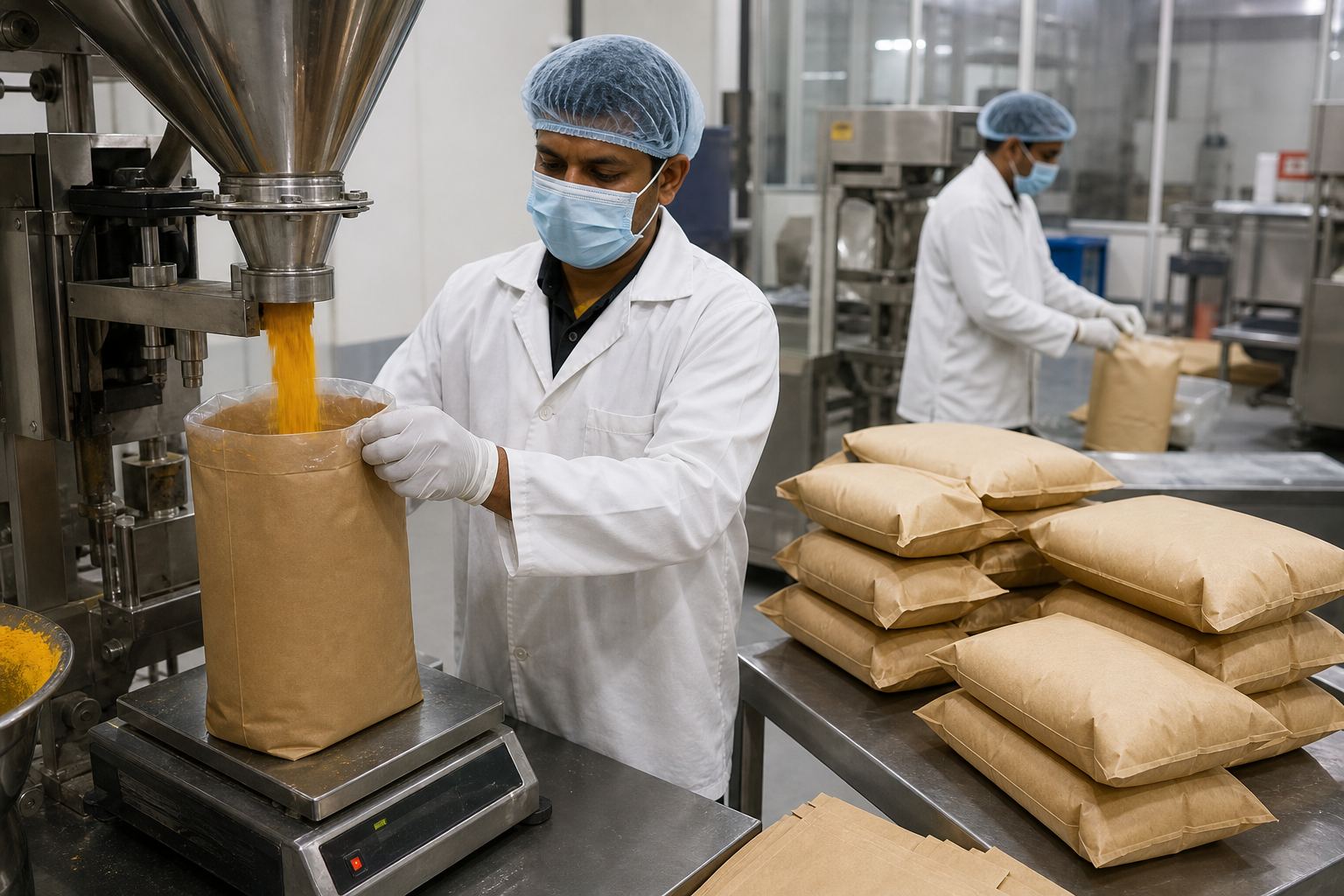
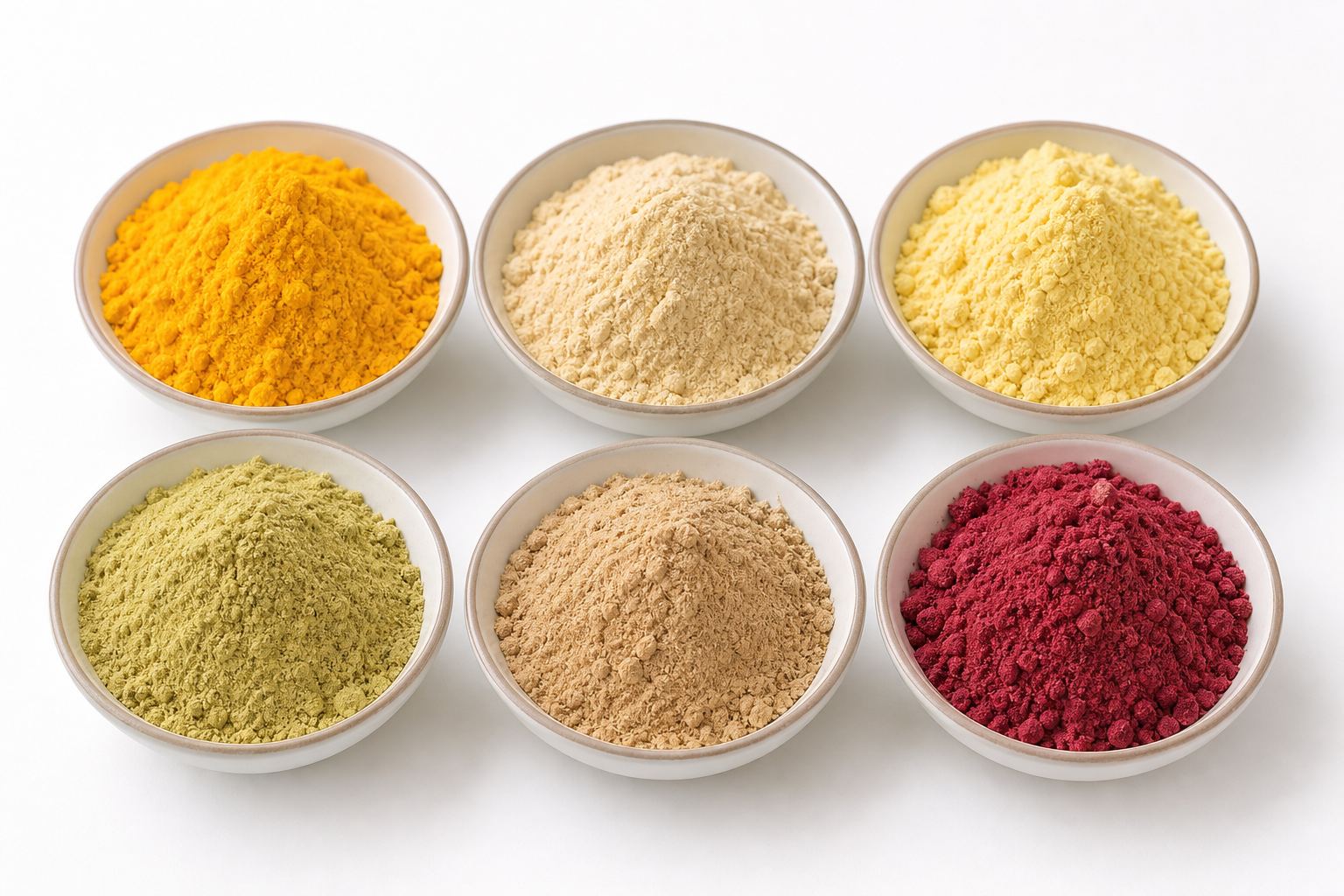
Documentation starts with product identity. Every document must state the fruit species, process type (spray-dried or freeze-dried), whether a carrier is used and at what percentage, mesh or particle-size expectation if specified, pack size, and lot. Vague descriptions such as “fruit powder” invite classification disputes and buyer rejection.
Variant-specific proof differs. Spray-dried powders need carrier disclosure and flowability-related moisture control. Freeze-dried powders need process honesty and often tighter microbiology and sensory support. Organic and certified religious programs add certificate layers that must name the same SKU.
Spray-Dried Mango, Banana, and Tropical Powders
Spray-dried fruit powder core document fields
Swipe →
Data table — swipe horizontally on small screens
| Document | Must show | Common filing error |
|---|---|---|
| Commercial invoice | Species, spray-dried, HS 11063030/11063090, carrier % | Missing carrier disclosure. |
| Packing list | Bag count, net/gross, marks, lot | Estimated weights left uncorrected. |
| COA | Lot, moisture, micro, metals, residues | Generic annual COA reused. |
| COO | India origin, exporter, product match | Product name differs from invoice. |
Spray-dried mango and banana powders are the workhorses of Indian fruit powder exports. Invoices should name the fruit, process, carrier type and percentage, moisture specification, and pack. COAs should reference the same lot as bag marks. Buyers in beverage and bakery channels often ask for color, solubility, and microbiology in addition to moisture and heavy metals.
Freeze-Dried and Specialty Powders
Freeze-dried pineapple, papaya, guava, amla, apple, jackfruit, and berry powders usually move in smaller lots at higher unit value. Document descriptions must not claim freeze-dried if the lot is spray-dried. Premium buyers may request sensory notes, lower moisture claims, and allergen statements. Pack formats may shift toward aluminum-laminated pouches or fiber drums — packing lists must reflect the actual format.
Organic, Halal, and Kosher Fruit Powders
Organic fruit powder shipments need the full commercial pack plus organic certificate scope and lot-level transaction certificates where required by destination. Halal and Kosher programs need current certificates covering the processing facility and product family. Never print organic, Halal, or Kosher marks on bags unless the certificate file supports that exact claim.
Manufacturing Overview
Export Tip
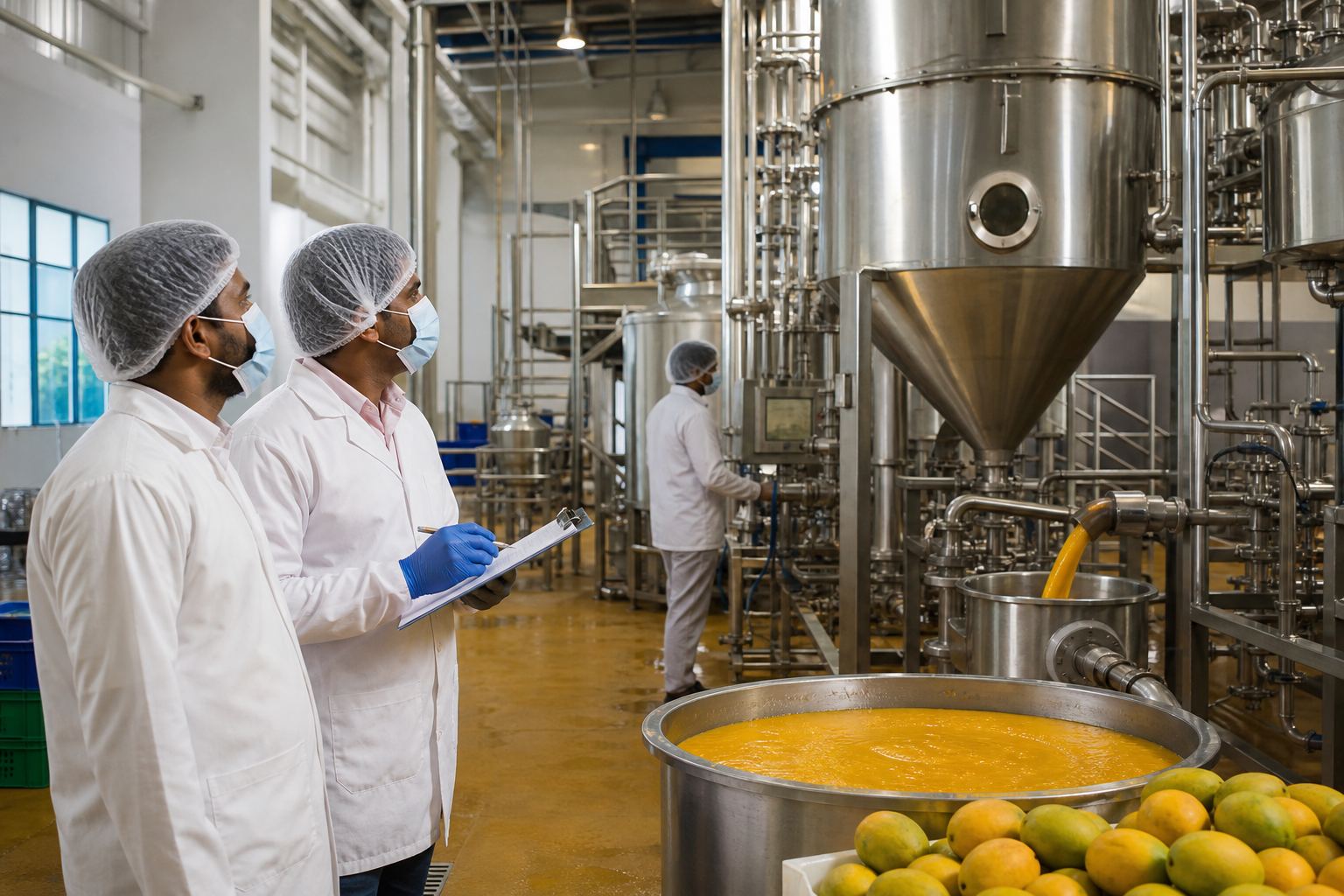
Fruit powder documentation should follow the manufacturing path: fruit intake or pulp receipt, quality checks, pulping or reconstitution, carrier addition for spray drying where used, spray drying or freeze drying, milling/sieving, metal detection, packing, lot coding, COA sampling, and dispatch. Each step generates facts that must appear consistently in the document pack.
Start drafting documents during production, not after packing. Parallel workstreams — draft invoice and packing list structure, lab booking, certificate of origin application, health certificate request, Halal/Kosher confirmation, organic TC request — compress lead time and reduce last-minute errors.
Manufacturing milestones that feed documentation
Swipe →
Data table — swipe horizontally on small screens
| Milestone | Document action | Owner |
|---|---|---|
| Spec lock | Freeze invoice description and HS | Sales + compliance |
| Production start | Assign lot number | Plant QA |
| In-process checks | Record moisture/mesh | Plant QA |
| Packing complete | Final packing list quantities | Warehouse |
| Lab release | Issue lot COA | Lab / QA |
| Gate-in | Shipping bill + B/L draft check | CHA + logistics |
Batch and Lot Identity
Lot identity connects plant records to export documents. The lot on the COA must match bag labels, packing list lines, commercial invoice, shipping bill remarks where used, and any organic transaction certificate. If a container holds two lots, the packing list must show both clearly — never average them into one fictional lot.
COA Alignment
The Certificate of Analysis should name product, process type, lot, test date, parameters, methods where relevant, and results. Do not reuse a mango powder COA for banana powder or a previous lot.
Packing Records
Capture bag or pouch counts, net weight, gross weight, dimensions, marks, palletization, and humidity-control notes before loading. Hygroscopic spray-dried powders need intact liners; packing photos help resolve receiving claims.
Pricing Analysis
Buyer Tip
Documentation has cost, and that cost belongs in the commercial conversation. Lab panels, organic transaction certificates, Chamber attestation, Embassy countersignature, courier of originals, health certificates, and broker coordination add direct expense and calendar time. The cheapest FOB quote that omits required certificates is not the cheapest landed program.
Buyers should ask which documents are included in the quoted price. Exporters should state whether COA, COO, health/phyto certificates, Halal/Kosher, organic documents, insurance, and freight documents are included. Clear assumptions prevent disputes near cutoff.
Documentation cost drivers for fruit powder exports
Swipe →
Data table — swipe horizontally on small screens
| Document or task | Cost driver | When to confirm |
|---|---|---|
| Lot COA | Parameter panel and sample count | Before production or sample approval |
| Organic TC / CI | Certifier process and lot volume | Before order acceptance |
| Halal / Kosher | Audit status and certificate validity | Before artwork/print |
| COO attestation | Chamber + Embassy lead time | Before sailing |
| Health / phyto | Authority appointment slots | Before packing completion |
| Courier originals | Bank or clearance requirement | Before document release |
MOQ Analysis
Buyer Tip
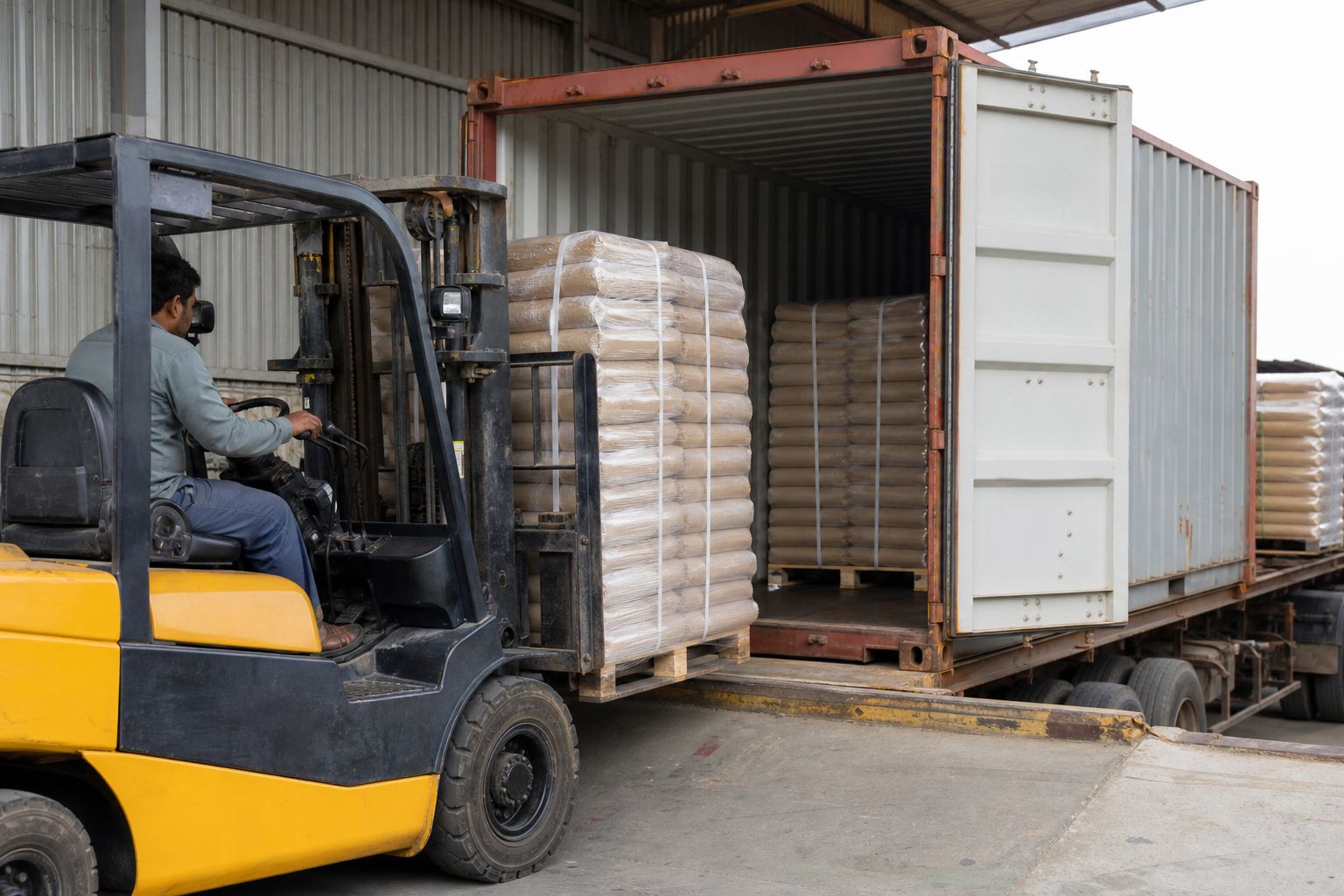
MOQ affects documentation because small trials carry a high document cost per kilogram. A 5–10 kg courier sample, an LCL pilot of 500–1,000 kg, and an 10–14 MT FCL do not need identical certificate intensity, but they do need honest product identity and consistent naming from sample to bulk.
For private-label fruit powder pouches, MOQ may be driven by print runs and artwork approval as much as dryer batch size. Explain document scope at each stage: sample, pilot, repeat FCL.
Document scope by fruit powder order stage
Swipe →
Data table — swipe horizontally on small screens
| Order stage | Likely documents | Main objective |
|---|---|---|
| Courier sample | Spec sheet, sample invoice, indicative COA | Product evaluation |
| LCL pilot | Invoice, packing list, COA, COO, transport doc | Validate import process |
| FCL conventional | Full pack + destination extras | Clear customs and scale |
| Organic FCL | Full pack + organic lot certificates | Protect organic claim |
| Retail launch | Full pack + label/artwork alignment | Shelf acceptance |
Packaging Standards
Export Tip
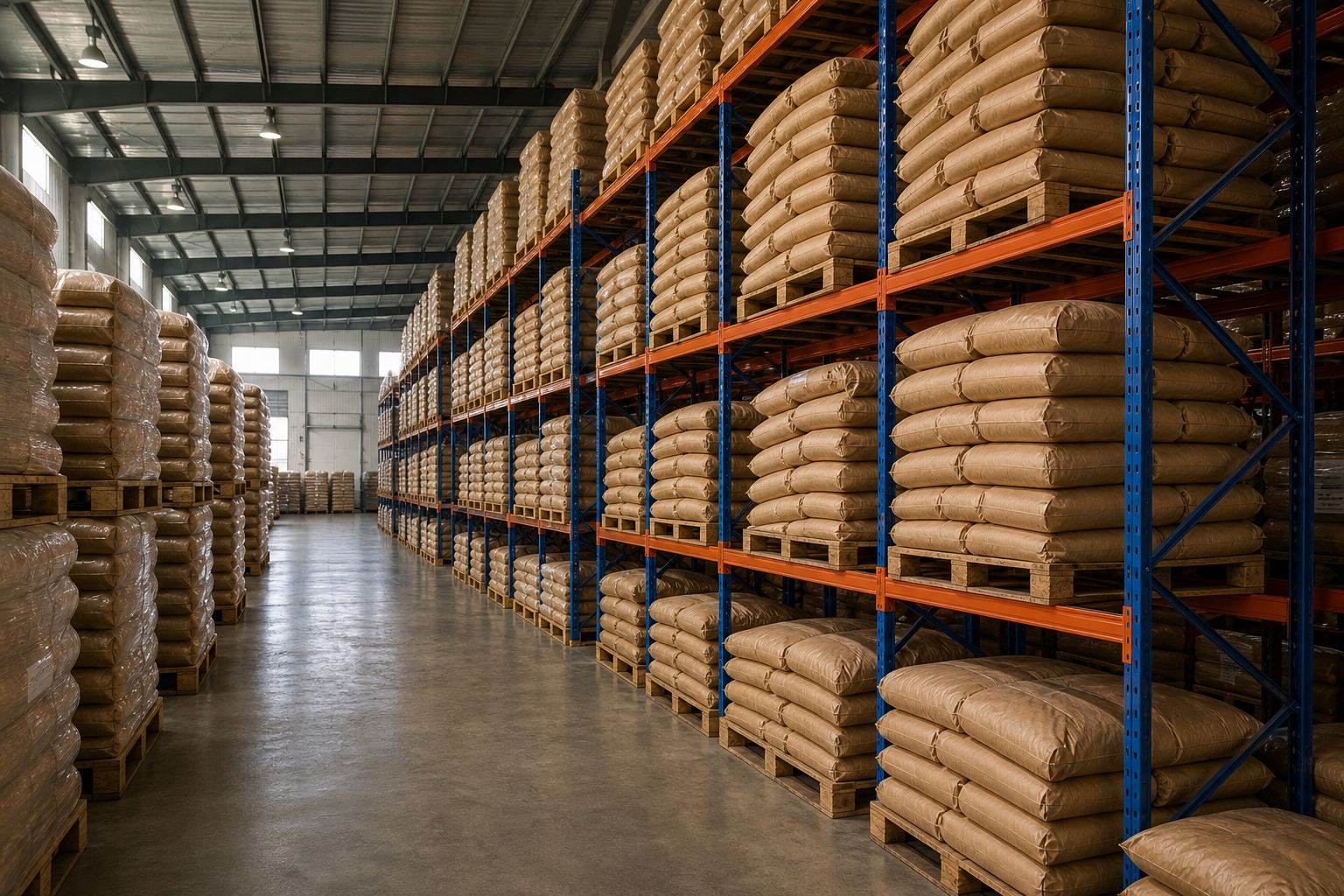
Typical bulk fruit powder packs use 10–25 kg multiwall kraft bags with food-grade PE liners, or aluminum-laminated pouches for more hygroscopic or premium lots. Fibre drums appear in some freeze-dried and specialty programs. Packaging data must reconcile across invoice quantity, packing list bag count, and shipping bill weight.
Labels and bag marks should show product name, lot, net weight, manufacture or packing date, best-before where required, country of origin, and exporter or manufacturer details. Organic, Halal, and Kosher marks appear only when certificates support them. Retail private-label packs must match invoice descriptions exactly.
Packaging–document consistency checks
Swipe →
Data table — swipe horizontally on small screens
| Packaging item | Document match | Risk if wrong |
|---|---|---|
| Bag / pouch weight | Invoice qty and packing list | Customs weight discrepancy |
| Lot code | COA and bag mark | Traceability failure |
| Carrier statement | Invoice and label | Buyer rejection / claim risk |
| Organic / Halal mark | Certificate file | Misbranding hold |
| Pallet / ISPM 15 | Packing list notes | Warehouse delay |
Container Loading Details
Export Tip
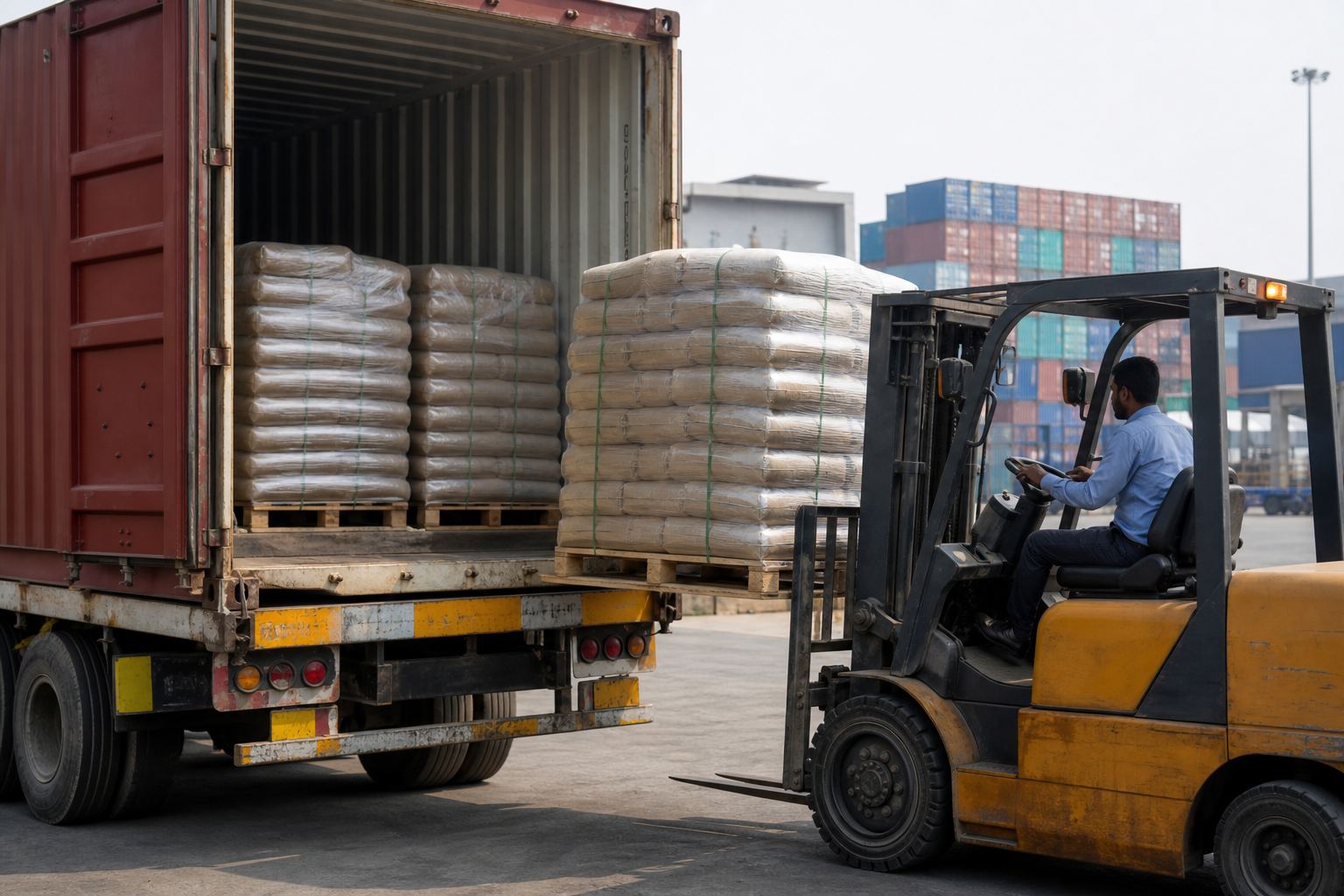
Indicative 20-foot FCL loads for fruit powders often fall in the roughly 10–14 MT range depending on bag size, palletization, and legal payload — confirm stow with your forwarder for each SKU mix. Record container number, seal number, bag or drum count, gross weight, and loading photos before dispatch. The final packing list must reflect what was loaded, not an earlier estimate.
Protect powders from moisture and odor. Use dry, clean containers; consider desiccants where agreed; avoid sharing space with strongly odorous cargo. Mixed-SKU loads need SKU-wise packing lists.
Loading details to capture for fruit powder FCLs
Swipe →
Data table — swipe horizontally on small screens
| Detail | Where it appears | Why it matters |
|---|---|---|
| Container number | B/L and loading record | Identifies cargo unit |
| Seal number | B/L and buyer update | Integrity evidence |
| Gross / net weight | Packing list and shipping bill | Customs and carrier compliance |
| Bag / drum count | Packing list | Receiving and inspection |
| Lot breakdown | Packing list | Traceability for mixed lots |
| Loading photos | Shipment archive | Claims and QC evidence |
Shipping Methods
Export Tip
Sea freight FCL is the default for commercial fruit powder programs under FOB, CFR, or CIF from Nhava Sheva, Mundra, Chennai, or Tuticorin. LCL suits pilots but needs stronger carton integrity and clearer marks because cargo is handled more often. Air freight and courier serve samples and urgent launches; use AWB instead of B/L and keep food-sample descriptions accurate.
Document timelines change with mode. Air samples move faster than Chamber-attested COO originals for Gulf sea shipments. Align certificate lead times with the chosen method before promising sailing dates.
Shipping method vs document implications
Swipe →
Data table — swipe horizontally on small screens
| Method | Transport document | Documentation note |
|---|---|---|
| FCL sea | Bill of lading | Full pack + destination extras |
| LCL sea | B/L (groupage) | Extra marks; careful weight control |
| Air freight | Air waybill | Faster turnaround; sample/urgent lots |
| Courier sample | Courier AWB | Simple invoice; honest food sample description |
Certifications
Compliance Notes
For fruit powder exports from India, IEC, GST, FSSAI, and APEDA RCMC are the non-negotiable institutional layer. Plant certifications commonly requested by buyers include HACCP, ISO 22000, and sometimes BRC or FSSC 22000 for retail-facing programs. Product and market certifications include Halal, Kosher, NPOP / USDA Organic / EU Organic, and destination health certificates where required.
Certificates must cover the exact product and facility. A HACCP certificate for a puree plant does not automatically cover a separately located powder dryer. An organic certificate for mango pulp does not automatically cover spray-dried mango powder if the drying step sits outside certified scope.
Fruit powder certification checklist
Swipe →
Data table — swipe horizontally on small screens
| Certificate | Applies to | Key check |
|---|---|---|
| IEC | Exporter of record | Active on DGFT portal |
| GST | Tax identity | Matches invoice entity |
| FSSAI | Food processing / handling | Scope covers powder facility |
| APEDA RCMC | Processed fruit exports | Valid membership / product fit |
| COA (lot) | Every commercial lot | Lot match + parameter panel |
| COO | Origin proof | Product and exporter consistency |
| Health / phyto | Where destination requires | Correct species and lot |
| Halal / Kosher / Organic | Claimed programs | Scope, validity, lot TC if needed |
Buyer Requirements
Buyer Requirements
Serious fruit powder buyers share document requirements at inquiry stage: destination, importer of record, consignee, notify party, preferred HS, broker contacts, label rules, COA parameter list, Halal/Kosher/organic needs, and whether originals must be couriered. Waiting until bags are sealed creates amendment costs and missed sailing windows.
Buyers should also state who files FDA Prior Notice for US entries, who arranges UK or EU import notifications, and whether a third-party pre-shipment inspection is required. Exporters can prepare documents; destination brokers own local entry nuance.
Country-wise Opportunities
Market Snapshot
Documentation readiness improves close rates in every target market. US beverage and bakery ingredient buyers reward suppliers who already understand Prior Notice and lot COAs. EU and UK clean-label and organic buyers reward residue discipline and certificate integrity. UAE and Saudi distributors reward attested COO, Halal readiness, and retail label support. Japan buyers reward Positive List–aware testing. Canada and Australia reward clear food import paperwork and biosecurity alignment where applicable.
A correct first document pack often converts a trial LCL into a scheduled FCL program. A messy first pack often ends the relationship regardless of powder quality.
Country opportunities and documentation implications
Swipe →
Data table — swipe horizontally on small screens
| Market | Opportunity angle | Document priority |
|---|---|---|
| USA | Beverage, bakery, nutraceutical ingredients | FDA Prior Notice, facility registration, lot COA |
| EU / UK | Clean-label and organic powders | MRL panel, organic CI, traceability |
| UAE / GCC | Retail mixes and food service | COO attestation, Halal, label language |
| Japan | Premium tropical powders | Residue panel alignment, precise specs |
| Canada / Australia | Specialty and organic channels | Import rules + health/phyto as required |
Sourcing Checklist (Buyer/Exporter/Compliance)
Checklist
Use one shared checklist with three lenses — buyer, exporter, and compliance — so the same fruit powder shipment is reviewed from commercial, operational, and regulatory angles before cargo moves.
Buyer Checklist
- Provide full importer, consignee, and notify party details before production ends.
- Confirm HS preference with your broker for HS 1106.30 / national tariff line.
- Specify spray-dried vs freeze-dried, carrier max %, moisture, mesh, and certifications in writing.
- Request draft invoice, packing list, COA, and COO for broker review before sailing.
- Confirm who files FDA Prior Notice or equivalent destination notifications.
- Verify Halal, Kosher, or organic certificate numbers independently when claims are material.
Exporter Checklist
- Confirm IEC, GST, FSSAI, and APEDA RCMC are active before accepting export POs.
- Lock product description and HS 11063030/11063090 (or broker-confirmed line) on all templates.
- Assign lot numbers at production start; print the same lot on bags and documents.
- Book lab COA and destination certificates in parallel with packing — not after.
- Reconcile final bag count and weights before issuing the shipping bill.
- Archive a complete PDF pack per shipment for repeat-order templates.
Compliance Checklist
- Cross-check lot, product name, process type, HS code, and weights across every document.
- Ensure COA parameters meet the written buyer specification for that destination.
- Confirm certificate validity dates cover expected arrival, not only sailing date.
- Block organic/Halal/Kosher claims unless certificate scope covers the powder SKU and facility.
- Retain retention samples and document revisions for audit and complaint handling.
- Escalate borderline COA results to the buyer in writing before shipping.
Common Buyer Mistakes
Common Mistakes Box
Future Market Trends
Key Statistics
Fruit powder documentation will become more digital, SKU-specific, and destination-aware. Buyers will expect searchable COAs, QR-linked lot histories, and faster draft sharing. Exporters who maintain controlled document libraries by SKU and country will respond faster than those rebuilding Word files each shipment.
Carrier transparency, residual solvent or processing-aid disclosures where relevant, and clean-label pressure will tighten invoice and label language. Organic and regenerative claims will require stronger chain-of-custody evidence. Private-label growth will push earlier artwork and nutrition panel alignment into the documentation calendar.
Traceability will become a default expectation even for conventional spray-dried mango programs. Lot identity, pulp origin notes, and lab method transparency will feature in RFQs more often.
Expert Insights from Saurabh Mittal
Expert Insight Box
On Document Sequencing
Conclusion
- Read: How to Export Fruit Powders from India
- Read: Top Fruit Powder Products Exported from India
- Read: Best Countries for Indian Fruit Powder Exports
- Read: Source Fruit Powders Directly from India
- Read: APEDA Registration Benefits for Fruit Powder Exporters
- Read: Most Demanded Indian Fruit Powders by Country
- Read: Find International Buyers for Fruit Powders
- Read: Organic Fruit Powder Export Opportunities
- Read: Trade Shows for Fruit Powder Exporters
- CTA: Request a fruit powder documentation review or trial-order coordination via Altus Exports.
Fruit powder export documentation from India requires discipline across product identity, HS 1106.30 / India ITC-HS 11063030 (mango) or 11063090 (other Chapter 8 fruit powders) classification, lot records, certificates, packaging, and transport documents. IEC, GST, FSSAI, APEDA RCMC, commercial invoice, packing list, shipping bill, B/L or AWB, COO, lot COA, and destination health, phytosanitary, Halal, Kosher, or organic documents must be planned as one pack — sequenced during production and audited before gate-in.
Altus Exports helps buyers and suppliers manage fruit powder documentation as part of a full sourcing and shipment workflow. As a merchant exporter, global sourcing partner, and export consulting partner, we coordinate supplier documents, testing, packing records, certificate applications, freight documents, and buyer review for spray-dried and freeze-dried mango, banana, pineapple, papaya, guava, amla, apple, jackfruit, pomegranate, and related fruit powders.
Ready to tighten your next fruit powder document pack? Contact Altus Exports to align specs, certificates, and shipment paperwork before you book space — and continue with the cluster guides below. Explore Altus Exports agriculture & food products for related programs.