
Top Fruit Powder Products Exported from India (2026 Ranked Guide)
By Saurabh Mittal, Founder, Altus Exports
A 2026 ranked product taxonomy of the top fruit powders exported from India — spray-dried and freeze-dried mango, banana, pineapple, papaya, guava, amla, apple, jackfruit, pomegranate, sapota, and strawberry/berry blends — covering specifications, carrier and moisture norms, applications, directional FOB price bands, MOQ tiers, packaging, and the markets that buy each SKU.
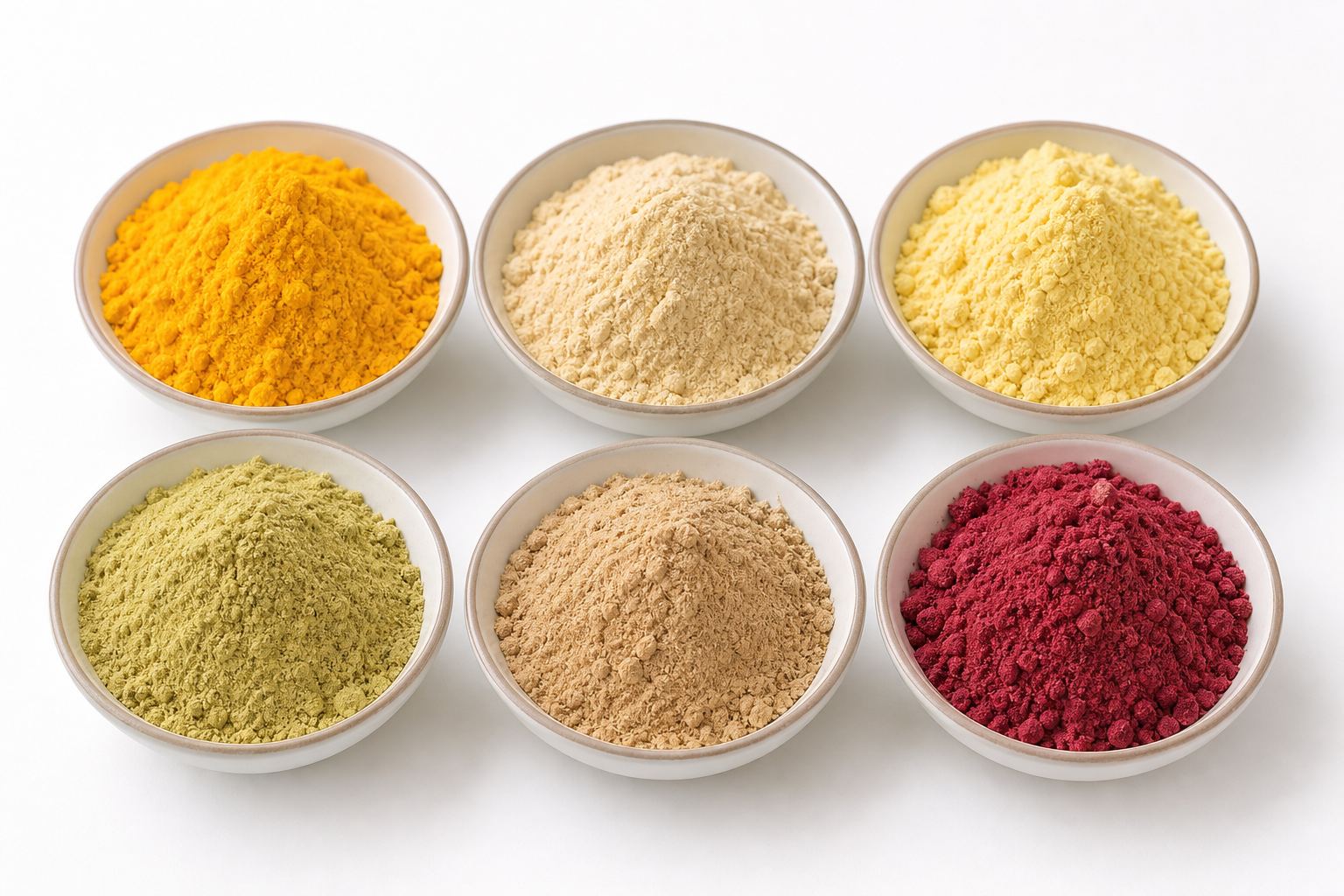
India exports a layered fruit powder catalogue, and choosing the wrong SKU for an application is the fastest way to waste a trial order. Beverage formulators rarely need the same particle and carrier profile as bakery plants; nutraceutical buyers evaluating amla do not shop like ice-cream plants evaluating banana powder; freeze-dried mango is not a drop-in substitute for spray-dried mango just because both say 'mango' on the label. This 2026 guide ranks and profiles the top fruit powder products exported from India — spray-dried and freeze-dried mango, banana, pineapple, papaya, guava, amla, apple, jackfruit, pomegranate, sapota, strawberry and berry blends, and drum-dried specialty lines — with specifications, applications, directional FOB bands, MOQ norms, and packaging expectations.
Classification for most fruit powders sits under HS 1106.30 / India ITC-HS 11063030 (mango) / 11063090 (other), while dried pieces may be 0813 and preparations 2008 — buyers and exporters should confirm the line with a customs house agent for each SKU. Moisture norms are typically ≤5% for spray-dried grades and often ≤3–4% for freeze-dried grades. Carrier (commonly maltodextrin) must be declared; many buyers cap carrier at about 10–30% by application. Production depth comes from Maharashtra's Konkan mango belt (Ratnagiri/Sindhudurg), Gujarat processing, Andhra Pradesh/Telangana, Karnataka, Tamil Nadu, UP amla, Himachal/J&K apple, and Kerala banana/jackfruit capacity.
This taxonomy is written for importers, distributors, beverage and bakery manufacturers, nutraceutical brands, and procurement teams deciding which Indian fruit powder to source first — and for exporters deciding where to specialise. For the operational export workflow, use the companion guide How to Export Fruit Powders from India. Altus Exports supports SKU matching as a merchant exporter, global sourcing partner, and export consulting expert across verified Indian processors.
Key Takeaways
Summary Box
Executive Summary
Summary Box
This guide ranks India's major fruit powder export SKUs by commercial importance — combining volume relevance, value density, and buyer application breadth — then profiles each with typical specs, applications, directional pricing, MOQ, packaging, and strongest import markets. It is a product taxonomy, not a shipping-bill tutorial; pair it with the how-to export guide for registrations and documentation sequencing.
Altus Exports works with international buyers to source the correct fruit powder SKU from verified clusters, coordinating samples, Certificates of Analysis, carrier disclosure, packaging, and shipment documentation as one accountable merchant exporter and sourcing partner. Confirm trade-size context via APEDA, DGCI&S, or ITC Trade Map under HS 1106.30 and related lines before treating any secondary estimate as official.
Use this taxonomy in three passes. First, shortlist by application: beverages lean toward mango and pineapple; bakery and ice cream lean toward banana and mango; nutraceuticals lean toward amla and selected pomegranate programs; premium retail leans toward freeze-dried mango and berry blends. Second, lock process family and carrier caps before you compare FOB numbers. Third, confirm cluster capacity and packaging so the approved sample can scale into 1–5 MT commercial lots and eventual FCL programs without reformulating mid-contract.
Market Size & Industry Overview
Key Statistics
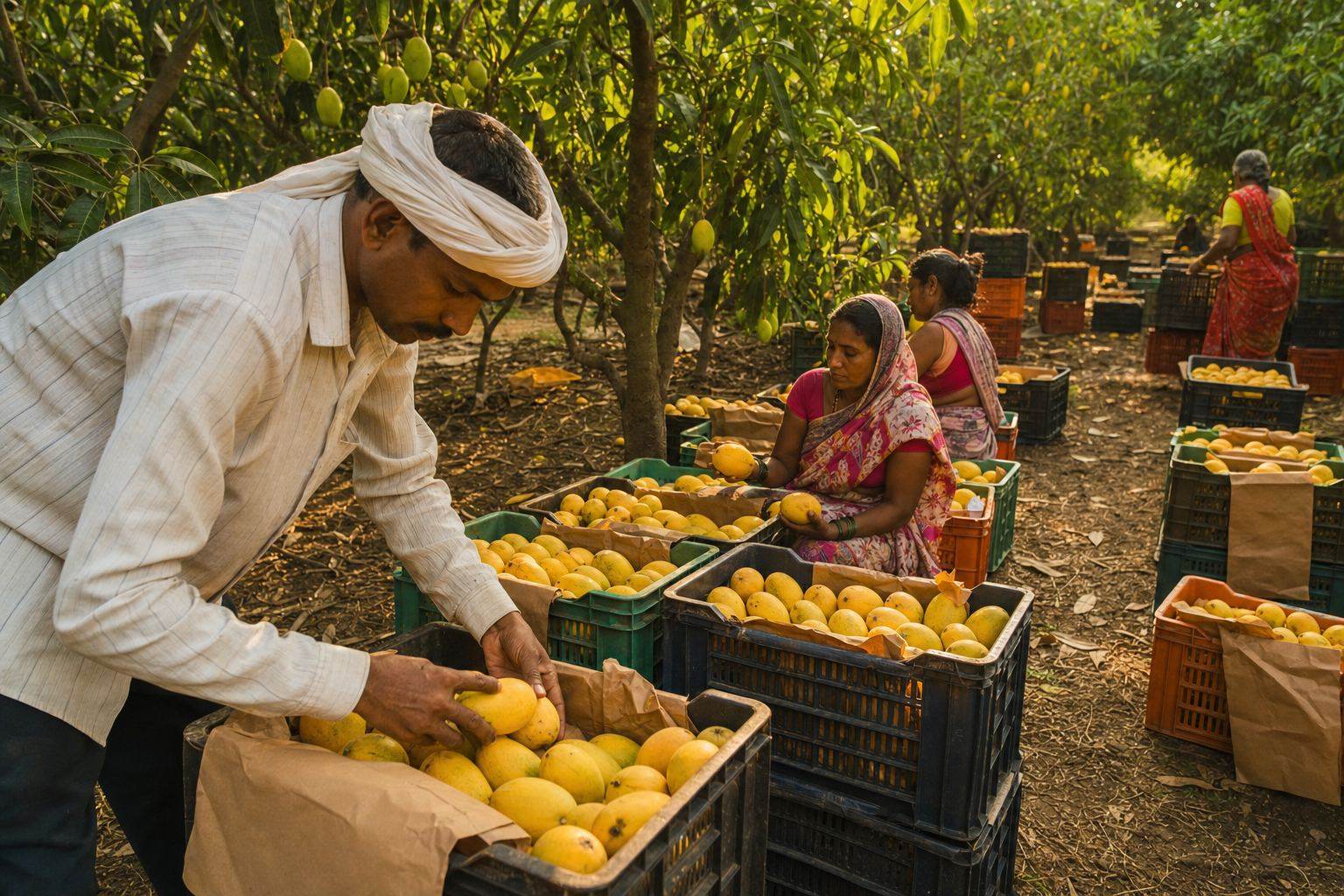
India's fruit powder market rests on pulp and processing depth rather than a single factory town. Konkan mango pulp feeds flagship spray and freeze powder programs; Gujarat adds multi-fruit spray-drying and export consolidation; southern states supply mango, banana, guava, papaya, and pineapple lines; UP anchors amla; Himachal and J&K support apple; Kerala contributes banana and jackfruit. That geography lets buyers diversify SKUs without leaving India, but it also means SKU quality varies by cluster discipline — so taxonomy-first sourcing beats catalogue-first sourcing.
End-use demand spans beverages, bakery, confectionery, dairy and ice cream, baby food, nutraceuticals, and cosmetics. Volume concentrates in spray-dried tropicals; value concentrates in freeze-dried mango, berry blends, organic lines, and nutraceutical-grade amla. Read market size directionally through official trade databases for your HS line and year rather than relying on a single blog-era figure.
SKU rank snapshot for Indian fruit powder exports
Swipe →
Data table — swipe horizontally on small screens
| Rank Focus | SKU Family | Primary Cluster Link | Commercial Role |
|---|---|---|---|
| 1 — volume flagship | Spray-dried mango | Konkan + multi-state pulp; Gujarat drying | Beverage and flavor workhorse |
| 2 — premium value | Freeze-dried mango | Select freeze capacity linked to mango pulp | Aroma/color premium |
| 3 — bakery/dairy volume | Spray-dried banana | Southern / Kerala banana belts | Bakery, dairy, ice cream |
| 4 — tropical acid-sweet | Pineapple powder | Southern tropical processors | Beverage and confectionery |
| 5 — nutraceutical value | Amla powder | Uttar Pradesh amla belt | Supplements and functional drinks |
| 6–10 specialty | Papaya, guava, apple, jackfruit, pomegranate, sapota, berries | Multi-cluster | Application-specific lanes |
Export Statistics
Key Statistics
Export filings for fruit powders most often reference HS 1106.30 / ITC-HS 11063030 (mango) / 11063090 (other). Exporters shipping dried pieces or further preparations should not force those goods into the powder line — 0813 and 2008 exist for a reason. SKU mix on the water typically skews toward spray-dried mango by weight, with freeze-dried mango and berry blends contributing a smaller tonnage share but a larger value share. Amla and specialty tropicals add mid-tier value depending on season and certification.
Verified directional trade context (WITS/UN Comtrade, HS 110630, calendar year 2024): India exported about USD 10.8 million and about 7,375 metric tonnes under this six-digit line. Leading reported destinations included the United States (~30% of export value), the United Kingdom (~11%), Canada (~9%), Australia (~8%), and the United Arab Emirates (~7%). Reconfirm current-year figures via APEDA, DGCI&S, ITC Trade Map, or WITS — line composition mixes mango flour/powder with other Chapter 8 powders and can shift with seasonality and freeze-dried/organic mix. Treat ranking statements as commercial heuristics confirmed against current APEDA/DGCI&S/ITC Trade Map extracts for your HS code and destination set. Ports commonly used across SKUs include Nhava Sheva, Mundra, Chennai, Tuticorin, and Cochin.
Export documentation notes by fruit powder SKU family
Swipe →
Data table — swipe horizontally on small screens
| SKU Family | HS Note | Invoice Description Tip |
|---|---|---|
| Spray-dried mango | Typically 1106.30 / 11063030–11063090 | State spray-dried, moisture, carrier % |
| Freeze-dried mango | Typically 1106.30 / 11063030–11063090 | State freeze-dried; do not mix with spray lots |
| Banana / pineapple spray | Typically 1106.30 / 11063030–11063090 | Name fruit + process + moisture |
| Amla powder | Typically 1106.30 / 11063030–11063090 | Note nutraceutical grade if claimed |
| Dried fruit pieces | May be 0813 | Do not file as powder if not powdered |
| Further preparations | May be 2008 | Confirm with CHA before shipping bill |
Import Statistics
Key Statistics
Import demand is SKU-specific. The USA buys broadly across mango, berry blends, and freeze-dried premiums for beverages and supplements. Germany and the Netherlands overweight organic mango, amla, and clean-label tropicals as EU gateways. The UK and France pull bakery and dairy-friendly banana, mango, and strawberry blends. The UAE imports tropical spray powders for beverage manufacturing with Halal often required. Japan and South Korea import tighter-spec lots across fewer SKUs. Australia, Canada, Singapore, and Malaysia add health-brand and regional manufacturing demand. For deeper country maps, see Most Demanded Indian Fruit Powders by Country.
Import demand by SKU and market
Swipe →
Data table — swipe horizontally on small screens
| SKU | Strongest Import Markets | Demand Driver |
|---|---|---|
| Spray-dried mango | USA, UAE, EU, ASEAN | Beverages, dairy, confectionery |
| Freeze-dried mango | USA, Japan, EU, Australia | Premium beverages and snacks |
| Banana spray | UK, France, USA, UAE | Bakery, ice cream, dairy |
| Pineapple | EU, USA, Singapore, Malaysia | Beverage and confectionery acidity |
| Amla | USA, Germany, UK, Japan | Nutraceuticals, functional drinks |
| Berry blends | USA, Germany, UK, Canada | Retail and dairy premium |
| Apple / jackfruit / others | Niche by market | Bakery, specialty beverages |
Product Categories / Variants
Summary Box
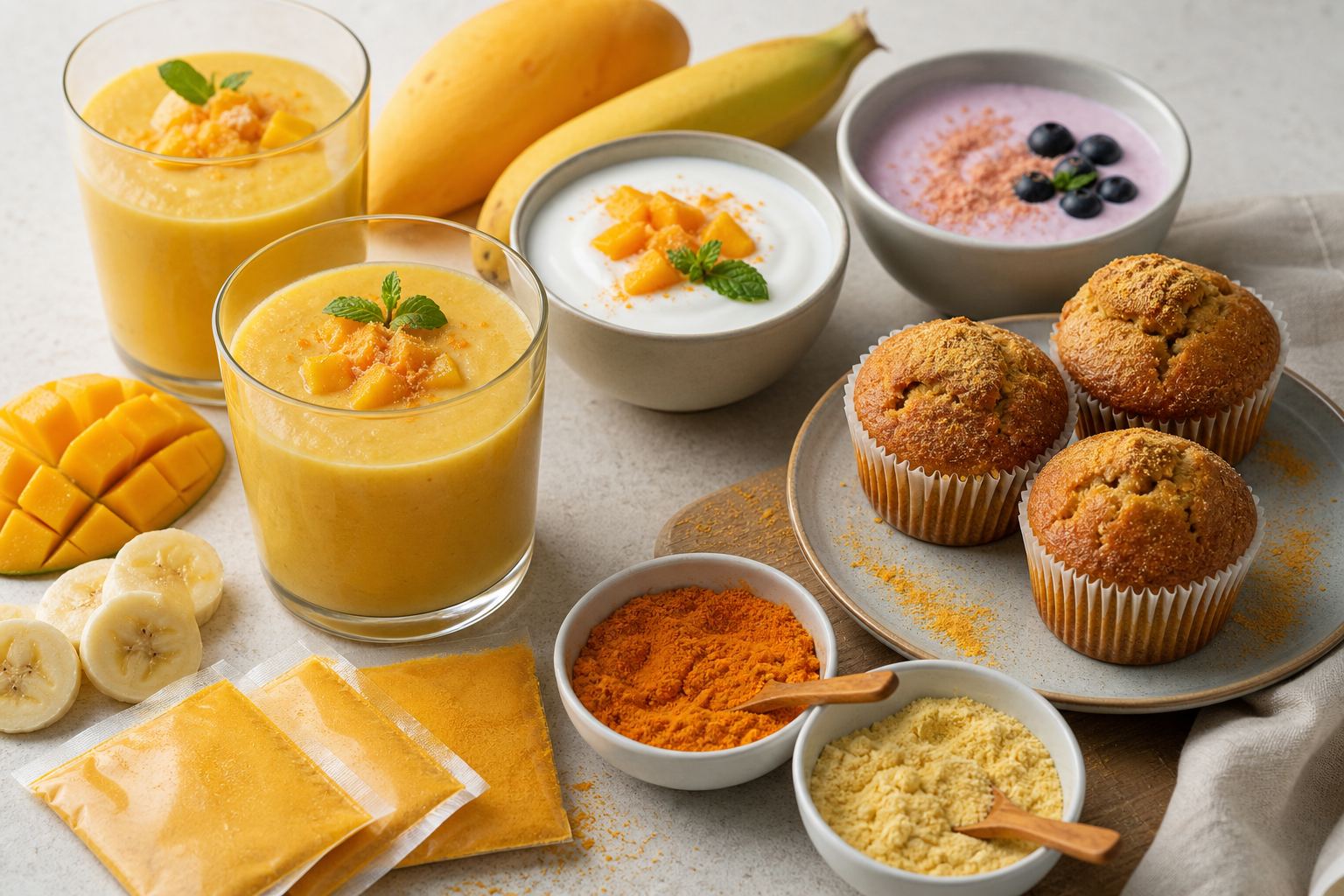
Think in three axes before ranking SKUs: process (spray, freeze, drum), fruit identity, and claim set (conventional vs organic, Halal, Kosher, BRC-ready). The profiles below follow that taxonomy so buyers can compare apples-to-apples — or mango-to-mango — without treating all powders as one commodity.
Cross-SKU comparison for Indian fruit powder buyers
Swipe →
Data table — swipe horizontally on small screens
| SKU | Process Emphasis | Indicative FOB USD/kg | Primary Applications |
|---|---|---|---|
| Mango | Spray (volume) / Freeze (premium) | 4–9 / 12–28 | Beverages, dairy, confectionery |
| Banana | Spray primary | 3–7 | Bakery, ice cream, dairy |
| Pineapple | Spray / specialty | 5–11 | Beverages, confectionery |
| Amla | Spray / specialty nutraceutical | 6–14 | Supplements, functional drinks |
| Papaya / guava / sapota | Spray specialty | Quote by grade | Tropical beverages, flavors |
| Apple / jackfruit / pomegranate | Process-dependent | Quote by grade | Bakery, specialty beverages |
| Berry blends | Often freeze-dried | Premium vs spray tropicals | Retail, dairy, confectionery |
| Organic any SKU | Certified segregated | +20–45% typical | Clean-label and organic retail |
1. Spray-Dried Mango Powder — Volume Flagship
Spray-dried mango quick spec card
Swipe →
Data table — swipe horizontally on small screens
| Attribute | Typical Export Expectation |
|---|---|
| Moisture | ≤5% |
| Carrier | Declare %; buyer caps often ~10–30% |
| FOB band | Approx. USD 4.50–12/kg (requote) |
| MOQ path | 0.5–5 kg → 200–1000 kg → 1–5 MT → FCL |
| Core markets | USA, UAE, EU, ASEAN |
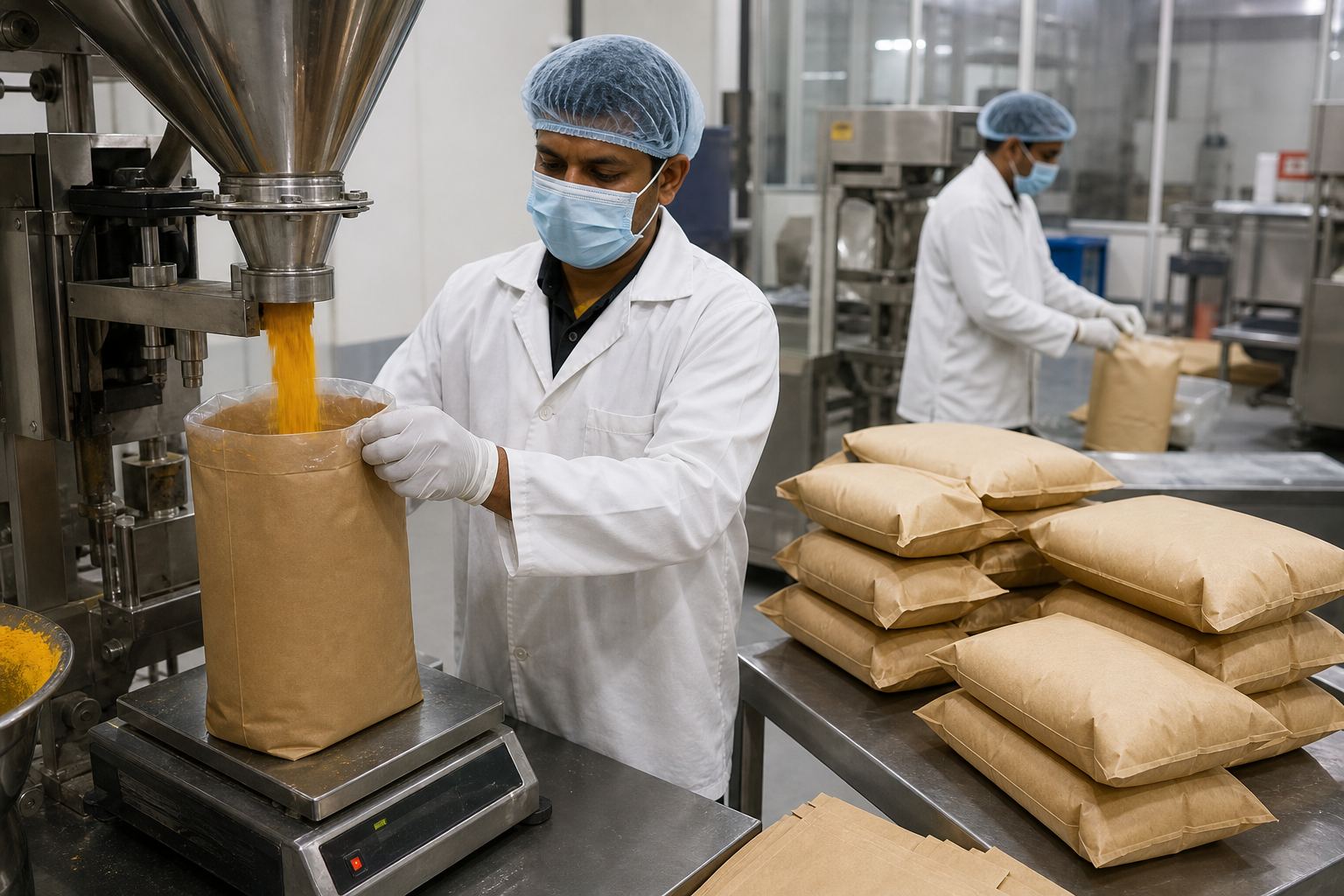
Spray-dried mango is the highest-volume Indian fruit powder export SKU. Feed pulp from Konkan (Ratnagiri/Sindhudurg) and other mango belts is standardised and spray-dried, typically with declared maltodextrin or other carriers within buyer caps. Target moisture is commonly ≤5%. Applications include beverage bases, dairy drinks, bakery fillings, confectionery, and ice-cream flavor systems. Directional FOB is about USD 4.50–12/kg depending on season, color, carrier %, and order size. Packaging is usually 10–25 kg kraft with PE liner; Al-laminated pouches appear for mid-lots.
2. Freeze-Dried Mango Powder — Premium Aroma Leader
Freeze-dried mango preserves more volatile aroma and color than spray-dried grades and usually ships at moisture often ≤3–4%. It commands a premium directional FOB band of about USD 15–40/kg. Buyers include premium beverage brands, snack inclusions, and specialty retail blends. Fibre drums are common for crush and humidity protection. Do not substitute freeze-dried quotes with spray-dried samples — process family must match the approved trial.
Because freeze capacity is scarcer than spray capacity, lead times and campaign booking matter as much as the headline price. Buyers who approve a freeze-dried mango sample should secure production windows before marketing launch dates, and exporters should avoid listing freeze-dried mango as instantly available year-round unless dryer schedules actually support that claim.
3. Spray-Dried Banana Powder — Bakery and Dairy Workhorse
Banana powder from southern and Kerala-linked supply is a bakery, dairy, and ice-cream staple. Spray-dried banana typically targets ≤5% moisture with declared carrier where used. Directional FOB is about USD 3–7/kg. It is often one of the most competitive entry SKUs for new importers building tropical powder assortments alongside mango.
Mesh and free-flow behaviour matter more for banana powder in dry bakery premixes than they do for some beverage mango grades. Ask for particle notes on the data sheet, and run a plant trial before locking a private-label bakery program that depends on consistent browning and flavor release.
4. Pineapple Powder — Acid-Sweet Beverage and Confectionery SKU
Pineapple powder brings bright acidity to beverage concentrates, confectionery, and tropical blends. Directional FOB is about USD 4–11/kg depending on process and grade. Buyers should specify whether they need spray-dried free-flow powder for dry mixes or a specialty process for higher aroma retention. Southern tropical processors are the usual sourcing lens.
Acidity and color stability should be part of the COA conversation, not an afterthought. Two pineapple powders with identical moisture can perform differently in confectionery acid-sweet systems if pulp standardization and carrier levels diverge.
5. Amla (Indian Gooseberry) Powder — Nutraceutical Value SKU
Amla powder, strongly linked to Uttar Pradesh processing, is disproportionately important in nutraceuticals, Ayurveda-inspired supplements, and functional beverages relative to its tonnage. Directional FOB is about USD 4–14/kg. Buyers often request tighter microbiology, heavy-metal awareness, and clear process declarations. Organic amla is a meaningful premium sub-lane.
Treat amla RFQs as nutraceutical-grade sourcing, not as a casual add-on to a mango beverage PO. Documentation expectations, assay-style questions, and certification scope are typically stricter, and lot traceability back to processing units is a frequent buyer diligence item.
6. Papaya, Guava, and Sapota Powders — Specialty Tropical Lane
Papaya, guava, and sapota powders serve tropical beverage, flavor, and some cosmetics or nutraceutical concepts. Volumes are lower than mango and banana, so MOQs and lead times can be less flexible. Specify color and enzyme-related expectations clearly; these SKUs are application-sensitive and should not be ordered from a generic 'tropical mix' assumption.
Cosmetics and flavor houses may accept smaller commercial lots than beverage plants, but they often demand tighter sensory and color documentation. Confirm whether the processor has export experience on that exact fruit before assuming mango-plant SOPs transfer cleanly.
7. Apple, Jackfruit, and Pomegranate Powders — Temperate and Specialty Tropicals
Apple powder linked to Himachal and J&K supply serves bakery and beverage brands seeking temperate fruit identity. Jackfruit powder from Kerala-linked capacity supports specialty tropical and plant-based concepts. Pomegranate powder serves beverage and nutraceutical color/flavor briefs. Each is a specialty SKU: confirm continuous production capability before listing it as always-available catalogue stock.
Seasonality and pulp availability can be sharper for these SKUs than for mainstream mango spray programs. Buyers planning retail launches should align purchase calendars with cluster harvest and drying campaigns rather than expecting identical lead times every month.
8. Strawberry / Berry Blends and Drum-Dried Specialty Lines
Strawberry and mixed berry powders — often freeze-dried — occupy premium retail, dairy, and confectionery space with higher price points and stricter color expectations. Drum-dried specialty lines serve bakery and reconstitution profiles that differ from classic spray-dried free-flow powders. Ask for process sheets, not only fruit names, when comparing quotes.
Berry programs may involve imported pulp or specialised Indian processing routes depending on the supplier model — buyers should clarify origin of feed material and whether the finished powder claim is single-fruit or a blend. Drum-dried bakery grades deserve a separate trial protocol from spray-dried beverage grades even when the fruit name matches.
Manufacturing Overview
Export Tip
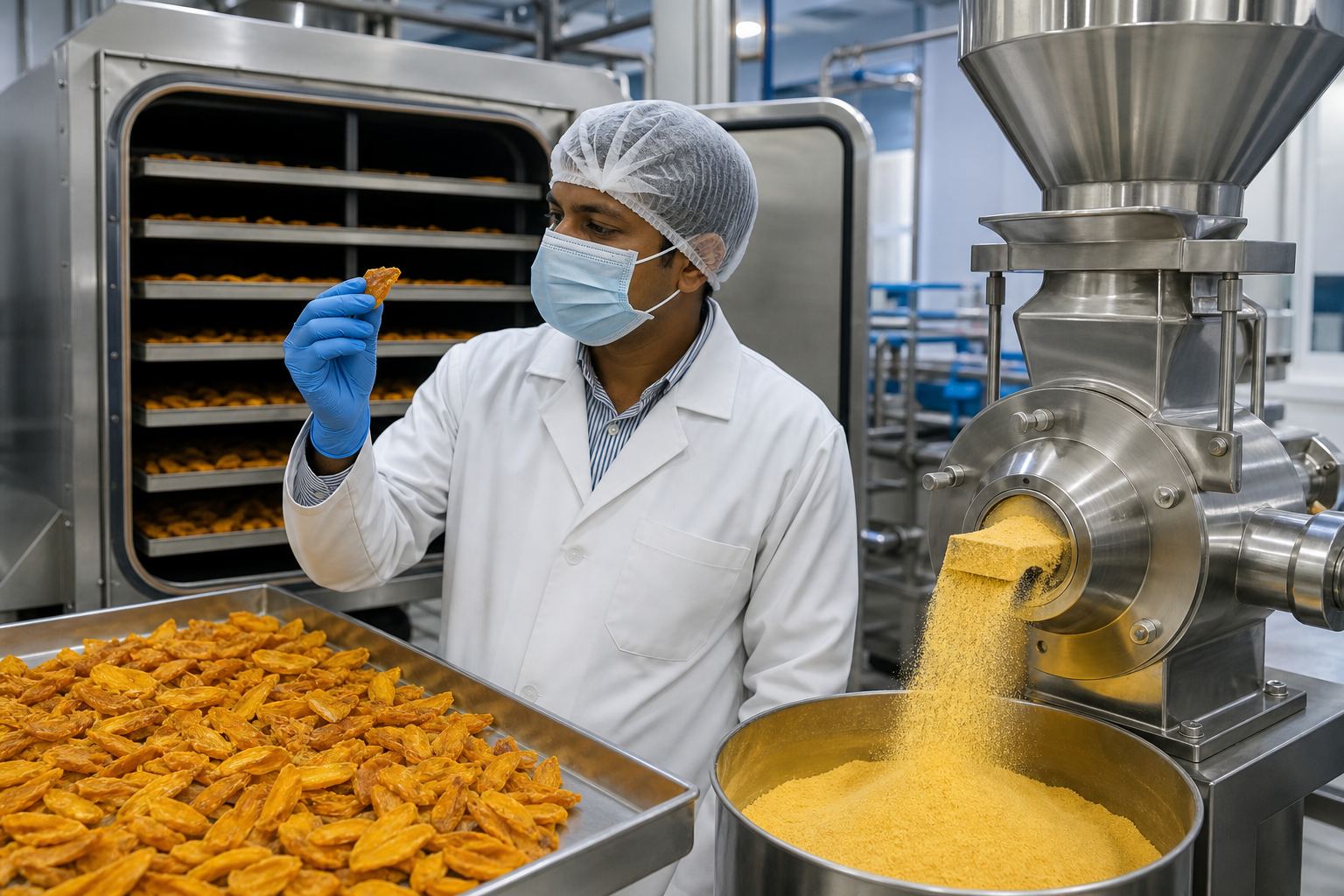
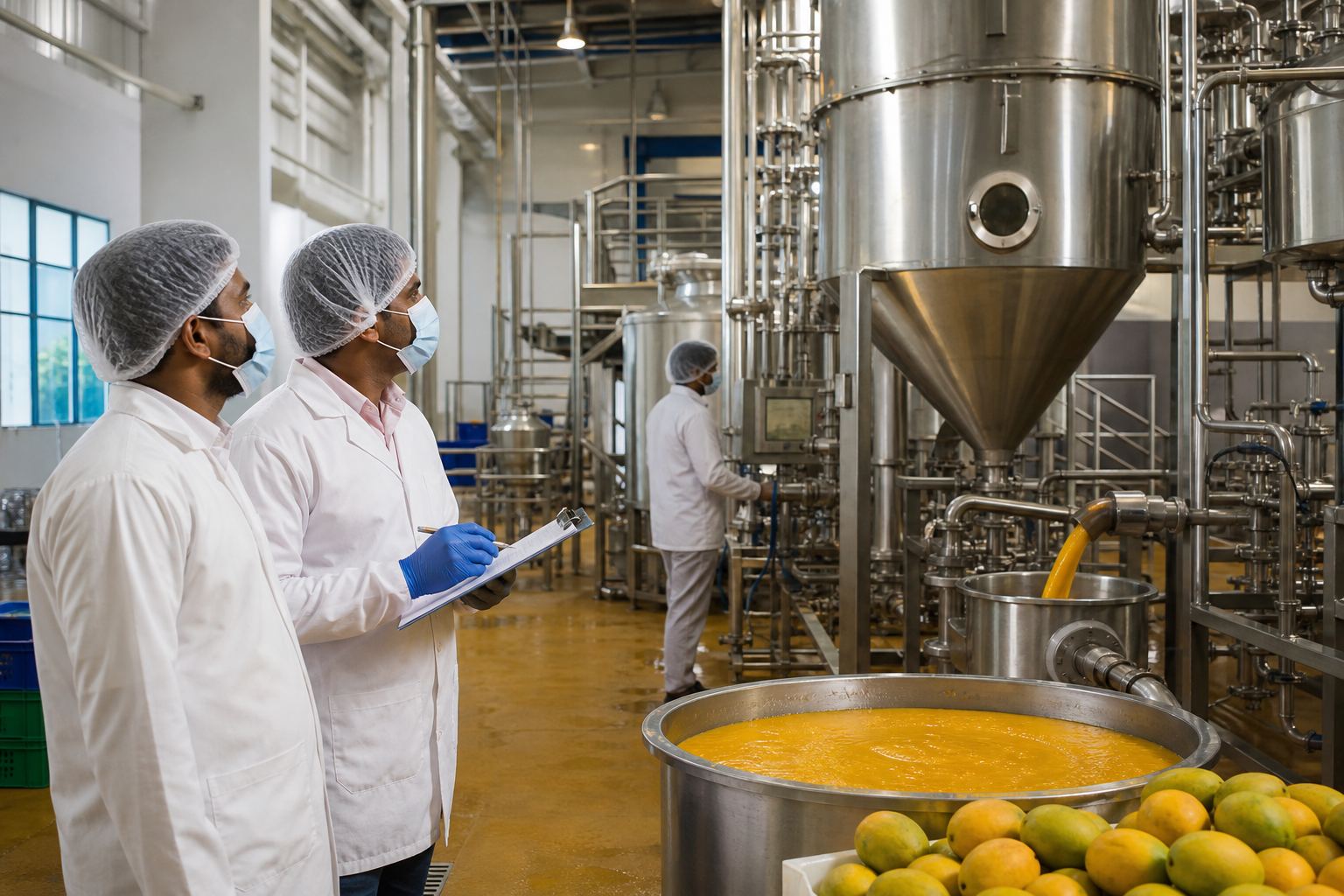
Although this post is SKU-led, buyers still need a manufacturing lens to judge whether a quoted powder can be repeated. Pulp standardization, dryer type, carrier addition, milling/sieving, metal detection, and moisture-controlled packing determine whether spray mango lot A will match lot B. Freeze-dried capacity is scarcer and slower to book than spray capacity. Drum-dried lines are specialised and should be audited as such.
Cluster choice matters by SKU: Konkan and multi-state mango pulp for mango powders; Gujarat for multi-fruit spray consolidation; southern states for banana, pineapple, guava, and papaya; UP for amla; Himachal/J&K for apple; Kerala for banana and jackfruit. Altus Exports maps SKU to cluster before sample dispatch so buyers do not approve a one-off custom run that cannot scale.
Manufacturing implications by process family
Swipe →
Data table — swipe horizontally on small screens
| Process | SKU Fit | Buyer Watch-Out |
|---|---|---|
| Spray drying | Mango, banana, pineapple, many tropicals | Carrier % and moisture ≤5% |
| Freeze drying | Mango premium, berry blends | Capacity booking; moisture ≤3–4% |
| Drum drying | Specialty bakery lines | Reconstitution profile vs spray free-flow |
Pricing Analysis
Buyer Tip
Price is SKU- and process-specific. Spray-dried banana and mango occupy the accessible volume bands; pineapple and amla sit higher on average; freeze-dried mango and berry blends define the premium ceiling among conventional fruit powders; organic adds roughly 20–45% depending on pathway and segregation. Seasonality of mango and other fruit pulp moves quotes within bands — treat all figures as directional FOB USD/kg requiring requote.
Directional FOB price bands by ranked SKU
Swipe →
Data table — swipe horizontally on small screens
| SKU | Indicative FOB (USD/kg) | Premium Drivers |
|---|---|---|
| Spray-dried mango | Approx. 4.50–12 | Color, low carrier, season |
| Freeze-dried mango | Approx. 15–40 | Aroma retention, drum packaging |
| Spray-dried banana | Approx. 3–7 | Mesh, moisture, pulp cost |
| Pineapple | Approx. 4–11 | Acidity profile, process |
| Amla | Approx. 3–7 | Nutraceutical grade, organic |
| Berry blends | Often premium | Freeze-dried color and aroma |
| Organic uplift | +20–45% typical | NPOP/USDA/EU pathway |
MOQ Analysis
Buyer Tip
MOQs should be read per SKU. Spray-dried mango and banana usually offer the most flexible sample-to-FCL ladder. Freeze-dried mango, berry blends, and some specialty tropicals may require higher trial minimums because dryer campaigns are less continuous. Publish and request tiered MOQs: sample 0.5–5 kg, trial 200–1000 kg, commercial 1–5 MT, then FCL sized to density (directional container payloads often about 10–14 MT/20ft and 16–24 MT/40ft — verify with forwarder).
MOQ guidance by SKU type
Swipe →
Data table — swipe horizontally on small screens
| SKU Type | Sample | Trial | Commercial / FCL Note |
|---|---|---|---|
| Spray mango / banana | 0.5–5 kg | 200–1000 kg | 1–5 MT then FCL common |
| Pineapple / amla | 0.5–5 kg | 200–1000 kg | Confirm dryer campaign size |
| Freeze-dried mango / berries | 0.5–5 kg | Often higher trial | Book capacity early |
| Specialty papaya/guava/apple etc. | 0.5–5 kg | Variable | Confirm continuous capability |
Packaging Standards
Export Tip
Packaging follows SKU risk. Spray-dried commercial mango and banana usually ship in 10–25 kg multiwall kraft with PE liner. Al-laminated pouches suit barrier-sensitive mid-lots across tropical SKUs. Fibre drums are the premium default for many freeze-dried mango and berry programs. Labels must state fruit identity, process, net weight, lot code, dates, and carrier declaration where applicable.
Packaging by SKU risk profile
Swipe →
Data table — swipe horizontally on small screens
| SKU Profile | Preferred Pack | Why |
|---|---|---|
| Spray tropical bulk | 10–25 kg kraft + PE | Cost-effective moisture barrier |
| Mid-lot barrier needs | Al-laminated pouch | Improved humidity protection |
| Freeze-dried premium | Fibre drum | Crush and humidity control |
| Retail private label | 50 g – 1 kg pouches | Brand-ready presentation |
Container Loading Details
Export Tip
Payload is SKU-density dependent. Spray-dried kraft-bag loads often approach the higher end of directional 10–14 MT (20ft) and 16–24 MT (40ft) ranges; freeze-dried fiber-drum loads may be cubic-limited earlier. Never assume mango spray density for a berry freeze-dried booking. Verify with forwarder and warehouse tally before locking freight on a multi-SKU container.
Container planning by load type
Swipe →
Data table — swipe horizontally on small screens
| Load Type | 20ft Directional | 40ft Directional |
|---|---|---|
| Spray-dried kraft bags | Often within ~10–14 MT | Often within ~16–24 MT |
| Mixed tropical spray SKUs | Verify stacked density | Itemise SKUs on documents |
| Freeze-dried fiber drums | Often cubic-limited | High-cube may help |
Shipping Methods
Export Tip
Commercial SKUs move by sea LCL or FCL on FOB, CFR, or CIF terms from Nhava Sheva, Mundra, Chennai, Tuticorin, or Cochin. Samples and urgent micro-replenishment move by air. Multi-SKU containers are fine when each SKU is itemised with correct descriptions, lot codes, and weights — never blur freeze-dried and spray-dried lines on one invoice line.
Shipping choices by SKU program stage
Swipe →
Data table — swipe horizontally on small screens
| Stage | Mode | Incoterm Tendency |
|---|---|---|
| SKU sampling | Air | FOB / CPT |
| Trial tonnage | Sea LCL | FOB |
| Commercial / FCL | Sea FCL | FOB, CFR, or CIF |
Certifications
Compliance Notes
Every SKU inherits the same baseline stack — IEC, APEDA RCMC where applicable, FSSAI — then adds buyer layers: HACCP/ISO 22000, Halal, Kosher, NPOP/USDA/EU Organic, and BRC for retail. Organic and Halal status must be SKU- and lot-specific. A plant that is Halal-certified for mango spray does not automatically cover a new amla line without scope confirmation.
Certification relevance by buyer type
Swipe →
Data table — swipe horizontally on small screens
| Buyer Type | SKU Focus | Certification Emphasis |
|---|---|---|
| Beverage manufacturers | Mango, pineapple, banana | FSSAI, HACCP/ISO, Halal for Gulf |
| Nutraceutical brands | Amla, pomegranate, organic mango | Organic TC, tight COAs |
| Retail private label | Berry blends, mango | BRC, organic, Kosher as needed |
| Bakery / dairy plants | Banana, mango, apple | HACCP/ISO, consistent mesh |
Buyer Requirements
Buyer Requirements
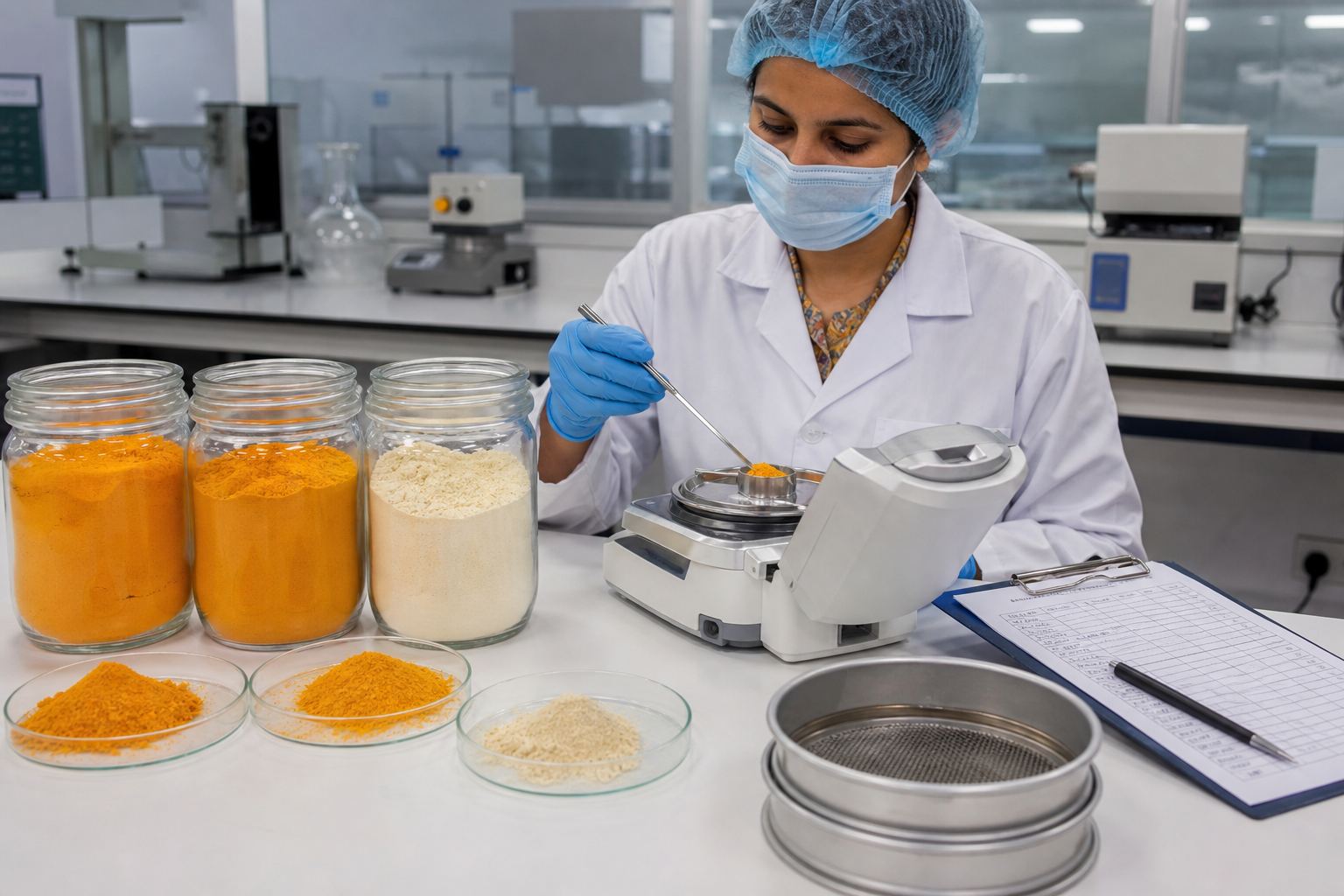
SKU-level buyer requirements usually include: process family on the data sheet; moisture and carrier %; microbiological ranges; sample with matching COA; evidence of registrations; and packaging format approval. Freeze-dried buyers additionally ask about drum integrity and residual moisture. Amla buyers often ask about heavy-metal awareness and nutraceutical-grade processing controls. Organic buyers require lot TCs. Matching these requirements to the ranked SKU — before price negotiation — prevents failed plant trials.
Sophisticated buyers also request application notes: whether the powder is intended for reconstitution in cold beverages, inclusion in bakery fat systems, dairy yoghurt fruit preparations, baby-food bases, nutraceutical capsules or sachets, or cosmetic dry blends. The same mango SKU can fail in one application and excel in another if particle behaviour and carrier level were optimised for the wrong use case. Put the application on the RFQ so Indian processors and merchant exporters can shortlist the correct grade instead of the cheapest catalogue line.
For retail private-label programs, expect BRC-oriented plant evidence, artwork-ready packaging discussions, and longer sample-to-PO cycles than industrial bulk beverage buying. Factor that timeline into launch plans when ranking which SKUs to introduce first.
Country-wise Opportunities
Market Snapshot
Country opportunity is SKU-shaped. USA: broad mango, berry, and freeze-dried depth. Germany/Netherlands: organic mango and amla. UK/France: banana, mango, strawberry blends for bakery and dairy. UAE: tropical spray powders with Halal. Japan/South Korea: fewer SKUs, tighter specs. Australia/Canada: organic and freeze-dried premiums. Singapore/Malaysia: tropical spray for regional manufacturing. Pair with Best Countries for Indian Fruit Powder Exports when prioritising market entry by SKU.
Country × SKU opportunity matrix
Swipe →
Data table — swipe horizontally on small screens
| Country | Priority SKUs | Notes |
|---|---|---|
| USA | Spray & freeze mango, berries, amla | Broad application base |
| Germany / Netherlands | Organic mango, amla, pineapple | EU gateway documentation |
| UK / France | Banana, mango, berry blends | Bakery and dairy pull |
| UAE | Mango, banana, pineapple | Halal frequently required |
| Japan / South Korea | Freeze mango, tight-spec spray | Spec discipline over breadth |
| Australia / Canada | Organic and freeze-dried | Premium health brands |
| Singapore / Malaysia | Tropical spray powders | Regional manufacturing |
Sourcing Checklist
Checklist
- Select process family and fruit SKU before requesting price — not after samples arrive
- Confirm the plant runs continuous capacity for that SKU, not a one-off trial dryer
- Write moisture, carrier %, and application into the RFQ
- Match cluster to SKU (Konkan mango, UP amla, Kerala banana/jackfruit, etc.)
- Request SKU-specific historical COAs
- Plan packaging by SKU risk (kraft/PE vs Al-laminate vs fibre drum)
Use this SKU-first checklist before approving a processor or issuing a purchase order across India's fruit powder range.
Common Buyer Mistakes
Common Mistakes Box
- Buying freeze-dried mango when spray-dried meets the application — Solution: match process to function and budget.
- Ignoring carrier caps until destination lab testing — Solution: declare and contract carrier % up front.
- Assuming all tropical powders share mango MOQs — Solution: confirm MOQ per SKU.
- Ordering amla on a beverage mango questionnaire — Solution: use nutraceutical-grade RFQs for amla.
- Mixing spray and freeze lots on one invoice line — Solution: itemise process families separately.
- Approving color on WhatsApp photos — Solution: approve physical samples with COAs.
- Treating berry blends as cheap spray tropicals — Solution: expect freeze-dried premium economics.
- Skipping Halal on UAE-bound pineapple or mango — Solution: confirm Halal scope for the SKU.
- Using apple powder specs for mango powder trials — Solution: keep SKU templates separate.
- Overloading containers using wrong density assumptions — Solution: verify payload by pack format.
SKU selection mistakes are costlier than freight mistakes in fruit powder programs. Avoid the following.
Future Market Trends
Key Statistics
SKU demand is shifting toward transparent carrier declarations, organic mango and amla programs, freeze-dried premiums for retail and specialty beverages, and application-ready powders for dairy and bakery plants that want less in-house standardization. Drum-dried specialty lines may gain share where reconstitution texture matters more than classic spray free-flow.
Exporters who publish honest SKU sheets — moisture, carrier, process, cluster — will outperform catalogue generalists as buyers professionalise fruit powder sourcing through the late 2020s. Confirm macro trade movement via APEDA/DGCI&S/ITC Trade Map rather than anecdote alone.
Expert Insights from Saurabh Mittal
Expert Insight Box
Altus Exports advises buyers to choose fruit powder SKUs the way formulators choose ingredients: by function first, origin second, and price third. That order prevents most failed trials.
Why Merchant Exporters Should Specialise by SKU Family
A merchant exporter who understands Konkan mango spray campaigns, UP amla expectations, and freeze-dried drum packing will protect both processor and importer better than a general trader listing every fruit on one PDF. Specialization is how Altus turns product taxonomy into repeatable FCL programs.
Conclusion
- Operational workflow: How to Export Fruit Powders from India.
- Destinations: Best Countries for Indian Fruit Powder Exports.
- Buyer sourcing: Source Fruit Powders Directly from India.
- Compliance base: APEDA Registration Benefits for Fruit Powder Exporters.
- Demand maps: Most Demanded Indian Fruit Powders by Country.
- Pipeline: Find International Buyers for Fruit Powders and Trade Shows for Fruit Powder Exporters.
- Premium and paperwork: Organic Fruit Powder Export Opportunities and Fruit Powder Export Documentation Checklist.
India's top fruit powder exports are best understood as a ranked taxonomy: spray-dried mango for volume; freeze-dried mango and berry blends for premium aroma; banana and pineapple for bakery and beverage breadth; amla for nutraceutical value; and papaya, guava, sapota, apple, jackfruit, and pomegranate for specialty lanes. Specs, carrier declarations, MOQs, packaging, and country fit all change by SKU — treat them accordingly.
Ready to source or export? Work with Altus Exports as merchant exporter and global sourcing partner to match verified processors to your exact powder brief. Continue through the fruit powder cluster guides linked below. Explore Altus Exports agriculture & food products for related programs.