
Most Demanded Indian Dried Vegetables by Country
By Saurabh Mittal, Founder, Altus Exports
Country-by-country demand map for Indian dried vegetable exports — which vegetables, cuts, drying methods, certifications, and pack formats buyers in USA, EU, Japan, UAE, Brazil, Indonesia, UK, and other corridors actually order under HS 0712.
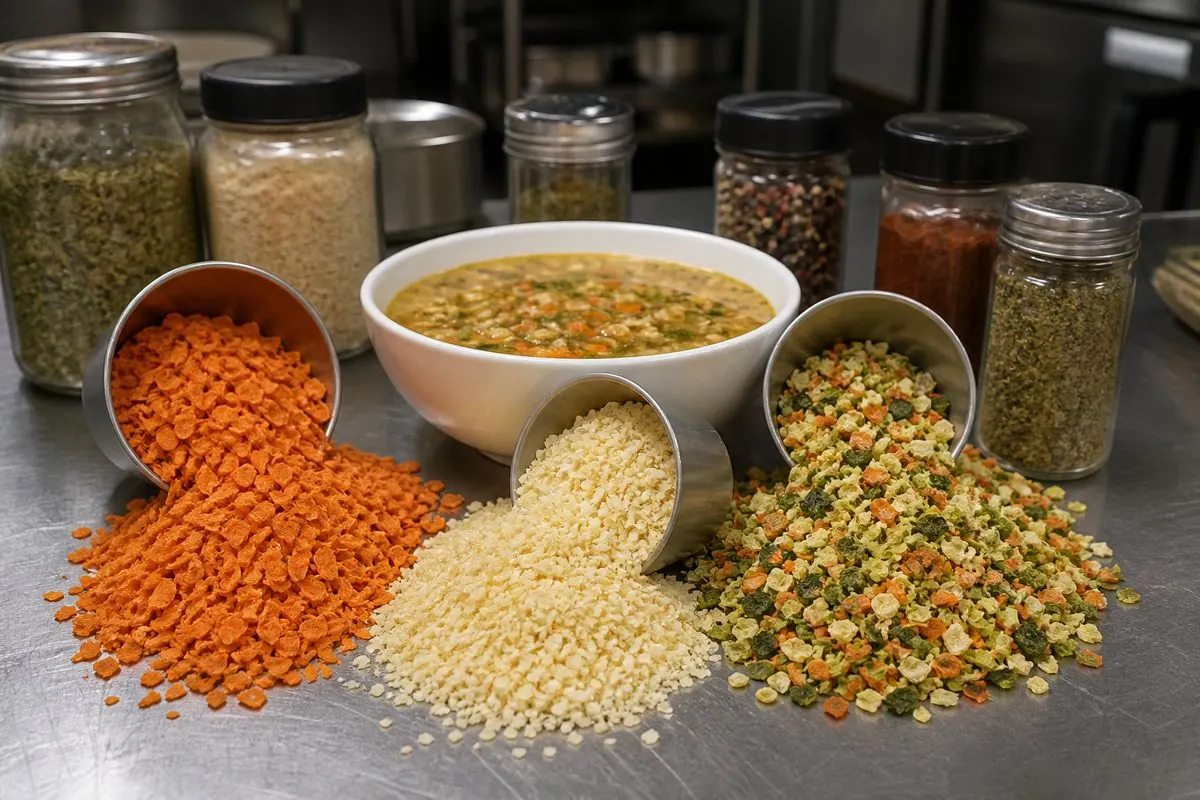
Country demand for the most demanded dried vegetables by country is not uniform — and treating it as uniform is why many first dehydrate export programmes stall after an initial trial. Buyers in the United States pull dehydrated carrot, potato, tomato, and mixed programmes for soup, seasoning, and snack plants; Germany and the wider EU emphasise tomato powder, cabbage, and mixed flakes with strict MRL and sulfite discipline; Japan often wants tighter mesh and color on cabbage, spinach, and carrot powders; Brazil absorbs meaningful HS 0712 value with industrial food-processing demand; Indonesia and Malaysia lean competitive FOB mixed and potato/carrot programmes; the UAE balances foodservice mixed vegetables with Halal documentation; the UK and Canada reward micro-disciplined ingredient packs. This guide maps what buyers in each destination actually order — vegetable × cut × drying method × pack × certification — not what a generic catalogue suggests they should want.
India exported directionally about US$288 million under HS 0712 in 2024 and ranked roughly second globally among dried-vegetable exporters, but partner ranking and SKU mix vary by year. Cut differentiation, drying-method honesty, and COA documentation matter more than pure FOB undercutting in premium channels, because retail QC teams and private-label auditors reject off-spec moisture or micro lots regardless of price. For US and EU corridors, undeclared treatments or MRL failures are delisting events — spec discipline is not optional.
For market-selection strategy and duty planning (macro ranking), see Best Countries for Indian Dried Vegetable Exports. For the vegetable and cut catalogue behind each country preference, see Top Dried Vegetable Products Exported from India. For premium organic and freeze-dried pathways, see Organic, Freeze-Dried & Premium Dried Vegetable Export Opportunities. Altus Exports builds country-specific SKU plans for ingredient houses and distributors evaluating Indian dehydrate sourcing.
Key Takeaways
Summary Box
Executive Summary
Summary Box
- Scan the coloured Summary / Stats / Tips boxes first — then open the matrix tables.
- Decide vegetable + cut + drying method + destination before negotiating FOB.
- Use the jump nav on mobile: Takeaways → Matrix → Exports → Pricing → Pack → Certs → FAQ.
Country demand for Indian dried vegetables varies by vegetable type, cut, drying method, certification, and packing format — US soup-mix carrot and potato programmes differ from EU tomato-powder MRL programmes and Japan cabbage/spinach powder mesh preferences.
India’s HS 0712 scale (~US$211.3M in 2023; OEC ~US$288M 2024 dir.) means partner ranking and SKU mix vary year to year; differentiation and COA discipline matter more than pure FOB undercutting in premium channels.
This demand map helps exporters and buyers align sample kits and COA templates to what each destination actually orders rather than shipping a single generic mixed lot to all corridors.
Market Size & Industry Overview
Key Statistics
- Production/processing: Gujarat dehydrator belt + Maharashtra consolidation.
- Council stack: APEDA RCMC + IEC + FSSAI.
- Trade cue: HS 0712 ~US$211.3M (2023, onion-heavy) / OEC ~US$288M (2024 dir.); for 071290 demand use USA, Indonesia, Nepal, Germany, Malaysia.
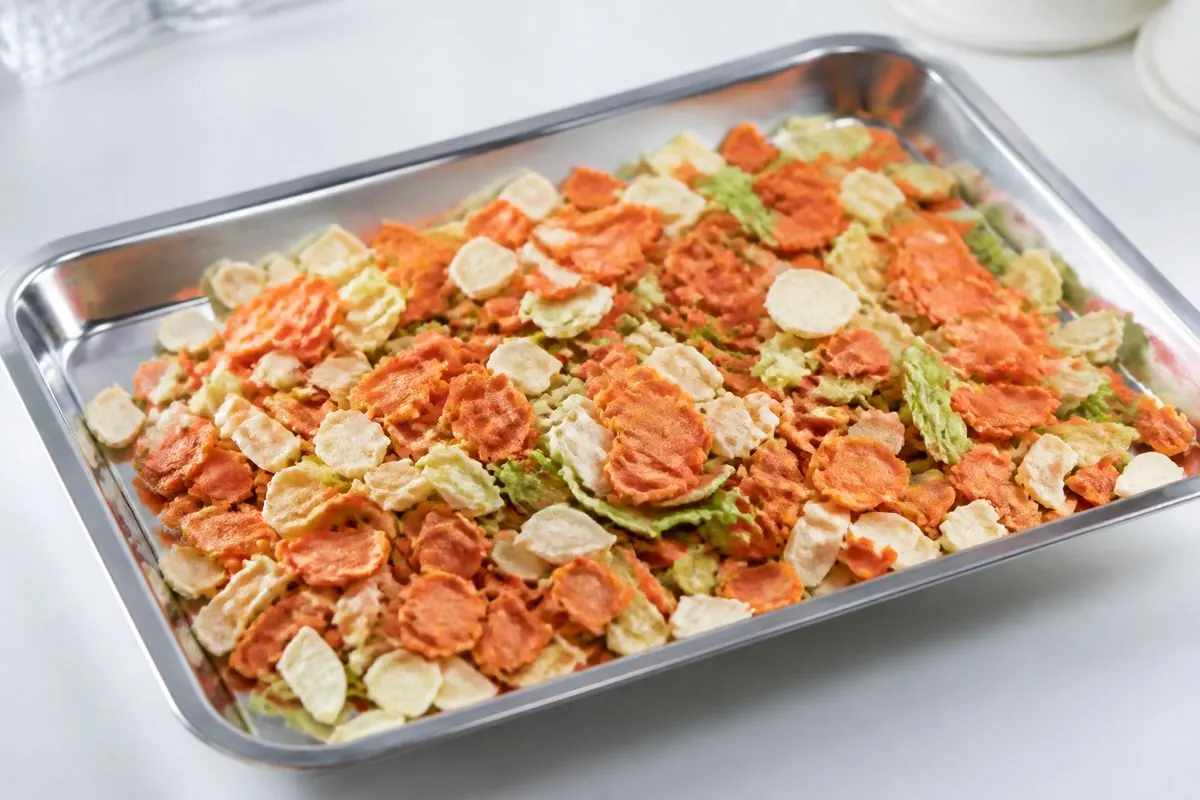
Demand is SKU-shaped: US and EU reward micro + MRL proof on defined cuts; Japan rewards mesh and color discipline on leafy and cabbage powders; ASEAN and Brazil often reward competitive FOB with reliable lead times on mixed and root vegetable dehydrates; GCC rewards Halal-ready foodservice packs.
Reading partner rankings without a vegetable × cut × method lens misallocates sample kits and first-FCL capacity. This post owns the demand matrix; macro destination ranking methodology lives in the best-countries guide.
Export Statistics
Key Statistics
- HS 0712 value: ~US$211.3M (2023) / OEC ~US$288M (2024 dir.).
- Top value destinations: Germany · Brazil · USA · Indonesia · UK.
- HS 071290 (WITS 2024): US$58.626M / 45,547.7 MT.
- File other vegetables under 0712.90 family — CHA confirm.
Use HS 071290 partner ranks (USA, Indonesia, Nepal, Germany, Malaysia) to validate SKU kits — tomato powder for EU vs mixed flakes for UAE foodservice — rather than onion-heavy HS 0712 totals alone.
HS 071290 (US$58.626M / 45,547.7 MT in 2024, directional) helps interpret “other” vegetable demand where USA, Indonesia, Nepal, Germany, and Malaysia often appear as leading partners — always separate onion and garlic-heavy lines when reading tables.
India dried vegetable export profile for demand planning (HS 0712) — directional
Swipe →
Data table — swipe horizontally on small screens
| Metric | Directional Estimate | Demand-planning use |
|---|---|---|
| India HS 0712 exports 2024 | ~US$288 million | Confirms category scale for multi-country programmes |
| India global rank 2024 | ~2nd exporter | Credibility opener — follow with SKU proof |
| Top destinations by value | 0712: DE/BR/US (onion-heavy); 071290: US/ID/NP/DE/MY | Prioritise sample kits for these corridors first |
| HS 071290 2024 | US$58.626M / 45,547.7 MT | Useful for carrot/potato/tomato/mixed “other” planning |
| Primary belts | Gujarat Mahuva–Bhavnagar–Sihor; Maharashtra Nashik | Match dehydrator capability to country SKU list |
| Council | APEDA RCMC + IEC + FSSAI | Include in every country vendor pack |
| Ports | Mundra, Nhava Sheva | State Incoterm with country lead-time expectations |
| Dominant formats | Air-dried flakes/kibbled/granules/powder; FD specialty | Country matrix rows specify which format wins |
Import Statistics
Key Statistics
- Value-led: Germany, Brazil, USA, Indonesia, UK.
- Spec-led: Japan, EU MRL corridors, US FSMA programmes.
- Halal / foodservice: UAE and broader GCC.
- ASEAN volume/repack: Indonesia, Malaysia, Vietnam.
Import demand profiles below interpret ordering patterns beyond raw statistical volume. Germany may lead HS 0712 value while Japan’s smaller absolute tonnage still dictates tighter powder specs; Brazil’s value rank does not mean the same cut mix as UK retail ingredient programmes.
Use import cues to size first-trial MT and certification investment — not to ship one FCL assortment hoping every market accepts it.
Import demand signals by destination — Indian dried vegetables (directional)
Swipe →
Data table — swipe horizontally on small screens
| Market | Directional Import Signal | SKU implication |
|---|---|---|
| Germany / EU | High HS 0712 value; strict MRL / sulfite rules | Tomato powder, cabbage, mixed flakes with residue discipline |
| Brazil | Major HS 0712 value destination | Industrial mixed, potato, carrot programmes — confirm ANVISA path |
| United States | Strong partner for carrot/potato/tomato/mixed | Soup/seasoning cuts; FDA prior notice readiness |
| Indonesia | Leading HS 071290 partner cue | Competitive mixed and root vegetable dehydrates |
| United Kingdom | Ingredient micro/residue discipline | Documented COA packs; retail PL adjacency |
| Japan | Positive-list MRL; tight mesh/color | Cabbage, spinach, carrot powders preferred when on-spec |
| UAE | Foodservice + re-export adjacency | Mixed dried vegetables; Halal docs common |
| Malaysia / Canada / Australia | Recurring ingredient demand | Corridor-specific cut and labelling packs |
Most Demanded Dried Vegetables by Country: Demand Matrix
Market Snapshot
Demand profiles below reflect directional ordering patterns from Indian dried vegetable export programmes — vegetable, cut, drying method, certification, and packing preferences by destination. Validate against your buyer’s specific spec sheet before building assortment plans. This matrix is the unique core of this article; it does not replace product catalogue depth or process-step guides.
Master demand matrix — most demanded dried vegetables by country (directional)
Swipe →
Data table — swipe horizontally on small screens
| Country | Top vegetables | Preferred cuts | Drying method | Pack / cert focus |
|---|---|---|---|---|
| USA | Carrot, potato, tomato, mixed | Flakes, granules, powder | Air-dried dominant; FD selective | 10/25 kg; FDA prior notice; micro COA |
| Germany / EU | Tomato, cabbage, carrot, mixed | Powder, flakes, kibbled | Air-dried; organic/FD premium niche | MRL + sulfite labelling; moisture barrier |
| Brazil | Mixed, potato, carrot, onion-basket adjacency | Flakes, kibbled, granules | Air-dried | Competitive FOB; broker-ready docs |
| Indonesia | Mixed, potato, carrot, tomato | Flakes, kibbled, powder | Air-dried | Competitive FOB; reliable lead times |
| United Kingdom | Tomato, carrot, mixed, potato | Powder, flakes | Air-dried; organic selective | Strict micro/residue; retail PL packs |
| Japan | Cabbage, spinach, carrot, onion-basket adjacency | Powder, fine flakes | Air-dried; FD specialty | Mesh/color; positive-list MRL |
| UAE | Mixed, tomato, carrot, potato | Flakes, kibbled, retail cuts | Air-dried | Halal; foodservice 10/20 kg |
| Netherlands / France | Tomato, mixed, carrot, beans/peas | Flakes, powder | Air-dried; FD premium | EU MRL; soup-mix specs |
| Canada / Australia | Carrot, potato, tomato, mixed | Flakes, granules, powder | Air-dried; organic selective | Labelling + micro discipline |
| Malaysia / Vietnam | Mixed, carrot, potato | Flakes, kibbled | Air-dried | Halal (MY); competitive FOB |
How to use the matrix in sampling
Send grade-matched samples per corridor — for example, tomato powder mesh bands for EU, mixed flake assortments for UAE foodservice, and cabbage/spinach powder for Japan — rather than one mixed bag to all inboxes. Label each sample with vegetable, cut, drying method, moisture target, and lot ID matching the COA.
Onion and garlic adjacency note
Many baskets include dehydrated onion or garlic. Keep those SKUs in sibling deep-dives — dehydrated onion and dehydrated garlic — and only reference them here when the country RFQ is a full dehydrate basket.
Manufacturing Overview
Export Tip
- Flow: intake → prep → cut → dehydrate → mill/sieve → pack → COA.
- Segregate mild vegetables from onion/garlic aromatics unless mixed programme ordered.
- Mesh control is a Japan/EU powder gate — not a brochure claim.
- Retain samples per country programme lot.
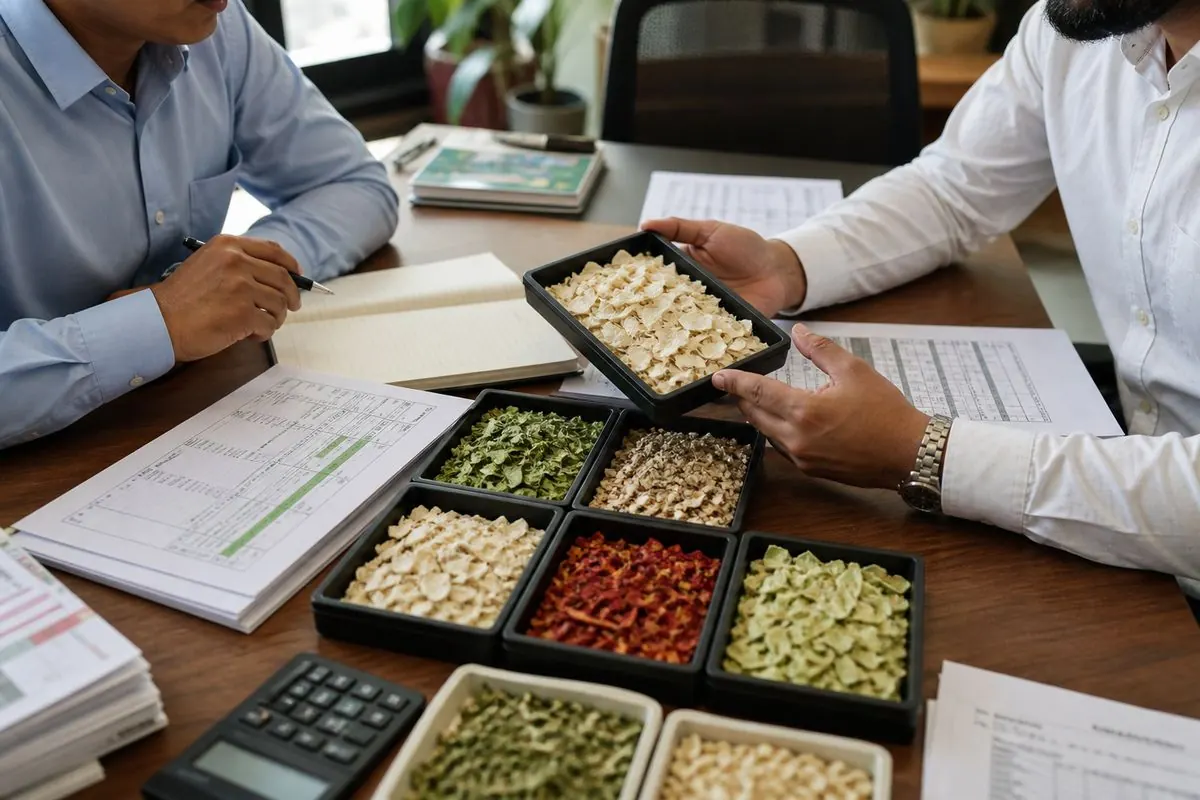
Country demand profiles tie to how Gujarat dehydrators run different vegetables and cuts — Japanese powder buyers reject coarse cabbage flake sold as “fine powder,” even when color looks acceptable in a warehouse photo. Demand mapping without process context produces wrong sample kits.
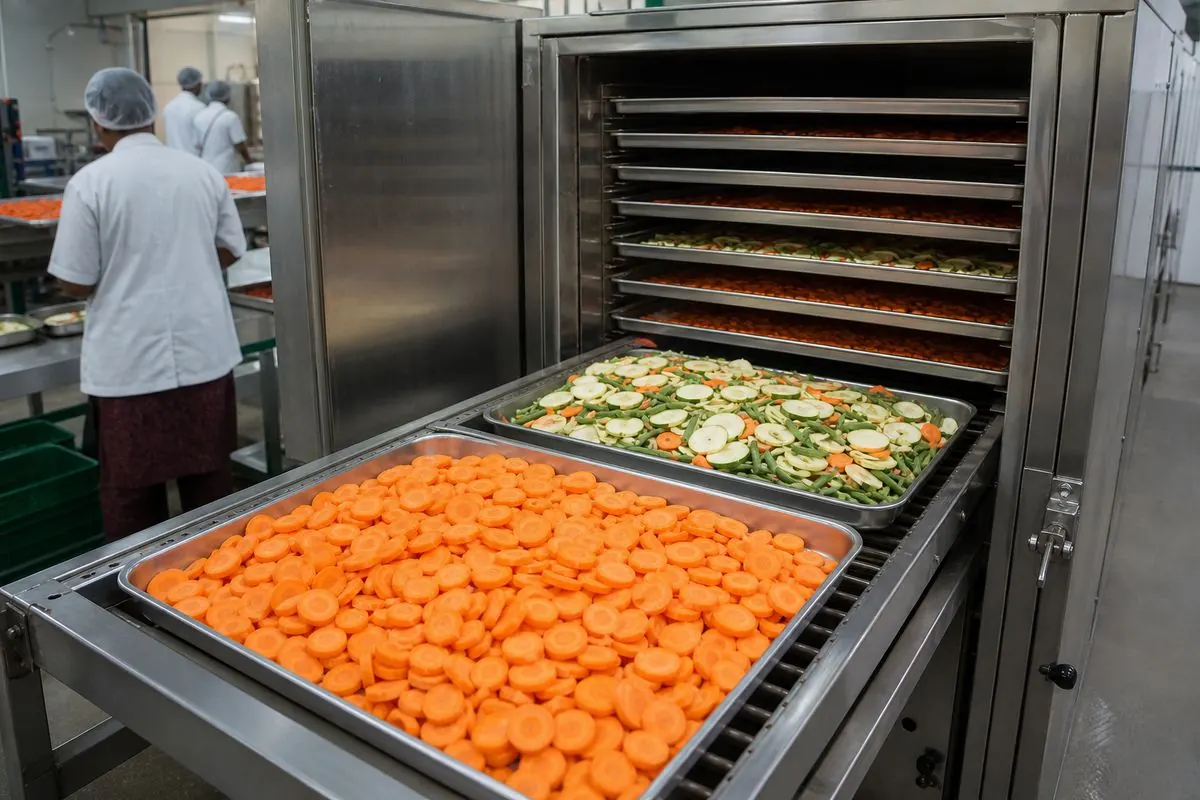
Air-dried capacity dominates volume corridors; drum-dried appears in selected potato programmes; freeze-dried capacity is a specialty gate for premium US/EU/Japan niches and should not be promised from air-dried lines. Align dehydrator capability to the matrix row before outreach.
Export Process
Export Tip
Country demand intelligence only pays when it changes your export operating sequence: lock destination SKU matrix → pull matching samples → confirm APEDA/FSSAI/IEC → quote FOB with quote date → trial MT → FCL. Detailed process steps, Incoterms depth, and container overview belong in the pillar export guide; this section only shows how demand mapping plugs into that sequence.
Demand-led RFQ lock
Refuse vague “send dried vegetables” RFQs. Force vegetable, cut, drying method, moisture, mesh, micro, pack, and destination before sampling.
Corridor sample kits
Build 2–4 SKU kits per priority country rather than one mega assortment. Track which kit converts to trial PO.
Scale only after destination QC
First FCL follows trial acceptance in that corridor’s lab and customs path — not after a fair handshake alone.
Trade Statistics
Key Statistics
Trade statistics validate which countries deserve matrix rows with heavy sample investment. Germany, Brazil, USA, Indonesia, and the UK appear repeatedly in HS 0712 value cues; HS 071290 partner lists often elevate USA, Indonesia, Nepal, Germany, and Malaysia for “other” vegetables.
When presenting statistics to buyers, pivot from national totals to your matrix row for their country within thirty seconds — buyers buy carrot flakes or tomato powder, not India’s ranking.
Trade cues mapped to demand-matrix priorities (directional)
Swipe →
Data table — swipe horizontally on small screens
| Trade cue | Figure | Matrix action |
|---|---|---|
| HS 0712 India value | ~US$211.3M (2023) / OEC ~US$288M (2024 dir.) | Onion-heavy — budget 071290 separately |
| Top value destinations | DE, BR, US, ID, UK | Build first five matrix kits |
| HS 071290 volume/value (2024 WITS) | 45,547.7 MT / US$58.626M | Weight “other veg” SKUs in kits |
| India rank | ~2nd exporter | Credibility line in outreach only |
| Broader APEDA processed veg FY25 | ~US$897M basket | Do not equate to HS 0712 demand |
| Ports | Mundra / Nhava Sheva | State lead time by corridor |
Import Data Analysis
- Separate onion/garlic lines from other 0712.90 vegetables in every dataset.
- Weight Germany/Brazil/US/Indonesia/UK for first-year kits.
- Add Japan when powder mesh capability is proven.
- Treat Nepal land-corridor demand as paperwork-sensitive, not pavilion-led.
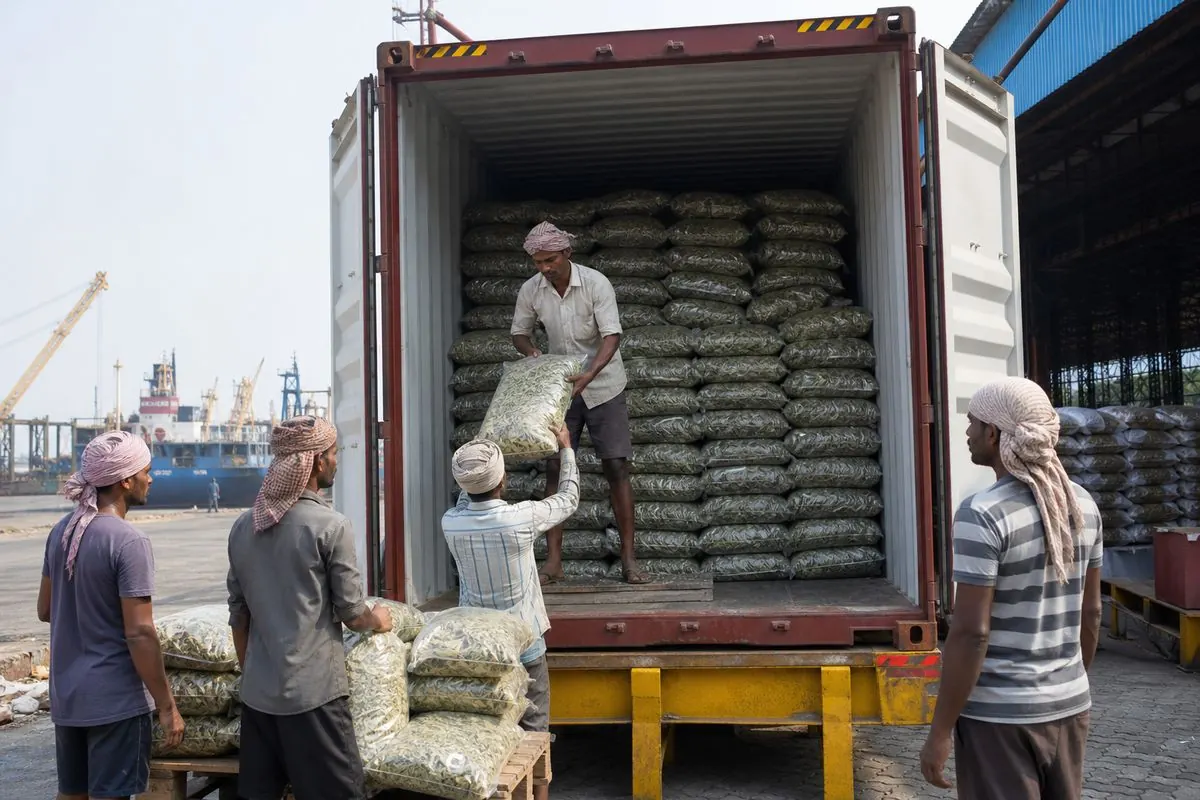
Import data analysis for demand mapping should answer three questions per country: which vegetables pull volume, which cuts win QC, and which certifications are non-negotiable. Volume without cut fit creates rejected trials; tight specs without volume create under-utilised dehydrator campaigns.
Re-run partner data yearly. A corridor that bought mixed flakes last year may shift toward tomato powder or spinach powder as retail formulations change. For prospecting methods that turn import data into meetings, see How to Find International Buyers for Dried Vegetables.
Pricing Analysis
Buyer Tip
- USA/EU tomato powder and specialty cuts → higher band.
- ASEAN/Brazil commodity mixed flakes → competitive mid band.
- Freeze-dried / organic / retail PL → substantially higher.
- Always verify on quote date; season and moisture shift bands.
Country demand shapes willingness to pay. EU and Japan powder programmes often tolerate higher FOB when mesh, color, and MRL are proven; ASEAN mixed-flake programmes punish over-spec pricing. Quote FOB USD/kg by vegetable, cut, drying method, and pack — with quote date — never a single “dried veg price” for all destinations.
Directional FOB posture by country demand tier — verify on quote date
Swipe →
Data table — swipe horizontally on small screens
| Country tier | Typical SKU focus | FOB posture | Notes |
|---|---|---|---|
| USA ingredient | Carrot/potato/tomato/mixed air-dried | Mid band → specialty premium | Micro COA expected |
| EU / UK | Tomato powder, cabbage, mixed | Mid-high when MRL clean | Sulfite labelling if used |
| Japan | Cabbage/spinach/carrot powders | Premium for mesh/color | Positive-list readiness |
| Brazil | Mixed, potato, carrot | Competitive volume band | Broker registration path |
| Indonesia / Malaysia | Mixed, potato, carrot | Competitive FOB | Lead-time reliability wins |
| UAE foodservice | Mixed flakes/kibbled | Mid band + Halal cost | Retail PL separate tier |
| Premium FD / organic any corridor | FD carrot/peas; organic packs | Substantially higher | See specialty cluster post |
MOQ Analysis
Buyer Tip
- One sample kit ≠ one commercial MOQ — stage per country.
- Multi-SKU FCL only after each SKU trial acceptance.
- Retail PL pouches often need higher unit MOQ than bulk bags.
- Confirm stow before promising mixed-country containers.
Country demand kits still follow the same physical MOQ ladder — samples 0.5–5 kg per SKU, trial 100–500 kg or 1–5 MT, wholesale 5–20+ MT, FCL ~10–16 MT (20ft indicative). Premium Japan powder programmes may stay on smaller trial MT longer; Brazil/Indonesia volume programmes push to FCL faster once QC clears.
MOQ ladder applied to country demand programmes
Swipe →
Data table — swipe horizontally on small screens
| Stage | Typical MOQ | Country demand use |
|---|---|---|
| Corridor sample kit | 0.5–5 kg per SKU | Matrix-matched evaluation |
| Country trial | 100–500 kg or 1–5 MT | Destination QC + first clearance |
| Wholesale | 5–20+ MT | Distributor programmes |
| 20ft FCL | ~10–16 MT indicative | Single-country or planned multi-SKU |
| 40ft HC | ~20–26 MT indicative | Established corridors |
Packaging Standards
Export Tip
- Bulk default: 10/20/25 kg + liner.
- Premium powders: N2/vacuum as contracted.
- Retail PL: 50 g–1 kg with barcode/allergen as required.
- Markings must match invoice, packing list, and COA lot ID.
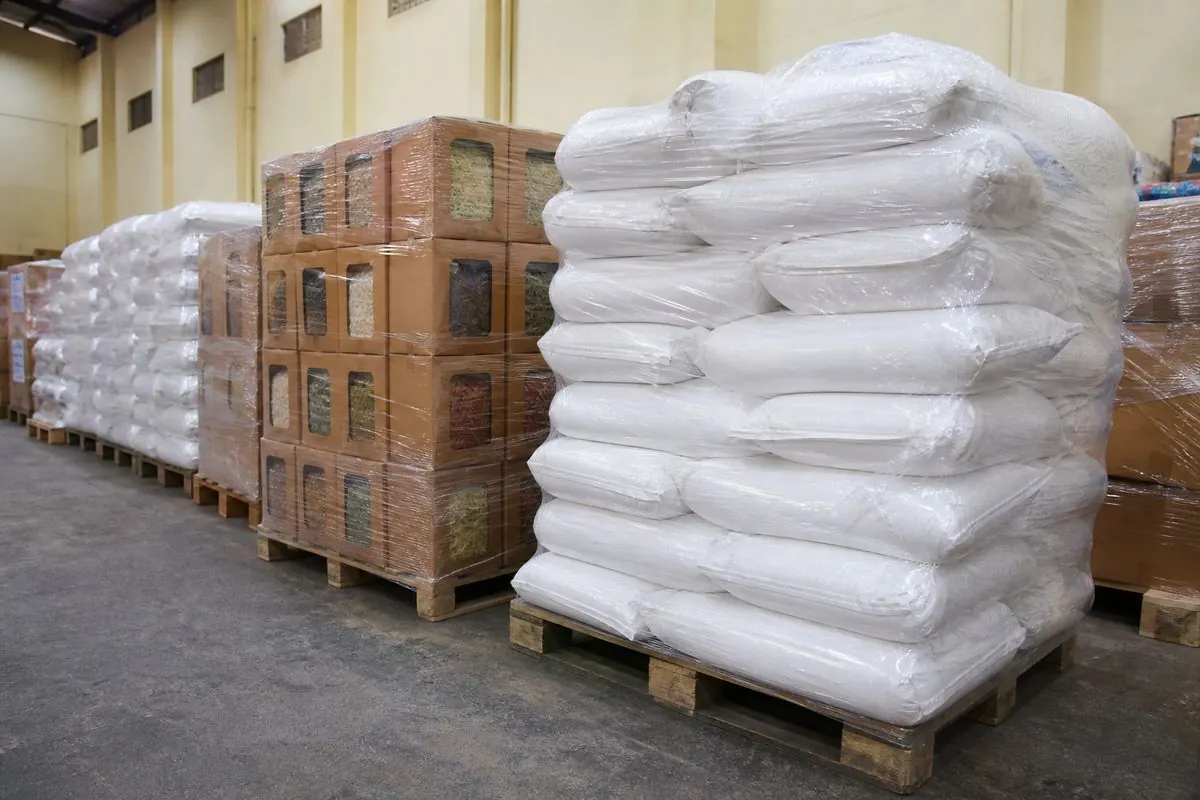
Pack preferences track country channels: US/EU ingredient plants favour 10/20/25 kg moisture-barrier bags or cartons; UAE foodservice often accepts 10/20 kg; Japan powder programmes may specify tighter inner barriers; retail private-label needs 50 g–1 kg pouches with labelling fields. Nitrogen flush or vacuum appears where premium powders face humid transit.
Pack format preferences by country channel (directional)
Swipe →
Data table — swipe horizontally on small screens
| Country / channel | Typical pack | Special note |
|---|---|---|
| USA ingredient plants | 10/20/25 kg bags/cartons | Lot marks + micro COA |
| EU / UK processors | 10/25 kg + strong liner | Sulfite declaration if used |
| Japan powder buyers | Barrier packs; sometimes smaller units | Mesh/color on label/COA |
| Brazil industrial | 25 kg cost-efficient packs | Confirm handling norms |
| Indonesia / Malaysia wholesale | 20/25 kg | Competitive landed pack cost |
| UAE foodservice | 10/20 kg | Halal marks where contracted |
| Retail PL (multi-country) | 50 g–1 kg pouches | Longer lead time 3–6 weeks |
| Premium FD powders | N2/vacuum barrier | Humidity-critical |
Container Loading Details
Export Tip
- Single-SKU FCL simplifies stow maths.
- Multi-SKU needs segregation and packing-list clarity.
- Photograph stuffing for moisture claims on long ocean legs.
- Avoid aromatic cross-contamination unless basket includes onion/garlic.
Country programmes fail operationally when exporters promise FCL MT without SKU density checks. Flake-heavy US mixed loads differ from fine tomato powder EU loads. Indicative 20ft ~10–16 MT and 40ft HC ~20–26 MT still require forwarder confirmation per matrix assortment.
Container loading cues for country programmes (indicative)
Swipe →
Data table — swipe horizontally on small screens
| Programme type | Container | Loading note |
|---|---|---|
| US mixed flakes trial→FCL | 20ft | ~10–16 MT indicative; confirm density |
| EU tomato powder | 20ft / 40HC | Powder density + barrier integrity |
| Japan powder LCL→FCL | LCL then 20ft | Smaller early lots common |
| Brazil volume | 40HC | Payload confirmation critical |
| UAE foodservice mixed | 20ft | Segregate aromatics if any |
| ASEAN competitive | 20ft | Fast turn; standard bags |
Shipping Methods
Export Tip
- Match Incoterm to buyer sophistication by country.
- Do not promise FD lead times on air-dried capacity.
- Ramadan / holiday calendars affect UAE/Saudi foodservice timings.
- FDA prior notice timing matters for US ocean arrivals.
Ocean from Mundra or Nhava Sheva serves all major demand countries; air freight covers urgent samples to USA, EU, Japan, and GCC. Lead times: samples 7–14 days; stock air-dried 2–4 weeks; custom/PL 3–6 weeks; freeze-dried/organic 4–8+ weeks. Incoterms: EXW, FOB Mundra/Nhava Sheva, CFR/CIF; DDP selective.
Certifications
Compliance Notes
- Universal: APEDA RCMC · IEC · FSSAI · lot COA.
- USA: prior notice + micro discipline.
- EU/UK/Japan: MRL-first mindset.
- GCC/Malaysia: Halal when contracted.
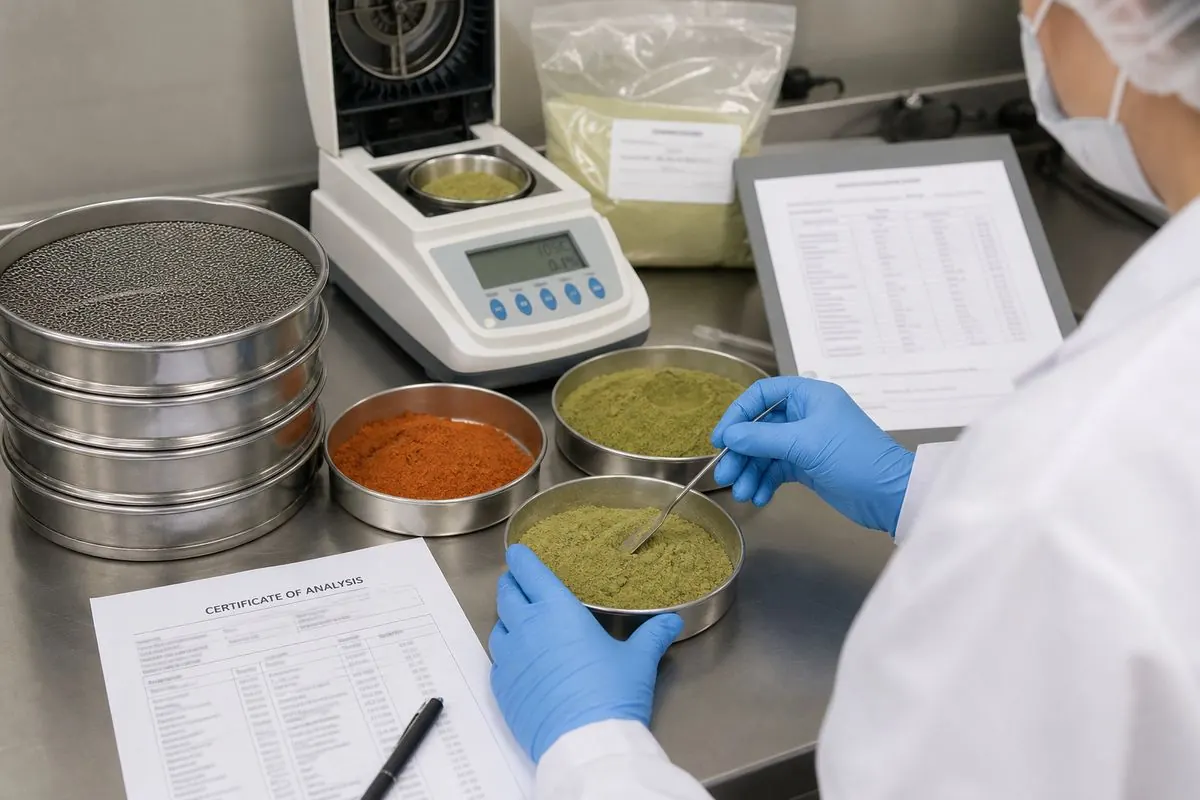
Certification demand is country-shaped: all organised corridors expect APEDA RCMC + IEC + FSSAI + lot COA; USA adds FDA prior notice / FSMA supplier controls; EU/UK add MRL and sulfite labelling discipline; Japan adds positive-list residue readiness; UAE/Malaysia often add Halal; organic and freeze-dried claims need scoped certificates — detail in the specialty post when programmes go premium.
Certification emphasis by country demand corridor
Swipe →
Data table — swipe horizontally on small screens
| Country | Baseline | Corridor emphasis |
|---|---|---|
| USA | APEDA + FSSAI + COA | FDA prior notice; Salmonella/micro pack |
| Germany / EU | APEDA + FSSAI + COA | MRL (Reg. 396/2005); sulfite labelling |
| UK | APEDA + FSSAI + COA | Micro/residue; labelling |
| Japan | APEDA + FSSAI + COA | Positive-list MRL; mesh/color proof |
| Brazil | APEDA + FSSAI + COA | ANVISA/broker expectations |
| Indonesia | APEDA + FSSAI + COA | Import licensing where applicable |
| UAE | APEDA + FSSAI + COA | Halal documentation |
| Canada / Australia | APEDA + FSSAI + COA | Labelling + micro |
| Malaysia | APEDA + FSSAI + COA | Halal common |
Buyer Requirements
Buyer Requirements
- Never send one PDF spec for all countries.
- Translate matrix row into the buyer’s language of cut and mesh.
- State sulfite and treatment status explicitly.
- Agree rejection and moisture claim windows before FCL.
Country buyers share a core request list — written SKU spec, samples, COA, FOB quote date, APEDA/FSSAI/IEC proof — then diverge. US buyers emphasise micro and prior-notice readiness; EU buyers emphasise MRL schedules; Japan buyers emphasise mesh and color; UAE buyers emphasise Halal and foodservice pack practicality; Brazil/Indonesia buyers emphasise competitive FOB and reliable sailings.
Country-wise Opportunities
Market Snapshot
- Lead US with carrot/potato/tomato/mixed air-dried kits.
- Lead EU/UK with tomato powder + cabbage/mixed MRL-clean lots.
- Lead Japan only when powder mesh capability is real.
- Lead ASEAN/Brazil with competitive mixed and root vegetable programmes.
Opportunities below summarise where demand-matrix fit is strongest for Indian multi-SKU dehydrate exporters. For duty, freight, and compliance-burden ranking methodology, use the best countries guide; here the question is which SKUs to lead with once you choose a corridor.
Opportunity summary by country (demand-matrix view)
Swipe →
Data table — swipe horizontally on small screens
| Country | Lead SKUs | Watch-out | Next step |
|---|---|---|---|
| USA | Carrot, potato, tomato, mixed | Micro/FDA readiness | Sample kit → trial MT |
| Germany / EU | Tomato powder, cabbage, mixed | MRL / sulfites | Residue-tested lots |
| Brazil | Mixed, potato, carrot | Registration path | Broker-aligned docs |
| Indonesia | Mixed, potato, carrot, tomato | Price competition | Lead-time proof |
| UK | Tomato, carrot, mixed | Micro discipline | COA-first outreach |
| Japan | Cabbage, spinach, carrot powders | Mesh/color fails | Powder capability audit |
| UAE | Mixed flakes/kibbled | Halal gaps | Foodservice pack samples |
| Canada / Australia | Carrot, potato, tomato, mixed | Labelling gaps | Corridor label checklist |
| Malaysia / Vietnam | Mixed, carrot, potato | Commodity pressure | Reliable FOB + Halal (MY) |
| Netherlands / France | Tomato, beans/peas, mixed | EU MRL | Soup-mix cut match |
Sourcing Checklist
Checklist
Buyer Checklist
Exporter Checklist
Common Buyer Mistakes
Common Mistakes Box
Future Market Trends
Key Statistics
- Powder mesh specs tighten in Japan and parts of EU.
- US FSMA questionnaires get longer — document once, reuse.
- UAE/GCC foodservice mixed packs remain Ramadan-sensitive.
- Multi-SKU baskets including onion/garlic rise — keep sibling links ready.
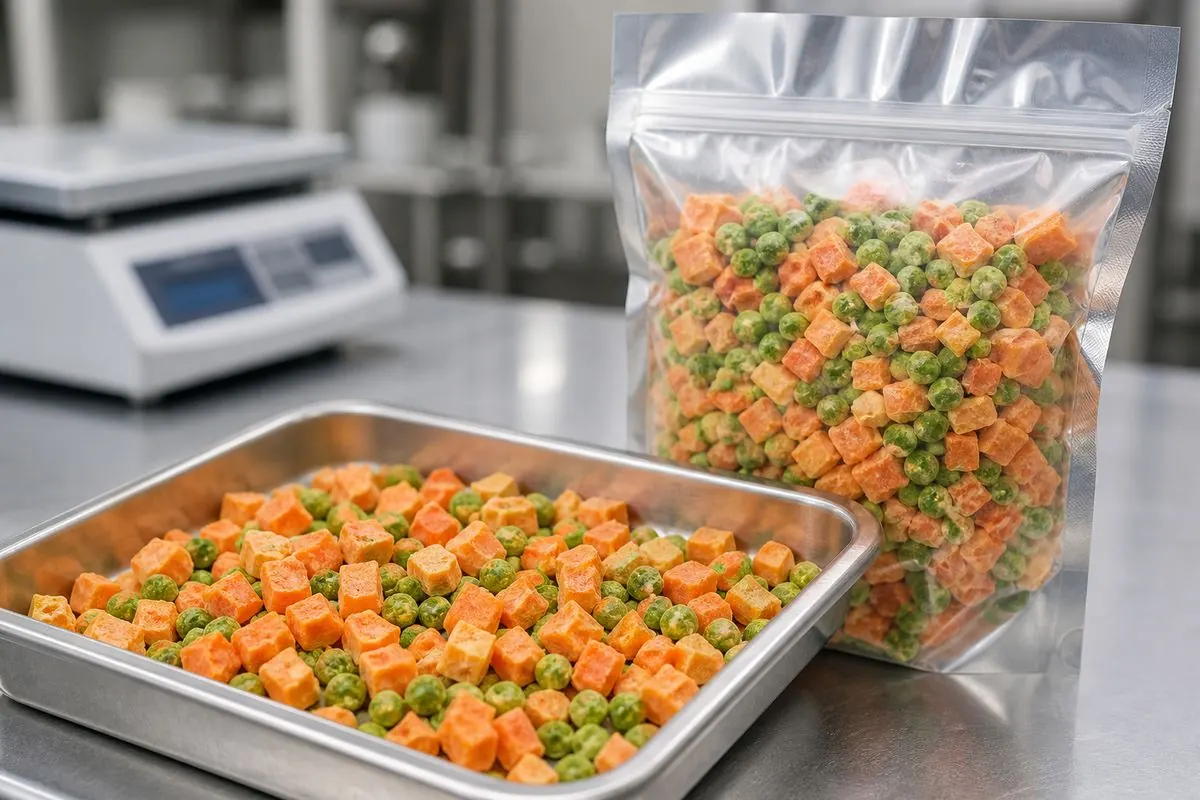
Country demand is shifting toward cleaner labels, tighter residue proof, and more private-label retail packs in US/EU/UK, while ASEAN and Latin American volume corridors continue to absorb competitive air-dried mixed and root vegetable programmes. Freeze-dried and organic niches grow from a smaller base — see the specialty post for margin playbooks.
Exporters who maintain living demand matrices — updated quarterly from rejected trials and won POs — will outpace catalogue sellers as buyer portals reject incomplete SKU data.
Challenges & Solutions
- Challenge: one sample for all countries — Solution: matrix kits per corridor
- Challenge: promising freeze-dried from air-dried lines — Solution: capability audit first
- Challenge: MRL surprise rejections in EU — Solution: destination residue panel before FCL
- Challenge: Japan mesh fails — Solution: sieve validation and retain photos
- Challenge: Halal missing for UAE — Solution: certify before outreach
Executing country demand programmes means fighting generic sampling, wrong drying-method promises, and certification blind spots.
Compliance Checklist
Checklist
Compliance Notes
Sources
- APEDA — Processed Vegetables (DGCIS FY2024-25 volume/value and destination notes)
- APEDA — RCMC / agri-processed export facilitation
- DGFT — Import Export Code (IEC) and foreign trade procedures
- FSSAI — food business licensing and product standards
- CBIC ICEGATE / Indian Customs — ITC-HS classification and shipping bills (confirm with CHA)
- India ITC-HS 0712 schedule (EximGuru reference) — 07122000 / 07129010–07129090 lines
- WITS / UN Comtrade — India HS 071290 exports by partner (2024)
- TrendEconomy — India HS 0712 exports/imports time series (2023 value and destination structure)
- OEC — India dried vegetables (HS 0712) bilateral profile (directional 2024 cues)
- ITC Trade Map — HS 0712 / 071290 partner verification
- USITC Harmonized Tariff Schedule — live US duty rates for HTS 0712
- EU TARIC — EU CN 0712 duties and measures
- FDA Prior Notice (food imports) — US food entry requirements
- Regulation (EC) No 396/2005 — EU pesticide MRLs
- Regulation (EU) 2018/848 — EU organic production and labelling
Trade figures, HS lines, and compliance notes in this article are directional planning aids. Re-verify against the primary sources below before quoting buyers or filing export documents.
Country demand profiles reflect commercial ordering patterns — validate vegetable type, cut, and drying-method fit with destination buyers before scaling sample kits.
Conclusion
Mapping the most demanded dried vegetables by country turns India’s HS 0712 capacity into corridor-specific programmes — carrot and potato for US soup plants, tomato powder and cabbage for EU, mesh-true powders for Japan, mixed foodservice packs for UAE, and competitive mixed/root vegetable lots for Brazil and ASEAN. Demand matrices beat generic catalogues.
Altus Exports builds country-matched dehydrate sample kits and merchant export execution — contact us. Explore global sourcing partner support and the agriculture & food products industry page.
Continue with Best Countries for Indian Dried Vegetable Exports, Top Dried Vegetable Products Exported from India, Organic, Freeze-Dried & Premium Opportunities, and Find International Buyers for Dried Vegetables.