
APEDA Registration Benefits for Dried Vegetable Exporters
By Saurabh Mittal, Founder, Altus Exports
Why APEDA RCMC registration matters for dried vegetable exporters under HS 0712 — application steps, membership benefits, pavilion and fair access, buyer credibility, and how council credentials fit alongside IEC and FSSAI for dehydrate programmes.
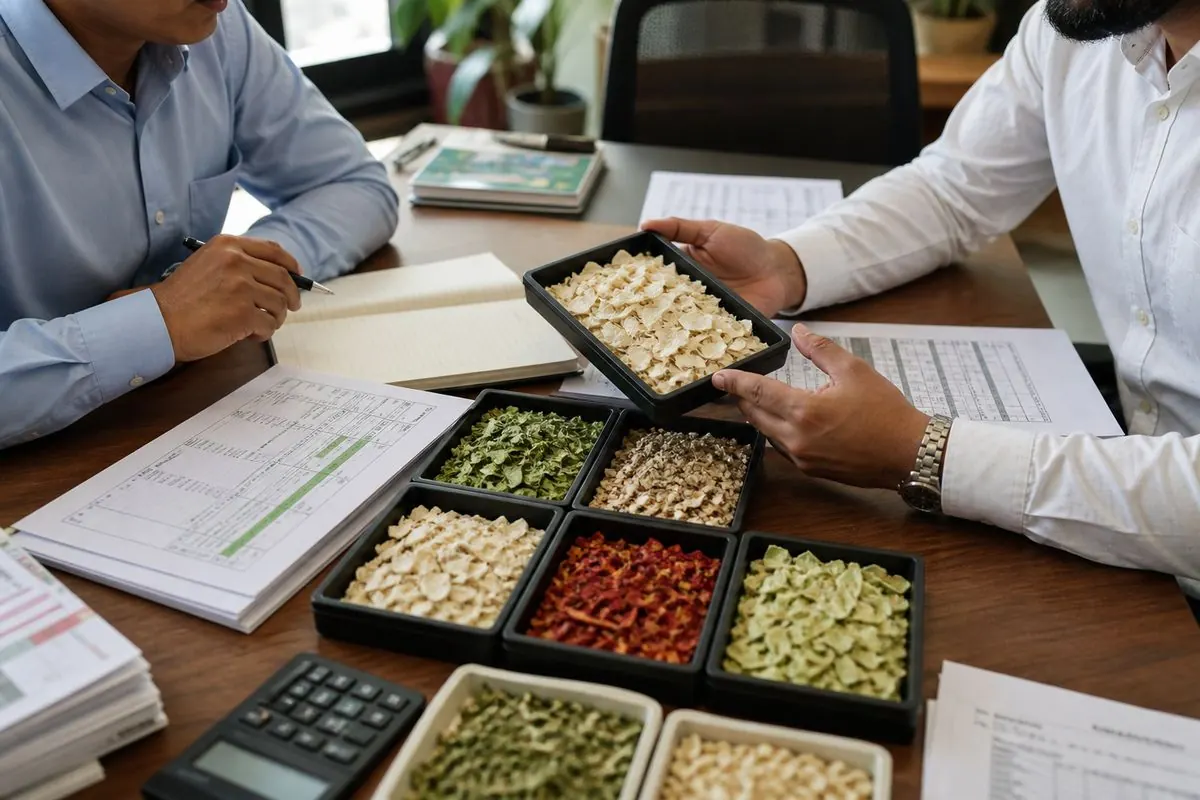
APEDA registration for dried vegetable exporters is the institutional credential that separates organised dehydrate shippers from ad-hoc traders in the eyes of international buyers — and in practice, it unlocks Registration-cum-Membership Certificate (RCMC) proof, APEDA-backed buyer-seller meets, pavilion access at major food fairs, market-development assistance eligibility, and a directory presence that sophisticated importers check during supplier shortlisting. For dried and dehydrated vegetables under HS 0712 — especially HS 0712.90 other vegetables and mixtures such as carrot, potato, tomato, cabbage, cauliflower, beans, peas, spinach, beetroot, sweet corn, and mixed blends — the APEDA RCMC sits alongside the Import Export Code (IEC) and an active FSSAI licence as the baseline export-readiness stack that ingredient houses, soup-mix manufacturers, snack brands, and foodservice distributors expect before issuing purchase orders.
This guide explains what APEDA membership actually delivers for dried vegetable exporters: buyer credibility during vendor KYC, access to APEDA pavilions and agri-export promotion events, RCMC evidence for shipping-bill continuity on scheduled products, scheme eligibility that supports quality and market development, and how council membership fits alongside IEC and FSSAI for a compliant export operating system. India exported directionally about US$288 million under HS 0712 in 2024 and ranked roughly second among global dried-vegetable exporters that year — organised credentials matter when buyers can choose among multiple Indian dehydrator belts and merchant exporters.
For the end-to-end export process that APEDA registration supports, see How to Export Dried Vegetables from India. For the full shipment document pack that sits beside RCMC proof, see Dried Vegetable Export Documentation Checklist. For importer-side verification of Gujarat–Maharashtra dehydrators, see Source Dried Vegetables Directly from India. Altus Exports operates as a registered merchant exporter coordinating multi-SKU dehydrate programmes for Indian processors and international buyers.
Key Takeaways
Summary Box
Executive Summary
Summary Box
- Scan the coloured Summary / Stats / Tips boxes first — then open the tables.
- Decide vegetable SKU + cut + drying method + destination before negotiating FOB.
- Use the jump nav on mobile: Takeaways → Exports → Pricing → Pack → Certs → FAQ.
APEDA RCMC is the council credential dried vegetable exporters use alongside IEC and FSSAI to pass international ingredient-house KYC, access APEDA-backed fairs and buyer-seller meets, and signal sector registration for HS 0712 dehydrate programmes spanning carrot, potato, tomato, cabbage, cauliflower, beans, peas, spinach, beetroot, sweet corn, and mixed vegetable blends.
APEDA supports export promotion, market development assistance eligibility, and quality-infrastructure linkage for scheduled agricultural and processed food products — it does not certify lot moisture or microbiology; the dehydrator or third-party COA remains the quality proof on every shipment.
This guide maps application steps, renewal discipline, fair access, credibility use in buyer onboarding, and how council membership fits the dried vegetable export operating system without duplicating the full documentation checklist or organic / freeze-dried specialty pathways.
Market Size & Industry Overview
Key Statistics
- Clusters: Gujarat Mahuva–Bhavnagar–Sihor; Maharashtra Nashik adjacency; Mundra / Nhava Sheva logistics.
- Council stack: APEDA RCMC + IEC + FSSAI (not Spices Board / Chemexcil for this category).
- Trade cue: India HS 0712 ~US$211.3M (2023) / OEC ~US$288M (2024 directional); HS 071290 US$58.626M / 45,547.7 MT (WITS 2024).
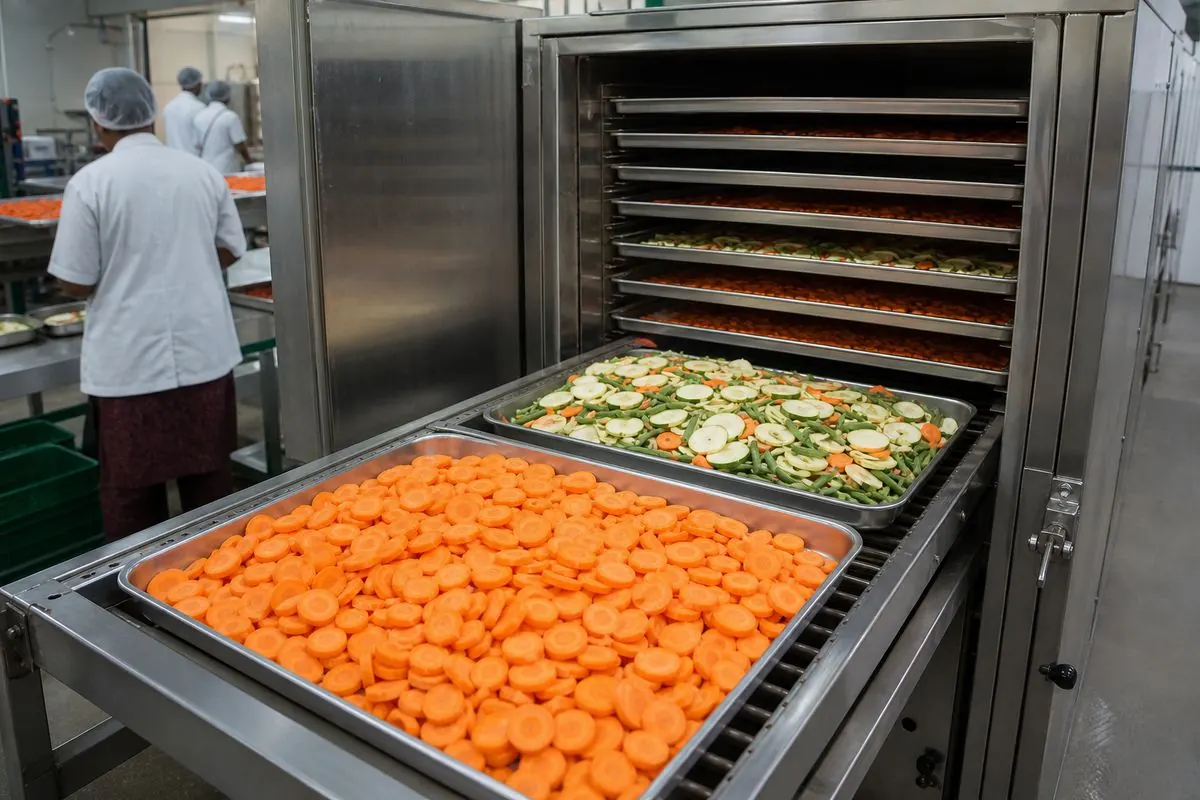
APEDA RCMC is the industry credential layer sitting on top of Gujarat–Maharashtra physical dehydrate supply — organised buyers often check council status before they check your FOB USD/kg. Pavilion access and market-development support amplify reach only when membership stays current through peak dehydrate shipping windows.
Global demand for dried vegetables is driven by soup mixes, seasonings, ready meals, snacks, selective pet-food adjacency, and foodservice. India’s verified 2023 HS 0712 value (~US$211.3M, ~79% onions) and OEC directional 2024 cue (~US$288M) among leading exporters make institutional credentials a competitive filter rather than optional stationery.
The commercial filter for dried vegetable programmes is institutional readiness: FSSAI-licensed dehydrators and packing sites, APEDA-registered exporters, lot-level moisture / micro / residue discipline, and moisture-barrier packing that survives tropical-to-temperate transit. APEDA registration is one of the clearest signals buyers use to distinguish export-ready capacity from informal trading desks.
Export Statistics
Key Statistics
- India HS 0712: ~US$211.3M (2023 verified); OEC ~US$288M (2024 directional) among leading exporters.
- HS 071290 India 2024 (WITS): US$58.626M / 45,547.7 MT — USA, Indonesia, Nepal, Germany, Malaysia lead.
- File other vegetables / mixtures under 0712.90 family — CHA confirm eight-digit ITC-HS.
- Broader APEDA “Processed Vegetables” FY2024-25 (~614,979 MT / ~US$897M) includes preserved lines — label clearly and do not equate to HS 0712 alone.
APEDA members exporting dried vegetables should align RCMC product scope with the correct HS 0712 filing family — council records support KYC; a licensed CHA confirms the shipping-bill line for each SKU and mix. Separate onion (0712.20) and garlic-heavy India lines from “other dried vegetables” when reading trade data so RCMC storytelling matches what you actually ship.
Directional top destinations for Indian HS 0712 value in 2024 commonly include Germany, Brazil, USA, Indonesia, and the UK, with UAE, Japan, Netherlands, Malaysia, and others recurring by SKU mix. Council-backed fair introductions can shorten sales cycles when your sample kit matches corridor demand.
India dried vegetable export profile (HS 0712) — directional; re-verify on quote date
Swipe →
Data table — swipe horizontally on small screens
| Metric | Directional Estimate | Notes / Source cue |
|---|---|---|
| Primary processing belts | Gujarat Mahuva–Bhavnagar–Sihor; Maharashtra Nashik adjacency; MP/Rajasthan support | Commercial dehydration + merchant consolidation for multi-SKU programmes |
| Applicable HS heading | HS 0712 (dried vegetables, whole/cut/sliced/broken/powder, not further prepared) | Confirm eight-digit ITC-HS with CHA per SKU; onion sibling 0712.20; other 0712.90 |
| Governing trade council | APEDA (Agricultural and Processed Food Products Export Development Authority) | RCMC + IEC; FSSAI for food-safety premises — not Spices Board for this category |
| India HS 0712 exports 2024 | ~US$211.3M (2023) / ~US$288M OEC 2024 dir. | OEC / trade-database cue — re-verify via DGCI&S / ITC Trade Map before quoting |
| India global rank 2024 | ~2nd largest exporter (directional) | Among dried-vegetable exporters that year — directional, not a statutory share |
| HS 071290 India 2024 | US$58.626M / 45,547.7 MT (directional) | WITS/Comtrade cue for dried vegetables nes — USA, Indonesia, Nepal, Germany, Malaysia often lead |
| Leading destinations (HS 0712 value) | Germany, Brazil, USA, Indonesia, UK (directional) | Partner ranks shift by SKU year — separate onion/garlic lines when reading data |
| Dominant export formats | Air-dried flakes/kibbled/granules/powder; drum-dried; freeze-dried specialty | Carrot, potato, tomato, cabbage, cauliflower, beans, peas, spinach, beetroot, sweet corn, mixed |
Import Statistics
Key Statistics
- Value corridors: Germany · Brazil · USA · Indonesia · UK on HS 0712 cues.
- Premium / tight-spec corridors: USA · EU · UK · Japan · Canada — micro + MRL discipline.
- Halal / re-export adjacency: UAE and broader GCC food-ingredient programmes.
- ASEAN volume: Indonesia · Malaysia · Vietnam — verify live MFN/FTA rates on HS 0712.
Import corridors that meet APEDA pavilion and buyer-seller audiences — EU, USA, Brazil, ASEAN, GCC, and Japan — should shape which credentials and scheme stories you lead with in outreach. Council membership credibility compounds where destination importers already audit Indian agri-processed exporters routinely.
Rank destinations by freight corridor, duty burden, moisture / micro rules, and certification stack — not vanity destination lists. APEDA registration helps you show up as an organised exporter in those corridors; it does not replace destination-specific FDA prior notice, EU MRL discipline, or Japan positive-list readiness.
Import demand by destination — Indian dried vegetables (directional)
Swipe →
Data table — swipe horizontally on small screens
| Market | Directional Demand Profile | Primary Buyer Type |
|---|---|---|
| Germany / EU | Strong HS 0712 value demand; strict MRL and sulfite labelling discipline | Ingredient houses, soup-mix plants, retail private-label packers |
| Brazil | Major value destination for Indian HS 0712 — confirm ANVISA expectations with broker | Food processors, wholesale distributors, industrial seasoning plants |
| United States | Carrot, potato, tomato, mixed programmes; FDA prior notice / FSMA supplier controls | Soup/seasoning brands, snack formulators, foodservice distributors |
| Indonesia | Volume demand under HS 071290 partner cues; competitive FOB and reliable lead times | Repackers, food processors, wholesale distributors |
| United Kingdom | Micro and residue discipline common on food-ingredient imports | Ingredient distributors, ready-meal manufacturers, retail PL |
| Japan | Tighter mesh/color specs often on cabbage, spinach, and carrot powders | Seasoning houses, ready-meal plants, specialty ingredient buyers |
| United Arab Emirates | Foodservice and hypermarket adjacency; Halal documentation common | Wholesale distributors, re-export traders, private-label buyers |
| Malaysia / Nepal | Regional and land-corridor demand under HS 071290 partner cues | Wholesale traders, repackers, food processors |
APEDA Registration Scope for Dried Vegetable Product Categories
- Core SKUs: carrot, potato, tomato, cabbage, cauliflower, beans, peas, spinach, beetroot, sweet corn, mixed.
- Cuts: flakes, kibbled, granules, powder, slices — declare on invoice and COA.
- Methods: air-dried (volume), drum-dried (selected), freeze-dried (premium specialty — detail in specialty posts).
- HS planning: heading 0712; other/mixtures 0712.90 — CHA confirms eight-digit before shipping bill.
APEDA’s mandate covers scheduled agricultural and processed food products — dried / dehydrated vegetables under HS 0712 sit inside that agri-processed lane. When you apply for RCMC, declare product scope that matches what you will actually export: air-dried, drum-dried, and freeze-dried cuts such as flakes, kibbled, granules, powder, and slices across carrot, potato, tomato, cabbage, cauliflower, beans, peas, spinach, beetroot, sweet corn, and mixed blends.
Onion (HS 0712.20) and garlic (India lines often under garlic-specific 071290 splits) may appear in a mixed dehydrate basket. Keep RCMC storytelling honest: this cluster owns multi-SKU “other” dried vegetables; for onion- or garlic-led deep specs, link dehydrated onion and dehydrated garlic rather than diluting your dried-vegetable credential narrative.
APEDA membership credentials the exporter entity; it does not approve a specific dehydrator line or mesh band. Buyers still audit moisture %, water activity, ash, color, particle size, foreign matter, TPC / yeast-mold / Salmonella / E. coli, pesticide MRLs, and sulfite declarations on every lot.
Dried vegetable categories commonly declared under APEDA RCMC programmes
Swipe →
Data table — swipe horizontally on small screens
| Product family | Typical cuts | Drying method (common) | HS planning note |
|---|---|---|---|
| Dehydrated carrot | Flakes, cubes, powder | Air-dried; freeze-dried specialty | Usually 0712.90 family — CHA confirm |
| Dried potato | Flakes, granules, powder | Air-dried / drum-dried | India potato splits — confirm live ITC-HS |
| Tomato (dried) | Flakes, powder | Air-dried | Often higher FOB tier; confirm 0712.90 line |
| Cabbage / cauliflower | Flakes, kibbled, powder | Air-dried | EU/Japan mesh-color discipline common |
| Beans / peas | Flakes, kibbled | Air-dried; freeze-dried specialty | Soup-mix and ready-meal demand |
| Spinach / leafy powders | Powder, flakes | Air-dried; freeze-dried specialty | Japan positive-list / color specs |
| Beetroot / sweet corn | Flakes, granules, powder | Air-dried | Confirm eight-digit with CHA |
| Mixed dried vegetables | Blend of contracted cuts | Air-dried dominant | Invoice must list blend composition |
Manufacturing Overview
Export Tip
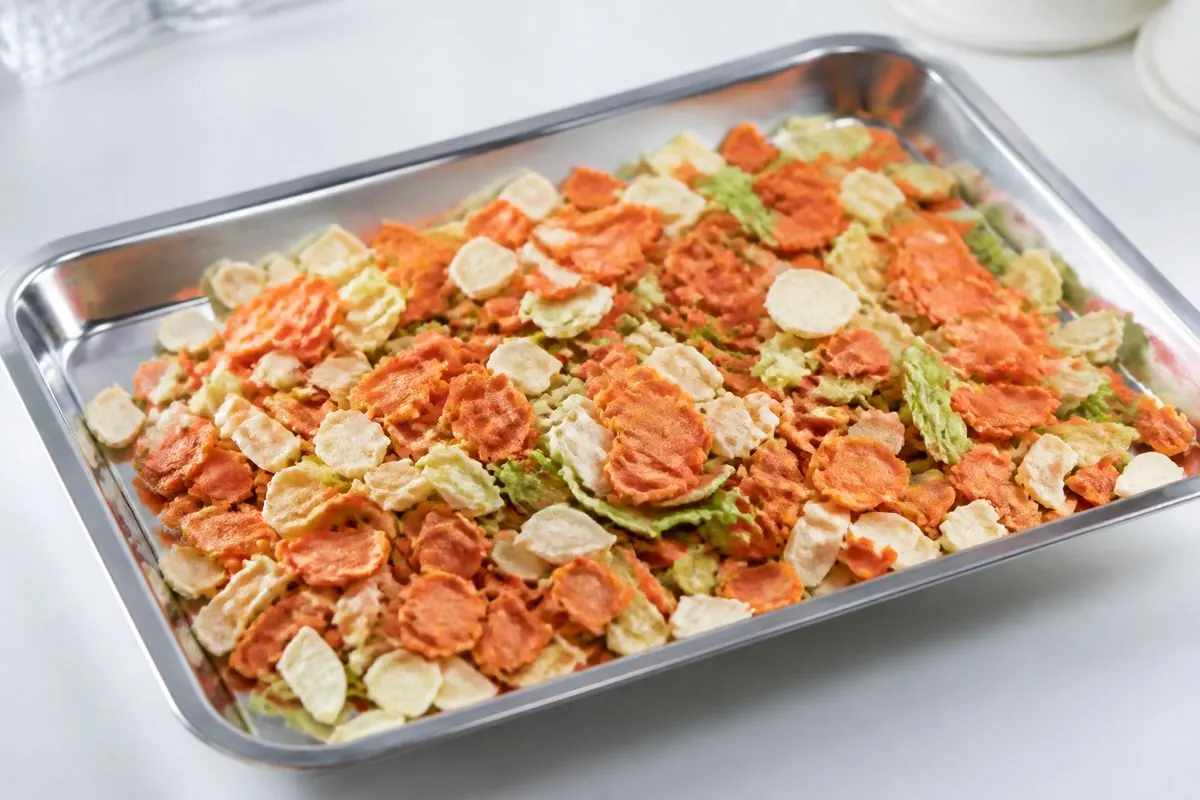
- Flow: vegetable intake → wash/prep → cut → dehydrate → mill/sieve → metal detect → pack → COA release.
- Moisture-barrier packing and dry warehousing protect hygroscopic powders and flakes before vessel cutoff.
- Retain samples and process logs for every export lot — RCMC does not substitute retain discipline.
- Private-label and custom blends need longer lead times than stock air-dried grades.
APEDA-registered exporters typically source from Gujarat dehydrators and Maharashtra consolidation points — RCMC credentials the export house, while dehydrator COA credentials the lot. Council membership does not inspect every kiln; buyers still audit moisture, micro, and residue on every dried vegetable shipment.
Pair RCMC with dehydrator visit or third-party audit when buyers require vendor approval beyond paperwork. Lot segregation between aromatic onion/garlic co-processing and mild vegetable SKUs matters unless the buyer ordered a mixed aromatic programme.
Export Process
Export Tip
APEDA registration is one gate in the export process — not the entire process. The practical sequence for dried vegetable exporters is: obtain IEC from DGFT → complete FSSAI licensing for manufacturing / packing sites → apply for APEDA RCMC with product scope covering HS 0712 dehydrates → lock buyer specs and samples → produce / pack with lot COA → file shipping bill with CHA on the correct ITC-HS line → ship under agreed Incoterms from Mundra or Nhava Sheva.
This post owns the APEDA application and benefits layer. For step-by-step Incoterms, lead times, and container overview, use the pillar process guide. For field-by-field commercial invoice, packing list, phyto, and COA reconciliation, use the documentation checklist.
Step 1 — IEC and legal entity readiness
Ensure IEC, GST, PAN, and bank AD code sit on the same legal entity name and address you will print on APEDA applications and commercial invoices. Discrepancies trigger buyer compliance queries during vendor master setup.
Step 2 — FSSAI premises and product readiness
Active FSSAI licensing for dehydrating / packing premises is baseline for food export. Buyers treat missing or mismatched FSSAI data as a red flag even when RCMC exists.
Step 3 — APEDA membership / RCMC application
File through the APEDA / DGFT-linked e-RCMC pathway with IEC, GST, FSSAI, bank details, and a product list covering dried vegetables under HS 0712. Confirm live fees and validity on apeda.gov.in before remitting. Keep digital RCMC PDFs ready for vendor portal uploads.
Step 4 — Commercial sample-to-FCL ladder
Council credentials accelerate KYC; they do not skip sampling. Stage 0.5–5 kg samples, then 100–500 kg or 1–5 MT trials, then wholesale / FCL once micro and moisture rhythm is proven.
Trade Statistics
Key Statistics
Trade statistics help APEDA members prioritise which corridors to pursue with pavilion samples and which SKUs to put on RCMC product lists. Use HS 0712 for category planning and HS 071290 for “other / nes” depth — always label figures as directional and re-verify via DGCI&S, APEDA AgriExchange, ITC Trade Map, or UN Comtrade before quoting buyers.
When presenting trade narratives in fair meetings, lead with verified HS 071290 partners (USA/Indonesia/Nepal/Germany/Malaysia) and note that HS 0712 totals are onion-heavy, then pivot quickly to your specific vegetable × cut × drying-method capability. Buyers remember SKU discipline more than national headlines.
Directional trade cues useful in APEDA buyer conversations
Swipe →
Data table — swipe horizontally on small screens
| Cue | Figure (directional) | How to use in KYC / fairs |
|---|---|---|
| India HS 0712 export value | ~US$211.3M (2023) / OEC ~US$288M (2024 dir.) | Onion-heavy total — not a promise of your 071290 capacity |
| India global rank 2024 | ~2nd exporter | Credibility opener; follow with plant/SKU proof |
| Top HS 0712 destinations | 0712: DE/BR/US (onion-heavy); 071290: US/ID/NP/DE/MY | Match sample kits to corridor, not vanity lists |
| HS 071290 value / volume 2024 | US$58.626M / 45,547.7 MT | Useful when discussing carrot/potato/tomato/mixed “other” lines |
| APEDA Processed Vegetables FY2024-25 | ~614,979 MT / ~US$897M | Broader basket — label clearly if cited |
| Primary Indian gateways | Mundra, Nhava Sheva | State load-port plan with Incoterm |
Import Data Analysis
- Volume ≠ margin: high-volume corridors may still need COA discipline.
- Credential-heavy corridors: USA, EU, UK, Japan, Canada — lead with RCMC + FSSAI + sample COA.
- Re-check partner ranks yearly; SKU mix shifts destination value.
- Never invent eight-digit HS maps from outdated slides — CHA confirms live ITC-HS.
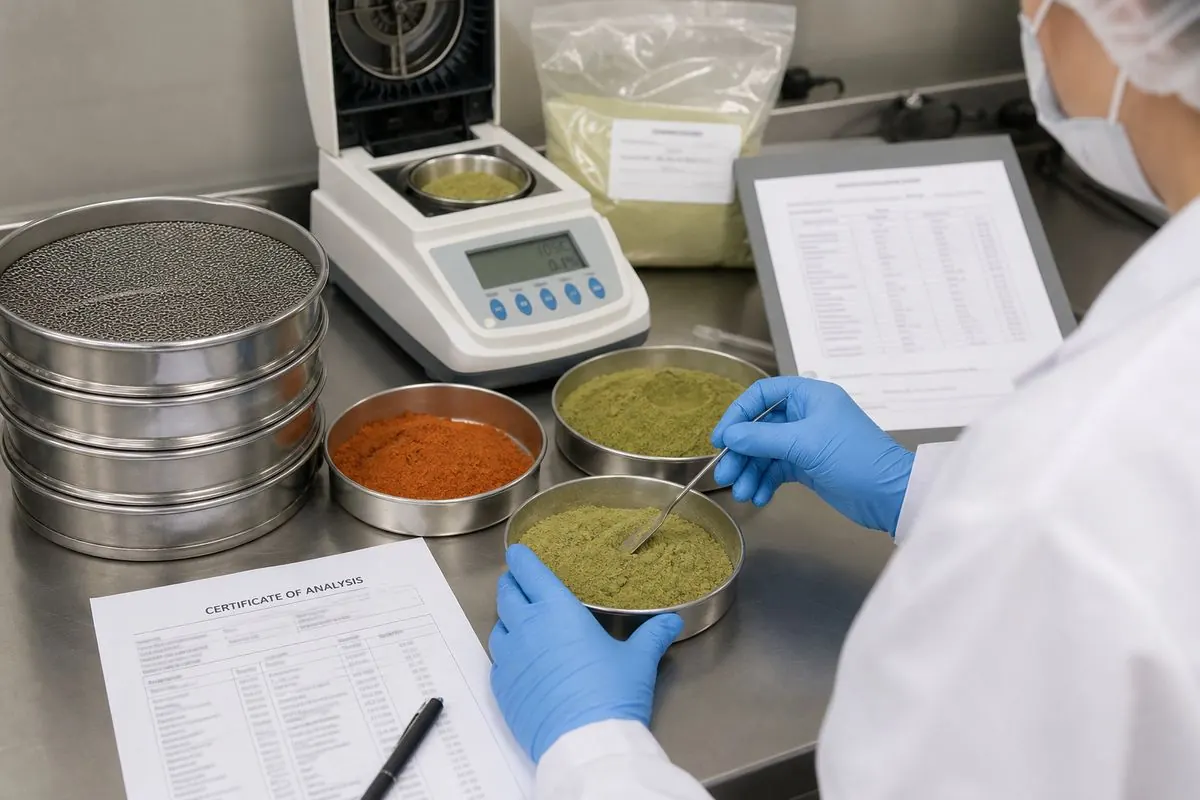
Import data analysis for APEDA-registered dried vegetable exporters should separate who imports volume from who demands tight credentials. Brazil and Indonesia may absorb competitive FOB programmes; USA, Germany, UK, and Japan typically demand deeper micro / MRL / documentation stacks where RCMC is table-stakes but never sufficient alone.
Use partner import rankings to schedule fair attendance and sample budgets — then validate with buyer RFQs. APEDA directories and buyer-seller meets are starting points, not finished account lists. For lead-generation tactics under HS 0712, see How to Find International Buyers for Dried Vegetables.
Pricing Analysis
Buyer Tip
- Quote FOB USD/kg with vegetable + cut + drying method + moisture + pack — never a stale absolute.
- Compare landed cost: FOB + freight + duty + retest + cert premium.
- Specialty premiums sit above commodity air-dried mixed lots.
- On mobile: swipe the pricing table; read tip boxes before negotiating.
APEDA members should quote dried vegetables FOB named Indian port USD/kg with explicit quote-date reference and document fees disclosed when they affect landed cost. Council buyers expect transparent pricing mechanics; RCMC does not justify opaque “all-in” quotes without SKU definition.
Commodity air-dried carrot, cabbage, and mixed programmes often sit mid-single-digit to low-teens USD/kg depending on cut and season; tomato powder and specialty cuts higher; freeze-dried and organic / private-label retail packs substantially higher. Prefer band language and verify on quote date — never publish stale absolute prices as current offers.
FOB USD/kg planning bands by dried vegetable tier — verify on quote date
Swipe →
Data table — swipe horizontally on small screens
| SKU / Tier | Directional FOB USD/kg | Notes |
|---|---|---|
| Commodity air-dried carrot / cabbage / mixed flakes | Mid-single-digit to low-teens — verify on quote date | Cut, season, and moisture band drive spread |
| Potato flakes / granules | Band — verify on quote date | Density and mash process affect economics |
| Tomato powder / specialty tomato cuts | Higher than commodity mixed — verify on quote date | Color and micro discipline often tighter |
| Spinach / leafy powders | Band — verify on quote date | Japan/EU color and residue specs may lift cost |
| Freeze-dried carrot / peas / specialty | Substantially higher — verify on quote date | Premium process; longer lead times |
| Organic / private-label retail packs | Substantially higher — verify on quote date | Certification + retail conversion cost |
MOQ Analysis
Buyer Tip
- Sample → approve moisture / micro / mesh before commercial tonnage.
- Trial (100–500 kg or 1–5 MT) → prove dehydrator + pack rhythm.
- First FCL (~10–16 MT / 20ft indicative) → only after trial acceptance.
- Programme contracts → monthly FCL once COA drift is controlled.
APEDA membership does not change physical MOQ maths — still stage sample → trial → FCL even when fair buyers ask for “container ready” language. Use council credibility to win the trial PO faster, not to skip QC gates.
Typical practice: samples 0.5–5 kg; trial 100–500 kg or 1–5 MT; wholesale 5–20+ MT; 20ft FCL indicative ~10–16 MT depending on bag/carton density and SKU mix.
MOQ ladder for dried vegetable export programmes
Swipe →
Data table — swipe horizontally on small screens
| Stage | Typical MOQ | Purpose |
|---|---|---|
| Lab / buyer sample | 0.5–5 kg | Cut, color, moisture, micro screening |
| Trial order | 100–500 kg or 1–5 MT | Buyer QC, packaging validation, first clearance |
| Wholesale programme | 5–20+ MT | Distributor and processor programmes |
| 20ft FCL | Indicative ~10–16 MT | Confirm stow by powder vs flake density and pack format |
| 40ft HC FCL | Indicative ~20–26 MT | Confirm payload and axle limits with forwarder |
Packaging Standards
Export Tip
- Wholesale: 10 / 20 / 25 kg bags or cartons + moisture barrier.
- Premium powders: N2 flush or vacuum as contracted.
- Retail PL: 50 g – 1 kg pouches with lot marks.
- Mark: lot · product · net · origin · FSSAI — must match packing list + COA.
For APEDA-registered dried vegetable programmes, standard export packs remain 10 / 20 / 25 kg food-grade bags or cartons with moisture-barrier / inner liner; nitrogen flush or vacuum for premium powders; retail 50 g–1 kg pouches for private-label. Lot marks must match COA and packing list before CHA filing.
Avoid scent / cross-contamination with strong aromatics (onion / garlic) unless the buyer ordered a mixed aromatic programme. APEDA does not design stuffing plans, but buyers associate registered exporters with disciplined packing and documentation.
Pack formats for dried vegetable export
Swipe →
Data table — swipe horizontally on small screens
| Format | Typical Configuration | Use Case | Key Requirement |
|---|---|---|---|
| 10 kg bags / cartons | Food-grade with moisture-barrier liner | Distributor and foodservice programmes | Lot ID, product name, net weight, origin |
| 20 kg bags / cartons | Food-grade with moisture-barrier liner | Standard wholesale export | Same marking discipline as 10 kg |
| 25 kg woven PP/HDPE + liner | Inner food-grade liner | Bulk wholesale cost-sensitive corridors | Confirm buyer handling capability |
| N2 / vacuum powder packs | Barrier film with flush or vacuum | Premium tomato / spinach / specialty powders | Seal integrity and oxygen control |
| Retail 50 g – 1 kg | Private-label pouches | Hypermarket and brand programmes | Barcode, allergen, best-before as contracted |
| Moisture protection SOP | Dry warehouse + desiccant if humid transit | All ocean shipments | Prevent condensation damage |
Container Loading Details
Export Tip
- Indicative payload: ~10–16 MT (20ft) / ~20–26 MT (40ft HC).
- Confirm powder vs flake density before promising MT.
- Photograph stuffing + seal numbers.
- Mixed-SKU stuffing needs segregation plan on packing list.
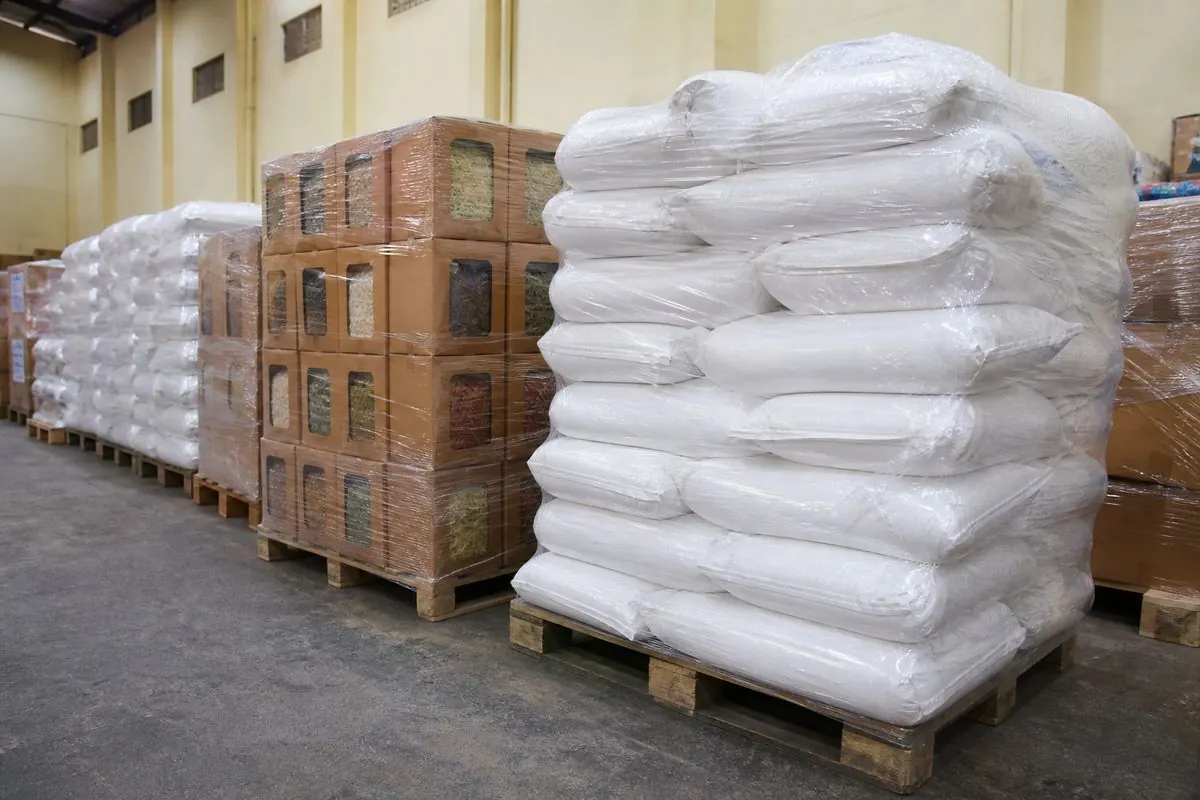
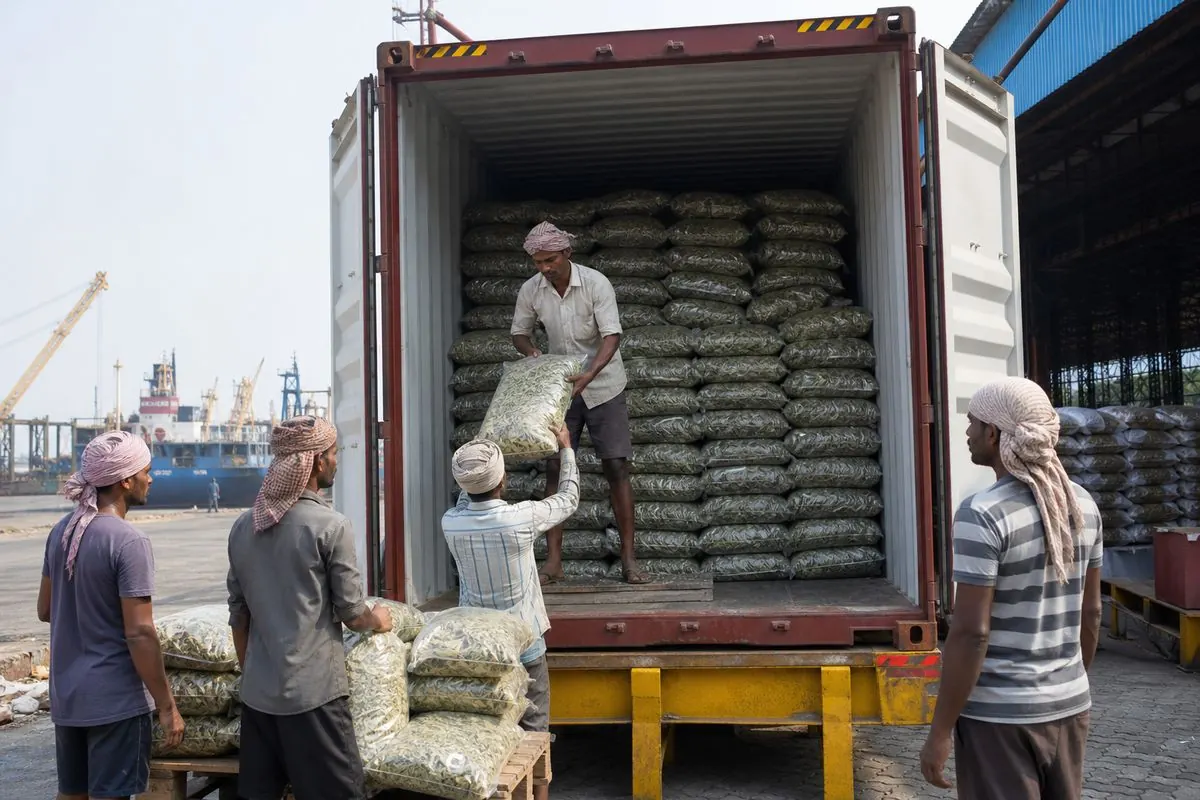
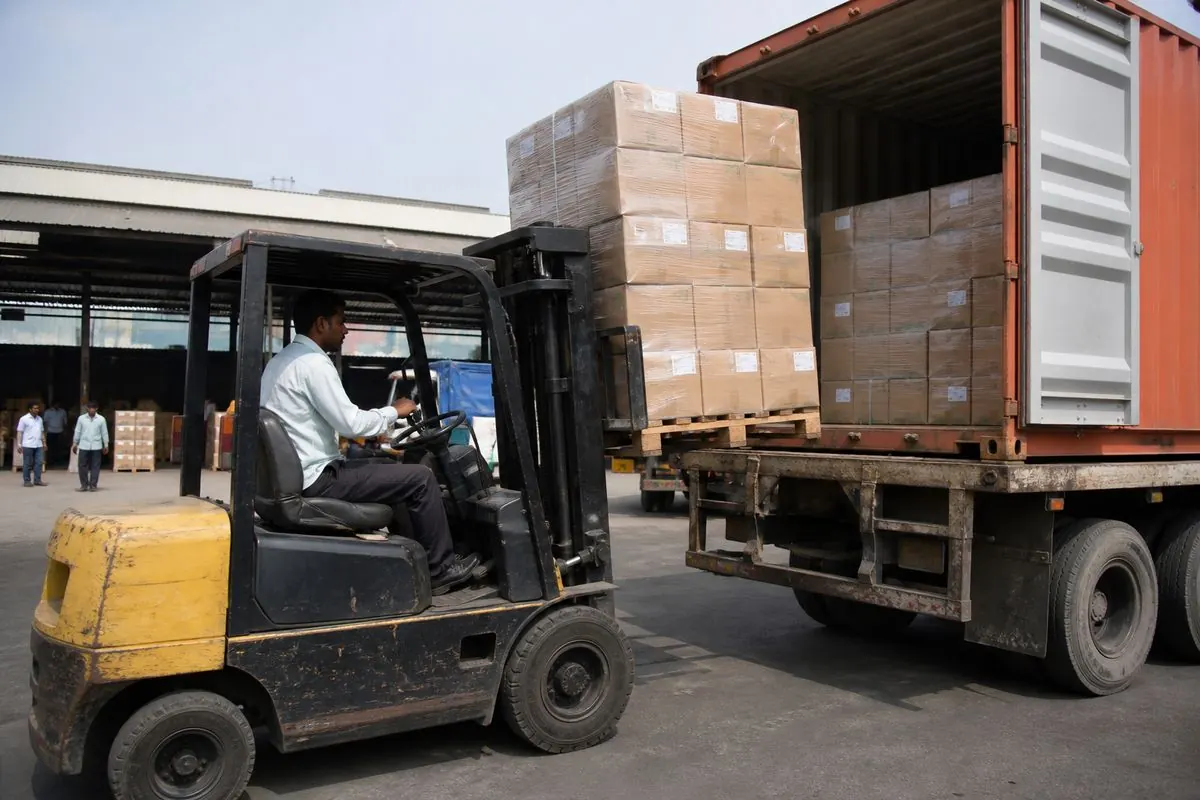
Dried vegetable cargo density varies sharply between flakes and fine powders. Indicative commercial practice is ~10–16 MT per 20ft and ~20–26 MT per 40ft HC in 10/20/25 kg bags or cartons — forwarder stow verification is required before promising capacity to pavilion buyers.
Photograph stuffing and seal numbers for moisture-claim defense. Protect against humid ocean legs with liner discipline, palletisation where specified, and desiccant SOPs.
Container loading guidance for dried vegetables (indicative)
Swipe →
Data table — swipe horizontally on small screens
| Container Type | Loading Consideration | Typical Use |
|---|---|---|
| 20-foot FCL | Indicative ~10–16 MT net — varies with SKU density and pack | Trial and mid-volume shipments |
| 40-foot HC FCL | Indicative ~20–26 MT net — confirm payload limits | Established distributor programmes |
| LCL | Suitable for 100 kg – 5 MT trial parcels | First trials and lab-scale evaluations |
| Palletisation | Buyer specifies ISPM-15 wood or plastic pallets | Retail cartons and foodservice bags |
| Humidity control | Liners, dry staging, desiccant SOP | Monsoon stuffing and equatorial transit |
| Mixed SKU | Segregate aromatics unless contracted as mix | Multi-vegetable FCL programmes |
Shipping Methods
Export Tip
- Samples: air / express commonly within sample lead-time window
- Trial LCL: after production + document pack ready
- Stock FCL: 2–4 weeks door-to-port by corridor when inventory exists
- Incoterms: EXW, FOB Mundra/Nhava Sheva, CFR/CIF; DDP selective
Ocean FCL / LCL from Mundra or Nhava Sheva is the default for commercial dried vegetable tonnage; air freight is reserved for urgent lab samples and small premium retail-pack consignments where lead time trumps freight cost.
Typical lead times: samples 7–14 days; stock air-dried grades 2–4 weeks; custom cut / mixed blend / private-label 3–6 weeks; freeze-dried / organic certified lots 4–8+ weeks. Incoterms commonly used: EXW plant/warehouse, FOB Mundra/Nhava Sheva, CFR/CIF; DDP selective for mature retail programmes.
Certifications
Compliance Notes
- Baseline: IEC + APEDA RCMC + FSSAI.
- Universal lot docs: COA (moisture, micro, mesh, residues as contracted).
- Premium layers: Halal · Kosher · organic (NPOP/USDA/EU) · plant FSMS (ISO 22000 / HACCP / BRCGS).
- Expired certificates fail audit — renew before peak shipping windows.
APEDA RCMC, IEC, and FSSAI are baseline for dried vegetable exporters; lot COA is universal; MRL, microbiology, Halal, Kosher, and organic layers apply by buyer audit stack. Organic NPOP pathways interact with APEDA administration — detailed organic / freeze-dried playbooks belong in the specialty opportunities post, not as a substitute for general RCMC membership guidance here.
Certifications & documents for dried vegetable export (APEDA context)
Swipe →
Data table — swipe horizontally on small screens
| Certification / Document | Purpose | Relevant For |
|---|---|---|
| APEDA RCMC | Council membership and recognition for scheduled agri-processed exports | All commercial dried vegetable export programmes from India |
| IEC | DGFT export identifier on shipping bills | Every commercial export shipment |
| FSSAI licence | Food-safety compliance for manufacturing / packing site | Compulsory for food business operators handling dehydrates |
| Lot Certificate of Analysis (COA) | Moisture, micro, mesh, ash, residues, sulfites as contracted | All commercial shipments |
| ISO 22000 / HACCP / BRCGS | Food-safety management credibility at supplier site | Ingredient houses and retail PL with vendor audits |
| Phytosanitary / health certificate | Plant-health / health attestation where required | Destinations that require NPPO / health docs |
| Halal / Kosher | Religious compliance channels | GCC, Malaysia, and faith-aligned retail programmes |
| Organic (NPOP / USDA / EU) | Certified organic chain of custody | Organic dried vegetable programmes — confirm scope |
| FDA prior notice (US) | US food import advance notice | Shipments to the United States |
Buyer Requirements
Buyer Requirements
- Written spec before FOB: SKU · cut · method · moisture · mesh · micro · pack.
- Sample + independent lab before scaling to FCL.
- Verify dehydrator flow — not brochure claims.
- Agree payment, moisture claim windows, and rejection terms in writing.
International dried vegetable buyers — ingredient houses, soup-mix and seasoning manufacturers, snack brands, retail private-label teams, and foodservice distributors — request samples, a written specification (vegetable, cut, drying method, moisture, mesh, micro, MRL schedule, sulfite status), lot COA, APEDA / FSSAI / IEC proof, and FOB pricing with quote date.
Premium US, UK, EU, Japan, and Canada programmes add residue reports, treatment declarations (prefer steam / validated kill-step where required; avoid undeclared EtO), and plant food-safety references where the channel requires them. Council-aware buyers check live RCMC status and fair participation history during vendor KYC.
Country-wise Opportunities
Market Snapshot
- Lead credential story in USA · Germany · UK · Japan · Canada.
- Pair competitive FOB with reliable docs in Brazil · Indonesia · Malaysia.
- GCC: Halal-ready packs + RCMC in vendor file.
- Re-rank yearly — HS 0712 partner mix shifts with SKU.
APEDA market promotion and pavilion calendars concentrate buyers from EU, North America, Latin America, ASEAN, GCC, and Japan — use fair access to open doors, then convert with SKU-matched samples. Country opportunity below is framed for credential and fair strategy, not a full destination-ranking methodology (see Best Countries for Indian Dried Vegetable Exports).
Country opportunity profile for APEDA-registered dried vegetable exporters (directional)
Swipe →
Data table — swipe horizontally on small screens
| Country | Demand Profile | Credential Focus | Opportunity Note |
|---|---|---|---|
| Germany / EU | High-value HS 0712 imports; soup and ready-meal ingredients | RCMC + MRL + sulfite labelling discipline | Pavilion conversations convert when mesh/color samples match |
| Brazil | Major value destination for Indian HS 0712 | RCMC + broker-ready ANVISA expectations | Volume potential with disciplined docs |
| United States | Carrot, potato, tomato, mixed programmes | RCMC + FDA prior notice readiness + FSMA supplier controls | Premium margins for micro-disciplined lots |
| Indonesia | Strong HS 071290 partner cue | RCMC + competitive FOB + lead-time reliability | Useful diversification from EU/US cycles |
| United Kingdom | Food-ingredient micro/residue discipline | RCMC + robust COA pack | Strong for organised exporters with audit trail |
| Japan | Tight mesh/color on cabbage, spinach, carrot powders | RCMC + positive-list residue readiness | Specialty powder programmes reward discipline |
| UAE | Foodservice and re-export adjacency | RCMC + Halal where contracted | Gateway narrative for GCC programmes |
| Malaysia / Canada / Australia | Recurring ingredient demand | RCMC + destination labelling readiness | Steady programmes once KYC clears |
Sourcing Checklist
Checklist
Buyer Checklist
Exporter Checklist
Common Buyer Mistakes
Common Mistakes Box
Future Market Trends
Key Statistics
- Digital vendor portals increase demand for current RCMC PDFs and consistent legal names.
- Multi-SKU dehydrate baskets (carrot + potato + tomato + greens) reward exporters with broad Gujarat capacity.
- Specialty freeze-dried / organic growth continues — membership still starts with general APEDA RCMC.
- Fair ROI improves when sample kits are corridor-specific, not catalogue dumps.
APEDA-linked market development and pavilion programmes continue to matter as dried vegetable buyers digitalise vendor onboarding and demand machine-readable COA packs alongside council credentials. Clean-label soup, ready-meal, and snack reformulation keep multi-SKU dehydrate demand structurally supported.
Expect tighter residue and ethylene-oxide scrutiny in EU channels, more FDA/FSMA-aligned supplier questionnaires in the US, and rising interest in private-label retail packs — all of which raise the value of organised APEDA-registered exporters versus unstructured traders.
Challenges & Solutions
- Challenge: lapsed RCMC — Solution: calendar renewal 60 days before expiry
- Challenge: council confused with COA — Solution: separate membership proof from lot lab results
- Challenge: wrong council attempted — Solution: APEDA for HS 0712 dried vegetables
- Challenge: fair meetings without SKU match — Solution: corridor-specific sample kits
- Challenge: legal-name mismatch across IEC/FSSAI/APEDA — Solution: reconcile after any restructure immediately
Scaling APEDA-registered dried vegetable export involves renewal discipline, name alignment across IEC/FSSAI/RCMC, and clear separation between council credentials and lot quality proof.
Compliance Checklist
Checklist
Compliance Notes
Sources
- APEDA — Processed Vegetables (DGCIS FY2024-25 volume/value and destination notes)
- APEDA — RCMC / agri-processed export facilitation
- DGFT — Import Export Code (IEC) and foreign trade procedures
- FSSAI — food business licensing and product standards
- CBIC ICEGATE / Indian Customs — ITC-HS classification and shipping bills (confirm with CHA)
- India ITC-HS 0712 schedule (EximGuru reference) — 07122000 / 07129010–07129090 lines
- WITS / UN Comtrade — India HS 071290 exports by partner (2024)
- TrendEconomy — India HS 0712 exports/imports time series (2023 value and destination structure)
- OEC — India dried vegetables (HS 0712) bilateral profile (directional 2024 cues)
- ITC Trade Map — HS 0712 / 071290 partner verification
- USITC Harmonized Tariff Schedule — live US duty rates for HTS 0712
- EU TARIC — EU CN 0712 duties and measures
- FDA Prior Notice (food imports) — US food entry requirements
- Regulation (EC) No 396/2005 — EU pesticide MRLs
- Regulation (EU) 2018/848 — EU organic production and labelling
Trade figures, HS lines, and compliance notes in this article are directional planning aids. Re-verify against the primary sources below before quoting buyers or filing export documents.
APEDA RCMC requirements and pavilion calendars update — confirm current APEDA circulars before membership or renewal applications.
Conclusion
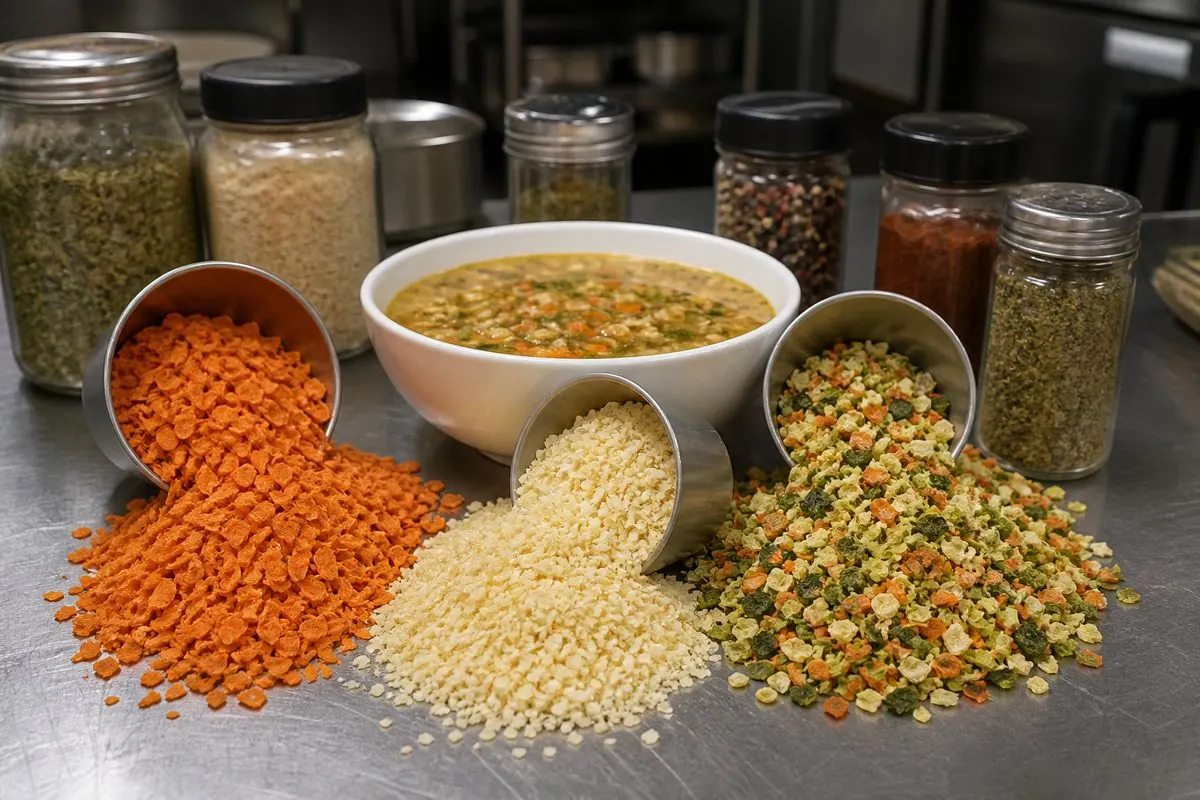
APEDA registration for dried vegetable exporters unlocks RCMC credibility, fair access, and organised buyer due diligence under HS 0712 — renew before season and pair with lot COA on every shipment. Council membership is necessary for modern ingredient KYC; it is never a substitute for dehydrator quality control.
Altus Exports operates APEDA- and FSSAI-aligned merchant export programmes for multi-SKU dried vegetables — contact us for RCMC-ready vendor packs and FCL execution. See our agriculture & food products industry page and merchant exporter service.
Continue with How to Export Dried Vegetables from India, Trade Shows and B2B Marketplaces for Dried Vegetable Exporters, and Dried Vegetable Export Documentation Checklist.