
Source Dried Vegetables Directly from India: Importer Playbook
By Saurabh Mittal, Founder, Altus Exports
International importer playbook to source dried vegetables from India — RFQ design, Gujarat Mahuva–Bhavnagar–Sihor dehydrator verification, sampling and COA protocols, QC gates, and landed-cost decision flow under HS 0712 / 0712.90 without unnecessary intermediary risk.
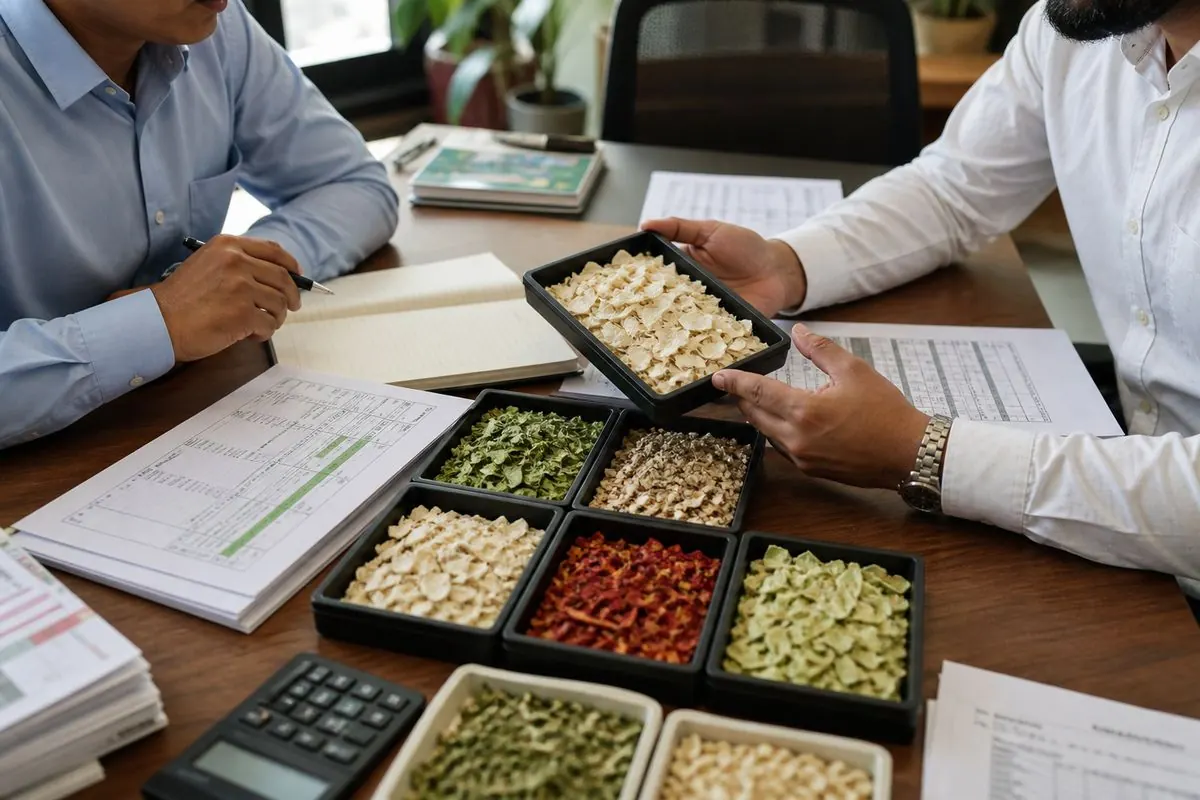
To source dried vegetables from India successfully, treat supplier verification as a structured importer process — not a marketplace price race. India's commercial dehydration capacity clusters in the Gujarat Mahuva–Bhavnagar–Sihor belt, with Maharashtra Nashik adjacency for raw material and multi-SKU consolidation, supporting belts in Madhya Pradesh and Rajasthan, and export stuffing through Mundra and Nhava Sheva. Buyers who define vegetable type, cut, drying method, moisture, microbiology, and pack format before outreach extract better value than those who negotiate undefined “dehydrated vegetables” on FOB alone.
This importer playbook walks through the direct-sourcing sequence under HS 0712 (especially 0712.90 other vegetables and mixtures): writing an RFQ that dehydrators can price honestly, auditing Gujarat plants, running sample and COA protocols, commissioning independent QC, modelling landed cost, and scaling from 0.5–5 kg samples through 100–500 kg or 1–5 MT trials to wholesale FCL. Trade context — HS 0712 ~US$211.3M (2023) / OEC ~US$288M (2024 dir.) is onion-heavy; for this playbook prefer 071290 partners USA, Indonesia, Nepal, Germany, Malaysia — helps you choose corridors, but does not replace lot-level verification.
For exporter-side process depth, see How to Export Dried Vegetables from India. For SKU and cut selection, see Top Dried Vegetable Products Exported from India. Whether you engage a product sourcing company in India or work plant-direct, the checkpoints below apply — product risk is moisture, micro, and mesh specific.
Key Takeaways
Summary Box
Executive Summary
Summary Box
- Scan the coloured Summary / Tips / Mistake boxes first — then open QC and cost tables.
- Decide specification + destination compliance before negotiating FOB.
- Use the jump nav on mobile: Takeaways → RFQ/Audit → Pricing → Pack → Checklist → FAQ.
Sourcing dried vegetables directly from India works when importers run a gated sequence: RFQ clarity → credential check → Gujarat dehydrator audit → sample/COA → independent QC → landed-cost approval → trial MOQ → FCL scale.
The Gujarat dehydrator belt rewards buyers who share end-use channel (soup mix, seasoning, retail PL, foodservice) upfront rather than chasing the lowest undefined FOB.
This playbook compresses first-order moisture and micro risk for international ingredient houses, distributors, and retail procurement teams evaluating Indian HS 0712 supply.
Market Size & Industry Overview
Key Statistics
- Cluster map: Gujarat dehydrators · Nashik consolidation · Mundra / Nhava Sheva ports.
- Council stack on supplier side: APEDA RCMC + IEC + FSSAI.
- Buyer job: RFQ → audit → sample → QC → landed cost → trial → scale.
- Trade cue: top destinations Germany, Brazil, USA, Indonesia, UK (directional).
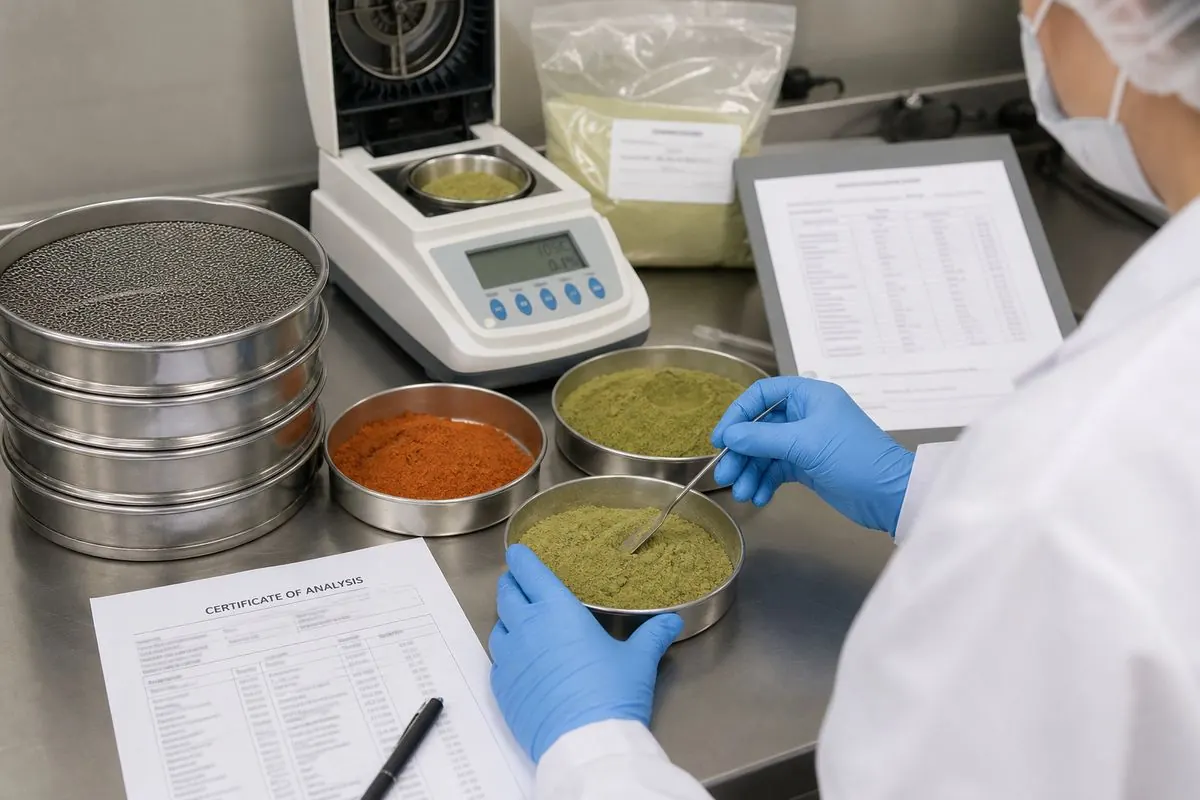
Direct buyers should map dehydrator capacity, vegetable intake seasonality, and Mundra/Nhava Sheva stuffing windows before negotiating annual programmes. India is a top-tier global origin for dried vegetables (HS 0712 ~US$211.3M in 2023 verified; OEC ~US$288M 2024 directional), which means supplier COA discipline differentiates more than origin novelty.
Supply geography for importers: Gujarat Mahuva–Bhavnagar–Sihor for commercial dehydration; Maharashtra Nashik adjacency for raw material and merchant multi-SKU consolidation; MP/Rajasthan seasonal input; west-coast ports for FCL. Merchant exporters often consolidate multiple dehydrator lots into one invoice — useful when you need single-interface programmes without losing plant-level audit rights.
APEDA's broader processed vegetables basket (~614,979 MT / ~US$897M FY2024-25) includes preserved lines — do not confuse it with pure HS 0712 dehydrate capacity when sizing supplier claims.
Export Statistics
Key Statistics
- HS 0712 India: ~US$211.3M (2023) / OEC ~US$288M (2024 directional).
- HS 071290 (WITS 2024): US$58.626M / 45,547.7 MT — use for “other vegetable” programmes.
- Ask suppliers which destinations they ship with COA match rates — not vanity volume.
- CHA confirmation of eight-digit lines belongs in your vendor file.
When verifying suppliers, confirm they actually file dried vegetable exports under HS 0712 / 071290 lines relevant to your SKU — misclassification or onion-only history is a red flag if your RFQ is carrot, potato, tomato, cabbage, or mixed 0712.90.
India's directional export scale means many plants can show “export experience.” Ask for shipment evidence matching your vegetable family and destination compliance tier, not generic export trophies.
India dried vegetable export context for importer due diligence (directional)
Swipe →
Data table — swipe horizontally on small screens
| Metric | Directional Estimate | Importer Use |
|---|---|---|
| India HS 0712 exports 2024 | ~US$211.3M (2023) / ~US$288M OEC 2024 dir. | Sanity-check supplier volume claims vs national scale |
| Global rank cue | ~2nd exporter | Origin is proven — differentiate on QC and lead time |
| Top destinations | 0712: DE/BR/US (onion-heavy); 071290: US/ID/NP/DE/MY | Ask for references in your corridor when possible |
| HS 071290 2024 | US$58.626M / 45,547.7 MT | Benchmark “other vegetables” programmes separately from onion |
| Primary clusters | Gujarat dehydrator belt; Nashik adjacency | Plan audit travel / third-party inspection here |
| Ports | Mundra; Nhava Sheva | Compare FOB named-port quotes apples-to-apples |
| Council credentials | APEDA RCMC + IEC + FSSAI | Hard gate before sample payment |
Import Statistics
Key Statistics
- Pull your market's MRL and micro rules into the written RFQ.
- Ask suppliers for corridor-specific shipment proof, not generic export lists.
- Landed-cost model must include destination lab and broker fees.
Your destination's import pattern should shape the RFQ. US and EU buyers typically need tighter micro and MRL schedules; ASEAN and some Latin American programmes may prioritise competitive commodity specs; UAE often adds Halal; Japan adds positive-list and mesh discipline. Import your market's rules into the RFQ instead of discovering them after the trial lands.
HS 071290 partner cues that frequently include USA, Indonesia, Nepal, Germany, and Malaysia help importers understand where Indian “other dried vegetables” already flow — useful when asking suppliers for comparable shipment experience.
Importer destination cues that change the RFQ (planning)
Swipe →
Data table — swipe horizontally on small screens
| Your Market | RFQ Emphasis | Verification Extra |
|---|---|---|
| USA | Micro schedule, FSMA supplier controls, FDA prior notice readiness | Kill-step declaration; retained sample policy |
| EU / UK / Germany / Netherlands | MRL list, sulfite declaration, robust COA methods | EU-accepted lab willingness for retest |
| Japan | Mesh/color, positive-list MRL, tighter powder specs | Longer sample approval; smaller first trial |
| UAE / GCC | Halal docs, moisture-stable packs, hot-climate storage | Hypermarket PL artwork fields if retail |
| Indonesia / Malaysia | Competitive FOB, lead time, import licensing awareness | Halal often useful in Malaysia |
| Brazil | ANVISA pathway via your broker, long-transit pack integrity | Schedule buffers in PO lead time |
Product Categories & Variants Overview
Summary Box
- One RFQ = one clear SKU definition — avoid “mixed veggies any cut”.
- Freeze-dried/organic need 4–8+ week lead-time honesty in the RFQ.
- Private-label retail requires artwork freeze before production start.
Shortlist SKUs before supplier calls. Core Indian export families include dehydrated carrot, potato, tomato, cabbage, cauliflower, beans, peas, spinach, beetroot, sweet corn, and mixed blends — as flakes, kibbled pieces, granules, powder, or slices — via air-dried, drum-dried, or freeze-dried processes. Full catalogue depth lives in Top Dried Vegetable Products Exported from India.
If your basket includes onion or garlic dehydrates, keep those RFQs explicit and link sibling guides — dehydrated onion and dehydrated garlic — because aroma cross-contamination and HS splits differ. Do not let a mixed aromatic programme silently contaminate a clean carrot/cabbage RFQ.
RFQ-ready product decisions for Indian dried vegetables
Swipe →
Data table — swipe horizontally on small screens
| Decision | Options to Lock | Why Importers Care |
|---|---|---|
| Vegetable family | Carrot, potato, tomato, cabbage, cauliflower, beans, peas, spinach, beetroot, sweet corn, mixed | Determines plant capability and seasonal intake |
| Cut / form | Flakes, kibbled, granules, powder, slices | Mesh and foreign-matter risk differ sharply |
| Drying method | Air-dried, drum-dried, freeze-dried | Price, lead time, and nutrition/colour claims |
| Quality band | Moisture %, Aw, ash, colour, micro, MRL, SO₂ status | Sample-to-bulk disputes start here |
| Certification tier | Conventional, Halal, organic NPOP/USDA/EU, BRCGS site | Vendor approval gate for retail/foodservice |
| Pack format | 10/20/25 kg bags/cartons; N2/vacuum; retail 50 g–1 kg | Landed cost and label compliance |
Manufacturing Overview
Export Tip
- Verify wash → dry → pack hygiene with photos or on-site walkthrough.
- Confirm metal detection and foreign-matter controls on powder lines.
- Separate freeze-dried capability claims from air-dried commodity lines.
- Retain reference samples from approved trial lots against bulk COA.
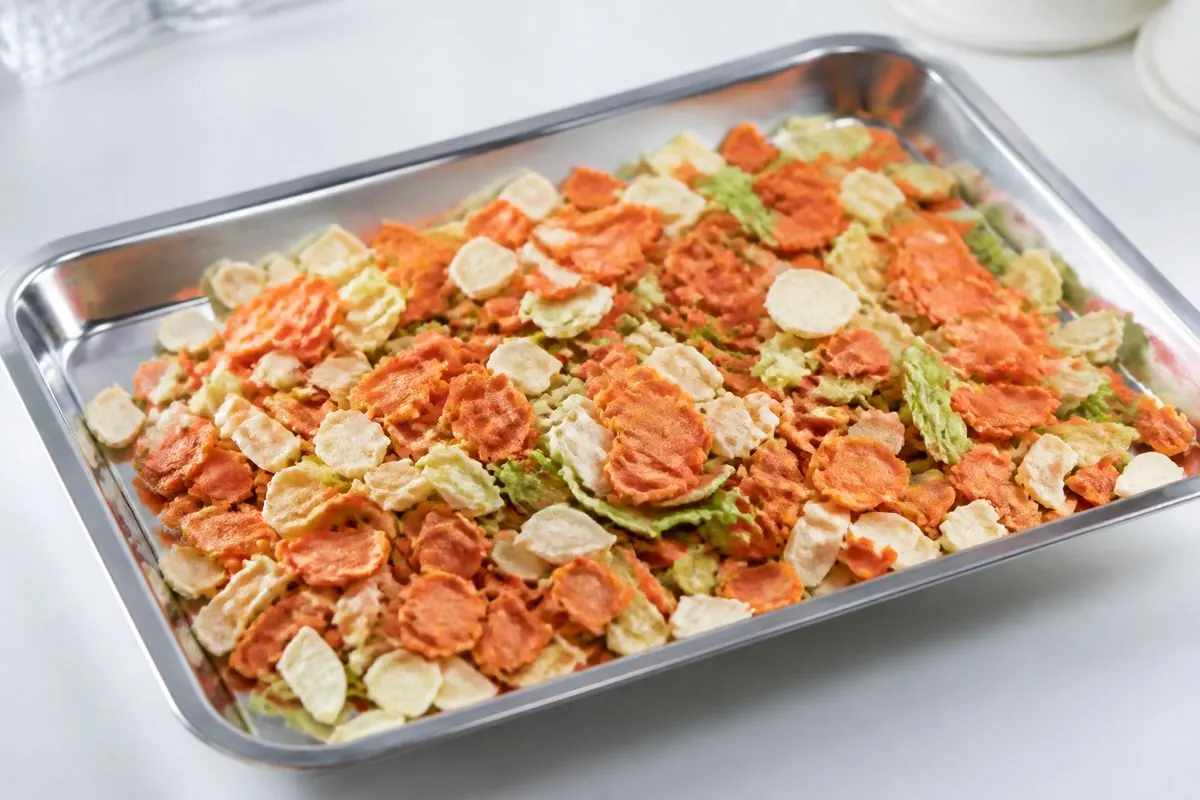
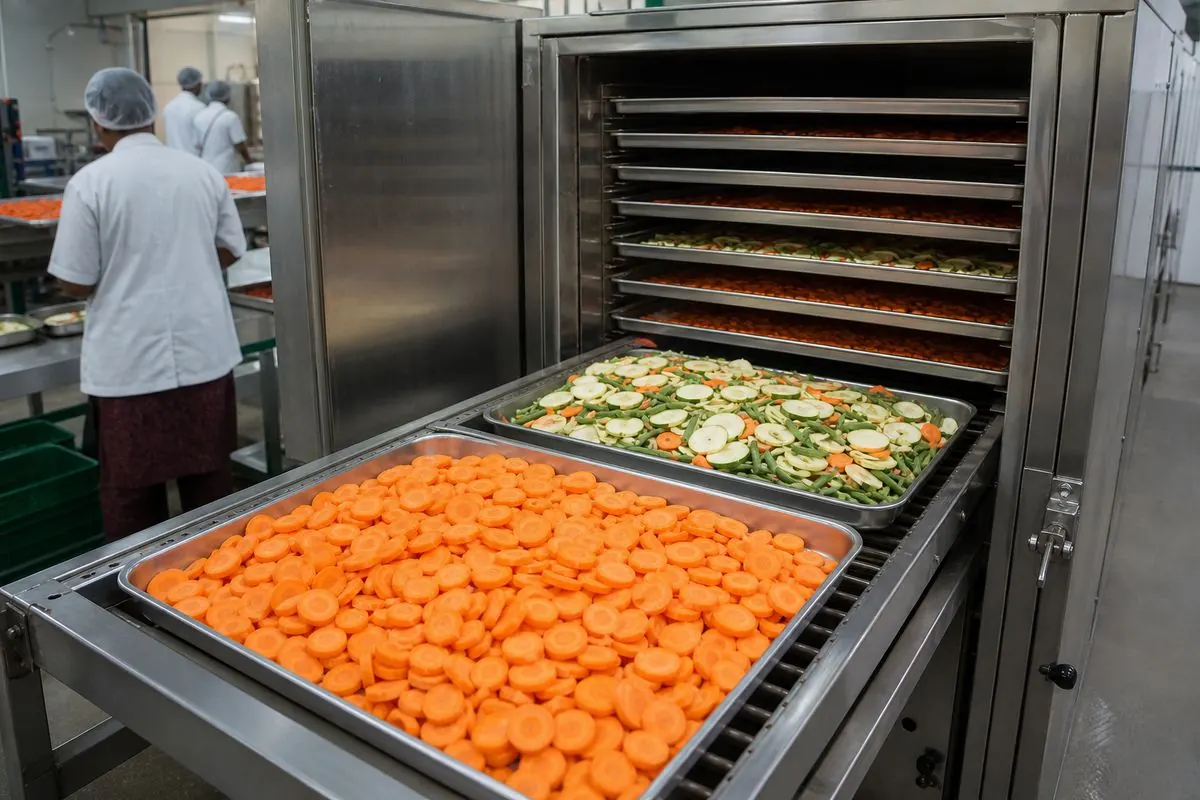
Importer audits should confirm the dehydrator's real process — not a brochure flowchart. Typical commercial line: intake grading → wash → peel/trim as required → slice/dice → blanch where specified → hot-air or drum dry → milling/grading → metal detection → COA sampling → moisture-barrier packing → dry warehousing. Freeze-dried lines are a separate capability and cost structure.
Ask to see lot traceability from raw vegetable intake to finished bag marks. Request recent moisture and micro trend data for the SKU you want — three consecutive lots beat a single perfect sample. Confirm whether onion/garlic run on shared equipment and how allergen/aroma changeover is controlled if your programme must stay non-aromatic.
Merchant exporters may consolidate multiple plants; still audit the actual production site feeding your lot, or hire a third-party inspector who does.
Export Process
Export Tip
From the importer's seat, the India export process is a coordination checklist: supplier produces against approved sample; issues lot COA; CHA files shipping bill under correct HS 0712 line; phytosanitary/health certificate arranged as required; commercial invoice and packing list reconcile to bag marks; container stuffed with seal photos; B/L released per payment terms; you file destination entry (FDA prior notice for US, etc.).
Incoterms you will most often see: EXW plant, FOB Mundra/Nhava Sheva, CFR/CIF your port; DDP only if you have a mature local compliance partner. Lead times: samples 7–14 days; stock air-dried 2–4 weeks; custom/PL 3–6 weeks; freeze-dried/organic 4–8+ weeks. Pillar process detail: How to Export Dried Vegetables from India. Document fields: documentation checklist.
Importer-controlled gates in the export flow
- No production start without written sample approval and PO annex specs.
- No balance payment without invoice / packing list / COA lot ID reconciliation.
- No FCL scale without destination retest on the trial arrival.
- Name load port on FOB to compare inland haulage honestly.
What this playbook does not own
- Exporter IEC/APEDA registration how-to — see APEDA cluster post when published/linked.
- Trade-show calendars and booth ROI — not this importer RFQ guide.
- Per-country SKU preference matrices — see demand-by-country post.
Trade Statistics
Key Statistics
Use trade statistics as a supplier-question generator, not as a substitute for audit. If a plant claims large US or Germany programmes, ask for redacted COA packs and packing photos from comparable lots. If their history is Indonesia commodity mixed vegetables and you need Japan spinach powder, treat capability as unproven.
HS 071290 tonnage (45,547.7 MT in 2024, WITS) reminds importers that “other dried vegetables” is a real, measurable trade — your RFQ sits inside that flow when onion is excluded.
Trade-stat questions to ask Indian dried vegetable suppliers
Swipe →
Data table — swipe horizontally on small screens
| Claim You Hear | Stat-Informed Question | Evidence to Request |
|---|---|---|
| “We export everywhere” | Which HS 0712 destinations in the last 12 months for my SKU? | Redacted B/L + COA for comparable vegetable/cut |
| “Huge capacity” | What monthly MT for my exact cut and drying method? | Line photos + recent production plan (non-confidential) |
| “EU approved” | Which MRL lab and sulfite declaration practice? | Recent MRL report + SO₂ statement template |
| “FDA ready” | Who files prior notice and what micro method is used? | Micro COA method list + FSMA questionnaire answers |
| “Organic available” | Which scope (NPOP/USDA/EU) and TC process? | Certificate copies matching the sample lot |
Import Data Analysis
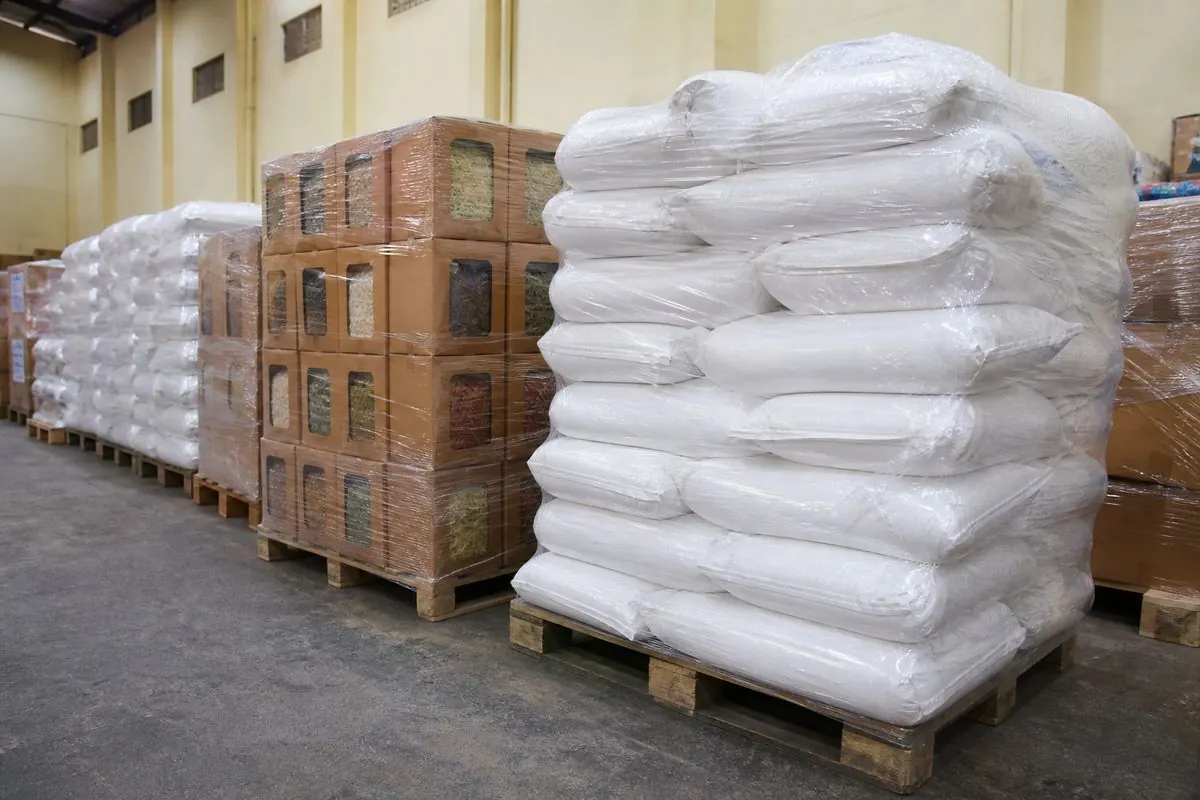
Importer-side data analysis should answer: Can this supplier hit my destination's compliance tier at a landed cost my channel can bear? Build a simple scorecard — credential completeness, audit findings, sample COA vs spec, independent lab delta, FOB competitiveness, lead-time honesty, payment-term risk — and weight compliance higher than a 3% FOB discount.
Compare at least two Gujarat dehydrators (or one dehydrator plus one merchant consolidator) before first trial. Single-source decisions on brochure price are the most common first-order failure mode in dehydrated vegetable importing.
Importer supplier scorecard for Indian dried vegetables
Swipe →
Data table — swipe horizontally on small screens
| Score Dimension | What Good Looks Like | Deal-Breaker Example |
|---|---|---|
| Credentials | Valid IEC, APEDA RCMC, FSSAI matching invoice entity | Trading name ≠ licensed entity |
| Process audit | Traceable wash/dry/pack; metal detection; lot marks | No access to actual dehydrator floor |
| Sample vs spec | COA within written bands; mesh/colour acceptable | Beautiful sample, no method on COA |
| Independent lab | Micro/MRL within destination rules | Refusal to allow third-party retest |
| Landed cost | Transparent FOB build-up + realistic freight | FOB far below peers with vague grade |
| Lead time | Matches drying method (freeze-dried ≠ 10 days) | Promises freeze-dried in commodity air-dried time |
| Commercial behaviour | Invoice/PL/COA reconcile; photos on stuffing | Pressure for 100% advance pre-audit |
Pricing Analysis
Buyer Tip
- Force quote-date stamps on every FOB.
- Compare two suppliers on identical Incoterm and pack.
- Do not reuse onion/garlic price bands as mixed-vegetable truth.
Importers should demand FOB structure, not a single mystery number. Price moves with vegetable type, cut, drying method, mesh, moisture target, certification, and pack. Commodity air-dried carrot/cabbage/mixed programmes often quote in mid-single-digit to low-teens USD/kg; tomato powder and specialty cuts higher; freeze-dried, organic, and retail private-label substantially higher. Always verify on the quote date.
Landed-cost decision flow: (1) approved FOB named port, (2) inland already in FOB or shown separately, (3) ocean + insurance per Incoterm, (4) destination duty on live schedule, (5) broker/terminal, (6) destination lab retest, (7) rejection reserve. Choose the supplier with the best total risk-adjusted landed cost — not the cheapest FOB screenshot.
Landed-cost decision sheet for sourcing dried vegetables from India
Swipe →
Data table — swipe horizontally on small screens
| Line Item | Importer Check | Notes |
|---|---|---|
| FOB Mundra / Nhava Sheva | Named port + quote date + SKU definition | Reject EXW-only comparisons without haulage |
| Packaging differential | 10/20/25 kg vs N2/vacuum vs retail pouch | Retail PL artwork changes unit economics |
| Ocean freight / CIF adders | Get two forwarder quotes for your lane | Long-haul Brazil/US needs moisture reserve |
| Destination duty | Broker confirms live HS rate | Duty errors dwarf small FOB gaps |
| Lab & compliance | Budget origin COA + destination retest | EU/Japan/US tiers cost more — plan it |
| Payment cost | LC fees, advance opportunity cost | Cheaper FOB with unsafe advance is not cheaper |
| Risk reserve | % for moisture/micro claim potential | Higher for powders and monsoon stuffing |
MOQ Analysis
Buyer Tip
MOQ is your risk dial. Samples (0.5–5 kg) prove sensory and lab fit. Trials (100–500 kg or 1–5 MT) prove bulk COA match and packing integrity after transit. Wholesale (5–20+ MT) and FCL (~10–16 MT in 20ft indicative; ~20–26 MT in 40ft HC) come only after destination clearance and retained-sample comparison succeed.
Freeze-dried and organic programmes often start below commodity FCL size because capacity slots and certificate lots are scarcer — pay for honesty on MOQ rather than forcing a full container into an unproven premium SKU.
Importer MOQ ladder for Indian dried vegetables
Swipe →
Data table — swipe horizontally on small screens
| Stage | Typical Quantity | Importer Objective |
|---|---|---|
| Lab sample | 0.5–5 kg | Mesh, colour, moisture, micro screen vs written spec |
| Commercial trial | 100–500 kg or 1–5 MT | Sample-to-bulk COA match; pack integrity |
| First FCL | ~10–16 MT (20ft) indicative | Stuffing reliability; destination clearance |
| Programme scale | 5–20+ MT recurring | Vendor-list stability; dual-source decision |
| Premium FD / organic | Often smaller initial lots | Certificate lot integrity over max payload |
Packaging Standards
Export Tip
Specify packaging in the RFQ with the same seriousness as moisture percentage. Baseline export packs are 10/20/25 kg food-grade bags or cartons with moisture-barrier liners. Premium powders should call out nitrogen flush or vacuum when your shelf-life model needs it. Retail 50 g–1 kg pouches need label fields, barcode, and language rules before artwork approval.
Require lot/batch ID marks that match the COA and packing list. State aroma segregation rules if onion/garlic must not share the container. Ask for stuffing photos showing liner condition and seal numbers on first trials.
Packaging specs importers should put in the RFQ
Swipe →
Data table — swipe horizontally on small screens
| Pack Element | Specify Explicitly | Failure Mode if Vague |
|---|---|---|
| Unit size | 10 / 20 / 25 kg bag or carton | Unplanned mix of formats in one FCL |
| Barrier | Inner liner / moisture barrier grade | Moisture gain claims after ocean transit |
| Premium powder pack | N2 flush or vacuum yes/no | Oxidation / caking on fine mesh |
| Marks | Lot ID, product name, net wt, dates | Retest and customs reconciliation fails |
| Retail pouch | Size, artwork freeze, barcode, allergen | PL rejection at destination DC |
| Palletisation | Wrap, slip sheets, desiccant if contracted | Crush and humidity damage |
Container Loading Details
Export Tip
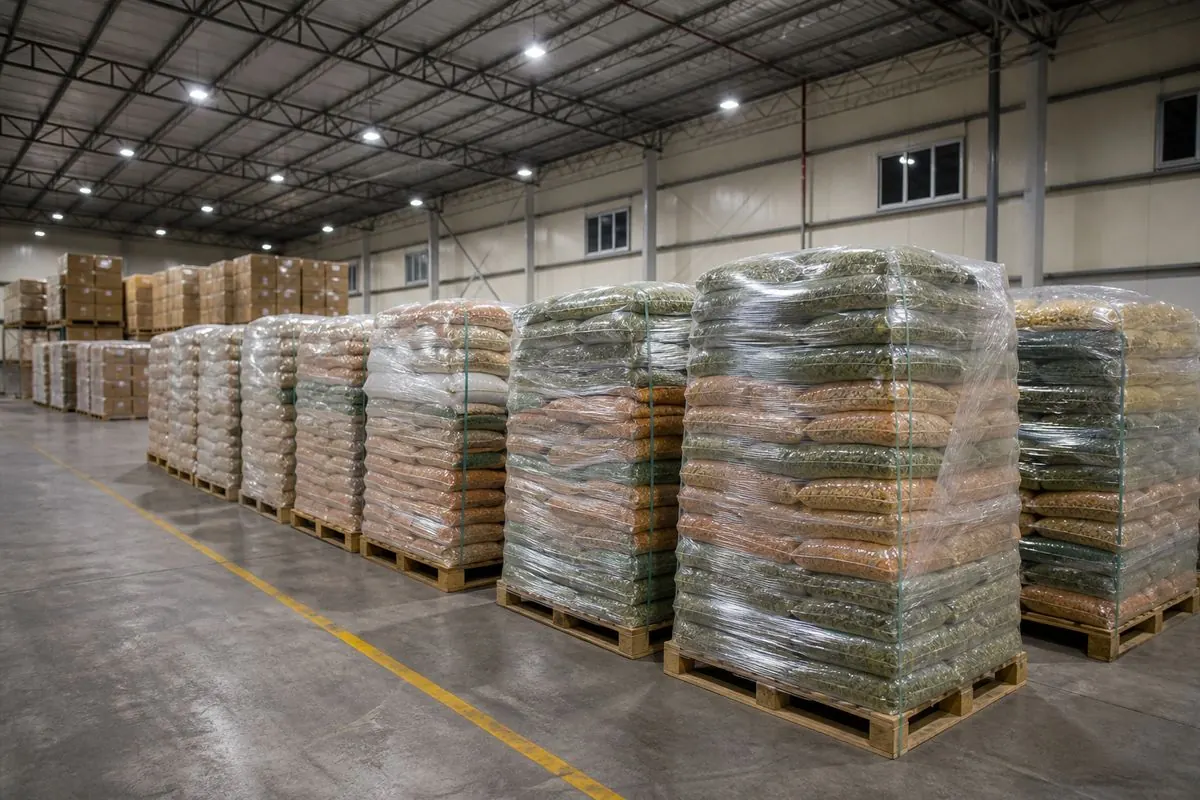
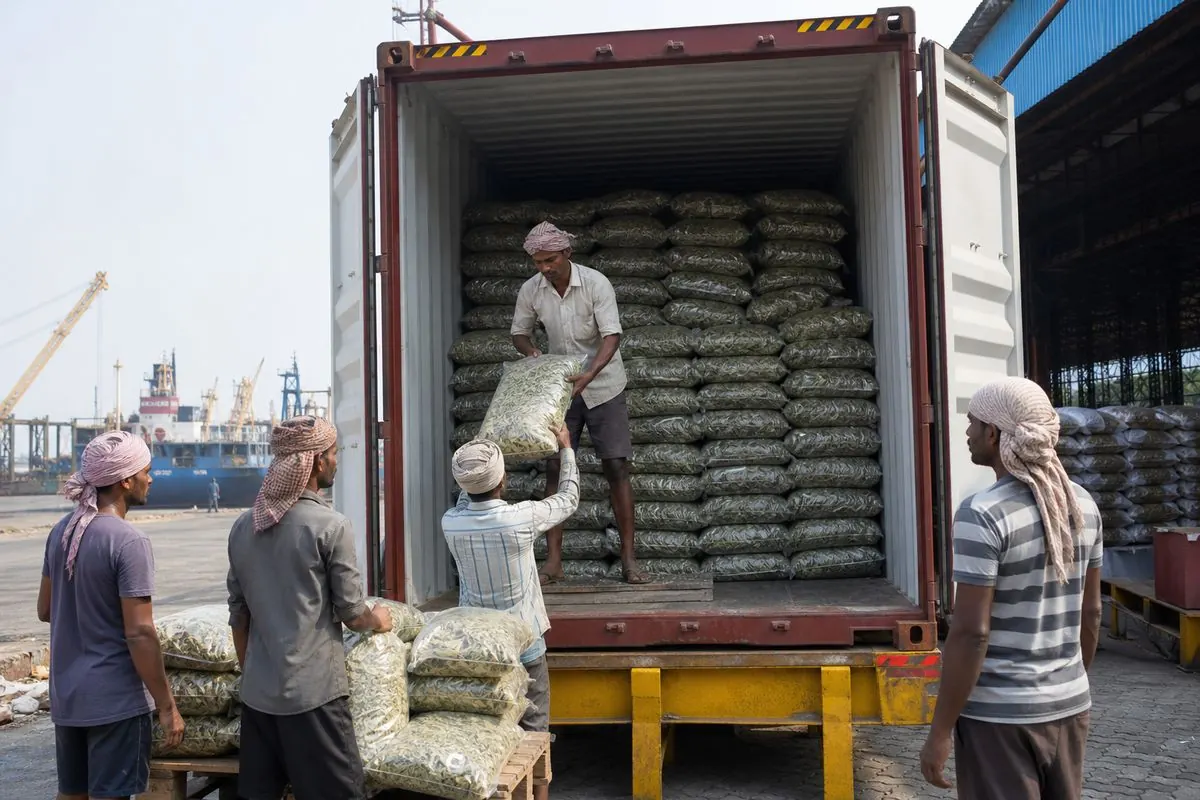
Importers rarely stuff containers themselves, but you should still own the loading standard in the PO. Require dry container, density-aware stow (~10–16 MT / 20ft indicative), lot segregation, and photo evidence. Powders and flakes load differently — do not accept theoretical max payload if carton crush risk rises.
For mixed-SKU trials, insist on clear block stow so destination sampling does not contaminate lots. If onion/garlic is on the same vessel programme, demand segregation unless your RFQ is aromatic by design.
Container loading controls for importer POs
Swipe →
Data table — swipe horizontally on small screens
| Control | PO Language Example | Why |
|---|---|---|
| Payload | Target MT band by pack type; confirm stow plan 48h pre-gate-in | Avoid crush vs underutilisation extremes |
| Lot blocks | One COA lot per marked block | Destination retest integrity |
| Photos | Stow + bag marks + seal number before gate-in | Claim defence |
| Humidity | Dry container; liner integrity check | Monsoon and long-haul lanes |
| Aromatics | No onion/garlic co-load unless RFQ allows | Scent complaint prevention |
| Inspector | Right to third-party PSI on first FCL | Verification when travel is not possible |
Shipping Methods
Export Tip
- Samples: air/express 5–12 days typical door-to-lab.
- Trial LCL: plan 2–4 weeks post-production plus ocean transit.
- Stock air-dried FCL: often 2–4 weeks production planning band.
- Custom blend / PL: 3–6 weeks; freeze-dried / organic: 4–8+ weeks.
- Primary load ports: Mundra (Gujarat), Nhava Sheva (Maharashtra adjacency).
Use air/express for samples, LCL for trials, and ocean FCL for programme volume from Mundra or Nhava Sheva. Choose Incoterms based on your freight desk strength: FOB if you control forwarders; CFR/CIF if you want supplier-arranged ocean; avoid DDP until local compliance is mature.
Build vessel booking calendars backward from your production need date, including sample approval (7–14 days) and production lead time by drying method. Freeze-dried/organic slots are not commodity air-dried slots — schedule accordingly.
Certifications
Compliance Notes
Importer minimum credential pack: supplier IEC, APEDA RCMC, and FSSAI for the dehydrator/packing site, plus lot COA. Add destination layers: FDA/FSMA questionnaires for US; MRL and sulfite declarations for EU/UK; Halal for UAE/GCC; organic TCs for certified programmes; site schemes (ISO 22000 / HACCP / BRCGS) when your vendor audit requires them.
Certificate scope must match the sample lot and the invoice entity. Organic or Halal claims without matching lot paperwork are automatic trial blockers. For APEDA credibility context on the exporter side, see APEDA Registration Benefits for Dried Vegetable Exporters.
Certification checklist for importers sourcing Indian dried vegetables
Swipe →
Data table — swipe horizontally on small screens
| Document | Importer Action | When Mandatory |
|---|---|---|
| IEC + APEDA RCMC + FSSAI | Verify IDs against invoice legal name | Before sample payment |
| Lot COA | Match parameters to written RFQ methods | Every commercial shipment |
| MRL / micro reports | Retest at accepted lab for your market | US, EU, UK, Japan, premium channels |
| Halal | Confirm scope covers dried vegetables lot | UAE/GCC foodservice and retail |
| Organic TC | Match NPOP/USDA/EU chain to lot | Organic labelled programmes |
| Phyto / health cert | Confirm with your broker per entry | Most food plant-origin imports |
| BRCGS / HACCP / ISO 22000 | Request current audit grade/date | Retailer and multinational vendor lists |
Buyer Requirements
Buyer Requirements
- One-page RFQ before any FOB comparison.
- Acceptance bands numeric — not “low moisture”.
- Payment milestones tied to COA release and BL scan.
- Dual-source plan after first successful trial FCL.
Successful importers send suppliers a one-page requirements sheet covering SKU definition, acceptance bands, packing, certifications, trial MOQ, target Incoterm/port, payment structure for first order, and destination compliance tier. Attach photos of competitor packs or mesh references when powder programmes are tight.
Require written confirmation that bulk will match approved sample lot parameters. Include destination retest rights and remedy language for moisture or micro failure. Vague “good quality dehydrated vegetables” RFQs produce incomparable quotes and unenforceable disputes.
Country-wise Opportunities
Market Snapshot
- US/EU/UK/Japan: heavier sample and lab gates before trial MT.
- Indonesia/Malaysia/Nepal: faster commodity trials if credentials clear.
- UAE: add Halal and hot-climate pack checks.
- Brazil: build ANVISA broker timeline into PO dates.
Your destination choice changes which Gujarat dehydrator and document stack you audit first. Use Best Countries for Indian Dried Vegetable Exports for corridor ranking on duty, freight, and compliance burden. This playbook only maps how destination choice reshapes importer verification — it does not own the macro ranking methodology or lead-gen tactics.
How destination choice changes importer verification intensity
Swipe →
Data table — swipe horizontally on small screens
| Destination Tier | Example Markets | Importer Verification Focus |
|---|---|---|
| Audit-heavy premium | USA, Germany, Netherlands, UK, Japan | Independent micro/MRL, site schemes, longer sample cycle |
| Volume commodity | Indonesia, Malaysia, Nepal, Brazil (competitive grades) | Credential check, pack integrity, competitive landed cost |
| Halal / re-export | UAE and broader GCC | Halal scope, moisture-stable packs, PL label fields |
| Specialty organic / FD | USA, EU, Japan premium channels | Certificate chain, longer lead time, smaller first lots |
Sourcing Checklist
Checklist
Buyer Checklist
Exporter Checklist
Common Buyer Mistakes
Common Mistakes Box
Future Market Trends
Key Statistics
- Sample-to-bulk COA match rate becomes a vendor KPI.
- Organic/freeze-dried RFQs grow but stay lead-time honest.
- Destination lab retest clauses appear more often in first POs.
- Dual-source strategies rise after one crop or energy-price shock.
Importers are shortening supplier lists after single failed moisture or micro trials — plants with sample-to-bulk match rates win recurring RFQs even at slightly higher FOB. Third-party audit requests rise once monthly volumes pass roughly multi-tonne programme thresholds.
Clean-label and organic/freeze-dried niches grow in US/EU/Japan, while ASEAN commodity blends remain volume hedges. Digital COA sharing and retained-sample programmes are becoming standard vendor-list expectations, not extras.
Direct sourcing will continue to coexist with merchant-exporter models; many importers use a merchant exporter in India for single-interface FCLs while still auditing the underlying dehydrator.
Challenges & Solutions
- Challenge: brochure-only suppliers — Solution: Gujarat plant audit + credential ID match
- Challenge: sample ≠ bulk — Solution: retain samples; bind bulk to sample lot parameters in PO
- Challenge: micro/MRL failures — Solution: independent lab before trial PO and after arrival
- Challenge: moisture claims — Solution: liner specs, stuffing photos, seal numbers, claim windows
- Challenge: landed-cost surprises — Solution: duty + broker + lab sheet before supplier award
Direct importing of Indian dried vegetables fails in predictable ways — unclear RFQs, unaudited plants, skipped labs, and FOB-only decisions. Solutions are procedural.
Compliance Checklist
Checklist
Compliance Notes
Sources
- APEDA — Processed Vegetables (DGCIS FY2024-25 volume/value and destination notes)
- APEDA — RCMC / agri-processed export facilitation
- DGFT — Import Export Code (IEC) and foreign trade procedures
- FSSAI — food business licensing and product standards
- CBIC ICEGATE / Indian Customs — ITC-HS classification and shipping bills (confirm with CHA)
- India ITC-HS 0712 schedule (EximGuru reference) — 07122000 / 07129010–07129090 lines
- WITS / UN Comtrade — India HS 071290 exports by partner (2024)
- TrendEconomy — India HS 0712 exports/imports time series (2023 value and destination structure)
- OEC — India dried vegetables (HS 0712) bilateral profile (directional 2024 cues)
- ITC Trade Map — HS 0712 / 071290 partner verification
- USITC Harmonized Tariff Schedule — live US duty rates for HTS 0712
- EU TARIC — EU CN 0712 duties and measures
- FDA Prior Notice (food imports) — US food entry requirements
- Regulation (EC) No 396/2005 — EU pesticide MRLs
- Regulation (EU) 2018/848 — EU organic production and labelling
Trade figures, HS lines, and compliance notes in this article are directional planning aids. Re-verify against the primary sources below before quoting buyers or filing export documents.
Supplier verification and sample / micro protocols should reference the same HS 0712 line the exporter files on the shipping bill.
Conclusion
To source dried vegetables from India with lower first-order risk, run an importer playbook: precise RFQ, Gujarat dehydrator audit, sample and independent QC, landed-cost modelling, then trial MOQ before FCL scale under HS 0712.
Altus Exports supports international buyers as a product sourcing company in India and global sourcing partner across the agriculture & food products category. Contact the team to structure your first dehydrator verification and trial shipment.
Continue with How to Export Dried Vegetables from India, Top Dried Vegetable Products Exported from India, APEDA Registration Benefits for Dried Vegetable Exporters, and the dried vegetable export documentation checklist.