
Organic GOTS, OEKO-TEX, and Hospitality Cotton Home Textile Export Opportunities from India
By Saurabh Mittal, Founder, Altus Exports
Specialty guide to organic and certified cotton home textile export opportunities from India — GOTS transaction certificates, OEKO-TEX Standard 100, BCI mass-balance programmes, and hospitality linen private-label at category level across bed, bath, and table families, with premium corridor demand, MOQ, pricing, and compliance depth.

Premium retail, e-commerce private label, and hospitality linen procurement in Germany, the Netherlands, the UK, the USA, Australia, and the GCC no longer treat "organic cotton home textiles" as a bedsheet-only niche. Buyers evaluate category programmes — coordinated bed linen, terry bath and kitchen linen, table linen, and selective curtain add-ons — under Harmonized System heading 6302 (core), 6303 (curtains), and related Chapter 63 families, with GOTS, OEKO-TEX Standard 100, OCS, and BCI evidence matched to each SKU on the care label. India HS 6302 exports reached about US$1,858.84M in FY 2023-24 and US$2,128.63M in FY 2024-25 per DGCI&S commodity profiles (directional; re-verify), with the United States typically at roughly 62–67% of export value — but certified and hospitality tiers concentrate disproportionately in EU, UK, premium US, and UAE hotel corridors where audit-ready documentation beats brochure language.
This guide owns organic, certified, and hospitality specialty for multi-SKU cotton home textile programmes: what GOTS transaction certificates require across bed+bath+table assortments; how OEKO-TEX differs from GOTS on terry and napkin SKUs; where BCI fits conventional mass-balance programmes without organic claims; how hotel and spa linen private-label specs differ from retail hangtag packs; and how to price evidence-dependent FOB premiums without greenwashing. It does not replace the export process pillar, SKU catalogue, buyer-finding playbook, or document checklist — see How to Export Cotton Home Textiles from India, Top Cotton Home Textile Products Exported from India, Find International Buyers for Cotton Home Textiles, and Cotton Home Textile Export Documentation Checklist.
Panipat, Karur, Coimbatore, Solapur, and Delhi-NCR merchant consolidation supply certified capacity when processors hold correct scope certificates — not when marketing prints "organic" without lot-matched transaction certificates. Altus Exports coordinates certified multi-family programmes through merchant exporter India and global sourcing partner India workflows for textiles & home furnishings buyers who need audit-ready bed+bath+table hospitality and private-label paths.
Key Takeaways
Summary Box
Executive Summary
Summary Box
- Scan certification comparison tables before quoting organic FOB.
- Treat hospitality as multi-family — sheets, terry, table, not bedsheet-only.
- Pair with buyer-finding and trade-show posts for certified lead conversion.
Organic and certified cotton home textile export opportunities reward manufacturers and merchant exporters who treat GOTS, OEKO-TEX, and hospitality specs as documentation systems across bed, bath, and table families — not as hangtag decoration on a single hero bedsheet SKU. EU, UK, premium US, and GCC hotel buyers gate vendor approval on transaction certificate chains, OEKO-TEX scope appendix pages, laundry-cycle test narratives, and fibre labels that match certificate lot descriptions exactly.
India's certified processing base in Karur, Coimbatore, Panipat, and Solapur corridors can supply coordinated programmes when dye, print, and cut-and-sew partners hold valid scope certificates for the exact processes used on napkins, terry bundles, and sheet sets in the same hospitality RFQ. Missing TC at one terry dyehouse handoff invalidates the organic claim for the entire hotel wing trial — regardless of farm-level certificates.
This specialty guide covers certification differences, hospitality private-label requirements, premium corridor demand, pricing premiums, MOQ, packaging, compliance gates, and common claim mistakes — without duplicating TEXPROCIL membership depth or end-to-end export sequencing owned by sibling cluster posts.
Market Size & Industry Overview
Key Statistics
- Certified tier ≠ entire HS 6302 volume — but growth outpaces commodity in EU/UK/premium US.
- Hospitality programmes span bed+bath+table under one spec — category specialty is the angle here.
- USA ~62–67% of HS 6302 value — mass US retail may use BCI conventional; premium uses GOTS/OEKO-TEX.
The certified and hospitality slice of India's cotton home textile export economy sits inside the broader HS 6302 profile (~US$1,858.84M FY 2023-24; ~US$2,128.63M FY 2024-25, directional) but follows different buyer rules than commodity wholesale bed+bath fills. Premium retail and hotel procurement teams evaluate programme coherence: white-shade terry aligned with sheet lots, table napkin colourways that survive commercial laundry, and care labels whose GOTS or OEKO-TEX claims match transaction certificate line descriptions on the commercial invoice.
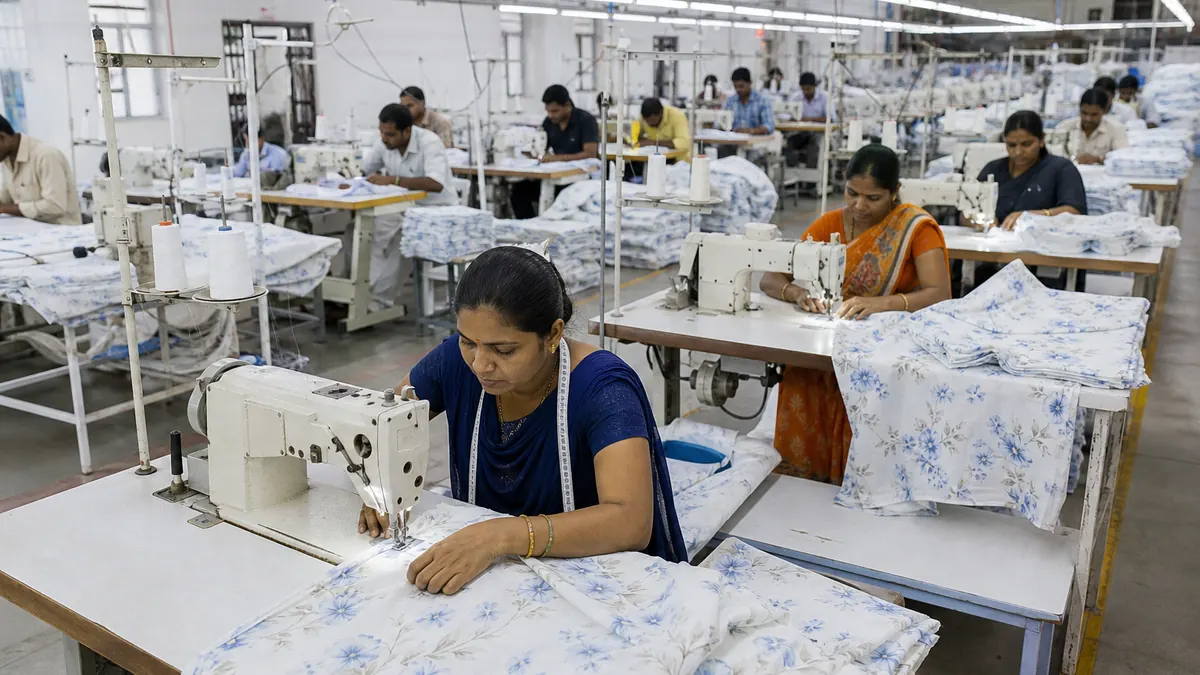
Supply clusters align to certified capability: Karur and Coimbatore for export-disciplined bed and table linen with certification-ready processors; Panipat for quilt, bedspread, and terry adjacency in layered programmes; Solapur for terry-heavy bath lines feeding hospitality bundles; Delhi-NCR merchants consolidating multi-family GOTS colourway sets into one coherent shipment. Broader TEXPROCIL cotton textiles basket ~US$11.7B FY 2023-24 provides category context — not a substitute for HS 6302 planning alone.
Demand channels include EU and UK department stores, premium US e-commerce home brands, extended-stay and full-service hotel groups, spa and linen rental operators, and GCC hospitality distributors building Indian-origin private-label linen rooms — each with distinct pack formats and certificate annex expectations.
Certified & hospitality cotton home textile supply map — cluster × family
Swipe →
Data table — swipe horizontally on small screens
| Cluster | Certified strength | Typical programme families | Hospitality note |
|---|---|---|---|
| Karur / Coimbatore | Bed+table export QC, cert processors | Sheets, pillowcases, napkins, tablecloths | White-shade bed+table hotel cores |
| Panipat | Layered volume, terry adjacency | Quilts, bedspreads, terry bundles | Seasonal hotel top-of-bed layers |
| Solapur | Terry bath focus | Bath towels, hand towels, mats | High laundry-cycle terry for hotels |
| Delhi-NCR | Multi-cluster PL consolidation | Coordinated bed+bath+table colourways | Private-label hospitality kit assembly |
| Ahmedabad adjacency | Processing links | Dyed/printed cert programmes | Verify dyehouse GOTS scope |
Export Statistics
Key Statistics
- HS 6302 India: ~US$1,858.84M / ~US$2,128.63M directional.
- USA share ~62–67% — segment premium cert buyers within US import base.
- EU/UK/GCC hospitality: disproportionate cert audit intensity vs volume share.
- Confirm eight-digit ITC-HS with CHA per certified SKU block.
Export statistics frame certified opportunity size without conflating all HS 6302 volume with organic claims. Directional DGCI&S profiles cite India HS 6302 at ~US$1,858.84M (FY 2023-24) and ~US$2,128.63M (FY 2024-25) (+~14.5% YoY). The United States typically accounts for roughly 62–67% of that value — but GOTS and OEKO-TEX programme density is higher in EU, UK, premium US, and selective hospitality corridors than in commodity mixed FCL wholesale alone.
When presenting certified programmes to buyers, separate 6302 bed/bath/table lines from 6303 curtain panels and 6304 furnishing assortment SKUs where applicable — mixed hospitality and retail PL baskets may legitimately span headings with line-level TC and label accuracy.
India cotton home textile export cues for certified programme planning — directional
Swipe →
Data table — swipe horizontally on small screens
| Metric | Directional estimate | Certified / hospitality lens |
|---|---|---|
| Core HS heading | 6302 bed/bath/table/kitchen | TC chain per family line on invoice |
| Curtains | 6303 | Separate OEKO-TEX/GOTS scope if claimed |
| India HS 6302 export value | ~US$1,858.84M FY23-24 / ~US$2,128.63M FY24-25 | Premium tiers = subset — growing in EU/UK |
| USA share | ~62–67% of HS 6302 value | Premium PL + select hotel brands |
| Leading cert-heavy partners | Germany, Netherlands, UK, USA premium, UAE hotels | Vendor portal KYC density |
| Council stack | TEXPROCIL RCMC + IEC | Baseline alongside cert binders |
| Load ports | Mundra, Nhava Sheva, Chennai, Tuticorin | Cert docs travel with same shipment pack |
Import Statistics
Key Statistics
- EU/UK: OEKO-TEX baseline; GOTS on organic PL and hospitality niches.
- USA: TPFIA labels universal; GOTS/OEKO-TEX on premium tiers.
- UAE/GCC: Hospitality durability + selective OEKO-TEX on guest-facing linen.
- Per-country family matrix: Most Demanded by Country.
Import-side pressure on certified home textiles is highest where consumer disclosure and hotel brand standards intersect: Germany, Netherlands, UK, USA premium retail, Australia, Nordic markets, and UAE/GCC hospitality procurement. These buyers import significant HS 6302 family volume and attach OEKO-TEX, GOTS, or BCI questions during vendor onboarding — not as optional marketing, but as gate conditions before second meetings.
US mass retail may accept BCI conventional tiers with strong TPFIA labels while premium US DTC brands demand GOTS on coordinated bed+bath sets. Importers comparing origins at audit evaluate certificate scope appendix pages and transaction certificate samples as heavily as construction specs.
Import-side certification pressure by destination — certified home textiles
Swipe →
Data table — swipe horizontally on small screens
| Market | Cert intensity | Typical programme | Annex expectation |
|---|---|---|---|
| Germany / EU | Very high | GOTS PL bed+bath+table, OEKO-TEX baseline | TC samples, OEKO-TEX ID appendix |
| United Kingdom | High | Organic PL, hospitality white | UK fibre labels + cert scope |
| USA premium / DTC | High selective | Coordinated GOTS sets | TPFIA + GOTS TC path |
| USA mass retail | Medium | BCI conventional + OEKO-TEX selective | Vendor portal cert upload |
| Australia | Medium–high | OEKO-TEX retail, hotel niches | Care labels + test reports |
| UAE / GCC | Medium–high hospitality | White hotel bed+bath+table | Laundry tests + OEKO-TEX guest linen |
| Japan | Medium selective | Premium construction + labels | Japanese care text when PL |
| Netherlands | High EU gateway | Organic home brands | GOTS TC chain demonstration |
Product Categories / Variants
Summary Box
- Bed: sheets, pillowcases, duvet covers — shade + TC per lot.
- Bath/kitchen: terry bundles, mats — OEKO-TEX common; GOTS when organic terry claimed.
- Table: napkins, tablecloths — hem specs + cert on dye/print steps.
- Hospitality overlay: replenishment SKUs across all three columns.
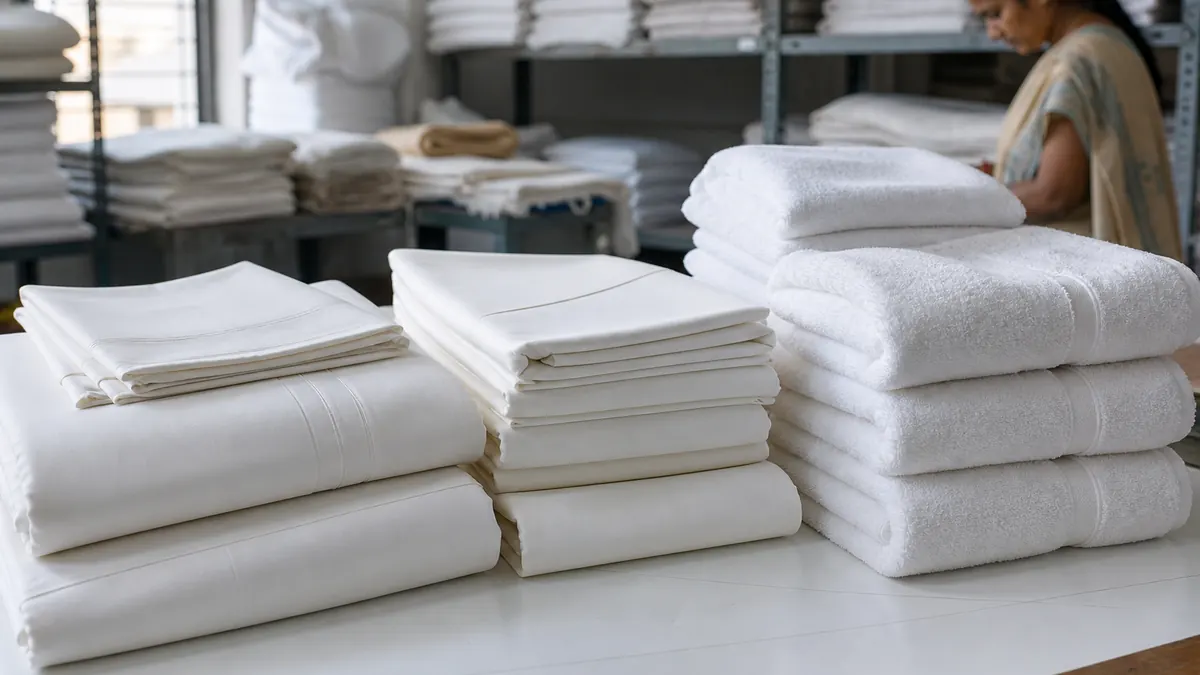
Certified and hospitality opportunity lives at programme level across product families — not on a single organic bedsheet SKU. A typical hotel linen private-label RFQ spans flat sheets and pillowcases, terry bath towels and hand towels, bath mats, and table napkins or banquet linen — each requiring consistent white shade, laundry performance, bulk pack marks, and certificate scope where organic or OEKO-TEX claims apply.
Retail private-label coordinated sets may bundle bed linen, terry bath, and table colourways under one GOTS marketing story — TC descriptions must list every component SKU. Curtain panels in soft-furnishing PL programmes plan under 6303 with separate cert scope if claims extend to panels. Full construction ladders live in the products catalogue post; this section owns which families belong in certified hospitality and PL programmes and how claims attach per family.
Certified cotton home textile programme families — category level (not SKU catalogue)
Swipe →
Data table — swipe horizontally on small screens
| Family | Hospitality use | Retail PL use | Cert lens |
|---|---|---|---|
| Bed linen core | Sheet sets, pillowcases, duvet covers | Coordinated PL bed sets | GOTS TC chain or OEKO-TEX finished-good test |
| Terry bath / kitchen | Bath/hand towels, mats | Bed+bath coordinated PL | OEKO-TEX common; GOTS if organic terry claimed |
| Table linen | Banquet napkins, tablecloths | Seasonal table drops | Print/dye GOTS scope critical |
| Quilt / bedspread layer | Top-of-bed hotel layers | Seasonal retail | Fill character + cert on shell fabric |
| Curtain add-on | Guest room soft furnishing | Retail coordinated room sets | 6303 + flammability where required |
| Coordinated bed+bath+table | Full linen-room programme | Premium e-commerce PL | Multi-SKU TC reconciliation mandatory |
Manufacturing Overview
Export Tip
- Flow: certified fibre → certified processing → inspect → label → TC at each handoff.
- Segregate organic and conventional lines in production and storage.
- Hospitality: document laundry SOP alignment with buyer spec.
- Retain samples + TC copies indexed to lot ID.
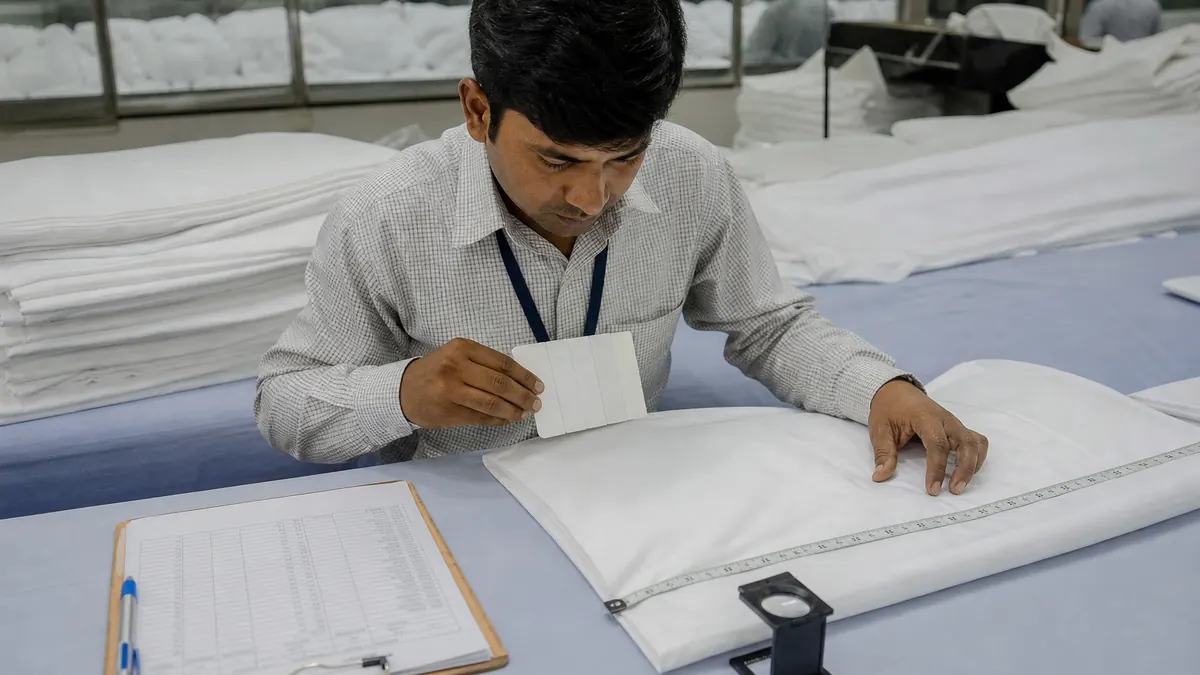
Certified manufacturing for cotton home textiles requires scope-certified processors at every step that touches organic fibre or restricted chemicals — spinning, weaving/knitting, dyeing, printing, cut-and-sew, and export packing stations that label GOTS SKUs. A Karur bed-linen unit and a Solapur terry unit may both participate in one hospitality programme, but TC issuance must chain across both before the Delhi-NCR merchant invoices the hotel group.
Hospitality manufacturing adds laundry-cycle validation — construction choices that survive commercial wash temperatures and bleach protocols without shade drift or hem failure. White-shade continuity across terry and flat linen from different clusters demands a single approved lab-dip standard and retained samples against every bulk lot ID.
Wrong-scope certificates — weaving-only scope on a printed table napkin programme — fail vendor audits faster than late shipments. Verify processor GOTS scope covers dye and print when colourways are not greige-only.
GOTS, OEKO-TEX, and BCI — Certification Framework
- Never interchange GOTS, OEKO-TEX, and BCI labels on mixed baskets without scope proof.
- TC samples belong in vendor portals before second meetings — not after first bulk.
- TEXPROCIL RCMC is baseline export credential — see TEXPROCIL benefits post.
GOTS (Global Organic Textile Standard) certifies organic fibre integrity, restricted processing chemicals, and social criteria. Every entity from certified organic ginner through exporter must hold scope certification; transaction certificates must accompany each organic lot at every custody transfer. A hotel programme claiming GOTS on sheets, terry, and napkins needs TC line items matching each SKU — not one TC for sheets only while terry runs conventional yarn.
OEKO-TEX Standard 100 tests finished products for harmful substances. It addresses chemical safety on dyes and finishes — not organic fibre origin. Conventional cotton bath and table lines commonly hold OEKO-TEX; many EU buyers treat it as baseline on guest-facing linen. Quote OEKO-TEX certificate IDs and product appendix classes honestly per SKU.
BCI (Better Cotton Initiative) uses mass-balance more sustainable conventional cotton. It supports mainstream retail bed+bath programmes where buyers want sustainability narrative without organic price tiers. BCI cannot substitute for GOTS organic hangtag claims on specific lots.
GOTS vs OEKO-TEX vs BCI — cotton home textile programme comparison
Swipe →
Data table — swipe horizontally on small screens
| Standard | What it proves | Typical SKU application | Common mistake |
|---|---|---|---|
| GOTS | Organic fibre + process + social chain | Organic PL bed+bath+table, organic hotel niche | Missing TC at terry dyehouse handoff |
| OEKO-TEX Standard 100 | Harmful substance limits on finished good | All guest-facing hospitality linen; EU retail baseline | Certificate covers towels only — napkins excluded |
| OCS | Organic content claim (content focus) | Select organic content programmes | Confused with full GOTS process chain |
| BCI | Mass-balance responsible conventional cotton | Mass retail bed+bath without organic claim | Used as organic hangtag substitute |
| Combined GOTS + OEKO-TEX | Organic chain + chemical safety test | Premium EU PL programmes | Only one cert attached to mixed basket |
| None (commodity) | Legal fibre label only | Wholesale conventional fills | False organic marketing language |
Pricing Analysis
Buyer Tip
- Quote FOB with family + cert tier + quote date.
- Hospitality contract pricing: replenishment call-off economics separate from pilot wing.
- Compare landed cost including cert audit and testing — not FOB alone.
Certified cotton home textile programmes price as evidence-dependent FOB premiums over comparable conventional bands — a programme-dependent uplift (commonly a meaningful double-digit premium once certification administration, testing, transaction-certificate fees, slower dye capacity, and lot segregation are included transparently). Always verify on quote date against cotton yarn index, construction, and cert tier. Hospitality white programmes and coordinated GOTS bed+bath+table private-label sets typically sit at the upper band; OEKO-TEX-only conventional bath lines sit lower within premium conventional tiers.
Never quote conventional FOB on a GOTS hospitality RFQ to win the first email — buyers audit documentation before volume. Break out cert premium line items in proforma notes when retail vendor portals require cost transparency.
Indicative certified FOB premium drivers — verify on quote date
Swipe →
Data table — swipe horizontally on small screens
| Programme tier | Directional premium vs conventional | Primary cost drivers |
|---|---|---|
| OEKO-TEX-only bath/table | Low–mid premium band | Testing, cert renewal, scope admin |
| BCI conventional bed+bath PL | Modest premium band | Mass-balance documentation |
| GOTS coordinated bed+bath+table PL | Mid–upper premium band | TC chain, organic yarn, segregation |
| GOTS hospitality white multi-family | Upper premium band | Laundry validation, white-shade control, TC per family |
| GOTS + OEKO-TEX dual-label premium PL | Upper premium band | Dual cert admin + testing matrix |
| Curtain 6303 cert add-on | Premium + cube factor | Separate scope + flammability where required |
MOQ Analysis
Buyer Tip
- Do not accept organic sample tourists without TC path discussion.
- Trial MOQ must list every cert-covered SKU in the hospitality kit.
- Cube-aware MOQ on quilt/curtain add-ons in coordinated programmes.
Certified and hospitality MOQ stages mirror conventional export ladders but with higher practical minimums on GOTS programmes because TC issuance and chain setup favor fewer, larger trials. Samples 20–100 pcs/SKU for lab-dip and white-shade approval; hospitality pilots 500–3,000 pcs per hero size across bed and bath families; programme call-offs and FCL follow successful wing or retail season clearance.
GOTS custom shade hospitality programmes often need 6–10+ weeks lead time — never promise Heimtextil-week sailing on uncertified production slots. Align sample lead times with express logistics so buyer interest stays warm.
MOQ stages for certified & hospitality cotton home textile programmes
Swipe →
Data table — swipe horizontally on small screens
| Stage | Typical MOQ | Cert/hospitality note | Gate |
|---|---|---|---|
| Lab / shade sample | 20–100 pcs/SKU | White-shade card for hotel; lab-dip for PL colour | Spec + label artwork approved |
| Hospitality pilot wing | 500–3,000 pcs mixed families | Bed+bath+table subset | Laundry trial report if contracted |
| Retail PL trial | 500–3,000 pcs hero colourway | GOTS TC path for entire set components | Vendor portal cert upload |
| Programme FCL | 1×20′ / 1×40′ HQ | Replenishment SKUs defined | Trial acceptance + TC template locked |
| Seasonal call-off | Contract tonnage by SKU | Hospitality replenishment | White-shade lot continuity |
| GOTS organic colourway | Often higher colour MOQ | Print/dye cert capacity | Processor scope confirmed |
Packaging Standards
Export Tip
- Pack SKU codes must match TC line descriptions and care labels.
- Hospitality: mark replenishment SKUs clearly for linen-room software.
- ISPM-15 when wood pallets used — note in hospitality logistics spec.
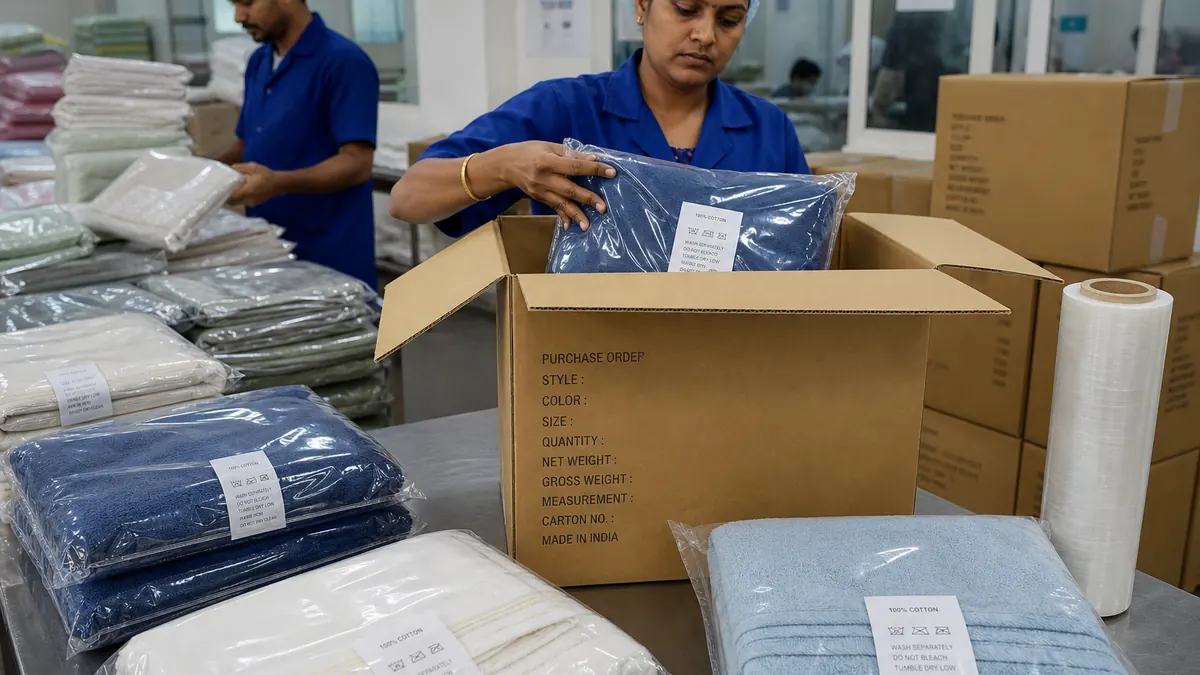
Hospitality packaging uses bulk polybag and master carton formats with linen-room marks, SKU codes, and white-shade lot IDs — not retail hangtags. Some EU buyers require reduced-plastic or recyclable kraft outer packs alongside organic claims. GOTS packaging components may need compliance where non-textile parts are claimed organic-compliant.
Retail GOTS private-label may require retail-ready folds, hangtags with accurate fibre claims, and barcode cartons — a different pack SOP from hotel bulk. Never promise retail PL packs on hospitality RFQs without artwork and barcode workflow readiness.
Pack formats — hospitality vs certified retail PL
Swipe →
Data table — swipe horizontally on small screens
| Format | Channel | Label/cert requirement | Risk |
|---|---|---|---|
| Bulk hospitality carton | Hotel linen room | Linen-room code, lot ID, fibre label | Retail hangtag assumed wrongly |
| Polybag + export carton by size | Wholesale cert distributor | OEKO-TEX hangtag optional | Mixed shade lots in one carton |
| Retail GOTS set pack | Premium e-commerce PL | Hangtag matches TC fibre description | TC missing for terry component |
| Table linen bulk pack | Banquet / F&B hospitality | Minimal retail packaging | Napkin cert scope not on invoice |
| Moisture-protected stow | Ocean transit all channels | Desiccant SOP if contracted | Mould claim on arrival |
| Reduced-plastic EU pack | EU retail/hospitality PL | Buyer vendor portal spec | Non-compliant outer film |
Container Loading Details
Export Tip
- Photograph stuffing — damage claims hit hospitality harder than retail.
- Cert docs travel with shipment — not separate email after sailing.
- Process depth: export pillar post.
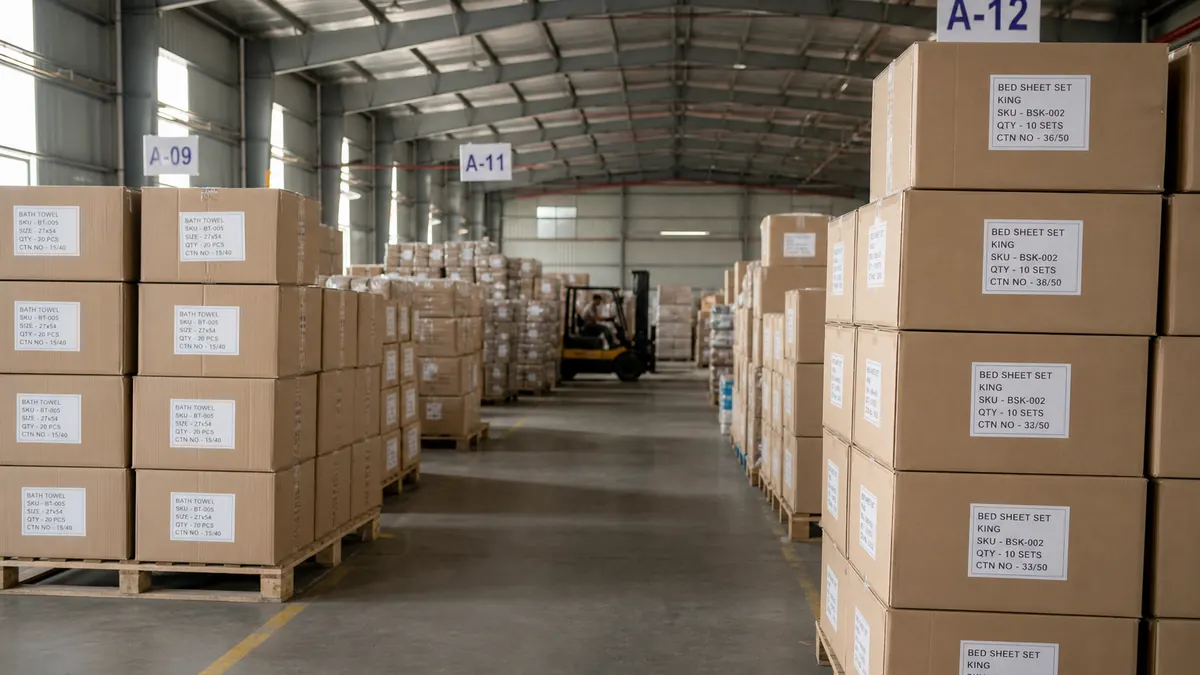
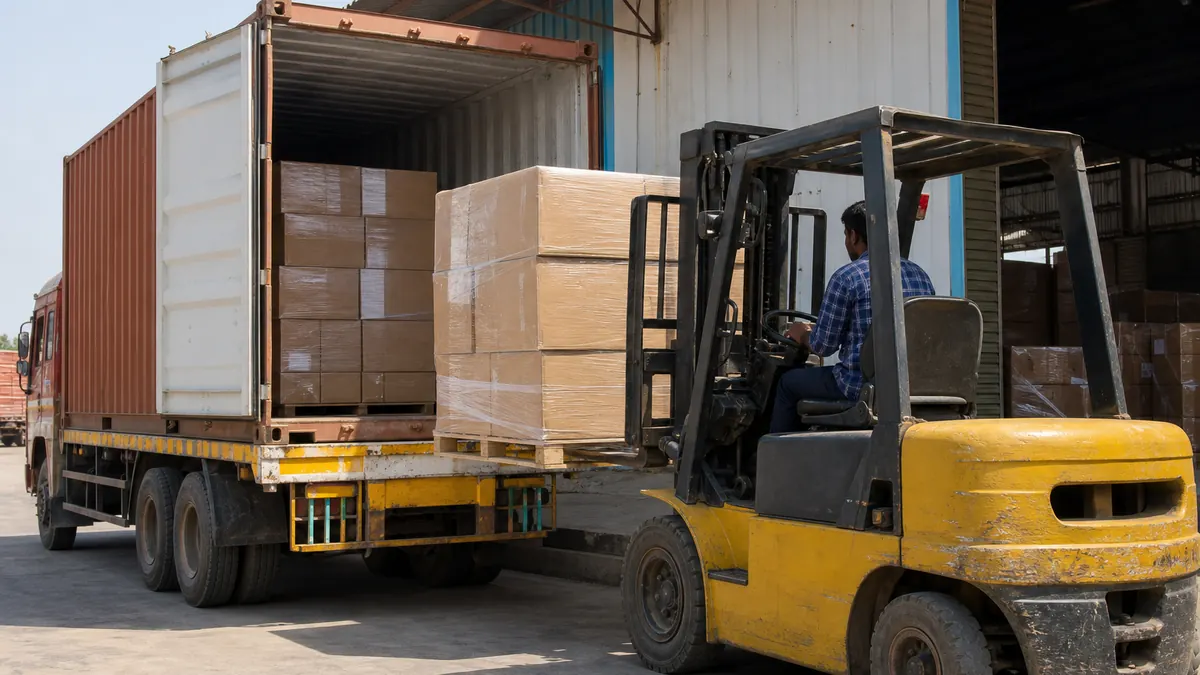
Certified mixed-family FCLs — bed cartons, dense terry, flat table linen — need segregated packing lists and stow plans that prevent shade contamination and carton crush. Bulky quilt layers cube-out; terry weight-out. Hospitality programmes often mix high piece-count terry with flat sheet cartons — forwarder CBM models mandatory before buyer commitment on programme FCL.
Container loading — certified hospitality & PL programmes
Swipe →
Data table — swipe horizontally on small screens
| Loading element | Cert/hospitality consideration | Practice |
|---|---|---|
| Mixed bed+bath+table FCL | TC lines match PL carton blocks | Segregated stacks by family |
| White-shade terry + sheets | Same lot ID naming | Do not mix shade lots in one stack |
| 40′ HQ programme | Replenishment SKU blocks | Reserve carton ID ranges per SKU |
| Quilt/curtain cube-out | Cert scope on add-on SKUs | Honest CBM before promise |
| ICD Delhi + Mundra | Northern Panipat cert parcels | State inland + ocean leg |
| LCL certified trial | Full TC pack still required | Same doc discipline as FCL |
Shipping Methods
Export Tip
- Attach TC copies to shipping doc pack before BL release.
- Express samples: commercial invoice + cert scope note on every dispatch.
- LCL trials: same cert reconciliation as FCL.
Ocean FCL from Mundra, Nhava Sheva, Chennai, or Tuticorin remains default for hospitality and certified retail programmes. Air suits urgent cert sample lots for vendor portal deadlines. Incoterms: FOB named port common on first programmes; CFR/CIF when buyers request; DDP selective for mature hotel groups with destination compliance teams.
Lead times: stock commercial 3–5 weeks; dyed/printed PL 5–8+ weeks; GOTS/hospitality custom 6–10+ weeks. Under-promise certified shade programmes in sales decks — audit timelines kill suppliers who over-promise fair-week sailing.
Certifications
Compliance Notes
- Renew certs before peak hospitality seasons — expired IDs fail portal uploads.
- Archive TC PDFs indexed to lot ID for seven-year buyer audit windows.
- Documentation reconciliation: cluster checklist post.
Certification depth for this specialty post centers on lot-matched evidence: GOTS scope certificates for every processing entity; transaction certificates per organic lot and SKU line; OEKO-TEX Standard 100 certificate IDs with product appendix matching towels, sheets, and napkins actually shipped; BCI mass-balance declarations for conventional programmes; IEC + TEXPROCIL RCMC as baseline export credentials.
Hospitality buyers increasingly request laundry test summaries and shade continuity protocols alongside cert binders. US programmes need TPFIA fibre and care labels; EU/UK need textile fibre labelling and REACH finish declarations where applicable. Curtain 6303 lines need flammability documentation where destination requires — cert scope must list curtain SKUs separately.
Certification attachment matrix — cotton home textile hospitality & PL
Swipe →
Data table — swipe horizontally on small screens
| Document / cert | When required | Must match | Failure mode |
|---|---|---|---|
| GOTS scope certificate | Every processing entity in organic chain | Legal entity on invoice | Audit stop — no vendor approval |
| GOTS transaction certificate | Each organic lot shipment | Invoice SKU lines + care labels | Organic claim invalidated |
| OEKO-TEX Standard 100 | Guest-facing / EU retail baseline | Product class appendix per SKU | Retail delisting |
| BCI mass-balance | Conventional sustainability tier | Marketing claims only — not organic | False organic implication |
| TEXPROCIL RCMC + IEC | All commercial exports | Exporter entity | Buyer KYC rejection |
| Laundry test report | Hospitality contract | Buyer wash protocol | Wing trial failure |
| Flammability doc (6303) | US/UK/EU curtain in programme | Curtain SKU list | Customs or retail hold |
| REACH / azo declaration | EU finishes | Dye/print chemistry | EU market block |
Buyer Requirements
Buyer Requirements
- Portal upload before second meeting — not after first bulk rejection.
- White-shade tolerance and bleach protocol in writing for hospitality.
- Retail PL: barcode + hangtag approval gates before FCL.
- Importer verification: source playbook post.
Certified and hospitality buyers require vendor portal KYC: GOTS scope PDFs, sample transaction certificates, OEKO-TEX IDs, fibre-label artwork proofs, social audit summaries where GOTS social criteria apply, laundry specifications for hotel programmes, replenishment MOQ tables, and third-party inspection protocols on large contracts.
Claims on hangtags and bulk carton marks must match certificate scope exactly — "organic cotton bed+bath set" requires TC chain for every component SKU including terry and table pieces if included in the set marketing. Buyers reject suppliers who verbally promise GOTS while trial terry ships on conventional yarn.
Country-wise Opportunities
Market Snapshot
- EU/GCC hospitality often audits faster than US mass retail cert depth.
- Do not enter every cert corridor simultaneously — master one TC chain first.
- Fair conversion for certified kits: trade shows cluster post.
Certified and hospitality opportunity maps differently from raw HS 6302 volume share. Germany, Netherlands, and UK lead GOTS and OEKO-TEX private-label home textile programmes. USA premium retail and DTC brands drive coordinated GOTS bed+bath sets within the broader US ~62–67% HS 6302 import pool. UAE and GCC hotel groups drive high-audit hospitality white programmes with laundry durability focus. Australia and Japan selective premium niches reward construction plus cert discipline.
Use Best Countries for Indian Cotton Home Textile Exports for corridor ranking; use Find International Buyers for certified lead prospecting tactics.
Country-wise certified & hospitality opportunity map — directional
Swipe →
Data table — swipe horizontally on small screens
| Country / region | Opportunity type | Cert emphasis | Programme families |
|---|---|---|---|
| Germany / EU | Organic PL home brands | GOTS + OEKO-TEX | Bed+bath+table coordinated |
| United Kingdom | PL + boutique hospitality | GOTS niches, OEKO-TEX baseline | Bed+table + terry |
| USA premium | DTC PL, boutique hotel | GOTS sets, TPFIA labels | Coordinated bed+bath |
| USA mass retail | Large PL | BCI + selective OEKO-TEX | Bed+bath commodity cert tiers |
| UAE / GCC | Hotel groups, linen rental | OEKO-TEX guest linen, durability | White bed+bath+table |
| Australia | Retail + hotel niches | OEKO-TEX, care labels | Bed+bath focus |
| Japan | Premium selective | Label language + construction | Bed+table precision |
| Netherlands | EU organic gateway | GOTS TC demonstration | Full category PL |
Hospitality Private-Label Programme Design
Hospitality private-label programmes specify brand embroidery or woven labels, white-shade standards across terry and flat linen, SKU matrices for linen-room inventory software, replenishment lead times, and bulk pack marks readable under industrial laundry conditions. Unlike retail PL, hangtags are absent — fibre labels and carton marks carry brand and compliance text.
Pilot hotel wing trials precede chain-wide rollouts: typically 500–3,000 pieces across core bed and bath SKUs with optional table napkin add-on. Successful pilots lock TC templates (if GOTS), shade lot naming, and call-off pricing for seasonal replenishment. Extended-stay and full-service brands differ in terry GSM expectations and bleach tolerance — capture in written spec before cert chain investment.
Hospitality vs retail PL requirement contrast
Swipe →
Data table — swipe horizontally on small screens
| Element | Hospitality PL | Retail GOTS PL |
|---|---|---|
| Pack format | Bulk carton + linen-room mark | Retail fold + hangtag |
| Shade priority | White continuity across families | Colourway seasonal drops |
| Durability metric | Laundry cycles, tensile after wash | Hand-feel, drape, retail touch |
| Cert buyer focus | Guest-facing OEKO-TEX + optional GOTS | GOTS marketing on hangtag |
| Replenishment | Call-off contract core | Seasonal buy + clearance |
| Label location | Fibre label + woven brand | Hangtag + fibre label |
Bed+bath+table hospitality kit components
- Bed: flat sheet, fitted sheet, pillowcase, duvet cover (optional tier).
- Bath: bath towel, hand towel, washcloth, bath mat.
- Table: banquet napkin, optional tablecloth for F&B outlets.
- Each SKU: laundry spec, white-shade lot, cert scope line if claimed.
Replenishment and call-off logic
- Define MOQ per replenishment SKU separately from pilot MOQ.
- Lock shade continuity windows — new lot requires buyer approval.
- Stock buffer at Karur/Panipat consolidation optional for GCC buyers.
Sourcing Checklist
Checklist
Buyer Checklist
Exporter Checklist
Common Buyer Mistakes
Common Mistakes Box
Future Market Trends
Key Statistics
- More dual GOTS + OEKO-TEX requirements on premium PL sets.
- Hospitality ESG reporting linking linen TCs to hotel brand sustainability pages.
- Reduced-plastic pack rules tightening in EU vendor onboarding.
- US premium DTC increasing coordinated bed+bath+table GOTS drops.
EU Green Claims scrutiny and US premium retail vendor rules increase lot-level traceability expectations on coordinated bed+bath+table programmes — marketing language without TC backup faces delisting. GCC hospitality brands consolidate linen vendors who can supply full category kits with laundry data and OEKO-TEX on guest-facing pieces, not single-SKU towel vendors.
Digital product passports and vendor portal automation will require machine-readable cert IDs linked to SKU masters — exporters who index TCs to ERP lot IDs now avoid manual portal fire drills later. Organic cotton supply competition rises as more Karur and Panipat units pursue GOTS — differentiation shifts to shade reliability, laundry performance, and documentation speed, not cert logos alone.

Challenges & Solutions
- Challenge: Missing TC at one handoff — Solution: map chain before quoting; no production without scope.
- Challenge: White-shade drift — Solution: single lab-dip standard + lot retain samples.
- Challenge: Cert expiry mid-programme — Solution: renewal calendar 90 days ahead.
- Challenge: Label/TC mismatch — Solution: artwork approval gate indexed to lot ID.
- Challenge: Fake organic competitors — Solution: educate buyers on TC verification — compete on audit speed.
- Challenge: Cube surprises on terry-heavy hospitality FCL — Solution: forwarder CBM before contract MOQ.
Certified programme challenges include broken TC chains at terry dyehouses, white-shade drift under commercial laundry, expired OEKO-TEX during long hospitality lead times, buyer portal rejections from label artwork mismatches, and price compression when conventional competitors fake organic language. Procedural fixes — segregation SOP, shade retain protocols, cert renewal calendars, label-TC reconciliation checklists — cost less than one delisted retail season.
Compliance Checklist
Checklist
Compliance Notes
Transaction Certificate Workflow
- One missing napkin line on TC fails entire hotel organic claim.
- Conventional add-on SKUs on same invoice need physical segregation proof.
- Field reconciliation: documentation checklist cluster post.
Transaction certificate workflow is the operational core of GOTS hospitality and PL programmes. For each organic lot: (1) confirm certified organic fibre intake at ginner with TC; (2) spinning TC referencing input TC; (3) weaving/knitting TC; (4) dye/print TC with chemical compliance; (5) cut-sew/finish TC; (6) exporter shipment TC matching commercial invoice lines for sheets, terry, and table SKUs. Any break invalidates organic claims for that lot.
Maintain a TC register spreadsheet: lot ID, SKU, processor, TC number, date, input TC references, and PDF archive path. Buyers increasingly request register screenshots during vendor approval.
GOTS transaction certificate handoff map — multi-family programme
Swipe →
Data table — swipe horizontally on small screens
| Handoff | Entity type | TC must list | Common gap |
|---|---|---|---|
| Farm to ginner | Organic ginner | Organic cotton bale IDs | Non-certified mixed bale intake |
| Ginner to spinner | Spinner | Greige yarn lot | Missing input TC reference |
| Spinner to weaver | Weaver/knitter | Fabric lot per family | Wrong fibre composition on TC |
| Weaver to dyehouse | Dye/print processor | Processed fabric lot | Dyehouse scope excludes print |
| Dyehouse to CMT | Cut-sew unit | SKU semi-finished | Conventional line contamination |
| CMT to exporter | Merchant exporter | Finished SKU lines | Invoice SKU ≠ TC line text |
| Exporter to buyer | Shipment TC | All organic SKUs on invoice | Napkin line omitted on TC |
Sources
- DGCI&S — Directorate General of Commercial Intelligence and Statistics
- Indian Trade Journal — HS 6302 commodity export profile (FY 2023-24)
- Indian Trade Journal / DGCI&S commodity profiles (HS 6302 updates)
- Ministry of Commerce & Industry — TRADESTAT
- TEXPROCIL — The Cotton Textiles Export Promotion Council
- TEXPROCIL — Cotton Home Textiles overview
- DGFT (India) — IEC / trade portal
- CBIC — Indian Customs Tariff (Chapter 63)
- ITC Trade Map
- UN Comtrade Database
- WITS World Integrated Trade Solution
- USITC Harmonized Tariff Schedule (search 6302)
- US CBP — Textile and apparel resources
- FTC — Textile Fiber Products Identification Act
- European Commission TARIC
- EU Regulation (EU) No 1007/2011 — textile fibre names & labelling
- UK Trade Tariff / UK Global Tariff
- UK DCTS goods graduation (Ch. 52 & 63 India — verify current notice)
- DFAT — Australia–India ECTA
- Australian Border Force — FTA Portal
- OEKO-TEX Standard 100
- GOTS — Global Organic Textile Standard
- Better Cotton (BCI)
- IPPC — ISPM 15 wood packaging
- Altus Exports — Textiles & Home Furnishings
All sources accessed 2026-08-08 during the cotton home textiles factual audit. Prefer primary government and multilateral databases (DGCI&S / Indian Trade Journal HS 6302 commodity profiles, TEXPROCIL, DGFT, USITC HTS, EU TARIC, UK Trade Tariff / DCTS graduation notices, DFAT ECTA, ITC Trade Map / UN Comtrade / WITS) when citing figures in contracts or buyer presentations. Re-verify live before every commercial quote.
GOTS transaction certificates, OEKO-TEX scope certificates, and BCI claims must match care-label and invoice descriptions exactly — premium bands are programme-dependent, not fixed mark-ups.
Conclusion
Organic GOTS, OEKO-TEX, and hospitality cotton home textile export opportunities from India convert when certification spans entire bed+bath+table programmes — transaction certificates, OEKO-TEX scope, laundry-validated hospitality specs, and honest FOB premiums — not when marketing adds one organic bedsheet to a conventional assortment. India HS 6302 scale (~US$1,858.84M FY 2023-24; ~US$2,128.63M FY 2024-25, directional) supports volume, but premium corridors reward audit-ready documentation across every SKU in the linen-room kit.
Altus Exports builds certified multi-family programmes through merchant exporter India and global sourcing partner India workflows. Explore textiles & home furnishings or contact the team for GOTS hospitality RFQs spanning Karur, Panipat, and Solapur capacity.
Continue with How to Export Cotton Home Textiles from India, Find International Buyers for Cotton Home Textiles, TEXPROCIL Registration Benefits, and Cotton Home Textile Export Documentation Checklist.