
Best Countries for Indian Cotton Home Textile Exports: Destination Ranking Guide
By Saurabh Mittal, Founder, Altus Exports
Destination-ranking guide for Indian cotton home textile exporters and importers — comparing USA, UK, Germany, Australia, Canada, UAE, Japan, Netherlands, and related corridors on HS 6302 demand scale, duty treatment, freight corridors, and labelling compliance burden.
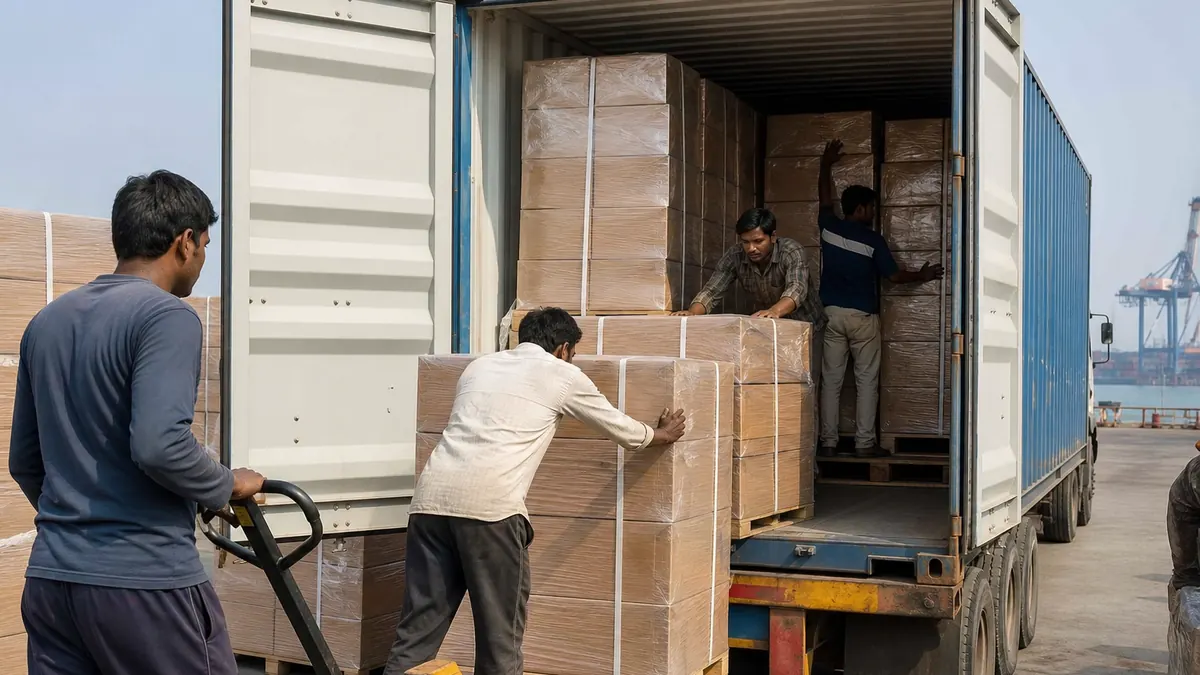
Choosing the best countries for Indian cotton home textile exports is a duty, freight, and compliance-burden decision — not a vanity destination list. USA, UK, Germany, Australia, Canada, UAE, Japan, Netherlands, France, and Mexico each pull Indian HS 6302 cotton made-ups (bed linen, table linen, toilet linen, kitchen linen) and related Chapter 63 assortment lines under different tariff schedules, fibre-labelling rules, and document stacks. A Karur-stuffed mixed bed-and-bath FCL that clears Los Angeles on competitive FOB may need EU textile fibre labelling for Hamburg, UK Global Tariff checks post-Brexit, or OEKO-TEX evidence for a German department-store private-label programme. This guide ranks destination markets so exporters and international buyers sequence market entry intelligently.
India's HS 6302 export value was about US$1,858.84 million in FY 2023-24 and ~US$2,128.63 million in FY 2024-25 (directional DGCI&S commodity profile — label and re-verify before buyer decks). The United States typically absorbs ~62–67% of India's HS 6302 export value; UK, Australia, Canada, Germany, UAE, Japan, Netherlands, Mexico, and Israel follow in varying order by season and SKU mix. Broader cotton textiles under the TEXPROCIL basket reached a directional ~US$11.68 billion in FY 2023-24 — cite as category context, not as HS 6302 alone. For per-country product-family demand detail, see Most Demanded Indian Cotton Home Textiles by Country — this post owns ranking methodology, not the SKU matrix.
For the end-to-end export process behind any corridor, see How to Export Cotton Home Textiles from India. Altus Exports supports corridor selection as a global sourcing partner in India for multi-SKU home textile programmes and international procurement teams evaluating textiles & home furnishings supply from Panipat, Karur, Solapur, and Delhi-NCR consolidation corridors.
Key Takeaways
Summary Box
Executive Summary
Summary Box
- Scan the coloured Summary / Stats / Tips boxes first — then open the ranking tables.
- Decide destination compliance tier before locking FOB and Incoterm.
- Use the jump nav on mobile: Takeaways → Exports → Pricing → Pack → Certs → Country table → FAQ.
Market selection for Indian cotton home textile exports combines directional HS 6302 demand (USA dominant, then UK, Australia, Canada, Germany, UAE, Japan) with second-tier corridors (Netherlands, France, Mexico, Israel, Saudi Arabia) where freight, duty, and labelling stack determine vendor approval speed.
India's ~US$2.1B+ HS 6302 export scale means landed-cost honesty, shade continuity, fibre-label accuracy, and destination-specific compliance beat origin storytelling alone.
This guide ranks destinations by volume potential, tariff and freight corridor, and compliance burden so exporters sequence entry rather than chasing every market simultaneously on identical FOB quotes.
Market Size & Industry Overview
Key Statistics
- Supply map: Panipat · Karur/Coimbatore · Solapur · Delhi-NCR · west/south ports.
- Council stack: TEXPROCIL RCMC + IEC.
- Corridor ranking cue: India HS 6302 ~US$1,858.84M (FY23-24) / ~US$2,128.63M (FY24-25 directional).
- Sibling SKUs: deep bedsheet or terry programmes — link cluster posts; do not paste as this category's core.
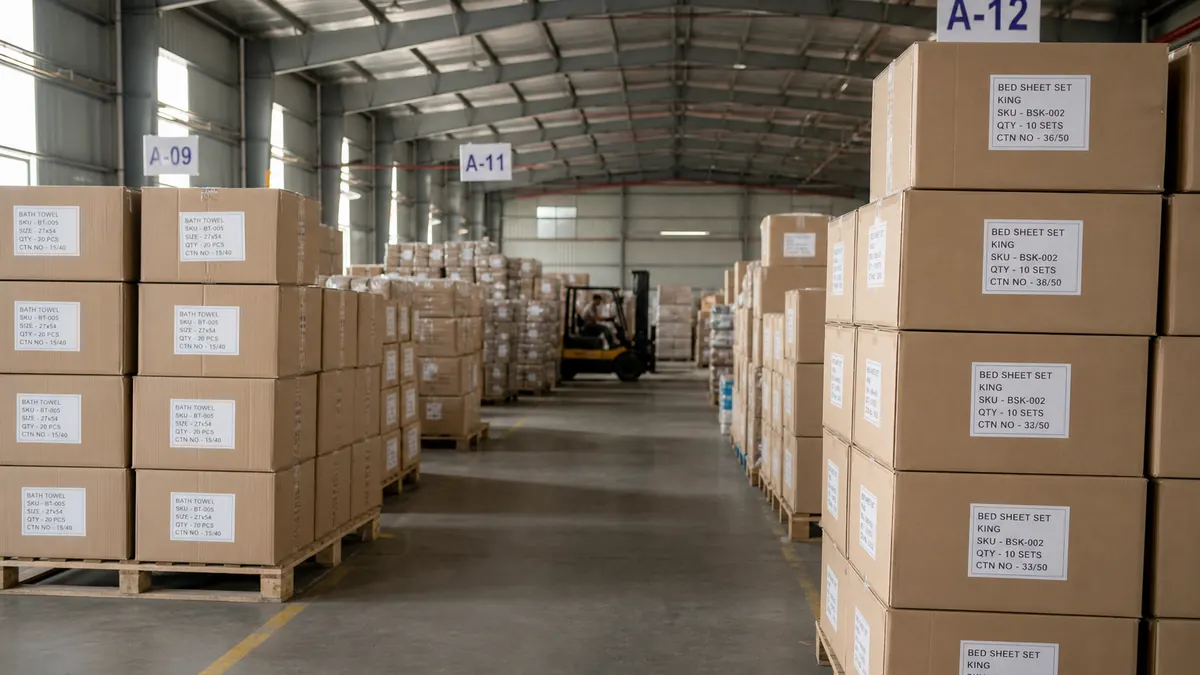
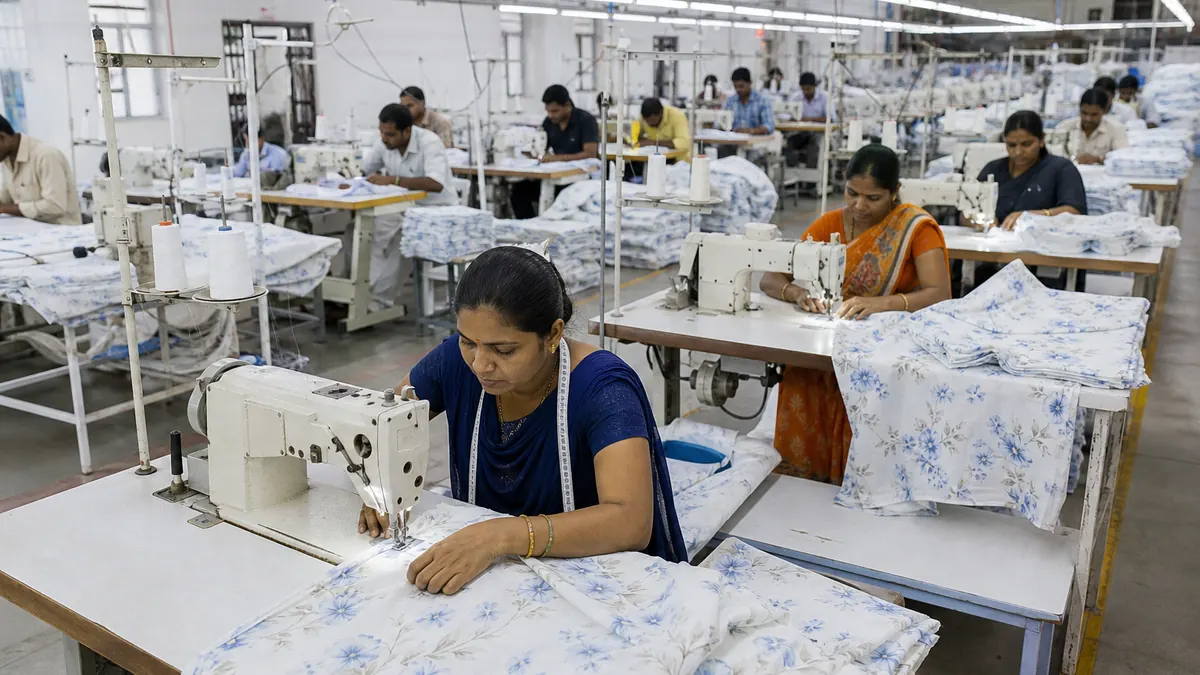
Global cotton home textile demand is driven by retail private label, department-store replenishment, e-commerce bedding and bath sets, hospitality linen programmes, and wholesale distributor assortments. Indian supply is cluster-based: Panipat in Haryana for blankets, throws, terry adjacency, and made-ups consolidation; Karur and Coimbatore in Tamil Nadu for export-disciplined cut-and-sew home textiles; Solapur in Maharashtra for terry and towel adjacency; Tirupur-adjacent belts for cut-and-sew programmes; Delhi-NCR for merchant-exporter consolidation of multi-cluster assortments; Ahmedabad and Gujarat for processing adjacency on dyed/printed lines.
Market structure is corridor-driven. Volume and value hubs (USA, UK, Germany, Australia, Canada) sit alongside Gulf re-export and hospitality corridors (UAE, Saudi Arabia), audit-heavy premium destinations (Japan, Netherlands as EU gateway), and seasonal retail niches (France, Mexico). Choosing the wrong sequence burns working capital on labelling audits before cash flow, or scales commodity mixed loads into destinations that reject on fibre-content or azo-dye documentation.
TEXPROCIL's broader cotton textiles basket (~US$11.68B FY 2023-24 directional) includes yarn, grey fabric, and apparel-adjacent lines beyond pure HS 6302 made-ups — use only with a clear broader-basket label when presenting to boards or buyers.
India's core cotton home textile sourcing clusters
Swipe →
Data table — swipe horizontally on small screens
| Cluster | State/Region | Primary Strength | Typical Output |
|---|---|---|---|
| Panipat | Haryana | Blankets, throws, terry adjacency, made-ups | Bed spreads, throws, terry bath, kitchen linen |
| Karur / Coimbatore | Tamil Nadu | Made-ups export discipline | Bed linen, table linen, curtains, coordinated sets |
| Solapur | Maharashtra | Terry / towel adjacency | Bath linen, kitchen towels, chaddar adjacency |
| Tirupur-adjacent | Tamil Nadu | Cut-and-sew capacity | Pillowcases, cushion-adjacent made-ups |
| Delhi-NCR | Delhi / NCR | Merchant consolidation | Private-label programme management, ICD packing |
| Ahmedabad / Gujarat | Gujarat | Processing adjacency | Dyed/printed home textile programmes |
Export Statistics
Key Statistics
Use HS 6302 partner data before committing FCL capacity — USA regularly leads Indian export value at roughly 62–67% of the heading, with UK, Australia, Canada, Germany, UAE, Japan, Netherlands, Mexico, and Israel recurring across seasons depending on SKU mix and retail calendar.
Separate HS 6302 core bed/bath/table/kitchen linen from HS 6303 curtains and HS 6304 furnishing assortment lines when ranking opportunities; a curtain-heavy year can distort 'home textile' rankings if you do not split headings.
Re-verify DGCI&S, TEXPROCIL, ITC Trade Map, and Comtrade figures annually before market-entry budgets or buyer presentations.
India cotton home textile export profile (HS 6302) — directional; re-verify on quote date
Swipe →
Data table — swipe horizontally on small screens
| Metric | Directional Estimate | Notes / Source cue |
|---|---|---|
| Primary processing clusters | Panipat; Karur/Coimbatore; Solapur; Delhi-NCR; Gujarat adjacency | Merchant consolidation and private-label packing near Mundra / Nhava Sheva / Chennai |
| Applicable HS headings | HS 6302 core; curtains 6303; furnishing assortment 6304; blankets 6301 when essential character | Confirm India 8-digit lines with CHA against live ITC-HS at shipping-bill time |
| Governing trade council | TEXPROCIL (RCMC) + IEC | Primary lens for cotton made-ups export programmes |
| India HS 6302 exports FY 2023-24 | ~US$1,858.84M | DGCI&S commodity profile — directional |
| India HS 6302 exports FY 2024-25 | ~US$2,128.63M (+~14.5% YoY) | DGCI&S commodity profile — directional; re-verify before quoting |
| USA share of India HS 6302 | ~62–67% of export value | Directional partner cue — dominant volume corridor |
| Top destinations after USA | UK, Australia, Canada, Germany, UAE, Japan, Netherlands, Mexico, Israel | Directional bilateral cues — partner ranks move yearly |
| Broader TEXPROCIL cotton textiles FY 2023-24 | ~US$11.68B | Broader basket incl. yarn, fabric, apparel-adjacent — label clearly; not pure HS 6302 |
| Dominant export formats | Bed linen sets, terry bath/kitchen, table linen, curtains, quilts, PL assortments | Polybag + carton; retail-ready for PL; hotel bulk carton with linen-room marks |
Import Statistics
Key Statistics
- USA dominance (~62–67%) shapes FCL planning — but compliance cost is not uniform across US channels.
- EU/UK premium tiers pay for fibre-label and azo/REACH discipline.
- Gulf corridors reward Mundra–Jebel Ali frequency and hospitality replenishment rhythm.
Destination import demand for cotton home textiles concentrates in US retail chains and e-commerce private label (USA), UK and EU department stores and hospitality (UK, Germany, Netherlands, France), English-speaking retail niches (Australia, Canada), Gulf hospitality and re-export (UAE, Saudi Arabia), and Japan specialty department-store and hotel programmes.
Because India is a top-tier global origin for HS 6302 made-ups, most destination 'cotton home textile import' conversations already include Indian options — differentiation is shade continuity, fibre-label accuracy, duty-aware landed cost, and corridor reliability, not novelty of origin.
For per-country product-family preferences after you pick a corridor, see Most Demanded Indian Cotton Home Textiles by Country — this ranking post does not own the SKU matrix.
Destination import cues for cotton home textiles (planning — re-verify live data)
Swipe →
Data table — swipe horizontally on small screens
| Destination | Import Demand Profile | Labelling / Compliance Lens |
|---|---|---|
| United States | Largest HS 6302 offtake; retail PL, big-box, e-commerce, hospitality | Textile Fiber Products Identification Act; care labels; CBP textile entry |
| United Kingdom | Strong bed/bath/table offtake; post-Brexit separate tariff | UK textile fibre labelling; care symbols; azo dye restrictions |
| Germany / EU | Premium retail and hotel linen; Netherlands gateway common | EU Regulation 1007/2011 fibre labels; REACH finishes; OEKO-TEX where claimed |
| Australia / Canada | English-speaking retail and hospitality niches | Care/fibre labels; check India-Australia ECTA / Canadian tariff live (not a flat 'low duty' claim) |
| UAE / GCC | Hospitality velocity + re-export reach | Hotel linen-room specs; fibre labels; hot-climate moisture pack |
| Japan | Smaller volume; high-spec hotel and department store | Tight construction tolerance; certification evidence; long vendor approval |
Product Categories / Variants
Summary Box
- Mixed bed+bath FCL is common — score corridors on total assortment compliance, not one hero SKU.
- Certified organic/GOTS lines shift ranking toward EU, USA premium, and Japan — see organic/hospitality specialty guide.
- Confirm essential character with CHA when assortment spans 6302/6303/6304.
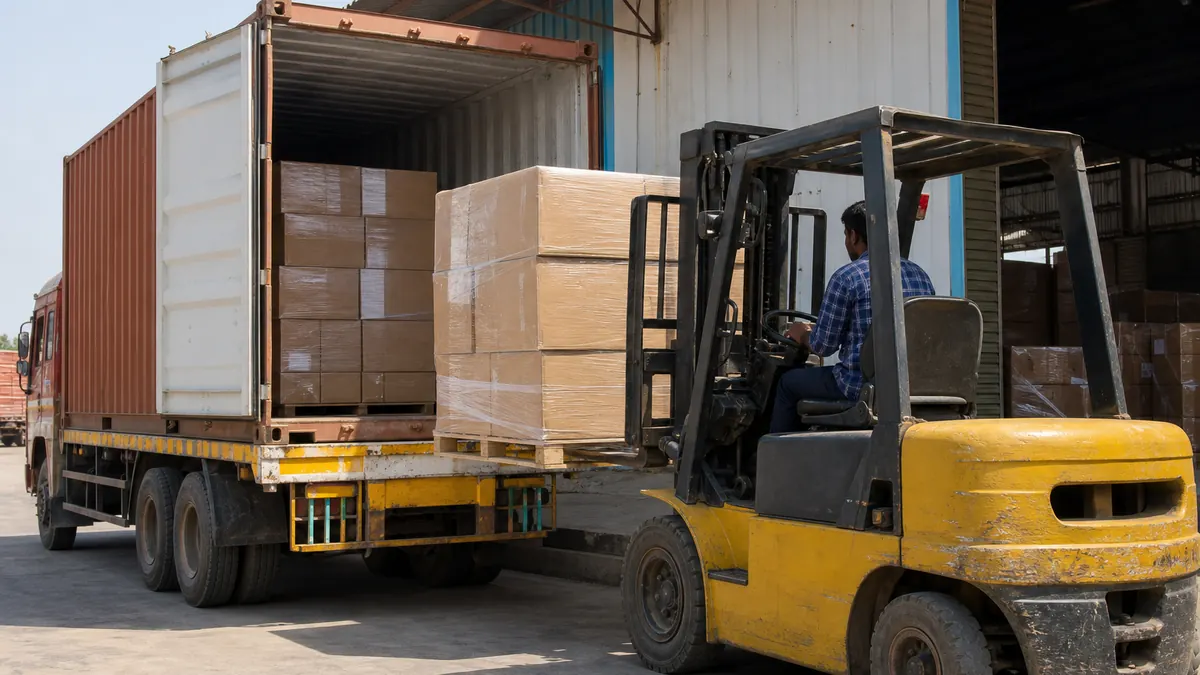
Destination ranking should acknowledge which product families you ship — bulky quilts cube-out containers; terry bath programmes weight-out; curtain programmes may trigger HS 6303 and flammability documentation. Category catalogue depth lives in Top Cotton Home Textile Products Exported from India.
If your programme is bedsheet-led or terry-led, cross-link sibling clusters — how to export bedsheets from India and import terry towels from India — without pasting their construction deep-dives here. This post ranks corridors for the multi-SKU home-textile basket.
Product families that change corridor economics (category level)
Swipe →
Data table — swipe horizontally on small screens
| Family | Typical HS | Corridor Sensitivity |
|---|---|---|
| Bed linen (sheets, pillowcases, duvet covers) | 6302 | USA/UK volume; construction + shade QC |
| Terry bath & kitchen linen | 6302.60 family | USA/Germany hospitality; weight-heavy FCL |
| Table linen | 6302 | EU/UK premium retail; napery construction |
| Curtains & drapes | 6303 | EU flammability where required; cube-heavy |
| Quilts / comforters / bedspreads | 6302 / 6301 | Bulky — cube-out before weight-out |
| Coordinated PL sets | 6302 mix | Label pack must match destination rules per SKU |
Manufacturing Overview
Export Tip
- Match cluster capability to destination compliance tier before quoting FOB.
- Lab-dip and shade continuity systems are non-negotiable for EU/UK/US retail.
- Merchant consolidation via Delhi-NCR can compress multi-cluster logistics — verify the actual production sites.
Destination readiness starts at cluster capability. Panipat units excel at volume throws, blankets, and terry-adjacent made-ups feeding US big-box and Gulf wholesale. Karur and Coimbatore plants bring export packing discipline, dimensional tolerance, and shade continuity culture suited to UK, EU, and Australia retail. Solapur contributes terry and towel capacity; Delhi-NCR merchants consolidate multi-cluster assortments into one TEXPROCIL-backed invoice and document pack.
Market ranking without manufacturing honesty fails. Promising Japan-grade construction from a unit that has only shipped commodity open-stock shades into UAE hypermarkets creates first-arrival rejection risk that damages the entire category reputation.
See TEXPROCIL Registration Benefits for Cotton Home Textile Exporters for council credibility mechanics that buyers expect when evaluating new corridors.
Pricing Analysis
Buyer Tip
- Never compare corridors on FOB alone — model landed cost.
- Index quotes to quote date; cotton yarn index moves programmes.
- Hospitality white linen demands shade continuity reserves in costing.
Destination ranking must include price-band realism. Indicative FOB for commodity bed/bath programmes often sits in low-to-mid USD/pc or USD/set bands depending on construction, yarn count, dye/print, and pack format; hotel linen and certified private-label programmes run higher. Always verify on the quote date — never publish stale absolutes as current prices.
Landed cost, not FOB, decides corridor attractiveness. Add ocean freight, destination duty, terminal handling, inland delivery, broker fees, and destination lab/retest for fibre or azo claims. A slightly higher FOB into a competitive-duty US HTS line can beat a cheaper FOB into a higher-duty or high-rejection corridor.
Premium Japan and EU programmes pay for construction tolerance and certification discipline; Gulf programmes often reward competitive FOB and reliable lead times on white hospitality linen.
Pricing & landed-cost planning structure (directional — verify quote date)
Swipe →
Data table — swipe horizontally on small screens
| Cost Component | Planning Note | Corridor Sensitivity |
|---|---|---|
| FOB Mundra / Nhava Sheva / Chennai USD/pc or set | By family, construction, dye/print, cert, pack | Commodity USA vs premium EU/Japan vs Gulf hospitality |
| Inland haulage cluster → port | Panipat → ICD Delhi / Mundra; Karur → Chennai/Tuticorin | Price inland explicitly when comparing quotes |
| Ocean freight + THC | Lane-dependent; buffer for peak season and Red Sea diversions | US West/East coast vs EU vs Gulf short-haul |
| Destination duty | Confirm live HTS / TARIC / UKGT / Japan / GCC schedules on HS 6302 | Duty surprises kill margin more than freight swings |
| Compliance & lab | Fibre labels, care labels, OEKO-TEX/GOTS TCs, azo/REACH | Highest in Japan, EU premium, US retail PL |
| Rejection / claim reserve | Budget for shade mismatch, label errors, or construction tolerance failures | Underspecified PL programmes carry higher reserve |

MOQ Analysis
Buyer Tip
MOQ strategy should follow destination risk. New audit-heavy corridors (Japan, US retail PL, EU OEKO-TEX programmes) deserve sample and small trial bands before FCL. Volume USA commodity and Gulf hospitality programmes can move to larger trials faster once shade match is proven — still avoid jumping from sample to multi-FCL without a written acceptance band.
Typical bands: samples 20–100 pcs/SKU or lab-dip sets; trial 500–3,000 pcs hero SKU or mixed LCL; wholesale 1×20′ / 1×40′ HQ mixed home-textile FCL; hospitality seasonal call-offs by programme.
MOQ ladder by destination readiness tier
Swipe →
Data table — swipe horizontally on small screens
| Tier | Typical MOQ Band | Corridor Examples |
|---|---|---|
| Sample / lab-dip | 20–100 pcs/SKU or colourway set | All destinations — mandatory gate |
| Trial / LCL | 500–3,000 pcs hero or mixed assortment | First entry USA, UK, EU, Japan |
| Wholesale FCL | 1×20′ or 1×40′ HQ mixed load | Proven USA, UAE, Australia corridors |
| Hospitality call-off | Seasonal replenishment POs | UAE, USA hotel chains, EU contract linen |
| Retail PL scale | Multi-SKU FCL programmes | USA, UK, Germany after label pack proven |
Packaging Standards
Export Tip
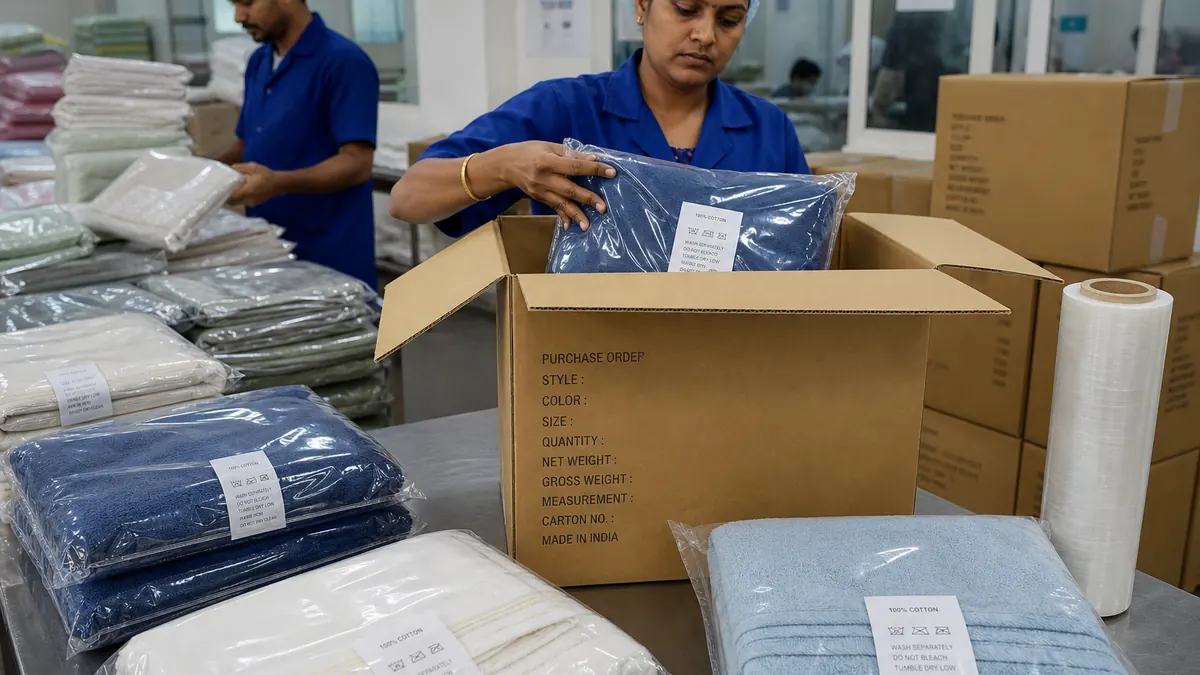
- Polybag + corrugated carton by size/colourway is the export default.
- Fibre and care labels must match destination legal text before production start.
- Photograph carton marks and SKU blocks at stuffing — supports claims defence.
Packaging expectations vary by destination channel more than by country name alone. US retail private label expects polybag + carton, barcode-ready labels, and size/SKU segregation. EU and UK department stores add fibre-content label placement rules and language fields. Hospitality bulk programmes use carton marks for linen-room sorting with fewer retail-facing polybags.
Moisture protection matters on long-haul US and EU lanes — silica and carton strength are cheap insurance against sea-transit humidity claims on cotton made-ups.
Container Loading Details
Export Tip
Mixed home-textile FCLs often cube-out on quilts, comforters, and curtain programmes before they weight-out on terry and bed linen. Confirm stow plans with your forwarder and CHA; photograph SKU blocks on mixed loads.
Northern Panipat parcels may rail/truck via ICD Delhi/Tughlakabad; southern Karur programmes use Chennai or Tuticorin. Match load port to cluster in corridor scoring — inland haulage belongs in landed cost.
Container loading cues for cotton home textile programmes
Swipe →
Data table — swipe horizontally on small screens
| Load Type | Typical Cube/Weight Behaviour | Planning Note |
|---|---|---|
| Bed linen + pillowcases | Moderate cube; weight manageable | Often mixes well with table linen |
| Terry bath + kitchen | Weight-heavy | May limit mixed SKU count in 20′ |
| Quilts / comforters | Cube-out early | Fewer pcs per container — price landed cost accordingly |
| Curtains (HS 6303) | Long cartons — cube-heavy | Confirm heading and flammability docs |
| Hospitality mixed | Bulk cartons, fewer polybags | Mark for linen-room SKU sort |
Shipping Methods
Export Tip
- Score Mundra vs Nhava Sheva vs Chennai by cluster proximity and liner frequency.
- Peak retail seasons (US fall, EU spring) compress sailing choice — book early.
- Red Sea / canal diversions can add 1–2 weeks — buffer hospitality call-offs.
Ocean FCL is the default for wholesale cotton home textile programmes from Mundra, Nhava Sheva, and Chennai. LCL suits first-trial mixed assortments into USA, UK, or UAE before buyers commit to container rhythm. Air freight is reserved for urgent sample replacements or high-value certified PL launches — not commodity volume.
Incoterms: EXW factory, FOB named Indian port, CFR/CIF destination port; DDP selective for large retail/hospitality programmes with mature destination partners. Lead times: stock commercial grades 3–5 weeks; dyed/printed PL 5–8+ weeks; GOTS/hospitality custom 6–10+ weeks; ocean transit corridor-dependent.
Certifications
Compliance Notes
Certification burden shifts destination ranking. US retail may accept conventional cotton with accurate fibre labels; EU premium and Japanese department stores often expect OEKO-TEX Standard 100 or GOTS/OCS where organic claims are made. BCI / Better Cotton claims require chain-of-custody evidence. REACH applies where chemical finishes are present. Curtain programmes may need flammability documentation where destination requires.
Full organic/hospitality specialty depth lives in Organic GOTS OEKO-TEX and Hospitality Cotton Home Textile Export Opportunities — this post scores how cert burden affects corridor choice.
Certification burden by destination tier (planning)
Swipe →
Data table — swipe horizontally on small screens
| Destination Tier | Common Cert / Doc Expectations | Ranking Impact |
|---|---|---|
| USA volume retail | Fibre + care labels; CBP entry; optional OEKO-TEX for PL | Medium — label accuracy is the gate |
| UK / EU premium | Fibre labels, azo/REACH, OEKO-TEX/GOTS if claimed | High — audit before first FCL |
| Australia / Canada | Care/fibre labels; retail PL barcode discipline | Medium |
| UAE / GCC hospitality | Bulk shade continuity; hotel laundry durability and linen-room marks | Medium-low for white linen |
| Japan specialty | OEKO-TEX or equivalent; tight tolerance docs | Very high — sequence last |
Buyer Requirements
Buyer Requirements
- Lock construction, shade standard, and label artwork before production.
- Ask for destination-specific shipment history — not generic 'export experience'.
- Third-party inspection (SGS, Bureau Veritas, Intertek) is common on first FCL.
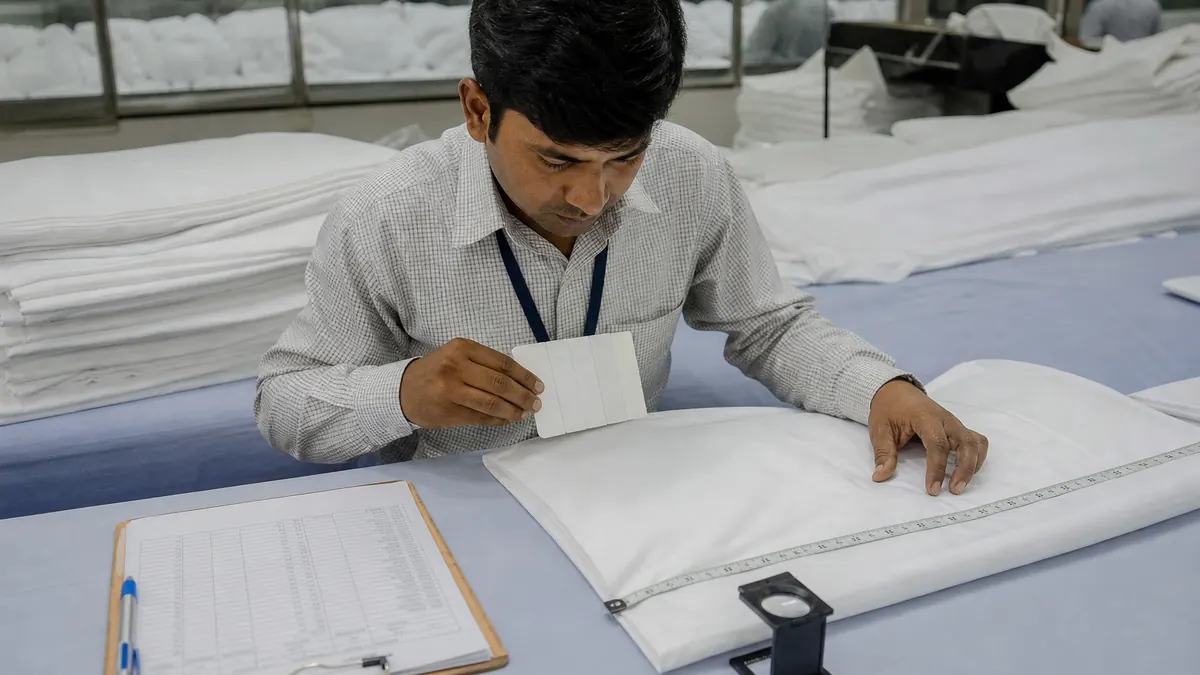
Buyers ranking Indian origins alongside Turkey, Pakistan, or China compare landed cost, lead-time reliability, shade continuity, and label-pack readiness — not FOB alone. US buyers add CBP textile entry familiarity; EU buyers add fibre-label language and azo testing; Gulf buyers add replenishment speed and white-shade consistency for hotels.
Importers should request TEXPROCIL RCMC, IEC, and factory/site evidence before market-specific PO commitment. See Source Cotton Home Textiles Directly from India for the importer-side verification playbook.
Country-wise Opportunities
Market Snapshot
The table below ranks priority corridors for Indian HS 6302 cotton home textile exports using directional demand scale, duty treatment (verify live), freight fit from Indian ports, and labelling/compliance burden. It does not map per-country SKU preferences — that intelligence lives in the demand-by-country companion post.
Sequence recommendation for most exporters: prove USA or UAE hospitality rhythm first (depending on product mix), then invest in UK/Germany/EU label packs, then add Japan or specialty certified programmes once shade and documentation systems are genuinely in place.
Destination ranking for Indian cotton home textile exports (HS 6302) — directional
Swipe →
Data table — swipe horizontally on small screens
| Rank | Country | Demand Scale | Duty / Tariff Note | Freight / Corridor | Compliance Burden |
|---|---|---|---|---|---|
| 1 | United States | Largest — ~62–67% HS 6302 value | Line-specific HTS (e.g. 6302.10 often 6%; 6302.60 terry often 9.1%; some printed bed-linen ~11.9%) — verify USITC + Ch.99 overlays | Mundra/Nhava Sheva → USWC/USEC; high frequency | TPFIA fibre labels; care labels; CBP textile entry — medium-high |
| 2 | United Kingdom | Top-tier after USA | UKGT typically applies — India Ch.63 DCTS preferences graduated (verify GOV.UK notice through ≥Dec 2028) | Direct sailings; English-language retail fit | UK fibre labelling; azo rules — medium-high |
| 3 | Australia | Strong English-speaking retail/hospitality | ECTA preference possible with ROO/COO — else MFN; verify ABF FTA Portal | Trans-Pacific from Mundra/Nhava Sheva | Care/fibre labels — medium |
| 4 | Canada | US-adjacent retail calendar at smaller scale | Verify live HS 6302 — often competitive | East/West coast sailings | Bilingual label planning for Quebec retail — medium |
| 5 | Germany | EU premium retail + hotel linen | Many CN 6302 lines ~12% third-country; GSP/REX may reduce — verify TARIC | Often via Rotterdam/Hamburg; Karur/EU lead times | EU fibre labels (Reg. 1007/2011); REACH; OEKO-TEX common — high |
| 6 | United Arab Emirates | Gulf hospitality + re-export | GCC duty often low — confirm live | Mundra–Jebel Ali short transit | Shade continuity for hotels — medium |
| 7 | Japan | Specialty premium; smaller volume | Verify Japan tariff on HS 6302 | Longer transit; selective sailings | Tight tolerance; cert evidence — very high |
| 8 | Netherlands | EU gateway + redistribution | EU TARIC applies | Rotterdam hub into wider EU | Same EU stack as Germany — high |
| 9 | France / Mexico / Israel | Recurring second-tier offtake | Verify live schedules per SKU | EU (FR); Americas (MX); specialty (IL) | Enter after Tier 1–2 label rhythm proven |
Sourcing Checklist
Checklist
Buyer Checklist
Exporter Checklist
Common Buyer Mistakes
Common Mistakes Box
Future Market Trends
Key Statistics
- US/UK e-commerce PL demand supports repeat FCL rhythm on proven shades.
- Gulf hospitality remains a diversification hedge against Western retail seasonality.
- EU/UK/US label enforcement raises the cost of weak documentation.
- Certified organic and hotel premium niches grow faster than commodity pcs.
E-commerce private-label bedding and bath sets continue to support US and UK demand for Indian cotton made-ups, while Gulf hospitality expansion sustains white-linen replenishment programmes. GOTS, OEKO-TEX, and BCI-certified programmes will keep expanding in EU, USA premium, and Japan — see the organic/hospitality specialty guide — but they will not replace commodity mixed-load cash-flow corridors.
Enforcement intensity on fibre-content mislabelling, azo dyes, and undeclared finishes is rising in EU/UK and US retail. Exporters who invest in label-pack discipline and third-party testing will keep market access; those who compete only on FOB will lose approved-vendor slots after one failed arrival.
Logistics will remain west-coast and south-coast India centric (Mundra/Nhava Sheva/Chennai), with Delhi-NCR merchant consolidation growing for multi-cluster US and EU programmes.
Challenges & Solutions
- Challenge: USA concentration (~62–67%) — Solution: diversify into UK, UAE, Australia once label packs proven
- Challenge: duty assumption errors — Solution: live tariff check per HS line before every new quote cycle
- Challenge: compliance mismatch (US/EU/Japan/Gulf) — Solution: attach destination checklist to RFQ response
- Challenge: shade mismatch on long-haul — Solution: lab-dip approval, shade lot segregation, stuffing photos
- Challenge: HS 6302 data mixed with 6303/6304 — Solution: split headings in corridor analysis
Scaling multi-country cotton home textile exports involves duty volatility, compliance asymmetry, and partner concentration risk — especially USA overweight in HS 6302 value. The solutions below keep programmes bankable.
Compliance Checklist
Checklist
Compliance Notes
Sources
- DGCI&S — Directorate General of Commercial Intelligence and Statistics
- Indian Trade Journal — HS 6302 commodity export profile (FY 2023-24)
- Indian Trade Journal / DGCI&S commodity profiles (HS 6302 updates)
- Ministry of Commerce & Industry — TRADESTAT
- TEXPROCIL — The Cotton Textiles Export Promotion Council
- TEXPROCIL — Cotton Home Textiles overview
- DGFT (India) — IEC / trade portal
- CBIC — Indian Customs Tariff (Chapter 63)
- ITC Trade Map
- UN Comtrade Database
- WITS World Integrated Trade Solution
- USITC Harmonized Tariff Schedule (search 6302)
- US CBP — Textile and apparel resources
- FTC — Textile Fiber Products Identification Act
- European Commission TARIC
- EU Regulation (EU) No 1007/2011 — textile fibre names & labelling
- UK Trade Tariff / UK Global Tariff
- UK DCTS goods graduation (Ch. 52 & 63 India — verify current notice)
- DFAT — Australia–India ECTA
- Australian Border Force — FTA Portal
- OEKO-TEX Standard 100
- GOTS — Global Organic Textile Standard
- Better Cotton (BCI)
- IPPC — ISPM 15 wood packaging
- Altus Exports — Textiles & Home Furnishings
All sources accessed 2026-08-08 during the cotton home textiles factual audit. Prefer primary government and multilateral databases (DGCI&S / Indian Trade Journal HS 6302 commodity profiles, TEXPROCIL, DGFT, USITC HTS, EU TARIC, UK Trade Tariff / DCTS graduation notices, DFAT ECTA, ITC Trade Map / UN Comtrade / WITS) when citing figures in contracts or buyer presentations. Re-verify live before every commercial quote.
Partner rankings and destination tariff notes change annually — re-run DGCI&S / ITC Trade Map extracts and live duty lookups (USITC HTS, TARIC, UKGT + DCTS graduation status, ABF FTA Portal for ECTA) before market-entry budgets.
Conclusion
Selecting the best countries for Indian cotton home textile exports succeeds when directional HS 6302 demand (USA ~62–67%, then UK, Australia, Canada, Germany, UAE, Japan) is scored against live duty, Mundra/Nhava Sheva/Chennai freight, and labelling compliance burden — with Netherlands, France, Mexico, and Israel sequenced for gateway, premium, and diversification roles.
Altus Exports helps Indian home textile programmes and international buyers rank corridors and execute first trials as a merchant exporter in India and global sourcing partner. Explore the textiles & home furnishings industry page, or contact the team for a destination scorecard.
Continue with How to Export Cotton Home Textiles from India, Most Demanded Indian Cotton Home Textiles by Country, and How to Find International Buyers for Cotton Home Textiles.