
TEXPROCIL Registration Benefits for Cotton Home Textile Exporters
By Saurabh Mittal, Founder, Altus Exports
A complete guide to TEXPROCIL registration for cotton home textile exporters from India — why RCMC matters for multi-SKU bed linen, terry bath and kitchen linen, table linen, cotton curtains, quilts, and coordinated private-label and hospitality programmes across Panipat, Karur, and Solapur, step-by-step application, fair access, buyer credibility, and RCMC continuity for international retail, e-commerce, and hotel procurement teams.
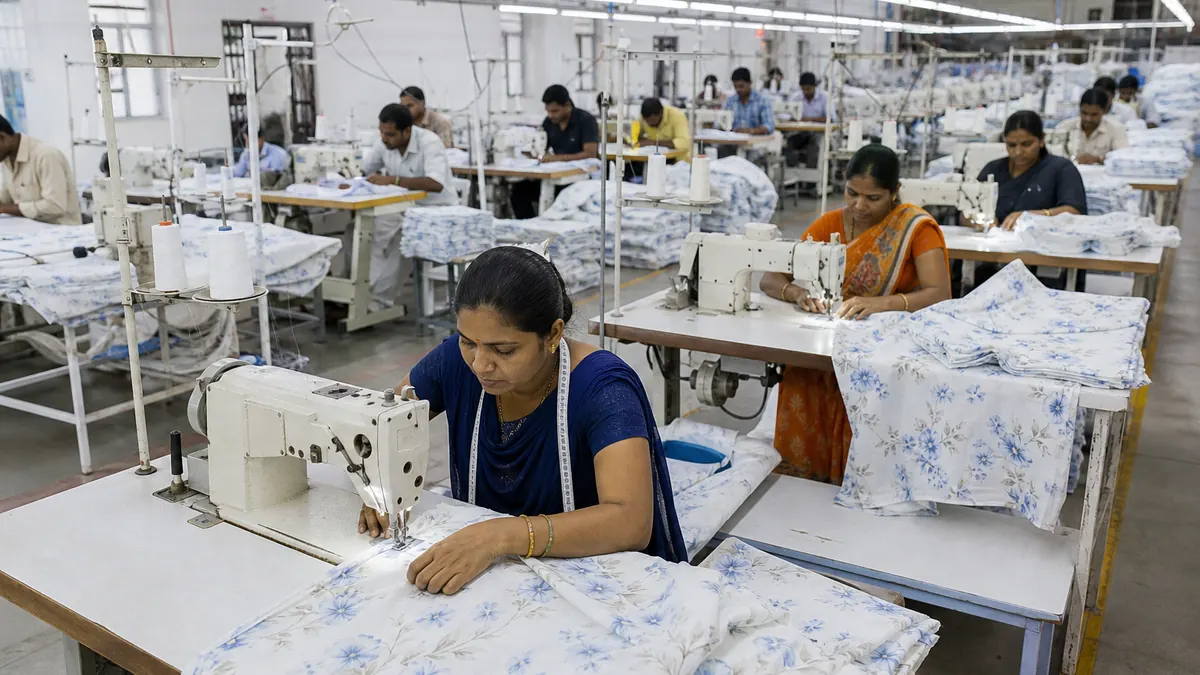
India's cotton home textile export sector ships multi-SKU made-ups programmes — bed linen, terry bath and kitchen linen, table linen, cotton curtains and drapes, quilts, comforters, and bedspreads, and coordinated private-label bed-plus-bath sets — through clusters in Panipat (Haryana), Karur and Coimbatore (Tamil Nadu), Solapur (Maharashtra), and Delhi-NCR merchant consolidation before ocean freight from Mundra, Nhava Sheva, Chennai, Tuticorin, or ICD Delhi. Trade is commonly tracked under HS 6302 (bed, table, toilet, and kitchen linen), HS 6303 (curtains), HS 6304 (assortment furnishing lines where essential character applies), and HS 6301 (blankets when essential character demands). Directional DGCI&S commodity data cites India HS 6302 exports at about US$1,858.84M in FY 2023-24 and US$2,128.63M in FY 2024-25, with the United States at 66.98% in FY 2023-24 (US$1,245.05M) and about 62.47% in FY 2024-25 (US$1,329.77M) — multi-year band roughly 62–67% — label directional and re-verify on quote date.
For cotton home textile exporters, TEXPROCIL registration is the foundational institutional credential. TEXPROCIL — the Cotton Textiles Export Promotion Council — is the government-recognised apex body for Indian cotton yarn, fabric, and made-ups export promotion. Cotton home textiles and cotton made-ups fall squarely within TEXPROCIL's scheduled scope. Registration issues the Registration-cum-Membership Certificate (RCMC), unlocks Index Mumbai and Heimtextil delegation pathways, supports market development assistance for overseas fairs, and signals to international buyers that an exporter operates within organised cotton made-ups export channels — a critical filter when retail private-label teams, hospitality procurement offices, and wholesale distributors compare Panipat, Karur, and Solapur suppliers.
This guide owns TEXPROCIL RCMC depth for multi-SKU cotton home textiles — what TEXPROCIL is, why RCMC matters for bed-plus-bath-plus-table programmes, who should register, step-by-step application, documents and fees, fair access, buyer KYC value, and RCMC continuity. It is not a bedsheet-only council essay, a field-by-field document checklist, or a destination ranking methodology — those live in sibling cluster posts linked throughout. Pair this guide with How to Export Cotton Home Textiles from India for the full operational sequence and Cotton Home Textile Export Documentation Checklist for shipment document reconciliation.
Key Takeaways
Summary Box
Executive Summary
Summary Box
- Owns: TEXPROCIL RCMC application, benefits, fair access, buyer KYC.
- Does not own: end-to-end export steps, document field checklist, destination ranking.
- Verify fees and portal workflows on texprocil.org and dgft.gov.in before filing.
Cotton home textile export combines India's largest cotton made-ups capacity with one of its most operationally demanding SKU mixes: a single FCL may carry flat sheet sets, terry towel bundles, table napkin colourways, curtain panels, and quilt sets — each with different construction, shade gates, HS lines, and pack formats. Panipat concentrates quilts, bedspreads, and northern consolidation; Karur and Coimbatore supply export-disciplined bed and table programmes; Solapur feeds terry adjacency into bath and kitchen lines; Delhi-NCR merchant exporters assemble coordinated private-label colourway sets. Directional trade data shows HS 6302 export value rising from about US$1,858.84M in FY 2023-24 to ~US$2,128.63M in FY 2024-25, with the United States typically at ~62–67% of value.
TEXPROCIL registration sits at the centre of the institutional layer for this cluster. RCMC issuance, fair access through Index Mumbai and Heimtextil, market development assistance, and buyer-facing credibility signals separate organised multi-SKU exporters from casual traders. This guide combines the TEXPROCIL registration playbook with market context exporters need — product families, manufacturing clusters, pricing and MOQ framing, packaging and logistics overview, certifications, buyer requirements, and country-wise opportunity mapping — without duplicating the process pillar, document checklist, or country-ranking methodology owned by peer posts.

Market Size & Industry Overview
Key Statistics
Global demand for Indian cotton home textiles spans retail chains, department stores, e-commerce private label, hospitality procurement, wholesale distributors, and interior design trade. Buyers purchase on construction consistency, shade continuity, fibre-label accuracy, certification scope where claimed, and delivery reliability — not on undifferentiated home linen branding. Multi-SKU programmes reward exporters who can manage cross-family shade cards, multi-HS invoicing, and cube-aware FCL stuffing from Mundra, Nhava Sheva, Chennai, Tuticorin, or ICD Delhi.
Broader cotton textiles under the TEXPROCIL basket reached a directional ~US$11.7B in FY 2023-24 — cite as category context, not as a substitute for HS 6302 planning numbers alone. Most organised cotton home textile exporters hold TEXPROCIL RCMC because international buyers use council membership as a first-order vendor filter before investing in sample-heavy multi-family programmes.
Production clusters map cleanly to product families but merchant consolidation in Delhi-NCR is where bed-plus-bath colourway programmes are assembled into one coherent shipment. Registration product lists should reflect the actual SKU mix you export — bed, bath, table, curtain, quilt, and hospitality lines — not a generic cotton textiles label.
India cotton home textile clusters — TEXPROCIL registration planning map
Swipe →
Data table — swipe horizontally on small screens
| Cluster | State/Region | Primary Families | RCMC Relevance |
|---|---|---|---|
| Panipat | Haryana | Quilts, bedspreads, terry adjacency, northern volume | Made-ups RCMC; ICD Delhi logistics common |
| Karur / Coimbatore | Tamil Nadu | Bed linen, table linen, coordinated PL sets | Export packing discipline; Chennai/Tuticorin ports |
| Solapur | Maharashtra | Terry bath, kitchen towels, chaddar adjacency | 6302.60 family planning; bath bundle programmes |
| Delhi-NCR | Delhi / NCR | Multi-cluster consolidation, PL assembly | Merchant RCMC holder; buyer-facing credential hub |
| Ahmedabad adjacency | Gujarat | Dyed/printed programmes | Processing links; confirm HS per finish |
Export Statistics
Key Statistics
Indian cotton home textile exports plan primarily under HS 6302 — bed linen, table linen, toilet linen, and kitchen linen. HS 6303 covers curtains and interior blinds; HS 6304 covers certain furnishing assortment lines; HS 6301 applies when blanket or travelling-rug essential character dominates. Terry toilet and kitchen linen commonly plan under the 6302.60 family — confirm eight-digit ITC-HS with your CHA before shipping-bill filing.
Directional DGCI&S commodity profiles cite India HS 6302 exports at about US$1,858.84 million in FY 2023-24 and US$2,128.63 million in FY 2024-25 (+~14.5% YoY). The United States typically accounts for roughly 62–67% of India's HS 6302 export value, followed directionally by the UK, Australia, Canada, Germany, Mexico, Israel, UAE, Japan, and Netherlands. TEXPROCIL trade releases and ITC Trade Map help verify partner ranks annually.
RCMC holders should align export statistics discussions with HS-line discipline — do not present total cotton textile basket figures as if they were bed-plus-bath-plus-table totals alone. Multi-SKU programmes may legitimately span several headings on one commercial invoice with line-level accuracy.
India cotton home textile export profile (HS 6302-led) — directional; re-verify on quote date
Swipe →
Data table — swipe horizontally on small screens
| Metric | Directional Estimate | TEXPROCIL / RCMC Note |
|---|---|---|
| Core HS heading | 6302 — bed, table, toilet, kitchen linen | Declare made-ups categories accurately on RCMC application |
| Curtains / drapes | 6303 | Flammability docs where destination requires |
| Assortment furnishing | 6304 | Confirm essential character with CHA |
| Blankets (when applicable) | 6301 | Quilt/comforter character drives heading |
| India HS 6302 export value | ~US$1,858.84M FY23-24 / ~US$2,128.63M FY24-25 | DGCI&S commodity profiles — directional |
| Top destination (value) | USA ~62–67% of HS 6302 value | RCMC expected on US retail vendor onboarding |
| Governing council | TEXPROCIL RCMC + IEC | Primary RCMC route for cotton home textiles |
| Broader cotton textiles context | ~US$11.7B FY23-24 (TEXPROCIL basket) | Category context — not HS 6302 alone |
Import Statistics
Key Statistics
Destination import demand shapes where TEXPROCIL-backed credibility pays off first. The United States dominates India's HS 6302 export value at a directional ~62–67%, making US TPFIA fibre and care labelling, retail vendor onboarding, and shade continuity the highest-leverage compliance investments. UK, Australia, Canada, and Germany follow as significant value partners with EU or UK textile labelling rules, azo dye restrictions, and OEKO-TEX or GOTS expectations on premium tiers.
Buyers on audit-heavy corridors increasingly request TEXPROCIL RCMC during vendor KYC alongside IEC, GST, and certificate packs. Hospitality programmes in the UAE and broader Gulf reward white-shade terry and sheet replenishment call-offs. Japan and Netherlands represent premium and redistribution niches where construction precision and EU rules apply.
Per-country product-family demand detail lives in Most Demanded Indian Cotton Home Textiles by Country. Destination ranking methodology lives in Best Countries for Indian Cotton Home Textile Exports — this section frames import context for RCMC value, not corridor ranking.
Import demand by destination — RCMC credibility context (directional)
Swipe →
Data table — swipe horizontally on small screens
| Market | Directional HS 6302 Profile | Buyer KYC Expectation | RCMC Leverage |
|---|---|---|---|
| United States | Dominant value partner (~62–67%) | TPFIA labels; vendor onboarding pack | RCMC + IEC baseline on retail PL programmes |
| United Kingdom | Strong bed/bath/table demand | Post-Brexit fibre labelling | Council membership shortens due diligence |
| Germany / EU | Gateway for home linen | EU textile rules; REACH; OEKO-TEX premium | Fair access via Heimtextil delegations |
| Australia | Retail and hospitality | Care labels; seasonal windows | RCMC on distributor RFQs |
| Canada | Often paired with US assortments | Bilingual labels where required | Dual-market vendor packs |
| UAE | Hospitality and re-export hub | Hotel linen specs; white-shade continuity | Index Mumbai GCC buyer introductions |
| Japan | Premium niches | Construction precision; certification | RCMC before sample-heavy trials |
| Netherlands | EU redistribution gateway | EU rules; REACH on finishes | Distributor KYC filter |
Product Categories / Variants
Summary Box
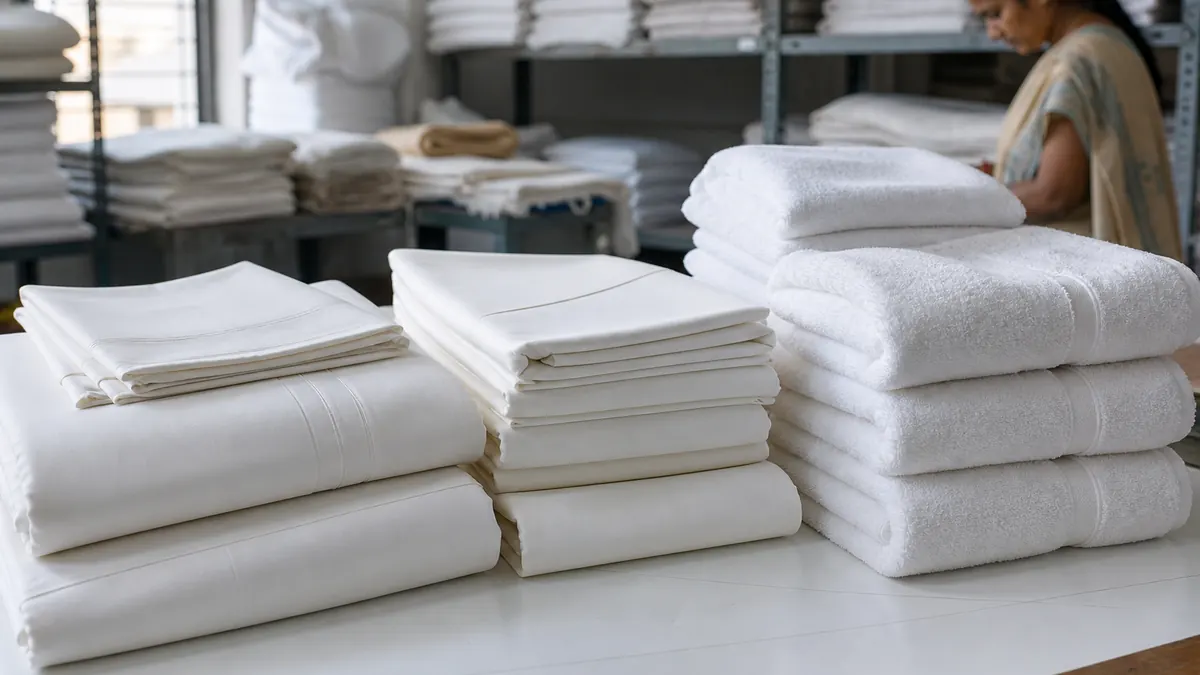
TEXPROCIL RCMC product declarations should reflect the cotton home textile families you actually export. The multi-SKU category covers bed linen (sheets, pillowcases, duvet covers as assortment SKUs), terry bath and kitchen linen, table linen (napkins, placemats, tablecloths), cotton curtains and drapes, quilts, comforters, and bedspreads, and coordinated private-label bed-plus-bath sets. Full family-by-family MOQ and construction depth lives in Top Cotton Home Textile Products Exported from India.
When your RFQ is bedsheet-led or towel-led, cross-link sibling clusters for construction depth — bedsheet export and terry towel import — without stretching this RCMC guide into SKU deep-dives. RCMC scope accuracy matters because buyers and CHA files must reconcile declared council categories with invoice HS lines.
Cotton home textile families — RCMC scope and HS planning lens
Swipe →
Data table — swipe horizontally on small screens
| Family | Typical HS Lens | RCMC Declaration | Cluster |
|---|---|---|---|
| Bed linen | 6302 | Cotton made-ups / bed linen | Karur, Coimbatore, Panipat |
| Terry bath / kitchen | 6302 / 6302.60 | Toilet/kitchen linen made-ups | Solapur, Panipat adjacency |
| Table linen | 6302 | Table linen made-ups | Karur, Coimbatore |
| Curtains / drapes | 6303 | Cotton curtains where applicable | Karur, Delhi-NCR |
| Quilts / comforters | 6302 / 6301 | Quilt/bedspread character | Panipat |
| Hospitality linen | 6302 multi-family | Hotel bed/bath programmes | Panipat, Karur, Solapur |
| Coordinated PL sets | Multi-HS possible | Multi-family made-ups | Delhi-NCR consolidation |
Manufacturing Overview
Export Tip
- RCMC proves exporter standing — not automatic mill quality.
- RCMC holder + verified mill = stronger buyer KYC than mill alone.
- Align shade cards and packing SOPs before Index / Heimtextil pitches.
- Keep retained samples keyed to the same lot IDs used on shipping bills.
From a TEXPROCIL lens, cotton home-textile capacity is judged less by loom count alone and more by whether an RCMC-holding exporter can prove a controlled made-ups chain — greige or yarn intake, dye/print control, cut-and-sew or hem finish, inspection, and export packing — with documents that survive fair KYC and shipping-bill scrutiny. Panipat often anchors layered and volume programmes; Karur and Coimbatore are watched for packing discipline and size tolerance; Solapur is the usual terry adjacency for mixed bath baskets.
TEXPROCIL membership does not replace mill audit — but registered exporters typically maintain better documentation discipline because RCMC renewal and fair participation depend on export continuity and fee compliance. Buyers evaluating Panipat or Karur mills through a TEXPROCIL-registered merchant exporter gain a second filter: council membership plus mill shade history and packing SOPs.
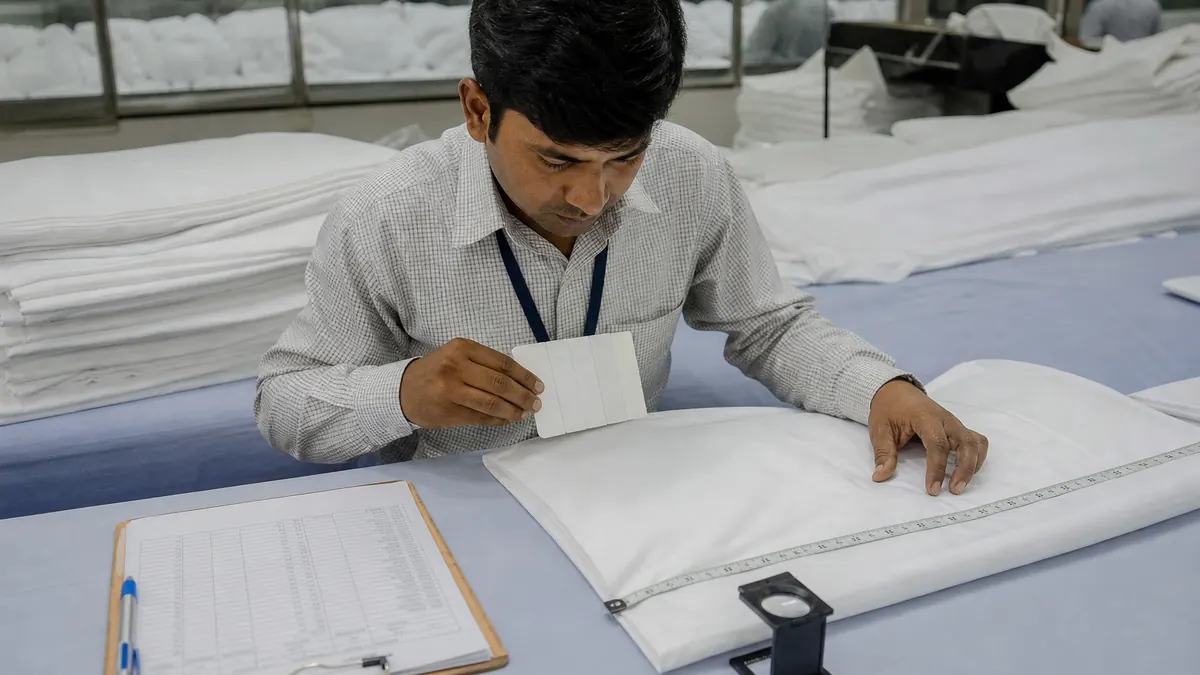
Council-facing programmes fail when shade cards, AQL reports, and fibre-label artwork are treated as booth collateral rather than lot-linked production controls. Coordinated private-label sets still need one approved lab-dip standard across suppliers; US and EU premium buyers will ask for that evidence whether or not the exporter holds RCMC.
What Is TEXPROCIL and Why RCMC Matters for Cotton Home Textiles
Compliance Notes
TEXPROCIL (The Cotton Textiles Export Promotion Council) is an apex body recognised by India's Ministry of Textiles and Ministry of Commerce and Industry to promote and facilitate export of Indian cotton yarn, fabric, and made-ups — including cotton home textiles across bed, bath, table, curtain, quilt, and hospitality families. It supports exporters through RCMC registration, market development assistance (MDA), trade fair organisation — notably Index Mumbai for home textiles and Heimtextil Frankfurt for global home textile buyers — and market intelligence relevant to cotton made-ups export cycles.
For cotton home textile exporters, TEXPROCIL plays a dual role. It is the registration authority issuing the Registration-cum-Membership Certificate (RCMC) that organised cotton made-ups exporters need for export documentation continuity and scheme eligibility, and it is a commercial facilitator connecting registered members to Index Mumbai booths, Heimtextil delegation pathways, overseas buyer-seller meets, and international home textile exhibitions. Because bed linen, terry bath linen, table linen, curtains, and quilts fall within TEXPROCIL's scheduled cotton made-ups scope, RCMC functions as a genuine institutional requirement for organised multi-SKU export — not a discretionary add-on.
International buyers use RCMC as a first-order filter because the category includes many small Panipat and Karur units and a smaller number of organised Delhi-NCR merchant exporters. A live TEXPROCIL RCMC alongside IEC signals export intent, council fee compliance, and access to TEXPROCIL trade data and fair channels — all of which shorten vendor onboarding on programmes where shade disputes and label chargebacks are expensive.
RCMC vs IEC — complementary, not interchangeable
IEC from DGFT is the legal baseline for any commercial export from India. TEXPROCIL RCMC is the export-council membership credential for cotton made-ups. Retail vendor onboarding teams, pavilion organizers, and hospitality procurement offices typically request both. OEKO-TEX, GOTS, OCS, and BCI certificates prove product claims — they supplement, not replace, IEC and TEXPROCIL.
Who should register with TEXPROCIL
Register if you export or intend to export cotton home textiles — bed, bath, table, curtain, quilt, or hospitality linen — under your own IEC, whether you are a manufacturer in Panipat, Karur, or Solapur, or a Delhi-NCR merchant exporter consolidating multi-cluster programmes. Importers sourcing through registered partners gain cleaner vendor KYC. If your SKU mix is predominantly non-cotton or falls under a different council schedule, confirm the correct RCMC route with TEXPROCIL and your CHA before applying.
TEXPROCIL RCMC Application — Step-by-Step
Compliance Notes
Export Tip
The RCMC application sequence for cotton home textile exporters follows a predictable path once IEC is live. Verify current portal workflows, fee schedules, and document lists on texprocil.org and the DGFT-linked export promotion council portal before filing — council procedures update periodically.
TEXPROCIL RCMC application document checklist — verify current list on texprocil.org
Swipe →
Data table — swipe horizontally on small screens
| Document | Purpose | Common Pitfall |
|---|---|---|
| IEC copy | Legal export baseline | Expired or wrong entity |
| GST certificate | Tax identity alignment | Address mismatch with IEC |
| PAN | Entity verification | Personal vs company PAN confusion |
| Incorporation / partnership deed | Legal structure proof | Outdated signatory list |
| Bank certificate | AD code alignment | Account not linked to IEC entity |
| Factory / workshop address proof | Production location verification | Different from GST registered office |
| Export product list by family | RCMC scope declaration | Too generic — list bed, bath, table, curtain, quilt |
| Signed application form | Council membership request | Missing authorised signatory |
| Fee payment receipt | Processing trigger | Wrong membership category selected |
Step 1: Obtain IEC from DGFT (prerequisite)
Apply for an Import Export Code (IEC) through the DGFT portal with PAN, bank account details, and address proof aligned to your GST registration. Clean applications typically process within a few working days. IEC must be active on the same legal entity that will hold TEXPROCIL membership.
Step 2: Confirm product scope with TEXPROCIL
Cotton home textiles and cotton made-ups fall under TEXPROCIL's scheduled product list — bed linen, terry bath and kitchen linen, table linen, curtains, quilts, and related made-ups under HS 6302, 6303, 6304, and 6301 where applicable. Declare the families you actually export or plan to export. Multi-SKU programmes should list all relevant categories rather than a generic cotton textiles label.
Step 3: Gather application documents
Typical requirements include IEC copy, GST registration certificate, PAN, company incorporation or partnership deed, bank certificate, factory/workshop address proof, export product list by family, and signed application form per current TEXPROCIL checklist. Mismatch between IEC address, GST address, and workshop location is the most common processing delay — reconcile before upload.
Step 4: Submit via DGFT-linked council portal
File the membership application through the DGFT export promotion council workflow, pay the applicable membership and RCMC fees, and track status online. Processing times vary by completeness — incomplete product lists or address mismatches extend timelines.
Step 5: Receive RCMC and activate fair benefits
On approval, download the RCMC and add it to your buyer KYC pack, CHA file, and fair registration profiles. Apply for Index Mumbai, Heimtextil delegation, or MDA-supported overseas fair participation through TEXPROCIL channels as eligible. Share RCMC copies with retail vendor onboarding portals promptly.
Step 6: Maintain renewal and product-list accuracy
RCMC requires annual fee renewal and accurate product-category declarations. If you add curtain or hospitality lines to a bed-and-bath RCMC, update declarations through council channels. Lapsed membership mid-season disrupts fair eligibility and buyer confidence.
Pricing Analysis
Buyer Tip
TEXPROCIL membership does not set FOB prices — but registered exporters quoting multi-SKU cotton home textile programmes should structure FOB named Indian port in USD/pc, USD/set, or USD/kg by product family, construction, dye or print finish, certification, and pack format. Commodity bed and bath programmes often sit in low-to-mid USD bands; hotel linen, organic, and certified private label sit higher with cotton yarn index and construction premiums. Always verify on the quote date.
Include RCMC reference and council membership status in buyer-facing credential decks — it supports premium positioning on audit-heavy corridors even when FOB bands are competitive. Build landed-cost comparisons as FOB + ocean freight + duty + destination inspection + certification premium.
FOB planning bands by family — verify on quote date; RCMC in credential pack
Swipe →
Data table — swipe horizontally on small screens
| Tier / Family | Directional FOB Structure | RCMC / Buyer Note |
|---|---|---|
| Commodity bed linen sets | Low-to-mid USD/set — verify quote date | RCMC expected on US retail PL onboarding |
| Terry bath bundles | USD/pc or USD/set by bundle spec | 6302.60 planning; Solapur/Panipat origin |
| Table linen colourways | USD/pc by size and finish | Karur export discipline; print premium |
| Cotton curtains | USD/panel or USD/kg — cube premium | 6303; flammability cost where required |
| Quilts / comforters | Higher band — bulk cube | Panipat; HS character affects pricing |
| GOTS / OEKO-TEX programmes | Certified chain-of-custody premium | RCMC + cert scope in same KYC pack |
| Hospitality white terry + sheets | Contract tier above commodity | Replenishment call-offs; RCMC on hotel RFQs |
| Coordinated PL bed+bath sets | Programme pricing across families | Cross-family shade + RCMC credibility |
MOQ Analysis
Buyer Tip
RCMC registration itself has no MOQ — but fair access and buyer programmes assume you can execute sample, trial, and FCL volume credibly. Stage MOQ as lab sample → trial → wholesale → FCL: samples 20–100 pcs/SKU or lab-dip sets; trial 500–3,000 pcs per hero SKU or mixed LCL; wholesale 20′/40′ HQ FCL mixed assortments; hospitality seasonal call-offs by contract tonnage.
Index Mumbai and Heimtextil conversations convert to trial POs faster when the exporter can articulate MOQ ladders by family and show RCMC-backed export continuity — buyers distrust fair-aisle promises without institutional credentials and sample discipline.
MOQ ladder — fair lead to trial PO context
Swipe →
Data table — swipe horizontally on small screens
| Stage | Typical MOQ | RCMC / Fair Link |
|---|---|---|
| Lab sample / lab-dip set | 20–100 pcs/SKU or colourway | Fair sample dispatch with RCMC on leave-behind |
| Trial order | 500–3,000 pcs hero or mixed LCL | Post-Index Mumbai trial conversion target |
| Wholesale programme | 1×20′ or 1×40′ HQ mixed FCL | Heimtextil buyer seasonal programmes |
| Hospitality call-off | Contract tonnage by season | Hotel RFQ credibility via RCMC |
| Private-label retail | Colourway MOQ per hero SKU | Retail vendor onboarding after RCMC KYC |
| Long-term contract | Programme volume as contracted | RCMC renewal must stay current |
Packaging Standards
Export Tip
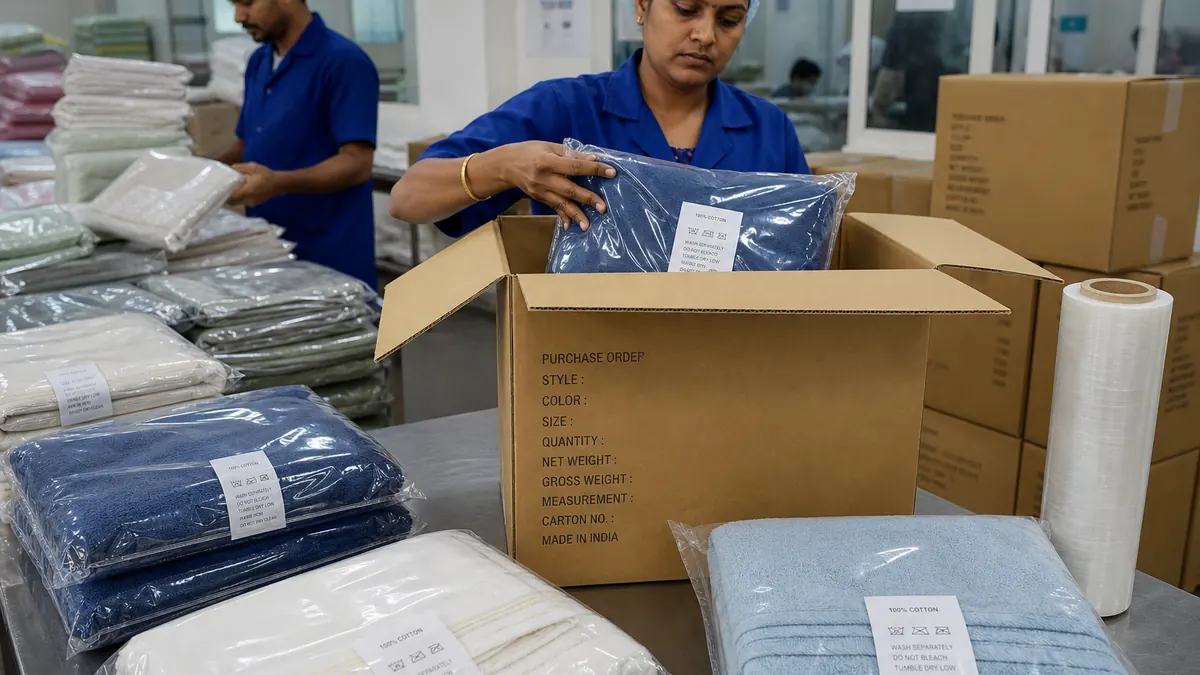
For TEXPROCIL-registered exporters, pack format is a credibility test: booth samples and bulk cartons must tell the same story. Baseline remains size- and colourway-segregated polybags in corrugated export cartons with destination-correct fibre and care labels; retail private-label adds hangtags and barcode maps; hospitality programmes switch to linen-room bulk marks. Desiccant and dry staging remain non-negotiable on long humid ocean legs — claims after Index or Heimtextil meetings often start with pack/label mismatches, not FOB disputes.
TEXPROCIL pavilion samples should mirror production pack formats — buyers evaluating RCMC holders at Index Mumbai expect label artwork and pack discipline consistent with bulk programmes, not fair-only shortcuts.
Pack formats — buyer KYC and bulk alignment
Swipe →
Data table — swipe horizontally on small screens
| Format | Configuration | Use Case | Label Requirement |
|---|---|---|---|
| Polybag + export carton | Single SKU per carton block | Wholesale bed/bath/table | TPFIA or EU fibre/care labels |
| Retail-ready polybag | Fold + hangtag + barcode | Private-label retail | Destination-specific artwork approved pre-bulk |
| Set pack (bed/bath) | Matched colourway bundle | Coordinated PL programmes | Cross-family shade card on pack insert |
| Hotel bulk carton | Minimal retail packaging | Hospitality replenishment | White-shade lot ID on carton |
| Curtain panel pack | Length-fold + header protection | 6303 programmes | Flammability doc reference where required |
| Moisture protection SOP | Desiccant, dry staging | All ocean shipments | Packing list moisture note for buyer QA |
Container Loading Details
Export Tip
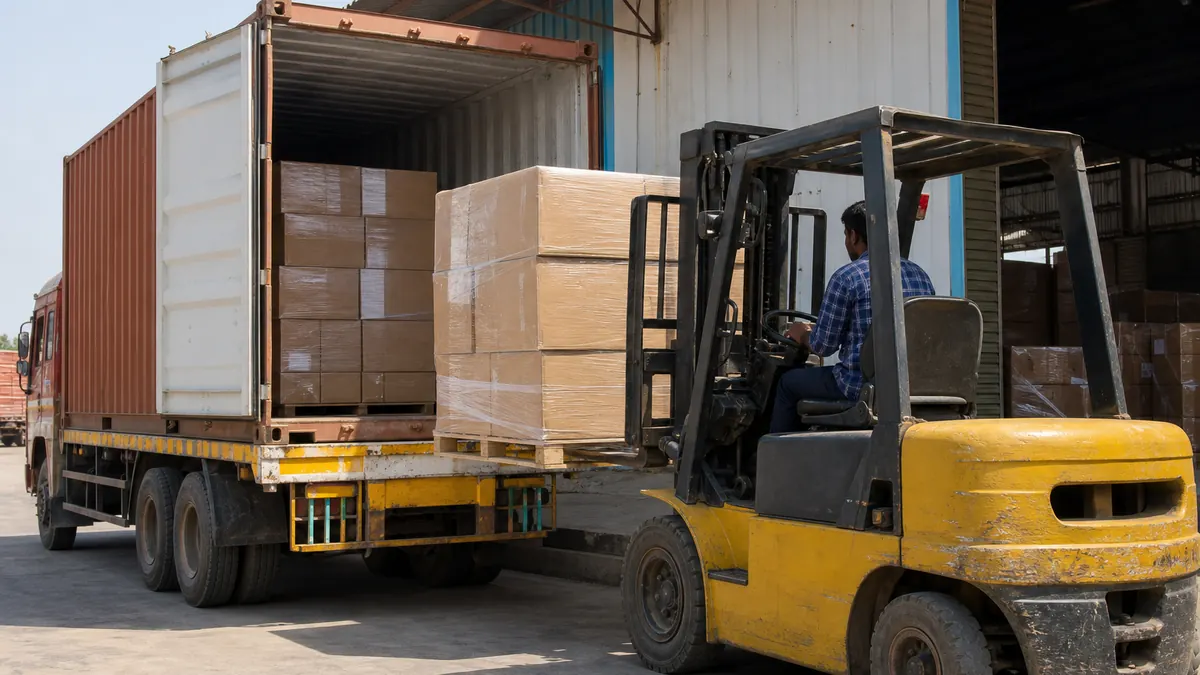
Multi-SKU cotton home textile FCLs use 20ft and 40ft HQ containers with forwarder stow verification mandatory. Bulky quilts, comforters, and curtain programmes often cube-out before they weight-out; terry bundles can weight-out — balance with flat bed linen. Photograph stuffing patterns and seal numbers.
RCMC credibility extends to logistics discipline — buyers auditing registered exporters expect SKU-segregated packing lists and stuffing photos on trial and programme containers alike.
Container loading guidance (indicative — confirm with forwarder)
Swipe →
Data table — swipe horizontally on small screens
| Container Type | Loading Consideration | Typical Use |
|---|---|---|
| 20-foot FCL | Mixed bed/bath/table — confirm CBM vs payload | Trial and mid-volume shipments |
| 40-foot HQ FCL | Programme volume; cube-aware stow | Established retail/hospitality programmes |
| LCL | 500–3,000 pcs trial mixed loads | Post-fair trial conversions |
| ICD consolidation | Panipat/northern parcels via ICD Delhi | Northern RCMC holders |
| Palletised blocks | ISPM-15 per buyer spec | Retail carton programmes |
| Mixed-family stuffing | Segregated stacks + line-item packing list | Multi-SKU home textile programmes |
Shipping Methods
Export Tip
- Name load port on FOB quotes — Mundra, Nhava Sheva, Chennai, Tuticorin.
- Post-Heimtextil sample dispatch: air/express with RCMC on proforma.
- Programme FCL: book ahead of retail season calendar.
- Incoterms must match actual freight arrangement.
Ocean FCL and LCL from Mundra, Nhava Sheva, Chennai, or Tuticorin are commercial defaults. Air freight suits urgent lab samples after fair meetings. ICD consolidation from Panipat and Delhi-NCR is common for TEXPROCIL members assembling multi-SKU programmes.
Lead times: samples 2–4 weeks; stock commercial 3–5 weeks; dyed/printed private-label 5–8+ weeks; organic GOTS or hospitality custom 6–10+ weeks. Incoterms: EXW, FOB, CFR/CIF; DDP selective for mature retail programmes.
Certifications
Compliance Notes
TEXPROCIL RCMC is the export-council baseline — not a product safety certificate. Universal requirements include accurate fibre content and care labelling under US TPFIA or EU textile rules. Premium programmes add OEKO-TEX Standard 100, GOTS, OCS, and BCI with chain-of-custody evidence. Curtain programmes to certain markets need flammability documentation. Expired certificates fail audits — renew before peak seasons.
Buyer KYC packs should present RCMC, IEC, and product certificates as a layered stack — council membership opens the door; OEKO-TEX and GOTS prove specific SKU claims.
Certifications & documents — RCMC as baseline layer
Swipe →
Data table — swipe horizontally on small screens
| Credential | Purpose | Relevant For |
|---|---|---|
| TEXPROCIL RCMC + IEC | Export registration and council membership | All commercial cotton home textile exports |
| Fibre content & care labels | Legal consumer disclosure | All destination programmes |
| OEKO-TEX Standard 100 | Harmful substance testing scope | Premium retail and EU-facing programmes |
| GOTS / OCS | Organic chain-of-custody | Organic private-label and hospitality |
| BCI / Better Cotton | Sustainability claim evidence | Retail PL with BCI marketing |
| Certificate of Origin | Preferential duty where applicable | FTA corridors — confirm with CHA |
| Flammability test reports | Curtain safety compliance | Markets requiring drape flammability |
| Third-party inspection (AQL) | Pre-shipment quality gate | Retail vendor onboarding programmes |
Buyer Requirements
Buyer Requirements
- Baseline KYC: IEC + TEXPROCIL RCMC + GST.
- Written spec before FOB: family · construction · size · colourway · labels.
- Sample + shade card before scaling to FCL.
- Certificate scope must match exact SKU and finish.
International cotton home textile buyers — retail chains, department stores, e-commerce private-label teams, hospitality procurement, and wholesale distributors — typically request TEXPROCIL RCMC, IEC, samples, written specifications, signed shade cards, FOB pricing with quote date, and named Incoterms and load port.
Premium US, UK, EU, Australia, and Canada programmes add OEKO-TEX or GOTS certificates, vendor compliance questionnaires, and third-party inspection. Vendor onboarding portals often upload RCMC and IEC before sample approval workflows unlock. Agree payment terms, shade claim windows, and rejection criteria in writing before production starts.
Country-wise Opportunities
Market Snapshot
TEXPROCIL registration pays off differently by corridor — not because RCMC replaces product compliance, but because buyers on high-value routes use council membership to shorten supplier lists before expensive multi-SKU trials. Full destination ranking lives in Best Countries for Indian Cotton Home Textile Exports. Per-country SKU matrices live in Most Demanded Indian Cotton Home Textiles by Country.
Directional logic: the USA (~62–67% of HS 6302 value) rewards RCMC-backed vendor onboarding at retail scale; UK and Germany reward council membership plus EU/UK label stacks; Australia and Canada reward seasonal planning with credible export credentials; UAE hospitality RFQs filter on white-shade continuity and supplier registration; Japan premium niches expect construction precision and RCMC before deep trials.
Country opportunity — TEXPROCIL credibility lens (directional)
Swipe →
Data table — swipe horizontally on small screens
| Country | Demand Profile | RCMC / Fair Access Note | Opportunity |
|---|---|---|---|
| United States | Dominant HS 6302 value (~62–67%) | RCMC on retail vendor onboarding; NY Home Fashions adjacency | Audit-ready registered exporters |
| United Kingdom | Bed/bath/table retail and hospitality | Post-Brexit KYC pack includes RCMC | Heimtextil UK buyer delegations |
| Germany | EU gateway for home linen | Heimtextil primary fair channel | OEKO-TEX + RCMC combined KYC |
| Australia | Retail and hospitality | Distributor RFQ filter | Steady premium demand |
| Canada | Often paired with US programmes | Dual-market vendor pack | RCMC alongside bilingual labels |
| UAE | Hospitality and re-export | Index Mumbai GCC introductions | Hotel linen replenishment |
| Japan | Premium niches | RCMC before sample-heavy trials | Construction precision |
| Mexico | Regional wholesale | Competitive FOB; RCMC on distributor KYC | Mexico tariff on India-origin (USMCA N/A to India) |
TEXPROCIL Fair Access and Market Development Benefits
Compliance Notes
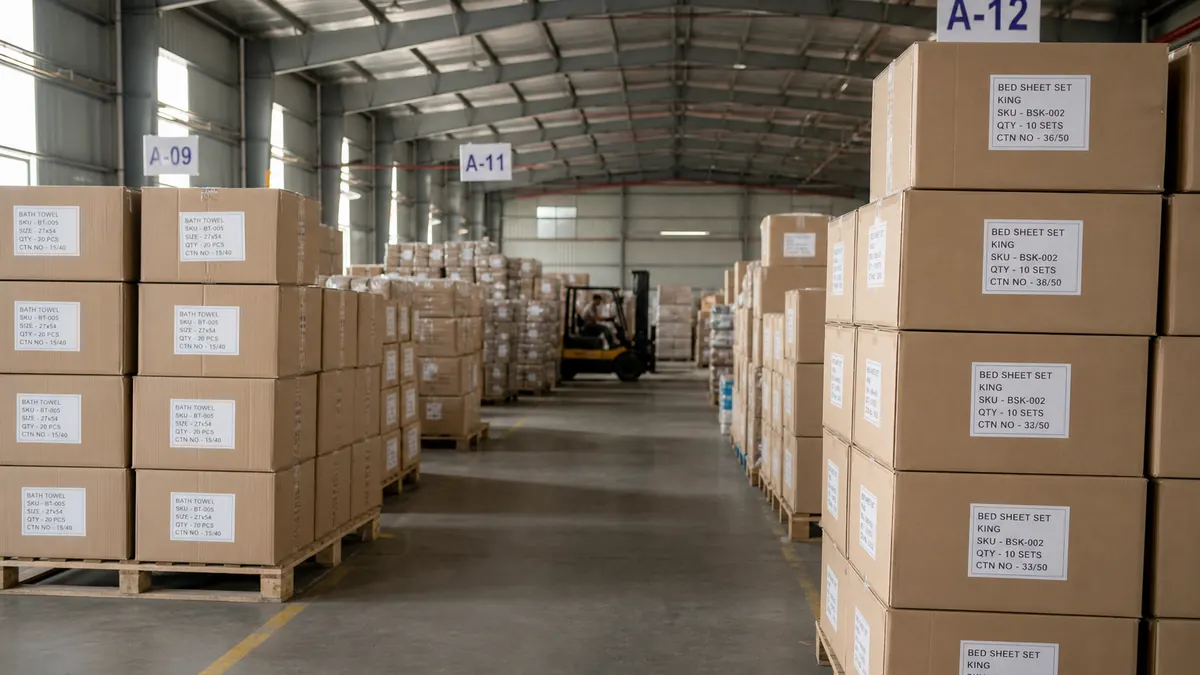
Beyond RCMC issuance, TEXPROCIL membership unlocks practical commercial channels for cotton home textile exporters. Index Mumbai concentrates Indian and regional home textile buyers evaluating multi-SKU programmes. Heimtextil Frankfurt draws global retail, hospitality, and wholesale buyers — TEXPROCIL-organised delegations and pavilion participation lower entry cost versus solo booth investment for MSME Panipat and Karur units.
Market Development Assistance (MDA) supports eligible overseas fair participation subject to current DGFT scheme rules — confirm eligibility, caps, and claim procedures before budgeting fair travel. TEXPROCIL trade statistics, export advisories, and buyer-seller meets add intelligence value for programme planning across bed, bath, table, curtain, and hospitality families.
TEXPROCIL fair and promotion channels for cotton home textiles
Swipe →
Data table — swipe horizontally on small screens
| Channel | Typical Buyer Profile | RCMC Requirement | Best Fit SKU |
|---|---|---|---|
| Index Mumbai | India, GCC, Asia retail and hospitality | Active RCMC for pavilion/delegation | Multi-SKU bed+bath+table assortments |
| Heimtextil Frankfurt | Global retail, PL, hospitality | RCMC for delegation support | Coordinated colourway programmes |
| NY Home Fashions Market | US retail and e-commerce PL | RCMC in vendor credential deck | Bed and bath hero SKUs |
| TEXPROCIL buyer-seller meets | Pre-qualified international buyers | Active membership | Trial-ready sample kits |
| MDA-supported overseas fairs | Category-specific regional buyers | RCMC + scheme eligibility | Confirm current DGFT rules |
| Council trade statistics | Internal planning — not buyer-facing | Membership access | HS 6302 corridor planning |
Sourcing Checklist
Checklist
Buyer Checklist
Exporter Checklist
Common Buyer Mistakes
Common Mistakes Box
Future Market Trends
Key Statistics
- RCMC + digital vendor portal upload becoming standard on US retail PL.
- Heimtextil and Index Mumbai remain primary fair funnels for home textiles.
- Hospitality replenishment call-offs favour registered suppliers with shade discipline.
- Certified organic tiers grow faster than commodity mixed loads on EU/AU corridors.
Global demand for cotton home textiles continues to track coordinated bed-plus-bath private-label programmes, hospitality refurbishment cycles, and e-commerce assortment expansion. TEXPROCIL-registered exporters will face tighter fibre-label enforcement on US/EU/UK corridors and rising interest in GOTS, OEKO-TEX, and BCI-certified tiers.
Multi-SKU home textile baskets reward exporters who combine live RCMC with cross-family shade continuity, multi-HS invoicing, and cube-aware FCL stuffing. Digital vendor onboarding portals will continue elevating RCMC from nice-to-have to baseline KYC on audit-heavy corridors.
Challenges & Solutions
TEXPROCIL registration solves institutional credibility — not shade drift, HS mismatches, or label chargebacks. The table below maps common RCMC-adjacent failure modes to fixes.
TEXPROCIL and cotton home textile challenges — solutions
Swipe →
Data table — swipe horizontally on small screens
| Challenge | Root Cause | Solution |
|---|---|---|
| RCMC processing delay | IEC/GST/address mismatch | Reconcile documents before portal upload |
| Vendor portal rejection | Expired or wrong-scope RCMC | Renew; update product family list |
| Fair eligibility denied | Lapsed membership fees | Annual renewal calendar before fair booking |
| Buyer distrust post-fair | No RCMC in follow-up pack | Attach RCMC + IEC in 72-hour email |
| HS vs RCMC scope dispute | Generic product declaration | List bed, bath, table, curtain, quilt explicitly |
| Confused with product certs | RCMC presented as OEKO-TEX substitute | Layer council + product credentials separately |
Compliance Checklist
Checklist
Compliance Notes
Sources
- DGCI&S — Directorate General of Commercial Intelligence and Statistics
- Indian Trade Journal — HS 6302 commodity export profile (FY 2023-24)
- Indian Trade Journal / DGCI&S commodity profiles (HS 6302 updates)
- Ministry of Commerce & Industry — TRADESTAT
- TEXPROCIL — The Cotton Textiles Export Promotion Council
- TEXPROCIL — Cotton Home Textiles overview
- DGFT (India) — IEC / trade portal
- CBIC — Indian Customs Tariff (Chapter 63)
- ITC Trade Map
- UN Comtrade Database
- WITS World Integrated Trade Solution
- USITC Harmonized Tariff Schedule (search 6302)
- US CBP — Textile and apparel resources
- FTC — Textile Fiber Products Identification Act
- European Commission TARIC
- EU Regulation (EU) No 1007/2011 — textile fibre names & labelling
- UK Trade Tariff / UK Global Tariff
- UK DCTS goods graduation (Ch. 52 & 63 India — verify current notice)
- DFAT — Australia–India ECTA
- Australian Border Force — FTA Portal
- OEKO-TEX Standard 100
- GOTS — Global Organic Textile Standard
- Better Cotton (BCI)
- IPPC — ISPM 15 wood packaging
- Altus Exports — Textiles & Home Furnishings
All sources accessed 2026-08-08 during the cotton home textiles factual audit. Prefer primary government and multilateral databases (DGCI&S / Indian Trade Journal HS 6302 commodity profiles, TEXPROCIL, DGFT, USITC HTS, EU TARIC, UK Trade Tariff / DCTS graduation notices, DFAT ECTA, ITC Trade Map / UN Comtrade / WITS) when citing figures in contracts or buyer presentations. Re-verify live before every commercial quote.
TEXPROCIL RCMC product-list coverage, fair calendars, and RoSCTL/RoDTEP applicability update — confirm current council circulars before membership or renewal for multi-SKU made-ups.

Conclusion
TEXPROCIL registration gives cotton home textile exporters the RCMC credential, Index Mumbai and Heimtextil access, and buyer KYC credibility that international retail, e-commerce private-label, and hospitality procurement teams expect alongside IEC — especially on multi-SKU bed, bath, table, curtain, quilt, and hospitality programmes from Panipat, Karur, Solapur, and Delhi-NCR consolidation.
Altus Exports supports Indian made-ups units and international buyers as a merchant exporter in India and global sourcing partner — contact us to align TEXPROCIL registration with shade QC, multi-HS invoicing, and FCL execution. See our textiles & home furnishings industry page for related programmes.
Next reads: How to Export Cotton Home Textiles from India, Most Demanded Indian Cotton Home Textiles by Country, Cotton Home Textile Export Documentation Checklist, and Trade Shows and B2B Marketplaces for Cotton Home Textile Exporters.