
How to Find International Buyers for Cotton Home Textiles from India
By Saurabh Mittal, Founder, Altus Exports
Lead-generation playbook for Indian cotton home textile exporters — HS 6302 trade-data prospecting, LinkedIn and email outreach, retail private-label and hospitality procurement targeting, buyer verification before samples, TEXPROCIL buyer-connect channels, and CRM cadence from first contact through trial FCL for multi-SKU made-ups programmes.
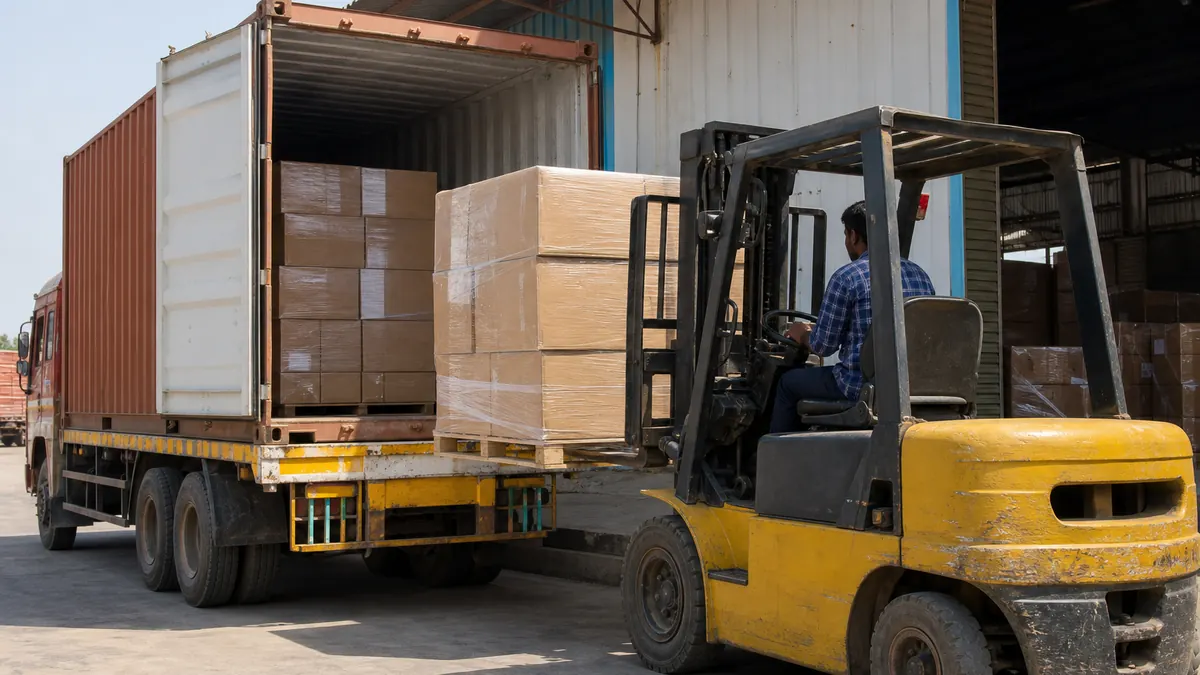
Finding international buyers for cotton home textiles is a targeting problem, not a mass-email problem. India ships cotton made-ups primarily under Harmonized System heading 6302 (bed linen, table linen, toilet linen, kitchen linen), with curtains under 6303, certain furnishing assortment lines under 6304, and blankets under 6301 when essential character demands — directional DGCI&S commodity profiles cite India HS 6302 exports at about US$1,858.84M in FY 2023-24 and US$2,128.63M in FY 2024-25 (+~14.5% YoY), with the United States at 66.98% in FY 2023-24 (US$1,245.05M) and about 62.47% in FY 2024-25 (US$1,329.77M) — multi-year band roughly 62–67%. That scale means a finite, traceable buyer universe — retail chains, department stores, e-commerce private-label brands, hospitality procurement teams, and wholesale distributors — already imports bed, bath, table, and coordinated home-textile programmes from India. Your job is to identify who they are, verify they are real, and earn a sample path with construction specs and TEXPROCIL-backed credentials rather than a generic "we export home linen" pitch.
This guide owns lead generation for multi-SKU cotton home textile programmes: HS 6302 trade-data prospecting through ITC Trade Map and bill-of-lading tools, LinkedIn and structured email outreach, retail and hospitality channel mapping, buyer verification before sample spend, TEXPROCIL-linked buyer-connect tactics, and CRM discipline from first contact through trial PO. It does not own SKU catalogue depth, end-to-end export process, or field-by-field documentation — those live in Top Cotton Home Textile Products Exported from India, How to Export Cotton Home Textiles from India, and Cotton Home Textile Export Documentation Checklist. For pavilion conversion, see Trade Shows and B2B Marketplaces for Cotton Home Textile Exporters.
Panipat, Karur, Coimbatore, Solapur, and Delhi-NCR merchant consolidation supply the programmes buyers want — but cluster reputation alone does not fill an order book. Work with a merchant exporter in India or product sourcing company in India when you need verified buyer relationships, sample logistics, and Mundra or Nhava Sheva trial execution alongside prospecting. Altus Exports supports textiles & home furnishings programmes from first qualified lead through first FCL.
Key Takeaways
Summary Box
Executive Summary
Summary Box
- Scan Summary / Tips / Mistake callouts first, then open the prospecting tables.
- Build one corridor deeply — usually US or UK — before spraying fifty countries.
- On mobile: Takeaways → Trade data → LinkedIn → Verification → Country map → FAQ.
Finding international buyers for cotton home textiles from India works when prospecting is treated as a sales system: trade-data segmentation, channel-matched outreach, buyer verification, sample economics, and CRM cadence through trial FCL. India HS 6302 export growth (~US$1,858.84M FY 2023-24 to ~US$2,128.63M FY 2024-25, directional) confirms demand exists — the bottleneck is reaching the right procurement contact with credible multi-family specs, not broadcasting PDF catalogues.
This article maps HS 6302 import-data workflows, LinkedIn role targeting for retail and hospitality, outreach templates, verification red flags, TEXPROCIL buyer-connect channels, and corridor prioritization. Manufacturing, pricing, packaging, and shipping sections appear at the depth needed to support qualified conversations — not as a process pillar rewrite.
Use the prospecting and verification tables as weekly operator tools. Hand off export sequencing to the pillar guide and documentation reconciliation to the checklist post after the trial PO lands.
Market Size & Industry Overview
Key Statistics
- Supply map: Panipat + Karur/Coimbatore + Solapur + Delhi-NCR.
- Council stack for credibility: TEXPROCIL RCMC + IEC + GST.
- Trade cue: HS 6302 ~US$1,858.84M (FY23-24) → ~US$2,128.63M (FY24-25) directional.
- Channels: retail PL, department stores, e-commerce, hospitality, wholesale distributors.
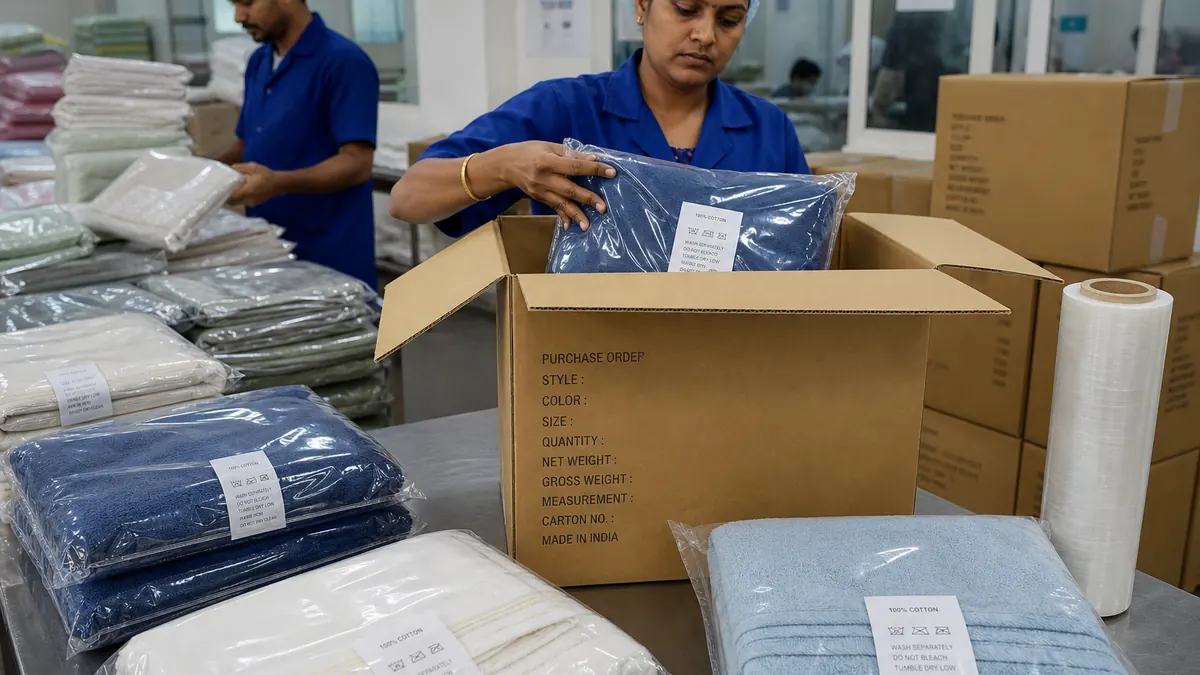
India's cotton home textile export spine — Panipat (Haryana) for quilts, terry adjacency, and northern volume; Karur and Coimbatore (Tamil Nadu) for export-disciplined bed and table linen; Solapur (Maharashtra) for terry-heavy bath programmes; Delhi-NCR for multi-cluster private-label consolidation — already supplies global retail, hospitality, and wholesale channels. Buyers do not purchase "home linen" in abstract; they purchase programmes: coordinated bed+bath colourways, hospitality white-shade replenishment, table-linen seasonal drops, or curtain add-ons under HS 6303.
Lead generation succeeds when you match your cluster strength to buyer channel. A Karur bed-and-table exporter should not lead outreach to a buyer whose import data shows only Solapur-style terry bundles unless you can credibly supply bath family specs. Broader cotton textiles context under TEXPROCIL's basket reached a directional ~US$11.7B in FY 2023-24 — cite as category context, not as a substitute for HS 6302 prospecting filters alone.
Most new exporters should prospect one high-value corridor first — typically the United States at roughly 62–67% of India HS 6302 export value — then expand to UK, Australia, Canada, Germany, and UAE hospitality once trial discipline is proven.
Buyer channel map for cotton home textile lead generation (directional)
Swipe →
Data table — swipe horizontally on small screens
| Channel | Typical buyer persona | Prospecting lever | First conversation focus |
|---|---|---|---|
| US retail / big-box PL | Merchandising, sourcing, private-label manager | HS 6302 US import data + LinkedIn | Construction, TPFIA labels, trial MOQ |
| EU / UK department stores | Home textile buyer, QA manager | Heimtextil CRM + Trade Map EU | Fibre labels, OEKO-TEX if premium |
| E-commerce home brands | Founder, head of product, sourcing lead | LinkedIn + DTC trade press | MOQ flexibility, pack format, shade continuity |
| Hotel groups / hospitality | Operations procurement, linen manager | GCC fairs + hospitality LinkedIn titles | Laundry durability, white shade, replenishment |
| Wholesale distributors | Category manager, import manager | B/L consignee lists + trade directories | Price ladder, mixed FCL, HS clarity |
| Linen rental operators | Purchasing director | Trade data + contract furnishing networks | Bulk pack, SKU replenishment cadence |
Export Statistics
Key Statistics
- India HS 6302: ~US$1,858.84M (FY23-24) / ~US$2,128.63M (FY24-25) directional.
- USA share: typically ~62–67% of HS 6302 export value.
- Confirm 6302 / 6303 / 6304 / 6301 eight-digit lines with CHA before trial quotes.
- Broader TEXPROCIL cotton basket ~US$11.68B FY23-24 — category context only.
Export statistics anchor prospecting talk tracks. When you email a US retail sourcing manager, referencing India's HS 6302 scale — about US$1,858.84 million in FY 2023-24 and US$2,128.63 million in FY 2024-25 per DGCI&S commodity profiles (directional; re-verify on quote date) — signals category seriousness. Separate 6302 bed/bath/table totals from 6303 curtain volumes when reading bilateral data; mixed programmes may span several headings on one invoice with line-level accuracy.
Use export statistics to prioritize corridors, not to invent buyer names. Pair macro figures with micro consignee lists from import databases. The USA at roughly 62–67% of India HS 6302 value is the default first prospecting pool; UK, Australia, Canada, Germany, Mexico, Israel, UAE, Japan, and Netherlands follow directionally.
India cotton home textile export profile for buyer prospecting (HS 6302-led) — directional
Swipe →
Data table — swipe horizontally on small screens
| Metric | Directional Estimate | Lead-generation use |
|---|---|---|
| Core HS heading | 6302 — bed, table, toilet, kitchen linen | Filter import data searches |
| Curtains / drapes | 6303 | Separate prospecting when curtain panels are hero SKU |
| Other furnishing (assortment) | 6304 | Throws/cushions adjacency — link sibling cluster only |
| Terry planning lens | 6302.60 family | Category-level bath/kitchen filter in trade tools |
| India HS 6302 export value | ~US$1,858.84M FY23-24 / ~US$2,128.63M FY24-25 | Credibility in US/EU outreach opening lines |
| Top destination (value) | USA ~62–67% of HS 6302 value | Prioritize US consignee lists first |
| Other leading partners | UK, Australia, Canada, Germany, UAE, Japan | Second-wave prospecting pools |
| Governing council | TEXPROCIL RCMC + IEC | Attach to every outreach PDF pack |
| Primary load ports | Mundra, Nhava Sheva, Chennai, Tuticorin | Logistics credibility in follow-up emails |
Import Statistics
Key Statistics
- Prospect first where HS 6302 value concentrates: USA (~62–67%), then UK · Australia · Canada · Germany.
- Prioritise audit-ready outreach for USA · EU · UK · Australia · Canada · Japan buyers.
- Build a separate hospitality CRM lane for UAE/GCC hotel procurement.
- Refresh target lists yearly — import partners rotate by family and channel.
Import statistics on the buyer side explain who already pays freight for cotton home textiles — the highest-intent prospect pool. United States import pressure under HS 6302 family lines dominates value; those buyers arrive with TPFIA label questions, vendor onboarding forms, and shade continuity expectations, not category education. UK, Germany, Australia, Canada, and Japan import significant bed, bath, and table volumes with EU or local textile labelling overlays.
GCC corridors — especially UAE — concentrate hospitality procurement and re-export wholesale, making hotel linen buyers a distinct LinkedIn and fair-adjacent segment from US retail PL. Use Most Demanded Indian Cotton Home Textiles by Country for family × market matrices; use this section to frame which import corridors deserve CRM investment first.
Import-side buyer pressure by destination — prospecting priority (directional)
Swipe →
Data table — swipe horizontally on small screens
| Market | Import intensity | Primary buyer type | Prospecting focus |
|---|---|---|---|
| United States | Dominant HS 6302 partner (~62–67%) | Retail, e-commerce PL, hospitality, distributors | Trade data + LinkedIn merchandising titles |
| United Kingdom | Strong bed/bath/table imports | Department stores, hospitality, wholesalers | Post-Brexit label accuracy in outreach |
| Germany | EU gateway | Retail, hospitality, redistributors | OEKO-TEX/GOTS questions on premium tiers |
| Australia | Retail and hospitality | Chains, distributors, hotel procurement | Care labels, seasonal receiving windows |
| Canada | Often US-adjacent assortments | Retail, wholesale | Bilingual label readiness where discussed |
| UAE | Hospitality and re-export hub | Hotels, distributors, hypermarkets | White-shade continuity, bulk pack story |
| Japan | Premium niches | Retail, importers | Construction precision, label language |
| Netherlands | EU redistribution | Distributors | EU rules, REACH on finishes |
Product Categories / Variants
Summary Box
- Outreach families: bed · bath/kitchen · table · curtains · quilts · coordinated sets.
- Classify leads by HS intent: 6302 core made-ups; 6303 for curtain buyers; 6304/6301 only when essential character fits.
- Not this post: thread-count ladders, GSM deep tables, or SKU photography catalogues.
Lead generation for cotton home textiles must speak buyer channel language, not publish a SKU catalogue. Prospects think in programme blocks: bed linen sets, terry bath and kitchen bundles, table linen colourways, curtain panels, quilt/bedspread seasonal lines, and coordinated private-label bed+bath assortments. Your outreach should name the families you can supply with construction bands and MOQ stages — then link buyers to Top Cotton Home Textile Products Exported from India only when they request catalogue depth.
Match prospecting lists to family fit. Terry-heavy Solapur programmes should prioritize bath-led import consignees; Karur bed-and-table exporters should prioritize department-store and hospitality buyers whose B/L data shows flat linen and napkin lines, not only towel SKUs. When an RFQ deep-dives bedsheets or terry alone, cross-link bedsheet export or terry towel import without pasting those essays into cold email.
Product family × buyer channel prospecting map (category level — not SKU catalogue)
Swipe →
Data table — swipe horizontally on small screens
| Family | Best-fit buyer channel | HS lens | Outreach hook |
|---|---|---|---|
| Bed linen programmes | US/EU retail PL, department stores | 6302 | Shade continuity + label mock-up readiness |
| Terry bath / kitchen | Wholesale, hospitality, big-box bath | 6302 / 6302.60 | Bundle spec + replenishment MOQ |
| Table linen | Department stores, hospitality F&B | 6302 | Colourway MOQ + hem/size ladder |
| Curtains / drapes | Retail soft furnishings, contract | 6303 | Header type + flammability note where required |
| Quilts / bedspreads | Seasonal retail, promotional | 6302 / 6301 | Cube-aware trial MOQ |
| Coordinated PL sets | E-commerce, specialty retail | Multi-HS possible | Cross-family shade card discipline |
| Hospitality white programmes | Hotel groups, linen rental | 6302 multi-family | Laundry cycles + call-off story |
Manufacturing Overview
Export Tip
- Lead with cluster + family fit, not undifferentiated "we are manufacturers."
- Offer video audit or spec call before promising mill names on cold outreach.
- Cross-family shade cards matter on coordinated PL prospecting — mention capability early.
- Importer mill verification depth: Source Cotton Home Textiles Directly from India.
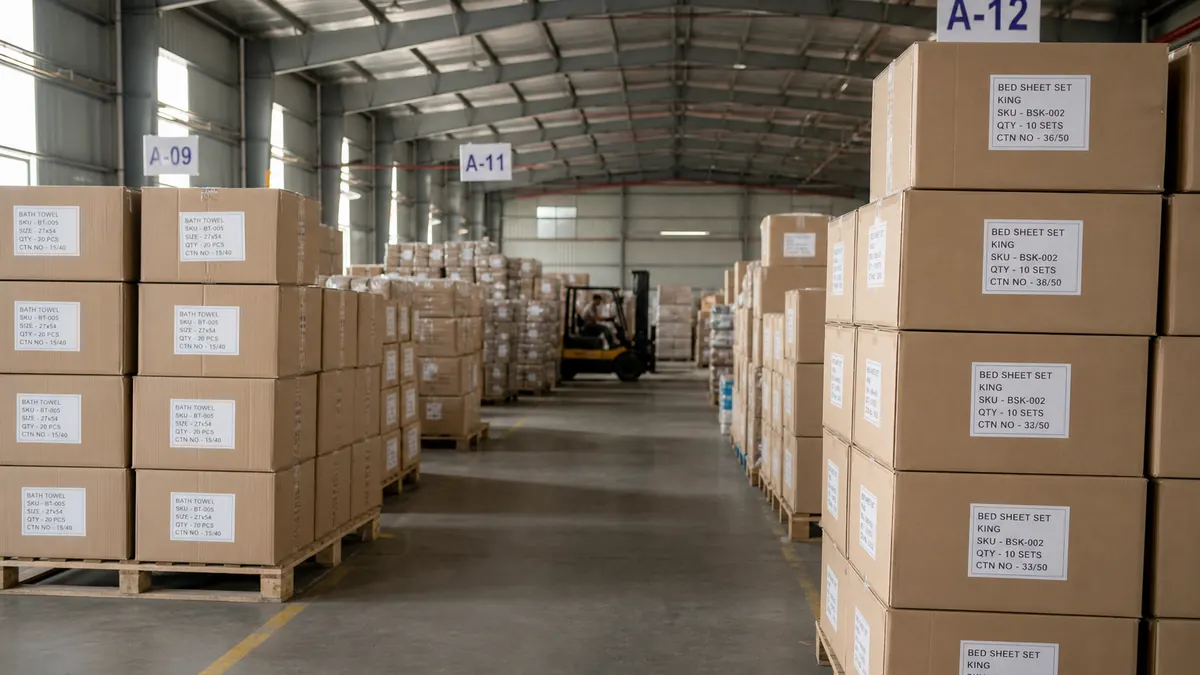
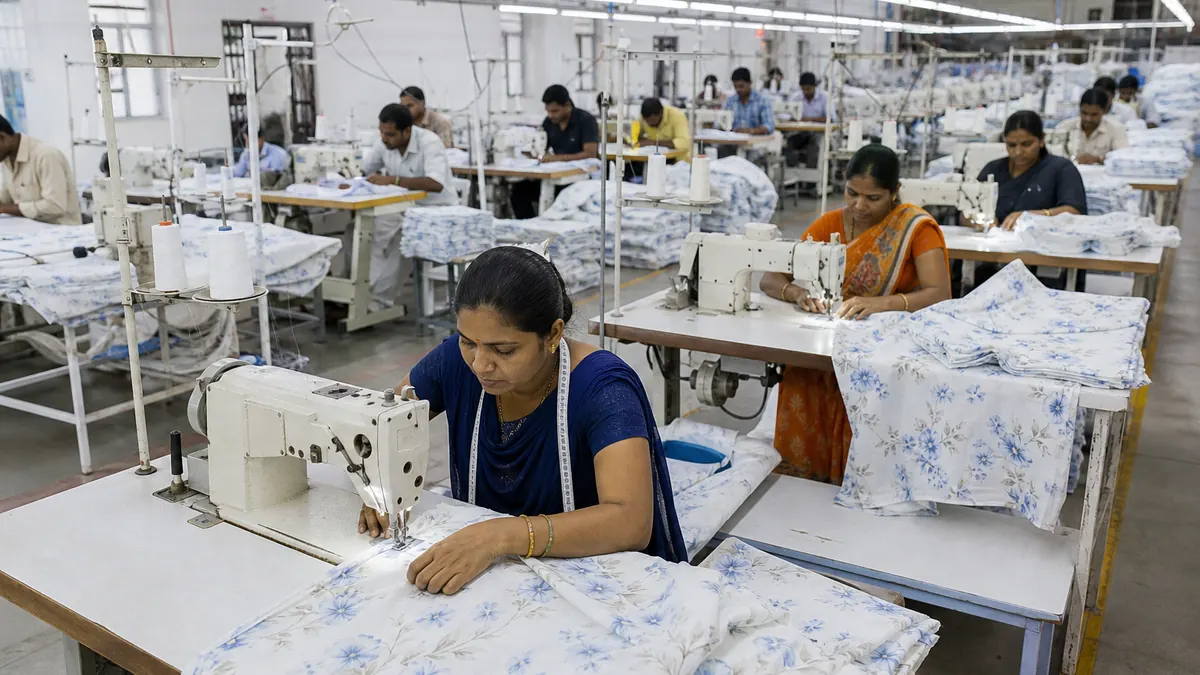
Buyer prospects rarely need loom tours in first email — they need proof you can deliver consistent programmes from verified Panipat, Karur, Coimbatore, or Solapur capacity with export packing discipline. Mention cluster origin, shade-control SOP, polybag-carton packing, and third-party inspection readiness in outreach; save mill allocation detail for qualified calls.
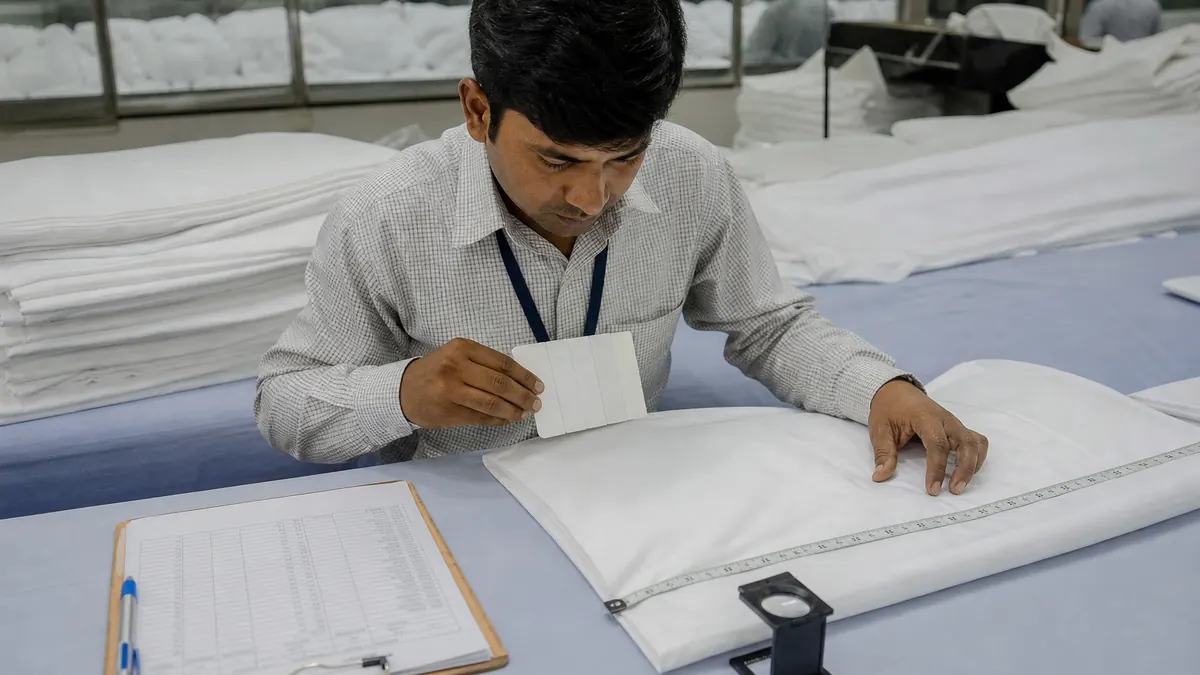
Manufacturing credibility in lead generation means naming retained samples, lab-dip approval gates, and fibre-label verification before bulk — the same gates buyers will audit after trial PO. Wrong-scope OEKO-TEX or GOTS claims in prospecting decks destroy trust faster than a late reply.
HS 6302 Trade Data Prospecting
- Filter 6302 first; add 6303 when curtain programmes are in your wheelhouse.
- Prioritize consignees already importing from India — shorter trust path.
- Cross-check Best Countries for corridor strategy — this section owns who to call.
The highest-ROI buyer-finding tactic for cotton home textiles is import trade data filtered to HS 6302 and your target country. Free tiers on ITC Trade Map and UN Comtrade show partner rankings and directional volumes; paid tools (Panjiva, ImportGenius, Volza, etc.) expose consignee names, shipper histories, and shipment frequency. Rank accounts by: (1) already imports from India, (2) shipment count in trailing twelve months, (3) average lot size matching your trial MOQ, (4) channel fit inferred from company name and website.
Build a top-fifty warm list before writing a single cold email. Tag each account with likely channel (retail PL, hospitality, wholesale), hero family inferred from product descriptions on bills of lading where available, and LinkedIn contact roles to pursue. Refresh quarterly — consignee names may include buying agents requiring extra verification.
Do not treat trade data as a substitute for verification. Some consignee fields list freight forwarders or consolidators; always confirm the ultimate buyer entity on the company website and in LinkedIn org charts.
HS 6302 trade-data prospecting workflow for cotton home textile exporters
Swipe →
Data table — swipe horizontally on small screens
| Step | Tool / source | Output | Quality gate |
|---|---|---|---|
| 1. Macro corridor filter | ITC Trade Map, DGCI&S profiles | USA, UK, DE, AU priority list | Label figures directional — re-verify yearly |
| 2. Consignee extraction | Panjiva / ImportGenius / Volza (paid) | Ranked company list with shipment counts | Remove forwarder-only names |
| 3. Channel classification | Company website + LinkedIn | Retail vs hospitality vs wholesale tag | Discard unrelated importers |
| 4. Contact mapping | LinkedIn Sales Navigator / manual search | 3–5 roles per account | Prefer procurement over generic info@ |
| 5. CRM import | Spreadsheet or CRM pipeline | Lead stage + next action date | No outreach without spec PDF ready |
| 6. Warm intro scan | TEXPROCIL meets, fair badges, referrals | Intro path before cold email | Log intro source in CRM |
| 7. Quarterly refresh | Repeat extract + deactivate dead leads | Updated top-fifty list | Archive sample tourists |
LinkedIn and Email Outreach
- Follow up within 72 hours of any inbound RFQ or fair badge scan.
- Use company-domain email verification before large sample spend.
- Log every touch in CRM with family, MOQ discussed, and label/cert notes.
LinkedIn complements trade data by revealing who signs trial POs. Target titles: procurement manager, sourcing manager, merchandiser, private-label manager, home textile buyer, hospitality linen manager, and import manager at distributors. Connection notes must reference a specific import pattern or product family — "Noticed your company imports HS 6302 bed and bath lines from India; we supply Karur-export bed+table programmes with TPFIA label mock-ups ready" beats "We are leading exporters of home textiles."
Email sequences should be three touches over ten business days: (1) spec PDF + credential pack + one clear ask (fifteen-minute call or paid sample path); (2) value add (label mock-up sample, shade card photo, TEXPROCIL RCMC copy); (3) polite close with trial MOQ reminder. Never attach a fifty-page catalogue on touch one.
Hospitality buyers often sit under operations or F&B procurement rather than home textile merchandising — search both. GCC hotel groups and US extended-stay chains are high-value when white-shade continuity and replenishment MOQ match your mill capacity.
LinkedIn role targets by cotton home textile buyer channel
Swipe →
Data table — swipe horizontally on small screens
| Channel | Titles to search | Connection note angle | Avoid |
|---|---|---|---|
| US retail PL | Private label manager, home buyer, sourcing | Reference their HS 6302 import category | Generic "best price" openers |
| EU department store | Textile buyer, QA/compliance manager | OEKO-TEX readiness if premium tier | Unverified GOTS claims |
| E-commerce home brand | Head of product, sourcing lead | Trial MOQ + pack format flexibility | Container MOQ on first touch |
| Hotel group | Linen manager, operations procurement | Laundry durability + white shade | Retail hangtag story only |
| Wholesale distributor | Import manager, category manager | Mixed FCL assortment capability | Single-SKU catalogue dump |
| Linen rental | Purchasing director, textile technologist | Replenishment cadence + bulk pack | Ignoring SKU continuity |
Pricing Analysis
Buyer Tip
- Cold outreach: family + construction band + quote-date validity — not fixed stale USD/pc.
- Paid sample path before firm programme FOB.
- Certified programmes: explain premium drivers — do not hide cert costs.
Lead-generation conversations need directional FOB structure, not stale absolute price lists on cold email. Quote cotton home textiles as FOB named Indian port in USD/pc, USD/set, or USD/kg by product family, construction, dye or print finish, certification, and pack format. Commodity bed and bath programmes often sit low-to-mid USD bands; hotel linen, organic, and certified private label sit higher — always verify on the quote date against cotton yarn index movement.
Use pricing talk tracks to filter buyers, not to win every RFQ on first reply. Buyers who refuse to discuss construction, MOQ, or destination but demand "best FOB" are usually low-fit. Serious retail and hospitality accounts expect dated written quotes after sample approval.
FOB talk-track bands for buyer conversations (directional — verify on quote date)
Swipe →
Data table — swipe horizontally on small screens
| Tier / use in outreach | Directional FOB structure | When to share |
|---|---|---|
| Commodity bed/bath (trade-data warm lead) | Low-to-mid USD/pc or USD/set band | After spec call — not in first cold email |
| Table linen colourway programme | USD/pc by size band | When buyer confirms size ladder |
| Hospitality white bed+bath | Contract tier above commodity | After laundry spec discussion |
| GOTS / OEKO-TEX premium PL | Certified premium band | Only when cert scope confirmed |
| Coordinated bed+bath+table set | Programme pricing across families | Qualified retail PL meetings |
| Curtain panels (6303) | USD/panel band + cube note | When header/size confirmed |
MOQ Analysis
Buyer Tip
- Never promise FCL economics on five-piece swatch requests.
- Align stated MOQ with Panipat/Karur/Solapur real capacity.
- Trial MOQ is the primary lead conversion metric after sample approval.
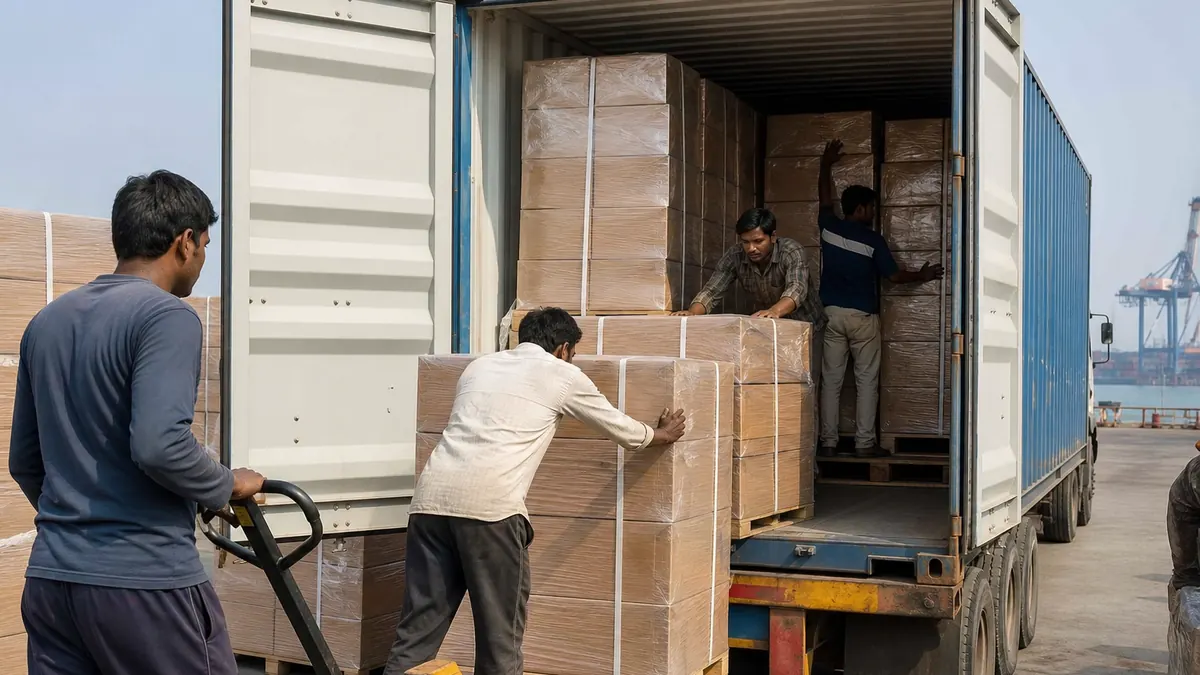
MOQ language qualifies buyers during prospecting. State sample (20–100 pcs/SKU), trial (500–3,000 pcs hero or mixed LCL), and wholesale (20′/40′ HQ FCL) stages in outreach templates so low-fit container-only negotiators self-select out. Hospitality replenishment call-offs come after pilot wing clearance — mention capability without over-promising seasonal volumes on cold contact.
MOQ stages to state in cotton home textile buyer outreach
Swipe →
Data table — swipe horizontally on small screens
| Stage | Typical MOQ | Outreach purpose | Verification gate |
|---|---|---|---|
| Lab / buyer sample | 20–100 pcs/SKU or lab-dip sets | Earn spec conversation | Paid sample for unverified leads |
| Trial order | 500–3,000 pcs or mixed LCL | First revenue milestone | Written spec + label mock-up approved |
| Wholesale FCL | 1×20′ / 1×40′ HQ mixed | Programme scale | Trial warehouse clearance |
| Hospitality call-off | Seasonal replenishment by SKU | Contract narrative | White-shade continuity proven |
| Private-label retail | Colourway MOQ per hero SKU | Retail calendar fit | Hangtag/barcode readiness |
| GOTS / organic trial | Often higher MOQ + longer lead | Premium corridor filter | TC path explained honestly |
Packaging Standards
Export Tip
- Pack story should match spec PDF — not contradict it on call two.
- Label artwork fields must align with packing-list SKU codes later.
- Documentation depth after PO: export documentation checklist.
Packaging belongs in buyer outreach when it signals channel readiness. Wholesale distributors expect polybag plus master carton by size and colourway; US retail private label expects hangtag and barcode discussion; hospitality buyers expect bulk cartons with linen-room marks and white-shade lot IDs. Mention pack capability in qualified emails — do not over-spec retail PL packs on hospitality-first prospects.
Pack format signals for buyer channel qualification
Swipe →
Data table — swipe horizontally on small screens
| Format | Channel signal | Mention in outreach when | Red flag if missing |
|---|---|---|---|
| Polybag + export carton | Wholesale, distributor | Default for most warm leads | Buyer needs retail PL only |
| Retail-ready set pack | US/EU private label | Retail PL confirmed on call | No hangtag artwork path |
| Bulk hospitality carton | Hotel programmes | Hospitality tagged in CRM | Only retail pack offered |
| Mixed-SKU FCL segregation | Coordinated programmes | Multi-family RFQ | Vague "mixed container" only |
| Moisture protection SOP | Long ocean legs | Monsoon-season trials | No dry staging mention |
| Curtain panel protection | 6303 programmes | Curtain buyer identified | Crush risk ignored |
Container Loading Details
Export Tip
- Do not invent MT payload numbers on prospecting calls.
- Photograph stuffing on trial FCL — builds trust for programme volume.
- Process depth: How to Export Cotton Home Textiles from India.
Serious buyers ask how a trial scales to FCL — answer with honest cube/weight behavior. Bulky quilts and curtains cube-out; terry weight-out. Mixed bed+bath+table programmes need segregated packing-list taxonomy. Mention Mundra, Nhava Sheva, Chennai, Tuticorin, and ICD Delhi paths when northern Panipat parcels factor into your supply story.
Container loading talking points for qualified buyer calls
Swipe →
Data table — swipe horizontally on small screens
| Element | Buyer question | Honest response pattern |
|---|---|---|
| 20′ mixed trial FCL | How many cartons fit? | Confirm CBM model — family mix dependent |
| 40′ HQ programme | Bed+bath+table in one box? | Yes with segregated PL lines |
| Quilt / comforter bulk | Will we cube-out? | Often yes — plan stow early |
| Terry + flat linen mix | Weight vs cube? | Forwarder stow plan before promise |
| ICD Delhi + Mundra | Northern lead time? | State inland + ocean leg separately |
| LCL first trial | Can we start LCL? | Yes for many 500–3,000 pc trials |
Shipping Methods
Export Tip
- Samples: express aligned to 72-hour follow-up promise.
- Trials: LCL or small FCL with full doc discipline.
- Programmes: FCL with seal photo archive.
Shipping talk tracks qualify buyer maturity. Ocean FCL/LCL from Mundra, Nhava Sheva, Chennai, or Tuticorin is the commercial default; air/express suits paid sample dispatch after qualified leads. Incoterms on written quotes: EXW, FOB named port, CFR/CIF; DDP only for mature retail/hospitality programmes where you can absorb destination risk.
Lead times in outreach: stock commercial 3–5 weeks; dyed/printed PL 5–8+ weeks; GOTS/hospitality custom 6–10+ weeks. Under-promising on certified hospitality shade programmes protects sample budgets.

Certifications
Compliance Notes
- Never claim GOTS on outreach email without TC path for discussed SKUs.
- Curtain programmes: note flammability readiness where US/EU buyer tagged.
- Cert attachment after PO: documentation checklist post.
Certifications in lead generation are trust filters, not booth wallpaper. Attach IEC + TEXPROCIL RCMC to every outreach pack. Mention OEKO-TEX, GOTS, OCS, or BCI only when scope covers the families you discuss — premium retail and EU buyers ask early; commodity wholesale may not. Expired certificate PDFs on first email fail sophisticated buyers instantly.
For TEXPROCIL membership depth, see TEXPROCIL Registration Benefits. For organic hospitality specialty, see Organic GOTS OEKO-TEX Hospitality Opportunities.
Credentials to attach in cotton home textile buyer outreach packs
Swipe →
Data table — swipe horizontally on small screens
| Credential | Outreach use | Validity control |
|---|---|---|
| IEC | KYC PDF in every pack | Match legal entity on quotes |
| TEXPROCIL RCMC | Council credibility for made-ups | Product-list fit for cotton home textiles |
| GST registration | Retail buyer vendor forms | Match invoice entity |
| Construction spec sheet | Per family in PDF | Matches sample swatches sent |
| Fibre / care label mock-up | US/EU retail targets | Destination language correct |
| OEKO-TEX Standard 100 | Premium tier leads only | Certificate ID covers offered class |
| GOTS / TC path summary | Organic/hospitality leads | Explain TC timing — no fake claims |
| Third-party inspection readiness | Large retail/hospitality | Name capability honestly |
Buyer Requirements
Buyer Requirements
- Written spec before firm programme FOB.
- Approve sample + label mock-up before trial carton.
- Confirm buyer-accepted cert bodies for OEKO-TEX/GOTS.
- Agree shade tolerance in writing after sample approval.
International buyers — retail chains, department stores, e-commerce private label, hospitality procurement, wholesale distributors — expect written specifications, approved samples, fibre/care label mock-ups, credential copies, clear trial MOQ, and honest lead times before programme volume. Premium corridors add OEKO-TEX, GOTS, BCI evidence and third-party inspection.
Your prospecting system should capture these requirements on first qualified call: channel, annual volume intent, label language, cert needs, Incoterm preference, and trial timeline. Buyers who refuse basic spec questions are rarely worth sample spend.
Country-wise Opportunities
Market Snapshot
- Weekly quota: e.g. twenty warm US consignees + ten LinkedIn touches each.
- Do not treat this table as duty or freight ranking — see Best Countries post.
- Refresh consignee lists quarterly as partner mix shifts.
Country-wise opportunities in a lead-generation article mean where to invest prospecting hours first, not full market-entry ranking. The United States (~62–67% of India HS 6302 value) dominates CRM priority: trade-data consignee lists, LinkedIn retail sourcing titles, and NY-adjacent hospitality networks. UK, Germany, Australia, Canada, UAE, and Japan follow as second-wave pools with channel-specific outreach hooks.
Use Best Countries for Indian Cotton Home Textile Exports for duty, freight, and compliance burden comparison. Use the table below to assign weekly prospecting quotas by corridor and channel.
Country / region prospecting priority for cotton home textile exporters
Swipe →
Data table — swipe horizontally on small screens
| Country / region | Prospecting priority | Primary channel | Lead source mix |
|---|---|---|---|
| United States | Highest — ~62–67% HS 6302 value | Retail PL, e-commerce, hospitality, wholesale | Trade data + LinkedIn + NY Home adjacency |
| United Kingdom | High | Department stores, hospitality, wholesalers | Trade data + Heimtextil CRM |
| Germany / EU | High | Retail, hospitality, redistributors | Trade data + OEKO-TEX-ready spec packs |
| Australia / Canada | Medium–high | Retail, distributors, hotel procurement | Trade data + care-label mock-ups |
| UAE / GCC | Medium–high hospitality | Hotels, distributors, hypermarkets | Index Mumbai leads + LinkedIn ops titles |
| Japan | Medium selective | Retail, importers | Referral + Heimtextil meetings |
| Mexico / Israel | Medium niche | US/EU-adjacent channels | Trade data + broker intro after sample |
| Netherlands | Medium EU gateway | Distributors | EU label-ready outreach |
Retail and Hospitality Outreach Playbooks
Export Tip
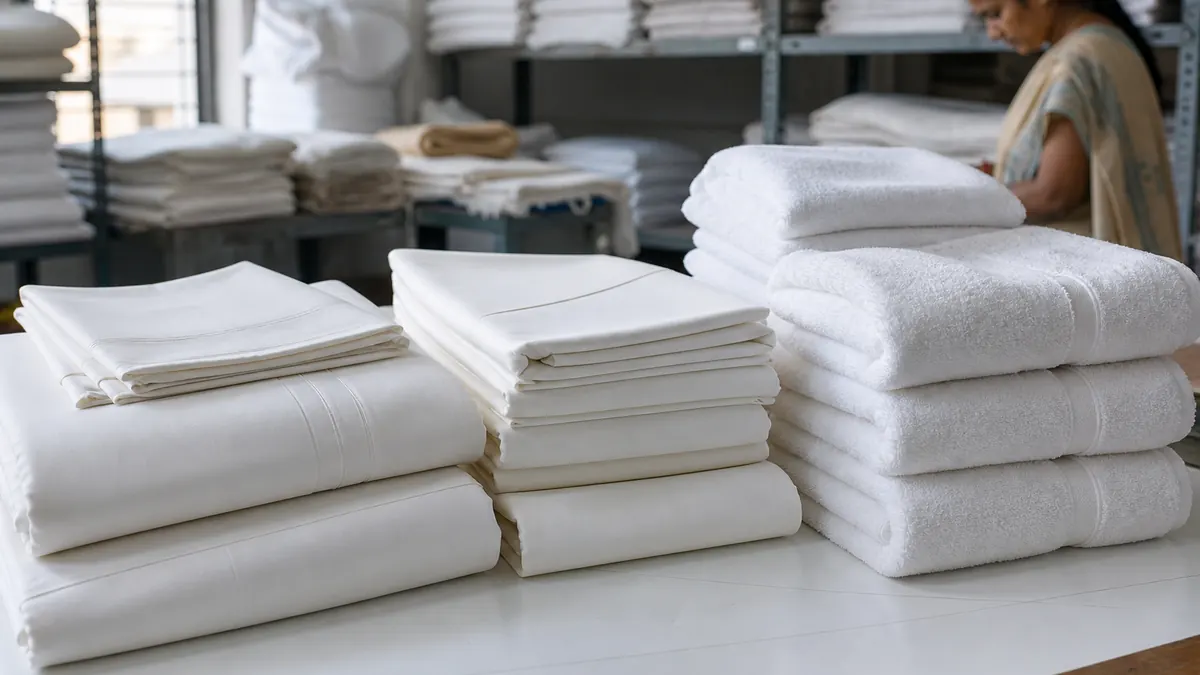
Retail private-label outreach leads with construction band, shade continuity, TPFIA or EU label mock-ups, trial MOQ, and pack format — not lifestyle photography. Attach a one-page spec PDF per hero family (bed, bath, table). Reference the buyer's known import category from trade data when possible.
Hospitality outreach leads with laundry-cycle durability, white-shade continuity across bed and bath SKUs, replenishment call-off capability, and bulk carton format. Target operations procurement and linen managers; fair leads from Index Mumbai and GCC-facing meetings often convert faster when replenishment story is documented.
Both channels require seventy-two-hour follow-up after any inbound RFQ, fair badge, or first positive reply — with meeting notes, spec attachment, and sample dispatch plan.
Retail private-label sequence
- Touch 1: trade-data reference + spec PDF + credential pack + call ask.
- Touch 2: label mock-up image + trial MOQ + shade card photo.
- Touch 3: close loop or archive with CRM reason code.
Hospitality procurement sequence
- Touch 1: white-shade capability + bed+bath family spec + laundry note.
- Touch 2: bulk pack photo + replenishment MOQ + Karur/Panipat origin.
- Touch 3: pilot wing trial proposal with honest 6–10 week GOTS lead if applicable.
Buyer Verification
- Log verification score in CRM before sample dispatch.
- TEXPROCIL buyer meets reduce verification friction — still confirm spec.
- Merchant exporters bring pre-verified retail relationships — see services links.
Buyer verification protects sample budgets and production slots. Before dispatching more than a small paid sample set, confirm: (1) legal entity registration and corporate website, (2) import history under HS 6302 or adjacent headings, (3) company-domain email contacts, (4) written spec or label requirement, (5) realistic MOQ and timeline discussion.
Red flags: free-sample demands from gmail-only contacts, refusal to share destination address, vague "huge container order" without spec, repeated sample requests without PO intent, mismatched company names on RFQ versus website. Charge courier and sample fees for unverified accounts — serious buyers accept paid sample paths.
Buyer verification scorecard for cotton home textile leads
Swipe →
Data table — swipe horizontally on small screens
| Check | Pass signal | Fail signal | Action if fail |
|---|---|---|---|
| Legal entity | Registered company + active website | No web presence, PO box only | Decline free samples |
| Import history | HS 6302 B/L or trade-data match | No import record, unrelated HS only | Lower priority — probe channel |
| Email domain | Company domain email | Free gmail/yahoo only | Require paid sample |
| Written spec | SKU family + construction discussed | "Best price" only | Send qualification questions — no FOB |
| Volume realism | Trial MOQ accepted as first step | FCL-only on first email | Archive or nurture slowly |
| Cert honesty | Asks for OEKO-TEX/GOTS scope | Demands fake cert on sample | Disqualify immediately |
| Reference | Trade reference or vendor ID | Refuses any verification | No bulk slot allocation |
Sourcing Checklist
Checklist
Buyer Checklist
Exporter Checklist
Common Buyer Mistakes
Common Mistakes Box
Future Market Trends
Key Statistics
- More buyer self-service portal KYC before sample approval.
- AI-assisted trade-data tools lowering consignee research cost — competition rises.
- Video audit expectations on first qualified call for new suppliers.
- Coordinated bed+bath+table PL increasing multi-family spec requirements in outreach.
Buyer discovery is shifting toward vendor portals that require TEXPROCIL RCMC, OEKO-TEX/GOTS uploads, and fibre-label artwork before second meetings — outreach packs need QR links to credential folders, not only PDF attachments. US and EU retail continues consolidating private-label home textile suppliers; trade-data lists must refresh quarterly as consignees merge or switch agents.
Organic and certified programme growth increases qualification depth — link premium prospects to the GOTS hospitality specialty guide when cert questions dominate the first call. Digital marketplaces tighten spam filters; family-specific RFQ replies outperform generic home linen templates.
Challenges & Solutions
- Challenge: Low reply rate — Solution: warm HS 6302 consignee lists + personalized first lines.
- Challenge: Sample tourists — Solution: paid sample policy + verification scorecard.
- Challenge: Agent-only consignee names — Solution: website + LinkedIn ultimate buyer mapping.
- Challenge: Label annex surprise — Solution: capture label language on first qualified call form.
- Challenge: Fair badges without conversion — Solution: 72-hour spec pack + sample tracking.
- Challenge: No ROI visibility — Solution: CRM cost fields from lead through first FCL sailing.
The hardest lead-generation challenges for cotton home textile exporters are empty pipeline despite high email volume, sample tourists draining courier budgets, trade-data consignee names that mask buying agents, destination label surprises after verbal promises, and weak CRM discipline after fairs. Each has a procedural fix cheaper than hiring more sales interns.
Compliance Checklist
Checklist
Compliance Notes
TEXPROCIL and Digital Channel Integration
Compliance Notes
- One CRM, one spec standard, one ROI scoreboard across channels.
- Fair leads without 72-hour follow-up are wasted pavilion spend.
- Digital listings must mirror outreach PDF SKU names exactly.
TEXPROCIL-linked buyer–seller meets and Index Mumbai pavilion density improve meeting quality versus cold directories — register RCMC before scaling outreach. Alibaba and IndiaMART extend the pipeline between fair seasons when RFQs name construction, MOQ, and destination; reject anonymous best-price pings.
Integrate fair badges, marketplace RFQ IDs, and trade-data leads into one CRM with shared spec PDFs and follow-up SLAs. Channel-specific tactics live in Trade Shows and B2B Marketplaces; this post owns year-round prospecting outside pavilion weeks.
Channel integration for cotton home textile lead generation
Swipe →
Data table — swipe horizontally on small screens
| Channel | Best for | CRM stage entry | Do not |
|---|---|---|---|
| HS 6302 trade data | Warm consignee lists | Lead — warm | Cold email without personalization |
| LinkedIn outreach | Contact mapping | Lead — contacted | Generic connection spam |
| TEXPROCIL meets | Verified buyer density | Lead — qualified | Skip spec PDF |
| Heimtextil / Index badges | High-intent meetings | Lead — fair hot | Follow up after 2 weeks |
| Alibaba / IndiaMART | RFQ qualification | Lead — inbound | Quote without MOQ + destination |
| Referrals / existing buyers | Fastest close | Lead — intro | Ignore shade continuity on expand SKUs |
Sources
- DGCI&S — Directorate General of Commercial Intelligence and Statistics
- Indian Trade Journal — HS 6302 commodity export profile (FY 2023-24)
- Indian Trade Journal / DGCI&S commodity profiles (HS 6302 updates)
- Ministry of Commerce & Industry — TRADESTAT
- TEXPROCIL — The Cotton Textiles Export Promotion Council
- TEXPROCIL — Cotton Home Textiles overview
- DGFT (India) — IEC / trade portal
- CBIC — Indian Customs Tariff (Chapter 63)
- ITC Trade Map
- UN Comtrade Database
- WITS World Integrated Trade Solution
- USITC Harmonized Tariff Schedule (search 6302)
- US CBP — Textile and apparel resources
- FTC — Textile Fiber Products Identification Act
- European Commission TARIC
- EU Regulation (EU) No 1007/2011 — textile fibre names & labelling
- UK Trade Tariff / UK Global Tariff
- UK DCTS goods graduation (Ch. 52 & 63 India — verify current notice)
- DFAT — Australia–India ECTA
- Australian Border Force — FTA Portal
- OEKO-TEX Standard 100
- GOTS — Global Organic Textile Standard
- Better Cotton (BCI)
- IPPC — ISPM 15 wood packaging
- Altus Exports — Textiles & Home Furnishings
All sources accessed 2026-08-08 during the cotton home textiles factual audit. Prefer primary government and multilateral databases (DGCI&S / Indian Trade Journal HS 6302 commodity profiles, TEXPROCIL, DGFT, USITC HTS, EU TARIC, UK Trade Tariff / DCTS graduation notices, DFAT ECTA, ITC Trade Map / UN Comtrade / WITS) when citing figures in contracts or buyer presentations. Re-verify live before every commercial quote.
HS 6302 trade-data prospecting should be refreshed quarterly — consignee patterns shift with retail calendar and hospitality contracts.
Conclusion
Finding international buyers for cotton home textiles succeeds when HS 6302 trade data, LinkedIn, retail and hospitality outreach, and buyer verification operate as one CRM-backed system — not isolated tactics. India HS 6302 exports at roughly US$1,858.84M (FY 2023-24) and US$2,128.63M (FY 2024-25) (directional) confirm demand; your pipeline discipline determines whether that demand converts to trial cartons and FCL programmes from Panipat, Karur, and Solapur clusters.
Altus Exports connects qualified cotton home textile leads to trial and FCL execution through merchant exporter India and global sourcing partner India workflows. Explore textiles & home furnishings or contact the team to build a ranked buyer list for your hero families.
Continue with How to Export Cotton Home Textiles from India, Trade Shows and B2B Marketplaces, Source Cotton Home Textiles Directly from India, and Organic GOTS OEKO-TEX Hospitality Opportunities.