
Best Countries for Indian Coffee Exports in 2026
By Saurabh Mittal, Founder, Altus Exports
A market-selection guide to the best countries for Indian coffee exports in 2026 — comparing Italy, Germany, Belgium, Russia, USA, UAE, and Japan on import demand, product fit, pricing, compliance, and entry strategy, with a weighted scoring framework for prioritising destinations.
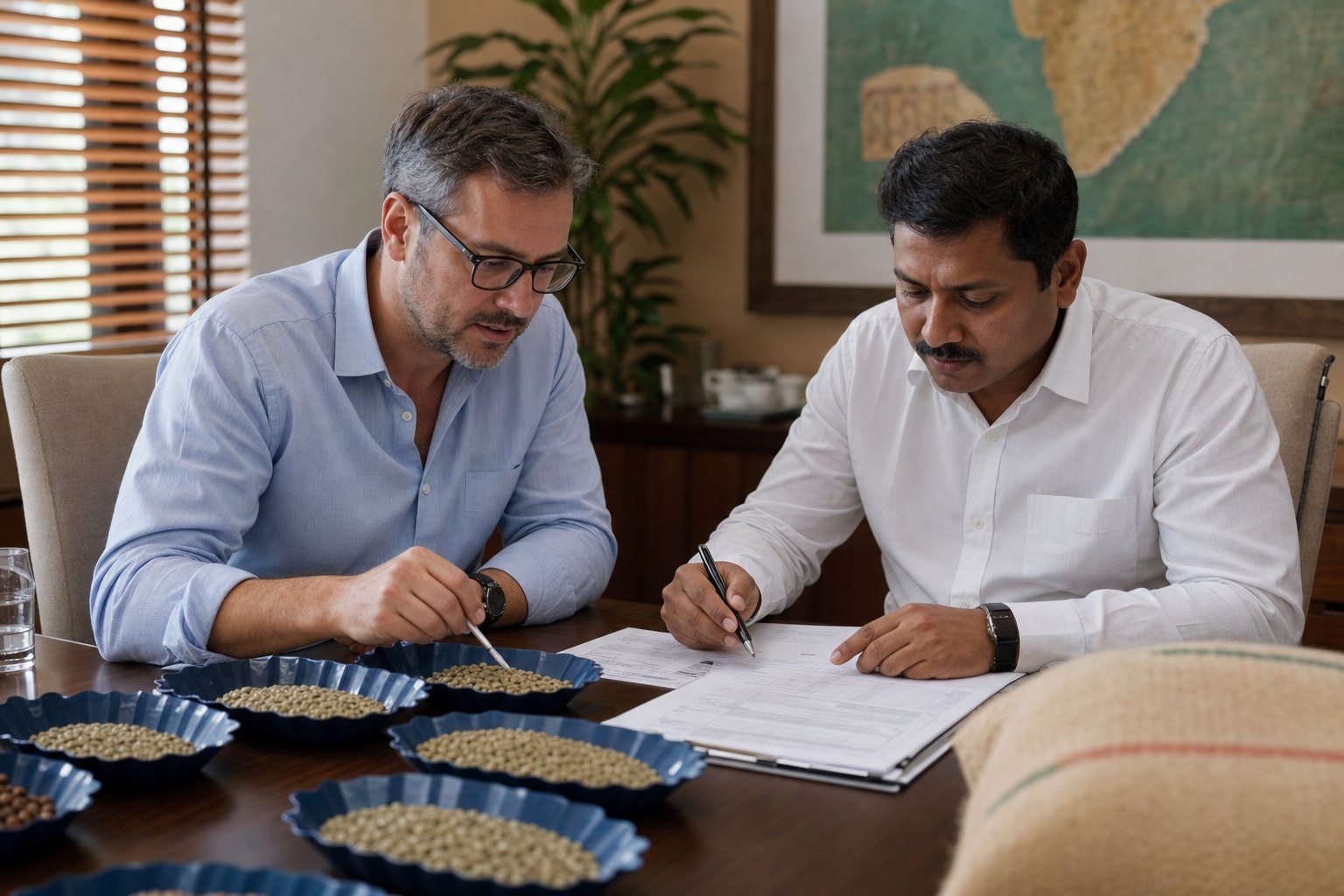
India is the world's 7th-largest coffee producer, exporting roughly 330,000–360,000 tonnes of green, roasted, and instant coffee annually (indicative, Coffee Board of India data) to more than 50 countries. Export success is not distributed evenly across destinations: Italy, Germany, Belgium, Russia, the USA, the UAE, and Japan absorb the large majority of Indian coffee export value, but each market demands a different species mix, price band, compliance posture, and relationship model.
This guide answers a specific question for Indian coffee exporters, estate owners, curing works operators, and export consultants: what are the best countries for Indian coffee exports in 2026, and how should you prioritise among them? It is a market-selection playbook, not a rewrite of the full export process or product catalogue. For operational export steps, see How to Export Coffee from India. For product variety depth, see Top Coffee Products Exported from India.
India exports coffee primarily under HS heading 0901 — green coffee (0901.11 not decaffeinated, 0901.12 decaffeinated) and roasted coffee (0901.21 not decaffeinated, 0901.22 decaffeinated) — with instant and soluble coffee classified separately under HS 2101. Robusta accounts for roughly two-thirds of Indian production, dominating volume lanes to Italy, Belgium, Russia, and Germany, while Arabica and the distinctive monsoon Malabar process from Coorg (Kodagu), Chikmagalur, Wayanad, the Nilgiris, and Araku serve premium specialty channels. Altus Exports works as a merchant exporter in India and global sourcing partner connecting verified Indian coffee supply with destination-market buyers — this analysis reflects field intelligence from those programmes.
Key Takeaways
Summary Box
Executive Summary
Summary Box
Choosing which country to prioritise is arguably the highest-leverage decision an Indian coffee exporter makes — higher than packaging optimisation, higher than freight negotiation, and higher than trade-show attendance. This guide builds a repeatable market-selection framework rather than treating destination choice as an afterthought to production planning.
The analysis below walks through India's overall coffee trade position, export and import statistics by destination, product-market fit across the major grades, detailed profiles of the seven priority countries, pricing and logistics benchmarks by lane, and the certifications each market expects. It closes with a scoring framework exporters can reapply annually as trade data shifts.
Buyers reading this guide from the import side should pair it with How to Source Coffee Directly from India for procurement workflow, and exporters should pair it with How to Export Coffee from India for the operational sequence once a market is chosen.
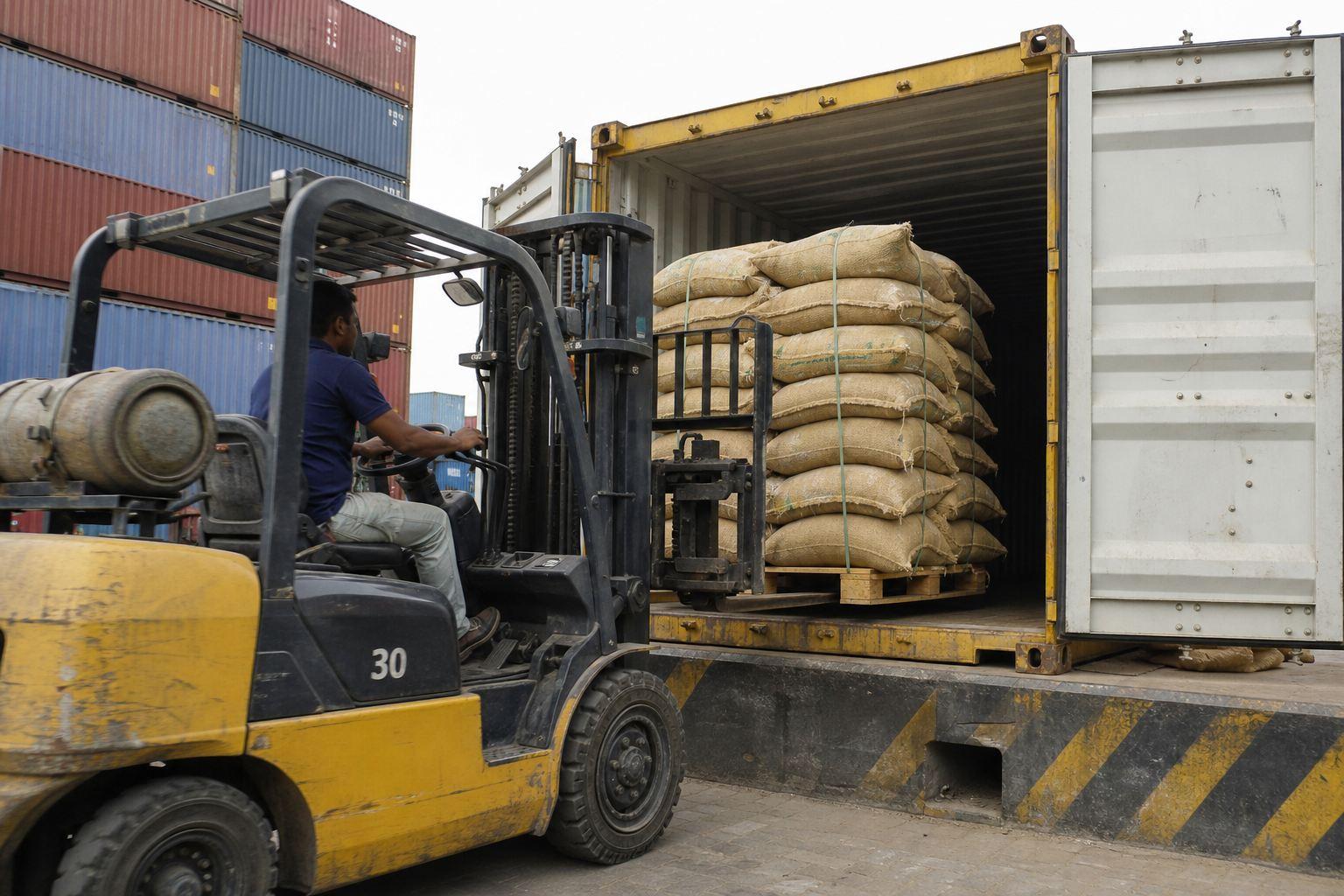
Market Size & Industry Overview
Key Statistics
Global coffee consumption continues to grow at roughly 1.5–2% annually, driven by European specialty and blend demand, sustained instant coffee consumption across Russia and the CIS, and a fast-growing specialty café culture across the USA, Japan, and South Korea. India competes primarily with Brazil, Vietnam, Colombia, Indonesia, and Ethiopia, but rarely head-to-head on volume. India's structural export advantage rests on substantial Robusta volume from Karnataka and Kerala that competes on price with Vietnam in blending-focused markets, globally recognised Arabica origins in Chikmagalur, Kodagu (Coorg), and the Nilgiris, and a unique shade-grown, monsoon-processed identity that has no true substitute elsewhere.
India Coffee Industry Snapshot for Market Selection (Indicative)
Swipe →
Data table — swipe horizontally on small screens
| Dimension | 2026 Snapshot | Strategic Implication |
|---|---|---|
| Annual production | ~360,000–370,000 tonnes (2024–25) | Volume markets (Italy, Belgium, Russia) absorb Robusta; specialty is a margin play |
| HS classification | 0901 — green (0901.11/12), roasted (0901.21/22); instant/soluble under HS 2101 | Classify correctly for customs and buyer RFQs |
| Robusta share of production | ~65–70% of Indian coffee output | Blending-focused Robusta drives volume lanes to Italy, Belgium, Russia, Germany |
| Top destinations (typical) | Italy, Germany, Belgium, Russia, USA, UAE, Japan | Validate quarterly via Coffee Board/DGCIS export bulletins |
| Key origins | Karnataka (Coorg/Kodagu, Chikmagalur), Kerala (Wayanad), Tamil Nadu (Nilgiris), Andhra/Telangana (Araku) | Match origin story to destination buyer expectations |
| Regulatory body | Coffee Board of India (RCMC mandatory for export) | See Coffee Board registration guide for the full process |
A Market-Selection Scoring Framework
Altus Exports evaluates destination markets for Indian coffee clients using a weighted scoring model across five dimensions: product-grade fit (30%), import demand trend (20%), pricing and margin potential (20%), compliance burden (15%), and payment/logistics reliability (15%). Markets scoring above roughly 70 out of 100 enter the active pursuit list; markets below 50 are deprioritised regardless of anecdotal buyer interest.
Robusta vs Arabica: The Market Selection Fork
Robusta represents roughly two-thirds of Indian coffee production and delivers a stronger, higher-caffeine cup that blending houses and instant coffee manufacturers favour — a profile the Italian espresso-blend trade, Belgian traders, and Russian instant coffee manufacturers actively seek. Arabica, grown above roughly 1,000 metres, produces the milder, more aromatic cup that specialty roasters in Italy, Germany, the USA, and Japan pay a meaningful premium for. If your supply chain is commodity Robusta, prioritise Italy, Belgium, Russia, and Germany's blending segment; if it includes Arabica plantation grades or monsoon Malabar, prioritise Italy's specialty roasters, Germany's organic channel, the USA, and Japan.
Export Statistics
Key Statistics
The Coffee Board of India and the Directorate General of Commercial Intelligence and Statistics (DGCIS) publish export statistics by volume, value, and destination on a periodic basis — the primary reference for new exporters benchmarking realistic price and volume expectations. Coffee Board data put FY 2024–25 coffee export value at about US$1.8 billion on roughly 389,000 tonnes of permits, with Italy, Germany, Belgium, Russia, and the UAE among the largest destinations.
Indicative Destination Shares for Indian Coffee Exports (directional; reconfirm with Coffee Board / DGCIS)
Swipe →
Data table — swipe horizontally on small screens
| Destination Cluster | Approx. Share (recent official summaries) | 5-Year Trend | Primary Indian Grades |
|---|---|---|---|
| Italy | ~18% (top destination) | Stable, roasting-led | Green Robusta, Arabica plantation, monsoon Malabar |
| Germany | ~11% | Growing organic/specialty | Arabica plantation, organic-certified, specialty micro-lots |
| Belgium (Antwerp hub) | ~7–8% | Stable, trading/re-export-led | Robusta parchment and cherry AB |
| Russia + CIS | ~5–6% | Instant- and Robusta-led | Robusta, instant coffee (HS 2101) |
| UAE | ~5% | Stable to growing / re-export | Robusta and Arabica blends |
| USA | ~4–5% | Growing specialty | Arabica specialty, monsoon Malabar, organic-certified |
| Japan / other Asia | Smaller but quality-led | Stable specialty demand | High cupping-score Arabica, monsoon Malabar |
Import Statistics
Key Statistics
Export market selection improves dramatically when Indian exporters analyse import data from the buyer's side — not only Coffee Board export statistics. Import data reveals total market size, competitor origin share, grade preferences, and growth trajectories that export data alone cannot show, and it reveals whether a market is a commodity volume opportunity or a specialty niche before curing capacity is committed to it.
Top Importing Countries for Indian Coffee: Demand Signals
Swipe →
Data table — swipe horizontally on small screens
| Country | Import Volume Signal | India's Position | Data-Driven Action |
|---|---|---|---|
| Italy | Large-scale roasting/blending imports; strong green coffee demand | India is a top-tier Robusta and Arabica origin | Focus on cupping consistency and container-programme reliability |
| Germany | Growing organic and specialty import segment | India growing in organic and monsoon Malabar niches | Pursue NPOP/EU Organic before approaching German specialty buyers |
| Belgium | Antwerp re-export hub; substantial Robusta trading volume | India competes with Vietnam and African origins on price | Optimise for volume consistency and price competitiveness |
| Russia | Sustained instant and Robusta imports | India competes with Vietnam, Brazil for instant/Robusta supply | Monitor payment routes; instant coffee (HS 2101) niche growing |
| USA | Growing specialty segment; steady commodity import base | India is niche for monsoon Malabar/specialty; competes broadly on commodity | Split strategy: commodity Robusta/Arabica vs specialty monsoon Malabar |
| UAE | Re-export hub plus regional blending demand | India is an established supplier alongside African and other origins | Build relationships with established regional traders and blenders |
| Japan | Premium specialty plus canned/instant coffee imports | India is a recognised premium Arabica and monsoon Malabar origin | Invest in traceability and consistent cupping documentation |
Product Categories and Variants
Summary Box
Understanding product-market fit is the foundation of country selection. India exports coffee across a wide grade spectrum, but destination markets cluster around distinct product expectations. Sending the wrong grade to the wrong country ends relationships before they begin. See Top Coffee Products Exported from India for full grade-by-grade depth; this section covers only what is needed for market selection.
Coffee Product Categories and Destination Fit
Swipe →
Data table — swipe horizontally on small screens
| Product Category | Key Grades | Primary Origins | Best-Fit Destinations | Typical FOB Range (USD/kg) |
|---|---|---|---|---|
| Green Robusta (commodity) | Parchment AB, Cherry AB | Kodagu, Chikmagalur, Wayanad | Italy, Belgium, Russia, Germany, Spain | $2.20–$3.20 |
| Green Arabica (plantation) | Plantation A/B/C, Cherry AB/PB | Chikmagalur, Kodagu, Nilgiris, Araku | Italy, Germany, USA, domestic blending | $3.00–$5.50 |
| Monsoon Malabar | Monsooned Malabar AA, Monsooned Basanally | Cured along the Malabar coast | Italy, Germany, other EU specialty | $4.50–$7.50 |
| Specialty single-origin / micro-lot | 80+ cupping score lots | Estate-identified, traceable lots | USA, Japan, South Korea, Germany | $6.00–$15.00+ |
| Instant / soluble coffee | Spray-dried, freeze-dried | Processing units across South India | Russia, USA, South Korea, CIS markets | $6.00–$14.00 |
Packaging and MOQ Expectations by Market Tier
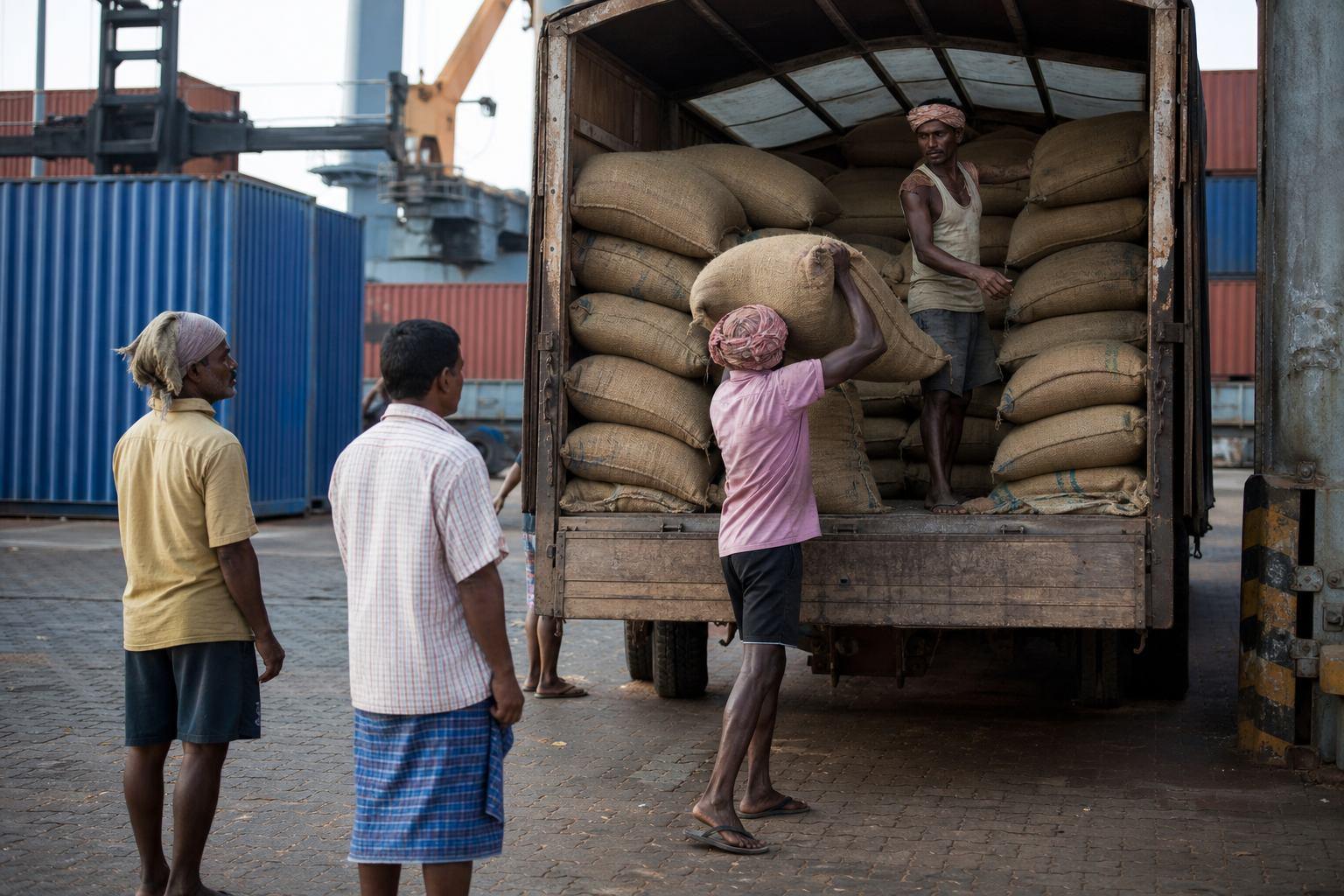
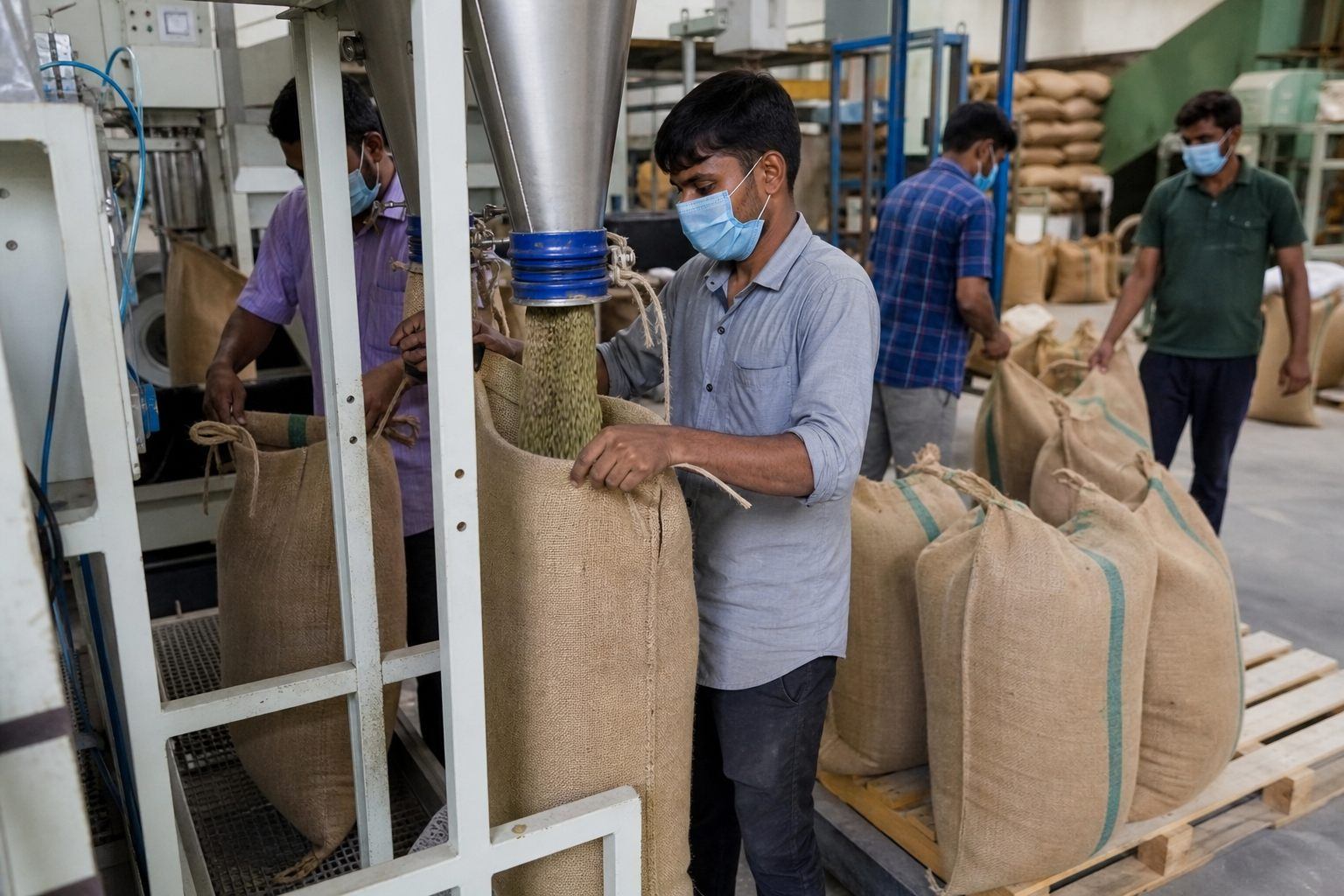
Commodity markets typically purchase in jute bags of roughly 60 kg with GrainPro or PE liners, or bulk super sacks (roughly 1,000 kg FIBC bags) for large Robusta programmes, palletised for container loading. Standard MOQ for a new exporter relationship is a full 20-foot container (roughly 17–19 MT) or a minimum 5 MT trial for established buyers. Premium Arabica and monsoon Malabar programmes may start at 1–2 MT for trial orders in vacuum-sealed multi-ply bags.
Manufacturing Overview
Export Tip
Destination markets expect different processing methods, and matching supply capability to that expectation is part of market selection, not an afterthought.
Washed Processing for Italy and Germany
Washed (Parchment/Plantation) coffee delivers the cleaner cup that established Italian and German roasters specify by name, and is the safest default processing method for exporters entering these two markets for the first time.
Natural (Unwashed) Processing for Belgium and Russia
Unwashed (Cherry) processing suits Belgian trading-desk and Russian blending buyers less concerned with cup delicacy and more concerned with consistent body and competitive pricing.
Monsoon Processing for EU Specialty
Monsoon Malabar's multi-week exposure process along the Malabar coast is a prerequisite for entering the EU specialty premium segment, particularly in Italy and Germany, and cannot be substituted with standard drying methods.
Instant Coffee Manufacture for Russia, USA, and South Korea
Spray-dried and freeze-dried instant coffee manufacture targets Russia and CIS markets, the USA, and South Korea specifically — a processing investment that only pays off if these markets are part of the exporter's shortlist.
Pricing Analysis
Buyer Tip
Coffee export pricing follows international commodity cycles (notably ICE Arabica and Robusta futures), currency movement, and destination-specific willingness to pay. FY 2024–25 Indian coffee export unit values rose sharply with global prices — treat FOB bands as planning ranges and reconfirm against Coffee Board e-auction / ICTA prices before quoting. Indian coffee FOB prices are typically quoted from New Mangalore, Cochin, Chennai, or Nhava Sheva for bulk shipments.
FOB Price Benchmarks by Grade and Destination Fit
Swipe →
Data table — swipe horizontally on small screens
| Grade / Category | Indicative FOB (USD/kg) | Primary Destinations | Margin Driver |
|---|---|---|---|
| Robusta Parchment AB / Cherry AB | $2.20–$3.20 | Italy, Belgium, Russia, Germany | Volume pricing; ICE Robusta futures sensitivity |
| Arabica Plantation A / B | $3.50–$5.50 | Italy, Germany, USA | Cup cleanliness; screen size; ICE Arabica futures sensitivity |
| Monsoon Malabar AA | $4.50–$7.50 | Italy, Germany, other EU specialty | Distinctive processing; scarcity; buyer following |
| Specialty single-origin / micro-lot (80+ cupping) | $6.00–$15.00+ | USA, Japan, South Korea, Germany | Cupping score; estate reputation; traceability |
| Instant / soluble coffee | $6.00–$14.00 (freeze-dried at the higher end) | Russia, USA, South Korea, CIS markets | Processing method (spray-dried vs freeze-dried) |
Incoterms and Landed Cost by Market
FOB is the dominant incoterm for Indian coffee exporters selling to Italian, Belgian, German, and US buyers who arrange freight. CIF and CFR are preferred by some UAE and Russian buyers who want a single landed-cost quote. Exporters quoting CIF must model ocean freight and marine insurance (roughly 0.3–0.5% of cargo value) into the price.
MOQ Analysis
Buyer Tip
MOQ realism differs by destination as much as by product — established Italian and Belgian trading relationships accept smaller consolidated lots than a first-time German or Japanese specialty buyer will typically commit to.
Typical MOQ by Destination Market Tier
Swipe →
Data table — swipe horizontally on small screens
| Market Tier | Trial Order MOQ | Standard Programme MOQ | Representative Countries |
|---|---|---|---|
| Commodity volume | 5 MT | 1 x 20ft FCL (~17–19 MT) | Italy, Belgium, Russia |
| Blending / re-export | 5 MT | 1 x 20ft FCL (~17–19 MT) | Belgium, UAE |
| Specialty / organic | 500 kg–1 MT | 1–2 MT per shipment | Germany, USA, Japan |
| Instant coffee (finished retail) | 500 kg–1 MT finished | Scales with retail programme size | Russia, USA, South Korea |
Packaging Standards
Export Tip
Packaging expectations shift with market tier — commodity trading desks accept standard bulk formats, while specialty and organic buyers increasingly expect traceability labelling per lot.
Packaging Standards by Destination Market Tier
Swipe →
Data table — swipe horizontally on small screens
| Market Tier | Standard Packaging | Unit Size | Key Requirement |
|---|---|---|---|
| Commodity volume (Italy, Belgium, Russia) | Jute bags with GrainPro/PE liner, or bulk FIBC sacks | ~60 kg (or ~1,000 kg FIBC) | Moisture barrier integrity |
| Specialty / organic (Germany, USA, Japan) | Vacuum-sealed multi-ply bags | 5–30 kg | Lot-level traceability labelling |
| Re-export / blending (UAE) | Jute bags with GrainPro/PE liner | ~60 kg | Consistent bag weight for onward distribution |
| Instant / retail-ready (Russia, USA, South Korea) | Sachets, jars, or tins | Per SKU specification | Moisture-proof sealing and destination-language labelling |
Container Loading Details
Export Tip
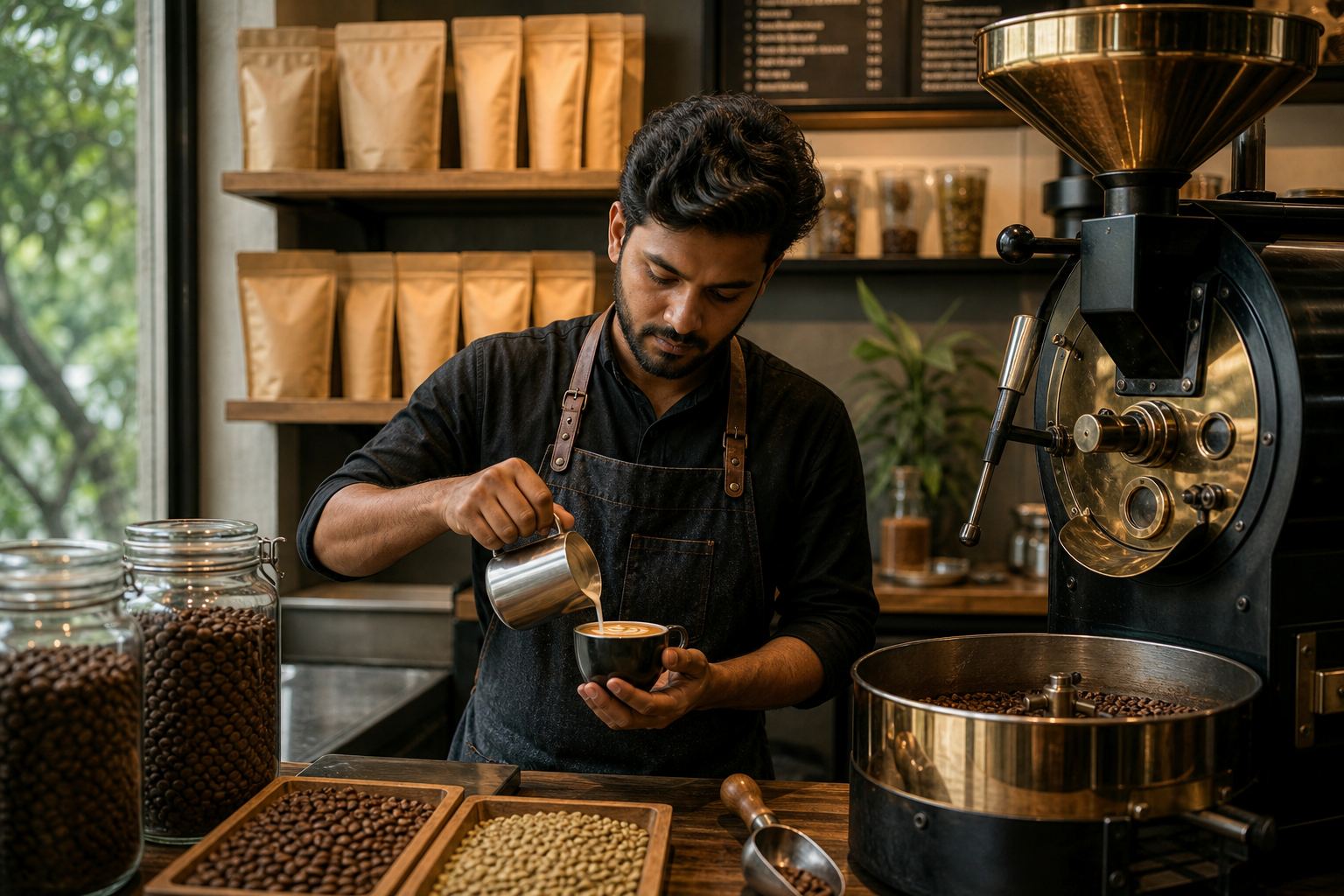
Container loading benchmarks are broadly consistent across destinations for bulk green coffee, though buyers in certain markets specify bag count or pallet configuration for their own handling systems.
Indicative Container Loading Benchmarks by Format
Swipe →
Data table — swipe horizontally on small screens
| Container Type | Approx. Net Green Coffee Weight | Approx. Bag Count | Common Destinations |
|---|---|---|---|
| 20-foot FCL | ~17–19 MT (jute bags) | ~275–320 bags (~60 kg each) | Italy, Germany, Belgium, Russia commodity orders |
| 40-foot FCL | ~24–26 MT (jute bags, volume-limited) | ~400–430 bags (~60 kg each) | Large established Italy or Belgium programmes |
| 20-foot FCL (bulk super sacks) | ~19–20 MT | ~19–20 FIBC bags (1,000 kg each) | Large Robusta volume buyers, UAE re-export |
| LCL consolidation | 500 kg–5 MT | Palletised bags or cartons | Germany, USA, Japan specialty trial orders |
Shipping Methods
Export Tip
Market selection and logistics economics are inseparable for coffee export. A destination that offers strong demand but prohibitive freight costs or extended transit times erodes FOB margin before the buyer opens the container. Indian coffee ships primarily from New Mangalore, Cochin, Chennai, and Nhava Sheva, with FOB the dominant incoterm and CIF/CFR used by some UAE and Russian buyers.
Indicative Logistics Benchmarks by Destination
Swipe →
Data table — swipe horizontally on small screens
| Destination | Primary Indian Load Port | Transit Time | Logistics Note |
|---|---|---|---|
| Italy (Genoa/Trieste) | New Mangalore / Cochin | 20–28 days | Highest-volume lane; frequent sailings support programme consistency |
| Belgium (Antwerp) | New Mangalore / Nhava Sheva | 25–32 days | Trading-hub routing; confirm consolidation options with forwarder |
| Germany (Hamburg/Bremerhaven) | Cochin / Nhava Sheva | 28–35 days | EU customs clearance at entry port; certificate timing matters |
| Russia (via intermediate hub) | Chennai / Nhava Sheva | 30–45 days | Routing varies; confirm with forwarder monthly |
| USA (East/West Coast) | Nhava Sheva / Chennai | 25–40 days | ISF filing required 24 hours before loading |
| UAE (Jebel Ali) | New Mangalore / Cochin | 10–15 days | Shortest major lane; high sailing frequency |
| Japan (Yokohama/Kobe) | Chennai / Nhava Sheva | 20–28 days | Plan moisture controls for long summer-heat corridors |
Certifications
Compliance Notes
All Indian coffee exporters need Coffee Board of India RCMC registration and FSSAI compliance regardless of destination. Beyond these foundations, certification requirements diverge sharply by market.
Certification Relevance by Destination Market
Swipe →
Data table — swipe horizontally on small screens
| Certification | Italy / Belgium | Germany / USA / Japan | Russia / UAE |
|---|---|---|---|
| Coffee Board of India RCMC | Mandatory | Mandatory | Mandatory |
| FSSAI food business licence | Mandatory | Mandatory | Mandatory |
| NPOP / organic certification | Rare | Effectively required for organic retail claims | Rare |
| Geographical Indication (GI) documentation | Occasional, for origin claims | Increasingly requested for origin claims | Rare |
| Rainforest Alliance / Fairtrade | Occasional | Common for sustainability-focused buyers | Rare |
Buyer Requirements
Buyer Requirements
- Species and process stated on every quote (Robusta/Arabica, washed/unwashed, monsoon Malabar or not)
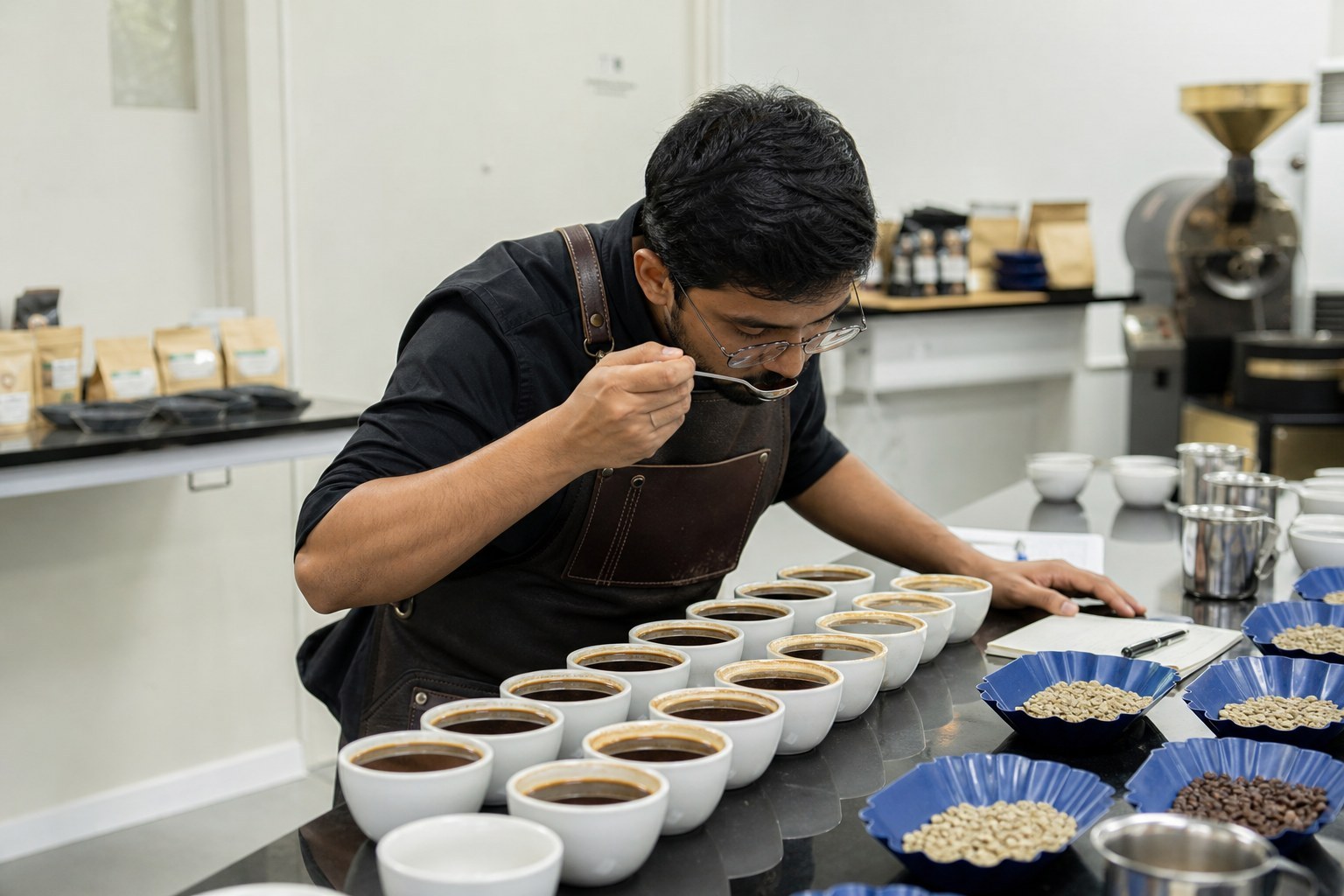
- Cupping approval recorded against a sealed reference sample retained by both parties
- Destination compliance notes (residues, organic, GI) agreed before production begins
- Payment terms and inspection windows written into the proforma before shipment
- Realistic lead-time commitments that reflect the destination's typical transit window
Destination buyers differ on residue, organic, and traceability tests, but almost all still ask for Coffee Board RCMC proof, FSSAI documentation, sealed cupping samples, moisture/defect-count reports, and written FOB or CFR terms with MOQ before committing to programme volume.
Country-wise Opportunities
Market Snapshot
The following profiles cover the seven priority destinations for Indian coffee exporters in 2026. Validate pricing, payment terms, and regulatory requirements with current trade data and your buyer contacts before committing curing capacity to any single market.
Italy
- Demand profile
- Large-scale roasting and blending; growing specialty and monsoon Malabar niche
- Preferred grades
- Green Robusta Parchment AB/Cherry AB, Arabica plantation grades, monsoon Malabar
- Pricing band
- FOB $2.20–$3.20/kg commodity Robusta; $4.50–$7.50/kg monsoon Malabar and specialty
- Entry strategy
- Build relationships with 3–5 established roasting houses; offer container-programme consistency
Italy is India's largest single-country coffee buyer by volume in most years, driven by Italian roasting houses that use Indian Robusta and Arabica as blend components for espresso and bar-coffee formulations sold across Europe. Relationships with established roasters compound over years; this is a market built on trust and consistency, not spot-price competition.
Germany
- Demand profile
- Organic, specialty, and monsoon Malabar; blending consumption for conventional grades
- Preferred grades
- Arabica plantation, organic-certified, specialty micro-lots, monsoon Malabar
- Pricing band
- $3.50–$5.50/kg plantation Arabica; organic premium 20–40% over conventional
- Entry strategy
- Obtain organic/GI documentation before approaching; partner with an EU import broker for first shipments
Germany is Europe's specialty and organic gateway, and also a gateway to Austria, Switzerland, and the Netherlands. German buyers pioneered organic and Fairtrade coffee sourcing and maintain strict residue and traceability enforcement, making it a certification-heavy but premium-rewarding market for monsoon Malabar and organic-certified Arabica.
Belgium
- Demand profile
- Trading and re-export; blending-focused Robusta consumption across Europe
- Preferred grades
- Robusta Parchment AB and Cherry AB
- Pricing band
- FOB $2.20–$3.20/kg, closely tracking ICE Robusta futures
- Entry strategy
- Build relationships with 2–3 established Antwerp trading houses; prioritise consistent container programmes
Belgium's coffee trade is concentrated in Antwerp, which functions as a major European Robusta trading and re-export hub serving roasters across the continent. Belgian traders buy on volume consistency and price competitiveness far more than on cupping storytelling — a commercial trading relationship, not a specialty narrative.
Russia
- Demand profile
- Direct consumption plus significant instant coffee manufacturing demand
- Preferred grades
- Robusta green coffee, instant/soluble coffee (HS 2101)
- Pricing band
- FOB $2.20–$3.20/kg green Robusta; $6.00–$14.00/kg instant coffee depending on process
- Entry strategy
- Work with experienced merchant exporters managing CIS programmes; monitor payment routing closely
Russia has historically been among the largest destinations for Indian coffee, with sustained demand for both Robusta green coffee and instant/soluble coffee manufacture. Trade route shifts have complicated direct payment and shipping in some periods, but demand persists through alternative corridors and CIS distribution networks.
United States of America
- Demand profile
- Specialty retail plus growing organic segment; commodity blending demand alongside it
- Preferred grades
- Arabica specialty, monsoon Malabar, organic-certified; commodity Robusta/Arabica for blending
- Pricing band
- $3.00–$4.80/kg commodity; $6.00–$15.00+/kg specialty single-origin/micro-lot
- Entry strategy
- Target specialty importers for monsoon Malabar/single-origin; food manufacturing brokers for commodity volume
The USA is a dual-market opportunity: commodity Arabica and Robusta for blending and foodservice, and a fast-growing specialty segment for monsoon Malabar, single-estate Arabica, and organic-certified lots sold through specialty roasters and e-commerce brands. Exporters who conflate these two segments waste marketing effort.
United Arab Emirates
- Demand profile
- Re-export trading, regional blending, hospitality, and growing specialty retail
- Preferred grades
- Robusta and Arabica blends; growing interest in specialty and monsoon Malabar
- Pricing band
- FOB $2.20–$3.50/kg commodity blends; $4.50–$8.00/kg premium and specialty
- Entry strategy
- Build relationships with 3–5 established re-exporters and regional roasters
The UAE functions partly as a re-export hub serving wider Gulf and African demand, and partly as a direct blending and retail market in its own right. Indian exporters selling into Dubai and Jebel Ali access distribution networks that direct sales to each end-market cannot replicate quickly.
Japan
- Demand profile
- Premium specialty plus canned/instant coffee manufacturing demand
- Preferred grades
- High cupping-score Arabica, monsoon Malabar
- Pricing band
- $4.50–$7.50/kg monsoon Malabar; $6.00–$15.00+/kg specialty single-origin
- Entry strategy
- Build traceable, cupping-documented relationships gradually; consider a specialty importer intermediary for first entry
Japan is a quality-conscious premium market with a well-established specialty café culture and a strong canned/instant coffee manufacturing sector. Indian monsoon Malabar and high cupping-score Arabica have a dedicated following among Japanese specialty roasters, but traceability and consistency expectations are exacting.
Other Emerging Markets
- South Korea — Fast-growing specialty café culture; niche but expanding demand for single-origin Arabica micro-lots with cupping documentation.
- Spain and France — Meaningful commodity Robusta and Arabica import volume for domestic roasting, alongside a growing specialty and organic segment.
- Saudi Arabia and wider Gulf — Similar profile to the UAE; Halal and quality documentation matter; re-export and domestic retail blending demand.
Expert Insight: Reading Markets, Not Just Country Codes
Expert Insight Box
Sourcing Checklist
Checklist
Buyer Checklist
Checklist
Exporter Checklist
Checklist
Compliance Checklist
Checklist
Compliance Notes
Common Buyer Mistakes
Common Mistakes Box
Most first-shipment coffee failures are market-selection failures, not bean failures. Avoid the patterns below before you fund samples or containers in a new country.
Expert Insight: The Cost of a Bad Market-Product Match
Expert Insight Box
The most expensive mistake in coffee export is not a bad container, it is a bad market-product match discovered after the container arrives. We recommend spending two weeks on market selection and cupping alignment before spending two months on buyer emails. For a typical Coorg or Chikmagalur Robusta exporter with modest monthly capacity, our 2026 recommendation is: primary destination — Italy or Belgium, for programme stability and established trading relationships; secondary — Germany's blending segment as a diversification lane; exploratory — a US or Japanese specialty entry only where a genuine monsoon Malabar or estate-identified Arabica supply exists, not auction-floor Robusta repackaged with a specialty label.
Future Market Trends
Key Statistics
Through 2030, Indian coffee export destination mix will be shaped by sustained Italian and Belgian blending demand, European sustainability and traceability rules raising the documentation bar for Germany, and US and Japanese specialty retail expansion rewarding monsoon Malabar and GI-origin Arabica with premium FOB tiers that commodity Robusta cannot access.
Italy will likely remain India's largest export destination by volume, but margin pressure from Vietnamese Robusta competition will intensify — exporters who differentiate on cupping consistency and container-programme reliability will retain share; those competing only on spot price will lose ground. South Korea and other emerging Asian specialty markets represent a long-term niche opportunity, not a volume replacement for established European and Middle Eastern relationships.
Conclusion
- Next: for the full step-by-step export process, see How to Export Coffee from India.
- Product depth: Top Coffee Products Exported from India and Most Demanded Indian Coffee by Country.
- Buyer-side sourcing: How to Source Coffee Directly from India and Find International Buyers for Coffee.
- Documentation and registration: Coffee Export Documentation Checklist and Coffee Board Registration Benefits for Exporters.
- Browse agriculture & food products for related industry context.
The best countries for Indian coffee exports in 2026 are Italy, Germany, Belgium, Russia, the USA, the UAE, and Japan, but not for every exporter and not with every grade. Commodity Robusta belongs in Italian, Belgian, and Russian blending and trading markets where consistency and price competitiveness win. Arabica plantation grades, monsoon Malabar, and organic-certified lots belong in German, US, and Japanese specialty channels where origin stories and compliance documentation convert to premium FOB.
Altus Exports helps Indian coffee exporters shortlist and enter the right markets, and helps international buyers source verified Indian coffee supply, as a merchant exporter in India and global sourcing partner. Explore export products from India, product sourcing company services, or find manufacturers in India for market-matched supplier introductions.