
Coffee Export Documentation Checklist for Indian Exporters
By Saurabh Mittal, Founder, Altus Exports
A document-by-document coffee export checklist for Indian estates, curing works, and merchant exporters — commercial invoice, packing list, Coffee Board exporter registration, FSSAI licence, certificate of origin, grade certificate and certificate of analysis (COA), organic transaction certificate, and Bill of Lading, mapped to exactly who issues each paper, when it is due, and the errors that trigger customs holds. Includes trade statistics, product-category documentation differences, manufacturing-stage record keeping, pricing, MOQ, packaging, container loading, shipping methods, certifications, buyer requirements, country-wise notes, four pre-shipment checklists, common mistakes, and future trends — from Altus Exports.
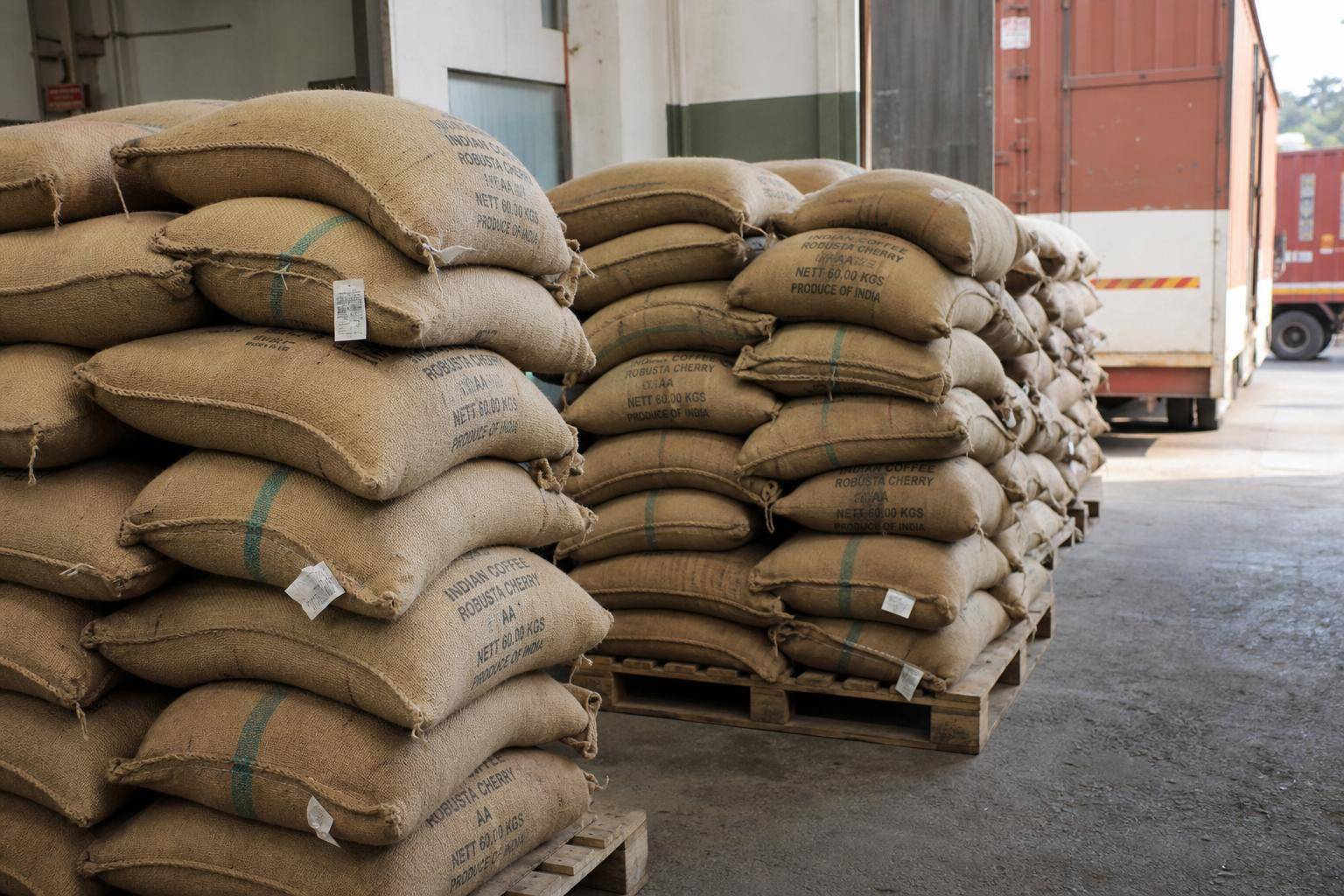
Coffee export documentation is where Indian consignments succeed or stall — usually at destination, weeks after the vessel has sailed and the buyer has scheduled warehouse receipt. A container of Robusta Cherry AB or Monsooned Malabar can pass internal cupping, meet buyer grade specifications, and be packed to export standard, and still sit under customs hold because a health certificate was missing, a Coffee Board exporter registration number did not match the shipping bill, or an organic transaction certificate did not cover the specific lot shipped. This is a document-by-document checklist, not a general export tutorial: every certificate below is mapped to who issues it, when it is due, and the exact error that most often triggers a hold.
Coffee export from India runs through the Coffee Board of India under the Ministry of Commerce, alongside FSSAI food safety licensing, DGFT's Import Export Code, and CBIC's shipping bill filing on ICEGATE. Every commercial coffee shipment under HS 0901 or HS 2101 needs a Coffee Board exporter registration in that documentation chain — building the file without Coffee Board credentials is one of the fastest ways a first-time coffee exporter stalls before sailing.
This guide walks coffee estates, curing works, co-operatives, and merchant exporters through every document a commercial coffee shipment needs — from the proforma invoice at order stage to the Bill of Lading at sailing — with a dedicated document-by-document reference covering invoice, packing list, Coffee Board registration, FSSAI, certificate of origin, grade certificate and COA, organic transaction certificate, and transport documents. Pair this with how to export coffee from India, Coffee Board registration benefits for exporters, and trade shows and B2B marketplaces for coffee exporters. Always verify current portal steps and certificate formats with the Coffee Board, FSSAI, and your CHA — procedures evolve.
Key Takeaways
Summary Box
Executive Summary
Summary Box
This checklist is built around a simple operating principle: a coffee document pack is only as strong as its weakest cross-reference. Customs officers, health-certificate issuing authorities, and destination brokers do not evaluate documents in isolation — they check whether the lot number on the invoice matches the packing list, whether the packing list weight matches the Coffee Board registration reference, and whether the COA references the batch actually loaded. One inconsistency anywhere in that chain is enough to stop a compliant, well-graded shipment.
India exports roughly 300,000–400,000 MT in recent crop years of coffee annually under HS 0901 and HS 2101, with Robusta forming the volume backbone and Monsooned Malabar and single-estate Arabica contributing disproportionate value per kilogram. Every kilogram of that volume moves through the same statutory foundation: IEC, GST, FSSAI, and Coffee Board exporter registration. Buyers who have previously imported Indian coffee check for Coffee Board credentials before checking price.
The single most expensive documentation mistake in coffee export is treating paperwork as a task for the week of sailing. Every document below has a natural production trigger — lot assignment, sampling, packing — and should be initiated at that trigger point, not after the truck reaches the port.
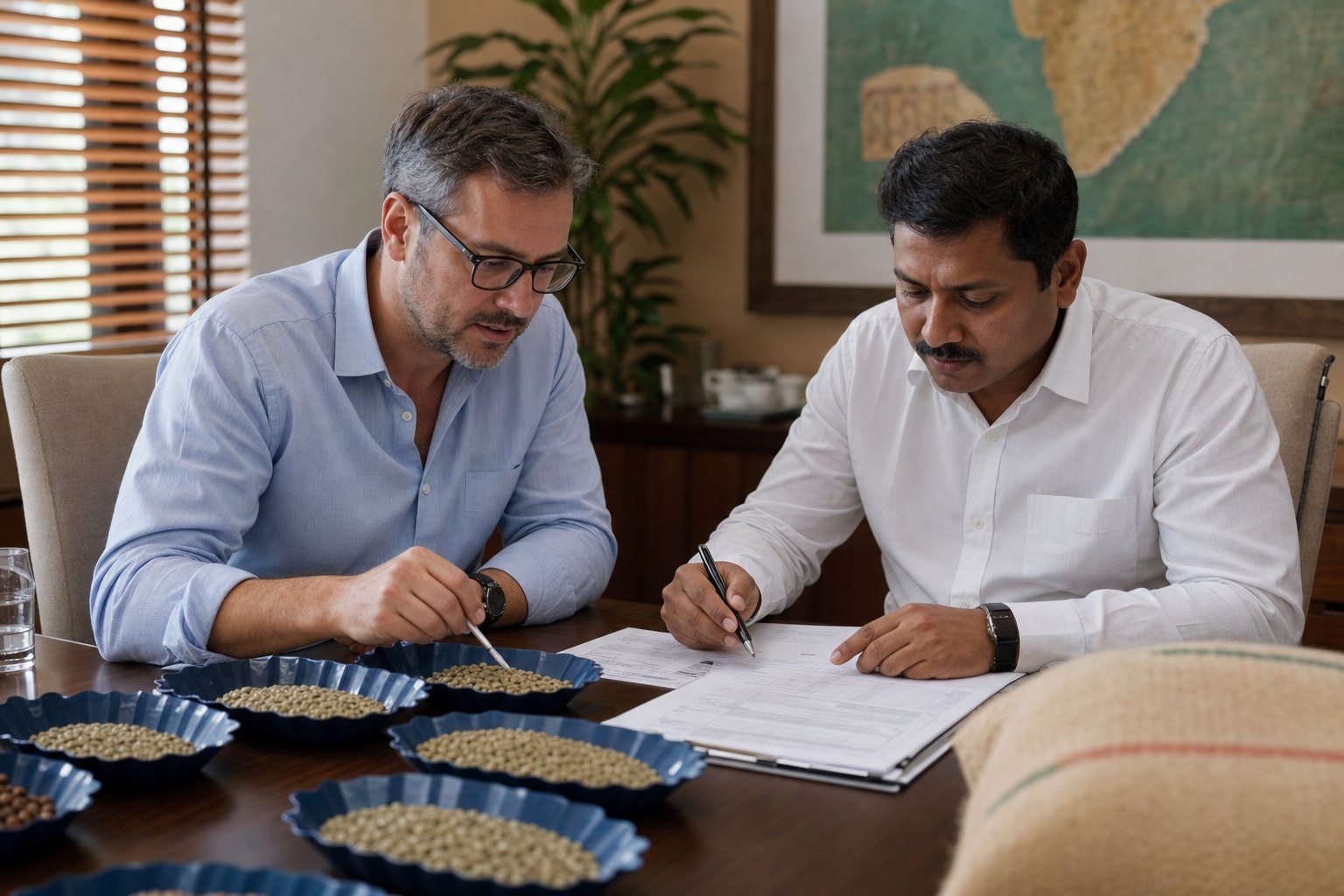
Market Size & Industry Overview
Key Statistics
India remains among the world's top ten coffee-producing and exporting nations, with annual production about 360,000–370,000 MT in 2024–25 and commercial exports about 300,000–400,000 MT (Coffee Board provisional, including re-exported and blended volumes), depending on crop year and domestic offtake. Karnataka — principally Kodagu (Coorg) and Chikmagalur — accounts for the large majority of national production; Kerala (Wayanad) and Tamil Nadu (the Nilgiris) round out the largest export-origin states, alongside Andhra Pradesh's Araku Valley for tribal-grown organic Arabica. Robusta accounts for roughly 70% of production and Arabica for about 30%, while Monsooned Malabar and single-estate specialty lines drive a disproportionate share of export value.
Documentation intensity scales with destination sophistication, not with shipment size. A 20 MT Italy-bound Robusta container and a 2 MT Germany-bound organic Monsooned Malabar parcel both need the full statutory document set — the German shipment simply adds pesticide MRL panels, organic transaction certificates, and stricter health-certificate scrutiny on top of the same base pack. Exporters who build one document master applicable to every market, then layer destination-specific additions, scale faster than exporters who rebuild the pack from scratch for every buyer.
The Coffee Board of India's role as the statutory regulator for coffee export is the single fact that most trips up first-time coffee exporters. Coffee Board exporter registration is not an optional add-on; it is the credential without which a shipping bill under HS 0901/2101 cannot legally be filed in practice.
Comparison table
Swipe →
Data table — swipe horizontally on small screens
| Market region | Primary Indian coffee formats | Documentation intensity | Typical hold trigger |
|---|---|---|---|
| Italy / EU (bulk) | Robusta, blended Arabica, bulk bags | Moderate–high | COO mismatch, health certificate gaps, weight discrepancies |
| Russia / CIS | Robusta, instant coffee inputs | Moderate | Invoice vs packing list errors, origin documentation |
| USA | Arabica, Monsooned Malabar, organic, specialty | High | FDA Prior Notice, organic TC, residue panels |
| UK / EU (specialty) | Monsooned Malabar, single-estate Arabica, organic | Very high | Health certificate, MRL panels, organic TC, curing-works claims |
| UAE / Gulf | Robusta, Arabica, instant coffee | Moderate | Weight accuracy, COO, health certificate |
| Japan | Arabica, Monsooned Malabar, specialty | High | Residue panels, origin certificates, import registration |
Export Statistics
Key Statistics
Export statistics for coffee should be read as a documentation-planning input, not a sales forecast. India's annual coffee export volume of roughly 300,000–400,000 MT in recent crop years under HS 0901/2101 moves through a small number of load ports — principally Chennai and Cochin for Karnataka, Kerala, and Tamil Nadu origin, and Visakhapatnam for Araku Valley and Andhra Pradesh-origin lots — which means document-pack templates can be standardised by port and by bean type rather than rebuilt per shipment.
The Coffee Board publishes export statistics and auction price indices that exporters should monitor for pricing benchmarks, but the more operationally useful number for a documentation team is the rejection or hold rate at each destination port. Exporters who track first-presentation clearance rate by market — rather than only tracking sales volume — identify which certificate types need tightening before the next season, not after a costly detention.
Robusta formats dominate export volume and typically clear faster because their documentation set is simpler: no curing-works traceability claims, and organic certification is the exception rather than the rule. Monsooned Malabar and single-estate specialty exports carry lower volume but higher per-shipment documentation load — curing-works traceability, higher-value insurance certificates, and more frequent organic transaction certificate requirements.
Comparison table
Swipe →
Data table — swipe horizontally on small screens
| Indicator | Approximate scale | Documentation implication |
|---|---|---|
| India annual coffee production | ~340,000–360,000 MT | Deep supply base; differentiation via grade and document discipline |
| India annual coffee exports | ~300,000–400,000 MT (recent crop years) | Volume markets need fast, accurate bulk document turnaround |
| Robusta share of exports | Majority by volume | Grade certificate and bulk packing list precision are the priority |
| Monsooned Malabar / specialty share | Smaller volume, higher value | Curing-works, estate, and cupping-COA alignment carry more weight |
| Primary export ports | Chennai, Cochin | Karnataka, Kerala, Tamil Nadu document templates centre here |
| Secondary export port | Visakhapatnam | Araku Valley and Andhra Pradesh templates centre here |
Import Statistics
Key Statistics
Import-side data under HS 0901/2101 — available through trade platforms and government trade portals — tells a documentation team which certificate types to have ready before the first email to a new buyer. Italy consistently ranks among the largest destinations for Indian coffee by value, driven by Robusta demand for espresso blending; Germany, Belgium, and Russia are high-volume markets; the USA, UAE, and Japan import a growing share of specialty, organic, and Monsooned Malabar coffee with much stricter document expectations.
Patterns in import data reveal documentation priorities well before a purchase order is signed. EU importers with rising organic-coffee import volumes require organic transaction certificate workflows proven before first contact — not promised during negotiation. Gulf importers with high Robusta volumes prioritise certificate of origin and health certificate accuracy over residue panels, but remain unforgiving on weight and grade consistency. US and Japanese specialty importers appear in smaller shipment sizes with proportionally higher document scrutiny per kilogram.
Comparison table
Swipe →
Data table — swipe horizontally on small screens
| Import market | Demand profile | Typical Indian coffee types | Key document requirement |
|---|---|---|---|
| Italy | Largest value destination for Robusta | Robusta Cherry AB, PB | COO, health certificate, weight accuracy |
| Germany / Belgium | High-volume + premium gateway | Robusta, Arabica, organic, Monsooned Malabar | Health certificate, organic TC, EU MRL |
| Russia / CIS | Large Robusta and instant-coffee market | Robusta, instant coffee inputs | Certificate of origin, invoice/packing list precision |
| USA | Commodity + specialty growth | Arabica, Monsooned Malabar, organic, single-origin | FDA Prior Notice, organic TC, residue panels |
| UAE / Gulf | Distribution hub + direct consumption | Robusta, Arabica, instant coffee | COO, health certificate, weight accuracy |
| Japan | Premium + steady demand | Arabica, Monsooned Malabar, specialty | Residue panels, origin certificates, import registration |
Product Categories / Variants
Summary Box
Documentation load differs materially by coffee category, and a document master built for one category will under-serve another. Robusta green coffee — the volume backbone of Indian export — needs the base document set (invoice, packing list, Coffee Board registration reference, FSSAI health certificate, COO, grade certificate/COA) with minimal additions; it rarely carries organic or curing-works traceability requirements. Single-estate Arabica adds grade-nomenclature precision (Plantation A/B, estate lot references) that must be identical across invoice, COA, and packing list — buyers routinely reject shipments where the grade on the certificate does not match the grade on the invoice.
Monsooned Malabar carries no statutory Geographical Indication in the way some other origin products do, but export documentation for Monsooned Malabar-labelled coffee should include curing-works batch records and warehouse traceability on top of the standard set — exporting under the Monsooned Malabar name without this layer is both a buyer-trust failure and, with EU and US buyers increasingly verifying process claims, a commercial risk. Organic coffee — NPOP-certified with EU or USDA NOP recognition pathways — needs a lot-specific organic transaction certificate for every single consignment; reusing an annual certificate is one of the most common organic-shipment rejection causes globally, not just for Indian coffee.
Roasted coffee and instant coffee add a fourth documentation layer entirely — for roasted whole bean and ground coffee, freshness and roast-date labelling; for instant coffee under HS 2101, manufacturing process documentation and, for private-label retail programmes, barcode compliance, destination-market labelling, and buyer-specific specification sign-off that sits alongside, not instead of, the statutory export document set.
Comparison table
Swipe →
Data table — swipe horizontally on small screens
| Product type | Base document set | Additional documentation | Common cross-reference error |
|---|---|---|---|
| Robusta green coffee | Invoice, packing list, Coffee Board reference, FSSAI cert, COO, grade cert/COA | None typically | Bag weight vs invoice quantity mismatch |
| Single-estate Arabica | Same as Robusta | Grade nomenclature consistency (Plantation A/B, estate lot) | Grade on invoice differs from grade on COA |
| Monsooned Malabar | Same as Arabica | Curing-works batch and warehouse traceability | Monsooned claim without valid curing-works documentation |
| Organic certified (any origin) | Same as base + certifier docs | Lot-specific organic transaction certificate | Annual TC reused instead of lot-specific TC |
| Roasted coffee (whole bean/ground) | Same as base | Roast date, freshness/shelf-life documentation | Roast date not matched to invoice batch |
| Instant coffee (HS 2101) | Same as base | Manufacturing process documentation; retail label compliance | Label/barcode not matched to signed specification |
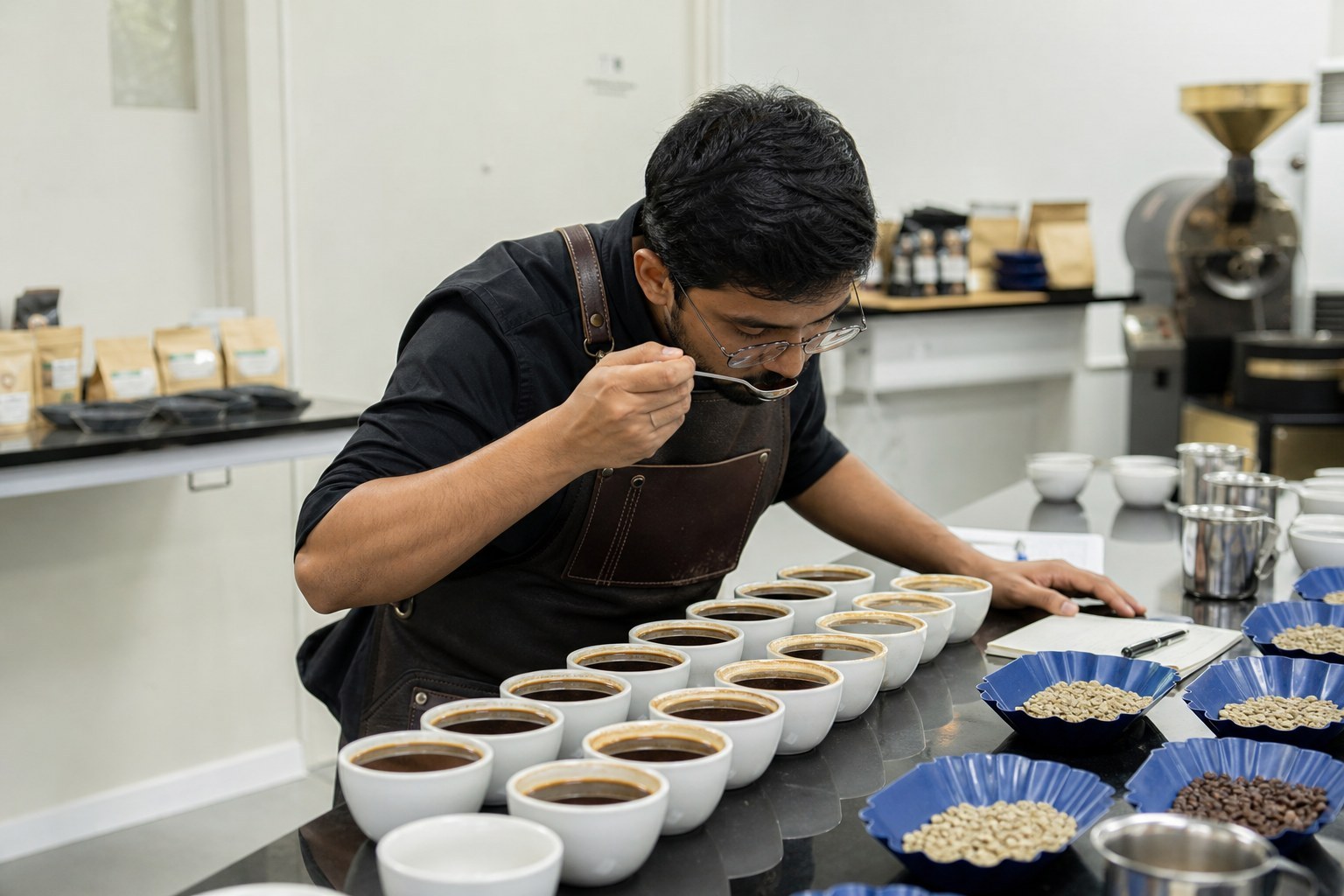
Manufacturing Overview
Export Tip
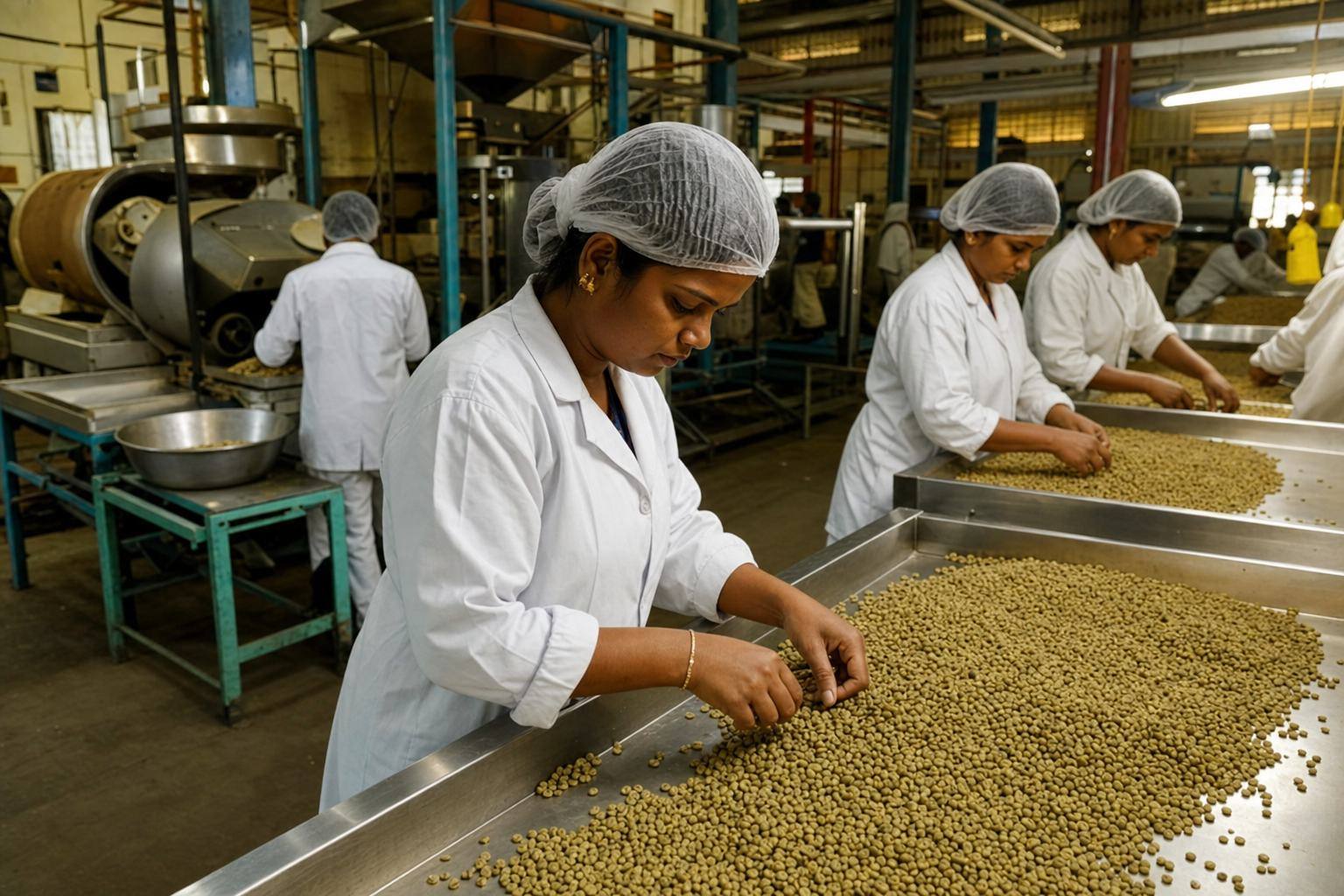
Documentation for coffee export begins on the curing-works floor, not at the CHA's desk. Every production stage — cherry intake, pulping and washing or natural drying, hulling, grading, and final packing — should generate a record that a lot number can trace back to. Exporters who assign the lot number before sampling, rather than after packing is complete, create a document chain that certificate issuers, Coffee Board reference checks, and destination brokers can all verify against the same reference.
Batch and lot discipline matters most at the handoff points: when green coffee moves from the cupping room to the packing line, and when packed bags move from the warehouse to the container. Each handoff is where bag serial numbers, moisture readings, and grade sign-offs should be logged against the lot number that will later appear on the invoice, packing list, COA, and Coffee Board registration reference. Estates and curing works supplying merchant exporters should share cupping notes, moisture readings, and grade sign-off with the exporter's documentation team before the export lot is finalised — not after the buyer has already approved a sample that the bulk lot may not match.
Comparison table
Swipe →
Data table — swipe horizontally on small screens
| Production stage | Documentation output | Owner |
|---|---|---|
| Cherry intake / procurement | Estate/curing-works invoice, internal lot record | Procurement team |
| Processing (washed or natural) | Production log, moisture readings | Curing-works QC |
| Hulling, grading, and sorting | Grade sign-off matched to lot number | Coffee taster / QC |
| Sampling for buyer approval | Reference sample retained, lot number assigned | Sales / QC |
| Lab submission | COA request referencing lot number | Documentation team |
| Packing | Bag serials, net weights per lot | Packing supervisor |
Pricing Analysis
Buyer Tip
Documentation cost is part of landed-price economics, not a separate overhead line to absorb quietly. COA testing from accredited laboratories, EU/Japan pesticide MRL panels, organic transaction certificate fees, health certificate issuance, certificate of origin charges, and CHA filing fees should all be modelled into the FOB or CIF quote before it reaches the buyer — not discovered after the invoice is issued.
For a representative 20 MT Robusta container to Italy, documentation cost components typically include: COA and grade certification, health certificate and COO, Coffee Board reference processing, and CHA/shipping-bill fees. EU or Japan-bound specialty or organic containers with full MRL panels incur materially higher testing and certification cost given panel scope and laboratory turnaround. Under-documented shipments that incur detention or re-export destroy pricing models far faster than any documentation-cost line item — a single detention charge can wipe out the margin on the entire container.
Comparison table
Swipe →
Data table — swipe horizontally on small screens
| Cost component | Typical range (INR) | When incurred |
|---|---|---|
| Basic COA (moisture, defect count, screen size) | ₹6,000–18,000 | Every shipment |
| EU / Japan pesticide MRL panel | ₹25,000–80,000 | EU/UK/Japan destinations |
| Health certificate | ₹5,000–15,000 | Most regulated markets |
| Certificate of origin | ₹2,000–8,000 | Buyer/duty requirement |
| Organic transaction certificate | ₹5,000–15,000 | Each organic consignment |
| Detention if documents fail | ₹50,000–5,00,000+ | Avoidable with checklist discipline |
MOQ Analysis
Buyer Tip
MOQ shapes which documents are proportionate to prepare and which can wait until repeat volume justifies the cost. Bulk Robusta programmes typically start at 10–20 MT, where the full statutory document set (invoice, packing list, Coffee Board reference, FSSAI, COO, grade certificate/COA) is standard and cost-efficient per kilogram. Specialty Arabica trials of 500 kg–2 MT still require the identical statutory set — documentation cost per kilogram is simply higher at trial volumes, which should be reflected transparently in trial pricing rather than absorbed silently.
Organic programmes often require a minimum programme size that justifies the certifier's audit and lot-specific transaction certificate cost; exporters should confirm this threshold with their certifying body before quoting small organic trial lots. Monsooned Malabar trials as small as 250–500 kg are common at premium pricing, but even at that volume, curing-works batch traceability documentation is non-negotiable.
Comparison table
Swipe →
Data table — swipe horizontally on small screens
| Order type | Typical MOQ | Document set proportionality |
|---|---|---|
| Sample / lab trial | 1–25 kg | Reference sample only; no export document set required |
| Specialty trial order | 500 kg–2 MT | Full statutory set; higher document cost per kg |
| Bulk Robusta commercial | 10–20 MT | Full statutory set; cost-efficient per kg |
| Organic certified programme | Certifier-dependent minimum | Full set + lot-specific transaction certificate every consignment |
Packaging Standards
Export Tip
Packaging choice drives packing list structure and, indirectly, several downstream documents. Bulk export typically uses 60kg jute bags with GrainPro or vacuum poly liners — each bag carries a serial number that must appear on the packing list and reconcile with Coffee Board reference quantities. Retail-ready formats such as foil pouches and valve bags add label-compliance documentation (ingredient declaration, country-of-origin marking, destination-market labelling rules) that sits alongside the statutory export set.
Every packaging unit should be labelled with lot number, grade, net weight, and estate or curing-works name where applicable — consistent, bag-by-bag, with the same details on the invoice and packing list. A packing list that reports 334 bags while the container was physically loaded with 336 is a documentation error that customs authorities and destination warehouses will catch immediately, regardless of product quality.
Comparison table
Swipe →
Data table — swipe horizontally on small screens
| Packaging format | Typical unit weight | Document link |
|---|---|---|
| 60kg jute bag with GrainPro liner | 60 kg net | Bag serial matched to packing list and Coffee Board reference quantity |
| Vacuum-sealed poly bag (specialty) | Varies by lot size | Batch code matched to invoice and estate mark |
| Retail foil pouch / valve bag | Buyer-defined | Label compliance documentation plus statutory set |
| Bulk FCL bag-stacked | 19–28 MT container total | Container/seal number on packing list and Bill of Lading |
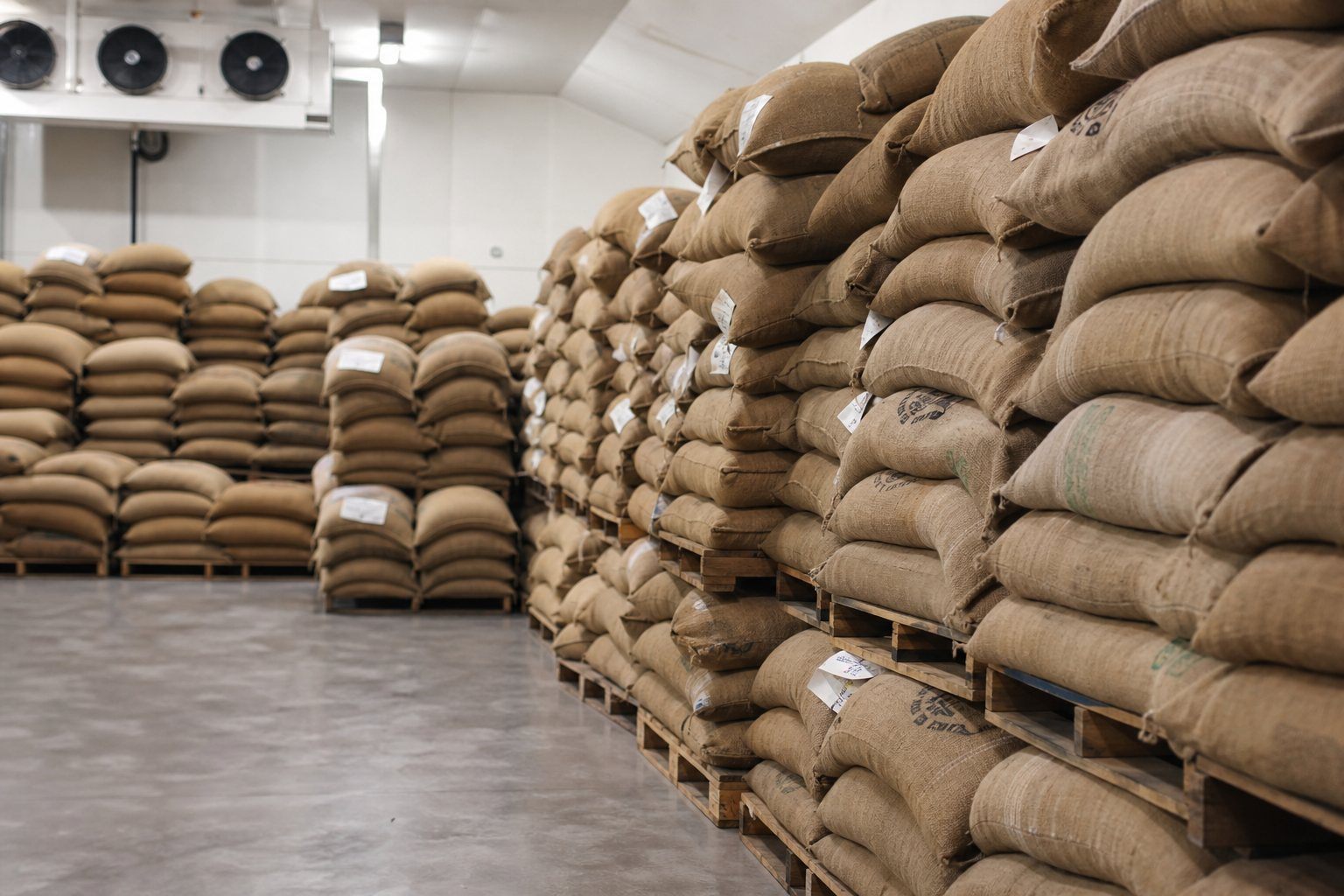
Container Loading Details
Export Tip
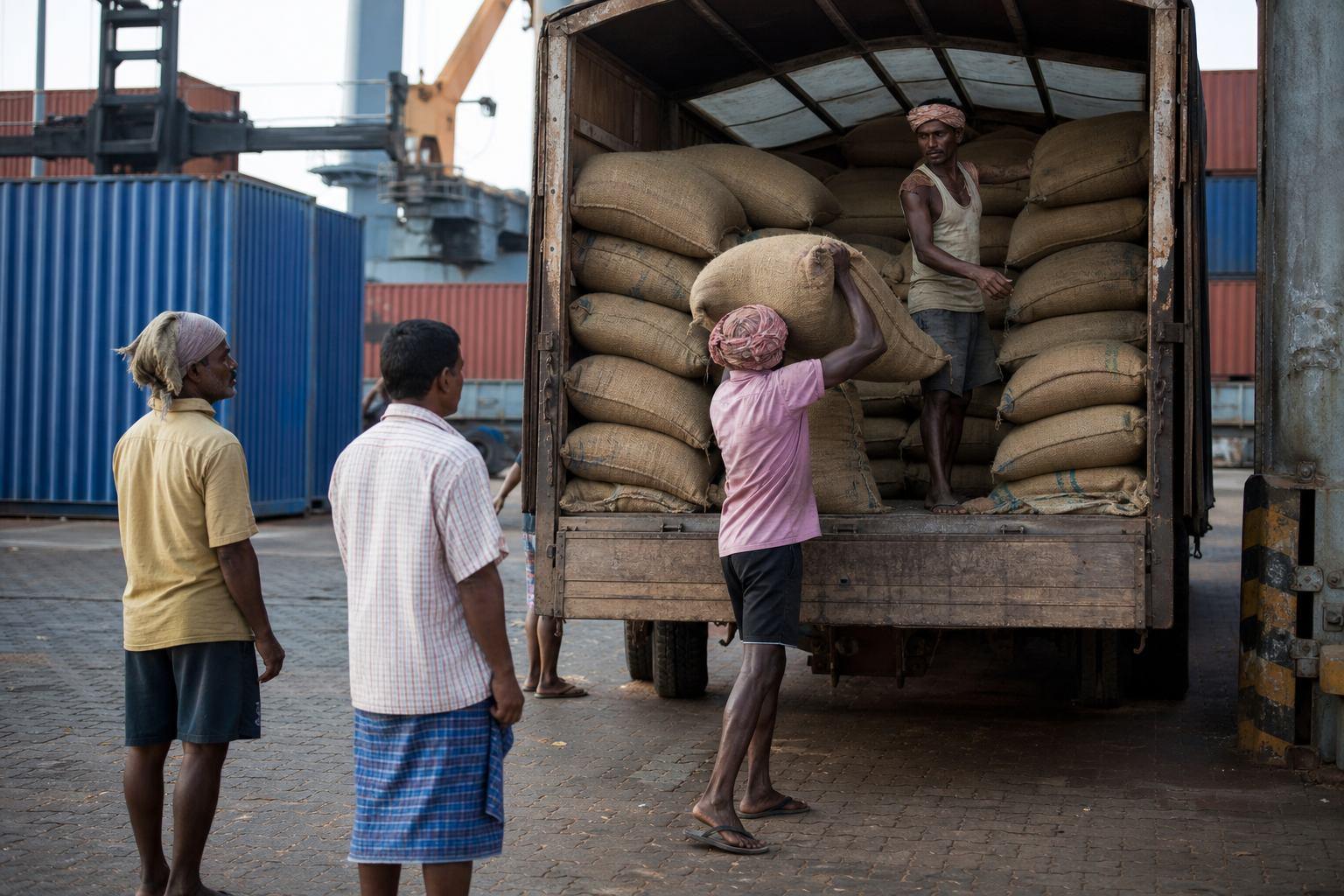
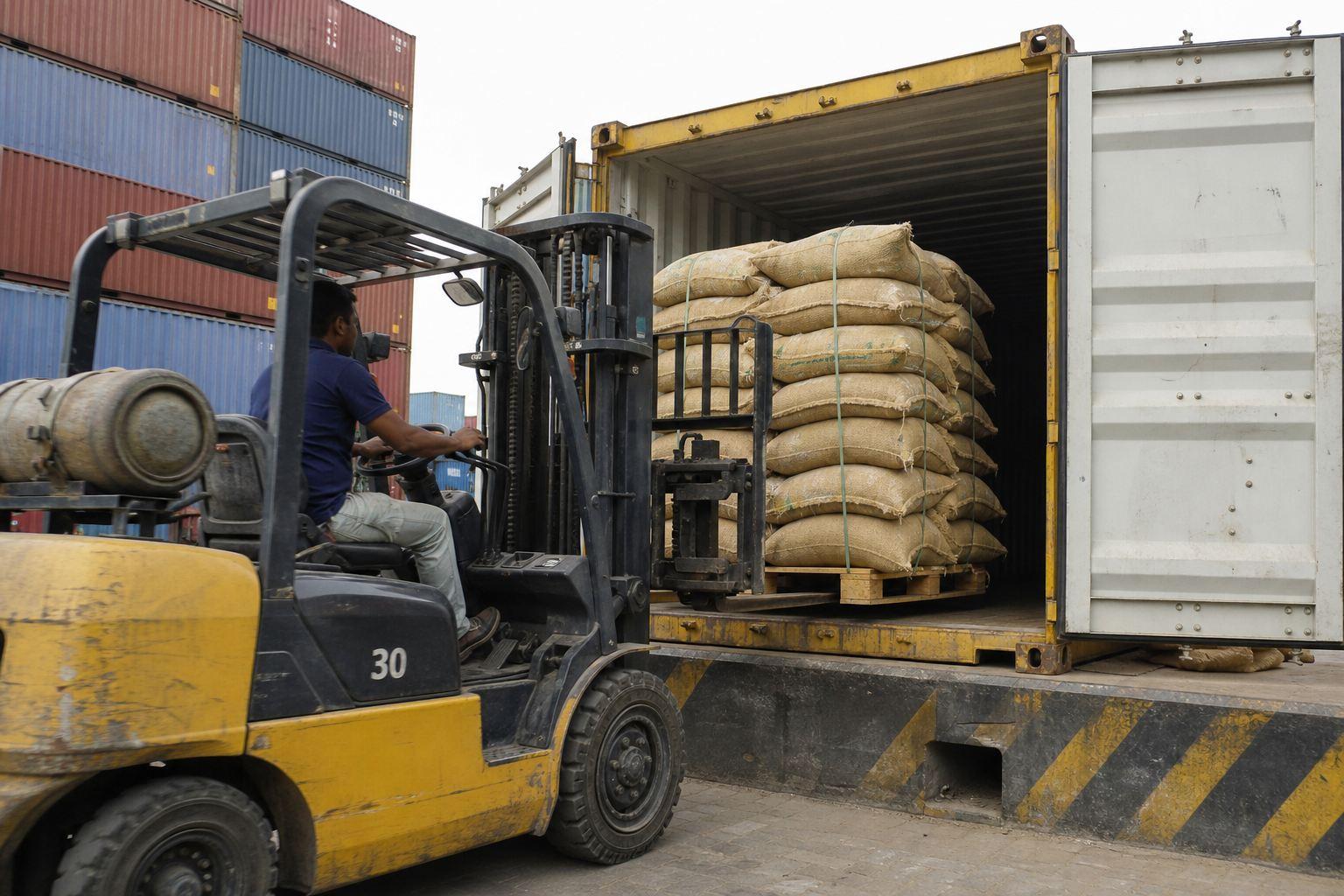
Container loading figures should reconcile with the packing list and Coffee Board reference documentation to the kilogram. A 20-foot container typically carries about 17–19 MT of bagged green coffee (commonly ~300 × 60 kg bags); a 40-foot container is usually volume-limited at about 24–26 MT for bagged green coffee — not double a 20ft load. Bulk liners can approach ~21 MT in a 20ft. LCL shipments of 2–5 MT are common for trial orders and carry the identical statutory document requirement per consignment, simply at lower per-shipment freight efficiency.
Container and seal numbers must appear on both the packing list and the Bill of Lading — a mismatch here is a common and entirely avoidable cause of destination-broker queries. Photograph the loaded container before sealing and retain the image with the shipment's document file; this single habit resolves a disproportionate share of weight and count disputes raised after arrival.
Comparison table
Swipe →
Data table — swipe horizontally on small screens
| Container type | Typical payload | Document cross-reference |
|---|---|---|
| 20ft FCL, bagged green coffee | ~17–19 MT (often ~300 × 60 kg bags) | Packing list total must match Coffee Board / invoice quantity |
| 20ft FCL, bulk liner | Up to ~21 MT (indicative) | Higher payload; less lot separation |
| 40ft FCL, bagged green coffee | ~24–26 MT (volume-limited) | Not double a 20ft bagged load |
| LCL / partial container | 2–5 MT trials common | Same statutory docs; higher freight per kg |
| Seal / container number | N/A | Must match on packing list and Bill of Lading |
Shipping Methods
Export Tip
Ocean freight from Chennai, Cochin, or Visakhapatnam is the dominant shipping method for Indian coffee export, and the Bill of Lading is the transport document that most frequently causes payment delay under letter-of-credit terms when a single field — consignee name, weight, or shipper detail — does not match the commercial invoice. Air freight is viable only for high-value specialty samples, competition-grade micro-lots, or urgent small orders; it is not economical for bulk Robusta and rarely appears in a standard document workflow.
Incoterms determine which party is responsible for arranging and documenting insurance. FOB is the most common term for bulk coffee — the exporter's documentation obligation ends at the load port, and the buyer's broker takes over from the Bill of Lading onward. CIF places freight and insurance documentation on the exporter, which means an insurance certificate joins the standard document pack. Confirm the Incoterm on the invoice and match freight documents accordingly before the CHA files the shipping bill.
Comparison table
Swipe →
Data table — swipe horizontally on small screens
| Incoterm | Exporter documentation duty | Buyer documentation duty |
|---|---|---|
| FOB | Export clearance, invoice, packing list, COO, B/L handoff | Freight booking, insurance, import clearance |
| CIF | FOB duties + freight booking + insurance certificate | Import clearance and inland delivery |
| CFR | FOB duties + freight (no insurance) | Insurance, import clearance |
| EXW | Make goods available with base documents only | All transport, export, and import documentation |
Certifications
Compliance Notes
Four registrations are the non-negotiable foundation before any commercial coffee shipment: Import Export Code (IEC) from DGFT, GST registration, FSSAI licence covering coffee processing and export, and Coffee Board of India exporter registration. Without Coffee Board registration specifically, filing a compliant shipping bill for coffee under HS 0901/2101 becomes materially harder — this is the credential most often missing when a new coffee exporter quotes buyers before completing Coffee Board enrolment.
Beyond the mandatory four, commercially valuable certifications include NPOP organic certification with EU and USDA NOP recognition pathways for organic claims, curing-works traceability documentation for Monsooned Malabar exports, Rainforest Alliance for shade-grown sustainability claims, Fairtrade for community-premium programmes, and ISO 22000 or HACCP for buyers requiring formal food-safety management system evidence. Each of these certifications generates its own document that must be cross-referenced to the same lot number as the rest of the pack.
Comparison table
Swipe →
Data table — swipe horizontally on small screens
| Certification | Purpose | Mandatory for |
|---|---|---|
| Coffee Board exporter registration | Statutory registration to export coffee under HS 0901/2101 | All commercial coffee exporters |
| FSSAI licence | Food safety compliance for processing, packing, export | All commercial coffee exporters |
| IEC (DGFT) | Business identifier for shipping bill filing | All commercial exporters |
| NPOP / EU Organic / USDA NOP | Organic coffee claims and transaction certificates | Organic-labelled shipments only |
| Monsooned Malabar curing documentation | Process authenticity for Monsooned Malabar claims | Monsooned Malabar-labelled exports only |
| Rainforest Alliance / Fairtrade / ISO 22000 / HACCP | Buyer-specific sustainability and food-safety proof | Where buyer or destination requires |
Buyer Requirements
Buyer Requirements
International buyers evaluating a new Indian coffee supplier ask for document proof before they ask for a better price. A credible response includes a sample document pack: a redacted prior invoice and packing list, the exporter's Coffee Board registration reference, current FSSAI licence, and a recent COA showing the lab's accreditation. Buyers who have previously experienced a documentation-driven hold from any origin will request this proof earlier in the relationship than buyers sourcing coffee for the first time.
Buyers in the EU, UK, and Japan increasingly ask about pesticide MRL panel scope, organic transaction certificate workflow, and Monsooned Malabar curing-works traceability before confirming even a trial order — not as a formality, but because their own import broker will ask the same questions on arrival. Gulf and CIS buyers move faster on price but are equally unforgiving on weight and origin-document accuracy once a shipment is booked.
Country-wise Opportunities
Market Snapshot
Each destination market applies a different documentation lens, and building one document master with market-specific add-ons scales faster than rebuilding the pack per buyer.
Comparison table
Swipe →
Data table — swipe horizontally on small screens
| Country/region | Required certificate additions | Broker coordination point |
|---|---|---|
| Italy/EU | COO, health certificate | Weight and origin accuracy pre-agreed |
| Germany/Belgium | Full EU MRL panel, organic TC, curing-works proof | Draft pack shared before order confirmation |
| Russia/CIS | COO, invoice/packing precision | Banking/payment compliance review |
| USA | FDA Prior Notice, organic NOP TC | Data accuracy shared with importer |
| UAE/Gulf | Halal (retail lines) | Weight and origin accuracy pre-agreed |
| Japan | Strict MRL panel, origin certificates | Pre-shipment testing scheduled early |
Italy and wider EU
Documentation focus: certificate of origin, health certificate from the Indian competent authority, accurate grade descriptions on the invoice, and packing list weights that reconcile with the Coffee Board reference. Clearance is fast when documents align and equally fast to reject when weights or origin declarations mismatch.
Germany, Belgium, and Northern Europe
Documentation focus: health certificate from the Indian competent authority, full EU pesticide MRL compliance on the COA, organic transaction certificate for certified product, and Monsooned Malabar curing-works traceability for specialty claims. This is one of the strictest documentation environments for Indian coffee — prepare draft packs before order confirmation, not after.
Russia and CIS
Documentation focus: COO, invoice/packing-list precision, and the Coffee Board registration reference. Payment terms and banking compliance require careful review alongside standard documentation, particularly for instant-coffee input contracts.
United States
Documentation focus: FDA Prior Notice data (the importer files, but the exporter must supply accurate figures), commercial invoice, packing list, COA, and organic transaction certificate plus NOP certification for organic lines.
UAE / Gulf and Japan
UAE and Gulf documentation focus: COO, health certificate, and weight/grade accuracy, with Halal certification for some retail lines. Japan documentation focus: strict pesticide residue panels, origin certificates, and import registration alignment — Japan's MRL standards are among the world's strictest, so pre-shipment testing is essential rather than optional.
Expert Insight #1 — Saurabh Mittal, Founder, Altus Exports
Expert Insight Box
Saurabh Mittal, Founder of Altus Exports, advises coffee exporters to treat the documentation pack as a production deliverable — not a back-office task handled after the coffee is already packed. Rejections at destination are almost always preventable: the shipment passed cupping, but the paperwork lagged behind. Building the document chain into production planning — lot number first, COA second, Coffee Board reference third, commercial set fourth, sailing last — removes the single biggest source of avoidable cost in coffee export.
For merchant exporters and estates entering export for the first time, Mittal recommends starting with one destination market and one document template — Italy Robusta or EU specialty Arabica — rather than attempting multiple certificate formats simultaneously. Master one clearance pathway to a 95%+ first-presentation success rate, then expand to additional markets with the same discipline.
Sourcing Checklist
Checklist
- IEC certificate current and self-attested, with entity name matching every other document exactly.
- PAN card and GST registration certificate aligned to the exporting entity, not a sister company or individual proprietor.
- FSSAI registration/licence covering the specific processing and packing address to be quoted to buyers.
- Trade licence, incorporation certificate, or partnership deed appropriate to the business structure, notarised where required.
- Bank certificate or cancelled cheque with account name matching the entity legal name exactly.
- Factory or processing unit address details consistent across FSSAI, GST, and Coffee Board records for curing works and manufacturer-exporter categories.
Use this checklist as a preparation gate before opening the Coffee Board or NSWS portal, or before sourcing coffee from a new estate or curing works for export. Exact requirements vary by entity type and registration category.
Buyer Checklist
Checklist
- Ask for Coffee Board exporter registration reference, current FSSAI licence, and IEC before requesting a formal quote.
- Request a sample invoice, packing list, and COA from a recent shipment (redacted for confidentiality) to review formatting and cross-reference discipline.
- For organic orders, confirm the certifier and ask to see a sample lot-specific transaction certificate — not the annual operator certificate.
- For Monsooned Malabar orders, request curing-works batch traceability documentation before confirming the order.
- Share your destination broker's exact document checklist with the exporter at order confirmation, not after production begins.
This checklist helps buyers verify that an Indian coffee exporter's documentation capability matches their destination market's requirements before the first purchase order is signed.
Exporter Checklist
Checklist
- Keep IEC, GST, FSSAI licence, and Coffee Board exporter registration current and renewed ahead of peak harvest season.
- Assign the lot number at sampling stage — before COA submission, before Coffee Board reference application, before packing.
- Submit lab samples 15–21 business days before intended sailing to allow time for COA, MRL panels, and re-testing if needed.
- Apply for Coffee Board export documentation reference as soon as the lot number and quantity are confirmed — not after packing list finalisation.
- Run a five-way match — purchase order, invoice, packing list, COA, Coffee Board reference — before handing documents to the CHA.
This checklist converts documentation discipline into a repeatable pre-shipment gate for Indian coffee estates, curing works, and merchant exporters.
Compliance Checklist
Checklist
Compliance Notes
- IEC valid; GSTIN and LUT/bond status confirmed for zero-rated export supply.
- Commercial invoice and packing list cross-checked: HS 0901/2101 subheading, grade, estate/curing works, lot number, net weight, Incoterm, and quantities identical across both documents.
- Bill of Lading or Airway Bill draft reviewed for shipper, consignee, notify party, and weight before final issuance.
- Certificate of origin and phytosanitary certificate (where required) obtained with wording matching the invoice.
- Draft full document pack emailed to the buyer's destination broker five to seven days before vessel departure.
This is the printable master reference and pre-shipment gate for every commercial coffee shipment from India — the checklist that should sit between packing completion and cargo cutoff. Confirm shipment-specific requirements with your CHA and certifier, since destination requirements for coffee are demanding and no document below should be treated as optional without checking the specific buyer and market.
Comparison table
Swipe →
Data table — swipe horizontally on small screens
| Document | Issued / prepared by | When required | Common error |
|---|---|---|---|
| Commercial invoice | Exporter | Every shipment | Grade or lot mismatch with COA; wrong HS subheading |
| Packing list | Exporter | Every shipment | Bag quantity differs from invoice; missing lot serials |
| Coffee Board exporter registration reference | Coffee Board of India | Every commercial coffee export (HS 0901/2101) | Registration reference missing on shipping bill |
| Shipping bill / export declaration | Exporter via CHA (ICEGATE) | Every shipment | HS error; IEC/GSTIN mismatch; registration reference omitted |
| FSSAI health certificate | Designated competent authority | EU, UK, USA, Japan (often mandatory) | Expired FSSAI reference; lot data inconsistent with invoice |
| Certificate of origin (COO) | Chamber or authorised agency | Buyer or duty requirement | Product description ≠ invoice; wrong declared origin |
| Grade certificate | Approved lab / QC / curing works | Most commercial shipments | Grade on certificate differs from invoice grade nomenclature |
| Certificate of Analysis (COA) | Accredited or approved lab | Every shipment; full MRL panel for EU/Japan | Old COA reused for a different lot; wrong panel for destination |
| Organic transaction certificate | Accredited organic certifier | Every organic consignment | Annual TC used instead of lot-specific TC |
| Monsooned Malabar curing documentation | Curing works / warehouse records | Monsooned Malabar-labelled exports only | Claim made without valid curing-works batch traceability |
| Bill of Lading / Airway Bill | Carrier / freight forwarder | Every shipment (transport mode-dependent) | Consignee or weight error; description inconsistent with invoice |
| Phytosanitary certificate | Plant Quarantine authority | Certain destinations only | Not obtained when the destination market requires it |
| Insurance certificate | Insurer / exporter | CIF/CIP terms or buyer request | Under-declared cargo value |
Common Buyer Mistakes
Common Mistakes Box
Expert Insight #2 — Saurabh Mittal, Founder, Altus Exports
Expert Insight Box
The exporters who avoid documentation-driven holds are not necessarily the ones with the best coffee — they are the ones with the most disciplined document controller. Assign one named person per shipment to own the five-way match between the purchase order, invoice, packing list, COA, and Coffee Board reference. Splitting that responsibility across sales, logistics, and accounts is how a mismatched quantity or an expired certificate slips through unnoticed until a customs officer or destination broker finds it.
A pattern we see repeatedly with new coffee exporters is treating the Coffee Board registration and any curing-works or organic certification as separate, optional steps rather than as a linked set that sophisticated buyers expect to see together. A curing works with a current RCMC but no verifiable Monsooned Malabar batch traceability for a labelled lot creates exactly the kind of documentation gap that a careful German or Japanese buyer notices during diligence — and remembers.
Future Market Trends
Key Statistics
Coffee export documentation is moving toward greater digitisation and lot-level traceability. Buyers — particularly in the EU, UK, and premium US retail channels — increasingly expect QR-linked lot data, digital certificate verification, and faster document turnaround as a baseline expectation rather than a differentiator. Exporters who digitise their document masters now will find repeat-order documentation faster to assemble than exporters still working from scattered email threads and paper files.
Regulatory scrutiny on organic transaction certificates and pesticide MRL compliance is tightening in the EU specifically, which means the gap between exporters with mature lot-discipline systems and exporters without one will widen. EU deforestation-linked due diligence requirements are also increasingly relevant to coffee supply chains, raising the compliance bar for estate-level traceability regardless of certification status.
Conclusion
- Read how to export coffee from India and Coffee Board registration benefits for exporters.
- Continue with trade shows and B2B marketplaces for coffee exporters, find international buyers for coffee, most demanded Indian coffee by country, and organic and specialty coffee export opportunities from India.
- Explore merchant exporter support for end-to-end coffee export coordination.
A reliable coffee export documentation checklist covers four foundational registrations (IEC, GST, FSSAI, and Coffee Board exporter registration), lab-verified grade certificates and COAs, organic transaction certificates where applicable, commercial documents (invoice and packing list), shipping and transport papers (shipping bill, Bill of Lading), health certificates, and destination-specific additions — all tied together by consistent lot numbering across every page of the pack.
Build a coffee lot master, plan lab submissions 21 days before sailing, apply for Coffee Board documentation reference and organic transaction certificates as soon as lot numbers are assigned, and run the printable compliance checklist above as a mandatory pre-release gate. Altus Exports supports coffee exporters and international buyers who need documentation discipline paired with real shipment execution across agriculture and food products programmes.