
How to Find International Buyers for Coffee from India
By Saurabh Mittal, Founder, Altus Exports
A prospecting and qualification playbook for Indian coffee curing works, estates, and merchant exporters — mining HS 0901 and HS 2101 trade data, working Coffee Board buyer-seller meets and the India International Coffee Festival, prospecting decision-makers on LinkedIn, scoring and verifying genuine buyers before a cupping sample ever leaves the warehouse, and running every lead through a CRM stage system from research to repeat order. Includes a scoring rubric, a Chikmagalur-to-Italy case study, and guidance from Altus Exports.
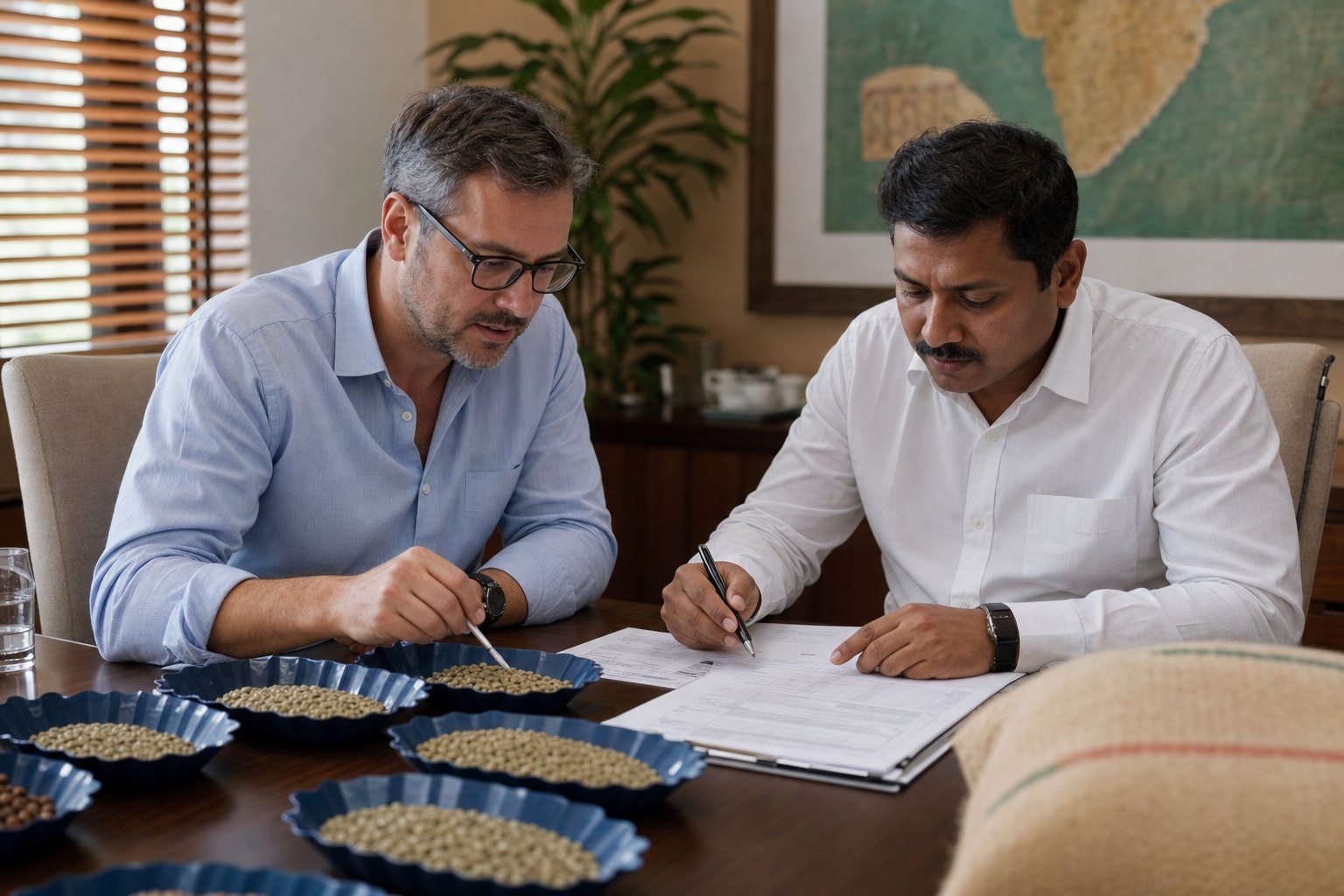
Finding genuine international buyers is the hardest part of coffee export for most Indian curing works, estates, and merchant exporters — harder than growing good cherry, harder than curing, and harder than clearing customs. India is the world's 7th-largest coffee producer and 5th-largest exporter, with Robusta from Coorg and Chikmagalur, Arabica from Wayanad and the Nilgiris, and the uniquely Indian Monsooned Malabar sought across Italy, Germany, Belgium, Russia, the USA, the UAE, and Japan. Yet consistent export orders remain out of reach for operators who rely on unstructured directory outreach or broker chains with no disclosed principal. Global demand for Indian coffee is real; it does not automatically become a purchase order in your inbox.
This guide is a prospecting and buyer-qualification playbook — a step-by-step system for building a pipeline of named, verified coffee importers rather than a generic list of email addresses. It works through four channels that actually produce qualified conversations — HS 0901 and HS 2101 trade data, Coffee Board of India buyer-seller meets and the India International Coffee Festival, LinkedIn prospecting for named decision-makers, and a disciplined verification and scoring model that filters brokers and scam inquiries before they consume your cupping-sample budget — and closes with a CRM stage system that turns scattered inquiries into a repeatable sales process.
Pair it with most demanded Indian coffee by country, Coffee Board registration benefits for exporters, and how to export coffee from India. For the organic and specialty angle, see organic and specialty coffee export opportunities from India, and for the full fair-by-fair calendar and booth playbook, see trade shows for coffee exporters — this guide treats fairs as one input feeding a year-round trade-data-and-LinkedIn pipeline, not the whole plan.
Key Takeaways
Summary Box
Executive Summary
Summary Box
Buyer discovery in coffee fails for a predictable reason: exporters run one channel at a time, chase inquiry volume instead of qualification, and dispatch cupping samples before verifying that a lead can actually import. This guide reframes lead generation as a data-plus-verification discipline. Trade data under HS 0901 and HS 2101 tells you who already imports coffee into your target market; Coffee Board buyer-seller meets and the India International Coffee Festival compress months of cold outreach into concentrated, higher-intent conversations; LinkedIn extends reach to named decision-makers between events; and a scoring model separates the buyers worth a paid cupping sample from the brokers and scam accounts that will not convert.
The commercial payoff is specific: exporters who run this system typically build a working pipeline of 40–60 verified accounts within a single quarter, convert two to four of them into trial shipments within 90–120 days, and cut wasted sample and travel spend by focusing effort on accounts with documented import history rather than generic directory listings. None of this replaces export readiness — Coffee Board registration, FSSAI compliance, and grade-consistent cupping samples must exist before outreach begins, not after a buyer replies.
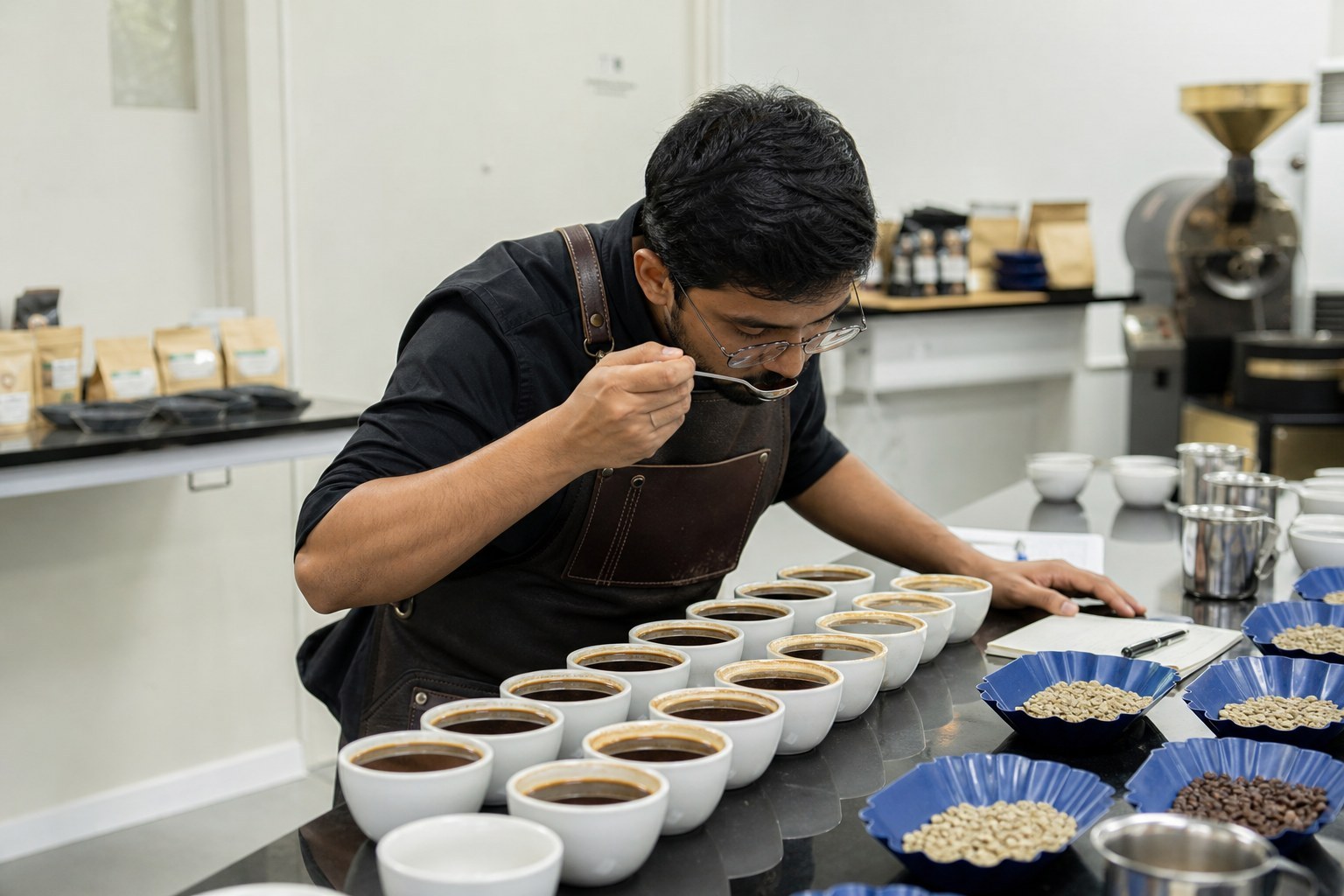
Market Size & Industry Overview
Key Statistics
India produced roughly 360,000–370,000 metric tonnes in 2024–25 (about 6.0–6.1 million 60 kg bags; Coffee Board ~363,500 tonnes) and exports approximately 300,000–400,000 MT annually when re-exported and blended volumes are included — one of the world's most distinctive coffee supply bases, built almost entirely on shade-grown cultivation under a canopy of pepper vines, areca, and rosewood rather than open-sun plantations. Robusta accounts for roughly 70% of Indian production and Arabica for about 30%, a split that shapes buyer targeting from the first outreach message: Robusta buyers in Italy and the instant-coffee trade want strength and crema; Arabica buyers in specialty channels want cup character and altitude story. This scale means genuine buyer demand for Indian coffee is not a hypothesis — it is a documented, repeat-purchase market across more than 60 countries.
Demand is not uniform, and that is exactly why buyer profiling matters before prospecting. Italian roasters have historically been the largest single-country buyers of Indian Robusta for espresso blends, prizing its low acidity and body. German, Belgian, and Russian buyers combine bulk Robusta and Arabica purchasing with growing specialty and instant-coffee demand. The USA, UAE, and Japan increasingly segment between commodity green coffee for blending and premium single-origin, organic, or Monsooned Malabar lots for specialty retail and hospitality. An exporter who understands which demand tier their supply fits before prospecting sends relevant messages instead of generic ones — and relevant messages get replies.
India's institutional infrastructure — Coffee Board of India exporter registration, FSSAI compliance, Chennai and Cochin port logistics, and the India International Coffee Festival — supports credible exporter positioning, but infrastructure does not replace lead-generation discipline. Buyers evaluate suppliers on cup consistency, documentation readiness, and responsiveness as much as on origin story.
Comparison table
Swipe →
Data table — swipe horizontally on small screens
| Demand Tier | Typical Bean Types | Primary Import Regions | Buyer Priority |
|---|---|---|---|
| Commodity Robusta bulk | Cherry AB, Parchment, PB, Robusta grades | Italy, Germany, Belgium, Russia, Vietnam-blend markets | Price, crema strength, screen consistency |
| Blended Arabica/Robusta | Plantation A, B, Cherry AB | USA, UAE, Japan food service | Cup character, blend stability, defect count |
| Specialty / single-origin | Estate-specific Arabica, high-altitude lots | USA, Germany, Japan, UAE premium | Estate identity, altitude, processing method, cupping score |
| Monsooned Malabar | Monsooned Arabica/Robusta | Scandinavia, Germany, USA, Japan specialty | Authenticity, low-acid character, traceable curing |
| Organic certified | NPOP / EU Organic Arabica and Robusta | Germany, USA, UK, Netherlands | Certificates, traceability, transaction certificates |
| Instant coffee | Spray-dried and freeze-dried | Russia, CIS, Middle East, Africa | Solubility, flavour consistency, private-label packaging |
Export Statistics
Key Statistics
Coffee Board and DGFT statistics consistently show Italy, Germany, Belgium, Russia, the USA, the UAE, and Japan among India's leading export destinations by both volume and value — with bean-type mix varying sharply by market. Italy has long been the single largest destination for Indian Robusta, feeding its espresso-blending industry. Germany and Belgium combine large-volume commodity purchasing with growing organic and specialty demand. Russia and CIS markets absorb significant volumes for instant-coffee manufacturing and bulk blending. The USA, UAE, and Japan import both commodity and specialty grades, with organic and Monsooned Malabar share rising steadily in premium channels.
For lead generation specifically, export statistics tell you where India already has trading relationships and reputation — a useful filter for which market to prospect first if you have no prior export history. A first-time exporter with only domestic sales experience will find more responsive buyers in a market that already imports Indian coffee at scale than in a market where Indian-origin coffee is a novelty requiring category education alongside supplier qualification.
Comparison table
Swipe →
Data table — swipe horizontally on small screens
| Destination | Approx. Export Share Tier | Dominant Bean Demand | Lead-Gen Priority Signal |
|---|---|---|---|
| Italy | Very high volume | Robusta for espresso blends | HS 0901 importers with long-standing India + Vietnam mix |
| Germany | High volume + premium gateway | Robusta, Arabica, organic, Monsooned Malabar | Organic distributors, specialty roasters |
| Belgium | High volume + re-export hub | Robusta, blended Arabica | European re-export distributors |
| Russia / CIS | Very high volume | Robusta, instant coffee inputs | HS 2101 importers, instant-coffee manufacturers |
| USA | Growing specialty share | Arabica, Monsooned Malabar, organic, single-origin | Specialty importers, fair-registered accounts |
| UAE | High volume + hub | Robusta, Arabica, instant coffee | Gulf wholesalers, re-export distributors |
| Japan | Premium + steady volume | Arabica, Monsooned Malabar, specialty | Premium importers, long relationship-cycle buyers |
Import Statistics
Key Statistics
Export statistics tell you what India ships; import statistics tell you who is receiving it — and that distinction is the foundation of trade-data prospecting. Import records under HS code 0901 (coffee, whether or not roasted or decaffeinated) and HS 2101 (extracts, essences, and concentrates of coffee, including instant coffee) reveal which named companies already import coffee into your target country, at what volumes, and from which competing origins. A practical workflow: map your product to the correct HS sub-heading — 0901.11 for green coffee not decaffeinated, 0901.21 for roasted not decaffeinated, 2101.11 for instant coffee; pull destination import trends from ITC Trade Map, shipment-level databases, or subscription trade platforms; extract consignee and importer names with volumes; enrich with website and LinkedIn contacts; score by recency, frequency, and volume of activity; then outreach referencing your bean type, origin, and understanding of their buying pattern.
The single most useful qualification question is: has this company imported coffee from India or a competing origin in the last 12–24 months? If yes, they are far warmer than a random directory listing. A second filter — do they import from multiple origins such as Brazil, Vietnam, Ethiopia, India, and Colombia — often flags multi-origin buyers who are willing to add a well-documented Indian supplier alongside existing relationships. Volume thresholds also matter: a buyer regularly clearing 200 MT Robusta lots sits in a different programme tier than a specialty buyer importing 2 MT of Monsooned Malabar a year, and your outreach message, sample size, and pricing framework should match that tier from the first email.
Comparison table
Swipe →
Data table — swipe horizontally on small screens
| Data Source | What It Reveals | How to Use for Lead Generation |
|---|---|---|
| ITC Trade Map | Country-level HS 0901/2101 import trends | Prioritise markets with rising Indian coffee share |
| Shipment databases | Consignee names, volumes, origins | Build named account lists with import evidence |
| Coffee Board export statistics | India export by country and bean type | Validate market selection and seasonality |
| DGFT export data | Indian exporter shipment patterns | Understand the competitive supply landscape |
| Fair attendee/exhibitor lists | Verified importers at World of Coffee, SCA Expo, Gulfood | Pre-book meetings with pre-scored accounts |
| LinkedIn Sales Navigator | Procurement titles at importer companies | Enrich trade data with decision-maker access |
Product Categories / Variants
Summary Box
Before prospecting, commercialise a defined product range — not a vague "we export all coffee" claim. Successful exporters lead with three to five hero SKUs they can reproduce with consistent specifications: bean type, grade nomenclature, screen size, moisture within export norms (typically 10–12% for green coffee), defect count, and certifications held. Buyers ignore vague listings and reply to precise ones.
Robusta from Coorg (Kodagu) and Chikmagalur — India's largest producing districts — anchors volume export to Italy, the wider EU, and CIS instant-coffee manufacturing. Arabica from Chikmagalur, Coorg, Wayanad, and the Nilgiris serves both blended commodity and specialty channels. Monsooned Malabar — beans exposed to monsoon winds and humidity in coastal warehouses at Kochi and Mangalore, which mellows acidity and deepens body — is a genuinely unique Indian category with a dedicated buyer base in Scandinavia, Germany, and North American specialty roasting. Araku Valley coffee, grown by tribal cooperatives in Andhra Pradesh at meaningful altitude, has built a distinct organic and social-impact story that resonates with EU and US ethical-sourcing buyers. Instant coffee — spray-dried and freeze-dried — opens an entirely separate buyer universe in Russia, CIS, and parts of Africa and the Middle East.
Comparison table
Swipe →
Data table — swipe horizontally on small screens
| Product Type | HS Reference | Typical MOQ | Packaging | Primary Buyer Type |
|---|---|---|---|---|
| Robusta green coffee (Cherry AB, PB) | 0901.11 / 0901.12 | 5–20 MT trial; 100+ MT programmes | 60kg jute bags with GrainPro/vacuum liner | Bulk importers, blenders, instant-coffee manufacturers |
| Arabica green coffee (Plantation A/B) | 0901.11 / 0901.12 | 3–15 MT | 60kg jute bags with liner | Blenders, specialty wholesalers, roasters |
| Monsooned Malabar | 0901.11 / 0901.90 | 1–5 MT | Jute bags, sometimes vacuum-sealed for specialty | Specialty roasters, Scandinavian and German buyers |
| Single-estate / Araku specialty | 0901.11 / 0901.21 (roasted) | 500 kg–3 MT | GrainPro liners, small-lot vacuum packs | Specialty importers, direct-trade roasters |
| Roasted coffee (whole bean/ground) | 0901.21 / 0901.22 | 1–5 MT or SKU-dependent | Foil pouches, valve bags | Retail chains, foodservice, private label |
| Instant coffee (spray/freeze-dried) | 2101.11 | 5–20 MT bulk; unit-dependent for retail | Bulk drums, sachets, jars, private label | Russia/CIS distributors, retail chains |
Manufacturing Overview
Export Tip
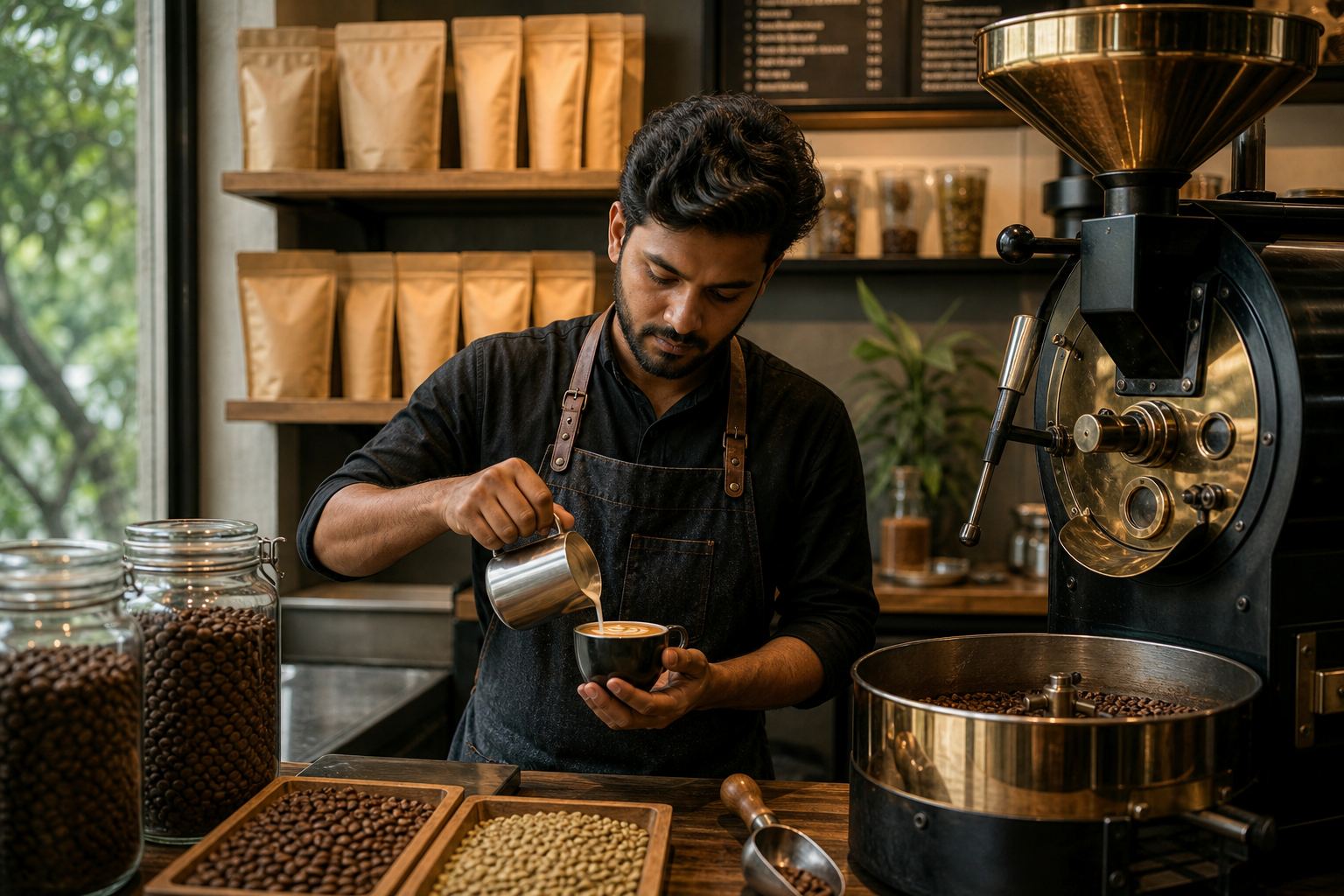
Serious buyers test your credibility with process questions before they discuss price, so exporters running lead generation need a working command of manufacturing basics. Coffee cherry is processed by washed (wet) method — pulped, fermented, washed, and sun-dried to parchment before hulling — or natural (dry) method, where whole cherry is dried before hulling, producing fuller body and more variable cup character. India's curing works then hull, grade by screen size and defect count, and sort into commercial grades such as Plantation A/B for washed Arabica and Cherry AB/PB for natural-processed lots.
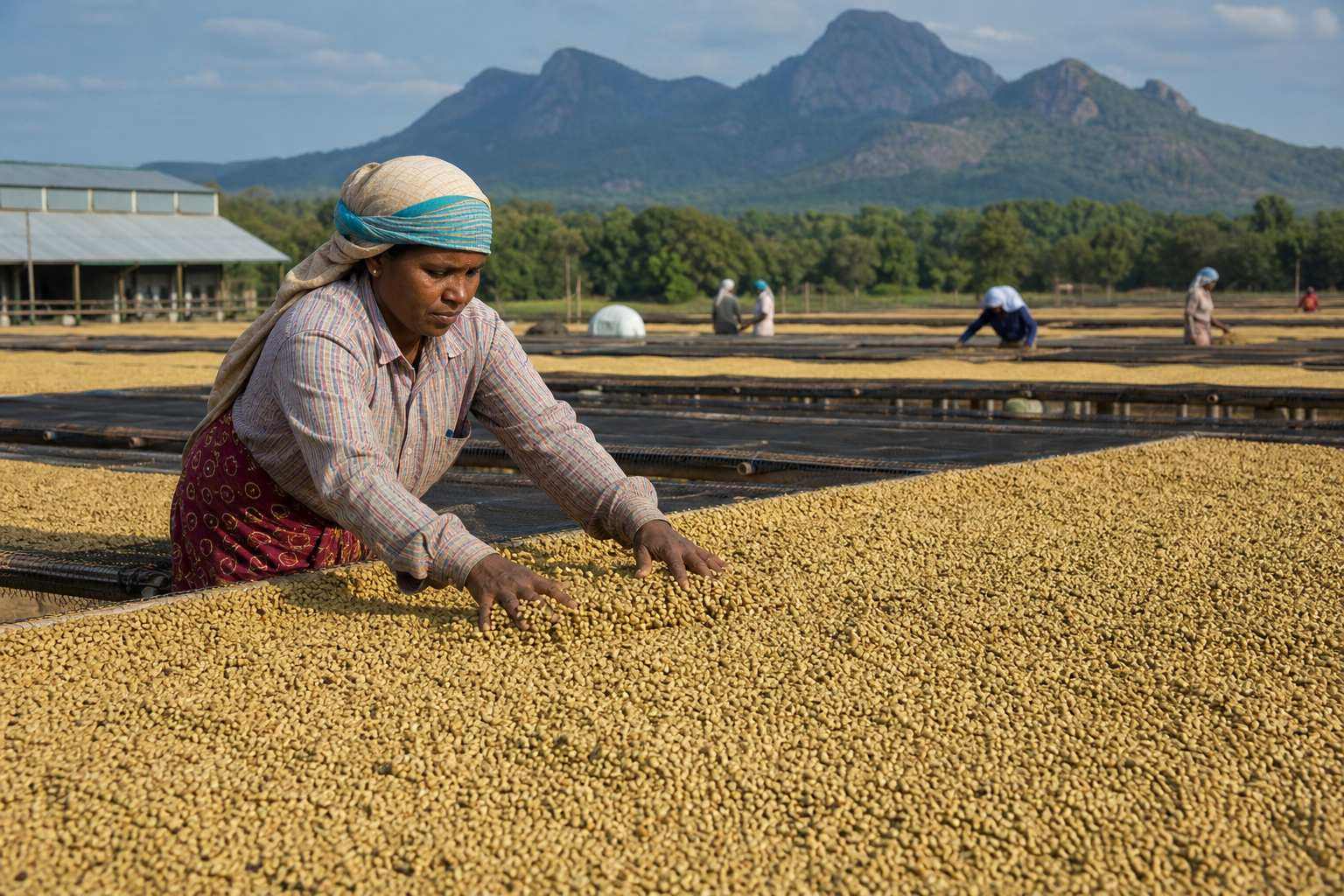
Monsooned Malabar requires an additional, distinctly Indian step: green coffee is spread in ventilated warehouses along the Malabar coast during the monsoon months, absorbing humidity that swells the beans and mellows acidity over several weeks — a process that cannot be replicated inland or in a dry climate, which is exactly why buyers pay a premium for authenticated Malabar-processed lots rather than generic "low acid" claims. Buyers who ask about processing method, curing works location, screen size, and defect count are testing whether you understand what you sell — and whether you can explain a cup-quality deviation if one occurs mid-programme. Being able to answer these questions in the first or second outreach exchange moves a lead from generic inquiry to serious conversation faster than any pricing discount.
Pricing Analysis
Buyer Tip
Export price is not domestic auction price plus freight. Build FOB from cherry or parchment procurement cost, curing and hulling, sorting and grading, packing materials, Coffee Board and FSSAI compliance overhead, inland haulage to Chennai or Cochin, documentation, and exporter margin. For organic or specialty programmes, add certification amortisation and premium packaging costs. Benchmark against competing origins: Vietnamese Robusta sets the liquidity reference for commodity markets; Brazilian and Colombian Arabica compete in specialty tiers; Monsooned Malabar commands an origin premium when authenticity is documented.
In buyer negotiations, quote the full package: bean type, screen size, target cupping score, moisture, packaging format, Incoterm, payment terms, MOQ, and lead time. Buyers who negotiate only unit price without specification lock-in generate quality disputes later. Protect margin for cupping samples, pre-shipment inspection, and documentation — underpricing to win a first order destroys repeat-order economics.
Comparison table
Swipe →
Data table — swipe horizontally on small screens
| Bean/Grade Tier | FOB Positioning Factor | Typical Buyer Negotiation Focus |
|---|---|---|
| Commodity Robusta | Curing works cost + sorting + packing + margin | Per-kg FOB, payment terms, volume discount |
| Blended Arabica | Origin mix + cupping consistency premium | Cup character stability, multi-lot consistency |
| Monsooned Malabar | Curing duration, warehouse authenticity, origin documentation | Authenticity verification, allocation security |
| Single-estate specialty | Altitude, processing method, cupping score documentation | Estate identity, traceability, cupping evidence |
| Organic certified | Certification + traceability + handling premium | Transaction certificates, audit access |
| Instant coffee | Manufacturing cost + packaging + branding overhead | Solubility, flavour consistency, private-label MOQ |
MOQ Analysis
Buyer Tip
MOQ shapes which leads are worth converting into which offer. Commodity Robusta trial orders typically start at 5–10 MT, scaling to 100+ MT annual programmes — a buyer whose HS 0901 import history shows 200+ MT annual purchases is a different pipeline stage than a specialty micro-roaster testing 500 kg. Specialty Arabica and Monsooned Malabar trials range from 500 kg to 3 MT, with premium single-estate allocations sometimes as small as 250–500 kg for boutique roasters. State your realistic MOQ in the first substantive reply to any qualified lead — vague answers read as unpreparedness and cause serious buyers to move on to a more precise competitor.
Segment your CRM by MOQ tier as soon as a lead is scored: bulk-tier accounts get a Robusta-first pitch with FOB and container-loading detail; specialty-tier accounts get a grade-and-cupping-first pitch with smaller trial volumes. Sending a 100 MT bulk price sheet to a 500 kg specialty inquiry, or vice versa, is a common and avoidable reason qualified leads go cold after the first email.
Comparison table
Swipe →
Data table — swipe horizontally on small screens
| Order Type | Typical MOQ | Buyer Profile Match |
|---|---|---|
| Sample / lab trial | 1–25 kg | Any stage — pre-qualification only |
| Specialty Arabica / Monsooned Malabar trial | 500 kg–3 MT | Specialty roasters, direct-trade importers |
| Bulk Robusta commercial trial | 5–20 MT | Bulk importers, blenders new to your supply |
| Bulk Robusta annual programme | 100+ MT | Established multi-origin blenders and instant-coffee manufacturers |
Packaging Standards
Export Tip
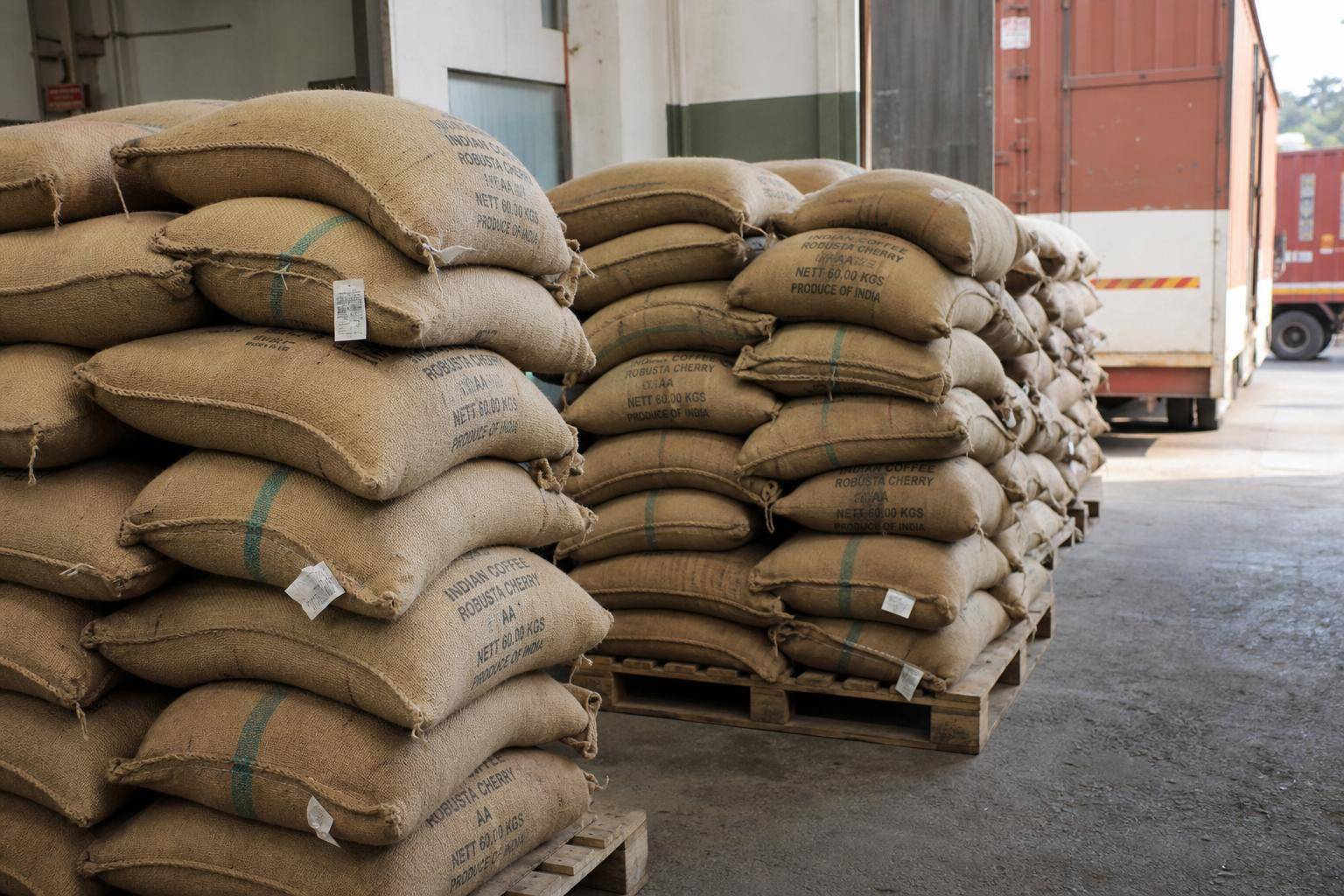
Bulk green coffee moves in 60kg jute bags with GrainPro or vacuum-sealed poly liners to protect against moisture and pest ingress during transit, lot-labelled with grade, weight, and origin. Specialty single-origin and Monsooned Malabar lots often use additional vacuum sealing or smaller lot bags to preserve cup character. Retail private-label programmes need foil pouches, valve bags, or branded cartons meeting destination labelling rules.
State your packaging format precisely in first-contact outreach — a buyer scanning HS 0901 import records already knows roughly what pack format their supply chain handles, and matching that expectation in your first message signals operational readiness that a vague "export packaging available" line does not.
Comparison table
Swipe →
Data table — swipe horizontally on small screens
| Packaging Format | Typical Unit | Buyer Segment |
|---|---|---|
| 60kg jute bag with GrainPro liner | 60 kg net | Bulk Robusta and Arabica importers |
| Vacuum-sealed poly bag (specialty) | Lot-dependent | Specialty roasters, Monsooned Malabar buyers |
| Retail foil pouch / valve bag | Buyer-defined SKU | Private-label and retail-ready programmes |
| Bulk drums / sachets | Manufacturing input format | Instant coffee distributors, CIS/Africa |
Container Loading Details
Export Tip
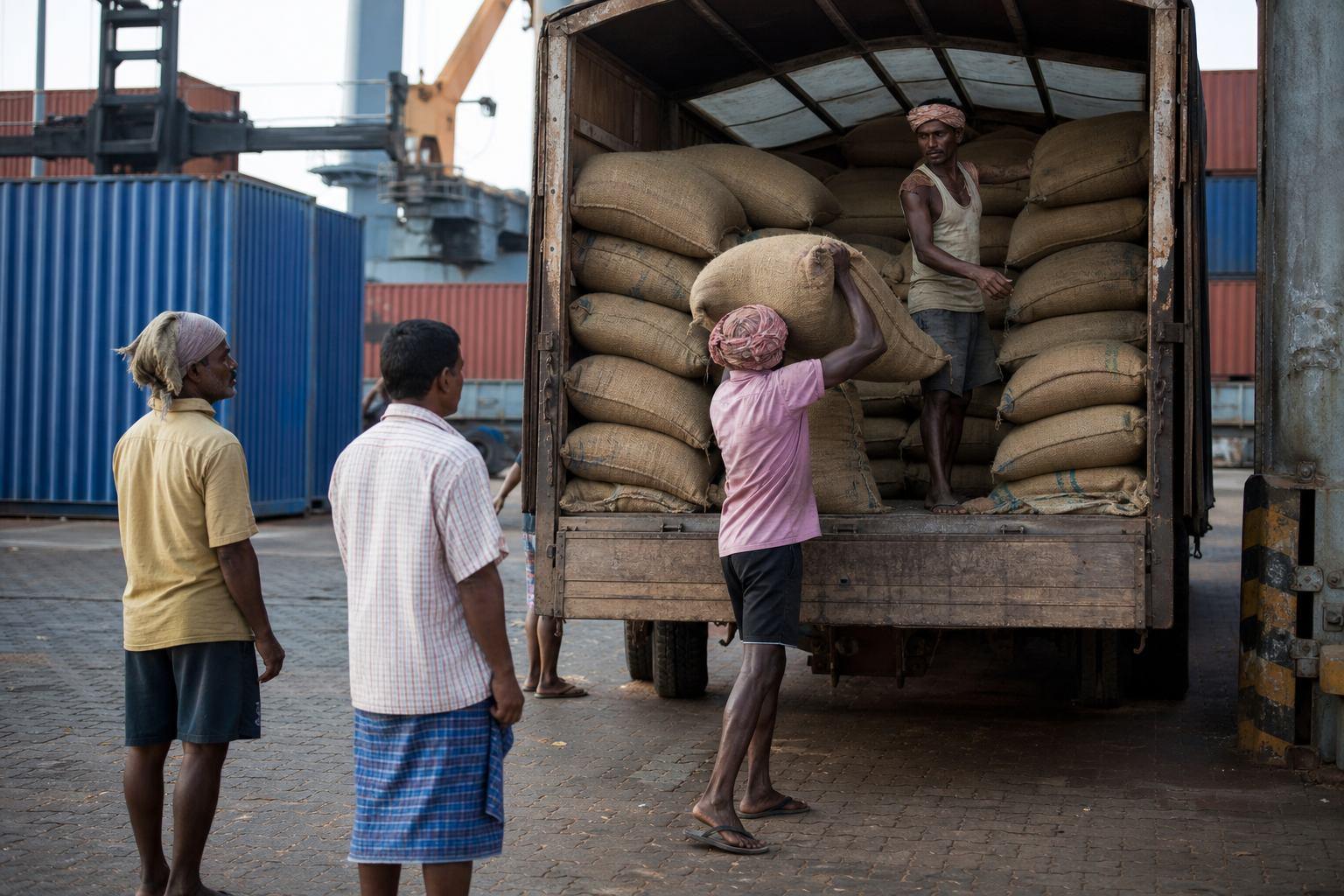
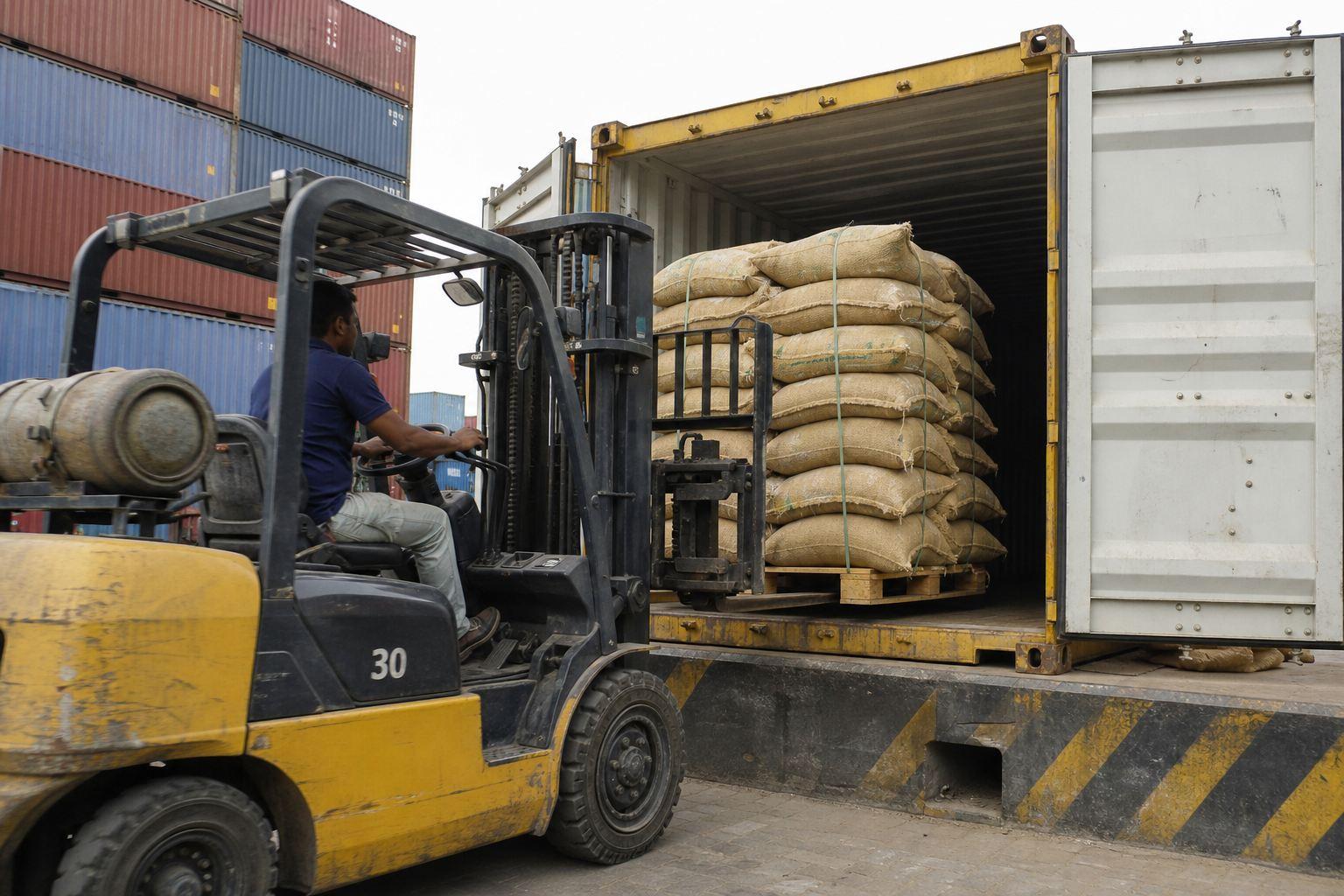
A 20-foot container typically carries about 17–19 MT of bagged green coffee (commonly ~275–320 × 60 kg bags); a 40-foot container is usually volume-limited at about 24–26 MT for bagged green coffee — not double a 20ft load. Bags are typically floor-stacked for bulk green coffee, though pallets are used for specialty and retail-ready formats. LCL trial shipments of 2–5 MT are viable but increase per-kilogram freight and moisture-exposure risk versus FCL.
When qualifying a bulk lead, ask early whether they plan FCL or LCL for a first order — a buyer requesting a 5 MT LCL trial from a company that only ever quotes full-container pricing wastes a negotiation cycle that a clear MOQ-and-loading answer in the first reply would have avoided.
Comparison table
Swipe →
Data table — swipe horizontally on small screens
| Container Type | Typical Payload | Buyer Fit |
|---|---|---|
| 20ft FCL, bagged green coffee | ~17–19 MT | Standard bulk Robusta/Arabica programme |
| 20ft FCL, bulk liner | Up to ~21 MT (indicative) | High-volume buyers accepting bulk discharge |
| 40ft FCL, bagged green coffee | ~24–26 MT (volume-limited) | Large programmes — not double a 20ft load |
| LCL | 2–5 MT typical trial size | First-time or cautious specialty buyers |
Shipping Methods
Export Tip
Chennai and Cochin are the primary load ports for South Indian coffee; Visakhapatnam serves Araku Valley and Andhra Pradesh-origin lots; Nhava Sheva handles blended or multi-origin programmes. Ocean transit runs roughly 18–22 days to Northern Europe, 22–28 days to the US East Coast, 12–16 days to the Gulf, and 20–25 days to Japan. FOB is standard for buyers who manage their own freight; CFR/CIF suits buyers who want a single landed price.
Confirming your Incoterm capability early in a buyer conversation is itself a qualification signal — a lead who asks only "what is your best price" without engaging on Incoterms or transit time is often a price-shopping broker rather than an operating importer with a real supply chain to plan around.
Comparison table
Swipe →
Data table — swipe horizontally on small screens
| Load Port | Serves | Typical Transit |
|---|---|---|
| Chennai | Karnataka, Tamil Nadu origin lots | 18–28 days depending on destination |
| Cochin | Kerala, Karnataka origin lots | 18–28 days depending on destination |
| Visakhapatnam | Araku Valley, Andhra Pradesh origin lots | 18–28 days depending on destination |
| Nhava Sheva | Multi-origin/blended consolidation | 18–28 days depending on destination |
Certifications
Compliance Notes
Mandatory credentials for any commercial coffee exporter are IEC (DGFT), Coffee Board of India exporter registration, and FSSAI licence — buyers now routinely request these in onboarding questionnaires alongside a cupping report and residue test summary. Referencing your Coffee Board registration number in the very first outreach message is one of the fastest ways to separate a serious exporter from the hundreds of unverified accounts on any given trade directory.
Optional but commercially valuable certifications include NPOP/EU Organic/USDA NOP, Rainforest Alliance, Fairtrade, and traceability documentation for Monsooned Malabar and single-estate lots. If you hold any of these, lead with them when prospecting buyers whose import history shows organic or certified SKUs — it moves your message from cold outreach to a relevant, pre-qualified fit.
Comparison table
Swipe →
Data table — swipe horizontally on small screens
| Certification | Purpose | Relevant Markets |
|---|---|---|
| Coffee Board Exporter Registration | Mandatory for HS 0901/2101 shipping-bill filing | All markets |
| FSSAI Licence | Food safety compliance | All markets |
| NPOP / EU Organic / USDA NOP | Organic coffee claims | Germany, UK, USA, Netherlands |
| Rainforest Alliance | Sustainability and shade-grown sourcing criteria | EU, USA retail chains |
| Fairtrade | Minimum price and community premium structures | EU, USA specialty and mission-driven brands |
| Estate / Monsooned Malabar traceability | Origin authenticity for specialty claims | USA, Germany, Japan specialty roasters |
Buyer Requirements
Buyer Requirements
Buyers will ask whether you can execute export operationally before they engage seriously on price. Be ready to confirm: active IEC from DGFT, Coffee Board exporter registration, FSSAI central licence for processing and packing, grade-specific COA per lot, standard export packaging, and familiarity with FOB Chennai/Cochin or CFR terms. Incoterms clarity in early conversations signals professionalism — quoting "best price" without FOB/CFR/CIF definition is a qualification red flag from the buyer's side too.
MOQ and lead-time honesty accelerates conversion. If you can reliably supply 20 MT of Robusta Cherry AB per quarter, say so. If a specific Monsooned Malabar lot is limited to 3 MT and sells out fast after the monsoon curing season, communicate allocation windows early — buyers respect supply realism and abandon exporters who overpromise volume then deliver inconsistent grades.
Comparison table
Swipe →
Data table — swipe horizontally on small screens
| Verification Signal | What Good Looks Like | Red Flag |
|---|---|---|
| Business legitimacy | Food-importer registration, VAT/EIN traces, coffee trade association membership | Only personal Gmail, no entity trail, no food licence |
| Purchasing history | HS 0901/2101 import shipments in target country data | Claims 1,000 MT first order with zero import footprint |
| Specification awareness | Asks about screen size, defect count, moisture, processing method, cupping score | Only asks for "cheapest price" with no quality discussion |
| Payment reliability | Normal advance/LC/SBLC terms discussion | Requests unusual payment platforms or third-party transfers |
| Communication pattern | Named buyer, consistent food-company domain email | Changing identities mid-thread, multiple names |
Country-wise Opportunities
Market Snapshot
Country selection should drive prospect list construction, not the reverse. Build separate pipelines per market tier rather than one global blast list.
Italy
Italy has been the single largest destination for Indian Robusta for decades, feeding its espresso-blending industry. Buyers are predominantly roasters and blenders who prize Indian Robusta's low acidity and body for classic espresso profiles. Lead generation here emphasises crema strength, competitive FOB pricing, reliable container loading from Chennai or Cochin, and Coffee Board registration credibility. Verify import history in HS 0901 before quoting — Italian trading houses have layers that can obscure the actual roasting entity.
Germany and Belgium
Germany and Belgium combine large-volume commodity purchasing with growing specialty and organic demand, and both function as re-export and distribution hubs for wider European markets. Prospecting targets large blenders and distributors alongside organic food distributors and specialty roasteries with documented multi-origin sourcing.
Russia and CIS
Russian and CIS coffee import is significant by volume, spanning both green Robusta for domestic roasting and inputs for instant-coffee manufacturing. Indian Robusta competes directly with Vietnamese supply on price and crema character. Trade data showing concurrent Vietnam and India imports signals active blender accounts worth prioritising.
USA and Canada
North American demand spans commodity blending through premium specialty and organic retail. LinkedIn prospecting to specialty roastery founders, organic distributors, and private-label procurement managers works well when paired with estate and processing-method specificity, especially for Monsooned Malabar and single-origin Arabica.
UAE and Japan
The UAE functions as both a consumption market and a re-export hub for Gulf and African distribution, with demand spanning bulk Robusta, instant coffee, and growing premium retail and hospitality segments. Japan is a high-value, relationship-intensive market with sophisticated buyer expectations on purity and cup character — Monsooned Malabar and Indian Arabica have premium positioning in Japanese specialty channels, though relationship-building cycles are long.
Expert Insight #1 — Saurabh Mittal, Founder, Altus Exports
Expert Insight Box
Speed, grading clarity, and proof of cupping consistency convert coffee inquiries. Reply quickly with a structured quotation: bean type and origin, target cupping score, moisture range, MOQ, lead time post-PO, Incoterm, payment terms, packaging, and proforma validity. Share a one-page grade sheet with your Coffee Board registration reference and COA availability. Offer paid cupping samples dispatched within a specified timeframe. Negotiate on full package value — sorting quality, documentation support, packing standards — not only unit price per kilogram.
Build trust with process transparency: pre-shipment cupping rights, COA dispatch with every lot, production-milestone communication, and photographic packing documentation. Follow up until you get a yes, no, or timed deferral. After the first trial shipment, request cupping feedback and propose repeat-order scheduling before the next harvest.
Sourcing Checklist
Checklist
- Buyer profile written before opening any lead source — bean type, volume, certification, Incoterm.
- HS 0901/2101 import history confirmed for the account, ideally within the last 12–24 months.
- Website and domain email checked for coherence with a genuine coffee or food-import business.
- Specification-aware questions received (screen size, defect count, moisture, cupping score) before any price discussion.
- Reference buyer or trade association membership checked where available.
Buyer Checklist
Checklist
- Ask the exporter for Coffee Board exporter registration, current FSSAI licence, and IEC before requesting a formal quote.
- Request a recent lot-specific COA and compare its parameters against the sample offered for cupping.
- Confirm MOQ, packaging format, and Incoterm in writing before agreeing to a paid sample.
- For organic or Monsooned Malabar claims, ask for the exact certifier name and lot-specific transaction certificate or curing-works batch record.
- Check whether the exporter's stated grade nomenclature (Parchment AB, Plantation A, Cherry AB/PB) matches standard Coffee Board terminology before comparing quotes across suppliers.
Exporter Checklist
Checklist
- IEC, GST, FSSAI, and Coffee Board exporter registration are current and referenced in every outreach signature.
- Grade sheet, cupping protocol, and pack format are locked before the first prospecting message is sent.
- Lot COA template matches invoice and packing-list fields so a serious lead can be answered within 24 hours.
- Buyer profile and CRM stage defined for every named account before dispatching a paid or free sample.
- Follow-up cadence (4–6 touches over 3–4 weeks) scheduled for every account entering the pipeline, not left to memory.
Compliance Checklist
Checklist
Compliance Notes
- Coffee Board exporter registration and RCMC current before any shipping bill referencing HS 0901/2101 is filed.
- FSSAI licence scope covers the processing and packing address quoted to the buyer.
- Lot-specific COA and cupping report prepared before dispatch, not promised for "later."
- Organic transaction certificate confirmed lot-specific (not an annual certificate) before quoting any organic claim.
- Payment terms and Incoterms confirmed in writing before production or bulk sampling begins for any qualified lead.
Common Buyer Mistakes
Common Mistakes Box
- Blasting one catalogue to every importer on a directory — Solution: build a buyer profile per bean type and target three to five personas, not one.
- Dispatching free cupping samples to unverified accounts — Solution: run the verification checklist and charge for samples beyond the first small trial pack.
- Treating fairs as the entire lead-generation strategy — Solution: run HS 0901/2101 trade-data and LinkedIn prospecting year-round between events.
- Ignoring HS 0901/2101 import history when qualifying a lead — Solution: check recency and frequency of import activity before investing outreach time.
- Quoting price before confirming grade, volume, and Incoterm — Solution: gather specification detail first; price follows fit.
- No CRM or lead-stage tracking — Solution: run every account through defined stages and review weekly.
- Accepting "send all prices" inquiries at face value — Solution: treat vague requests as low-priority until specification questions appear.
- Overpromising volume or allocation to close a first order — Solution: communicate realistic MOQ and seasonal limits from the first serious reply.
- Skipping video verification before high-value sample dispatch — Solution: confirm identity by call before sending significant sample value.
- Requesting unusual payment routes or third-party transfers without flagging it as a red flag — Solution: treat any deviation from standard advance/LC terms as an immediate verification trigger.
Expert Insight #2 — Saurabh Mittal, Founder, Altus Exports
Expert Insight Box
The exporters who build durable buyer pipelines treat CRM discipline as seriously as cupping discipline. Use a simple CRM with stages: research → contacted → sampling → quotation → negotiation → first shipment → repeat order. Manage leads weekly. Support the pipeline with light email sequences, LinkedIn networking around harvest seasons, selective fair participation, and post-shipment cupping reviews that earn referrals and reorders. Buyer retention is cheaper than constant cold acquisition — schedule reorder reminders six to eight weeks before each buyer's typical repurchase window.
Measure three numbers every month: qualified technical conversations, sample-to-order conversion rate, and repeat-order rate. Review the pipeline every Monday — which deals need sample follow-up, which need payment confirmation, which need a harvest update to stay warm. India's coffee harvest and curing cycles create natural urgency windows; build outreach calendars around harvest and post-monsoon curing periods rather than treating every month identically.
Future Market Trends
Key Statistics
Trade-data access is becoming more granular and affordable, letting even mid-size exporters run shipment-level prospecting that used to require expensive subscriptions. Coffee Board and industry bodies continue expanding digital buyer-seller matching alongside physical meets and the IICF, reducing the cost of attending a fair without the follow-up infrastructure to convert it. AI-assisted lead scoring is starting to appear in trade-data platforms, automatically flagging accounts with rising import frequency or multi-origin sourcing patterns worth prioritising.
On the buyer side, specialty and organic importers are asking for traceability evidence earlier in the conversation — estate identity, processing method, and transaction certificates now surface in the first or second exchange rather than at contract stage. Exporters who prepare that evidence pack in advance, rather than assembling it reactively after a buyer asks, will convert faster as this expectation becomes standard across specialty channels.
Conclusion
- Do this week: write your buyer profile, define three hero coffee grades with specifications, and prepare a one-page grade sheet with Coffee Board registration reference.
- Read trade shows for coffee exporters, coffee export documentation checklist, Coffee Board registration benefits for exporters, and most demanded Indian coffee by country.
- Also explore organic and specialty coffee export opportunities from India and how to export coffee from India.
- Explore merchant exporter, export products from India, and agriculture & food products industry.
To find international buyers for coffee from India, combine the strongest channels — HS 0901/2101 trade data, Coffee Board buyer-seller meets and the IICF, LinkedIn coffee-industry prospecting, and selective fair attendance — with strict buyer verification, grade-specific documentation readiness, and a CRM-managed pipeline that respects buyer time and cupping standards. Proactive sharing of grade sheets and cupping data is the most effective trust-builder in a category where quality consistency shapes buyer decisions.
Altus Exports supports coffee curing works, estates, and merchant exporters who need buyer access paired with export documentation and shipment execution — not just leads without follow-through. Share your grades, capacity, certifications, and target markets to begin a practical pipeline plan.