
Organic and Specialty Coffee Export Opportunities from India
By Saurabh Mittal, Founder, Altus Exports
A certification-first guide to organic and specialty coffee export from India — NPOP, USDA NOP, and EU Organic pathways, Monsooned Malabar authenticity and premium margins, and single-estate micro-lot traceability from Coorg, Chikmagalur, Wayanad, the Nilgiris, and Araku Valley. Written for estates, curing works, and merchant exporters building a premium programme rather than a commodity Robusta volume business, with certification cost tables, margin modelling, country demand mapping, and a Chikmagalur organic case study from Altus Exports.
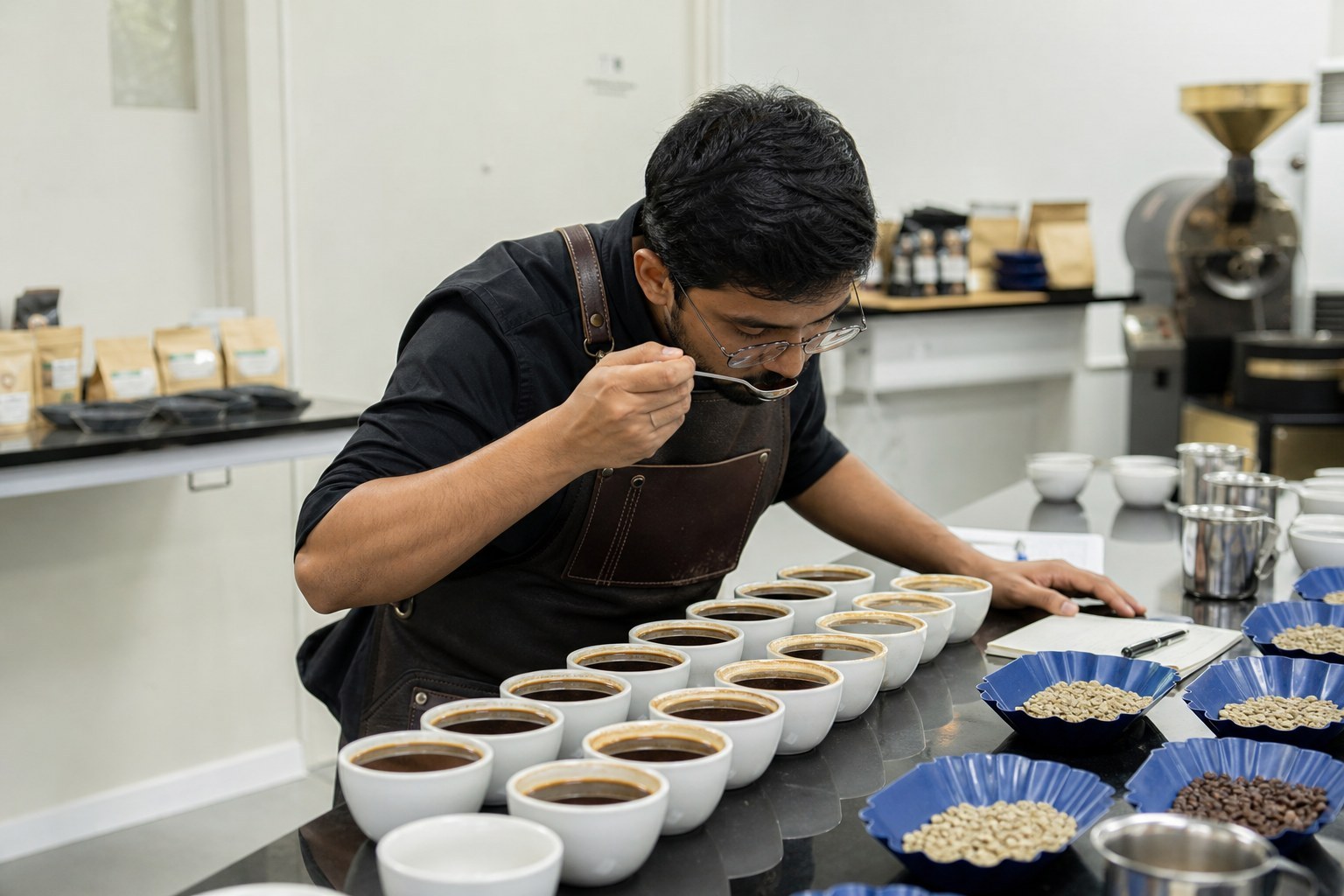
Global buyers are rewriting coffee assortments around origin authenticity, estate traceability, and certified organic credentials — and India sits in an unusual position for that shift because of Monsooned Malabar, single-estate shade-grown Arabica from Coorg, Chikmagalur, Wayanad, and the Nilgiris, and the tribal-grown organic coffee of Araku Valley. This is deliberately not a commodity Robusta volume guide. It is written for estates, curing works, and merchant exporters who want to build — or evaluate — a premium programme where certification, estate traceability, and cupping discipline, not crema strength per kilogram, determine the price.
India produces coffee from a growing region few countries can match for its cultivation method: nearly all Indian coffee is shade-grown under a mixed canopy of pepper vines, areca palm, and native timber trees, rather than in open-sun monoculture. Pair that shade-grown identity with the world's only commercially significant monsoon-processed coffee, growing NPOP-certified organic estate coverage, Coffee Board export facilitation, and the estate-mark traceability that specialty buyers require, and organic and specialty coffee export from India becomes both a real and a defensible premium position against commodity competition.
This guide covers certification pathways (NPOP, USDA NOP, EU Organic), specialty and micro-lot product categories, manufacturing and processing method, margin modelling with certification costs priced explicitly into FOB, country-wise demand, and the checklists that keep a specialty programme buyer-ready. Pair it with find international buyers for coffee and how to export coffee from India. Always verify current certifier and equivalence requirements before making claims to buyers — scheme rules are periodically updated.
Key Takeaways
Summary Box
Executive Summary
Summary Box
The commercial case for organic and specialty coffee export from India rests on three converging facts: Monsooned Malabar is one of the most distinctive specialty coffee origins in the world, India's organic estate base is expanding under NPOP, and Western specialty roasting assortments are structurally shifting toward traceable, certified, single-origin coffee even as commodity Robusta competes on price alone. Exporters who invest in certification infrastructure — NPOP or USDA NOP, EU Organic where required, Monsooned Malabar authenticity documentation, and lot-specific cupping and residue evidence — access a buyer tier that pays multiples of commodity FOB for the same tonnage of green coffee.
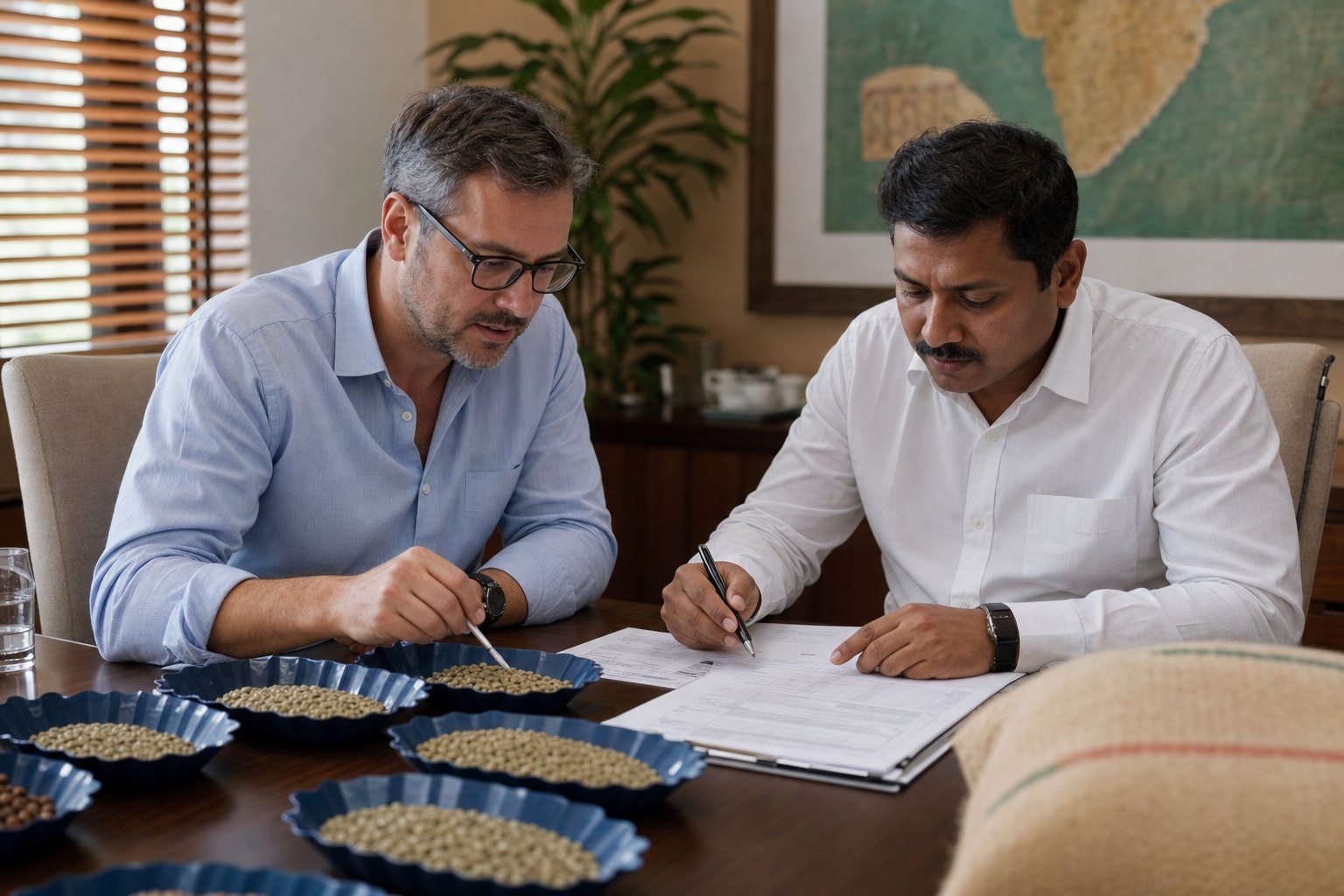
The catch is that this premium is not automatic. Buyers in Germany, the USA, Japan, and Scandinavia will not accept an unsupported organic claim or an undocumented Monsooned Malabar label — they audit certificates, request transaction documents, and verify curing-works records before the first purchase order. This guide sets out exactly what to certify, how to price certification into FOB transparently, and which country markets reward which specific specialty category, so estates and merchant exporters can plan a 12–24 month programme with realistic milestones rather than treating "organic" and "specialty" as marketing adjectives.
Market Size & Industry Overview
Key Statistics
The global coffee market splits into two commercial realities: commodity bulk Robusta and Arabica traded on cupping-adequate quality and price per kilogram, and specialty/premium coffee traded on origin, cup character, certification, and brand story. While India dominates commodity export volumes to Italy, Germany, and Russia, the fastest margin growth for Indian exporters lies in specialty single-origin, Monsooned Malabar, organic-certified, and estate-authenticated supply to Western Europe, North America, Japan, and premium Gulf retail.
India exported approximately 300,000–400,000 MT of coffee in recent crop years out of about 340,000–360,000 MT produced (with re-export and blending flows accounting for the volume gap) — and within that export base, specialty and organic lines remain a smaller share by volume but a fast-growing share by value. Market data from Coffee Board export statistics and specialty trade publications consistently show rising import values for organic and certified coffee in Germany, the USA, and Japan, even as commodity volumes face price competition from Vietnam and Brazil. India's shade-grown cultivation model and its Monsooned Malabar category — one of the world's most recognised specialty processing methods — provide structural advantages that commodity origins cannot replicate.
The commercial implication for exporters is strategic positioning: commodity Robusta programmes compete on efficiency and cupping consistency; organic and specialty programmes compete on authenticity infrastructure — certifications, estate traceability, cupping stability, and packaging quality. Attempting to sell specialty coffee without that infrastructure produces price-sensitive inquiries that never convert to repeat orders.
Comparison table
Swipe →
Data table — swipe horizontally on small screens
| Market Segment | Growth Profile | India's Competitive Position | Key Requirement |
|---|---|---|---|
| Specialty single-origin retail | Strong through 2030 | Coorg, Chikmagalur, Wayanad, Nilgiris estate coffee | Estate traceability, cupping consistency |
| Organic certified retail | Structural growth | NPOP estates in Chikmagalur, Wayanad, Araku Valley | NPOP / EU Organic / USDA NOP |
| Monsooned Malabar specialty | Premium niche expansion | Malabar coast curing warehouses | Curing authenticity, processing traceability |
| Single-estate / estate mark | Premium niche expansion | Named Karnataka and Kerala estates | Estate traceability, altitude documentation |
| Private label organic | Growing in USA/EU | Organic Arabica and Robusta grades | Label compliance, MOQ feasibility |
Export Statistics
Key Statistics
India's coffee exports remain majority commodity Robusta and blended Arabica to Italy, Germany, Belgium, and Russia by volume, but specialty and organic coffee represent a growing share of export value as estates invest in certification and estate branding. Monsooned Malabar exports — inherently specialty — average significantly higher FOB per kilogram than commodity Robusta. Organic-certified coffee commands additional premiums of 25–70% over conventional specialty in EU and USA specialty channels when certification is genuine and transaction certificates accompany each shipment.
Germany, the USA, Japan, and Scandinavian countries are the highest-value destinations for specialty and organic Indian coffee on a per-kilogram basis. Tracking Coffee Board export statistics by category, rather than aggregate export volume, is the correct way to size the specialty opportunity — aggregate figures are dominated by commodity Robusta and understate how much value concentrates in the smaller specialty tier.
Comparison table
Swipe →
Data table — swipe horizontally on small screens
| Export Category | Approx. Volume Share | Value Share Trend | Primary Destinations |
|---|---|---|---|
| Commodity Robusta | Majority of export volume | Stable to competitive | Italy, Germany, Russia, Belgium |
| Blended Arabica | Moderate volume | Stable | USA, UAE, Japan |
| Monsooned Malabar | Smaller volume, high value | Growing premium | Germany, Scandinavia, USA, Japan |
| Single-estate specialty Arabica | Smaller volume, high value | Growing premium | USA, Germany, Japan |
| Organic certified (Arabica/Robusta) | Small but rising | Strong growth | Germany, USA, Netherlands |
Import Statistics
Key Statistics
Import data analysis for specialty and organic programmes differs from commodity prospecting. Rather than maximising HS 0901 volume importers, focus on identifying buyers who already import from Ethiopia, Colombia, or Costa Rica's specialty and micro-lot channels — these accounts already understand premium coffee economics and cupping evaluation. Filter import records for smaller, more frequent shipments from India, Ethiopia, and Colombia, a pattern often associated with specialty roasters rather than bulk commodity blenders.
Cross-reference with organic food import databases and specialty coffee association member lists in Germany, the USA, and Scandinavia. For Monsooned Malabar programmes, identify buyers who already stock rare-processing or low-acid specialty coffee — they have customer education infrastructure and shelf placement for unusual origin stories. For organic programmes, identify buyers with existing NPOP, EU Organic, or USDA Organic coffee SKUs already in their catalogue; adding a well-documented Indian line to an existing organic assortment is a far easier sale than introducing the category from zero.
Comparison table
Swipe →
Data table — swipe horizontally on small screens
| Import Signal | What It Suggests | How to Use It |
|---|---|---|
| Existing Ethiopia / Colombia specialty imports | Buyer already understands specialty cupping economics | Position India as an origin addition, not a category education |
| Existing NPOP / EU Organic coffee SKUs | Buyer has organic supply-chain infrastructure in place | Lead with certification pack, not price |
| Frequent small-lot shipments | Specialty roaster behaviour, not bulk blending | Offer trial lots of 100–500 kg rather than container volumes |
| Specialty coffee association membership | Credibility and referral access | Approach through association directories and events |
| Retail private-label organic coffee SKUs | Buyer has label compliance capability already | Propose estate-branded private label formats |
Product Categories / Variants
Summary Box
Understanding which products belong in premium export programmes — and which remain commodity — is the first product decision. Organic coffee export from India centres on shade-grown Arabica and select Robusta from certified estates, not on undifferentiated bulk beans sold with an organic label claim unsupported by certification.
Monsooned Malabar remains the flagship specialty category unique to India — green coffee exposed to monsoon winds and humidity in ventilated coastal warehouses at Kochi and Mangalore over several weeks, which swells the bean and mellows acidity into a distinctive low-acid, full-bodied cup. Authentic Monsooned Malabar requires verifiable curing-works and warehouse traceability; unsubstantiated "low acid" claims are a known market risk that legitimate exporters must address proactively with documentation. Single-estate Arabica from Coorg, Chikmagalur, and Wayanad offers bright, wine-toned cup profiles for specialty roasters and single-origin retail lines. Nilgiri estate coffee provides balanced, mellow character for premium blended and estate programmes. Araku Valley coffee, grown by tribal cooperatives at meaningful altitude in Andhra Pradesh under an organic and fair-trade-aligned model, has built a distinct social-impact story that resonates with EU and US ethical-sourcing buyers.
Beyond traditional green coffee, Indian estates increasingly produce specialty-roasted whole bean and ground coffee and micro-lot single-estate offerings sold as competition-grade or harvest-specific batches, primarily for direct-trade roasters, D2C brands, and boutique retail. These categories are lower volume but significantly higher margin per kilogram. Organic certification applies across all processing styles when estate and curing-works operations meet NPOP standards.
Comparison table
Swipe →
Data table — swipe horizontally on small screens
| Product Category | Primary Origins | Typical Grades | HS Reference | Premium Factor |
|---|---|---|---|---|
| Monsooned Malabar | Malabar coast curing warehouses (Kochi, Mangalore origin lots) | Monsooned Basanally, Monsooned AA | 0901.11 / 0901.90 | Curing authenticity, low-acid character |
| Single-estate Coorg/Chikmagalur Arabica | Kodagu and Chikmagalur districts | Plantation A, estate-specific lots | 0901.11 | Altitude, estate identity, cup character |
| Wayanad and Nilgiri specialty | Kerala and Tamil Nadu highlands | Plantation A/B, estate lots | 0901.11 | Fragrance, balanced acidity |
| Araku Valley organic | Andhra Pradesh tribal cooperatives | Certified organic Arabica | 0901.11 | Organic, social-impact story, altitude |
| Organic Robusta (certified estates) | Coorg, Chikmagalur certified estates | Cherry AB, PB organic | 0901.11 | NPOP / EU Organic / USDA NOP |
| Micro-lot / competition-grade specialty | Any certified high-altitude estate | Harvest-specific single lots | 0901.11 / 0901.21 | Rarity, cupping score, direct-trade story |
| Specialty roasted (whole bean/ground) | Any certified estate | Buyer-specified roast profile | 0901.21 | Direct-trade, roast freshness, branding |
Manufacturing Overview
Export Tip
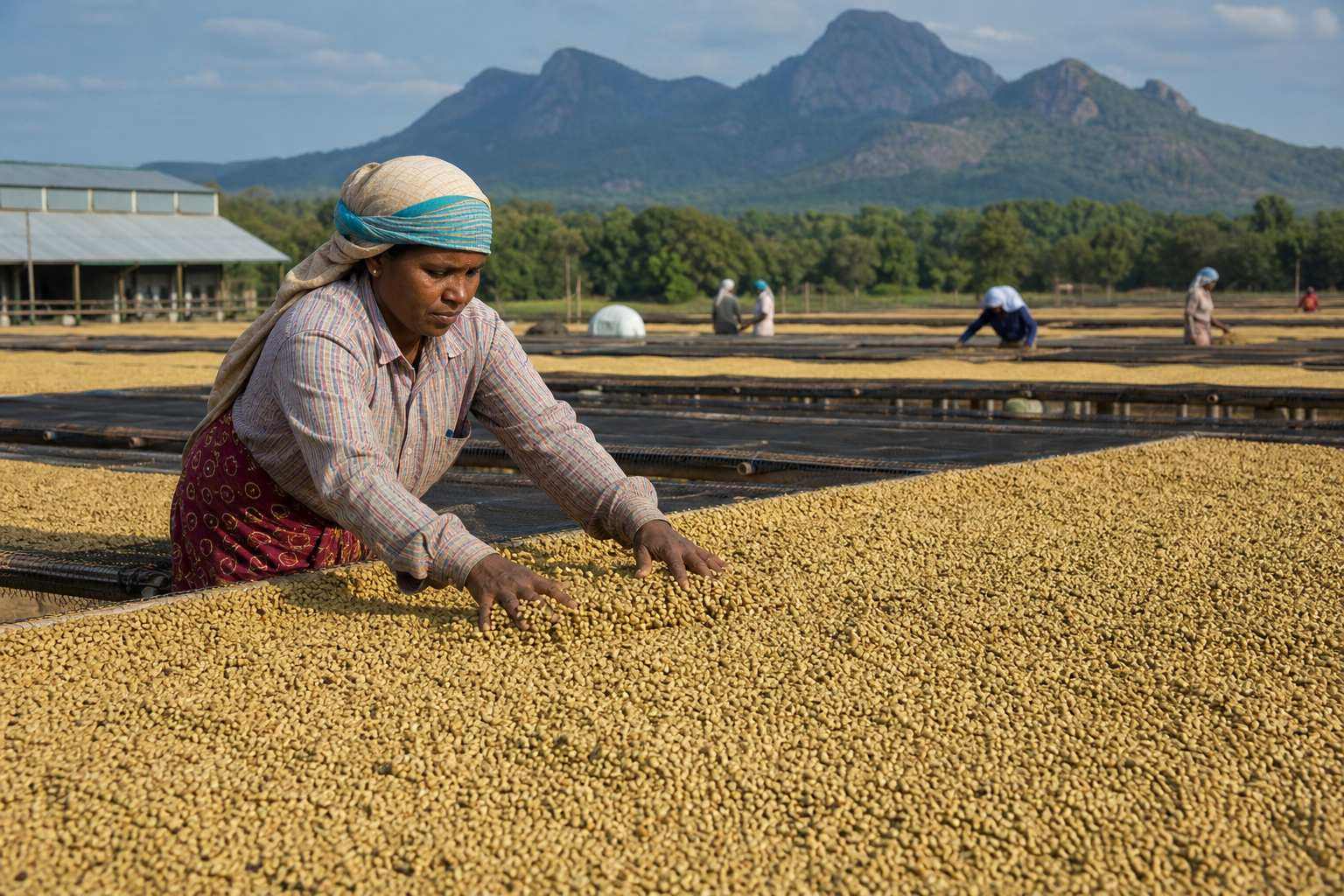
In specialty coffee, the manufacturing method is the product story, not a background detail. Washed (wet) processing — pulping, fermenting, washing, and sun-drying to parchment — produces a cleaner, brighter cup that specialty buyers cup for in single-estate Arabica programmes. Natural (dry) processing — drying whole cherry before hulling — produces fuller body and more variable, fruit-forward character. Monsooned processing sits entirely apart: green coffee is deliberately re-exposed to humidity after initial processing, in a controlled warehouse environment along the coast, over weeks rather than days — a process that cannot be replicated inland or in a dry climate, which is exactly why buyers pay a rarity premium for it.
Organic estates add a chain-of-custody dimension to manufacturing: segregated intake, processing, and storage lines that prevent cross-contact with conventional lots, audited annually by an NPOP-accredited certifier. Single-estate positioning depends on process consistency at the curing-works level as much as on the estate's terroir: the same estate, processed slightly differently across two harvest lots, produces a measurably different cup — which is why specialty buyers request lot-specific and even harvest-date-specific samples rather than accepting a season-average blend. Explaining your processing method, drying time, and curing-works location credibly in buyer conversations is part of proving the estate story, not incidental detail.
Comparison table
Swipe →
Data table — swipe horizontally on small screens
| Processing Method | Cup Character | Typical Product Fit |
|---|---|---|
| Washed (wet) processing | Clean, bright, aromatic cup | Single-estate Plantation A/B specialty |
| Natural (dry) processing | Fuller body, fruit-forward, variable | Cherry AB/PB specialty and commodity |
| Monsooned processing | Low-acid, full-bodied, distinctive | Monsooned Malabar specialty |
| Organic segregated processing | Depends on base method; chain-of-custody audited | NPOP-certified Arabica and Robusta |
Pricing Analysis
Buyer Tip
A common mistake is building an organic or specialty coffee export programme, absorbing all certification and premium packaging costs, and then quoting buyers at conventional commodity prices because sales teams fear losing the deal on price. This destroys the commercial rationale for the premium investment. Margins should reflect the full cost structure: NPOP/NOP/EU Organic annual certification, pesticide-residue testing per lot or season, premium packaging, estate mark compliance, curing-works documentation overhead, and the commercial premium the market actually supports.
Run internal dual costing for every programme: conventional commodity FOB cost versus certified organic or single-estate specialty FOB cost. The difference should be priced into buyer quotations transparently, not absorbed silently. In practice, buyers in EU, USA, and Japan organic and specialty channels expect higher FOB for certified and estate-mark product and build it into their own retail margin models. Monsooned Malabar commands the highest origin premium within the Indian portfolio for its process rarity; organic certification adds a further layer; single-estate high-altitude micro-lots add rarity premiums on top of both.
Comparison table
Swipe →
Data table — swipe horizontally on small screens
| Cost Component | Impact on FOB | Notes |
|---|---|---|
| NPOP annual certification | Amortised across certified lots — typically ₹15–40/kg on small programmes | Decreases per kg as volume grows |
| USDA NOP certification | Additional amortisation for USA programmes | Required for US organic label claims |
| Pesticide residue panel | ₹3–8/kg amortised on per-season testing | Japan and EU may require expanded panels |
| Monsooned curing process cost | ₹15–35/kg for warehouse time and handling | Multi-week processing adds real cost, not just story |
| Premium packaging (GrainPro/vacuum) | ₹10–40/kg depending on format | Retail programmes significantly higher than bulk jute |
| Estate mark / traceability compliance | ₹5–15/kg on small specialty lots | Documentation overhead |
| Cupping and quality control | ₹5–12/kg on specialty programmes | Higher for single-estate micro-lots |
MOQ Analysis
Buyer Tip
MOQ for specialty single-estate coffee typically ranges from 500 kg to 3 MT per lot — significantly smaller than commodity Robusta. Some estates accept 250–500 kg trial allocations for premium Monsooned Malabar or micro-lot Arabica, and competition-grade harvest-specific batches can be as small as 30–100 kg for sample-order specialty roasters testing a new origin. Private-label retail MOQ depends on SKU and packaging format, often SKU-dependent unit counts.
Organic programmes often require a minimum programme size that justifies the certifier's audit and lot-specific transaction certificate cost; exporters should confirm this threshold with their certifying body before quoting small organic trial lots. Matching MOQ realistically to harvest allocation is critical — promising a repeat 2 MT Monsooned Malabar order every quarter when the estate's total annual Monsooned output is 8 MT sets up an allocation conflict that damages buyer trust within a year.
Comparison table
Swipe →
Data table — swipe horizontally on small screens
| Order Type | Typical MOQ | Notes |
|---|---|---|
| Competition-grade micro-lot sample | 30–100 kg | Sample-order specialty roasters testing a new origin |
| Single-estate specialty trial | 250–500 kg | Boutique roasters, direct-trade programmes |
| Monsooned Malabar standard trial | 1–3 MT | Specialty importers, established roasters |
| Organic certified programme | Certifier-dependent minimum | Confirm audit and transaction-certificate cost threshold first |
Packaging Standards
Export Tip
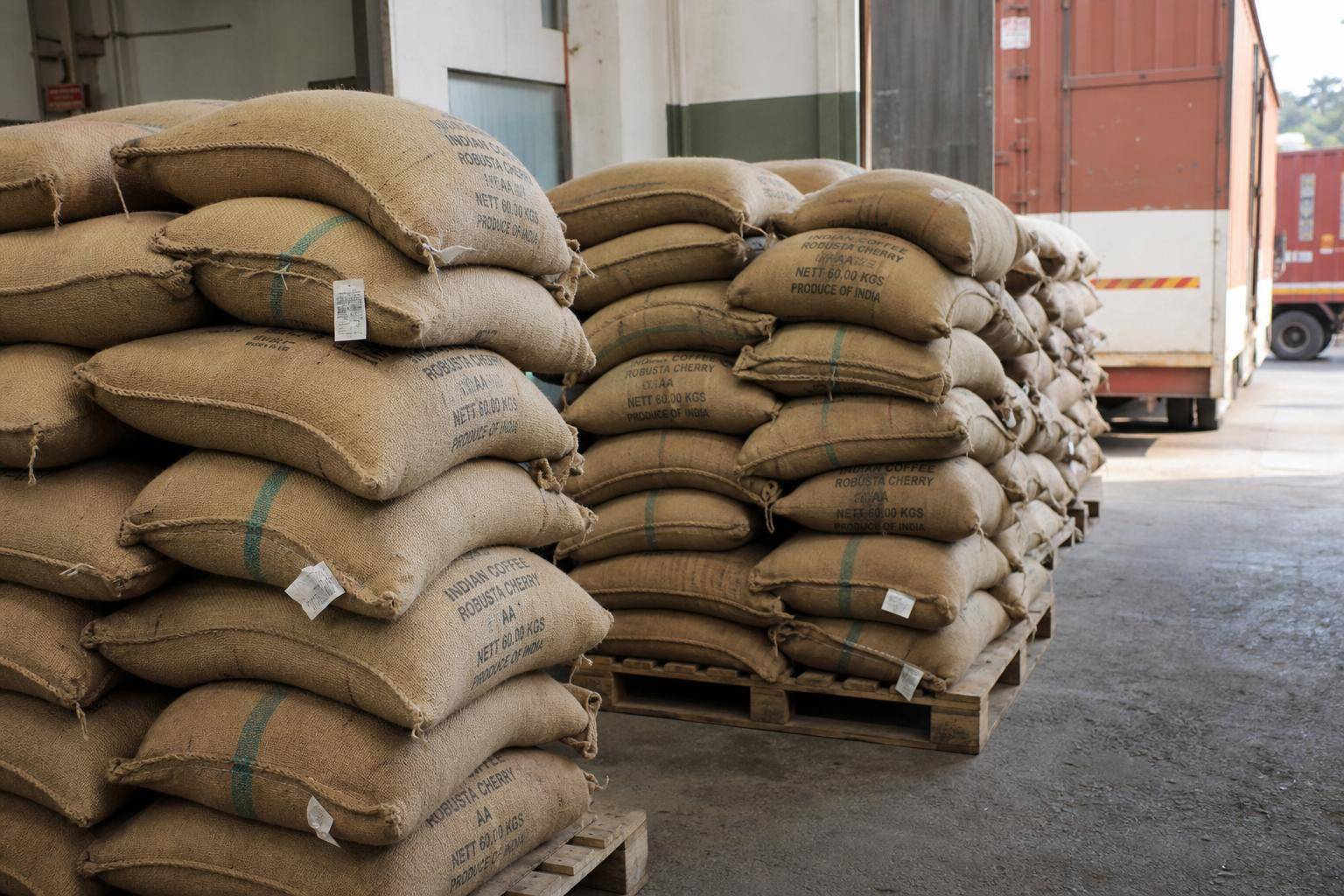
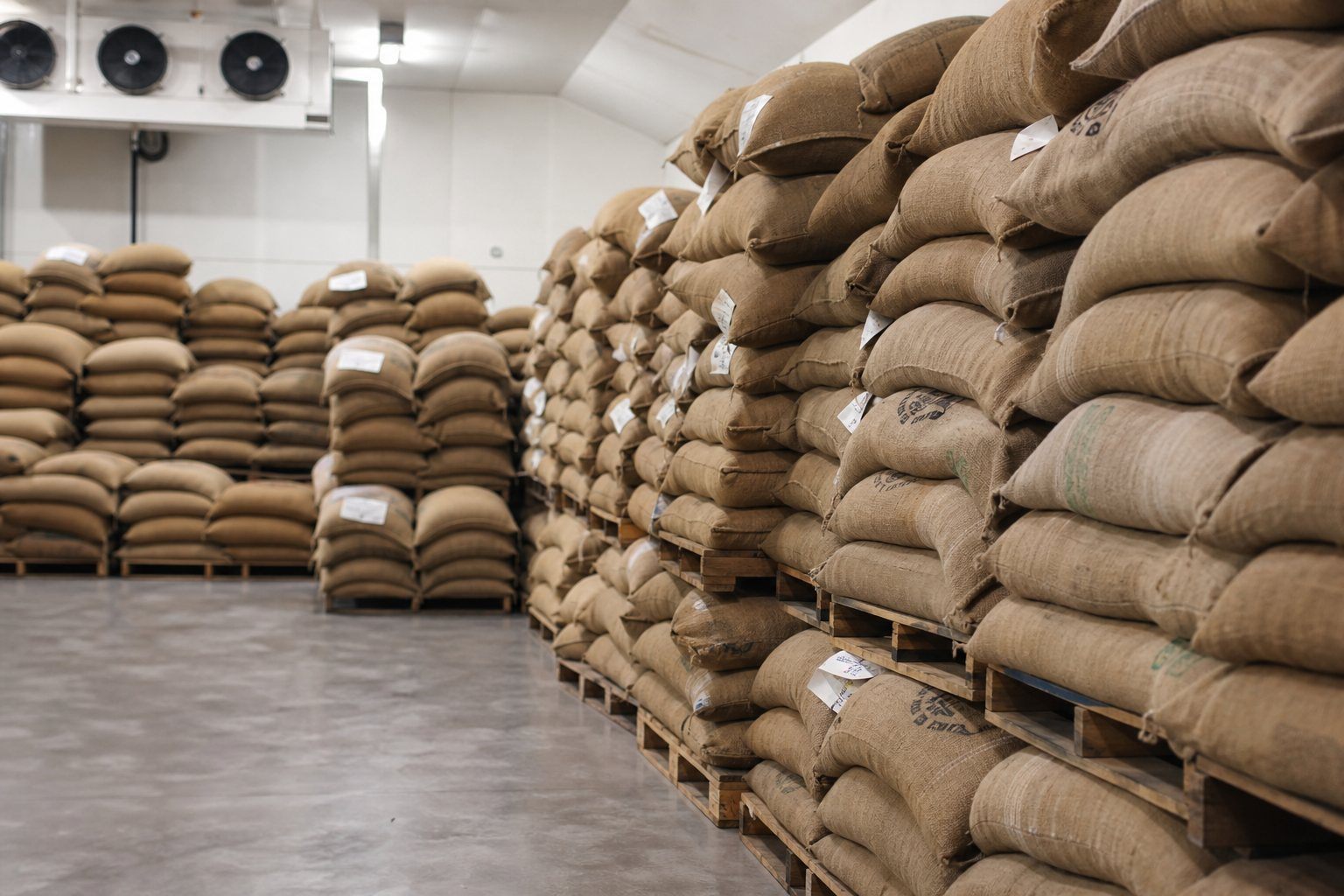
GrainPro liners and vacuum-sealed poly bags are standard for premium green coffee, protecting cup quality against moisture and off-flavours during transit. Organic-certified coffee requires handling segregation that maintains chain-of-custody integrity throughout packing. Commodity multiwall jute bags without liners are inappropriate for premium specialty positioning and risk moisture-related cup defects on arrival.
Every packaging unit should be labelled with lot number, grade, net weight, harvest date, and estate or curing-works name where applicable — consistent, bag-by-bag, with the same details on the invoice, COA, and organic transaction certificate.
Comparison table
Swipe →
Data table — swipe horizontally on small screens
| Packaging Format | Typical Unit | Notes |
|---|---|---|
| GrainPro-lined jute bag | 30–60 kg net | Standard for specialty and Monsooned Malabar bulk |
| Vacuum-sealed poly bag (micro-lot) | 1–25 kg | Preserves cup character for small competition-grade lots |
| Retail foil pouch / valve bag | Buyer-defined SKU | Private-label organic and specialty retail |
| Certified organic segregated pallet | Lot-dependent | Chain-of-custody integrity maintained through storage |
Container Loading Details
Export Tip
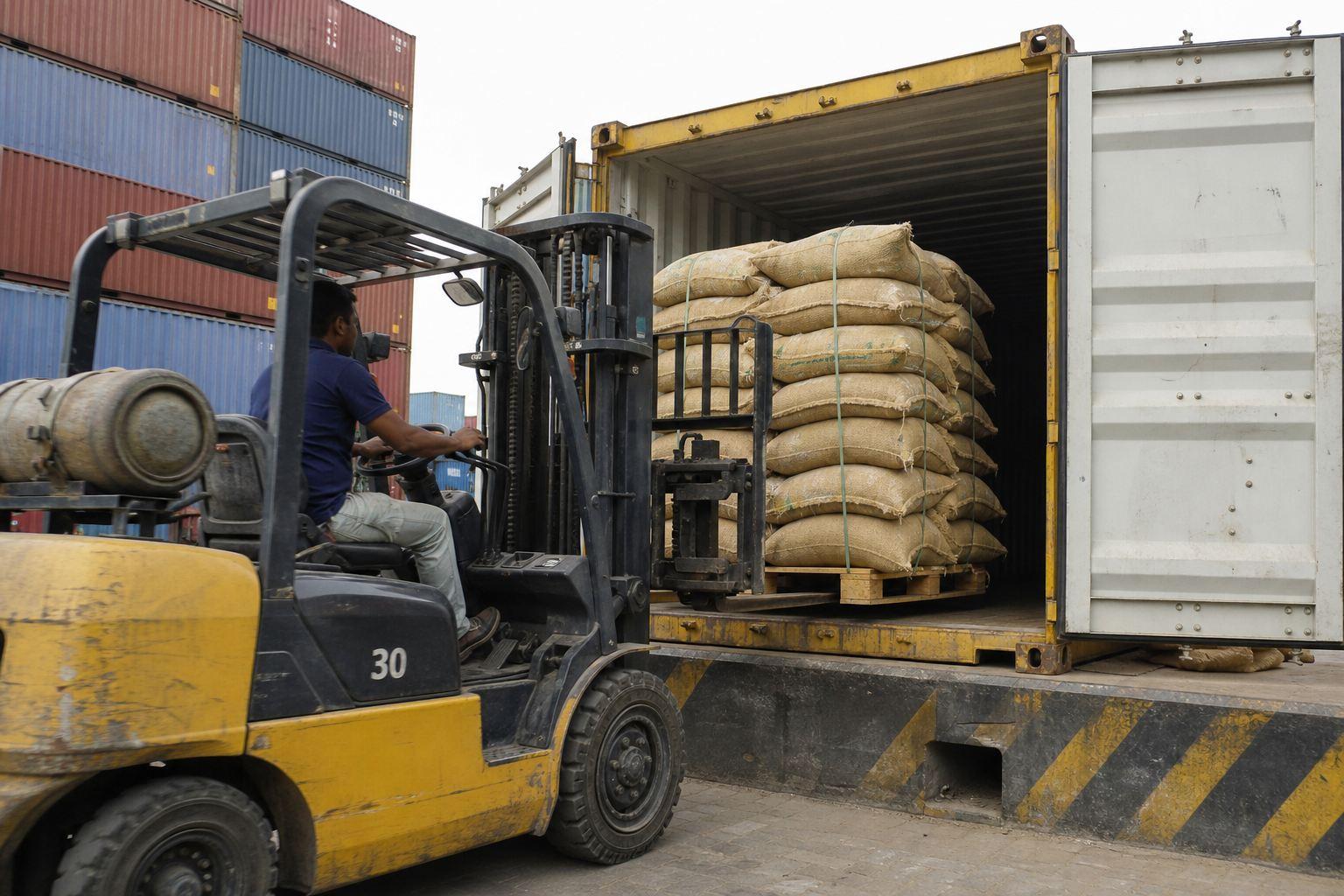
Specialty lots rarely fill a container alone; LCL consolidation with compatible SKUs is common, and micro-lots frequently move by air rather than sea. Bags are stacked with additional care for GrainPro and vacuum-sealed packaging to prevent puncture and crushing. Desiccant and humidity control matter more here than in bulk Robusta loading, since delicate single-origin lots are more susceptible to moisture ingress and flavour taint during transit.
For estates running both a commodity Robusta line and a certified organic or Monsooned Malabar line, maintain physically separate stuffing and stacking zones — co-mingling certified and non-certified pallets in the same container, even briefly, can compromise an organic chain-of-custody claim.
Comparison table
Swipe →
Data table — swipe horizontally on small screens
| Shipment Type | Typical Load | Note |
|---|---|---|
| LCL specialty consolidation | 2–5 MT typical | Common for single-estate and organic trial programmes |
| Air freight micro-lot | 30 kg–1 MT | Urgent competition-grade or seasonal allocation |
| 20 ft FCL (mixed specialty) | ~15–18 MT (lighter stow for delicate packaging) | Established multi-SKU specialty programmes |
Shipping Methods
Export Tip
FOB Chennai or Cochin is standard for sea freight bulk specialty; CIF or DAP suits established retail buyers who want landed-price simplicity. Air freight is common for urgent micro-lot or competition-grade Arabica allocations to USA and Japan buyers who need product on shelf within a tight seasonal window, despite the higher per-kilogram freight cost.
Organic and Monsooned Malabar shipments should build in extra time for lot-specific transaction certificate and curing-works documentation processing before booking freight — a certificate that is not ready on cargo cutoff day cannot usually be expedited, regardless of vessel schedule flexibility.
Comparison table
Swipe →
Data table — swipe horizontally on small screens
| Incoterm | Best Fit | Documentation Note |
|---|---|---|
| FOB Chennai/Cochin | Established buyers managing own freight | Standard for bulk specialty and Monsooned Malabar |
| CIF / DAP | Retail buyers wanting landed-price simplicity | Common for organic private-label programmes |
| Air freight (any Incoterm) | Urgent micro-lot/competition-grade orders | Higher per-kg cost; faster shelf availability |
Certifications
Compliance Notes
Certification choice must be driven by target export market and product claim. The wrong certification for the destination market creates compliance rejections that damage buyer relationships. NPOP is India's national organic standard, recognised by the EU for equivalence on most organic products; it covers estate cultivation practices, prohibition of synthetic inputs, curing-works standards, and chain-of-custody. Accredited certifiers such as INDOCERT, LACON, IMO, ECOCERT India, and OneCert Asia conduct annual inspections. USDA NOP certification is required for organic label claims on coffee sold in the USA retail market — NPOP alone does not satisfy this. EU Organic recognition generally relies on NPOP equivalence, but the full certification chain, including the importer of record, must be maintained for EU Organic logo claims.
Monsooned Malabar does not carry a legal Geographical Indication in the same statutory sense as some other origin products, but buyer trust depends entirely on documented process authenticity: curing-works location on the Malabar coast, monsoon exposure duration, batch and lot records, and consistent cupping evidence across shipments. Rainforest Alliance and Fairtrade add commercial value in retailer ESG sourcing and mission-driven specialty brands, particularly for Araku Valley tribal-grown programmes, but neither replaces organic certification.
Comparison table
Swipe →
Data table — swipe horizontally on small screens
| Certification / Authenticity | Primary Market | Typical Timeline | Approximate Annual Cost Range |
|---|---|---|---|
| NPOP Organic | India base + EU equivalence + general organic claims | 2–3 years conversion + annual audit | ₹80,000–₹4,00,000 depending on estate size and certifier |
| USDA NOP | USA organic retail and food service | 2–3 years conversion + annual audit | $3,000–$12,000 approximate |
| EU Organic | EU retail and private label | 2–3 years conversion + annual audit | €2,000–€8,000 approximate |
| Monsooned Malabar authenticity | Global specialty positioning | Ongoing documentation discipline | Included in curing-works compliance costs |
| Rainforest Alliance | EU, USA retail chains | 12–24 months + annual audit | Varies by estate scale |
| Fairtrade | EU, USA, Canada premium retail | 12–18 months setup + annual audit | Varies by programme and scale |
Buyer Requirements
Buyer Requirements
Specialty buyers evaluate suppliers on four dimensions before placing trial orders: grading integrity, certification and traceability readiness, communication reliability, and supply continuity across seasons. Price enters the conversation only after these filters pass — leading with a discount before documentation is ready signals the opposite of what a premium buyer wants to see.
Estate mark on invoice, packing list, and bag labels must match the estate that produced the coffee. Processing method and harvest date documentation matters for single-estate and Monsooned Malabar programmes. Organic buyers expect transaction certificates linking the shipped lot to certified estate batches. Cupping reports demonstrating lot consistency support repeat-order confidence.
Comparison table
Swipe →
Data table — swipe horizontally on small screens
| Process Step | Specialty / Organic Requirement | Commodity Robusta Baseline |
|---|---|---|
| Estate sourcing | Certified organic estate or verified estate mark | Curing-works or bulk contract sourcing |
| Quality approval | Cupping against buyer spec; processing documentation | Defect count and screen consistency |
| Packaging | GrainPro liners, vacuum packs, retail formats | Standard jute bags with basic liner |
| Certification docs | NPOP / NOP / EU Organic transaction certificate per lot | Standard COA only |
| Origin claims | Curing-works traceability for Monsooned Malabar; estate mark on invoice | Origin statement only |
| MOQ | 500 kg–3 MT typical | 5–100+ MT |
Country-wise Opportunities
Market Snapshot
Premium coffee demand intensity and certification requirements differ significantly by destination. Match your programme investment to the requirements and margins of your primary target market.
Indicative premium positioning vs commodity baseline (varies by estate, processing, and market)
Swipe →
Data table — swipe horizontally on small screens
| Category | FOB Premium vs Commodity Robusta | Primary Value Driver |
|---|---|---|
| Single-estate Arabica (Coorg/Chikmagalur) | 2–4× commodity Robusta reference | Cup character, estate identity |
| Monsooned Malabar | 3–8× commodity Robusta reference | Curing authenticity, low-acid character |
| Araku Valley organic | 2–5× commodity Robusta reference | Organic, altitude, social-impact story |
| NPOP organic Arabica/Robusta | +25–70% over conventional specialty | Certification and transaction certs |
| Micro-lot competition-grade | 5–10× or price-on-request | Cupping score, rarity, direct-trade story |
Germany and EU
Germany is one of the EU's largest specialty and organic coffee markets and a primary gateway for continental distribution. NPOP-EU equivalence eases organic import documentation, but EU Organic logo requirements mean the full certification chain must be maintained through the importer of record. German specialty buyers conduct thorough due diligence — cupping evaluation, pesticide panels, organic transaction certificate verification, and Monsooned Malabar curing-works checks are standard before vendor approval.
USA and Canada
The USA specialty coffee market has expanded through D2C roasters, specialty coffee shops, natural food retail, and premium supermarket ranges. USDA NOP certification is required for organic label claims. Monsooned Malabar and single-estate Arabica programmes attract USA buyers seeking differentiated origin stories. Canada follows similar organic and specialty patterns with CFIA import requirements.
Japan
Japan is a high-value import market with sophisticated buyer expectations on purity, pesticide residue profiles, and cup character. Japanese MRL standards are among the world's strictest — compliance testing before first shipment is essential. Monsooned Malabar and Indian single-estate Arabica have premium positioning in Japanese specialty channels, though relationship-building cycles are long and quality consistency across multiple shipments is the real conversion factor.
Scandinavia and Northern Europe
Scandinavian countries — Norway, Sweden, Denmark, Finland — have some of the highest per-capita specialty coffee consumption globally and a well-established buyer base for unusual processing methods, making them a natural fit for Monsooned Malabar. Organic and traceable single-origin lots are baseline expectations rather than differentiators in this market, and buyers respond well to detailed process transparency.
Australia and Gulf Premium Retail
Australia's specialty and organic food import channels are growing, with biosecurity-strict import documentation; vacuum barriers and GrainPro liners matter more given freight distance. Beyond commodity Robusta volume, Dubai and Abu Dhabi host growing premium retail and hospitality segments seeking single-estate Arabica, Monsooned Malabar, and organic coffee for luxury hotel programmes and high-end grocery.
Expert Insight #1 — Saurabh Mittal, Founder, Altus Exports
Expert Insight Box
Premium coffee buyers evaluate Indian suppliers on authenticity before aroma. Can you prove Monsooned Malabar curing-works traceability? Can you produce organic transaction certificates for the exact lot shipped? Does the estate mark on the bag match the invoice and COA? Is the cupping profile consistent with the sample that won the trial order? These questions precede price negotiation in every serious specialty sourcing discussion.
For organic coffee export from India specifically, buyers expect NPOP as a minimum foundation, EU Organic or USDA NOP where retail label claims are made, pesticide-residue panels within destination MRL, and annual audit access for larger programmes. For single-estate specialty, buyers expect estate-level storytelling backed by verifiable facts — altitude, shade-canopy composition, processing method, harvest date — not marketing adjectives unsupported by data.
Sourcing Checklist
Checklist
- Certification requested by exact name (NPOP, USDA NOP, EU Organic) rather than a generic "organic" request.
- Estate mark and processing method requested on invoice, COA, and bag label before the first sample.
- Cupping sample requested from the actual lot intended for shipment, not a retained reference sample.
- Pesticide residue panel requested for the destination market's specific MRL requirements.
- Curing-works traceability documentation requested for any SKU sold under the Monsooned Malabar name.
Buyer Checklist
Checklist
- Request the certificate and verify certifier accreditation directly rather than accepting an "organic" claim at face value.
- Confirm USDA NOP is separately in place before quoting USA organic retail pricing — NPOP alone does not satisfy this.
- Request batch-level curing-works documentation matched to the specific lot before buying Monsooned Malabar-labelled coffee.
- Always request the cupping sample from the actual shipping lot, not a retained or season-average sample.
- Ask for packing, testing, and certification costs itemised separately from the base FOB to understand true landed economics.
Exporter Checklist
Checklist
- NPOP certification current, with certifier and scope covering both estate and curing works.
- Coffee Board exporter registration current for the estate or merchant exporter.
- Evidence pack prepared before outreach: estate profile, certification copies, COA template, cupping report format.
- Premium packaging specifications (GrainPro liners, vacuum packs) engineered before first shipment.
- Harvest allocation calendar documented and communicated honestly to avoid over-promising seasonal volume.
Compliance Checklist
Checklist
Compliance Notes
- Organic transaction certificate issued per shipment, matching the exact lot and batch shipped.
- EU Organic logo claims verified against full chain-of-custody certification, including the importer of record.
- Monsooned Malabar curing records matched to the specific batch stated on shipping documents.
- Pesticide residue panel completed and within destination MRL before booking freight for EU, UK, USA, or Japan.
- Retail label compliance reviewed for the specific destination market before print run commitment.
Common Buyer Mistakes
Common Mistakes Box
- Accepting an "organic" claim without checking the specific certification name and scope — Solution: request the certificate and verify certifier accreditation directly.
- Assuming NPOP automatically satisfies USA organic retail claims — Solution: confirm USDA NOP is separately in place before quoting USA organic pricing.
- Buying Monsooned Malabar-labelled coffee without curing-works verification — Solution: request batch-level curing-works documentation matched to the specific lot.
- Approving a retained or season-average sample instead of a lot-specific cupping sample — Solution: always request the sample from the actual shipping lot.
- Underestimating small-lot packing costs in specialty pricing — Solution: ask for packing costs itemised separately from the base FOB.
- Ignoring harvest allocation limits and expecting year-round supply of a single-estate lot — Solution: plan purchase orders around the estate's documented harvest calendar.
- Skipping a destination-specific pesticide residue panel — Solution: require panel results matched to your market's MRL before shipment booking.
Expert Insight #2 — Saurabh Mittal, Founder, Altus Exports
Expert Insight Box
The exporters who build durable premium programmes treat margin modelling as seriously as cupping evaluation. Run internal dual costing on every quote: what would this lot earn as undifferentiated commodity Robusta, and what does it actually earn once certification, testing, packaging, and traceability documentation costs are included and passed through transparently? Exporters who skip this exercise routinely under-price their organic and Monsooned Malabar lines out of fear of losing a deal — and in doing so, subsidise the buyer's margin at the estate's expense.
For estates and curing works entering export for the first time, sequence the investment: certification and traceability infrastructure first, evidence pack and cupping-sample logistics second, buyer outreach last. Exporters who reverse this order — pitching a premium story before the certificate exists — burn buyer trust that is expensive to rebuild once a first sample fails to match the pitch.
Future Market Trends
Key Statistics
Through 2030, EU organic import targets, USA specialty coffee market expansion, and Japanese premium import growth will sustain demand for certified and estate-origin Indian coffee. Interest in rare processing methods is likely to strengthen Monsooned Malabar's specialty position as roasters seek differentiated single-origin stories beyond the usual Ethiopia-Colombia-Brazil rotation. Digital product passports and blockchain-linked traceability will move from pilot to expectation for larger EU retail programmes, meaning estates that build digital lot records now will face less retrofit cost later.
India-specific dynamics include growing NPOP certification coverage in Chikmagalur, Wayanad, and Araku Valley estates; Coffee Board promotion of value-added and specialty export; rising laboratory capacity for pesticide-residue testing; and increasing direct estate-to-importer relationships bypassing opaque broker chains. The opportunity gap between India's specialty potential and its current certified export volume remains wide — early movers who invest in certification infrastructure now will compound advantage as standards harden.
Conclusion
- Next step: identify your primary estate or curing-works partner and begin NPOP certifier engagement; build curing-works and estate-mark documentation for Monsooned Malabar and single-estate programmes.
- Read find international buyers for coffee, coffee export documentation checklist, Coffee Board registration benefits for exporters, and trade shows for coffee exporters.
- Also explore most demanded Indian coffee by country and how to export coffee from India.
- Explore merchant exporter, export products from India, global sourcing partner India, and agriculture & food products industry.
Organic and specialty coffee export from India represents one of the most defensible premium positions in Indian agricultural export — when certification, traceability, and cupping infrastructure match the quality of the underlying estates. Monsooned Malabar, single-estate Coorg, Chikmagalur, Wayanad, and Nilgiri Arabica, and certified organic Araku Valley programmes give exporters origin stories that are genuinely rare at global scale, and margins in certified specialty programmes substantially exceed commodity Robusta economics when certification costs are priced correctly into FOB.
Actionable recommendations: select your primary origin and certification pathway, engage an NPOP-accredited certifier immediately if organic positioning is the target, build your evidence pack before buyer outreach, and target EU organic or USA specialty channels with full documentation readiness. Altus Exports supports international buyers and Indian coffee exporters building organic and specialty programmes that deliver on every claim from estate to shipment.