
Coffee Board Registration Benefits for Exporters in India
By Saurabh Mittal, Founder, Altus Exports
A complete guide to Coffee Board of India registration for exporters — the RCMC, curing works licensing under the Coffee Act, exporter credentials, application process, fees, and how registration builds buyer confidence in Italy, Germany, the USA, and Japan.
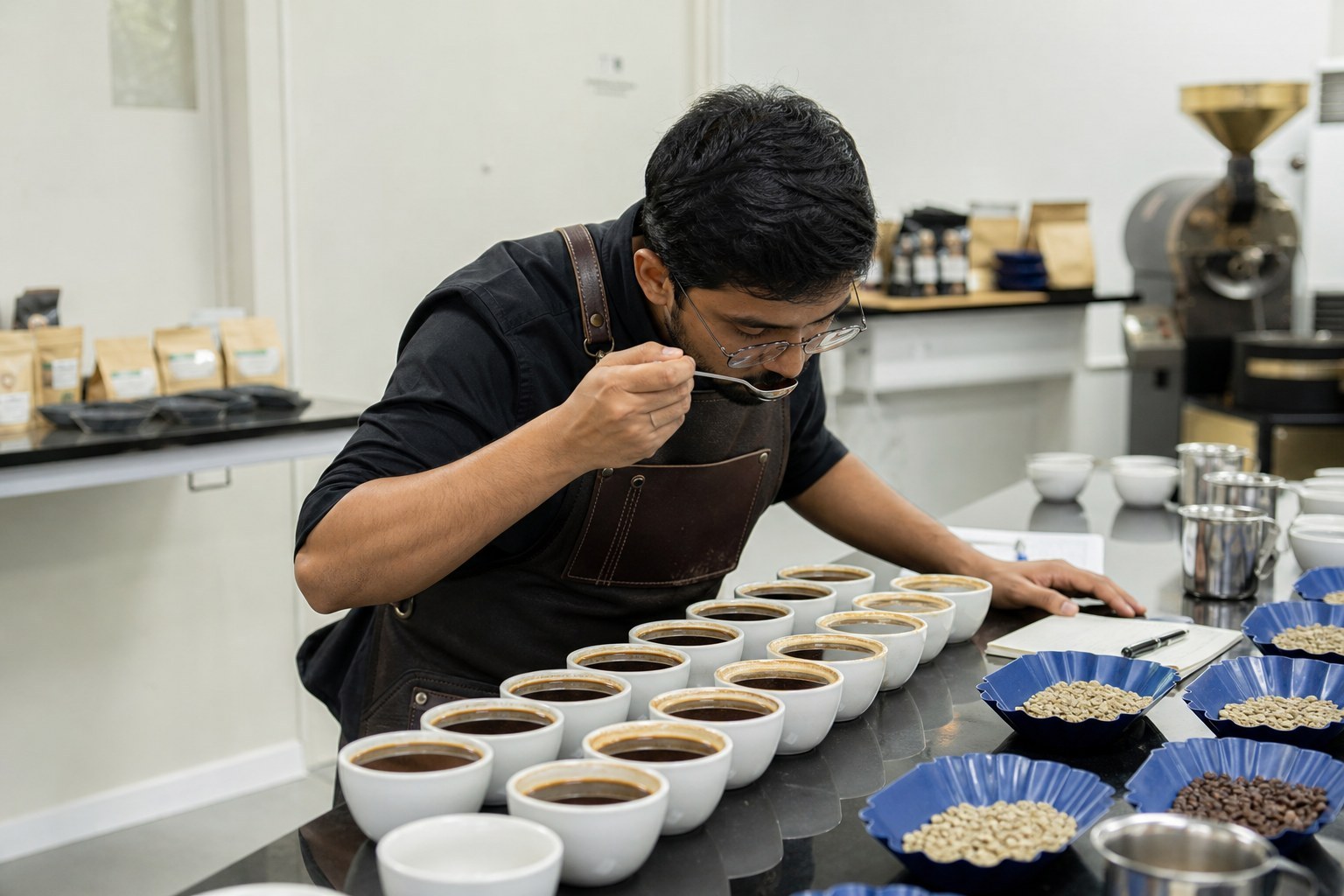
Growing excellent coffee and being export-ready are two different achievements, and the gap between them is exactly where Coffee Board of India registration sits. India's coffee-growing belts across Kodagu (Coorg), Chikmagalur, Wayanad, the Nilgiris, and the Araku Valley produce genuinely competitive Robusta, Arabica, and the distinctive monsoon Malabar grade — but none of that reaches an international roaster's roastery without an exporter who can prove, on paper, that they are legally and credibly positioned to ship it.
The Coffee Board of India is the statutory body under the Ministry of Commerce and Industry mandated to regulate and promote coffee exports specifically. Registration with the Coffee Board is the foundational credential in that process: it unlocks the Registration-cum-Membership Certificate (RCMC), sits alongside curing works licensing under the Coffee Act, and gives international buyers the institutional signal they check first during vendor onboarding — often before they ask about cupping score or price.
This guide covers what the Coffee Board is and does, why registration is mandatory rather than optional for coffee specifically, who should register and under which category, the step-by-step application process through the NSWS-linked portal, documents and fees, curing works licensing under Section 28 of the Coffee Act, and how registered exporters convert that institutional credibility into faster buyer onboarding. Pair this guide with How to Export Coffee from India and the Coffee Export Documentation Checklist for the full compliance stack. Always confirm current fees and portal instructions on coffeeboard.gov.in and the NSWS portal, as administrative workflows are updated periodically.
Key Takeaways
Summary Box
Executive Summary
Summary Box
Coffee Board of India registration is the entry credential that converts a curing works or estate with good coffee into a legitimate, buyer-facing exporter. It is a legal prerequisite for commercial export under the Coffee Act, and it is the first document most serious international roasters and importers ask to see during vendor onboarding — often before they ask about your cupping score.
The practical value stacks in three layers. Legally, registration and RCMC make commercial export possible at all. Commercially, membership unlocks export promotion council benefits, e-auction access, and government trade-fair support. Reputationally, a current RCMC signals to buyers that you operate inside a recognised regulatory framework rather than outside it — a signal that shortens the trust-building cycle that would otherwise take months of unverified email exchanges.
This guide treats registration as infrastructure to build once and maintain diligently, not a one-time hurdle to clear and forget. Exporters who diary renewals, pair RCMC with FSSAI and curing works licensing, and use e-auction and market intelligence access actively extract far more commercial value from their Coffee Board membership than exporters who file once and never revisit it.
Market Size & Industry Overview
Key Statistics
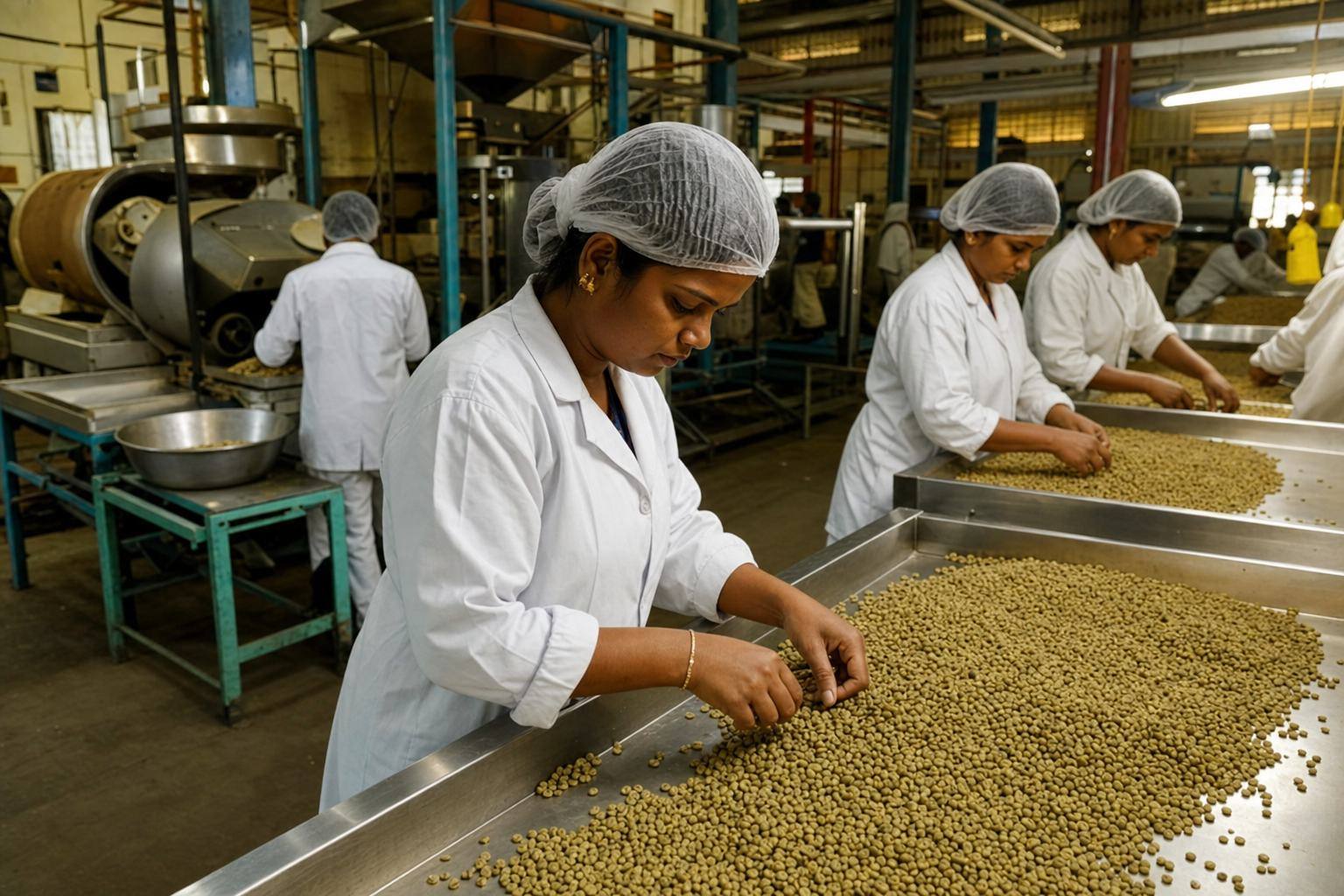
India produces roughly 360,000–370,000 tonnes in 2024–25 (Coffee Board final crop estimate ~363,500 tonnes), placing it as the world's 7th-largest coffee producer, with FY 2024–25 export value about US$1.8 billion (Coffee Board). Robusta accounts for roughly two-thirds of production, with Arabica and the distinctive monsoon Malabar process serving premium channels mainly in Italy, Germany, and other EU markets. This scale is precisely why Coffee Board registration carries real institutional weight — buyers sourcing from a country that exports coffee at this volume expect the exporting entity to sit inside a recognised regulatory framework, not outside it.
The Coffee Board of India, established under the Coffee Act, 1942, and headquartered in Bengaluru, operates as both a regulatory registration body and a commercial facilitation platform for the sector. It issues the RCMC for registered coffee exporters, licenses curing works under Section 28 of the Coffee Act, runs an e-auction platform for price discovery and standardised lot grading, organises participation in international trade fairs, and publishes periodic export statistics used by DGCIS and industry analysts.
India Coffee Export Landscape Snapshot Relevant to Registration
Swipe →
Data table — swipe horizontally on small screens
| Dimension | Approximate Figure | Relevance to Registration |
|---|---|---|
| Global production rank | 7th-largest producer globally (Coffee Board / USDA) | High buyer scrutiny of exporter credentials given market scale |
| Annual production | ~360,000–370,000 tonnes (2024–25) | Registration applies across both Robusta (~65–70%) and Arabica (~30–35%) supply |
| Indicative export value | about US$1.8 billion (FY 2024–25, Coffee Board) | Confirms the institutional stakes attached to registration compliance |
| HS classification | HS 0901 (green/roasted); HS 2101 (instant/soluble) | RCMC and product category selection must align with HS classification on shipping bills |
| Regulatory body | Coffee Board of India (Bengaluru) | Sole statutory authority for coffee exporter registration and curing works licensing |
Why the Dual Role Matters for New Exporters
Because the Coffee Board is both regulator and market promoter, serious exporters treat registration as essential infrastructure rather than bureaucratic overhead. An exporter without it faces longer buyer onboarding cycles, harder documentation pathways at customs, and reduced eligibility for government export promotion benefits — registration is the beginning of the compliance stack, not the end of it.
Export Statistics
Key Statistics
India exports roughly 300,000–400,000 tonnes of coffee annually across recent crop years, reaching 50 or more countries, with every shipment regardless of grade or destination requiring the exporting entity to hold a current RCMC referenced on the shipping bill. Green coffee, predominantly Robusta, makes up the largest share of export volume, while instant/soluble coffee under HS 2101 contributes a disproportionately large share of value relative to its tonnage.
For a new exporter, this scale matters practically: buyers in high-volume destinations such as Italy and Belgium deal with dozens of Indian suppliers and use RCMC status as a fast, low-cost filter before deeper diligence begins. An exporter who cannot produce current registration evidence immediately signals higher risk relative to competitors who can.
Indicative Export Composition and Registration Relevance
Swipe →
Data table — swipe horizontally on small screens
| Coffee Type | Approx. Export Share (Volume) | Typical HS Heading | Registration Note |
|---|---|---|---|
| Green Robusta | ~55–60% | 0901.11 | RCMC scope must cover green coffee export category |
| Green Arabica (incl. monsoon Malabar) | ~20–25% | 0901.11 | GI-origin claims require additional documentation alongside RCMC |
| Roasted coffee | ~2–4% | 0901.21 | Manufacturer-exporter RCMC category typically applies |
| Instant / soluble coffee | ~12–18% (larger value share) | 2101.11 / 2101.12 | Confirm product category declared at registration matches actual export line |
Import Statistics
Key Statistics
Destination-market scrutiny of Coffee Board registration varies by buyer type. Italian and Belgian trading houses, dealing in high commodity volumes, tend to verify RCMC status as a baseline onboarding step before moving to price negotiation. German and Japanese specialty buyers layer RCMC verification alongside deeper cupping, traceability, and — where relevant — organic or GI documentation checks. US buyers increasingly expect RCMC evidence alongside FDA-aligned food safety documentation as part of a broader vendor risk assessment.
Exporters targeting Russia and CIS markets should note that payment corridor complexity in some periods has made institutional credentials like RCMC even more important as a trust signal, since buyers cannot always rely on conventional banking-relationship verification alone. Reading destination-side import data alongside your own registration status helps you anticipate how quickly a given market will move from first inquiry to first purchase order.
How Destination Markets Use RCMC Status During Import Onboarding
Swipe →
Data table — swipe horizontally on small screens
| Destination Market | How RCMC Status Is Used | Practical Note |
|---|---|---|
| Italy | Baseline vendor onboarding filter before price negotiation | Have RCMC ready to share on first serious inquiry |
| Germany | Layered alongside cupping, organic, and traceability checks | Pair RCMC with NPOP/EU Organic and GI documentation |
| Belgium | Standard trading-desk onboarding requirement | Antwerp traders move fast once documentation is confirmed clean |
| USA | Combined with FDA-aligned food safety documentation | Prepare a consolidated credential pack, not scattered certificates |
| Japan | Part of a broader consistency and traceability evaluation | Registration alone will not close a deal, but its absence will stall one |
Product Categories / Variants
Summary Box
Coffee Board registration scope must match the actual product categories you intend to export — green coffee (Robusta and Arabica), roasted coffee, and instant/soluble coffee — plus curing and processing operations that convert cherry into export-ready product. Selecting the wrong registration category is a common, avoidable mistake that later complicates scheme eligibility or buyer documentation requests.
Exporter RCMC
Applies to merchant exporters and trading houses who buy finished green, roasted, or instant coffee for export without owning the curing or roasting operation themselves.
Typical Scope
Green Robusta, green Arabica, roasted coffee, and instant coffee sourced from multiple curing works or roasters for consolidated export.
Manufacturer Exporter RCMC
Applies to roasters, curers, and processing units exporting their own output directly under their own name and registration.
Typical Scope
Roasted coffee, curing-works green coffee, and instant/soluble coffee produced and exported by the same registered entity.
Processing / Curing Works Registration
A separate registration under Section 28 of the Coffee Act for units handling cherry-to-green-coffee conversion — pulping, fermentation or dry-processing, hulling, and grading — distinct from any exporter-level RCMC held by the same or a related business.
Manufacturing Overview
Export Tip
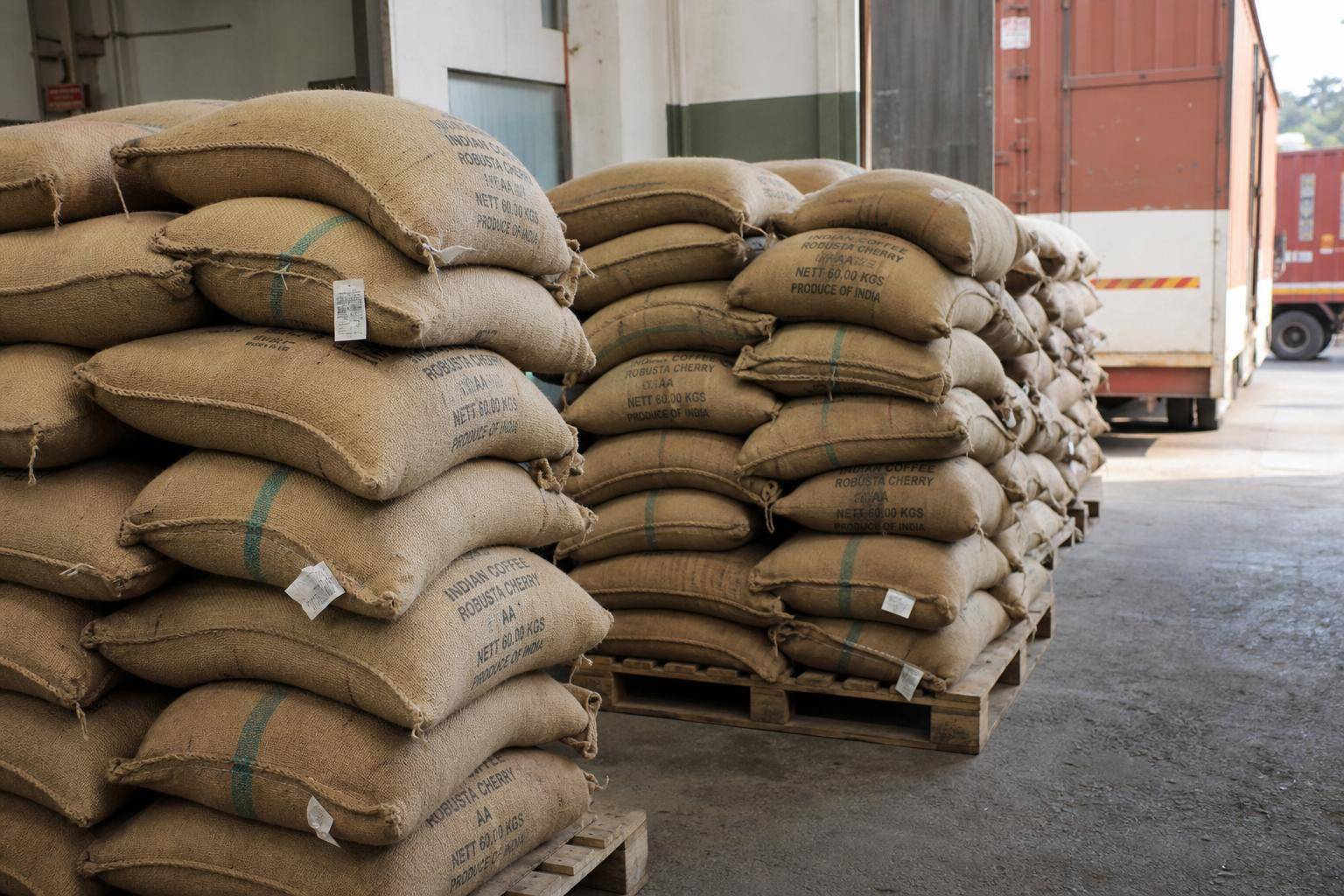
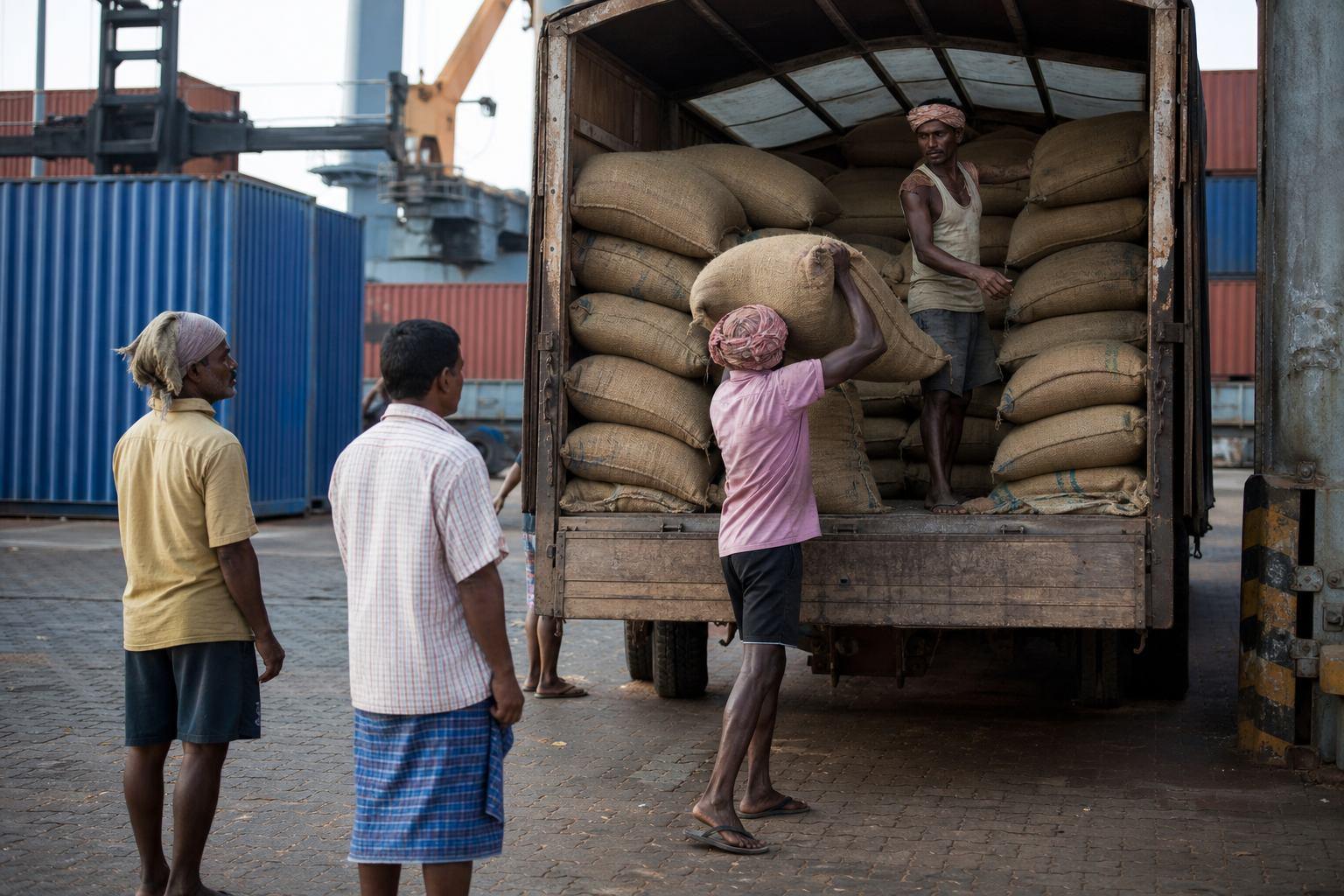
Registration status connects directly to the physical manufacturing chain it is meant to regulate. Curing works handle intake, pulping or dry-processing, hulling, grading, and moisture control — the stage where Coffee Act licensing under Section 28 applies. A business that both cures coffee and exports it should hold both credentials: exporter RCMC for the export transaction and curing works licensing for the processing operation itself.
This is a frequent gap in first-time applications. A curing works with a current RCMC but no verifiable Coffee Act licensing for its actual processing operations creates a documentation gap that sophisticated buyers notice during diligence, even when the coffee itself is well-processed. Align your registration filings to what your facility actually does, not to a simplified version of your business that omits the processing licence.
Pricing Analysis
Buyer Tip
Framed purely as a cost, Coffee Board registration is inexpensive relative to almost any other line item in a coffee export programme. Framed as a pricing and access lever, it is far more significant: RCMC status is frequently a precondition for buyers to even request a formal quotation, meaning an unregistered exporter is not competing on price at all — they are excluded from the conversation entirely. The relevant pricing comparison is not registration fee versus no registration fee, but registration fee versus the FOB value of every container you cannot legally ship or credibly quote without it.
Beyond the compliance gate, registration indirectly supports better pricing outcomes: e-auction access provides a transparent price-discovery benchmark that strengthens your negotiating position, and EPC or scheme eligibility can improve net realisation through incentive programmes that only registered, RCMC-holding exporters can access.
Coffee Board Registration Cost Planning Reference
Swipe →
Data table — swipe horizontally on small screens
| Cost Item | Typical Nature | Planning Note |
|---|---|---|
| Registration fee | One-time or periodic fee per current portal schedule | Historically cited around ₹5,000; verify live amount on portal |
| RCMC issuance/processing fee | Fee for RCMC certificate issuance | Historically cited around ₹1,000–₹6,200 depending on category; verify current schedule |
| Renewal fee | Periodic renewal per validity cycle | Diary renewal ahead of expiry; lapsing disrupts RCMC continuity |
| Curing works licence (Coffee Act Section 28) | Separate licence for processing/curing operations | Apply through the relevant Deputy Director of Quality Control |
| Cupping and quality infrastructure | Lab equipment, cupping training, reference samples | Budget separately; protects buyer trust more than registration alone |
MOQ Analysis
Buyer Tip
Coffee Board registration has no MOQ of its own — it is a legal and institutional credential, not a supply commitment. Its practical connection to MOQ is indirect but important: your declared product category and exporter type on the RCMC application should be consistent with the order sizes you plan to quote. An exporter registered purely as a curing works with no export-category scope will struggle to fulfil a buyer's direct FCL request without also holding exporter RCMC.
How Registration Category Should Match Your Typical Order Size
Swipe →
Data table — swipe horizontally on small screens
| Registration Category | Typical Order Size You Can Service | Alignment Note |
|---|---|---|
| Curing works only | Supply to merchant exporters, not direct buyer FCLs | Add exporter RCMC before quoting international buyers directly |
| Exporter RCMC (merchant) | Trial 5 MT through full 20ft FCL (~17–19 MT) | Consolidate multi-estate supply under one accountable registration |
| Manufacturer exporter RCMC | Trial lots through programme-scale FCL of own output | Ensure curing works licence and RCMC are both current |
| Small specialty / micro-lot exporter | 500 kg–1 MT trial, estate-dependent | Register product category accurately to avoid scheme mismatch |
Packaging Standards
Export Tip
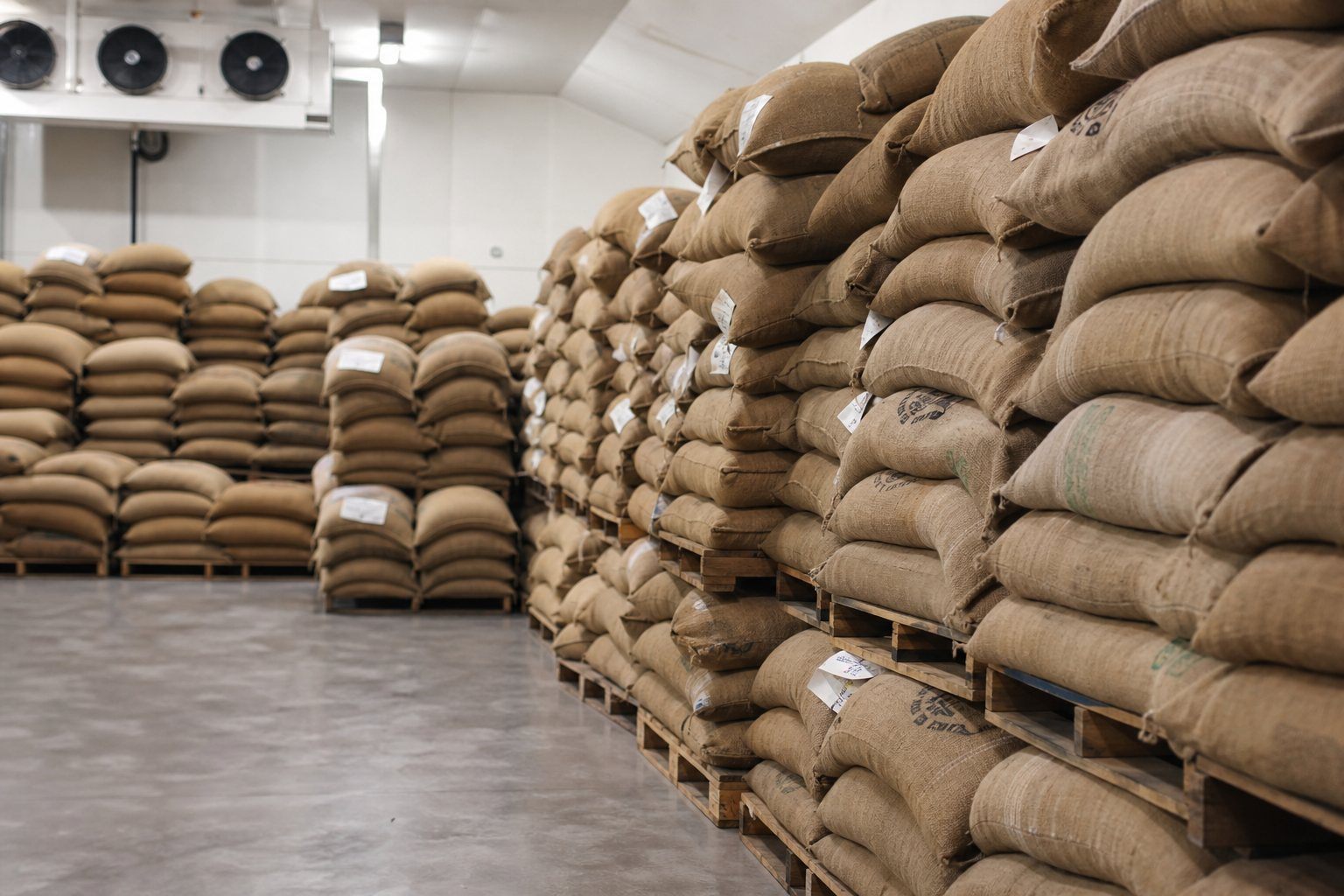
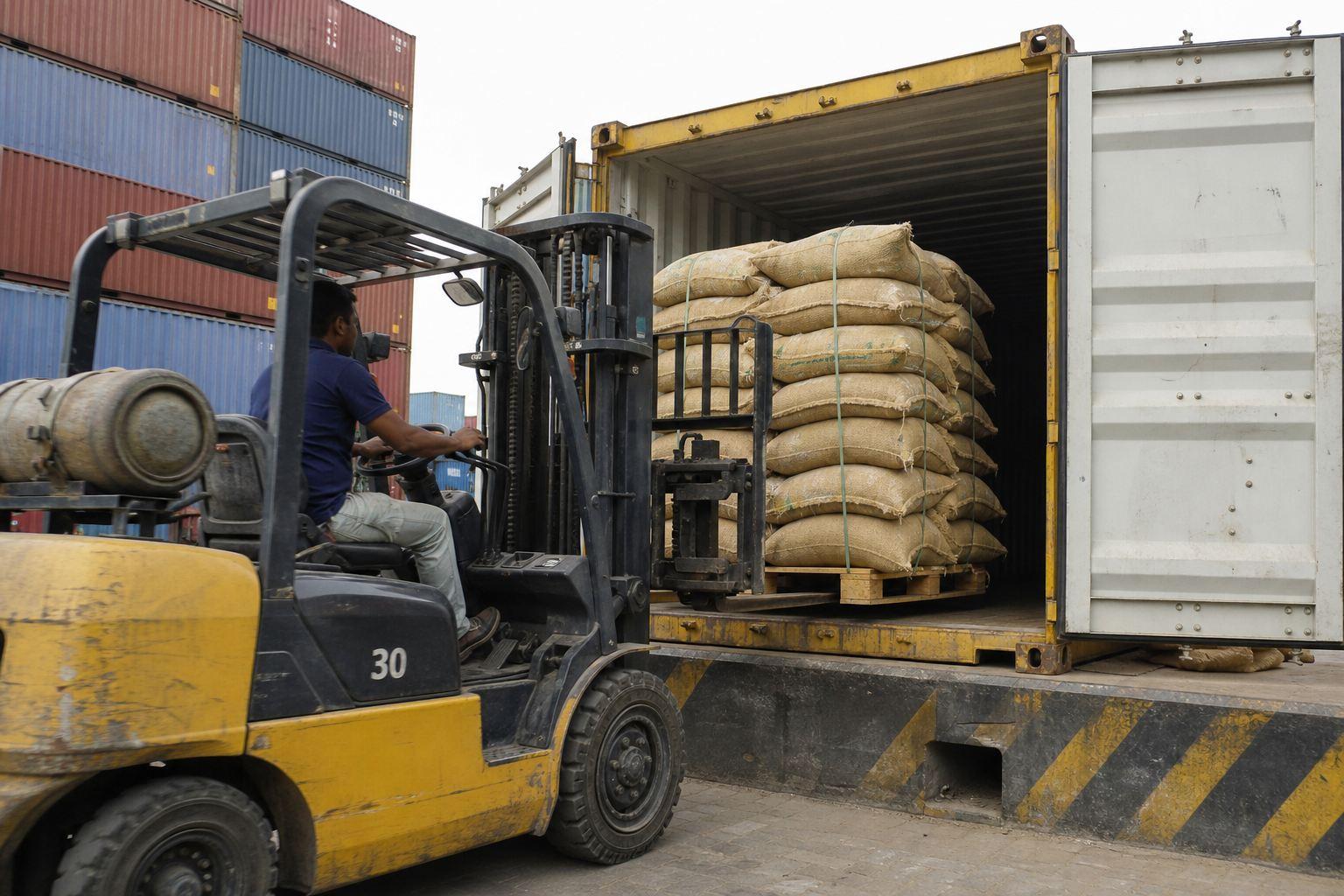
Coffee Board registration does not prescribe packaging formats directly, but registered exporters are expected to package and document lots consistently with the product category declared at registration. Bulk green coffee typically ships in 50–60 kg jute bags with GrainPro or vacuum liners; roasted and retail-ready formats require valve-sealed foil pouches or tins with label artwork compliance for the destination market.
Packaging Formats Aligned to Registered Export Categories
Swipe →
Data table — swipe horizontally on small screens
| Registered Category | Typical Packaging | Documentation Link |
|---|---|---|
| Green coffee export (Exporter/Manufacturer RCMC) | 50–60 kg jute bags with GrainPro or vacuum liners | Cupping sheet/COA and packing list must match lot marks |
| Roasted coffee export | Valve-sealed foil pouches, retail cartons | Roast date and batch code aligned with FSSAI-compliant labelling |
| Instant/soluble coffee export | Retail sachets, tins, or bulk drums | HS 2101 classification confirmed on invoice and shipping bill |
| Specialty/organic micro-lot | Smaller vacuum-sealed units | Organic transaction certificate referencing the exact SKU and lot |
Container Loading Details
Export Tip
A standard 20ft FCL of bagged green coffee typically carries roughly 17–19 MT depending on bag weight and stacking plan. Coffee Board registration does not affect container mechanics, but the shipping bill filed against your RCMC must accurately reflect the product category, HS sub-heading, and quantity being loaded — mismatches between the declared registration category and the actual cargo trigger customs queries independent of product quality.
Container Loading and Registration Documentation Alignment
Swipe →
Data table — swipe horizontally on small screens
| Container Type | Indicative Payload | Registration Alignment Check |
|---|---|---|
| 20ft FCL, bagged green coffee | ~17–19 MT | HS 0901 sub-heading on shipping bill matches RCMC product category |
| 40ft FCL, retail cartons | Volume-driven | Roasted/retail category declared at registration matches cargo |
| LCL trial shipment | Sub-container | Confirm RCMC covers export category before first trial dispatch |
Shipping Methods
Export Tip
Sea freight in FCL or LCL form is the default for bulk green coffee, with New Mangalore, Cochin, Chennai, and Nhava Sheva as the primary load ports. Coffee Board registration does not dictate shipping method, but the RCMC reference number and product category appear on the shipping bill filed through ICEGATE for every mode of transport, so registration currency should be confirmed before every sailing, not just at the start of an export relationship.
Certifications
Compliance Notes
Coffee Board registration sits within a small stack of credentials that together define export readiness. Understanding how each piece fits keeps a first-time exporter from treating registration as the entire compliance job.
IEC (Import Export Code)
Issued by DGFT, the IEC is the foundational credential for any commercial export from India. Coffee Board registration cannot proceed without a valid IEC, and the NSWS-linked filing pathway uses IEC as the applicant identity.
FSSAI Licence
Coffee is a food product, so FSSAI registration or licence is required alongside Coffee Board membership. Export-oriented coffee businesses typically require a Central FSSAI licence; both credentials are usually requested together during buyer onboarding.
Coffee Board RCMC
The primary sector-specific credential, confirming registration and membership status with the statutory body that regulates coffee exports.
Curing Works Licence (Coffee Act Section 28)
A separate licence for facilities converting cherry into export-ready green coffee, issued by the relevant Deputy Director of Quality Control and renewed on its own multi-year cycle independent of exporter RCMC.
Buyer Requirements
Buyer Requirements
- Current Coffee Board RCMC with entity name matching the quotation exactly
- FSSAI licence covering the curing, processing, or packing facility supplying the order
- IEC verifiable on the DGFT portal
- Curing works licence under the Coffee Act where the exporter also processes coffee
- Cupping sheet or certificate of analysis for the specific lot or grade being quoted
- Prior export document samples or references from buyers in similar destination markets
- Organic or GI-origin transaction certificates where those claims are made
International buyers conducting vendor onboarding for coffee typically request a consolidated credential pack, not scattered certificates emailed one at a time. Build this pack once and keep it current — it is the single fastest way to move a serious inquiry toward a sample request.
Country-wise Opportunities
Market Snapshot
Registration credibility does not carry identical weight everywhere. Understanding how each market actually uses RCMC status helps a newly registered exporter prioritise outreach and prepare the right supporting evidence for each conversation.
Registration Credibility by Destination Market
Swipe →
Data table — swipe horizontally on small screens
| Country | How RCMC Status Is Used | Practical Note |
|---|---|---|
| Italy | Baseline vendor onboarding filter | Have RCMC ready on first serious inquiry |
| Germany | Layered with cupping, organic, and traceability checks | Pair with NPOP/EU Organic and GI documentation |
| Belgium | Standard trading-desk requirement | Antwerp traders move fast once documentation is confirmed clean |
| Russia/CIS | Institutional trust signal amid payment corridor complexity | Substitutes partly for conventional banking verification |
| USA | Combined with FDA-aligned food safety documentation | Prepare one consolidated credential pack |
| UAE | Standard onboarding plus halal certification for retail | Confirm food import permit alignment |
| Japan / South Korea | Part of a broader consistency evaluation | Registration absence stalls deals even when cup quality is strong |
Italy
Italian roasting houses use RCMC as a baseline vendor onboarding filter before commodity price negotiation begins. Have registration evidence ready to share on the first serious inquiry from a roasting house rather than after a follow-up request.
Germany
German specialty and organic buyers layer RCMC verification alongside cupping, traceability, and certification checks. Pair your Coffee Board registration with NPOP or EU Organic documentation and GI evidence where relevant.
Belgium
Belgium's Antwerp trading desks treat RCMC as a standard onboarding requirement and move quickly once documentation is confirmed clean, given the market's high-volume commodity trading dynamics.
Russia
Amid payment corridor complexity in some periods, RCMC functions as an institutional trust signal that helps substitute for conventional banking-relationship verification with Russian and CIS buyers.
United States of America
US buyers combine RCMC evidence with FDA-aligned food safety documentation in a broader vendor risk review. Prepare a consolidated credential pack rather than scattered certificates sent across multiple emails.
United Arab Emirates
UAE trading houses and re-export hubs expect RCMC alongside standard food import permits and, for retail-bound lines, halal certification where the channel requires it.
Japan and Beyond
Japanese and South Korean specialty buyers treat registration as part of a broader consistency and traceability evaluation. Registration alone will not close a Japanese specialty deal, but its absence will reliably stall one at the first onboarding stage.
Expert Insight #1 — Saurabh Mittal
Expert Insight Box
Sourcing Checklist
Checklist
- Obtain IEC on the DGFT portal before starting any Coffee Board filing.
- Secure the appropriate FSSAI licence — typically Central FSSAI for export-oriented operations — before or alongside registration.
- Assemble entity documents: PAN, GST certificate, incorporation or partnership deed, bank certificate, and address proof for the processing facility.
- Choose the correct registration category — exporter, manufacturer-exporter, or curing works — deliberately, matching your actual business role.
- File through the Coffee Board's NSWS-linked online portal, keeping every legal name identical across all documents.
- Pay the current registration and RCMC fee via the portal and retain payment acknowledgements with your compliance records.
- Apply separately for curing works licensing under Section 28 of the Coffee Act if you process coffee directly.
Buyer Checklist
Checklist
If you are a buyer evaluating an Indian coffee supplier's Coffee Board credentials rather than the exporter filing them, use this shorter verification sequence before advancing a serious inquiry.
Exporter Checklist
Checklist

Compliance Checklist
Checklist
Compliance Notes
Common Buyer Mistakes
Common Mistakes Box
Expert Insight #2 — Saurabh Mittal
Expert Insight Box
Future Market Trends
Key Statistics
Through 2030, the Coffee Board's role in coffee export will evolve across three dimensions: continued digitisation of registration and RCMC processes through NSWS integration, expanded market intelligence and bilateral market access support for premium destinations like Japan and South Korea, and growing emphasis on traceability infrastructure as EU deforestation-linked sourcing rules (EUDR) and similar frameworks elsewhere raise documentation expectations for coffee specifically.
Exporters who treat Coffee Board registration as a living platform — keeping registration current, engaging with e-auction price transparency, and using trade-fair and market intelligence channels systematically — will capture a disproportionate share of premium market growth relative to competitors who file once and never revisit their credentials.
Conclusion
- Do next: verify live Coffee Board registration fees and process on coffeeboard.gov.in, then file with a complete document pack before buyer outreach begins.
- Read How to Export Coffee from India and the Coffee Export Documentation Checklist for the full compliance stack.
- Review How to Source Coffee Directly from India to understand how buyers verify these same credentials.
- Explore Top Coffee Products Exported from India and Most Demanded Indian Coffee Varieties by Country.
- Continue with Best Countries for Indian Coffee Exports and Organic & Specialty Coffee Export Opportunities from India.
- Explore merchant exporter, export products from India, and agriculture & food products partnership models.
Coffee Board of India registration is the foundational institutional credential for exporting Indian coffee commercially: RCMC continuity, curing works licensing alignment, market development access, and the buyer credibility that shortens the path from first inquiry to first container. The sequence is straightforward — obtain IEC and FSSAI first, complete Coffee Board registration with a clean document pack through the NSWS-linked portal, diary renewals for both RCMC and any curing works licence, and use e-auction and market intelligence channels actively rather than passively.
Verify IEC, GST, and FSSAI consistency this week, assemble the document checklist from this guide, and complete Coffee Board registration before your next buyer outreach cycle. Altus Exports supports coffee estates, curing works, and merchant exporters who need registration frameworks, product readiness, and buyer connectivity aligned to real export execution.