
Best Countries for Indian Cricket Ball Exports
By Saurabh Mittal, Founder, Altus Exports
A market-selection guide for Indian cricket ball exporters and international buyers — destination ranking, import duties, freight corridors, buyer profiles, and market-entry comparison across cricket-playing nations, from Altus Exports.
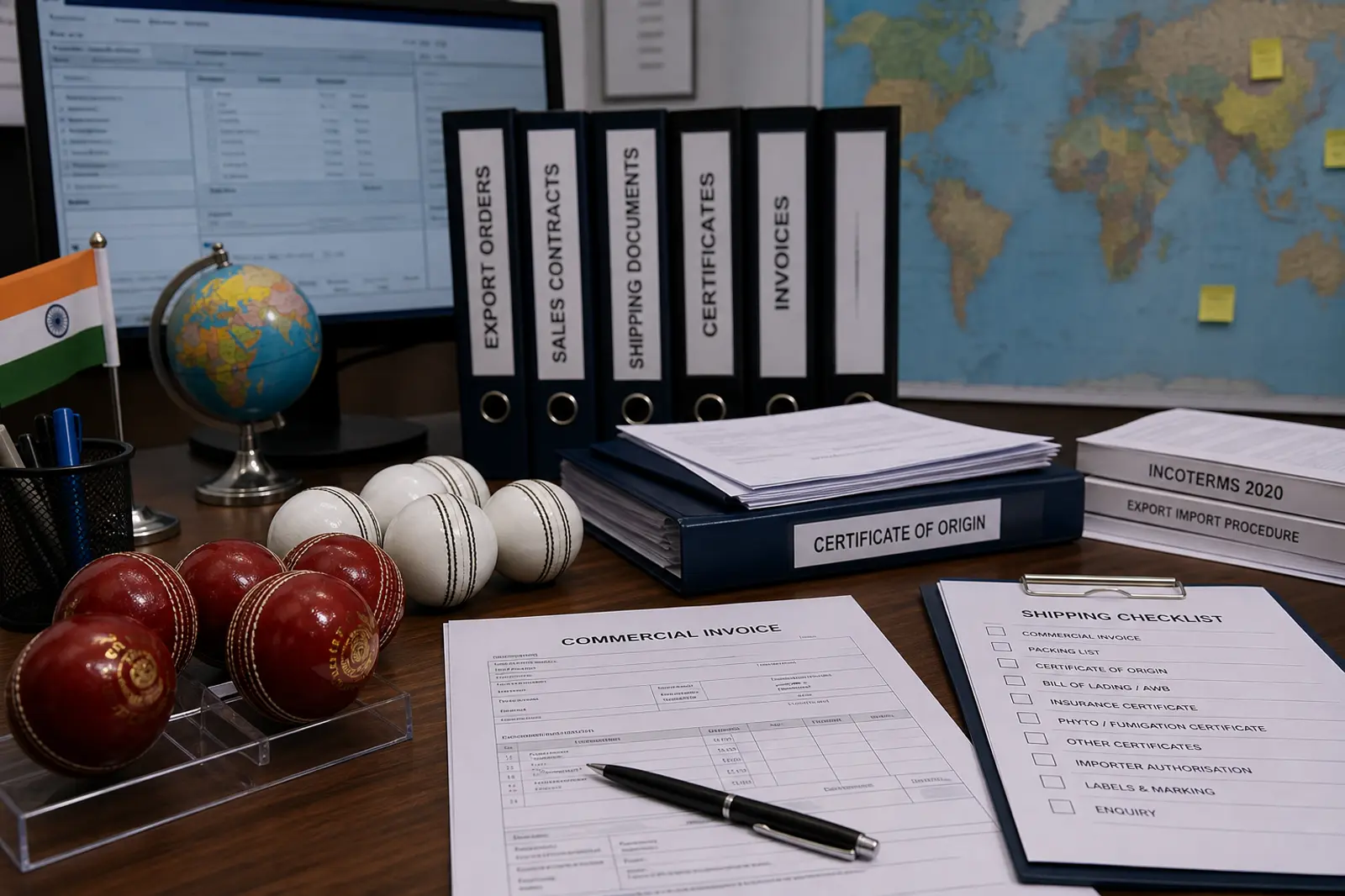
Choosing where to export cricket balls from India — or where to source them from as an international buyer — is a market-selection decision that depends on cricket participation depth, import duty structures, freight corridor economics, and buyer type in each destination. This guide ranks and compares the best destination markets for Indian cricket ball exports, covering import statistics, duty environments, freight routing from Meerut and Jalandhar through Nhava Sheva, Mundra, Delhi ICD, and ICD Ludhiana, and the buyer profiles that drive demand in each market. For the end-to-end export process, see How to Export Cricket Balls from India; for the product catalogue, see Top Cricket Ball Products Exported from India.
India's cricket ball export trade is classified under HS 9506.69 internationally and 95066920 under India's tariff schedule, and destination-market import treatment varies meaningfully across cricket-playing nations — from zero-duty access under trade agreements in some Commonwealth markets to standard MFN rates in others. Freight corridor selection from Meerut (primary leather-ball hub) and Jalandhar (secondary synthetic hub) through west-coast ports affects landed cost as much as FOB pricing, making market selection and logistics planning inseparable decisions for exporters and buyers alike.
Trade figures, duty rates, and country-share estimates in this guide are directional planning inputs; always confirm current import duty treatment with your destination-country customs broker and validate landed pricing against fresh freight quotations before committing to a market entry programme. For country-specific SKU demand, see Most Demanded Indian Cricket Balls by Country, and for buyer development tactics, see How to Find International Buyers for Cricket Balls. Work with a merchant exporter in India or global sourcing partner to compress market-entry research into an actionable shipment plan.
Key Takeaways
Summary Box
Executive Summary
Summary Box
Market selection for Indian cricket ball exports is a three-variable decision: destination demand depth (how much cricket is played and at what level), import economics (duty, freight, and landed cost), and buyer accessibility (how easily you can reach cricket retailers, club suppliers, and federation procurement teams in that market). This guide evaluates all three variables across India's primary and emerging cricket ball destination markets, providing a ranked framework for exporters planning their first international shipments and buyers evaluating India as a sourcing origin for specific markets.
The best markets for Indian cricket ball exports are not necessarily the largest economies — they are the markets where cricket participation, import accessibility, and buyer type align with the specific ball types and leather grades India produces at competitive FOB pricing. A Grade A red match ball programme targets a fundamentally different market set than a synthetic practice ball wholesale programme, and this guide addresses both. Altus Exports operates as a merchant exporter and global sourcing partner in India with buyer relationships across priority cricket markets — reach out via our contact page to discuss market-specific sourcing and shipment planning.
Market Size & Industry Overview
Key Statistics
Global cricket ball demand is concentrated in cricket-playing nations across the Commonwealth, South Asia, the Gulf, and increasingly North America and continental Europe as associate-nation participation grows. India occupies a structurally advantaged position in this trade: Meerut's leather-ball manufacturing ecosystem produces match and training balls at competitive FOB pricing across all leather grades, while Jalandhar's synthetic and tennis ball capacity serves the informal and school cricket segments that dominate emerging market demand.
The international cricket ball trade is not tracked as a standalone category in most public trade databases — figures are typically embedded in broader HS 9506.69 solid-ball trade statistics. Directional estimates suggest Indian cricket ball exports have grown steadily as cricket participation expands globally, with established Commonwealth markets providing the volume base and emerging markets providing the growth trajectory. Treat all market-size figures in this guide as planning inputs rather than audited totals.
Export Statistics
Key Statistics
Directional export statistics for Indian cricket balls by destination are drawn from aggregate HS 9506.69 trade data, SGEPC market intelligence, and typical Meerut/Jalandhar export patterns. Validate current-year figures with your CHA or sourcing partner before making investment decisions.
Directional destination ranking for Indian cricket ball exports
Swipe →
Data table — swipe horizontally on small screens
| Rank | Destination | Directional Share | Primary Ball Types |
|---|---|---|---|
| 1 | United Kingdom | Largest single market (directional) | Red match, white match, Grade A/B training |
| 2 | Australia | Second-largest (directional) | Red match, training, synthetic nets balls |
| 3 | UAE | Major Gulf hub (directional) | Training, synthetic, tennis cricket, re-export mix |
| 4 | South Africa | Significant African market (directional) | Red match, training, Grade B leather |
| 5 | Bangladesh | Growing South Asian market (directional) | Red match, training, tennis cricket |
| 6 | Sri Lanka | Steady regional demand (directional) | Red match, training, synthetic |
| 7 | USA | Fastest-growing emerging market (directional) | Synthetic, tennis cricket, junior formats |
| 8 | Nepal | Emerging South Asian demand (directional) | Training, synthetic, junior balls |
Import Statistics
Key Statistics
Import-side statistics reflect how cricket balls enter each destination market — through sporting-goods distributors, cricket specialty retailers, club and academy procurement, and federation supply programmes. The buyer-type mix varies significantly by market maturity, which directly affects which SKUs and leather grades importers in each country prioritise.
Directional import buyer profile by priority destination market
Swipe →
Data table — swipe horizontally on small screens
| Market | Primary Import Channel | Dominant Buyer Type | SKU Priority |
|---|---|---|---|
| United Kingdom | Cricket retailers, county club suppliers | Specialty retail, club procurement | Grade A/B match and training balls |
| Australia | Sports importers, club suppliers | Club and academy procurement | Match balls, training, synthetic nets |
| UAE | Wholesale distributors, re-exporters | Wholesale and re-export traders | Mixed SKU containers, price-competitive training |
| South Africa | Sports retailers, school suppliers | Club and school procurement | Training and mid-tier match balls |
| Bangladesh | Wholesalers, retail chains | Wholesale and retail distribution | Training, match, tennis cricket mix |
| USA | Specialty importers, league organisers | League and academy procurement | Synthetic, tennis cricket, junior formats |
| Nepal | Wholesalers, school suppliers | School and club programmes | Training, synthetic, junior balls |
| Netherlands | Cricket club suppliers, specialty retail | Club and associate-nation procurement | Match and training leather balls |
Product Categories & Variants by Market
Summary Box
SKU demand varies systematically by market maturity. Established cricket nations with deep club structures (UK, Australia, South Africa) prioritise MCC Law 5 compliant match balls and Grade A/B training lines. Emerging cricket markets (USA, Nepal, continental Europe) typically start with synthetic practice and tennis cricket balls before upgrading to leather match-grade lines as participation deepens.
For the full product catalogue with leather grades, weight classes, and MOQ by SKU, see Top Cricket Ball Products Exported from India. The table below maps ball type priority to destination market for planning purposes.
Ball type priority by destination market tier
Swipe →
Data table — swipe horizontally on small screens
| Market Tier | Markets | Priority Ball Types | Leather Grade Focus |
|---|---|---|---|
| Tier 1 — Established cricket nations | UK, Australia, South Africa | Red/white match, Grade A/B training | Grade A/B alum-tanned leather |
| Tier 2 — Growing cricket nations | Bangladesh, Sri Lanka, UAE | Training, match, tennis cricket mix | Grade B/C leather + synthetic |
| Tier 3 — Emerging cricket nations | USA, Nepal, Netherlands, continental Europe | Synthetic, tennis cricket, junior | Synthetic dominant; leather match as upgrade |
Manufacturing Overview
Export Tip
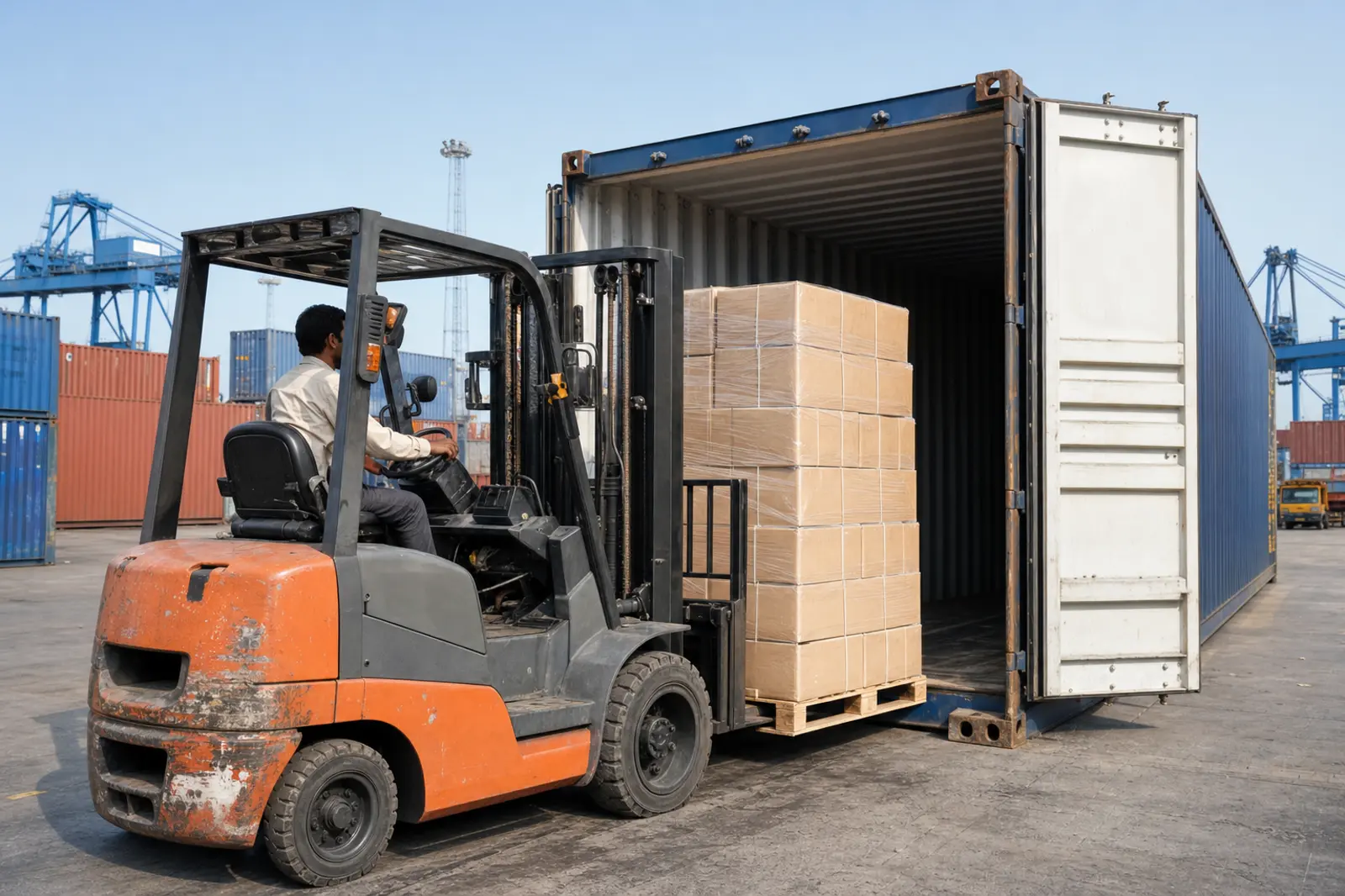
India's cricket ball manufacturing geography directly affects freight corridor planning for different destination markets. Meerut, Uttar Pradesh — India's primary leather cricket ball hub — routes most efficiently through Delhi ICD to Nhava Sheva for west-bound shipments to the UK, Europe, and Gulf, or through Delhi ICD to Mundra for competitive Gulf and African rates. Jalandhar, Punjab — secondary hub for synthetic and tennis cricket balls — routes through ICD Ludhiana to either Nhava Sheva or Mundra depending on destination and carrier availability.
Exporters planning multi-market programmes should model inland haulage costs from Meerut or Jalandhar to the chosen ICD/port as part of landed-cost calculations for each destination, since FOB pricing alone does not capture the freight economics that determine competitive landed cost in each market.
Export Process by Market
Export Tip
The core export process — IEC, SGEPC RCMC, sample approval, MCC Law 5 QC, documentation, and shipping — is identical across destination markets and is covered in full in How to Export Cricket Balls from India. What changes by market is the documentation emphasis, certification requirement, and Incoterms preference.
UK and Australian buyers typically prefer FOB or CFR pricing with MCC Law 5 documentation attached for match-grade SKUs. UAE wholesale buyers often prefer competitive FOB pricing with flexible Incoterms. USA buyers frequently request DDP or CIF pricing for first orders to simplify import clearance. European buyers may require REACH compliance documentation for leather tanning chemicals. Exporters should confirm market-specific documentation requirements with their buyer or sourcing partner before quoting.
Pricing Analysis
Buyer Tip
Landed cost — not FOB price alone — determines competitive positioning in each destination market. The table below models directional landed cost components for a Grade B red training ball (FOB ~USD 6/pc) across priority markets, using directional freight and duty estimates. Always validate with current freight quotations and your import broker.
Directional landed cost model — Grade B red training ball (FOB USD 6/pc, 5,000 pc order)
Swipe →
Data table — swipe horizontally on small screens
| Market | Directional Ocean Freight/pc | Directional Import Duty | Directional Landed/pc |
|---|---|---|---|
| United Kingdom | ~USD 0.40–0.70 | Low/zero MFN (directional) | ~USD 6.50–7.00 |
| Australia | ~USD 0.50–0.80 | Low/zero MFN (directional) | ~USD 6.60–7.00 |
| UAE | ~USD 0.25–0.45 | Low GCC duty (directional) | ~USD 6.30–6.60 |
| South Africa | ~USD 0.45–0.75 | Standard MFN (directional) | ~USD 6.60–7.00 |
| Bangladesh | ~USD 0.15–0.30 | SAFTA preferential (directional) | ~USD 6.20–6.40 |
| USA | ~USD 0.60–1.00 | MFN ~5.4% (HTS 9506.69.40, directional) | ~USD 6.90–7.30 |
| Nepal | ~USD 0.10–0.20 | SAFTA preferential (directional) | ~USD 6.15–6.30 |
MOQ Analysis
Buyer Tip
MOQ thresholds for market-entry trial orders are generally consistent across destination markets — 500–2,000 pieces for trial orders, scaling to 3,000–10,000+ for established wholesale programmes. What varies by market is the SKU mix within those MOQs: established cricket nations typically trial with match and training leather balls, while emerging markets trial with synthetic and tennis cricket ball lines.
Directional market-entry MOQ and SKU mix by destination tier
Swipe →
Data table — swipe horizontally on small screens
| Market Tier | Recommended Trial MOQ | Recommended SKU Mix | Wholesale MOQ |
|---|---|---|---|
| Tier 1 (UK, Australia, South Africa) | 500–1,000 pcs | Grade B red match + training mix | 5,000–10,000+ pcs |
| Tier 2 (Bangladesh, Sri Lanka, UAE) | 500–2,000 pcs | Training + synthetic + tennis mix | 3,000–8,000 pcs |
| Tier 3 (USA, Nepal, Europe) | 500–1,500 pcs | Synthetic + tennis + junior mix | 3,000–8,000 pcs |
Packaging Standards
Export Tip
Packaging requirements vary by destination market and buyer channel. UK and Australian retail buyers typically require individually boxed leather match balls with barcode-compliant retail packaging. UAE wholesale buyers accept plain master cartons at higher density. USA buyers may require bilingual or market-specific labelling depending on the retail channel. European buyers may require REACH compliance labelling on leather product packaging.
Regardless of destination, all leather cricket ball shipments should include desiccant sachets in cartons destined for sea transit — particularly on long routes to the UK, Australia, and North America where humidity exposure during transit can affect leather quality.
Container Loading Details
Export Tip
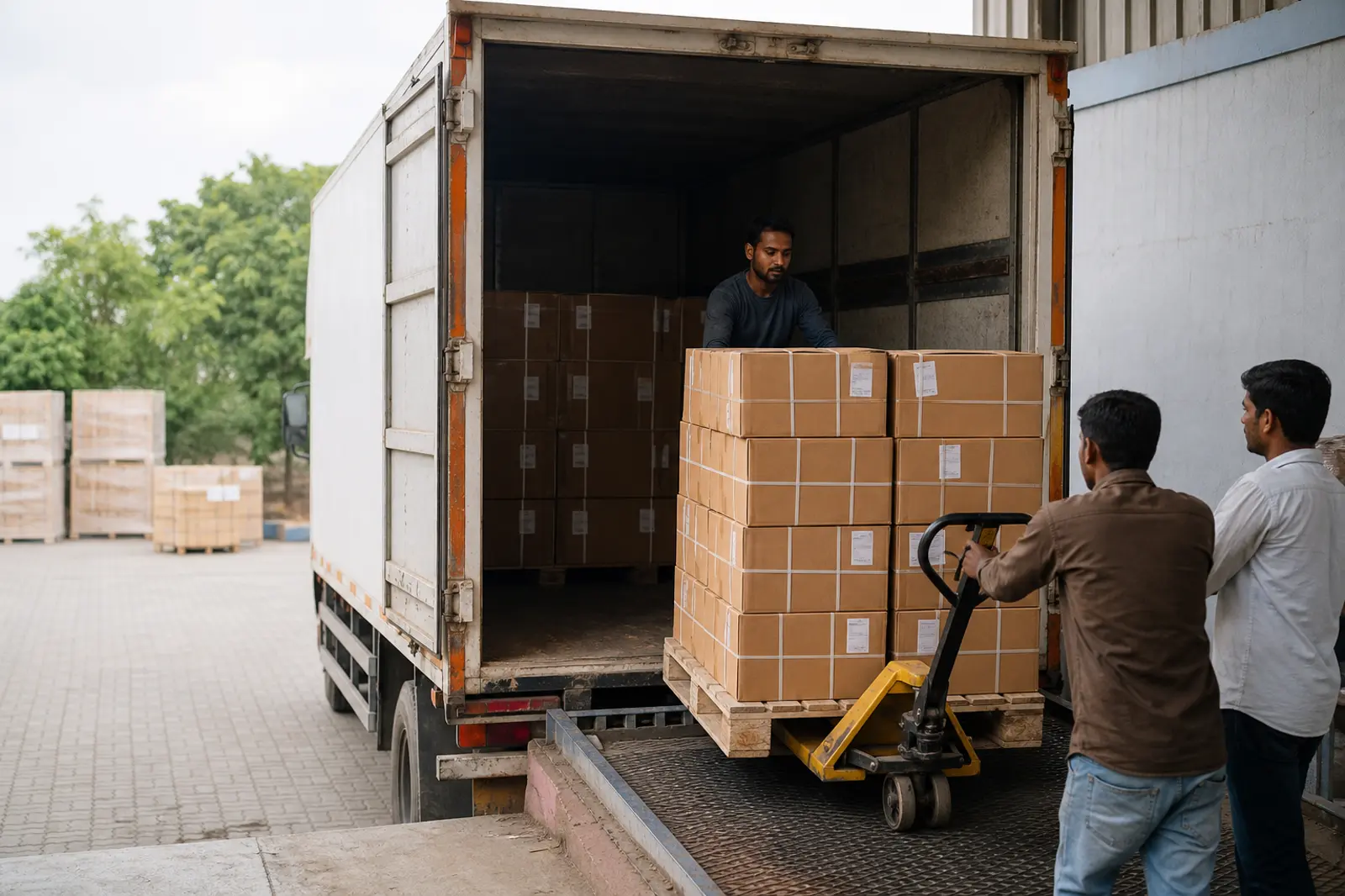
Freight corridor selection affects container loading economics as much as carton density. Shipments routed through Delhi ICD to Nhava Sheva for UK and European destinations typically use 40-foot HC containers for wholesale programmes above 8,000 pieces. Gulf-bound shipments through Mundra may use 20-foot FCL for trial orders and 40-foot FCL for established programmes. SAFTA-advantaged shipments to Bangladesh and Nepal can use either Nhava Sheva or land-border routing depending on cost and transit time.
Freight corridor reference by destination market
Swipe →
Data table — swipe horizontally on small screens
| Destination | Primary Port Route | ICD Origin | Typical Container |
|---|---|---|---|
| United Kingdom | Nhava Sheva → Felixstowe/Southampton | Delhi ICD (Meerut cargo) | 40-foot HC FCL |
| Australia | Nhava Sheva/Mundra → Melbourne/Sydney | Delhi ICD / ICD Ludhiana | 40-foot HC FCL |
| UAE / Gulf | Mundra → Jebel Ali | Delhi ICD / ICD Ludhiana | 20-foot or 40-foot FCL |
| South Africa | Mundra/Nhava Sheva → Durban | Delhi ICD | 40-foot FCL |
| Bangladesh | Nhava Sheva → Chittagong (or land border) | Delhi ICD | 20-foot FCL or LCL |
| USA | Nhava Sheva/Mundra → LA/Long Beach/NY | Delhi ICD / ICD Ludhiana | 40-foot HC FCL |
| Nepal | Land border via Delhi ICD | Delhi ICD | LCL or land freight |
| Netherlands | Nhava Sheva → Rotterdam | Delhi ICD (Meerut cargo) | 40-foot HC FCL |
Shipping Methods
Export Tip
- UK, Australia, South Africa: FOB Nhava Sheva/Mundra preferred; buyer arranges main carriage and import clearance
- UAE/Gulf: FOB or CFR Jebel Ali; wholesale buyers often arrange their own re-export logistics
- Bangladesh, Nepal: FOB with SAFTA preferential duty; land-border routing competitive for Nepal
- USA: CIF or DDP for first orders; FOB for established importer relationships
- Europe: FOB with REACH compliance documentation; buyer handles EU import clearance
Ocean freight is the standard shipping method for all commercial cricket ball volumes across all destination markets. Air freight is reserved for urgent sample shipments and trade-show kits. Lead times from order confirmation to arrival vary by destination: UK and Gulf shipments typically arrive in 25–35 days from Nhava Sheva or Mundra; Australia in 30–40 days; USA in 35–45 days; Bangladesh and Nepal in 15–25 days via SAFTA-advantaged routing.
Incoterms preference varies by market: FOB is standard for experienced importers in UK, Australia, and South Africa; CIF/CFR is common for first-time buyers in emerging markets; DDP is occasionally requested by USA buyers who want fully landed pricing. Exporters should confirm Incoterms preference with each buyer before quoting.
Certifications
Compliance Notes
Certification requirements vary by destination market and buyer type. MCC Law 5 compliance documentation is expected by match-grade buyers in all established cricket nations. REACH compliance is required for leather cricket balls entering the EU. UK buyers post-Brexit follow UK REACH equivalent requirements for leather products.
Market-specific certification requirements for cricket ball imports
Swipe →
Data table — swipe horizontally on small screens
| Market | Required Certifications | Match-Grade Additional Requirements |
|---|---|---|
| United Kingdom | IEC/SGEPC exporter credentials, UK REACH for leather | MCC Law 5 lot-release documentation |
| Australia | IEC/SGEPC exporter credentials | MCC Law 5 lot-release documentation for match balls |
| UAE / Gulf | Commercial invoice, certificate of origin | MCC Law 5 optional for training; required for match |
| South Africa | IEC/SGEPC exporter credentials, SABS where applicable | MCC Law 5 for match-grade procurement |
| Bangladesh | Certificate of origin (SAFTA) | Buyer-agreed specification for training balls |
| USA | Commercial invoice, FDA not applicable | Buyer QC protocol; no federal cricket ball standard |
| EU / Netherlands | REACH compliance for leather tanning chemicals | MCC Law 5 for match-grade club procurement |
| Nepal | Certificate of origin (SAFTA) | Buyer-agreed specification |
Buyer Requirements
Buyer Requirements
Buyer requirements vary systematically by market tier. Tier 1 markets (UK, Australia, South Africa) expect MCC Law 5 documentation, consistent leather grade quality, and responsive specification sheets as baseline due diligence. Tier 2 markets (Bangladesh, Sri Lanka, UAE) prioritise competitive FOB pricing and consistent lot quality over premium certification. Tier 3 markets (USA, Nepal, Europe) often start with synthetic and tennis cricket ball lines, with leather match balls introduced as buyer relationships mature.
Across all markets, buyers evaluating a new Indian cricket ball supplier should confirm IEC and SGEPC RCMC status, request physical samples with written specification sheets, and clarify Incoterms and lead time before committing to a trial order. A merchant exporter in India can provide market-specific buyer introductions and documentation support that accelerates market entry significantly.
Country-wise Opportunities
Market Snapshot
The following section provides a market-entry comparison across India's priority cricket ball destination markets, covering demand depth, duty environment, freight corridor, buyer type, and recommended entry strategy for each.
Market-entry comparison — priority cricket ball destination markets
Swipe →
Data table — swipe horizontally on small screens
| Country | Entry Priority | Key Advantage | Key Challenge | Recommended First SKU |
|---|---|---|---|---|
| United Kingdom | High | Deep cricket culture, premium match ball demand | Competitive market, MCC Law 5 rigor | Grade B red match ball |
| Australia | High | Strong club culture, year-round demand | Long transit time, quality expectations | Grade B red match + training mix |
| UAE | High | Gulf re-export hub, competitive freight | Price-sensitive wholesale buyers | Training + synthetic mixed container |
| South Africa | Medium-High | Established club cricket, growing school demand | Economic sensitivity, payment terms | Grade B training + match mix |
| Bangladesh | Medium-High | SAFTA duty advantage, growing cricket | Price competition, payment risk | Training + tennis cricket mix |
| USA | Medium (growth) | Fastest-growing cricket participation | Nascent buyer infrastructure | Synthetic + tennis cricket starter kit |
| Nepal | Medium | SAFTA advantage, land-border routing | Smaller volumes, payment terms | Synthetic + junior training mix |
| Netherlands | Medium | EU cricket hub, associate-nation demand | REACH compliance requirement | Grade B match + training leather |
Sourcing Checklist
Checklist
Buyer Checklist
Exporter Checklist
Common Buyer Mistakes
Common Mistakes Box
Future Market Trends
Key Statistics
Cricket ball export market dynamics are likely to shift over the next five years as cricket participation expands in non-traditional markets. The USA represents the most significant growth opportunity — recreational and league cricket participation is rising steadily, and synthetic and tennis cricket ball demand is likely to precede leather match ball demand as league structures mature. Continental European associate nations (Netherlands, Germany, Italy) represent a secondary growth corridor as ICC associate membership expands.
Established Commonwealth markets (UK, Australia, South Africa) are likely to remain volume-stable rather than high-growth, but premium Grade A match ball and private-label programmes offer margin expansion opportunities even in mature markets. The Gulf re-export hub role of the UAE is likely to deepen as cricket infrastructure investment across the Middle East continues.
Challenges & Solutions
- Challenge: landed cost competitiveness varies significantly by destination due to freight and duty differences — Solution: model landed cost per market before selecting priority destinations, not FOB price alone.
- Challenge: MCC Law 5 documentation requirements differ by buyer type within the same market — Solution: confirm documentation requirements with each buyer before quoting match-grade SKUs.
- Challenge: payment terms and credit risk vary across emerging markets — Solution: use letter of credit or advance payment structures for first orders in new markets; build trust before offering open-account terms.
- Challenge: seasonal demand peaks in UK and Australia ahead of league seasons create capacity pressure in Meerut — Solution: plan orders 8–12 weeks ahead of seasonal peaks and confirm production capacity with suppliers early.
- Challenge: REACH and UK REACH compliance for leather balls adds documentation overhead for European markets — Solution: work with tanneries that can provide REACH-compliant material documentation and build this into your export pricing.
- Challenge: identifying credible buyers in emerging markets without existing trade relationships — Solution: use SGEPC buyer directories, trade show contacts, and a merchant exporter with existing market relationships to accelerate buyer identification.
Market entry for cricket ball exports involves specific challenges that differ from domestic sales or single-market export programmes.
Compliance Checklist
Checklist
Compliance Notes
Conclusion
- Next step for exporters: select one Tier 1 or Tier 2 market, build a landed-cost model, and plan a 500–2,000 pc trial shipment with Altus Exports.
- Next step for buyers: share your destination market and target SKU mix — Altus Exports will model landed cost and match verified Meerut/Jalandhar suppliers.
- Expanding beyond cricket balls? Our export products from India and global sourcing partner services apply the same market-selection discipline across categories.
- Multi-market sports goods programmes: product sourcing company India services consolidate sourcing across cricket balls and adjacent sporting equipment.
Selecting the best countries for Indian cricket ball exports is a decision that combines destination demand depth, import economics, freight corridor efficiency, and buyer accessibility — not simply a ranking of market size. The United Kingdom, Australia, UAE, and South Africa represent the highest-priority markets for leather match and training ball programmes; Bangladesh, Sri Lanka, and Nepal offer SAFTA-advantaged access for price-competitive training and synthetic lines; and the USA and continental Europe represent the most significant long-term growth opportunities as cricket participation expands.
Exporters should enter one or two priority markets with a trial order, validate landed pricing and buyer feedback, then expand SKU range and destinations from a position of proven quality. Buyers evaluating India as a sourcing origin should model landed cost across their target markets, confirm MCC Law 5 and REACH requirements, and work with a verified supplier network or merchant exporter in India to compress market-entry research into an actionable shipment plan. Reach out via our contact page to discuss market-specific sourcing, freight routing, and buyer introductions.
This guide is the market-selection pillar for our cricket ball content cluster. For the end-to-end export process, see How to Export Cricket Balls from India. For the product catalogue, see Top Cricket Ball Products Exported from India. For country-specific SKU demand, see Most Demanded Indian Cricket Balls by Country. For buyer development, see How to Find International Buyers for Cricket Balls.