
SGEPC Registration Benefits for Cricket Ball Exporters
By Saurabh Mittal, Founder, Altus Exports
A complete guide to Sports Goods Export Promotion Council (SGEPC) registration for Indian cricket ball exporters — RCMC eligibility, the step-by-step application process, membership benefits, and how council credentials support (but never replace) genuine leather-grade and MCC Law 5 compliance discipline for solid cricket balls under HS 95066920.
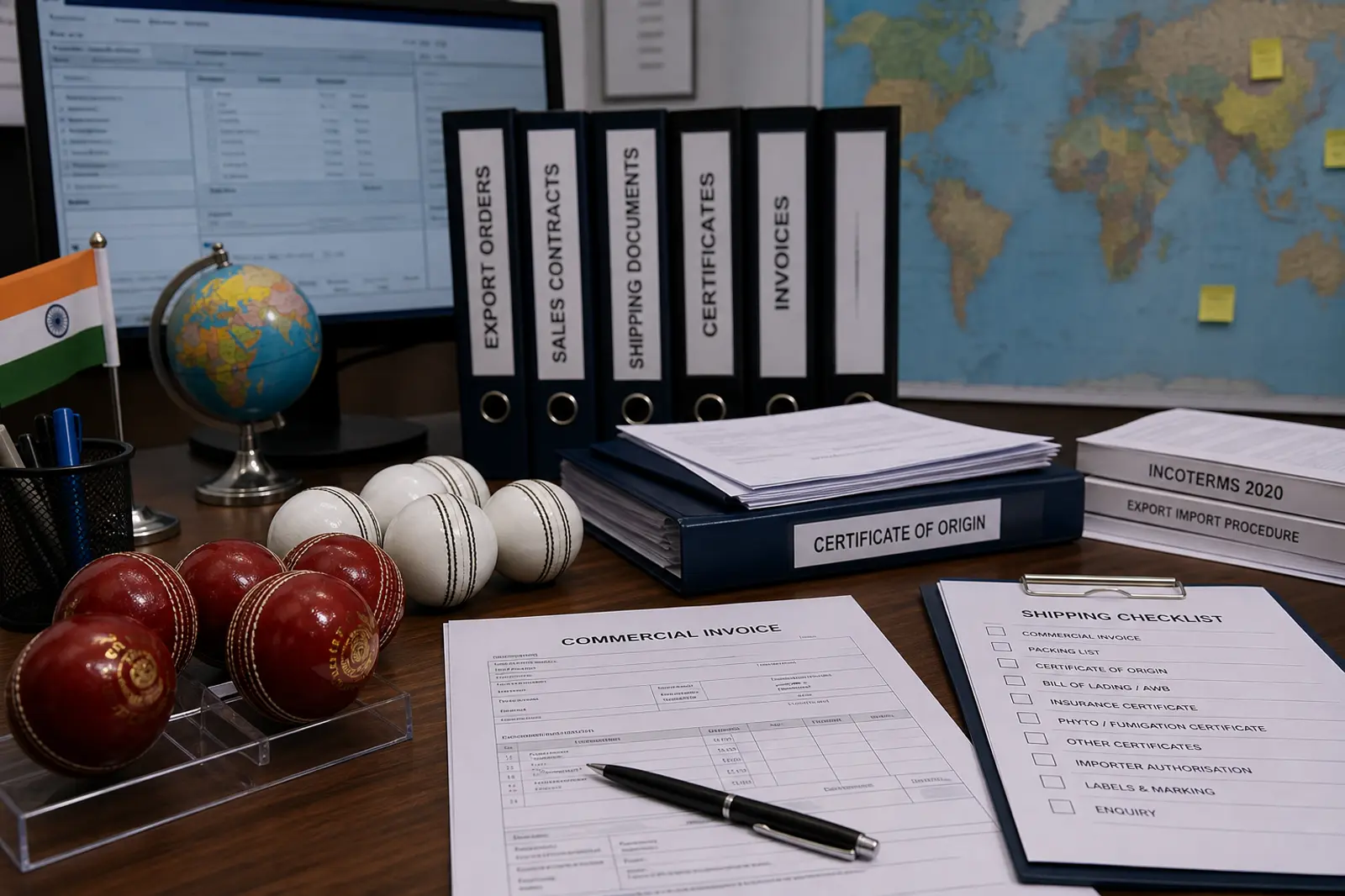
Every serious Indian export category eventually settles on one apex body that international buyers use as an early credibility filter. For cricket balls and the wider sports goods trade, that body is the Sports Goods Export Promotion Council (SGEPC), operating under India's Ministry of Commerce and Industry export promotion council framework. Cricket balls move through customs worldwide under HS code 95066920 — balls and solid balls used in cricket — and behind every compliant shipping bill sits a manufacturer whose export identity buyers can verify in seconds, or cannot verify at all. SGEPC registration, and the Registration Cum Membership Certificate (RCMC) issued alongside it, is what separates the two.
This guide is deliberately narrow. It covers what SGEPC does for cricket ball exporters, who is eligible, exactly how the registration and RCMC process works end to end, what membership does and does not deliver, and the practical mistakes exporters make with council credentials. It does not repeat the full export documentation sequence — that lives in our cricket ball export documentation checklist — and it does not go deep on MCC Law 5 match-grade compliance, which gets dedicated treatment in MCC Law 5 and match-grade cricket ball export opportunities. Think of SGEPC and RCMC as the institutional layer that sits underneath both of those workflows, not a substitute for either.
Whether you manufacture red and white leather match balls in Meerut, run an alum-tanning and hand-stitching line for club grades, or you are an international buyer trying to decide how much weight to place on a supplier's council listing, this article gives you the complete picture — application steps, RCMC mechanics, real membership benefits, a manufacturer case study, common mistakes, and fifteen detailed answers to the questions cricket ball exporters and buyers ask most often about SGEPC.
Key Takeaways
Summary Box
Executive Summary
Summary Box
India's cricket ball manufacturing base is concentrated overwhelmingly around Meerut in Uttar Pradesh, with Jalandhar in Punjab serving as a secondary cluster for synthetic training and tennis-ball cricket lines alongside its broader sports goods output. Both clusters export under HS 95066920, and both sit within SGEPC's institutional mandate. For manufacturers in either cluster, SGEPC registration is one of the lowest-cost, highest-leverage credibility investments available — cheaper than a single failed buyer audit, and faster to obtain than most product certifications.
This guide treats SGEPC registration as what it actually is: a door-opener. It gets a cricket ball exporter onto buyer shortlists, into sports goods trade fairs, and into government trade-mission directories that would otherwise be difficult to access through cold outreach alone. It does not, on its own, win a repeat order — that still depends on leather grade quality, weight and circumference consistency, and clean export documentation. Exporters who understand this distinction get the most value out of council membership; exporters who treat it as a marketing badge eventually face a credibility gap when a buyer's factory audit does not match the polish of the council listing.
Market Size & Industry Overview
Key Statistics
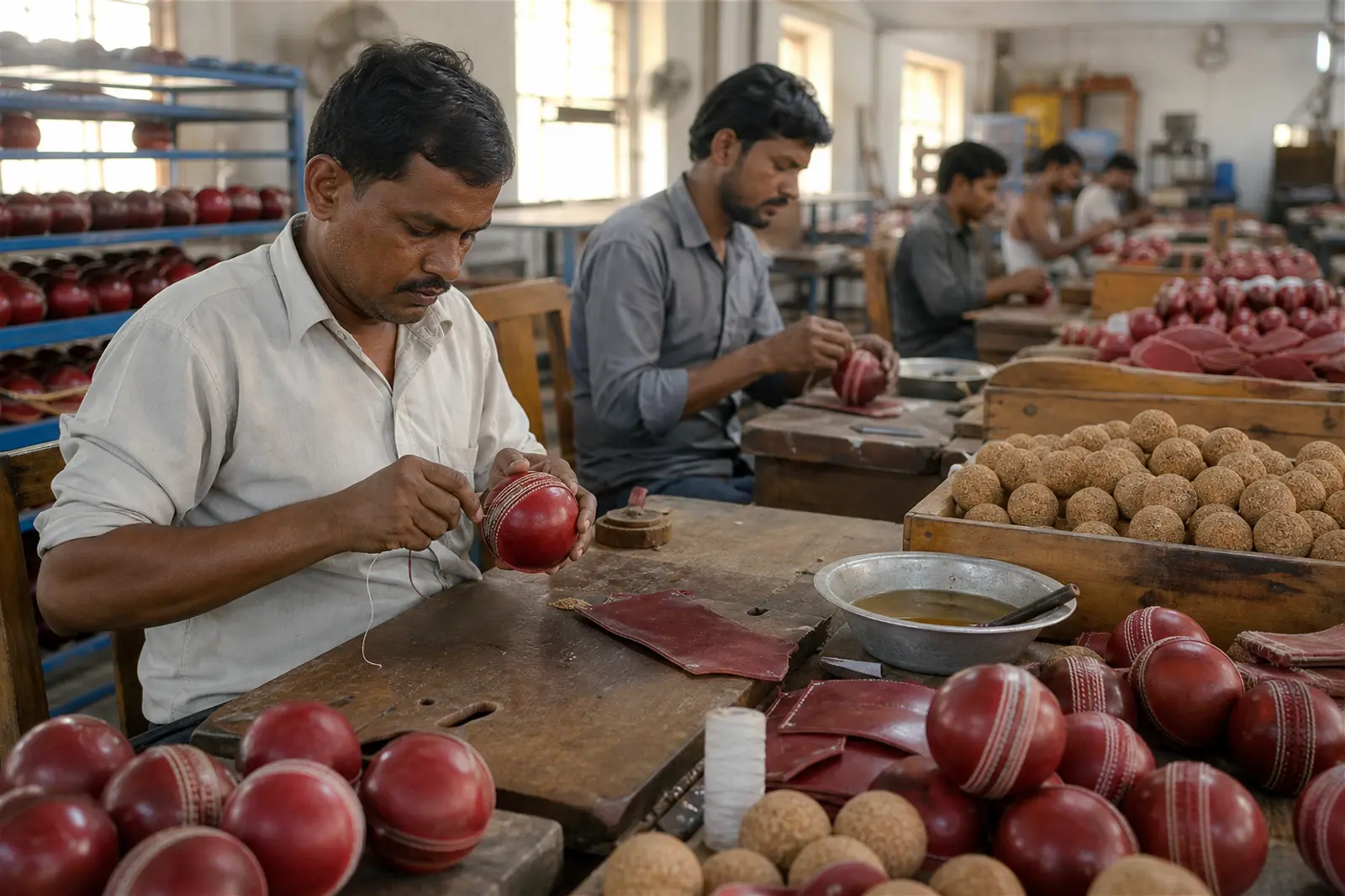
India's sports goods export sector, of which cricket balls are one significant product line under HS 95066920, has grown steadily as global club cricket, academy programmes, and retail match-ball demand expand sourcing beyond traditional origins. Meerut remains the historic centre of gravity — a cluster with decades of hand-stitching craftsmanship producing red and white leather match balls, alum-tanned club grades, and supporting synthetic and tennis-ball lines for informal cricket markets.
Meerut's cricket ball ecosystem spans individual stitching workshops, alum-tanning lines, aggregators consolidating multi-unit output, and export houses shipping under their own IEC. Jalandhar adds synthetic training and tennis-ball cricket capacity that Meerut-based merchant exporters sometimes draw on for volume programmes. Together, the two clusters give India a layered production base: Meerut anchoring leather craftsmanship and match-to-club grades, Jalandhar adding volume capacity for synthetic and tennis-ball lines at accessible price points.
India's cricket ball manufacturing clusters at a glance
Swipe →
Data table — swipe horizontally on small screens
| Cluster | State | Primary Strength | Typical Ball Types |
|---|---|---|---|
| Meerut | Uttar Pradesh | Leather match and club balls, hand-stitching, export depth | Red/white leather, alum-tanned club, match-grade |
| Jalandhar | Punjab | Synthetic and tennis-ball volume, broader sports goods ecosystem | Synthetic training, tennis-ball cricket, practice lines |
Export Statistics
Key Statistics
Indian cricket ball exports under HS 95066920 flow primarily toward the UK, Australia, South Africa, the UAE, USA, Bangladesh, and Sri Lanka, with steady secondary demand from associate cricket nations building club and grassroots infrastructure. Industry-level trade estimates place India as a meaningful global supplier of leather and solid cricket balls — competitive on quality-to-price ratio in the club and match-ball segments that make up the bulk of international cricket ball demand.
This guide does not attempt to rank destination markets in depth — that comparative analysis, including duty structures and market-entry sequencing, is covered fully in best countries for Indian cricket ball exports and most demanded Indian cricket balls by country. What matters for this guide is that SGEPC membership and RCMC status are relevant across every one of those destination markets equally — council credentials are not market-specific, which is precisely why they function well as a baseline credibility signal regardless of which country a buyer represents.
Directional cricket ball export metrics relevant to SGEPC membership
Swipe →
Data table — swipe horizontally on small screens
| Metric | 2026 Indicative Position | SGEPC Relevance |
|---|---|---|
| Primary HS heading | 95066920 | Product category declared at SGEPC registration |
| Primary cluster | Meerut, Uttar Pradesh | Council trade fairs feature Meerut manufacturers prominently |
| Dominant export forms | Red/white leather, alum-tanned, synthetic, tennis balls | All covered under SGEPC sports goods mandate |
| Fastest-growing segment | MCC Law 5 match-grade leather | Council credentials open doors; MCC compliance wins orders |
| Buyer screening trend | RCMC field on vendor questionnaires rising | Membership increasingly expected for organised retail |
Import Statistics
Key Statistics
On the demand side, global cricket ball imports are driven by a mix of organised retail replenishment (sporting goods chains and specialist cricket stores), institutional procurement (clubs, academies, and school programmes), and wholesale distributor programmes tied to domestic cricket seasons. The UK, Australia, South Africa, UAE, USA, Bangladesh, and Sri Lanka each import cricket balls through a mix of these channels, with import volumes typically rising ahead of domestic cricket season starts.
Buyers in these markets increasingly run structured vendor onboarding before issuing purchase orders, and a growing share of onboarding questionnaires include a direct field for export council membership or RCMC status alongside IEC and GST verification. That shift in buyer-side procurement discipline is a large part of why SGEPC registration has moved, over the past several export cycles, from a nice-to-have to a near-standard expectation for exporters targeting organised retail and institutional buyers rather than one-off spot orders.
Buyer-region procurement posture for SGEPC-verified cricket ball suppliers
Swipe →
Data table — swipe horizontally on small screens
| Buyer Region | Vendor Screening Depth | RCMC Weight in Onboarding |
|---|---|---|
| UK | High — club and retail procurement | Standard expectation for organised suppliers |
| Australia | High — state cricket and retail | Standard expectation for match-ball programmes |
| South Africa | Medium–High — distributor-led | Increasingly expected for wholesale accounts |
| UAE | Medium — wholesale and hospitality | Useful credibility signal; QC still primary |
| USA | Medium — league and diaspora retail | Growing expectation as market matures |
| Bangladesh | Lower — price-driven volume | Less critical; IEC verification still essential |
| Sri Lanka | Medium — club and retail | Useful for distributor relationships |
| Associate nations | Lower — federation and NGO procurement | Less critical; sample QC primary |
Product Categories & Variants (Brief Overview)
Summary Box
Cricket ball type and leather grade determine which buyer channel and price band a given SKU realistically targets — and SGEPC membership applies uniformly across all of them, since council registration is entity-level rather than product-line-specific.
Cricket ball categories covered under SGEPC's sports goods mandate
Swipe →
Data table — swipe horizontally on small screens
| Ball Type | Typical Cover | Common Colours | Primary Use |
|---|---|---|---|
| Red leather match balls | Alum-tanned leather, hand-stitched | Red | First-class, club, academy match play |
| White leather match balls | Alum-tanned leather, hand-stitched | White | Limited-overs, indoor/outdoor white-ball cricket |
| Alum-tanned club balls | Lower-grade alum-tanned leather | Red, white | Club practice, school programmes |
| Synthetic training balls | PVC/rubber cover | Red, white, multi | Indoor nets, academy training |
| Tennis-ball cricket lines | Rubber-core tennis balls | Red, yellow, green | Informal and diaspora cricket |
Manufacturing Overview (Brief)
Export Tip
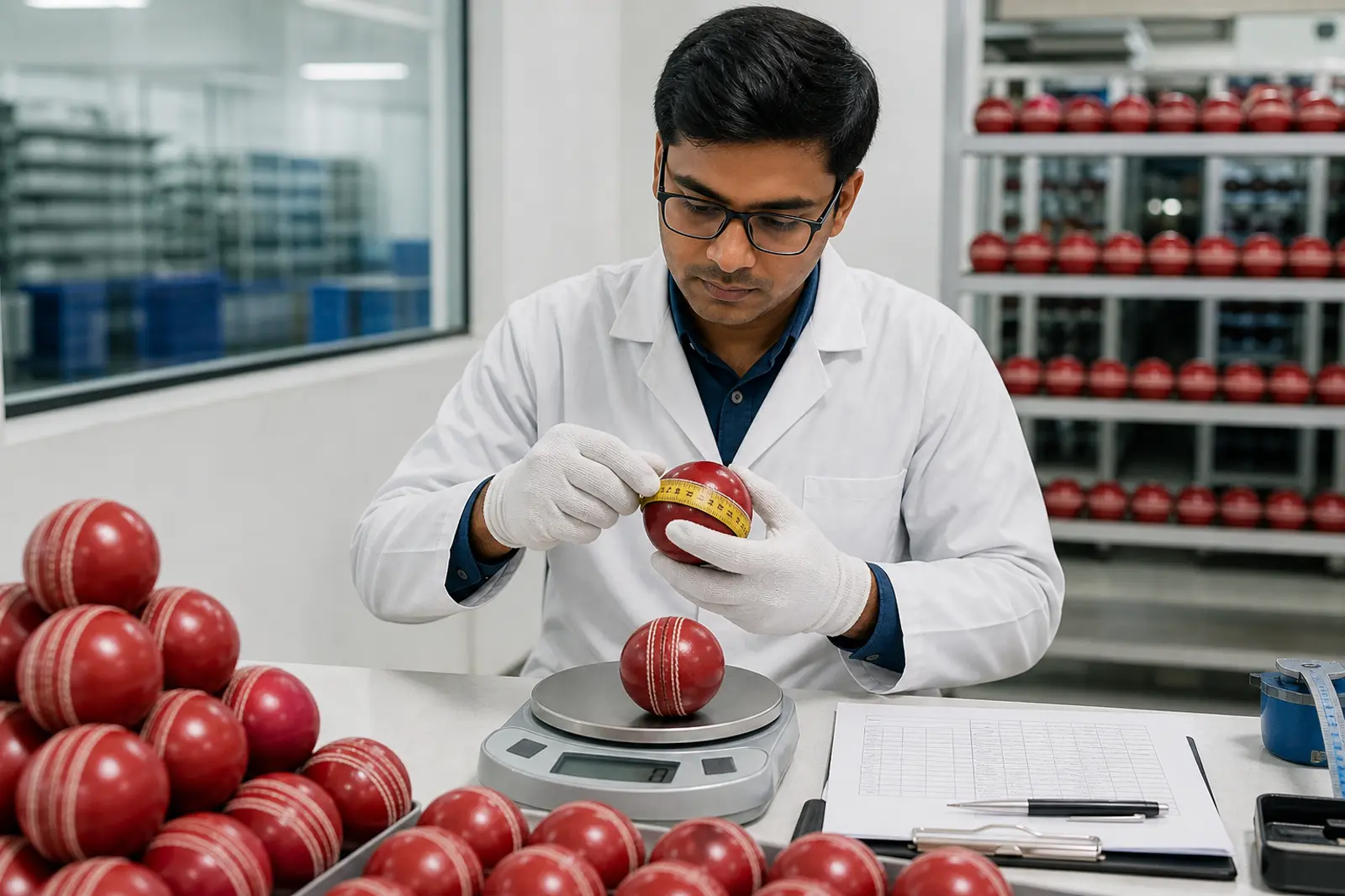
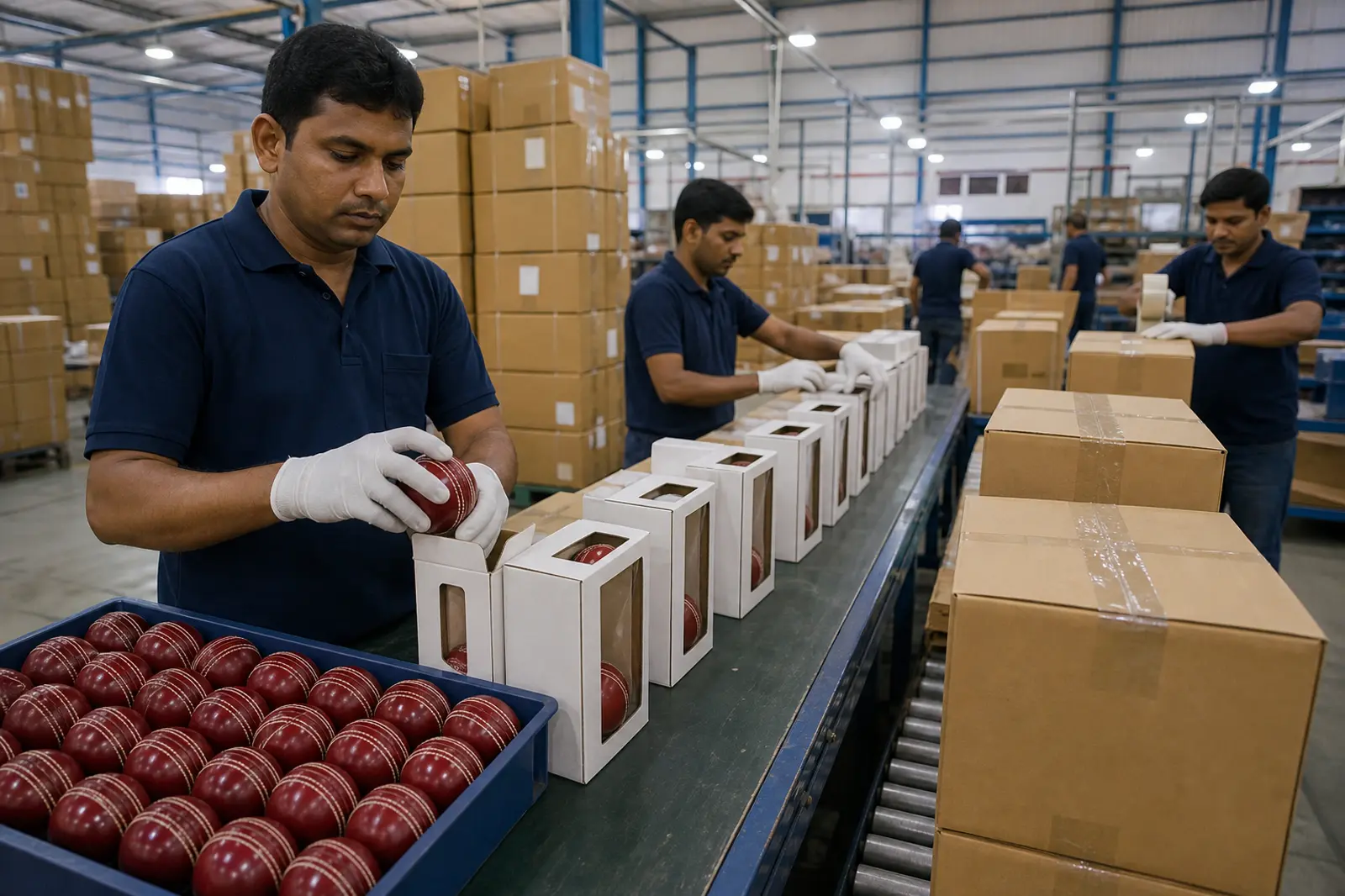
Cricket ball manufacturing in Meerut follows a broadly consistent sequence regardless of ball type: leather selection and alum tanning (for leather lines), cork-and-rubber core assembly, hand stitching of the seam, polishing, weight and circumference checking against MCC Law 5 standards where applicable, and individual box packing inside master cartons. Hand-stitched leather production remains labour-intensive and slower per unit, which is reflected in its price positioning; synthetic and tennis-ball lines scale faster and dominate practice and informal cricket volume.
SGEPC does not inspect factory floors as a condition of registration, and membership does not certify that a given unit follows this process to a particular quality standard. That verification work — sample evaluation, weight and circumference checks, and pre-shipment inspection — sits entirely outside the council relationship and is covered in the buyer requirements and sourcing checklist sections below.
Export Process: Where SGEPC Registration Fits for Cricket Ball Exporters
Compliance Notes
Export Tip
A typical Indian cricket ball export sequence runs from IEC registration and GST setup, through SGEPC/RCMC registration, sample development and buyer approval, bulk production and QC, export documentation, and finally shipment. SGEPC registration sits early in that sequence — ideally completed alongside IEC and GST, well before serious buyer outreach begins, since many buyer vendor questionnaires ask for council membership status during initial screening rather than at contract stage.
This guide focuses specifically on that one step. For the full manufacturer-side export sequence from sample approval through shipment, see how to export cricket balls from India. For the complete document set — invoice, packing list, certificate of origin, and shipment paperwork — see the cricket ball export documentation checklist.
SGEPC Registration: Eligibility, Documents, and Step-by-Step Process
Compliance Notes
Export Tip
- Valid Import Export Code (IEC) issued by DGFT, with entity details matching business registration exactly
- GST registration certificate consistent in entity name and address with the IEC
- Company incorporation or business registration proof (proprietorship, partnership, LLP, or company as applicable)
- PAN card and bank account details for the exporting entity
- Product category declaration specifying cricket balls (HS 95066920) and any adjacent sports goods lines produced or exported
- Address proof for the registered factory or office premises used for cricket ball production or export operations
Before applying, cricket ball manufacturers and merchant exporters should assemble a clean, mutually consistent set of foundational documents. Most processing delays trace to mismatches between these records rather than to the application process itself.
SGEPC registration document checklist for cricket ball exporters
Swipe →
Data table — swipe horizontally on small screens
| Document | Source | Common Mismatch to Avoid |
|---|---|---|
| IEC certificate | DGFT | Entity name differs from GST registration |
| GST certificate | State/central GST portal | Address differs from factory premises proof |
| Incorporation proof | Registrar of Companies / local authority | Trading name differs from legal entity name |
| PAN card | Income Tax Department | PAN linked to different entity than IEC |
| Bank account proof | Bank | Account holder name differs from IEC entity |
| Product category declaration | Applicant | Cricket balls not explicitly listed under HS 95066920 |
| Factory/office address proof | Utility bill / lease agreement | Address differs from GST registered address |
Step 1: Confirm IEC and GST are export-ready
Verify that IEC and GST registrations are active and reflect the same legal entity name and address used on bank records and PAN documentation. Any mismatch here resurfaces during council application review and is the single most common cause of processing delay.
Step 2: Prepare your product category declaration
State your product scope clearly — cricket balls specifically, under HS 95066920, and any adjacent sports goods lines (ball pumps, ball bags, or practice equipment) you intend to export. This declaration affects which sports goods fairs and buyer-matching programmes a member becomes eligible for.
Step 3: Submit the membership application with supporting documents
Complete SGEPC's membership application formalities with IEC, GST, incorporation, and address documentation attached. Retain digital copies of everything submitted, since buyer questionnaires later will ask for the same consistent record set.
Step 4: Complete membership fee and formalities
Pay applicable membership fees and complete any additional council formalities. Processing timelines vary; plan for several weeks and do not wait until a confirmed buyer PO arrives to begin registration if you are targeting organised retail or institutional accounts.
Step 5: Receive RCMC and activate council benefits
Upon approval, receive the Registration Cum Membership Certificate (RCMC) and confirm your listing appears in SGEPC's registered-exporter directory. Add RCMC number to your website, quotation templates, and vendor onboarding responses — buyers search for it.
RCMC Benefits Specific to Cricket Ball Exporters
Compliance Notes
RCMC status delivers tangible benefits beyond a certificate on the wall. For cricket ball exporters specifically, the most commercially relevant benefits cluster around buyer credibility, trade fair access, and export facilitation — not product quality certification.
SGEPC RCMC benefits mapped to cricket ball export commercial outcomes
Swipe →
Data table — swipe horizontally on small screens
| Benefit Category | What RCMC Delivers | Cricket Ball Exporter Application |
|---|---|---|
| Buyer credibility | Verifiable council listing | Passes vendor screening for UK, Australia, UAE retail accounts |
| Trade fair access | SGEPC pavilion and delegation slots | Meet cricket equipment buyers at sports goods fairs |
| Export facilitation | Council liaison with DGFT and customs | Smoother resolution of documentation queries on HS 95066920 |
| Market intelligence | Sector reports and buyer delegations | Align production to destination demand trends |
| Networking | Member directory and B2B introductions | Connect with cricket ball distributors globally |
| Scheme eligibility | Access to export promotion schemes | Participate in council-facilitated trade missions |
How Buyers Use SGEPC Credentials When Vetting Cricket Ball Suppliers
International buyers treat SGEPC RCMC as a first-pass filter, not a final quality verdict. A supplier with active RCMC passes initial vendor screening faster than an unregistered workshop with identical product capability but no verifiable export identity. Buyers then proceed to sample evaluation, weight and circumference QC, and pre-shipment inspection — the steps that actually determine whether a repeat order follows.
For buyers sourcing cricket balls directly from India, verifying RCMC independently through SGEPC's directory is a five-minute task that eliminates a meaningful share of unregistered or misrepresented suppliers before any sampling cost is incurred. Pair RCMC verification with IEC confirmation and a physical sample request — never substitute council membership for sample approval. The buyer-side sourcing sequence is covered in source cricket balls directly from India.
Pricing Analysis
Buyer Tip
SGEPC membership itself carries a modest annual fee — negligible relative to a single failed buyer audit or a rejected container of cricket balls. The commercial value is not cost savings on membership but access: trade fairs, buyer directories, and vendor-screening credibility that unregistered workshops cannot replicate at any price.
Cricket ball FOB pricing is unaffected by SGEPC status — a registered exporter and an unregistered workshop may quote identical piece rates. What changes is the buyer's willingness to engage: organised retail and institutional buyers increasingly require RCMC before issuing a first PO, which means unregistered exporters face a smaller addressable market even at competitive pricing.
MOQ Analysis
Buyer Tip
SGEPC membership does not change MOQ economics for cricket ball production — leather selection, hand-stitching labour, and individual box packaging still drive minimums. What membership enables is access to buyers whose MOQ expectations align with organised export capacity rather than spot-market transactions.
How SGEPC membership interacts with cricket ball MOQ tiers
Swipe →
Data table — swipe horizontally on small screens
| Order Stage | Typical MOQ | RCMC Impact |
|---|---|---|
| Samples | 10–50 pcs | RCMC helps pass vendor screening before sample request |
| Trial order | 500–2,000 pcs | Institutional buyers expect RCMC before trial PO |
| Wholesale order | 3,000–10,000+ pcs | Retail accounts require RCMC for vendor onboarding |
| Seasonal FCL | 20GP / 40HC | Distributor programmes expect RCMC as baseline |
Packaging Standards
Export Tip
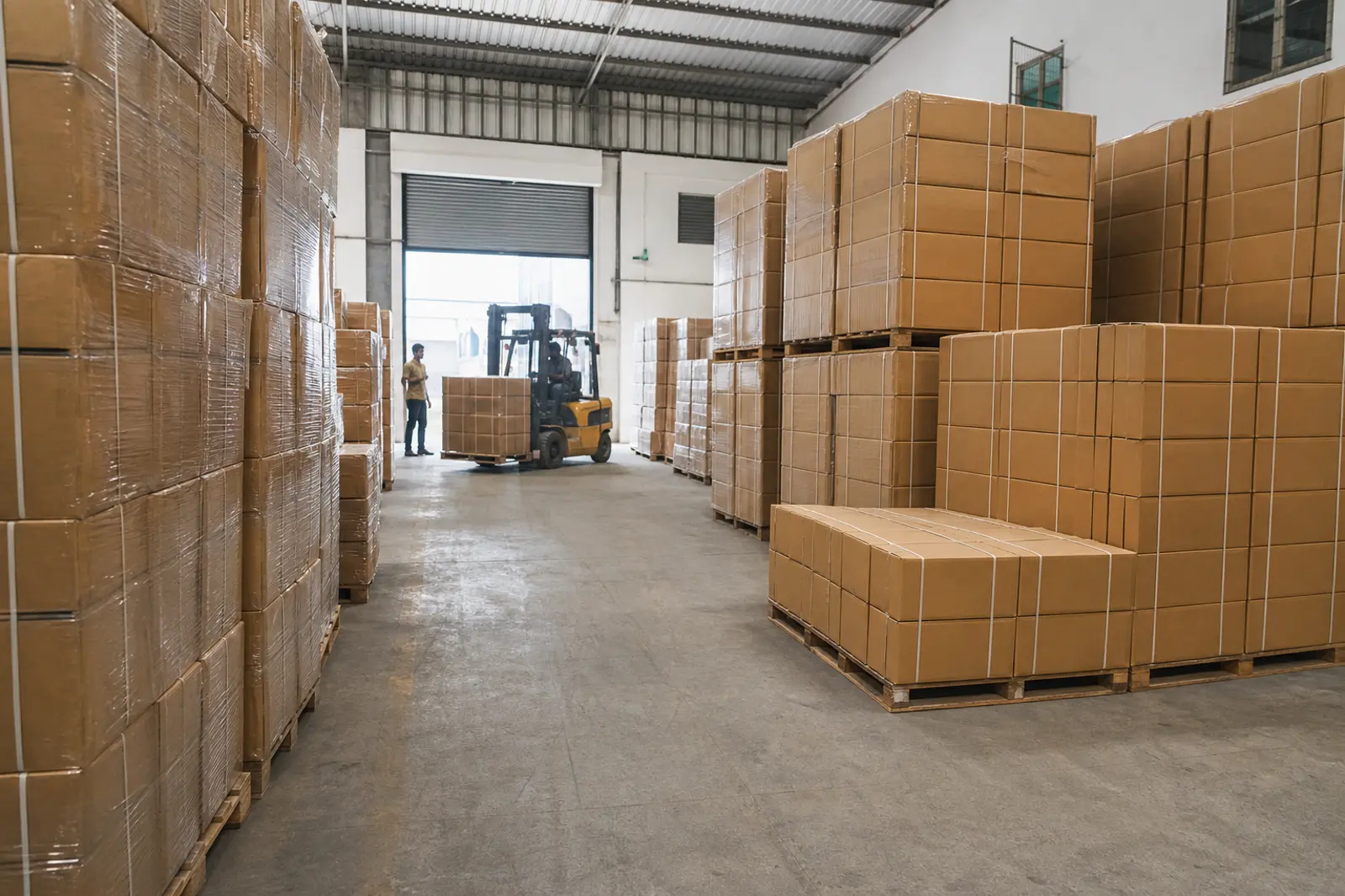
SGEPC does not certify packaging, but council trade fairs and buyer delegations expose exporters to destination-market packaging expectations early. Cricket balls typically ship in individual boxes inside master cartons — commonly 6–24 leather balls per master carton. Exporters who learn retail packaging requirements through council-facilitated buyer meetings avoid costly rework on first wholesale orders.
Packaging expectations cricket ball exporters learn through SGEPC channels
Swipe →
Data table — swipe horizontally on small screens
| Packaging Format | Typical Buyer Channel | Council Learning Opportunity |
|---|---|---|
| Branded individual box + master carton | UK/Australia retail | Trade fair buyer feedback on box artwork |
| Plain individual box + master carton | Wholesale distributors | Delegation meetings on carton labelling |
| Bulk multi-ball carton | Club and academy volume | School procurement packaging requirements |
| Moisture-barrier master cartons | Long-transit destinations | Export facilitation guidance on leather ball transit |

Container Loading Details
Export Tip
SGEPC membership does not directly affect container loading, but council-facilitated export guidance helps Meerut exporters optimise FCL plans for leather cricket balls — weight-denser than inflatables, requiring careful carton stacking and moisture protection on long sea transit.
Shipping format guidance for SGEPC-registered cricket ball exporters
Swipe →
Data table — swipe horizontally on small screens
| Format | Typical Volume | Exporter Note |
|---|---|---|
| LCL consolidated | Trial orders under roughly 10 CBM | Acceptable for first buyer relationships |
| 20ft FCL | Single ball-type focus | Confirm CBM and stacking before booking |
| 40ft HC FCL | Multi-grade wholesale programmes | Document container seal photos for claims |
| Delhi ICD origin | Meerut cargo routing | Factor inland transit in lead-time quotes |
Shipping Methods
Export Tip
- FOB: most common for repeat importers with established brokers
- CFR/CIF: useful for first trial when exporter coordinates freight
- Council liaison available for documentation queries on registered members
- Confirm HS 95066920 line on shipping bill before sailing
- Share draft documents with buyer's broker before vessel departure
SGEPC registration does not change Incoterms or freight mechanics, but council export facilitation can help resolve documentation queries on HS 95066920 shipments when customs or DGFT clarification is needed. Standard Incoterms for cricket ball exports remain FOB, CFR, and CIF from Nhava Sheva or Mundra.
Certifications
Compliance Notes
SGEPC RCMC is an export registration credential, not a product certification. Cricket ball exporters must separately document MCC Law 5 compliance, leather grade, and ball-type specifications — council membership does not substitute for any of these.
Credentials cricket ball exporters should hold beyond SGEPC RCMC
Swipe →
Data table — swipe horizontally on small screens
| Credential | What It Proves | SGEPC Relationship |
|---|---|---|
| IEC | Legal export authority | Prerequisite for SGEPC application |
| SGEPC RCMC | Organised sports goods exporter status | This guide's primary focus |
| MCC Law 5 compliance notes | Weight and circumference conformity | Separate from council; product-level |
| Leather grade declaration | Honest alum-tanned grade disclosure | Separate from council; product-level |
| Approved sample sign-off | Bulk production baseline | Separate from council; buyer relationship |
| Pre-shipment inspection report | Bulk matches approved sample | Separate from council; QC process |
Buyer Requirements
Buyer Requirements
Buyers increasingly expect SGEPC RCMC as part of a broader credential set: IEC verification, sample approval, MCC Law 5 documentation for match-grade programmes, and pre-shipment inspection rights. UK and Australian club and retail buyers set the highest bar; UAE and Bangladesh volume buyers may proceed with lighter documentation but still benefit from RCMC-verified supplier identity.
Country-wise Opportunities
Market Snapshot
SGEPC membership value is consistent across destination markets — council credentials are not market-specific. However, the buyer channels that most actively require RCMC during vendor onboarding cluster in mature cricket markets.
Destination markets where SGEPC RCMC carries highest buyer weight
Swipe →
Data table — swipe horizontally on small screens
| Market | RCMC Importance | Primary Buyer Channel | Complementary Requirement |
|---|---|---|---|
| UK | High | Club cricket, retail chains | MCC Law 5 for match-grade lines |
| Australia | High | State cricket, retail | Red ball weight/circumference QC |
| South Africa | Medium–High | Distributors, development programmes | Mixed grade ladder documentation |
| UAE | Medium | Wholesale, hospitality cricket | Fast replenishment capability |
| USA | Medium | League suppliers, diaspora retail | White-ball and practice line mix |
| Bangladesh | Lower | Club and school volume | Price and basic conformity |
| Sri Lanka | Medium | Club cricket, retail | Red ball seam expectations |
| Associate nations | Lower | Federation and NGO procurement | Sample QC over credentials |
Sourcing Checklist
Checklist
Exporter Checklist
Buyer Checklist
Compliance Checklist
Checklist
Compliance Notes
Common Exporter Mistakes
Most SGEPC-related credibility problems trace back to a small set of avoidable mistakes — recognising them early protects the commercial value of council membership.
Common SGEPC mistakes and corrective actions for cricket ball exporters
Swipe →
Data table — swipe horizontally on small screens
| Mistake | Consequence | Corrective Action |
|---|---|---|
| Claiming SGEPC certifies product quality | Buyer audit failure and lost account | Separate RCMC from MCC Law 5 and sample QC in all communications |
| Entity name mismatch across IEC/GST/PAN | Application delay or rejection | Align all documents before submitting application |
| Waiting until buyer PO to register | Lost deal during vendor screening | Register during export setup, before buyer outreach |
| Letting RCMC lapse | Failed vendor re-screening | Set renewal reminder 60 days before expiry |
| Not listing HS 95066920 in product declaration | Incomplete council listing for cricket balls | Amend product category declaration explicitly |
| Using RCMC number from a different entity | Fraud allegation and permanent blacklist | Verify own RCMC; never borrow another entity's credentials |
Future Market Trends
Key Statistics
Through 2030, SGEPC registration will increasingly function as a baseline entry requirement rather than a differentiator for cricket ball exporters targeting organised retail and institutional buyers. Digital vendor onboarding platforms are adding automated RCMC verification fields, which means unregistered workshops will face a shrinking addressable market even at competitive FOB pricing.
Council-facilitated trade missions to associate cricket nations and growing USA league markets will create new buyer introduction channels for registered Meerut exporters. Exporters who combine RCMC credibility with genuine MCC Law 5 discipline and consistent leather-grade control will capture disproportionate share of premium and club-affiliated programmes.
Challenges & Solutions
SGEPC registration challenges cluster around documentation alignment, timing, and credential misuse — all manageable with the process sequence above.
SGEPC registration challenges and practical solutions
Swipe →
Data table — swipe horizontally on small screens
| Challenge | Root Cause | Solution |
|---|---|---|
| Application processing delay | IEC/GST entity mismatch | Align all documents before submitting |
| Buyer rejects despite RCMC | Product quality not verified | Invest in sample QC, not just council credentials |
| Incomplete product listing | Cricket balls not declared in category | Amend declaration to include HS 95066920 |
| Lapsed membership during buyer audit | Missed renewal date | Automate renewal reminder 60 days ahead |
| Competitor claims false RCMC | Buyer does not verify independently | Encourage buyers to check SGEPC directory directly |
Expert Insights
Expert Insight Box
Altus Exports holds active IEC and SGEPC RCMC registration and supports international buyers sourcing cricket balls from India through verified Meerut production, sampling coordination, MCC Law 5 QC, and HS 95066920 export documentation — operating as a merchant exporter in India and global sourcing partner for multi-grade cricket ball programmes.
Conclusion
- Next step for exporters: Confirm IEC/GST alignment and begin SGEPC application before your first serious buyer outreach.
- Next step for buyers: Verify supplier RCMC through SGEPC directory, then request physical samples — see source cricket balls directly from India.
- Review cricket ball export documentation checklist for the full document set beyond RCMC.
- Explore merchant exporter services for RCMC-aligned export execution, export products from India for broader sports-goods programmes, or contact Altus Exports for SGEPC registration guidance.
SGEPC registration and RCMC status are among the lowest-cost, highest-leverage credibility investments available to Indian cricket ball exporters — but they are door-openers, not quality certifications. Council membership gets you onto buyer shortlists, into trade fairs, and into vendor-screening workflows that unregistered workshops cannot access. Repeat orders still depend on leather grade honesty, weight and circumference consistency, seam integrity, and clean HS 95066920 documentation.
If you are a cricket ball exporter preparing for international trade, register during export setup — not when a buyer PO arrives. If you are an international buyer vetting Meerut suppliers, verify RCMC independently, then proceed to sample evaluation and pre-shipment inspection. Altus Exports combines active SGEPC credentials with verified production discipline for buyers who prefer a single accountable partner.