
Most Demanded Indian Cricket Balls by Country: Market-by-Market Guide
By Saurabh Mittal, Founder, Altus Exports
A country-by-country demand guide for Indian cricket ball exports — red and white leather match balls, alum-tanned club grades, synthetic training lines, and tennis-ball cricket products by destination market. Includes a ball type × colour × grade × country demand matrix, channel analysis, pricing bands, and trend notes for the UK, Australia, South Africa, UAE, USA, Bangladesh, Sri Lanka, and associate cricket nations, from Altus Exports.
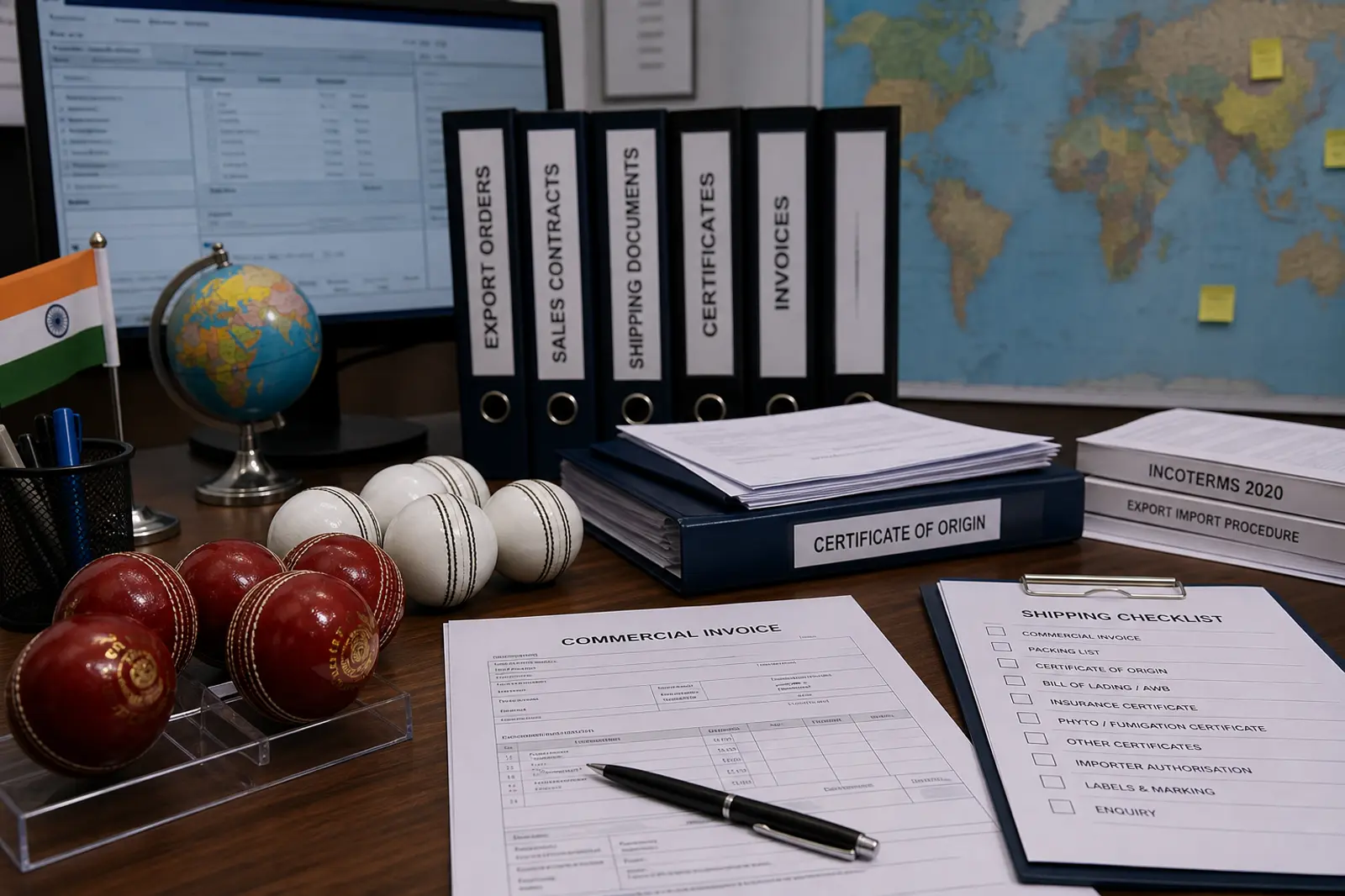
Global cricket ball demand is not uniform, and treating it as one homogeneous export market is one of the fastest ways for an Indian manufacturer or exporter to misallocate Meerut production capacity. A MCC Law 5 red leather match ball that sells confidently through a Surrey club supplier may be entirely the wrong hero SKU for a Dubai sports hypermarket, and a durable alum-tanned club ball that moves fast in a Bangladesh school programme may sit unsold in a premium UK retail assortment. Cricket is played and consumed differently across roughly a dozen serious import markets, and ball type, leather grade, colour, weight class, and packaging all shift accordingly.
This guide breaks down the most demanded Indian cricket balls by country — covering the UK, Australia, South Africa, the UAE, the United States, Bangladesh, Sri Lanka, and associate cricket nations — so manufacturers, exporters, and international buyers can align assortment planning to real channel needs instead of guessing from aggregate export statistics. Ball type, colour, leather grade, weight class, and pack preferences all get their own treatment for each market, anchored in a comprehensive demand matrix.
It closes with a practical assortment-matrix framework you can apply to your own top SKUs, channel-specific packaging guidance, and answers to the demand-planning questions Indian cricket ball exporters and international buyers ask most often. For category-level detail on the balls themselves, pair this guide with top cricket ball products exported from India and best countries for Indian cricket ball exports. For the buyer-side sourcing process, see source cricket balls directly from India.
Key Takeaways
Summary Box
Executive Summary
Summary Box
This guide maps Indian cricket ball demand across destination markets using a ball type × colour × grade × country matrix framework. The core insight is simple: cricket ball assortment planning must start from destination channel needs — club cricket, academy procurement, retail chains, wholesale distributors, diaspora leagues, and informal tennis-ball cricket — not from whatever a Meerut stitching unit happens to produce most efficiently.
Red leather match balls dominate UK, Australian, and Sri Lankan demand; white leather and synthetic training lines grow fastest in USA and UAE diaspora markets; alum-tanned club balls and tennis-ball cricket products drive volume in Bangladesh, associate nations, and informal cricket channels globally. Exporters who match ball type, colour, and grade to market character scale faster than exporters who ship an identical assortment everywhere.
Market Size & Industry Overview
Key Statistics
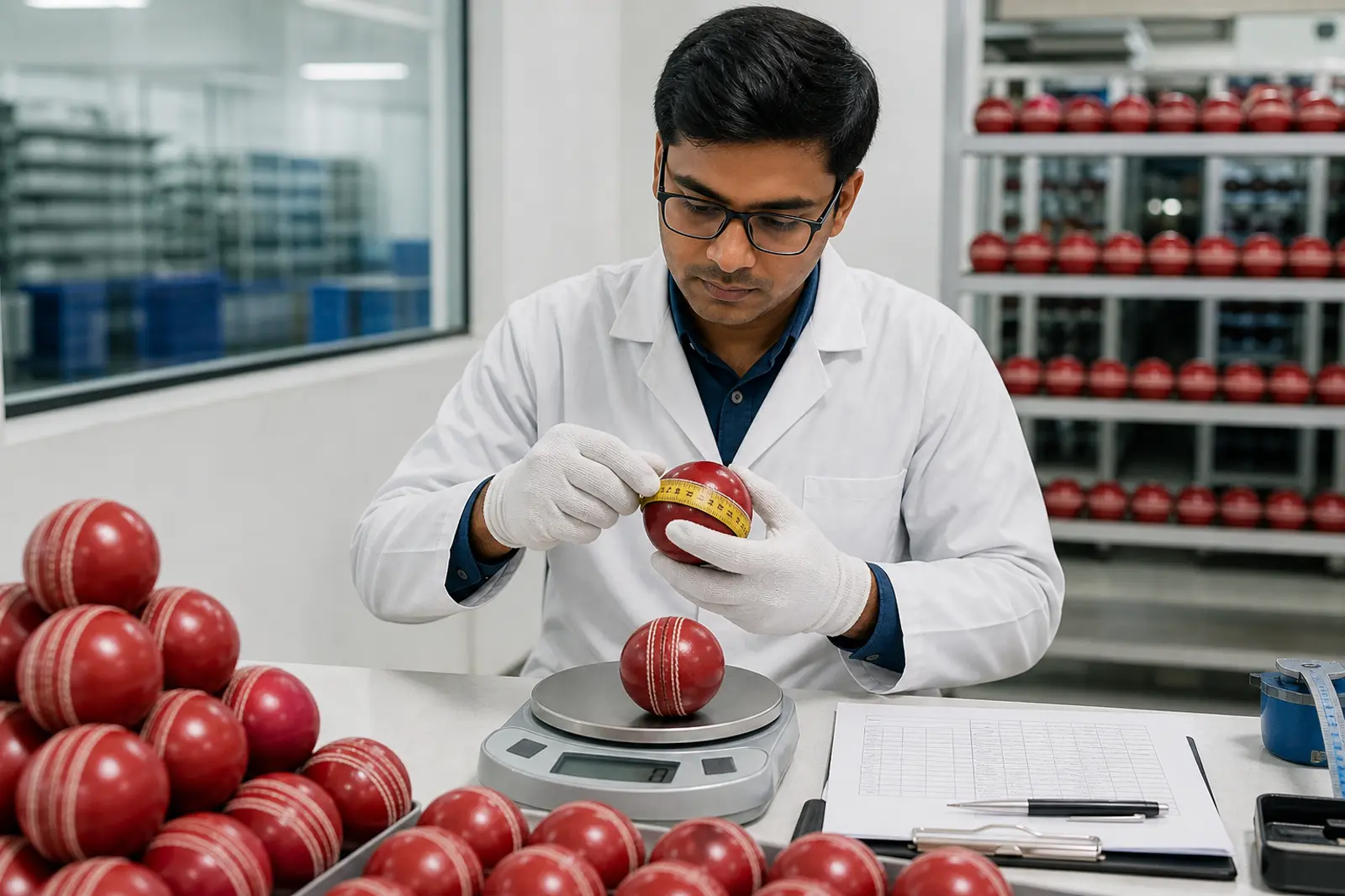
India's cricket ball export sector under HS 95066920 is concentrated in Meerut, Uttar Pradesh, with supporting synthetic and tennis-ball capacity in Jalandhar. The global import market for solid cricket balls spans mature cricket nations (UK, Australia, South Africa), growing diaspora markets (USA, UAE), South Asian neighbours (Bangladesh, Sri Lanka), and an expanding associate-nation tier building club infrastructure.
What makes cricket ball demand planning harder than many sporting-goods categories is the interaction between ball type, playing format, and channel. A UK county club supplier and a UAE sports hypermarket both import cricket balls from India, but they want fundamentally different SKUs — MCC Law 5 red leather match balls in branded individual boxes versus alum-tanned club balls in bulk master cartons at accessible price points.
Global cricket ball import market structure by tier
Swipe →
Data table — swipe horizontally on small screens
| Market Tier | Representative Countries | Dominant Ball Types | Channel Character |
|---|---|---|---|
| Tier 1 — mature cricket | UK, Australia, South Africa | Red leather match, MCC Law 5 | Club suppliers, retail chains, academies |
| Tier 2 — growing diaspora | USA, UAE | White ball, practice, tennis-ball cricket | Leagues, hypermarkets, diaspora retail |
| Tier 3 — South Asian neighbours | Bangladesh, Sri Lanka | Red club, alum-tanned volume | Club procurement, school programmes, retail |
| Tier 4 — associate nations | Netherlands, Ireland, Nepal, Caribbean | Club, practice, synthetic training | Federations, league suppliers, academies |
Export Statistics
Key Statistics
Indian cricket ball exports under HS 95066920 flow directionally toward the UK, Australia, South Africa, UAE, USA, Bangladesh, and Sri Lanka — validate current rank order against SGEPC sector releases and trade-data tables before quoting in buyer decks. Red leather match balls and alum-tanned club grades represent the highest-volume export forms; MCC Law 5 match-grade lines are the fastest-growing premium segment as club-affiliated procurement matures.
Directional export snapshot for cricket ball demand planning
Swipe →
Data table — swipe horizontally on small screens
| Metric | 2026 Indicative Position | Demand Planning Relevance |
|---|---|---|
| Primary HS heading | 95066920 | All ball types classify here |
| Primary cluster | Meerut, Uttar Pradesh | Match production to ball type capability |
| Highest-volume export form | Red leather club and match balls | Safest starting category for new exporters |
| Fastest-growing segment | MCC Law 5 match-grade leather | Premium margin but higher QC bar |
| Fastest-growing colour | White leather for limited-overs | USA and UAE diaspora driving demand |
| Volume practice segment | Synthetic and tennis-ball cricket | Informal cricket and academy nets |
Import Statistics
Key Statistics
Import-side demand is driven by domestic cricket season calendars, club and academy procurement cycles, retail replenishment patterns, and diaspora league growth. The UK and Australia import the highest per-unit-value cricket balls; Bangladesh and associate nations import the highest unit volumes at lower per-piece values. Understanding this split prevents exporters from misallocating MCC Law 5 match-grade capacity toward price-sensitive volume markets.
Directional import demand profile by buyer region
Swipe →
Data table — swipe horizontally on small screens
| Buyer Region | Import Volume Tier | Value Tier | Seasonal Driver |
|---|---|---|---|
| UK | High | High | County and club season (April–September) |
| Australia | High | High | Domestic season (October–March) |
| South Africa | Medium–High | Medium–High | Summer season (October–March) |
| UAE | Medium | Medium | Year-round diaspora leagues |
| USA | Medium (growing) | Medium | League calendar (spring–fall) |
| Bangladesh | High | Low–Medium | Domestic season (October–March) |
| Sri Lanka | Medium | Medium | Domestic season (November–April) |
| Associate nations | Medium (aggregate) | Low–Medium | Varies by federation calendar |
Product Categories & Variants (Brief Overview)
Summary Box
Indian cricket ball exports span five primary product categories, each with distinct destination-market fit. The demand matrix in the next section maps these categories against country, colour, and grade preferences.
Cricket ball product categories for demand-matrix planning
Swipe →
Data table — swipe horizontally on small screens
| Category | Cover Material | Typical Weight | Primary Channels |
|---|---|---|---|
| Red leather match balls | Alum-tanned leather, hand-stitched | 155.9–163 g (MCC Law 5) | Club cricket, retail, academies |
| White leather match balls | Alum-tanned leather, hand-stitched | 155.9–163 g (MCC Law 5) | Limited-overs, indoor cricket, retail |
| Alum-tanned club balls | Lower-grade alum-tanned leather | 150–163 g | Club practice, schools, wholesale |
| Synthetic training balls | PVC/rubber cover | Varies | Indoor nets, academy training |
| Tennis-ball cricket lines | Rubber-core tennis balls | Varies | Informal cricket, diaspora leagues |
Manufacturing Overview (Brief)
Export Tip
Meerut's cricket ball manufacturing base produces all five product categories from a shared leather and stitching infrastructure, which gives exporters flexibility to pivot production between ball types as destination demand shifts. Hand-stitched leather lines require the most skilled labour and command the highest FOB; synthetic and tennis-ball lines scale fastest for volume programmes. Buyers and exporters who understand this production economics make better assortment decisions — allocating MCC Law 5 match-grade capacity to UK and Australia while routing alum-tanned club volume to Bangladesh and UAE.
Country × Ball Type × Colour × Grade Demand Matrix
This is the core analytical framework of this guide — a comprehensive matrix mapping ball type, colour, leather grade, and weight class against destination market demand. Use it to build your own assortment plan before committing Meerut production capacity.
Master demand matrix: country × ball type × colour × grade
Swipe →
Data table — swipe horizontally on small screens
| Country | Top Ball Type | Primary Colour | Grade / Weight Class | Pack Preference |
|---|---|---|---|---|
| United Kingdom | Red leather match | Red | MCC Law 5 match-grade | Branded individual box + master carton |
| United Kingdom | Red leather club | Red | Alum-tanned club grade | Individual box + master carton (6–12) |
| Australia | Red leather match | Red | MCC Law 5 match-grade | Branded individual box + master carton |
| Australia | Synthetic training | Red/white | Training grade | Bulk master carton (24+) |
| South Africa | Red leather match | Red | MCC Law 5 + club grade mix | Mixed branded and plain box |
| South Africa | White leather match | White | MCC Law 5 limited-overs | Branded individual box |
| South Africa | Alum-tanned club | Red | Club grade | Plain box + master carton |
| UAE | Alum-tanned club | Red | Club grade | Bulk master carton (12–24) |
| UAE | White leather match | White | Club/match grade | Individual box + master carton |
| UAE | Tennis-ball cricket | Red/yellow | Standard tennis ball | Bulk carton (48+) |
| USA | White leather match | White | Club grade | Branded individual box |
| USA | Alum-tanned club | Red | Club grade | Plain box + master carton |
| USA | Tennis-ball cricket | Red/yellow/green | Standard tennis ball | Bulk carton (48+) |
| USA | Synthetic training | Red/white | Training grade | Bulk master carton |
| Bangladesh | Red leather club | Red | Alum-tanned club grade | Plain box + master carton (12–24) |
| Bangladesh | Red leather match | Red | Club/match grade | Plain box + master carton |
| Sri Lanka | Red leather match | Red | MCC Law 5 + club grade | Individual box + master carton |
| Sri Lanka | Alum-tanned club | Red | Club grade | Plain box + master carton |
| Associate nations | Alum-tanned club | Red | Club grade | Bulk master carton |
| Associate nations | Synthetic training | Red/white | Training grade | Bulk master carton (24+) |
United Kingdom — Red Leather Match Balls and MCC Law 5 Compliance
The UK remains the most quality-sensitive cricket ball import market globally. Independent cricket retailers, county club suppliers, and specialist online stores scrutinise weight, circumference, seam shape, and leather finish closely, often comparing samples side by side before committing to a supplier relationship. MCC Law 5 match-grade red leather balls dominate premium listings, while alum-tanned club grades serve school and recreational club programmes at accessible price points.
Packaging expectations are high: branded individual boxes with clear weight and ball-type labelling, packed in master cartons of 6–12 for retail programmes. White leather match balls serve a smaller but growing limited-overs and indoor cricket segment. UK buyers expect SGEPC RCMC verification during vendor onboarding — see SGEPC registration benefits for cricket ball exporters for credential context.
UK cricket ball demand profile
Swipe →
Data table — swipe horizontally on small screens
| Demand Segment | Ball Type | Colour | Grade | Channel |
|---|---|---|---|---|
| Premium retail | Red leather match | Red | MCC Law 5 | Independent stores, online specialists |
| Club supply | Red leather match | Red | MCC Law 5 / club | County club suppliers |
| School programmes | Red leather club | Red | Alum-tanned club | School procurement |
| Limited-overs niche | White leather match | White | MCC Law 5 / club | Indoor cricket, retail |
| Academy nets | Synthetic training | Red | Training grade | Academy and net facilities |
Australia — Red Ball Dominance and State Cricket Infrastructure
Australian cricket ball demand is overwhelmingly red-ball focused, shaped by first-class and club cricket structures that play with the traditional red leather ball. State cricket retail and club supplier channels create steady volume demand well beyond the professional tier, and women's cricket growth has added meaningful demand for consistently weighted match and club balls.
MCC Law 5 compliance is expected for match-grade programmes; club and academy channels accept alum-tanned grades at lower price points. Seasonal timing is critical — Australian domestic season runs October through March, meaning production and shipping must complete well before season start. Freight lead times from Meerut via Nhava Sheva to Australian ports require planning 8–12 weeks ahead of season.
Australia cricket ball demand profile
Swipe →
Data table — swipe horizontally on small screens
| Demand Segment | Ball Type | Colour | Grade | Channel |
|---|---|---|---|---|
| Club and grade cricket | Red leather match | Red | MCC Law 5 | Club suppliers, state cricket retail |
| Academy programmes | Red leather club | Red | Alum-tanned club | Cricket academies, schools |
| Indoor nets | Synthetic training | Red/white | Training grade | Indoor cricket facilities |
| Retail premium | Red leather match | Red | MCC Law 5 | Specialist cricket stores |
| Practice volume | Alum-tanned club | Red | Club grade | Club nets and training |
South Africa — Full Grade Ladder Demand
South Africa's cricket culture spans a genuinely full spectrum — from elite franchise cricket at the top, through well-organised club and school structures, to grassroots development programmes. This breadth translates into demand across the entire grade ladder, from MCC Law 5 match-grade red leather through alum-tanned club balls to synthetic training lines, often within the same distributor's overall catalogue.
Distributors serving the South African market frequently want mixed cartons spanning several grades and price points rather than single-SKU container programmes. White leather match balls serve limited-overs and T20 club formats alongside the dominant red ball demand. Clear grade labelling on individual boxes matters — retail staff advising customers across a broad price range benefit from unambiguous grade and price-point signalling.
South Africa cricket ball demand profile
Swipe →
Data table — swipe horizontally on small screens
| Demand Segment | Ball Type | Colour | Grade | Channel |
|---|---|---|---|---|
| Premium retail | Red leather match | Red | MCC Law 5 | Sports retail chains |
| Club supply | Red leather match/club | Red | Club/match grade | Club suppliers |
| Limited-overs | White leather match | White | MCC Law 5 / club | Club T20 programmes |
| Development programmes | Alum-tuned club | Red | Club grade | Cricket development NGOs |
| Academy nets | Synthetic training | Red/white | Training grade | Academy facilities |

UAE and GCC — Club Volume, White Ball, and Tennis-Ball Cricket
The UAE and wider GCC region present a fundamentally different demand profile from the UK and Australia. Large expatriate South Asian populations drive participation through workplace tournaments, school leagues, and informal tennis-ball cricket, creating high-volume demand for alum-tanned club balls and tennis-ball cricket products priced for accessibility rather than MCC Law 5 premium positioning.
White leather match balls serve formal club and league cricket alongside the dominant red ball demand. Branded retail packaging and Arabic-language labelling improve sell-through in GCC sports hypermarkets. Speed and reliable replenishment consistently outperform ultra-premium leather grades for the majority of GCC accounts — a Meerut factory that can restock a fast-moving club ball SKU within weeks beats a factory offering marginally better seam quality with a longer lead time.
UAE and GCC cricket ball demand profile
Swipe →
Data table — swipe horizontally on small screens
| Demand Segment | Ball Type | Colour | Grade | Channel |
|---|---|---|---|---|
| Sports hypermarkets | Alum-tanned club | Red | Club grade | Retail chains, wholesale |
| Formal leagues | Red/white leather match | Red/white | Club/match grade | League organisers |
| Informal cricket | Tennis-ball cricket | Red/yellow | Standard tennis ball | Workplace, community leagues |
| School programmes | Alum-tanned club | Red | Club grade | School and academy procurement |
| Hospitality sports | Red leather club | Red | Club grade | Hotels, sports facilities |
United States — Growth Market Led by White Ball and Tennis-Ball Cricket
Cricket in the United States is at an earlier stage of infrastructure development than the UK, Australia, or the Gulf, but growth momentum is real — driven by South Asian diaspora communities, expanding league structures, and rising general sports interest following high-profile international cricket events. League organisers and diaspora retailers currently favour white leather match balls, alum-tanned club grades, and tennis-ball cricket products over premium MCC Law 5 red leather match balls.
The dominant near-term opportunity for Indian exporters remains value-led club and practice volume feeding league participation growth, with MCC Law 5 match-grade red leather positioned as a smaller, higher-margin complementary line. Synthetic training balls serve indoor academy and net facilities in cricket-dense metro areas. Pack density matters — USA buyers often prefer higher ball counts per master carton to optimise landed cost on long-transit shipments.
USA cricket ball demand profile
Swipe →
Data table — swipe horizontally on small screens
| Demand Segment | Ball Type | Colour | Grade | Channel |
|---|---|---|---|---|
| League cricket | White leather match | White | Club grade | League organisers, clubs |
| Diaspora retail | Alum-tanned club | Red | Club grade | Specialty cricket stores |
| Informal cricket | Tennis-ball cricket | Red/yellow/green | Standard tennis ball | Community leagues, parks |
| Academy/indoor nets | Synthetic training | Red/white | Training grade | Indoor facilities |
| Premium niche | Red leather match | Red | MCC Law 5 | Specialty stores, elite leagues |
Bangladesh and Sri Lanka — Red Ball Volume Markets
Bangladesh and Sri Lanka represent high-volume, price-sensitive cricket ball import markets where red leather club and alum-tanned grades dominate over MCC Law 5 match-grade premium lines. Club cricket, school programmes, and retail distributors drive steady replenishment demand tied to domestic season calendars — October through March for both markets.
Packaging expectations are simpler than UK or Australian retail: plain individual boxes or bulk master cartons with clear ball-type and weight labelling. Seam durability and weight consistency matter more than cosmetic leather finish. Bangladesh buyers prioritise price and basic conformity; Sri Lankan buyers expect slightly higher seam quality reflecting stronger club cricket infrastructure.
Bangladesh and Sri Lanka cricket ball demand profile
Swipe →
Data table — swipe horizontally on small screens
| Country | Top Ball Type | Colour | Grade | Channel |
|---|---|---|---|---|
| Bangladesh | Red leather club | Red | Alum-tanned club | Club procurement, schools, retail |
| Bangladesh | Red leather match | Red | Club/match grade | Domestic league suppliers |
| Sri Lanka | Red leather match | Red | MCC Law 5 / club | Club suppliers, retail |
| Sri Lanka | Red leather club | Red | Alum-tanned club | School programmes, practice |
| Both | Synthetic training | Red | Training grade | Academy nets |
Associate Cricket Nations — Club and Practice Volume
Associate and developing cricket nations — including the Netherlands, Ireland, Nepal, Scotland, and Caribbean territories — prioritise durable club and practice balls over MCC Law 5 match-grade depth. Federation procurement, league suppliers, and academy programmes drive demand for alum-tanned club grades and synthetic training lines at accessible price points.
Red leather club balls in plain box and bulk master carton formats represent the highest-volume opportunity. Tennis-ball cricket products serve informal recreational cricket in diaspora communities within these markets. Packaging requirements are minimal compared to UK or Australian retail — functional labelling and carton integrity matter more than branded individual box presentation.
Associate nation cricket ball demand profile
Swipe →
Data table — swipe horizontally on small screens
| Demand Segment | Ball Type | Colour | Grade | Channel |
|---|---|---|---|---|
| Federation procurement | Red leather club | Red | Alum-tanned club | National cricket boards |
| League suppliers | Red leather club | Red | Club grade | Domestic league organisers |
| Academy programmes | Alum-tanned club + synthetic | Red | Club/training grade | Cricket academies |
| Informal cricket | Tennis-ball cricket | Red/yellow | Standard tennis ball | Community leagues |
| School sport | Alum-tanned club | Red | Club grade | School procurement |
Pricing Analysis by Destination Market
Buyer Tip
FOB pricing expectations vary sharply by destination even for identical ball types — UK and Australian buyers accept higher FOB for MCC Law 5 match-grade red leather; Bangladesh and associate nation buyers optimise for lowest landed cost on alum-tanned club grades. Model destination duty, freight transit, and compliance cost alongside FOB when building a market-by-market margin plan.
Directional FOB and landed-cost bands by ball type and destination tier
Swipe →
Data table — swipe horizontally on small screens
| Ball Type | Tier 1 FOB (UK/Australia) | Tier 2 FOB (UAE/USA) | Tier 3 FOB (BD/SL/Associate) |
|---|---|---|---|
| Red leather MCC Law 5 match | US$10–18+ | US$8–14 | US$6–10 |
| Red leather club grade | US$5–10 | US$4–8 | US$3–6 |
| White leather match/club | US$6–12 | US$5–10 | US$4–7 |
| Alum-tanned club | US$4–8 | US$3–6 | US$2–5 |
| Synthetic training | US$2–5 | US$1.50–4 | US$1–3 |
| Tennis-ball cricket | US$1–3 | US$0.80–2.50 | US$0.60–2 |
MOQ Analysis by Channel
Buyer Tip
MOQ expectations differ by channel within the same country — a UK pro shop trial may start at 500 pieces of one SKU, while a Bangladesh distributor wholesale programme starts at 3,000–10,000 pieces across multiple grades. Align MOQ negotiation to channel character, not country alone.
Directional MOQ by channel type
Swipe →
Data table — swipe horizontally on small screens
| Channel | Typical Trial MOQ | Wholesale MOQ | Notes |
|---|---|---|---|
| UK/Australia retail | 500–1,000 pcs per SKU | 3,000–5,000 pcs | Branded box setup cost amortised over volume |
| Club suppliers | 1,000–2,000 pcs | 5,000–10,000 pcs | Seasonal commitment; calendar-critical |
| UAE/USA wholesale | 1,000–3,000 pcs | 5,000–15,000 pcs | Mixed-grade cartons common |
| Bangladesh/SL distributors | 2,000–5,000 pcs | 10,000+ pcs | Price-driven; volume over grade depth |
| Associate federation | 500–1,000 pcs | 2,000–5,000 pcs | Grant-funded; delivery timing critical |
Packaging Standards by Destination
Export Tip
Packaging is a demand variable, not a production afterthought. UK and Australian retail programmes require branded individual boxes with weight and ball-type labelling; Bangladesh and associate nation volume programmes accept plain boxes or bulk master cartons. Specify packaging in your RFQ per destination — see source cricket balls directly from India for buyer-side packaging specification guidance.
Packaging preferences by destination market tier
Swipe →
Data table — swipe horizontally on small screens
| Market Tier | Individual Box | Master Carton Density | Labelling |
|---|---|---|---|
| Tier 1 (UK, Australia) | Branded, required | 6–12 leather balls | Weight, ball type, grade in English |
| Tier 2 (UAE, USA) | Branded or plain | 12–24 balls | English; Arabic for UAE retail |
| Tier 3 (Bangladesh, Sri Lanka) | Plain acceptable | 12–24 balls | Weight and ball type |
| Tier 4 (Associate nations) | Plain or bulk | 24–48+ balls | Functional labelling only |
Container Loading and Seasonal Calendar
Export Tip
Cricket ball demand is seasonal in every major market — production and shipping must align with destination domestic season starts. UK season begins April; Australian and South African seasons begin October; Bangladesh and Sri Lanka seasons begin October–November. Plan Meerut production slots 10–14 weeks before destination season start, accounting for inland transit to port and ocean freight.
Seasonal shipping calendar for cricket ball demand planning
Swipe →
Data table — swipe horizontally on small screens
| Destination | Season Start | Production Start (Meerut) | Port Departure Target |
|---|---|---|---|
| UK | April | December–January | February–March |
| Australia | October | June–July | August–September |
| South Africa | October | June–July | August–September |
| UAE | Year-round | Rolling 8-week cycles | Rolling |
| USA | Spring (March–April) | November–December | January–February |
| Bangladesh | October | June–July | August–September |
| Sri Lanka | November | July–August | September–October |
| Associate nations | Varies | 8–12 weeks before season | 4–6 weeks before season |
Shipping Methods
Export Tip
- FOB Nhava Sheva/Mundra: standard for UK, UAE, Bangladesh programmes
- CIF: useful for first USA or associate nation orders
- LCL: acceptable for trial orders under 10 CBM
- FCL 20GP/40HC: standard for wholesale and seasonal programmes
- Delhi ICD: primary inland origin for Meerut cricket ball cargo
Ocean freight from Nhava Sheva or Mundra is standard for all cricket ball volume programmes. Air freight is appropriate only for urgent samples. FOB is most common for repeat importers; CIF simplifies first-order budgeting. Destination-specific freight corridors and duty guidance sits in best countries for Indian cricket ball exports.
Certifications and Compliance by Market
Compliance Notes
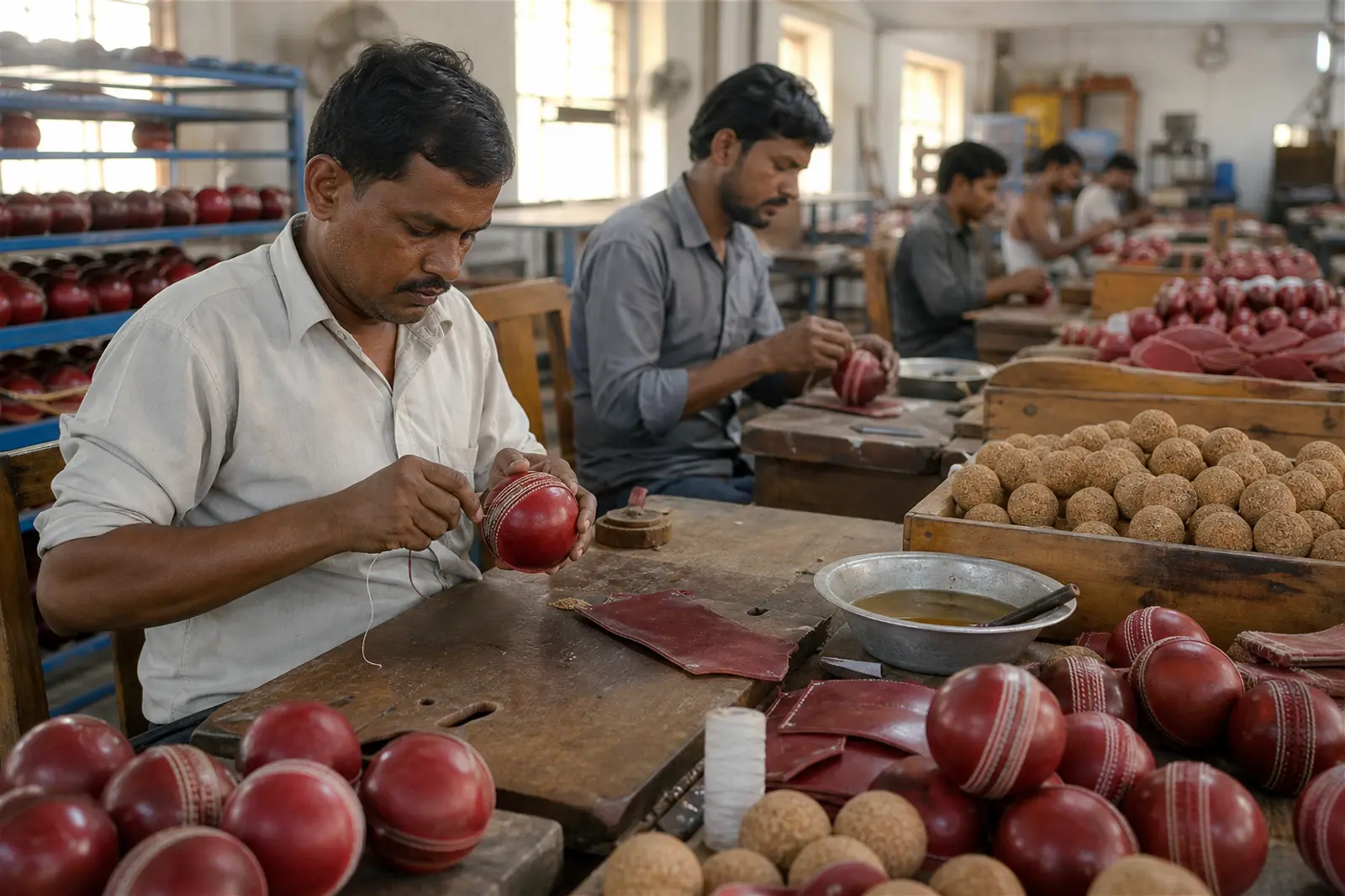
MCC Law 5 compliance is expected for match-grade programmes in Tier 1 markets; basic weight and circumference conformity suffices for Tier 3 and Tier 4 volume markets. SGEPC RCMC verification is increasingly expected across all tiers during vendor onboarding.
Compliance expectations by destination market tier
Swipe →
Data table — swipe horizontally on small screens
| Market Tier | MCC Law 5 Required | SGEPC RCMC Expected | Sample QC Depth |
|---|---|---|---|
| Tier 1 (UK, Australia) | Yes — match-grade lines | Yes | Full weight, circumference, seam inspection |
| Tier 2 (UAE, USA) | Club/match grade varies | Increasingly yes | Weight, circumference, seam check |
| Tier 3 (Bangladesh, Sri Lanka) | Optional for club lines | Useful | Weight and seam durability focus |
| Tier 4 (Associate nations) | Not required | Useful | Basic weight and durability check |
Buyer Requirements
Buyer Requirements
Each destination market sets a different documentation and QC bar. Build market-specific requirements into your RFQ and production planning from day one — adding MCC Law 5 testing or branded box setup after bulk production starts is expensive and slow. The demand matrix above should drive which requirements apply to which SKUs in your assortment.
Country-wise Opportunities
Market Snapshot
First-order market entry sequencing should follow demand clarity and documentation readiness, not aggregate export volume alone. UAE and Bangladesh offer the lowest documentation bar for first proof-of-concept; UK and Australia offer the highest margin but require MCC Law 5 readiness and SGEPC-verified supplier identity.
Market entry sequencing for cricket ball exporters
Swipe →
Data table — swipe horizontally on small screens
| Market | Entry Difficulty | Margin Potential | Recommended Starting SKU |
|---|---|---|---|
| UAE | Low | Medium | Alum-tanned red club ball |
| Bangladesh | Low | Low–Medium | Red leather club grade |
| USA | Medium | Medium | White leather club + tennis-ball cricket |
| South Africa | Medium | Medium–High | Mixed grade red leather assortment |
| Sri Lanka | Medium | Medium | Red leather club/match grade |
| Australia | High | High | MCC Law 5 red leather match ball |
| UK | High | High | MCC Law 5 red leather match ball |
| Associate nations | Low | Low–Medium | Alum-tanned club + synthetic training |
Sourcing Checklist
Checklist
Exporter Assortment Planning Checklist
Buyer Assortment Selection Checklist
Compliance Checklist
Checklist
Compliance Notes
Common Demand-Planning Mistakes
Most assortment misallocation in cricket ball exports traces back to a small set of avoidable mistakes — recognising them early saves entire production cycles.
Common demand-planning mistakes and corrective actions
Swipe →
Data table — swipe horizontally on small screens
| Mistake | Consequence | Corrective Action |
|---|---|---|
| Shipping MCC Law 5 match balls to price-sensitive markets | Slow sell-through, margin erosion | Use demand matrix to match grade to market tier |
| Identical assortment across all countries | Wrong SKU mix in multiple markets | Build market-specific SKU lists from matrix |
| Ignoring white-ball and tennis-ball demand in USA/UAE | Missing fastest-growing segments | Add white and tennis-ball lines to Tier 2 assortments |
| Branded box packaging for volume wholesale markets | Unnecessary cost eroding margin | Match pack format to channel, not habit |
| Missing seasonal calendar by 4–6 weeks | Arrival after season start | Plan production 10–14 weeks before season |
| No synthetic training line in assortment | Missing academy and net-facility channel | Add synthetic SKU for Tier 1 and Tier 4 markets |
Future Market Trends
Key Statistics
Through 2030, white leather match ball and tennis-ball cricket demand will grow faster than traditional red leather match ball volume, driven by USA league expansion, UAE diaspora cricket, and T20 format growth globally. MCC Law 5 match-grade red leather will retain premium positioning in UK and Australian club channels but represent a shrinking share of total unit volume as practice and informal cricket segments expand.
Synthetic training balls and indoor cricket products will gain share in Tier 1 markets as academy and net-facility infrastructure expands. Exporters who build flexible Meerut production plans spanning leather, synthetic, and tennis-ball lines will capture disproportionate share of multi-segment distributor programmes.
Challenges & Solutions
Demand-planning challenges cluster around assortment misallocation, seasonal timing, and packaging mismatch — all manageable with the matrix framework above.
Demand-planning challenges and practical solutions
Swipe →
Data table — swipe horizontally on small screens
| Challenge | Root Cause | Solution |
|---|---|---|
| Slow sell-through in new market | Wrong ball type or grade for channel | Apply demand matrix before first order |
| Missed season window | Production started too late | Plan 10–14 weeks before destination season |
| Packaging rejection at retail | Bulk carton sent to retail channel | Match pack format to channel in RFQ |
| Margin erosion on volume markets | Match-grade pricing in club market | Use tier-appropriate FOB bands from pricing table |
| Buyer requests unplanned ball type | Incomplete assortment planning | Pre-build white, synthetic, and tennis-ball SKUs |
Expert Insights
Expert Insight Box
Altus Exports supports international buyers and exporters with demand-aligned cricket ball sourcing from verified Meerut production — matching ball type, colour, grade, and packaging to destination market requirements. We operate as a product sourcing company in India and global sourcing partner for multi-market cricket ball programmes.
Conclusion
- Next step for exporters: Apply the demand matrix to your top three target markets and build a market-specific SKU list before production planning.
- Next step for buyers: Share your destination market and channel — we align ball type, colour, and grade to your requirements.
- Review source cricket balls directly from India for the buyer-side sourcing playbook.
- Review top cricket ball products exported from India for product-level specification detail.
- Explore merchant exporter services, export products from India, or contact Altus Exports directly.
Cricket ball demand planning starts from destination market character — not from Meerut production convenience. The demand matrix in this guide maps ball type, colour, leather grade, weight class, and packaging against country and channel, giving exporters and buyers a repeatable framework for assortment decisions. Red leather MCC Law 5 match balls belong in UK and Australian club channels; alum-tanned club balls and tennis-ball cricket products belong in UAE, USA, Bangladesh, and associate nation volume programmes; South Africa wants the full ladder.
Build your market-specific SKU list from the matrix, align production to seasonal calendars, match packaging to channel, and model landed cost per destination tier before committing Meerut capacity. International buyers who prefer a single accountable partner for demand-aligned sourcing can work with Altus Exports across multi-market cricket ball programmes.