
Cricket Ball Export Documentation Checklist: IEC, SGEPC & MCC Law 5
By Saurabh Mittal, Founder, Altus Exports
A document-by-document cricket ball export checklist for Meerut and Jalandhar manufacturers — IEC, GST, SGEPC RCMC, commercial invoice, packing list, shipping bill, bill of lading/AWB, certificate of origin, MCC Law 5 weight and circumference compliance notes, leather grade declarations, and pre-shipment QC logs under HS 95066920. Covers HS declaration controls, broker handoff, and a 48-hour pre-shipment audit.
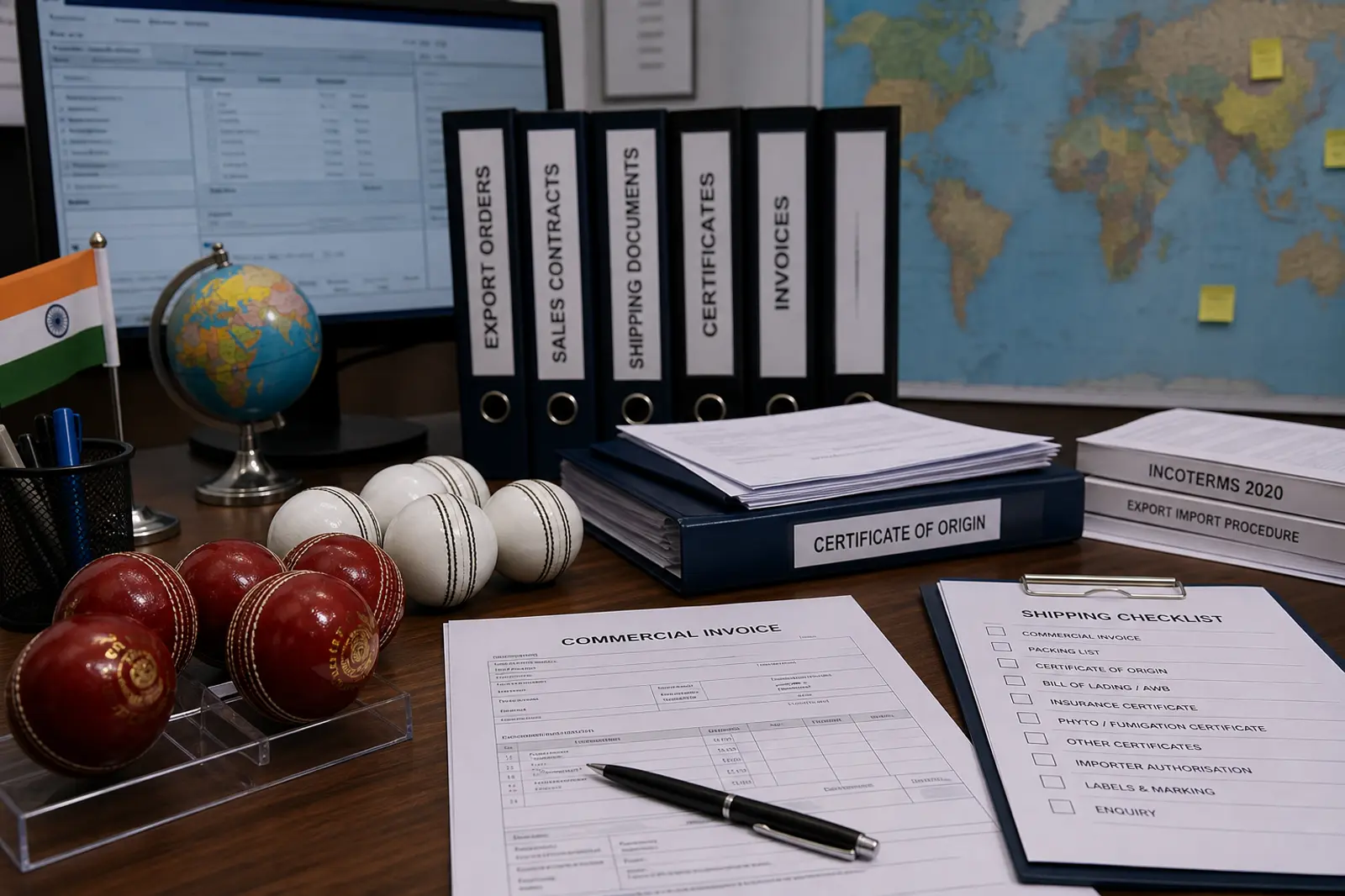
Cricket ball shipments from India fail documentation review for a short, repeatable list of reasons — a packing list that does not reconcile with the commercial invoice, an HS declaration that does not match the leather grade and ball type inside the carton, or an MCC Law 5 match-grade claim on an invoice with no weight and circumference log behind it. None of these are exotic problems. They are the same document-discipline failures that stall any export category, applied to a product where buyers increasingly ask pointed questions about alum-tanned leather grade, seam shape, rebound, and tolerance compliance before they will sign a purchase order.
Meerut remains India's primary cricket ball manufacturing hub — hand-stitched red and white match balls, alum-tanned training grades, synthetic and tennis-ball lines, and junior formats — with Jalandhar contributing complementary sports-goods capacity. Cricket balls move out under HS 95066920 (cricket balls, India ITC-HS), and the exporters who ship cleanly, order after order, treat the document pack as production infrastructure rather than a task to finish the night before cargo cutoff.
This checklist is deliberately narrow in scope. It covers the document-by-document set every cricket ball shipment needs, the HS declaration controls that keep 95066920 filings clean, MCC Law 5 compliance notes for match and training programmes, and how to hand a complete pack to your CHA or freight broker without last-minute amendments. It does not explain why SGEPC registration matters strategically or which export markets to prioritise — those questions are covered in SGEPC Registration Benefits for Cricket Ball Exporters and Best Countries for Indian Cricket Ball Exports. Use this guide as the operational reference you keep open on every sailing.
Key Takeaways
Summary Box
- Every cricket ball shipment needs a core document set — commercial invoice, packing list, shipping bill, bill of lading/AWB, and certificate of origin — reconciled as one interlocking pack, not five separate PDFs.
- HS 95066920 covers cricket balls specifically. Declare ball type, leather grade, colour, and intended use precisely; a generic 'sports balls' description invites a classification query at both origin and destination.
- IEC, GST export invoice compliance, and SGEPC RCMC are the non-negotiable foundations. Without a valid IEC you cannot file a shipping bill; SGEPC evidence speeds buyer onboarding and fair access.
- If any invoice line references MCC Law 5 match-grade status, attach the underlying weight and circumference compliance log and seam QC notes. A match-grade claim without paperwork behind it is a dispute waiting to happen.
- Leather grade (alum-tanned match vs. training), ball colour (red/white), and weight class belong on the commercial invoice and packing list in the same language, every time — buyers cross-check these against the sample they approved.
- Run a 48-hour pre-shipment document audit and hand your CHA a complete, reconciled pack — not a partial one they have to chase you to finish.
Executive Summary
Summary Box
- Foundations: IEC (DGFT), GST export invoicing with LUT, SGEPC RCMC, AD code registered at your export port.
- Core set: commercial invoice, packing list, shipping bill (ICEGATE), bill of lading or AWB, certificate of origin, insurance certificate where CIF/CIP applies.
- Cricket-ball-specific attachments: leather grade declaration, MCC Law 5 weight/circumference compliance note, seam QC log, PSI report, ISPM-15 evidence for wood packaging.
- Discipline: reconcile every document against the others 48 hours before cutoff, then hand a complete pack to your CHA and the buyer's broker.
This is an operational checklist, not a strategy guide. It exists to answer one question precisely: what documents does a cricket ball shipment from Meerut or Jalandhar need, in what order, with what content, and handed to whom. Cricket-specific twists — leather grade and alum-tanning declarations, MCC Law 5 weight and circumference compliance notes, and seam integrity logs — sit alongside the universal India export document set.
Treat the checklist as three layers: foundational registrations (IEC, GST, SGEPC) that must exist before any shipment; the core shipment document set (invoice, packing list, shipping bill, transport document, certificate of origin) that applies to every cricket ball consignment; and category-specific attachments (weight/circumference logs, leather grade declarations, MCC Law 5 compliance notes, pre-shipment inspection reports, ISPM-15 wood packaging evidence) that apply when the buyer, the market, or the product configuration calls for them.

Market Size & Industry Overview
Key Statistics
India's toys, games and sports requisites sector (HS Chapter 95) posted an all-time high of roughly US$570.95 million in exports in FY 2024-25 (DGCIS). Within that basket, cricket balls under ITC-HS 95066920 exported about ₹35 crore in FY 2024-25 (TradeStat EIDB / Ministry of Commerce) — a useful cricket-ball-specific planning figure rather than treating all sports-goods totals as cricket-ball volume. Meerut (Uttar Pradesh) is the dominant cricket ball cluster; Jalandhar (Punjab) contributes broader sports-goods manufacturing that includes ball lines alongside other equipment categories.
Both clusters ship under the same core document set described in this guide. The differences are in leather grade mix, alum-tanning process, and match vs. training positioning — not in the number of documents required. Buyers sourcing match-grade red leather balls for club and first-class programmes ask sharper documentation questions than buyers importing synthetic or tennis-ball lines for school and academy channels.
Cricket ball and sports-goods export snapshot (India) — verified directional figures
Swipe →
Data table — swipe horizontally on small screens
| Metric | Approximate Figure | Source Basis |
|---|---|---|
| India HS Chapter 95 exports, FY 2024-25 | ~US$570.95 million (all-time high) | DGCIS brief report on toys/games/sports requisites |
| India ITC-HS 95066920 (cricket balls) exports, FY 2024-25 | ~₹35 crore (+13.11% YoY directional) | TradeStat EIDB / Ministry of Commerce |
| India ITC-HS 95066920 (cricket balls) imports, FY 2024-25 | ~₹8 crore (+31.32% YoY directional) | TradeStat EIDB / Ministry of Commerce |
| Primary cricket ball manufacturing hub | Meerut (Uttar Pradesh) — hand-stitched leather match and training lines | SGEPC / industry cluster profiles |
| Secondary sports-goods cluster | Jalandhar (Punjab) — broader sports goods including ball categories | SGEPC / industry cluster profiles |
| Key buyer scrutiny driver | MCC Law 5 weight/circumference tolerance for match programmes | MCC Laws of Cricket / buyer QC protocols |
Export Statistics
Key Statistics
Documentation volume scales with shipment frequency, not just container size. A Meerut exporter running weekly LCL consolidations to three buyers needs the same reconciliation discipline as one running a monthly FCL programme — the difference is how many parallel document sets are in flight at once, and how easy it is for one shipment's paperwork to drift from another's template if nobody owns the checklist centrally.
For India's broader sports goods and toys basket (HS Chapter 95), the United Kingdom, Australia, South Africa, and the United Arab Emirates are consistently among the largest cricket-playing destination markets. Cricket-ball-specific destination mix can differ by ball type — match-grade leather programmes skew toward UK, Australia, and South Africa; synthetic and tennis-ball lines often serve school, academy, and retail channels across a wider geography. Each corridor layers its own document expectations on top of the universal India export set.
Where Documentation Complexity Concentrates by Shipment Type
Swipe →
Data table — swipe horizontally on small screens
| Shipment Pattern | Documentation Risk | Mitigation |
|---|---|---|
| Weekly LCL to multiple buyers | Template drift between buyers/orders | One master template, buyer-specific fields only |
| Monthly FCL, single buyer | Fewer shipments but larger single-document error impact | Mandatory 48-hour audit before every sailing |
| Mixed-grade container (match + training leather) | Blended invoicing across leather grades | Separate invoice lines per grade and colour |
| First-time buyer, new market | Unfamiliar destination document rules | Confirm requirements with buyer's broker before production |
Import Statistics
Key Statistics
Destination customs authorities in cricket's major import markets are not evaluating seam craftsmanship on paper; they are comparing your documents against each other and, on inspection, against the cargo itself. The UK, Australia, South Africa, and the UAE import significant cricket equipment volumes from Asia and apply routine document-consistency checks alongside product-specific rules — MCC Law 5 tolerance expectations for match balls, REACH-aware materials declarations for leather treatments in the EU and UK, and ISPM-15 checks on wood packaging in Australia in particular.
Buyers in these markets increasingly ask for a sample invoice and packing list format before placing a first order, precisely because they have been burned before by exporters whose documents did not match their cargo on prior imports from other origin countries. Showing a clean, reconciled template during buyer onboarding — with MCC Law 5 compliance notes where match programmes apply — is itself a credibility signal.
Destination Document Expectations Beyond the Core Set
Swipe →
Data table — swipe horizontally on small screens
| Market | Additional Document Expectation | When It Applies |
|---|---|---|
| United Kingdom | MCC Law 5 weight/circumference log for match balls | Club, county, and retail match-grade programmes |
| Australia | ISPM-15 wood packaging evidence; MCC Law 5 notes for match lines | Any wood pallets/crates; match-grade club supply |
| South Africa / Zimbabwe corridor | Certificate of origin; leather grade declaration | Wholesale and club supply programmes |
| UAE / GCC | Certificate of origin; retail labelling for packaged units | Store-facing retail packs, not bulk trade packs |
Product Categories
Summary Box
This checklist does not cover product selection in depth — see Top Cricket Ball Products Exported from India for that comparison. What matters here is that ball type changes what your documents must say, not how many documents you need. Hand-stitched red and white match balls, alum-tanned training grades, synthetic balls, tennis balls, practice dimple balls, and junior formats all move under HS 95066920, but the invoice and packing list description must reflect the actual leather grade, colour, construction, and intended use shipped in that specific carton.
Promotional and novelty cricket balls, indoor training lines, and bulk school packs also classify under 95066920 but carry their own weight and circumference tolerances where MCC Law 5 applies. Whatever the SKU, the discipline is identical: describe it the way you would describe it to a technically informed buyer, not the way you would describe it on a catalogue thumbnail.
Ball Type to Document Mapping
Swipe →
Data table — swipe horizontally on small screens
| Ball Type | Invoice/Packing List Must State | Common Documentation Slip |
|---|---|---|
| Red leather match ball (alum-tanned) | Grade, alum-tanning, hand-stitched, MCC Law 5 reference | Match-grade claim without weight/circumference log |
| White leather match ball | Same as red, plus white-leather grade note | Treated identically to red on paperwork without colour line |
| Training / club leather ball | Training grade, leather type, weight class | Blended with match balls under one generic line |
| Synthetic / tennis / practice | Material, intended use, weight class | Match-grade MCC Law 5 language applied incorrectly |
Manufacturing Overview
Export Tip
Cricket ball manufacturing in Meerut spans small hand-stitching units closing alum-tanned leather covers over cork-and-rubber cores, mid-size factories producing training and club lines at higher volume, and synthetic-ball lines packing at denser carton rates. The seam shape, leather grade, and core composition are documentation details buyers ask about when a shipment includes mixed grades or when a match programme requires lot-specific QC evidence.
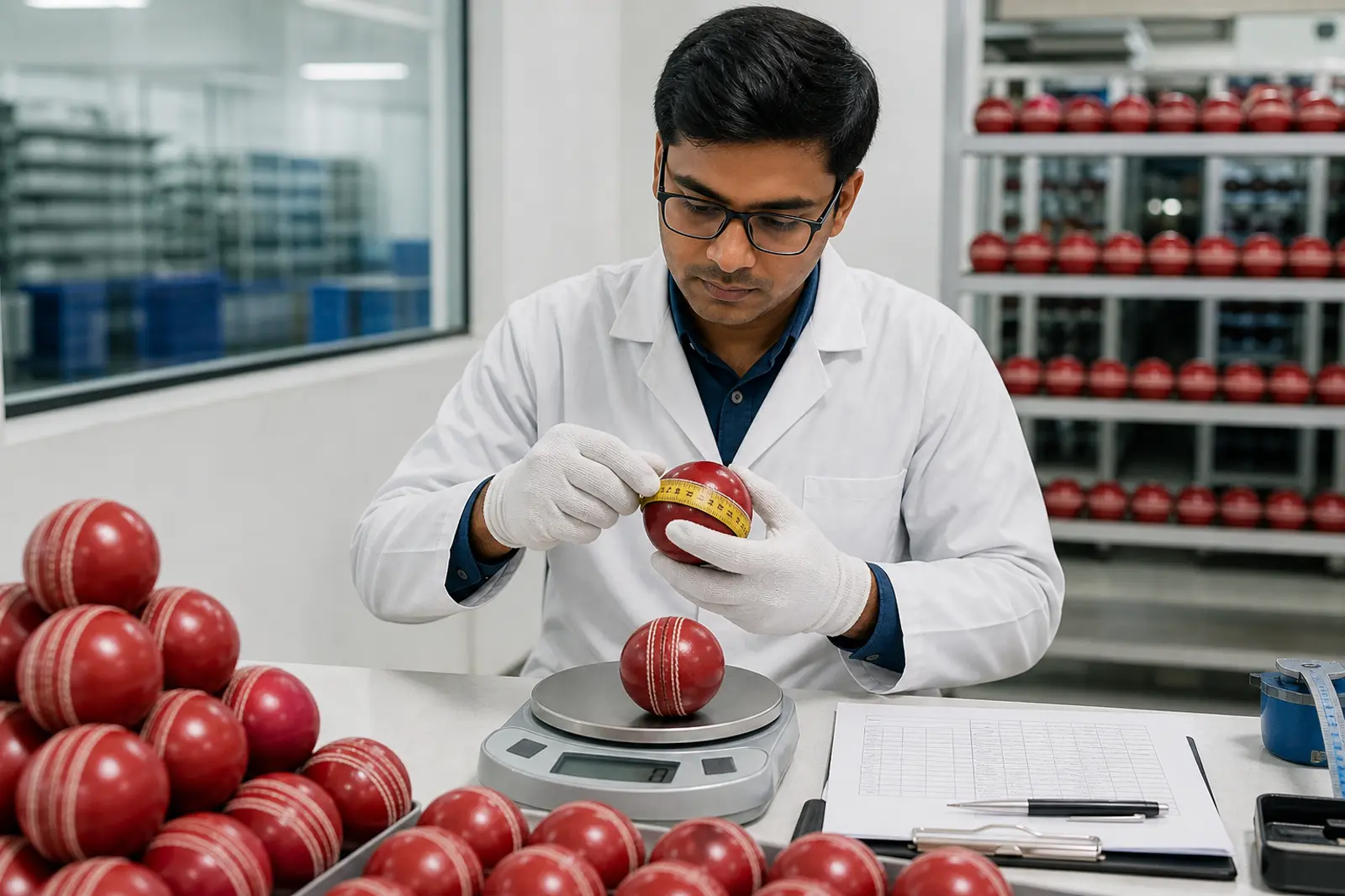
Whatever the production line, the documentation obligation is the same: the finished ball's leather grade, colour, weight class, and seam specification need to be verifiable against what QC actually signed off, not against a generic factory spec sheet reused across every order.
Export Process: Where Documentation Fits
Export Tip
Documentation is not a final step tacked onto production — it should run in parallel with it, starting the day an order is confirmed. Certificate of origin applications, PSI scheduling, and MCC Law 5 compliance log preparation all carry lead times that a cutoff-week rush cannot compress. The sequence below is deliberately document-focused; for the full sourcing-to-shipment process, see How to Export Cricket Balls from India.
1. Order confirmation and document template lock
Lock invoice and packing list templates against the signed sample specification — leather grade, colour, ball type, weight class, and seam detail — before bulk production starts. This is the single highest-leverage moment to prevent downstream mismatches.
2. Mid-production certificate and PSI scheduling
Apply for certificate of origin and, where required, book pre-shipment inspection while production is underway — not after cartons are already sealed. If the order references MCC Law 5 match-grade status, confirm the weight and circumference log workflow is scheduled with enough lead time to complete before cutoff.
3. Packing and reconciliation
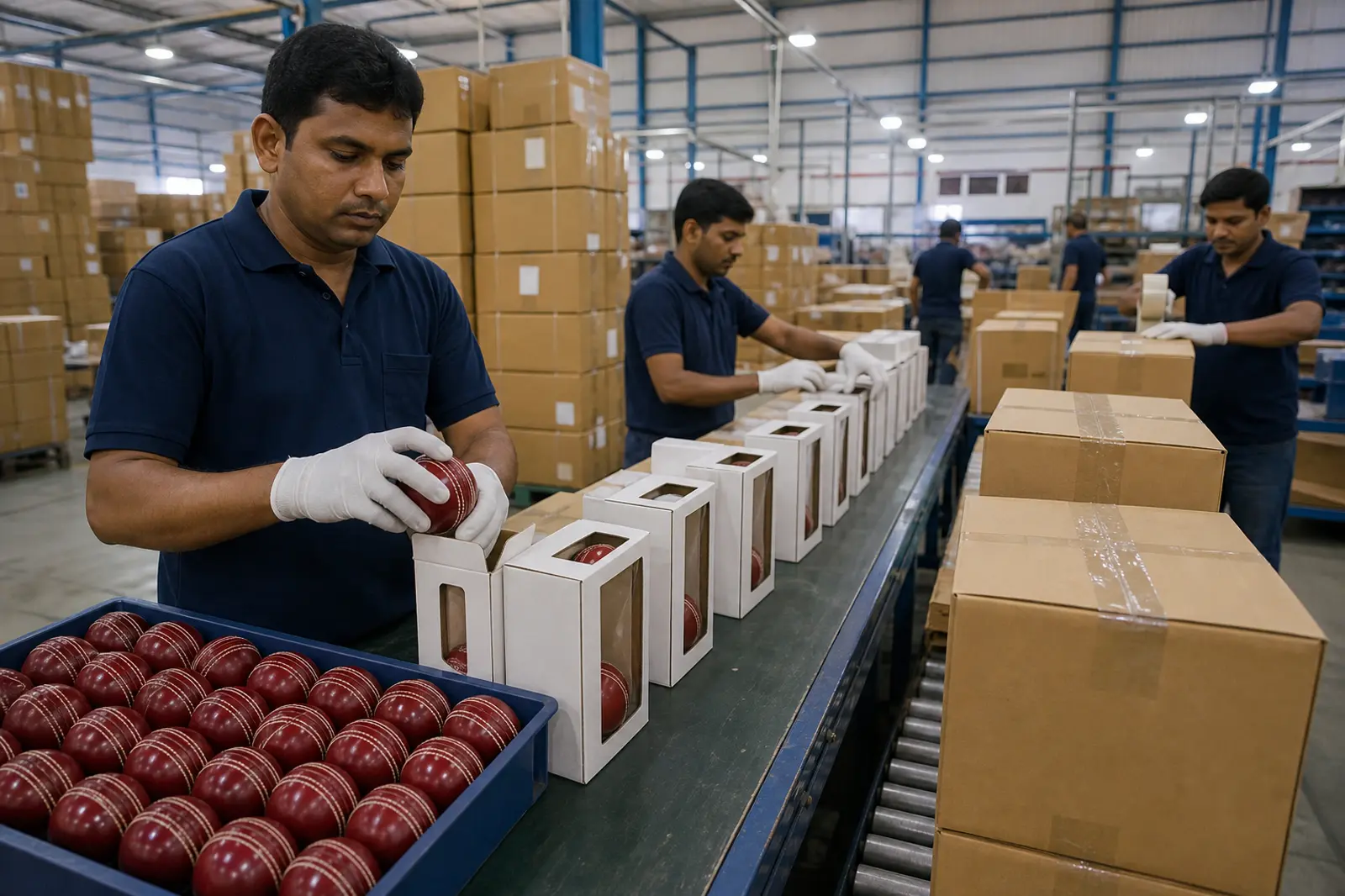
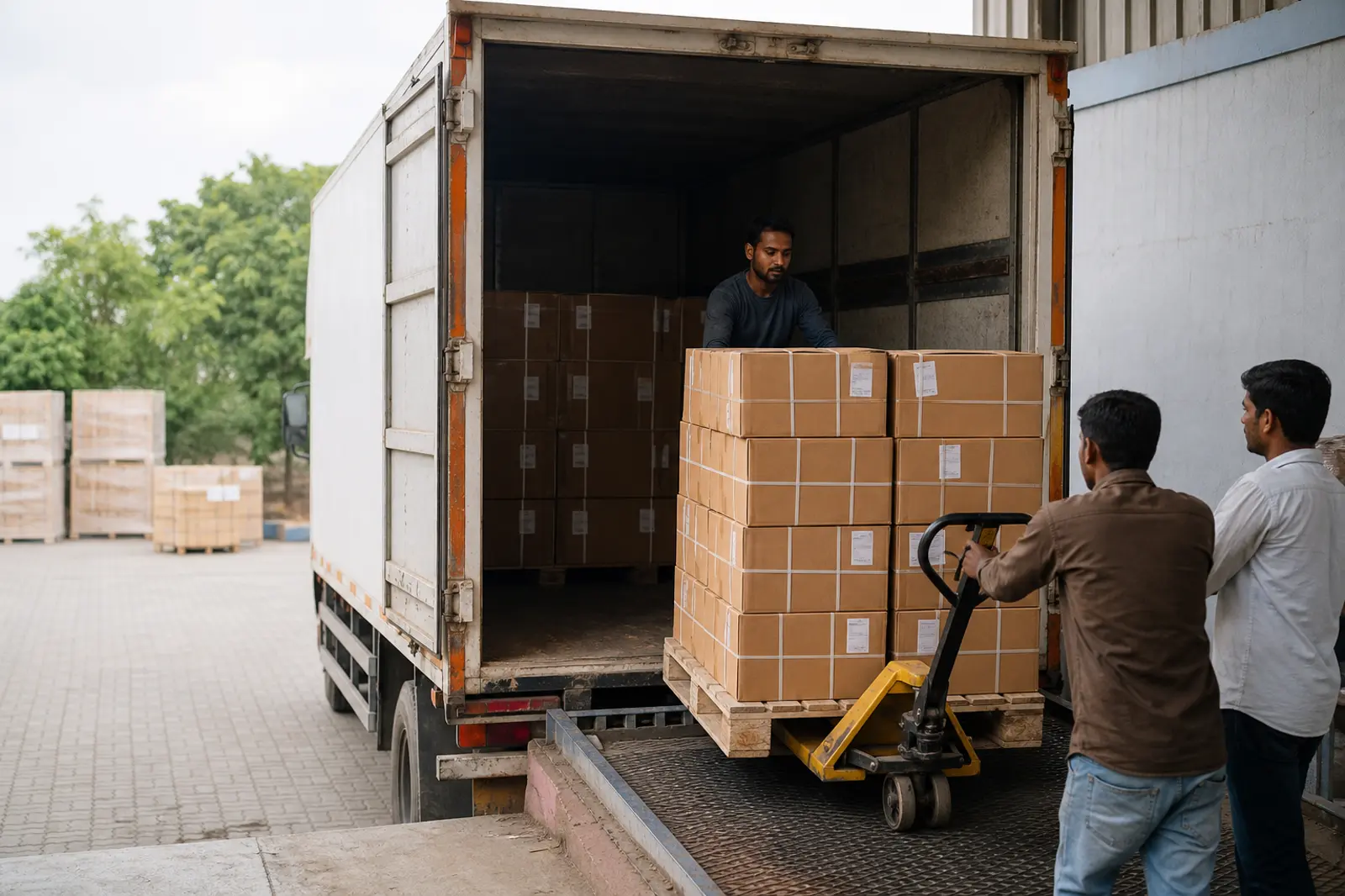
Reconcile the packing list against actual carton counts on the factory floor as cartons are sealed, not from a spreadsheet built before packing started. Shipping marks printed on cartons must match the packing list exactly. Leather match balls typically ship 6–24 pieces per master carton depending on individual box configuration.
4. Shipping bill filing and broker handoff
File the shipping bill through ICEGATE with HS 95066920 and a description that mirrors the commercial invoice. Hand the complete, reconciled document pack to your CHA and share drafts with the buyer's import broker before the vessel sails.
Pricing Analysis
Buyer Tip
Full FOB pricing by leather grade and ball type lives in Top Cricket Ball Products Exported from India; this section covers only the cost lines documentation adds. Certificate of origin fees, CHA filing charges, PSI fees, MCC Law 5 compliance testing costs, and insurance premiums under CIF terms are all real costs that belong in your landed-cost model, not treated as invisible overhead absorbed silently into margin.
Documentation-Related Cost Lines to Budget
Swipe →
Data table — swipe horizontally on small screens
| Cost Line | Typical Trigger | Planning Note |
|---|---|---|
| Certificate of origin (chamber-issued) | Every shipment claiming origin/preference | Apply early; do not wait for cutoff week |
| CHA / customs filing fee | Every shipment | Confirm fee structure per shipping bill, not per container |
| PSI / independent inspection fee | Buyer-mandated or high-value orders | Book inspection slot alongside production milestone |
| MCC Law 5 weight/circumference testing | Match-grade programmes and buyer QC mandates | Log per lot, not as a one-time factory average |
| Insurance certificate | CIF/CIP transactions | Match cover value to actual invoice value, not a rounded estimate |
MOQ Analysis
Buyer Tip
MOQ strategy and tiering are covered in the sourcing guides linked throughout this post; here, the relevant point is that MOQ size does not change which documents you need, only how carefully you must manage packing list detail. A small trial order of one leather grade and colour is straightforward to document. A larger consolidated order mixing red match balls with white training lines needs the packing list broken down per SKU inside each carton, not summarised at pallet level.
MOQ Pattern and Packing List Complexity
Swipe →
Data table — swipe horizontally on small screens
| Order Pattern | Packing List Complexity | Recommended Practice |
|---|---|---|
| Single SKU trial order | Low | Standard packing list template, quick reconciliation |
| Mixed grade/colour consolidation | High | Per-carton SKU breakdown, not pallet-level summary |
| Private-label / branded programme | Medium–High | Add artwork approval reference to the document pack |
Packaging
Packaging documentation is where many cricket ball shipments lose time. Match balls typically ship in individual boxes inside master cartons; synthetic and tennis-ball lines pack at higher density. The packing list must state balls per carton, gross/net weight, and carton dimensions in a way that matches what a customs officer or the buyer's warehouse team will find when a box is opened. Leather balls are weight-denser than lightweight sports goods — a packing list showing carton weights copied from an unrelated product category is an immediate red flag.
For retail-ready programmes, the packing list should also note whether individual retail boxes, printed sleeves, or private-label artwork are inside the master carton, since destination retail compliance sometimes ties back to what the customs declaration described.
Packaging Detail Required on the Packing List
Swipe →
Data table — swipe horizontally on small screens
| Field | Why It Matters | Common Error |
|---|---|---|
| Balls per carton | Reconciles against invoice quantity | Rounded estimate instead of actual count |
| Gross / net weight per carton | Cross-checked by customs against declared cargo weight | Weight not reconciled with actual scale reading |
| Carton dimensions | Used for container/CBM planning by freight forwarder | Generic dimension reused across different SKUs |
| Individual box / retail pack contents | Matches destination retail compliance expectations | Bulk trade description omitting retail packaging |
Container Loading
Export Tip
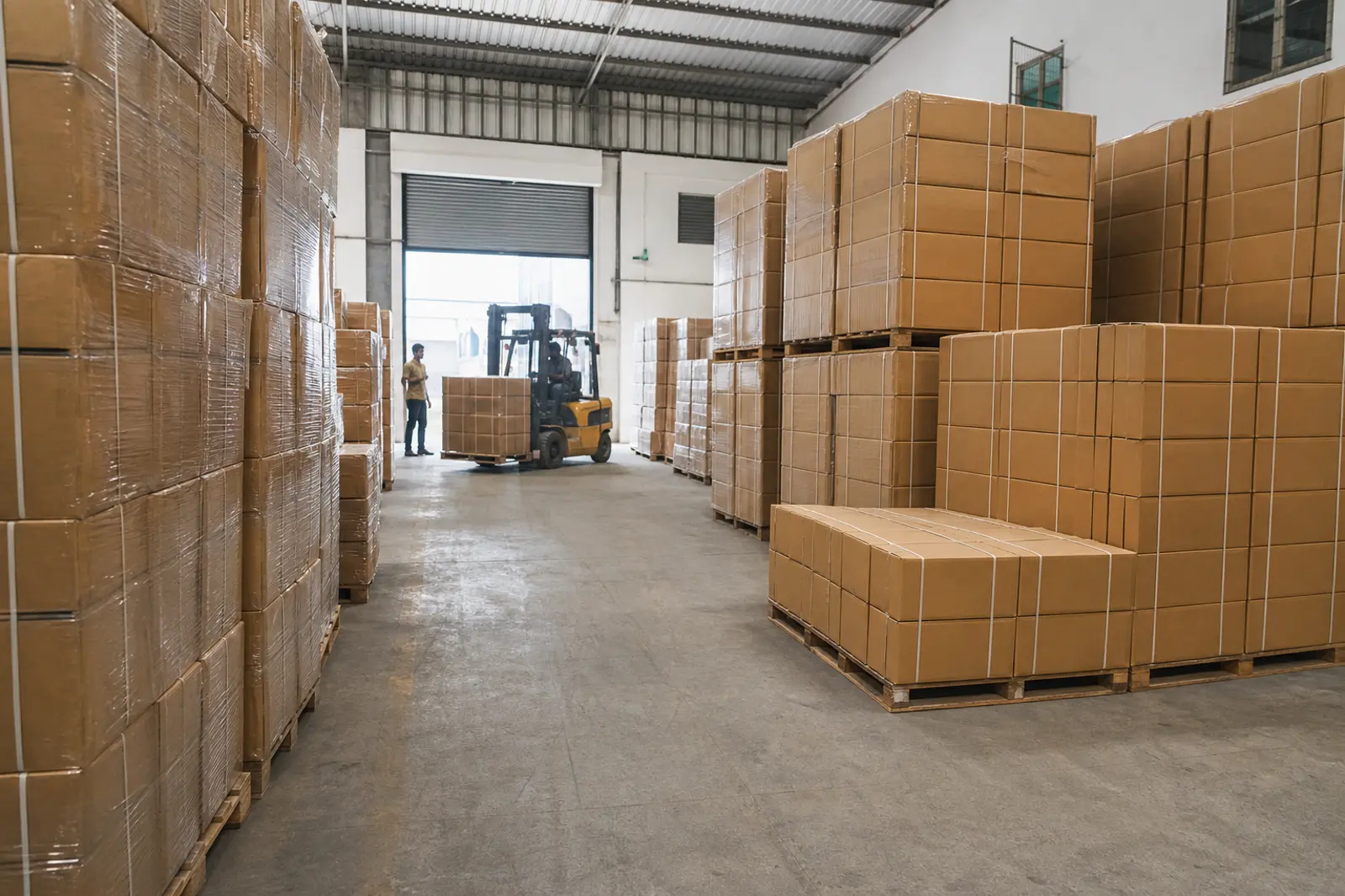
Container and seal numbers appear on the bill of lading and must match what the CHA files and what the destination terminal records on arrival. Cricket ball shipments are weight-denser than inflatable sports balls — FCL plans balance carton stacking with moisture protection for long sea transit, particularly for alum-tanned leather covers. Mixed-grade containers still need carton blocks segregated by SKU so the packing list breakdown holds up during unloading.
Container Documentation Checkpoints
Swipe →
Data table — swipe horizontally on small screens
| Checkpoint | Document Reference | Verify Before Gate-In |
|---|---|---|
| Container number | Bill of lading / shipping bill | Matches physical container, not a placeholder |
| Seal number | Bill of lading | Recorded at stuffing, not estimated afterward |
| Carton block segregation | Packing list | SKU groupings match physical loading plan |
Shipping: Bill of Lading, AWB, and Transport Documents
The bill of lading (sea) or airway bill (air) is the carriage contract and title document. Shipper, consignee, notify party, port of loading and discharge, and cargo description must match the invoice and packing list exactly — a transposed company name or an incomplete notify-party address can hold cargo release even when every other document is correct.
Confirm freight prepaid or collect terms align with the agreed Incoterm before the transport document is issued. Cricket ball shipments moving under FOB from Nhava Sheva or Mundra are the norm for bulk orders originating in Meerut via inland container depots at Delhi ICD or ICD Ludhiana; air freight AWBs are more common for urgent sample dispatches and small trial orders of match-grade leather balls.
Certifications
Compliance Notes
This is the heart of the cricket ball documentation pack. Four foundational registrations must exist before any shipment: a valid IEC from DGFT, GST compliance with an export invoice series (typically under a Letter of Undertaking for zero-rated supplies), SGEPC RCMC evidence, and an AD code registered at your chosen export port. None of these are optional if you intend to file a shipping bill and receive foreign remittance cleanly.
Beyond the foundations, category-specific certificates apply when the order calls for them: a leather grade and construction declaration signed by QC, an MCC Law 5 weight and circumference compliance note for match programmes, a pre-shipment inspection report, an insurance certificate under CIF/CIP terms, and ISPM-15 treatment evidence for any wood packaging materials used in the shipment.
Cricket Ball Export Document Pack — Full Set
Swipe →
Data table — swipe horizontally on small screens
| Document | Purpose | Issued/Coordinated By | Beginner Tip |
|---|---|---|---|
| IEC | Legal export registration | DGFT (exporter) | Keep PAN and bank details consistent with GST records |
| GST export invoice / LUT | Zero-rated export supply compliance | Exporter / accountant | Reconcile HSN codes with the shipping bill before filing |
| SGEPC RCMC | Credibility signal, fair access | SGEPC | Keep certificate and renewal status shareable as a PDF |
| Commercial invoice | Value, description, Incoterm, HS code | Exporter | State leather grade, colour, and ball type precisely |
| Packing list | Cartons, quantities, net/gross weight | Exporter | Reconcile balls per carton before cutoff |
| Shipping bill | Indian customs export declaration (ICEGATE) | Exporter / CHA | Mirror invoice line items and HS 95066920 exactly |
| Bill of lading / AWB | Carriage contract and title document | Carrier / forwarder | Confirm consignee and notify party details early |
| Certificate of origin | Origin proof / preference claims | Chamber / authorised body | Apply as soon as quantities are confirmed |
| Insurance certificate | Cargo cover under CIF/CIP | Exporter / insurer | Match cover value to actual invoice value |
| Leather grade declaration | Verifies grade claims on invoice | Exporter QC | Reference approved sample photographs |
| MCC Law 5 compliance note | Weight/circumference tolerance evidence | Exporter QC / PSI | Log per lot against declared match-grade lines |
| Weight / circumference log | Tolerance compliance evidence | Exporter QC / PSI | Record against MCC Law 5 ranges, not a generic average |
| PSI report | Independent pre-shipment quality sign-off | Inspector / exporter | Cover seam, weight, and packaging condition together |
| ISPM-15 evidence | Wood packaging treatment compliance | Treatment provider | Required for many destinations, especially Australia |
Buyer Requirements
Buyer Requirements
- Current IEC and SGEPC RCMC evidence, shareable as PDFs on request.
- Sample commercial invoice and packing list format showing grade-level SKU detail.
- Leather grade and construction declaration template, referenced against approved sample photographs.
- MCC Law 5 weight and circumference log on file wherever a match-grade claim appears on the invoice.
- Written commitment to a pre-shipment document audit before every sailing, not just the first one.
Buyers reviewing a cricket ball exporter's documentation capability during vendor onboarding typically ask for the same handful of things before committing a meaningful order: current IEC and SGEPC evidence, a sample invoice and packing list format, a leather grade declaration template, and — where relevant to their resale channel — proof of MCC Law 5 compliance capability rather than a verbal assurance.
Buyers supplying club, county, academy, or retail programmes with technical scrutiny will ask pointed follow-up questions if a document set looks generic. Treat the request for a sample document pack as a normal part of serious buyer diligence, not an unusual demand.
Country-wise Opportunities
Market Snapshot
Market selection strategy belongs in Best Countries for Indian Cricket Ball Exports — this section covers only the document nuance that changes by destination once a market is already chosen.
United Kingdom
Club and county buyers expect MCC Law 5 weight and circumference compliance notes for match-grade leather balls. REACH-aware materials declarations matter for alum-tanning treatments and printed branding on retail packs.
Australia
Biosecurity enforcement on wood packaging is strict. Confirm ISPM-15 treatment evidence is attached and legible before cargo departs; an untreated pallet can trigger a fumigation hold that costs far more than the treatment itself. Match-grade club supply programmes also expect MCC Law 5 documentation.
South Africa and associate cricket nations
Wholesale and club supply buyers expect leather grade transparency and certificate of origin. Mixed red and white ball programmes need separate invoice lines, not blended descriptions.
UAE and GCC
Standard certificate of origin generally suffices for bulk trade shipments; retail-facing packaging may need Arabic-language labelling alongside English, which should be confirmed with the buyer before artwork is finalised.
Sourcing Checklist: The 48-Hour Pre-Shipment Document Audit
Checklist
Export Tip
- Cross-check commercial invoice, packing list, and shipping bill as one reconciled set — leather grade, colour, ball type, quantity, and weight must be worded identically across all three.
- Confirm HS 95066920 appears consistently on the invoice and shipping bill, with a description that reflects actual ball type and grade.
- Verify any MCC Law 5 match-grade claim on the invoice has a current weight and circumference log on file for that production lot.
- Confirm certificate of origin and insurance certificate (if CIF/CIP) are ready and dated correctly relative to expected arrival.
- Check shipping marks on physical cartons match the packing list exactly, carton by carton.
- Share the complete draft pack with your CHA and the buyer's import broker before the vessel departs.
Run this audit 48 hours before cargo cutoff on every shipment, regardless of how many times you have shipped to this buyer before. This is the point where a mismatch is a five-minute fix; after the vessel sails, it is a formal amendment process that costs time and money.
Common Buyer Mistakes
Common Mistakes Box
- Approving a sample without confirming the leather grade and colour details that will later appear on the commercial invoice, then disputing the invoice description after the fact.
- Requesting an MCC Law 5 match-grade claim on the invoice without confirming the exporter actually holds a current weight and circumference log for that specific SKU and lot.
- Providing incomplete or last-minute consignee/notify party details, forcing a bill of lading amendment after the vessel has already sailed.
- Assuming a low headline price includes certificate, inspection, and insurance costs that were never itemised in the quotation.
- Skipping review of the draft document pack before cutoff, then raising concerns only once cargo is already at the port of discharge.
Buyers occasionally contribute to documentation problems themselves — usually by treating paperwork as a formality rather than a working document that needs their input.
Future Market Trends
Key Statistics
ICEGATE and DGFT continue to push paperless and digitally verifiable filings, reducing physical document handling over time but not reducing the need for accuracy — a digital mismatch clears just as slowly as a paper one. Buyers in regulated markets are asking earlier and more specifically for leather grade, MCC Law 5, and compliance documentation before sampling, not after a first order is already placed.
Expect growing buyer demand for lot-specific weight and circumference logs tied to production batches rather than generic factory certificates, and continued tightening of wood-packaging biosecurity enforcement in markets like Australia. Exporters who build documentation into production planning now will adapt to these shifts with far less disruption than those still treating paperwork as a cutoff-week task.
Documentation Trend Signals for Cricket Ball Exporters
Swipe →
Data table — swipe horizontally on small screens
| Trend | Exporter Response |
|---|---|
| Digital/paperless customs filing expansion | Maintain the same reconciliation discipline in digital workflows |
| Lot-specific MCC Law 5 verification requests rising | Tie weight/circumference logs to production batches, not generic factory claims |
| Tighter wood-packaging biosecurity enforcement | Standardise on ISPM-15 treated pallets and dunnage across all export cartons |
| Earlier buyer diligence on leather grade claims | Share sample document pack during onboarding, not after first PO |
Challenges & Solutions
Most preventable cricket ball export delays trace back to a short, repeatable list of documentation errors.
Common Cricket Ball Export Documentation Challenges and Fixes
Swipe →
Data table — swipe horizontally on small screens
| Challenge | Solution |
|---|---|
| Blended grade/colour pricing on one invoice line | Separate invoice lines per leather grade, colour, and ball type |
| MCC Law 5 match-grade claim with no supporting log | Verify and attach a current weight/circumference log before invoicing the claim |
| Packing list quantity mismatch vs. actual carton count | Reconcile against physical count at the point of sealing, not a spreadsheet estimate |
| Late certificate of origin application | Apply as soon as production quantities are confirmed |
| Untreated wood packaging without ISPM-15 marks | Source only treated pallets and dunnage for export cartons |
| Shipping marks inconsistent with packing list | Print marks from the same reconciled data source used for the packing list |
| Documentation treated as a cutoff-week task | Start certificate, PSI, and MCC Law 5 log workflows in parallel with production |
Buyer, Exporter, and Compliance Checklists
Checklist
Compliance Notes
Conclusion
- Next step for manufacturers: share your current registrations (IEC, SGEPC) and ball range with Altus Exports for a documentation readiness review before your next sailing.
- Next step for buyers: send your ball type, leather grade, and destination-market requirements — we verify Indian cricket ball exporters and coordinate documentation and shipment on your behalf.
- Explore merchant exporter services, export products from India, global sourcing partner, and product sourcing company in India to choose the right support model for your cricket ball programme.
- Read How to Export Cricket Balls from India for the full end-to-end process, and SGEPC Registration Benefits for Cricket Ball Exporters for why that registration matters strategically.
- Compare markets in Best Countries for Indian Cricket Ball Exports and buyer demand patterns in Most Demanded Indian Cricket Balls by Country.
- Build buyer pipeline with How to Find International Buyers for Cricket Balls and Trade Shows and B2B Marketplaces for Cricket Ball Exporters.
- Review match-grade pathways in MCC Law 5 and Match-Grade Cricket Ball Export Opportunities and category depth in Top Cricket Ball Products Exported from India.
- Buyers sourcing directly should read Source Cricket Balls Directly from India.
A cricket ball export documentation checklist only works if it runs on every shipment, not just the first one when everyone is careful out of nerves. The failures that repeat — blended invoicing, unverified MCC Law 5 claims, late certificates, unreconciled packing lists — are all preventable with a 48-hour audit and documents prepared alongside production rather than after it.
Altus Exports coordinates exactly this workflow for cricket ball manufacturers in Meerut and Jalandhar and for the international buyers who source from them — aligning leather grade and MCC Law 5 declarations with production, scheduling PSI and compliance-log timelines against buyer requirements, and handing CHAs and destination brokers a complete, reconciled pack before cargo cutoff, not after a query arrives.