
Source Cricket Balls Directly from India: Importer Playbook
By Saurabh Mittal, Founder, Altus Exports
A practical importer playbook for sourcing cricket balls directly from India — leather RFQ specification, auditing Meerut stitching and alum-tanning units, sampling, weight and circumference QC, seam integrity verification, and landed-cost decision flow for buyers in the UK, Australia, South Africa, UAE, USA, Bangladesh, Sri Lanka, and associate cricket nations, with expert insight from Altus Exports.
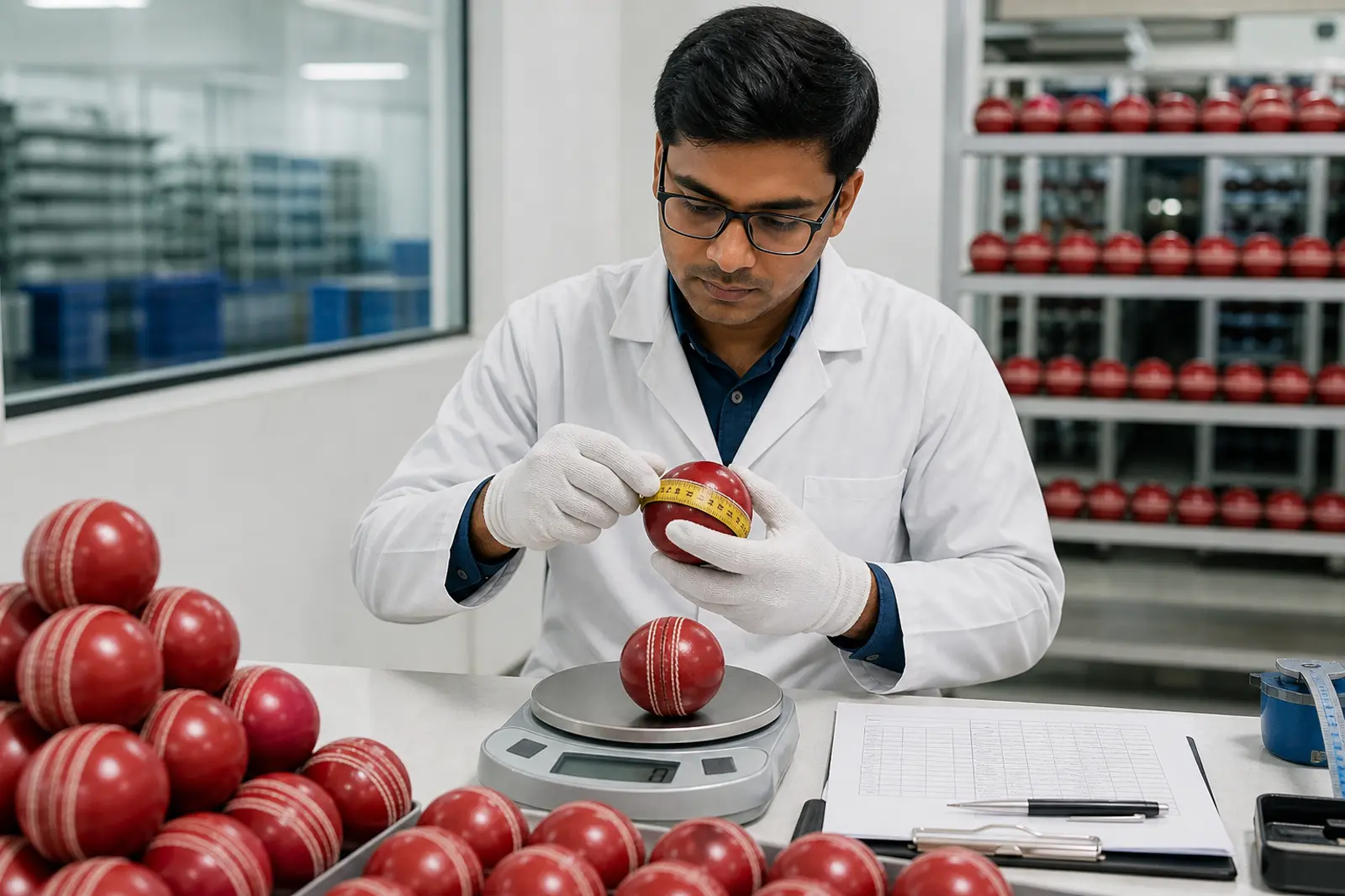
India's cricket ball sector offers international buyers a genuinely useful advantage: one country of origin covering red and white leather match balls, alum-tanned club and academy grades, synthetic training and indoor balls, and tennis-ball cricket lines, largely from Meerut in Uttar Pradesh — the primary global hub for leather cricket ball production — with supporting capacity in Jalandhar and adjacent Punjab sports goods clusters. For a buyer building a club supply programme, a retail match-ball range, or a school and academy replenishment contract, that breadth means fewer supplier relationships and one consolidated commercial invoice under HS 95066920 rather than importing match balls from one origin and practice balls from another. But that same breadth is also the complication: leather grade honesty, seam shape consistency, weight and circumference tolerance, and MCC Law 5 compliance claims vary enormously not just supplier to supplier but ball type to ball type, and a single shipment can legitimately span alum-tanned club balls and premium match-grade leather under the same HS heading.
Buyers who try to source cricket balls directly from India without a structured process run into the same recurring problems: a strong-looking sample followed by bulk-lot weight or circumference drift, seam failure traced to an undisclosed leather grade substitution, MCC Law 5 claims that do not hold up when a buyer's own lab retests a bulk carton, and a domestic season order that missed the shipping window because production was booked too close to the delivery deadline. None of these failures are inherent to Indian cricket ball sourcing — they are the predictable result of skipping verification, sampling, and calendar-planning steps under deadline pressure.
This guide is written for importers, sporting-goods retail buyers, club and academy procurement teams, wholesale distributors, and grassroots federation buyers in the UK, Australia, South Africa, UAE, USA, Bangladesh, Sri Lanka, and associate cricket nations who want to source cricket balls directly from India with a repeatable, lower-risk process. It walks through leather RFQ specification, auditing Meerut stitching and alum-tanning units, sampling, weight and circumference QC, seam integrity verification, and landed-cost decision flow. This guide focuses on the buyer-side sourcing process rather than exporter registration how-to or trade-show calendars — those are separate workstreams covered in SGEPC registration benefits for cricket ball exporters and trade shows and B2B marketplaces for cricket ball exporters. For destination-market context from the exporter's side, see Best Countries for Indian Cricket Ball Exports.
Key Takeaways
Summary Box
Executive Summary
Summary Box
This guide sets out a structured importer playbook for sourcing cricket balls directly from India: define specifications across every ball type and leather grade in your programme, identify and audit the right Meerut stitching and alum-tanning units (or a merchant exporter consolidating production), request samples with weight, circumference, and seam documentation, evaluate construction consistency against MCC Law 5 written standards, negotiate on a landed-cost basis, place a trial order with written terms, conduct pre-shipment inspection against the approved sample, and manage logistics through arrival.
Because India's cricket ball supply chain runs through a concentrated Meerut cluster with varying formalisation levels between individual stitching workshops, alum-tanning lines, and export houses, the single highest-leverage buyer action is independent verification — of IEC/SGEPC status, of sample-to-bulk leather discipline, and of MCC Law 5 claim accuracy for your destination market. Buyers who build this discipline into their first order convert faster into stable, repeat-programme relationships than buyers who source on marketplace photos and FOB price alone.
Market Size & Industry Overview
Key Statistics
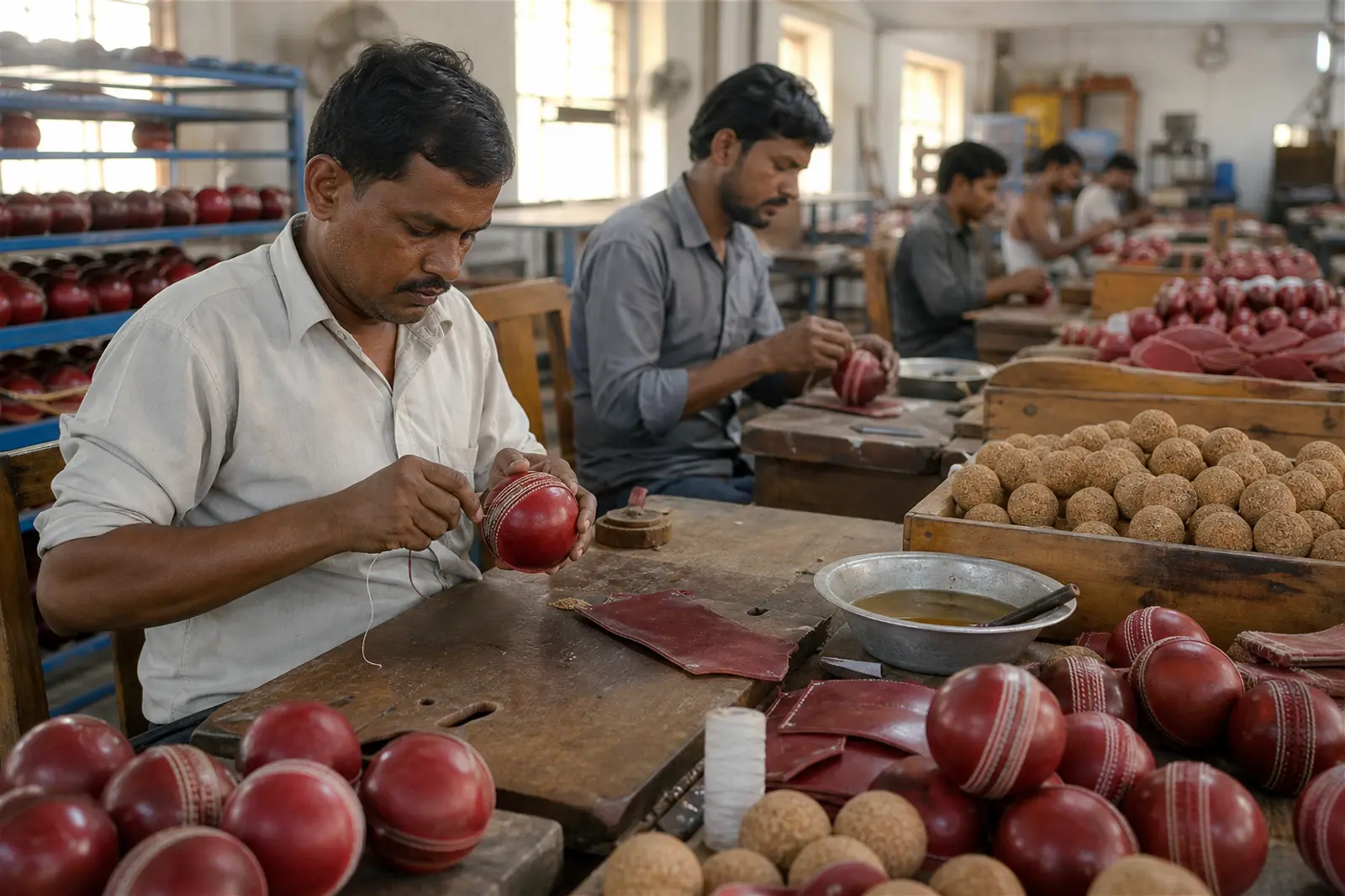
India's cricket ball economy is organised around Meerut in Uttar Pradesh as the primary global hub, with supporting synthetic and tennis-ball capacity in Jalandhar and adjacent Punjab sports goods clusters. Each export shipment is regulated at the entity level by IEC from DGFT and, in practice, SGEPC RCMC registration for most organised exporters. Meerut hosts stitching units, alum-tanning lines, and export houses producing the full leather spectrum — red and white match balls, alum-tanned club and academy grades, synthetic training balls, and tennis-ball cricket lines — all classified under HS 95066920 for balls and solid balls used in cricket.
Directionally, India remains a significant supplier of cricket balls under HS 95066920 into the UK, Australia, South Africa, UAE, USA, Bangladesh, Sri Lanka, and associate cricket nations — validate rank order and current volumes against the latest SGEPC sector releases and trade-data tables before quoting in buyer decks. What matters more for a buyer than any single export figure is understanding that this is a concentrated but multi-tier supply base: stitching workshops, alum-tanning lines, aggregators, export houses, and merchant exporters all sit between raw leather sourcing and your container, with formalisation and QC maturity varying meaningfully across each node.
Buyers who understand this structure make better counterparty decisions — a Meerut stitching unit with excellent hand-stitched match-ball capability but no direct export registration is not disqualifying, but it changes who is contractually and legally accountable for your shipment, and typically means you are actually buying through an aggregator or merchant exporter rather than the stitching unit itself, whether or not that is made explicit upfront.
Cricket ball supply chain structure and buyer implications
Swipe →
Data table — swipe horizontally on small screens
| Supply Chain Node | Role | Buyer Implication |
|---|---|---|
| Stitching units (Meerut) | Hand-stitched red/white leather match and club balls | Excellent for seam quality; verify weight and circumference checks |
| Alum-tanning lines (Meerut) | Leather preparation for match and club grades | Leather grade disclosure must be explicit in RFQ |
| Synthetic ball assemblers | PVC/rubber training and indoor cricket balls | Seam and rebound QC differ from leather lines |
| Tennis-ball cricket lines | Rubber-core tennis balls for informal cricket | Confirm bounce and durability specs per destination |
| Aggregators | Consolidate multi-unit output within Meerut cluster | Leather consistency can weaken without written tolerance |
| Export houses | Direct export under own registration | Verify IEC/SGEPC status independently before contracting |
| Merchant exporters | Consolidate Meerut output under one relationship | Strong fit for multi-grade, multi-colour programmes |
| SGEPC-registered exporters | Registered for sports goods export benefits and fair access | Baseline credibility signal; not itself a QC guarantee |
Export Statistics
Key Statistics
India's cricket ball export volume has grown as club cricket, academy programmes, and retail match-ball demand broaden sourcing beyond a small number of traditional origins. Alum-tanned club balls, red and white leather match balls, synthetic training lines, and tennis-ball cricket products represent large-volume, buyer-friendly starting categories, while MCC Law 5 match-grade programmes are among the fastest-growing premium conversations as club-affiliated procurement matures into a genuine differentiator for exporters.
Directional export snapshot relevant to buyer sourcing decisions
Swipe →
Data table — swipe horizontally on small screens
| Metric | 2026 Indicative Position | Buyer Relevance |
|---|---|---|
| Governing trade body | SGEPC | Baseline credibility signal for supplier vetting |
| Primary HS heading | 95066920 (balls and solid balls for cricket) | Confirm ITC-HS line with CHA for each ball type |
| Dominant export forms | Red/white leather, alum-tanned, synthetic, tennis balls | Safest starting categories for a first order |
| Fastest-growing sub-segment | MCC Law 5 match-grade leather balls | Requires compliance verification, not marketing claims alone |
| Supply base formalisation | Variable across stitching units and export houses | IEC/SGEPC verification is essential, not optional |
| Primary sourcing cluster | Meerut (primary), Jalandhar (supporting) | Match cluster to ball type and required scale |
Import Statistics
Key Statistics
Buyer concentration mirrors directional HS 95066920 import data broadly: the UK and Australia lead demand for match-grade and club leather balls, followed by South Africa, UAE, and USA; Bangladesh and Sri Lanka complete a strong South Asian tier with distinct compliance postures and buying calendars, while associate cricket nations represent growing volume opportunity for club and practice lines. Understanding where your buyer profile sits within this landscape helps calibrate supplier expectations — an established Indian merchant exporter is more likely to have UK, Australian, or UAE cricket ball shipment experience than experience with a smaller or newer destination market.
Directional buyer-region profile for Indian cricket ball imports
Swipe →
Data table — swipe horizontally on small screens
| Buyer Region | Typical Buyer Profile | Sourcing Consideration |
|---|---|---|
| UK | Club cricket, retail chains, academy programmes | Most consolidators have UK experience; verify MCC Law 5 readiness |
| Australia | Club-affiliated, state cricket retail | Confirm red ball preference and seasonal calendar |
| South Africa | Retail distributors, development programmes | Confirm mixed red/white and grade ladder needs |
| UAE | Wholesale, hospitality cricket, grassroots | Faster sample-to-trial cycle given shorter freight transit |
| USA | League suppliers, diaspora retail, academies | Confirm white-ball and practice-line demand mix |
| Bangladesh | Club and school procurement | Prioritise price and basic conformity over premium grade depth |
| Sri Lanka | Club cricket, retail distributors | Confirm red ball dominance and seam expectations |
| Associate nations | Grassroots federations, NGOs, wholesale retail | Prioritise club and practice lines over match-grade depth |
Product Categories & Variants (Brief Overview)
Summary Box
Specify the exact ball type, leather grade, colour, and MCC Law 5 tier in your RFQ rather than asking generically for 'good quality cricket balls' — different Meerut units price, produce, and pack differently, and vague requests produce quotations that cannot be fairly compared.
Product category snapshot for buyer RFQ specification
Swipe →
Data table — swipe horizontally on small screens
| Category | Typical Construction | Sourcing Note |
|---|---|---|
| Red leather match balls | Hand-stitched, alum-tanned leather, cork core | Confirm MCC Law 5 weight and circumference tolerance |
| White leather match balls | Hand-stitched, alum-tanned leather, cork core | Confirm limited-overs and indoor/outdoor use case |
| Alum-tanned club balls | Hand-stitched, lower leather grade | Confirm seam shape and durability for club use |
| Synthetic training balls | PVC/rubber cover, solid core | Confirm rebound and seam for indoor nets |
| Tennis-ball cricket lines | Rubber-core tennis balls | Confirm bounce and pack density for informal cricket |
Manufacturing Overview (Brief)
Export Tip
Buyers get more out of a Meerut cluster visit by understanding each ball type's process than by inspecting only a finished sample. Leather match balls move through leather selection and alum tanning, cork-and-rubber core assembly, hand stitching of the seam, polishing, weight and circumference checking, and individual box packing inside master cartons. Synthetic and tennis-ball lines follow different assembly paths with distinct rebound and durability behaviour. Ask any candidate supplier or consolidator directly how they monitor weight, circumference, and seam integrity from sample through bulk production and immediately before sealing cartons — not only whether a final inspection report exists for one hero SKU.
The Importer's RFQ-to-Landed-Cost Playbook for Cricket Ball Programmes
Export Tip
This is the core operational sequence of this guide — the concrete steps an importer follows from a standing start to a confident, documented first wholesale order. Follow the steps in order; skipping sample approval to save two weeks typically costs far more when a trial shipment arrives with weight drift, seam failure, or a rejected MCC Law 5 claim.
Step 1: Write a Complete Leather RFQ
Document, for every SKU: ball type (red leather match, white leather match, alum-tanned club, synthetic training, tennis-ball cricket), leather grade where applicable, colour, MCC Law 5 tier (match-grade or club/practice), packaging format (individual box plus master carton density), target FOB/CFR/CIF price, MOQ, and delivery window including any domestic season or tournament cut-off. A vague RFQ — 'good cricket balls, best price' — produces incomparable quotes and invites assumptions you will reject at sample stage.
Step 2: Map Your Programme to the Right Cluster
Match each SKU to its best-fit source: Meerut for red and white leather match balls, alum-tanned club grades, and most hand-stitched lines; Jalandhar or adjacent Punjab units for synthetic training and tennis-ball volume where Meerut capacity is constrained. For a genuinely multi-type programme spanning match, club, synthetic, and tennis-ball lines, decide early whether you will manage Meerut relationships directly or consolidate through one merchant exporter — the more ball types and leather grades in your programme, the stronger the case for consolidation.
Step 3: Identify Candidate Meerut Stitching Units or a Consolidating Merchant Exporter
Use SGEPC's registered-exporter directory and trusted sourcing partners to identify candidates. For a single ball-type trial, direct unit relationships can work; for a multi-SKU programme spanning match through practice lines, a merchant exporter who already coordinates Meerut production under one accountable relationship materially reduces your coordination burden. Prefer candidates with documented export history to your target market where possible.
Step 4: Audit Meerut Stitching and Alum-Tanning Units
Audit priorities differ by ball type. For leather match lines, verify seam stitch density, leather grade consistency, and whether bulk will use the same alum-tanned cover as the approved sample. For club and practice lines, verify seam shape durability and weight consistency across a production batch. Request to see in-progress production, not only finished showroom samples, and confirm whether the unit holds direct IEC/SGEPC registration or exports through an aggregator.
Step 5: Sampling with Weight, Circumference, and Seam Documentation
Require physical samples — typically 10–50 pieces — with written documentation of weight (155.9–163 g for MCC Law 5 match balls), circumference (224–229 mm), leather grade, and seam integrity. Seal the approved sample with a signed date, supplier reference, and written tolerance for weight and circumference. A sample without this documentation is a marketing prop, not compliance evidence, since leather-grade substitution and MCC Law 5 gaps often surface only when a buyer's own lab or QC team inspects a bulk carton.
Step 6: Evaluate Construction, Weight, Circumference, and Seam Quality
Physically inspect samples against your specification: measure circumference (224–229 mm for standard match balls), weigh against target (155.9–163 g for MCC Law 5), test seam integrity under manual pressure, check leather finish and colour consistency, and compare stitch quality to the approved reference. Cross-check documentation: verifiable IEC and SGEPC registration? MCC Law 5 compliance notes aligned to your destination market? Commercial acceptability requires both a satisfactory physical sample and satisfactory documentation.
Step 7: Calculate and Negotiate on a Landed-Cost Basis
Compare landed cost across the whole programme, not FOB in isolation: FOB price by ball type and leather grade, ocean freight, insurance, destination duty on HS 95066920 lines, destination-side compliance cost (MCC Law 5 retesting, packaging rework), and your own quality-rework cost for weight or seam claims. A lower FOB piece rate from a unit with weak bulk-lot leather control can produce a higher effective landed cost once claims, markdowns, and unsellable retail stock are accounted for. Model landed cost across at least two candidates before committing.
Step 8: Place a Trial Order with Written Terms
Structure a trial at 500–2,000 pieces — often the smallest efficient production run for a new leather relationship — with written reference to the approved sample, weight and circumference tolerance, leather-grade specification, MCC Law 5 claims, Incoterms, payment milestones (avoid 100% advance on first orders), and pre-shipment inspection rights. Tie delivery to your buying calendar explicitly; do not accept verbal lead-time assurances for domestic season or tournament orders.
Step 9: Pre-Shipment QC Against the Approved Sample
Inspect bulk lots against the approved sample, not a new sample: weight and circumference within tolerance, seam integrity under pressure, leather finish consistency, and carton packing that protects individual boxes and ball finish. Hold shipment on any lot that breaches written tolerance — releasing drifted bulk to save a shipping date typically costs more at destination than delaying one week.
Step 10: Manage Logistics and Broker Handoff
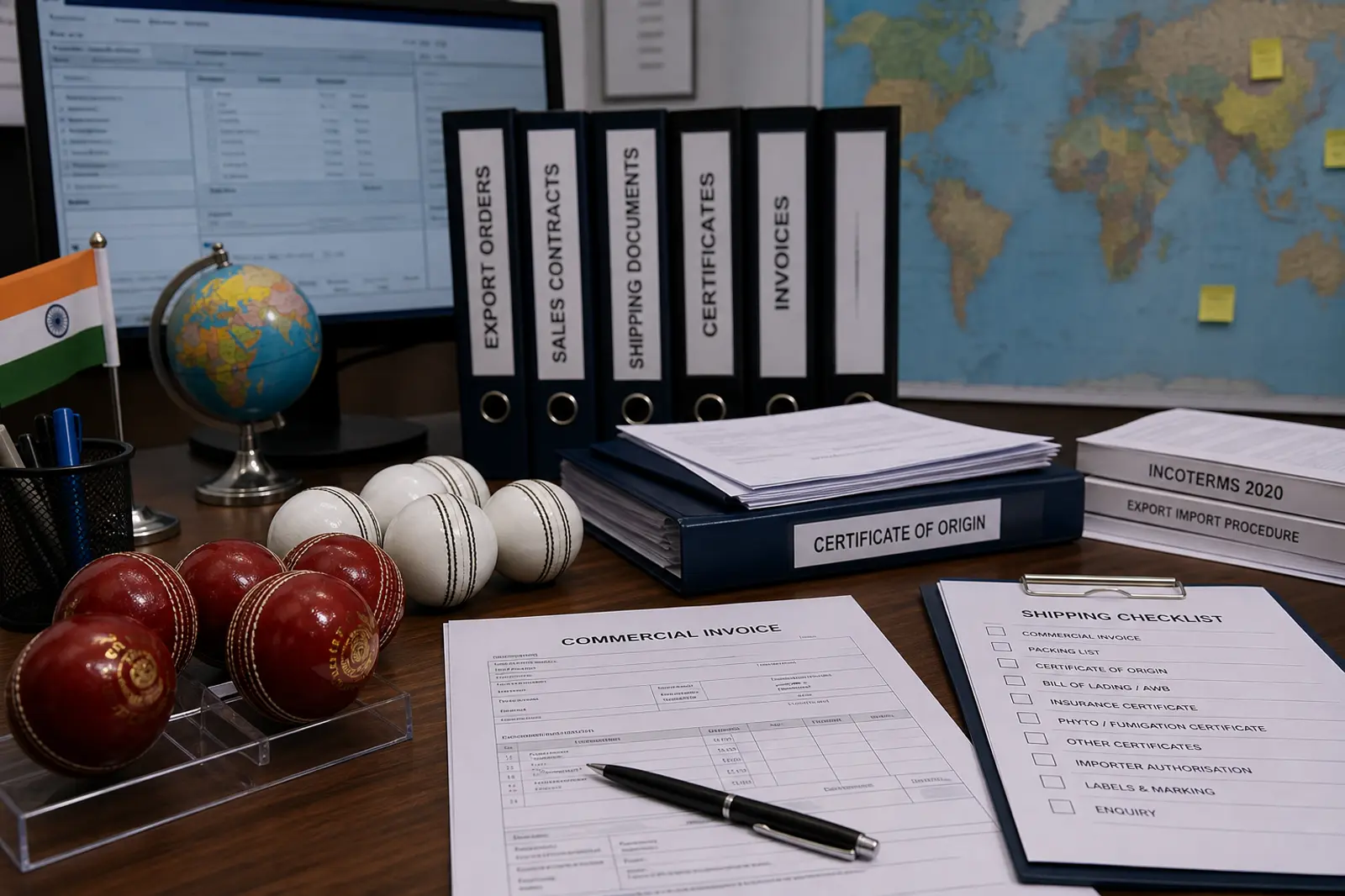
Share draft commercial invoice, packing list, and any MCC Law 5 compliance documents with your destination customs broker before sailing — especially when one shipment carries multiple HS 95066920 lines across ball types and leather grades on the same invoice. Reconcile carton counts across invoice, packing list, and bill of lading. Confirm leather grade and ball-type disclosure on invoice descriptions matches actual carton contents.
Pricing Analysis
Buyer Tip
FOB pricing for cricket balls varies primarily by ball type, leather grade, colour, MCC Law 5 tier, and packaging — not by whether you found the unit on a marketplace or through a direct referral. Insist on itemised quotations separating leather, cork core, stitching labour, alum-tanning cost, individual box and master carton packaging, and inland freight to port from the exporter's margin.
Directionally, red leather match-ball FOB runs roughly US$4–12 for club/alum-tanned grades and US$8–18+ for MCC Law 5 match-grade lines; white leather match balls typically command a modest premium; synthetic training balls run US$1.50–4; tennis-ball cricket lines run US$0.80–2.50 — see How to Export Cricket Balls from India for the full ball-type FOB table. For your own decision-making, model landed cost rather than comparing FOB alone: add ocean freight, insurance, destination duty on HS 95066920 lines, MCC Law 5 retesting cost, and your own quality-rework risk before ranking two candidate suppliers on price.
MOQ Analysis
Buyer Tip
MOQ economics drive negotiation more than piece-count headlines — a MCC Law 5 match-grade line may require a higher minimum than a simple synthetic training ball because of leather selection setup and hand-stitching changeover cost.
Directional MOQ tiers and buyer negotiation anchors
Swipe →
Data table — swipe horizontally on small screens
| Stage | Typical MOQ | Buyer Action |
|---|---|---|
| Samples | 10–50 pcs | Pay for samples; do not expect unlimited free leather-grade variants |
| Trial order | 500–2,000 pcs | Validate sell-through and weight/seam consistency before scale |
| Wholesale order | 3,000–10,000+ pcs | Negotiate against calendar slot, not price alone |
| Seasonal FCL | 20GP / 40HC | Confirm delivery cut-off in writing before deposit |
Packaging Standards
Export Tip
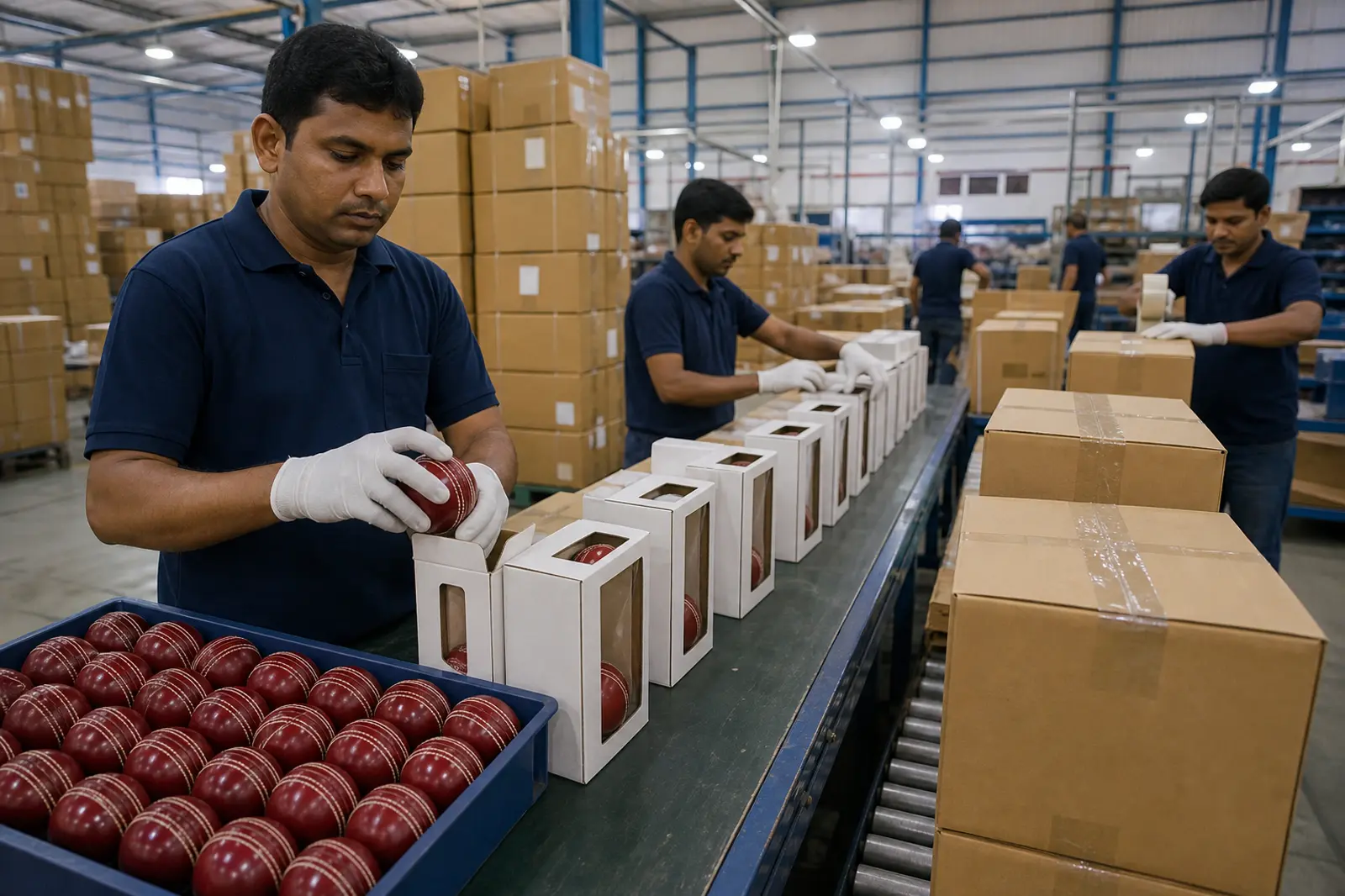
Packaging specification belongs in your RFQ, not the supplier's default. Cricket balls typically ship in individual branded or plain boxes inside corrugated master cartons — commonly 6–24 leather balls per master carton depending on box size and retail versus wholesale format. State MCC Law 5 marking policy explicitly — claims should only appear on packaging when backed by valid compliance documentation.
Packaging requirements to specify in your RFQ
Swipe →
Data table — swipe horizontally on small screens
| Format | Best For | Specify in RFQ |
|---|---|---|
| Individual box + master carton | Retail match and club programmes | Box artwork, ball count per master carton, moisture barrier |
| Plain individual box + master carton | Wholesale and academy programmes | Weight and ball-type label on master carton |
| Bulk multi-ball carton | Practice and synthetic volume orders | Confirm exact ball count per carton on packing list |
| Moisture barrier in master cartons | Long ocean transit | Humidity control for leather balls on Gulf and tropical routes |
Container Loading Details
Export Tip
Trial orders often ship LCL; proven programmes scale to FCL. Confirm CBM after you know your individual box dimensions and master carton stacking plan — leather cricket balls are weight-denser than inflatables, so FCL plans balance carton stacking with moisture protection.
Shipping format guidance for buyer order planning
Swipe →
Data table — swipe horizontally on small screens
| Format | Typical Volume | Buyer Note |
|---|---|---|
| LCL consolidated | Trial orders under roughly 10 CBM | Higher per-unit freight; acceptable for a first test |
| 20ft FCL | Single ball-type focus | Confirm CBM and carton stacking plan before booking |
| 40ft HC FCL | Multi-grade wholesale programmes | Request photos at container seal for damage claims |
| Air freight | Urgent samples only | Costly; not appropriate for bulk replenishment |
| Delhi ICD origin | Meerut cargo | Confirm inland transit time in lead-time calculation |
Shipping Methods
Export Tip
- FOB: buyer arranges main carriage; common for repeat importers with established brokers
- CFR/CIF: exporter coordinates ocean freight; useful for first trial if forwarder relationship is immature
- DDP: selective and rare for first cricket ball trials — compliance and duty risk stay with the seller
- Air: urgent samples only; never default for bulk orders
- Document draft share with broker before sailing — non-negotiable for multi-grade shipments
Match Incoterms to your risk tolerance and broker capability. FOB from Nhava Sheva or Mundra is common for experienced importers; CIF simplifies budgeting for first orders when a merchant exporter coordinates freight. Confirm who insures cargo and to what value before production begins. Destination sequencing guidance sits in Best Countries for Indian Cricket Ball Exports — this guide owns landed-cost flow, not market ranking methodology.
Certifications
Compliance Notes
Verify MCC Law 5 compliance documentation independently — a compliance logo on packaging or a website is not verification.
Certifications and documents buyers should request before bulk
Swipe →
Data table — swipe horizontally on small screens
| Document | What It Proves | When Required |
|---|---|---|
| IEC + SGEPC RCMC verification | Legal export entity and council registration | All first orders |
| Approved sample sign-off | Weight, circumference, and seam baseline | Before any bulk deposit |
| MCC Law 5 compliance notes | Weight 155.9–163 g, circumference 224–229 mm | Match-grade leather programmes |
| Leather grade declaration | Honest alum-tanned grade disclosure | All leather programmes |
| Construction & ball-type declaration | Honest match/club/synthetic/tennis disclosure | All programmes |
| Pre-shipment inspection report | Bulk matches approved sample | Trial and wholesale releases |
Buyer Requirements
Buyer Requirements
Your destination market and buyer channel set the documentation bar before you shortlist suppliers. UK and Australian club and retail programmes lean into MCC Law 5 compliance and consistent weight and circumference QC; South Africa and UAE may proceed with lighter initial documentation for club and practice lines; USA league suppliers increasingly expect white-ball and practice-line documentation alongside red match balls. Build these requirements into your RFQ on day one — adding MCC Law 5 testing after bulk production starts is expensive and slow.
Country-wise Opportunities
Market Snapshot
Landed-cost optimisation differs by destination even when FOB is identical — duty lines, MCC Law 5 retest frequency, and freight transit all shift the true cost. Use this table to align your first direct-sourcing programme with a market your supplier can actually document for.
Destination fit for first direct-sourcing programmes (buyer lens)
Swipe →
Data table — swipe horizontally on small screens
| Market | First-Order Fit | Documentation Bar | Calendar Pressure |
|---|---|---|---|
| UAE | Excellent proof-of-concept | Lower for club/practice SKUs | Medium — hospitality and grassroots peaks |
| UK | Strong once MCC Law 5 and QC ready | High | High — club season start |
| Australia | Strong for match once compliant | High | High — domestic season cycle |
| South Africa | Good mid-tier entry | Medium–High | High — seasonal buying |
| USA | Good for practice and white-ball lines | Medium | Medium — league calendar |
| Bangladesh | Excellent for club volume | Low | Medium — domestic season |
| Sri Lanka | Good for red ball programmes | Medium | High — club procurement cycles |
| Associate nations | Excellent for club/practice volume | Low | Medium — varies by federation calendar |
Sourcing Checklist
Checklist
Buyer Checklist
Exporter Checklist
Compliance Checklist
Checklist
Compliance Notes
Common Buyer Mistakes
Common Mistakes Box
Most first-order problems in direct cricket ball sourcing trace back to a small set of avoidable mistakes — recognising them early saves entire order cycles.
Common importer mistakes and corrective actions
Swipe →
Data table — swipe horizontally on small screens
| Mistake | Consequence | Corrective Action |
|---|---|---|
| Approving bulk from photos, not physical samples | Weight and circumference drift claims | Require physically inspected sample sign-off before bulk |
| Skipping Meerut unit audit | Wrong leather grade or QC control | Audit in-progress production, not showroom samples |
| Comparing FOB only | Hidden MCC Law 5 and rework cost | Model full landed cost before selecting supplier |
| 100% advance on first order | No leverage if bulk fails tolerance | Use staged payment tied to inspection release |
| Accepting MCC Law 5 claims without documentation | Buyer rejection at retail QC or club audit | Verify compliance notes against ball-type specification |
| Ignoring leather-grade disclosure | Seam failure and returns | Specify grade per SKU and confirm on invoice |
Future Market Trends
Key Statistics
Through 2030, direct sourcing of cricket balls from India will be shaped by rising buyer expectations for verifiable MCC Law 5 documentation, consistent leather-grade disclosure, and digital audit tools that make remote Meerut unit verification easier for overseas buyers. MCC Law 5 match-grade programmes will continue to outperform undifferentiated club balls in premium retail and club-affiliated channels for buyers who invest in sampling discipline now.
SGEPC-registered exporters and merchant consolidators with verifiable leather-control protocols will increasingly out-compete unregistered workshops for serious international RFQs, even when unit pricing looks similar. Buyers who build repeatable verification and sampling processes now scale faster as demand in USA, associate nations, and secondary South Asian markets continues to grow.
Challenges & Solutions
Direct sourcing challenges cluster around leather-grade risk, MCC Law 5 claim accuracy, and documentation — all manageable with the playbook sequence above.
Direct sourcing challenges and practical solutions
Swipe →
Data table — swipe horizontally on small screens
| Challenge | Root Cause | Solution |
|---|---|---|
| Weight/circumference drift in bulk | No approved sample baseline | Written sign-off on a physically inspected sample before bulk deposit |
| MCC Law 5 claims that do not hold up | Compliance note reused across different grades | Verify compliance documentation per SKU and ball type |
| Customs delay on mixed shipments | Invoice/packing list HS mismatch | Broker review of drafts before sailing |
| Seam failure at club use | Leather grade substituted without disclosure | Specify and verify leather grade at sampling and pre-shipment QC |
| Missed delivery window | Verbal lead times | Tie contract to calendar cut-off with penalty clause |
Expert Insights
Expert Insight Box
Altus Exports supports international buyers sourcing cricket balls from India through Meerut stitching and alum-tanning unit verification, sampling coordination, weight and circumference QC, and HS 95066920 export documentation — operating as a product sourcing company in India and global sourcing partner for multi-grade cricket ball programmes.
Conclusion
- Next step for buyers: Share your target ball types, leather grades, volumes, and destination market — we verify units and coordinate sampling through shipment.
- Review Best Countries for Indian Cricket Ball Exports for destination sequencing, duty, and freight-corridor context.
- Review Most Demanded Indian Cricket Balls by Country for ball-type and colour demand by destination.
- Explore merchant exporter services, export products from India, global sourcing partner India, product sourcing company India, or contact Altus Exports directly.
Sourcing cricket balls directly from India rewards buyers who bring the same rigor to procurement that they apply to any leather-sensitive sporting-goods category: verified Meerut stitching units, written leather RFQs, physically approved samples, weight and circumference QC, verified MCC Law 5 claims, staged payments, and pre-shipment inspection against the approved sample. The FOB advantage over other cricket ball origins is genuine, but it only converts into sustainable margin when leather grade and seam quality are consistent from the first trial order through the tenth container.
If you are ready to source directly, start narrow — one or two ball types, a tight sample set, and a trial MOQ — before committing to full seasonal FCL programmes. International buyers who prefer a single accountable partner for unit verification, sampling, QC, and documentation can work with Altus Exports across Meerut sourcing.