
Best Countries for Indian Dehydrated Garlic Exports (2026 Market Guide)
By Saurabh Mittal, Founder, Altus Exports
A market-selection guide for Indian dehydrated garlic exporters — ranking the USA, Germany, the Netherlands, the UK, Japan, Indonesia, Malaysia, Brazil, the UAE, and Canada on import demand, duty burden, compliance intensity, packaging norms, and entry sequencing, with landed-cost logic, container economics, and expert insight from Altus Exports.
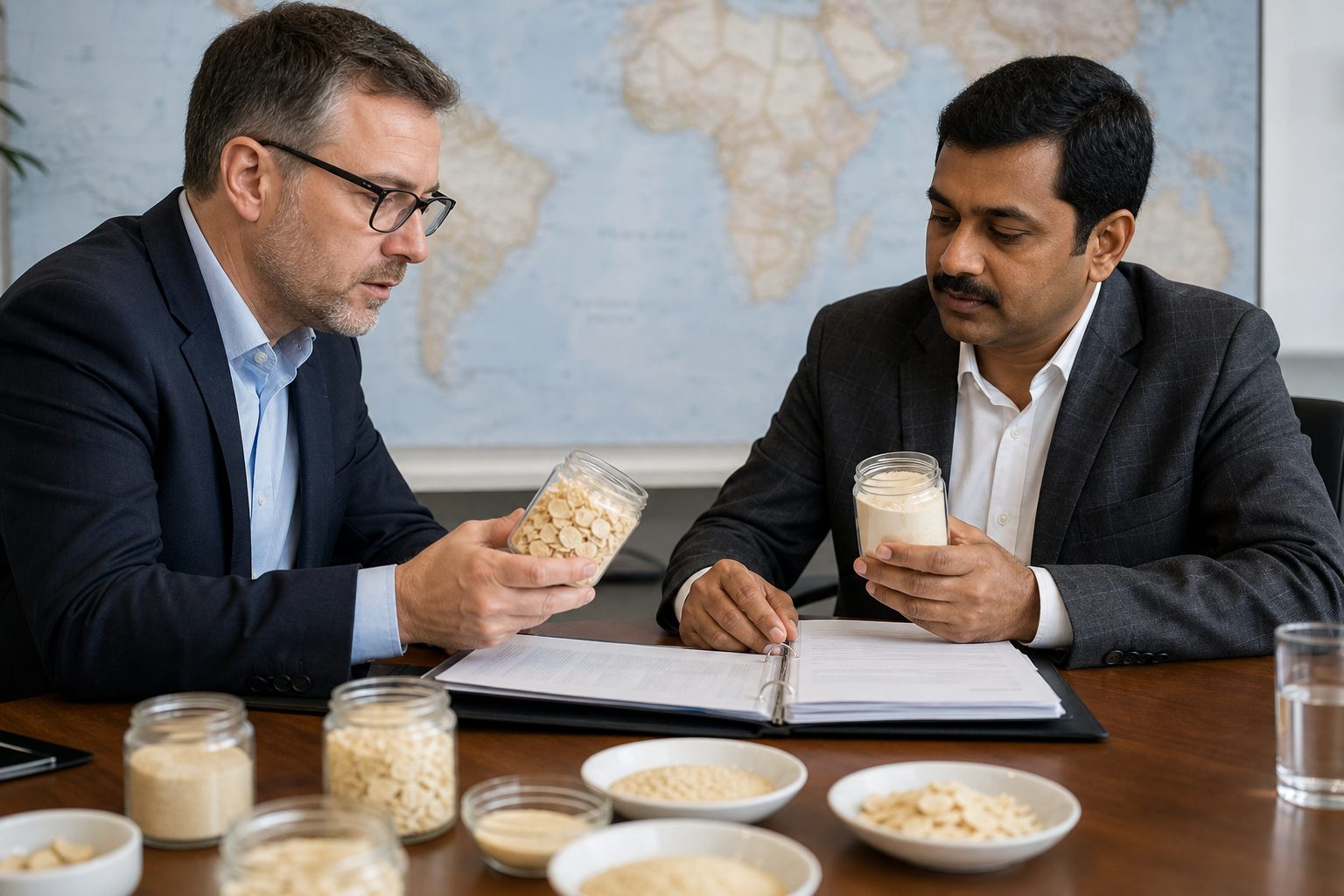
India has become a credible second-origin supplier of dehydrated garlic — flakes, powder, granules, minced, chopped, roasted, and organic grades — classified under HS 0712.90, with Indian tariff lines 07129030 (flakes), 07129020 (powder), and 07129040 (dried garlic). Raw garlic concentrates in the Mandsaur–Neemuch belt of Madhya Pradesh, while Gujarat dehydrators convert that feedstock into shelf-stable export lots shipped through Mundra, Pipavav, and Nhava Sheva. Yet shipping dehydrated garlic and shipping it profitably to the right country are different exercises. Duty schedules, residue and microbiological intensity, packaging conventions, and buyer channel structure vary sharply between the USA, Germany, the Netherlands, the UK, Japan, Indonesia, Malaysia, Brazil, the UAE, and Canada.
This guide ranks those ten destinations for 2026 using practical filters: import demand character under HS 0712.90, indicative duty and preferential-origin pathways, compliance intensity, preferred forms, packaging norms, typical order size, and realistic entry difficulty for small and mid-size Indian dehydrators and merchant exporters. It emphasises landed-cost logic and entry sequencing — which two or three markets to open first, and which to build toward after certifications and lot consistency are proven. Product-catalog depth lives in Top Dehydrated Garlic Products Exported from India; the full export process lives in How to Export Dehydrated Garlic from India.
This is one guide in the Altus Exports dehydrated garlic cluster. For the buyer-side procurement playbook, see Source Dehydrated Garlic Directly from India. Altus Exports acts as merchant exporter and global sourcing partner — matching Mandsaur–Neemuch and Gujarat supply to destination-ready programmes rather than chasing every inbound inquiry at once.
Key Takeaways
Summary Box
Executive Summary
Summary Box
Indian dehydrated garlic exports sit at the intersection of Mandsaur–Neemuch raw garlic trading and Gujarat industrial dehydration. The category ships under HS 0712.90 as flakes, powder, granules, minced, chopped, roasted, and organic grades — each with different buyer bases and price tiers. Food manufacturers, seasoning blenders, snack plants, and foodservice distributors drive most volume; retail private label and organic channels drive most margin.
This guide evaluates ten priority destinations — the USA, Germany, the Netherlands, the UK, Japan, Indonesia, Malaysia, Brazil, the UAE, and Canada — against demand character, duty treatment, certification burden, packaging norms, and entry difficulty. The intent is decision-ready prioritisation: which markets match your current grade mix and certification stack today, and which warrant a two-season build plan.
Short answer: treat FSSAI, APEDA RCMC, and lot-level COAs as non-negotiable baselines everywhere; add HACCP and ISO 22000 for Europe, the UK, and North America; add Halal for UAE, Indonesia, and Malaysia; add Kosher for many USA and Canada food-manufacturer programmes; add NPOP-linked organic (with destination equivalence) for the 25–55% premium lane. Volume-first markets (Indonesia, Malaysia, Brazil, UAE) reward consistent FCL supply; value-first markets (USA, Germany, Japan, Canada, UK, Netherlands) reward documentation depth and allicin/moisture discipline.
Comparison table
Swipe →
Data table — swipe horizontally on small screens
| Dimension | 2026 Snapshot | Exporter Implication |
|---|---|---|
| HS / tariff lines | 0712.90; 07129030 flakes; 07129020 powder; 07129040 dried garlic | Confirm exact destination 8–10 digit lines before quoting duty |
| Core forms | Flakes, powder, granules, minced, chopped, roasted, organic | Match form to channel — do not quote one generic SKU to every market |
| Clusters | Mandsaur–Neemuch (MP) feedstock; Gujarat dehydrators | Cluster-based sourcing improves consistency and port access |
| Moisture / quality | ~5–6% moisture; allicin/pungency monitored | COA depth is a market-access filter, not a paperwork afterthought |
| Packaging | Kraft+PE 14–25 kg typical | Align bag weight to destination warehouse handling norms |
| Container load | 10–14 MT/20ft; 20–26 MT/40ft | Plan MOQ and freight quotes around FCL economics |
| Ports | Mundra, Pipavav, Nhava Sheva | Port choice shifts transit time and freight to each region |
| Indicative FOB | Flakes 2.20–4.00; powder 2.50–4.50 USD/kg (premium higher); organic +25–55% | Always convert to landed cost before ranking markets |
Market Size & Industry Overview
Key Statistics
Global demand for dehydrated garlic is driven by seasoning blends, snack coatings, ready meals, sauces, soups, meat rubs, and foodservice kitchens that need shelf-stable garlic without cold chain. Dehydrated garlic concentrates flavour and allicin-related pungency into a logistics-friendly format that travels 20–40 days by sea when moisture and packaging are controlled.
India's competitive position rests on feedstock depth in Mandsaur–Neemuch, growing dehydration capacity in Gujarat, and buyer interest in China+1 diversification. Export value under dried garlic / HS 0712.90 lines runs into tens of millions of US dollars annually on a directional basis — confirm current-year figures via APEDA, DGCI&S, or ITC Trade Map rather than treating any single year as fixed.
Market selection should start from consuming industries, not from a generic "importer" list. Seasoning houses and CPG brands dominate USA/EU/Canada value; instant-food and snack plants dominate Indonesia and Malaysia volume; hospitality and re-export traders dominate UAE demand; Japanese trading houses and seasoning makers demand the tightest residue and sensory panels.
Comparison table
Swipe →
Data table — swipe horizontally on small screens
| Industry Factor | Detail | Buyer/Exporter Relevance |
|---|---|---|
| Primary HS heading | 0712.90 | Filter trade data and customs filings correctly |
| Key feedstock belt | Mandsaur–Neemuch, Madhya Pradesh | Seasonality and pungency baselines start here |
| Key processing belt | Gujarat dehydrators (Mahuva–Bhavnagar–Sihor corridor) | Export packaging and COA discipline concentrate here |
| Dominant ports | Mundra, Pipavav, Nhava Sheva | Choose by destination lane and inland haul from plant |
| Quality anchors | Moisture ~5–6%; allicin/pungency; micro + residue panels | Market access rises or falls with lab credibility |
| Primary buyer types | Food manufacturers, seasoning blenders, foodservice, retail packers | Buyer type dictates form, MOQ, and certification |
Export Statistics
Key Statistics
Indian dehydrated garlic exports concentrate in flakes (07129030) and powder (07129020), with dried garlic (07129040) and specialty forms (granules, minced, chopped, roasted) filling niche and foodservice demand. Directional 2024–2026 patterns show growth where buyers diversify origins and where Indian suppliers present repeatable COAs rather than one-off spot lots.
Exporters should track shipment trends at the eight-digit Indian tariff line, not only at HS 0712.90 aggregate, because flakes and powder often land in different destination duty lines and buyer channels. Cross-check DGFT/APEDA export data with destination import statistics before locking a market plan.
Comparison table
Swipe →
Data table — swipe horizontally on small screens
| Export Dimension | Directional 2026 Pattern | Exporter Action |
|---|---|---|
| Volume leadership | Flakes and powder dominate tonnage | Build FCL packing discipline before chasing specialty niches |
| Value growth | Organic, roasted, and fine powder growing faster than commodity flakes | Invest in segregated lines and mesh control for margin |
| Top volume destinations | Indonesia, Malaysia, Brazil, USA, UAE | Prioritise consistent grade and moisture for repeat FCLs |
| Top value destinations | USA, Germany, Japan, UK, Netherlands, Canada | Certification and COA investment pays back fastest here |
| Ports used | Mundra and Pipavav for Gujarat; Nhava Sheva as alternate | Quote freight by actual load port, not a generic India average |
| Pricing basis | FOB Indian port in USD is standard | Convert every quote to landed cost before ranking markets |
Import Statistics
Key Statistics
On the import side, leading destinations combine large food-manufacturing bases (USA, Germany, Netherlands, UK, Canada, Japan) with high-volume price-sensitive markets (Indonesia, Malaysia, Brazil) and Gulf hospitality/re-export demand (UAE). Multi-origin competition — including China and other Asian suppliers — means India wins on reliability, certification honesty, and landed-cost competitiveness rather than on price alone.
Import concentration differs: Japan and Germany often qualify fewer suppliers but hold them longer; Indonesia and Malaysia can scale volume faster once Halal and moisture performance are proven; Canada frequently mirrors USA documentation expectations with its own labelling and inspection nuances.
Comparison table
Swipe →
Data table — swipe horizontally on small screens
| Country | Import Demand Character | Primary Use Case | India's Competitive Position |
|---|---|---|---|
| USA | Large, diversified, quality-driven | Seasonings, CPG, foodservice | Strong on range and price; duty burden requires landed-cost discipline |
| Germany | Large, EU-gateway, compliance-driven | Food manufacturing, ingredient distribution | Strong for certified, traceable lots; entry bar high |
| Netherlands | EU hub and redistribution | Distribution, repacking, manufacturing | Strong consolidation entry once EU docs are ready |
| UK | Medium-large, retail and manufacturing | Private label, food manufacturing | Good for certified mid-volume programmes |
| Japan | High-spec, quality-first | Seasoning makers, trading houses | Premium only with exemplary residue and sensory panels |
| Indonesia | Large, price and Halal driven | Snacks, instant foods, foodservice | Strong volume fit; freight-competitive Asia lane |
| Malaysia | Growing, Halal-centric | Food manufacturing, foodservice | Halal + consistency unlocks repeat programmes |
| Brazil | Large, price-driven industrial | Seasoning, meat, industrial blends | Competitive on FOB and FCL economics |
| UAE | Medium-fast, re-export function | Hospitality, foodservice, Gulf re-export | Fast entry; Halal essential |
| Canada | Quality-driven, North America adjacent | Food manufacturing, retail | Similar docs to USA; verify CFIA/import broker rules |
Product Categories / Variants
Summary Box
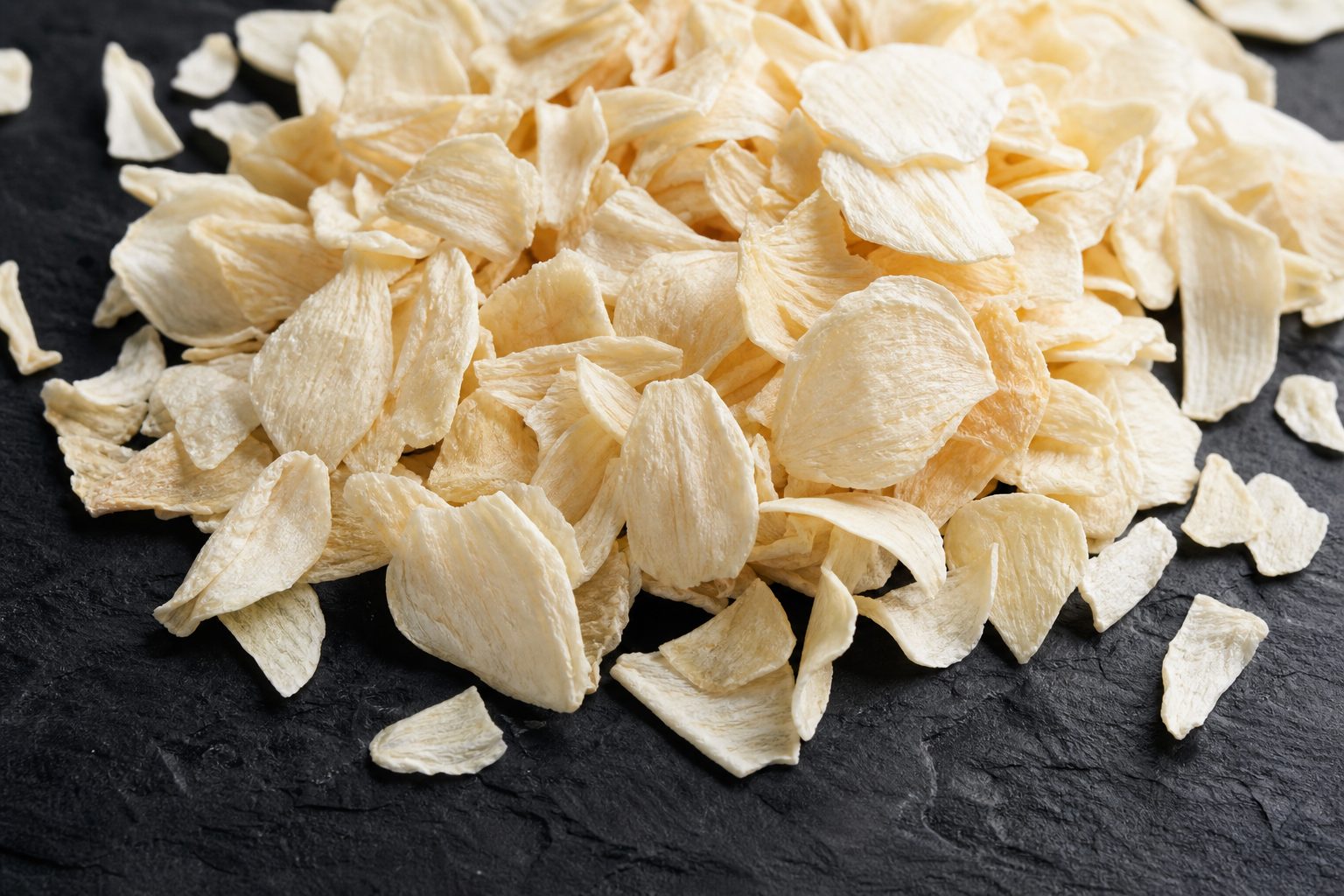
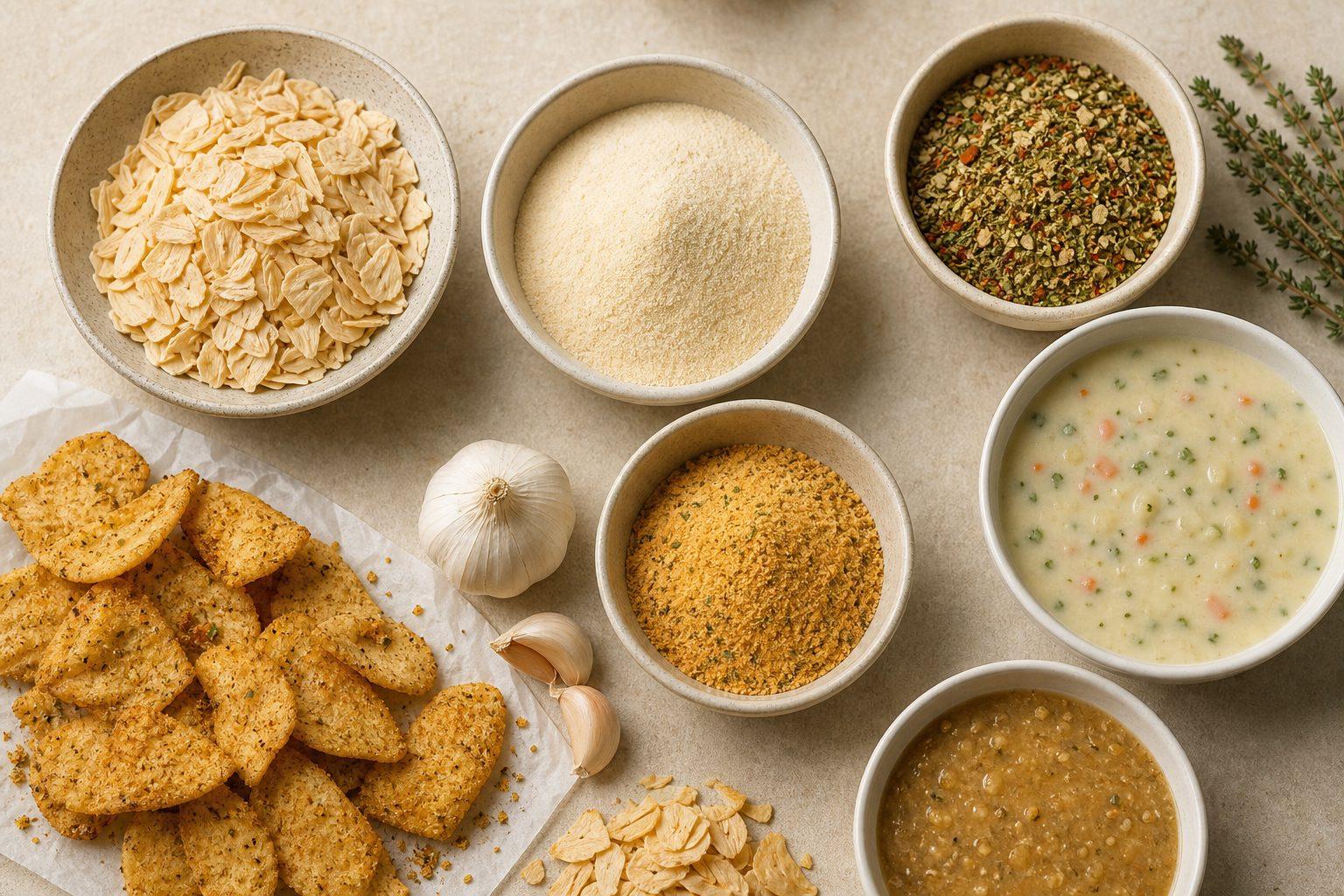
This market guide stays light on catalog depth — full grade profiles live in Top Dehydrated Garlic Products Exported from India. For country selection, treat forms as commercial levers: flakes for bulk industrial volume, powder for seasoning houses, granules/minced/chopped for dry mixes and foodservice, roasted for flavour differentiation, and organic for premium channels.
Comparison table
Swipe →
Data table — swipe horizontally on small screens
| Form | Typical Markets | Indicative FOB (USD/kg) | Notes |
|---|---|---|---|
| Flakes (07129030) | USA, Indonesia, Brazil, UAE, Malaysia | 2.20–4.00 | Highest volume workhorse |
| Powder (07129020) | USA, Germany, UK, Japan, Canada | 2.50–4.50 | Mesh and moisture critical; premium higher |
| Granules / minced / chopped | Foodservice and dry-mix buyers across EU/Asia | Typically within flake–powder band | Specify cut size precisely |
| Roasted | Premium seasoning and snack channels | Usually above conventional flake/powder | Sensory approval required |
| Organic (any form) | USA, EU, UK, Japan, Canada | +25–55% over conventional | Lot-linked organic TC mandatory |
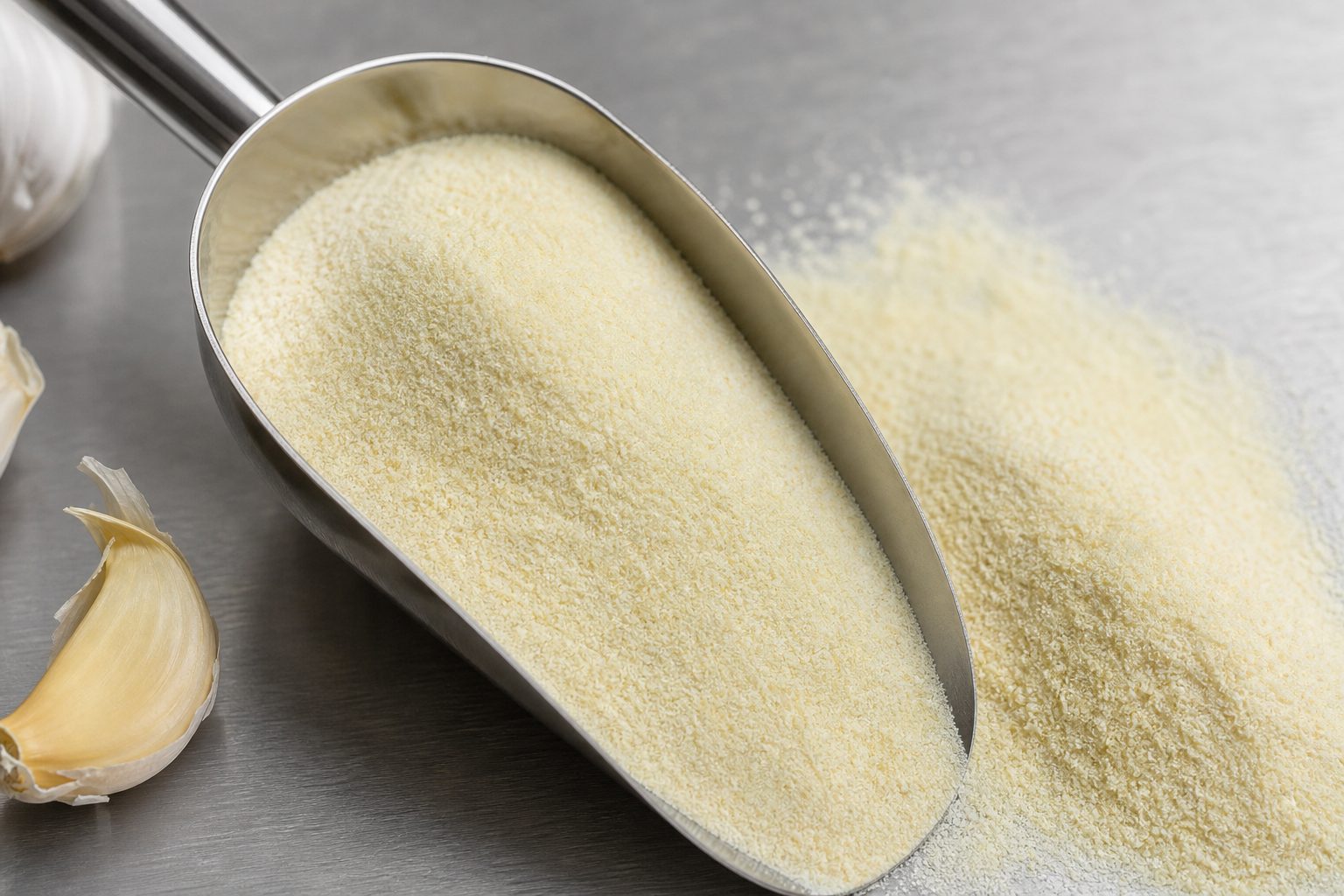
Manufacturing Overview
Export Tip
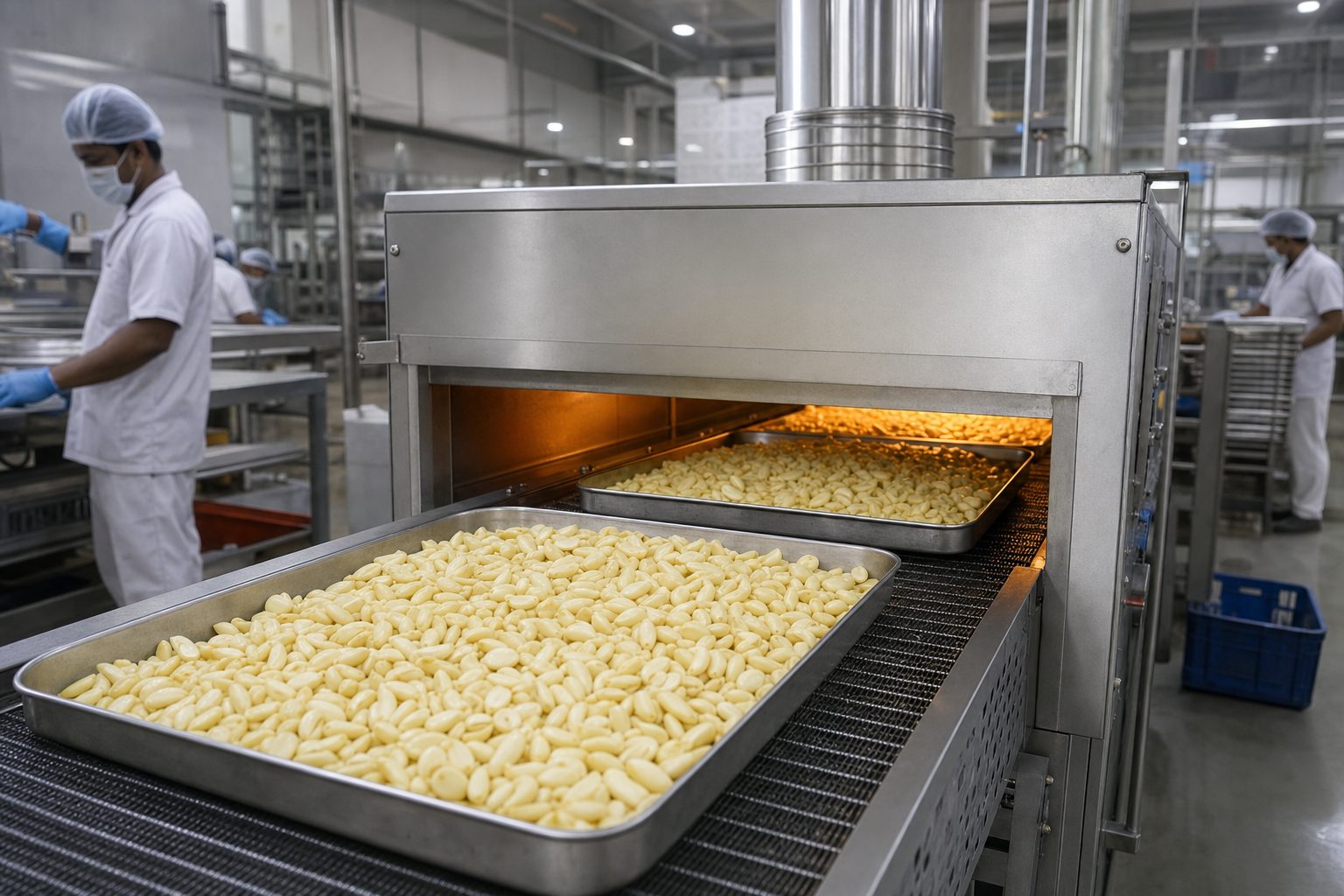
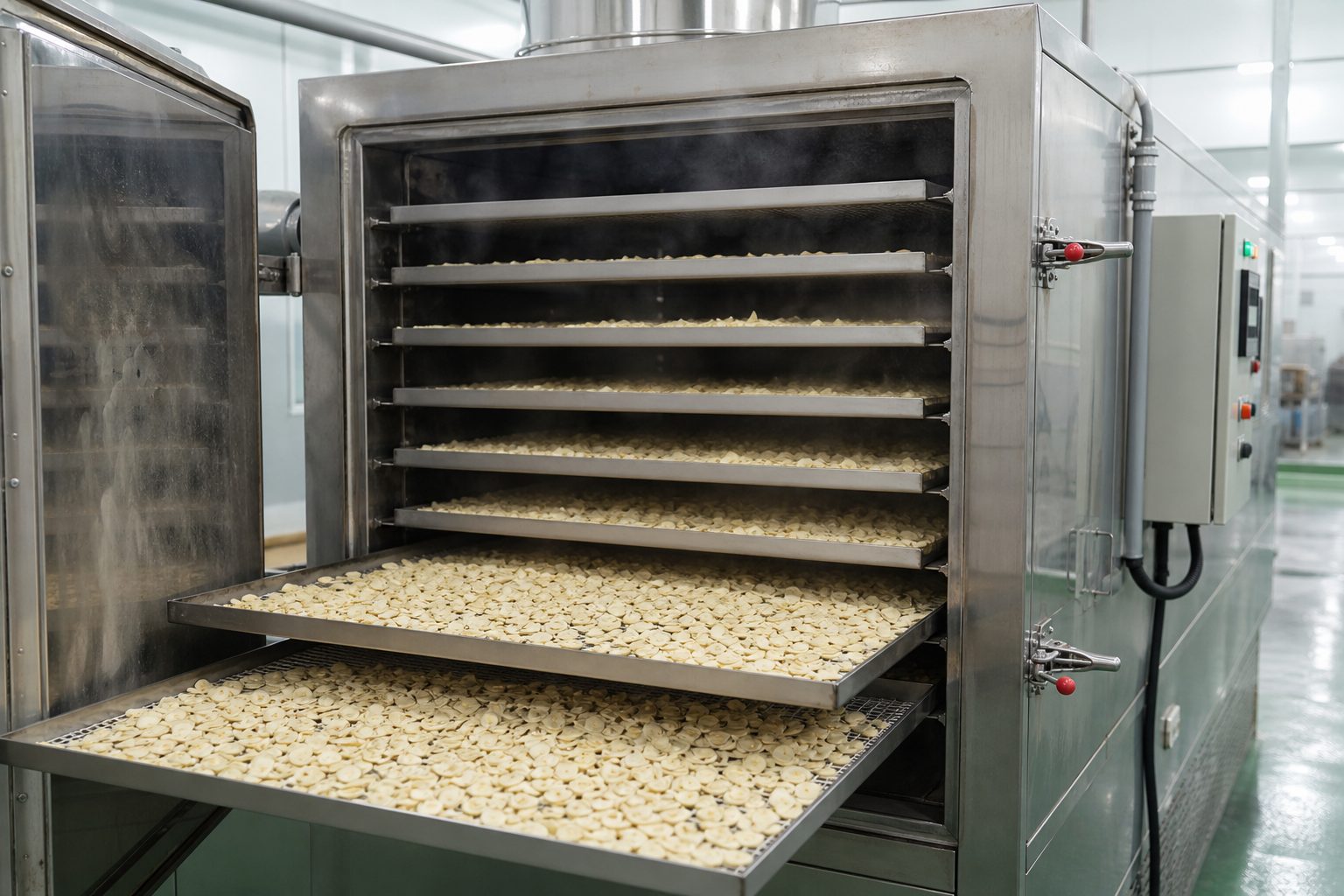
Market readiness starts on the plant floor. Fresh garlic from Mandsaur–Neemuch is peeled, sliced or milled to target form, then hot-air dehydrated toward roughly 5–6% moisture. Screening, metal detection, and lot-level laboratory testing (moisture, ash, mesh, allicin/pungency, microbiology, residues) precede kraft+PE packing. Organic lots require segregated lines and chain-of-custody documentation.
Buyers in Japan, Germany, and Canada often audit process controls as carefully as finished specs. Exporters targeting those markets should be able to show dryer logs, retention samples, and accredited COAs — not only a competitive FOB.
Comparison table
Swipe →
Data table — swipe horizontally on small screens
| Manufacturing Stage | Control Point | Market Relevance |
|---|---|---|
| Feedstock grading | Pungency, size, defect screening | Sets allicin and colour baselines |
| Cutting / milling | Cut and mesh uniformity | Determines application fit by country |
| Hot-air dehydration | Moisture to ~5–6% | Shelf life on long ocean lanes |
| Lab testing / COA | Micro, residue, allicin, moisture | Entry ticket for EU/Japan/NA |
| Packing | Kraft+PE integrity, net weight | Prevents moisture ingress in transit |
Pricing Analysis
Buyer Tip
Indicative FOB India for conventional dehydrated garlic in 2026 typically sits around USD 2.20–4.00/kg for flakes and USD 2.50–4.50/kg for powder (premium mesh/residue lots higher), with organic grades often commanding a 25–55% premium. Actual quotes move with Mandsaur–Neemuch feedstock, dryer utilisation, mesh/grade, certification stack, and order size.
Market ranking must use landed cost: FOB + ocean freight + insurance + destination duty + brokerage + any mandatory destination testing. A lower FOB to a high-duty market can lose to a slightly higher FOB into a preferential or low-duty market. Always reconfirm tariff lines before large quotations.
Comparison table
Swipe →
Data table — swipe horizontally on small screens
| Grade / Form | FOB Range (USD/kg) | Landed-Cost Caution |
|---|---|---|
| Standard flakes | 2.20–4.00 | Duty and freight can erase apparent FOB advantage |
| Standard powder | 2.50–4.50 | Mesh upgrades and micro panels add cost |
| Granules / minced / chopped | Varies within flake–powder band | Cut specs must be locked before comparing quotes |
| Roasted | Typically above conventional | Sensory rejection risk must be priced in |
| Organic any form | +25–55% premium | Organic TC and segregated handling are non-optional costs |
MOQ Analysis
Buyer Tip
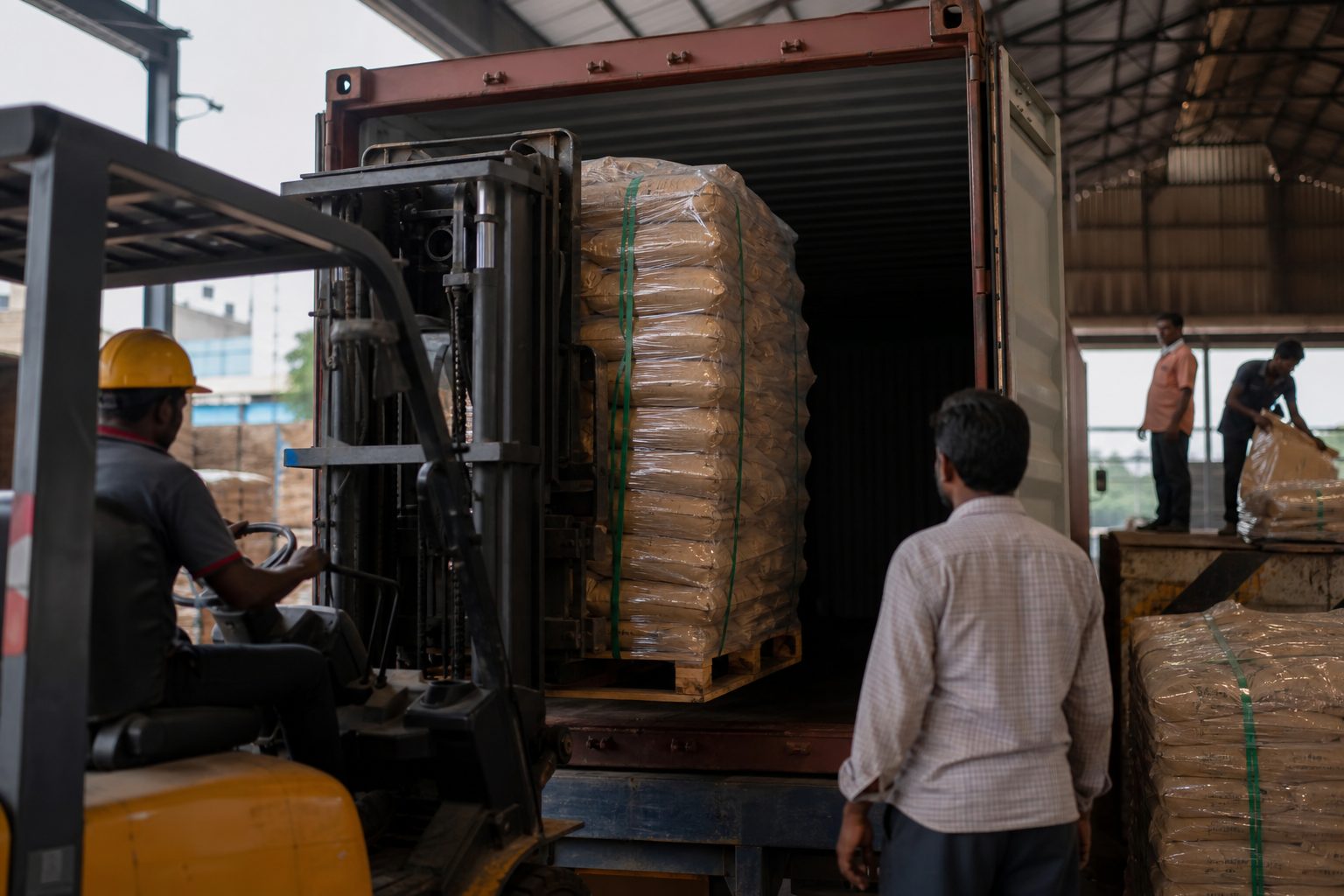
Destination strategy and MOQ are linked. Accessible volume markets often accept full 20ft programmes once samples clear; high-compliance markets may prefer smaller trials before unlocking 40ft cycles. Merchant exporters can sometimes consolidate buyer trials inside one container.
Comparison table
Swipe →
Data table — swipe horizontally on small screens
| Buyer Stage | Typical MOQ | Best-Fit Markets |
|---|---|---|
| First trial / LCL | 0.5–5 MT | UAE, Malaysia, specialty EU/Japan samples |
| First FCL programme | 10–14 MT (20ft) | Indonesia, Brazil, USA distributors, UAE |
| Scale programme | 20–26 MT (40ft) or multi-FCL | USA, Germany/NL hubs, Indonesia, Brazil |
| Organic / roasted specialty | Often 0.5–2 MT trials first | USA, EU, UK, Japan, Canada |
Packaging Standards
Export Tip
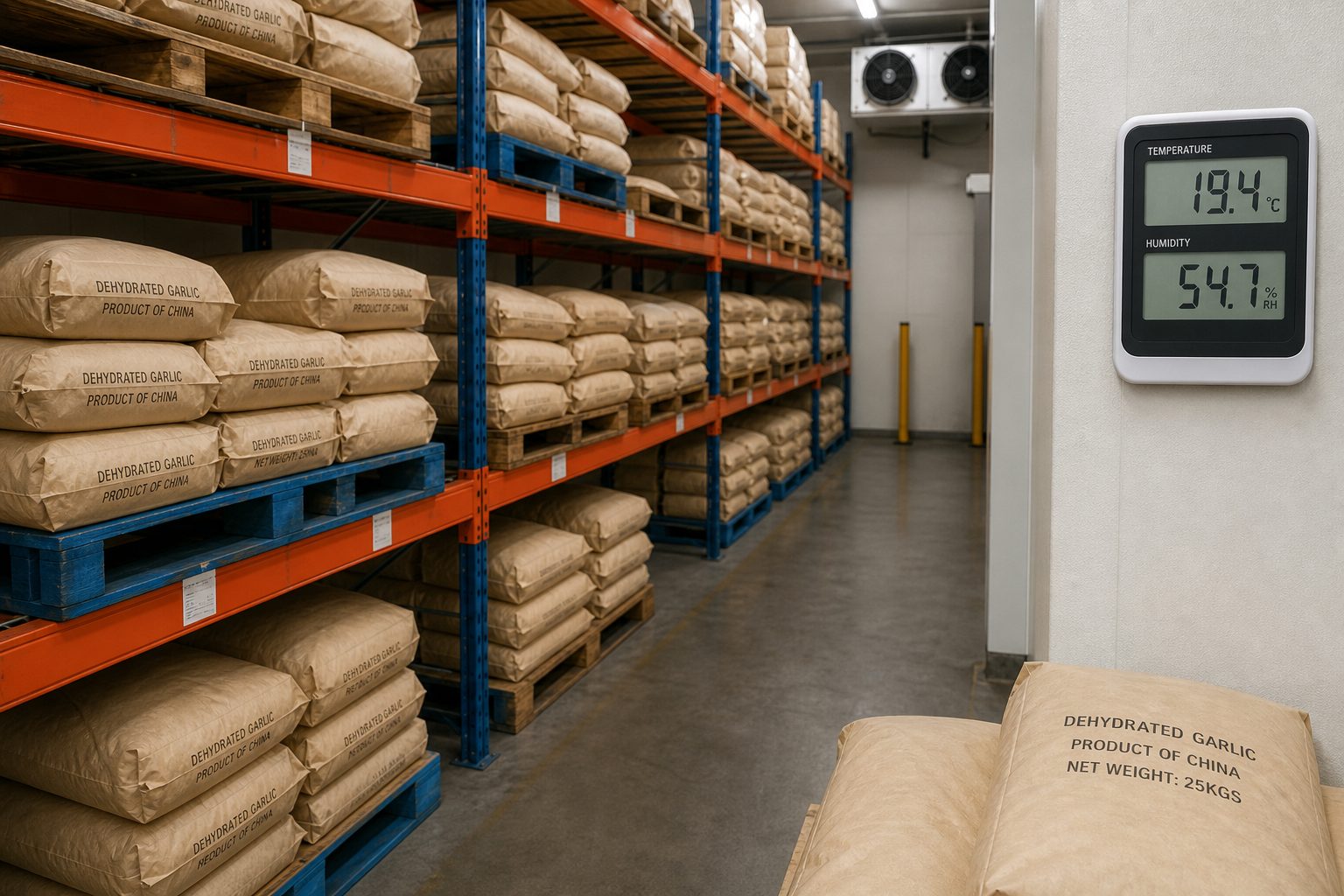
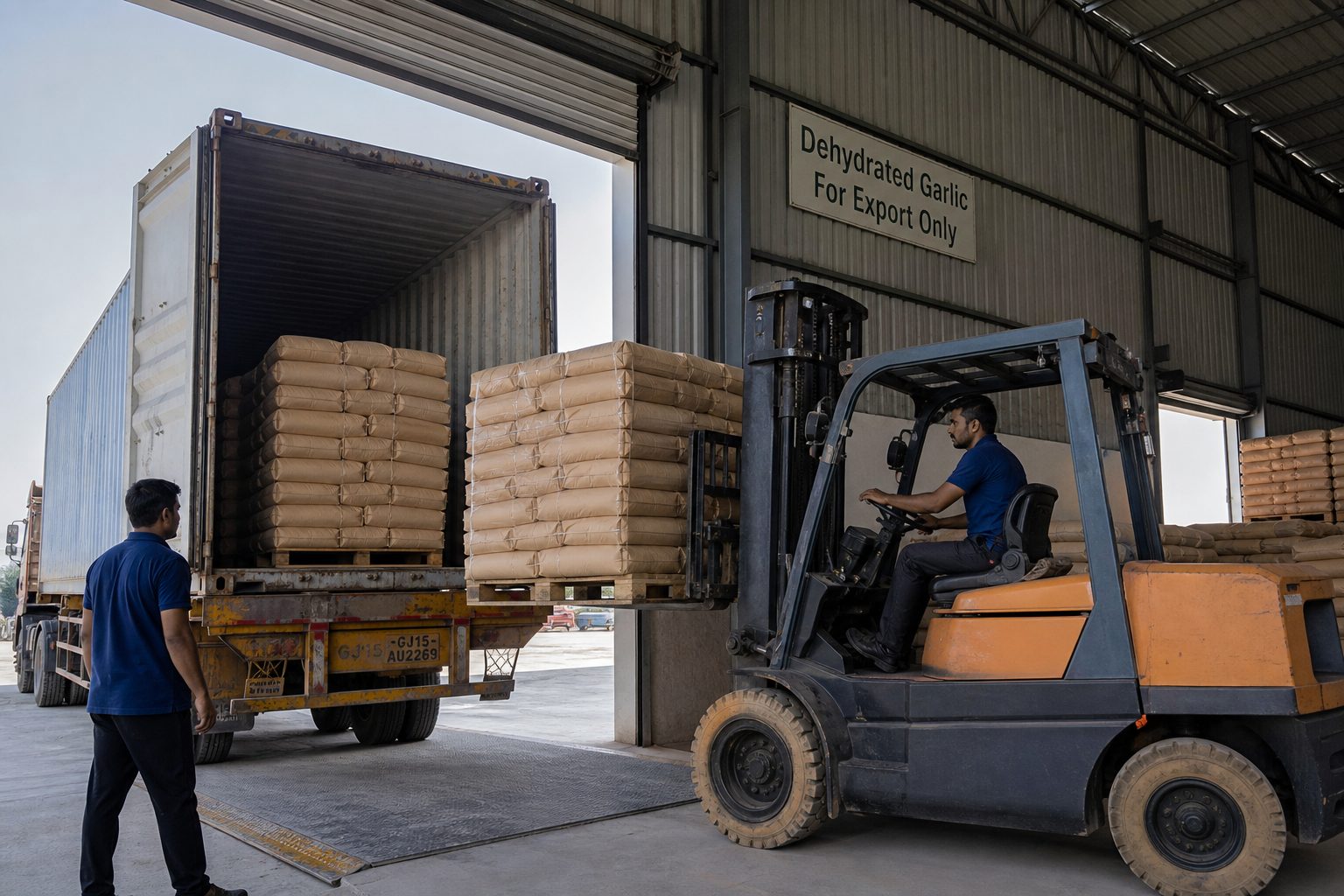
Across almost all ten markets, bulk dehydrated garlic ships in multiwall kraft bags with food-grade PE liners at roughly 14–25 kg net. Some industrial buyers accept jumbo bags; retail/private-label packs need destination label compliance and longer artwork lead times. Hygroscopic garlic fails when liners puncture or containers sweat — packaging is a market-access control, not a cost line to cheapen first.
Comparison table
Swipe →
Data table — swipe horizontally on small screens
| Pack Format | Typical Net Weight | Market Notes |
|---|---|---|
| Multiwall kraft + PE liner | 14–25 kg | Default for USA, EU, Asia, Gulf, Brazil, Canada |
| Cartons over inner liners | Varies | Some foodservice and specialty buyers |
| Jumbo / bulk bags | 500–1,000 kg | Large industrial plants with repack capacity |
| Retail / private label | Destination-specific | UK, USA, Canada, EU retail channels |
Container Loading Details
Export Tip
Plan around approximately 10–14 MT in a 20ft and 20–26 MT in a 40ft, depending on form density, bag size, and palletisation. Powder and granules generally load denser than flakes. Palletised loads trade some tonnage for warehouse speed and lower bag damage — often preferred by EU and North American receivers.
Comparison table
Swipe →
Data table — swipe horizontally on small screens
| Container | Indicative Load | Planning Tip |
|---|---|---|
| 20ft FCL | 10–14 MT | Common first programme size |
| 40ft FCL | 20–26 MT | Scale once quality is locked |
| Palletised | Slightly lower MT | Preferred by many EU/NA warehouses |
| Floor-loaded | Higher MT | Faster for some Asia/Brazil industrial receivers |
Shipping Methods
Export Tip
Sea freight FCL from Mundra, Pipavav, or Nhava Sheva is the default. LCL suits trials but raises moisture and handling risk. Air freight is rarely economic except for urgent samples. Choose Incoterms deliberately: FOB keeps freight control with the buyer; CIF/CFR can help Gulf and some Asian buyers compare landed offers.
Comparison table
Swipe →
Data table — swipe horizontally on small screens
| Method | When to Use | Risk Note |
|---|---|---|
| FCL sea | Programmes from ~10 MT up | Best moisture and cost control |
| LCL sea | Trials below FCL | More handling; insist on strong liners |
| Air (samples) | Qualification only | Not a commercial bulk mode |
| FOB vs CIF/CFR | Agree at quote stage | Changes who owns freight and insurance |
Certifications
Compliance Notes
Certification intensity is the single largest separator between markets. Baseline everywhere: IEC, FSSAI, APEDA RCMC, and lot COAs. Then stack by destination: HACCP/ISO 22000 for EU-UK-NA; Halal for UAE/Indonesia/Malaysia; Kosher for many USA/Canada programmes; NPOP plus destination organic equivalence for premium organic claims.
Comparison table
Swipe →
Data table — swipe horizontally on small screens
| Certification | Priority Markets | Why It Matters |
|---|---|---|
| FSSAI + APEDA RCMC | All | Legal export baseline from India |
| HACCP / ISO 22000 | Germany, NL, UK, USA, Canada, Japan | Food-safety maturity signal |
| Halal | UAE, Indonesia, Malaysia | Often a hard gate, not optional |
| Kosher | USA, Canada, some EU | Unlocks manufacturer programmes |
| Organic (NPOP + destination) | USA, EU, UK, Japan, Canada | Supports +25–55% premium lane |
Buyer Requirements
Buyer Requirements
Regardless of country, serious buyers ask for form, mesh/cut, moisture (~5–6%), allicin/pungency target, micro and residue panels, pack size, Incoterm, and lead time in the first RFQ round. Markets differ in how deep the COA must go and whether factory audits precede first FCL. Prepare destination-specific sample kits rather than one generic pack.
Country-wise Opportunities
Market Snapshot
The following ten markets are the strongest practical destinations for Indian dehydrated garlic exporters in 2026. Each profile is a decision brief — validate current duty rates and import rules with a licensed customs broker before committing certification spend or production capacity. Process steps remain in How to Export Dehydrated Garlic from India; grade depth remains in Top Dehydrated Garlic Products Exported from India.
1. United States
- Duty treatment
- US dried garlic typically classifies under HTS 0712.90.40 (powder/flour and other statistical suffixes) at about 29.8% MFN ad valorem — confirm current HTSUS and any preference eligibility; India does not enjoy a free MFN rate by default
- Preferred forms
- Powder and flakes; organic and Kosher-ready grades for many manufacturer programmes
- Compliance intensity
- High — FDA prior notice, strong COA expectations, residue/micro discipline
- Packaging
- 14–25 kg kraft+PE bulk; retail-ready for private label
- Channels
- Ingredient distributors, seasoning houses, CPG, foodservice
- Entry difficulty
- Medium-high — accessible with HACCP-backed docs and lot consistency
- Strategy
- Lead with landed-cost honesty and COA depth; use distributor partners before chasing retail private label.
The USA is a top value and volume destination for Indian dehydrated garlic powder and flakes, driven by seasoning brands, CPG manufacturers, and foodservice distributors. Competition is multi-origin, so consistency and documentation matter as much as price.
2. Germany
- Duty treatment
- EU third-country duty for dried garlic under CN 0712 90 90 is typically about 12.8% ad valorem — verify TARIC and any preference pathway for your exact line
- Preferred forms
- Flakes and powder; organic multi-grade for premium channels
- Compliance intensity
- Very high — MRL depth, micro panels, traceability
- Packaging
- 20–25 kg kraft+PE; strict labelling and lot coding
- Channels
- Ingredient importers, food manufacturers, EU redistribution
- Entry difficulty
- High
- Strategy
- Do not approach without ISO 22000/HACCP maturity and clean residue history; Germany can unlock wider EU once qualified.
Germany is the EU's primary gateway for dehydrated garlic into food manufacturing and ingredient distribution, with high documentation expectations and strong organic demand.
3. Netherlands
- Duty treatment
- Same EU framework as Germany — CN 0712 90 90 dried garlic typically ~12.8% third-country duty; verify TARIC
- Preferred forms
- Bulk flakes and powder for redistribution; organic for premium lanes
- Compliance intensity
- Very high — EU documentation standards
- Packaging
- 20–25 kg bags; jumbo bags for some distributors
- Channels
- Ingredient traders, EU-wide wholesalers, manufacturers
- Entry difficulty
- High
- Strategy
- Position as EU hub partner once German/Dutch compliance pack is ready; one Dutch importer can feed multiple member states.
The Netherlands functions as an EU consolidation and redistribution hub, with Rotterdam logistics supporting onward movement across Europe.
4. United Kingdom
- Duty treatment
- UK Global Tariff — verify independently; may differ from EU rates
- Preferred forms
- Powder, flakes, organic for retail-adjacent programmes
- Compliance intensity
- High — HACCP/BRC-aligned expectations common
- Packaging
- 14–25 kg bulk; retail-ready for private label
- Channels
- Distributors, manufacturers, private-label buyers
- Entry difficulty
- Medium-high
- Strategy
- Treat UK as its own compliance project; mid-volume certified programmes fit well.
The UK runs a post-Brexit import regime with strong food manufacturing and private-label demand for certified dehydrated garlic.
5. Japan
- Duty treatment
- Confirm current Japanese tariff for dried garlic forms with a Japan-experienced broker
- Preferred forms
- Fine powder and high-spec flakes; organic specialty
- Compliance intensity
- Very high — tightest residue/micro and sensory expectations in this guide
- Packaging
- Clean, well-labelled kraft+PE; impeccable lot coding
- Channels
- Seasoning makers, sogo shosha / trading houses
- Entry difficulty
- Very high
- Strategy
- Approach only with exemplary COAs and patient sampling; do not use Japan as a first-ever export market.
Japan is a premium, specification-led market where residue panels, sensory consistency, and trading-house qualification cycles are longer — and relationships last longer once won.
6. Indonesia
- Duty treatment
- Check ASEAN-India preferential pathways and rules of origin for qualifying goods
- Preferred forms
- Flakes and powder for industrial seasoning
- Compliance intensity
- Medium — Halal is frequently the gating item
- Packaging
- 14–25 kg kraft+PE; moisture control critical in tropical storage
- Channels
- Snack/instant-food plants, foodservice distributors
- Entry difficulty
- Low–medium
- Strategy
- Secure Halal early; compete on FCL reliability and freight-efficient Asia lanes.
Indonesia is a large volume market for flakes and powder into snack, instant-food, and foodservice seasoning applications, with Halal often essential.
7. Malaysia
- Duty treatment
- Verify ASEAN-India or MFN treatment for your exact line
- Preferred forms
- Flakes, powder, foodservice cuts
- Compliance intensity
- Medium — Halal plus standard food-safety docs
- Packaging
- 14–25 kg kraft+PE
- Channels
- Manufacturers, Halal foodservice distributors
- Entry difficulty
- Low–medium
- Strategy
- Bundle Malaysia with Indonesia outreach once Halal and moisture performance are proven.
Malaysia pairs Halal-centric procurement with growing food manufacturing and foodservice demand — a natural parallel market to Indonesia for Indian exporters.
8. Brazil
- Duty treatment
- Mercosur CET — confirm current rate for dried garlic forms
- Preferred forms
- Bulk flakes and powder
- Compliance intensity
- Low–medium for bulk industrial trade
- Packaging
- 14–25 kg; jumbo bags for large plants
- Channels
- Seasoning processors, meat/industrial blenders, importers
- Entry difficulty
- Low–medium
- Strategy
- Win on FCL economics and consistent grade; freight management is a core competitiveness lever.
Brazil offers industrial volume for standard flakes and powder where landed-cost competitiveness and FCL discipline matter more than premium certification stacks.
9. United Arab Emirates
- Duty treatment
- UAE/GCC typically about 5% customs duty on CIF for dried garlic lines — verify exact classification; do not assume zero
- Preferred forms
- Flakes, powder, roasted for foodservice
- Compliance intensity
- Medium — Halal essential
- Packaging
- 14–25 kg common for foodservice repacking
- Channels
- HORECA distributors, re-export traders, retail importers
- Entry difficulty
- Low
- Strategy
- Excellent first-entry or parallel market; use UAE to prove export rhythm before EU/Japan climbs.
The UAE is a fast-cycle Gulf market for foodservice and hospitality demand, with re-export potential across the wider region when Halal and documentation are clean.
10. Canada
- Duty treatment
- Confirm current Canadian tariff for dried garlic forms with a CBSA-experienced broker
- Preferred forms
- Powder and flakes; organic and Kosher where programmes require
- Compliance intensity
- High — COA and food-safety documentation expected
- Packaging
- 14–25 kg kraft+PE; bilingual label needs for some retail packs
- Channels
- Food manufacturers, distributors, retail
- Entry difficulty
- Medium-high
- Strategy
- Leverage USA-ready quality systems; confirm Canada-specific import paperwork early.
Canada mirrors many North American quality expectations with its own import broker practices and labelling nuances — a strong secondary market once USA documentation discipline exists.
Country Comparison Scorecard
Use this directional scorecard as a first filter, then overlay duty and form-preference tables before locking a two- or three-market plan. Scores are relative guidance for typical Indian dehydrated garlic exporters in 2026.
Comparison table
Swipe →
Data table — swipe horizontally on small screens
| Country | Market Size | Duty Burden | Compliance Intensity | Entry Difficulty | Opportunity Score |
|---|---|---|---|---|---|
| USA | Very High | ~29.8% MFN under HTS 0712.90.40 — verify | High | Medium-High | 9/10 |
| Germany | High | ~12.8% CN 0712 90 90 — verify TARIC | Very High | High | 8.5/10 |
| Netherlands | High (hub) | ~12.8% CN 0712 90 90 — verify TARIC | Very High | High | 8/10 |
| UK | High | UKGT — verify | High | Medium-High | 8/10 |
| Japan | Medium-High value | Verify | Very High | Very High | 7.5/10 |
| Indonesia | Very High volume | Preferential possible — verify | Medium (Halal) | Low-Medium | 9/10 |
| Malaysia | High | Verify ASEAN-India | Medium (Halal) | Low-Medium | 8.5/10 |
| Brazil | Very High volume | Mercosur — verify | Low-Medium | Low-Medium | 8.5/10 |
| UAE | Medium-High | Typically ~5% CIF — verify | Medium (Halal) | Low | 9/10 |
| Canada | High | Verify | High | Medium-High | 8/10 |
Landed-Cost Logic and Entry Sequencing
FOB is a plant-gate conversation; profitability is a landed-cost conversation. Build every market comparison as: FOB + ocean freight from Mundra/Pipavav/Nhava Sheva + insurance + destination duty + local charges + any mandatory retesting. Then sequence entry by operational readiness, not by vanity markets.
A practical sequence for many Indian dehydrators and merchant exporters: (1) UAE or Malaysia/Indonesia to prove FCL rhythm and Halal/COA discipline; (2) Brazil or USA distributor channels for scale; (3) UK/Canada once HACCP systems are stable; (4) Germany/Netherlands and Japan only after residue and documentation depth are repeatedly proven. Adjust if you already hold ISO 22000, Kosher, and organic stacks.
Comparison table
Swipe →
Data table — swipe horizontally on small screens
| Sequence Stage | Example Markets | What You Must Already Have |
|---|---|---|
| Stage A — Prove rhythm | UAE, Malaysia, Indonesia | FSSAI, APEDA, Halal, stable moisture COAs |
| Stage B — Scale volume | Brazil, USA distributors | FCL packing discipline, consistent allicin/moisture |
| Stage C — Certified mid-volume | UK, Canada | HACCP/ISO-aligned systems, retail-ready docs if needed |
| Stage D — Premium EU/Japan | Germany, Netherlands, Japan | Deep MRL panels, audit readiness, organic if claimed |
Duty and Tariff Snapshot by Destination
Rates change. The table below is directional planning guidance for 2026 — confirm every line with a licensed destination customs broker before final quotations.
Comparison table
Swipe →
Data table — swipe horizontally on small screens
| Country/Bloc | Indicative Duty Treatment | What to Verify |
|---|---|---|
| USA | MFN can be material on dried garlic forms | Exact HTS 10-digit line; any special programme applicability |
| EU (Germany, Netherlands) | Common external tariff on dried vegetables | Exact CN code; preferential origin if any |
| United Kingdom | UK Global Tariff (independent) | Current UKGT line vs old EU assumptions |
| Japan | Confirm current national tariff | Form-specific classification and inspection norms |
| Indonesia / Malaysia | ASEAN-India preferential possible | Rules of origin and certificate of origin |
| Brazil | Mercosur CET | Current rate and broker fees in landed model |
| UAE (GCC) | Often 0% or 5% by line | Exact GCC classification; free-zone re-export rules |
| Canada | Confirm current tariff | CBSA classification and labelling implications |
Sourcing Checklist
Checklist
- Confirm Mandsaur–Neemuch feedstock claims and Gujarat dehydrator identity separately
- Verify FSSAI on FoSCoS and APEDA RCMC on the APEDA portal
- Request six months of lot COAs covering moisture (~5–6%), micro, residues, and allicin/pungency where specified
- Match certification stack (HACCP, ISO 22000, Halal, Kosher, Organic) to the destination scorecard above
- Confirm kraft+PE 14–25 kg packing capability and liner quality
- Validate realistic 20ft/40ft loading plans from Mundra, Pipavav, or Nhava Sheva
- Build landed-cost models before shortlisting "priority" countries
For exporters building supply and for buyers evaluating Indian dehydrated garlic sources against a target market plan:
Buyer Checklist
Checklist
- Lock form, mesh/cut, moisture, allicin/pungency, micro/residue limits, and pack size in writing
- Convert every supplier quote to landed cost for your country
- Verify registrations and certifications on official portals
- Require samples with matching lot COAs; retest independently for high-compliance markets (Japan, Germany, USA, Canada)
- Agree Incoterms, payment milestones, and pre-shipment inspection rights before production
- Confirm destination labelling and import broker document list early
Importers comparing Indian origins by destination should complete this before first PO:
Exporter Checklist
Checklist
- Reconfirm current duty treatment with a destination broker
- Map required certifications and COA panels for that market only
- Align bag weight and labelling to local warehouse norms
- Prepare a destination-specific sample kit with full lab pack
- Choose Stage A–D sequencing honestly against your current readiness
- Template commercial invoice, packing list, COA, phytosanitary (if required), and certificate of origin for that customs regime
Before quoting a new destination market:
Compliance Checklist
Checklist
Compliance Notes
- IEC active with DGFT
- FSSAI licence covers the actual processing site
- APEDA RCMC active for dehydrated vegetable / dried garlic exports
- Correct HS 0712.90 / 07129030 / 07129020 / 07129040 usage on documents
- Lot-level COA from accredited lab for every commercial shipment
- Halal / Kosher / Organic certificates current and lot-linkable where claimed
- Phytosanitary and origin documents prepared to destination rules
Common Buyer Mistakes
Common Mistakes Box
Market-selection mistakes are expensive because they consume a full production and ocean cycle before the error is obvious.
Comparison table
Swipe →
Data table — swipe horizontally on small screens
| Mistake | Consequence | Fix |
|---|---|---|
| Choosing markets by FOB only | Margin disappears after duty/freight | Always model landed cost |
| Opening Japan/Germany first without COA depth | Failed qualification after months | Sequence Stage A/B markets first |
| Ignoring Halal for Indonesia/Malaysia/UAE | Blocked commercial conversion | Certify before outreach |
| One generic sample kit for all countries | Weak buyer response | Customise mesh, docs, and claims by market |
| Underestimating USA/Canada document lead time | Missed vessel and PO fatigue | Build FDA/broker timelines into quotes |
| Skipping organic TC discipline | Rejected organic claims on arrival | Lot-link every organic shipment |
Future Market Trends
Key Statistics
Expect continued China+1 diversification in dehydrated garlic procurement through 2030, favouring Indian suppliers who can show repeatable COAs and certification honesty. Organic, roasted, and fine-powder programmes should outgrow commodity flakes on value, while Indonesia, Malaysia, and Brazil remain volume engines.
Regulatory intensity in the EU, UK, Japan, and North America will keep rising around residues, traceability, and labelling. Exporters who invest in lab partnerships and digital lot traceability now will face fewer forced exits later. Gulf and ASEAN Halal expectations will remain structural, not cyclical.
Expert Insights
Expert Insight Box
Two perspectives from Saurabh Mittal, Founder of Altus Exports, on dehydrated garlic market selection.
Match Markets to Certification Reality
Landed Cost Beats Country Myths
Conclusion
- Action: Build landed-cost models for your top three markets before the next quotation cycle.
- Read How to Export Dehydrated Garlic from India for the full process framework.
- Align forms in Top Dehydrated Garlic Products Exported from India.
- Importers should follow Source Dehydrated Garlic Directly from India.
- Build pipeline with Find International Buyers for Dehydrated Garlic.
- Explore Organic Dehydrated Garlic Export Opportunities.
- Review APEDA Registration Benefits for Dehydrated Garlic Exporters.
- Use the Dehydrated Garlic Export Documentation Checklist.
- Plan outreach via Trade Shows for Dehydrated Garlic Exporters and Most Demanded Indian Dehydrated Garlic by Country.
- Explore merchant exporter, global sourcing partner, product sourcing company, export products from India, and find manufacturers in India with Altus Exports.
The best countries for Indian dehydrated garlic exports in 2026 depend on your form mix, COA depth, and certification stack — but the practical priority map is clear. Use UAE, Indonesia, and Malaysia to prove rhythm; scale with Brazil and USA distributor programmes; add UK and Canada when HACCP systems are stable; approach Germany, the Netherlands, and Japan only with audit-ready documentation. Keep moisture near 5–6%, protect lots in kraft+PE 14–25 kg packs, and plan FCL loads around 10–14 MT / 20ft and 20–26 MT / 40ft from Mundra, Pipavav, or Nhava Sheva.
Altus Exports can help you turn this ranking into a sequenced market plan — as merchant exporter and global sourcing partner — from Mandsaur–Neemuch and Gujarat supply through destination-ready documentation.