
How to Source Dehydrated Garlic Directly from India: Buyer Playbook
By Saurabh Mittal, Founder, Altus Exports
A practical buyer and importer playbook for sourcing dehydrated garlic directly from India — RFQ design, Mandsaur–Neemuch and Gujarat supplier verification, sampling with COA, trial MOQ, Incoterms, payment progression, packaging and container checks, and risk controls for distributors, wholesalers, retailers, and procurement teams. From Altus Exports.
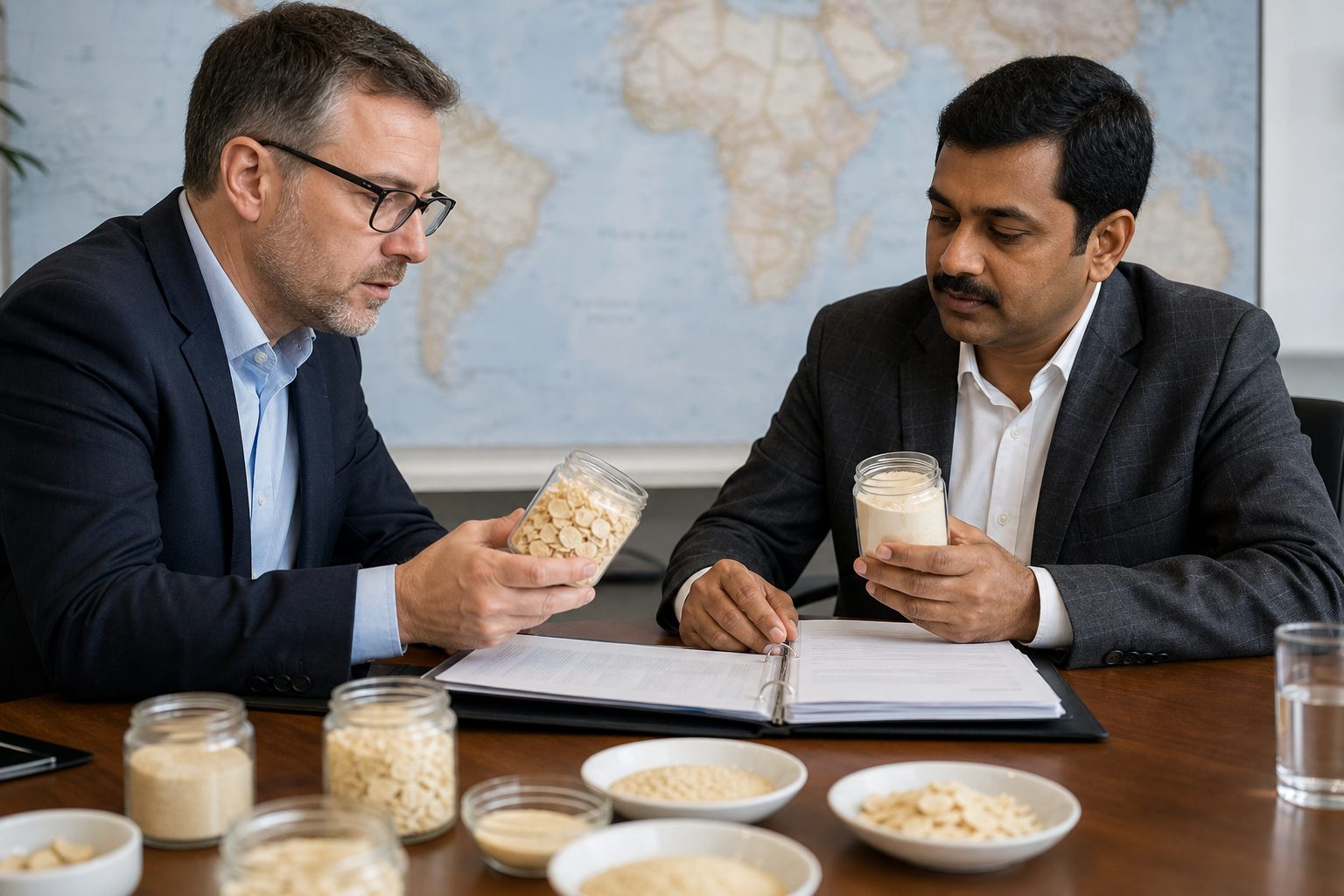
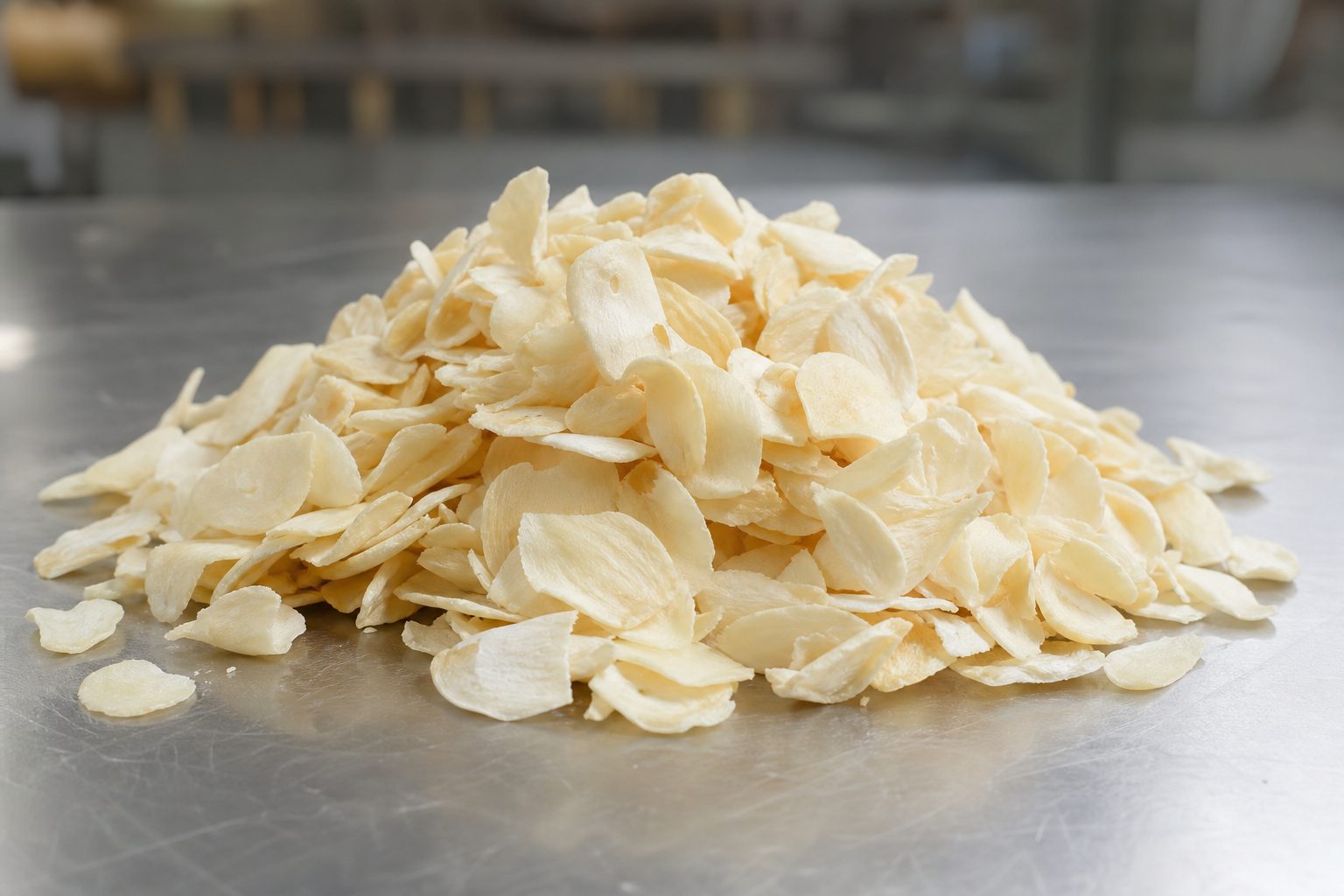
International importers, distributors, wholesalers, retailers, and food-manufacturer procurement teams source dehydrated garlic from India because feedstock depth in Mandsaur–Neemuch, Gujarat dehydration capacity, and competitive FOB pricing for flakes, powder, granules, minced, chopped, roasted, and organic grades create a credible alternative to single-origin dependence. Product moves under HS 0712.90 — Indian lines 07129030 (flakes), 07129020 (powder), 07129040 (dried garlic) — with moisture typically held near 5–6% and allicin/pungency monitored on serious programmes.
Yet buyers who treat India as a catalogue rather than a verification workflow repeat the same failures: attractive samples that do not match bulk lots, unverifiable certificates, weak COAs, packaging that admits moisture on a 30–40 day voyage, and payment terms that leave no leverage when pre-shipment inspection fails. None of these outcomes are inevitable. They are the predictable result of skipping RFQ precision, supplier verification, independent lab checks, and staged payment progression.
This guide is written for buyers — not as an exporter how-to. For export-side process detail, see How to Export Dehydrated Garlic from India. For destination ranking and landed-cost logic, see Best Countries for Indian Dehydrated Garlic Exports. For form and grade depth, see Top Dehydrated Garlic Products Exported from India. Altus Exports acts as merchant exporter and global sourcing partner when you want one accountable India-side relationship across verification, sampling, documentation, and shipment.
Key Takeaways
Summary Box
Executive Summary
Summary Box
This playbook sets out a repeatable importer workflow for sourcing dehydrated garlic directly from India: RFQ design, supplier discovery across Mandsaur–Neemuch trading and Gujarat dehydration networks, registration and certification verification, sample-plus-COA evaluation, landed-cost negotiation, trial MOQ placement, pre-shipment inspection, and document-controlled arrival. Each step prevents a specific failure mode — quality drift, fake compliance, packaging collapse, or customs mismatch.
The underlying principle is simple: dehydrated garlic is a regulated food ingredient. Buyers who apply the same verification process to every new supplier convert first containers into programmes; buyers who skip steps under deadline pressure fund expensive education on arrival.
Whether you buy from a dehydrator, a trader with plant contracts, or a merchant exporter, accountability must be explicit — who owns COA truth, who owns moisture in transit, who owns document accuracy, and how payment releases against those gates.
Comparison table
Swipe →
Data table — swipe horizontally on small screens
| Sourcing Dimension | What to Confirm | Why It Matters |
|---|---|---|
| RFQ / specification | Form, mesh, moisture, allicin, micro/residues, pack, certs | Vague RFQs produce incomparable quotes and disputes |
| Supplier legitimacy | FSSAI, APEDA RCMC, IEC, plant identity | Baseline legal export readiness from India |
| Lab verification | Lot COA + independent retest when risk warrants | Samples and bulk lots only match under controlled systems |
| Commercial terms | Landed cost, Incoterms, payment progression, PSI rights | Protects cash and clarifies risk allocation |
| Logistics readiness | Kraft+PE packs, container plan, port, lead time | Determines arrival quality and delivered cost |
Market Size & Industry Overview
Key Statistics
From a buyer perspective, India offers two linked nodes: Mandsaur–Neemuch for raw garlic growing and trading, and Gujarat dehydrators for industrial hot-air drying, milling, packing, and export documentation. Understanding which node you are contracting — trader, plant, or merchant exporter — sets expectations for MOQ flexibility, COA quality, and who can actually file a shipping bill.
Global importers use Indian dehydrated garlic across seasoning blends, snack coatings, ready meals, sauces, meat rubs, and foodservice. Demand diversity means your RFQ must name the application: a Japan seasoning house and an Indonesia snack plant will not share the same residue intensity or Halal priority even if both ask for "garlic powder."
Directional export value under HS 0712.90 dried garlic lines runs into tens of millions of USD annually — confirm current figures via APEDA/DGCI&S/ITC Trade Map. Your procurement calendar should also respect feedstock seasonality that moves price and lead time even when finished goods are warehouse-held.
Comparison table
Swipe →
Data table — swipe horizontally on small screens
| Supply Chain Node | Role | Buyer Implication |
|---|---|---|
| Mandsaur–Neemuch traders/farmers | Feedstock and pungency baseline | Ask how raw garlic is graded into your lot |
| Gujarat dehydrators | Drying, milling, packing, plant COAs | Verify FSSAI site licence and dryer/lab capability |
| Merchant exporters / sourcing partners | Consolidation, QC coordination, export docs | Strong for multi-grade or multi-plant programmes |
| Buying agents | Introductions only (unless contracted otherwise) | Clarify whether they own quality outcomes |
| Organic certified operators | Segregated NPOP chain + lot TCs | Mandatory for any organic-labelled claim |
Export Statistics
Key Statistics
Buyers reading Indian export statistics should filter for flakes (07129030) and powder (07129020) separately from aggregate HS 0712.90 figures. Directional patterns show sustained industrial volume plus faster growth in certified and specialty forms. Use trade data to identify active exporters shipping to markets like yours — then verify them; shipment history is not a substitute for due diligence.
Comparison table
Swipe →
Data table — swipe horizontally on small screens
| Export Signal | What Buyers Should Infer | Action |
|---|---|---|
| Active 07129030 / 07129020 shippers | Operational export experience | Shortlist, then verify registrations |
| Repeat shipments to your country | Document familiarity with your customs regime | Prefer for first programmes |
| Only domestic references | May lack export paperwork maturity | Use merchant exporter or disqualify |
| Organic TC history | Segregated handling capability | Required for organic RFQs |
Import Statistics
Key Statistics
Your own market's import pattern should shape RFQ strictness. USA, Germany, Netherlands, UK, Japan, and Canada importers typically need deeper COAs and food-safety certifications. Indonesia, Malaysia, and UAE programmes often gate on Halal plus moisture performance. Brazil industrial buyers emphasise FCL economics and grade consistency. Align supplier shortlists to those realities — see Best Countries for Indian Dehydrated Garlic Exports for destination depth.
Comparison table
Swipe →
Data table — swipe horizontally on small screens
| Your Market | Import Character | RFQ Emphasis |
|---|---|---|
| USA / Canada | Quality + documentation heavy | COA depth, Kosher/organic if claimed, FDA/broker docs |
| Germany / Netherlands / UK | Compliance-first | MRL panels, ISO/HACCP, traceability |
| Japan | Highest sensory/residue bar | Extended sampling; do not rush to FCL |
| Indonesia / Malaysia | Volume + Halal | Halal cert, tropical moisture control |
| Brazil | Price + FCL reliability | Landed cost, grade consistency |
| UAE | Foodservice + re-export | Halal, fast docs, 14–25 kg packs |
Product Categories / Variants
Summary Box
Keep the RFQ form-specific. Full catalog depth is in Top Dehydrated Garlic Products Exported from India. For procurement, name one primary form and acceptable alternates rather than "dehydrated garlic any."
Comparison table
Swipe →
Data table — swipe horizontally on small screens
| Form | Typical Buyer Use | Indicative FOB (USD/kg) | RFQ Must State |
|---|---|---|---|
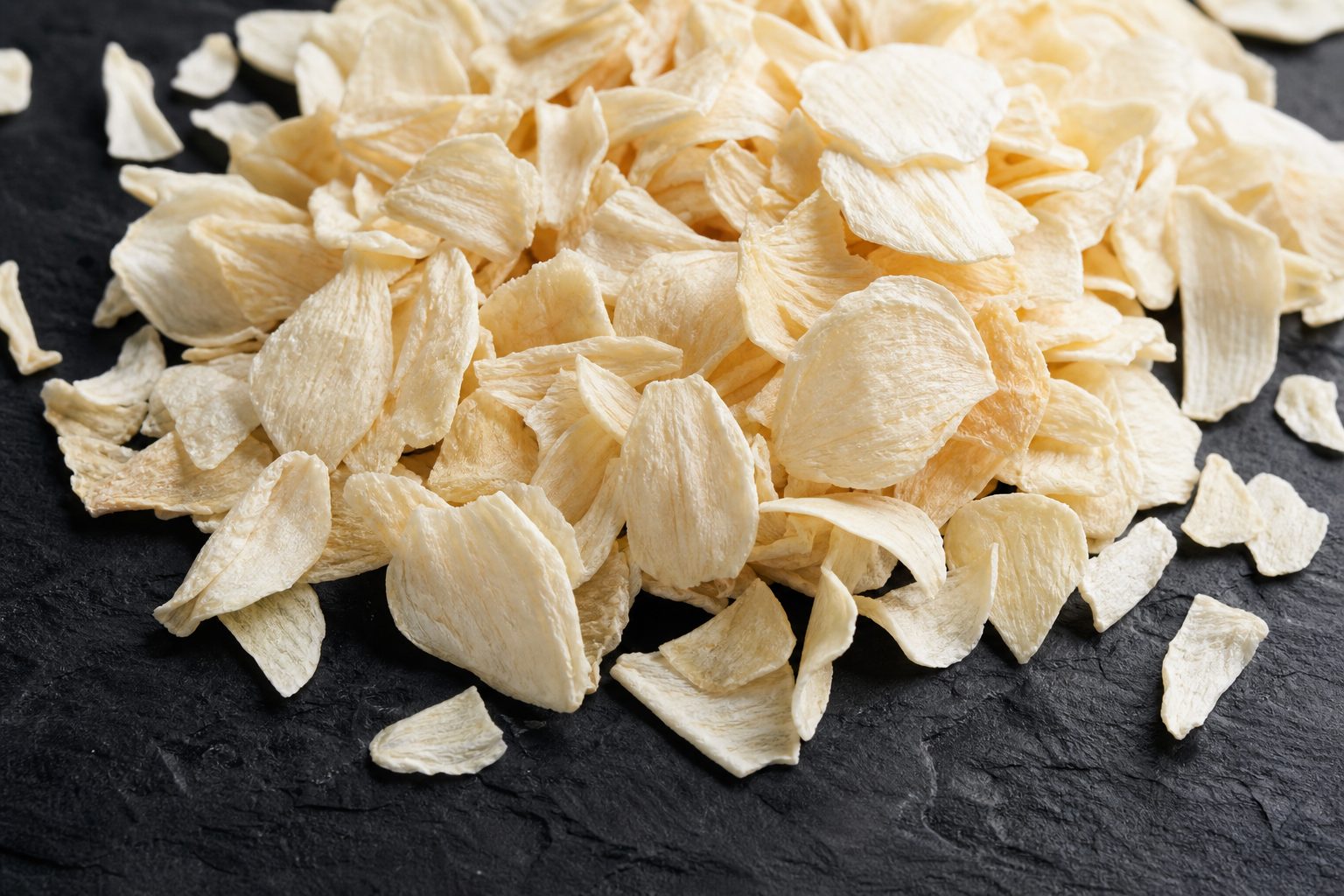
| Flakes | Seasonings, dry mixes, rehydration | 2.20–4.00 | Cut size, moisture, foreign matter |
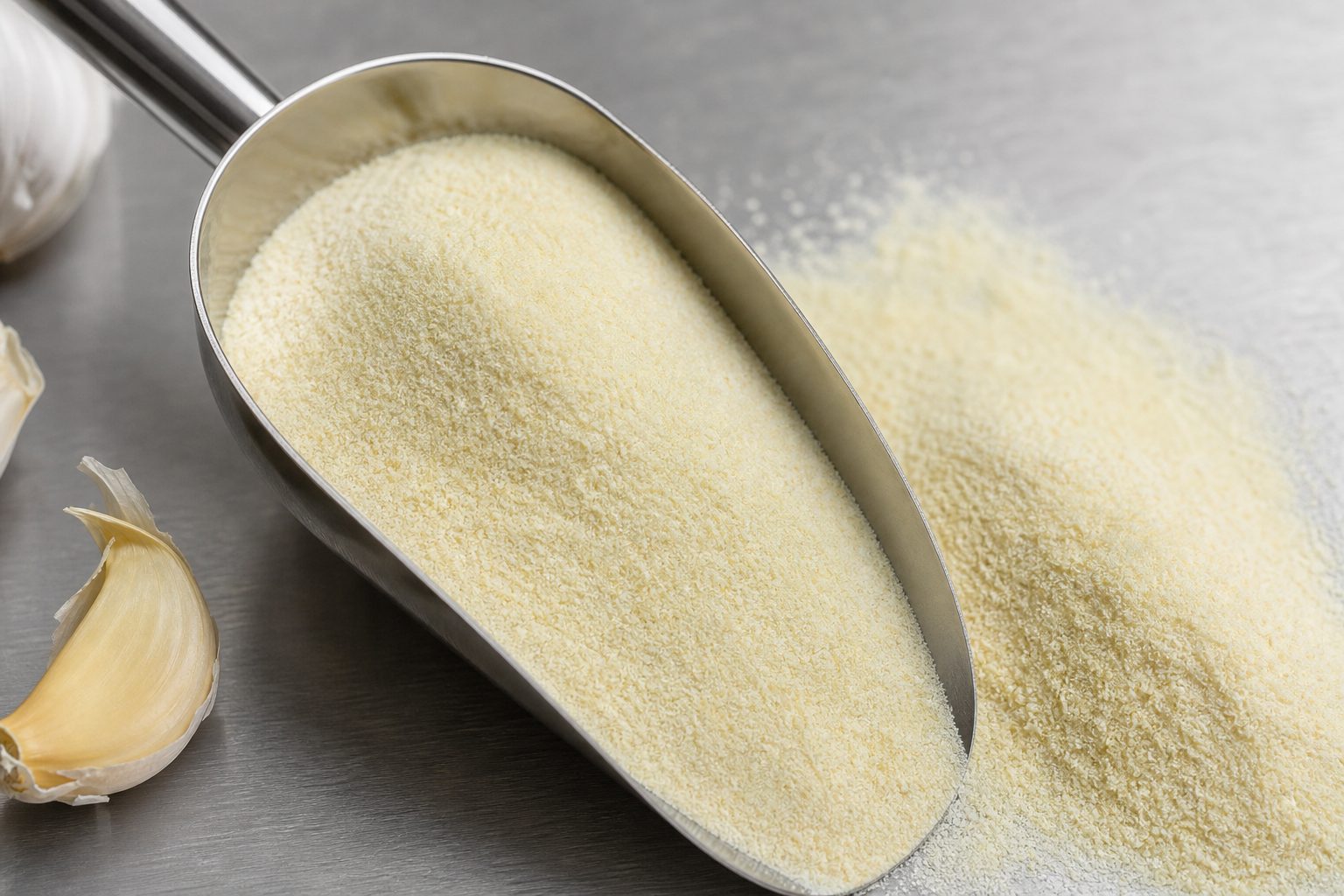
| Powder | Blends, coatings, rubs | 2.50–4.50 | Mesh (e.g. 80–100), caking controls; premium higher |
| Granules / minced / chopped | Instant foods, foodservice | Within flake–powder band | Particle band and bulk density |
| Roasted | Flavour differentiation | Usually above conventional | Colour/aroma approval protocol |
| Organic | Premium retail/CPG | +25–55% | Cert body + lot TC requirement |
Manufacturing Overview
Export Tip
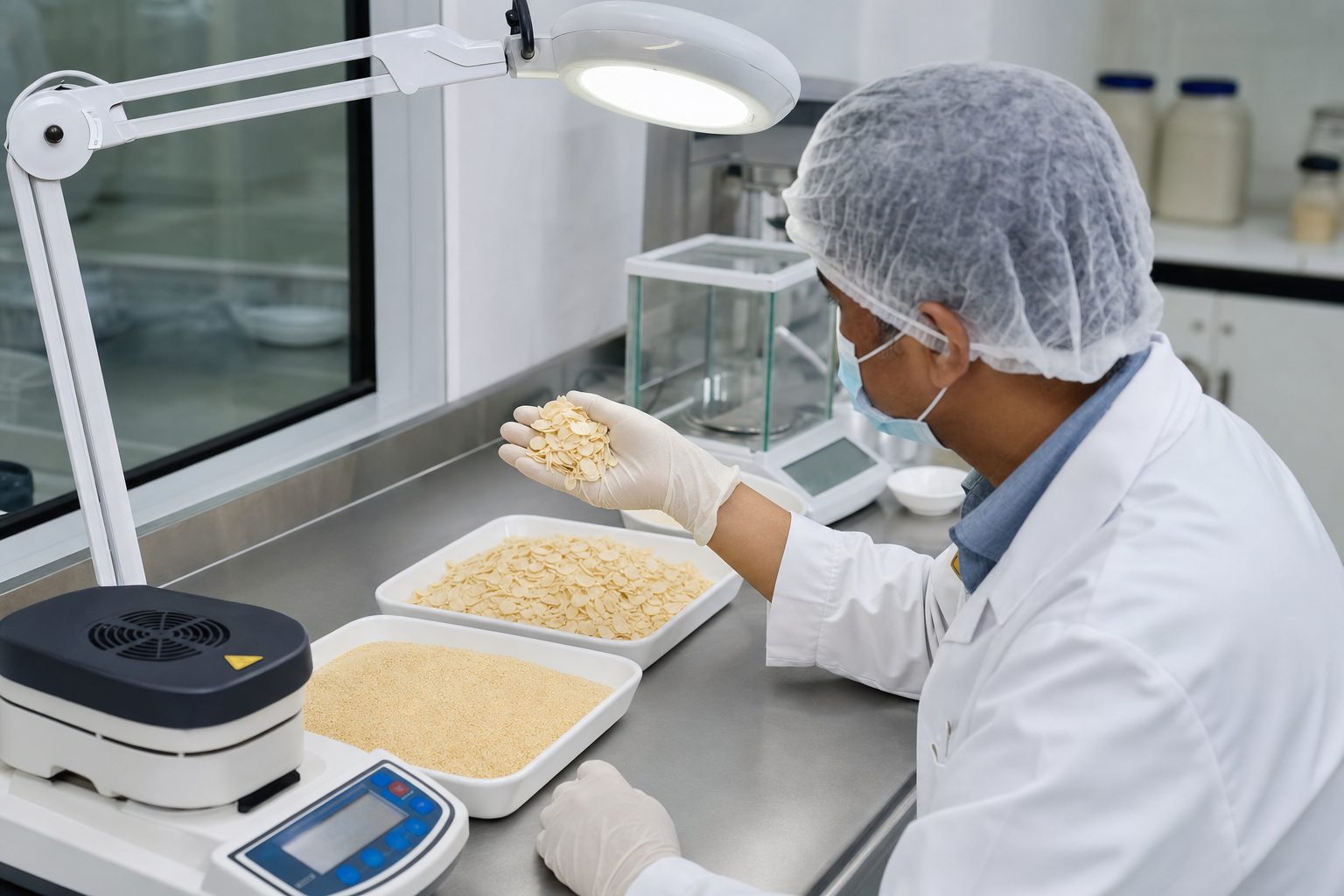
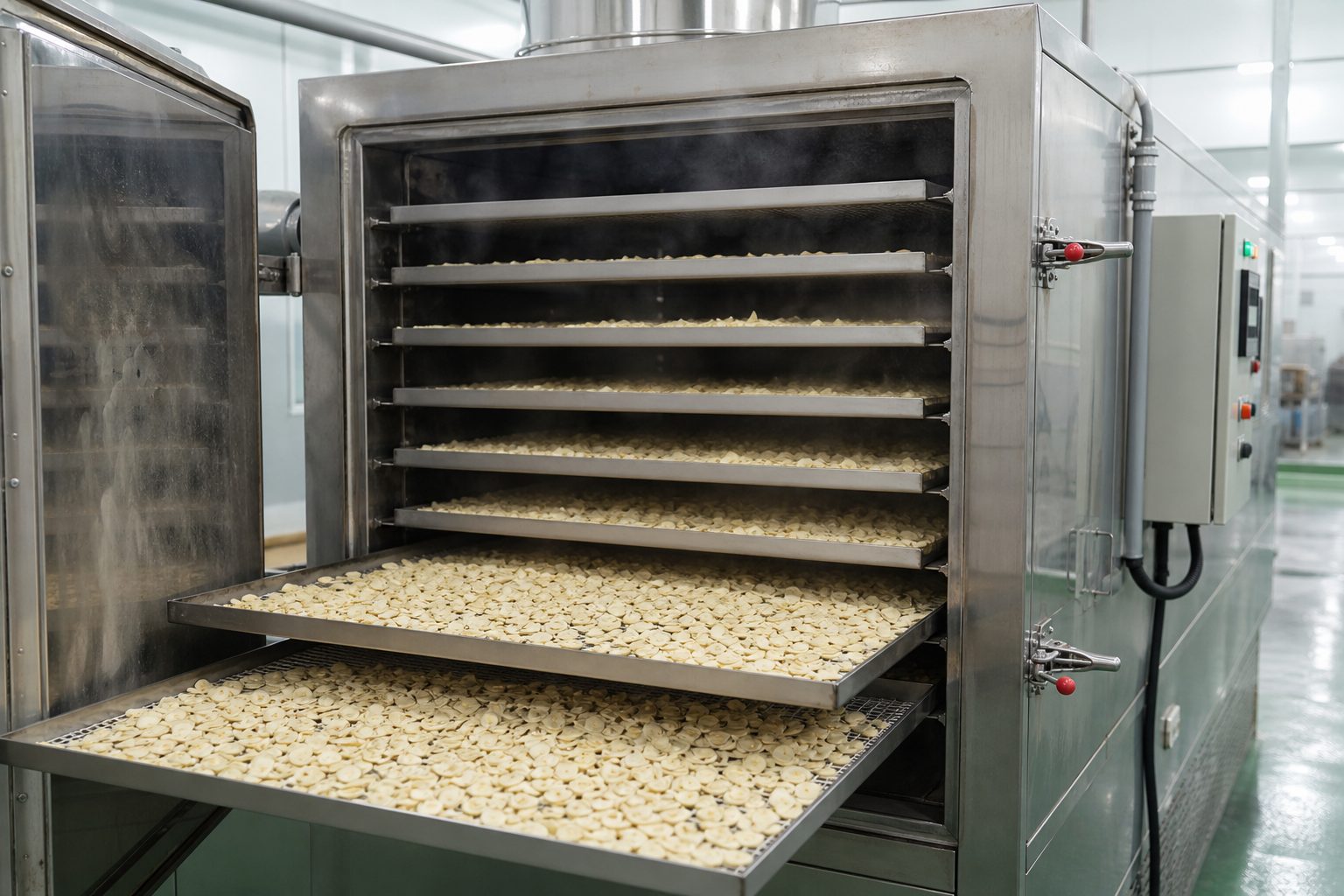
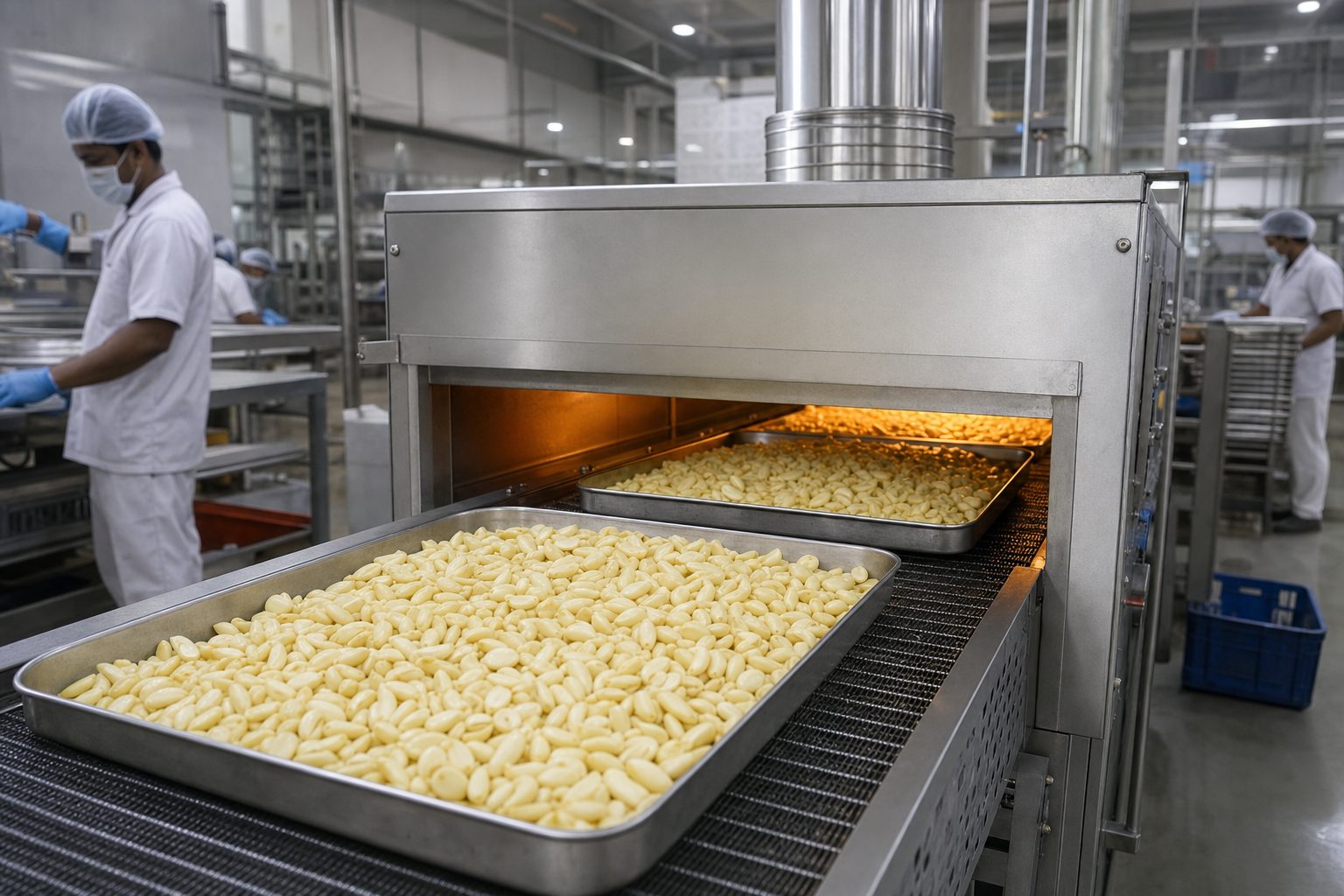
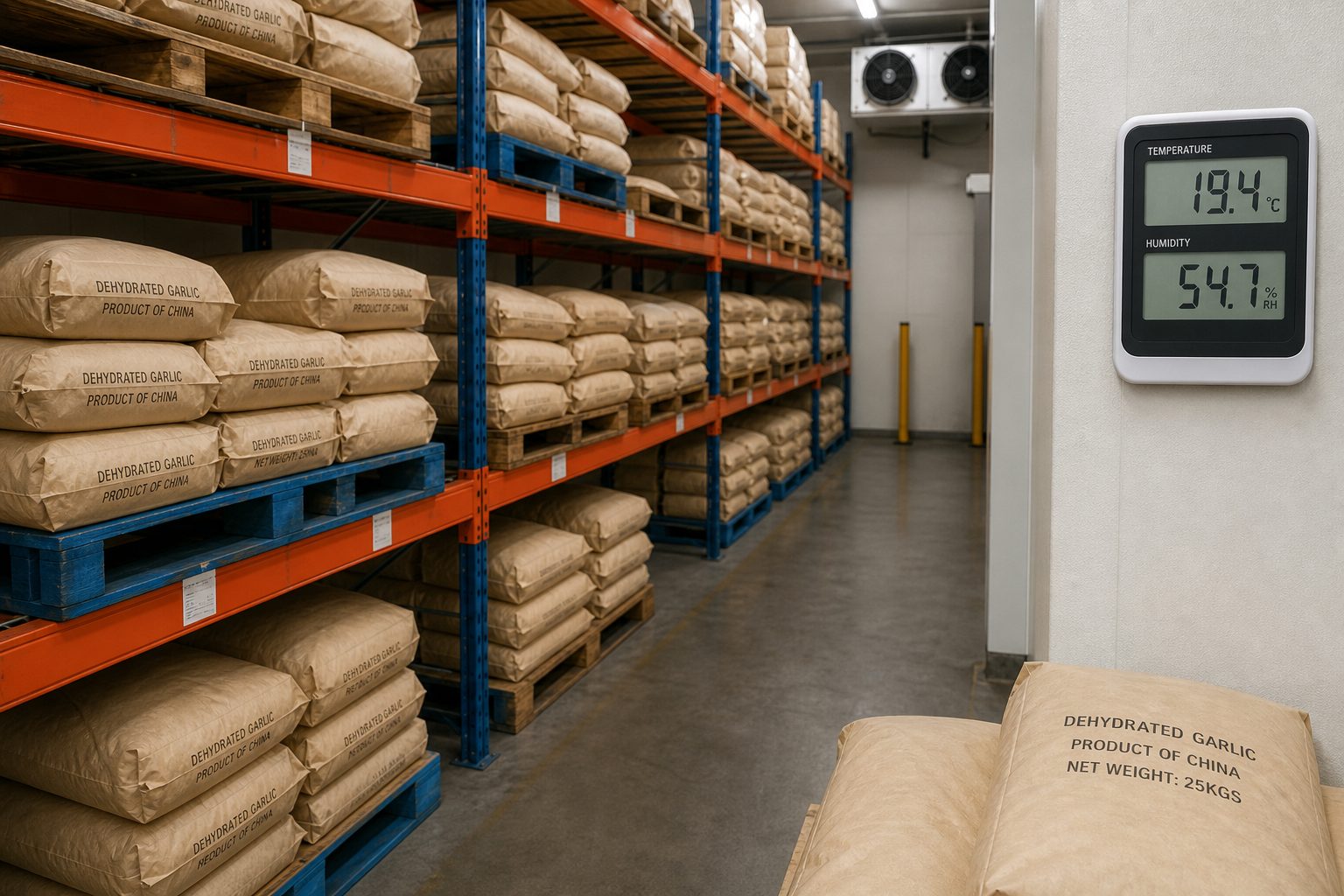
Buyers do not need to run a dryer — but you should know what good looks like. Fresh garlic is peeled and cut, hot-air dehydrated toward ~5–6% moisture, screened, metal-detected, tested, and packed in kraft+PE. Ask for dryer capacity, in-house vs contracted labs, retention-sample policy, and whether organic lots are segregated. Video audits of packing and storage are reasonable before first commercial payment.
Comparison table
Swipe →
Data table — swipe horizontally on small screens
| Process Question | Good Answer Looks Like | Red Flag |
|---|---|---|
| Moisture control | Calibrated analyser; COA per lot near 5–6% | "Around 8–10% is fine" |
| Allicin/pungency | Method stated when specified in RFQ | No sensory or analytical reference |
| Lab panel | Accredited micro + residue access | Only internal informal checks |
| Packaging | Food-grade PE liner + multiwall kraft 14–25 kg | Single-layer paper, no liner |
| Traceability | Lot codes from pack to COA | Mixed lots without coding |
Pricing Analysis
Buyer Tip
Use indicative FOB bands — flakes USD 2.20–4.00/kg, powder USD 2.50–4.50/kg (premium lots higher), organic +25–55% — only as sanity checks. Compare suppliers on landed cost: FOB + freight from Mundra/Pipavav/Nhava Sheva + insurance + duty + brokerage + retesting. Quotes far below band for the claimed grade and certifications are a risk signal, not a win.
Comparison table
Swipe →
Data table — swipe horizontally on small screens
| Cost Element | Buyer Check | Common Error |
|---|---|---|
| FOB | Form, mesh, certs, MOQ stated | Comparing unlike specs |
| Ocean freight | Port pair and container size | Using generic India averages |
| Duty | Exact national tariff line | Assuming preferential free rates |
| Docs / PSI / retest | Who pays each item | Discovering extras after PO |
| Organic premium | TC included or extra | Paying organic price without lot TC |
MOQ Analysis
Buyer Tip
Trial MOQs protect both sides. Many buyers start at 0.5–5 MT (sometimes LCL) for a new plant relationship, then move to one 20ft (about 10–14 MT) and later 40ft (about 20–26 MT) programmes. Organic and roasted specialties often stay on smaller trials longer. Merchant exporters can sometimes consolidate multi-SKU trials.
Comparison table
Swipe →
Data table — swipe horizontally on small screens
| Stage | Typical Quantity | Payment Posture |
|---|---|---|
| Sample | 0.5–5 kg + COA | Often paid; credit later |
| Trial commercial | 0.5–5 MT | Milestone payment; PSI rights |
| First FCL | 10–14 MT (20ft) | Advance + balance vs documents |
| Scale | 20–26 MT (40ft) / multi-FCL | Improve terms only after track record |
Packaging Standards
Export Tip
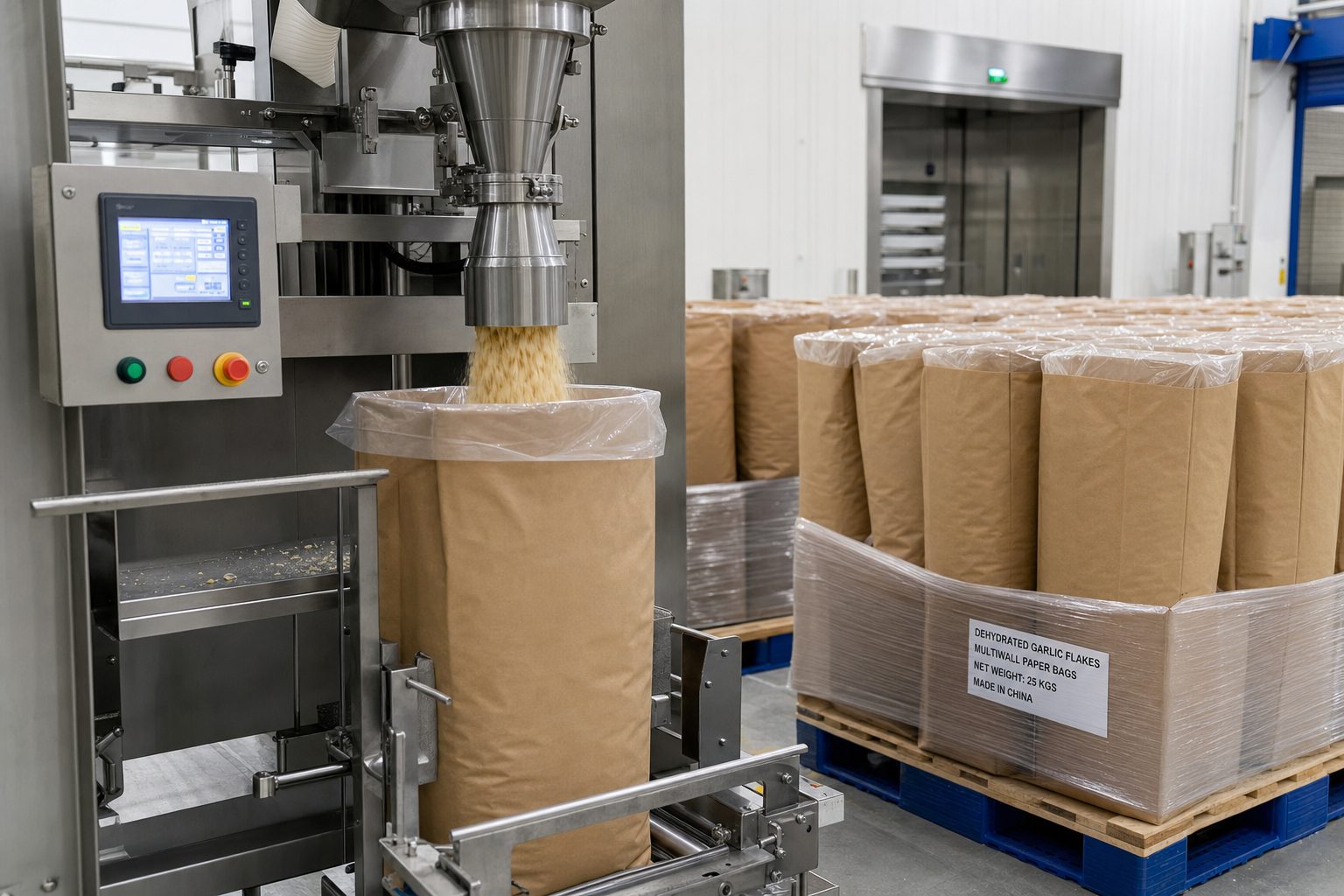
Write packaging into the RFQ: multiwall kraft + food-grade PE liner, net weight (commonly 14–25 kg), palletisation yes/no, marking language, and lot coding. For humid lanes (Indonesia, Malaysia, Gulf summers), consider liner upgrades. Retail packaging needs destination label compliance and artwork lead time called out separately from bulk economics.
Comparison table
Swipe →
Data table — swipe horizontally on small screens
| Pack Spec | Buyer Default | When to Tighten |
|---|---|---|
| Bag type | Kraft + PE liner | Always for ocean transit |
| Net weight | 14–25 kg | Match your warehouse handling |
| Palletisation | Prefer for EU/NA | If receiver forklift-ready |
| Jumbo bags | Only if you repack | Industrial plants with infrastructure |
Container Loading Details
Export Tip
Ask suppliers for a stuffing plan before you lock quantity: target MT, bag count, pallet vs floor load, desiccant use, and photos/video at sealing. Hygroscopic garlic and container sweat are real — loading discipline is part of quality, not only freight.
Comparison table
Swipe →
Data table — swipe horizontally on small screens
| Container | Indicative Load | Buyer Note |
|---|---|---|
| 20ft | 10–14 MT | Common first programme |
| 40ft | 20–26 MT | After trial success |
| LCL | Below FCL | Higher handling/moisture risk |
Shipping Methods
Export Tip
Sea FCL is the commercial default. LCL fits trials with stronger packaging vigilance. Air is for samples. Choose Incoterms deliberately and keep them identical across quote, PO, invoice, and BL instructions.
Comparison table
Swipe →
Data table — swipe horizontally on small screens
| Incoterm | Buyer Controls | Typical Use |
|---|---|---|
| FOB Mundra/Pipavav/Nhava Sheva | Freight + insurance after on-board | Most experienced importers |
| CFR | Insurance only | When seller books freight |
| CIF | Arrival port risk after documents per contract | Some Gulf/Asia buyers want landed ocean quote |
| Others (CIP/DAP/DDP) | Only with clear local capability | Advanced programmes — define carefully |
Certifications
Compliance Notes
Minimum for any serious Indian dehydrated garlic exporter: FSSAI site licence, APEDA RCMC, and IEC. Then map to your market: HACCP/ISO 22000 for EU/UK/NA/Japan; Halal for UAE/Indonesia/Malaysia; Kosher for many USA/Canada manufacturer programmes; NPOP plus destination organic equivalence with lot transaction certificates for organic claims.
Comparison table
Swipe →
Data table — swipe horizontally on small screens
| Certificate | Verify How | Fail Mode if Skipped |
|---|---|---|
| FSSAI | FoSCoS portal vs plant address | Illegal/unsafe supply risk |
| APEDA RCMC | APEDA portal | Export paperwork gaps |
| IEC | DGFT portal vs letterhead | Identity mismatch fraud risk |
| Halal / Kosher / Organic | Issuing body directly | Claim rejection at import or retail |
| Lot COA | Accredited lab; match lot codes | Arrival quality disputes |
Buyer Requirements
Buyer Requirements
Your internal stakeholder brief should equal the RFQ: application, annual volume forecast, trial quantity, target landed price, certification list, pack format, Incoterm preference, payment authority, and must-pass lab limits. Share that brief once; do not drip requirements across email threads.
Country-wise Opportunities
Market Snapshot
Sourcing strategy should reflect your import market's duty and compliance intensity. Use the table as a procurement lens; full country ranking lives in the market-selection guide.
Comparison table
Swipe →
Data table — swipe horizontally on small screens
| Market | Duty / Access Note | Certification Emphasis | Sourcing Tip |
|---|---|---|---|
| USA | HTS 0712.90.40 typically ~29.8% MFN — verify | COA, HACCP, Kosher/organic as needed | Model landed cost before supplier choice |
| Germany / Netherlands | ~12.8% CN 0712 90 90 — verify TARIC CN | ISO/HACCP, MRL depth | Longer qualification; fewer suppliers |
| UK | UKGT — verify | HACCP/BRC-aligned docs | Treat as separate from EU |
| Japan | Verify national tariff | Tightest panels | Extended sampling budget |
| Indonesia / Malaysia | ASEAN-India possible | Halal | Moisture + Halal first |
| Brazil | Mercosur CET | Baseline + consistency | FCL economics dominate |
| UAE | Typically ~5% CIF customs duty — verify | Halal | Fast cycle if docs clean |
| Canada | Verify tariff | NA-style COA depth | Broker checklist early |
How to Source Dehydrated Garlic Directly from India: Step-by-Step Buyer Playbook
Export Tip
Follow this twelve-step sequence for importers and distributors. Skipping a step to "save time" usually costs a full container cycle.
Step 1: Design the RFQ Completely
Document form (flakes/powder/granules/minced/chopped/roasted/organic), HS expectation (0712.90 / 07129030 / 07129020 / 07129040), mesh or cut, moisture (~5–6% target), allicin/pungency method if required, micro and residue panels, foreign matter limits, certifications, kraft+PE pack weight, Incoterm, trial MOQ, annual forecast, destination port, and target landed price band.
Step 2: Identify Candidate Suppliers
Use APEDA directories, FSSAI-licensed plant lists, trade shows, HS shipment data to your market, and referrals. Prioritise parties who can show Gujarat dehydration capability and Mandsaur–Neemuch feedstock logic — not generic spice traders with no garlic dryer access.
Step 3: Verify Registrations Independently
Check FSSAI (FoSCoS), APEDA RCMC, and IEC (DGFT) against the exact legal name and plant address on the quotation. Mismatched letterheads are a stop sign.
Step 4: Shortlist on Capability, Not Price
Score export history to markets like yours, lab access, certification validity (issuer-confirmed), communication precision, and willingness to support independent retesting. Keep two to three candidates per form.
Step 5: Request Samples with Matching Lot COAs
Refuse samples without lot-linked COAs covering moisture, micro, and other RFQ analytes. Marketing jars without lab data are not evidence.
Step 6: Independently Retest High-Risk Programmes
For first suppliers, Japan/EU/NA retail-adjacent programmes, or organic claims, retest at an accredited lab in your market. Compare methods and units carefully before accepting or rejecting.
Step 7: Negotiate on Landed Cost
Build FOB + freight + duty + extras for each shortlisted supplier on the same Incoterm basis. Clarify who pays PSI, organic TCs, and destination testing.
Step 8: Confirm Incoterms and Document Ownership
Lock FOB/CFR/CIF (or other) in the PO. List required documents: commercial invoice with correct HS, packing list, BL, COA, phytosanitary if required, certificate of origin, Halal/Kosher/organic TCs as applicable.
Step 9: Place a Trial MOQ with Written Gates
Start small. Tie production to approved sample and COA limits. Define PSI rights and remedies (rework, replace, refund) if the lot fails. Photograph packing and stuffing requirements in the PO annex.
Step 10: Use Payment Progression, Not Blind Advances
Typical new-supplier pattern: 30–50% advance on PO confirmation after sample approval; balance against shipping documents or LC terms. Avoid 100% advance. Improve to open account only after several on-spec shipments.
Step 11: Pre-Shipment Inspection and Release
Review lot COA, pack integrity, markings, and quantity before vessel cutoff. Do not let sailing pressure skip PSI on a first order — that is when failures hide.
Step 12: Control Arrival and Feedback Loop
Pre-alert your broker with drafts. On arrival, check condition, retain samples, and score the supplier. Feed results into the next PO — successful sourcing is a loop, not a one-off purchase.
RFQ Design Template for Dehydrated Garlic
Export Tip
Copy this structure into your sourcing system so every inquiry is comparable.
Comparison table
Swipe →
Data table — swipe horizontally on small screens
| RFQ Field | Example Content | Why Required |
|---|---|---|
| Product form + HS | Garlic powder; 07129020 / buyer HTS | Prevents wrong product quotes |
| Mesh / cut | 80–100 mesh; max 2% oversize | Application performance |
| Moisture | Max 6.0% | Shelf life and caking |
| Allicin / pungency | Method + minimum if used | Flavour consistency |
| Micro panel | TPC, yeast/mould, Salmonella, E. coli | Food safety |
| Residues | Destination MRL panel | EU/Japan/NA access |
| Certifications | FSSAI, APEDA, HACCP, Halal… | Channel eligibility |
| Packaging | 25 kg kraft+PE, palletised | Transit survival |
| Commercial | FOB Mundra; trial 2 MT; target landed band | Comparable offers |
Payment Progression and Risk Control
Cash terms are a risk instrument. Stage payments to sample approval, production start, PSI pass, and document release. Use LCs for larger first FCLs when your bank risk policy requires. Escrow-like structures via trading platforms do not replace portal verification of FSSAI/APEDA.
Comparison table
Swipe →
Data table — swipe horizontally on small screens
| Relationship Stage | Typical Terms | Risk Control |
|---|---|---|
| Unverified new supplier | No funds until portal checks + sample/COA | Walk away if docs fail |
| Post-sample approval | 30–50% advance | PO cites approved sample lot |
| First commercial trial | Balance vs BL/docs or LC | PSI before balance release where possible |
| Repeat on-spec shipments | Improved terms / OA consideration | Keep random COA audits |
Where to Find Reliable Indian Dehydrated Garlic Suppliers
Combine channels; verify every lead.
Comparison table
Swipe →
Data table — swipe horizontally on small screens
| Channel | Advantage | Limitation |
|---|---|---|
| APEDA directory | Registration baseline | Still needs quality diligence |
| FSSAI plant lists | Site licensing signal | Not proof of export skill |
| Trade shows | Face-to-face samples | Follow-up discipline required |
| HS trade data | Active exporters by market | Data cost; still verify |
| Merchant exporter / sourcing partner | Single accountability | Coordination margin |
| B2B portals | Fast discovery | High noise; weak compliance proof |
Sampling, COA, and Trial Order Protocol
Treat sampling as a controlled experiment, not a courtesy. Define how many kilograms you need, which analyses your lab will repeat, who pays freight for samples, and how long approval remains valid before bulk production must start. When the trial MOQ ships, insist that bulk production references the approved sample lot code and the same COA limits — not a vague promise of "same quality."
For organic programmes, never approve a commercial lot without a lot-linked organic transaction certificate that matches bag codes and invoice quantities. For Halal or Kosher programmes, confirm the certifying body and scope cover dehydrated garlic processing — not only a related spice line at a different site.
Comparison table
Swipe →
Data table — swipe horizontally on small screens
| Protocol Step | Buyer Action | Pass Criteria |
|---|---|---|
| Sample request | Specify form, pack of sample, and required COA analytes | Sample arrives with lot-linked COA |
| Internal sensory | Colour, aroma, rehydration/application test | Matches your gold standard within agreed tolerance |
| Independent lab | Retest moisture/micro/residues as needed | Results within RFQ limits using comparable methods |
| Trial PO | 0.5–5 MT with PSI and payment milestones | Written remedies if lot fails |
| Bulk scale-up | 20ft then 40ft only after trial success | Two consecutive on-spec lots before term softening |
Sourcing Checklist
Checklist
- Written RFQ with form, moisture, allicin/micro/residues, certs, pack, Incoterm, MOQ
- FSSAI verified for the actual dehydrator site
- APEDA RCMC and IEC verified; names match invoices
- Six months of lot COAs reviewed
- Halal/Kosher/Organic issuer-confirmed when claimed
- Sample + matching COA received; independent retest if needed
- Landed-cost comparison completed
- Trial MOQ and PSI rights written into PO
Buyer Checklist
Checklist
- Internal brief approved (volume, price band, certifications)
- Broker document list for your country collected before PO
- Payment progression and Incoterms signed
- Packaging and stuffing annex attached
- Retention sample plan for arrival QC
- Supplier scorecard template ready for post-shipment review
Exporter Checklist
Checklist
- Portal-verifiable FSSAI, APEDA, IEC proof on request
- Lot COAs from accredited labs without resistance to retesting
- Clear kraft+PE packing specs and container loading plans
- Itemised quotes that support landed-cost comparison
- Willingness to run trial MOQs before forcing 40ft commitments
- Document templates for your destination already prepared
What good Indian counterparties should be ready to provide buyers:
Compliance Checklist
Checklist
Compliance Notes
- Correct HS lines on invoice and packing list
- Lot codes consistent across COA, bags, and invoice
- Phytosanitary / health docs if your market requires
- Certificate of origin if claiming preferential duty
- Organic transaction certificate lot-linked for organic claims
- FDA prior notice / equivalent importer filings owned by the correct party under the Incoterm
Common Buyer Mistakes
Common Mistakes Box
These mistakes dominate first-order failures for dehydrated garlic importers.
Comparison table
Swipe →
Data table — swipe horizontally on small screens
| Mistake | Consequence | Fix |
|---|---|---|
| RFQ missing moisture/mesh/certs | Incomparable quotes; arrival disputes | Use the RFQ template above |
| Trusting certificate PDFs only | Invalid or wrong-site claims | Portal + issuer verification |
| Samples without lot COAs | Bulk drift from approved sample | Require matched COAs; retest |
| FOB-only supplier choice | Higher true landed cost | Model duty and freight |
| 100% advance to new supplier | No leverage on PSI failure | Payment progression |
| Jumping to 40ft on order one | Amplifies quality loss | Trial MOQ first |
| Ignoring kraft+PE liner quality | Moisture damage at sea | Specify liner and inspect packing |
| Skipping broker pre-alert | Customs delay on arrival | Send draft docs before sailing |
Future Market Trends
Key Statistics
Buyers should expect tighter residue and traceability expectations in EU, UK, Japan, and North America; continued Halal structural demand in ASEAN and Gulf; and growing share of organic and specialty roasted/powder programmes. Digital lot traceability and remote video audits will become normal pre-PO steps. Lock relationships with dehydrators investing in lab partnerships and segregated organic lines before capacity gets scarce.
Expert Insights
Expert Insight Box
Two insights from Saurabh Mittal, Founder of Altus Exports, for importers designing India dehydrated garlic programmes.
Verification Is a Fixed Process
Payment Progression Buys Quality Leverage
Conclusion
- Next step: Send your RFQ pack to Altus Exports for a verified supplier pathway.
- Align destinations via Best Countries for Indian Dehydrated Garlic Exports.
- Understand export-side mechanics in How to Export Dehydrated Garlic from India.
- Choose forms with Top Dehydrated Garlic Products Exported from India.
- Pipeline context: Find International Buyers for Dehydrated Garlic.
- Premium lane: Organic Dehydrated Garlic Export Opportunities.
- Registration context: APEDA Registration Benefits for Dehydrated Garlic Exporters.
- Docs: Dehydrated Garlic Export Documentation Checklist.
- Events and demand maps: Trade Shows for Dehydrated Garlic Exporters and Most Demanded Indian Dehydrated Garlic by Country.
- Services: merchant exporter, global sourcing partner, product sourcing company, export products from India, find manufacturers in India.
Sourcing dehydrated garlic directly from India rewards importers who design precise RFQs, verify Mandsaur–Neemuch and Gujarat counterparties on official portals, demand lot-linked COAs, retest when risk warrants, negotiate landed cost, start with trial MOQs, and progress payment only against quality gates. Keep packaging at kraft+PE 14–25 kg, plan containers around 10–14 MT / 20ft and 20–26 MT / 40ft, and use Mundra, Pipavav, or Nhava Sheva with document discipline.
If you want a verified shortlist and an accountable India-side workflow, share your specification, certifications, trial MOQ, destination market, and target landed band with Altus Exports — merchant exporter and global sourcing partner for dehydrated garlic programmes.