
Most Demanded Indian Dehydrated Garlic by Country (Buyer Preferences Guide)
By Saurabh Mittal, Founder, Altus Exports
A product × country demand map for the most demanded Indian dehydrated garlic by destination — what cuts, mesh sizes, moisture specs, and certifications each market actually orders. Covers USA seasoning powder/flakes, EU residue-clean and organic powder, Japan ultra-clean fine mesh, ASEAN volume flakes for noodles, and GCC Halal mixed FCLs, plus pricing, MOQ, kraft+PE packaging, container loading, and expert insights from Altus Exports.
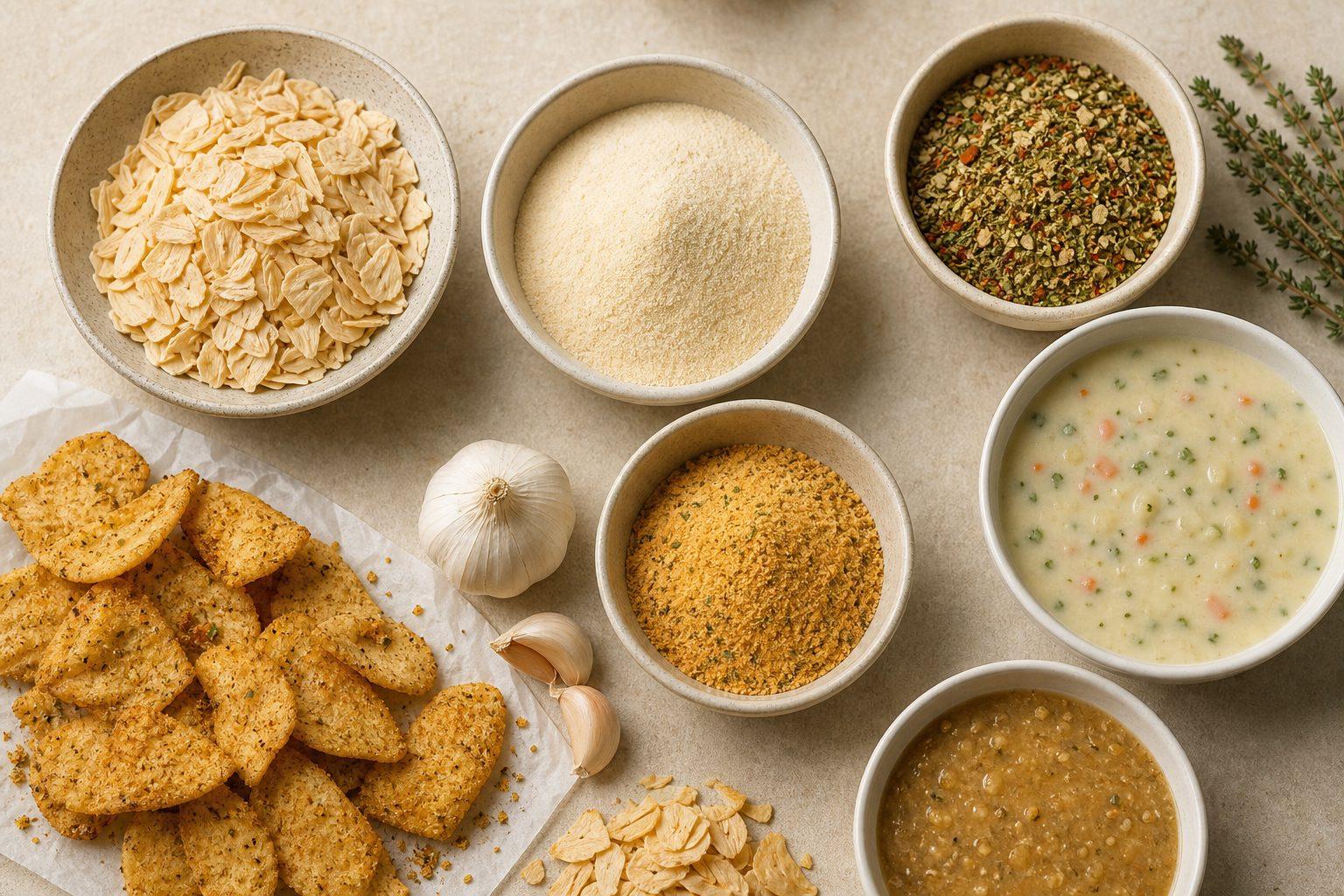
Not every dehydrated garlic buyer wants the same product. A US seasoning manufacturer sourcing 80–100 mesh garlic powder for snack coatings has an entirely different specification profile from a German clean-label brand seeking residue-clean organic powder, a Japanese importer demanding ultra-clean fine mesh with Japan Positive List residue panels, an Indonesian noodle producer buying high-volume flakes, or a Gulf foodservice distributor consolidating Halal-certified mixed FCLs of flakes and powder. India's dehydrated garlic export strength — raw material from the Mandsaur–Neemuch garlic belt in Madhya Pradesh and processing from Gujarat plants around Mahuva, Bhavnagar, and Sihor under HS 0712.90 (07129030 flakes, 07129020 powder, 07129040 dried garlic) — is most commercially valuable when exporters match cut, mesh, moisture 5–6%, allicin retention, and certification precisely to what each destination market actually buys.
This guide maps the most demanded Indian dehydrated garlic by country, translating cut preference, mesh and moisture specification, certification requirement, and buyer channel behaviour into practical product and go-to-market guidance. It complements — and deliberately does not duplicate — market-selection guides that rank countries by overall opportunity; this guide instead answers a narrower and more operational question: once you have chosen a market, what specific cut, mesh, moisture spec, and certification stack does that market's buyers actually demand?
Use it alongside best countries for Indian dehydrated garlic exports for market selection and top dehydrated garlic products exported from India for full product-grade detail. Validate demand signals against APEDA trade intelligence, ITC Trade Map HS 0712.90 data, and direct buyer conversations before committing production or certification investment. For the institutional registration layer, see APEDA registration benefits for dehydrated garlic exporters.
Key Takeaways
Summary Box
Executive Summary
Summary Box
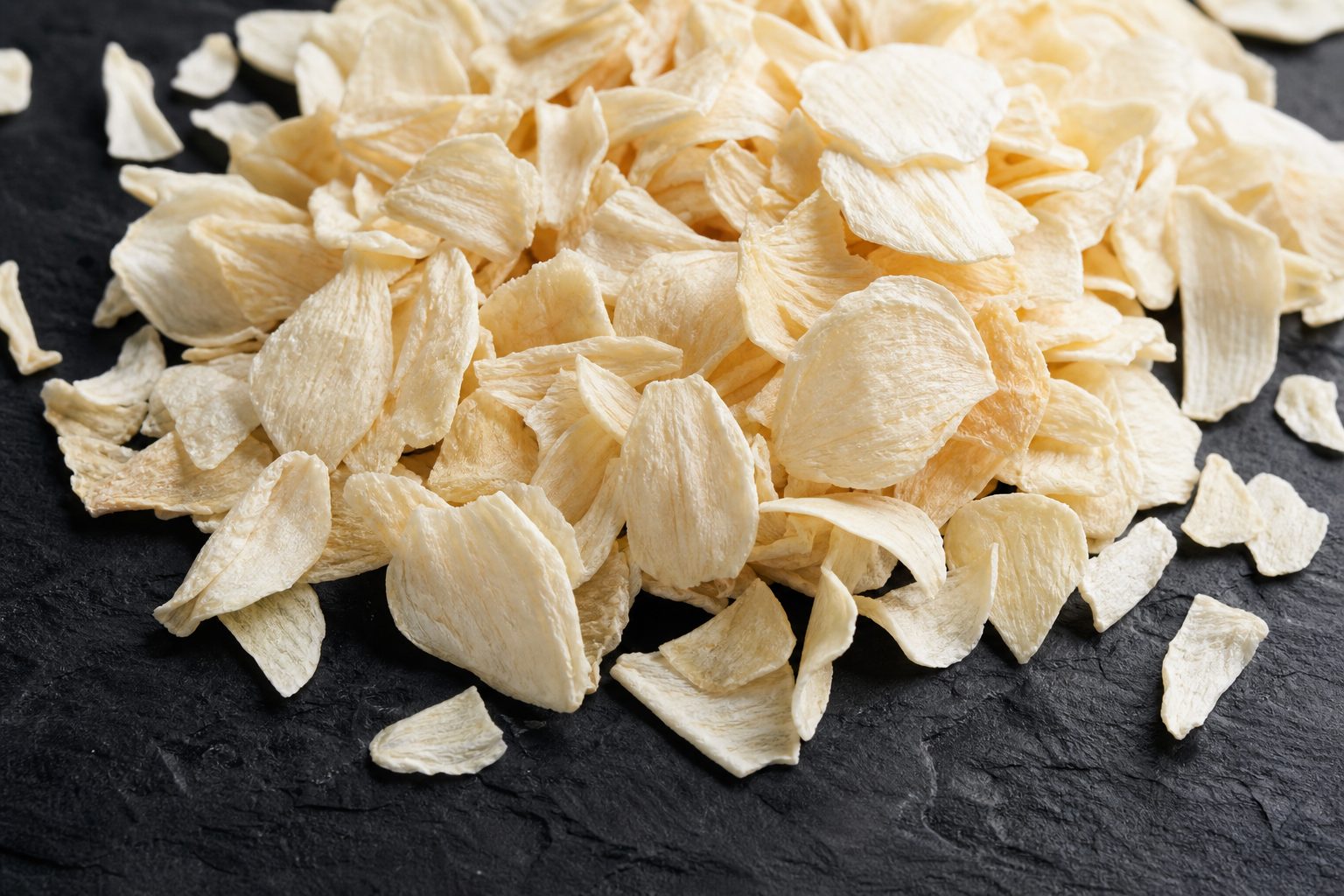
Indian dehydrated garlic — flakes, powder, granules, minced, chopped, and toasted/roasted forms under HS 0712.90 — is increasingly evaluated by buyers not as a single commodity but as a set of distinct product profiles matched to specific end uses: snack seasoning, noodle flavouring, soup and sauce manufacturing, industrial food processing, and foodservice blending. Cut, mesh size (especially 80–100 mesh for powder), moisture target (5–6%), allicin/pungency, colour retention, and certification stack all shift materially by destination market.
This guide organises buyer preference data by country and region, covering the USA, Germany and the wider EU, Japan, Indonesia and Malaysia (ASEAN), the UAE and GCC, the UK, the Netherlands as an EU hub, Brazil, and Canada. Each section identifies the dominant cut, moisture and certification expectations, and the buyer channel that drives demand, supported by comparison tables covering pricing, MOQ, packaging, and shipping specific to that market's typical order profile. Unlike a "best countries" ranking guide, the focus here is demand-fit matrices — what to ship, not merely where to sell.
Understanding International Dehydrated Garlic Buyer Behaviour
Dehydrated garlic buyers segment into distinct groups with different purchasing priorities. Bulk industrial food processors buying flakes by the container prioritise price, moisture consistency, and delivery reliability. Snack and seasoning manufacturers buying powder prioritise 80–100 mesh fineness, colour, and allicin/flavour intensity. Retail and private-label brands prioritise packaging format, labelling compliance, and — increasingly — organic or clean-label certification. Foodservice distributors prioritise consistent rehydration performance and packaging convenience for catering-scale use. Noodle manufacturers in ASEAN prioritise flake volume and Halal-compatible supply chains.
Purchasing decisions are shaped by regulatory frameworks (EU MRL limits, Japan's Positive List System, US FDA requirements), consumer trends (organic, clean-label, natural seasoning), and pricing cycles tied to the Mandsaur–Neemuch garlic harvest and global dehydrated vegetable supply from competing origins, notably China. Buyers who have experienced a residue or microbiological rejection are highly risk-averse and often pay a premium for suppliers with a clean, multi-lot testing track record.
Market Size & Industry Overview
Key Statistics
Global demand for dehydrated garlic spans food manufacturing, spice and seasoning blending, instant noodles, foodservice, and industrial catering. India's competitive position rests on Mandsaur–Neemuch raw garlic supply, Gujarat's concentrated dehydration infrastructure around Mahuva, Bhavnagar, and Sihor, competitive FOB pricing relative to some alternative origins, and a widening range of cuts and certifications available from established exporters. China remains the largest global supplier by volume; India competes on quality consistency, cut variety, China+1 diversification programmes, and increasingly organic and Halal-certified supply.
Buyer sophistication has risen materially across major markets: EU and Japanese buyers apply systematic residue and microbiological screening to new suppliers, US buyers increasingly request organic-certified options for private-label programmes, and Gulf and Southeast Asian buyers weigh Halal certification alongside price and volume capability.
Comparison table
Swipe →
Data table — swipe horizontally on small screens
| Cluster | Role in Demand Fulfilment | Forms Best Supported |
|---|---|---|
| Mandsaur–Neemuch (MP) | Raw garlic growing and trading feedstock | All forms — harvest timing drives FOB bands |
| Mahuva (Gujarat) | Industrial hot-air dehydration | Flakes, powder (80–100 mesh) |
| Bhavnagar (Gujarat) | Flakes, granules, minced, toasted/roasted | Value-added and industrial cuts |
| Sihor (Gujarat) | Feeder processing and consolidation | Granules and flakes |
Export Statistics
Key Statistics
The table below summarises directional export intensity by destination for Indian dehydrated garlic — validate against current APEDA and DGFT trade data before finalising market allocation decisions.
Comparison table
Swipe →
Data table — swipe horizontally on small screens
| Destination | Export Intensity | Dominant Export Form |
|---|---|---|
| USA | Very High | Powder (80–100 mesh) and flakes for seasonings |
| Germany / EU | High | Residue-clean powder and flakes; organic growing |
| Japan | Medium–High | Ultra-clean fine mesh powder and premium flakes |
| Indonesia / Malaysia | High | Volume flakes for noodles and snacks |
| UAE / GCC | Medium–High | Halal mixed FCLs — flakes and powder |
| UK | Medium–High | Powder and flakes for retail/foodservice |
| Netherlands | High | Flakes and powder (hub redistribution) |
| Brazil / Canada | Medium / Growing | Flakes and powder |
Import Statistics
Key Statistics
Import intensity reflects each market's food manufacturing base and retail structure. The table below is directional; confirm current-year figures against destination customs statistics or ITC Trade Map before capacity planning.
Comparison table
Swipe →
Data table — swipe horizontally on small screens
| Country / Region | Import Driver | Buyer Type |
|---|---|---|
| USA | Seasoning and snack manufacturing growth | Food manufacturers, private-label brands |
| Germany | Food manufacturing and clean-label retail | Food processors, specialty importers |
| Japan | Premium food manufacturing with strict specs | Food manufacturers, specialty importers |
| Indonesia / Malaysia | Instant noodle and snack seasoning growth | Food manufacturers |
| UAE / GCC | Foodservice and catering demand across Gulf | Foodservice distributors, importers |
| UK | Retail and foodservice seasoning demand | Retail brands, foodservice distributors |
| Netherlands | EU redistribution hub role | Bulk importers, distributors |
| Canada / Brazil | Food processing diversification | Food manufacturers, importers |
Most Demanded Indian Dehydrated Garlic in the USA
Market Snapshot
- Dominant forms: Garlic powder (80–100 mesh) and flakes for seasonings
- Moisture target: 5–6% powder / ~6% flakes, with tight batch consistency expected
- Certifications: FSSAI, APEDA RCMC, FDA-aligned documentation; organic (NPOP/USDA NOP) for the growing natural food segment
- Packaging: 14–25 kg kraft+PE bags for bulk manufacturing; retail pouches for private-label brands
- Channel tip: Seasoning manufacturers value colour, mesh, and allicin consistency across lots more than marginal price differences
The USA is one of India's largest dehydrated garlic export destinations, driven primarily by seasoning manufacturers, snack coating producers, spice blenders, and food processors. US buyers show strong demand for garlic powder milled to 80–100 mesh — used extensively in dry seasoning blends, savoury snack coatings, and spice mixes — and flakes for visual identity in blends and foodservice applications. Organic interest is growing steadily among private-label natural food brands, though conventional volume still dominates overall import value.
US buyers are particularly attentive to FDA-aligned documentation and consistent colour, moisture (5–6%), and flavour/allicin across lots, since seasoning manufacturers blend dehydrated garlic into standardised recipes where batch-to-batch variation is commercially costly. Pre-shipment testing against a US-relevant microbiological and pesticide panel is a baseline expectation, not a differentiator.
Most Demanded Indian Dehydrated Garlic in Germany and the Wider EU
Market Snapshot
- Dominant forms: Residue-clean powder and flakes; organic powder growing fast
- Moisture target: 5–6%, with EU-panel residue testing mandatory
- Certifications: FSSAI, APEDA RCMC, EU MRL-compliant residue reports; EU Organic/NPOP for premium retail
- Packaging: 14–25 kg food-grade kraft+PE bags for bulk; certified organic retail packs for premium channel
- Watch-out: Microbiological and MRL non-compliance triggers RASFF alerts that can suspend market access for extended periods
Germany anchors EU demand for Indian dehydrated garlic, driven by food manufacturers and clean-label brands who favour residue-clean powder and flakes — with a growing organic premium segment for retail and health-focused food manufacturing. EU Regulation (EC) No. 396/2005 on maximum residue levels and strict microbiological standards make Germany and the broader EU among the most demanding compliance environments, alongside Japan.
Organic-certified dehydrated garlic powder commands a meaningful premium in German and Dutch retail and food-manufacturing channels. Buyers expect comprehensive pre-shipment residue panels, full traceability documentation back to Mandsaur–Neemuch or Gujarat processing lots, and — for organic programmes — certification under the EU Organic Regulation (EU 2018/848) via NPOP equivalency or a directly EU-accredited certifier.
Most Demanded Indian Dehydrated Garlic in Japan
Market Snapshot
- Dominant forms: Ultra-clean fine mesh powder and premium flakes
- Moisture target: 5–6%, with ultra-strict microbiological and residue compliance
- Certifications: FSSAI, APEDA RCMC, Japan Positive List-compliant residue testing
- Packaging: Premium food-manufacturing packs with rigorous quality documentation; kraft+PE with strong moisture barrier
- Channel tip: Multi-season clean test records are the single strongest trust signal for Japanese buyer qualification
Japan is among the most technically demanding dehydrated garlic import markets globally. Japan's Positive List System for agricultural chemicals sets a default maximum residue limit of 0.01 ppm for substances without a specific limit — far stricter than EU or US standards — meaning Indian dehydrated garlic destined for Japan must be tested against a comprehensive Japan-specific residue panel, not the EU or US panel, before each shipment.
Despite the compliance burden, Japan represents a premium-value market for ultra-clean fine mesh powder (often at the finer end of or beyond standard 80–100 mesh programmes) and premium flakes with authentic specification documentation and consistent microbiological cleanliness. Japanese buyers are meticulous; they typically request test reports from Japan-accepted or internationally recognised labs covering all applicable substances before placing even a trial order, and they reward suppliers who demonstrate multi-season clean testing history with long-term loyalty.
Most Demanded Indian Dehydrated Garlic in Indonesia and Malaysia (ASEAN)
Market Snapshot
- Dominant forms: Volume flakes for noodles and snacks; powder secondary
- Moisture target: ~6% flakes / 5–6% powder, standard industrial specification
- Certifications: FSSAI, APEDA RCMC, Halal (valued for downstream buyer certification needs)
- Packaging: Bulk 14–25 kg kraft+PE bags; jumbo bags for large food manufacturers
- Channel tip: Halal certification supports buyer confidence even for plant-based products destined for Halal-certified finished goods
Indonesia and Malaysia represent strong ASEAN volume markets for Indian dehydrated garlic, driven by the region's large instant noodle, snack, and packaged food manufacturing sectors. Buyers predominantly source flakes in bulk for noodle seasoning and snack applications, with price competitiveness and consistent supply volume as primary purchasing criteria. Powder is secondary but growing for dry seasoning blends.
Halal certification carries meaningful commercial value in both markets given Halal-observant consumer bases, even though dehydrated garlic itself is plant-based — buyers still prefer Halal-certified supply chains for their own downstream certification requirements. Indonesian and Malaysian buyers often source through established regional distributors rather than direct import for smaller-volume purchases, while large noodle manufacturers may take FCL programmes directly.
Most Demanded Indian Dehydrated Garlic in the UAE and GCC
Market Snapshot
- Dominant forms: Halal mixed FCLs — flakes and powder combined
- Moisture target: 5–6%, standard industrial specification
- Certifications: FSSAI, APEDA RCMC, Halal (from a UAE-recognised certifying body)
- Packaging: Bulk 14–25 kg kraft+PE bags for foodservice; retail packs for smaller grocery channels
- Channel tip: Complete Halal and RCMC documentation accelerates trial-to-repeat-order conversion; mixed-form FCL planning wins distributor loyalty
The UAE and broader GCC combine foodservice, catering, and industrial food-processing demand for Indian dehydrated garlic, with mixed FCL programmes of flakes and powder as a distinctive regional pattern — distributors often prefer consolidated containers covering multiple forms rather than single-form shipments. Halal certification is a practical requirement for retail entry and carries strong buyer preference even in foodservice and industrial channels.
Gulf buyers move relatively quickly on trial orders once documentation — FSSAI, APEDA RCMC, and Halal certification — is complete, and they tend to consolidate around suppliers who deliver consistently across repeat cycles. Saudi Arabia, Kuwait, Qatar, and Bahrain share broadly similar demand patterns with the UAE, supporting a coherent regional approach for exporters with volume capability from Mandsaur–Neemuch and Gujarat supply chains.
Most Demanded Indian Dehydrated Garlic in the UK
Market Snapshot
- Dominant forms: Powder (80–100 mesh) and flakes for retail and foodservice
- Moisture target: 5–6%, consistent colour and allicin/flavour expected
- Certifications: FSSAI, APEDA RCMC, UK-compliant labelling documentation; UK Organic for the organic retail channel
- Packaging: Retail pouches for private label; kraft+PE bags for foodservice bulk
- Watch-out: EU organic certification does not automatically satisfy UK organic labelling requirements post-Brexit
UK demand spans both retail and foodservice channels, with buyers seeking powder (80–100 mesh) and flakes for seasoning blends, ready meals, and catering supply. Post-Brexit, UK buyers operate under retained food safety regulations based on the EU MRL framework as a starting point, with UK-specific labelling requirements including allergen statements, country of origin, and storage guidance that must be reflected in retail packaging.
UK retail and private-label brands increasingly request organic or clean-label positioning. UK Organic certification via an approved UK conformity assessment body operates as a separate pathway from EU organic certification post-Brexit, which exporters targeting both markets should plan for as distinct certification tracks.
Most Demanded Indian Dehydrated Garlic in the Netherlands (EU Hub)
Market Snapshot
- Dominant forms: Flakes and powder, bulk volume for redistribution
- Moisture target: 5–6%, EU MRL-compliant residue testing required
- Certifications: FSSAI, APEDA RCMC, EU-compliant documentation; organic for redistribution to premium channels
- Packaging: Bulk 14–25 kg kraft+PE bags optimised for repacking and redistribution
- Channel tip: Reliability across repeat shipments matters more to hub distributors than marginal FOB price differences
The Netherlands functions primarily as an EU logistics and distribution hub for Indian dehydrated garlic rather than an end-consumption market alone. Dutch importers typically buy large volumes of flakes and powder in bulk for blending, repacking, and redistribution to German, French, and Scandinavian food manufacturers and retailers.
Because this market acts as a gateway, consistency and reliability of bulk supply matter more than single-shipment pricing — a Dutch importer disrupted by an inconsistent Indian supplier faces knock-on problems across its entire downstream distribution network. Establishing a dependable Netherlands import relationship can materially expand an exporter's effective EU market reach without direct retail penetration in each individual country.
Most Demanded Indian Dehydrated Garlic in Brazil and Canada
Market Snapshot
- Brazil dominant forms: Flakes and powder, industrial volume, high price sensitivity
- Canada dominant forms: Powder and flakes, growing diversification programmes
- Moisture target: 5–6%, standard specification with rising certification expectations in Canada
- Certifications: FSSAI, APEDA RCMC; CFIA-aligned documentation for Canada
- Channel tip: Start with trial-order volumes in Canada; compete on FOB consistency in Brazil
Brazil is a price-sensitive industrial market for Indian dehydrated garlic, with buyers typically purchasing flakes and powder in bulk for processed food manufacturing and seasoning production. Currency and freight cost sensitivity make Brazil a market where consistent, competitively priced bulk supply wins repeat business more than premium positioning.
Canada represents a growing programme for Indian dehydrated garlic, with demand driven by food manufacturers and distributors seeking to diversify supply beyond single-origin dependence. Canadian buyers often source powder and flakes through channels similar to the US market, with CFIA food safety compliance and bilingual labelling considerations where retail-bound. Both markets reward exporters willing to start with trial volumes and build track record before scaling.
Country-wise Opportunities
Market Snapshot
The comparison table below consolidates form, certification, and demand-level data across the markets covered in this guide for quick reference during demand-fit prioritisation — distinct from overall market-selection rankings.
Comparison table
Swipe →
Data table — swipe horizontally on small screens
| Country / Region | Top Forms | Key Certifications | Demand Level | Price Sensitivity |
|---|---|---|---|---|
| USA | Powder 80–100 mesh, flakes | FSSAI, APEDA, FDA-aligned docs, organic (NOP) growing | Very High | Medium |
| Germany / EU | Residue-clean powder/flakes, organic | FSSAI, APEDA, EU MRL panel, EU Organic | High | Low–Medium |
| Japan | Ultra-clean fine mesh powder, premium flakes | FSSAI, APEDA, Japan Positive List panel | Medium–High | Low–Medium |
| Indonesia / Malaysia | Volume flakes (noodles/snacks) | FSSAI, APEDA, Halal | High | High |
| UAE / GCC | Halal mixed FCLs — flakes + powder | FSSAI, APEDA, Halal | Medium–High | Medium–High |
| UK | Powder, flakes | FSSAI, APEDA, UK labelling, UK Organic | Medium–High | Medium |
| Netherlands | Flakes, powder (bulk hub) | FSSAI, APEDA, EU MRL panel | High | Medium |
| Brazil / Canada | Flakes, powder | FSSAI, APEDA; CFIA (Canada) | Medium / Growing | High / Medium |
Product Categories / Variants
Summary Box
Understanding form and mesh differences is essential to matching supply to the country-specific preferences outlined above.
Comparison table
Swipe →
Data table — swipe horizontally on small screens
| Variant | Typical Specification | Strongest Country Demand |
|---|---|---|
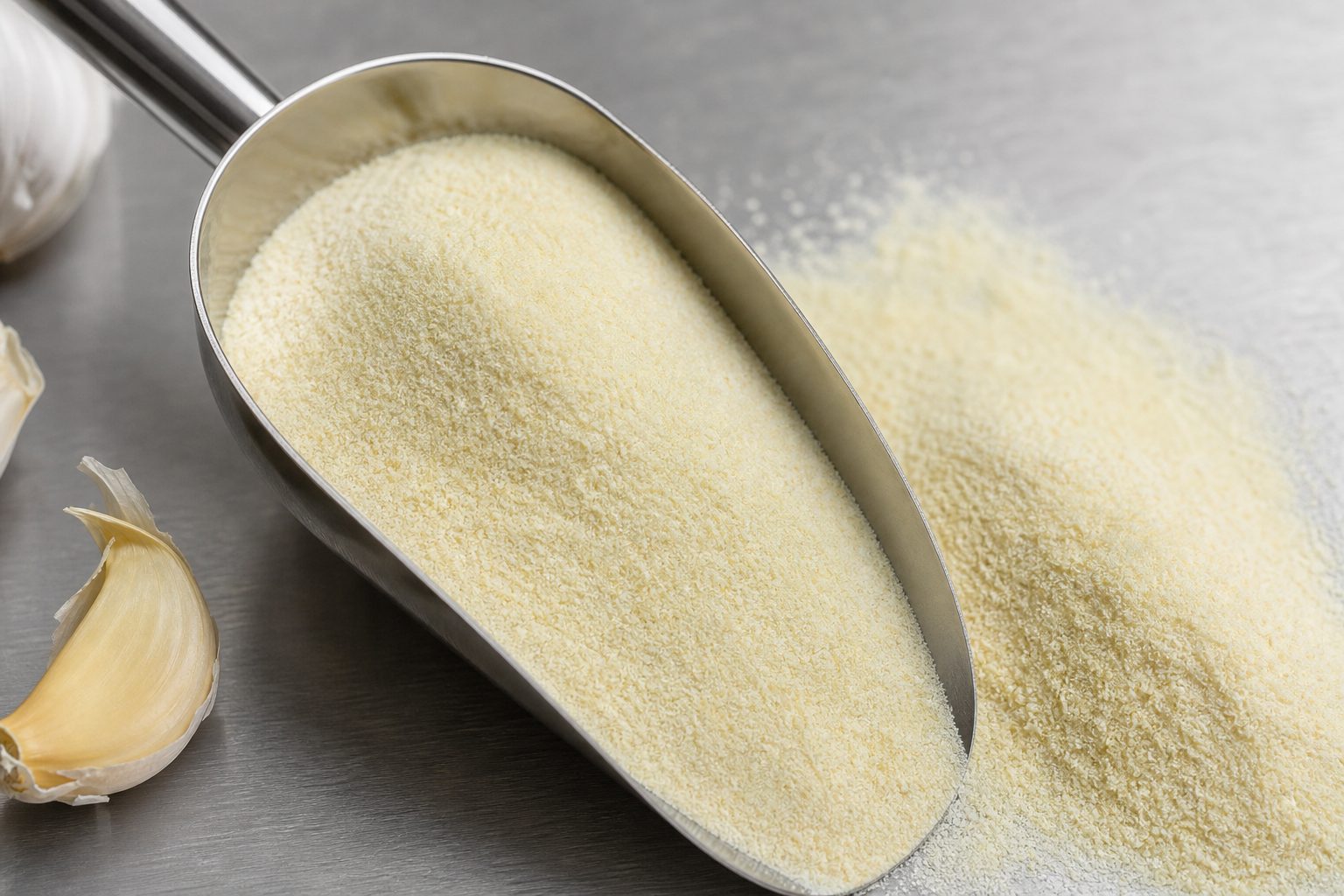
| Garlic powder | 80–100 mesh, moisture 5–6% | USA, UK, Japan (fine mesh), EU organic |
| Garlic flakes | 3–8 mm, moisture ~6% | USA, ASEAN noodles, EU, Netherlands hub, GCC |
| Granules / minced | 1–3 mm, moisture ~6% | EU sauce/ready-meal; multi-market dry mixes |
| Chopped garlic | 5–10 mm irregular pieces | Ready meals and marinades, multiple markets |
| Toasted / roasted | Flakes or granules, roasted | Premium snack toppings, select US/EU/Japan programmes |
| Organic dehydrated garlic (all forms) | NPOP/NOP/EU Organic certified | Germany, USA, UK premium retail segments |
Manufacturing Overview
Export Tip
Country-specific demand shapes processing decisions at the Gujarat dehydration unit level and Mandsaur–Neemuch feedstock selection. A US powder programme requires fine milling capacity to 80–100 mesh and consistent colour grading; a German residue-clean or organic programme requires EU-panel residue testing infrastructure and segregated organic lines; a Japan-bound fine mesh programme requires the most rigorous microbiological and residue testing regime among all destinations covered here; an ASEAN flake programme prioritises dryer throughput and competitive FOB; a GCC mixed FCL programme requires flexible packing of multiple forms into one container load plan.
Exporters serving multiple country profiles simultaneously typically dedicate specific processing runs and lot tracking to each market's specification, rather than attempting to serve all destinations from one undifferentiated production stream. This lot-level segmentation prevents cross-contamination of compliance records between, for example, a Japan Positive List-tested lot and a standard ASEAN industrial-grade batch.
Pricing Analysis
Buyer Tip
FOB pricing varies not only by form but by the certification and testing burden specific to the destination market. Japan and EU-bound shipments typically carry higher effective cost due to residue panel testing requirements, even when the base product specification is similar to an ASEAN-bound shipment. Garlic-specific indicative bands below should be requoted against current Mandsaur–Neemuch raw garlic cost.
Comparison table
Swipe →
Data table — swipe horizontally on small screens
| Market Profile | Indicative FOB Range (USD/kg) | Key Cost Driver |
|---|---|---|
| ASEAN bulk flakes (Indonesia/Malaysia) | 2.20–4.00 | Volume pricing, Halal overhead |
| USA powder 80–100 mesh (conventional) | 2.50–4.50 | Mesh fineness, colour/allicin consistency, FDA docs |
| Germany/EU residue-clean powder/flakes | 2.40–5.00 | EU MRL panel testing overhead |
| UK powder/flakes (retail) | 2.50–5.30 | Retail packaging and labelling compliance |
| Japan fine mesh powder / premium flakes | 3.00–5.80 | Japan Positive List panel testing, strict QC |
| UAE/GCC mixed FCL flakes/powder | 2.30–4.80 | Halal certification; mixed-form load planning |
| Organic-certified (any market) | +25–55% over conventional equivalent | NPOP/NOP/EU Organic certification and traceability |
MOQ Analysis
Buyer Tip
MOQ expectations vary by market maturity and buyer type. Established bulk buyers in ASEAN and GCC typically commit to full container volumes quickly; premium markets like Japan and EU organic channels often start with smaller trial quantities to validate specification before scaling.
Comparison table
Swipe →
Data table — swipe horizontally on small screens
| Market Type | Typical Starting MOQ | Scale-Up Pattern |
|---|---|---|
| Bulk industrial (ASEAN, Brazil, GCC mixed FCL) | 5–10 metric tonnes | Rapid scale to FCL programme volume (10–14 MT/20ft; 20–26 MT/40ft) |
| Premium/compliance-sensitive (Japan, EU organic) | 500 kg – 2 metric tonnes (trial) | Gradual scale-up after multi-lot clean test history |
| Retail/private-label (USA, UK) | 1–5 metric tonnes | Scale tied to retail listing and reorder cycles |
| Growing programmes (Canada) | 500 kg – 1 metric tonne (trial) | Slow, relationship-driven scale-up |
Packaging Standards
Export Tip
Packaging format should match the buyer channel identified in the country-specific sections above — kraft+PE remains the universal bulk standard; nitrogen flush and retail pouches layer on for premium USA, EU, and Japan programmes.
Comparison table
Swipe →
Data table — swipe horizontally on small screens
| Packaging Format | Typical Market Fit | Specification Note |
|---|---|---|
| 14–25 kg multiwall kraft + PE liner | ASEAN, GCC, Brazil, Netherlands hub bulk | Standard export format across most industrial buyers |
| Bulk jumbo bags (500–1,000 kg) | Large-volume ASEAN, industrial EU | Efficient for high-volume container loading |
| Nitrogen-flushed / vacuum inner bag | Japan, EU organic, premium USA | Colour and allicin retention over long transit |
| Retail pouches (50 g–1 kg) | USA, UK private label | Resealable and shelf-ready formats preferred |
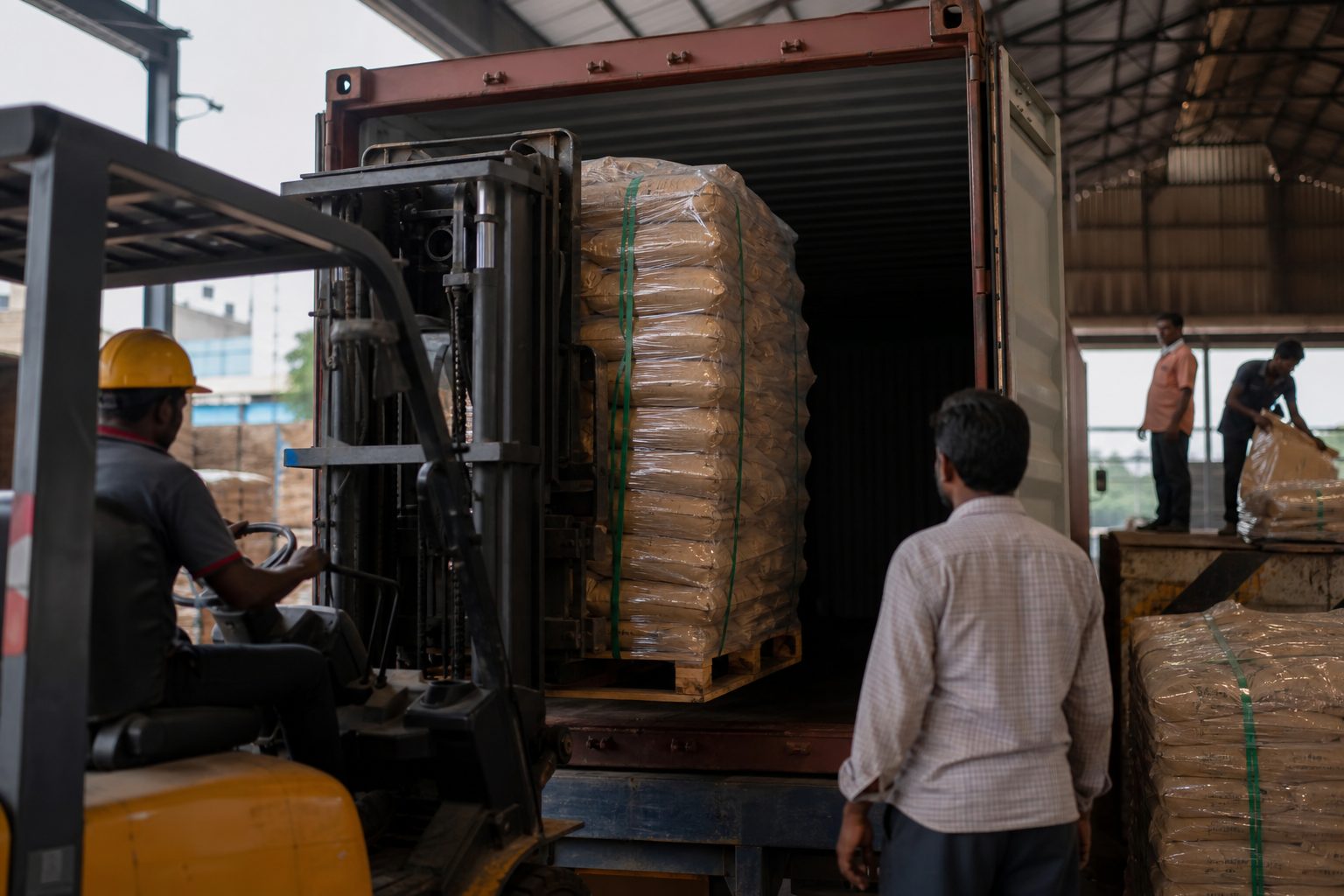
Container Loading Details
Export Tip
Container loading efficiency is consistent across most destination markets for the standard kraft+PE bag format. GCC mixed FCL programmes require careful load planning so flakes and powder share a container without compromising moisture control or lot segregation.
Comparison table
Swipe →
Data table — swipe horizontally on small screens
| Container Type | Indicative Payload | Demand-Fit Note |
|---|---|---|
| 20 ft standard | Approximately 10–14 metric tonnes | Common trial-to-programme step for USA/EU; ASEAN volume buyers often jump to 40ft |
| 40 ft standard | Approximately 20–26 metric tonnes | Preferred for ASEAN, GCC mixed FCLs, and Netherlands hub programmes |
| 40 ft high cube | Slightly above standard 40ft when cube-limited | Useful for jumbo-bag industrial loads |
Shipping Methods
Export Tip
Route and transit time vary meaningfully by destination, which affects how exporters sequence Mandsaur–Neemuch harvest processing against buyer delivery windows across the markets covered in this guide.
Comparison table
Swipe →
Data table — swipe horizontally on small screens
| Destination | Load Port | Approx. Transit Time |
|---|---|---|
| Germany / Netherlands (Rotterdam/Hamburg) | Mundra | 18–22 days |
| USA (New York/Houston) | Mundra / Nhava Sheva | 30–38 days |
| Japan (Yokohama/Kobe) | Mundra / Nhava Sheva | 22–28 days |
| Indonesia / Malaysia | Mundra / Nhava Sheva | 14–20 days |
| UAE (Jebel Ali) / GCC | Mundra | 7–10 days |
| UK (Felixstowe/Southampton) | Mundra / Nhava Sheva | 20–26 days |
| Brazil (Santos) | Mundra / Nhava Sheva | 30–38 days |
| Canada (Vancouver/Montreal) | Mundra / Nhava Sheva | 28–40 days |
Certifications
Compliance Notes
Certification burden scales with market strictness. Japan and the EU require the most comprehensive residue and microbiological panels; Halal-observant markets add a distinct certification layer independent of food safety testing.
Comparison table
Swipe →
Data table — swipe horizontally on small screens
| Certification | Primary Relevant Markets | Typical Trigger |
|---|---|---|
| FSSAI licence | All markets | Mandatory baseline for all food export businesses |
| APEDA RCMC | All markets | Mandatory for scheduled dehydrated garlic exports |
| EU MRL-compliant residue panel | Germany, EU, Netherlands | Required for all EU-bound shipments |
| Japan Positive List residue panel | Japan | Required for all Japan-bound shipments |
| Halal | UAE/GCC, Indonesia, Malaysia | Required for retail entry and preferred by many buyers |
| NPOP / USDA NOP / EU Organic | USA, Germany/EU, UK | Required for organic-labelled programmes |
| UK Organic (post-Brexit CAB) | UK | Separate pathway from EU organic for UK organic retail |
| CFIA-aligned documentation | Canada | Expected for Canadian food safety compliance |
Buyer Requirements
Buyer Requirements
- APEDA RCMC and FSSAI licence copies
- Certificate of Analysis per lot covering moisture 5–6%, ash, mesh (e.g. 80–100), allicin/pungency, microbiology, and residues
- Cut, mesh size, and moisture specification sheet matching the buyer's application
- Destination-specific residue panel results (EU MRL or Japan Positive List where applicable)
- Halal or organic certification where the buyer's channel requires it
- Consistent lead time and prompt response to specification and compliance questions
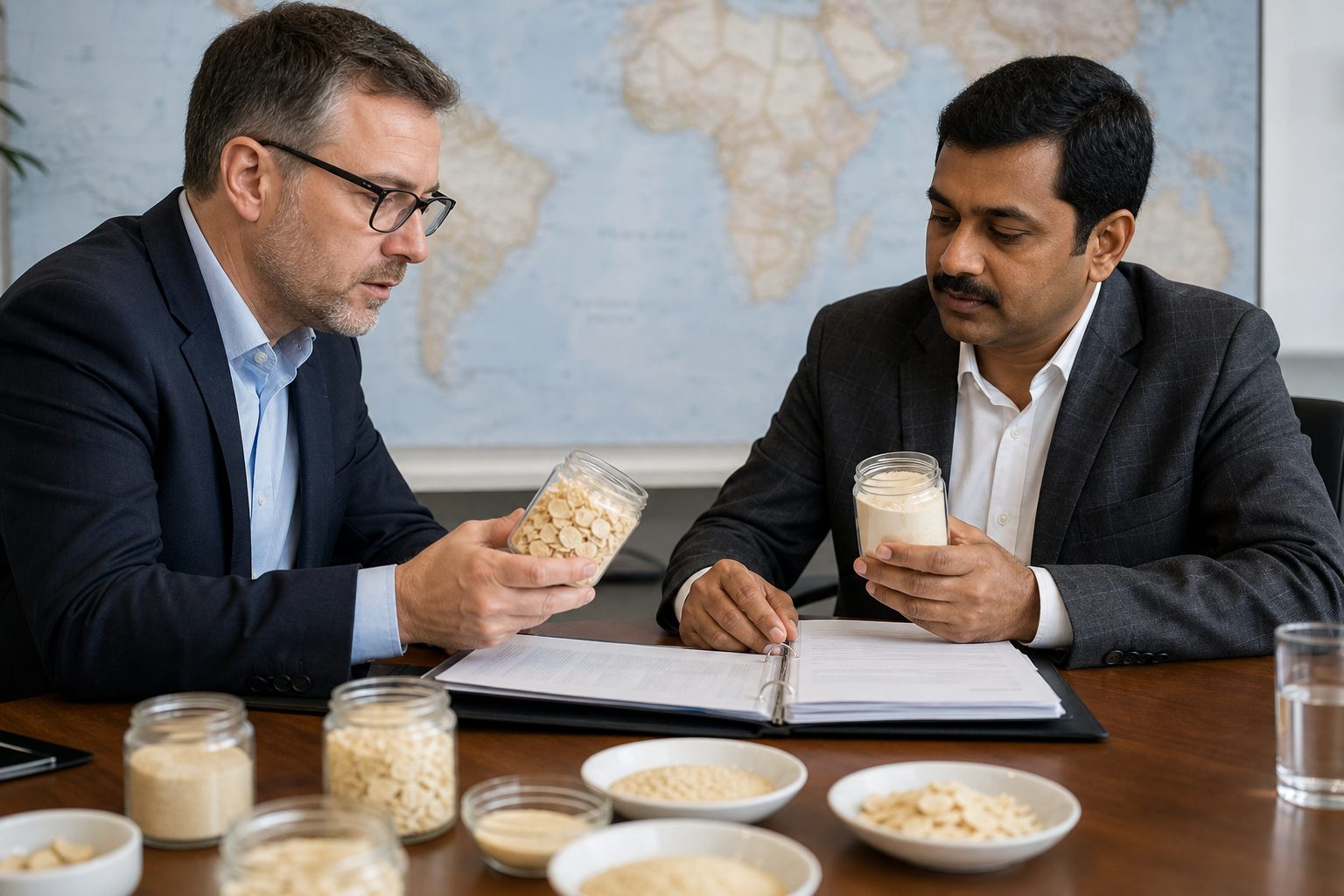
Regardless of destination, most serious dehydrated garlic buyers converge on a similar core document and specification request before confirming a trial order — the differences lie in which additional certifications and residue panels are layered on top.
Sourcing Checklist
Checklist
- Match processor capability (80–100 mesh milling, flake cut precision, allicin retention) to your target country's dominant form preference
- Confirm which residue panel (EU MRL, Japan Positive List, or standard) the processor routinely tests against
- Verify Halal or organic certification status separately if targeting GCC, ASEAN, or premium retail channels
- Request multi-lot COA history, not a single sample result, before scaling volume
- Confirm kraft+PE packaging format matches the buyer's handling — bulk bags versus retail pouches versus mixed FCL load plans
- Confirm Mandsaur–Neemuch or Gujarat processing origin and seasonal availability before locking FOB
Buyer Checklist
Checklist
- Specify your required cut, mesh size, moisture 5–6% ceiling, and allicin/flavour target in writing based on your country's typical profile
- Confirm which certifications your downstream retail or foodservice channel actually requires before over-specifying
- Request a country-appropriate residue panel result, not a generic COA, if your market has strict MRL rules
- Start with a trial shipment sized to your market's typical starting MOQ before committing to full programme volume
- For GCC programmes, clarify whether you need single-form or mixed flakes+powder FCL load plans
- Establish a repeat-order cadence and communication channel to catch specification drift early
Exporter Checklist
Checklist
- Segment production lots by destination market specification rather than serving all buyers from one undifferentiated stream
- Maintain testing relationships covering both EU MRL and Japan Positive List panels if serving both markets
- Keep Halal and organic/NPOP certification documentation current and market-specific
- Build a per-country packaging matrix (kraft+PE, jumbo bags, nitrogen flush, retail pouches) rather than one-size-fits-all packaging
- Track which markets are price-sensitive bulk (ASEAN, Brazil) versus compliance-sensitive premium (Japan, EU organic) to allocate dryer capacity efficiently
- Plan GCC mixed FCL stuffing carefully so flakes and powder share containers without moisture or lot confusion
Compliance Checklist
Checklist
Compliance Notes
- FSSAI and APEDA RCMC current and referenced in every buyer onboarding pack
- EU MRL panel testing current for any Germany, EU, or Netherlands-bound lot
- Japan Positive List panel testing current for any Japan-bound lot
- Halal certification current and from a recognised body for UAE/GCC and ASEAN-bound shipments
- Organic certification (NPOP/NOP/EU Organic/UK Organic) current and matched to the specific destination programme
- HS 0712.90 eight-digit line (07129030/07129020/07129040) confirmed per form with your customs house agent before filing
Common Buyer Mistakes
Common Mistakes Box
- Assuming one cut and mesh works for every market — Solution: match flakes vs 80–100 mesh powder and moisture 5–6% to the destination's documented preference before quoting.
- Requesting a generic COA when the market requires a specific residue panel — Solution: specify EU MRL or Japan Positive List explicitly in the purchase order.
- Skipping Halal certification verification for GCC or ASEAN-bound orders — Solution: confirm certifying body recognition before finalising the supplier.
- Ordering bulk industrial-grade product for a premium Japan or EU organic programme — Solution: align mesh, packaging, and certification tier to the actual channel, not just price.
- Treating organic certification as interchangeable across markets — Solution: confirm NPOP, NOP, EU Organic, or UK Organic separately.
- Underestimating transit time for distant markets like the USA, Brazil, or Canada — Solution: build shipping lead time into Mandsaur–Neemuch harvest and reorder planning.
- Ordering single-form FCLs for GCC distributors who prefer mixed flakes+powder loads — Solution: ask about mixed FCL preferences in the first conversation.
- Ignoring allicin/pungency specs for seasoning manufacturers — Solution: include allicin or flavour intensity ranges on the product data sheet for USA and EU seasoning buyers.
Future Market Trends
Key Statistics
Through 2030, country-level demand for Indian dehydrated garlic is likely to shift along several lines: continued seasoning powder growth in the USA; organic and clean-label growth in Germany, the Netherlands, and the UK; tightening residue scrutiny in Japan; growing Halal-certified flake volume across Indonesia, Malaysia, and the GCC as downstream certification requirements deepen; and diversification-driven growth in Canada and Brazil as buyers reduce reliance on single-origin supply chains.
Exporters who build country-specific production, testing, and certification capability now — rather than treating dehydrated garlic as one undifferentiated export product — will be better positioned to serve the full range of buyer preferences mapped in this guide as demand continues to diversify by market.
Expert Insights from Saurabh Mittal, Founder of Altus Exports
Expert Insight Box
Two perspectives from Altus Exports on how country-specific buyer preferences shape practical export decisions for dehydrated garlic programmes.
Demand Fit Beats Generic Market Lists
A "best countries" list tells you where volume exists. A demand-fit matrix tells you what to produce, test, pack, and certify before you quote. Altus Exports uses the second approach when matching Mandsaur–Neemuch and Gujarat supply to USA, EU, Japan, ASEAN, and GCC programmes — because the first container only converts to a programme when the form and compliance stack match what that market's buyers already buy.
Conclusion
- Action: Share your target country, required form/mesh, and current certifications with Altus Exports for a demand-fit sourcing review.
- Read how to export dehydrated garlic from India, top dehydrated garlic products exported from India, best countries for Indian dehydrated garlic exports, source dehydrated garlic directly from India, APEDA registration benefits for dehydrated garlic exporters, find international buyers for dehydrated garlic, organic dehydrated garlic export opportunities, dehydrated garlic export documentation checklist, and trade shows for dehydrated garlic exporters.
- Explore agriculture & food products, spices & seasonings, merchant exporter, export products from India, and global sourcing partner partnership models.
The most demanded Indian dehydrated garlic by country depends on form preference, mesh and moisture specification, certification stack, and buyer channel: USA buyers lead in 80–100 mesh powder and flakes for seasonings; Germany and the wider EU set the residue-clean and organic powder/flake benchmark; Japan demands ultra-clean fine mesh with Positive List panels; Indonesia and Malaysia drive high-volume flake demand for noodles and snacks; UAE and GCC markets consolidate Halal mixed FCLs of flakes and powder; the UK and Netherlands extend retail and hub redistribution demand; and Brazil and Canada represent industrial and growing diversification programmes.
Exporters should prioritise three actions: map current processing capability (mesh, cut precision, testing infrastructure, allicin control) to the 1–2 country profiles with strongest near-term fit; build the specific certification stack (EU MRL, Japan Positive List, Halal, or organic) each target market requires before, not after, buyer outreach; and segment production lots by destination specification to avoid cross-contaminating compliance records between markets. Altus Exports can help both international buyers sourcing Indian dehydrated garlic and Indian exporters aligning cut, mesh, certification, and documentation with destination demand.