
Trade Shows and B2B Marketplaces for Dehydrated Garlic Exporters from India
By Saurabh Mittal, Founder, Altus Exports
A practical event-calendar guide to trade shows and B2B marketplaces for dehydrated garlic exporters from India — covering Gulfood, Anuga, SIAL, Fi Europe, Foodex Japan, Biofach, and APEDA buyer-seller meets. Learn how Mandsaur–Neemuch–sourced processors and Gujarat dehydrators prepare COA-backed sample kits for booth meetings, execute 72-hour post-fair follow-up, measure fair ROI, and combine exhibition presence with year-round prospecting from find international buyers for dehydrated garlic. Includes fair comparison tables, booth preparation checklists, sample readiness standards, budget and ROI frameworks, and country-wise fair strategy — from Altus Exports.
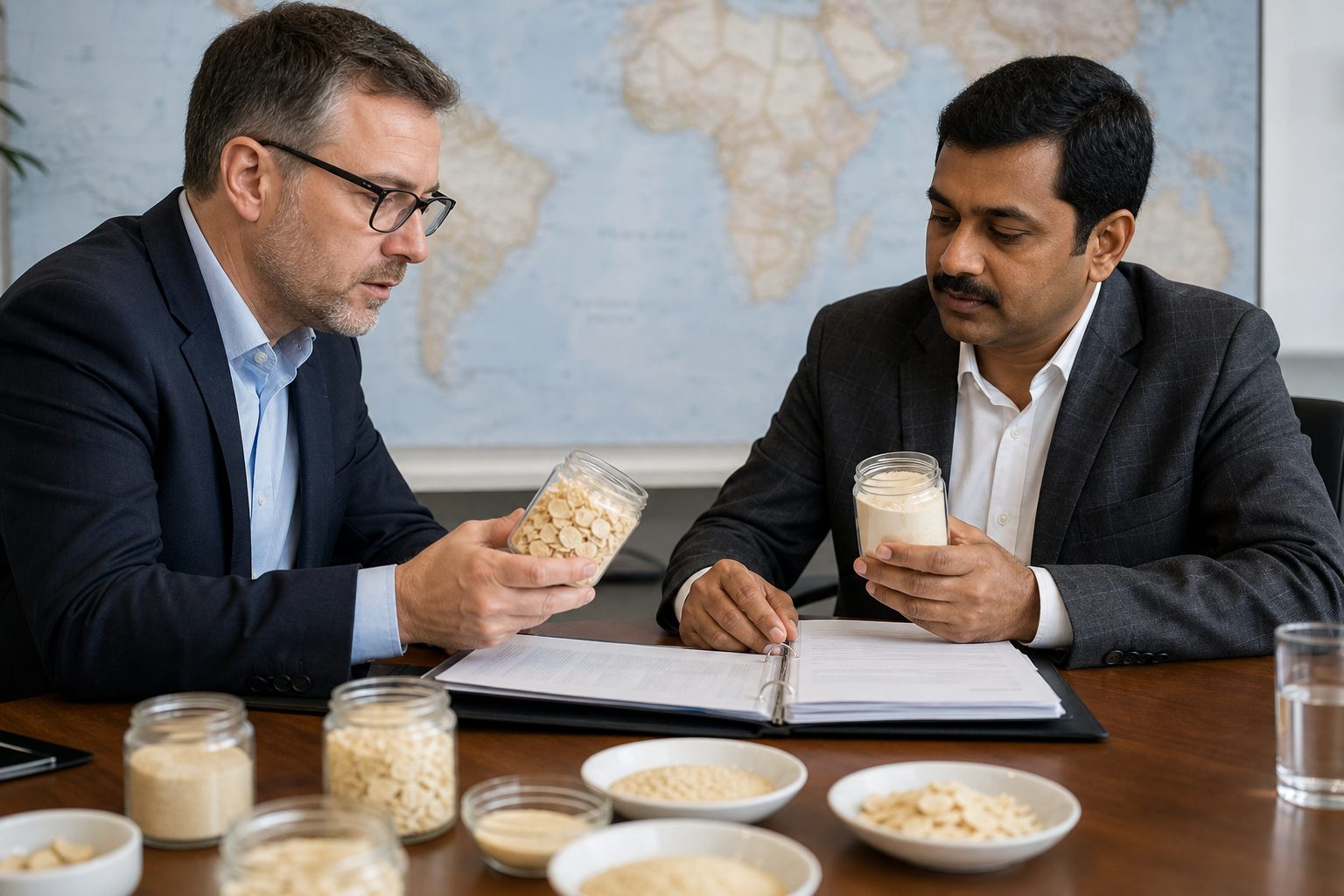
Trade shows are where dehydrated garlic export relationships begin — but only when exhibitors arrive with sample kits, current COAs, technical data sheets, and a 72-hour follow-up system already built. India's dehydrated garlic exports under HS 07129030/20/40 run into tens of millions of US dollars annually across Indian lines 07129020/30/40 (directional customs snapshots; confirm current-year APEDA/DGCI&S/ITC Trade Map figures before planning), with Gujarat's Mahuva–Bhavnagar–Sihor dehydrators and Mandsaur–Neemuch Madhya Pradesh garlic sourcing supplying the majority of global flakes, powder, granules, minced, chopped, and toasted/roasted output. Yet many processors invest in Gulfood or Anuga booth fees and return with business cards but no purchase orders — not because the product failed, but because sample readiness, documentation posture, and post-fair follow-up discipline were missing.
This guide is not a generic buyer-finding tutorial — that is covered in find international buyers for dehydrated garlic. Instead, it focuses on how to select, prepare for, execute at, and measure ROI from the specific trade fairs and APEDA-linked events where dehydrated garlic buyers concentrate: Gulfood, Anuga, SIAL, Fi Europe, Foodex Japan, Biofach, and APEDA buyer-seller meets. You will find fair comparison tables, booth and sample preparation standards, a 72-hour follow-up playbook, budget and ROI measurement frameworks, and country-wise fair strategy for the USA, EU, Brazil, Indonesia, and the Middle East.
Trade fair participation is a commercial investment, not a marketing expense. Exporters who treat Gulfood or Anuga as a single-week event without 90 days of pre-fair research and 90 days of post-fair follow-up rarely recover booth costs. Exporters who arrive with locked specifications, lab-certified samples, APEDA RCMC credentials displayed, and a CRM-logged follow-up sequence convert fair meetings into trial containers and repeat programmes. Pair this guide with dehydrated garlic export documentation checklist and APEDA registration benefits for dehydrated garlic exporters.
Key Takeaways
Summary Box
- Gulfood (Dubai), Anuga (Cologne), SIAL (Paris), Fi Europe, Foodex Japan, and Biofach are the highest-density venues for meeting qualified dehydrated garlic buyers — but ROI depends on pre-fair research and 72-hour post-fair follow-up, not booth size.
- Arrive with lab-certified sample kits, one-page technical data sheets per variant, current COAs, and APEDA RCMC credentials — buyers evaluate documentation readiness as closely as sample quality.
- APEDA buyer-seller meets and FIEO group pavilion participation improve buyer-meeting density and shared credibility versus independent, unaffiliated booths.
- A 72-hour follow-up playbook — personalized email, spec sheet, COA, and meeting notes per contact — converts fair leads before they go cold within two weeks.
- Measure ROI as cost per qualified lead and cost per first container, not as total business cards collected.
- Trade fairs complement — not replace — HS 07129030/20/40 trade data prospecting and LinkedIn outreach covered in the buyer-finding guide.
- Altus Exports helps agriculture & food products programmes connect fair-generated leads with documentation-compliant export execution.
Executive Summary
Summary Box
Trade show participation for dehydrated garlic exporters is a solvable, systematic investment once exhibitors stop treating fairs as visibility events and start treating them as concentrated sales operations with defined preparation, execution, and follow-up protocols. The exporters who recover booth costs and build repeat programmes combine three inputs: pre-fair targeting of named accounts from HS 07129030/20/40 trade data, on-site sample and documentation readiness that passes buyer technical screening, and a 72-hour CRM-logged follow-up cadence that continues for 90 days. None of the three works well alone.
This guide walks through the full trade-fair stack for Indian dehydrated garlic exporters — market context, export and import statistics, product variants to showcase, manufacturing credibility from India's Mandsaur–Neemuch and Gujarat garlic dehydration clusterss, pricing frameworks for fair quotations, MOQ tiers to discuss at the booth, packaging and container-loading talking points, shipping lead times, certification display requirements, buyer expectations at food-ingredient fairs, country-wise fair strategy, and integrated checklists for preparation, follow-up, and ROI measurement.
The throughline is conversion discipline. Ten qualified buyer meetings with documented next steps and 72-hour follow-up will outperform a hundred aisle conversations with no sample dispatch plan — and it protects fair investment for accounts that can realistically place a trial container under HS 07129030/20/40.
Market Size & Industry Overview
Key Statistics
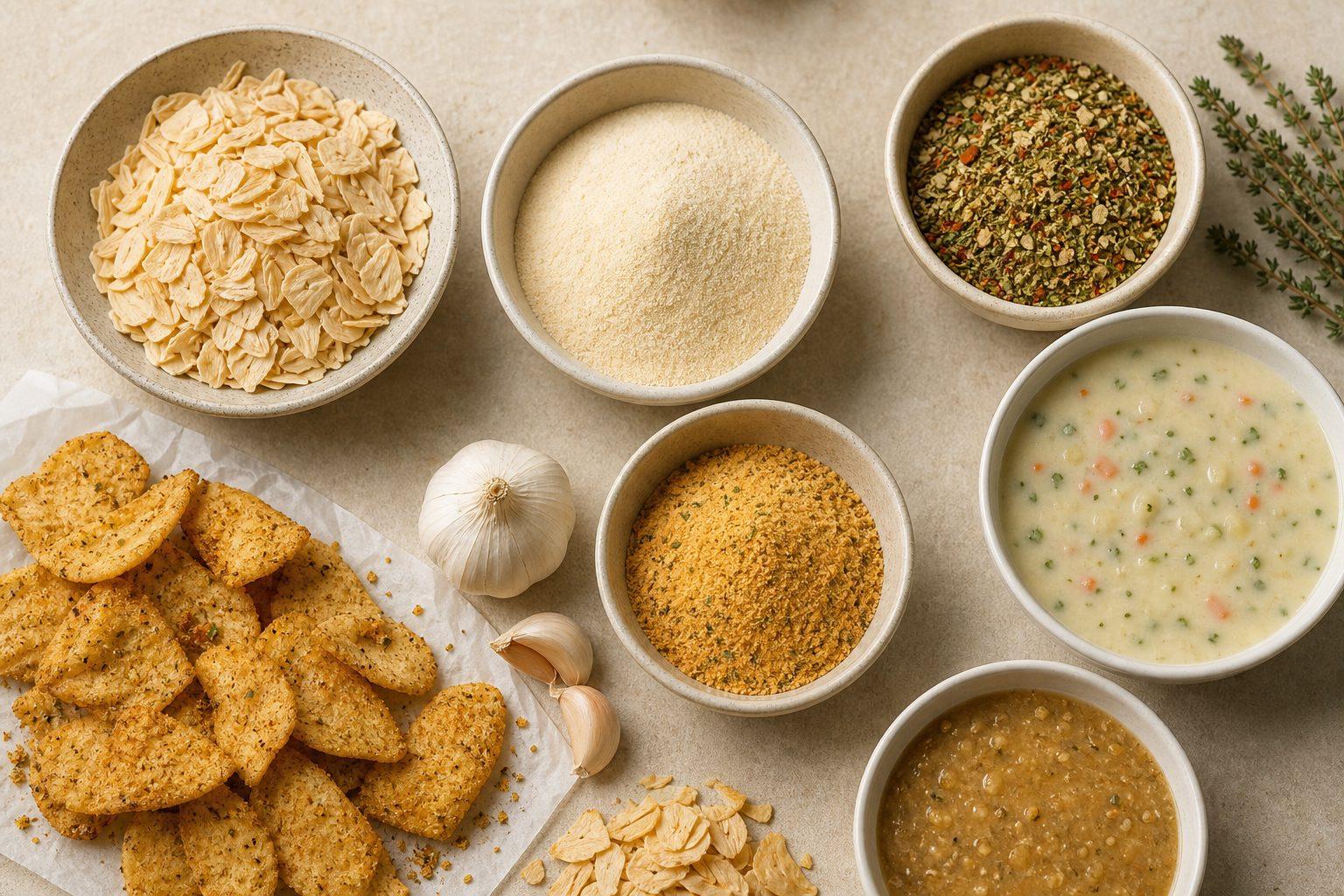
Global demand for dehydrated garlic continues to grow as food manufacturers replace fresh-garlic handling with shelf-stable dried formats across soups, sauces, snack seasoning, spice blends, seasoning and snacks, and ready meals. India is among the world's largest garlic producers and a leading exporter of dehydrated garlic under HS 07129030/20/40, with reported 2024 trade of roughly tens of thousands of metric tonnes across flake and powder lines (directional) and about tens of millions of US dollars annually (directional; confirm via APEDA/DGCI&S/ITC Trade Map) in value.
Trade fairs serve the food-ingredients buyer segment that places programme orders — food manufacturers, spice blenders, ingredient distributors, and retail private-label brands — rather than commodity traders browsing for spot pricing. The USA, Brazil, Germany, Indonesia, and Belgium are top 2024 destinations; Gulfood captures Middle East and South Asian buyer density, Anuga and Fi Europe capture EU procurement teams, Foodex Japan concentrates quality-focused Japanese buyers, Biofach anchors organic programmes, and SIAL bridges retail and ingredient buyers globally.
Fair participation costs — booth fees, travel, sample preparation, lab testing for sample sets, and team time — are justified only when they feed a pipeline measured in trial containers and repeat programmes. Exporters who build fair strategy into an annual commercial calendar alongside APEDA buyer-seller meets capture disproportionate share of growing demand documented in best countries for Indian dehydrated garlic exports and most demanded Indian dehydrated garlic by country.
Export Statistics
Key Statistics
India's dehydrated garlic exports move under HS codes 07129030 / 07129020 / 07129040. Reported 2024 trade was roughly tens of thousands of metric tonnes across flake and powder lines (directional) and about tens of millions of US dollars annually (directional; confirm via APEDA/DGCI&S/ITC Trade Map) in value. Fair prospecting should target buyers in the top destination markets below — these are the accounts most likely to attend Gulfood, Anuga, SIAL, and Fi Europe with active sourcing intent for Indian-origin dehydrated garlic.
Comparison table
Swipe →
Data table — swipe horizontally on small screens
| Destination Market (2024 reported) | Approx. Share of India's HS 07129030/20/40 Export Value | Primary Fair for Buyer Access |
|---|---|---|
| USA | Leading destination — confirm share via ITC Trade Map | Gulfood, Fi Europe, SIAL North America editions |
| Brazil | ~11% | Fi Europe (EU-based Brazilian buyers), Anuga |
| Germany | ~11% | Anuga, Fi Europe |
| Indonesia | ~7% | Gulfood, regional ASEAN food fairs |
| Belgium | ~6% | Anuga, Fi Europe (EU redistribution hub) |
| UK / Netherlands / other EU | Material secondary share | Anuga, Fi Europe, SIAL Paris |
| Middle East (UAE and neighbors) | Smaller share, high frequency | Gulfood (primary), SIAL Middle East |
| Japan / premium markets | Smaller volumes | Foodex Japan (primary), Fi Europe |
Import Statistics
Key Statistics
Buyers who attend food-ingredient fairs typically already import dehydrated garlic under HS 07129030/20/40 — they are not discovering the category for the first time. Use import volume context to prioritize which buyer meetings to schedule during limited fair hours.
Comparison table
Swipe →
Data table — swipe horizontally on small screens
| Country | Approx. 2024 India-Origin Volume (HS 07129030/20/40) | Fair Buyer Persona | Typical Fair Ask |
|---|---|---|---|
| USA | Material — confirm via ITC Trade Map | Ingredient distributor, seasoning manufacturer | Residue panel, FDA compliance, HTS sub-heading |
| Brazil | Material — confirm via ITC Trade Map | Industrial food manufacturer, seasoning blender | Portuguese spec sheet, bulk MOQ pricing |
| Germany | Material — confirm via ITC Trade Map | Food manufacturer, private-label brand | EU MRL COA, organic TC readiness |
| Indonesia | Material — confirm via ITC Trade Map | Seasoning and snack manufacturer | Halal certificate, granule mesh specs |
| Belgium | Material — confirm via ITC Trade Map | EU redistribution importer | COO, multi-destination logistics capability |
| UK / Netherlands | Material secondary volumes | Foodservice, retail private label | BRCGS readiness, packaging options |
| UAE / GCC | Frequent smaller shipments | Gulf foodservice, retail importer | Halal, short lead time, Gulfood follow-up |
| Japan | Smaller premium volumes | Quality-focused ingredient buyer | Japan MRL panel, long qualification cycle |
Product Categories / Variants
Summary Box
Showcase 3–5 hero variants at trade fairs — not every SKU in your catalog. Buyers evaluate spec clarity and sample consistency; a focused presentation of flakes, granules, and 80–100 mesh powder with locked moisture and mesh parameters converts better than a table of twenty undocumented grades.
Comparison table
Swipe →
Data table — swipe horizontally on small screens
| Variant | Typical Cut / Mesh Size | Fair Display Priority | Sample Kit Requirement |
|---|---|---|---|
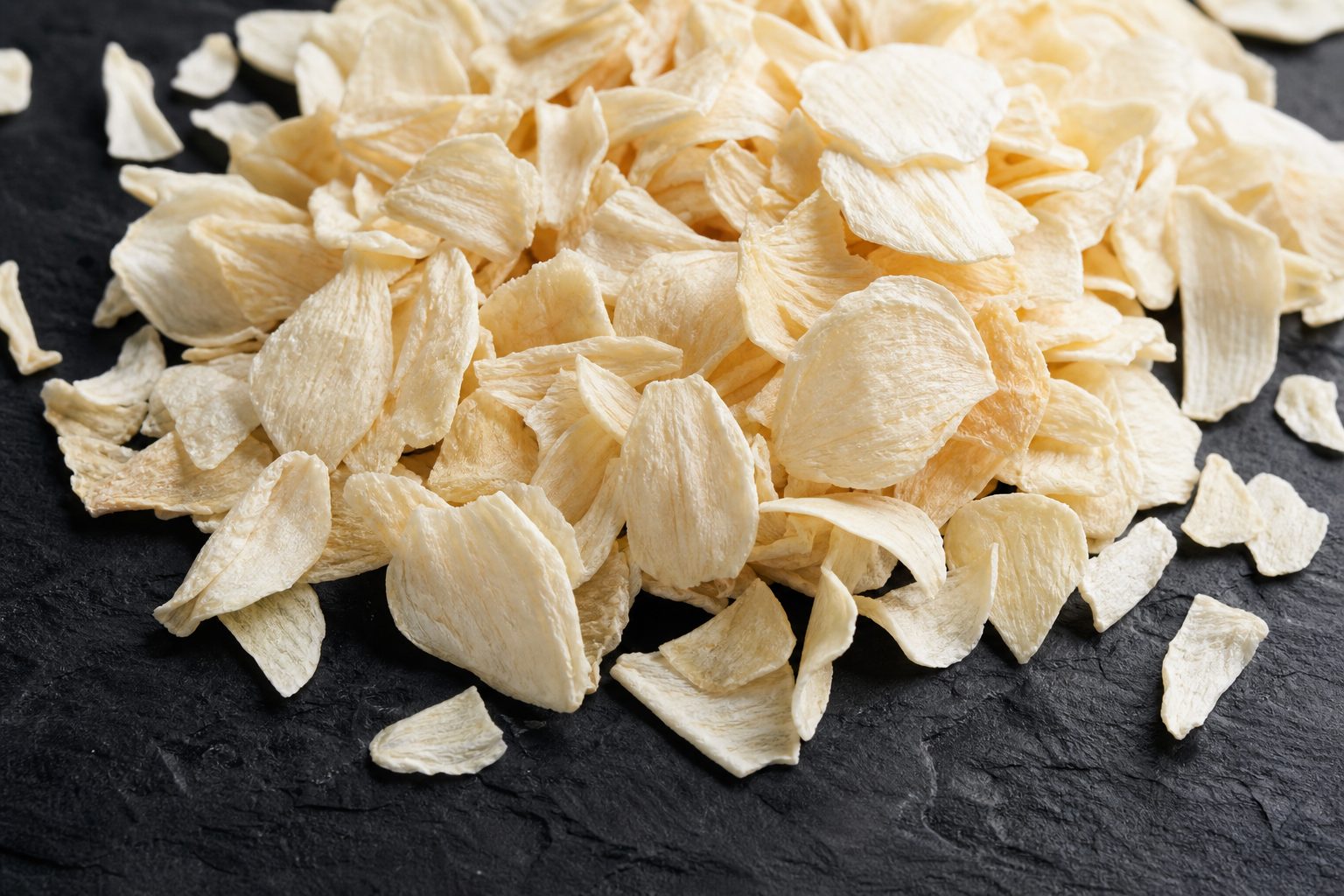
| Garlic flakes | 3–8 mm | High — universal demo | Sealed jar + COA + TDS |
| Garlic powder | 80–100 mesh | High — spice blenders | Powder sample + residue panel summary |
| Garlic granules | 0.5–1 mm | Medium — snack seasoning | Granule jar + mesh analysis |
| Minced garlic | 1–3 mm | Medium — snack seasoning | Mesh sample + microbial summary |
| Chopped dehydrated garlic | Varies | Selective — toppings/garnish buyers | Cut-size sample + COA |
| Toasted / roasted garlic | Varies | Selective — confirm HS first | Only after HS classification confirmed |
| Dried garlic (07129040) | Varies | Premium / specialty | Colour and moisture board |
| Organic dehydrated garlic | Varies | Biofach, Fi Europe organic halls | Organic TC copy + certifier logo |
Manufacturing Overview
Export Tip
Booth credibility improves when exhibitors can speak concretely about production — buyers at Anuga and Fi Europe ask process questions within the first two minutes. Fresh garlic cloves are sourced from the Mandsaur–Neemuch Madhya Pradesh belt and allied supply regions, then peeled, cut to spec, and dehydrated through continuous-belt or hot-air tray systems in Gujarat's Mahuva–Bhavnagar–Sihor plants, reducing moisture from roughly 60–70% to at or below 5–6%.
Display plant photos, dehydration line images, and quality-control checkpoints alongside samples. Mention metal detection, sieving, and per-lot microbiological testing — these are the process controls that separate processor exhibitors from trading intermediaries. Buyers who see manufacturing evidence at the booth ask harder specification questions, which is the signal of genuine buying intent.
If you are a merchant exporter rather than a direct processor, partner with a Gujarat dehydrator who authorizes plant imagery and joint booth representation. Misrepresenting manufacturing capability at a major fair damages credibility permanently in the food-ingredients community.
Pricing Analysis
Buyer Tip
Fair quotations should be framework pricing — FOB range by variant and MOQ tier — not firm offers without crop context. Fresh-garlic crop prices are seasonal; quote validity of 7–14 days is normal and professional. Organic grades command 25–55% premium over conventional.
Comparison table
Swipe →
Data table — swipe horizontally on small screens
| Grade / Variant | Conventional FOB Range (USD/kg) | Organic FOB Range (USD/kg) | Fair Quotation Format |
|---|---|---|---|
| Garlic flakes | $2.20–$4.50 | $2.90–$6.50 | FOB range + MOQ tier on one-page sheet |
| Garlic powder | $2.50–$4.50 | $3.40–$8.00 | FOB range + HTS note for USA buyers |
| Granules / minced | $2.40–$5.00 | $3.20–$7.20 | FOB range + mesh declaration |
| Toasted / roasted garlic | $3.50–$7.00 | $4.80–$10.00 | Price only after HS chapter confirmed |
| Organic (any form) | +25–55% over conventional | N/A — organic premium band | Show organic TC sample at Biofach |
MOQ Analysis
Buyer Tip
Publish a tiered MOQ structure on your fair handout: trial (1–3 MT), mid-volume (5–10 MT), and full-container programme (10–20+ MT). This pre-qualifies booth conversations and prevents wasting time on buyers whose volume expectations do not match your capacity.
Comparison table
Swipe →
Data table — swipe horizontally on small screens
| Buyer Type | Typical First-Order MOQ | Programme-Stage MOQ | Fair Talking Point |
|---|---|---|---|
| Trial importer met at fair | 1–3 MT | N/A | Paid lab-certified sample precedes trial order |
| Food manufacturer | 5–10 MT | 10–20+ MT FCL | Full-container landed-cost advantage |
| Foodservice distributor | 3–5 MT | 10–20 MT | Multi-SKU consolidation available |
| Retail private label | 5–10 MT | 20+ MT recurring | Custom packaging lead time discussion |
| Organic brand (Fi Europe) | 1–5 MT certified lot | 10–20 MT | Certified organic crop availability window |
Packaging Standards
Export Tip
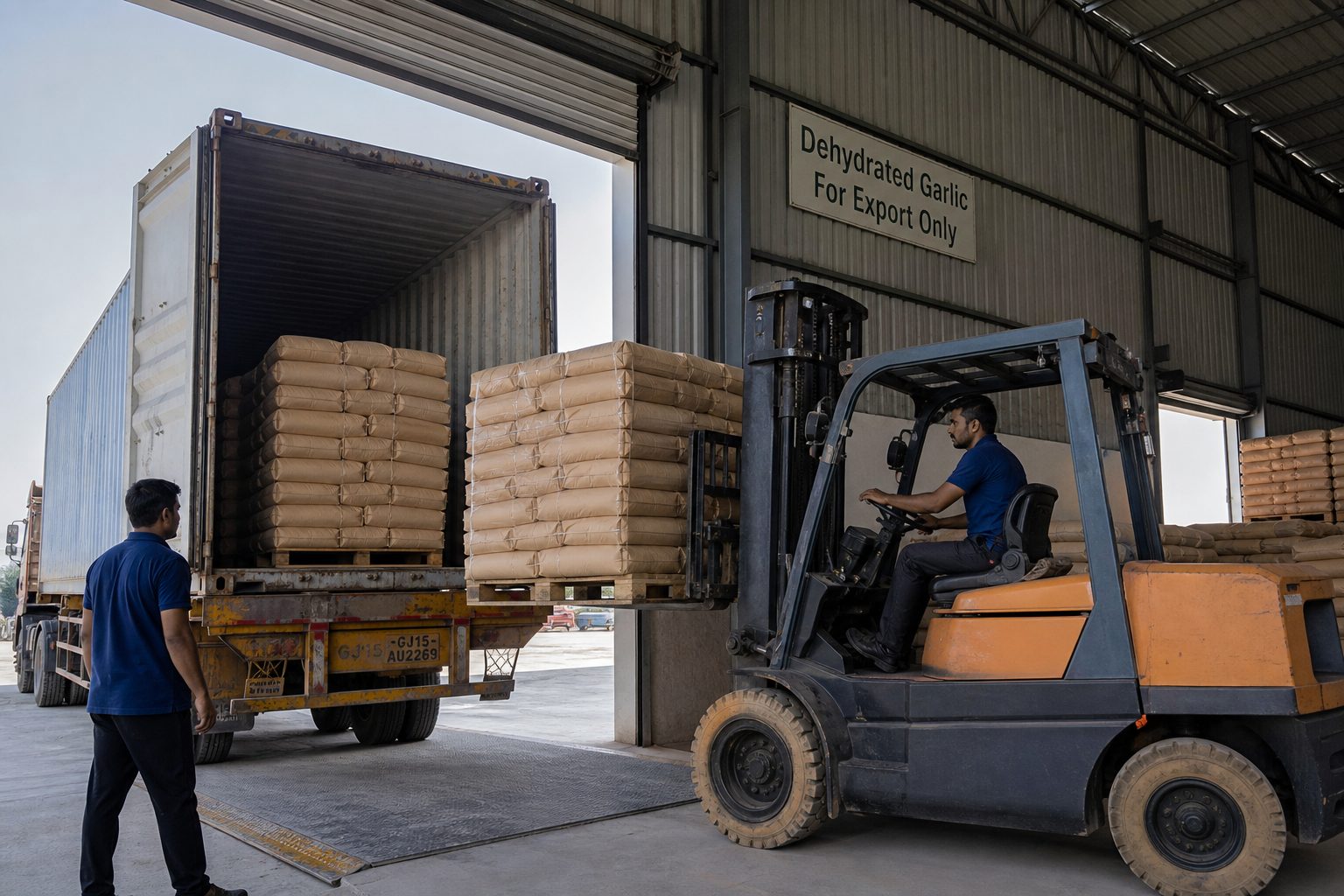
Buyers at food-ingredient fairs ask about packaging early — it affects their landed cost and warehouse handling. Display kraft bag samples (14–25 kg with PE liner) and FIBC bulk bag examples (500–1,000 kg) at the booth.
Comparison table
Swipe →
Data table — swipe horizontally on small screens
| Packaging Format | Typical Size | Material | Fair Demo Use |
|---|---|---|---|
| Kraft paper bag with PE liner | 14–25 kg | Multi-ply kraft + LDPE liner | Show standard export bag at booth |
| PP woven bag with liner | 25 / 50 kg | Woven PP + liner | Cost-efficient bulk option card |
| Vacuum-sealed bags | 10–25 kg | Laminated barrier film | Powder shelf-life talking point |
| Bulk / jumbo bags (FIBC) | 500–1,000 kg | Woven PP FIBC with liner | Industrial buyer MOQ discussion |
| Retail pouches | 100 g – 1 kg | Metalized film | Private-label capability signal |
| Carton with inner liner | 20 kg | Corrugated carton + PE liner | Premium/organic positioning |
Container Loading Details
Export Tip
Container-loading competence signals operational maturity at the booth. Buyers evaluating a new supplier ask how many metric tonnes fit in a 20ft or 40ft container — have the answer on your technical data sheet.
Comparison table
Swipe →
Data table — swipe horizontally on small screens
| Container | Packaging | Approx. Net Load Capacity | Fair Handout Note |
|---|---|---|---|
| 20ft dry container | 14–25 kg bags, palletized | About 10–14 MT | Trial and mid-volume shipments |
| 40ft dry container | 14–25 kg bags, palletized | About 20–26 MT | Standard programme format |
| 20ft dry container | FIBC 500–1,000 kg | About 10–14 MT | Industrial buyer option |
| 40ft container | 25 kg bags, floor-loaded | About 20–26 MT | Maximum payload discussion |
| LCL | 25 kg bags on pallets | Under 10 MT | Fair-sourced trial shipments |
Shipping Methods
Export Tip
Quote realistic transit times at the booth — buyers remember suppliers who overpromise lead times. Sea freight in dry containers is standard; no cold chain required. Major load ports are Nhava Sheva and Mundra.
Comparison table
Swipe →
Data table — swipe horizontally on small screens
| Route | Typical Load Port | Approx. Transit Time | Fair Follow-Up Note |
|---|---|---|---|
| India–USA (West Coast) | Nhava Sheva / Mundra | 25–35 days | Include in post-fair quotation email |
| India–Germany / Netherlands | Nhava Sheva / Mundra | 20–28 days | EU buyer standard routing |
| India–Brazil | Nhava Sheva / Mundra | 30–40 days | Confirm with forwarder before quoting |
| India–Indonesia | Mundra / Chennai | 12–18 days | Short lead time competitive advantage |
| India–UK | Nhava Sheva / Mundra | 22–30 days | Post-Brexit routing note if asked |
| India–UAE | Mundra / Nhava Sheva | 7–12 days | Gulfood buyer follow-up within 72 hours |
Certifications
Compliance Notes
Display certification credentials at the booth — APEDA RCMC, FSSAI, HACCP, ISO 22000, NPOP, Halal, Kosher. Buyers photograph booth credentials and cross-check them during vendor approval. Out-of-date or scope-mismatched certificates displayed at a major fair create permanent negative impressions.
Comparison table
Swipe →
Data table — swipe horizontally on small screens
| Certification | Booth Display | Buyer Question at Fair |
|---|---|---|
| APEDA RCMC | Mandatory — framed copy at booth | First document requested during due diligence |
| FSSAI licence | Display with licence number | Must match invoicing entity |
| HACCP / ISO 22000 | Certificate copy on request | USA and EU buyer baseline |
| NPOP / USDA NOP / EU Organic | Display for Fi Europe, organic halls | Organic TC readiness question |
| Halal | Display for Gulfood, Middle East meetings | Scope must cover processing facility |
| Kosher | On request for USA meetings | Kosher-market buyer filter |
| BRCGS / FSSC 22000 | On request for retail private-label | UK/EU retail programme gate |
Buyer Requirements
Buyer Requirements
Buyers at food-ingredient fairs evaluate exhibitors on three dimensions simultaneously: sample quality, specification clarity, and documentation readiness. This section covers what buyers expect at the booth and in the 72 hours after — the window that determines whether a fair meeting becomes a trial order.
Top Trade Fairs & Event Calendar for Dehydrated Garlic Exporters
Comparison table
Swipe →
Data table — swipe horizontally on small screens
| Fair | Location / Frequency | Primary Buyer Geography | Dehydrated Garlic Fit |
|---|---|---|---|
| Gulfood | Dubai / Annual | Middle East, Africa, South Asia, global | Excellent — Halal buyers, re-export traders, foodservice |
| Anuga | Cologne / Biennial | EU, global food manufacturing | Excellent — largest food fair; EU procurement teams |
| SIAL Paris | Paris / Biennial | EU retail, global F&B | Strong — retail private-label and ingredient crossover |
| Fi Europe | Rotating EU cities / Annual | EU food ingredients | Highest — ingredient-category buyer density for garlic powder/flakes |
| Foodex Japan | Tokyo / Annual | Japan quality-focused buyers | Excellent — strict residue and mesh conversations |
| Biofach | Nuremberg / Annual | EU organic and clean-label buyers | Excellent — organic TC and NPOP readiness |
| APEDA buyer-seller meets | India / Periodic | Targeted by APEDA invitation | High — pre-matched buyer meetings |
| SIAL Middle East | UAE / Periodic | GCC food buyers | Strong — regional Gulfood complement |
| World Food / regional fairs | Varies | Market-specific | Selective — match to target country strategy |
Gulfood (Dubai, annual) is the flagship fair for Middle East, South Asian, and international food buyers — high density of ingredient procurement teams, Halal-focused buyers, and re-export traders. Anuga (Cologne, biennial) is the world's largest food trade fair and the primary venue for EU food manufacturers, private-label brands, and ingredient distributors. SIAL (Paris and regional editions) bridges retail and ingredient buyers globally. Fi Europe (Food ingredients Europe, annual) is the most targeted venue for food-ingredient category buyers — dehydrated vegetables, spices, and seasoning inputs — and typically delivers the highest specification-maturity conversations for garlic powder and flake grades. Foodex Japan (Tokyo, annual) concentrates quality-focused Japanese importers who lead with residue panels and mesh specs before price. Biofach (Nuremberg, annual) is the primary organic and clean-label venue — bring NPOP/USDA/EU Organic certificates and lot-specific organic TC samples, not only conventional COAs.
Register through APEDA or FIEO group pavilions where available. Group participation improves buyer-meeting density, shares logistics costs, and provides shared credibility versus an independent booth with no national pavilion affiliation.
Sample and COA Readiness Standards
Comparison table
Swipe →
Data table — swipe horizontally on small screens
| Sample Kit Component | Specification | Why It Matters at Fairs |
|---|---|---|
| Sealed sample jars (flakes, granules, powder) | 3–5 hero variants, labeled with lot number | Buyers evaluate color, aroma, and particle consistency on-site |
| One-page technical data sheet per variant | Moisture, mesh, microbial summary, certifications | Buyers photograph and share internally — must be accurate |
| Current COA per sample lot | Moisture, TPC, Y&M, Salmonella, E. coli | Technical screening before sample approval |
| APEDA RCMC and FSSAI copies | Current validity | First due-diligence request after the fair |
| Pricing framework sheet | FOB range by variant and MOQ tier | Prevents vague price-only conversations |
| Business card with QR to digital catalog | LinkedIn, email, WhatsApp for business only | Enables 72-hour follow-up with context |
Every fair meeting should end with either a sample dispatch commitment or a clear reason why not. Buyers who taste and test at the fair expect lab-certified samples shipped within one week — with COA, technical data sheet, and APEDA RCMC copy attached. Unsealed samples, expired COAs, or samples without lot numbers fail buyer technical screening immediately.
72-Hour Post-Fair Follow-Up Playbook
Comparison table
Swipe →
Data table — swipe horizontally on small screens
| Timing | Action | Content | CRM Log Field |
|---|---|---|---|
| Same day (evening) | Log every meeting in CRM | Name, company, country, variant discussed, next step agreed | Meeting date, buyer score |
| Within 24 hours | Send personalized email | Reference conversation topic; attach TDS for discussed variant | Email sent date |
| Within 48 hours | Dispatch promised samples | Lab-certified sample + COA + RCMC copy via courier | Sample tracking number |
| Within 72 hours | LinkedIn connection + note | Reference fair meeting; share plant or QC photo post | LinkedIn connected Y/N |
| Day 7 | Follow-up call or email | Confirm sample receipt; ask technical questions | Response received Y/N |
| Day 14 | Quotation if qualified | FOB quote with Incoterm, MOQ, lead time, packaging | Quote sent date |
| Day 30 | Value-add touchpoint | Share crop update, new COA, or certification news | Nurture stage |
| Day 90 | Pipeline review | Convert, nurture, or archive lead with reason | Pipeline stage |
Leads go cold within two weeks without structured follow-up. The 72-hour window is critical because buyers return to offices with stacks of fair notes and begin shortlisting suppliers immediately. Your follow-up email should reference the specific conversation topic — not a generic "nice to meet you at Gulfood" template.
Country-wise Opportunities
Market Snapshot
Match fair selection to target market. Attending Gulfood without Middle East buyer pre-research wastes booth hours; attending Fi Europe without EU MRL documentation readiness wastes buyer technical screening.
USA
USA buyers attend Gulfood, Fi Europe, and SIAL with active HS 07129030/20/40 import programmes. Discuss FDA prior notice readiness, correct HTS 0712.90.40 sub-heading/statistical suffix for the garlic form shipped (~29.8% MFN — verify), and residue panel scope on your COA. USA buyers rarely place first orders at the booth — they place them after sample testing and vendor approval — but fair meetings accelerate the approval timeline.
Germany and the Broader EU
Anuga and Fi Europe are the primary EU discovery venues. EU buyers ask about MRL compliance (confirm EU third-country duty on CN 0712 90 90 dried garlic via TARIC — typically about 12.8% ad valorem before preference checks), organic TC readiness, and BRCGS or ISO 22000 status. Pre-schedule meetings with named accounts from HS 07129030/20/40 trade data before arriving in Cologne or Frankfurt.
Brazil
Brazilian ingredient buyers attend Anuga and Fi Europe. Prepare Portuguese-language technical data sheet summaries. Brazil is a material Latin American buyer — fair conversations with Brazilian procurement teams can justify dedicated documentation preparation.
Indonesia
Indonesian seasoning and snack buyers attend Gulfood and regional ASEAN fairs. Halal certification is frequently mandatory. Lead with granule and powder samples with mesh specifications.
Middle East (UAE and Saudi Arabia)
Gulfood is the primary discovery venue for Middle East buyers. Halal certification, short transit times (7–12 days to Jebel Ali), and frequent shipment capability are the core booth messages. UAE/GCC customs duty on dried garlic is typically about 5% of CIF (plus 5% VAT in the UAE) — verify the current tariff line with the buyer's broker; do not assume zero duty.
Japan
Foodex Japan is the primary discovery venue for Japanese dehydrated garlic importers. Conversations centre on Japan positive-list pesticide MRLs, microbiological limits, mesh consistency, and long vendor-approval cycles — not spot pricing. Bring Japan-scoped residue panel summaries on sample COAs and expect multi-month qualification after the fair before a first container.
Organic / Clean-Label Europe (Biofach)
Biofach is where organic dehydrated garlic programmes start. Display NPOP, USDA NOP, or EU Organic certificates with scope covering the dehydration facility, and bring lot-specific organic TC examples. Pair Biofach leads with organic dehydrated garlic export opportunities for segregation and documentation depth after the fair.
Sourcing Checklist
Checklist
- Select 1–2 target fairs per year based on buyer geography — do not attend every event without pre-matched meetings
- Pull 30–50 named buyer accounts from HS 07129030/20/40 trade data for pre-fair outreach and meeting requests
- Register through APEDA or FIEO group pavilion where available for improved buyer density
- Prepare lab-certified sample kits for 3–5 hero variants with current COAs and lot numbers
- Print one-page technical data sheets, pricing framework sheets, and certification copies for booth handouts
- Book buyer meetings in advance through fair B2B matchmaking portals where available
- Set up CRM pipeline stages before departure — meeting logged, sample sent, quote sent, trial order
- Assign one team member exclusively to 72-hour follow-up execution during and after the fair
Buyer Checklist
Checklist
- Request APEDA RCMC and FSSAI copies at the booth before discussing sample dispatch
- Ask about moisture spec, mesh size, and microbial testing protocol — not just price
- Confirm the exhibitor is a processor or authorized merchant exporter with plant access
- Request current COA for the exact sample lot being offered — not a generic historical report
- Agree on sample dispatch timeline and courier method before leaving the booth
- Schedule a video call within two weeks of the fair for specification deep-dive
- Verify certification scope covers the dehydration facility, not just the trading office
- Discuss Incoterm, MOQ, and lead time framework — not firm pricing without crop context
Exporter Checklist
Checklist
- Complete pre-fair buyer research — 30+ named accounts with meeting requests sent
- Prepare sealed sample kits with lot-labeled jars, COAs, TDS, and RCMC copies
- Train booth staff to ask buyers about variant, volume, certification, and destination before quoting
- Display APEDA RCMC, FSSAI, and key food-safety certifications prominently at the booth
- Log every meeting same-day in CRM with conversation notes and agreed next steps
- Execute 72-hour follow-up: personalized email, sample dispatch, LinkedIn connection
- Send FOB framework quotation within 14 days for qualified leads who received samples
- Measure cost per qualified lead and cost per trial order 90 days after the fair
Compliance Checklist
Checklist
Compliance Notes
- Valid IEC and current APEDA RCMC before fair participation — buyers verify at the booth
- FSSAI licence current and matching the entity on booth materials and sample labels
- Sample COAs current and lot-matched — never distribute samples with expired or generic COAs
- Certification claims on booth displays matched to actual certificate scope and validity
- Organic samples accompanied by organic TC copies where applicable
- Halal and Kosher certificates ready for Gulfood and USA meetings respectively
- Post-fair sample shipments include full document pack per dehydrated garlic export documentation checklist
- Fried/oil-cooked products not promoted under HS 07129030/20/40 without confirmed classification
Common Buyer Mistakes
Common Mistakes Box
- Attending fairs without pre-fair buyer research and meeting scheduling
- Distributing samples without lot numbers, COAs, or technical data sheets
- Displaying expired or scope-mismatched certifications at the booth
- Failing to log meetings and execute 72-hour follow-up
- Quoting price without Incoterm, MOQ, moisture spec, or lead time
- Treating fair participation as a one-week event without 90-day follow-up cadence
- Measuring success by business cards collected rather than qualified leads and trial orders
Fair participation fails predictably when exhibitors treat the event as a branding exercise rather than a sales operation. Common exporter mistakes: attending without pre-scheduled buyer meetings, bringing unsealed or unlabeled samples, displaying expired APEDA RCMC, quoting firm prices without MOQ or Incoterm context, collecting business cards without CRM logging, and failing to follow up within 72 hours. Each of these is a process fix that costs less than the booth fee itself.
On the buyer side, placing trial orders with exhibitors who cannot produce APEDA RCMC at the booth, accepting samples without lot-matched COAs, and failing to schedule a post-fair specification call are common errors that lead to vendor approval delays. Both sides benefit when fair meetings end with agreed next steps, not vague "we will be in touch" promises.
Future Market Trends
Key Statistics
Hybrid fair models — physical booths plus digital B2B matchmaking portals — are becoming standard at Gulfood, Anuga, and Fi Europe. Exporters who maintain updated digital catalogs, LinkedIn authority, and APEDA-linked profiles year-round capture fair leads that begin as digital matchmaking requests before the physical event.
AI-assisted buyer shortlisting at major fairs is emerging: procurement teams pre-filter exhibitors by certification status, export history, and product specifications before scheduling meetings. Exporters with clean HS 07129030/20/40 export records, current certifications, and citable technical content online are increasingly pre-selected for buyer meeting slots — making year-round digital presence a fair preparation activity, not a separate marketing task.
Expert Insights
Expert Insight Box
Altus Exports works with dehydrated garlic processors and merchant exporters who have strong production capability but no structured fair preparation or follow-up process — and with international buyers who meet Indian suppliers at Gulfood or Anuga and need accountable execution behind the booth conversation.
ROI Measurement: Cost Per Qualified Lead
Comparison table
Swipe →
Data table — swipe horizontally on small screens
| ROI Metric | Formula | Target Benchmark |
|---|---|---|
| Total fair investment | Booth + travel + samples + lab + staff time | Track actual, not budget estimate |
| Qualified leads | Meetings with spec discussion + sample commitment | 30–50 per major fair |
| Cost per qualified lead | Total investment ÷ qualified leads | Under USD 300 for major fairs |
| Sample dispatch rate | Samples sent ÷ qualified leads | Above 80% |
| Trial orders within 12 months | Count of first containers from fair leads | 3–5 per major fair |
| Cost per trial container | Total investment ÷ trial orders | Compare to customer lifetime value |
Calculate fair ROI as total participation cost (booth, travel, samples, lab testing, team time) divided by qualified leads — buyers who received samples and engaged in a post-fair specification conversation. Then track cost per trial container within 12 months. A fair that produces three trial containers from 50 qualified leads at USD 15,000 total cost is a better investment than one that produces zero orders from 200 business cards at USD 8,000.
Conclusion
- Do this week: select your target fair for the next 12 months, pull 30 named buyer accounts from HS 07129030/20/40 data, and begin pre-fair outreach.
- Read how to export dehydrated garlic from India, top dehydrated garlic products exported from India, best countries for Indian dehydrated garlic exports, and source dehydrated garlic directly from India.
- Also see APEDA registration benefits for dehydrated garlic exporters, most demanded Indian dehydrated garlic by country, find international buyers for dehydrated garlic, organic dehydrated garlic export opportunities, and dehydrated garlic export documentation checklist.
- Explore merchant exporter, global sourcing partner India, and the agriculture & food products industry page.
- Also see spices & seasonings industry for adjacent sourcing categories and find manufacturers in India for verified supplier access.
Trade shows for dehydrated garlic exporters work when treated as a sales operation with defined preparation, sample readiness, and 72-hour follow-up — not as a branding expense. Select Gulfood, Anuga, SIAL, Fi Europe, Foodex Japan, or Biofach based on target buyer geography; register through APEDA group pavilions where available; arrive with lab-certified samples, current COAs, and technical data sheets; and execute a CRM-logged follow-up sequence for 90 days after the fair. Pair fair participation with HS 07129030/20/40 trade data prospecting from find international buyers for dehydrated garlic for maximum pipeline yield.
Altus Exports supports Gujarat dehydrators, Mandsaur–Neemuch-linked processors, and merchant exporters who need fair preparation paired with documentation-compliant sample dispatch and export execution. Share your product variants, certifications, and target fairs to begin a practical trade show plan.