
How to Find International Buyers for Carpets and Rugs from India
By Saurabh Mittal, Founder, Altus Exports
A carpets-and-rugs-only lead generation playbook for Indian exporters — how to find and qualify importers, distributors, wholesalers, retail chains, and hospitality procurement using HS 5701–5705 trade data, Domotex, India Carpet Expo, CEPC channels, LinkedIn flooring and home décor outreach, and importer verification before you spend on samples.

Every serious carpet and rug exporter in Bhadohi, Mirzapur, Kashmir, Jaipur, Agra, or Panipat eventually faces the same commercial problem: where are the real international buyers, and how do you reach them without burning quarters of sample budget on tire-kickers? Finding buyers for carpets and rugs is not a mass-email exercise. It is a lead generation system — identifying importers, distributors, wholesalers, retail chains, and hospitality procurement teams who already buy HS Chapter 57 floor coverings, then qualifying them before you commit looms, dye lots, and courier kits.
India remains one of the world's principal origins for handmade and machine-assisted carpets and rugs. Industry narratives aligned with IBEF and the Carpet Export Promotion Council (CEPC) commonly cite India at roughly forty percent of world handmade carpet exports, with the large majority of domestic production destined overseas. FY25 carpet and rug exports reached about USD 1.54 billion, with the United States alone taking roughly USD 921 million. That scale means the buyer universe is large — but for any single exporter's construction mix and capacity, the workable target list is still a few hundred qualified accounts, not every flooring company on Earth.
This guide is a lead generation playbook for carpet and rug exporters only. It is not a sourcing playbook for overseas buyers, and it is not a CEPC membership explainer. It covers trade data prospecting on HS 5701–5705, LinkedIn outreach to flooring and home décor category buyers, Domotex and India Carpet Expo conversion, CEPC buyer-connect channels used as pipeline tools, importer verification, and the pricing, MOQ, packaging, and compliance tables buyers expect when a lead turns serious. Process and compliance depth lives in how to export carpets and rugs from India; institutional membership detail lives in CEPC registration benefits for carpet exporters. Here the job is filling the order book with qualified demand.
Key Takeaways
Summary Box
Executive Summary
Summary Box
Lead generation for Indian carpets and rugs fails when exporters treat every flooring company as a prospect and every inquiry as an order. The exporters who build durable pipelines reverse that habit: they map buyer types, pull HS Chapter 57 import records, research flooring and home décor category managers on LinkedIn, prepare Domotex and India Carpet Expo as high-intent venues, use CEPC channels as credibility and discovery infrastructure, and run a qualification gate before samples leave the wash house.
The commercial sequence is identify, research, segment, contact, share construction-specific specs, send paid samples only to qualified accounts, verify importer seriousness, negotiate MOQ and Incoterms, then close a trial LCL or mixed FCL. Altus Exports supports both sides of that sequence as a merchant exporter and global sourcing partner — helping Indian carpet suppliers present buyer-ready offers and helping serious overseas buyers connect to verified clusters without wasting months on mismatched outreach.
This article stays inside carpets and rugs only: hand-knotted, woven kilims and dhurries, hand-tufted, felt, and other textile floor coverings under HS 5701–5705. No adjacent home-textile categories. If your loom or mill ships floor coverings, this is the buyer-pipeline framework; if you need first-shipment process mechanics, use the export process guide linked above.
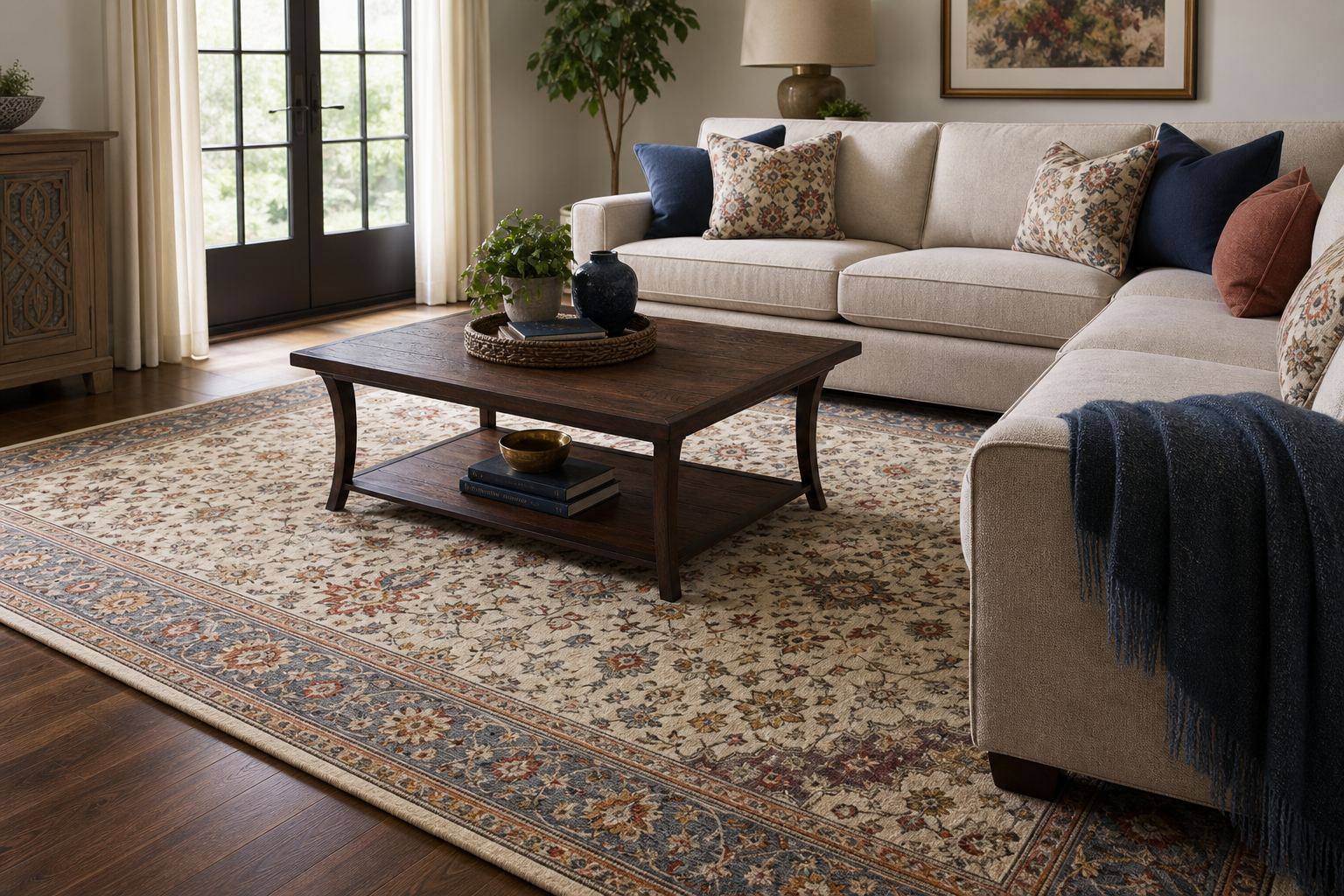
Market Size & Industry Overview
Key Statistics
India's carpet and rug industry combines artisan weaving depth with organised export houses that consolidate workshop output into graded, labelled, document-ready consignments. More than two million artisans participate across knotting, weaving, tufting, finishing, and washing. CEPC, founded in 1982 under the Ministry of Textiles, anchors organised market access — RCMC pathways, India Carpet Expo, overseas fair frameworks, and buyer-facing credibility that MSMEs need during vendor onboarding.
Cluster economics shape who you should prospect. Bhadohi–Mirzapur anchors much of the hand-knotted and dhurrie trade. Kashmir specialises in fine handmade carpets with longer lead times and premium FOB. Jaipur and Agra contribute design-led and tufted programmes. Panipat supplies scalable hand-tufted and machine-assisted volume suited to wholesale and retail chains. Lead generation that ignores cluster fit wastes months pitching fine Kashmir silk to a buyer who only imports recycled-yarn wholesale rugs.
For pipeline planning, market size matters less than buyer concentration. A manageable ranked list of importers and distributors already active in your construction and price tier outperforms a scraped directory of every home décor company in a destination. Build that list from trade data and fair attendee research before writing outreach.
Carpet buyer segments and what they usually seek
Swipe →
Data table — swipe horizontally on small screens
| Buyer segment | Typical interest | Exporter preparation |
|---|---|---|
| Specialty rug importers / distributors | Hand-knotted, tufted, flatweave assortments | KPSI honesty, size charts, lab dips, CEPC credentials |
| Home décor / flooring retail chains | Private-label programmes, seasonal colorways | MOQ ladders, compliance pack, packing photos |
| Wholesalers (EU, UAE, GCC, Australia) | Mixed sizes, replenishment speed, price tiers | FOB ladders, container loading plans, lead times |
| Hospitality procurement / FF&E buyers | Durability, custom sizes, fire/chemical claims where required | Performance specs, sample locks, staged payment |
| Online / DTC rug brands | Design-led tufted and flatweave, brand packing | Flexible pilot MOQs, photography-ready finishing |
| Merchant exporters / sourcing partners | Verified multi-cluster supply | IEC, CEPC, QC and document discipline |
Export Statistics
Key Statistics
Export statistics tell you where Indian carpet value already flows — and therefore where trade-data prospecting should start. FY25 carpet and rug exports of about USD 1.54 billion (up from about USD 1.39 billion in FY24) concentrate heavily in a handful of destinations. The United States took roughly USD 921 million (~59%), followed by Germany (~USD 91.7 million) and the United Kingdom (~USD 65.4 million), with additional programme volume into UAE, Australia, Canada, Japan, and other European markets depending on construction mix.
Lead generation improves when exporters search by HS heading, not by the word "carpet" alone. A buyer importing HS 5701 knotted wool carpets may never appear in a search for tufted HS 5703 programmes. Likewise, a flatweave distributor under 5702 may ignore knotted outreach entirely. Split your prospect lists by construction before you write a single message.
Use DGCI&S, ITC Trade Map, and CEPC trade updates to refresh priority destinations quarterly. Export statistics guide prioritisation; they do not replace outreach or qualification.
HS-code driven lead generation map for carpets and rugs
Swipe →
Data table — swipe horizontally on small screens
| HS code | Use for lead search | Likely buyer title |
|---|---|---|
| 5701 | Knotted carpets and rugs | Specialty rug importer, gallery, premium retail buyer |
| 5702 | Woven (not tufted/flocked) — kilims, dhurries | Flatweave distributor, home décor buyer |
| 5703 | Tufted carpets and rugs | Volume retailer, wholesaler, hospitality buyer |
| 5704 | Felt floor coverings | Specialty flooring importer, contract channel |
| 5705 | Other carpets and textile floor coverings | Mixed-assortment wholesaler, programme buyer |
Import Statistics
Key Statistics
Import statistics reveal demand location; consignee-level shipment records reveal who to call. Pull importer names, approximate volumes, frequency, and origin country for HS 5701–5705 into the USA, Germany, UK, UAE, Australia, Canada, and other priority markets. Rank consignees by shipment frequency, then cross-check company websites, retail assortments, and LinkedIn pages to confirm they still buy floor coverings at a scale that matches your capacity.
Importers already buying from competing origins — Nepal, Pakistan, Turkey, China, or Egypt depending on construction — are often warmer switch-in prospects than companies with zero carpet import history. A German distributor already landing Indian or Nepalese knotted goods understands density claims, washing standards, and container economics; your job is a credible construction and price comparison, not category education.
Import data also filters weak leads. If a company only imports machine-made commodity rugs at ultra-low FOB, a fine hand-knotted Kashmir programme is a poor fit. If a company only buys gallery-grade silk pieces, Panipat volume tufted outreach will be ignored. Match construction history to your offer.
How to read carpet import signals for prospecting
Swipe →
Data table — swipe horizontally on small screens
| Signal | What it suggests | Next action |
|---|---|---|
| Repeated HS 5701 imports | Active knotted-carpet buying habit | Pitch KPSI bands, fibre, wash finish, size range |
| Repeated HS 5703 imports | Volume tufted programmes | Lead with MOQ, lead time, private-label packing |
| Imports from multiple origins | Buyer compares global supply | Compete on specification honesty and documentation |
| Retail site shows rug SKUs | Shelf or e-commerce channel | Share pack photos, hangtags, care labels |
| Hospitality / FF&E catalogue | Contract and custom sizes | Offer durability specs and staged sampling |
| No carpet import history | Cold or adjacent category only | Deprioritise vs active HS 57 consignees |
Product Categories / Variants
Summary Box
Lead generation should be built around constructions because the buyer for each construction is different. A knotted-wool importer, a kilim wholesaler, a tufted private-label retailer, and a felt specialty buyer do not share one inbox pitch. Before outreach, create separate target lists for each construction you can actually reproduce at bulk.
Construction-to-buyer targeting for carpet exporters
Swipe →
Data table — swipe horizontally on small screens
| Construction | Primary prospect type | Pitch angle |
|---|---|---|
| Hand-knotted wool | Specialty importer / premium retail | KPSI bands, fibre, wash finish, GI origin where true |
| Fine knotted / silk accent | Luxury retail / galleries | Lead time honesty, sample deposits, staged payment |
| Kilim / dhurrie | Home décor distributor | Colorways, size charts, edge finish durability |
| Hand-tufted | Retail chains / DTC brands | MOQ flexibility, private label, backing quality |
| Machine-assisted / volume rugs | Wholesalers / big-box feeders | Price tiers, container economics, replenishment |
Hand-knotted carpet buyer leads
Search HS 5701 plus terms such as hand-knotted rug importer, Oriental carpet wholesaler, and specialty floor covering distributor. Prospects cluster in the USA, Germany, UK, and premium Middle East channels. Pitch KPSI honestly, disclose fibre (wool, silk accents, blends), and show wash and finishing photos — never a studio showpiece your loom cannot repeat.
Woven kilim and dhurrie buyer leads
HS 5702 flatweave buyers often sit in home décor wholesale, design-led retail, and hospitality soft-goods programmes. Jaipur and Mirzapur origin stories help when GI and construction claims match the goods. Emphasise colourway control, size tolerance, and edge finishing that survives warehouse handling.
Hand-tufted and volume programme leads
HS 5703 tufted buyers include retail chains, e-commerce rug brands, and distributors who refresh colorways seasonally. Panipat and Agra capacity fits this channel when latex/backing quality and carving consistency hold across lots. Lead with MOQ ladders, private-label packing, and realistic lead times.
Felt and other floor-covering leads
HS 5704 and 5705 buyers are narrower but often less contested. Confirm exact construction language before quoting. These leads reward precise HS classification and packing plans more than romantic artisan storytelling.
Manufacturing Overview
Export Tip
Buyer generation becomes easier when the exporter can explain manufacturing clearly enough to build trust without oversharing. Importers do not need every loom detail, but they want confidence that dyeing, knotting or tufting, washing, clipping, fringe finishing, and packing are controlled — and that the sample represents bulk.
A lead turns serious when the buyer asks about KPSI measurement method, pile-height tolerance, dye-lot control, latex or jute backing process, and pre-shipment inspection. Prepare concise answers and retain photos of packing SOPs. Exporters who cannot explain how sample locks convert into bulk lots lose hospitality and retail programmes to competitors who can.
Cluster fit for buyer claims
Match construction to cluster before you prospect. Do not pitch fine Kashmir silk capacity if your real throughput is Panipat tufted volume. Buyers verify claims through CEPC channels, prior shipment references, and sample inspection — mismatched origin stories destroy trust faster than a high FOB.
Sample-to-bulk consistency
Send representative samples only. Hand-selected showpieces that cannot be reproduced across a container create chargebacks and cancelled reorders. Lock KPSI, pile height, fibre, size tolerance, and colour under written approval before allocating looms for a first programme order.
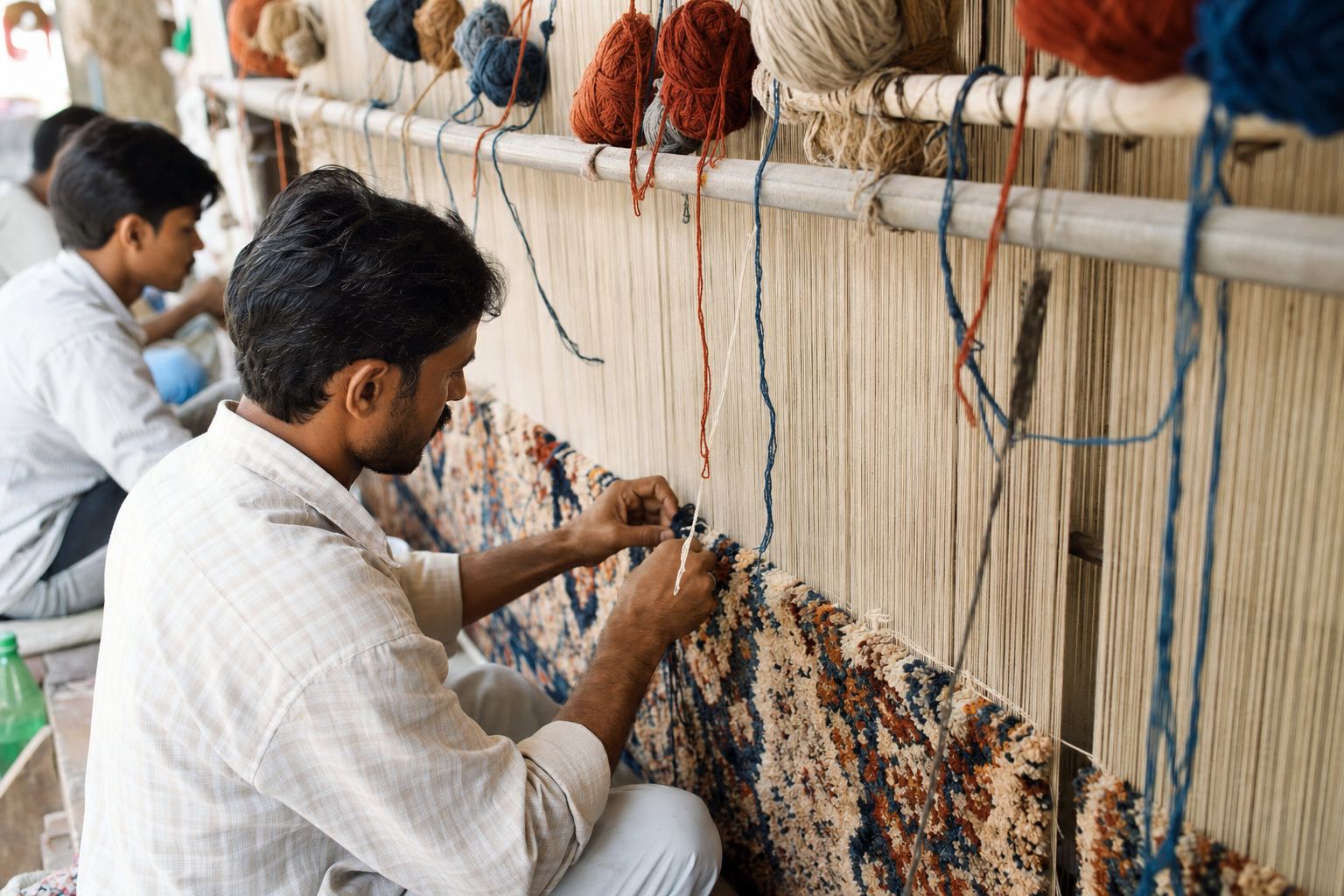
Lead Generation Channels
Carpet exporters should run a portfolio of channels. Trade data identifies companies already importing HS 5701–5705. LinkedIn finds flooring, home décor, soft flooring, and rug category managers. Domotex and India Carpet Expo create high-intent face-to-face meetings. CEPC membership unlocks buyer-seller meets, directories, and fair frameworks. B2B portals generate inbound volume that must be filtered. Retail and distributor website research shows what buyers already sell.
The best sequence is research first, outreach second. A note that says "we supply hand-tufted wool rugs in 5×8 and 8×10 with OEKO-TEX-ready dye packs for US specialty retail" outperforms "we are leading carpet exporters from India." Pair this system with the broader methodology in how trade data helps find export buyers.
Lead channel comparison for carpet & rug exporters
Swipe →
Data table — swipe horizontally on small screens
| Channel | Strength | Weakness |
|---|---|---|
| HS 5701–5705 trade data | Shows real import behavior | Needs refresh; may omit new brands |
| LinkedIn flooring/home décor outreach | Reaches category decision-makers | Fails if messages are generic |
| Domotex (Hanover) | Highest-intent global floor-covering buyers | Costly; needs 72-hour follow-up |
| India Carpet Expo (Bhadohi) | Handmade buyer concentration in India | Converts only with prepared SKUs/MOQs |
| CEPC buyer-connect / RCMC credibility | Institutional trust and fair access | Not a substitute for product discipline |
| B2B marketplaces | Inbound inquiry volume | High sample-tourist noise |
Trade Data Prospecting: HS 5701–5705
- Pull consignee records for HS 5701, 5702, 5703, 5704, and 5705 in priority markets
- Rank by shipment frequency and estimated volume, not company fame
- Flag importers already buying from Nepal, Pakistan, Turkey, China, or Egypt as switch-in prospects
- Segment lists by construction before writing outreach
- Cross-check active websites, showrooms, and LinkedIn before investing sample budget
Import trade data is the highest-leverage tool for carpet buyer discovery because it shows who is already importing floor coverings — not who might theoretically be interested. Consignee-level records reveal importer name, approximate volumes, frequency, and often origin country, letting you separate active repeat buyers from one-off trial importers from years ago.
Start with your strongest construction heading, pull USA, Germany, UK, UAE, and Australia records, rank by frequency, and build a CRM list of forty to eighty realistic accounts matched to your capacity. A distributor landing forty containers a year is the wrong first target for a workshop that can fill one LCL; a boutique importer landing two containers a season may be exactly right.
Refresh lists quarterly. Retail seasons, hospitality renovation cycles, and distributor consolidations move carpet buying patterns. Pair trade data with LinkedIn title searches — rug buyer, flooring category manager, home décor merchandiser, soft flooring procurement — at the same companies.
LinkedIn Outreach to Flooring and Home Décor Buyers
LinkedIn is where carpet lead generation either compounds or dies. Flooring category managers, home décor merchandisers, rug buyers, and hospitality FF&E procurement leads ignore generic "leading handmade carpet exporter" messages. What earns a reply is specificity: construction, KPSI or gauge, fibre, size range, MOQ, and lead time — plus one proof you researched their assortment.
Build lists from trade-data consignee names, Domotex and India Carpet Expo exhibitor/buyer directories, and competitor supplier pages. Search titles such as rug buyer, flooring buyer, soft flooring category manager, home décor merchandiser, and hospitality procurement. Verify the person is still in role. A list of thirty real decision-makers beats three hundred scraped contacts.
Sequence outreach: initial message with construction fit, follow-up in five to seven days with a one-page SKU sheet, final light touch referencing Domotex or India Carpet Expo. Stop after three touches.
LinkedIn message structure for carpet exporters
Swipe →
Data table — swipe horizontally on small screens
| Step | What to include | What to avoid |
|---|---|---|
| Connection / opener | Construction + destination fit + one assortment detail | Generic exporter slogans |
| First reply | One-page construction sheet offer | Huge catalogues before consent |
| Qualification | Sizes, density, volume, channel, certifications | Quoting before specs are clear |
| Sample plan | Paid courier, sealed specs, feedback date | Free assortments for unverified leads |
| Follow-up | Fair meeting or call with agenda | Daily pressure messages |
Domotex, India Carpet Expo, and CEPC Buyer Channels
- Register for Domotex and India Carpet Expo with booth or hosted-buyer slots early
- Bring construction-labelled samples — not an unsorted pile of pretty rugs
- Print MOQ and FOB breaks for at least three order sizes
- Log every lead the same day into one CRM
- Send personalised follow-up within 72 hours with priced construction sheet
Domotex in Hanover remains the highest-intent global venue for floor-covering buyers — specialty importers, retail chains, and distributors who travel specifically to source carpets and rugs. India Carpet Expo in Bhadohi, organised in the CEPC ecosystem, concentrates handmade buyers into one of Asia's largest dedicated carpet platforms. Both convert only when booth assortment, priced MOQs, and follow-up discipline are ready before the fair opens.
Prepare labelled construction samples with KPSI or gauge cards, fibre disclosure, size charts, and a printed price list with MOQ breaks. Capture leads with company, market, construction interest, and estimated volume. Follow up within 72 hours referencing the specific booth conversation — most fair ROI is lost to slow follow-up, not weak product.
CEPC membership and RCMC status support fair participation frameworks, buyer-seller meets, directory visibility, and vendor-questionnaire credibility. Use CEPC as a pipeline amplifier, not as the whole sales strategy. For membership mechanics, see CEPC registration benefits for carpet exporters; for fair calendars, see trade shows for carpet and rug exporters.
Importer Verification Before You Sample
Every carpet sample kit costs yarn, loom time, washing, packing, and international courier — and custom colorways cost far more. Exporters who sample every inbound inquiry subsidise sample tourists who collect free rugs from a dozen factories and never place a purchase order. Verification protects margin and loom capacity for buyers who can actually import.
Confirm legal entity registration, active website or showroom, and — where possible — prior HS 57 import history. Ask for estimated annual volume in square meters or containers, target constructions, and current or previous origins. Move to a paid courier sample only after this exchange. Require staged payment on the first bulk order regardless of how large the buyer claims to be.
Signals of a genuine carpet importer
- Verifiable company registration and flooring/home décor channel presence
- Specific answers on construction, sizes, volume, and destination market
- Willingness to pay for courier samples once interest is confirmed
- Clear role — importer, distributor, retailer, or hospitality procurement — not vague "we buy everything"
Warning signs of a sample tourist
- Requests for large free assortments before any business conversation
- No verifiable business presence and reluctance to share company details
- Pressure for extreme discounts with no forecast or payment discussion
- Identical copy-paste inquiries sent to many exporters with no follow-up questions
Pricing Analysis
Buyer Tip
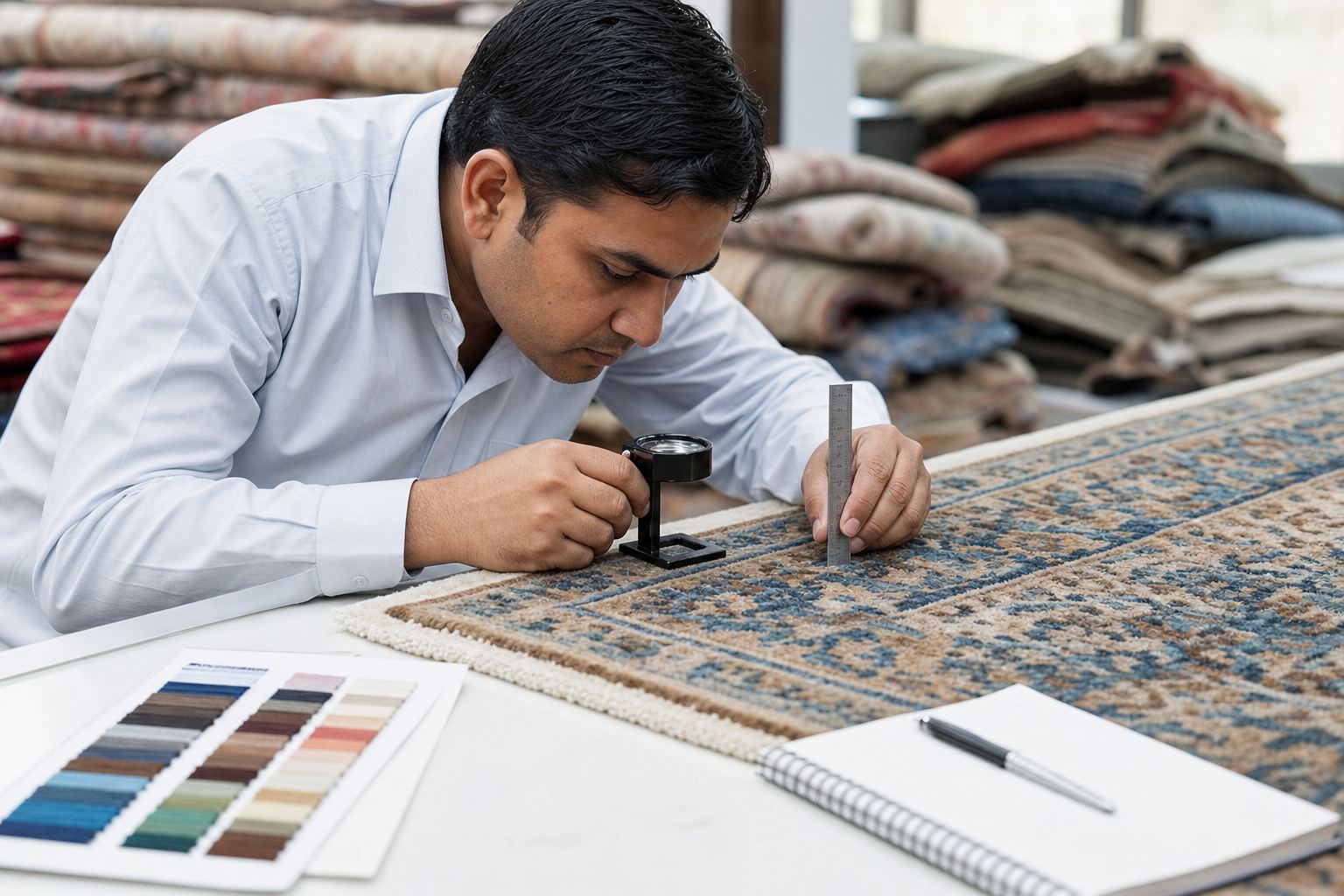
Lead generation fails when exporters quote too early or quote without construction detail. Carpet FOB depends on construction, KPSI or gauge, fibre, size assortment, finishing, wash type, certification scope, inland freight, and Incoterm. A buyer asking for hand-knotted 8×10 wool cannot be served with a tufted 5×8 promotional price.
Professional quotations state product description, HS heading, sizes, density, fibre, MOQ, Incoterm, load port, validity, payment terms, lead time, and document scope. Indicative bands below are directional planning guides only — not fixed price lists.
Indicative FOB guidance by construction (directional; USD; India origin)
Swipe →
Data table — swipe horizontally on small screens
| Construction / tier | Indicative FOB basis | What moves price |
|---|---|---|
| Hand-tufted wool (standard retail sizes) | Lower–mid USD per sq. ft / piece | Pile height, backing, design complexity |
| Handloom kilim / dhurrie | Lower–mid band by size | Fibre, colour count, finishing |
| Hand-knotted wool (commercial density) | Mid–upper band by sq. ft | KPSI, size, wash/antique finish |
| Fine hand-knotted / silk accents | Premium band | Density, silk content, Kashmir/Bhadohi positioning |
| Certified social-compliance / GI-linked lines | Premium to uncertified equivalent | Audit scope, traceability, labelling |
MOQ Analysis
Buyer Tip
Position MOQ as commercial reality, not a barrier. Stock tufted designs can often start at lower piece counts than fine hand-knotted custom colorways that consume loom months. Hospitality custom sizes and retail private-label programmes sit between those extremes. Publish MOQ breaks so programme orders earn better pricing than one-off trials.
For first qualified buyers, staged MOQs work best: paid sample → LCL or mixed-SKU trial → repeat FCL or seasonal programme. That reduces buyer risk while proving your packing and documentation discipline.
Typical MOQ bands for carpet lead conversion (indicative)
Swipe →
Data table — swipe horizontally on small screens
| Product type | Typical MOQ guidance | Notes for first orders |
|---|---|---|
| Stock hand-tufted designs | Often tens of pieces per size/colour | Strong retail trial path |
| Custom tufted private label | Higher piece counts per colourway | Dye and backing setup drive MOQ |
| Kilim / dhurrie programmes | Design- and colour-dependent | Lock colourways before loom allocation |
| Hand-knotted commercial | Smaller piece counts, long lead times | MOQ is loom months as much as pieces |
| Fine / silk-accent knotted | Low piece count, high value | Sample deposit and staged payments common |
Packaging Standards
Export Tip
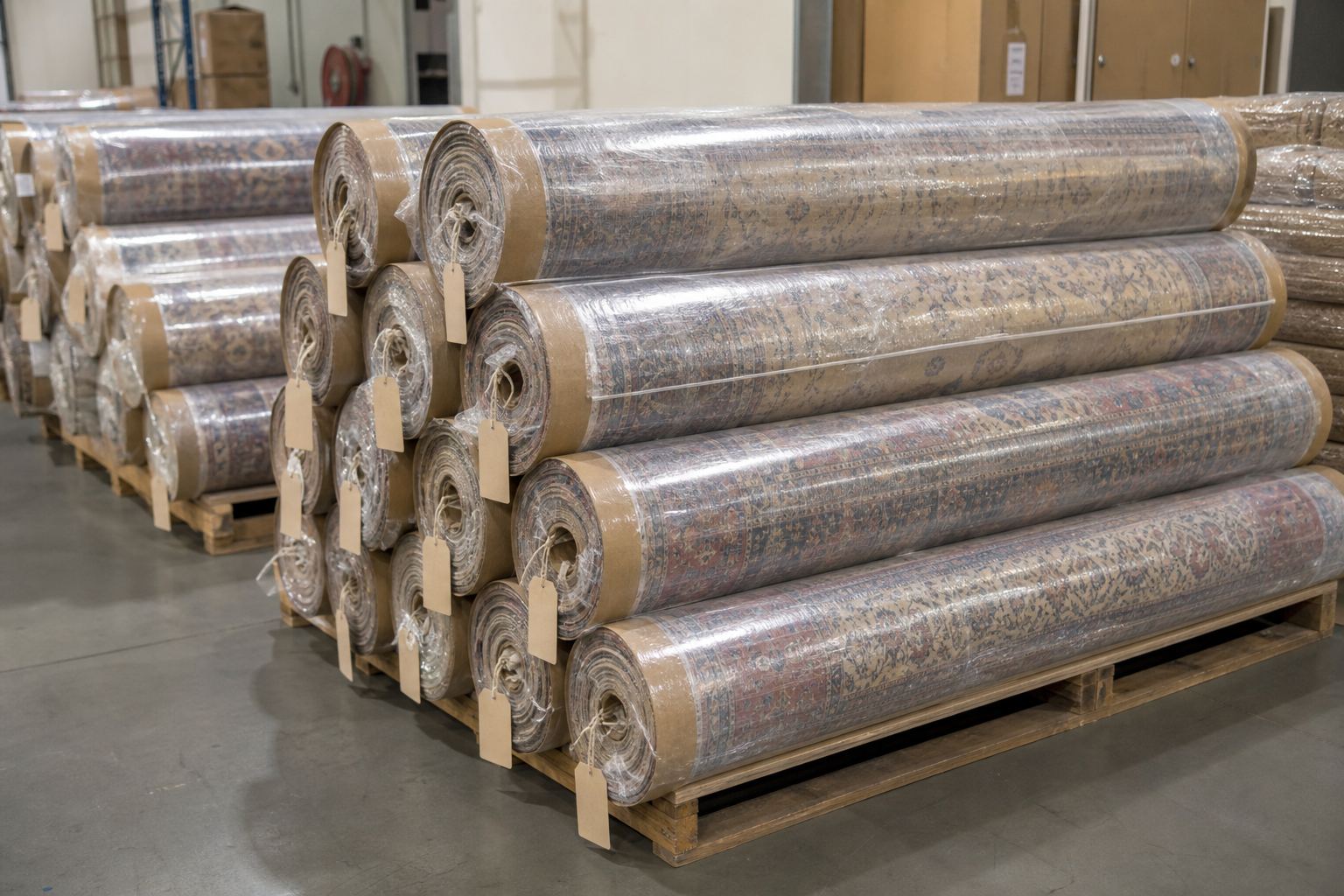
Packaging is part of lead conversion because serious importers judge export readiness visually. Poly wrap each rug, protect fringe and edges, control moisture for humid ocean routes, mark SKU and size clearly, and photograph the approved packing configuration as your SOP for repeat lots.
Retail buyers care about hangtags, care labels, and shelf-ready presentation. Wholesalers care about warehouse handling and roll identification. Hospitality buyers care about custom size marking and installation-ready finishing. Show packing photos in your outreach kit.
Packaging formats buyers expect
Swipe →
Data table — swipe horizontally on small screens
| Format | Typical use | Lead-generation tip |
|---|---|---|
| Individual poly wrap + hangtag | Retail and specialty import | Photograph tags and fibre labels |
| Roll pack with edge protection | Most area rugs | Show fringe protection method |
| Master carton / bale | Wholesale consolidations | Share carton marks and moisture barrier |
| Sample kit tube / flat pack | Qualified courier samples | Charge courier; credit on first PO |
Container Loading Details
Export Tip
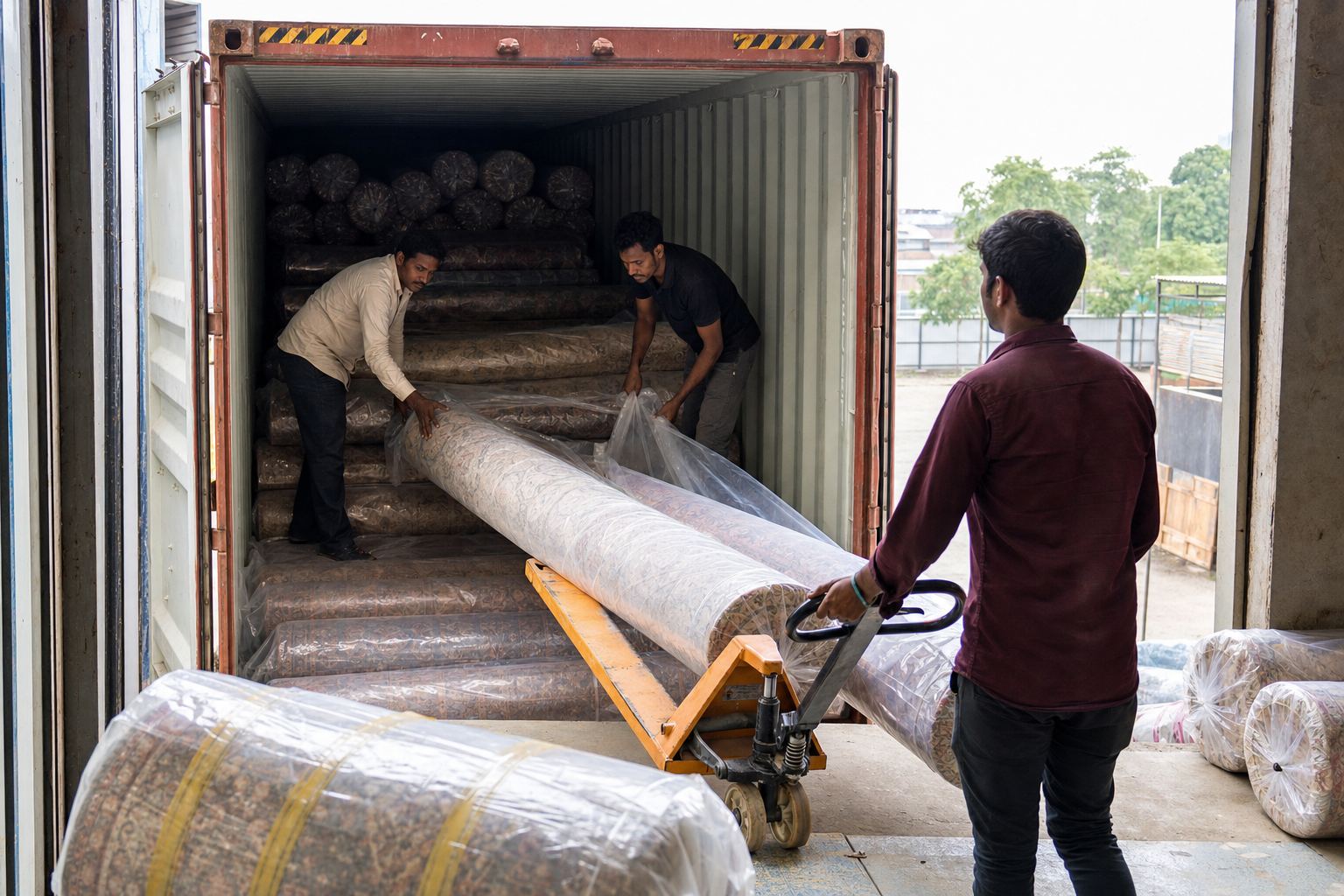
When leads turn serious, buyers ask how much fits in a container. Prepare indicative loading plans for 20 ft and 40 ft high-cube by size mix and pile height, while stating that final load depends on roll diameters, assortment, palletisation, and legal payload limits. A planning range of roughly 1,500–3,500 square meters in a 20 ft is common for many rolled assortments — oversized 9×12 pieces consume cubes quickly.
Loading photos, seal numbers, and reconciled packing lists increase confidence on first orders. Operational transparency often closes deals that a small FOB discount cannot.
Shipping Methods
Export Tip
Lead generation collateral should include realistic logistics options. Courier samples for evaluation. Air freight for urgent showroom or hero SKUs only. LCL sea freight for pilot assortments. FCL sea freight for programme volume. Primary gateways for northern carpet-belt cargo are typically Mundra and Nhava Sheva — name the FOB port on quotations.
Do not promise delivery dates without checking sailing schedules, certificate timelines, and the buyer's broker requirements. Realistic lead times convert more hospitality and retail programmes than optimistic ones that slip.
Certifications
Compliance Notes
Carpet leads often stall on compliance questions. Keep a readiness folder: IEC, CEPC/RCMC where held, construction specification sheets, OEKO-TEX or equivalent chemical compliance evidence where claimed, GoodWeave or social-compliance documentation where required by US/EU retail, REACH-aware dye declarations for Europe, and Woolmark only where wool-content claims are substantiated.
Never claim certifications casually. Buyers verify certificate numbers. False social-compliance or fibre claims destroy programmes permanently. CEPC membership signals organised-exporter status; it does not certify knot density or labour practices on its own.
Certification signals buyers check during vendor onboarding
Swipe →
Data table — swipe horizontally on small screens
| Credential | Why buyers ask | Exporter action |
|---|---|---|
| IEC | Legal export capacity | Share active IEC matching invoice entity |
| CEPC / RCMC | Organised carpet trade credibility | Keep membership current before fairs |
| OEKO-TEX / chemical tests | Harmful-substance limits | Match scope to finished goods |
| GoodWeave / social compliance | Child-labour-free retail claims | Confirm audit scope before marketing |
| REACH-aware dye pack | EU/UK entry diligence | Hold supplier declarations and test reports |
| GI / origin claims | Authenticity storytelling | Only when goods and paperwork support claim |
Buyer Requirements
Buyer Requirements
Qualified carpet buyers reveal requirements clearly: destination, construction, sizes, density or gauge, fibre, estimated volume, channel, certifications, preferred Incoterm, and sample process. Weak leads ask only for the lowest square-meter price and avoid company details. Politely request missing information before investing in detailed quotations or custom samples.
Use a short qualification form covering company name, country, construction interest, HS expectation, size assortment, annual demand estimate, current origin, target FOB or landed band, certification need, sample address, and importer-of-record or broker status.
Buyer qualification questions for carpet leads
Swipe →
Data table — swipe horizontally on small screens
| Question | Why ask it | Strong answer |
|---|---|---|
| Which construction? | Defines cluster and HS code | Hand-tufted wool, 5×8 and 8×10 |
| Which destination? | Defines docs and compliance | USA specialty retail distribution |
| What annual volume? | Tests commercial seriousness | Trial 1 LCL, then seasonal FCL |
| Which certifications? | Prevents late compliance gaps | OEKO-TEX; GoodWeave if retail claims |
| Who is importer of record? | Confirms import capability | Buyer has broker and prior HS 57 entries |
| What channel? | Shapes packing and MOQ | Distributor, retail chain, or hospitality |
Country-wise Opportunities
Market Snapshot
United States lead generation should target specialty rug importers, home décor retailers, e-commerce rug brands, and hospitality FF&E buyers — the largest value destination for Indian carpets. Emphasise construction honesty, social-compliance readiness where retail claims require it, and reliable replenishment.
Germany and the wider EU reward distributors and private-label programmes that demand chemical compliance, accurate fibre labelling, and disciplined documentation. The United Kingdom remains a significant specialty and retail market with its own post-Brexit tariff schedule. UAE and GCC wholesalers buy for local retail and regional re-export — price ladders and mixed-size containers matter. Australia and Canada support steady specialty and retail demand with strong packaging and labelling expectations.
Prioritise two primary markets and one backup matched to your construction. Country rankings alone do not create orders; qualified importers in those countries do. For destination depth, see best countries for Indian carpet and rug exports.
Priority destinations for carpet buyer prospecting
Swipe →
Data table — swipe horizontally on small screens
| Market | Relative demand signal | Primary buyer types to prospect |
|---|---|---|
| USA | Largest value destination (~59% FY25 share) | Specialty importers, retail, DTC, hospitality |
| Germany | Major EU hub | Distributors, private-label, specialty retail |
| United Kingdom | Significant secondary market | Specialty retail, distributors, hospitality |
| UAE / GCC | Wholesale and re-export hub | Wholesalers, hospitality, regional distributors |
| Australia | Steady specialty/retail demand | Importers and home décor retailers |
| Canada / Japan | Meaningful programme niches | Specialty importers and design-led retail |
Sourcing Checklist
Checklist
- Build separate lead lists for knotted, woven/flatweave, tufted, felt, and other HS 5705 constructions
- Search trade data by HS 5701–5705 and rank consignees by frequency
- Map each prospect to flooring, home décor, wholesale, retail, or hospitality channel
- Prepare one-page construction sheets with KPSI/gauge, fibre, sizes, MOQ, and lead time
- Keep representative sample kits ready with sealed specs — charge courier after qualification
- Diary Domotex and India Carpet Expo with 72-hour follow-up process
- Keep CEPC/RCMC, IEC, and certificate evidence organised before outreach spikes
- Track every lead in one CRM with next-action dates
Buyer Checklist
Checklist
- Share destination, construction, sizes, density, fibre, and expected volume in the first inquiry
- Clarify importer, distributor, retail, or hospitality channel
- Request paid samples and written spec locks before bulk negotiation
- Have your broker confirm HS heading and document requirements
- Validate labelling and chemical/social-compliance claims before marketing them
- Start with a pilot LCL or mixed assortment before annual programmes
Exporter Checklist
Checklist
- Create separate pitch assets for knotted, flatweave, and tufted programmes
- Keep IEC, CEPC/RCMC, test reports, packing photos, and size charts organised
- Qualify and verify importers before custom dye lots or free sample assortments
- Respond with clear MOQ logic, Incoterm, port, and lead time
- Follow up Domotex and India Carpet Expo leads within 72 hours
- Log samples, courier tracking, buyer feedback, and revised specs
Compliance Checklist
Checklist
Compliance Notes
- Confirm HS 5701–5705 subheading with your CHA per SKU before quoting
- Maintain active IEC; keep CEPC membership/RCMC current if used in buyer packs
- Disclose fibre and construction honestly on labels and invoices
- Hold chemical and social-compliance evidence only within true certificate scope
- Reconcile commercial invoice, packing list, and shipping bill before cutoff
- Photograph packing SOP and retain sealed countersamples for dispute resolution
Common Buyer Mistakes
Common Mistakes Box
- Ignoring competing-origin importers in trade data — prioritise switch-in prospects already buying carpets
- Treating CEPC membership as a sales strategy instead of a credibility layer
- Accepting open credit with unproven first-order buyers
- Chasing the largest headline market instead of best-fit construction buyers
- No CRM discipline across LinkedIn, fairs, and portal inquiries
Most failed carpet buyer-discovery efforts trace to repeatable mistakes. Avoid these patterns when building your pipeline — and recognise them when unqualified inquiries waste your team’s time.
Future Market Trends
Key Statistics
Through the late 2020s, carpet buyer discovery will keep shifting toward data-driven targeting. Trade data platforms are more accessible to MSMEs, letting smaller Bhadohi and Panipat exporters identify active importers with precision once reserved for large trading houses. Exporters who refresh HS 5701–5705 lists quarterly will out-prospect directory-only competitors.
Digital-first screening is accelerating. LinkedIn and specialised flooring communities are where category buyers shortlist suppliers before Domotex or India Carpet Expo. That raises the value of construction-specific digital assets — honest KPSI sheets, packing photos, and responsive messaging. Fairs remain decisive for larger programme trust, especially hospitality and retail private label.
Buyer expectations around chemical compliance, social audits, recycled-content proof, and traceable fibre claims will keep rising alongside discovery channels. Exporters who pair sharper lead targeting with credible compliance folders will convert a higher share of qualified prospects into repeat containers.
Conclusion
- Next step for exporters: Share your constructions, cluster, MOQs, and priority markets for a buyer-pipeline readiness review.
- Next step for qualified importers: Send construction, sizes, certifications, volume, and destination — we coordinate verified sampling and first shipment.
- Process depth: How to export carpets and rugs from India.
- Institutional layer: CEPC registration benefits for carpet exporters.
- Buyer-side sourcing (separate angle): Source carpets and rugs directly from India.
- Destinations: Best countries for Indian carpet and rug exports.
- Assortment: Top carpet and rug products exported from India.
- Fair calendar: Trade shows for carpet and rug exporters.
Finding international buyers for carpets and rugs is a solvable lead generation problem once you stop treating it as a numbers game. The buyer universe for HS Chapter 57 floor coverings is large but segmentable through trade data, and it responds to construction-specific outreach far better than generic exporter introductions. Combine HS 5701–5705 prospecting, LinkedIn flooring and home décor messaging, Domotex and India Carpet Expo participation, CEPC buyer channels, and disciplined importer verification — then qualify every lead before looms and sample budgets are committed.
The exporters who build durable programmes are not those who sample the most inquiries. They rank prospects, tailor pitches by buyer type, protect sample spend with verification, and deliver exactly what the sealed sample promised on every subsequent order. Altus Exports helps carpet and rug manufacturers and serious overseas buyers bridge interest to shipment as a merchant exporter and global sourcing partner.
Ready to build a qualified carpet buyer pipeline or connect with verified Indian floor-covering supply? Contact Altus Exports to share your constructions, capacity, and target markets — or explore our merchant exporter and global sourcing partner models for accountable export execution.